

.webp?language=en-US)
.webp?language=en-US)
Advertisement
2025 ASLA Professional Awards
Explore:
Advertisement
General Design Category
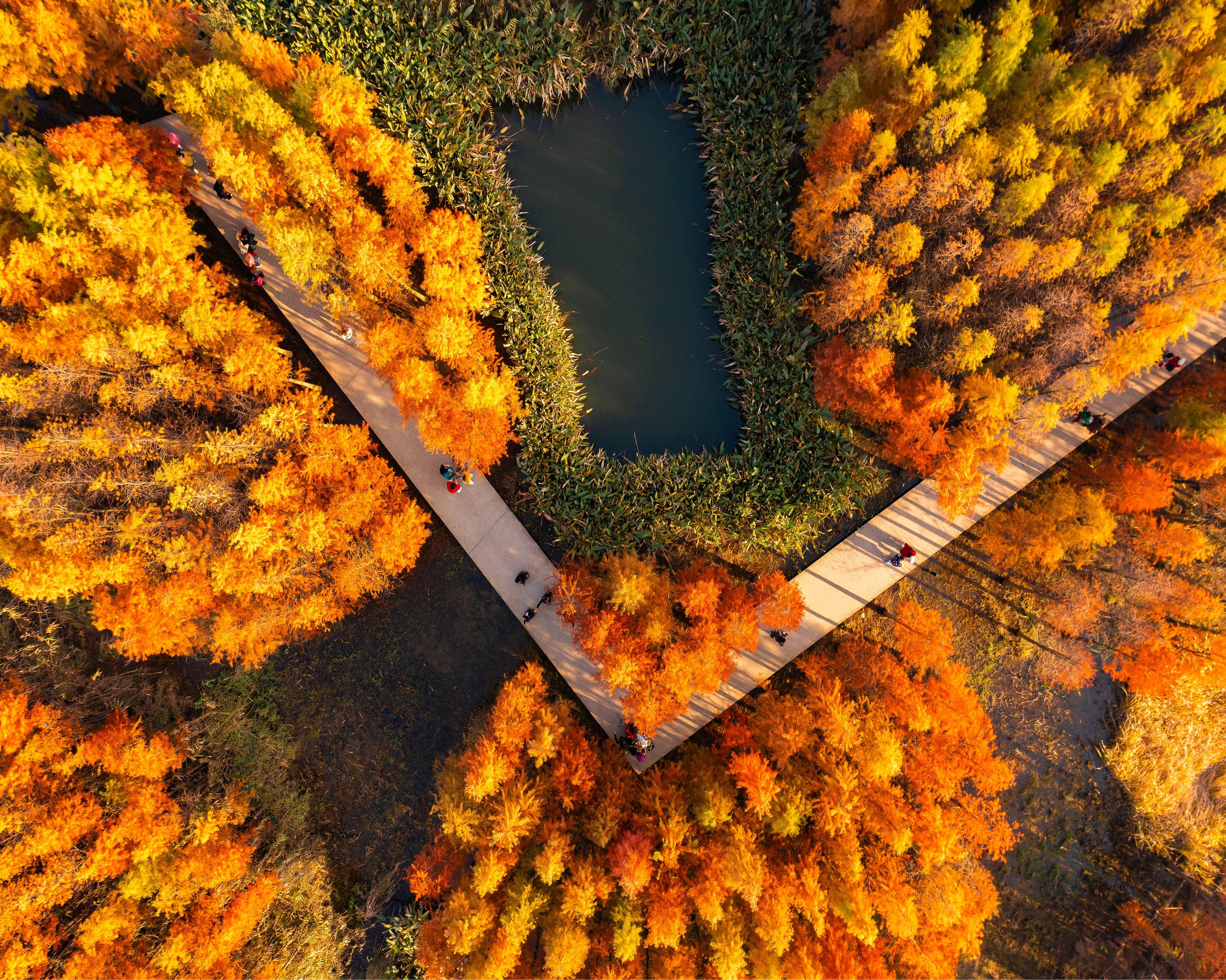
A Floating Forest: Fish Tail Park in Nanchang City
In Nanchang, within the Yangtze River floodplain, we revitalized a heavily degraded 126-acre landscape into a floating forest that manages stormwater, restores habitats, and provides diverse recreational spaces—all within a limited budget and a short timeline. This innovative urban nature model strengthens the district’s identity and spurs surrounding development. Fish Tail Park offers a scalable solution for flood-prone regions, seamlessly integrating flood resilience, ecological restoration
General Design
Honor Awards
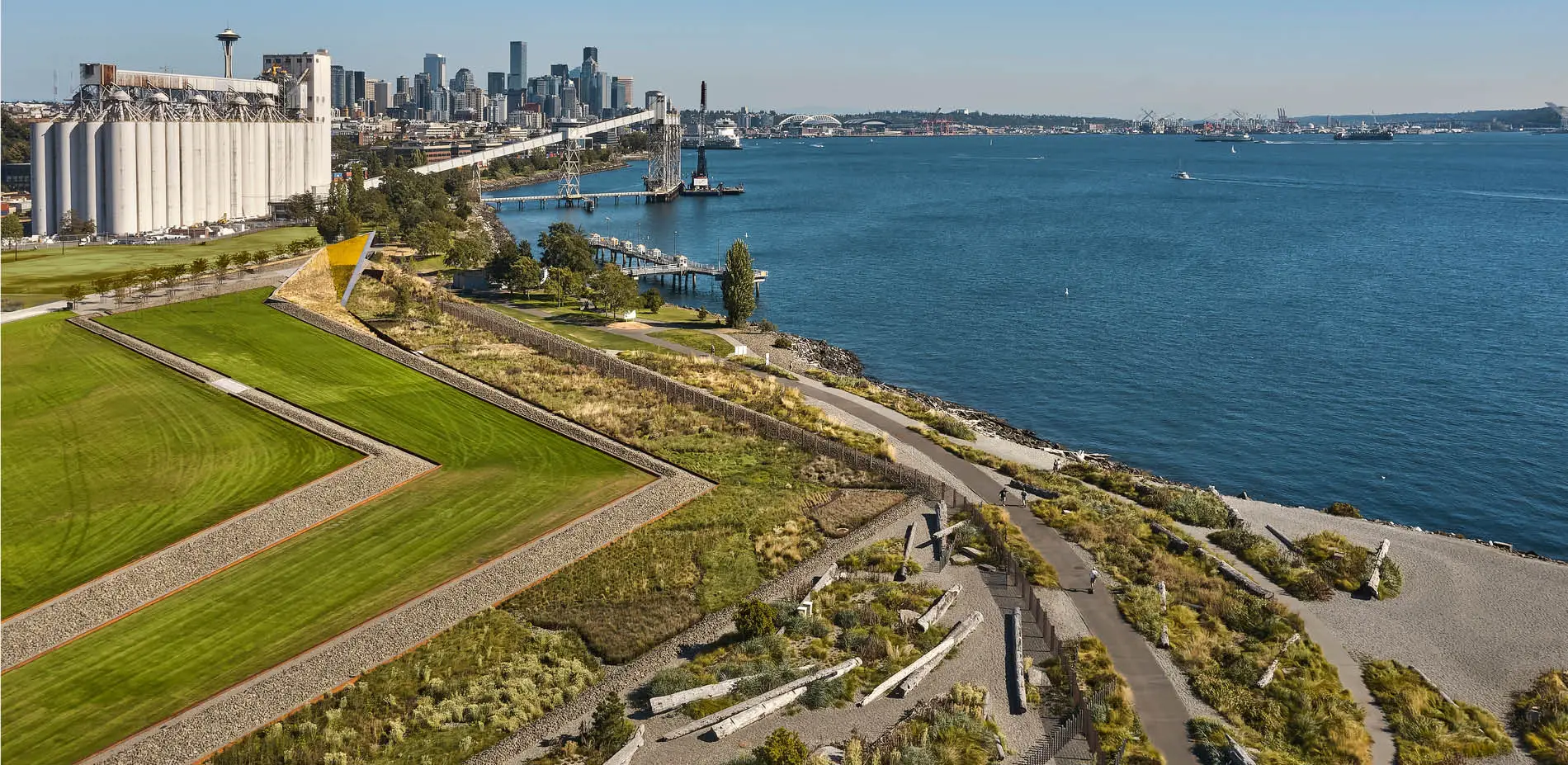
The Beach at Elliott Bay
Coastal parks and nearshore restoration are key in Washington State, requiring holistic, forward-thinking design strategies. Addressing ecological degradation, sea level rise, and stormwater runoff, the design team for The Beach at Elliott Bay restored a publicly accessible, 40-acre waterfront site and corporate campus north of downtown Seattle. Soil remediation and stormwater management revitalize the site, creating an equitable, active landscape rooted in social and ecological resilience of
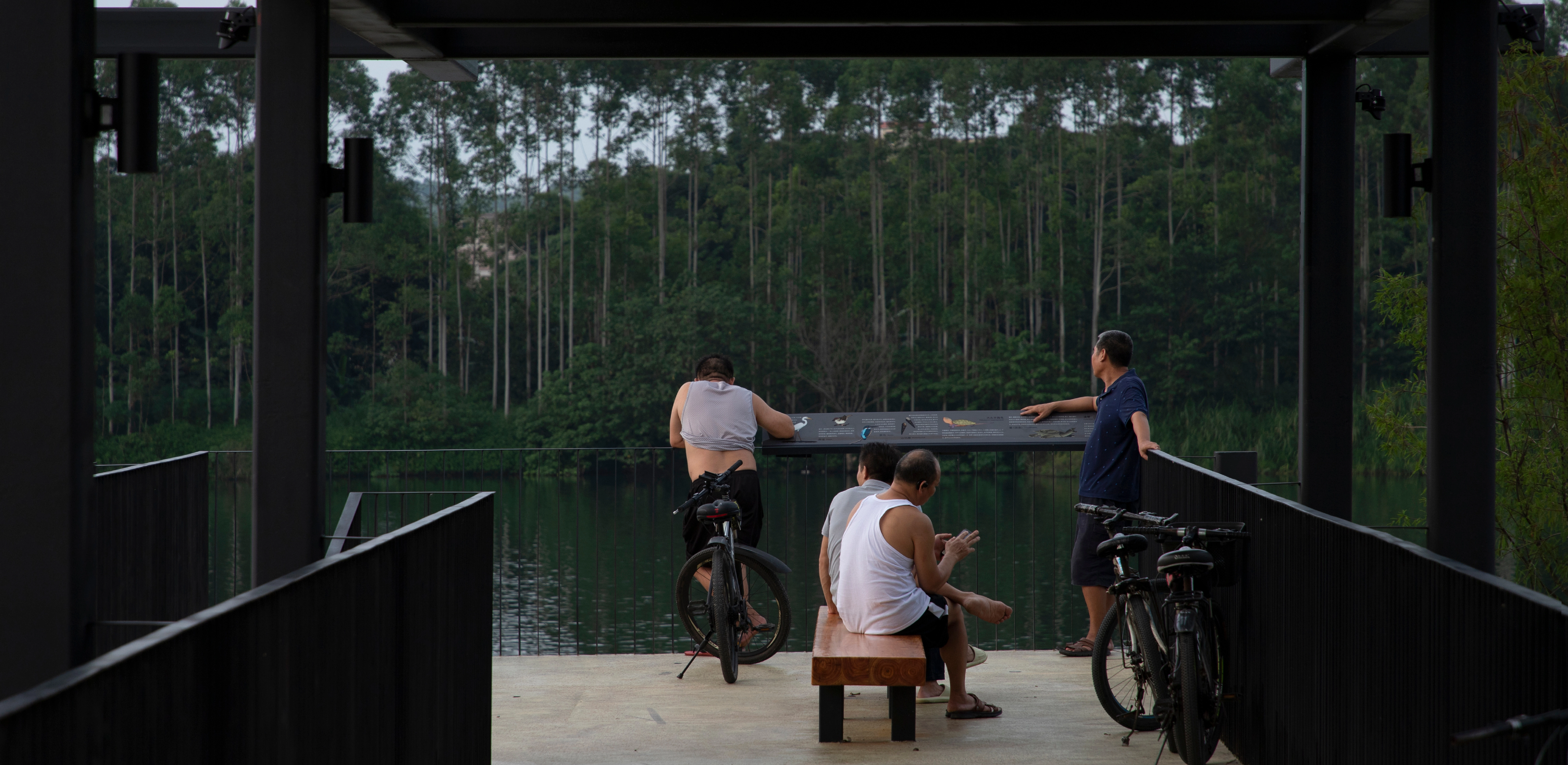
Guitou Wetland Park: Reclaiming Public Space for the Rural Forgotten
Addressing urban-rural public resource disparities, the project regenerates abandoned wetland into a resilient and inclusive public space for South China’s Yao-Hakka communities. Flood-adaptive boardwalks and basins boost biodiversity as ecological classrooms. Locals restore craft traditions like river-stone masonry through self-built infrastructure, generating income and fostering self-sustaining governance via community covenants. Seamlessly woven into local routines, the design enables ful
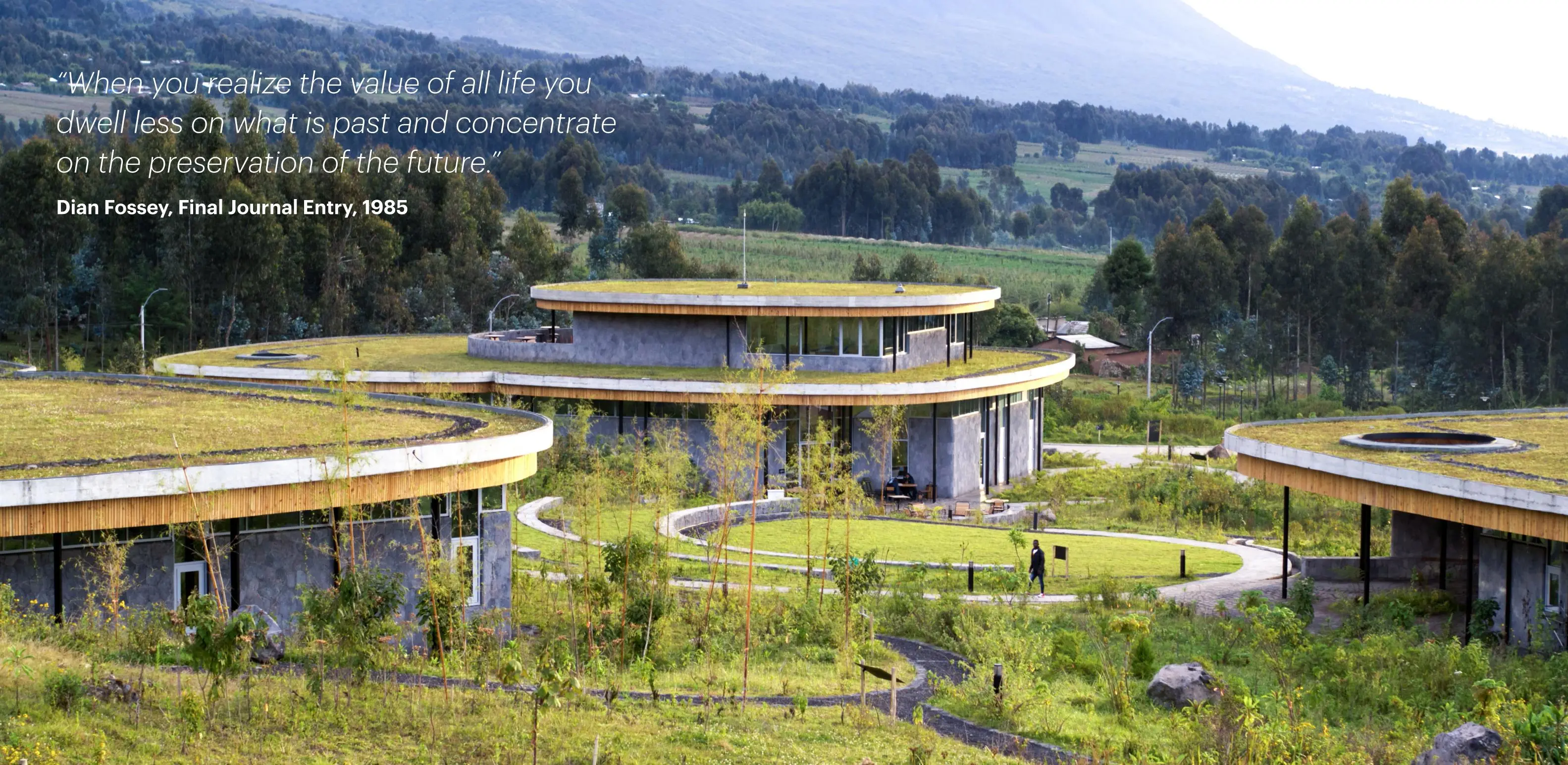
The Ellen DeGeneres Campus for the Dian Fossey Fund
The loss of biodiversity caused by climate change and urbanization is expected to lead to the extinction of over one million species. The critically-endangered mountain gorilla of Rwanda is particularly susceptible to these threats.
The Ellen DeGeneres Campus for the Dian Fossey Fund, situated at the foot of the Virunga Mountains in Central Africa, is designed to provide state-of-the-art facilities for gorilla research, educate and inspire visitors, and test ecologically driven techniqu
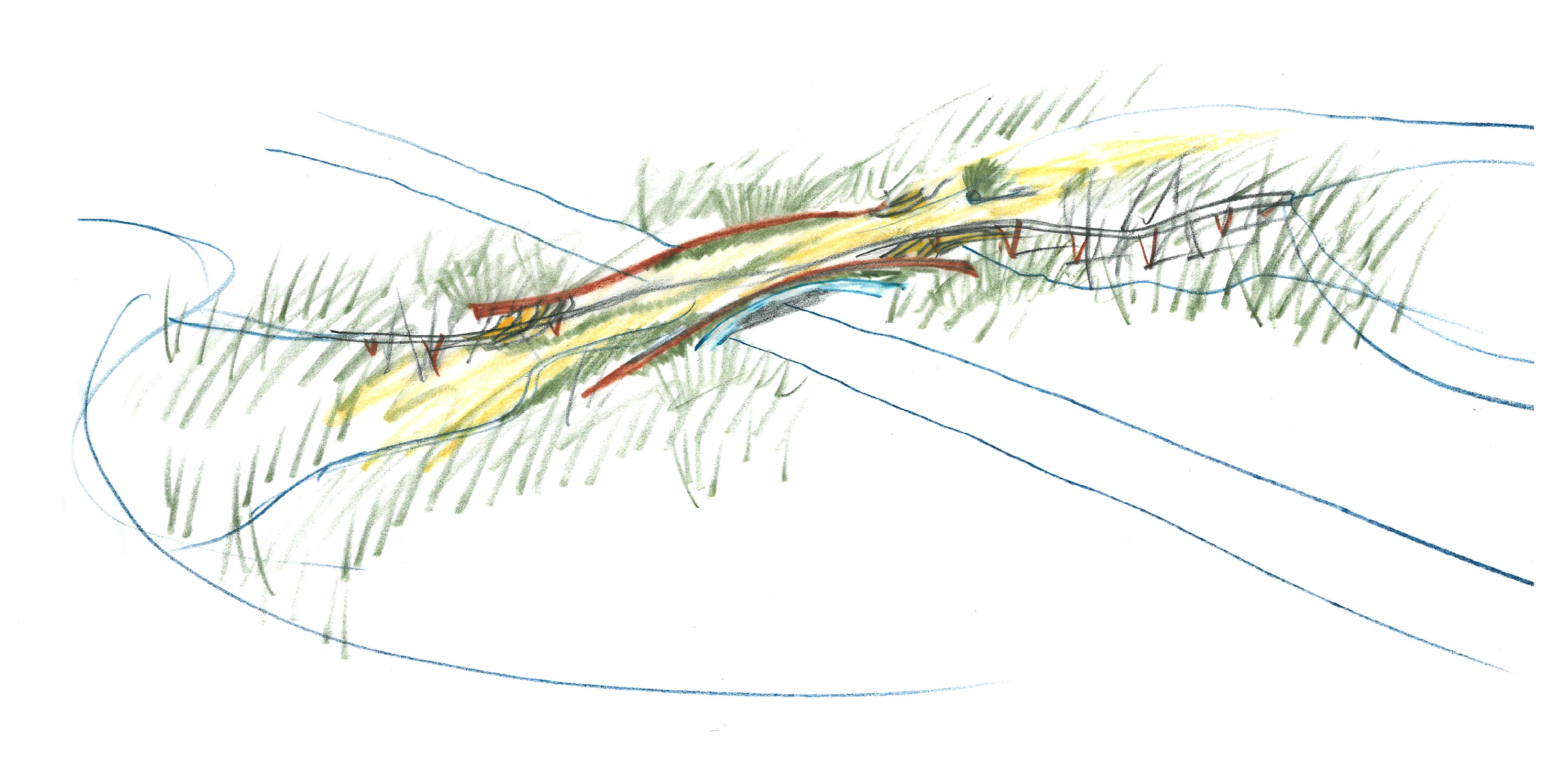
More than Human: A Land Bridge for Cultural and Wildlife Connections
The Robert L.B. Tobin Land Bridge of Phil Hardberger Park in San Antonio is the first land bridge of its kind, for both human and wildlife passage, in the United States. At a monumental environmental scale, the bridge reconnects a once bisected, mile-wide tract of natural area and public park. It restores a major ecological sanctuary for wildlife along the longest creek corridor in Bexar county, prioritizing wildlife passage alongside people. More than infrastructure, it is a continuatio
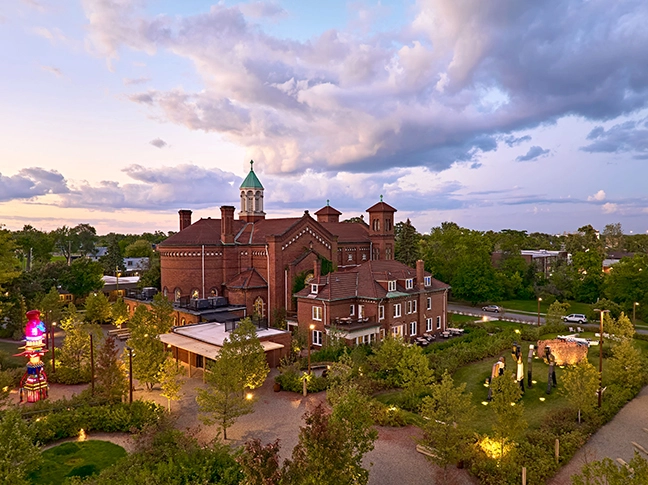
The Shepherd Arts Park: Community, Art, Play
The Shepherd Art Park revitalizes a once-vacant 3.5-acre site in a historically depopulated Detroit neighborhood, transforming it into a dynamic cultural hub. Today, more than ever, our communities need a place for people of all ages to come together, break the cycle of isolation and loneliness, and replace it with connection, creativity, and inspiration. The newly reimagined site honors a church that once anchored the community, transforming it into a new kind of hub that facilitates the bes
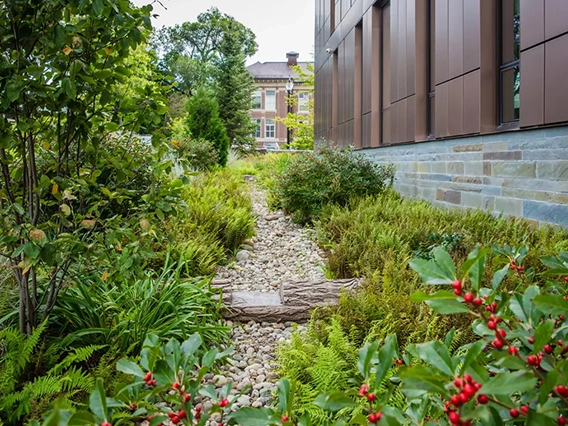
A Walk in the Woods: Re-Wilding, Experimentation and Pedagogy at UMass
The Design Building at the University of Massachusetts is the new home of the Architecture, Landscape Architecture and Regional Planning (LARP), and Building and Construction Technology Departments. As the second oldest Landscape Architecture Department in the United States, the site was the original location of LARP’s test plots in the early 1900’s. The need to restore a functioning ecosystem and the expression of horticultural experimentation guided the design process. With exposed timber f
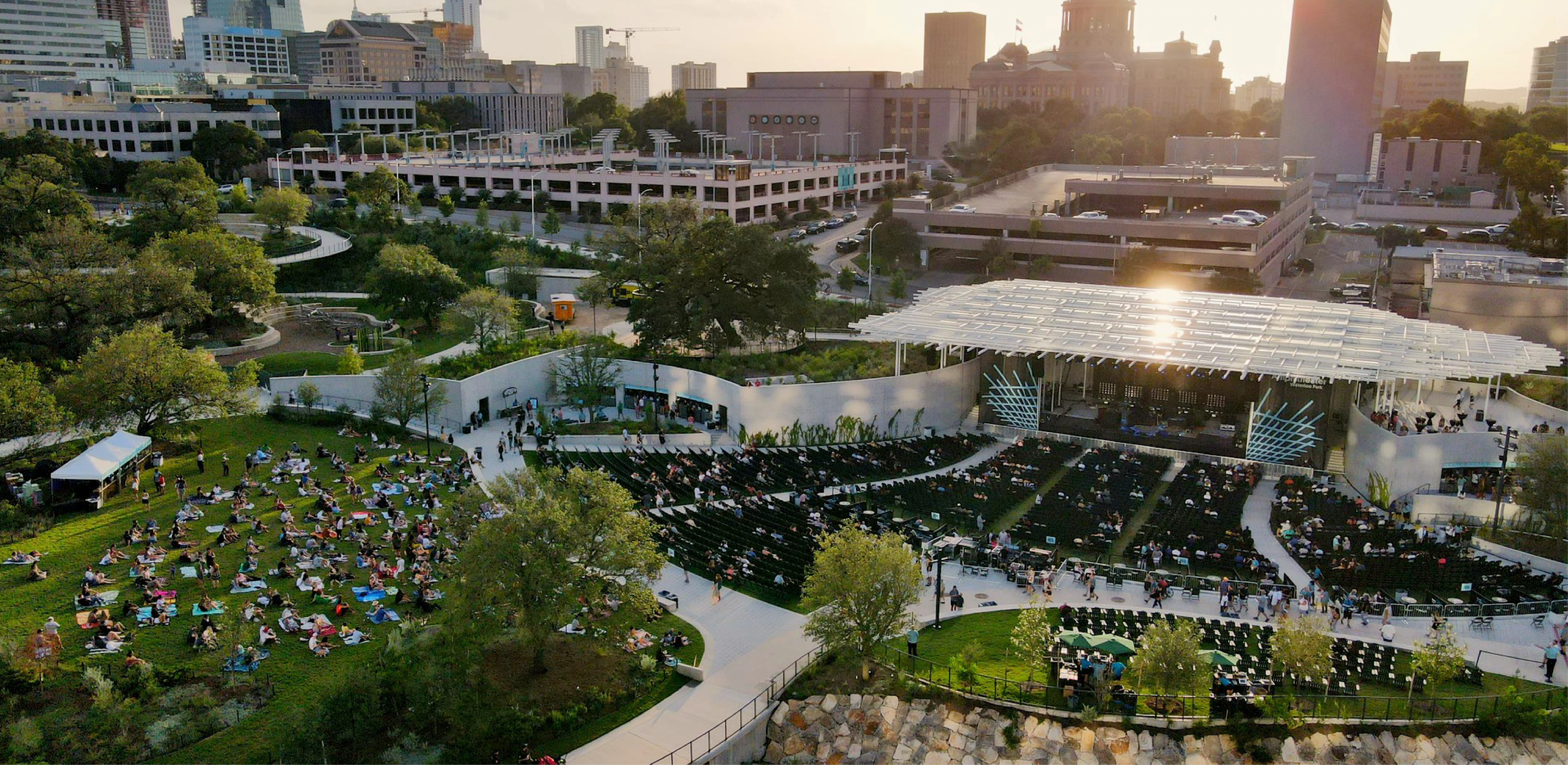
Waterloo Park: Reclaiming Public Space in the Center of Austin
Waterloo Park is the first phase of the public-private joint venture to ambitiously transform the blighted Waller Creek into a 1.5-mile-long greenway and chain of parks that connect East Austin and the downtown. Waterloo Park was originally prone to severe flooding and overuse during community events before being identified as the site for a floodwater bypass tunnel inlet —infrastructure that removes 28 acres from the floodplain downstream. The redevelopment of the park is the
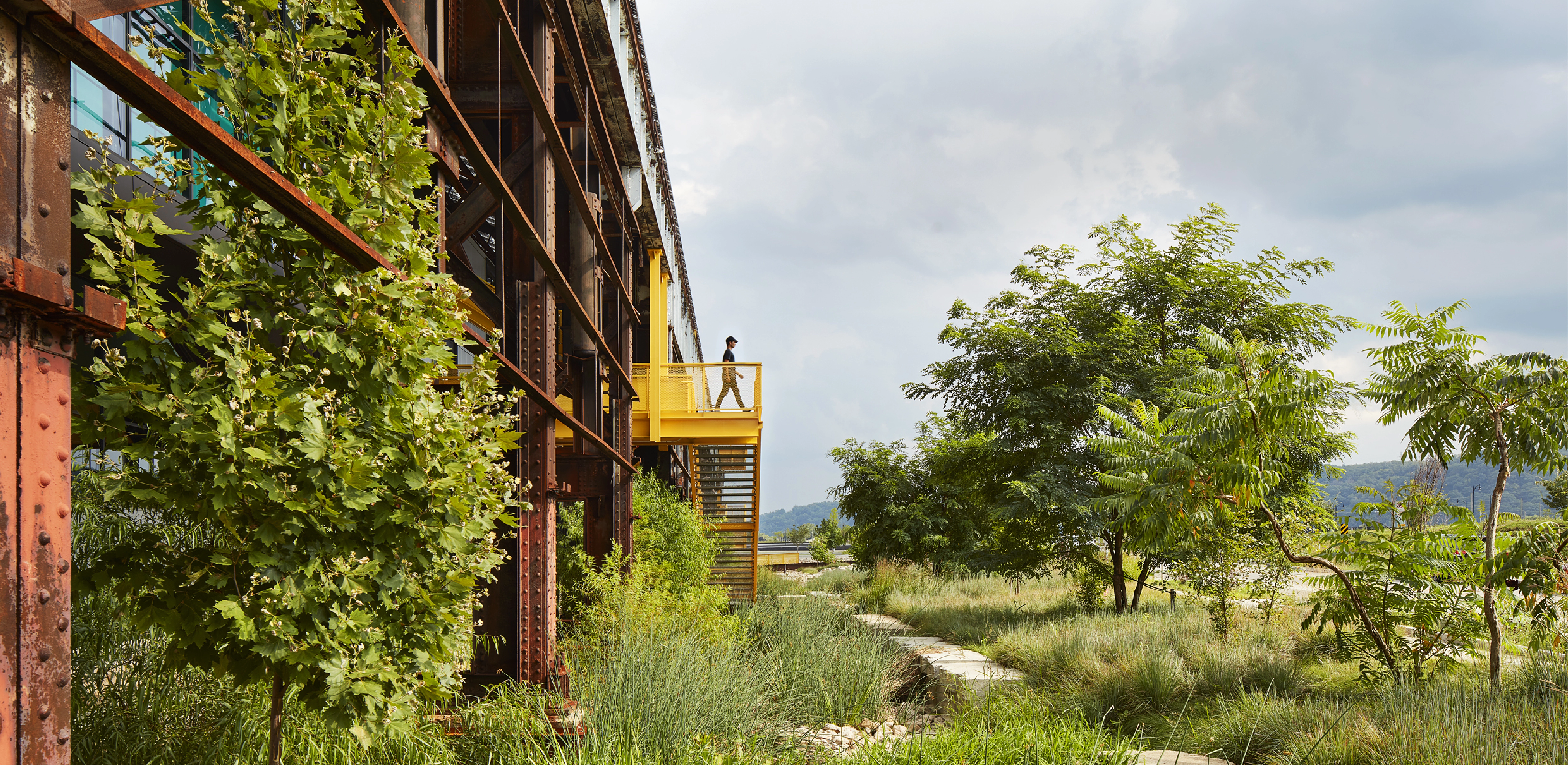
Mill 19: A Catalytic Postindustrial Landscape
Mill 19 is a living emblem of Pittsburgh’s transformation from its industrial steel-making past to a future of sustainable advanced manufacturing. Through a bold approach to adaptive reuse, the project viscerally interweaves new spaces for the Hazelwood Green community and the city’s robotics industry within the ruins of a decommissioned steel mill. The project welcomes the public through a series of linked exterior experiences framed between the 1,360-foot-long superstructure and three multi
Urban Design Category
Honor Awards
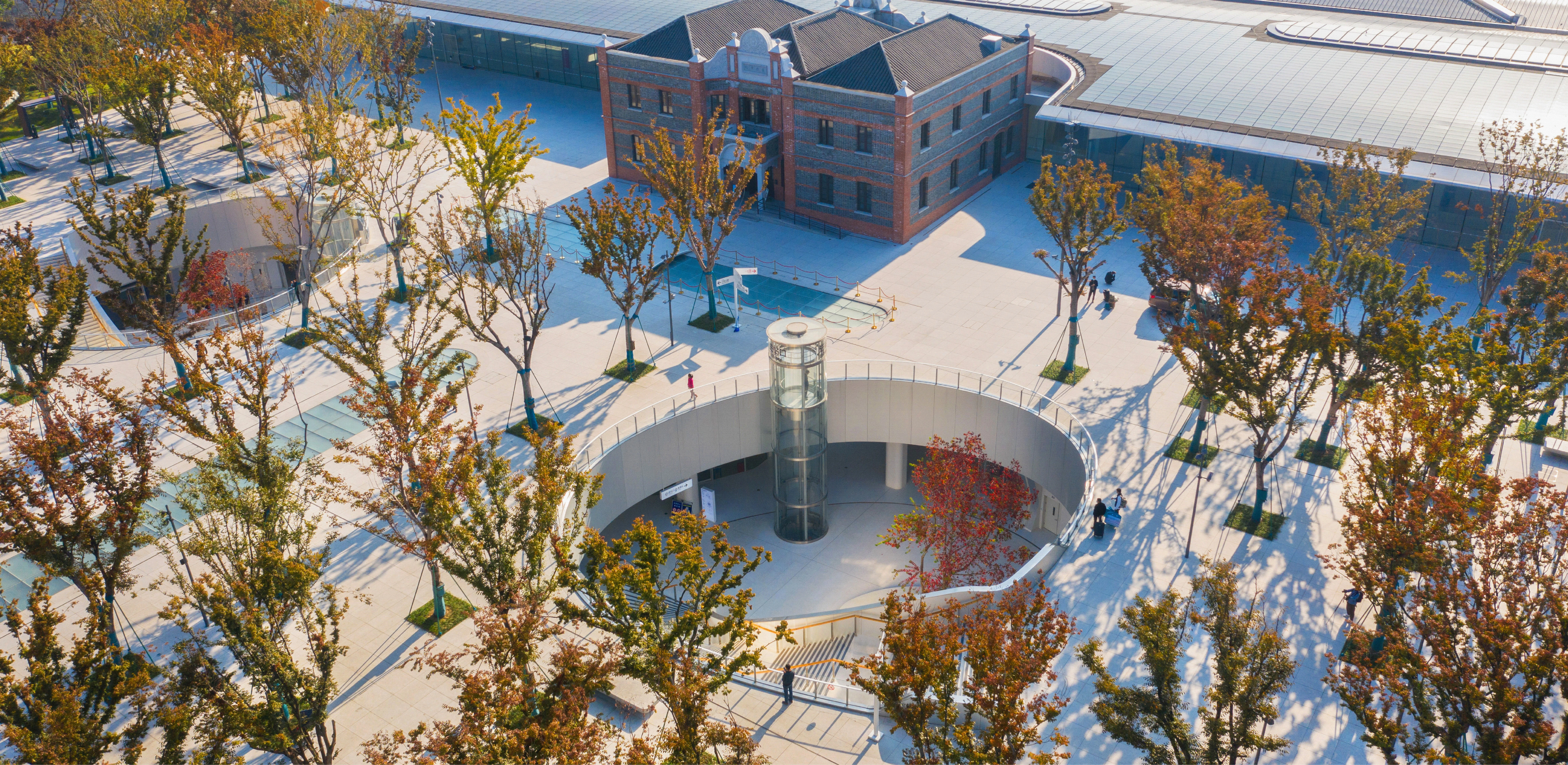
Jiaxing Station Park
Envisioned as "a station in nature," the project has transformed the congested street level of declining urban core into a lush, vibrant park, while relocating multi-modal transit system underground. By integrating green infrastructure atop transport infrastructure, the park has established a new model for creating future Transit Oriented Districts (TODs) to promote innovative urban revitalization.
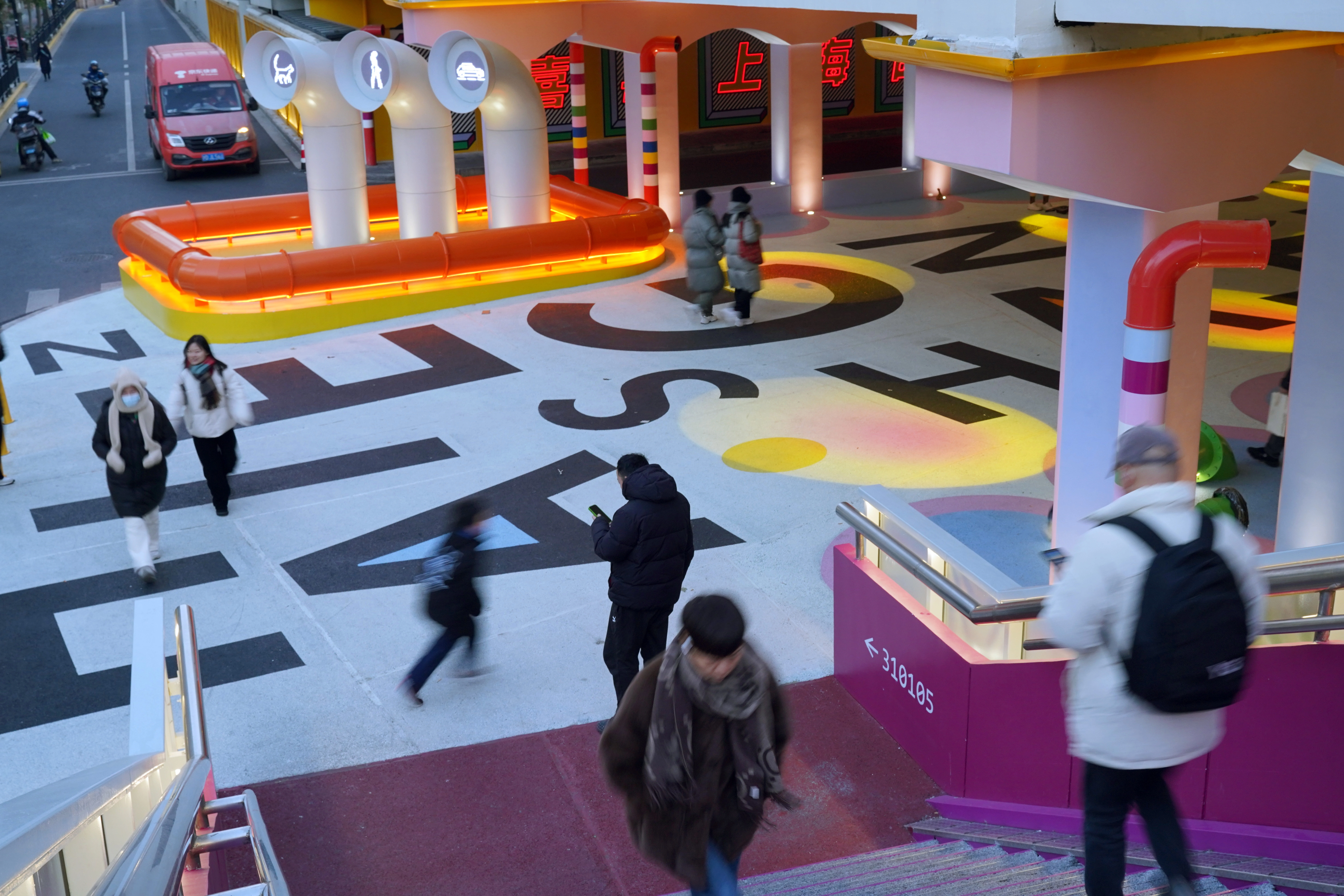
Shanghai Underpass Hubs: Bridging Divides, Building Community
Shanghai Underpass Hubs has transformed underutilized spaces beneath overpasses along the Suzhou River into vibrant public areas, addressing the urgent need for high-quality open spaces in one of the world's largest and most populous cities. The project, encompassing the recently established Sports Hub and Gathering Hub, is shaped through extensive community engagement, integrating public input to create multifunctional spaces for recreation, sports, and cultural activities. By repurposi
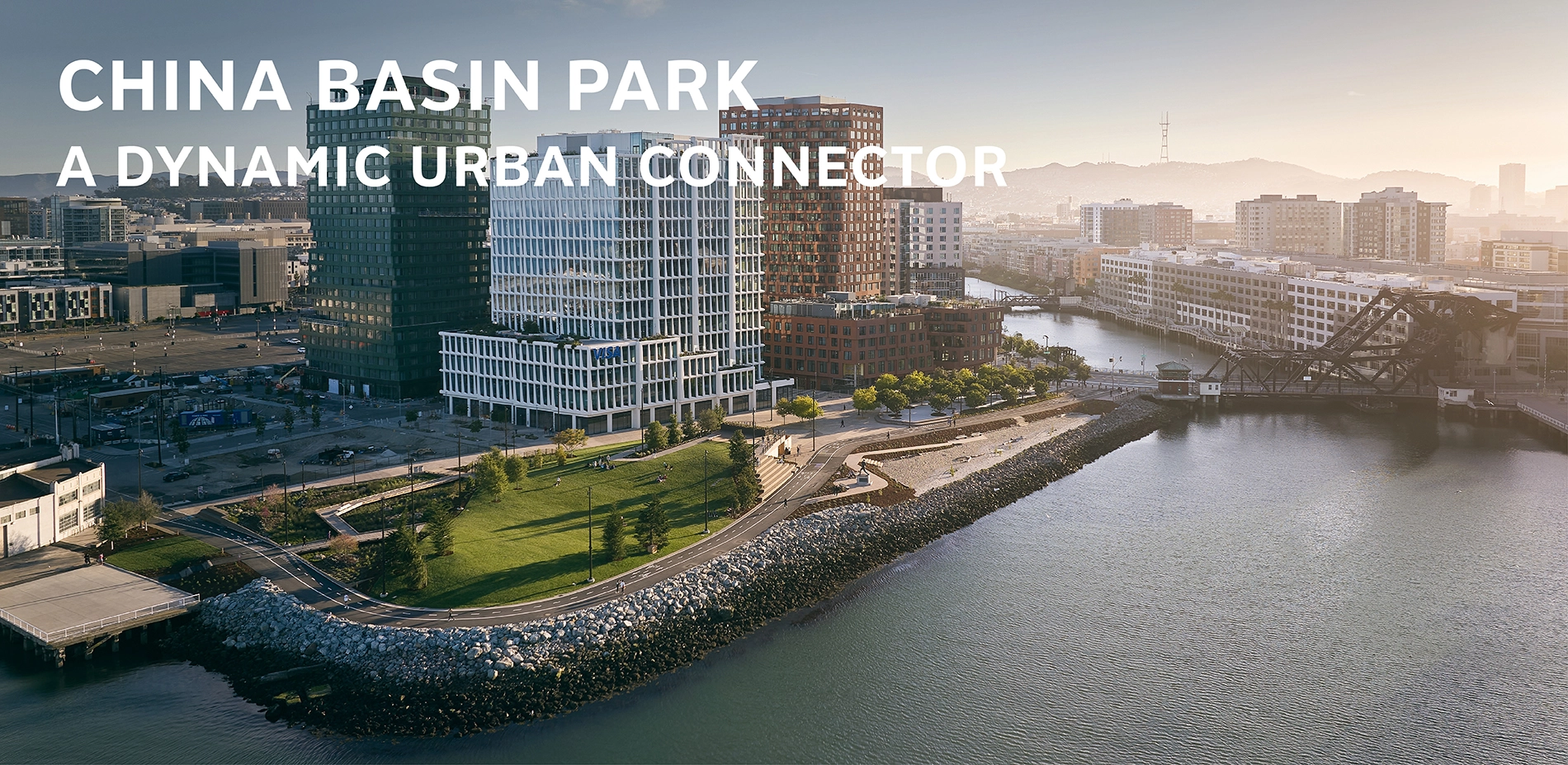
China Basin Park: A Dynamic Urban Connector
China Basin Park is a 5-acre waterfront park and cultural centerpiece of San Francisco’s new Mission Rock neighborhood. Urban design concepts drove the form of the park: a sculpted lawn frames views of the bay to the east, a Central Plaza greets pedestrians from the south, a shady grove meets the intimate scale of the basin, and an amphitheater faces the San Francisco Giants ballpark. China Basin Park magnifies local environs—the region’s headlands, coastal edges, and wetland ecologies are ec
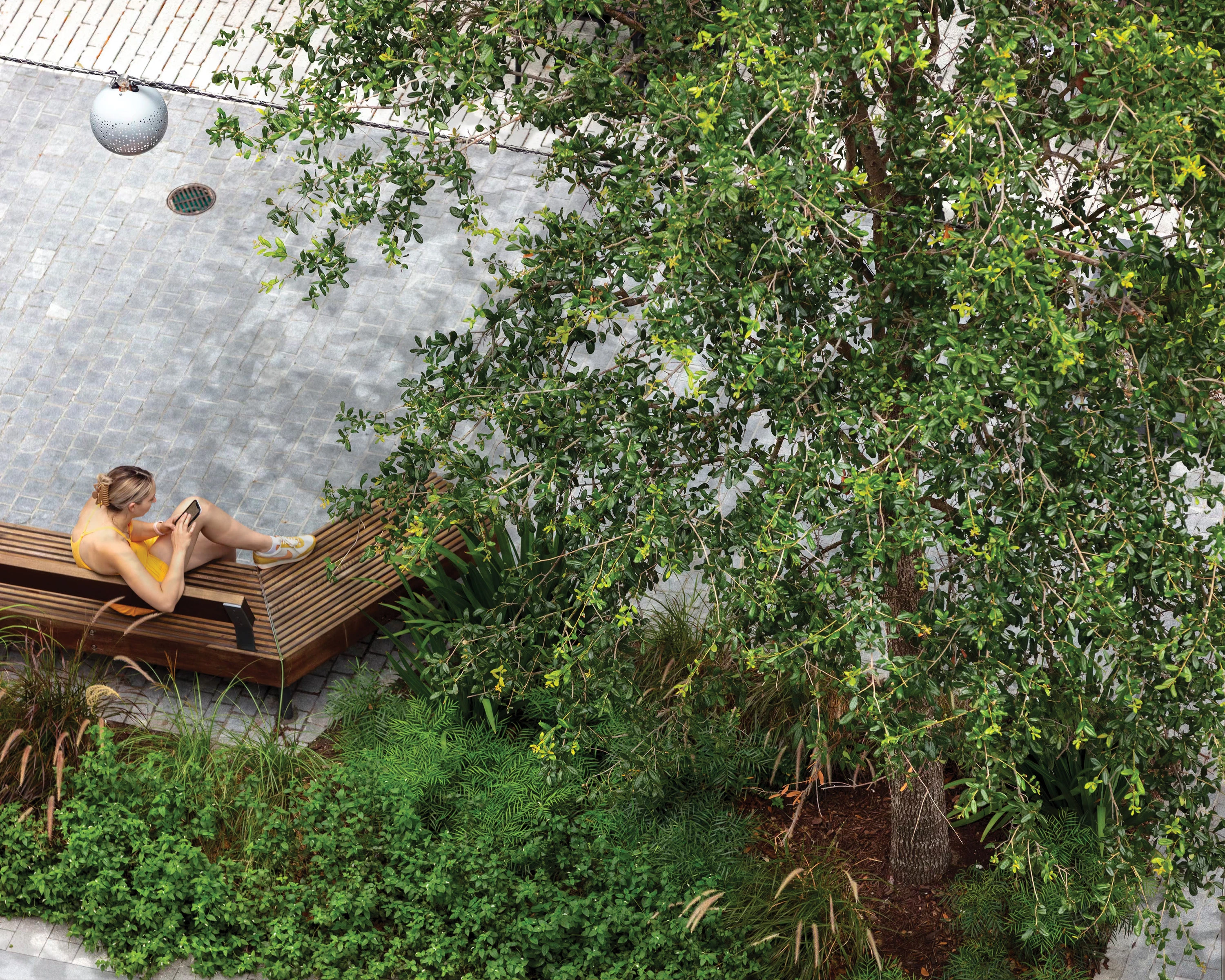
Generosity of Place: Water Street Tampa’s Continuous Canopy
A series of fragmented blocks in downtown Tampa, Florida became a proving ground for city-building centered on human comfort and wellbeing. The developer appointed the landscape architect at their project’s inception, seeking a public realm master plan to articulate strong civic values and to enact a holistic vision for wellness. The landscape architect defined Water Street Tampa through mature live oaks set within sidewalks dimensioned to permit 1,200 cubic feet of soil per tree, to sustain
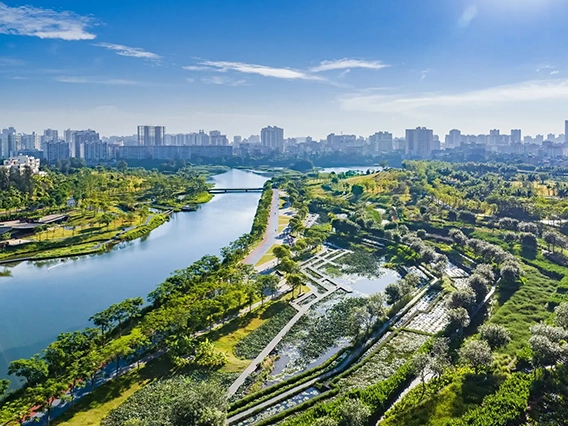
Turning Gray into Green:Meishe River Greenway and Fengxiang Park
Haikou City, long plagued by monsoon flooding and urban water pollution, saw its concrete-lined waterways bereft of life and ecological resilience. Addressing this, the landscape architect led the charge in implementing nature-based solutions, revitalizing these waterways into thriving green, social-ecological systems. This transformation brought back clean water, rich biodiversity, and lush landscapes, injecting social vibrancy into the community. Eco-friendly, flood-resilient waterways and
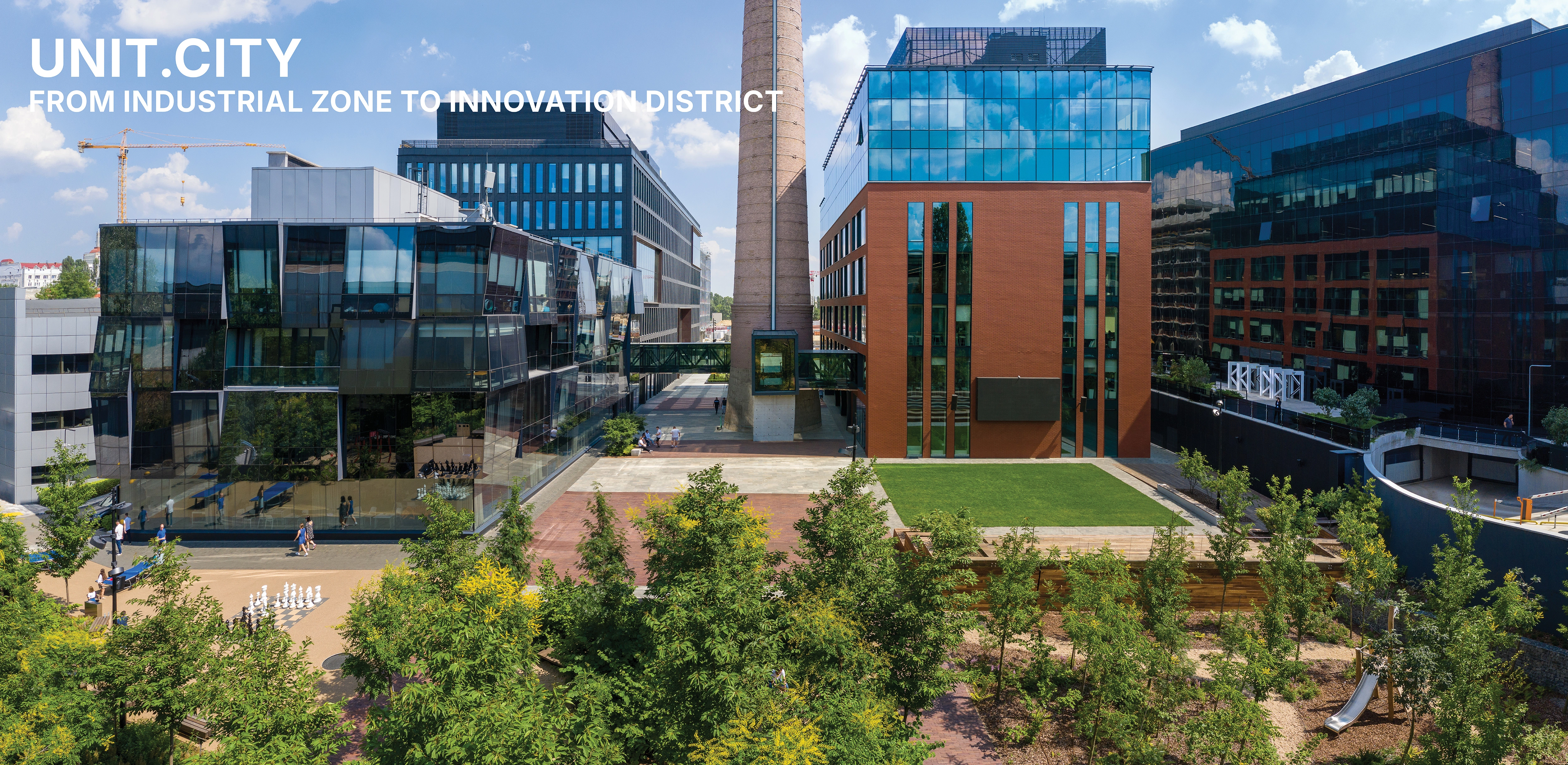
UNIT.City: Transforming an Industrial Zone into an Innovation District
UNIT.City transforms a post-industrial site into an innovation district where education, work, and public life seamlessly intersect. The redevelopment reclaims a once-restricted area, establishing a walkable, climate-responsive urban environment that enhances connectivity with the city. A landscape-first approach defines key public spaces — including Event Plaza, pedestrian streets, an education hub, and rain gardens — that foster social interaction, biodiversity, and urban resilience. By pri
Residential Design Category
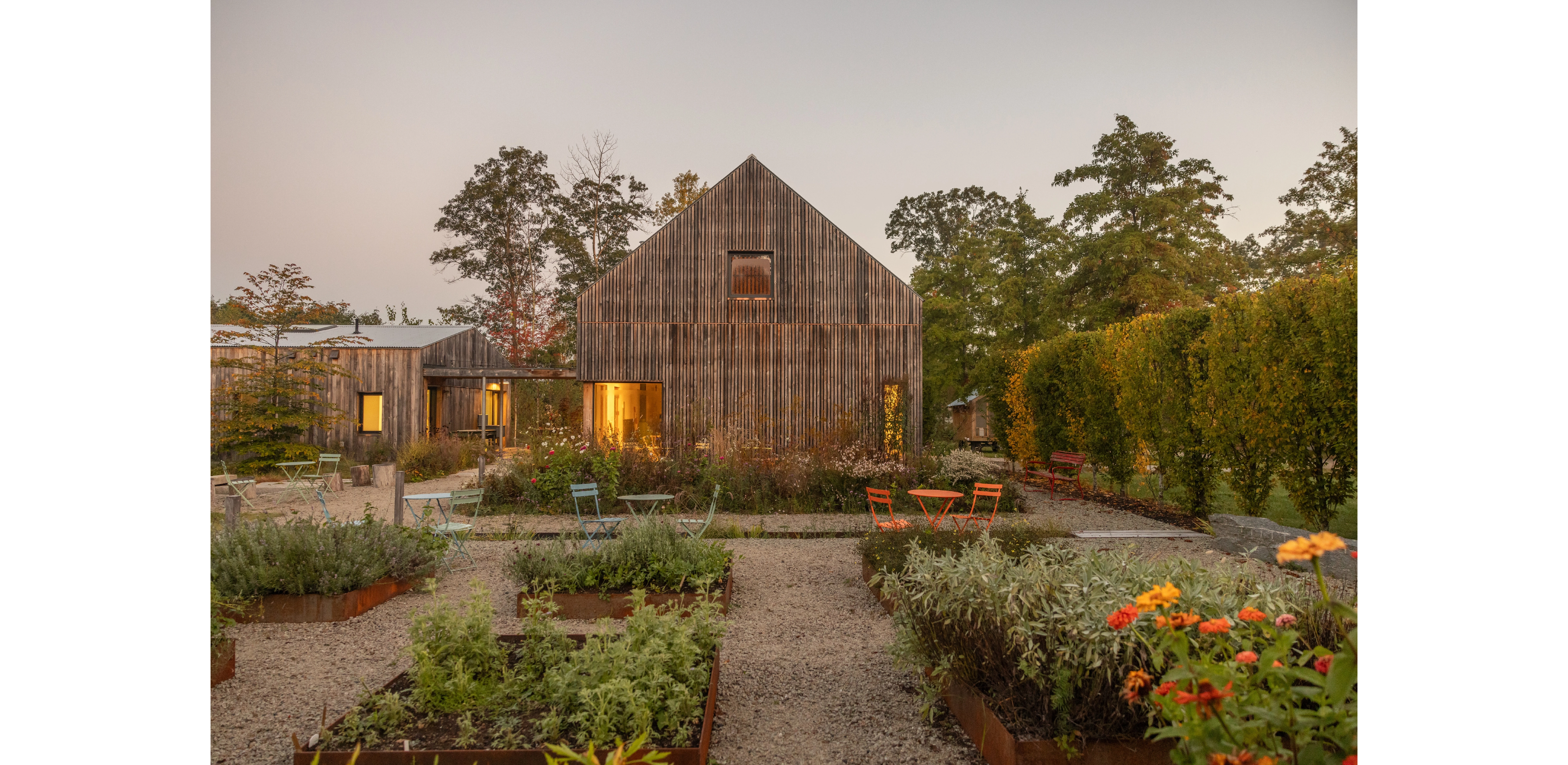
And the Wild Comes Right up to the Door
Charbrook is located at the foothills of Mount Wachusett in central New England. What began as a homestead crafted from the land, has evolved into a working farm and a landscape architecture studio. A mosaic of gardens, fields, woodlands and wetlands bridge between the homestead and the practice, grounding the family and the profession to this place. The land is a canvas for explorations in design, farming, and environmental stewardship. It is lived in, learned from, and unfolds as an ever-ev
Residential Design
Honor Awards

The Little Project: Unlocking the Potential of an Everyday Urban Lot
The Little Project is a pilot initiative demonstrating the transformative power of small-scale urban residential design. Situated on a 40x150-foot lot in St. Paul’s historic neighborhood, this full-site redesign reimagines a traditional lawn-covered front and backyard into a dynamic, nature-rich sanctuary. Blending sustainability, nature play, edible gardening, and outdoor education, the project maximizes every square foot within a modest budget. Designed for year-round beauty and enjoyment,
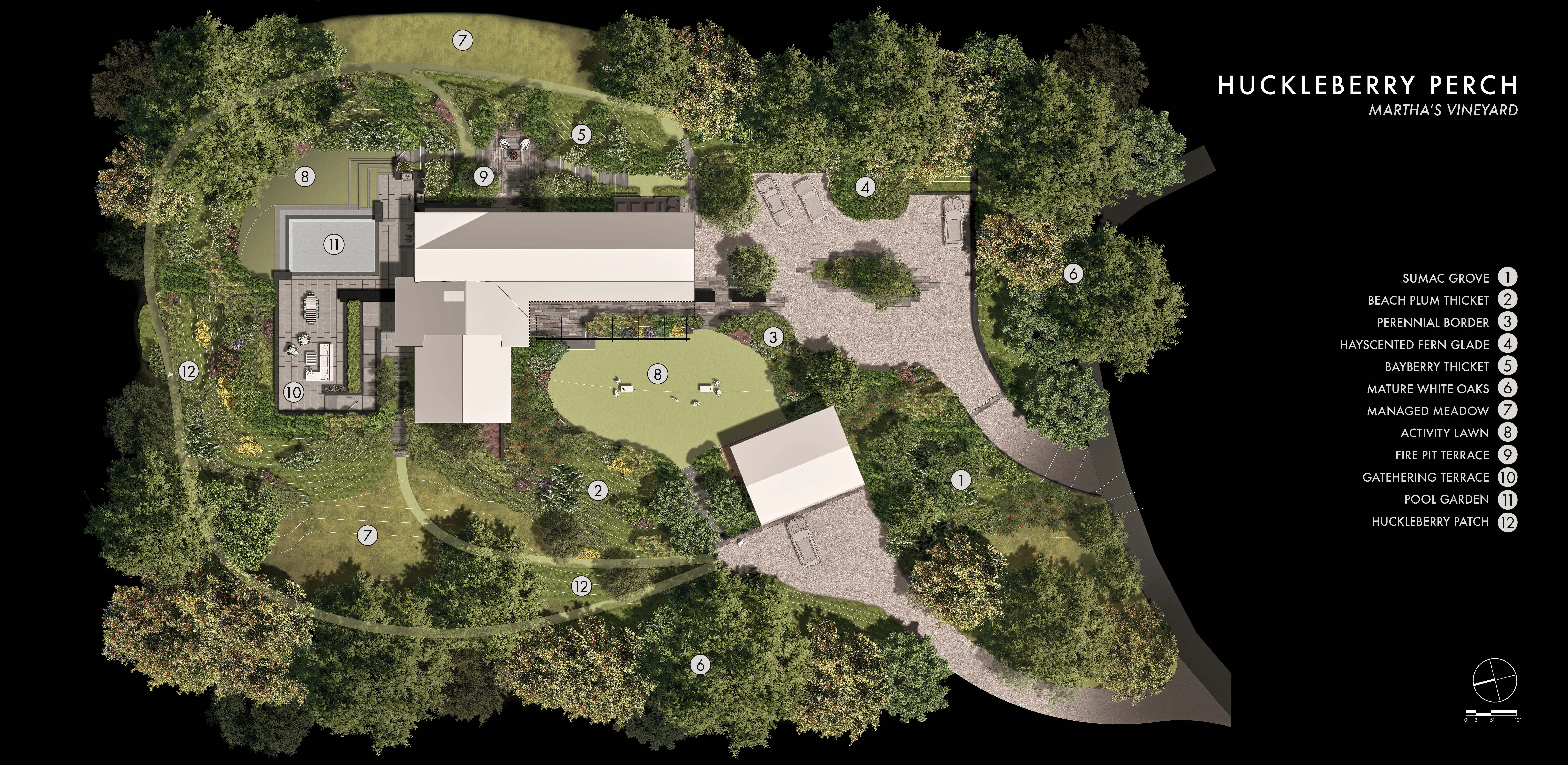
Huckleberry Perch
From a bare hilltop, a client’s desire to revive sentimental connections to Martha’s Vineyard invited the submitting firm to undertake an experiment: weaving an ecologically rich garden into the steep sandy slopes of a disturbed site. Rather than replant a lost forest, successional plant communities—shrub thickets, meadows, and fern-covered embankments—root the home to ever-evolving surroundings while creating diverse habitat. Dry-laid stone walls and reclaimed granite paths navigate terrain,
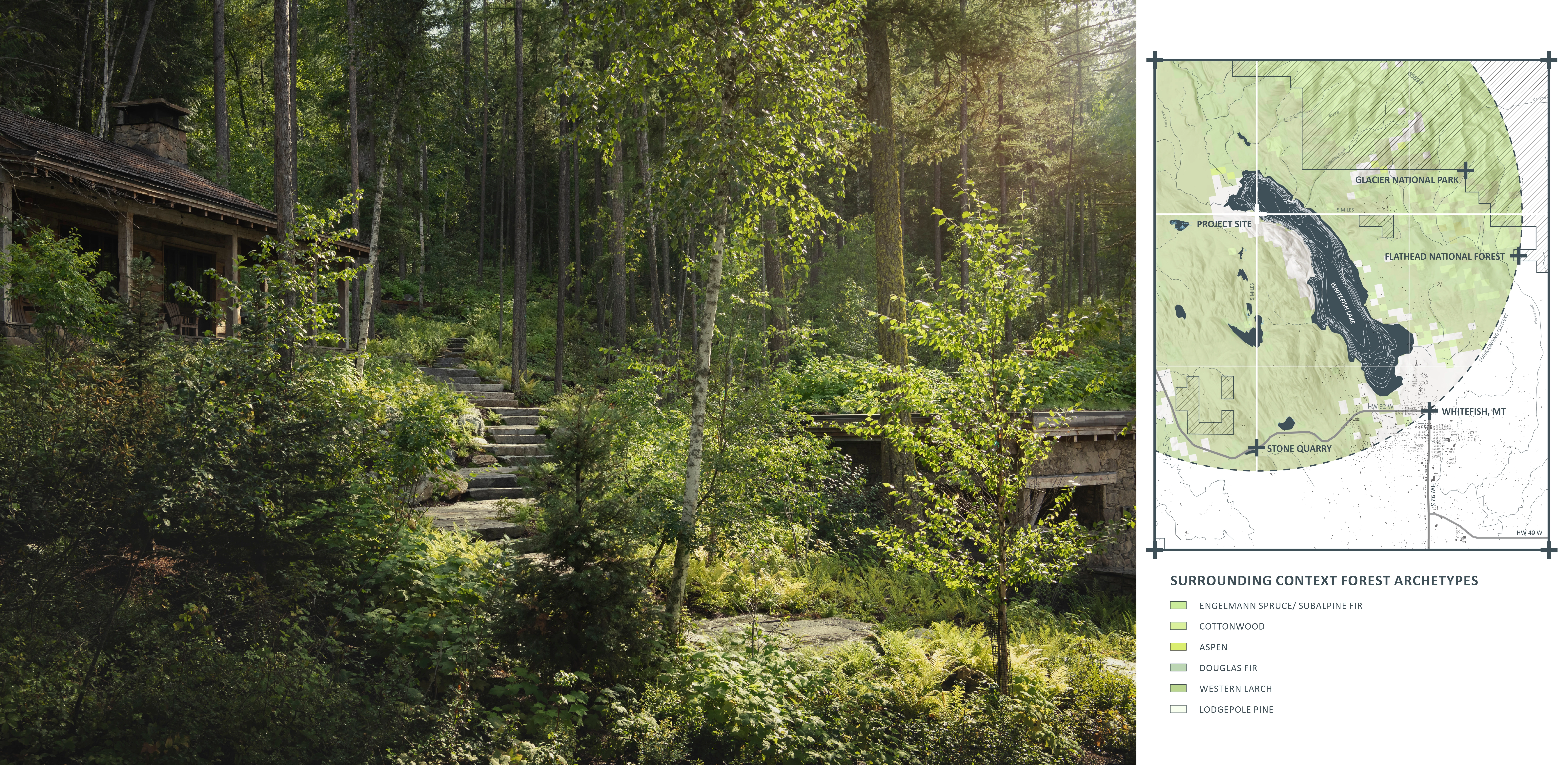
Inez Point: Embracing an Old Growth Forest
Decades of human activity have altered freshwater lakes of our American West, diminishing ecological health and scenic quality. The rehabilitation of this ecologically sensitive, forested landscape ensures the long-term legacy of a family retreat while protecting the distinctive natural character of a glacial mountain lake.
Modest in scale yet visually and environmentally impactful, the design balances conservation, stewardship, and adaptation. Embodying restraint, interventions are qui
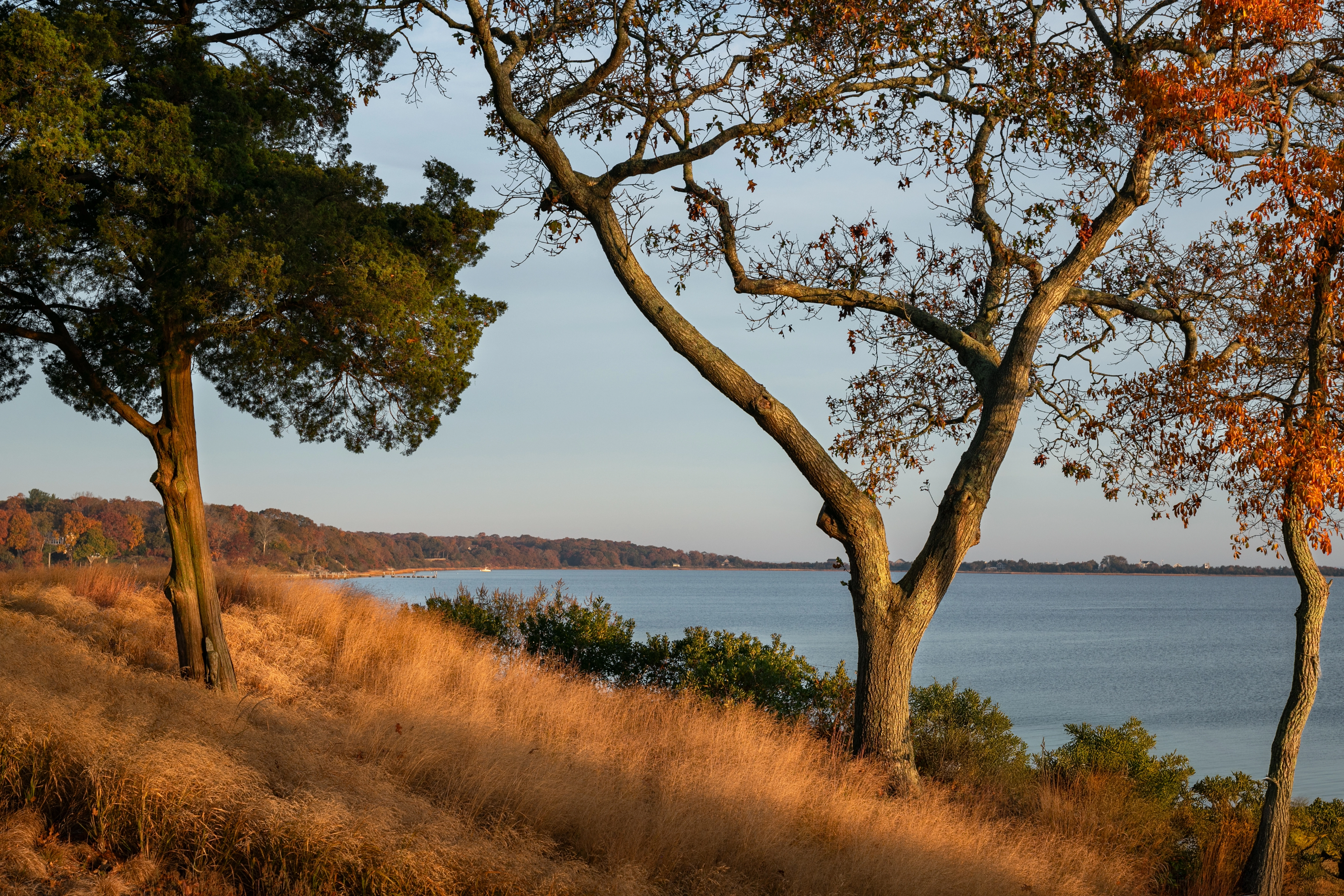
Springy Banks
Springy Banks, a former 1960s summer camp, was transformed into a 13-acre residence that honors its history while restoring its formerly degraded landscape. Once dominated by asphalt roads and mowed lawns, the site suffered from polluted runoff draining into the bay. The Landscape Architect led an extensive ecological restoration, removing impervious roadways and contaminated sediment, and implementing natural drainage swales and rain gardens to improve water quality. More than 50,000 native
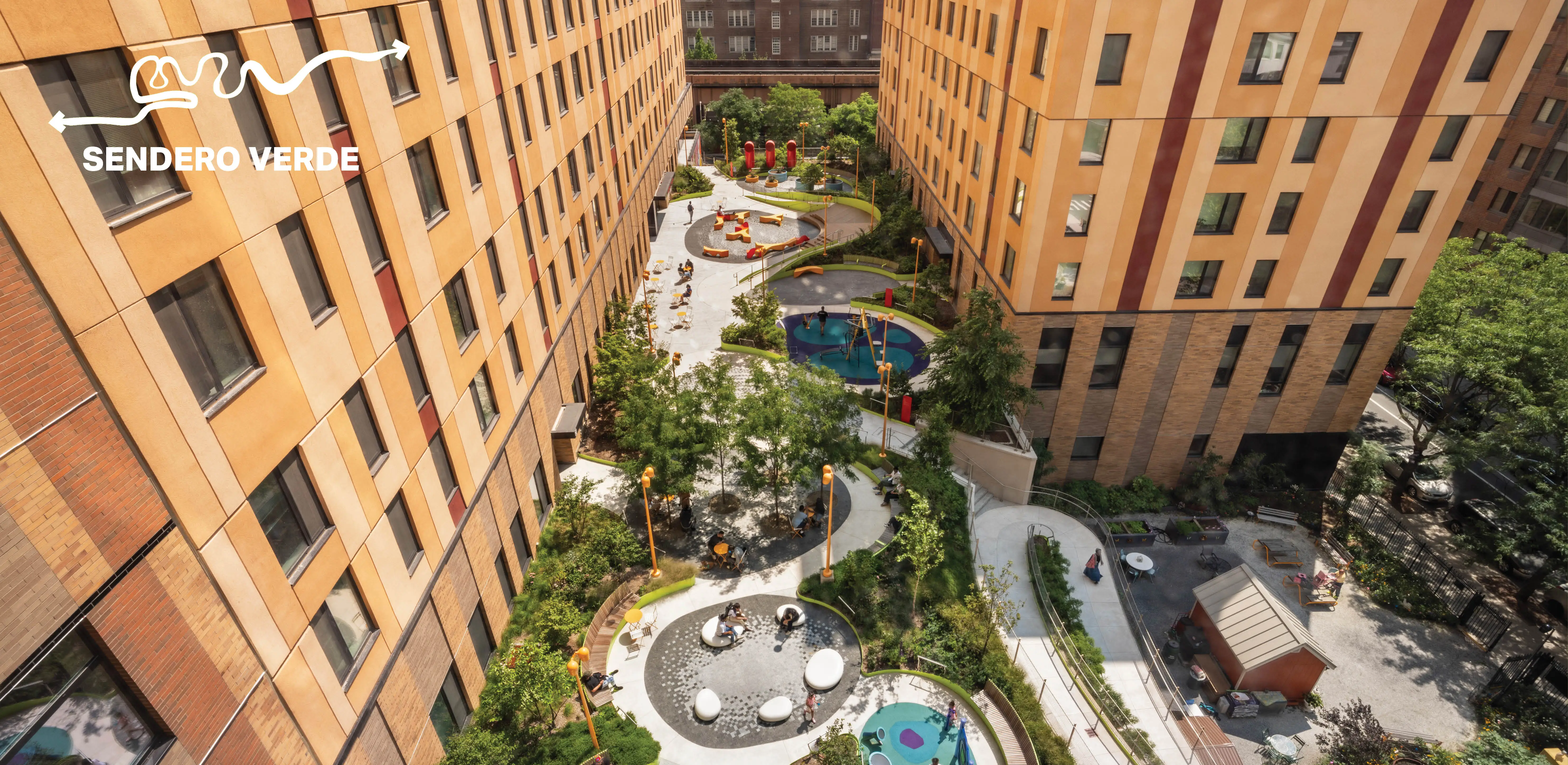
Sendero Verde
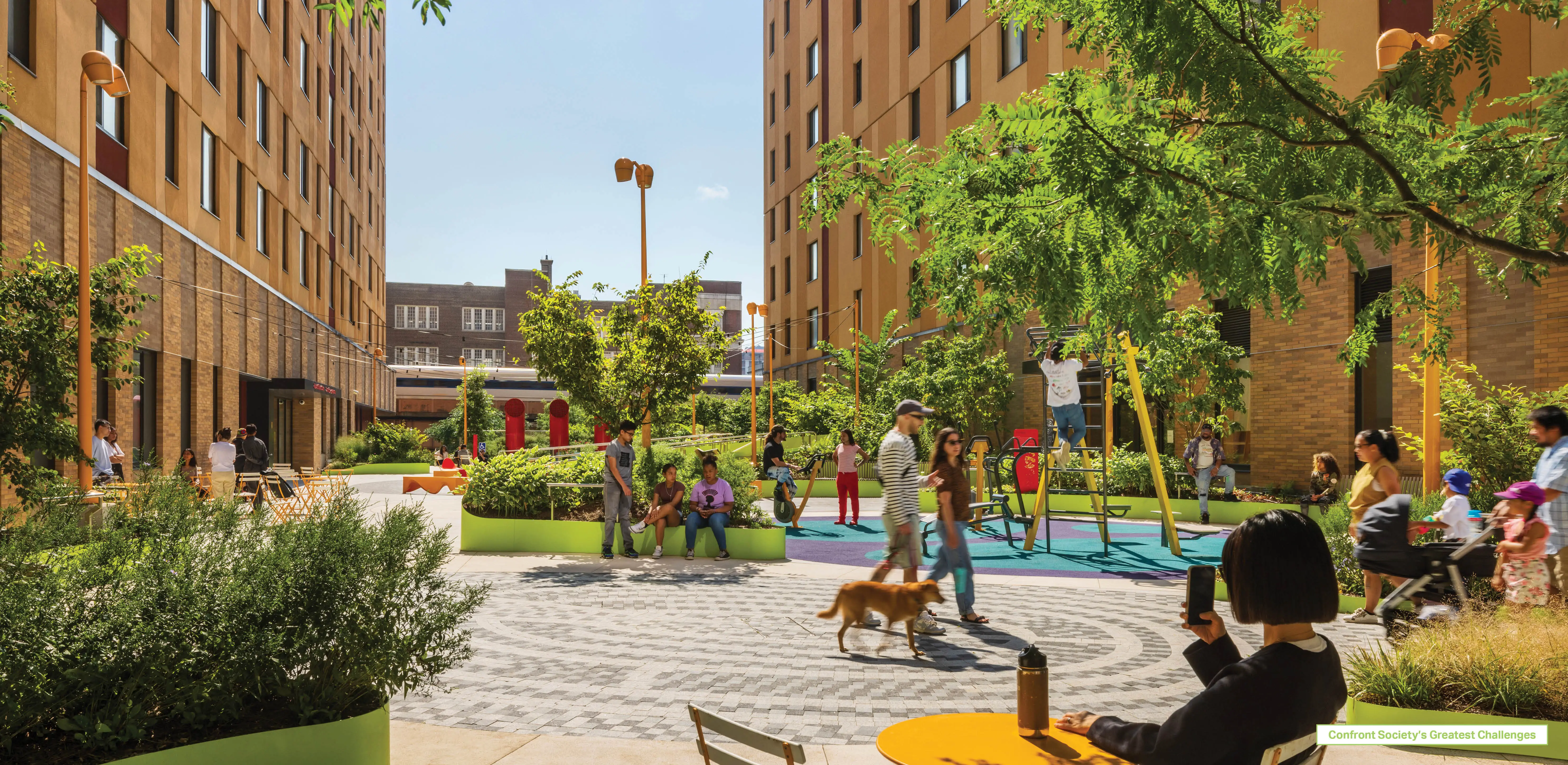
Sendero Verde serves over 700 households in a sustainable, fully affordable development that is the world’s largest Passive House-certified project. The heart of the complex is the publicly accessible elevated courtyard, a shared green space intentionally positioned above street level to offer a peaceful, protected environment. The courtyard features intimate pods for quiet conversation, interactive zones for exercise and play, and a spacious plaza with a performance podium, which hosts commu
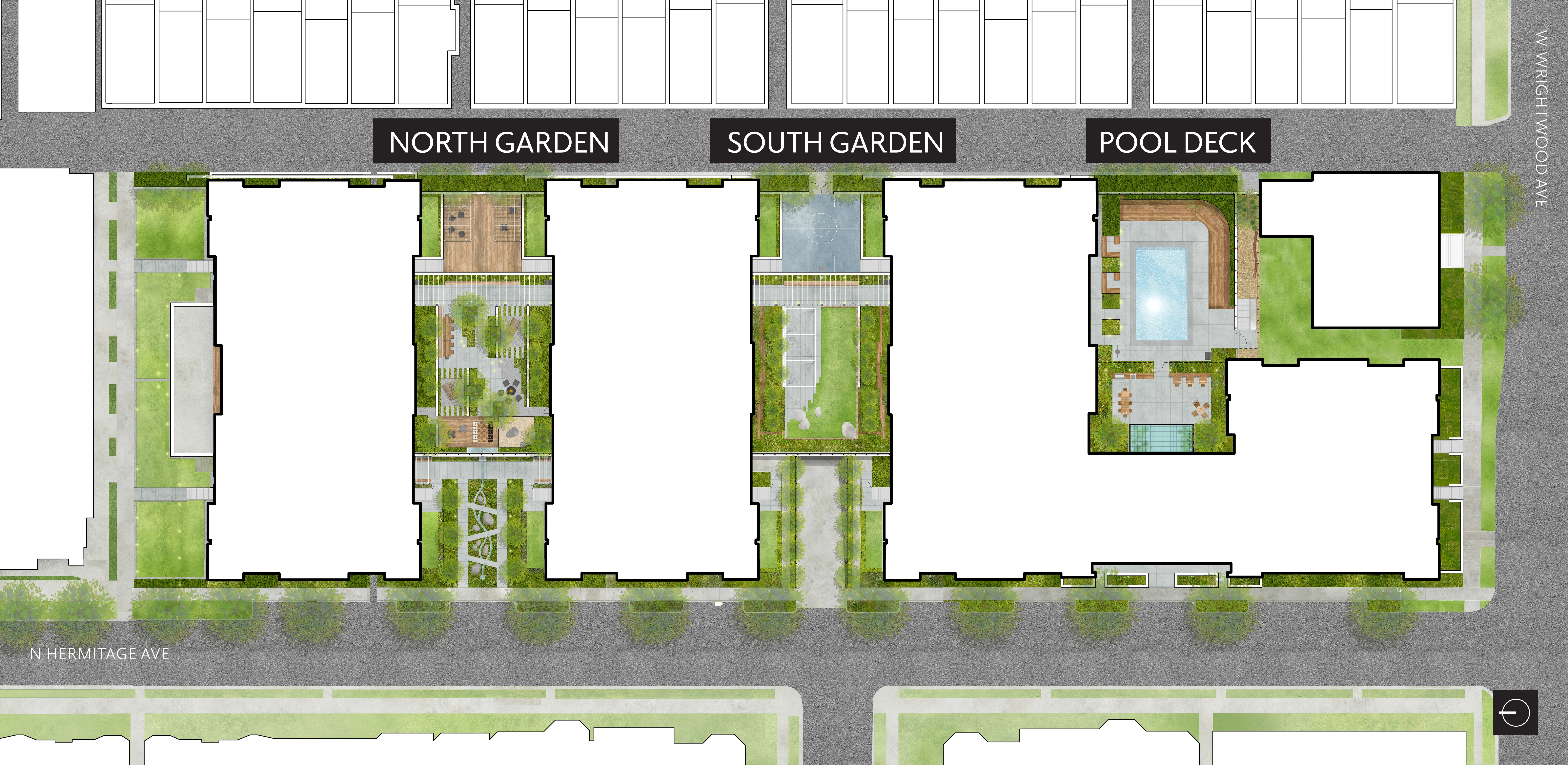
Norweta
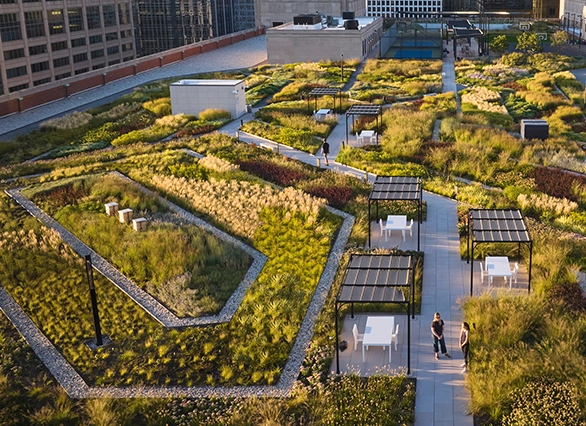
Norweta is an urban infill project in Chicago’s Lincoln Park neighborhood. Designed with an emphasis on resident wellness and green living, the 74-unit development uses landscape as its defining element. A series of shared courtyards and lush gardens provide spaces for gathering and respite amid fast-paced city life. These interconnected “secret gardens” each have a unique character and program, while maintaining a cohesive design language. Nearly all the landscape sits over structure, e
Analysis & Planning Category
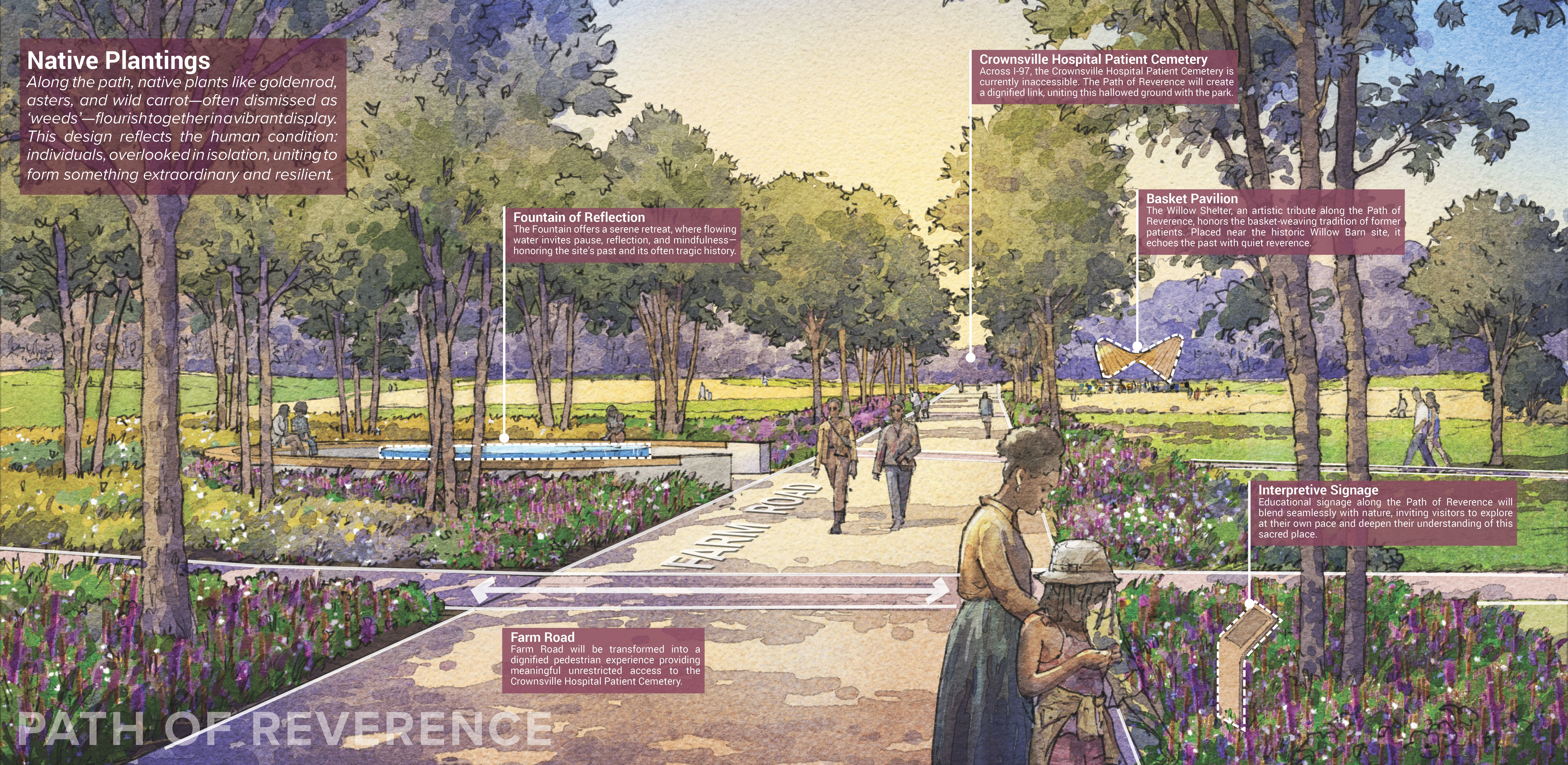
Crownsville Hospital Memorial Park: A Landscape of Healing and Renewal
Crownsville Hospital Memorial Park is a transformative master plan that reimagines the former “Hospital for the Negro Insane of Maryland” into a powerful landscape of healing. Once a place of segregation and suffering, it now fosters mental wellness through remembrance, reflection, and community connection. By honoring those once forgotten and creating spaces for solace and renewal, the park confronts the past while shaping a more compassionate future. It stands as a testament to resilience—where isolation gives way to belonging, and suffering is met with hope—redefining how public spaces can promote mental health and inspire collective healing.
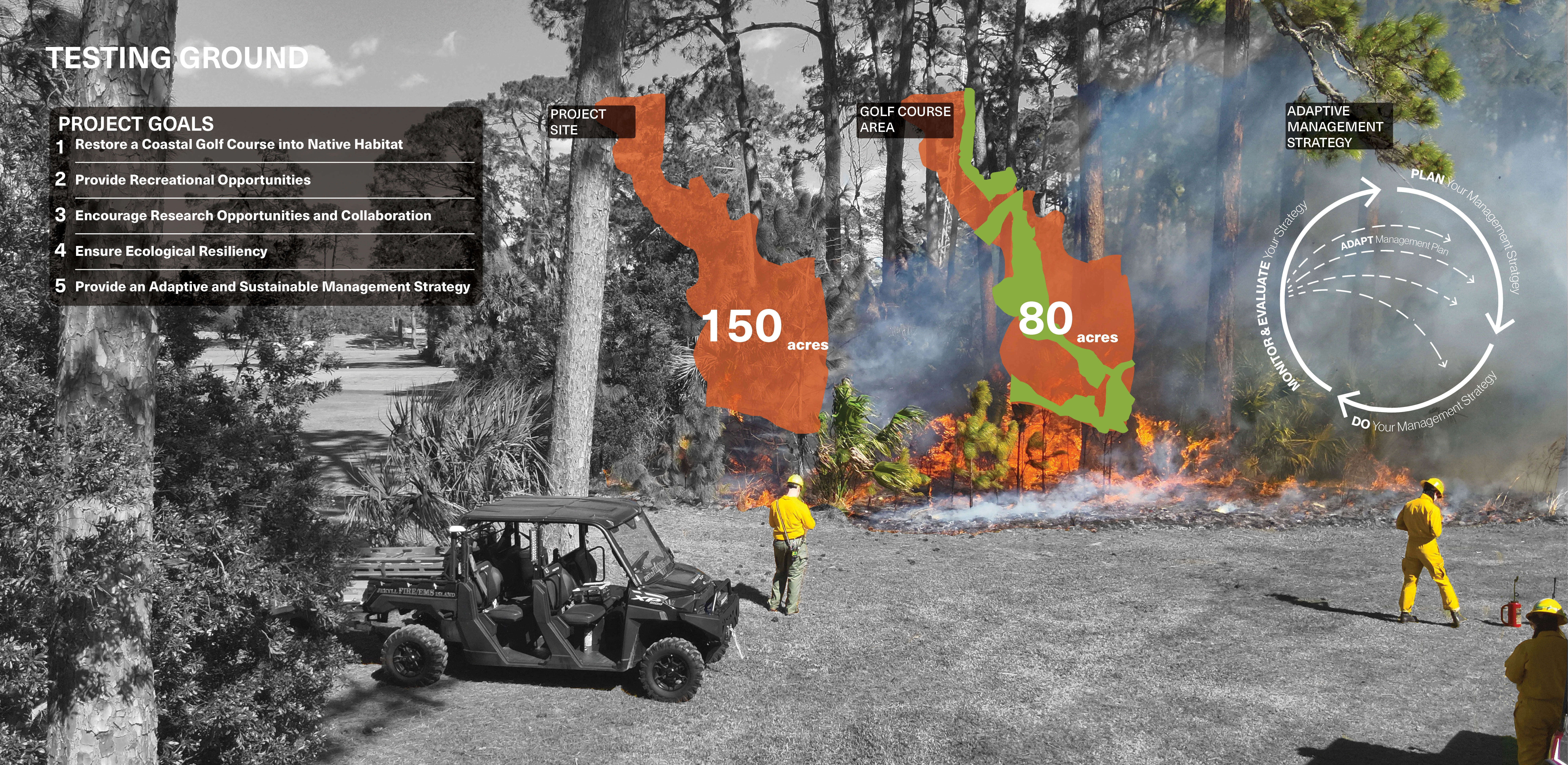
Testing Ground: Adapting Fairways to Resilient Barrier Isle Ecosystems
Jeykll Island’s ecological restoration transforms an aging golf course into a resilient coastal landscape, setting a national precedent for repurposing underutilized land. Once a fragmented and degraded site, the landscape is being revitalized into thriving native habitat that includes longleaf pine savannas, coastal salt marshes, maritime forest, and sweetgrass prairie. Led by landscape architects, the project balances ecological restoration with cultural heritage. By restoring habitats, providing recreation and research opportunities, ensuring ecological resilience, and developing adaptive management strategies, this effort not only protects the island’s natural heritage but also positions it as a model for coastal restoration nationwide.
Analysis & Planning
Honor Awards
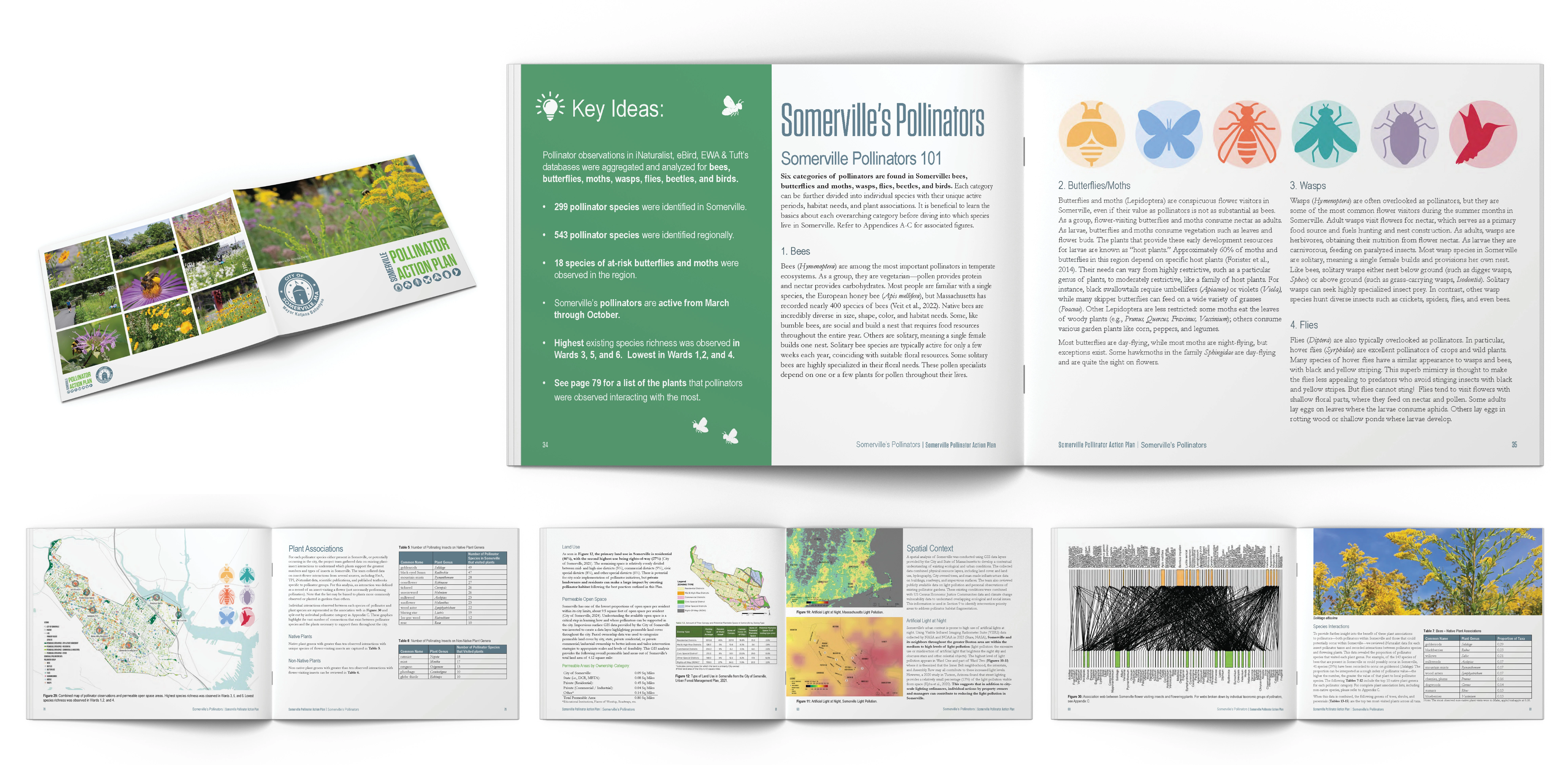
Somerville Pollinator Action Plan: A Pollinator’s Guide to City Living
The Somerville Pollinator Action Plan is a first-of-its-kind urban pollinator research and policy framework, envisioning a city where biodiversity grows alongside community. Pollinator decline—projected at 30% insect loss over the next 20 years—demands urgent attention. iNaturalist and community observation data was mapped to create a baseline of known local pollinators. The plan details pollinator support strategies with both science and aesthetics in mind, including original ecolog
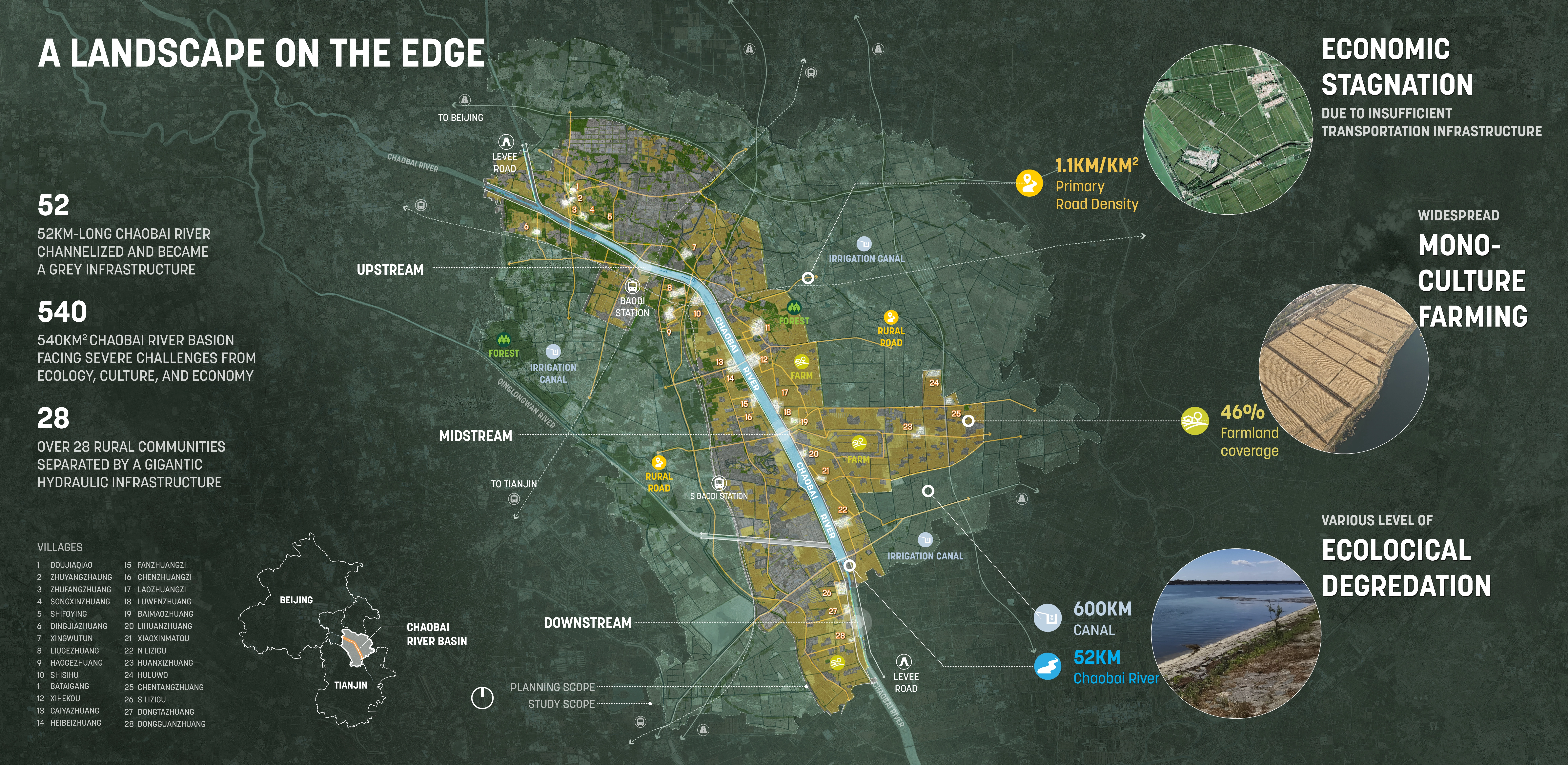
Rural Abundance & Vitality: The Chaobai River Basin
The Chaobai River Basin, a historically vibrant agrarian landscape, faced ecological, cultural, and economic fragmentation after 20th-century channelization disrupted its human-river symbiosis. This rural regeneration initiative integrates ecological restoration, cultural reanimation, and economic revitalization into a cohesive framework. Collaborating with 28 partner villages, the plan restores riparian habitats, revives cultural traditions, and transitions monoculture farming to diverse agr
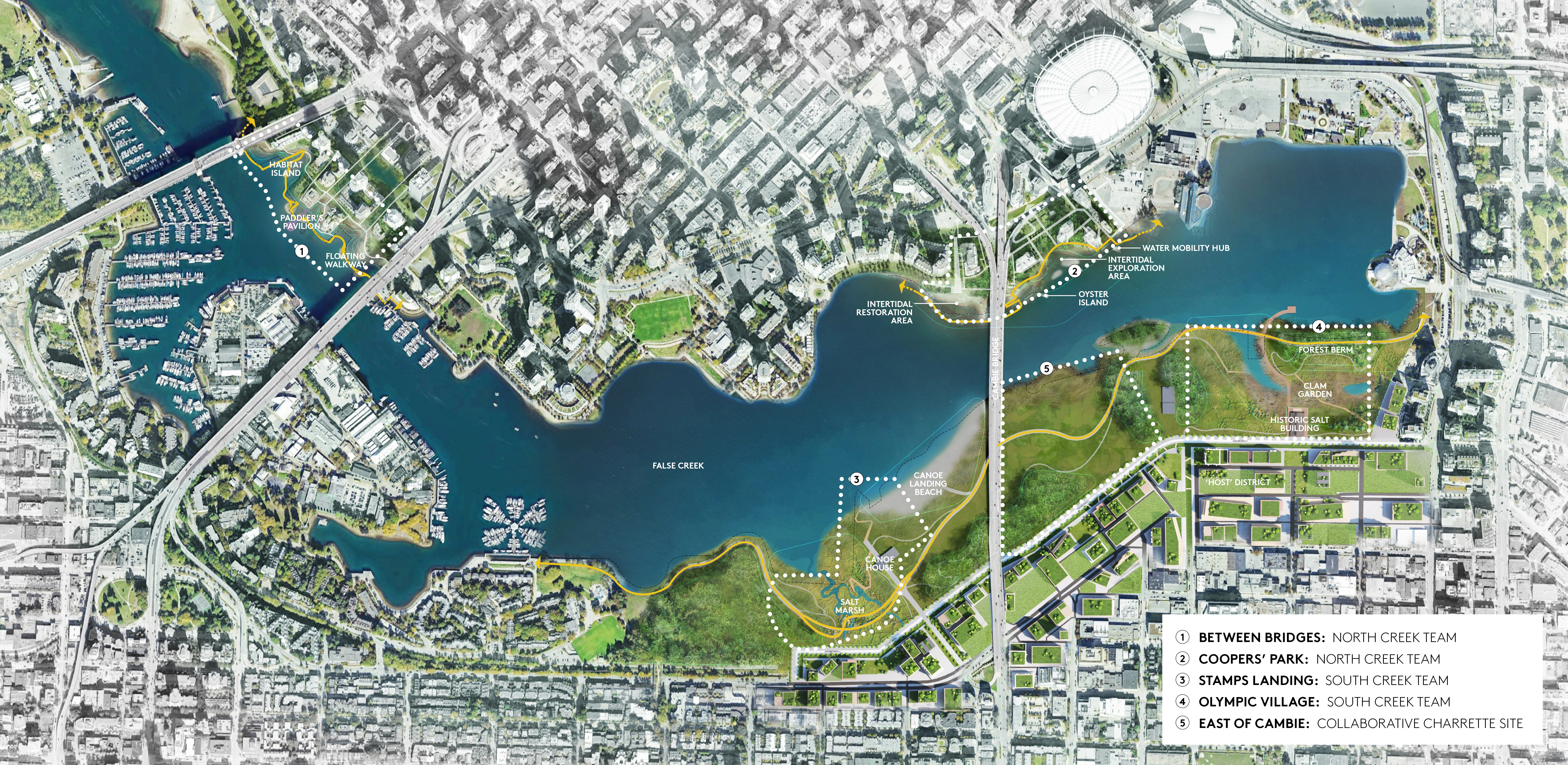
Sea2City: Reimagining Reconciliation in Design and Policy
Grounded in the city of Vancouver B.C.’s commitment to truth and reconciliation, this nature-based climate adaptation approach envisions a return to the historic False Creek shoreline. A precedent-setting process prompted ongoing, continuous learning between city and province agencies, a youth adaptation lab, cultural artists, designers, the public, and Host Nation cultural advisors. With reconciliation and reciprocity as the foundation, design outcomes represent a future in which Host Nation
Communications Category
Honor Awards
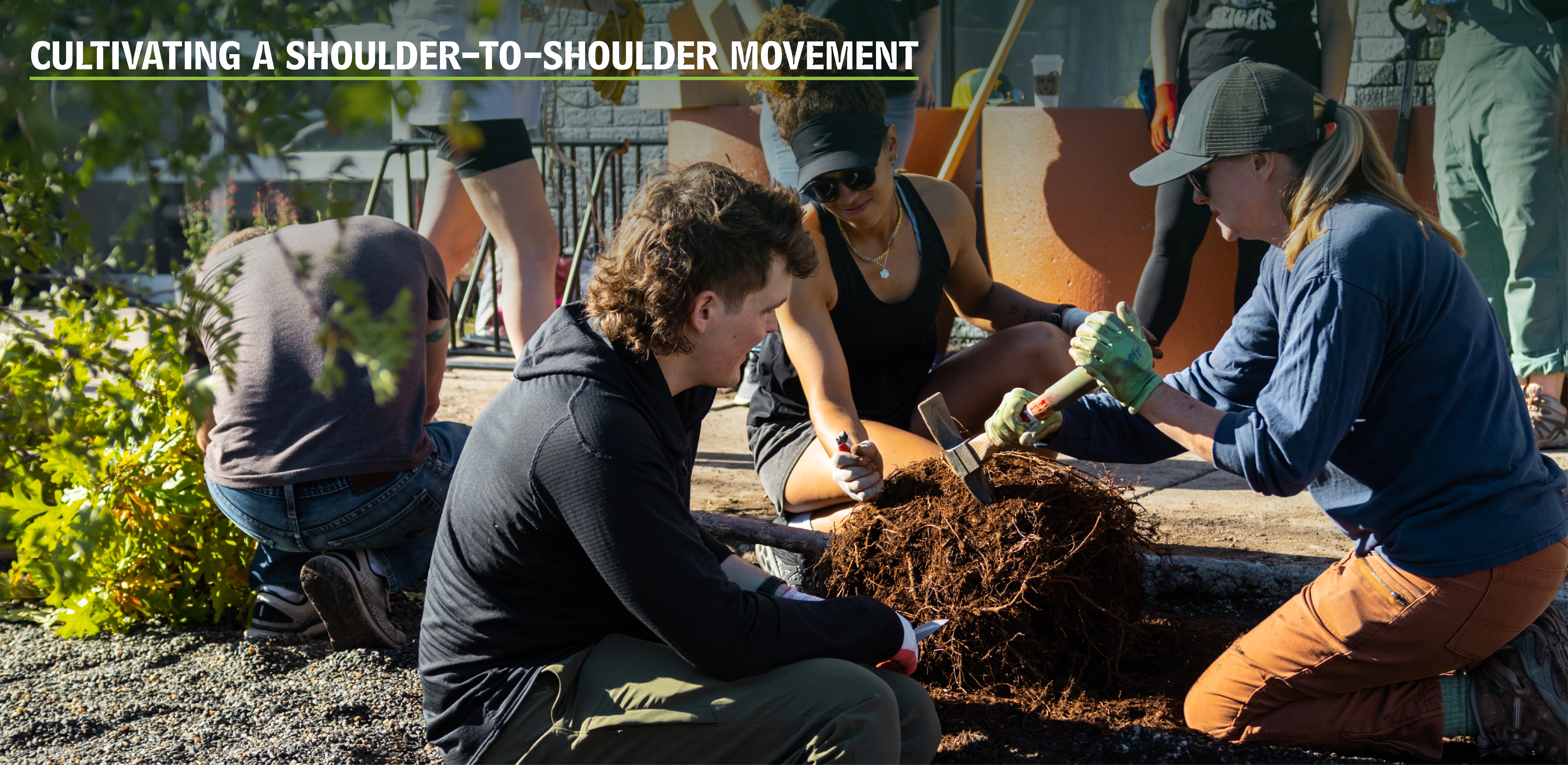
Greening Five Points: Growing a Grassroots Movement in Denver
Coalescing community narrative power around a dynamic communications framework may fall outside of traditional landscape architecture scope of services, but it was exactly what Green Dot Coalition needed to propel their climate justice movement in Denver’s Five Points neighborhood. The Greening Five Points communications strategy spans social and traditional media, events, and demonstration projects. It amplifies voices from the climate frontlines and calls for equitable green infrastruc
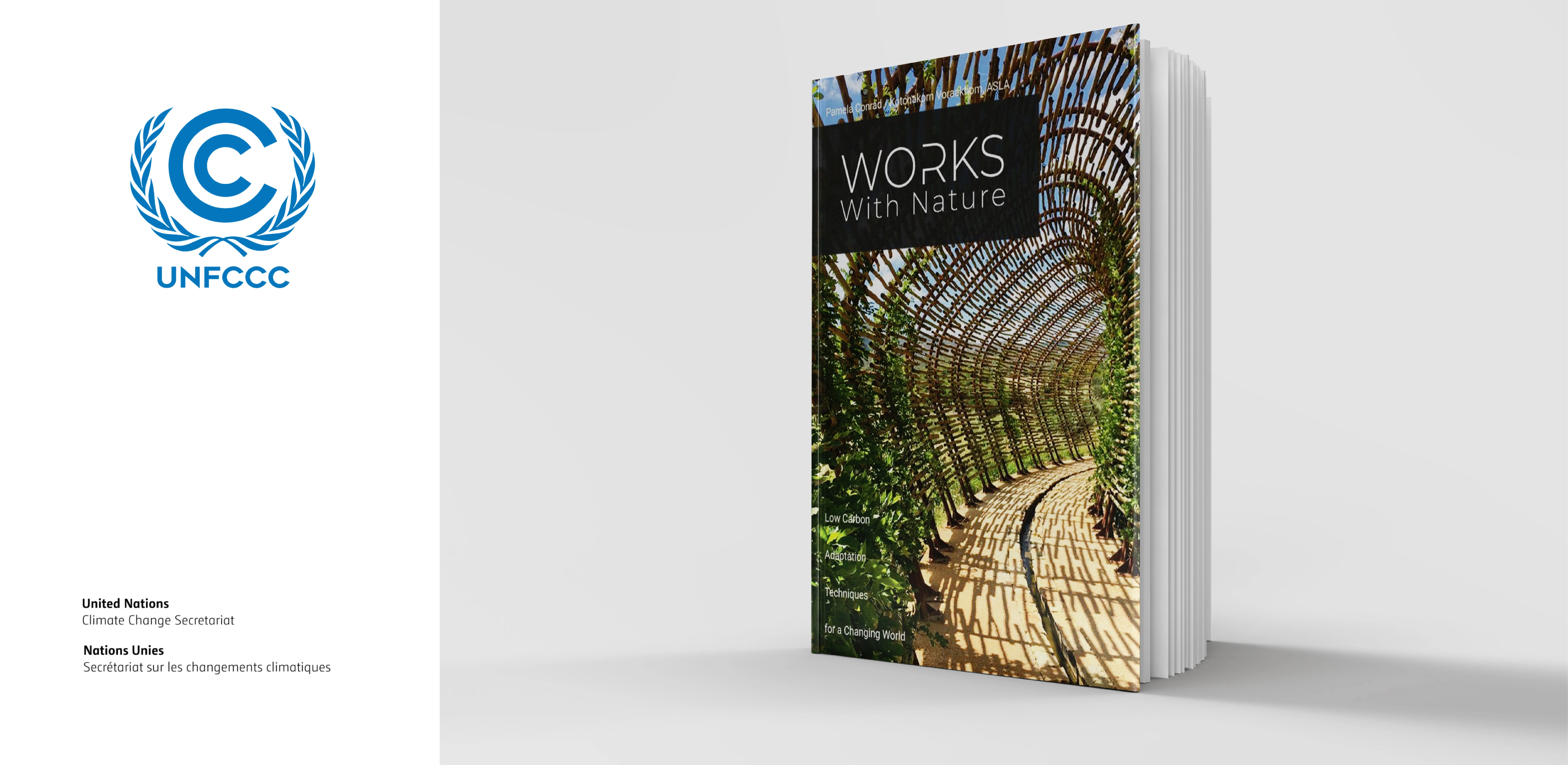
WORKS with Nature: Low-Carbon Adaptation for a Changing World
2024 marked a critical turning point, as the planet exceeded an annual temperature average of 1.5°C above pre-industrial levels. This milestone coupled with devastating biodiversity loss highlights the urgent need for action to mitigate and adapt to these threats. In response, landscape architects have led innovative collaboration with the United Nations.
This effort culminated in the publication of WORKS with Nature: Low-Carbon Adaptation Techniques for a Changing World, a guide developed under the leadership of ASLA Climate Action Plan founding Chair Pamela Conrad and UN-award-winning landscape architect Kotchakorn Voraakhom. The guide aims to elevate the role of landscape architects in global climate and biodiversity solutions.
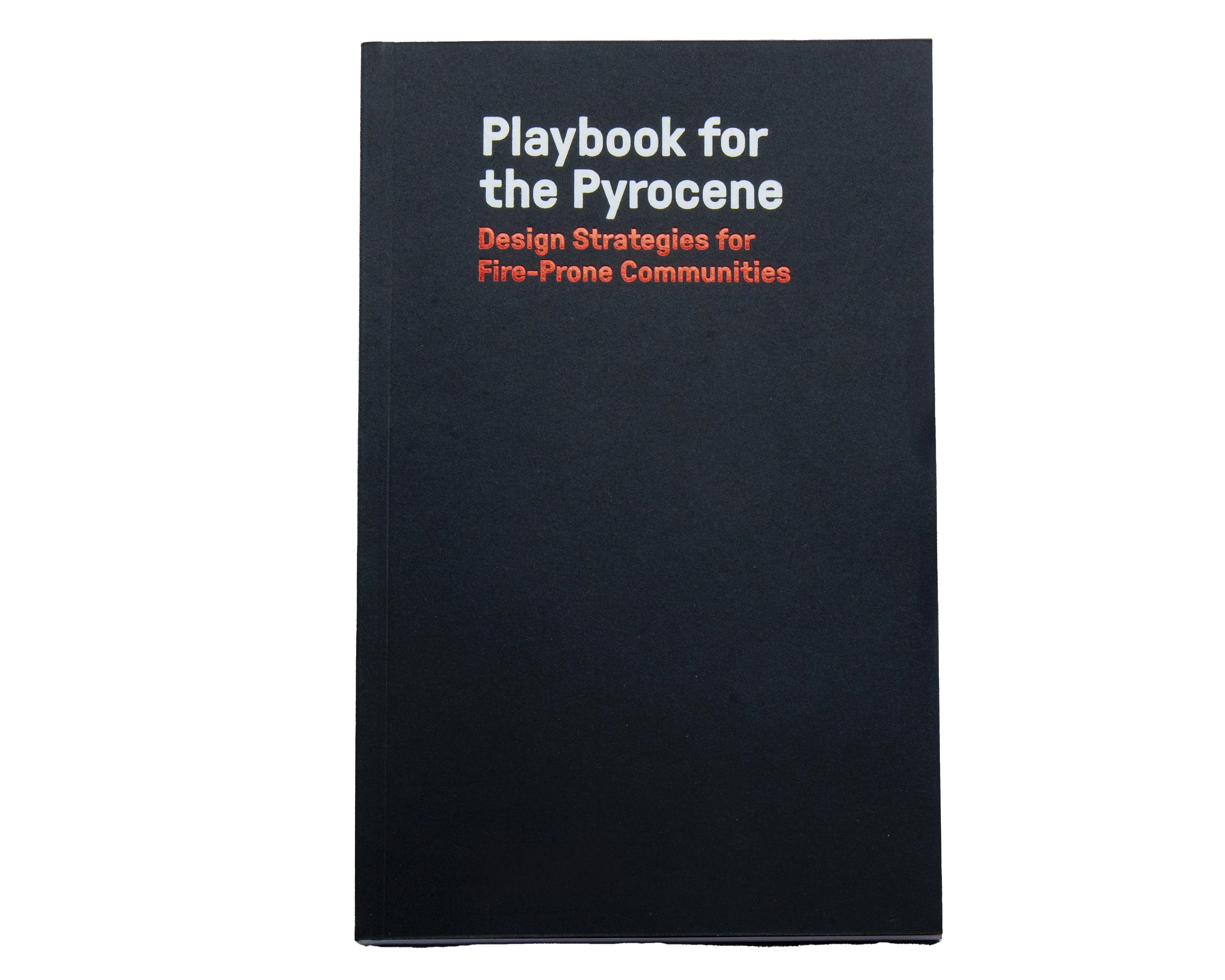
Playbook for the Pyrocene
Wildfires are among today’s most urgent landscape challenges, yet a critical knowledge gap persists: while home hardening and regional land use planning strategies are well-documented, accessible community-scale design approaches remain scarce. Playbook for the Pyrocene bridges this gap, synthesizing years of research and collaboration with agencies across California into an open-access guide. Designed for those without deep fire science expertise, it distills key insights from ecolo
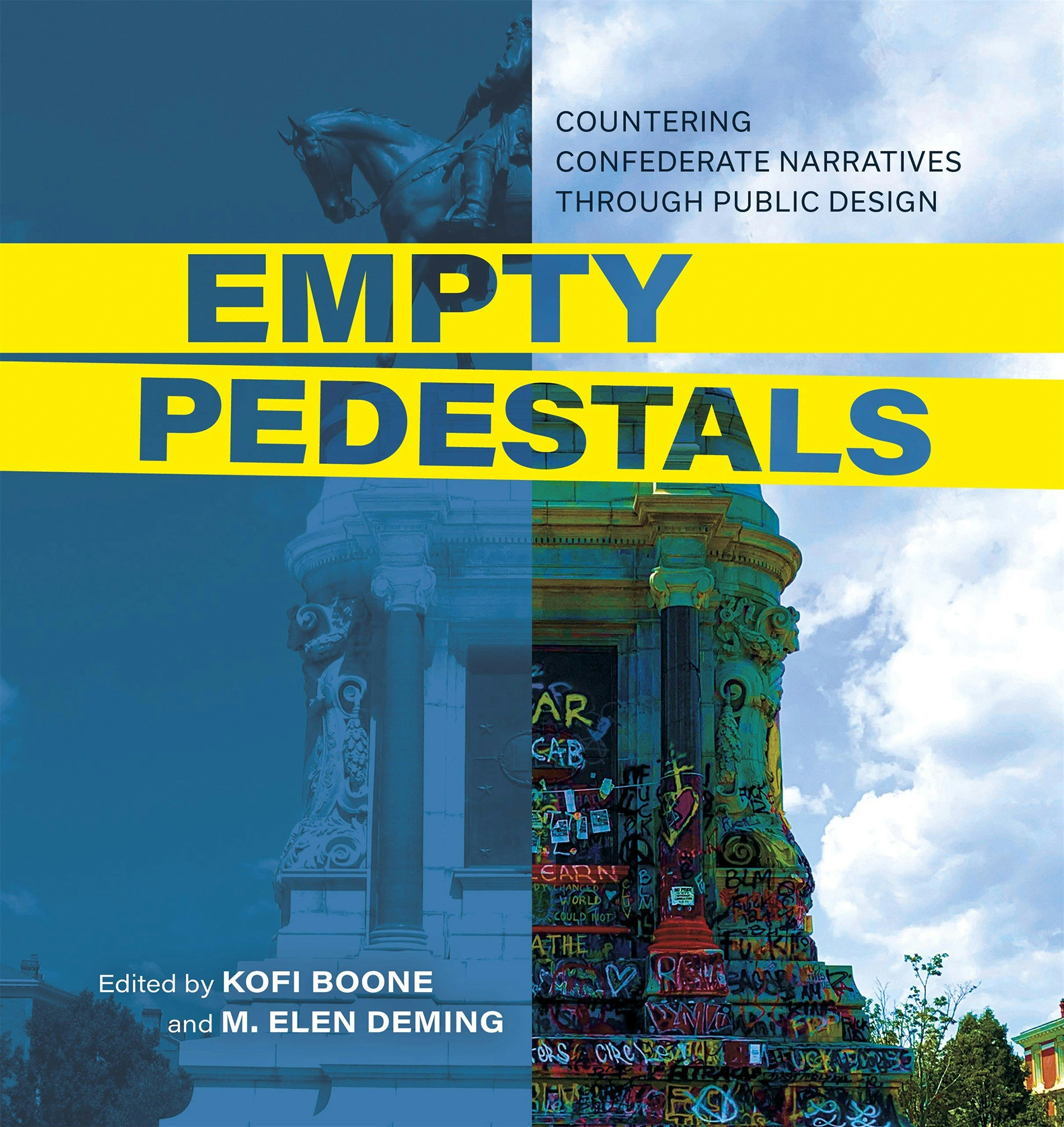
Empty Pedestals
Landscape narratives can harm. Landscape narratives can heal. In Empty Pedestals: Countering Confederate Narratives Through Public Design (LSU Press, 2024), editors Kofi Boone and M. Elen Deming bring together 14 contributors who present design, planning, and other strategies aimed at building community resilience by confronting and transforming spaces marked by endemic prejudice. The book focuses on the legacies and futures of Confederate monuments and the spaces they inhabit. The book offers a groundbreaking compilation of historical context, spatial analysis, compelling regional case studies, and recommendations for design action to promote social equity, diversity, and inclusion.
Research Category
Honor Awards
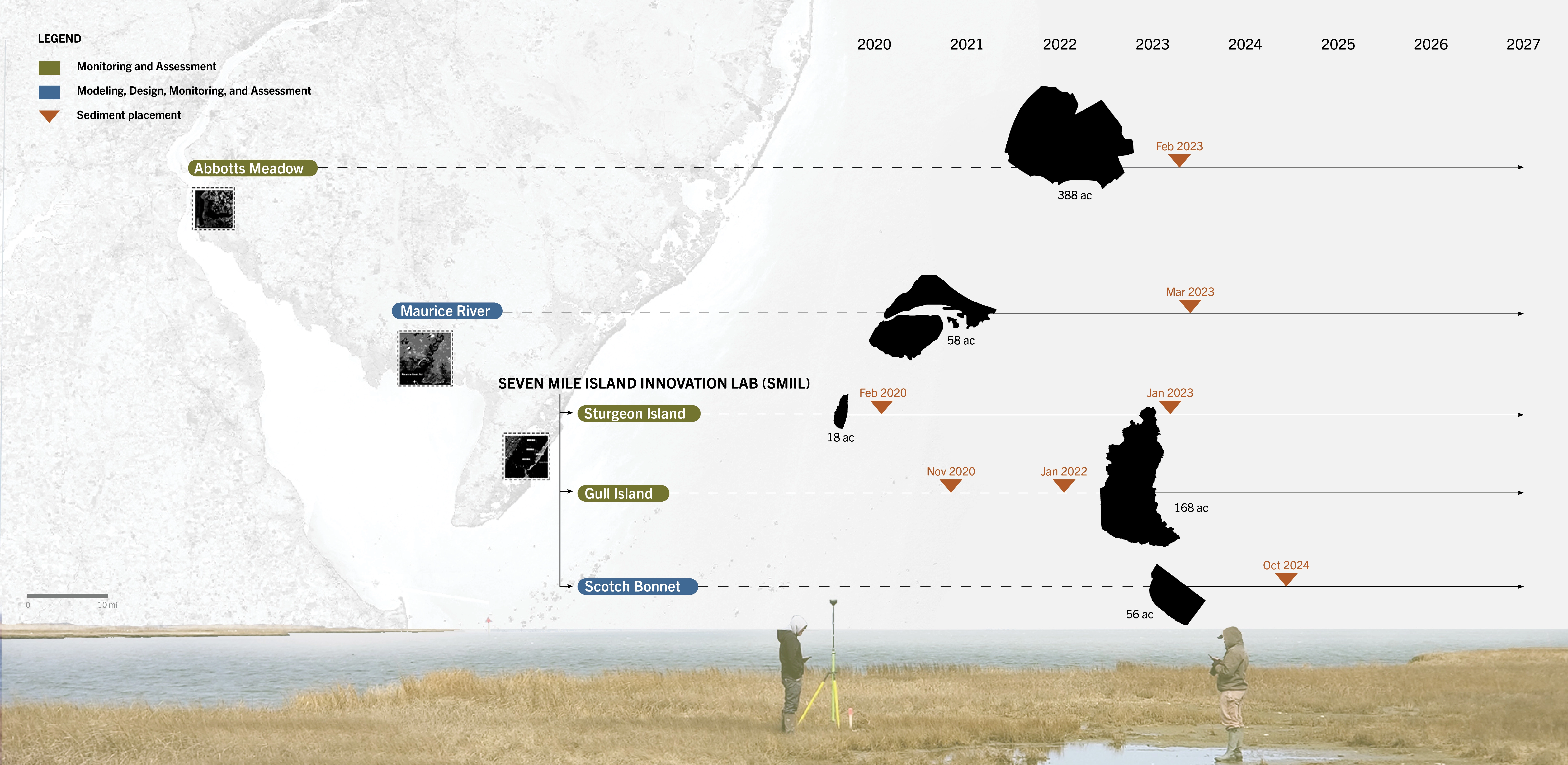
About Time: Adaptive Management for Coastal Salt Marshes
Designing for local landscape-scale change amid global climate change is a significant challenge for landscape architects. It requires integrating Earth system science tools, such as satellite data and sea level rise projections, with on-site surveying techniques. While surveying has historically been part of landscape practice, the discipline often outsources this work or relies on limited off-the-shelf data products. By creating custom in situ remotely sensed data, designers can re
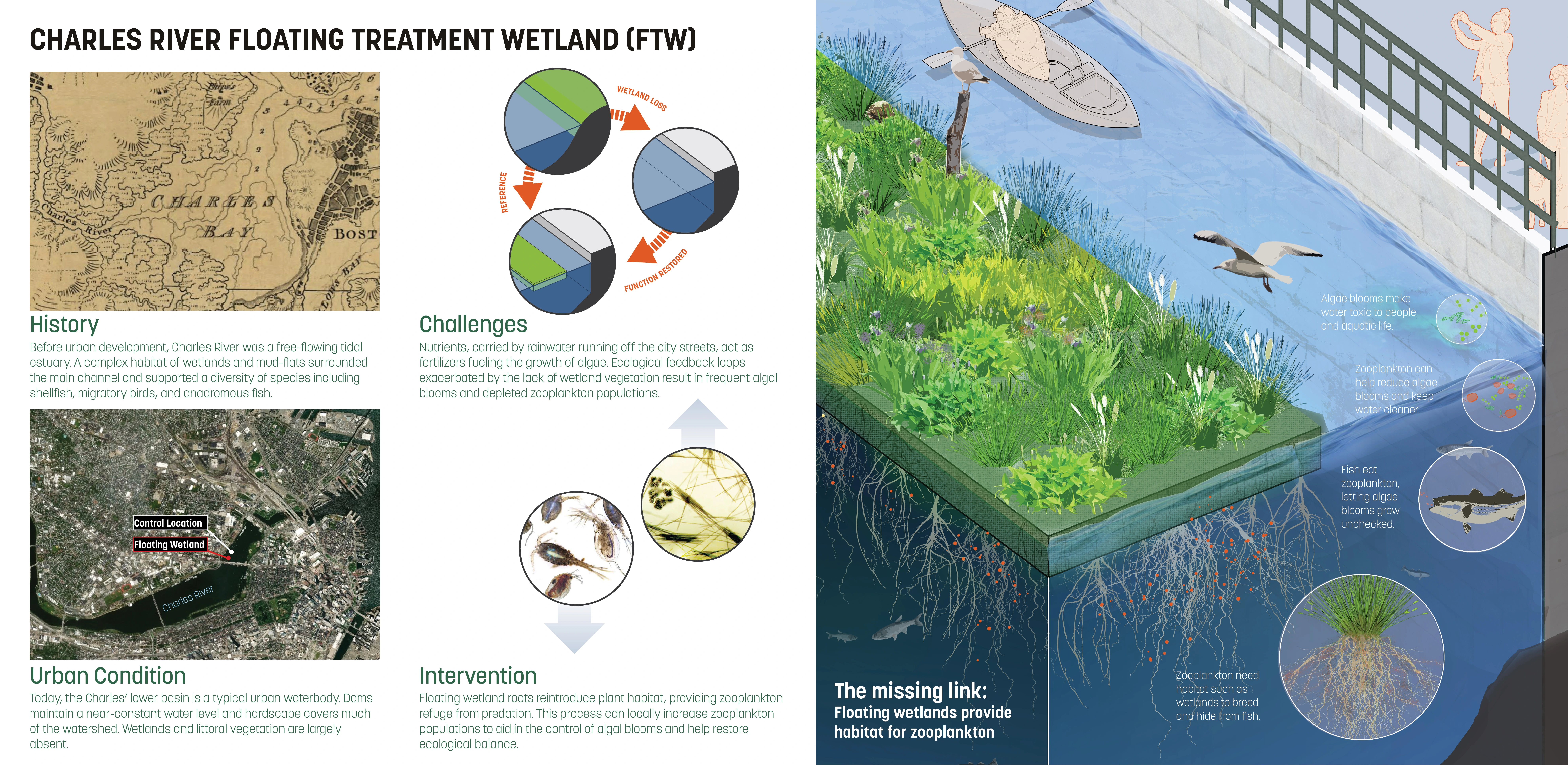
Charles River Floating Wetland Pilot Project: Multi-Year Findings
The Charles River Floating Wetland Pilot Project investigates the application of Floating Treatment Wetlands (FTWs) as an innovative solution to improve degraded urban waters. This research addresses the linked challenges of missing habitat, degraded water quality, and impoverished public perception of urban waters. By combining scientific research, design experimentation, and public outreach, the project demonstrates how FTWs can enhance water quality, support biodiversity, and provide educa
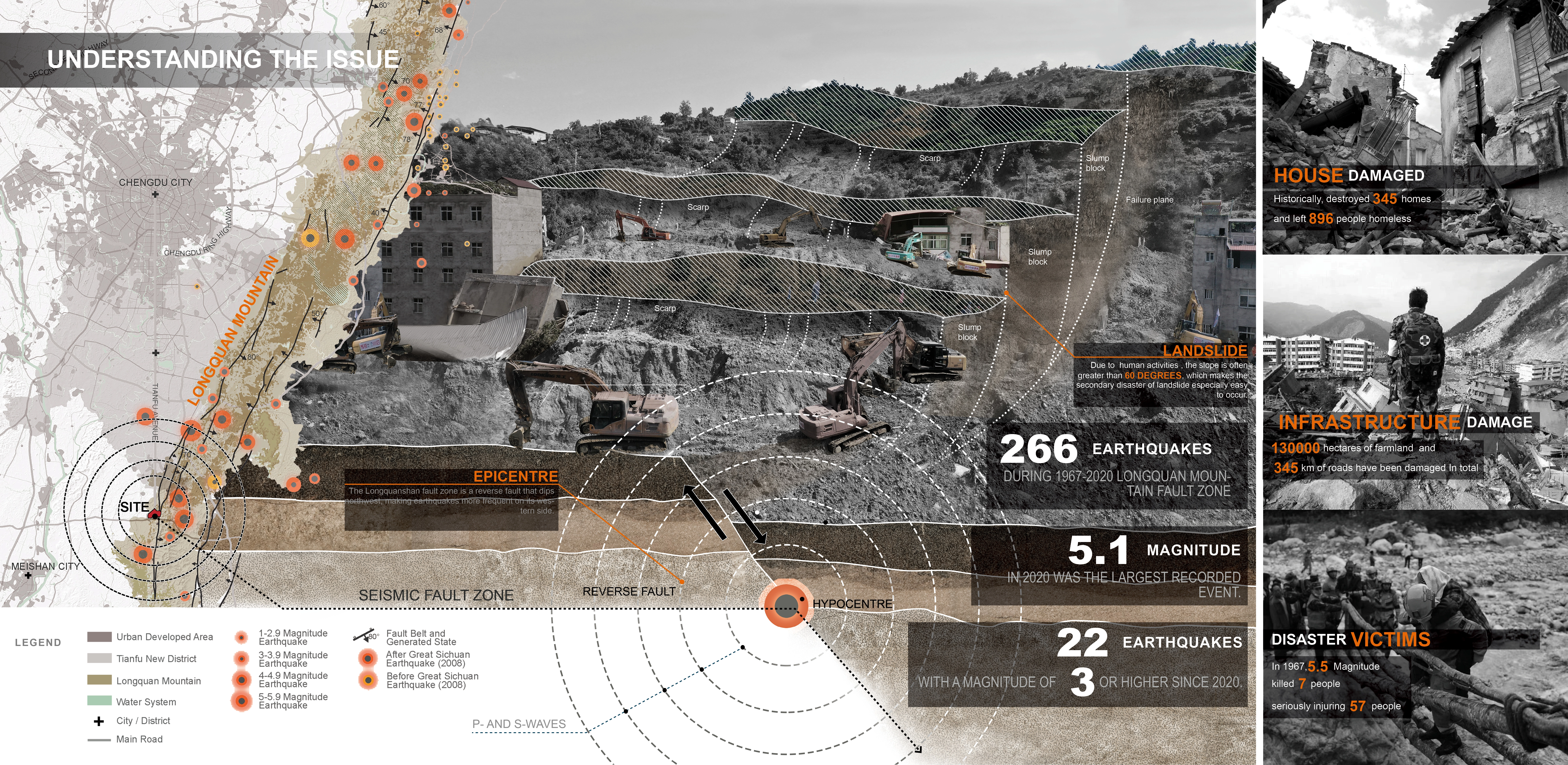
LONGQUAN MOUNTAIN Park: Earthquake Disaster Mitigation Research
This study explores the integration of earthquake early warning and radon monitoring systems within mountain parks to enhance disaster resilience. Focusing on the Longquan Mountain fault zone, it examines how seismic risk assessment and response strategies can be combined with ecological landscape design.
Through a research-driven design approach for Longquan Mountain Park, three key strategies—Mountain Geological Restoration(GRM), Radon Gas Mapping (RGM), and Earthquake Monitor
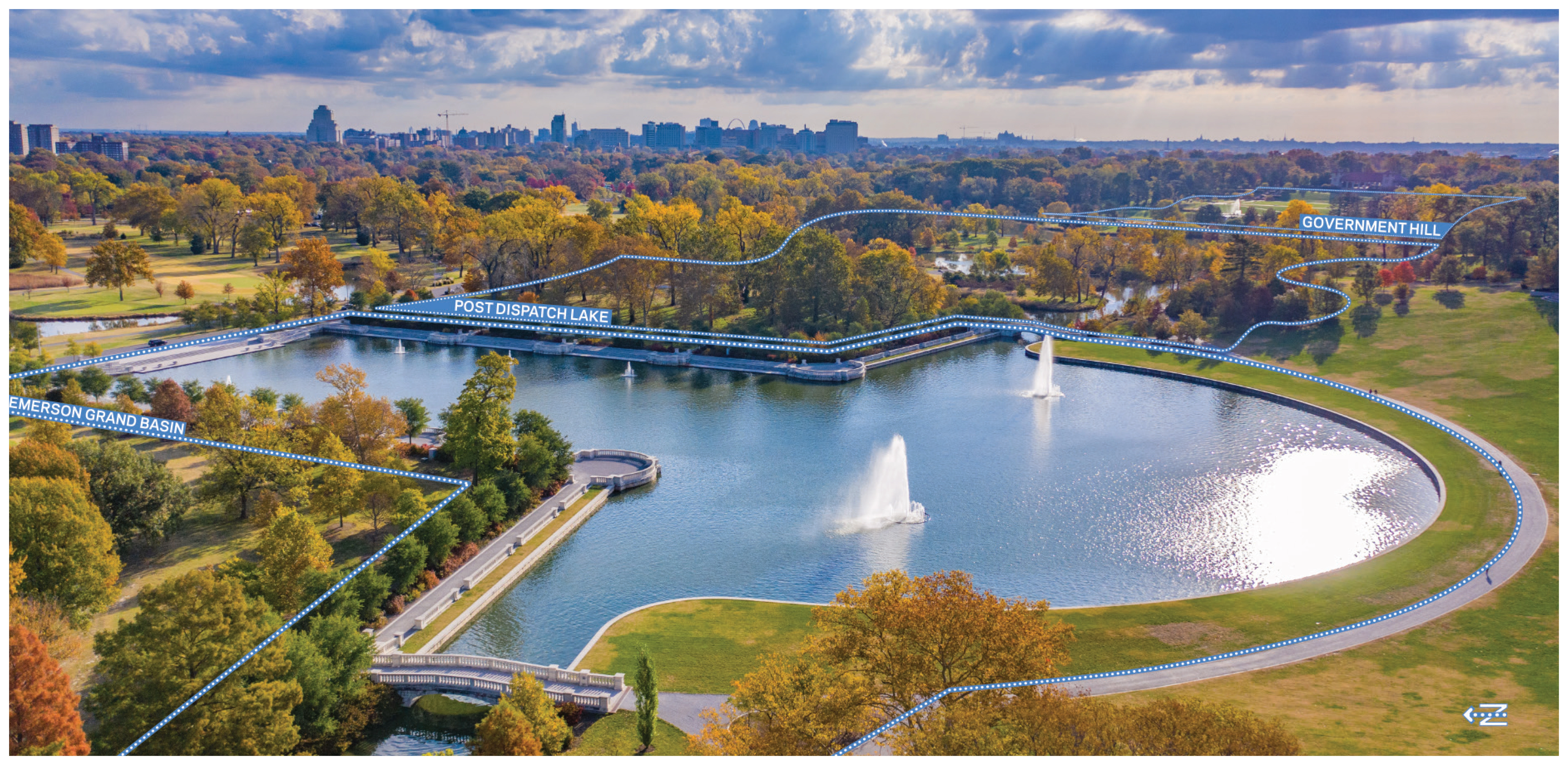
Restoring the Glory, the Restoration of Forest Park
Firm: HOK
Forest Park, at 1,370 acres, is one of the largest urban parks in the U.S. The park is one of St. Louis’ greatest civic treasures and has been the site of events such as the 1904 World’s Fair. However, due to limited funding and deferred maintenance during the 1970’s and 80’s, the park became less functional and unsafe. In 2000, the nonprofit conservancy Forest Park Forever (FPF) engaged the design team to restore some of the park’s most iconic landmarks in preparation of the 100th anniversary of the Fair. The restoration modernized amenities, reintroduced natural systems and reconnected visitors to the magic of this beloved public space. Today, Forest Park proudly stands as one of America’s most celebrated and well-visited urban parks.