

.webp?language=en-US)

.webp?language=en-US)
The Beach at Elliott Bay
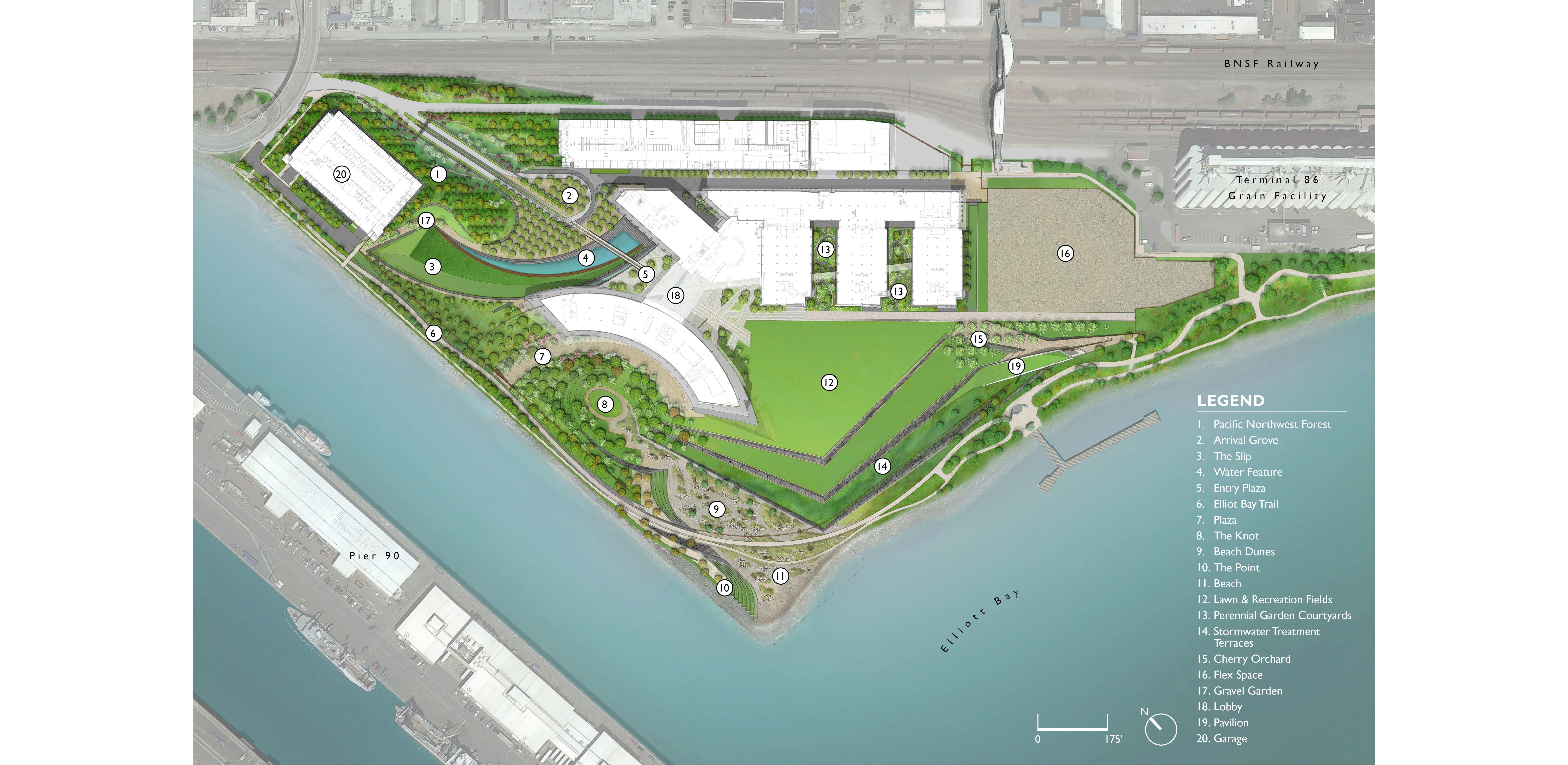
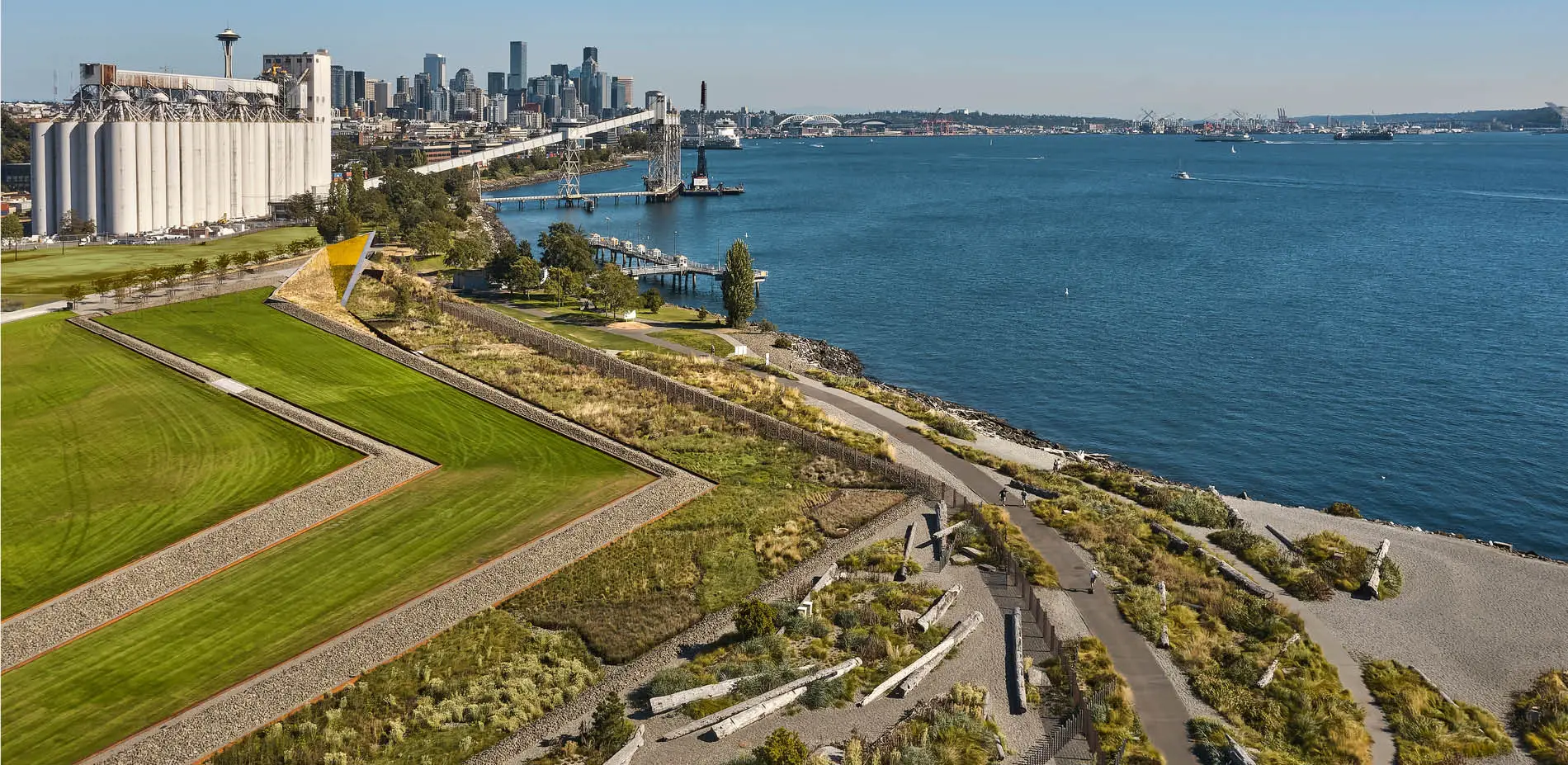
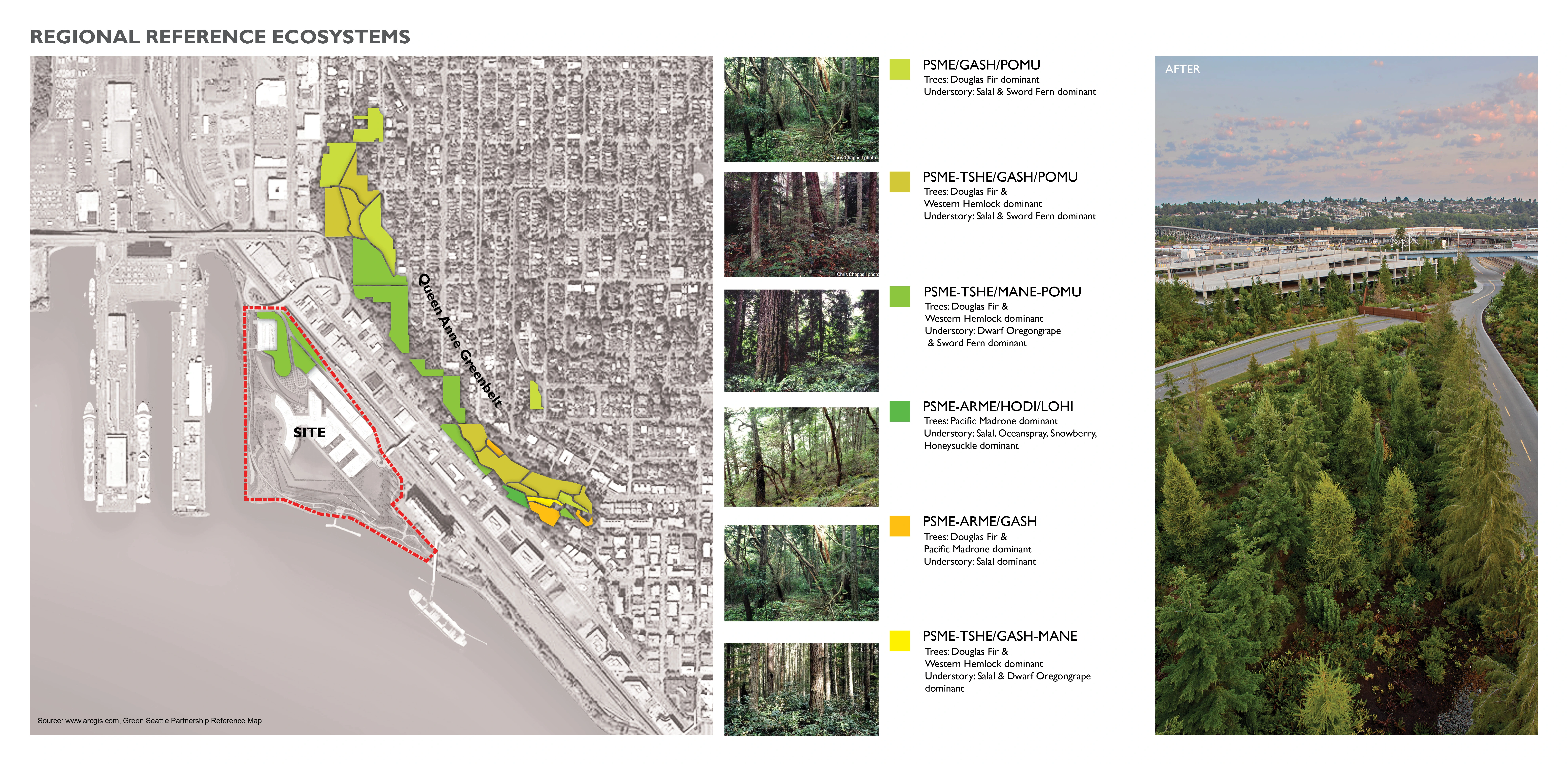
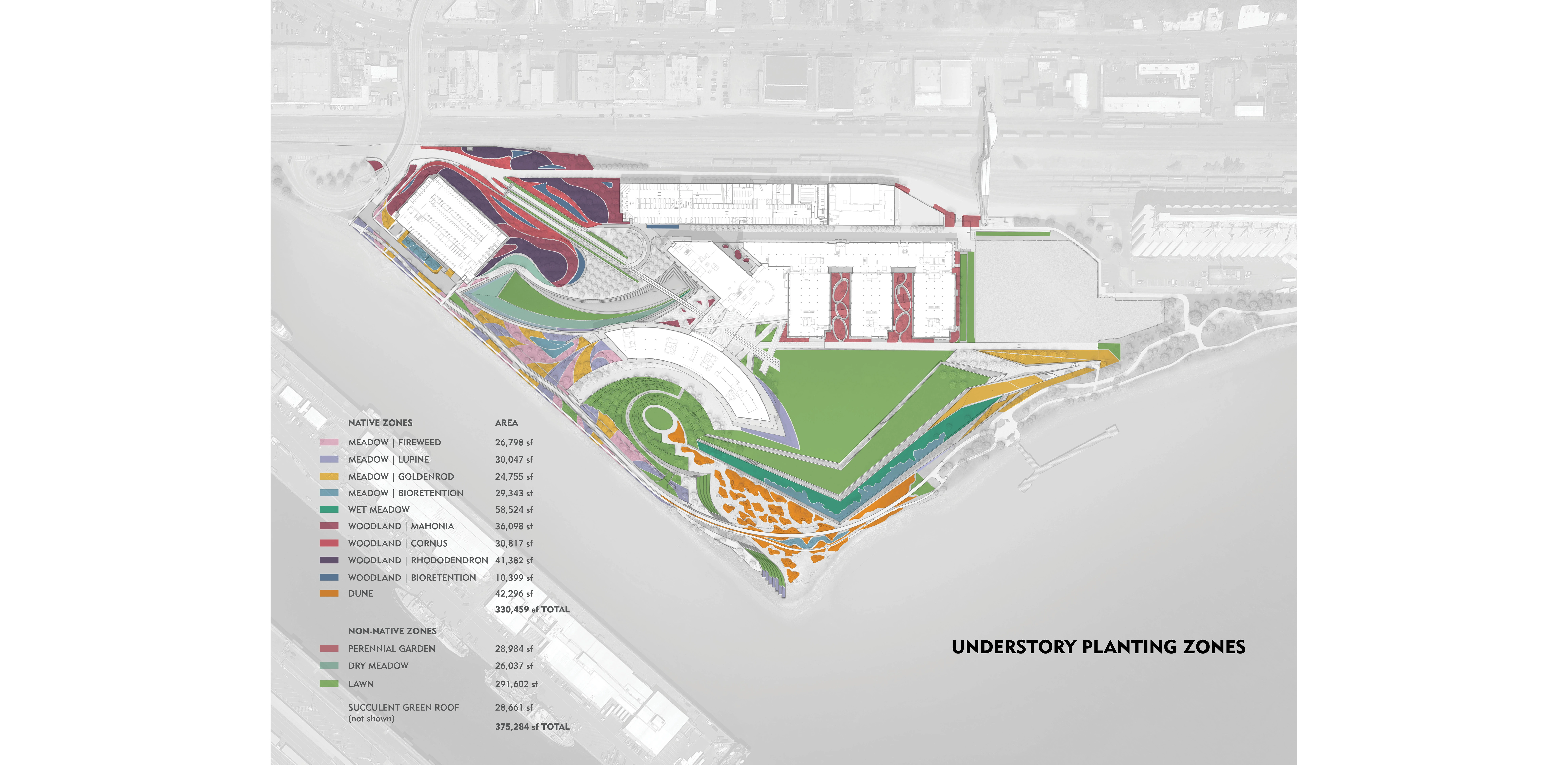
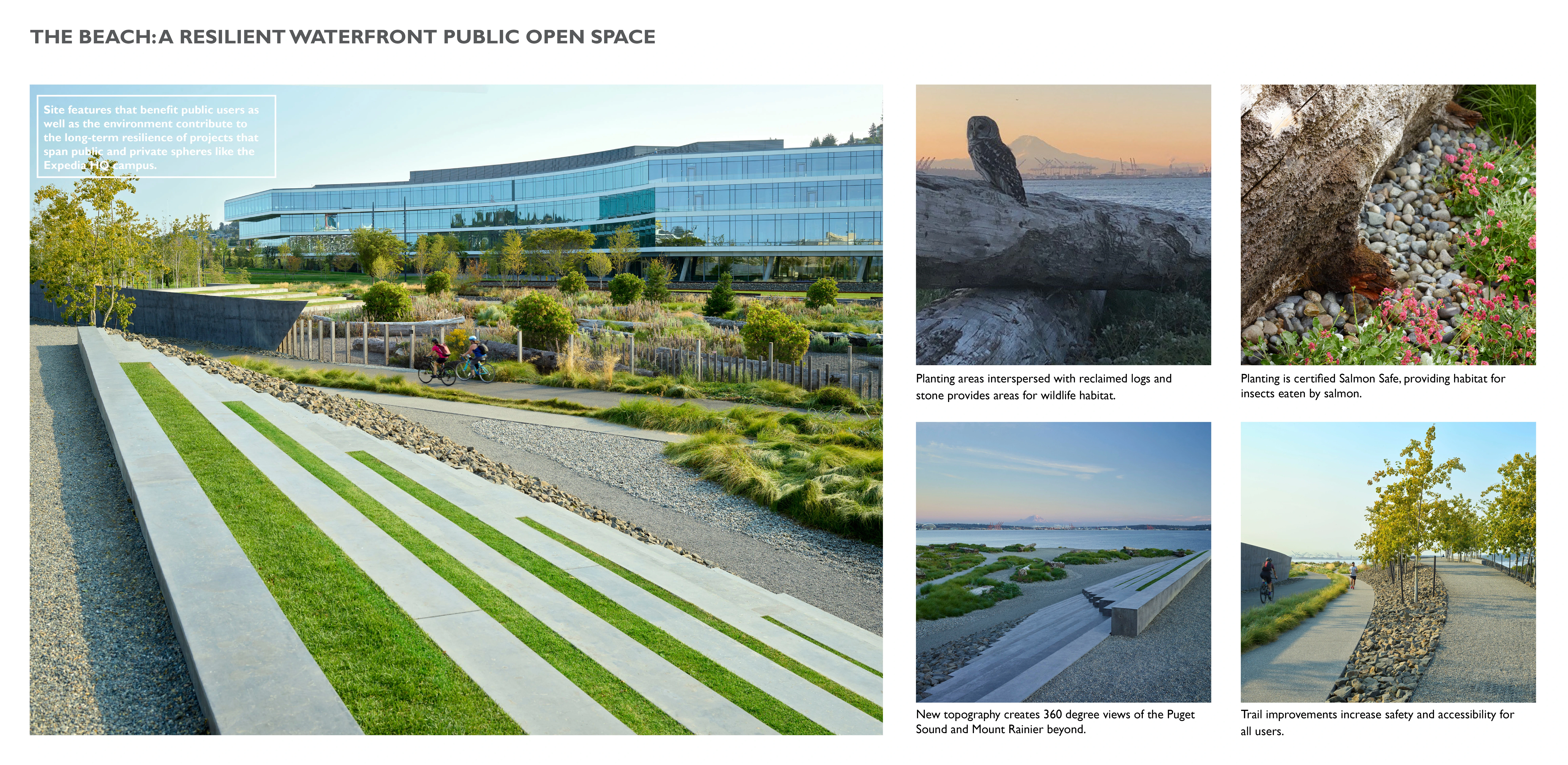
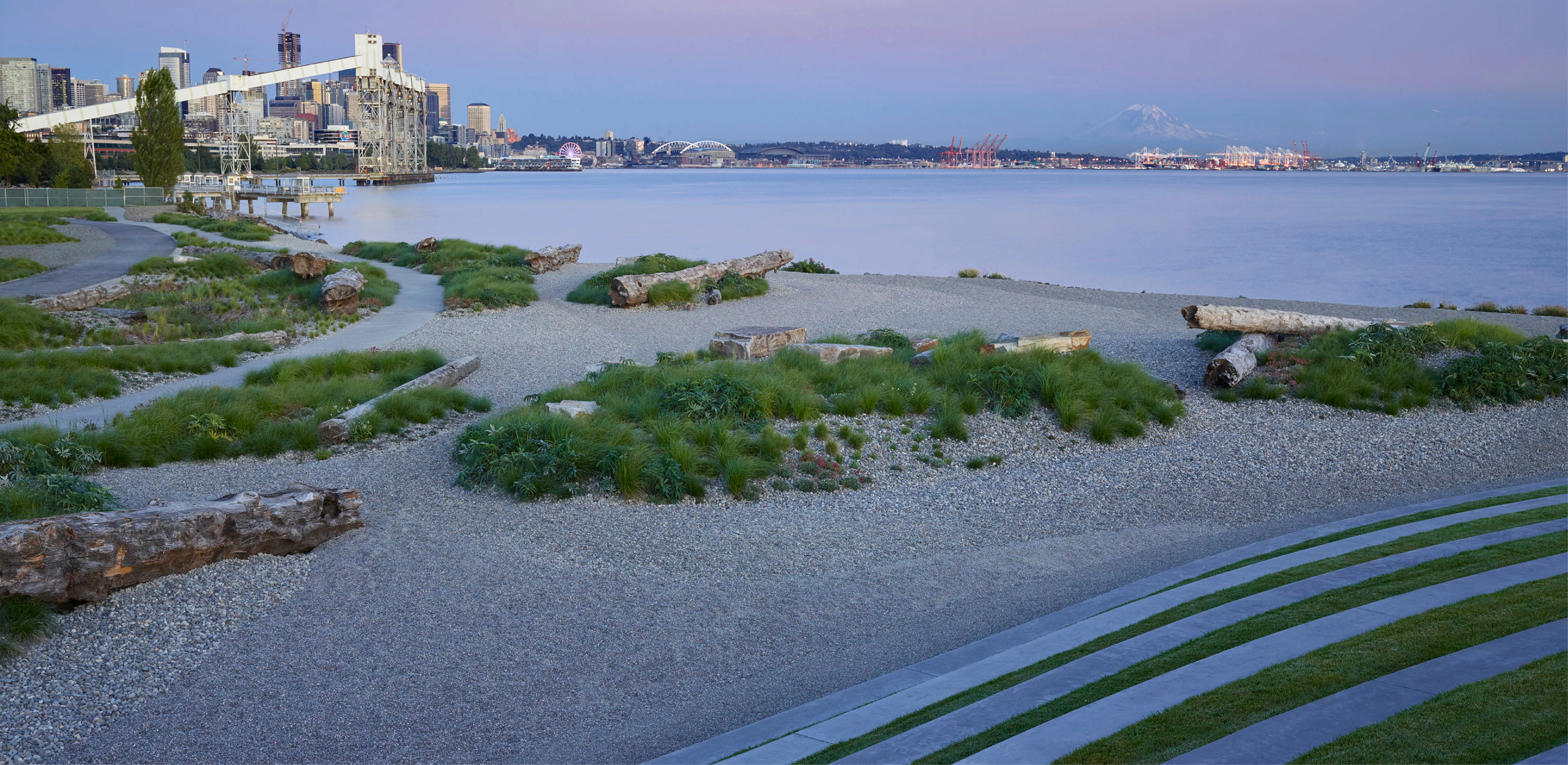
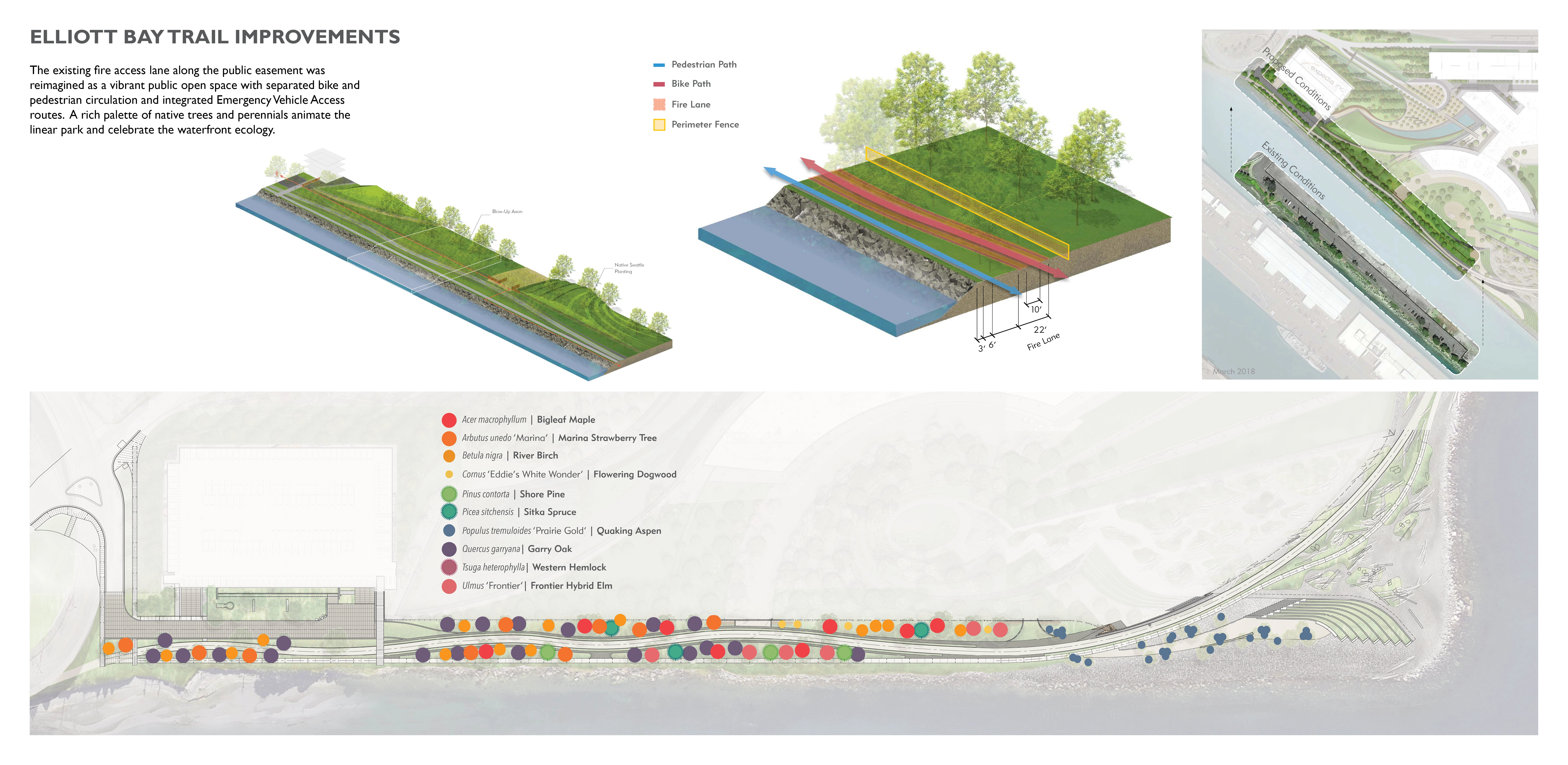
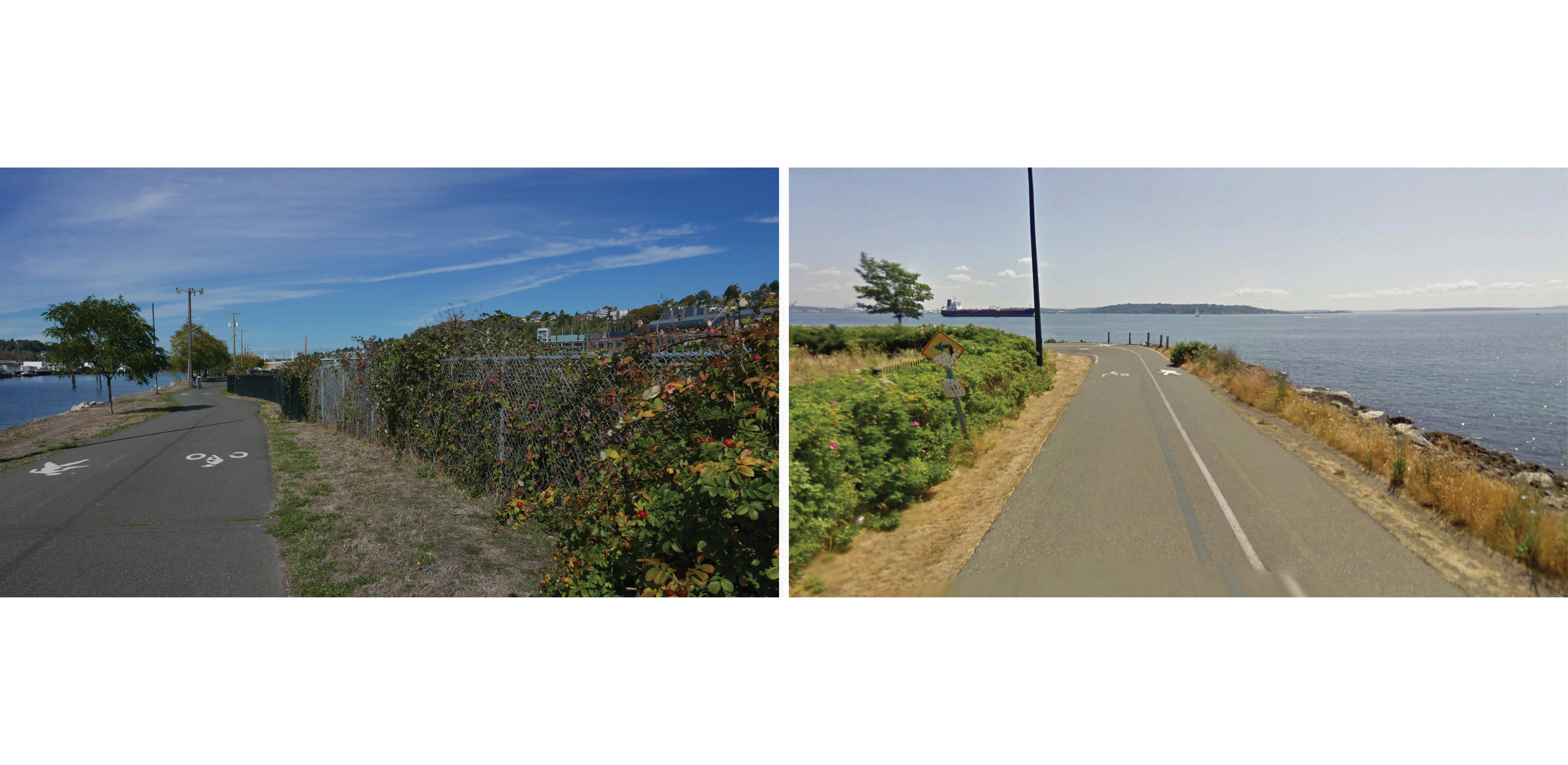
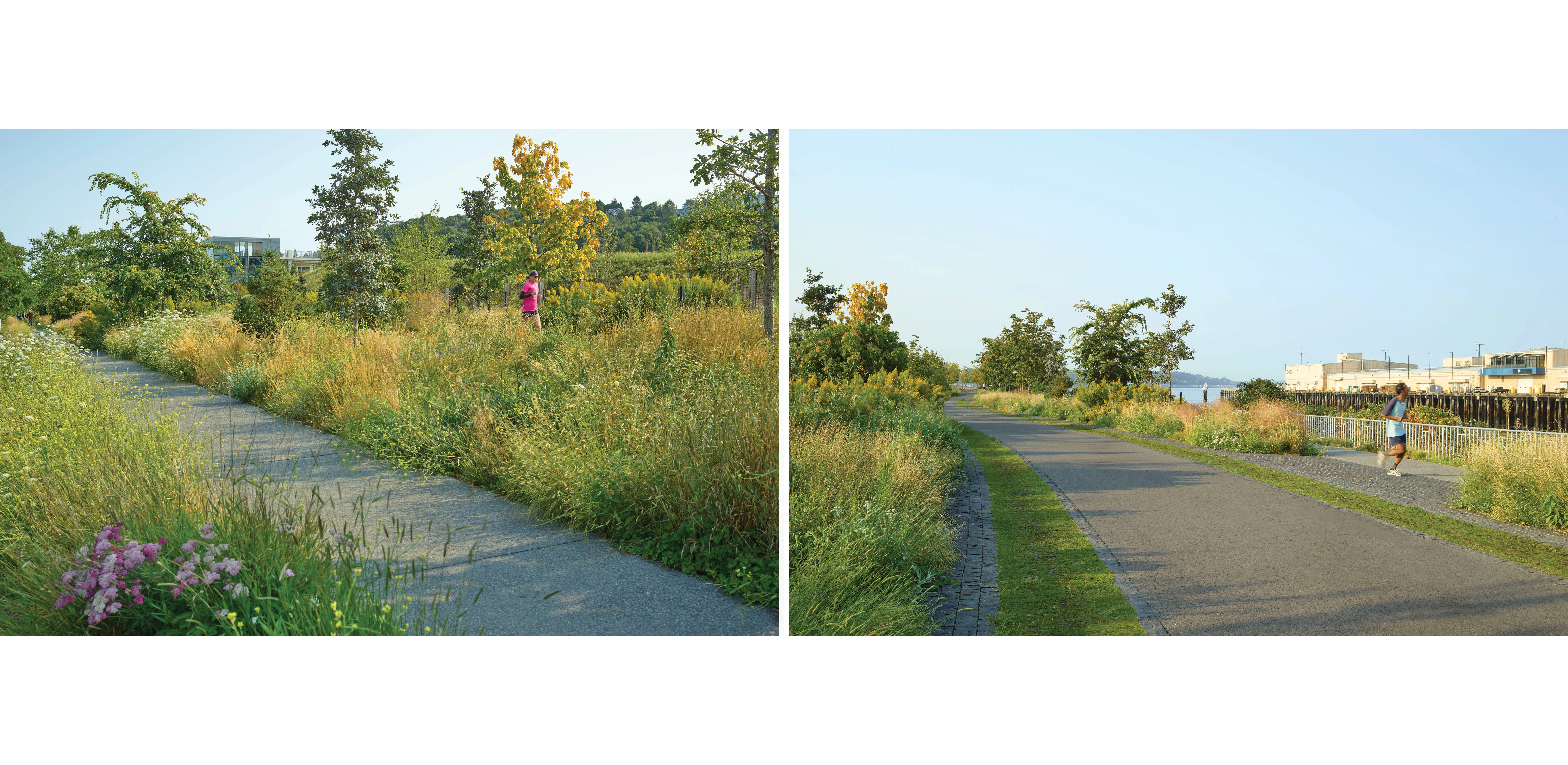
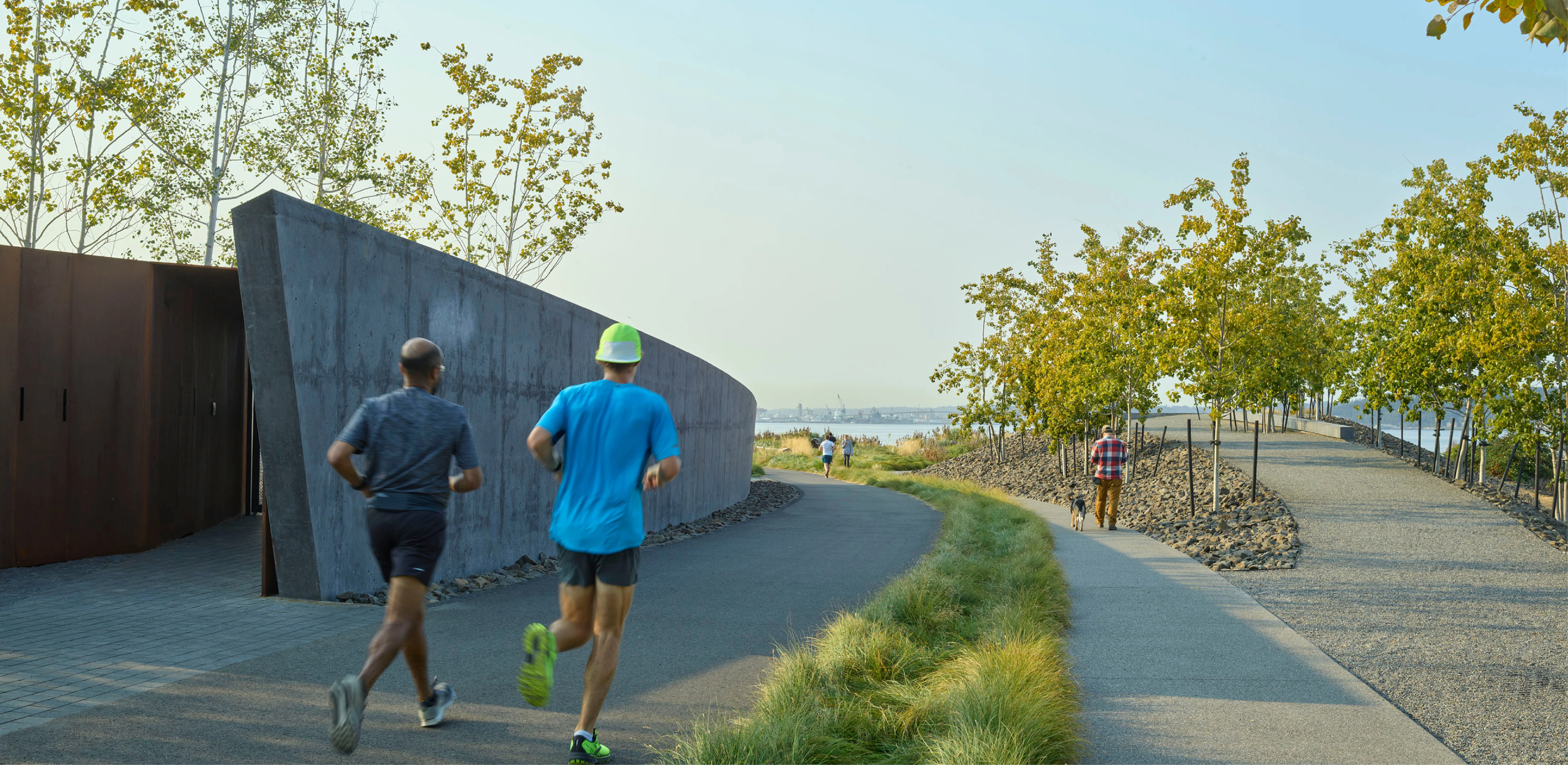
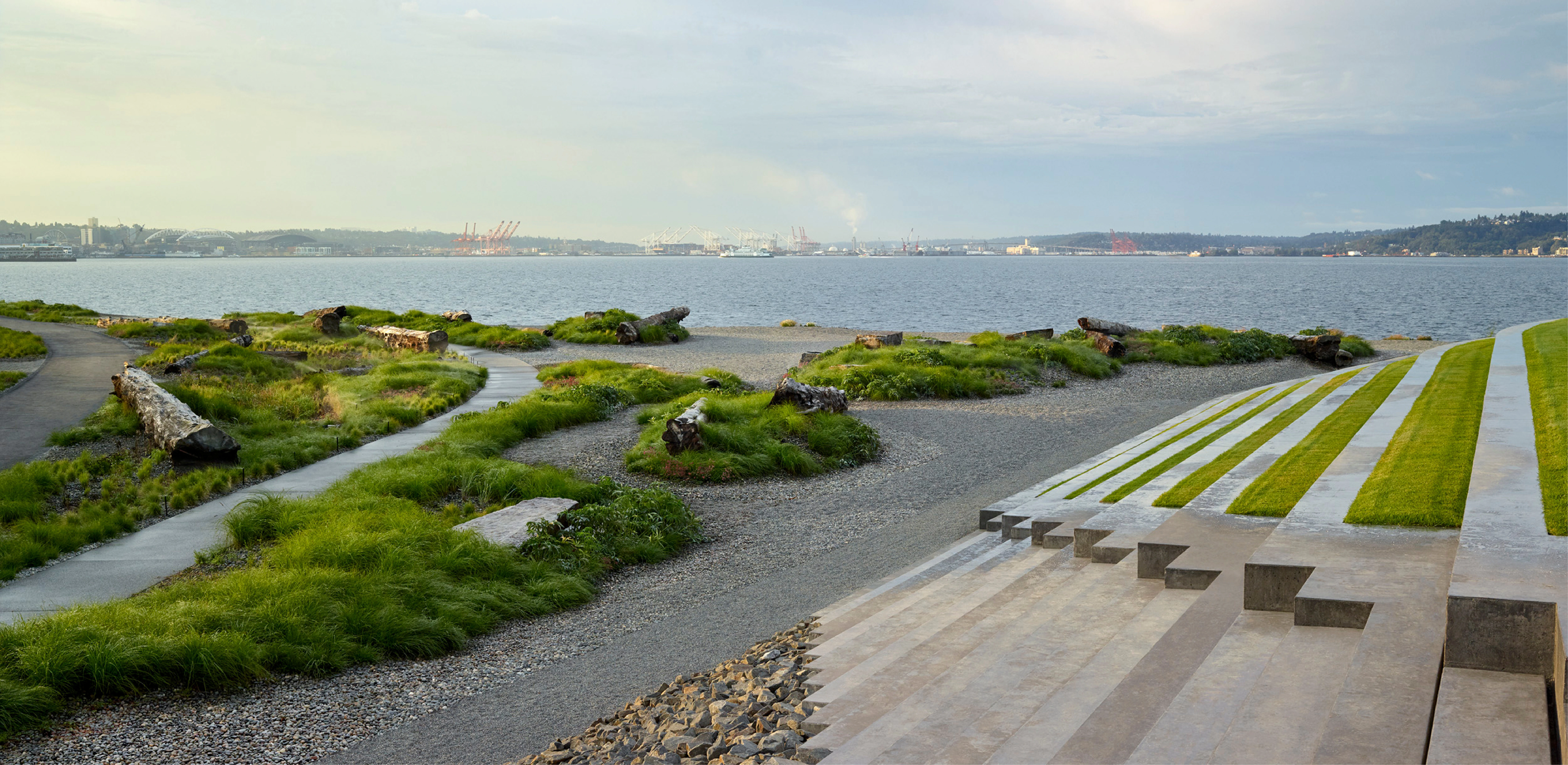
This project has both a rough strength to it and clearly refined yet durable detailing between the built and the natural. It engages its powerful context and stands out from it.
Awards Jury
-
Coastal parks and nearshore restoration are key in Washington State, requiring holistic, forward-thinking design strategies. Addressing ecological degradation, sea level rise, and stormwater runoff, the design team for The Beach at Elliott Bay restored a publicly accessible, 40-acre waterfront site and corporate campus north of downtown Seattle. Soil remediation and stormwater management revitalize the site, creating an equitable, active landscape rooted in social and ecological resilience offering new bike paths and a multi-use trail system. With views of Puget Sound and Mount Rainier, the project demonstrates a systems-based approach to sustainability, prioritizing social, ecological, economic, and cultural well-being.
-
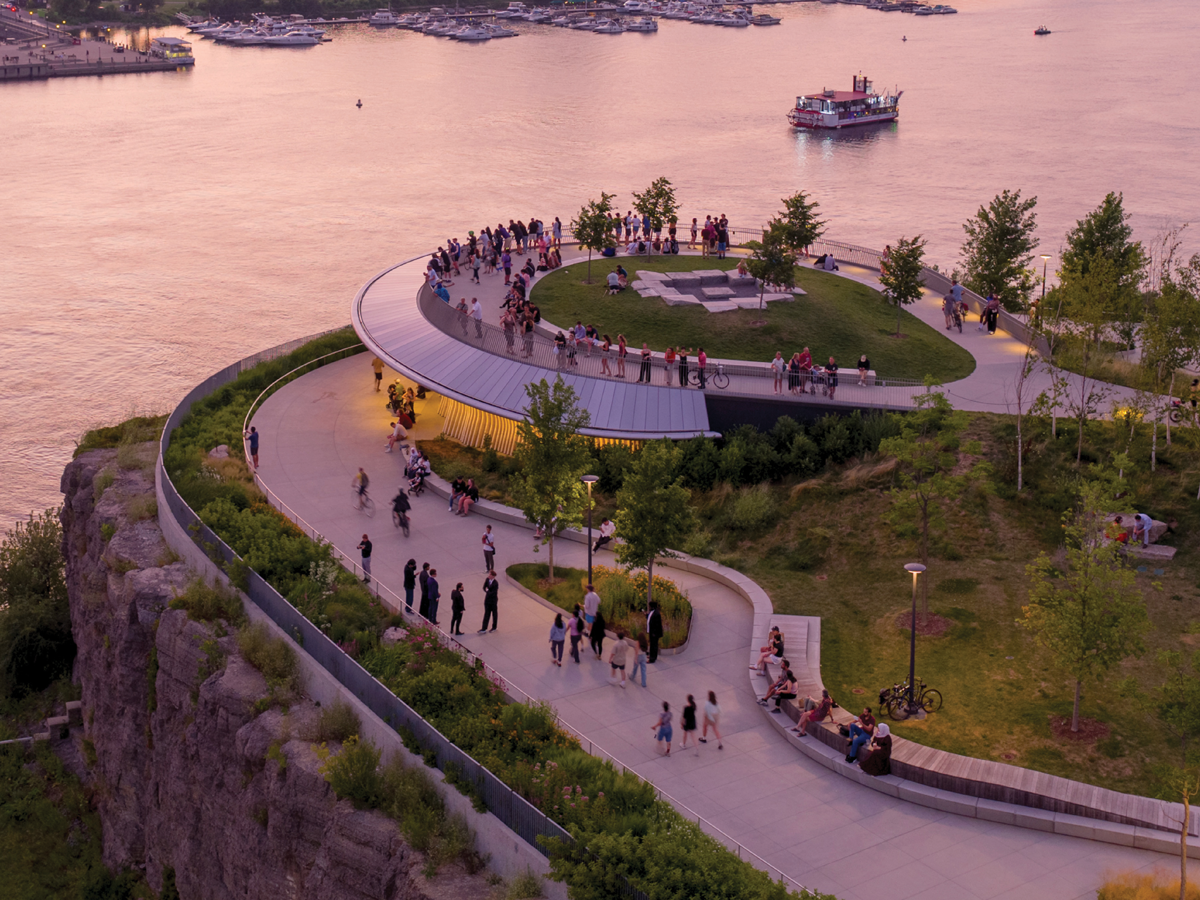
The Beach at Elliott Bay, located a mile north of downtown Seattle on a 40-acre waterfront site, was transformed from an under-used biotech campus and post-industrial site into a vibrant, lush, and sophisticated publicly accessible park with improved connectivity to trails for running and biking. Located at the site of a tech company’s international headquarters, the design team was tasked with envisioning a campus that provided workers with meaningful connectivity to nature to enhance their daily life. Given the site’s proximity to the waterfront, the team needed to configure a strategy responding to both human and climate needs for the near and far term.
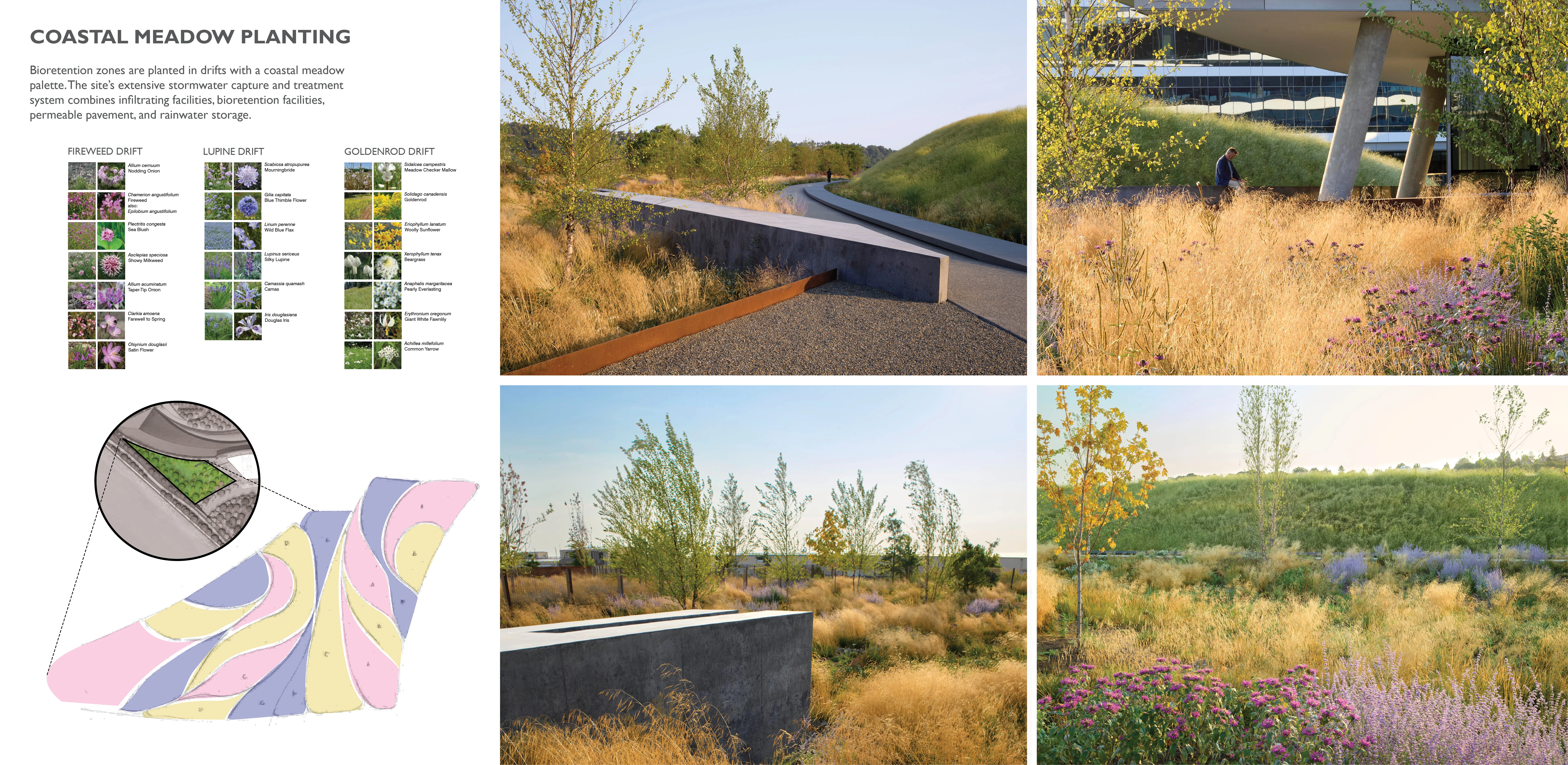
The designers collaborated with the client to re-aggregate public easements, creating a consolidated park and trail system along the Puget Sound for the public. A new terraced overlook and a richly planted dune habitat softens the edge of the water and provides new universally accessible space at the edge of Elliott Bay. A separated system of bike and pedestrian paths weave through the landscape that is rich with native plants and trees, allowing habitat for pollinators and birds, and aligning with the Salmon Safe certification program requirements.
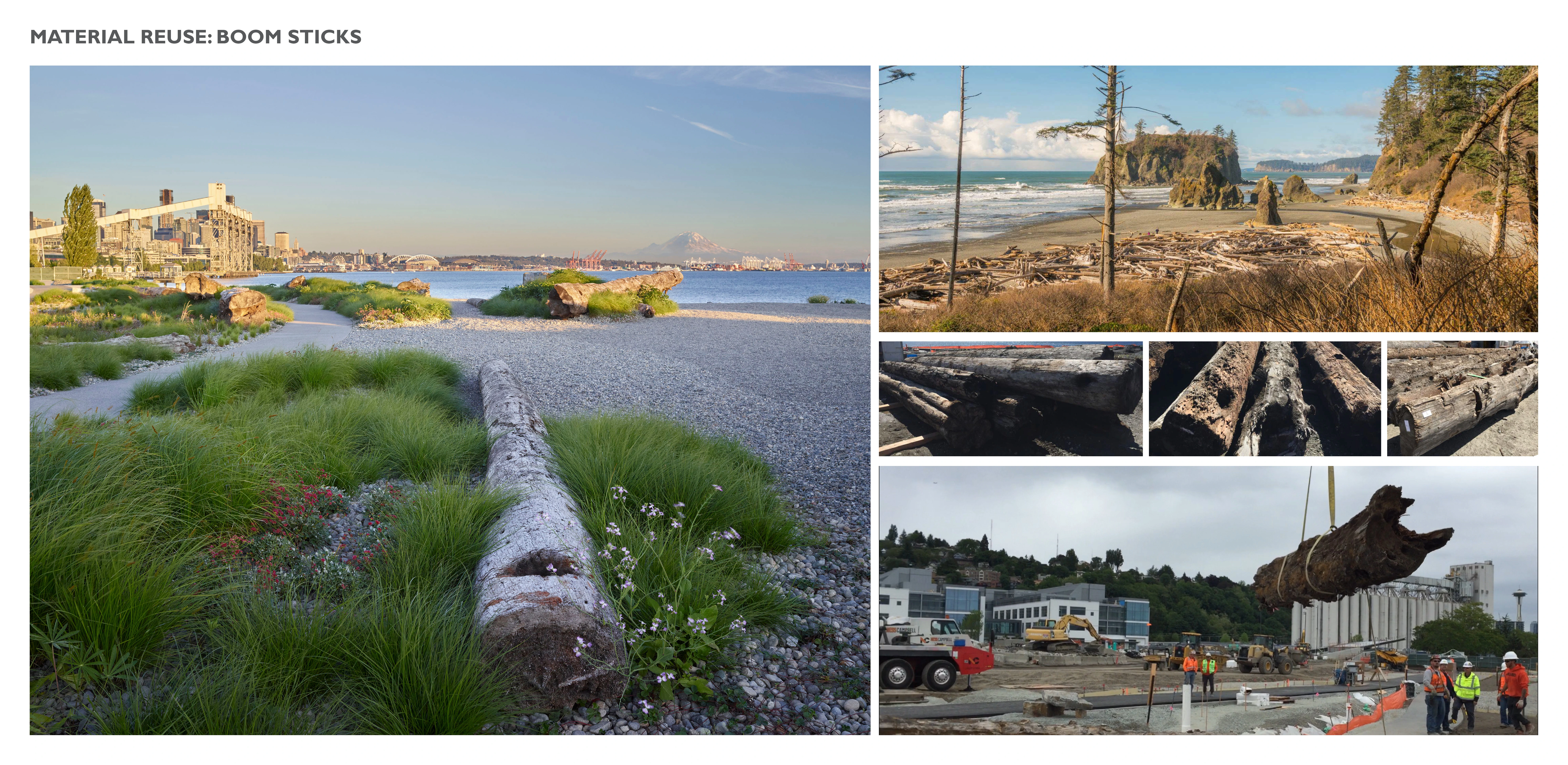
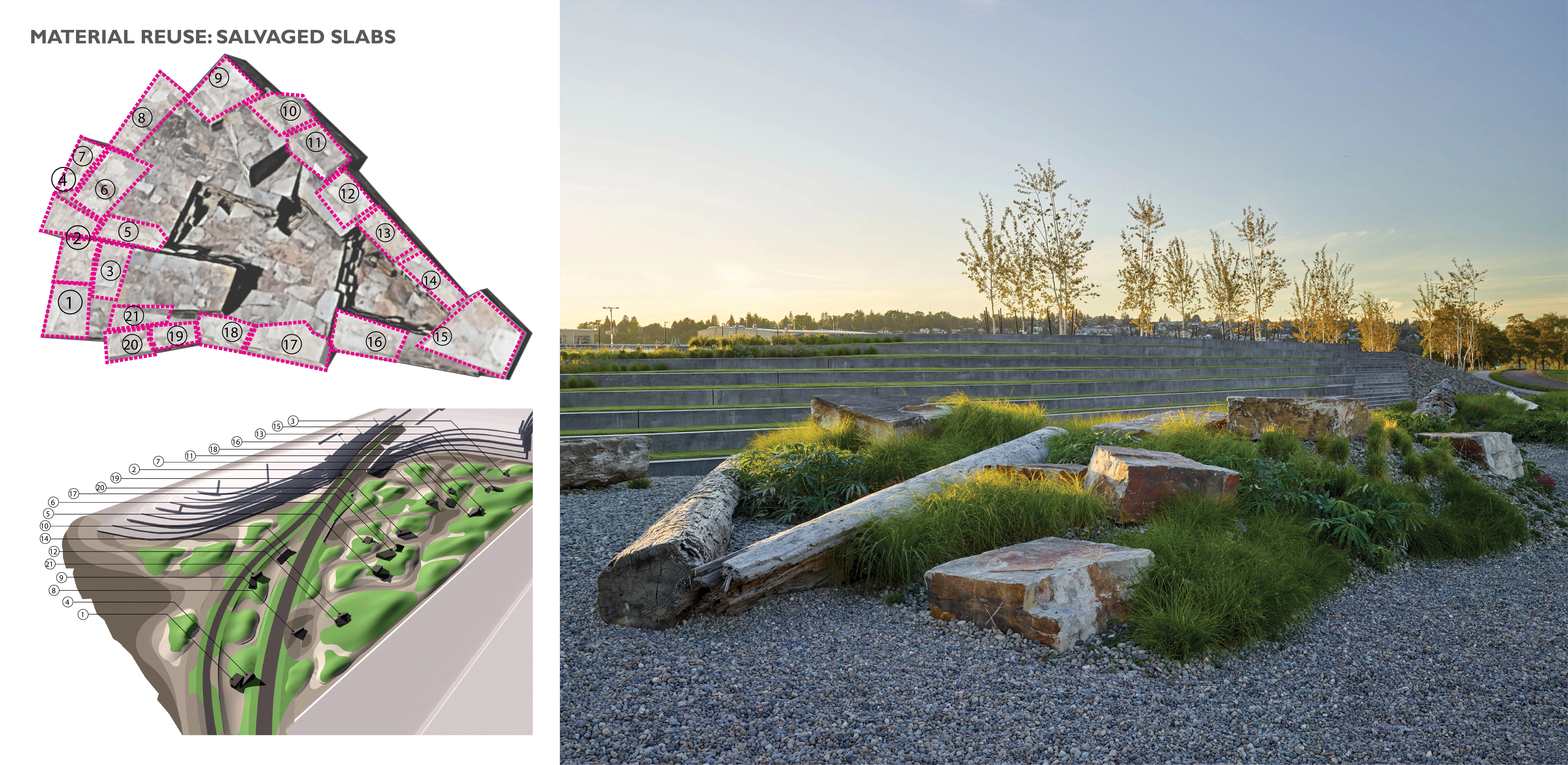
Material reclamation and adaptive reuse were core principles of the design process. The existing site had a series of formal landscape spaces that featured stone paving and monolithic stone elements. The reclaimed stone was stockpiled and reimagined for the new campus, including informal stone groupings nestled into the dune planting on the Beach. Inspired by the driftwood that washes onto the shores of Washington beaches, knotty spruce “boom sticks” from a decommissioned timber operation in Port Angeles were brought to the site and nestled into the planting and gravel dunes. The reclaimed stone boulders and driftwood break up the planting while also functioning as informal seating and play areas.
Soil management was a critical focus for the design, contributing to the success of the landscape and underscoring the long-term maintenance plan for the project focused on cultivating a low-maintenance and low-input landscape. A comprehensive assessment of the mostly paved, disturbed site was conducted at project onset. Harvested soil, tested for ecological benefits and long-term landscape health, was used to inoculate compost and base loam for the eight custom blends that correlated with the site’s planting communities. Soil scientists tested and monitored the soil after installation, informing the formulation of compost tea blends used to seasonally inoculate the soil and plants, stimulating biological activity and resilience without chemical fertilizers.
Beyond the client’s goals of creating a biophilic, experience-based landscape, employees and users have free reign to engage with a variety of outdoor rooms. From a park amphitheater to a contemplative garden or a cascading water feature, each space is connected by multiple path circuits, encouraging walking meetings—promoting a healthier workplace connected to the broader urban and ecological context of the Puget Sound.
The Beach invites users to pause at the edge of Elliott Bay. Celebrating the land-water threshold with views of the larger regional landscape, reclaimed materials and vibrant native plantings highlight the sculpted topography of the site. The expansive site is a place to celebrate and reinforce a sense of place while defining a new landscape approach centered on stewardship.
-
- James A. Lord, FASLA - Partner, Surfacedesign, Inc.
- Roderick Wyllie, FASLA - Partner, Surfacedesign, Inc.
- Michal Kapitulnik, ASLA - Principal, Surfacedesign, Inc.
- Tim Kirby, ASLA - Principal, Surfacedesign, Inc.
- Junyi Li - Associate, Surfacedesign, Inc.
- Matt Bombard - Associate, Surfacedesign, Inc.
- Blythe Price - Associate, Surfacedesign, Inc.
- Tyler Mohr - Associate, Surfacedesign, Inc.
- Heath House - Associate Surfacedesign, Inc.
- ZGF Architects - Campus Architect
- Aidling Darling Design - Prow Architect
- Teufel Landscape - Landscape Contractor
- GLY Construction - General Contractor
- F2 Environmental Design - Soils Consultant
- KPFF - Structural & Civil Engineer
-
- Acer palmatum
- Amelanchier alnifolia
- Acer rubrum 'Karpick'
- Betula nigra
- Cercidiphyllum japonicum
- Chamaecyparis nootkatensis 'Pendula'
- Cornus nuttallii x florida 'Eddie's White Wonder'
- Larix occidentalis
- Prunus caroliana 'Columnar'
- Pseudotsuga menziesii
- Sequoiadendron giganteum 'Pendulum'
- Styrax japonica
- Stewartia mondelpha
- Stewartia pseudocamellia
- Tsuga heterophylla
- Chionanthus retusus
- Magnolia macrophylla
- Cercidiphyllum japonicum
- Cornus controversa 'June Snow'
- Davidia involucrata
- Agrostis exarata
- Bromus carinatus
- Carex obnupta
- Danthonia californica
- Deschampsia caespitosa
- Elymus glaucus
- Hordeum brachyantherum
- Koeleria macrantha
- Scripus microcarpus
- Achillea millefolium
- Anaphalis margaritacea
- Centaurea 'Black Sprite'
- Camassia quamash
- Eriophyllum lanatum
- Erythronium oregonum
- Gilia capitata
- Iris douglasiana
- Lupinus 'Gallery Blue'
- Linum perenne
- Scabiosa 'Giga Blue'
- Sidalcea campestris
- Solidago canadensis
- Xerophyllum tenax
- Cornus sericea
- Hydrangea quercifolia
- Mahonia nervosa
- Pieris x 'Forest Flame'
- Rhododendron 'Maximum Roseum'
- Ribes sanguineum
- Vaccinium ovatum
- Adiantum aleuticum
- Athyrium filix-femina
- Asplenium scolopendrium
- Blechnum spicant
- Dryopteris 'Golden Mist'
- Polystichum munitum
- Achlys triphylla
- Asarum caudatum
- Arctostaphylos uva-ursi
- Cornus canadensis
- Cyclamen hederifolium
- Fragaria vesca
- Gaultheria procumbens 'Cherry Berries'
- Maianthemum dilatatum
- Oxalis oregana
- Tiarella trifoliata
- Tricyrtis 'Dark Beauty'
- Trillium chloropetalum 'Volcano'
- Trillium ovatum
- Vancouveria hexandra
Advertisement
Related Awards
Honor Award, General Design
Houston Arboretum & Nature Center
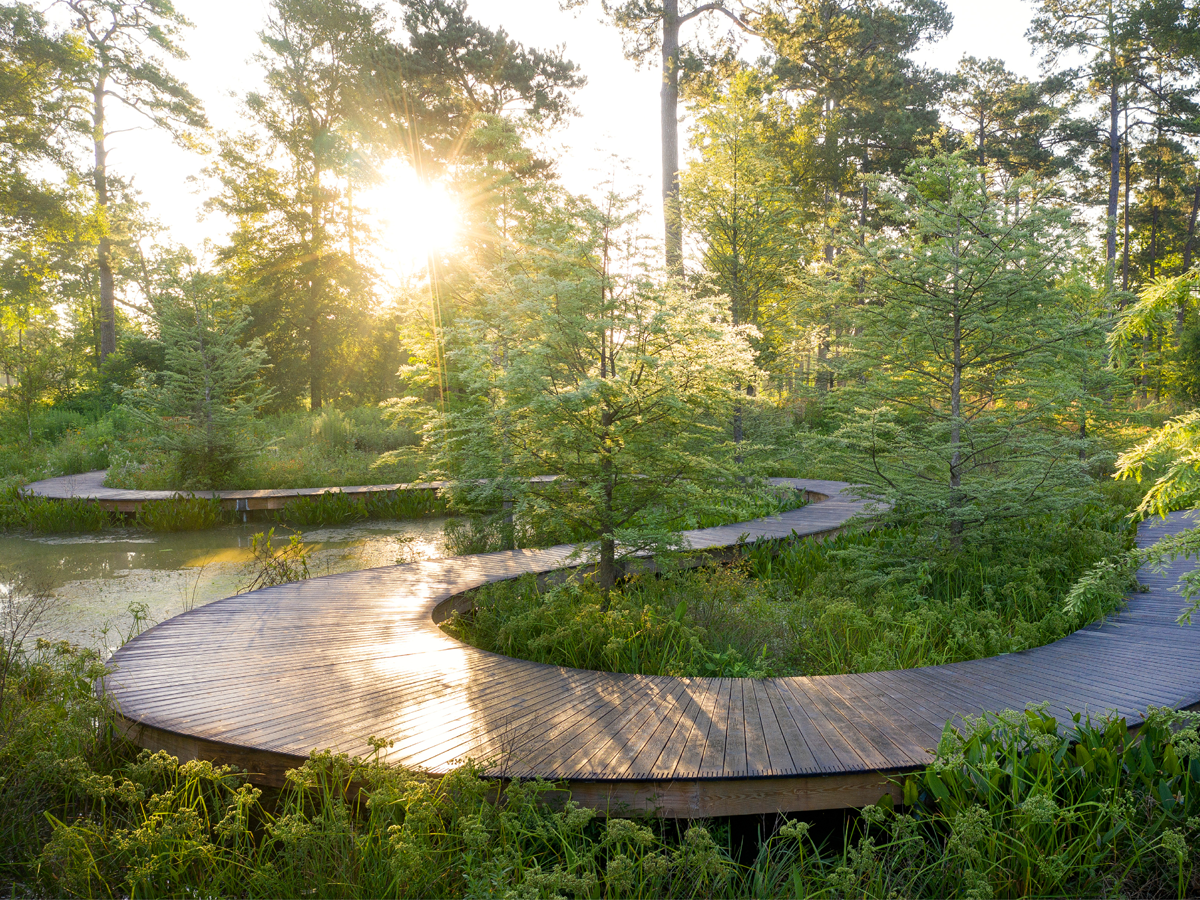
The Houston Arboretum & Nature Center sits within Memorial Park, one of the largest urban parks in the United States, in one of the nation's fastest growing and most climate-challenged cities. The site's story is one of repeated loss and deliberate reinvention. Hurricane Ike in 2008 and a severe drought in 2011 destroyed much of the Arboretum's tree canopy, exposing the limits of conventional reforestation in a city defined by flooding, heat, and ecological volatility.
Related Articles
ASLA Fund
American Society of Landscape Architects Announces its 2026 Student Awards
39 Student Award winners elevate the future of the landscape architecture profession
Aug 24 2026