

.webp?language=en-US)

.webp?language=en-US)
Designing Across Continents
Meet Glenn LaRue Smith, FASLA, who has been chosen for a prestigious industry honor.
.webp?language=en-US)
This Black History Month, ASLA celebrates not only the past, but the living practitioners who are shaping how history is interpreted, experienced, and remembered in our public spaces. Glenn LaRue Smith, FASLA was selected for the highly competitive American Academy in Rome - Mercedes T. Bass Landscape Architect in Residence fellowship to participate among the 2025 cohort of esteemed professionals redefining the role of design in cultural storytelling.
Smith’s time in residence offers a unique opportunity to reflect on how landscapes carry memory, how global histories inform local practice, and how Black designers continue to expand the narratives embedded in the built environment. In this interview with Lisa J. Jennings, Senior Manager, Career Discovery and Diversity, Smith shares insights from his experience abroad and considers what it means to design spaces that honor heritage while imagining more inclusive futures.
What did being selected for this prestigious fellowship mean to you personally and professionally, especially as a Black landscape architect whose work engages with culture, memory, and space?
The American Academy in Rome Residency selection gave validity to my 45-year body of work in landscape architecture. Because the Residents are selected by the Academy President, Peter Miller, and Academy Director, Aliza Wong, I was greatly honored. My eight weeks were filled with Rome explorations and connecting with creative talent every day. Of course, Rome gave me a new perspective on public space usage and preservation. The city’s long history of plazas, fountains, open spaces, and civic stewardship indicated how America should be preserving places.
As a Black landscape designer, I became more determined to ensure that Black history is preserved.
What was the most impactful aspect of your time at the American Academy in Rome?
Without a doubt the most impactful experience for me at the Academy was the daily conversations with my cohort and visitors. The Academy provided lunch and dinner for Fellows, Residents, Affiliated Artists, and guests Monday through Friday. These were times when everyone at the Academy could meet and converse in a comfortable setting. I met artists, documentary film makers, scholars, landscape architects, architects, musicians and other creative professionals who were very accomplished. Our conversations spanned not only our work but the breadth of our career experiences. I left the Academy with great friendships and memories.
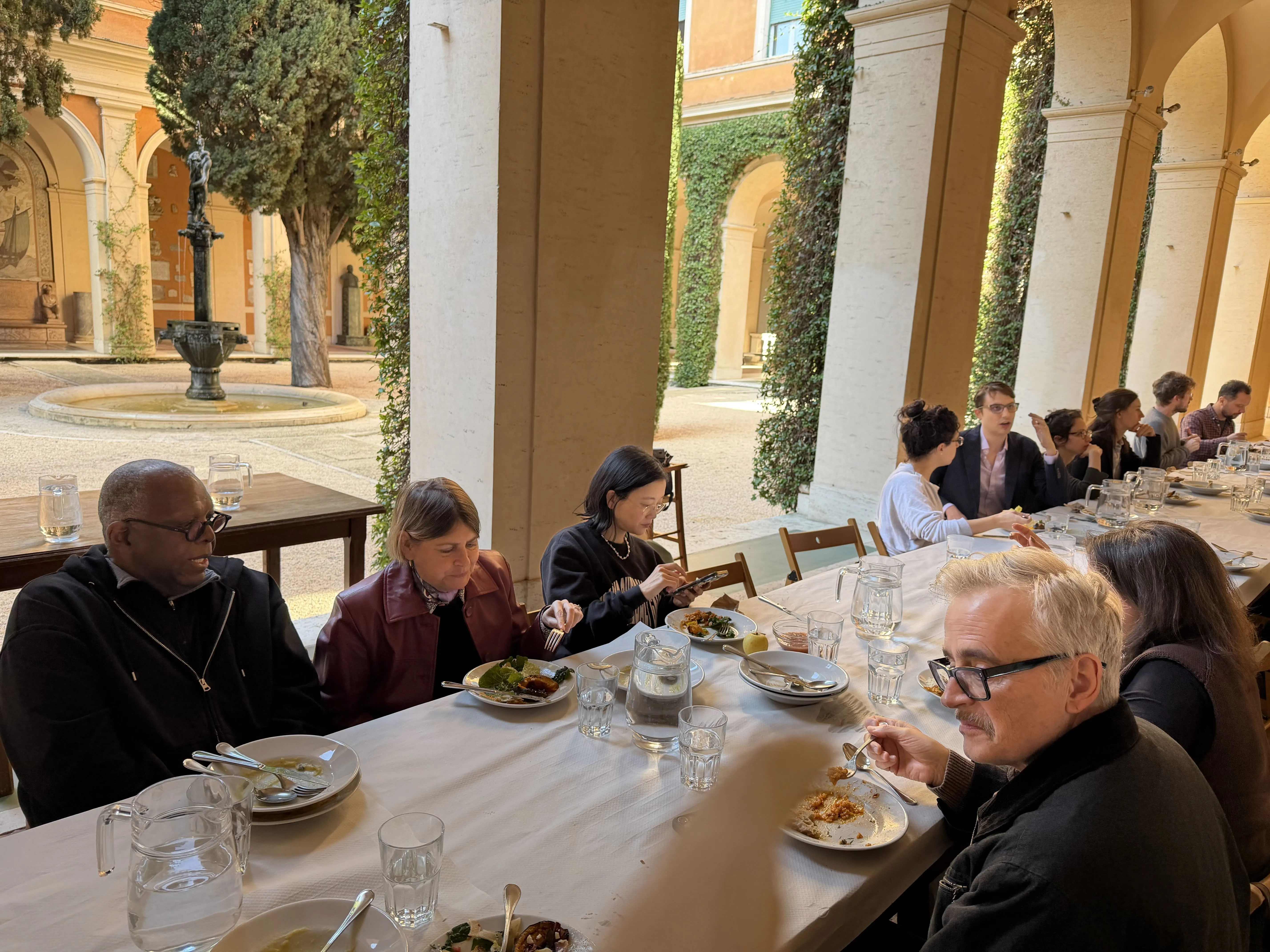
Lunch gathering on the portico of the main McKim, Mead, White building.
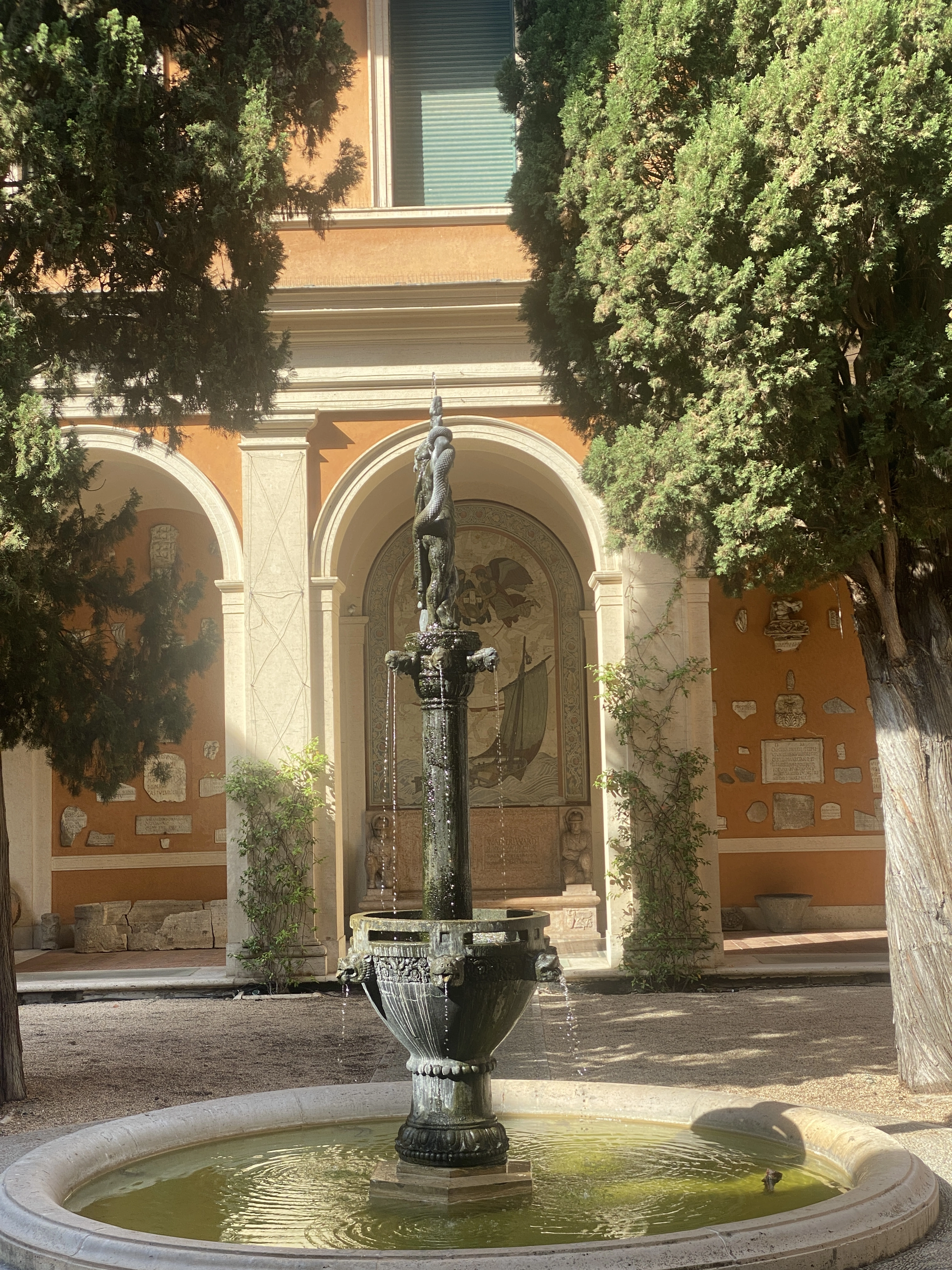
American Academy interior courtyard.
How has your time in Rome influenced the way you think about historical landscapes, monuments, and who gets remembered in the built environment?
I was impressed with how respectful and protective the Romans are of their antiquities. Of course, America is a much, much younger country, so I find that our respect for historical places is less engrained. Thus, we are more selective about who is remembered and celebrated. My time in Rome motivated me to continue efforts to uncover, honor, and preserve cultural African American history sites, but also to respect the history of all sites in America. Walking around Rome was an endless spectacle of ruins next to new buildings, sites under archaeological excavation, and my favorite, ancient walls. The walls impressed me and I read the book The Walls of Rome by Malcolm Todd, which outlined the history of walls starting in 800 BC through the Aurelian Defensive walls of 271 AD. The book was an expansion of the 1930 book by T. A. Richmond, The City Wall of Imperial Rome.
These books and the Apple App of the 1748 Nolli Plan helped to identify remaining walls as I explored Rome.
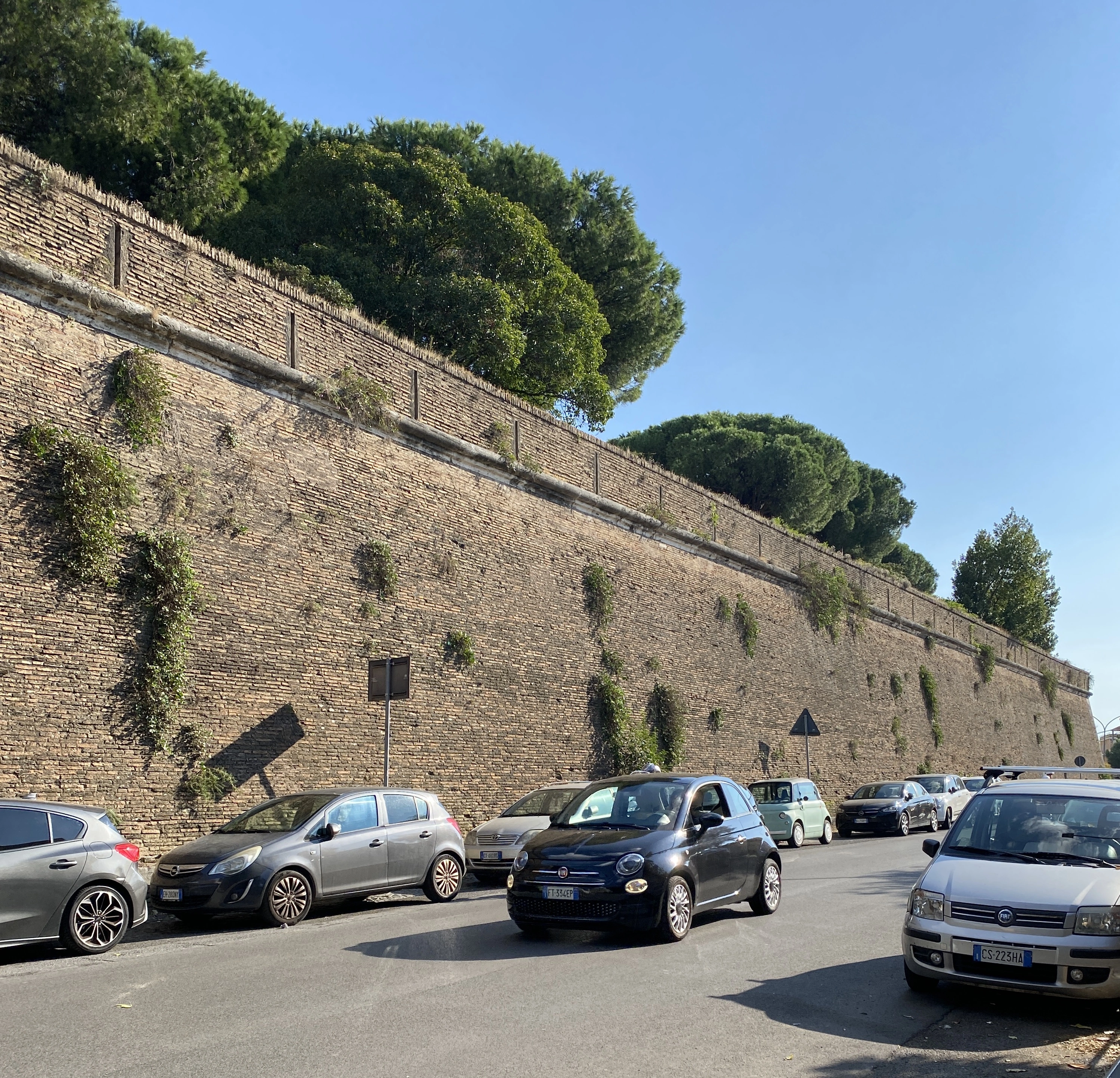
Wall surrounding the southern section of the American Academy in Rome campus.
What lessons or inspirations are you bringing back from this experience that might inform how landscape architects design more inclusive, culturally responsive spaces in the United States?
The biggest inspiration for me after my residency in Rome is that I and Americans should recognize that after 250 years as a country, we are infants. While the American is leader on many global fronts, our infancy should warn us against arrogance against the rest of the world. I operate from an ethic that is culturally respectful and inclusive regarding any professional work that I develop and the human project relationships that I encounter. Rome helped me understand how important this ethic is for the survival of a viable profession of landscape architecture and a country for decades to come.
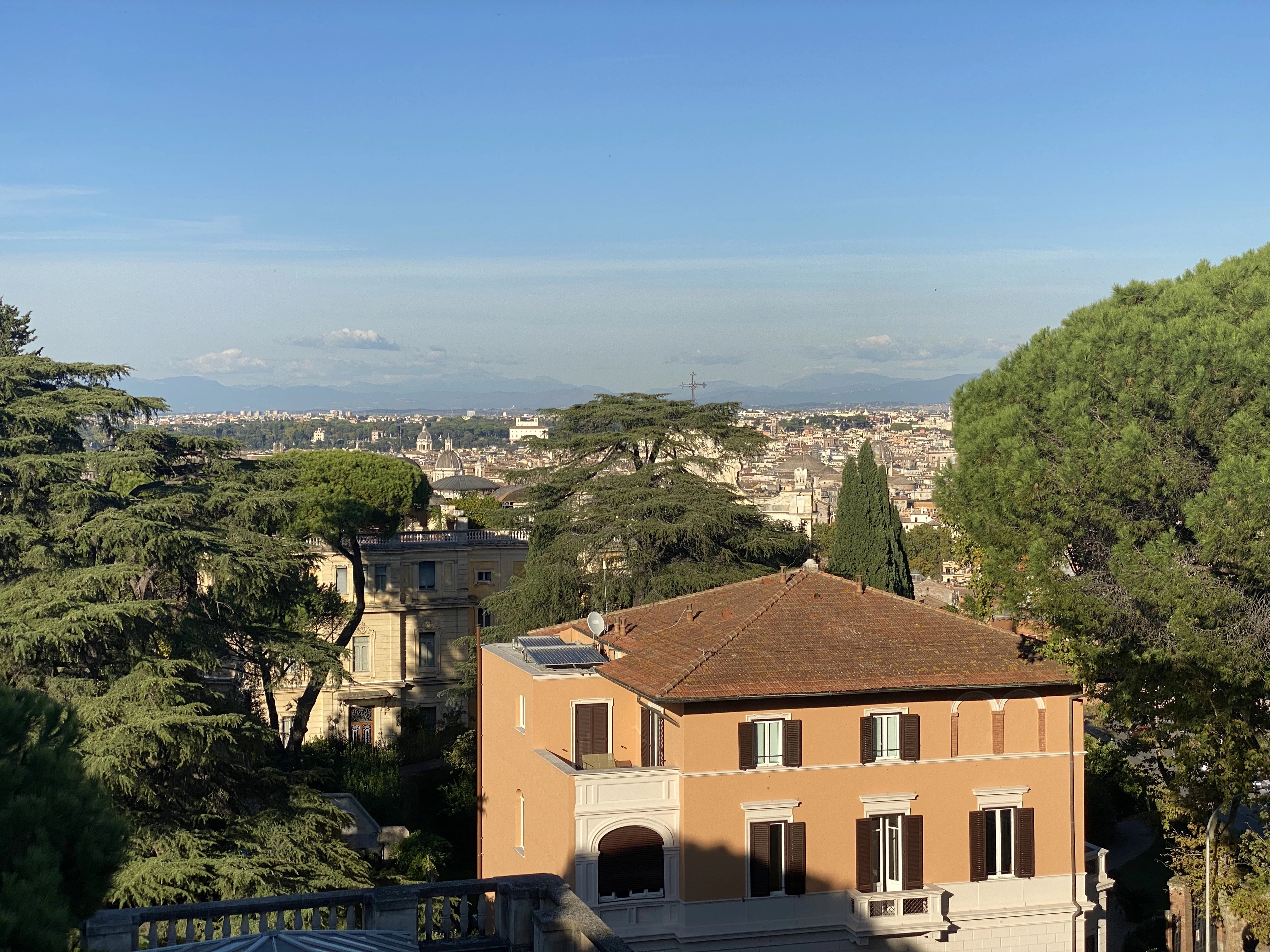
View of Rome from the Academy Roof Terrace.
Black History Month invites reflection on legacy. In what ways do you see landscape architecture as a tool for telling underrepresented stories or reshaping public memory?
I am honored to have worked in the area of cultural landscapes over the past seven years as a Black landscape designer. This is important to my racial identity and my ability to contribute to the preservation and stewardship of African American history and culture. My firm honors Black history through projects such as monuments celebrating the Divine Nine Black sororities and fraternities, the Reinterment Memorial for a disrupted Colored Burial Ground, and the Harriet Tubman statue plaza in Dorchester County, Maryland. Our work also includes the Alexandria, Virginia cornerstone monument, which commemorates the enslaved persons who helped construct Christ Church. I believe that landscape architecture has a major role to play in preserving the cultural history of all racial groups in America.
Finally, are there any other experiences you would like to share about your time in residency at the American Academy?
It was wonderful to continue my mentorship of young Black landscape architects during my stay in Rome. I entertained two guests during my last month at the Academy with lunch, dinner, introductions to other fellows and residents, and tours of the Academy. Andrew Sargeant, a mentee of mine for over seven years, visited and Tobiloba Akibo, a new introduction, also visited. As a member of the Black Landscape Architects Network (BlackLAN), Tobiloba contacted me based on the networks database. She was visiting Rome from her home in Nigeria to attend workshops on UNESCO world heritage guidelines as part of her role with UNESCO Nigeria. I was humbled to be reminded of the international reach of BlackLAN.
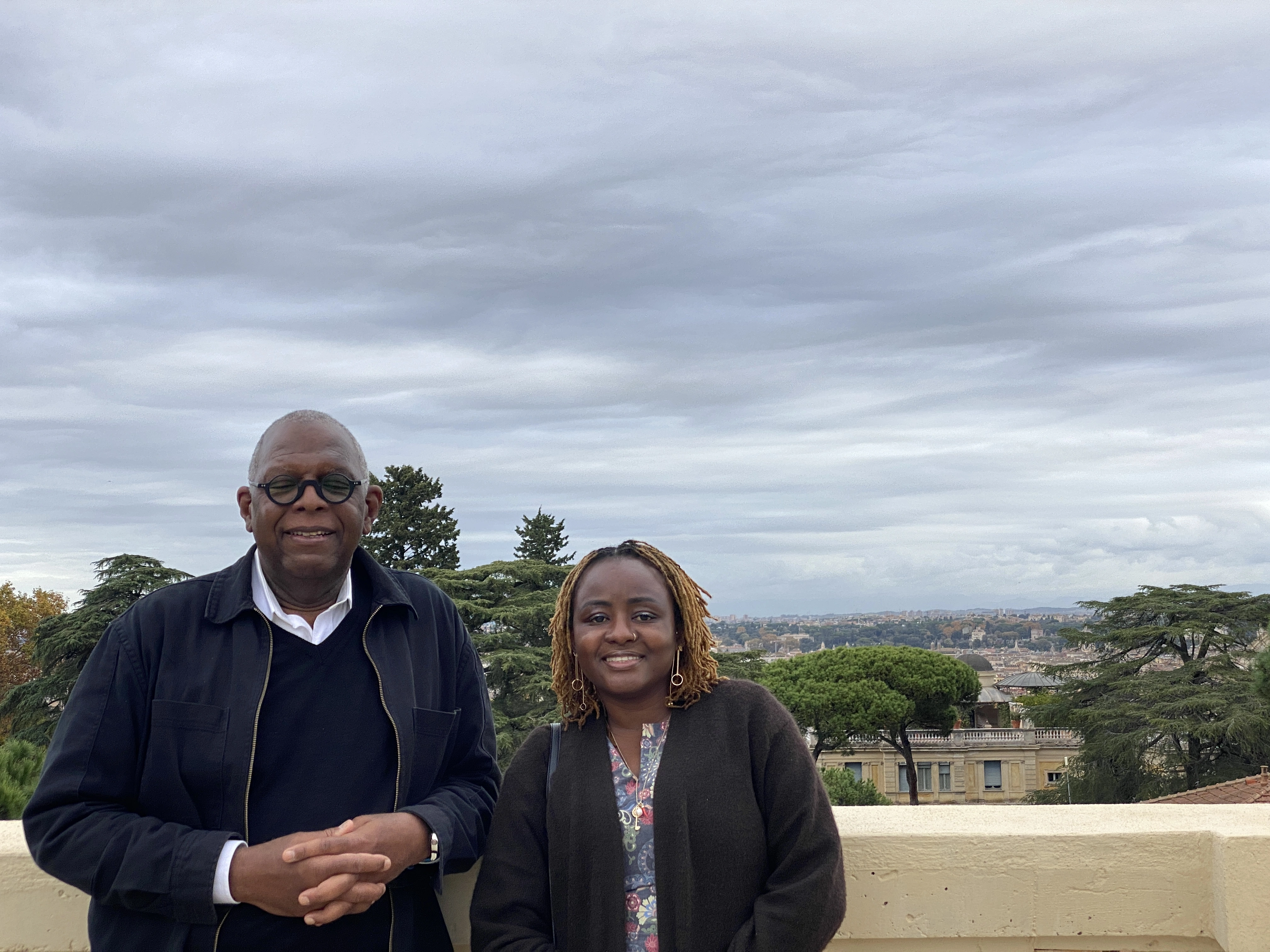
Glenn and Tobiloba on the Academy roof terrace with Rome in the background.
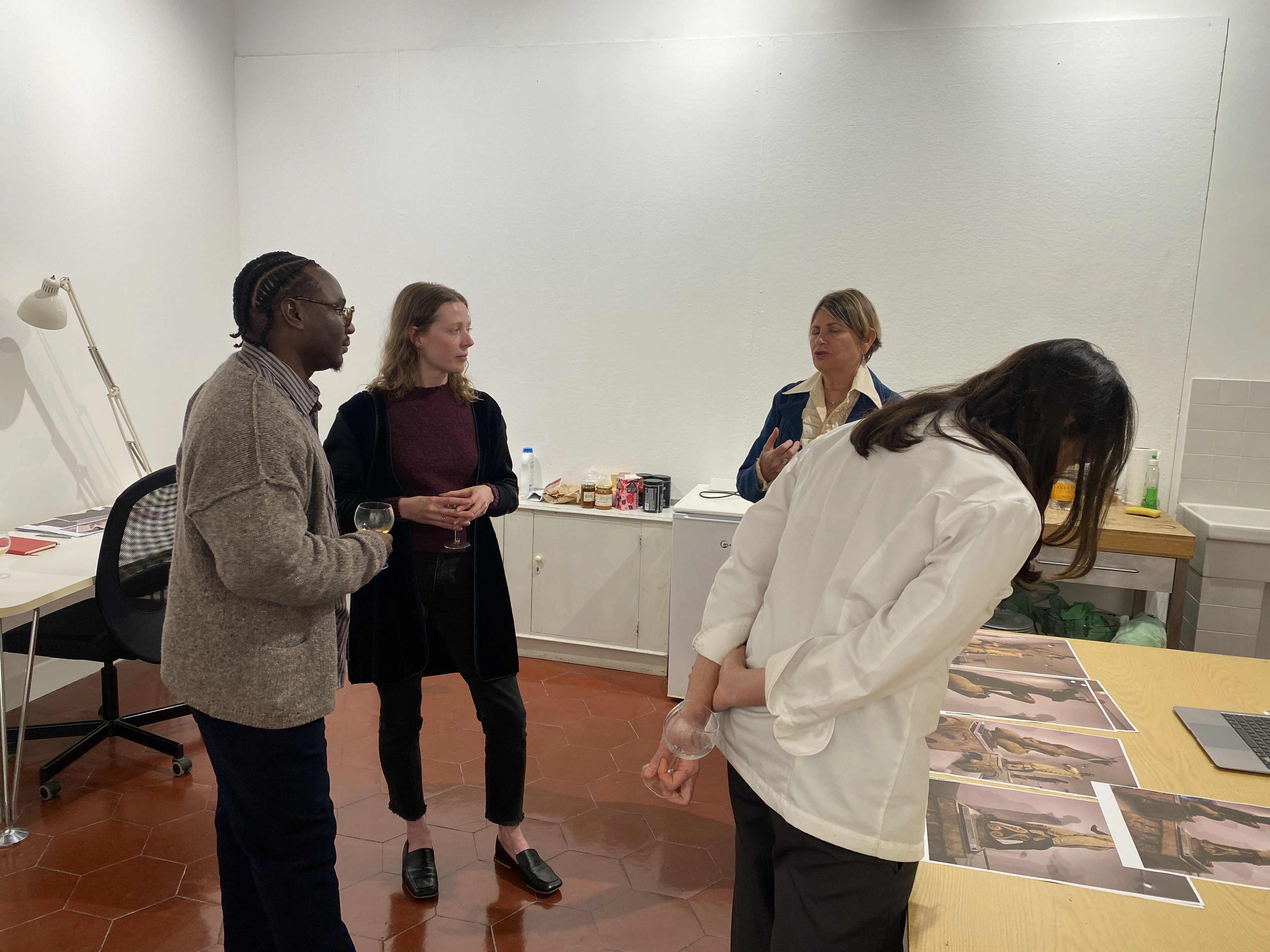
Andrew Sargeant attending an Open Studio exhibition at the American Academy.