
.webp?language=en-US)
.webp?language=en-US)
WORKS with Nature: Low-Carbon Adaptation for a Changing World
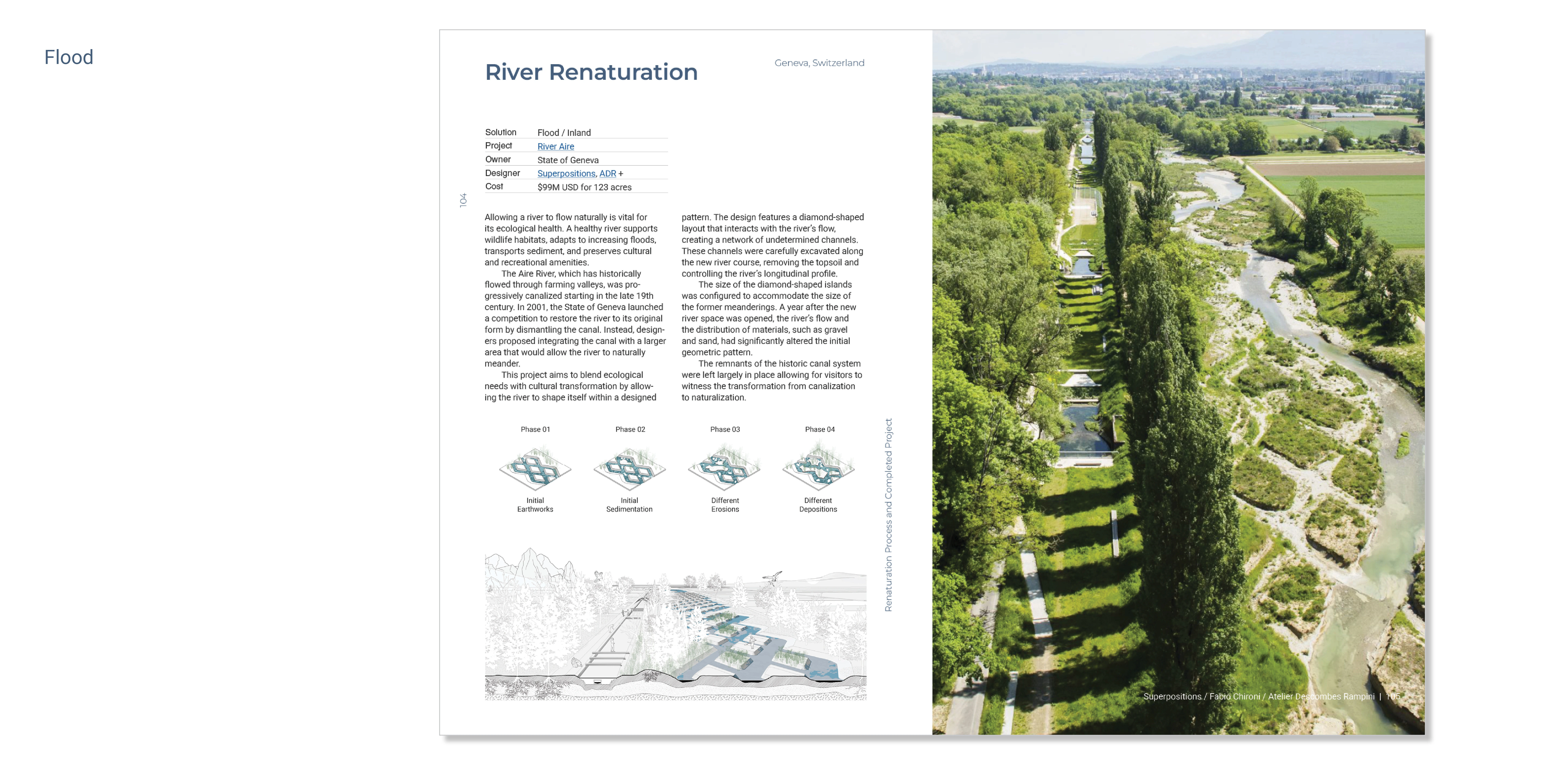
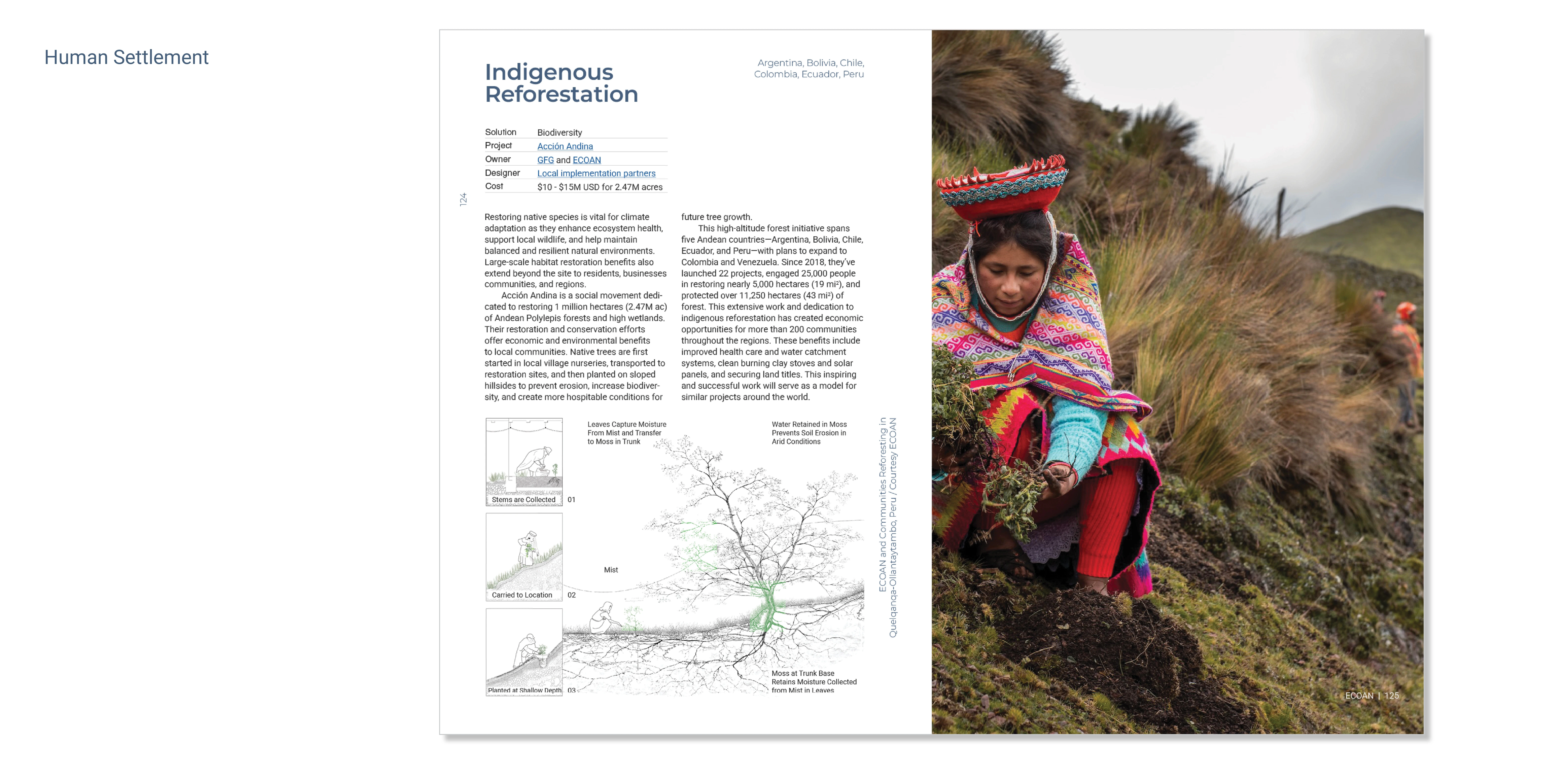
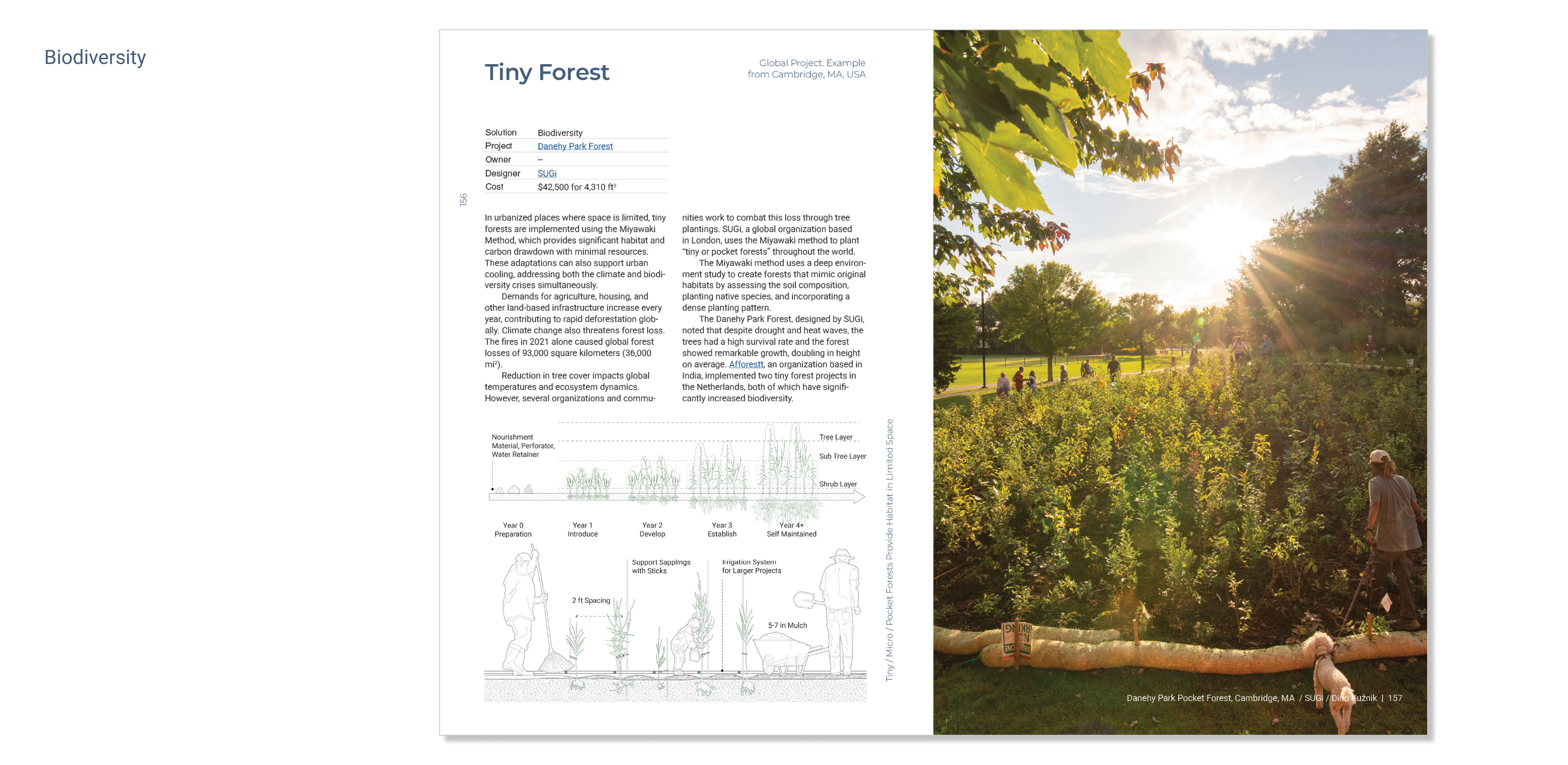
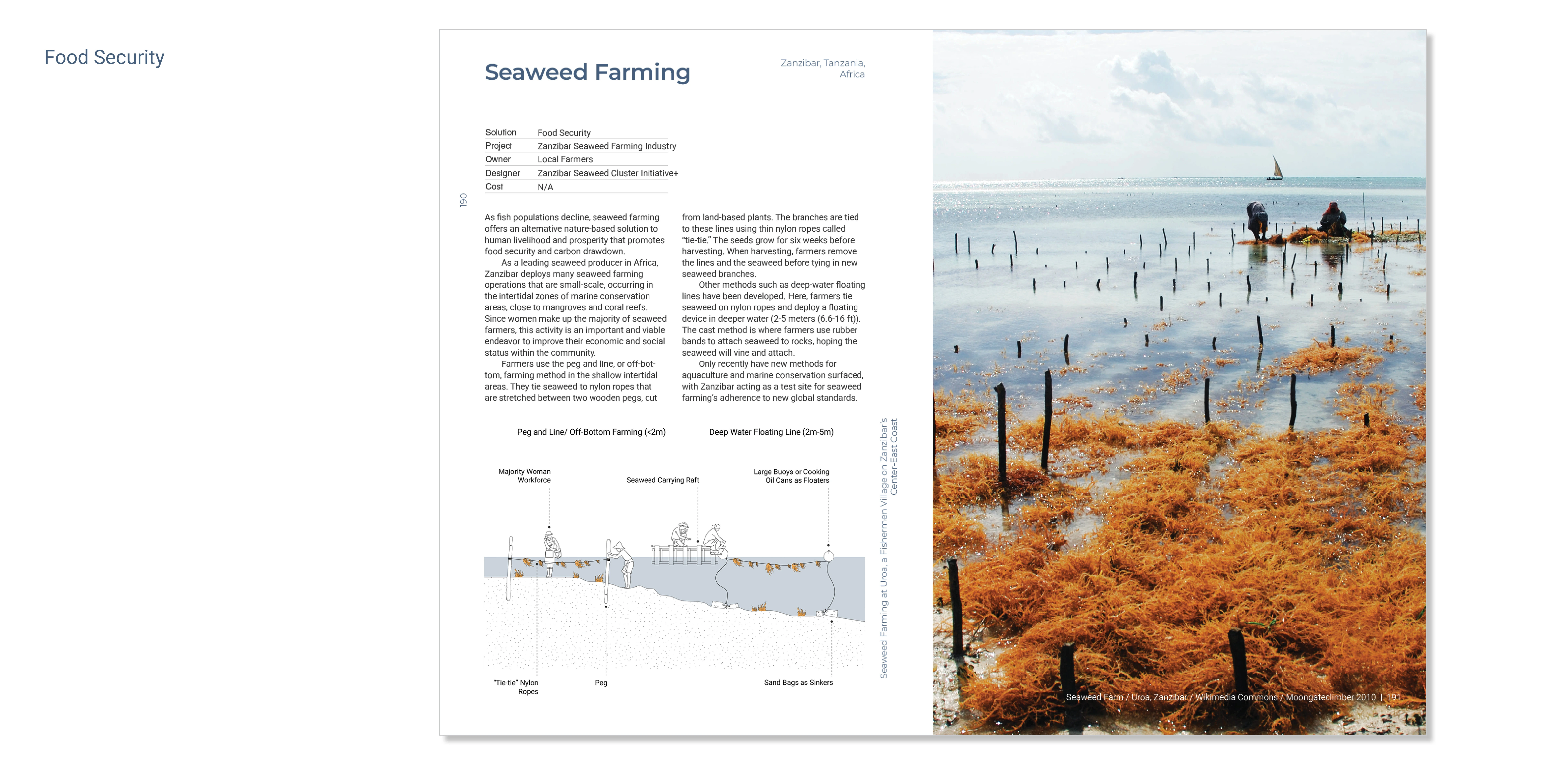
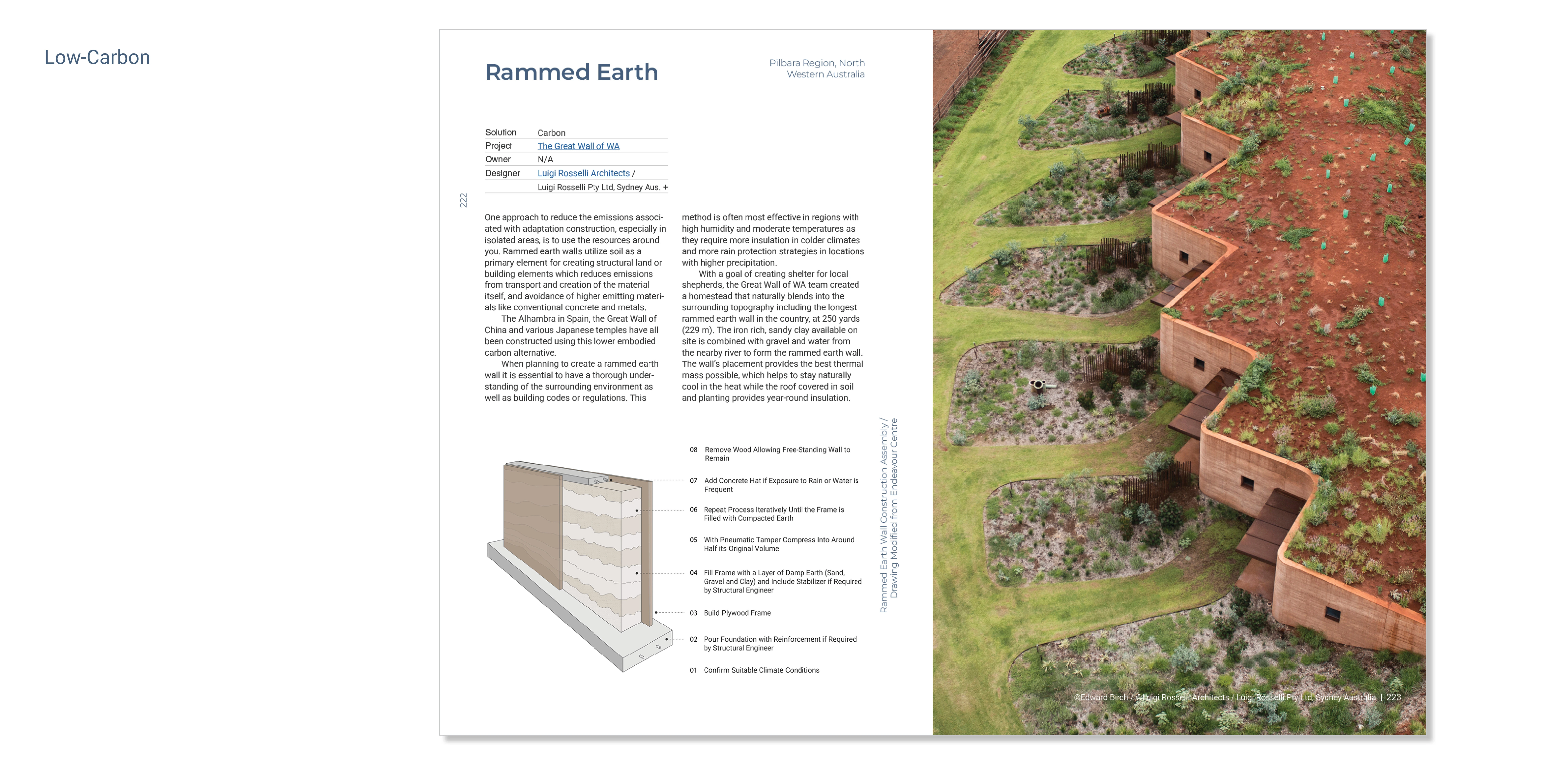
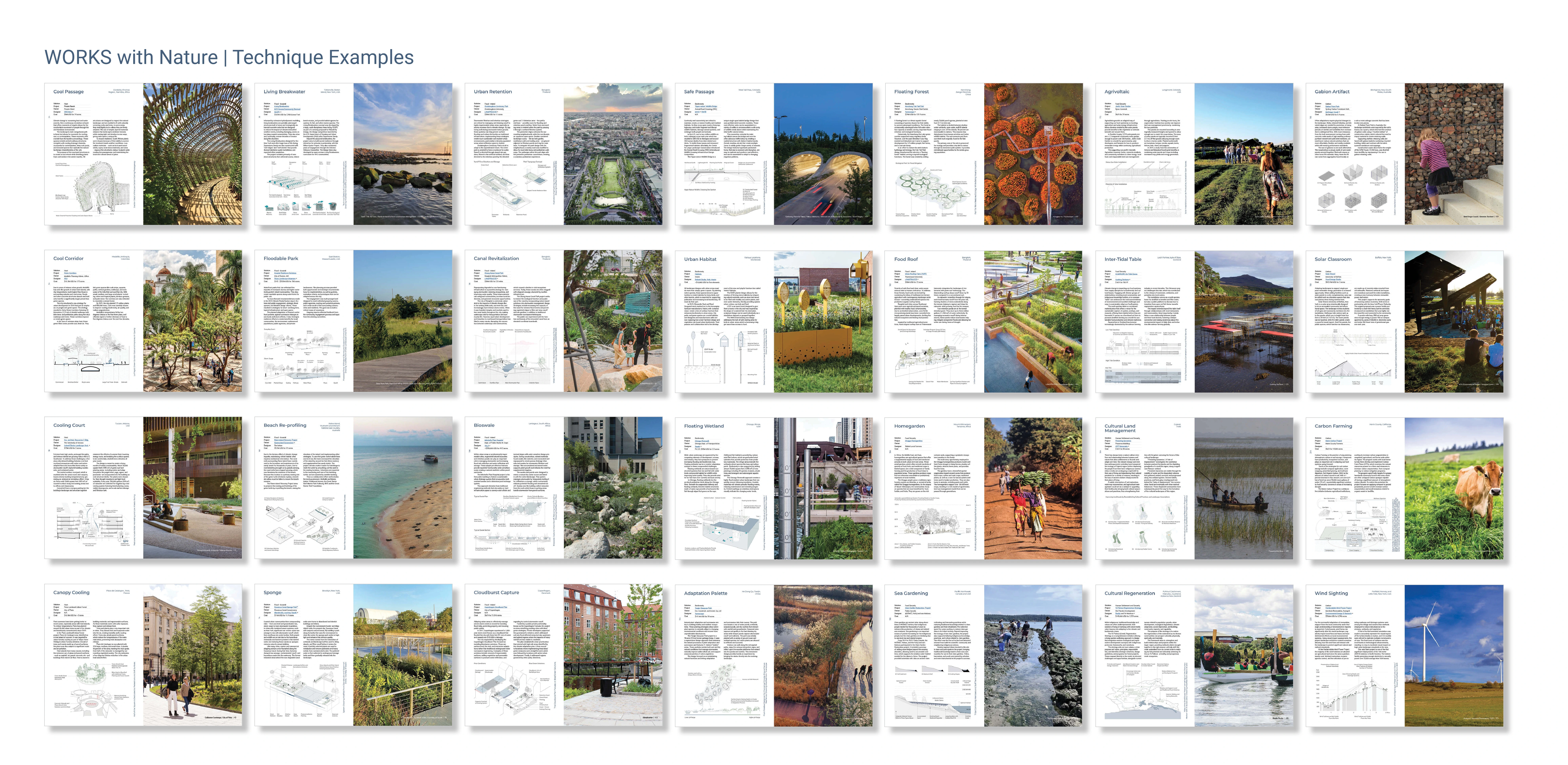

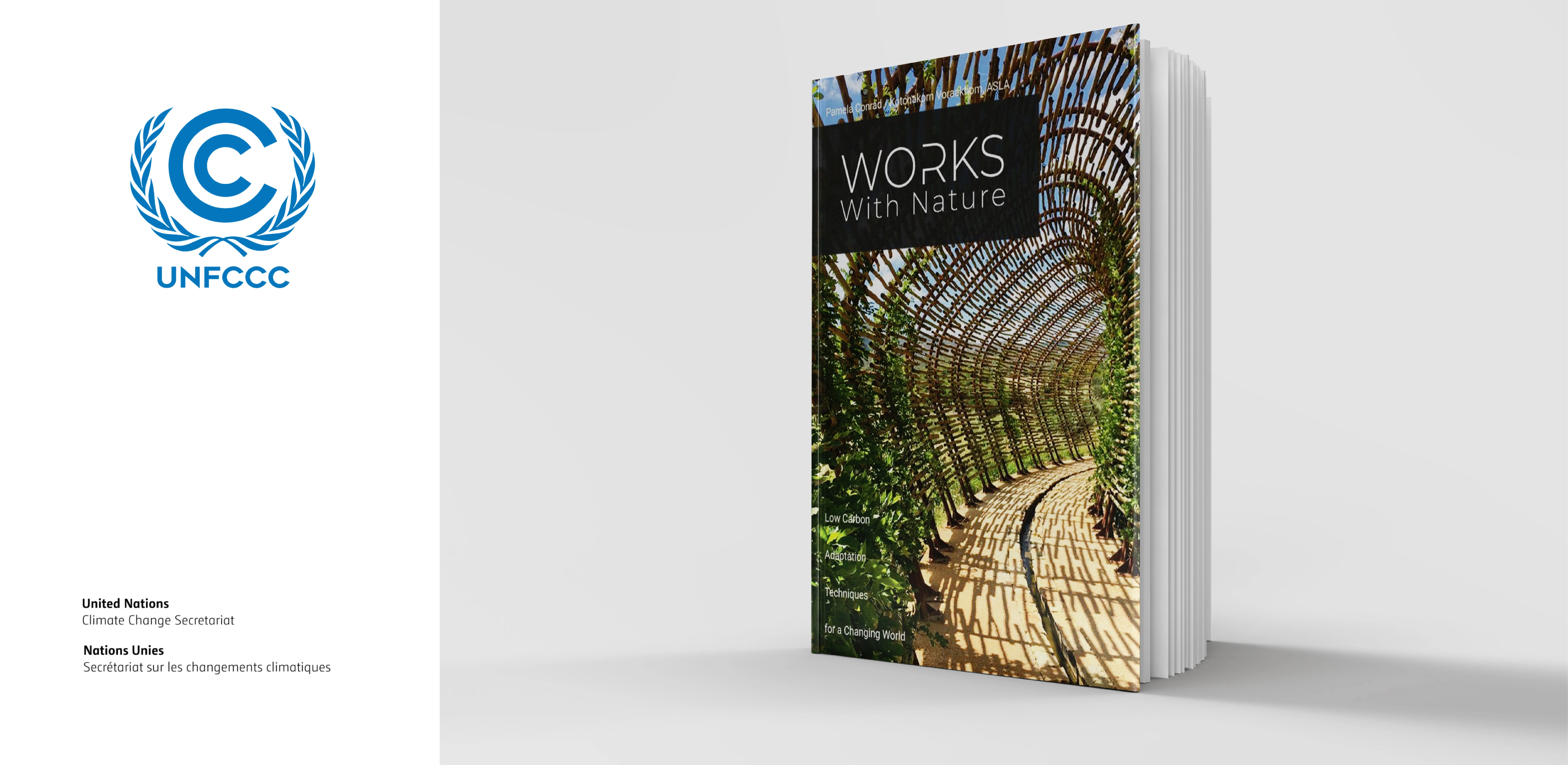
“WORKS with Nature” is a beautifully designed publication that combines compelling visuals with a powerful call to climate action. It skillfully bridges the divide between developed and developing nations, as well as urban and rural contexts, offering inclusive and actionable solutions for diverse environments. This playbook stands out for its clarity, global relevance, and ability to translate complex environmental challenges into practical design strategies.
Awards Jury
-
2024 marked a critical turning point, as the planet exceeded an annual temperature average of 1.5°C above pre-industrial levels. This milestone coupled with devastating biodiversity loss highlights the urgent need for action to mitigate and adapt to these threats. In response, landscape architects have led innovative collaboration with the United Nations.
This effort culminated in the publication of WORKS with Nature: Low-Carbon Adaptation Techniques for a Changing World, a guide developed under the leadership of ASLA Climate Action Plan founding Chair Pamela Conrad and UN-award-winning landscape architect Kotchakorn Voraakhom. The guide aims to elevate the role of landscape architects in global climate and biodiversity solutions.
-
Introduction
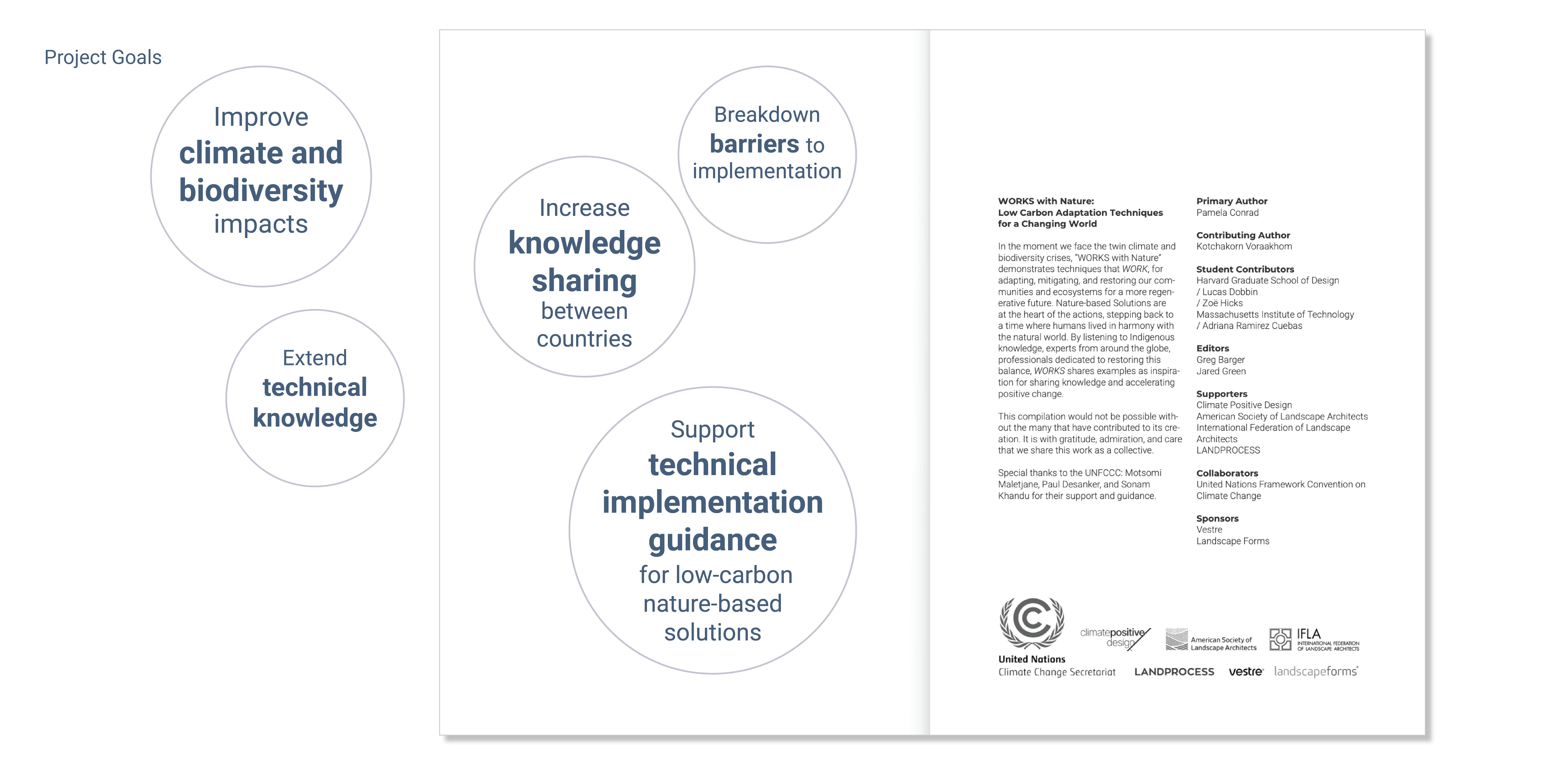
The WORKS with Nature guide’s primary objective is to bridge the gap between developed and developing nations and between urban and rural areas. It showcases a range of low-carbon adaptation and biodiversity strategies that demonstrate how landscape architects are uniquely equipped to address both the climate crisis and biodiversity loss.
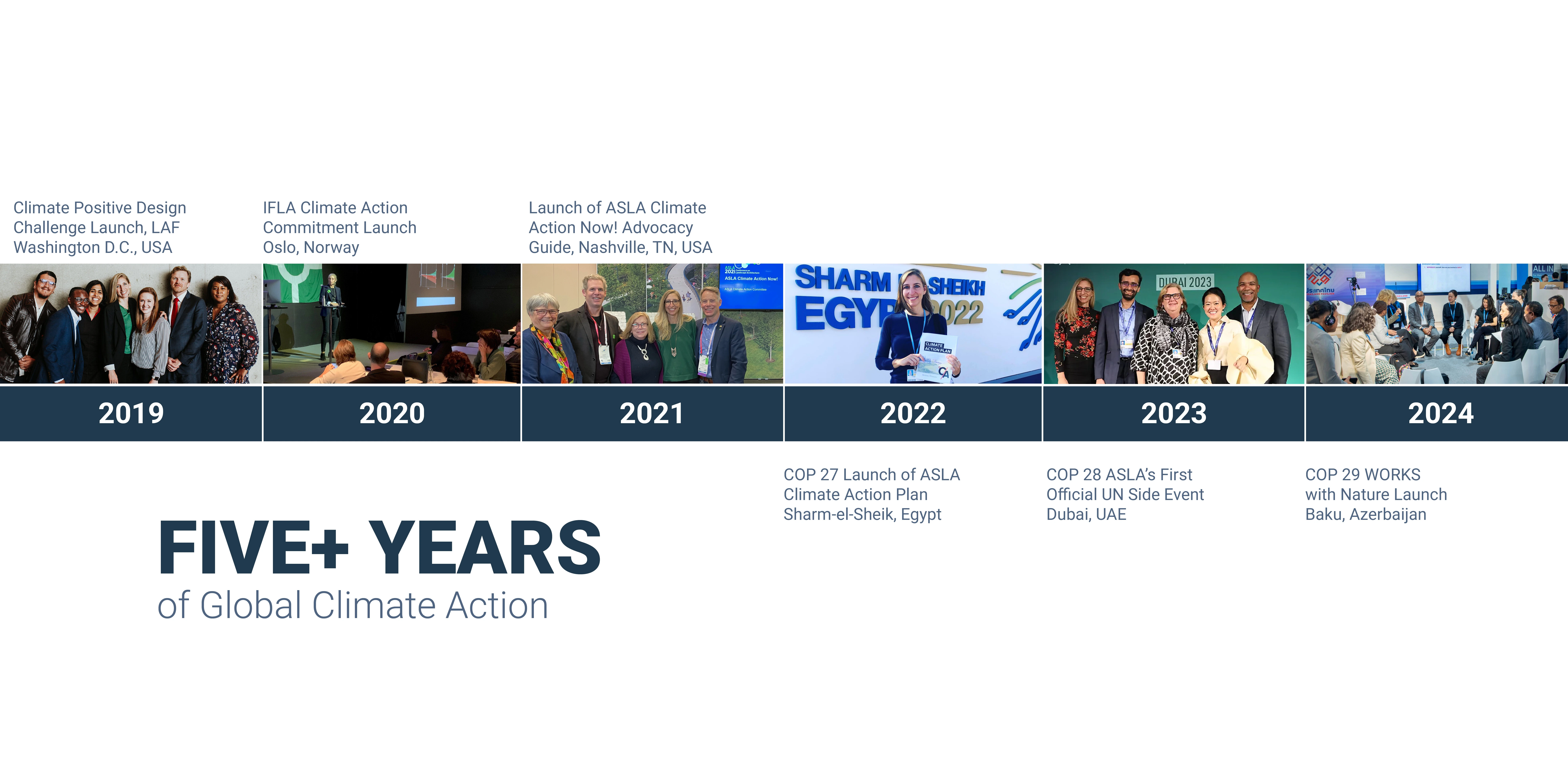
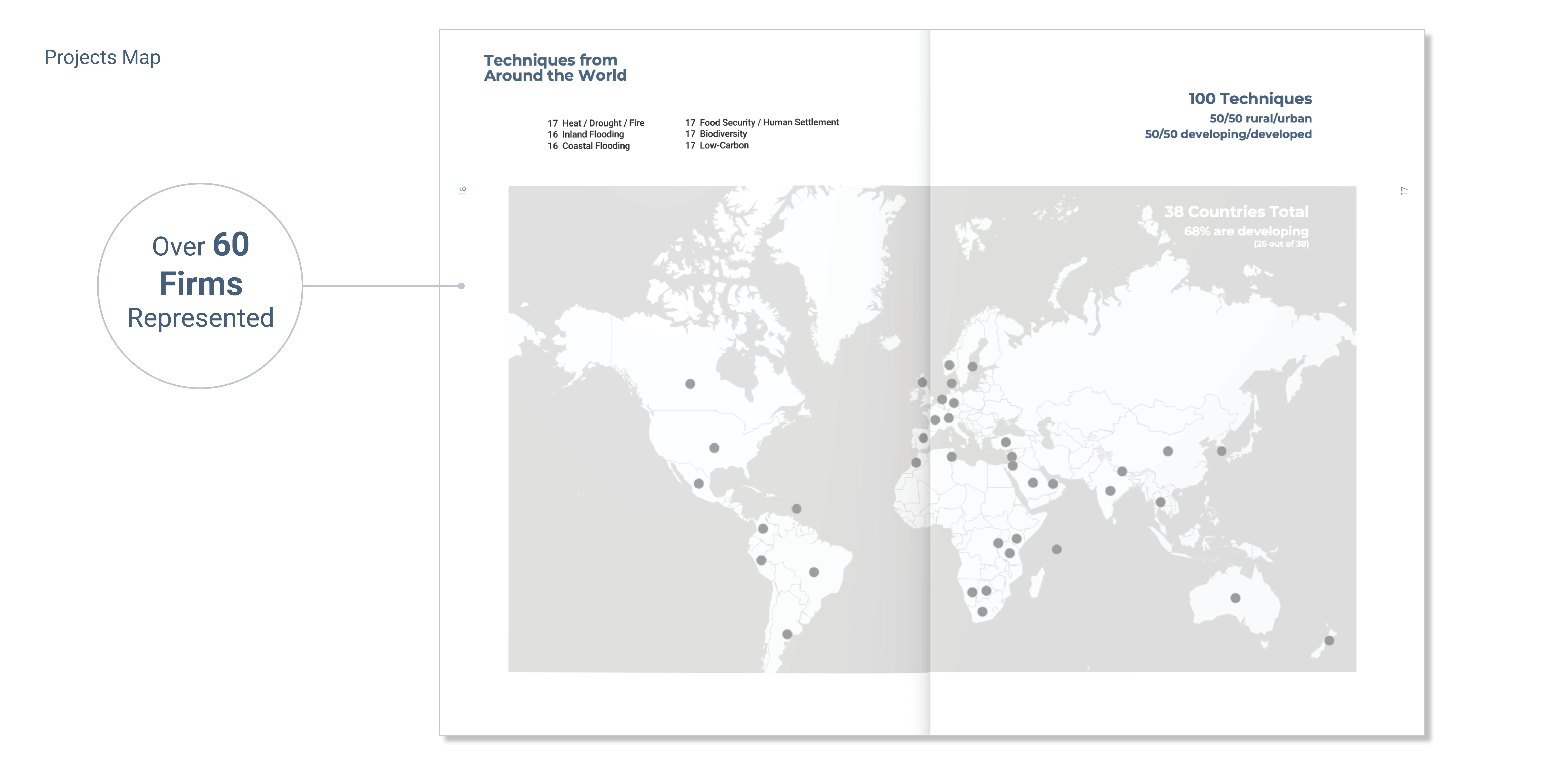
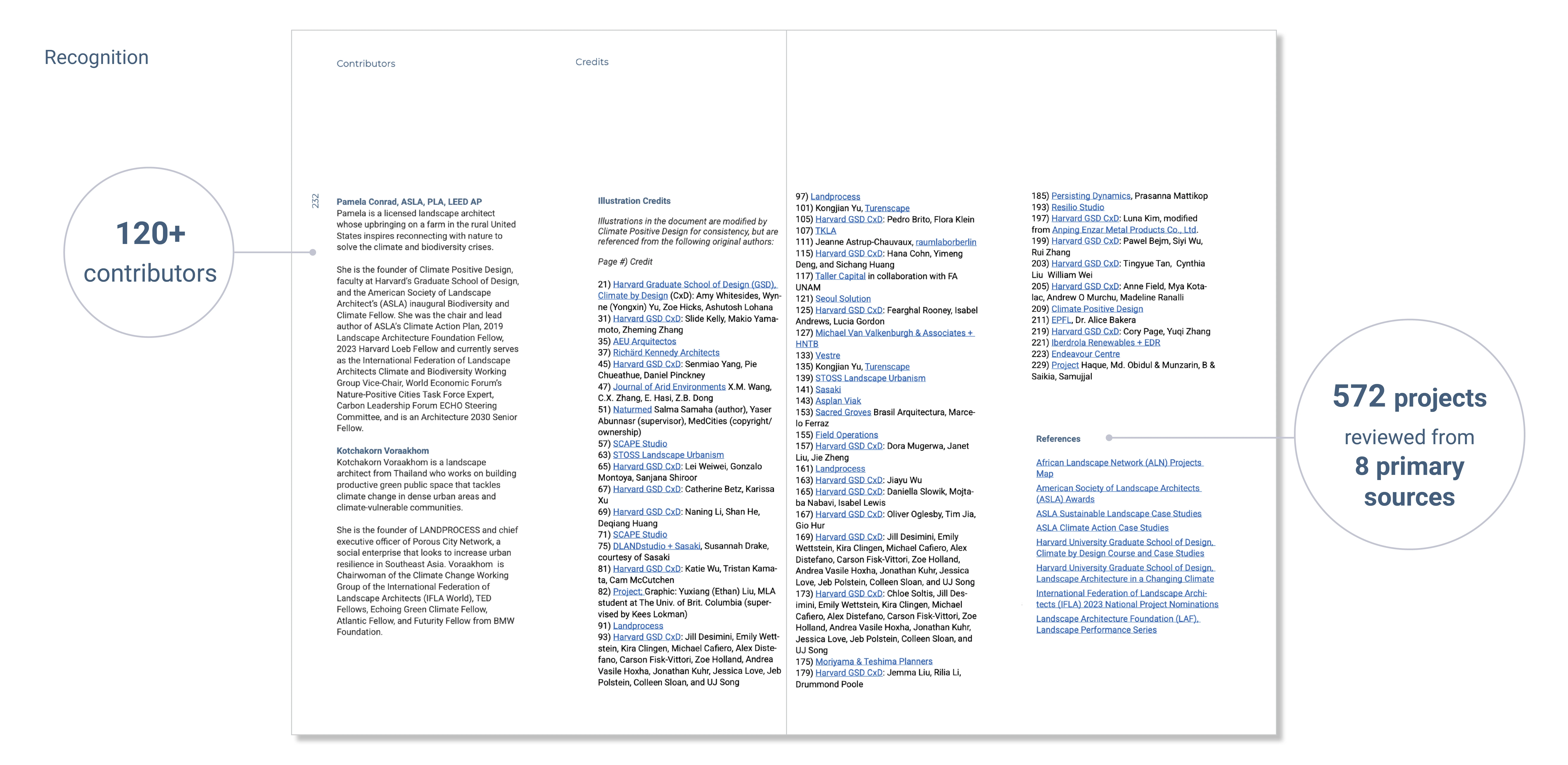
Featuring 100 strategies from diverse contexts, this publication includes contributions from 38 countries and over 60 landscape architecture firms and organizations. Officially launched at the UN Climate Conference COP29 in Baku, the guide was accompanied by a workshop aimed at facilitating knowledge exchange and fostering cross-sector collaboration.
Backstory
The origins of WORKS with Nature trace back to COP28, where Pamela, Kotchakorn, and ASLA CEO Torey Coneen-Carter had a pivotal conversation with Paul Desanker, UNFCCC Manager, on how landscape architects could contribute to global climate solutions. Desanker identified a critical gap in knowledge sharing, emphasizing that many countries lack landscape architects and are unaware of the profession’s unique, nature-based approach to climate and biodiversity challenges.
Details
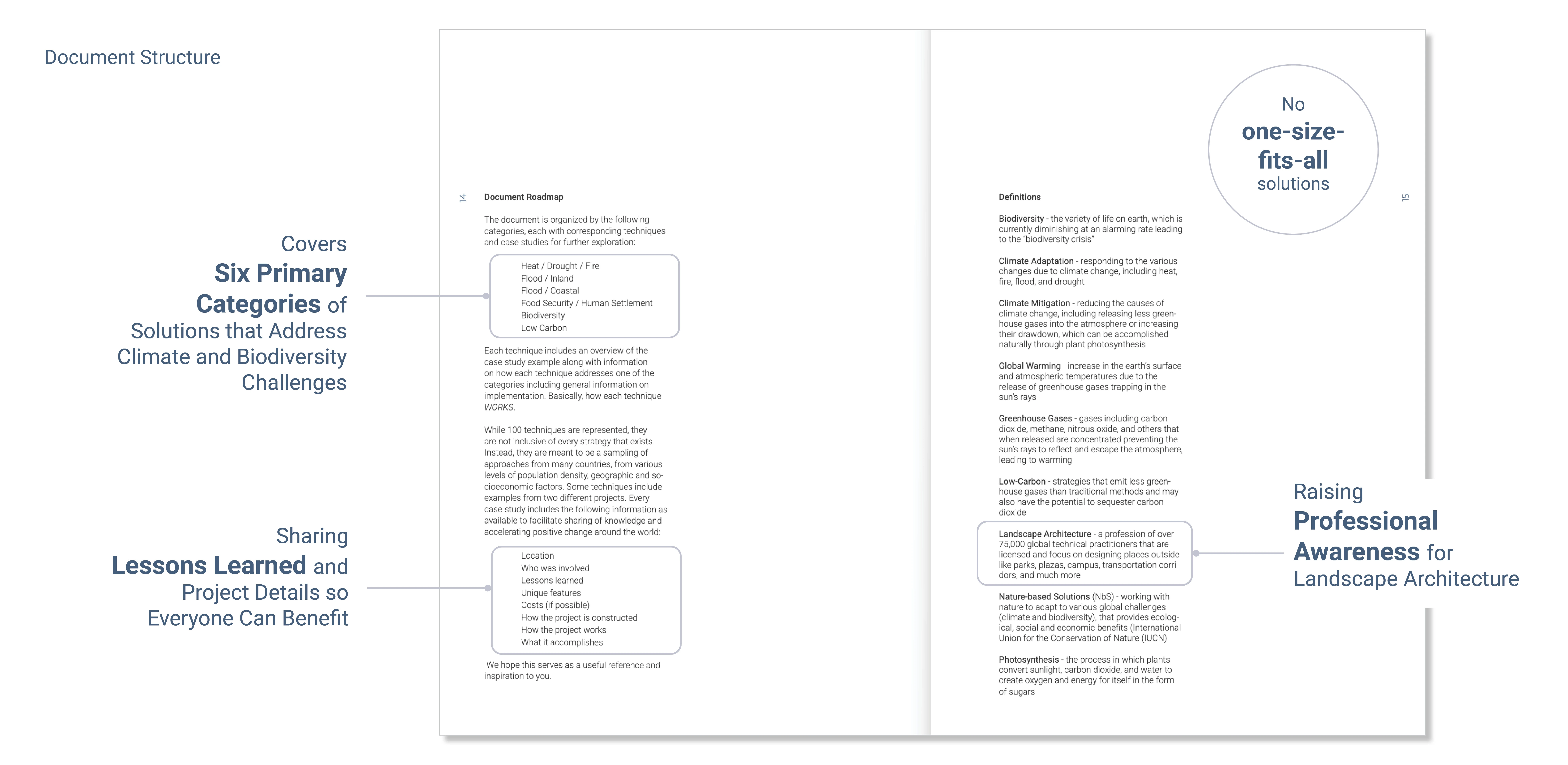
The WORKS with Nature guide offers actionable solutions through nature-based strategies organized into six thematic sections:
● Urban Cooling, Fire, and Drought Mitigation
● Coastal Adaptation
● Inland Flood Management
● Food Security and Human Settlement
● Biodiversity
● Low-Carbon Design
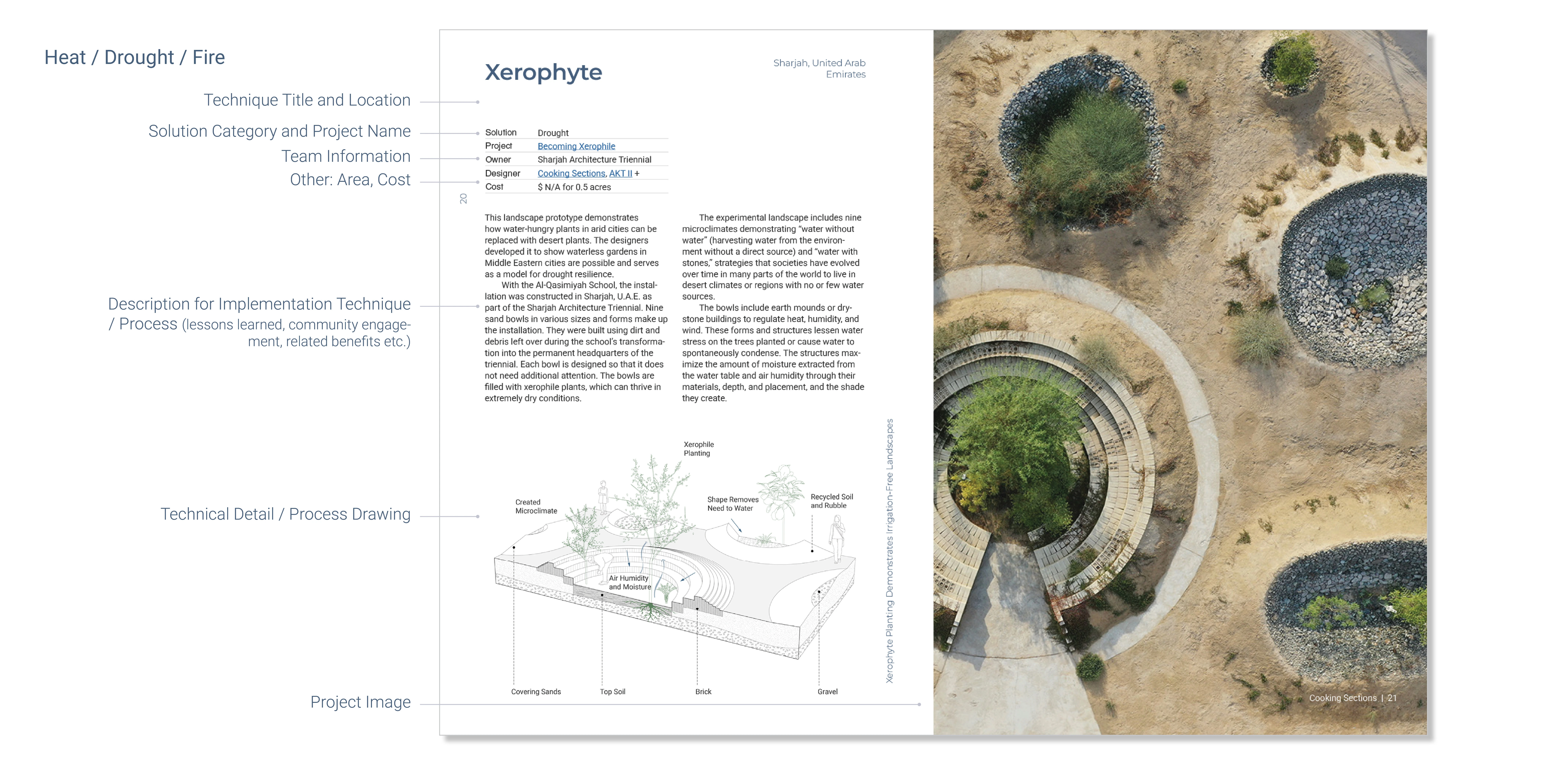
Each project showcases a technique with insights on community engagement, project team, lessons learned, a technical detail or process drawing and a project image that makes the content accessible to a broader audience.
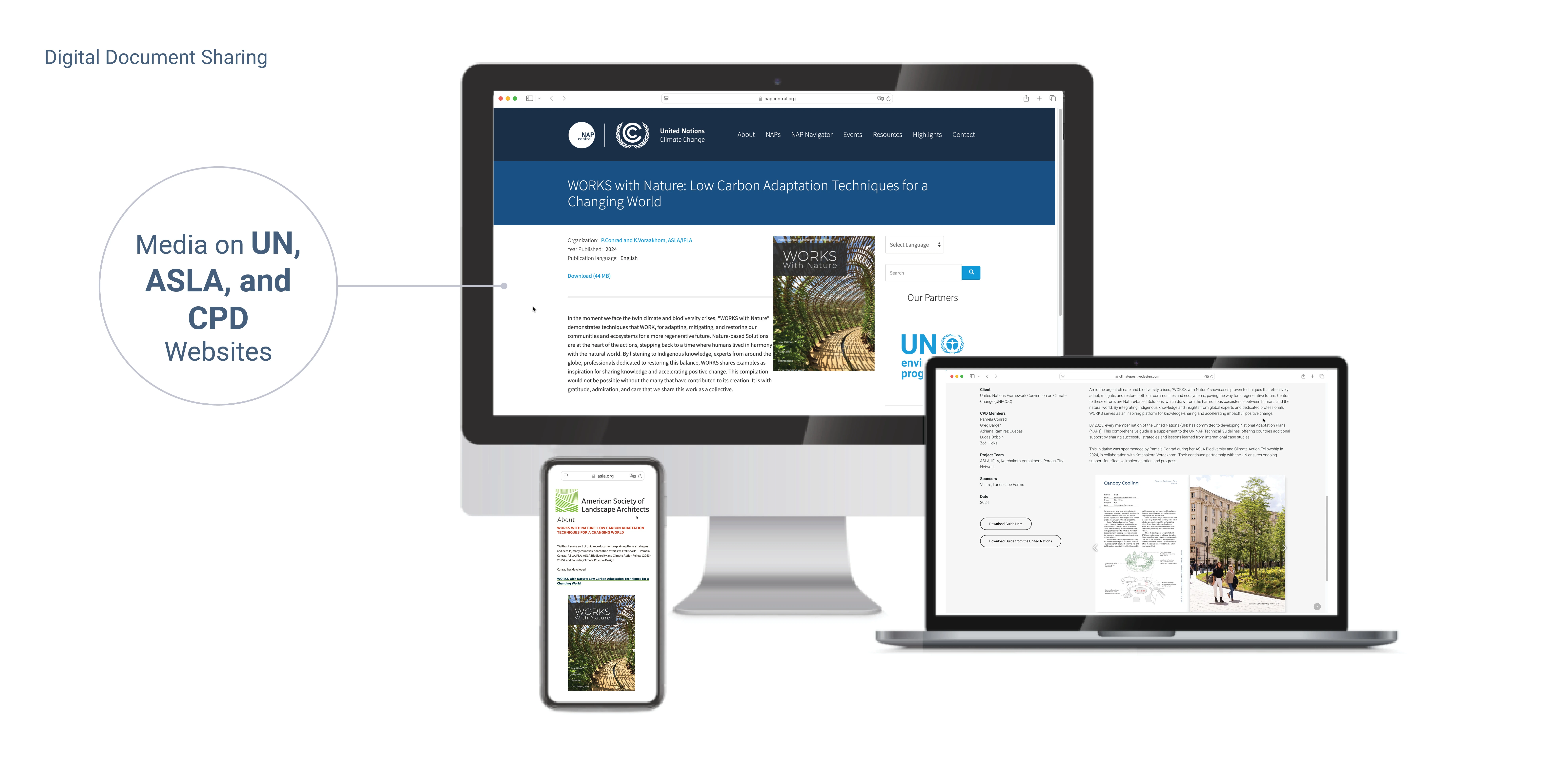
Key findings have been shared through various publications and social media. The guide is available for download on the UN, Climate Positive Design, ASLA, and IFLA websites.
COP29 Workshop
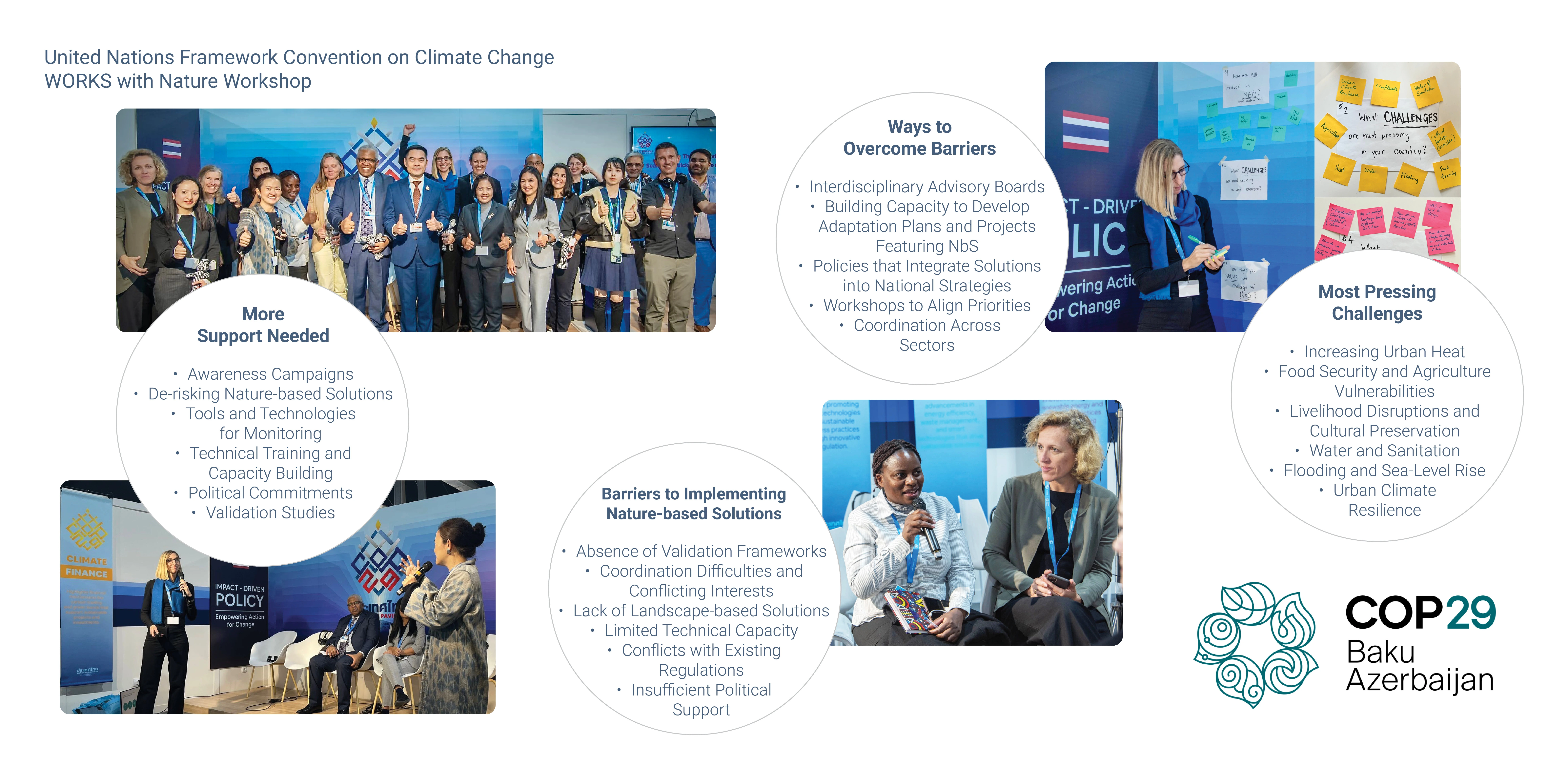
The official launch was accompanied by an implementation workshop in Baku designed to facilitate real-world application of the guide’s principles.
The workshop involved leaders discussing the challenges and barriers their countries face in implementing nature-based solutions, such as food security issues, increasing urban heat, water crises, flooding, and cultural heritage preservation. They identified key obstacles, including coordination difficulties, lack of technical capacity, regulatory conflicts, and insufficient political support.
To overcome these challenges, the leaders emphasized the importance of building capacity, creating interdisciplinary advisory boards, integrating nature-based solutions into national policies, and enhancing sector coordination. They also highlighted the need for more support in areas such as technical training, awareness campaigns, monitoring tools, investment validation, and political commitments.
What’s Ahead
Ongoing discussions with UN leaders highlight the need to expand the guide’s reach through workshops, develop policy strategies for governments lacking landscape architecture expertise, and establish funding mechanisms for nature-based adaptation projects.
As the climate and biodiversity crises intensify, the demand for nature-based solutions will grow. Landscape architects are uniquely positioned to lead this transformation, with WORKS with Nature serving as both a call to action and a roadmap for sustainable change.
-
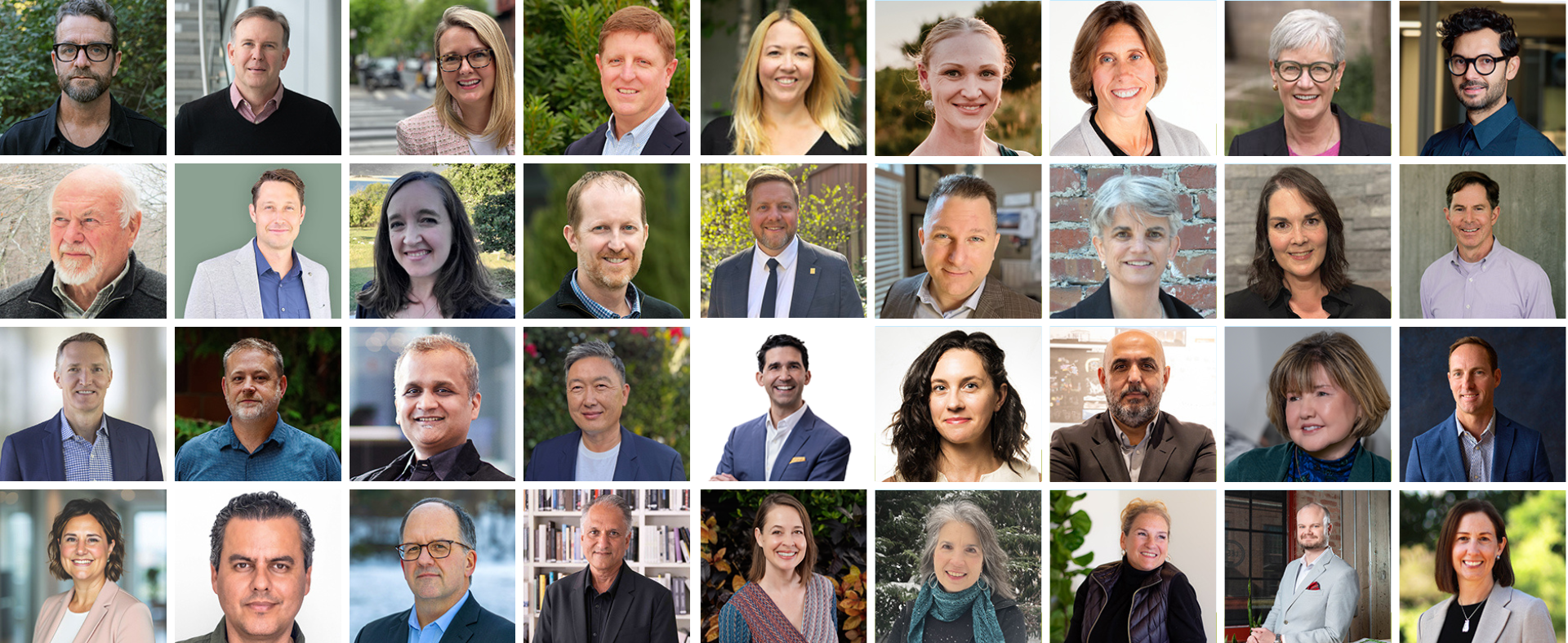
- Pamela Conrad, Climate Positive Design - Lead Author
- Kotchakorn Voraakhom - Contributing Author
- Lucas Dobbin, Harvard Graduate School of Design - Student Contributor
- Zoë Hicks, Harvard Graduate School of Design - Student Contributor
- Adriana Ramirez Cuebas, Massachusetts Institute of Technology - Student Contributor
- Greg Barger, Climate Positive Design - Contributing Author and Editor
- Jared Green, ASLA - Editor
- Climate Positive Design - Supporter and Sponsor
- American Society of Landscape Architects - Supporter and Sponsor
- International Federation of Landscape Architects - Supporter and Sponsor
- LANDPROCESS - Supporter
- United Nations Framework Convention on Climate Change - Collaborator
- Vestre - Sponsor
- Landscape Forms - Sponsor
Advertisement
Related Awards
Honor Award, Communications
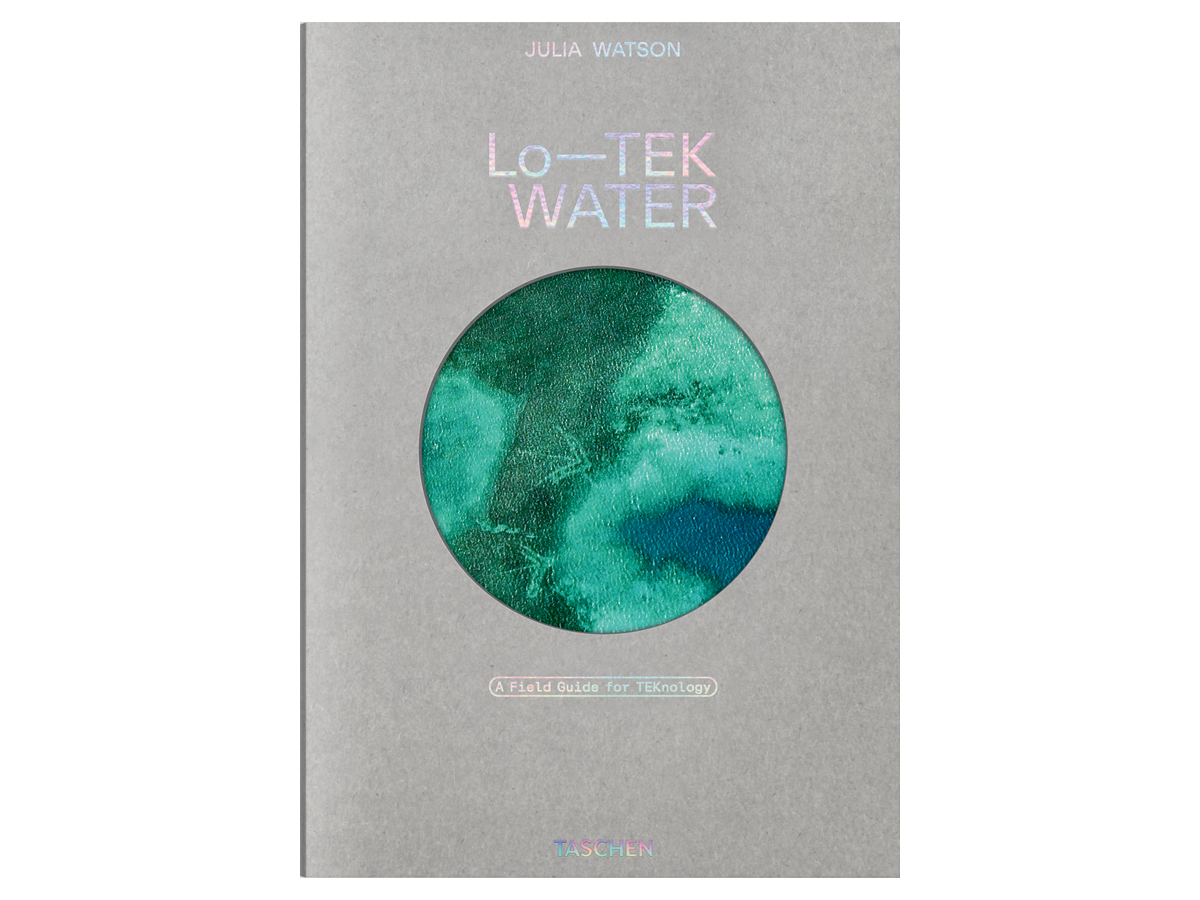
Lo—TEK Water. A Field Guide for TEKnology
Lo—TEK Water is a publication that communicates Indigenous and traditional ecological knowledge as a contemporary framework for addressing global water challenges. Through rigorous research, compelling narrative, and visually driven storytelling, the book translates complex environmental systems into accessible, actionable insights for designers, planners, policymakers, and the public.
Related Articles
ASLA Fund
American Society of Landscape Architects Announces its 2026 Student Awards
39 Student Award winners elevate the future of the landscape architecture profession
Aug 24 2026