.webp?language=en-US)
.webp?language=en-US)
The Community First Toolkit: A Framework for Equitable Public Spaces
-
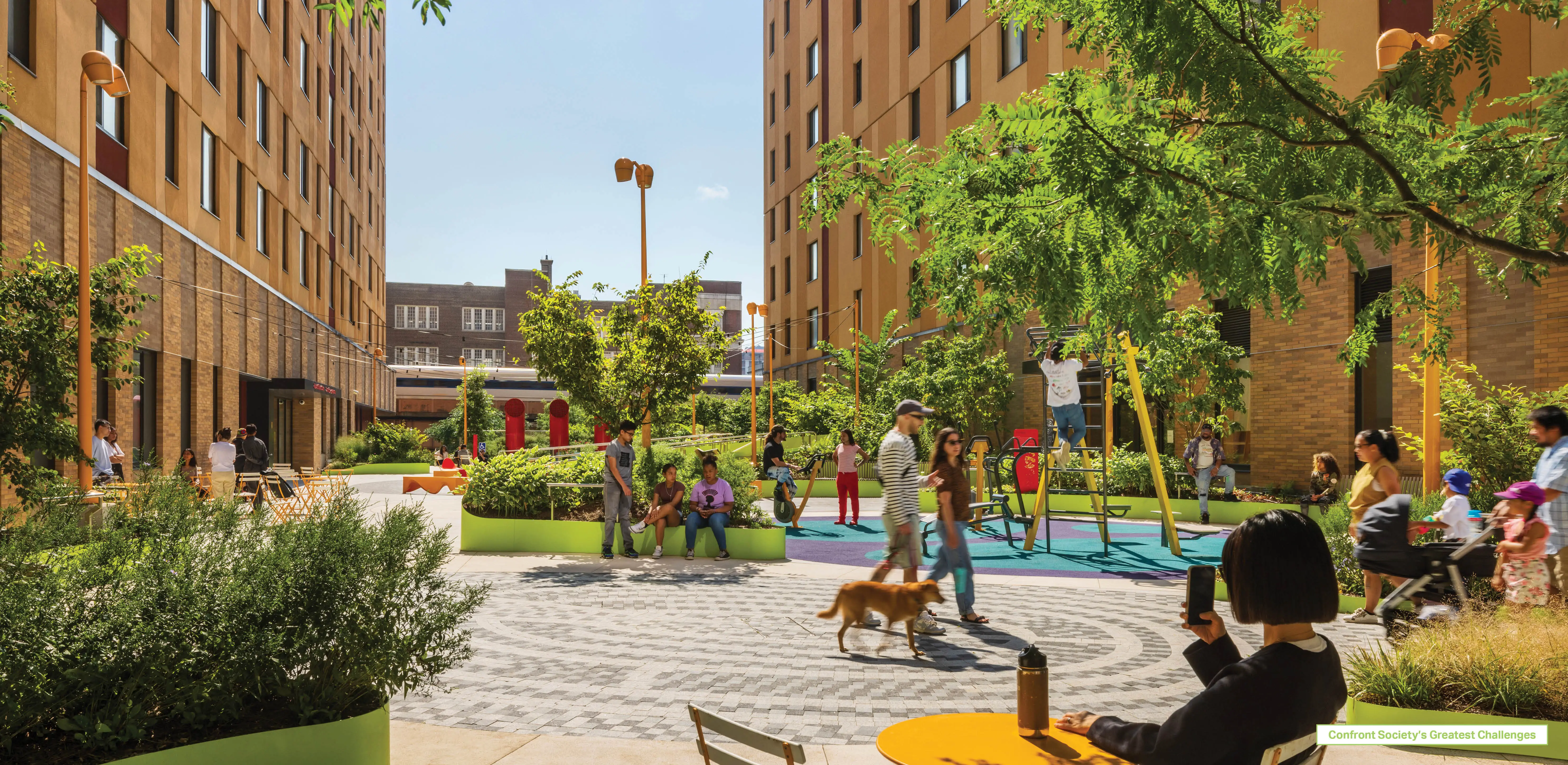
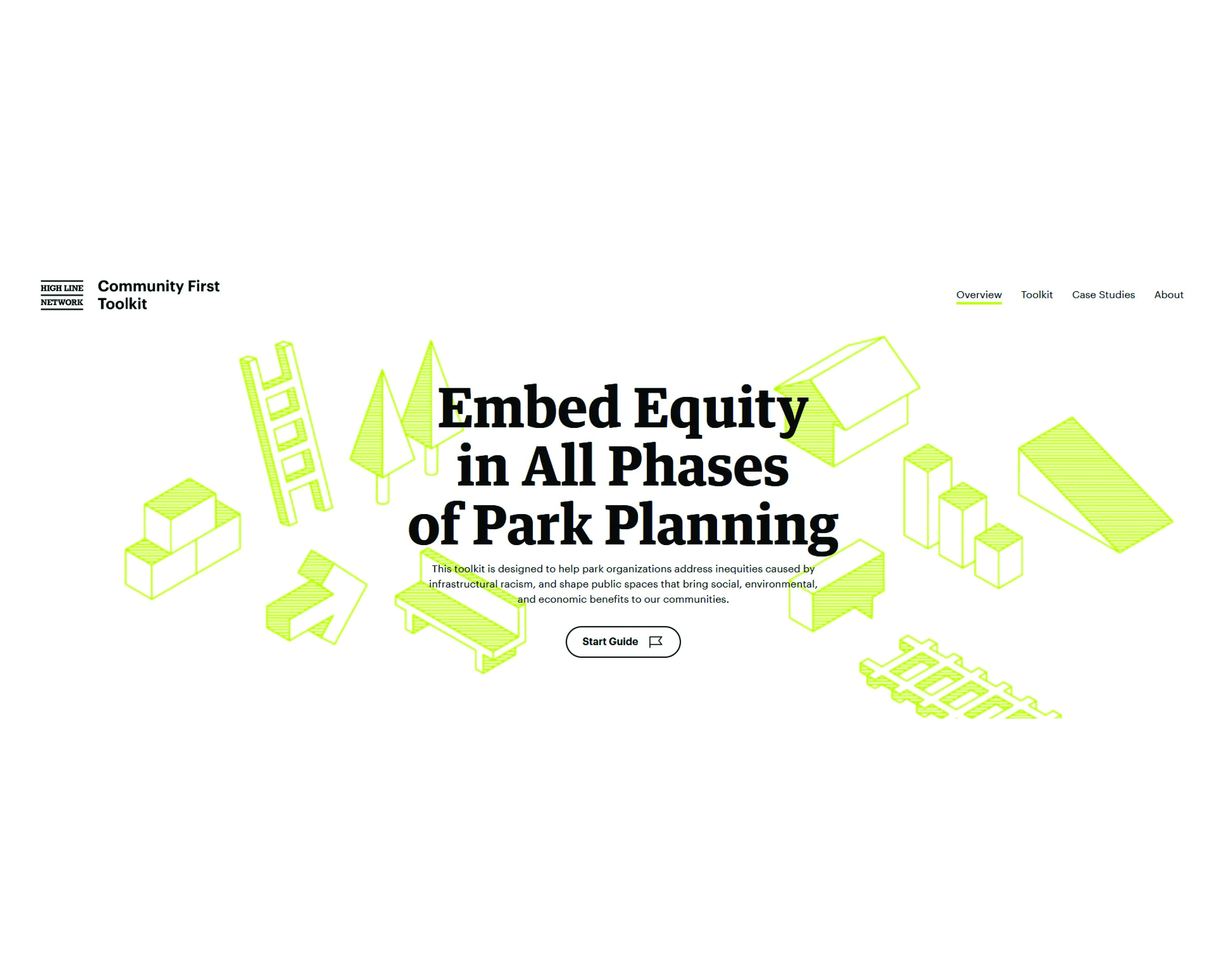
Communities across North America have faced uneven development for decades. The Community First Toolkit (CFT) provides a visionary, adaptable framework for public realm advocates to directly tackle infrastructural racism and embed equity at all stages of the design process.
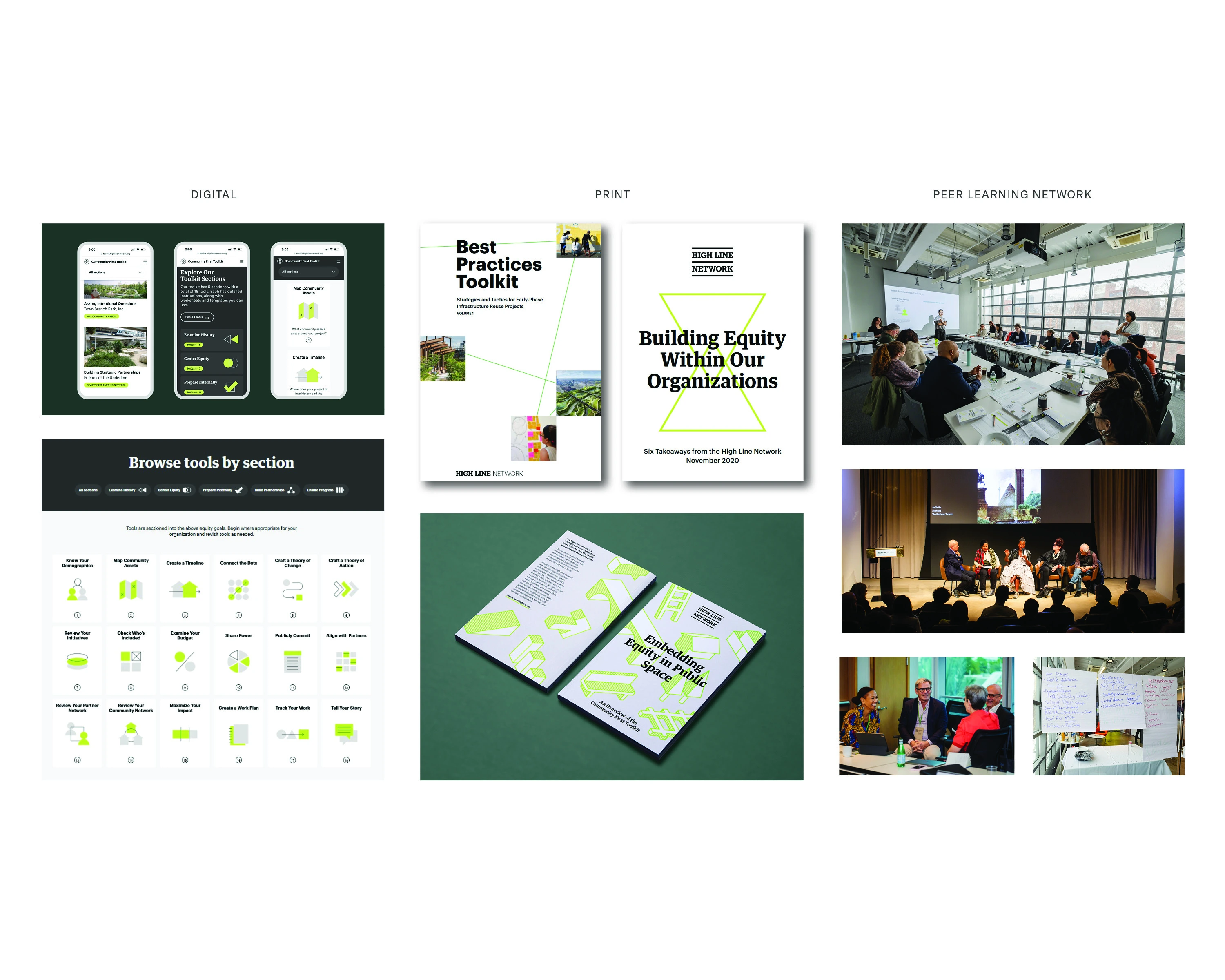
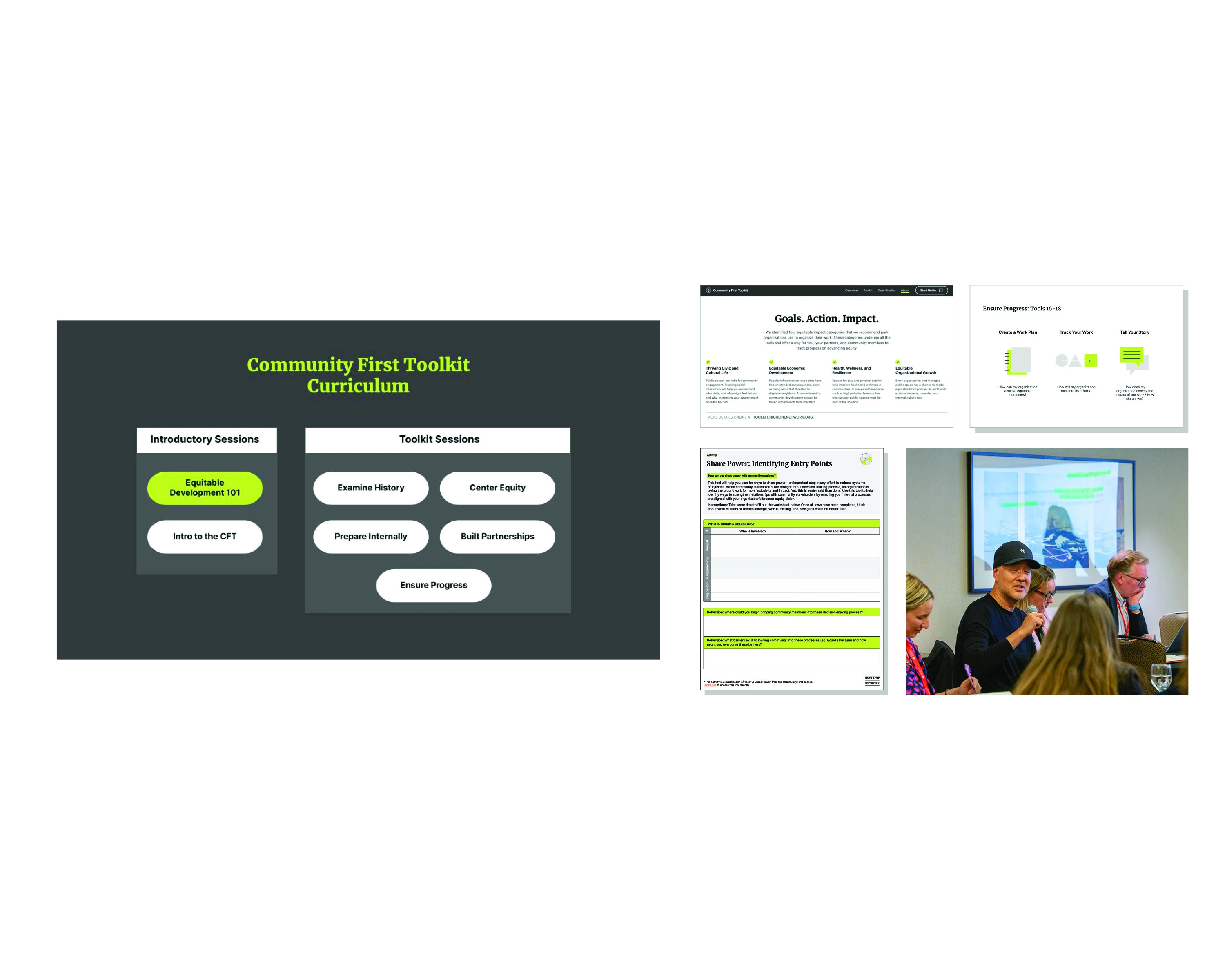
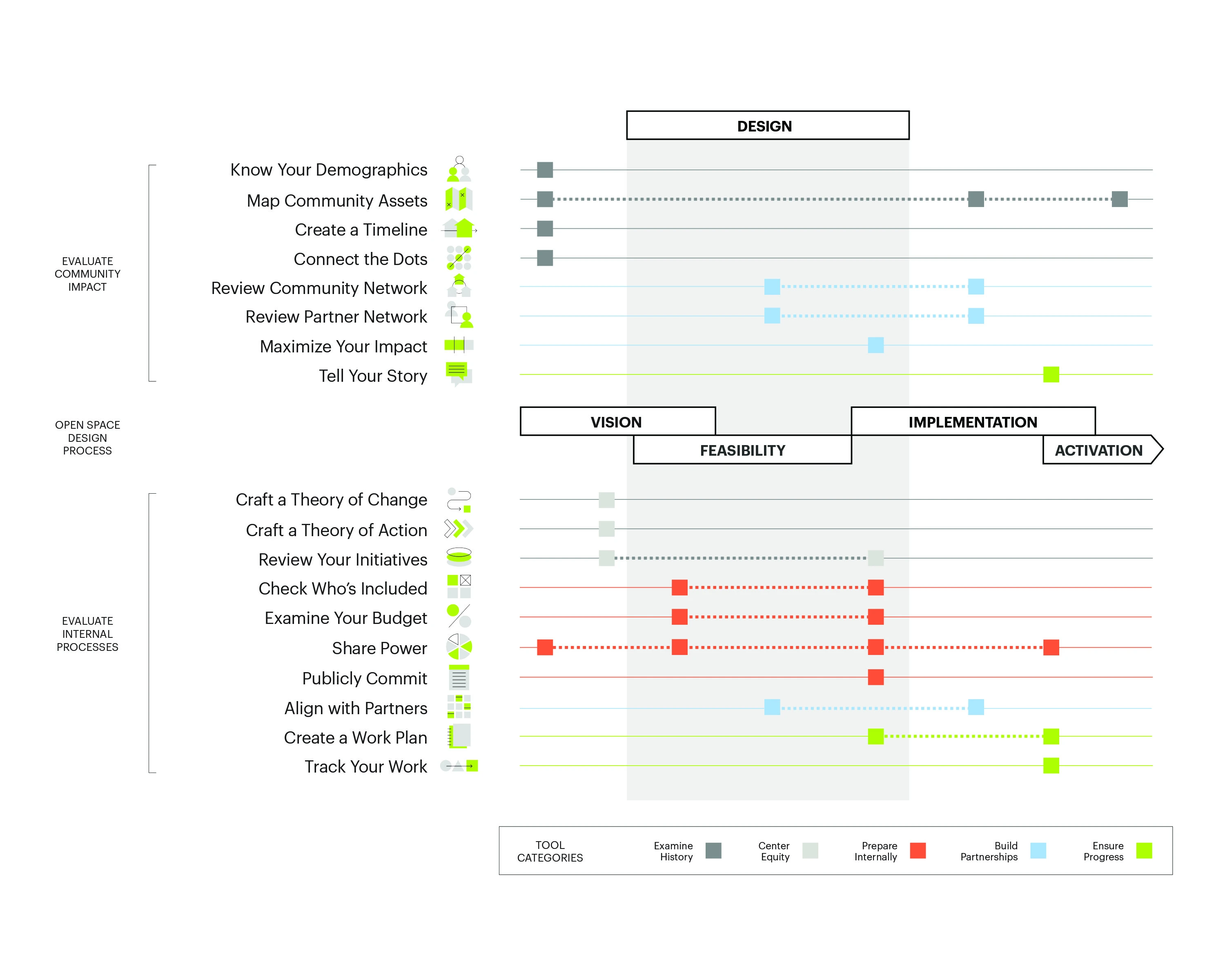
This free, online resource centers landscape as a vehicle to maximize community benefits. The 18 tools prepare designers to respond to equity issues in 4 impact areas: civic & cultural life; economic development; health, wellness & resilience; organizational growth.
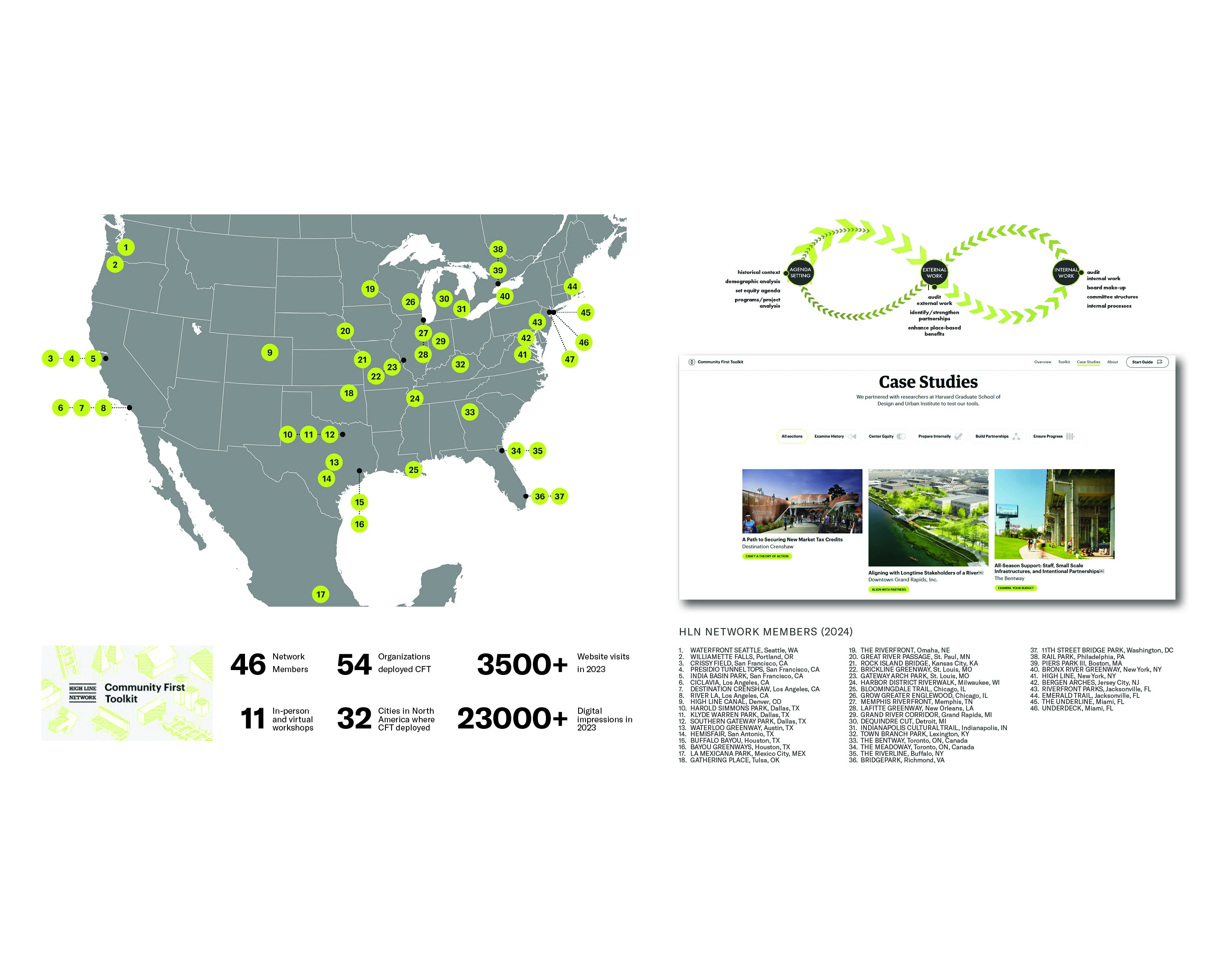
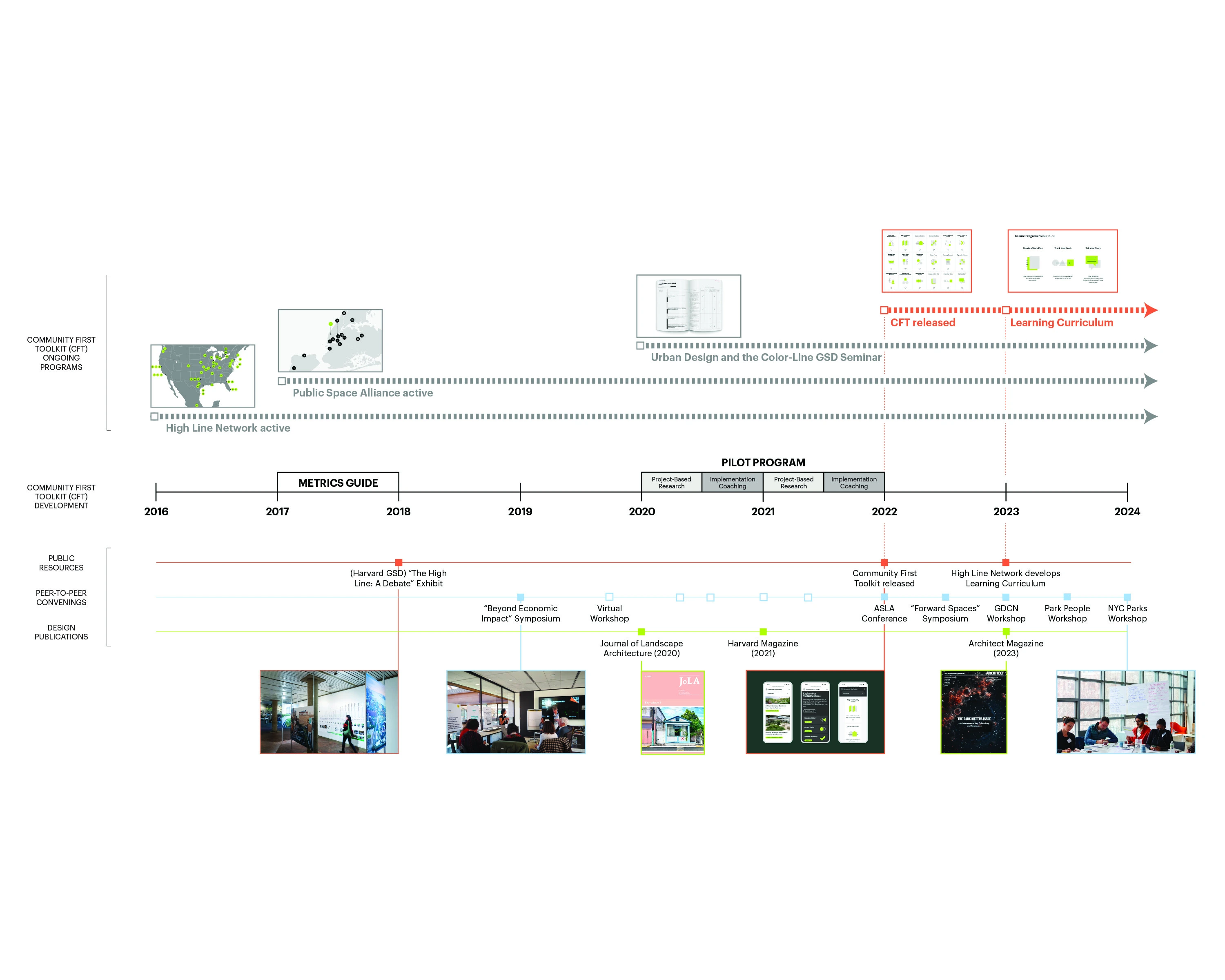
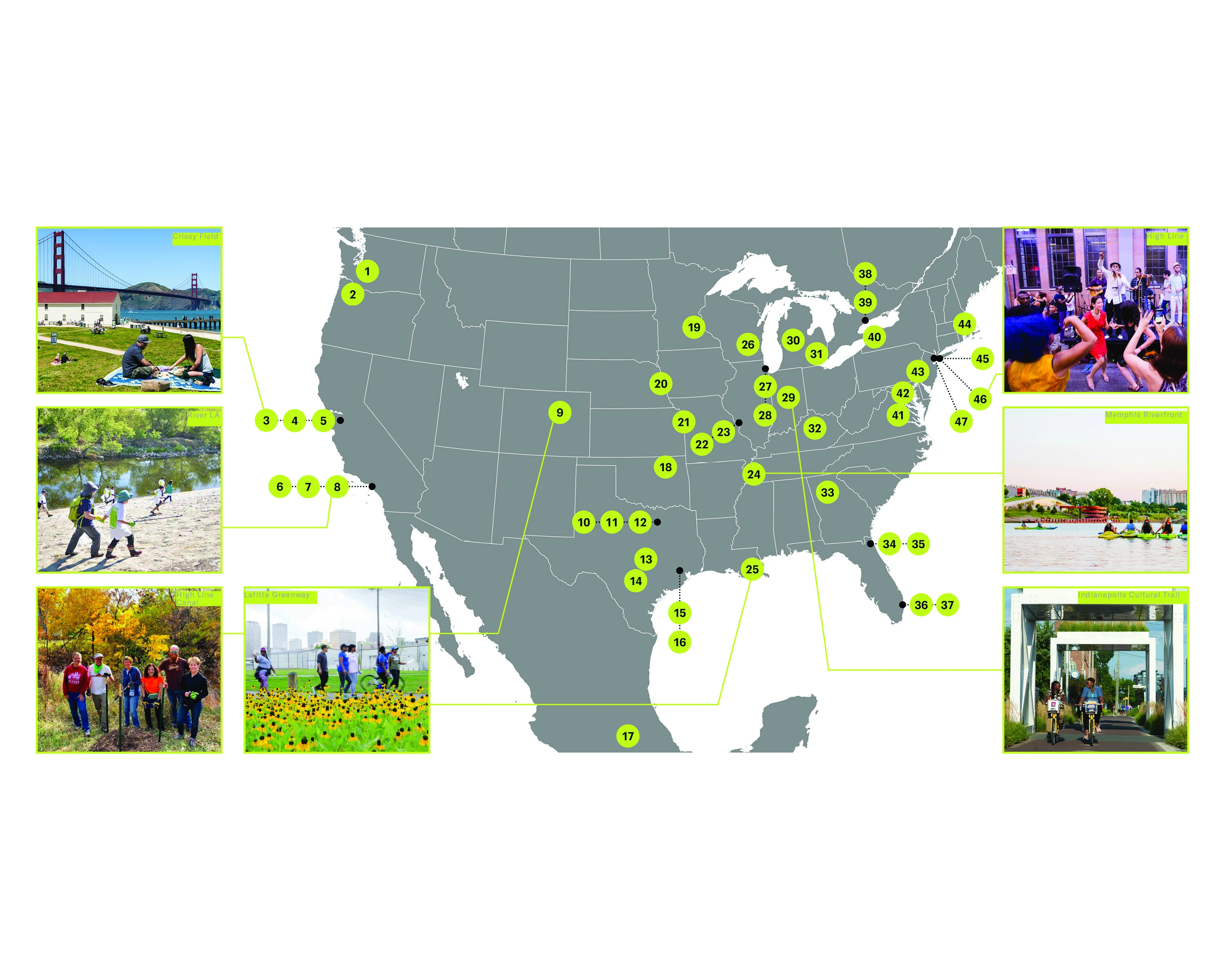
Since 2020, the CFT has been deployed in 54 projects across 32 cities. Through engagement, the CFT continues to expand into new communication formats, including a Learning Curriculum and Peer-to-Peer Network.
-
Landscapes sit at the intersection of some of today’s most critical issues: 1) uneven access to quality public spaces, often along lines of race, class, and ethnicity; 2) underutilized, disconnected, or abandoned infrastructures from shifting industries and investment patterns; and 3) ever-increasing needs for spaces that support environmental resilience and social connection. The Community First Toolkit (CFT) was developed for the High Line Network, a program of Friends of the High Line that convenes equity-focused landscape organizations. The New York High Line is widely regarded as both an icon of landscape design and a symbol of “green gentrification.” Building on lessons learned, the CFT’s core message is that parks and public spaces are not incidental to broader issues of equity and access - they can be drivers of equitable community development. The Toolkit breaks down why, for whom, and how public realm projects can mitigate the negative impacts of past developments while ensuring positive outcomes for as many people as possible, particularly for those previously harmed.
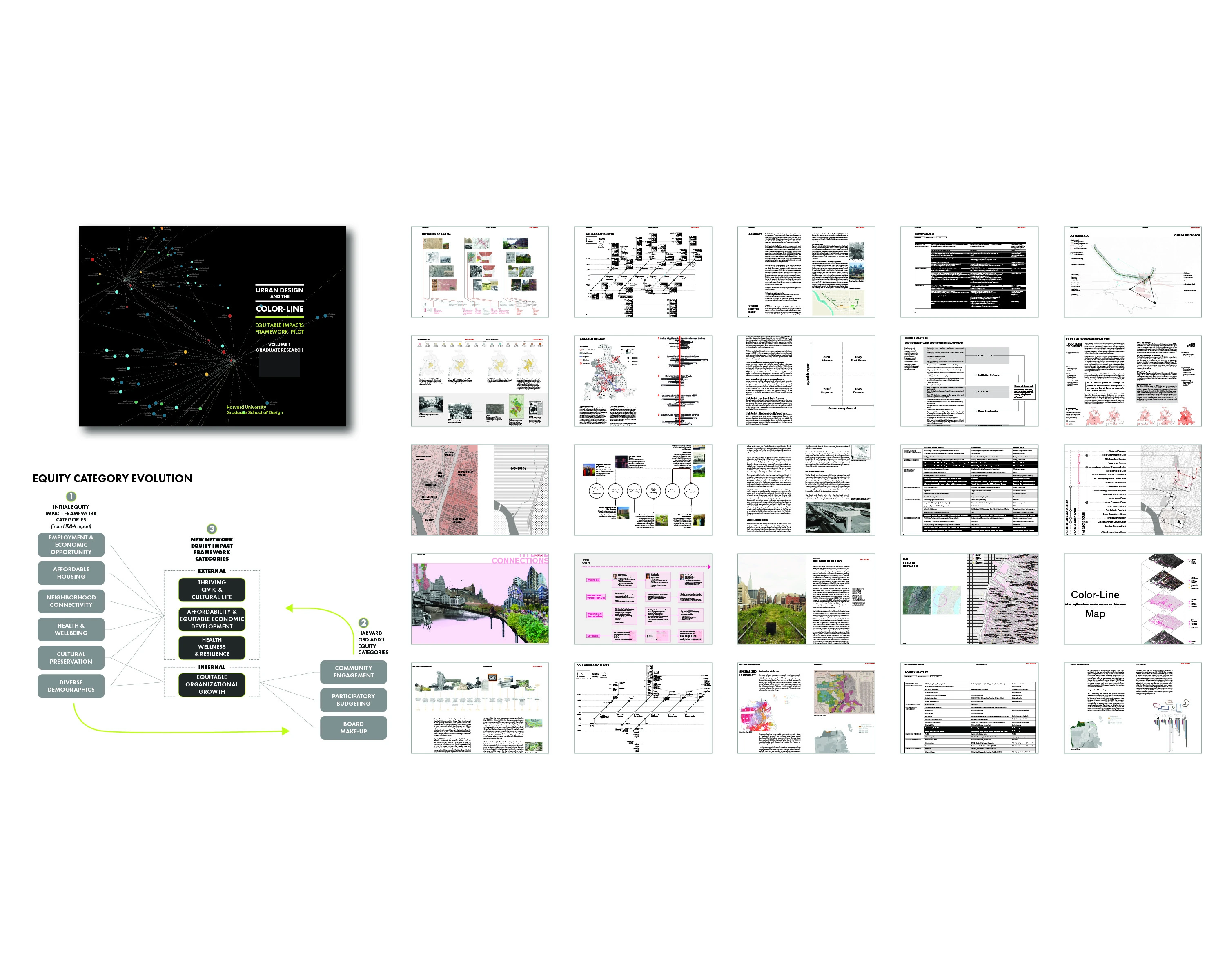
Engagement and multi-disciplinary collaborations have been key to the development and continued evolution of the CFT. Practitioners and design experts helped identify the Toolkit’s impact areas, including with an exhibition and project-based course at the Harvard Graduate School of Design. The CFT format was refined through a two-year pilot with park nonprofits around the US, ensuring adaptability across different geographic and historic contexts, project scales, and organizational capacities.
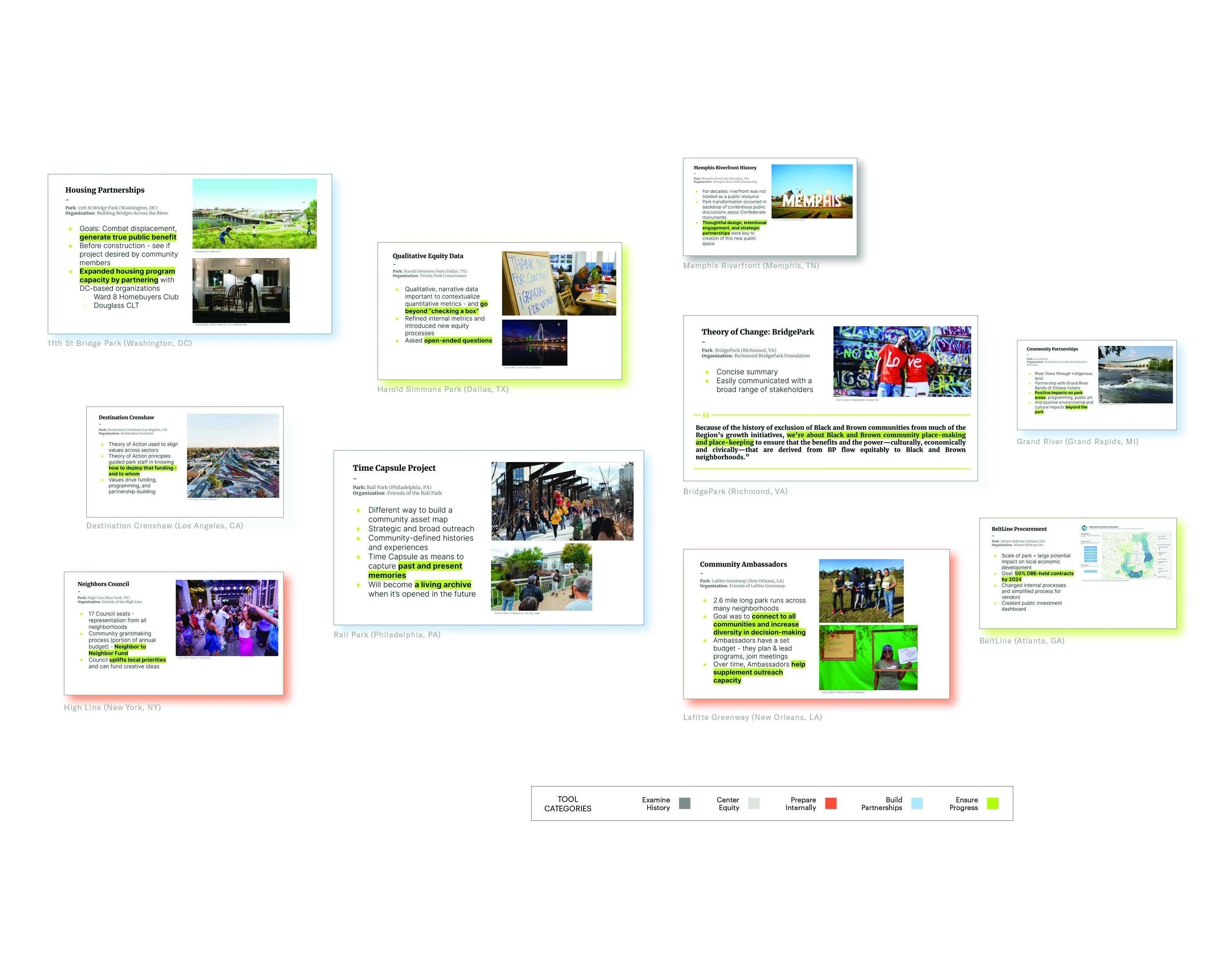
The tools are broken into 5 sections - Examine History, Center Equity, Prepare Internally, Build Partnerships, Ensure Progress - covering both internal practices and public-facing programs. As a result, the impacts have been broad-ranging. Different projects have applied the tools to fit their specific needs: in Dallas, the Trinity Park Conservancy created park-based equity metrics for budgeting and programming; Philadelphia’s Rail Park developed an archive of community histories representing the 10+ surrounding neighborhoods; the Richmond BridgePark comprehensively restructured internal priorities and external programs to support place-keeping efforts by Black and Brown communities.
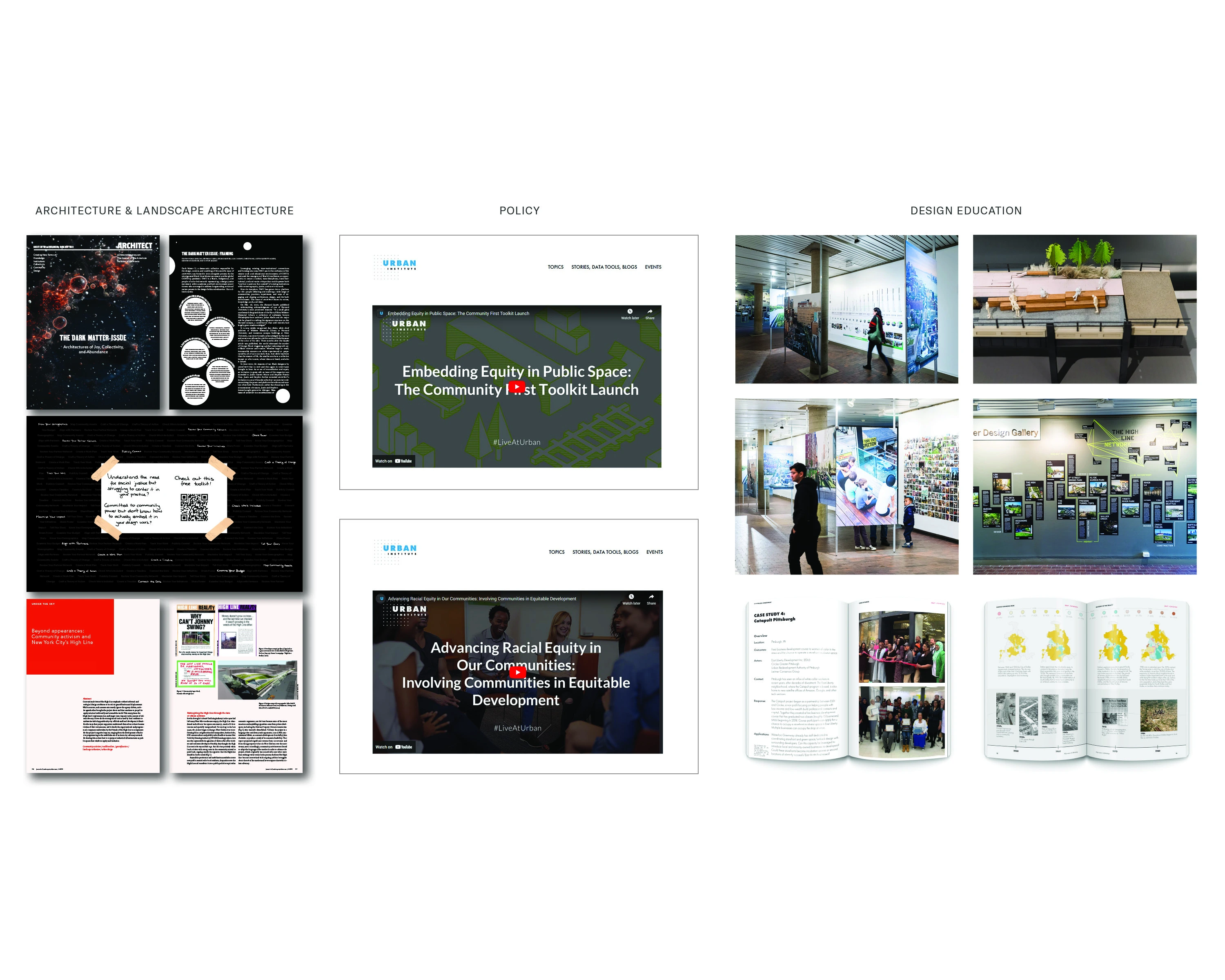
All CFT tools are available for download on the website, which also features case studies and Learning Curriculum guides that allow open space advocates to use the Toolkit in their own communities. The CFT has been featured in leading design publications and convenings, including Architect Magazine, Harvard Magazine, the Mayors’ Institute on City Design, the ASLA 2022 conference, and the Global Cultural Districts Network. Altogether, outreach by the CFT team and its partner organizations has created a peer-to-peer dissemination and learning network. The CFT audience has expanded well beyond its initial focus on nonprofits who oversee park operations to include the full range of stakeholders who affect the design, management, and activation of landscapes, including residents, public sector officials, and more.
The High Line Network now includes dozens of landscape projects across the US, Canada, and Mexico. The digital reach of the CFT continues to grow, with 3500+ unique site visitors in the last year alone. Ultimately, the Toolkit communicates a framework for action, but it is powered by all the people dedicated to reimagining the role of landscapes in creating connected, healthy communities.
-
- Asima Jansveld - Managing Director - High Line Network
- Ana Traverso-Krejcarek - Senior Manager - High Line Network (Former)
- Stephen Gray - Principal - Grayscale Collaborative, Associate Professor and Program Director of Urban Design - Harvard Graduate School of Design
- Anne Ning Lin - Director of Planning & Narrative Strategy - Grayscale Collaborative
- Caroline Filice Smith - PhD Candidate - Harvard Graduate School of Design
- Laura Greenberg - Urban Designer and Researcher
- Mary Bogle - Principal Research Associate - Urban Institute
- Peter Tatian - Senior Fellow - Urban Institute
- Sonia Torres Rodriguez - Research Analyst - Urban Institute
- Donovan Harvey - Research Analyst - Urban Institute
- Mychal Cohen - Researcher - Urban Institute (Former)
- Olivia Arena - Researcher - Urban Institute (Former)
- Jorge Morales-Burnett - Research Assistant - Urban Institute (Former)
- Guillermo Brotons, Gabrielle Harlid, Allie Heesh, Joshua Levi, Francisco Pelaez - Website designer - Decimal Studios
- Jack Chen, Jose Esparza, Laura Greenberg, Margaret Haltom, Rajan Hoyle, Vrinda Kanvinde, Emily Klein, Anne Lin, Jasmine Martin, Brett Merriam, Ruth Blair Moyers, Don O’Keefe, Ciara Stein, Michele Turrini, Sam Valentine, Sarah Zou, Jiae Azad, Rogelio Cadena, Dylan Culp, Asher Kaplan, Alison Maurer, Gena Morgis, Wanjiku Ngare, Miguel Perez Luna, Austin Pritzkat, Shannon Slade - (2020-2021) Project-Based Student Researchers, “Urban Design and the Color-Line” - Harvard Graduate School of Design
- Vaughn Perry - Building Bridges Across the River
- Nonet Sykes - Atlanta BeltLine, Inc.
- Ted Elmore, Dontrese Brown, Shekinah Mitchell, James Warren - Richmond BridgePark Foundation
- Anne Olson, Karen Farber - Buffalo Bayou Partnership
- Patrice Gillespie-Smith, Grace Perdomo - Friends of The Underline
- Rebecca Cordes Chan, Ava Schwemler - Friends of the Rail Park
- Katherine Toy, Sue Gardner, Denise McKinney, Jessica Chen, Mackenzie Seagraves - Golden Gate National Parks Conservancy
- Mary DeLaittre - Great River Passage Conservancy
- Amanda Edwards, Lisa Kasianowitz, Nicole Romano - Houston Parks Board
- Mauricio Garcia - High Line
- Harriet Crittenden-LaMair, Suzannah Fry Jones - High Line Canal Conservancy
- Kären Farber, Carrie Tracy, Luis García - Indianapolis Cultural Trail Inc.
- Walter Elcock, Elissa Hoagland-Izmailyan, Jeamy Molina - Trinity Park Conservancy
- Allison Lankford, Eileen Phillips - Town Branch Park
- Erica Saenz, Melissa Ayala - Waterloo Greenway Conservancy
Advertisement
Related Awards
Honor Award, Communications
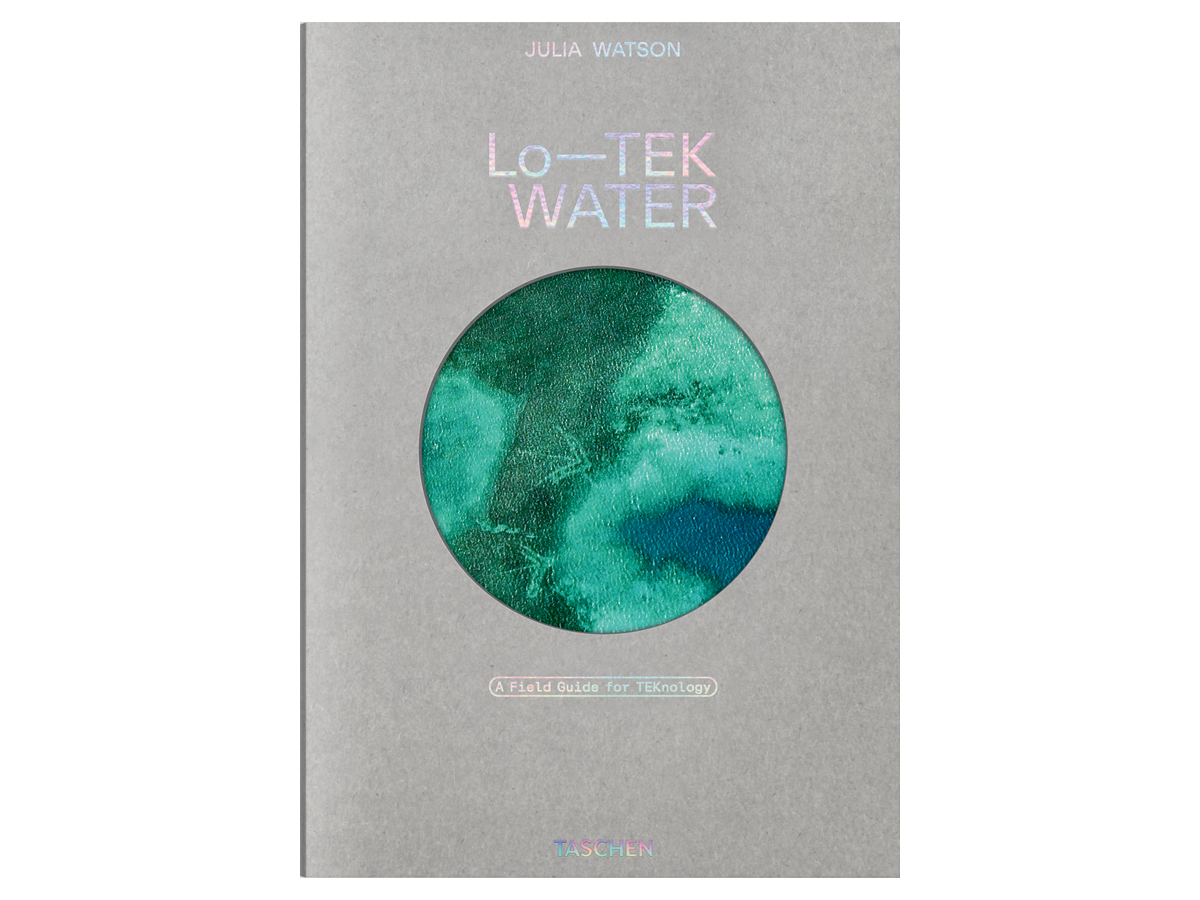
Lo—TEK Water. A Field Guide for TEKnology
Lo—TEK Water is a publication that communicates Indigenous and traditional ecological knowledge as a contemporary framework for addressing global water challenges. Through rigorous research, compelling narrative, and visually driven storytelling, the book translates complex environmental systems into accessible, actionable insights for designers, planners, policymakers, and the public.
Related Articles
ASLA Fund
American Society of Landscape Architects Announces its 2026 Student Awards
39 Student Award winners elevate the future of the landscape architecture profession
Aug 24 2026