

.webp?language=en-US)

.webp?language=en-US)
ASLA Fellows
Fellows are landscape architects with at least ten years of full ASLA membership who have been elected to Fellowship in recognition of their outstanding contributions to the profession. Fellows may be nominated and elected in one or more of the following categories: Works of Landscape Architecture; Leadership & Management; Knowledge; and Service to the Profession.
Advertisement
Browse profiles of Fellows inducted over the past five years, including brief biographical summaries and a video of each year’s induction ceremony.
Fellows Profiles for the last 5 years
-
2026 Fellows 2026 Fellows
The American Society of Landscape Architects (ASLA) Fellows represent the highest honor among ASLA members. The 2026 class recognizes individuals whose careers have made exceptional contributions to the profession and to communities through leadership, knowledge, service, and built works.
The 2026 ASLA Fellows will be elevated during a special investiture ceremony at the 2026 Conference on Landscape Architecture.
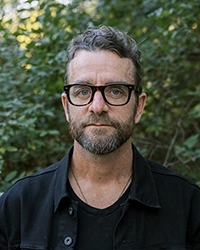 Ross AltheimerTEN x TEN, Minneapolis, MNMinnesota Chapter • Works
Ross Altheimer, ASLA, is a distinguished interdisciplinary landscape architect whose 25-year career is defined by design excellence, material innovation, and a deep commitment to social and environmental justice. As Principal and Co-founder of the award-winning practice TEN x TEN, he has reshaped the boundaries of the profession, creating immersive landscapes that bridge the gap between art, architecture, and ecology.
Altheimer is an exceptional leader whose work consistently transforms complex, post-industrial, and sacred sites into high-performing public spaces. His career highlights include Mill 19 in Pittsburgh, an ASLA Honor Award-winning project that reimagines a decommissioned steel mill as a sustainable tech hub integrated with living systems. At the Minnesota Zoo Treetop Trail, he led the design of a 1.25-mile elevated walk that repurposes old monorail infrastructure to connect visitors with nature from a new perspective. His work at Lakewood Cemetery Welcome Gardens reframes the cemetery as vital cultural infrastructure, using hydrology and ritual to create restorative spaces for reflection.
Beyond his built work, Altheimer is a prominent voice in design research and education. A recipient of the prestigious Rome Prize, he has spent over a decade as adjunct faculty at the University of Minnesota, mentoring the next generation of designers. His service to the profession includes serving as Chapter President of ASLA Minnesota and co-chairing the 2023 ASLA National Conference.
Through a collaborative and process-driven approach, Ross Altheimer creates landscapes that are not only beautiful but also ethically grounded and community-driven. His dedication to craft, exploration, and the agency of landscape architecture has left a lasting impact on the physical and cultural fabric of the American landscape.
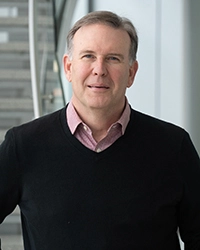 David AndersonUtah State University, LoganUtah Chapter • Leadership/Management
David Anderson, ASLA, has dedicated over three decades to expanding the reach and relevance of landscape architecture. As a Professional Practice Professor and the Associate Vice Provost for Community Engagement at Utah State University (USU), he has transformed how thousands of people—from high schoolers to university students and civic leaders—perceive and value the profession.
Anderson is arguably the profession’s most prolific recruiter. He created and stewards LAEP 1030: Introduction to Landscape Architecture, believed to be the highest-enrollment course of its kind in North America. By teaching over 1,200 students annually and expanding the curriculum to high schools through concurrent enrollment, he has personally introduced more than 8,800 individuals to the core values of environmental stewardship and inclusive design. Many practicing landscape architects today credit this specific course as the spark that launched their careers.
Beyond the classroom, Anderson’s leadership was foundational to the creation of the Utah State University Botanical Center (USUBC). For 19 years, he led the vision, design, and fundraising for this 100-acre "living laboratory." He raised nearly $10 million to transform a degraded site into a regional hub for water-wise demonstration gardens, wetlands, and LEED Platinum facilities. His ability to navigate complex funding landscapes and build diverse coalitions has made the USUBC a permanent public resource for resource conservation education.
Throughout his career, Anderson has received numerous accolades, including the USU Presidential Award for Community Engagement and the NACTA Educator Award. By embedding the values of landscape architecture into institutional policy and public education at a massive scale, David Anderson has significantly strengthened the profession’s legacy and its impact on the communities it serves.
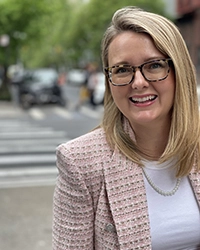 Celine ArmstrongArmstrong Collaborative, Shawnee, KSPrairie Gateway Chapter • Leadership/Management
Celine Armstrong, ASLA, acts as a visionary bridge between design excellence and the complex realities of large-scale project management. Across her twenty-year career, she has redefined the landscape architect’s role, demonstrating that design-trained professionals are uniquely equipped to lead as strategic advisors and owner’s representatives for high-stakes civic investments.
Armstrong is most widely recognized for her leadership as the Executive Project Manager for Little Island in New York City. On this $250 million park floating over the Hudson River, she safeguarded the project’s ambitious design intent while navigating immense technical and regulatory hurdles. Her performance was so distinguished that she was featured on the Smithsonian Channel’s How Did They Build That?, bringing national visibility to the rigor required to build iconic landscapes. Later, as Chief Development Officer for the Fifth Avenue Association, she spearheaded a transformative vision for one of the world's most famous streets, proving that pedestrian-centered design is a powerful catalyst for economic vitality.
Returning to her native Kansas City, Armstrong has immediately applied her national expertise to local landmarks. She currently serves as the owner’s representative for Roy Blunt Luminary Park—a massive $300 million project to cap a downtown highway—and is advising on the future of the historic Country Club Plaza.
Her leadership extends deeply into professional service, having served as President of both the New York and Prairie Gateway ASLA chapters. By aligning environmental performance with measurable economic returns, Celine Armstrong hasn't just built parks; she has expanded the authority of landscape architects to lead at the highest levels of urban policy and infrastructure.
 Rachel BooherLandscape Architecture Foundation, Washington, DCCouncil of Fellows Executive Committee • Leadership/Management
Rachel Booher, ASLA, is a transformative leader whose work has strengthened and expanded the impact of landscape architecture nationwide. As Deputy Director of the Landscape Architecture Foundation (LAF), she has played a central role in shaping the organization’s growth, guiding its strategy, and advancing initiatives that elevate the profession’s relevance in addressing climate, equity, and community resilience.
Booher is exceptional for her ability to pair visionary leadership with operational excellence. Serving simultaneously as chief operating, financial, and administrative leader, she has more than tripled LAF’s investment in students and professionals, expanded programs, and built a resilient organization during times of economic uncertainty and the COVID-19 pandemic. Her leadership has been instrumental in launching major initiatives such as the LAF Fellowship for Innovation and Leadership and LAF Ignite, a groundbreaking program supporting students of color as they enter the profession.
A defining aspect of Booher’s impact is her leadership in advancing diversity, equity, and inclusion. She developed and implemented LAF’s comprehensive DEI strategy, integrating equity into governance, programs, and partnerships across the organization. Her work has significantly increased representation within LAF’s leadership and influenced firms and institutions nationwide to adopt more equitable practices, including fair wages for interns.
Booher also helped lead the landmark 2016 LAF Summit and the New Landscape Declaration, a global call to action that positioned landscape architects at the forefront of addressing climate change, biodiversity loss, and social inequity.
Through mentorship, coalition-building, and national collaboration, Rachel Booher has amplified the voice and impact of landscape architecture. Her leadership continues to shape a more inclusive, resilient, and forward-looking profession.
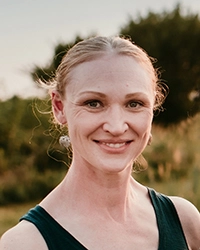 Jessica CanfieldKansas State University, ManhattanPrairie Gateway Chapter • Knowledge
Jessica Canfield, ASLA, is an internationally recognized scholar and educator whose work has transformed how landscape architecture measures, understands, and communicates its impact. As an associate professor at Kansas State University, she has spent more than 15 years advancing evidence-based design, making complex ideas about landscape performance accessible, practical, and widely used across academia and professional practice.
Canfield’s most influential contribution is her leadership in developing tools and methods to evaluate landscape performance. As a research fellow with the Landscape Architecture Foundation (LAF), she helped pioneer early case studies and later authored Evaluating Landscape Performance: A Guidebook for Metrics and Methods Selection—now a foundational resource downloaded thousands of times and used by practitioners, educators, and agencies worldwide. Her ongoing research continues to expand how the profession measures environmental, social, and economic outcomes.
Equally impactful is her innovative teaching, which bridges research and real-world application. Through award-winning studios and one of the nation’s first dedicated courses on landscape performance, she has trained more than 100 students to apply data-driven design in practice. Her students’ work—ranging from urban forestry plans to equity-focused park design—has informed community projects, secured grant funding, and earned national recognition.
Canfield’s leadership extends across the profession through major roles with CELA, LAF, and ASLA, where she helps shape research, education, and accreditation standards. She has also advanced critical conversations around equity and career pathways in academia.
By turning research into actionable knowledge and empowering the next generation of designers, Jessica Canfield has profoundly strengthened the discipline’s ability to design, evaluate, and advocate for high-performing landscapes.
 Lori Cockerham CatalanoColorado State University, Fort CollinsColorado Chapter • Knowledge
Lori Cockerham Catalano, ASLA, is a transformative educator and practitioner whose work has reshaped how landscape architecture is taught and understood. With over 20 years in academia and 35 years in practice, she has dedicated her career to advancing the "knowledge" of the profession by bridging the gap between creative theory and real-world application. As an associate professor at Colorado State University, Lori is exceptionally regarded for her ability to help students navigate the "unclear ground" of the design process, turning creative resistance into confidence and resilience.
A hallmark of Lori’s career is her commitment to experiential learning and community service. She has led hundreds of students through participatory design projects, notably working with residents in New Orleans’ Lower 9th Ward post-Katrina to reconnect the community with its natural bayou. This work, which earned her the national CELA Award for Excellence in Service Learning, demonstrates her belief that landscape architecture is a powerful tool for community self-determination. Her leadership also extended to the "Hometown Colorado Initiative," an innovative program that paired university research with the needs of local municipalities.
Lori’s influence reaches far beyond the classroom as co-author of a forthcoming book on creative resistance and her international teaching roles, including a prestigious position with Semester at Sea and visiting instructor in China. Her scholarship also addresses critical regional issues, such as developing sustainable planting aesthetics for the arid West. By modeling curiosity and vulnerability, Lori Catalano has empowered a generation of landscape architects to find their creative voices while ensuring the profession remains deeply connected to the communities it serves.
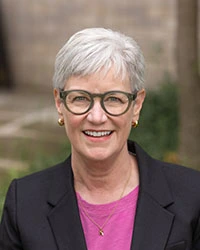 Kelly Bassett CoffmanCleveland Metroparks, OhioOhio Chapter • Leadership/Management
Kelly Bassett Coffman, ASLA, is a distinguished public sector leader who has spent over 36 years expanding equitable access to high-quality parks and resilient landscapes across the Midwest. As the Principal Planner for Cleveland Metroparks, she leads multidisciplinary teams and manages a $450 million vision to complete the city’s historic "Emerald Necklace," a 25,400-acre regional park system that serves over 1.25 million residents.
Coffman’s leadership is defined by her ability to bridge the gap between large-scale strategic planning and community-scale impact. She was instrumental in Cleveland Metroparks winning the prestigious National Gold Medal for Excellence in Park and Recreation Management twice during her tenure. One of her most notable achievements is leading the Cleveland Harbor Eastern Embayment Resilience Strategy (CHEERS), a 30-year initiative that will create 100 acres of new parkland and habitat along Lake Erie, protecting infrastructure while providing waterfront access to underserved neighborhoods.
Throughout her career, Coffman has demonstrated a remarkable talent for transforming complex challenges into award-winning public assets. Her previous work includes leading the brownfield-to-park transformation of the Scioto Audubon Metro Park in Columbus and pioneering immersive nature play at the Sisters’ Garden at Inniswood. She also spearheaded the designation of the Lake Erie Water Trail, coordinating across twelve municipalities to ensure safe public access to the lakefront.
A former president of the Ohio ASLA Chapter and a dedicated mentor, Kelly Bassett Coffman has consistently elevated the profession’s visibility. By positioning landscape architecture as a driver of economic health and climate resilience, she has left an enduring legacy on the public realm of Northeast Ohio and beyond.
 Gonzalo CruzAECOM LAUD NYC, New YorkNew York Chapter • Works
Gonzalo Cruz, ASLA, is a nationally recognized leader in the design of urban landscapes, whose work is helping redefine how cities respond to climate change while creating public spaces that are welcoming, equitable, and deeply connected to community life. As Vice President and Senior Design Principal at AECOM LAUD NYC, he has built an exceptional body of work focused on resilient waterfronts, civic landscapes, and public spaces that protect people while enriching everyday urban experience.
Cruz is especially distinguished by his ability to turn complex infrastructure challenges into inspiring public places. Trained in both architecture and landscape architecture, he brings together design vision, technical expertise, and the diplomacy needed to guide ambitious projects through political, environmental, and construction realities. His early leadership on Liberty Park at the World Trade Center established his talent for shaping landscapes where memory, security, and civic life must coexist.
Since then, he has led or played key design roles on some of the New York region’s most important resilience and public realm projects. These include the Lower Manhattan Coastal Resilience master plan, which has become a national model for integrating flood protection with public space, and Wagner Park, where coastal defense is reimagined as a civic asset. His work on Sendero Verde in East Harlem and East Newark Riverfront Park further shows his commitment to environmental justice, affordability, and community-driven design.
Beyond his projects, Cruz is a visible advocate for the profession through his service on the Landscape Architecture Foundation Board, his national speaking engagements, and his mentorship of emerging designers.
Through visionary leadership and built work of lasting public value, Gonzalo Cruz has expanded the role of landscapes in shaping more resilient, inclusive, and inspiring cities.
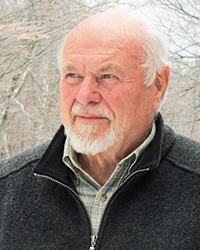 Walter CudnohufskyConway School of Landscape Design, Ashfield, MABoston Chapter • Leadership/Management
Walter Cudnohufsky, ASLA, is a pioneering educator and practitioner whose visionary leadership transformed landscape architecture education and helped shape the field’s focus on ecological design. As the founder of the Conway School of Landscape Design, he created an innovative graduate program that, for more than five decades, has prepared designers to address complex environmental and social challenges through real-world, systems-based learning.
Cudnohufsky is exceptional for redefining how landscape architecture is taught. In 1972, he left a traditional academic position to establish a one-year, immersive program centered on hands-on projects for real clients. This model—now widely recognized as ahead of its time—integrates ecological science, community engagement, and design thinking. Students work across regional, local, and site scales, gaining practical experience while advancing solutions for issues such as climate resilience, land conservation, and social equity.
Under his leadership, the Conway School became a quiet but powerful force in the profession. Its more than 800 alumni have gone on to lead projects and organizations around the world, carrying forward its principles of sustainability, collaboration, and stewardship. Collectively, students have completed over 1,400 projects for communities, nonprofits, and municipalities, creating lasting impacts on landscapes and the people who depend on them.
Beyond education, Cudnohufsky has maintained an active practice and contributed to planning, writing, and community initiatives that reinforce the connection between people and place. His work consistently emphasizes clear communication, interdisciplinary collaboration, and a deep respect for natural systems.
Through bold vision and lifelong dedication, Walter Cudnohufsky has reshaped landscape architecture education and inspired generations of practitioners to design with purpose, empathy, and ecological responsibility.
 Dillon DiersOJB Landscape Architecture, Solana Beach, CASan Diego Chapter • Works
Dillon Diers, ASLA, is a design leader whose work redefines how landscape architecture can respond to climate, ecology, and the evolving needs of public life. As a Partner at OJB Landscape Architecture, he has built an award-winning body of work grounded in resilience, innovation, and a deep respect for the natural systems of the American West.
Diers is exceptional for his ability to unite design artistry with ecological performance. Across projects in California and the Southwest, he has advanced climate-responsive strategies that address drought, heat, and environmental change through inventive planting design, material reuse, and water-conscious systems. His landscapes are both highly functional and visually compelling, demonstrating how sustainability and beauty can work together to shape meaningful places.
His influential portfolio includes nationally recognized projects such as Sunnylands Center & Gardens, Klyde Warren Park, and Warner Bros. Second Century. At Sunnylands, his technical and design leadership helped create a groundbreaking desert landscape that uses a fraction of typical water while welcoming hundreds of thousands of visitors annually. At Warner Bros., he transformed vast paved areas into a biophilic campus that integrates architecture, ecology, and workplace wellness.
Diers consistently approaches projects as opportunities for renewal—reimagining underperforming sites into vibrant, adaptable environments that support community life. His work at large-scale developments like Playa Vista and Anderson Towers demonstrates how landscape can lead urban transformation while preserving regional identity.
Beyond practice, Diers is a prominent voice on climate-positive design, sharing research and insights through national speaking engagements and professional leadership. His influence continues to shape how the profession approaches resilience and stewardship.
Through a career defined by innovation, environmental responsibility, and design excellence, Dillon Diers has expanded the possibilities of landscape architecture and created enduring landscapes that serve both people and the planet.
 Jennifer DowdellBiohabitats, Inc., Baltimore, MarylandMaryland Chapter • Knowledge
Jennifer Dowdell, ASLA, is a nationally recognized leader advancing science-informed design and redefining how landscape architecture addresses today’s most urgent environmental challenges. As Practice Leader at Biohabitats, she has spent more than two decades championing a holistic, systems-based approach that integrates ecology, community insight, and design to create resilient, restorative landscapes.
Dowdell is a leading voice in the global conversation on biodiversity and climate action. She authored the biodiversity chapter of ASLA’s Climate and Biodiversity Action Plan, helping guide the profession’s response to the biodiversity crisis and elevating landscape architects’ role on the world stage. Her influence extends through widely published writing, national and international lectures, and her leadership with the Landscape Architecture Foundation and ASLA’s biodiversity initiatives.
Her project work spans more than 140 efforts across the country, from regional ecological planning to site-scale design. Notable award-winning projects include the Galveston Island State Park resiliency plan, the Chattahoochee RiverLands Vision Plan, and the Baton Rouge Lakes restoration. Across all scales, she brings together scientists, engineers, and designers to craft solutions grounded in ecological performance and enriched by compelling narratives of place.
Dowdell’s impact is equally profound in education and mentorship. A generous teacher and sought-after speaker, she has guided hundreds of students and emerging professionals, translating complex ecological science into accessible frameworks that shape practice, policy, and public understanding.
Through her visionary leadership, influential scholarship, and commitment to knowledge-sharing, Jennifer Dowdell has elevated the role of landscape architecture in addressing climate and biodiversity challenges, leaving a lasting mark on the profession and its future.
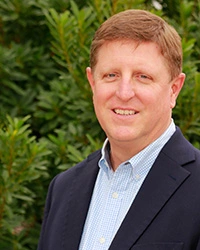 Bobby EichholzRialto Studio, Inc., San Antonio, TXTexas Chapter • Leadership/Management
Bobby Eichholz, ASLA, has spent nearly three decades showing how landscape architects can lead not only through design, but also through advocacy, coalition-building, and public service. As President of Rialto Studio and a longtime leader in Texas ASLA, he has helped elevate the profession’s voice in shaping more sustainable, connected, and inclusive communities.
Eichholz is exceptional for his ability to bring people together across disciplines and industries to achieve lasting results. He has served in key leadership roles for Texas ASLA, including Chapter President, and also became the first person to serve as both Texas ASLA Chapter President and Chairman of the Texas Nursery & Landscape Association. That rare bridge between professions strengthened policy advocacy, expanded partnerships, and increased public understanding of landscape architecture’s essential role in water stewardship, climate resilience, and healthy public spaces.
His leadership has delivered real impact. He helped defend professional licensure in Texas, organized joint Green Industry Advocacy Days, and played a major role in water conservation efforts that contributed to new policies and long-term state infrastructure funding. In San Antonio, his work helped advance landscape ordinance changes that reduced landscape water use and promoted smarter irrigation practices.
Eichholz has also led transformative, award-winning projects that demonstrate the power of landscape architecture at its best. At Pearl Brewery, Confluence Park, and San Pedro Creek Culture Park, he guided complex collaborations that turned historic and industrial sites into vibrant public places rooted in ecology, culture, and sustainability. These projects now serve as national models for adaptive reuse, native planting, stormwater management, and community education.
Through visionary leadership, influential advocacy, and landmark built work, Bobby Eichholz has strengthened the profession and expanded its impact on communities across Texas and beyond.
 Jamie FogleDesign Workshop, Denver, COColorado Chapter • Works
Jamie Fogle, ASLA, is a highly respected design leader whose career demonstrates how technical excellence can elevate landscape architecture into places of lasting beauty, performance, and public value. Over nearly three decades with Design Workshop, he has built a distinguished body of work defined by precision, craftsmanship, and a deep understanding of how landscapes are constructed and sustained over time.
Fogle is exceptional for his ability to translate design vision into built reality with clarity and rigor. As Technical Principal, he leads and mentors teams across multiple offices, guiding more than 130 designers while establishing standards that ensure projects perform as intended. His influence extends firmwide through the development of Landscape Architecture Documentation Standards—an award-winning resource that has strengthened design quality and constructability across the profession.
His portfolio includes a wide range of impactful projects across the country. In Salt Lake City, he is leading the complex rehabilitation of historic Pioneer Park, balancing preservation, sustainability, and community needs to create a resilient and inclusive public space. In Denver, projects such as Boulevard One and 1144 Fifteenth Street demonstrate how high-performance landscapes can support urban life while reflecting regional ecosystems. His work on the Glacier Club, recognized with a National ASLA Honor Award, set a precedent for environmentally responsive golf course design.
Across all projects, Fogle brings a disciplined approach that resolves technical challenges while enhancing user experience and environmental performance. His work consistently integrates sustainable systems, thoughtful materials, and careful detailing to create landscapes that endure.
Through leadership, mentorship, and a career devoted to technical mastery, Jamie Fogle has advanced the standards of landscape architecture and demonstrated the essential role of craft in shaping meaningful, resilient places.
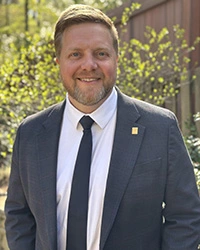 Drake FowlerThe North Carolina Arboretum, AshevilleNorth Carolina Chapter • Leadership/Management
Drake Fowler, ASLA, is a transformative leader whose career exemplifies how landscape architects can lead with impact across the public, private, and nonprofit sectors. As the Executive Director of The North Carolina Arboretum, Fowler has merged design thinking with executive business acumen to navigate some of the most significant challenges of our time, from the Great Recession to the devastating impact of Hurricane Helene.
Fowler’s leadership reached its most critical point in 2024, when Hurricane Helene caused massive damage to the Arboretum, uprooting over 10,000 mature trees and blocking access to vital trails and roads. Under his swift coordination with FEMA and the Army Corps of Engineers, he transformed the site into a community recovery hub. He directed staff to clear emergency routes for neighboring families and worked with local artists to create benches from downed timber, turning a landscape of devastation into a space for communal reflection and healing.
His influence extends far beyond crisis management. Fowler led the resilient design of the Sierra Nevada Brewery, which achieved the rare feat of a site-wide LEED Platinum certification. He has also been a champion for education and equity, reaching over 70,000 students annually through Arboretum programs and creating the ecoEXPLORE citizen science initiative. His mentorship of students at North Carolina A&T University, an HBCU, reflects his deep commitment to building diverse pathways into the profession.
A past president of the North Carolina ASLA Chapter, Drake Fowler has continuously advocated for the vital role of landscapes in society. Whether conserving threatened species at Willow Pond or securing millions in funding for public assets, he consistently demonstrates that landscape architects are essential leaders in building a more resilient and inclusive future.
 Michael P. FoxStromberg/Garrigan & Associates, Inc., Virginia Beach, VAVirginia Chapter • Service
Michael P. Fox, ASLA, is a dedicated leader whose 25-year career is defined by a deep commitment to service, advocacy, and social responsibility. As a Principal at Stromberg / Garrigan & Associates, Fox has used his expertise to bridge the gap between design and humanitarian need, consistently demonstrating how landscape architecture can serve as a tool for public health, safety, and human dignity.
Fox is exceptional for his tireless pro bono work within marginalized communities. He has pioneered design literacy programs in correctional facilities, including the Naval Consolidated Brig and regional jails, introducing incarcerated individuals to landscape design as a path toward critical thinking and professional agency. His work also extends to trauma-informed housing, where he has designed restorative environments for families escaping homelessness and domestic violence, proving that thoughtful site planning is essential for healing and equity.
A staunch advocate for the profession, Fox played a critical role in protecting landscape architecture licensure in Virginia during significant legislative challenges. As a former President of ASLA Virginia, he stabilized chapter governance and strengthened relationships between practitioners and regulators. His leadership in coastal resilience is equally notable; he served as the sole landscape architect on the groundbreaking Sea Level Wise Strategy for Virginia Beach, translating scientific data into accessible, place-based adaptation strategies.
Fox has also shaped national dialogues as a member of the ASLA Climate Action Committee and has led numerous STEM outreach initiatives to inspire the next generation of designers. Whether designing sacred spaces for remembrance—such as the SEAL Team Memorial—or teaching horticultural extension courses, Fox’s work consistently elevates the visibility of landscape architecture as a vital public service.
Through unwavering leadership and compassionate practice, Michael P. Fox has expanded the professional reach of landscape architecture and demonstrated its power to protect, restore, and inspire.
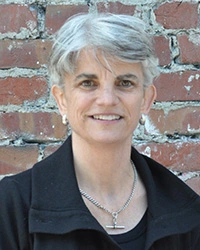 Cathy GarrettMIG | PGA, Berkeley, CANorthern California Chapter • Service
Cathy Garrett, ASLA, is a nationally respected leader whose decades of service have elevated the recognition, protection, and stewardship of cultural landscapes. Over a 40-year career, she has distinguished herself through tireless pro bono leadership, advancing preservation practices and strengthening the role of landscape architecture across disciplines and communities.
Garrett is exceptional for her ability to connect people, policy, and place. As co-founder of the Northern California chapter of the Historic American Landscape Survey (HALS), she helped bring national visibility to the documentation and protection of significant cultural sites. Her advocacy has had lasting impact: local governments such as Oakland, Berkeley, and Alameda County now require HALS documentation, embedding higher standards into public practice.
Through workshops, lectures, and hands-on training, Garrett has educated hundreds of planners, architects, and public officials, equipping them to better understand and care for cultural landscapes. Her work emphasizes “placekeeping”—ensuring that historic and meaningful places continue to serve and reflect their communities. Whether leading tours, speaking at conferences, or mentoring emerging professionals, she has consistently expanded awareness of landscape architecture’s value.
In professional practice, Garrett is a founding partner of PGAdesign (now MIG | PGA), where her work includes significant public projects and award-winning cultural landscape documentation, such as San Francisco’s Market Street. Her projects demonstrate how preservation and contemporary design can work together to strengthen identity and resilience.
Her leadership extends to influential boards and commissions, including the California Preservation Foundation and the Historic State Capitol Commission, where she championed policies that protect historic resources and landscapes.
Through sustained service, education, and advocacy, Cathy Garrett has elevated cultural landscape preservation and inspired broader public appreciation for the places that define our shared heritage.
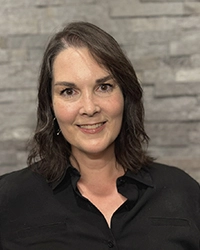 Stephanie GrigsbyDesign Workshop, Stateline, NVCalifornia Sierra Chapter • Works
Stephanie Grigsby, ASLA, is a pioneering leader whose career is defined by the disciplined pursuit of resilient landscapes that address the most pressing challenges of our time, including climate change, wildfire risk, and overtourism. As a Principal and Board Member at Design Workshop, she has spent over 25 years leading complex planning and design efforts in ecologically sensitive and institutionally demanding contexts across the American West.
Grigsby is exceptional for her ability to translate high-level environmental research into actionable, built systems that serve both communities and ecosystems. Her groundbreaking work on the Mariposa County Recreation and Resiliency Plan earned an ASLA National Honor Award for its innovative model that reframes parks and trails as essential wildfire infrastructure, supporting emergency access and forest health alongside public recreation. Similarly, her leadership on the SR 28 Corridor Management Plan at Lake Tahoe and the Big Sur Sustainable Highway Corridor Plan demonstrated her mastery of multi-jurisdictional collaboration, resulting in nationally recognized frameworks that balance the preservation of iconic landscapes with sustainable public access.
Beyond her projects, Grigsby has profoundly influenced the profession through her leadership at the Landscape Architecture Foundation and her role as co-chair of the ASLA Climate Agency & Community Resilience Subcommittee. She has been instrumental in crafting national tools and guidance, such as HUD’s Site Planning for Disaster Mitigation Guidebook, which bridge the gap between policy and practice to create More equitable and prepared communities.
Through her commitment to stewardship, rigorous analysis, and inclusive engagement, Stephanie Grigsby has expanded the visibility and impact of landscape architecture, ensuring that our public spaces are not only beautiful but enduring and life-sustaining.
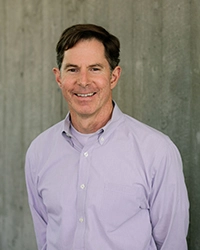 John GroveReed Hilderbrand, Cambridge, MABoston Chapter • Works
John Grove, ASLA, is a masterful designer whose work reveals the profound connection between landscape, culture, and craft. Over more than 30 years, he has created a distinguished body of work across the United States, from national parks and cultural institutions to private landscapes, each defined by a deep sensitivity to place and a commitment to enduring beauty.
As Partner and Principal at Reed Hilderbrand, Grove has led more than 80 commissions, shaping landscapes that seamlessly weave natural systems and human experience. His design process—grounded in close listening, hand drawing, and long-term collaboration—sets him apart. He approaches each project as both an artistic and cultural act, translating history, ecology, and community narratives into spaces that feel timeless and immersive.
Among his most significant works is the Tekakapimek Visitor Contact Station at Katahdin Woods and Waters National Monument, developed in close collaboration with Wabanaki Nations. The project respectfully integrates Indigenous knowledge into the landscape, creating a powerful and inclusive visitor experience. At Theodore Roosevelt Park in New York City, Grove reimagined a historic urban park to better serve contemporary life while preserving its cherished character. His work on the Beck House in Dallas demonstrates exceptional technical and artistic skill, transforming a modernist landmark into a richly layered landscape over more than a decade of stewardship.
Grove’s projects are known for their clarity, restraint, and meticulous detailing, making complex challenges feel effortless. Just as significant is his influence as a mentor, guiding younger professionals and shaping the next generation of landscape architects.
Through a career defined by artistry, collaboration, and an unwavering dedication to craft, John Grove has created landscapes that resonate deeply with people and place, advancing the discipline in lasting and meaningful ways.
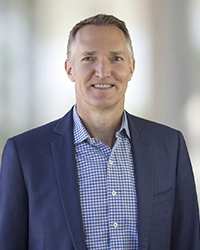 Jason HellendrungTetra Tech, Brookline, MABoston Chapter • Leadership/Management
Jason Hellendrung, ASLA, is a pioneering leader who has redefined the role of landscape architecture in the face of the global climate crisis. As Vice President of Planning and Design at Tetra Tech and a former Principal at Sasaki, Hellendrung has spent nearly two decades positioning landscape architects as the primary drivers of urban resilience, proving that public spaces—rather than just engineered walls—are the best defense against natural disasters.
His exceptional career was shaped by a pivotal moment in 2008 when he spearheaded the recovery of Cedar Rapids, Iowa, following a catastrophic $6 billion flood. In an era when no roadmap for climate recovery existed, he led a multidisciplinary team to transform 220 acres of flood-prone land into a vibrant riverfront greenway and park system. This work turned flood protection into a civic asset, creating the McGrath Amphitheater as a centerpiece for community life while restoring riverside wetlands to absorb future floods.
Hellendrung’s influence extends into the highest levels of policy and research. He was a key leader in the federal Rebuild by Design competition after Superstorm Sandy and managed Climate Ready Boston, the city’s first comprehensive climate vulnerability assessment. His "Sea Change: Boston" exhibition was the city's first major public conversation on sea-level rise, effectively shifting the local narrative from concern to action.
Whether advising the Rockefeller Foundation or bridging the gap between design and engineering, Jason Hellendrung consistently demonstrates that landscape architecture is essential to building safe, beautiful, and resilient cities. His work provides a national model for how communities can proactively adapt to an uncertain environmental future.
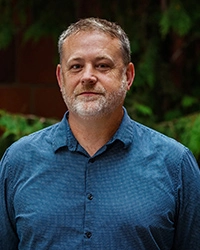 Jason HenryBerger Partnership, Seattle, WAWashington State Chapter • Works
Jason Henry, ASLA, is a leading voice in advancing landscape architecture as a form of ecological infrastructure that enriches everyday life. Over a 30-year career, his work has redefined how urban landscapes can integrate native ecosystems, urban agriculture, and stormwater systems to create places that are both high-performing and deeply connected to community.
As Partner and Principal at Berger Partnership, Henry has led a diverse portfolio of nationally recognized projects that demonstrate the power of design to address climate resilience, biodiversity, and social equity. His work consistently brings nature back into the city, using regionally appropriate plant communities and innovative green infrastructure to create landscapes that are immersive, functional, and enduring.
Henry’s impact is especially evident in projects like the Rainier Beach Urban Farm and Wetlands in Seattle, a groundbreaking model for integrating food production, education, and ecological restoration within a public park. At the Washington Park Arboretum, his long-term leadership has helped shape a living museum of global plant collections while improving access and ecological performance. His design for the Washington Fruit & Produce Company Headquarters transformed an arid industrial site into a lush, water-efficient landscape that reflects the agricultural heritage of the region.
Beyond individual projects, Henry’s work has influenced broader practice through research, publication, and measurable performance outcomes. His contributions to urban agriculture research and landscape performance studies have helped demonstrate the tangible environmental and social benefits of landscape architecture.
Through a career defined by innovation, collaboration, and a deep commitment to place, Jason Henry has shown how landscapes can reconnect people to nature while addressing some of today’s most pressing environmental challenges.
 Om M. KhurjekarHCM, Baltimore, MDMaryland Chapter • Leadership/Management
Om M. Khurjekar, ASLA, is a dynamic leader who has elevated the role of landscape architecture within multidisciplinary practice and across the profession. As a Principal, Owner, and member of senior leadership at HCM, a nationally recognized multi-disciplinary design firm, Om contributes to governance and philosophy, while ensuring landscape architects remain central to design leadership and decision-making.
Khurjekar is recognized for leading collaboration and firmly positioning landscape architecture alongside architects and allied disciplines. His design leadership is evident in major public and private projects that attract hundreds of thousands of visitors. At Loyola University Maryland, more than two decades of work, including the Fernandez Center for Innovation and Collaborative Learning, have shaped a connected and welcoming campus. In Pennsylvania, his stewardship of South Capitol Park has preserved and strengthened its historic character.
He also supports the profession through mentorship, teaching at Morgan State, advisory roles at Virginia Tech, service on the Baltimore County Design Review Board, and speaking engagements in the United States and India. He has guided emerging professionals and expanded awareness of landscape architecture among students, practitioners, and public leaders.
Beyond Practice, Khurjekar has demonstrated sustained service to the profession. As ASLA’s Vice President of Government Affairs, he advances national policy, licensure protection, and advocacy efforts, including leadership on emerging issues such as artificial intelligence and infrastructure policy. As chapter president, chair of chapter presidents’ council and national trustee, he has consistently cultivated future leaders within ASLA. Through mentorship, teaching, and professional outreach in the United States and abroad, Om Khurjekar has broadened awareness of landscape architecture and inspired the next generation, leaving a lasting impact on both the profession and the communities it serves.
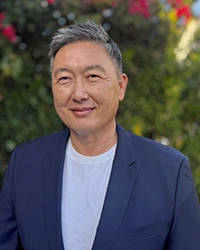 Hongjoo KimHKLA, Los Angeles, CASouthern California Chapter • Works
Hongjoo Kim, ASLA, is a visionary design leader whose work elevates landscape architecture as a powerful civic and cultural practice. Over nearly three decades, he has built an influential body of public work that brings together storytelling, environmental performance, and social equity to create landscapes that reflect and serve diverse communities.
As Founder and Principal of HKLA, Kim has led more than 120 projects for over 40 public agencies, shaping parks, campuses, healthcare environments, and civic spaces across California and beyond. What sets his work apart is a process-driven approach rooted in uncovering the unique narratives of each place. Through research, community engagement, and careful design, he transforms these stories into meaningful spaces that foster identity, belonging, and long-term stewardship.
Kim’s projects consistently demonstrate how landscape architecture can address pressing social and environmental challenges. At Vermont Miracle Park in Los Angeles, he transformed a long-vacant site in an underserved neighborhood into a vibrant, community-centered space that promotes healing and pride. At the City of Hope Medical Campus, he reimagined outdoor environments as essential components of care, creating an extensive network of therapeutic landscapes that support recovery and well-being. His work at Calabash Charter Academy turned a heat-intensive schoolyard into a shaded, nature-based learning environment that has improved student experience and become a model for future campuses.
Across all scales, Kim’s designs are distinguished by their cultural sensitivity, ecological intelligence, and measurable public impact. His leadership within ASLA and allied organizations further amplifies his influence on the profession.
Through a career defined by creativity, rigor, and a deep commitment to public life, Hongjoo Kim has advanced landscape architecture as a vital force for more inclusive, resilient, and meaningful places.

Todd Kohli
SmithGroup, San Francisco, CANorthern California Chapter • Leadership/ManagementTodd Kohli, ASLA, is a highly accomplished leader whose work has advanced landscape architecture across cities, campuses, and communities around the world. As a Senior Principal at SmithGroup, he leads multidisciplinary teams across multiple regions, shaping projects that bring together design excellence, sustainability, and community impact.
Kohli is exceptional for his ability to unite diverse disciplines and stakeholders to deliver complex, high-impact projects. Over a nearly 30-year career spanning 15 countries, he has helped redefine the role of landscape architects as central leaders in shaping the public realm. His portfolio includes globally recognized projects such as Tokyo Midtown, a transformative mixed-use development that catalyzed a major cultural and economic district, as well as civic landmarks like the Sunnyvale Civic Center, the nation’s first net-zero energy city hall, and the South San Francisco Civic Center, a model for community-driven design.
His leadership extends into healthcare and campus environments, where he has championed biophilic design to support healing and well-being. Projects like UCSF Mission Bay and the Gansu Women and Children’s Hospital demonstrate how thoughtfully designed landscapes can improve health outcomes while conserving resources.
Beyond his built work, Kohli has had a profound impact through mentorship and professional service. For more than two decades, he has guided students and emerging professionals, many of whom now lead firms and major projects of their own. His leadership roles with ASLA, the Urban Land Institute, and the Landscape Architectural Accreditation Board have strengthened professional networks and advanced the future of the discipline.
Through visionary leadership, collaborative practice, and a deep commitment to people, Todd Kohli has elevated landscape architecture’s influence and created places that inspire, connect, and endure.
 Lauren MarshallArbor Day Foundation, Takoma Park, MDPotomac Chapter • Leadership/Management
Lauren Marshall, ASLA, is a visionary national leader whose career has redefined the intersection of landscape architecture and global forestry. Currently the Director of Landscape Restoration at the Arbor Day Foundation, she leads a network of over 50 partners in massive reforestation efforts across the United States. Her work is exceptional for its "systems-based" approach, utilizing landscape architecture to solve critical challenges in carbon capture, urban wood reuse, and community resilience.
A major highlight of Dr. Marshall’s career is her 15-year tenure with the U.S. Forest Service. As the first landscape architect to serve as a national ecological restoration leader in the agency, she managed the restoration of hundreds of millions of federal and community acres. She drafted the America the Beautiful Action Plan, a federal roadmap aimed at conserving 30% of the nation’s lands and waters by 2030, and oversaw billion-dollar grant competitions that helped local governments build green, resilient infrastructure.
Beyond policy, she has pioneered innovative economic models for design, such as a trailblazing urban wood reuse program in Baltimore that turned felled city trees into job opportunities and economic growth. Dr. Marshall is also a dedicated mentor and advocate; she transformed the federal Presidential Management Fellows program into a pipeline for landscape architects in public service and currently serves as the only landscape architect on the board of the International Society of Arboriculture.
Equal parts scientist, designer, and policy expert, Lauren Marshall has elevated the profession’s visibility on the world stage. Her leadership ensures that landscape architects are at the forefront of the global conversation on climate adaptation and forest stewardship.
 Taner R. ÖzdilUniversity of Texas, ArlingtonTexas Chapter • Knowledge
Taner R. Özdil, ASLA, is a global leader in advancing landscape architecture through research, education, and professional collaboration. For more than three decades, his work has helped define how the profession measures value, evaluates design, and applies evidence-based approaches to create more resilient and equitable urban environments.
A pioneer in landscape performance research, Özdil has been at the forefront of developing methods to quantify the environmental, social, and economic benefits of landscape architecture. His early work on the economic value of urban design laid important groundwork for today’s performance-based practices. He has authored more than 160 publications and presentations and led eight Landscape Architecture Foundation case studies, helping shape national and international standards for evaluating design impact.
Özdil’s leadership has significantly strengthened connections between academia and practice. As President of the Council of Educators in Landscape Architecture (CELA), he established the first formal partnerships between CELA, ASLA, and the Council of Landscape Architectural Registration Boards, advancing collaboration, research, and pathways to licensure. Within ASLA, he played a key role in elevating urban design through the creation of the Urban Design Professional Practice Network and its awards program.
As an educator, Özdil has taught thousands of students, integrating research, community engagement, and real-world problem solving into his studios. His work has helped position landscape architecture as a STEM discipline and inspired students to address pressing challenges such as climate resilience and green infrastructure.
Through influential scholarship, visionary leadership, and a deep commitment to education, Taner R. Özdil has expanded the knowledge base of landscape architecture and strengthened its impact across disciplines, communities, and the world.
 Michele PalmerTempleton Landscape Architecture & Planning, Ithaca, NYNew York Upstate Chapter • Knowledge
Michele Palmer, ASLA, is a distinguished landscape architect, educator, and scholar whose career has expanded the reach of landscape architecture across history, research, and climate resilience. For nearly three decades, she has brought together design, site engineering, and environmental stewardship in ways that have strengthened both the profession and the communities it serves.
Palmer is exceptional for the rare breadth of her influence. As a longtime lecturer at Cornell University and now SUNY ESF, she has taught generations of students how technical knowledge and creative thinking work together, especially in site engineering, stormwater management, and sustainable design. She was also among the first at Cornell to bring LEED principles and performance-based landscape evaluation into the classroom, helping prepare future professionals to meet urgent environmental challenges.
Her scholarship has reshaped how ancient landscapes are understood. Through groundbreaking archaeological research in Rome and near Pompeii, Palmer brought a practicing landscape architect’s perspective to the study of historic gardens and public spaces. Using tools such as LIDAR, ground-penetrating radar, and digital reconstruction, she revealed that these landscapes were not merely decorative—they were sophisticated, engineered environments. Her work on The Gardens of the Roman Empire, an award-winning landmark publication, has become an important resource for scholars and students worldwide.
In professional practice, Palmer has made a profound public impact through climate adaptation and flood mitigation work in upstate New York. Working closely with communities along the Mohawk River and Erie Canal, she helped secure more than $16 million for nature-based flood mitigation and restoration projects, guiding residents, agencies, and engineers toward solutions that reduce risk and improve quality of life.
Through influential teaching, pioneering research, and community-centered practice, Michele Palmer has advanced landscape architecture in ways that are both deeply scholarly and immediately meaningful.
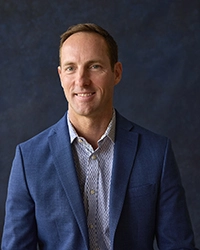 Thomas RainerPhyto Studio LLC, Arlington, VAPotomac Chapter • Leadership/Management
Thomas Rainer, ASLA, is a pioneering voice in ecological planting design, credited with fundamentally shifting how landscape architects design and manage living systems. As the co-founder of Phyto Studio and a prolific author, he has spent over two decades bridging the gap between ecological science and high-impact design, providing the profession with a roadmap for creating resilient landscapes in an era of climate change.
Rainer is best known for his seminal book, Planting in a Post-Wild World, which introduced a systems-based approach that treats plants as social communities rather than individual objects. This framework has become a cornerstone of contemporary design education and professional practice, moving the field from static "artful arrangements" to dynamic, self-sustaining plant assemblies. His upcoming volume, Future Nature, promises to further synthesize these years of research into a definitive guide for adaptive land management.
His work is visible in some of the most prominent civic and cultural landscapes in North America, including the Martin Luther King Jr. Memorial, the Native Plant Garden at the New York Botanical Garden, and the innovative plantings at the Philadelphia International Airport. Through these projects, Rainer demonstrates that "living technology"—such as layered plant structures and competitive hierarchies—can deliver measurable environmental benefits while maintaining exceptional beauty.
Rainer is an exceptional communicator who has delivered more than 150 lectures worldwide. He is celebrated for his "open-source" philosophy, freely sharing technical templates and management guides to democratize ecological knowledge. By transforming complex scientific concepts into actionable tools, Thomas Rainer has empowered a generation of landscape architects to design with nature, ensuring our public spaces are both ecologically functional and emotionally resonant.
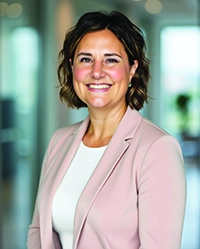 Jolene RieckEmergent Strategies Group, Inc., Bismarck, NDNebraska/Dakotas Chapter • Leadership/Management
Jolene Rieck, ASLA, is a trailblazing leader whose career has expanded the role of landscape architecture in public policy, infrastructure, and community development—particularly in regions where the profession has historically been underrecognized. Over more than 25 years, she has demonstrated how landscape architects can lead complex public initiatives, shape policy, and deliver lasting community impact.
Rieck’s work is defined by her ability to translate design into action. In executive roles within state government and as a consultant, she has led major capital programs, eliminated long-standing project backlogs, and implemented systems that improved transparency, accountability, and delivery of public investments. Her leadership has guided tens of millions of dollars in funding toward projects that enhance safety, mobility, environmental stewardship, and economic vitality.
A hallmark of her career is advancing landscape architecture in policy and governance. She has successfully advocated for legislation, influenced transportation and infrastructure policy at state and federal levels, and played a key role in protecting licensure standards. Her appointment as the first landscape architect on the North Dakota Board of Architecture and Landscape Architecture reflects her trusted voice in regulatory and public-interest decisions.
Rieck has also led nationally significant, precedent-setting efforts—from establishing a locally funded veterans cemetery that achieved national designation, to securing voter-approved funding for community infrastructure, to protecting culturally important landscapes through collaborative planning with Tribal Nations and public agencies.
Through sustained leadership in ASLA and CLARB, along with mentorship and coalition-building, Jolene Rieck has elevated the profession’s visibility and credibility. Her career exemplifies how landscape architects can lead beyond design—shaping policy, stewarding public resources, and strengthening communities.
 Roberto J. RoviraFlorida International University, Miami, FLFlorida Chapter • Leadership/Management
Roberto J. Rovira, ASLA, is an internationally recognized leader whose work bridges design, education, and advocacy to expand the impact of landscape architecture. As a professor at Florida International University and principal of his award-winning practice, he has shaped the next generation of designers while advancing innovative approaches to climate resilience, public space, and cultural expression.
Rovira is exceptional for his ability to connect academia, practice, and policy to create lasting change. As Chair of FIU’s Landscape Architecture + Environmental and Urban Design program, he strengthened and elevated the program’s national standing, expanded its visibility, and fostered a more diverse and inclusive academic culture. Over more than two decades of teaching, he has mentored students who have earned over 100 awards and gone on to become leaders in the field.
His leadership extends nationally through the Landscape Architecture Foundation, where he served as President and helped launch transformative initiatives such as the Ignite program, raising over $2 million to support and diversify future professionals. He has also played a key role in advancing national conversations on climate action, equity, and the future of design through the New Landscape Declaration and related initiatives.
Through Studio Roberto Rovira, his design work merges art, ecology, and community engagement. Projects such as the Ecological Atlas and award-winning public spaces demonstrate how design can make complex environmental systems accessible and meaningful to broad audiences. His influence also reaches policy, including efforts that protected landscape architecture education programs and shaped resilience strategies in South Florida.
Through visionary leadership, creative practice, and a deep commitment to mentorship and inclusion, Roberto Rovira has elevated the profession and demonstrated its vital role in shaping a more resilient and equitable future.
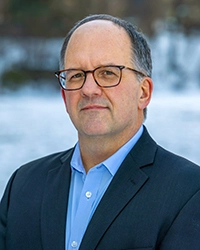 Bob RumseyCentral Park Conservancy, New York CityNew York Chapter • Works
Bob Rumsey, ASLA, is a distinguished design leader whose work has shaped one of the world’s most iconic public landscapes while exemplifying clarity, precision, and long-term stewardship. Over a 36-year career, he has built a body of work that seamlessly bridges intimate residential landscapes and large-scale civic environments, demonstrating how thoughtful design can endure and perform over time.
Rumsey is exceptional for his ability to translate design intent into built reality with rigor and consistency. As Studio Director of Landscape Architecture for Capital Projects at the Central Park Conservancy, he has led nearly fifty projects that restore, enhance, and sustain Central Park for millions of visitors each year. His work spans a wide range of landscape types—from Playgrounds and woodlands to formal gardens and major civic spaces—each carefully designed to respect the Park’s historic legacy while meeting contemporary needs.
Among his most significant contributions is the transformation of the Davis Center at the Harlem Meer, an ambitious project that restored ecological systems, reconnected circulation, and reimagined public experience in the Park’s northern end. His leadership also guided the comprehensive rehabilitation of the Conservatory Garden and the restoration of Grand Army Plaza, ensuring these treasured spaces remain vibrant and accessible for future generations.
Earlier in his career, Rumsey’s award-winning residential work established his reputation for design restraint, environmental sensitivity, and meticulous detailing—principles he has carried into his public work.
Through disciplined design, technical excellence, and a deep commitment to stewardship, Bob Rumsey has made enduring contributions to landscape architecture, enriching Central Park and advancing the profession’s role in shaping meaningful, lasting public spaces.
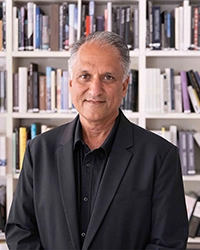 Paul SanghaPaul Sangha Creative, Vancouver, BCCouncil of Fellows Executive Committee • Works
Paul Sangha, ASLA, is a visionary leader whose four-decade career has advanced landscape architecture through innovation, environmental stewardship, and design excellence. As Founder and Principal of Paul Sangha Creative, he has led the design of more than 900 projects worldwide, demonstrating how landscape can shape development, restore ecosystems, and enrich everyday life.
Sangha is widely recognized for pioneering landscape-led planning, positioning landscape architecture as the driving force behind site design. His work consistently preserves natural landforms, protects mature trees, and creates more resilient, sustainable environments. Nowhere is his impact more evident than in shoreline resilience. His groundbreaking project Metamorphous replaced a failing seawall with a sculptural, nature-based solution that reduces wave energy, restores habitat, and has generated new beach through sediment accretion. This work has become a model for Vancouver’s “Green Shores” initiatives and influenced coastal design practices more broadly.
His leadership extends to transformative public projects such as the Tatlow and Volunteer Parks Creek Restoration, Vancouver’s first daylighted urban creek. Delivered through a pioneering public-private partnership, the project improves water quality, reduces flooding, restores habitat, and creates a vibrant public space, demonstrating the power of landscape architecture to solve complex urban challenges.
Across private estates, civic landscapes, and institutional work, Sangha’s designs seamlessly integrate art, ecology, and craft. His collaborations with leading architects and artists further elevate the cultural impact of his work.
Beyond practice, Sangha is a dedicated mentor and educator, supporting future leaders through scholarships, teaching, and public programming. As the first Indo-Canadian registered landscape architect in British Columbia, he has also expanded the profession’s reach and inclusivity.
Through creativity, leadership, and lasting environmental impact, Paul Sangha has redefined what landscape architecture can achieve.
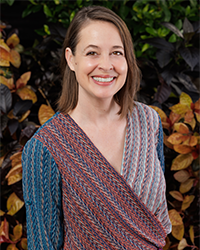 Marisa N. ScaleraArchitect of the Capitol, Washington, DCPotomac Chapter • Leadership/Management
Marisa N. Scalera, ASLA, is a visionary leader who has shaped the design and stewardship of some of America’s most iconic landscapes within the nation’s capital. Recently appointed as the Landscape Architect for the U.S. Capitol Grounds and Arboretum, she now oversees the 286-acre campus surrounding the symbolic heart of the country, including the historic Capitol Square designed by Frederick Law Olmsted.
Scalera is exceptional for her ability to transform traditional public grounds into "living museums." During her decade-long tenure at Smithsonian Gardens, she played a pivotal role in evolving the organization from a grounds management unit into a fully accredited museum. A major highlight of her work was the development of Habitat, the Smithsonian’s first-ever campus-wide exhibition. This initiative featured 16 distinct exhibits that engaged millions of visitors with themes of biodiversity and climate change, humanizing complex ecological issues through the beauty of living collections.
Her leadership is defined by a commitment to ecological innovation within historic contexts. She has spearheaded projects that replace vast swaths of turf with richly planted garden exhibits, such as the Flight Garden at the National Air and Space Museum. Beyond aesthetics, Scalera has pioneered sustainable practices in the Monumental Core, including the creation of a comprehensive Soils Management Plan and advocating for updated federal streetscape guidelines that prioritize urban canopy health and stormwater resilience.
By bridging the gap between horticulture, art, and science, Marisa Scalera has elevated the public’s understanding of the environment. Her work ensures that the millions who visit the National Mall and Capitol Hill experience landscapes that are as educational and resilient as they are beautiful.
 Laura L. TennyMassachusetts Institute of Technology, CambridgeBoston Chapter • Leadership/Management
Laura L. Tenny, ASLA, is a visionary campus planner who has spent her career transforming some of the world’s leading academic and research institutions. From the Massachusetts Institute of Technology (MIT) and Harvard University to Wellesley College and the Arnold Arboretum, her leadership has redefined how campuses function, blending design excellence with climate resilience and social connectivity.
At MIT, where she serves as Senior Campus Planner, Tenny has been an unrelenting advocate for the "greening" of a dense urban environment. She led the creation of the Sustainable Stormwater and Landscape Ecology Plan, a framework that ensures campus growth is both ecologically responsible and human-centric. One of her standout highlights is the transformation of a utilitarian service alley into the North Corridor (the "Outfinite"), a vibrant, pedestrian-friendly green spine that manages flooding while providing a lush "cool corridor" for the community.
Tenny’s influence extends far beyond site management; she is a pioneer in professional leadership. She is a founding director of the Association of University Landscape Architects (AULA), an organization she helped grow from a small group into an international network representing 50 higher education institutions. Her work ensures that landscape architecture is seen as essential infrastructure, equal in value to the iconic architecture found on these campuses.
A recipient of numerous honors, including the ASLA Award of Excellence for the Leventritt Shrub and Vine Garden, Laura Tenny is exceptional for her ability to navigate complex institutional budgets and priorities to secure investment in the landscape. Her legacy is one of enduring stewardship, having created cohesive, accessible, and resilient places that will serve students and researchers for generations to come.
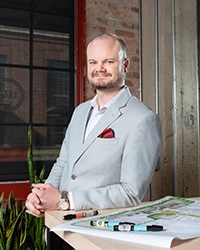 Andrew WickhamLPA Design Studios, Sacramento, CACalifornia Sierra Chapter • Service
Andrew Wickham, ASLA, is a leading voice in advancing landscape architecture’s role in climate action, policy, and public understanding. Over nearly two decades, he has distinguished himself as a strategist, communicator, and advocate who has helped reshape how the profession responds to the climate and biodiversity crisis.
Wickham is exceptional for translating complex environmental challenges into clear, actionable guidance for practitioners and policymakers. As Advocacy Lead and principal author of Landscape Architecture 2040: Climate and Biodiversity Action Plan, he developed a roadmap that sets measurable goals and practical strategies for the profession to meet global climate targets. The plan has quickly gained national and international traction, guiding firms, chapters, and individuals toward more climate-positive design.
His leadership within ASLA has been both sustained and influential. As co-chair of the Climate and Biodiversity Action Committee’s Advocacy subcommittee, he has strengthened the organization’s national messaging and expanded its network to include every ASLA chapter and partners across North America. His policy work has contributed to meaningful outcomes, from advancing federal legislation like the Living Shorelines Act to shaping state policies on urban forestry, wildfire resilience, and nature-based solutions.
Wickham is also a gifted educator and communicator. Through dozens of presentations, widely used resources like the ASLA Decarbonization Guide, and innovative public campaigns such as “Life Grows Here” and “Park-In-A-Box,” he has broadened awareness of landscape architecture and empowered professionals and communities alike.
By connecting practice, policy, and storytelling, Andrew Wickham has elevated the profession’s voice and equipped it to lead in addressing the most urgent environmental challenges of our time.
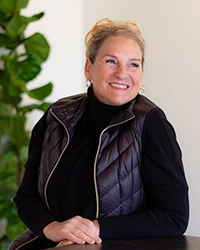 Sue WiestDTLS Landscape Architecture, St. Louis, MOSt. Louis Chapter • Leadership/Management
Sue Wiest, ASLA, is a distinguished leader whose nearly 40-year career is defined by the transformative power of purposeful design and a profound commitment to the public realm. As a co-founder of DTLS, Missouri’s largest woman-owned landscape architecture firm, and through her previous vice presidency at HOK, she has shaped iconic landscapes ranging from historic regional landmarks to massive international institutional campuses.
Wiest is exceptional for her technical mastery and her ability to build enduring partnerships with repeat clients. Her role in the multi-decade revitalization of St. Louis’s Forest Park—known as "The Heart of St. Louis"—is perhaps her most significant regional accomplishment. Leading the design and implementation of the Grand Basin and Post-Dispatch Lake, she helped restore the park's historic character and ecological health, a legacy recognized with the prestigious 2025 ASLA National Landmark Award.
On the global stage, Wiest’s expertise in large-scale, sustainable planning was vital to the creation of King Abdullah University of Science and Technology (KAUST) in Saudi Arabia. Leading an international team, she authored a design that unified 27 buildings into the world’s largest LEED Platinum campus. She also played a key role in the master planning of the Dubai Marina, a project that set a new global standard for walkable, water-centric urban living.
Back in St. Louis, her work with BJC HealthCare highlights her mastery of high-functioning, restorative healthcare environments. Beyond her built work, Wiest is a dedicated mentor who co-founded a "Women in Landscape Architecture" support group. Through consistent excellence and visionary leadership, Sue Wiest has created spaces that foster connection, resilience, and enduring community beauty.
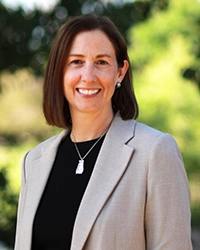 Gretchen WilsonDig Studio, Inc., Denver, COColorado Chapter • Leadership/Management
Gretchen Wilson, ASLA, is a visionary leader whose work demonstrates the power of landscape architecture to shape healthier, more resilient communities. As co-founder and principal of Dig Studio, she has grown the firm from a small startup into a nationally respected practice of more than 40 professionals, known for integrating ecological systems, community voices, and design excellence.
Wilson’s leadership blends creativity with strong organizational strategy. She has built a collaborative studio culture that prioritizes mentorship, equity, and innovation, establishing clear career pathways and championing policies like salary parity and inclusive hiring. Under her guidance, Dig Studio has become a model for how design firms can foster both high-performing teams and meaningful, community-centered work.
Her design approach places green infrastructure and water systems at the forefront. Wilson has led more than $100 million in award-winning projects that address climate resilience, biodiversity, and urban heat, including the transformative Carpio-Sanguinette/Heron Pond Park in Denver and the Truckee River Vision Plan in Nevada. These projects demonstrate how landscape architecture can align ecological restoration with public health and access to nature, particularly in underserved communities.
A dedicated leader within ASLA, Wilson has served in roles from chapter leadership to the national Board of Trustees and will serve as ASLA’s 2027 President. She is a passionate advocate for the profession, advancing its role in policy, infrastructure, and climate action while mentoring the next generation of practitioners.
Through her leadership, Gretchen Wilson has elevated both her firm and the profession—demonstrating how thoughtful design, inclusive leadership, and environmental stewardship can create lasting impact at every scale.
-
ASLA Elevates 50 Members to the Council of Fellows
The American Society of Landscape Architects (ASLA) has elevated 50 members as ASLA Fellows for their exceptional contributions to the landscape architecture profession and society at large. Election to the ASLA Council of Fellows is among the highest honors the ASLA bestows on members and is based on their works, leadership/management, knowledge, and service.
ASLA Fellows were elevated during a special investiture ceremony at the 2025 Conference on Landscape Architecture.
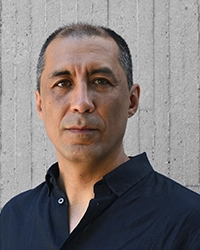
Rodrigo Abela, ASLA
GGN, Seattle, WA and Washington, DC
Nomination in Works by the Washington State Chapter
Rodrigo Abela’s work exemplifies a profound dedication to creating spaces that have a significant social, cultural, and environmental impact. With a portfolio of embassies, consulates, and museums, Rodrigo is renowned for his collaborative approach to each project, aligning art, architecture, and engineering in sophisticated ways that skillfully integrate landscapes into sites and cities. His unique ability to craft immersive spaces that invite reflection and ground visitors within their surroundings is unmistakable. At the US New Embassy Compound in Ankara, Turkey, he organized the landscape and architecture around a sequence of interior and exterior courtyards, each characterized by locally sourced Travertine clad site walls and paving, combined with a diverse plant palette reflective of Turkish garden traditions. At the Smithsonian National Museum of African American History and Culture the landscape design is brought to life through the site’s composition: symbolic thresholds of stone and water crossed by broad sweeping paths that draw visitors in through a landscape that is both continuous and sequential, layered with trees native to the Southeast. These trees are part of a diverse planting palette chosen and composed to reinforce the broad themes of the museum: resiliency, spirituality, hope, and optimism. CityCenterDC is a connected network of distributed open spaces via the park, plaza, and alleyways that supports a vibrant people-centered neighborhood. Masterfully manipulating the former superblock’s relatively flat topography, Rodrigo used every inch to lift and lower pathways, platforms, and planes to add complexity and interest with water features in key locations. Rodrigo is also a tireless advocate for the profession with leadership roles in organizations like the Mayors’ Institute on City Design.
Ricardo R. Austrich, ASLA
BSC Group, Boston, MA
Nomination in Leadership/Management by the Boston Chapter
In his over thirty years in practice, Ricardo Austrich has focused on urban landscape projects that enhance and enrich the lives of a diverse population of residents throughout New England and the upper Midwest. His work reflects his belief that our landscapes and our profession are stronger when a broad range of diverse voices are heard and influence the outcome. Through his leadership roles with high visibility—as past president of the Boston chapter and currently as the first landscape architect in more than a generation serving on the City of Boston zoning commission—he has been a powerful spokesperson for diversity, equity, and inclusion, striving to increase the visibility of people of color and helping the profession be more welcoming to urban communities. He is a nationally recognized thought leader in the sensitive and practical approach to preservation and development of historic landscape cemeteries. Ricardo managed, mentored, and collaborated on four historic landscape cemetery master plans across the US and a myriad of cemetery landscape projects, including two award-winning designs. Today, as landscape architecture director at BSC Group, a multidisciplinary environmental engineering firm, Ricardo leads and mentors a diverse team of practitioners. He continues to innovate in the realm of practice by expanding an existing town cemetery with a hybrid green cemetery/parkland development and by guiding current projects at historic cemeteries in Ohio and Massachusetts. Known for his charisma and compassion, Ricardo continues to advocate, educate, and lead in advancing landscape architecture’s visibility and urban and societal impact. He has inspired and enlightened students in the US and Australia, and in Chile, where he among other things, organized, convened, and facilitated Chile’s first community design charrette.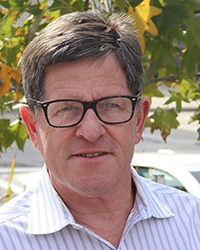
Kenneth Bahlinger, ASLA
Coastal Protection and Restoration Authority, State of Louisiana, Baton Rouge, LA
Nomination in Leadership/Management by the Louisiana Chapter
Kenneth Bahlinger is a nationally recognized leader in coastal issues working for the State of Louisiana for the past 34 years, where he has been instrumental and quietly effective in creating the state’s policies, management, and implementation strategies for coastal wetlands issues. As Senior Project Manager with the Coastal Protection and Restoration Authority, he directs multiple large-scale coastal ecosystem restoration projects involving numerous constituencies and stakeholders in the coastal regions. His leadership and his regimen of study and reflection, together with his skills in diplomacy, creative problem-solving, and public advocacy, have led to innovative strategies and coastal restoration projects that are now international models for success. Beginning in 1991, he served as landscape architect at the Louisiana Department of Natural Resources Coastal Restoration Division where he assumed leadership of two programs: the Coast Vegetative Planting program, a unique partnership through which native marsh vegetation is planted and monitored throughout Louisiana’s coastal zones; and the Christmas Tree Program, where Christmas trees are recycled by placing them in wetlands to help protect the natural marsh and shoreline. Kenneth has also successfully led multidisciplinary and multi-agency teams through planning, design, and implementation of large-scale coastal restoration projects. He has been responsible for dozens of coastal restoration projects using plants to stabilize shorelines and establish vegetation on shallow bay bottom terraces, such as plantings on newly dredged marsh platforms; native grasses and trees on levees; and native grasses on dunes and marshes on remote barrier islands. Kenneth’s expertise and leadership and his many significant contributions to the conservation of natural resources in coastal Louisiana have been invaluable and were recognized with the 2017 Alfred B. Lagasse Medal from ASLA.
Tiffany Beamer, ASLA
OLIN, Los Angeles, CA
Nomination in Works by the Southern California Chapter
Tiffany Beamer’s artistry emerges through her landscape designs combined with her mastery of distilling inspiration through art and music. She excels at the integration of rhythmic patterns and colorways, within the juxtaposition of hardscape and purposefully selected plant materials, to create emotional experiences that are woven into their context. Collaboration is at the heart of Tiffany’s approach, allowing her teams to thrive under her guidance to create meaningful and award-winning projects. A Partner and Chief Operating Officer at OLIN, Tiffany has a gift for conceptualizing a project’s potential, able to create concepts quickly and effectively with a beautiful mastery of hand drawing. In downtown Portland, Oregon, Tiffany transformed a .7-acre parking lot into Simon and Helen Director Park, which sits atop a six-story parking garage. She created a variety of public spaces with a range of microclimates, amenities, and activities, in the context of the tight tolerances for planting and paving depths. A larger renovation project at historic Carnegie Hall provided the opportunity to create a rooftop garden and event space. Weill Terrace is a secluded outdoor oasis with fine details such as an elegant ipe deck frame that wraps the terrace and skylights that are artfully incorporated into a musical-staff-inspired paving pattern. At the 42-acre Google Bay View campus, Tiffany led a large team to design and detail this large project, manage multiple workstreams and consultants, and craft a landscape that upholds the highest standards for sustainability—both for people and natural systems. What started as a disturbed brownfield site has become a breathtaking social space for Google employees, a massive stormwater capture, treatment, and reuse system, and a thriving habitat for local fauna.
Deena Ruth Bell, ASLA
City of Coral Gables and Bell Landscape Architecture, Coral Gables, FL
Nomination in Leadership/Management by the Florida Chapter
Deena Bell’s value as a community leader and her impact on the city of Coral Gables, Florida, and beyond, is unparalleled and can be seen on the ground with her efforts to establish new practices that ensure sustainable tree and plant growth. She directed the removal of 370,000 cubic yards of debris after Hurricane Irma toppled over 1,000 street trees. She established a tree debris recycling station, which has allowed the city to use only their self-produced mulch in 400 parks and green spaces. Her team developed a perpetual tree succession project, which calls for planting over 1,000 new native and resilient species suitable for the intricate infrastructure of the urban forest. Deena was appointed liaison to the Landscape Beautification Advisory Board which oversees improvement of over 60 parks and 400 green spaces that Deena and her staff maintain. This board has been effective in proposing edits to legislation to encourage more diversity in tree species and the use of native plants to reduce the volume of fertilizer and pesticides running off to local bodies of water. They got the county to ban fertilizers during the summer rainy season in order to reduce the frequency of algae blooms that harm the local aquatic environment. killing coral reefs and hurting the Florida tourism economy. By prioritizing green infrastructure and trees on a broad community scale, Deena is demonstrating courage and strong will to lead the community to a healthier future and increasing the visibility and understanding of the role of landscape architects in creating resilient communities.
W. Shannon Blakeman, ASLA
CARBO Landscape Architecture, Baton Rouge, LA
Nomination in Works by the Louisiana Chapter
Shannon Blakeman’s projects are more than just landscapes—they are social and ecological interventions that enhance the lives of the communities they serve. Through a deep understanding of place, a commitment to community engagement, and a focus on sustainable design principles, he has created a legacy of vibrant, resilient, and equitable communities. His work consistently demonstrates a unique ability to integrate ecological knowledge, urban conditions, and a compelling aesthetic sense. He fosters collaborative environments, inspires colleagues, and mentors emerging talent, and is dedicated to incorporating site history, restoring natural patterns, and using sustainable materials. With the Atchafalaya Water Heritage Trail in the Atchafalaya Swamp, America’s largest water basin, he demonstrated his ability to translate complex ecological and cultural information into an engaging public experience. Through thoughtful curation of information and a focus on accessible design, this project successfully engages thousands of visitors, promoting a deeper understanding of the region’s unique hydrology, its cultural heritage, and its impact on the landscape. His environmental stewardship is also found in the Mirabeau Water Garden Project in New Orleans, a multi-phase award-winning model project for Resilient New Orleans, which transforms a 25-acre open site into a neighborhood recreational and educational amenity and reduces the risk of flooding for the adjacent residents. A third example of Shannon’s capacity to integrate site history, community engagement, ecological function and human needs is the award-winning City Park project for Gretna, Louisiana. This transformative project was conceived as one of 36 pilot projects in Louisiana’s Strategic Adaptations for Future Environments (LA SAFE) planning initiative, aimed at bolstering resilience in the state’s most flood-prone areas as both a critical adaptation strategy and as a beacon of nature-based best practices for the wider region.
David Yuezhong Chen, ASLA
ECOLAND Planning and Design Corporation, Beijing, PRC
Nomination in Works by the Executive Committee of the Council of Fellows
For over 36 years, David Chen has dedicated his career to promoting ecological protection and restoration during the urbanization planning and design process. He has consistently explored methods to counteract the deterioration of urban ecologies, advocating for sustainable development and environmental resilience. As the founding principal of ECOLAND, David's extensive portfolio of over 1,000 projects, both domestic and international, showcases his ability to integrate natural landscapes into urban environments, creating spaces that are both functional and aesthetically pleasing. His numerous accolades, including the ASLA Professional Awards and the IFLA Award, are a testament to his exceptional contributions. Among his award-winning projects is the Suining South Riverfront Park in Suining City, China, which addressed the challenges posed by the city's concrete bulkhead riverbanks, which hindered ecological function and degraded the local environment. The project converted a stark levee into a vibrant, sustainable park that integrates terraced connections with the city and fosters interaction with the river edge. The Beijing Wangjing SOHO Urban Parks feature three distinctive garden spaces designed to complement the iconic curvilinear SOHO buildings. Echoing the architectural forms, the landscape integrates organic pathways, lush plantings, and dynamic water features to create a seamless connection between nature and the built environment. The Huangyan Waterfront Riverwalk project presents a sustainable vision that revitalizes degraded ecological areas while creating a coherent greenway system of circular waterfront connections for communities. This initiative focused on restoring water quality, rehabilitating the water's edge, and fostering green infrastructure elements to mitigate the impacts of climate change. David has also made significant academic contributions, authoring and coauthoring several important books and serving as a visiting professor at multiple institutions.
Wm. Christopher Cline, ASLA
Confluence, Kansas City, MO
Nomination in Leadership/Management by the Prairie Gateway Chapter
From Chris Cline’s early work in land development to leadership in large-scale transportation, redevelopment, and business strategy, he has advanced the role of landscape architects as leaders in shaping cities, infrastructure, and public policy. Throughout his career, he has expanded the profession’s influence by leading complex, multidisciplinary initiatives that integrate landscape architecture into transportation networks, urban revitalization, and sustainability policy—areas historically dominated by engineers and planners. Chris began his career working in land development. From there he joined HNTB’s Urban Design and Planning Group, where he led large-scale transportation projects, including the design of light-rail park-and-ride stations to support future mixed-use, transit-oriented development in Denver. He returned to development in 2005 and then in 2008, Chris joined Confluence. His leadership in marketing and business development strengthened Confluence’s market position, forged strategic partnerships, and secured high-profile projects such as the Falls Park Conceptual Master Plan and the Imagine Downtown Kansas City 2030 Strategic Plan. He advanced innovative planning frameworks, redefined public spaces, and set new benchmarks for excellence. Chris has personally led projects that have earned 107 awards, including eight international and national honors, 69 ASLA regional and state awards, and 22 additional accolades from professional organizations. Chris served as Prairie Gateway Chapter president from 2017 to 2019, where he revitalized the organization through leadership restructuring and a strategic membership drive. His active involvement in the Urban Land Institute has helped the development community understand the value of landscape architects and their essential role in creating sustainable resilient communities. By bridging disciplines and leading collaborative initiatives, Chris has positioned landscape architecture as a driving force in infrastructure, urban polity, and sustainable development.
Sally E. Coyle, ASLA
Coyle & Caron, Orlando, FL
Nomination in Works by the Florida Chapter
For more than three decades, Sally Coyle’s stunning immersive landscapes have played a critical role in environmental education and species conservation at zoos, aquariums, and botanical gardens. By connecting people to plants and animals through observation, discovery, hands-on learning, and play, millions of visitors experience the joy and wonder these worlds provide. Sally’s landscapes not only connect visitors to conservation stories but also enrich the lives of animals by fostering natural behavior and creating spaces for top-notch care and research. At the Lisbon Oceanarium, Sally led the design for the terrestrial areas of the four ocean habitats shaping the building envelope from the inside out to ensure powerful visitor experiences and ideal conditions for live species to thrive. Working with the architects, she designed close-up views and movement to reinforce the project’s underlying concept of the interconnectedness of all marine life. It has sustained its success as one of Europe’s most popular destinations since 1998. The Smithsonian National Zoo’s Asia Trail, where Sally led the design for eleven habitats for seven species, is widely considered a seminal work in landscape-immersion-based zoological design. Her integrated approach to habitat design and husbandry for enrichment and training laid the groundwork for increased research and set the standard for future exhibits. Sally’s revitalizing design for the Majeed Discovery Garden at Florida Botanical Gardens includes beautifully designed and crafted play experiences and outdoor learning spaces inspired by both native ecosystems and exotic flora. A new stormwater pond is integrated with a large littoral shelf for emergent species as well as bank restoration of the creek.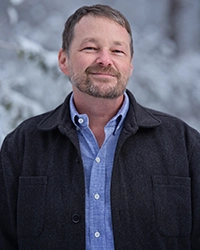
Matthew Cunningham, ASLA
Matthew Cunningham Landscape Design, Stoneham, MA
Nomination in Works by the Boston Chapter
Matthew Cunningham’s award-winning, plant-centric projects embody a rigorous commitment to regionalism, environmental stewardship, and climate adaptation. His work inspires new ways of living and learning by fostering biodiversity, promoting meaningful connections with the land, and drawing people from indoors out. With more than 1,600 acres of built works, Matthew’s gardens aim to restore fragmented ecologies. They replace invasive species with drought-and deluge-resistant native plants that sequester carbon, nourish pollinators, reduce maintenance, and integrate practical, site-specific stormwater management solutions. At Le Petit Chalet in Southwest Harbor, Maine, a durable, context-sensitive design restored the hurricane-damaged historic property. New landforms and stormwater management strategies ensure swift drainage while enhancing the property’s natural absorption patterns with native plant colonies stabilizing soils and regenerating habitat. In “Suburban Jungle” in Brookline, Massachusetts, with no site soil and limited resources, MCLD transformed the modest north-facing parcel from a stripped lot into a lush, layered ecosystem, merging architecture and nature through the use of pioneer species from New England’s successional plant communities. At Berkshire Ridge in Great Barrington, Massachusetts, a year-round retreat perched on a wooded mountain slope, the designers focused on blurring indoor-outdoor boundaries and blending modern architecture with the rugged landscape. The design integrates the home into the mountainside through reclaimed granite terraces, while roof runoff and stormwater are directed into bioretention basins that slowly recharge the surrounding watershed. Through teaching at Harvard, lectures, interviews, and social media, and his research and experimentation farm, MCLD Land Lab, Matthew drives crucial conversations that highlight how a constellation of landscapes can add up to address global challenges.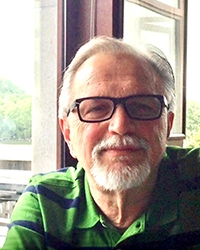
Stephen Drown, ASLA
Professor Emeritus, University of Idaho, Moscow, ID
Nomination in Leadership/Management by the Idaho/Montana Chapter
For over four decades, Stephen Drown’s dedication to education has been nothing short of exceptional. His steadfast leadership, joy of teaching, and significant initiatives have earned him a legacy that transcends academic and professional practice and created new opportunities to expand the theoretical foundation of the design and planning professions. An educator, mentor, and global collaborator, Stephen helped inform the practices and perspectives of students and faculty at the Ohio State University (1975-1994), the University of Idaho (1994-2017), and Jiangsu University (2018-present). Stephen is an inspirational figure, sharing his deep knowledge but also transferring interest and enthusiasm for the profession, and creating the conditions for students and the field as a whole to prosper. At Ohio State, he initiated service-learning opportunities that allowed students to experience both the transformative value and real-world challenges of landscape architecture as they beautified interstate corridors and planned and designed the acclaimed Chadwick Arboretum. Stephen’s leadership as Department Chair at The University of Idaho led to the expansion of academic offerings and opportunities available to students at this crucial land grant institution. He created a regional energy and enthusiasm for the profession and pursued innovative partnerships to ensure the department had funding, accreditation, and rigor, and led the effort to create an MSLA degree. For 15 years Stephen co-led international study abroad programs in France, Italy, and China, to help students graduate with an extensive, broad worldview. Stephen’s unique ability to ignite creative potential, bridge visionary ideas with real world applications, and instill a deep sense of purpose has left an enduring legacy in both professional practice and academia.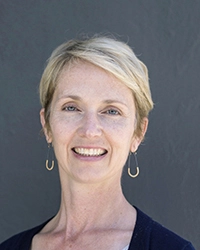
Liz Einwiller, ASLA
EinwillerKuehl Landscape Architecture, Oakland, CA
Nomination in Works by the Northern California Chapter
Throughout her 30 years of practice, Liz Einwiller has demonstrated extraordinary design talent along with an unmatched ability to convene people with her enthusiasm, her deep knowledge, and her visionary ideas. And along the way inspire her clients and others to become enthusiastic stewards of the natural world and landscape architecture. Liz joined PWP Landscape Architecture in 1998 and grew quickly as a leader with a focus on construction documentation, working on complex projects at the leading edge of the profession. Since co-founding EinwillerKuehl Landscape Architecture in 2012 with longtime collaborator Sarah Kuehl, Liz has developed gardens that showcase the natural world in ways defined both by the client and the site’s potential. At Uptown Station the renovation of a historic building in downtown Oakland included a series of large rooftop terraces requiring a strategy for planting in thin soil profiles. Liz led coordination with the structural engineer, the waterproofing consultant, the contractor, and a meadow expert to create outdoor gathering spaces and contemplative strolling paths within a seasonal flowering meadow. In Calistoga, California, the project design reset three existing structures in a new landscape that uses water wisely, with a linear wall connecting all areas of the garden. Planting was selected to create a framework and seasonal interest and color. A former brownfield site, the Pleasant Hill California library landscape is a teaching example of a restored local ecology using low water native plants as well as a trail head for the natural world. The design is an integrated, legible, and cohesive architectural, landscape, and infrastructure solution. Liz’s masterful work on the planting design has become a model project for using low water native plants.
Ann English, ASLA
Department of Environmental Protection, Montgomery County, MD
Nomination in Knowledge by the Potomac Chapter
Ann English has focused on sustainability and resilience of local, regional, and national landscapes for over thirty-five years. Long before the term “green Infrastructure” was coined, Ann was developing ecological methodologies that highlight the practice of landscape architecture as a field centered on the relationships of soil types, plant communities, and the distinct history of diverse sites. Her research has focused on ecological methodologies and integrated field archival research, influencing landscape architecture education. She has greatly influenced the design and management of green stormwater flow impact development infrastructure in Montgomery County and the surrounding region. Her extensive career in landscape architecture has spanned private, nonprofit, academic, and public sector work. In the1990s Ann taught dozens of design studios at the University of Georgia. After relocating to Maryland in 2005, Ann initiated her award-winning RainScapes Schools Program (2009), focusing on green infrastructure demonstration installations linked to a creative curriculum. Through the RainScapes program, Ann has facilitated the installation of over 500 gardens that capture stormwater and promote biodiversity. Over the past 15 years, more than 3000 Montgomery County Public School students have learned about green infrastructure and the role landscape architects play in its design. In 2012, she began working with the National Wildlife Federation to develop the Sacred Grounds program that was piloted in Montgomery County and is now a national program connecting congregational values with actions centered on clean water and habitat creation. Ann published a children's book titled "A is for Aquifer" to educate young audiences about watershed health. She has received various awards, including the Sustained Environmental Stewardship Award in 2023 and the Pennsylvania Governor’s Award for Environmental Excellence in 2018.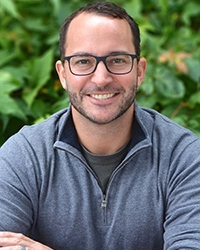
Alexander Fenech, ASLA
Hitchcock Design Group, Coral Springs, FL
Nomination in Leadership/Management by the Florida Chapter
A born leader, Alex Fenech uses creative and visionary direction to advance the profession and advocate for its values—especially social responsibility—while increasing public awareness and appreciation of the critical role landscape architecture plays in the world. Alex had the challenging task of navigating the Florida Chapter through the early unknowns of the Covid-19 Pandemic; he successfully strategized to keep members engaged, the Executive Committee focused and led the Chapter through the financial fallout and implications of the 2020 National Conference (Miami) being cancelled. Recognizing the need for change, Alex led the transition to a Strategic Board Model focusing on membership, education, advocacy, and growth. And soon thereafter he worked with the Executive Committee to develop a three-year Strategic Plan, its first in over a decade, resulting in tangible quantitative, qualitative, and metric-driven goals and contributing to substantial growth. Alex spearheaded the creation of an Online Educational Platform (“the Portal”) for Florida’s members to provide equitable and accessible education benefiting the profession and work of the Chapter, which paid for itself in the first four months and continues as a revenue-generating program. Alex also inspired and curated the collaborative ASLA Southeast Climate Action Committee Webinar Series. Capturing an audience of more than 2,200 members in FL, GA, NC, and SC, this unique webinar series showcases climate action solutions relevant to the profession and region from multidisciplinary experts. Alex’s fierce commitment to continuing education, professional development, mentoring, and community service has proven to deliver effective programs and results while boosting leaders around him to succeed.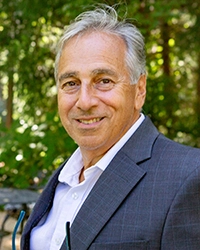
Louis C. Fusco, ASLA
Louis Fusco Landscape Architects, Pound Ridge, NY
Nomination in Leadership/Management by the Connecticut Chapter
Louis Fusco is an extraordinary leader of social and environmental justice initiatives within the profession. He has redefined how landscape architects should consider the human and environmental risks of sourcing material and raised awareness through the Design for Freedom movement and co-organizing the Earth Equity and Design for Freedom Landscape Forum for the Grace Farm Foundation. Committed to stewardship and social responsibility, he leads by example through his award-winning projects in support of material choices that reduce the risk of forced and child labor. Protecting, restoring, and improving the quality of the environment takes center stage in the projects Louis designs and manages. At St. John’s University and Pace University, he set a new standard for campus design and elevated the role of landscape architecture. He transformed a contaminated site in Pound Ridge into a beloved Village Green, created a 200-acre urban forest in Milan, Italy, mitigated over 350 acres of private and public wetland areas throughout New York and Connecticut, and planned an accessible trail system for Connecticut’s 4000-acre White Memorial Conservation Center—some of his many projects that exemplify his commitment to providing equitable access for all. Louis is a leader in promoting the profession through his active involvement in his ASLA chapter, which was celebrated when he was awarded the 2020 Yarwood Award for unselfishly giving his time and talent to further the profession. Whether writing and directing a psychological drama feature film (After Roberto) where landscape and environment take center stage or as a sought-after speaker nationally and internationally, Louis is always finding creative and visionary ways to advance the understanding of the role of the profession in creating community.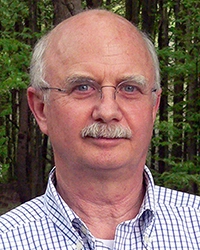
Jack C. Goodnoe, ASLA
Land Planning and Design Associates, Detroit, MI
Nomination in Works by the Michigan Chapter
Jack Goodnoe has risen to be a leading landscape architect in the design of contemporary American and international cemeteries. His 40 years of industry-changing design has created, transformed, and enriched the landscapes of more than 125 cemeteries. His pioneering work in sustainable, green cemeteries is establishing new models and setting industry standards of environmental performance and design quality, such as his development of the concept of “ecotone burial,” where a rich biological zone interfaces between two ecosystems. Jack is the landscape architect most chosen for designing new facilities within historic American Garden Cemeteries, where his work protects and enhances these rich 19th century landscapes. At the Forest Conservation Burial Ground in Ashland, Oregon, Jack’s master plan incorporates both an extensive cemetery master plan and an ongoing site restoration project. This cemetery design employs his invention of ecotone burial zones, fostering environmental diversity and creating new, high-value burial areas. At The Preserve in Waterford, Michigan, his design turned groundwater seepage on the site into a natural stream amenity. Jack's designs for soft infrastructure, groundwater management, amenity development, native landscapes, burial layout, pedestrian circulation, meditation features, and indigenous rock memorialization in this early green cemetery established new models and standards for sustainable cemetery design. The design of Fountain of Remembrance Columbarium at Spring Grove Cemetery, in Cincinnati, Ohio, accommodates over 1,000 cremation niches while respecting and honoring its historic landscape. The growing preference for cremation and sustainable cemetery landscapes has driven the industry to reinvent itself, and Jack's work is at the forefront of this evolution.
Gary Hawkins, ASLA
Hawkins Partners, Nashville, TN
Nomination in Leadership/Management by the Tennessee Chapter
Gary Hawkins spent his nearly forty-year career tirelessly and persistently introducing, advocating for, and implementing the foundational public landscape design concepts that helped make Nashville the dynamic, thriving, and livable city that it is today. Under Gary’s direction, HPI designed dozens of high-profile and award-winning cultural, academic, residential, and commercial works such as Public Square, the Carell Family Woodland Sculpture Trail at Cheekwood Estate and Gardens, the 5th and Broadway multiuse development, and the LEED Platinum Bridge Building site design. As a young landscape architect, he set up shop in Nashville’s then neglected downtown all the while becoming active in nonprofits and various associations for preserving and revitalizing the city. He was instrumental in getting the Metro Greenways Commission established and designed Nashville’s first two greenways. Gary broadened his reach by becoming the first landscape architect commissioner on the Metro Historic Zoning Commission and becoming a board member for The DISTRICT, a nonprofit dedicated to fostering economic revitalization and preservation of Second Avenue, Broadway, and Printer’s Alley—three historically and architecturally significant sections of downtown. He started a campaign to get the widely inaccessible Cumberland River revived and was contracted to develop the “Cumberland River Greenways Master Plan,” which jumpstarted what was ultimately the addition of 6,300 acres of parks and 85 miles of greenways. An award-winning professional, Gary’s work and vision are evident in downtown Nashville, where his thoughtful designs have transformed public landscapes into vibrant spaces, and reflect a steadfast commitment to enhancing urban environments and fostering community through design and elevating the profession along the way.
Gail Henderson-King, ASLA
Henderson-King Consulting, Burlington, VT
Nomination in Leadership/Management by the Vermont Chapter
For over thirty-five years, Gail Henderson-King has been a driving force in advancing the profession through her visionary leadership, meticulous project management, and unwavering commitment to service. Whether leading transformative projects in the public and private sectors or dedicating her time to mentorship and volunteerism, she has challenged conventional practices, expanded the influence of landscape architecture in planning, transportation, and development, and inspired the next generation of professionals. Early in her career, she worked as the planning director for the Town of Milton where she successfully promoted pedestrian and bicycle-friendly design and streetscape improvements—then a new concept for Vermont. At Lamoureux & Dickinson Consulting Engineers, Gail led transportation enhancement projects, continually pushing the design envelope to benefit communities’ health and wellbeing. At White + Burke Real Estate Advisors, her design background and exceptional project management skills benefited numerous commercial and institutional projects of statewide importance. Perhaps Gail’s most profound contribution to the profession was to lead the state’s successful effort to secure professional licensure for landscape architects. Since 2016, she has chaired VTASLA Historic American Landscape Survey (HALS) Committee, which has resulted in the documentation of over ten Vermont historic landscapes. She also led efforts to mount exhibitions in Vermont about renowned landscape architects Daniel Urban Kiley and Frederick Law Olmsted. Through her visionary leadership in development, Gail has reshaped how communities, institutions, and private developers incorporate landscape architecture into planning and project execution. Her ability to merge design thinking, regulatory expertise, and strategic vision has left an enduring legacy—transforming development practices across Vermont and influencing best practices on a national scale.
Todd J. Hill, ASLA
DTJ Design, Atlanta, GA
Nomination in Leadership/Management by the Georgia Chapter
Throughout his thirty-eight years practicing landscape architecture, Todd Hill redefined dynamic and environmentally friendly place-making design through his creativity and mastery of craft. His enthusiasm, quality of work, creative thinking, and collaborative nature balanced with pragmatism have resulted in a body of exemplary work with a positive community impact. The essence of Todd’s work is place-making: conceptualizing and delivering sustainable, engaging, and memorable designs from the perspective of the end user. He started his career with EDAW/AECOM where after 27 years, he moved to DTJ in Boulder and ultimately opened their Atlanta office in 2013. Perhaps most notable among his project work is the transformative 22-acre Centennial Olympic Park in downtown Atlanta, which he has worked on since 1994 when it was in its planning phase. Todd is diligent about sharing his knowledge and making landscape architecture more inclusive. He began mentoring as an instructor for the award-winning EDAW Summer Student Program. Todd has elevated the image of landscape architects as community leaders through decades of civic engagement including thousands of hours volunteering for organizations like Give Kids the World and as Chair of Emory Village Alliance (EVA) where he worked to shape the public realm, preserve existing assets, attract new businesses, and produce free semi-annual events. Within ASLA Todd has been active for decades, including two terms as a trustee, where he strengthened initiatives, expanded outreach, and fostered mentorship. Todd champions the power of landscape architecture to improve lives through public projects, workshops, and education. His work addresses social, environmental, and economic challenges, reflecting the highest ideals of the profession.
Joan Honeyman, ASLA
Jordan Honeyman Landscape Architecture, Washington, DC
Nomination in Leadership/ Management by the Potomac Chapter
For over 40 years, Joan Honeyman has elevated landscape architecture's transformative power to address social and environmental change. Her holistic approach underscores the essential contributions of design, science, and public awareness in creating inclusive, resilient spaces that engage communities, advance the profession, and provide ecological value. In 1990 Joan co-founded Jordan Honeyman Landscape Architecture in Washington, DC, developing the firm to take agency in addressing critical social, cultural, and environmental challenges. She expanded her practice to prioritize public and community-based projects that revitalize under-resourced neighborhoods, creating essential hubs that strengthen and unite their communities. Her work has spanned thousands of acres of public and commercial developments, parks, schools, and more than 200 private residences and is celebrated for its sustainable and community-centered design solutions. Joan's residential designs integrate simple, responsible low impact development practices that promote conservation and ecosystem support, empowering homeowners to protect and enhance their environments and setting a precedent for resilient residential landscapes that showcase water conservation, habitat creation, and recycled materials. As a trailblazer with a nontraditional background, Joan has not only built a thriving design career but simultaneously inspired over 800 students, many from diverse professional paths, at George Washington University and the University of Oregon. Her unique perspective resonates with nontraditional students, most of whom possess diverse professional trajectories. Drawing on her expertise in firm management and strong teaching foundation, she respects their varied backgrounds while preparing them to tackle contemporary challenges within the broad field of landscape architecture and environmental design. Joan’s commitment and talent advances landscape architecture’s role as a critical driver of change and a vital forward-thinking discipline.
Robert C. Hruby, ASLA
Campion Hruby Landscape Architects, Annapolis, MD
Nomination in Works by the Maryland Chapter
Co-founder of the award-winning firm Campion Hruby Landscape Architects, Bob Hruby fosters an ecological and natural approach to planting and garden design, which results in a signature style defined by regionally sensitive, sustainable gardens that authentically and harmoniously merge with the natural and built elements of their locations. At CHLA, and Oehme, Van Sweden & Associates before, Bob honed his ability to create harmony with the cycles of nature and foster the connection of people to the land. His award-winning body of work is noted for creativity, craft, detailing, and stewardship of nature. Bob has led over 300 landscape design projects, ranging from private gardens to arboretums, school campuses, civic spaces, and multifamily developments. His curiosity for how things are built and a drive to solve complex landscape challenges at diverse scales led him to become instrumental in forming CHLA’s construction division. At the main visitor entrance to Adkins Arboretum on Maryland’s Eastern Shore, Bob designed a series of interconnected stormwater gardens that guide visitors while educating them about native plants and water management. The project—“Parking Lot Alive”—transformed an asphalt lot into a model of integrated stormwater management and biophilic design, highlighting the benefits of native plants and filtered shade. At Winchester, a private garden in Annapolis, Bob spent 20 years transforming a lawn-dominated mansion into a multi-phased garden with a pool, vegetable garden, meadows, and re-forested garden blocks. At a Pine Island Coastal Retreat in Spring Island, South Carolina, while at Oehme, van Sweden & Associates, Bob collaborated with the architects to craft an environmentally sound landscape to complement the Japanese-influenced residential design. Bob’s design connects the house to the land through a layered system of sustainably harvested wood terraces.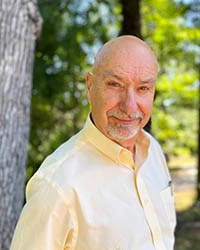
Fredrick P. Huffman, ASLA
Earth Design, Pickens, SC
Nomination in Service by the South Carolina Chapter
Fredrick “Rick” Huffman has been a passionate advocate for and practitioner of conservation and environmental protection throughout his thirty-year career. As founder of Earth Design, Rick has positioned his firm at the forefront of environmental design and landscape architecture, specializing in sustainable practices that integrate native plants, bioengineering, and ecological principles. In 1996, he founded the South Carolina Native Plant Society (SCNPS), a science-based conservation nonprofit dedicated to promoting, preserving, restoring, and educating the public about native plants. His efforts have transformed South Carolina’s landscapes, promoting native plants in green infrastructure, riparian buffers, watershed protection, and soil conservation. He served for nine years on the Natural Areas subcommittee for the South Carolina Department of Natural Resources (SCDNR) Heritage Trust Program, where he helped shape land acquisition and management strategies. In the early 2000s, Rick and Earth Design worked with Upstate Forever, a land trust and conservation advocacy organization, to create the Green School Building Guideline for Greenville County Schools, emphasizing sustainable practices like site orientation to take advantage of natural light, geothermal energy, stormwater wetlands, heat island reductions, and green roofs. His generous service has been recognized. In 2006, Rick received the “South Carolina Governor’s Award for Environmental Awareness” for his outstanding contributions to education, professional practice, conservation, and the promotion of native plants. In 2024, Rick received the Lifetime Achievement for Conservation Award from the Conservation Voters of South Carolina, capping a career dedicated to environmental and social service. And his work with the Environmental Education Association of South Carolina (EEASC) conducting environmental education retreats and workshops, led to his “2003 Environmental Educator of the Year” award.
Elaine Kearney, ASLA
TBG Partners, San Antonio, TX
Nomination in Leadership/Management by the Texas Chapter
Elaine Kearney is a driving force in landscape architecture, influencing its visibility, practice, and trajectory nationally, regionally, and locally with a particular commitment to advancing equity within the profession. Nationally, Elaine leads through her participation on the board of the Landscape Architecture Foundation. As Vice President of Development, she has been instrumental in raising funds to support the foundation’s significant research, leadership, and scholarship programs, including over $2.5M for the establishment of the IGNITE program for minority students. In private practice, Elaine is the sole female member of the Board of Directors of TBG Partners, the largest landscape architecture firm in Texas, where she has been a vocal advocate for implementing leadership opportunities and pay-equity policies to measure and address racial and gender parity. As managing principal of TBG’s San Antonio office since 2017, she has created a thriving practice that champions economically disadvantaged and historically underserved neighborhoods. Elaine also serves in leadership positions on notable nonprofit organizations and boards, serving, for example, as Vice President of the San Antonio Botanical Garden, where she guided the development of a visionary new 10-year master plan that emphasizes conservation of the unique flora of South Texas, and serving as a citizen adviser for the Linear Creekway Parks Advisory Board, which provides input on a network of over 100 miles of trail and growing. In recognition of her contributions, Elaine was awarded the 2022 Texas ASLA Service Award. An exceptional leader, her holistic approach is a model process for transformational development of the public realm through strong advocacy for public funding, political support, and public/private stakeholder collaboration.
Chad Kennedy, ASLA
Westwood Professional Services, Modesto, CA
Nomination in Leadership/Management by the California Sierra Chapter
Chad Kennedy’s career has been dedicated to creating inclusive, innovative, and sustainable environments that enrich communities and advance the profession. His life’s work is rooted in designing inclusive play environments that bring together individuals of all ages, abilities, demographics, and socio-economic backgrounds. His award-winning projects reflect a seamless blend of innovation and inclusivity, inspiring professionals, clients, and communities alike to embrace the ideals of justice, equity, accessibility, and sustainability. As a mentor, volunteer, and advocate, he has consistently elevated public understanding of landscape architecture and its pivotal role in shaping these places. Guided by his unwavering belief in the power of play and recreation, Chad’s work has created a legacy of inclusion, resource conservation, and innovative design. In 2023, Chad’s leadership in education and design culminated in the release of his first nationally published book, “The Nature of Inclusive Play: A Guide for Designers, Educators, and Therapists,” co-authored with occupational therapist Amy Wagenfeld. At his firm, Chad founded and cultivated a thriving landscape architecture department with over 40 professionals. One notable example of his leadership is the creation of the Awesome Spot Socially Inclusive Playground in Modesto, CA. This ground-breaking project brings research-based sensory integration, technologically advanced play features, and socially inclusive, accessible design to California’s Central Valley. Chad’s influence extends globally through his collaboration with Engineering Ministries International and Kids’ Around the World on projects in Uganda. Chad has delivered compelling presentations at TEDx and numerous national conferences, showcasing the impact of thoughtfully designed spaces to foster connection, inclusion, and sustainability.
Christopher Kent, ASLA
PGAdesign, Oakland, CA
Nomination in Service by the Northern California Chapter
For over three decades Chris Kent has advanced the profession of landscape architecture through sustained pro bono service, blending his passion for the natural world with a deep commitment to community engagement, ecological stewardship, and public advocacy. His activities cover many different areas but all with the goal of creating meaningful lasting change in communities. In 1997, Chris co-founded Friends of Five Creeks (F5C) with hydrologists, biologists, and engineers to restore degraded urban waterways in Berkeley, Albany, and El Cerrito. He has played a pivotal role in transforming hardened urban waterways into thriving public assets with his master plans, community outreach, and hands-on work reconnected people with neglected creeks. As a volunteer with the National Park Service-Rivers, Trails, and Conservation Assistance program, he lent his design expertise to help communities across California envision and fund recreational trails. Through his roles on city commissions, Chris has guided forward-thinking policies, setting new standards for integrating sustainability, aesthetics, and community needs into public spaces. Chris’s leadership in the Northern California Chapter spans over two decades where he has held multiple roles within the Chapter and ultimately served two terms as Trustee. As a long-time member of the Government Affairs Committee, Chris’s efforts led to record-breaking engagement in federal legislative advocacy, amplifying the profession’s voice with policymakers and setting a benchmark for other states. And for 15 years, Chris has been a driving force behind a monthly Plein Air painting group of like-minded people whose goal is to use painting as a lens for observation and appreciation of the area’s public landscapes. Whether mentoring students or helping communities directly, Chris’s influence has been deep and wide and long lasting.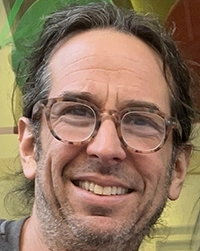
Jeff Klein, ASLA
Deputy Chief of Landscape Architecture, City of Detroit, MI
Nomination in Leadership/Management by the Michigan Chapter
As a landscape architect and long-time resident of Detroit, Jeff Klein has spent his career leading the steady rebuilding of the city’s essential public and private green infrastructure—parks, greenways, play spaces, gardens, and commons. Jeff’s leadership has been pivotal in the creation and restoration of public and private space that integrate ecological and social outcomes by organizing teams and resources to optimize a project’s outcome. After twenty years in private practice leading projects as an independent design-build contractor, Jeff joined the city staff at a time when it was in deep decline, parks were closed, and neighborhoods were still losing residents. Jeff was charged with rebuilding the Park Development Unit responsible for building and maintaining more than 300 city parks. His leadership skills were quickly apparent as at the end of the first season—all the swings were functioning safely for the first time in a long time—setting standards and approaches that have made it one of the most effective city units. Within two years Jeff was tapped to fill the newly created Deputy Chief of Landscape Architecture position to manage nine parks under the new Strategic Neighborhood Fund, each requiring different approaches but all involving community members, stakeholders, and leadership. Jeff also led the wildly successful detailed design, construction, and maintenance/operations establishment for the first phase of the Joe Louis Greenway (JLG), for what will be a 27-mile loop around the city. Jeff’s outstanding vision, leadership, management and organizational skills, and his love for Detroit have been instrumental in the renewal of dozens of essential public landscapes that serve one of the more diverse urban populations in the world.
Sarah Kuehl, ASLA
EinwillerKuehl Landscape Architecture, Oakland, CA
Nomination in Works by the Northern California Chapter
Sarah Kuehl champions physical design solutions that create relationships between people, systems, and the past and future. An innovative thinker and designer, she is a master storyteller who often works beyond the traditional frame of landscape to achieve dynamic public spaces. Her track record for creating public spaces that exceed expectations is a testament to her abilities as a storyteller, designer, and generous leadership. Sarah began her career at PWP Landscape Architecture, where she led the visioning and schematic design for the new Newport Beach City Hall and Park. Once a wide median strip between two vehicular thoroughfares, the site was transformed into 16 acres of civic and ecological parklands to become a beloved community place. At the firm she co-founded in 2011, EinwillerKuehl Landscape Architecture, Sarah’s vision for Gateway Park in Oakland transformed an isolated 15-acre site into a 72-acre linear park with a bike ped path that connects from the residential areas over a highway and above the railroads to the parklands. The park highlights the industry, infrastructure, and ecology that have shaped the history of this spectacular stretch of shoreline. At Township Commons in Oakland, this successful award-winning waterfront park was inspired by the shipping history and natural history of the site. Select building elements are preserved in the design, but are also transformed to inspire and allow for new uses—including the creation of containers of coastal, drought-tolerant plants. Winner of the Rome Prize in 2004, Sarah is an advocate for cities and her practice is informed by restorative actions as well as spatially rich design thinking.
José de Jesús Leal Loera, ASLA
Native Nation Building Studio, MIG, Sacramento, CA
Nomination in Leadership/Management by the Sierra Chapter
José de Jesús Leal Loera embodies the transformative power of landscape architecture, leveraging his lived experiences, professional expertise, and cultural heritage to advance the profession in ways that resonate deeply with Indigenous and non-Indigenous communities alike. His practice, teaching, and volunteering blur together, all feeding into his work to prioritize Indigenous communities and elevate their traditional ecological knowledge. He has long persevered, slowly building partnerships, supporters, and successes one relationship at a time. José is a national presence in the current Indigenous Renaissance, reminding us that landscape architecture is a centuries old practice that is not only shaped by culture but reflects it. A principal and Native Nation Building Studio director at MIG, José’s work focuses on the power of culturally sensitive inclusive community-based design; he has helped build a studio of Indigenous landscape architects, designers, and planners who are working with and for Indigenous people throughout the US. Through his professional practice, speaking and teaching engagements, and his signature sense of humor, he pushes the profession to listen more deeply and respond with collaborative problem solving. José demonstrates that landscape architecture is also about healing connections between individuals, communities, and the nature world. His leadership in advancing Traditional Ecological Knowledge and relational approaches to land and ocean stewardship serves as a model for how the profession can grow and evolve. At ASLA, the Landscape Architecture Foundation, and America Walks, and as a teacher, a speaker, an award-winning designer, José is an indefatigable advocate for bolder visions and advancing the value of landscape architecture generally but Indigenous voices specifically.
Carisa McMullen, ASLA
Landworks Studio, Olathe, KS
Nomination in Service by the Prairie Gateway Chapter
Carisa McMullen has dedicated her career to promoting and improving landscape architecture through leadership in international, national, regional, and local organizations. She created her own practice committed to exposing the public to and teaching others about the profession of landscape architecture. Her ability to recognize underlying challenges or obstacles, bring them to the forefront, and work alongside others to solve issues in creative ways has yielded exceptional accomplishments and her fingerprints can be found in and around her neighborhood and international community dating back decades. Carisa has worked over a decade to revitalize downtown Olathe and demonstrate to varied audiences the skills and expertise of landscape architects. To make the biggest impact, she purchased a key building in Olathe’s downtown. Renovating outdated office to new retail at ground level and with her studio above, Carisa remains a key business and stakeholder while using her influence for downtown revitalization. She participates in steering groups, like Olathe’s Downtown Plan, Olathe Comprehensive Plan, the Chamber of Commerce Convention and Visitor Bureau Board, and the Public Art Committee. Using her firm as a platform, Carisa has created opportunities and strategically accepted volunteer positions that advance her beliefs and policies about the profession, allowing her to authentically lead and manage organizations. Her firm facilitates events with the local Boys & Girls Clubs, sponsors and engages annually in a Women’s Leadership Summit, and offers pro bono design services to organizations in need, including several who provide sustainable food options. Carisa is the 2019 recipient of the Prairie Gateway Chapter’s highest honor, the Alton B. Thomas Award, which recognizes performance that directly promotes or enhances landscape architecture.
Lauren Meier, ASLA
Landscape Preservation Consultant, Concord, MA
Nomination in Knowledge by the Boston Chapter
Lauren Meier has successfully deployed a comprehensive array of methods—scholarship, practice, teaching, technical review and assistance—to increase the knowledge of landscape architectural history, improve historic landscapes, and to share this knowledge with the world. As the first historical landscape architect to serve in the National Park Service, she expanded preservation’s consideration to go beyond buildings and include cultural landscapes and wrote the first standards and guidelines for the preservation of historic landscapes across the United States. The Historic Landscape Initiative was recognized with a Presidential Design Achievement Award from the National Endowment for the Arts, an ASLA Honor Award in Communications, and an NPS Professional Achievement Award. Her list of other contributions is extensive. She led the award-winning restoration of Frederick Law Olmsted’s Fairsted, now a National Park Service site. She developed new methodologies to help National Parks nationwide address contemporary challenges, demonstrated in work that she led in Acadia National Park and Woodlawn Cemetery. Lauren has contributed to dozens of articles, technical reports, and books; she has given nearly 100 lectures to local and national audiences; she wrote and delivered curriculum for third graders; and she continues to be an active contributor to her own towns’ historical commissions. As a volunteer on committees and as an adviser to local, state, and national programs, Lauren has contributed her expertise in preservation practice to help communities understand and care for their cultural resources. And as a mentor to younger practitioners, Lauren has trained many emerging professional landscape architects who have gone on to successful careers, extending her influence on landscape preservation practice nationwide.
Curt Millay, ASLA
American Society of Landscape Architects, Washington, DC
Nomination in Leadership/Management by the Executive Committee of the Council of Fellows
For over a decade, Curt Millay has devoted his exemplary leadership, management, and administrative skills to advance the mission of the American Society of Landscape Architects (ASLA). Through his steadfast service to ASLA, he continues to inspire and energize countless members, students, allied professionals, and peers. His dedication and advocacy for the profession are nothing short of extraordinary, making a lasting impact that is both invaluable and irreplaceable. ASLA has indeed been elevated through his passion, hard work, and unwavering commitment to the organization and its mission. The list of his achievements and leadership contributions is extensive, showcasing a profound influence on ASLA’s policies and operations as well as some of its most critical initiatives. From playing a key role to revitalizing the Center on Landscape Architecture and managing the impactful Chinatown Green Streets project to overseeing grants for numerous ventures that underscore the importance of the profession, his work has touched nearly every aspect of the Society. Always offering support with good humor and a down-to-earth approach, he has gained the trust and respect of everyone with whom he has worked. Curt has been the unwavering backbone of the Society and serving as the most valued and dependable counselor for a dozen ASLA Presidents, and as ASLA’s liaison to allied organizations and numerous volunteers. Curt has provided steadfast guidance to the ASLA Executive Committee, Board of Trustees, and Council of Fellows Executive Committee, as well as to ASLA’s numerous committees, working groups and task forces - always working behind the scenes to ensure every detail is perfectly managed. His advice and guidance are consistently insightful and enthusiastically welcomed by recipients.
Kaia Nesbitt, ASLA
HDR, Denver, CO
Nomination in Leadership/Management by the Colorado Chapter
Kaia Nesbitt is an award-winning landscape architect who harnesses multidisciplinary teams to deliver transformative community, campus, and urban redevelopment projects that advance city resiliency, green infrastructure, and healthy, sustainable communities. She is energized by the challenge of solving multiple problems simultaneously and posits that landscape architects—with their distinctly broad understanding of the public realm, ecology, and infrastructure—are natural leaders and connectors who can fulfill that aspiration. Kaia has built a robust urban design, planning, and landscape architecture practice within a large, global AE firm by coalescing diverse disciplines and design perspectives when working on both public- and private-sector projects. During her 20-year career, which began at EDAW, Kaia’s portfolio of award-winning, human-centered projects demonstrates her ability to successfully lead and deliver creative placemaking at multiple scales. In her many leadership roles at HDR, Kaia has influenced and expanded urban design and landscape architecture teams into a variety of market areas, including health-oriented development, parks as infrastructure, net zero community development, and the intersection of mobility and land use. Kaia’s vision for the profession often finds her reaching “across the aisle” to allied professional organizations, forging relationships, building connections, and sharing knowledge. She is currently the Colorado District Council Chair for the Urban Land Institute—the first landscape architect to ever serve in that role—which gives her a forum for sharing the value that landscape architects bring to development. Whether it’s through the projects she leads, the initiatives she guides, or the networks she has cultivated, her message is consistent and clear: landscape architects are integral to designing a just and equitable world.
Lynne Nischwitz, ASLA
The Kleingers Group, Cincinnati, OH
Nomination in Leadership/Management by the Ohio Chapter
Lynne Nischwitz’s visionary leadership in design is evident in her notably diverse body of award-winning projects that prioritize sustainability while fostering social and environmental connections. Her vast portfolio encompasses many varied scales and project types, including parks, streetscapes, university and corporate campuses, urban plazas, museums, K-12 schools, golf courses, and sport venues—all delivering dynamic impact whether in urban or rural communities. After fostering her design aesthetic at EDAW, she founded a highly successful landscape architecture studio in an engineering firm and, through her creative, transformative leadership, has advanced both fields of landscape architecture and civil engineering. Her perseverance in leading, collaborating, and educating civil engineers about landscape architecture has resulted in innovative solutions that celebrate high design, promote sustainability, and influence regional design standards. Among her transformational high-profile projects are the historic Union Terminal and its plaza restoration, the Cincinnati Black Music Walk of Fame, and her creative master planning that was pivotal in keeping the world-class Cincinnati Open Tennis Tournament in Mason, Ohio. With a passion for creating positive change, she organizes and leads Community Summits in which she convenes regional public administrators, planners, and economic development directors. These design discussions focus on the art, stewardship, sustainability, social equity, and the importance of accessibility to greenspace for all in the urban landscape. Lynne speaks nationally and regionally on design, advocates for legislative affairs, and mentors young professionals. Lynne’s unwavering thirty-year commitment to advancing landscape architecture has left an exceptional legacy and a remarkably diverse array of projects that raise the bar for design in the profession.
Richard Roark, ASLA
OLIN, Philadelphia, PA
Nomination in Works by the Pennsylvania-Delaware Chapter
Richard Roark is a landscape architect who fosters essential connections to create landscapes of lasting relevance. Committed to the power of collaborative intelligence, he shapes civic works that fulfill—rather than merely reflect—the aspirations of the public and his clients. Sustainability and resilience are central to his work, where aesthetic vision intersects with technical innovation to produce iconic landscapes. As a partner at OLIN, Richard approaches each project with curiosity and exemplifies the power of landscape architecture to create enduring public impact, enriching communities across both natural and built systems. At Dilworth Park, Richard helped craft an urban oasis from a fragmented and inaccessible plaza into an iconic destination in the heart of Philadelphia, blending the historic character of City Hall with modern design sensibilities. Key features include an interactive fountain that converts to a winter ice rink, a lawn parterre, and sculptural glass pavilions offering transit access. ResilienCity Park, now Hoboken’s largest park, blends recreation, public space, and nature-based solutions to address flooding in a city committed to climate risk adaptation. Transforming a former industrial site, the park manages nearly two million gallons of stormwater and features amenities such as a raised “Palisades Terrace,” a community event room, a café, a splash pad, an ice rink, walking paths, and a “Play Valley” with treehouses and natural play spaces. In London, Richards created a welcoming yet secure landscape for the US Embassy that reflects democratic ideals of transparency and equality. Inspired by a combination of American landscapes and English park tradition, the design features spiraling paths, prairie-like meadows, and a freshwater pond and transforms the green roof into a lush meadow of native grasses.
Margaret Robinson, ASLA
Asakura Robinson Company, Austin, TX
Nomination in Leadership/Management by the Texas Chapter
For 45 years, Margaret Robinson has transformed landscape architecture by blending science, technology, and design. After earning her BLA, she pursued a master’s studies in computer science, becoming a trailblazer in integrating technological innovation into the field. During the 1980s, Margaret pioneered the adoption of advanced tools such as viewshed analysis, 3D modeling, animation, and digital drawing, enabling landscape architects to manage more complex, multidisciplinary projects. Her ingenuity expanded the technical reach of the profession, setting the stage for more robust, collaborative approaches in urban planning and environmental management. Currently, Margaret is the Founding Principal and Director of Sustainability at Asakura Robinson, where her skillful management of the firm’s multiple offices while shaping its mission to increase the scientific rigor of their design and planning practices are critical to the firm’s 21-year track record of award-winning transdisciplinary work. Her belief in landscape architecture as a vital tool for enhancing public health and social equity led to the creation of her award-winning Healthy Places Toolkit and Healthy Parks Plan, which demonstrate how data-driven planning can improve access to parks and positively affect community health outcomes. Her work tackles critical climate issues, including flooding, drought, and water scarcity. By promoting regenerative design, applied fluvial geomorphology, and green stormwater infrastructure, she has developed cutting-edge solutions that improve water quality, conservation, and habitat restoration. A dedicated advocate for the profession, Margaret has held leadership positions within the Texas Chapter, including serving as President from 2011 to 2012, during which time she initiated the highly successfully first Chapter Strategic Plan. Her many contributions earned her the TX/ASLA Distinguished Member Award in 2023.
Carmine Russo Jr., ASLA
REALM Collaborative, Columbus, OH
Nomination in Service by the Ohio Chapter
Throughout his twenty-year career, Carmine Russo has proven himself to be an exceptional leader through his selfless efforts to advance the image and awareness of the profession in the state of Ohio and across the nation. Beginning as a student committee member of ASLA with LABash, Carmine held key positions within ASLA, including Secretary, Treasurer, Vice President of Communications, President-Elect, President, Past President, and Vice President of Legislative Affairs. Through these elected roles, Carmine demonstrated a deep commitment to advancing ASLA’s mission and championing the profession. As the Ohio Chapter’s VP of Legislative Affairs and Chapter liaison to the state licensure board, Carmine was instrumental in the creation and success of the first ever CLARB/ASLA Joint licensure summit which was held in Columbus. He has worked to maintain licensure in Ohio, improve the cooperation between the licensure board and chapter, improve state and local government agency regulations to include landscape architects, defeat unfair taxes on services, establish lien rights for services, and create and maintain better communications with state legislature and state agencies. Due to Carmine’s exceptional service, the chapter was awarded the 2018 ASLA Chapter of the Year Advocacy Award. In addition, Carmine volunteers with other community and sustainability efforts, notably, the Columbus Neighborhood Design Center and US Green Building Council-Ohio, as well as presenting and sharing his knowledge at many universities and community organizations. He is a co-founding principal of REALM Collaborative, which has quickly become a recognized force in landscape architecture, urban design, and community engagement with institutional and public and private sector clients in the US and abroad.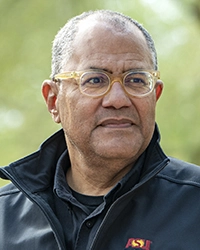
Byron W. Sampson, ASLA
Arizona State University, Tempe, AZ
Nomination in Leadership/Management by the Arizona Chapter
Byron Sampson’s stellar 45-year career has been focused on creating sustainable design solutions that are anchored in a strong sense of place. Over the past 20 years, Byron’s role in working with other design professionals has been to guide, shape, and transform solutions to meet the needs of the community. His long record of collaborative works has resulted in numerous award-winning projects. His impact is especially great at Arizona State University, where his appointment as the first university landscape architect led to a transformation of the five campus landscapes, shifting them from a “resort oasis” aesthetic to one firmly rooted in the principles of the Sonoran Desert. He implemented a new site amenity standard that addresses visual character, material palettes, furnishings, on-site multimodal transit, lighting, and wayfinding and accommodates the university’s commitment to sustainability, innovation, local sourcing of materials, and reducing the institution’s carbon footprint. Byron also developed a public art master plan and created a tree bank initiative. Because of his passionate belief in the need to remove turf from the campuses, he was a founding member of the ASU Sustainable Urban Ecology group and was part of a new multi-departmental design narrative to guide future landscape design solutions. At the onset of the COVID pandemic, Byron was tasked with developing outdoor rooms for on-site classes for alternative learning. After his team identified four sites on the Tempe campus, he led a massive coordination effort to secure and place 250 tables, 1,000 chairs, 300 benches, and four shade structures. Byron was chair of the City of Phoenix Historic Preservation Commission for two consecutive terms and is a board member of the Black Landscape Architect Network.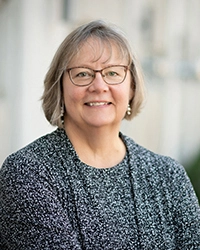
Dolores Silkworth, ASLA
Confluence, Omaha, NE
Nomination in Leadership/Management by the Nebraska/Dakotas Chapter
Dolores Silkworth has shaped the landscape architecture profession through her courage, determination, and advocacy for its essential role in public and private development. Her 40-year career blends policymaking, design leadership, and mentorship, leaving lasting impacts across Omaha, the Great Plains region, and beyond. Early on in her career, beginning at the Omaha Parks and Recreation Department, she convinced them that landscape architects should manage park design, not engineers as had long been the case. As head of Omaha’s Park Planning division, she led a professional team that became recognized for its expertise in sustainable park design. They initiated the first three miles of trails, expanded the network to 67 miles, which has since increased to today’s 120-mile system. Renowned for her design expertise, Dolores has guided interdisciplinary teams that integrate art, ecology, and community needs. Her work on Bayliss Park and South 24th Street exemplifies how she harmonizes design with cultural and historical narratives to create spaces that reflect and celebrate local identity. Both projects earned recognition as Great Places in America. Her designs have earned over 23 ASLA awards. Dolores has been proactive in advancing policy and licensure reform, serving the Great Plains Chapter in multiple leadership roles, chairing the Nebraska State chapter, serving as board member and chair of the Nebraska State Board of Landscape Architects, and playing a pivotal role with CLARB to refine licensure exams. As a private practitioner, she founded the Omaha office of Confluence. Through her guidance, she instills values of people-centered design and environmental stewardship, shaping future leaders whose innovative work continues to elevate communities and uphold the highest standards of the profession.
Lee R. Skabelund, ASLA
Kansas State University, Manhattan, KS
Nominated in Knowledge by the Prairie Gateway Chapter
Lee Skabelund has advanced the practice and impact of landscape architecture through research, teaching, and community service focused on how restored ecosystems and place-based mixed-species green roofs and green infrastructure can make cities more livable for people and larger ecological systems. For more than three decades, he has been committed to learning through integrated planning/design, local advocacy, project implementation, and long-term observation and assessment of created and restored systems, data collection in the field, and hands-on management of green infrastructure systems within local communities. His commitment to improving how green roofs and other green infrastructure are designed, implemented, and managed in the Great Plains and similar climates is exceptional, revealed by his efforts to disseminate ideas through articles, presentations, and workshops at international, national, regional, and local venues. Lee established an unparalleled green roof research hub at Kansas State University featuring six distinct green roof environments devoted to understanding the use of native plants and other adaptive plant species in green roof environments and was internationally recognized with the Research Award of Excellence from Green Roofs for Healthy Cities in 2021. An ASLA member since 1990, Lee has helped develop and refine ASLA’s environmental policy statements and has served as Chair/Co-Chair and long-term adviser (2002-present) for the Ecology and Restoration PPN and Reclamation and Restoration Professional Interest Group. He is widely recognized as a valued educator, dedicated researcher, and persistent advocate for expanding and deepening the influence of landscape architecture. Lee’s work is characterized by thoughtful reflection and meaningful action, working closely with the broad range of individuals who research and shape green roofs, low-impact green infrastructure, and ecosystems, including designers, students, maintenance workers, community members, professionals, and scientists.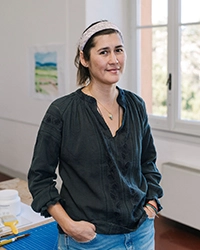
Lauren Todd Stimson, ASLA
STIMSON, Princeton, MA
Nomination in Works by the Boston Chapter
Lauren Stimson is immersed in and inspired by the rural, and this approach is evident throughout her projects. Her work expertly elevates natural systems, embracing wildness and restoring lost ecologies. Applied across landscape typologies, from established (garden, campus, cultural institution, city park) to new (green infrastructure land bridge), the projects that Lauren has led for STIMSON have garnered design awards at every level of recognition and improve both human lives and ecosystems. She is a landscape architect, artist, activist, firm leader, parent—intentionally intertwined roles of living, learning, and practice. This careful choreography of work and home culminated in the creation of Charbrook, a farm and landscape architecture studio physically residing within a teaching landscape. A recipient of the Rome Prize in 2023, Lauren’s projects always begin with research, to uncover buried histories and the intangible layers of a landscape that have shaped it over time. At Northeast Harbor in Mount Desert Island, ME, Lauren faced a severely compromised site and shallow soils. Research prompted her to take the land back to previous moments in its environmental history: high meadows, alpine summit, shrubland, and low-lying bogs. At the University of Massachusetts, Lauren worked with the architect of the new Design Building at her Alma Mater to unite the building and site. With exposed timber frame building construction, regionally inspired gardens, and green infrastructure, the project establishes a new ecological and creative standard for design students and academia, both inside and outdoors. The Hardberger Park and Land Bridge in San Antonio, Texas, was conceived of as cultivated wild, taking cues from surrounding agrarian missions and natural environs. This 330-acre park contains an urban ecology center, outdoor classrooms, picnic areas, overlooks, dog parks, and over eight miles of trails.
Lisa Switkin, ASLA
Field Operations, New York City, NY
Nomination in Works by the New York Chapter
Lisa Switkin has spent over two decades masterfully shaping transformative public spaces that elevate both the field of landscape architecture and the human experience, primarily through her leadership on high-profile, complex urban projects. Recognized for her collaborative leadership style and creative approach to public engagement, her work weaves together community needs, environmental stewardship, and design excellence into spaces that become integral parts of the urban fabric. Her projects transform cities, creating vibrant social anchors that are highly site-specific and deeply rooted in place, history, and community, and inspire similar innovations worldwide. A partner at Field Operations, she also served as president of the Landscape Architecture Foundation and was a Fellow of the American Academy in Rome. Since 2004 Lisa has guided the design of the much-lauded High Line, the now iconic 1.5-mile elevated railway that was reclaimed as a world renown public space on Manhattan’s West Side. The innovative design is characterized by an intimate choreography of movement, with alternating vistas and experiences, and distinctive paving, planting, furnishing, lighting, and social spaces. Her work on the Domino Sugar Factory site in Brooklyn was inspired by extensive community input, resulting in the five-acre Domino Park reconnecting Williamsburg to the East River for the first time in 160 years. Thirty large-scale salvaged relics are incorporated into the design, showcasing the industrial past. Planted with native species, the park acts as a natural buffer and absorbent sponge. In the heart of Santa Monica, the six-acre Tongva Park is one of the first large-scale contemporary urban projects to highlight California native plants, featuring over 300 new trees and thousands of native plants, and was a trailblazer in climate-appropriate water use in public spaces.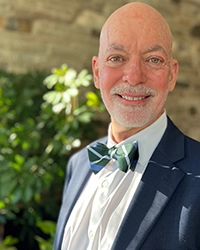
William C. Sullivan, ASLA
University of Illinois Urbana-Champaign, IL
Nomination in Knowledge by the Illinois Chapter
In a career of more than thirty years, William Sullivan’s contributions to landscape architecture have transformed research, education, and practice. His work bridges science, medicine, and design, and has expanded the science on how accessing green infrastructure affects mental health, recovery from mental fatigue and stress, success in school, and social cohesion among neighbors. As the most cited landscape architecture researcher globally—with over 19,500 citations to his published work—William and his collaborators have substantially bolstered the evidence base for design decision-making. By employing pioneering techniques such as thermal imaging, brain monitoring, and artificial intelligence applications—he has developed new ways of measuring and documenting landscape impacts on human health, cognitive function, and community resilience, setting new standards for landscape architecture scholarship. From delivering inspiring lectures to audiences worldwide, to teaching incarcerated students in the University of Illinois’s Education Justice Project, to engaging students at Chicago’s Academy of Math and Science, William has created opportunities in our profession for historically omitted populations, amplifying diverse voices and perspectives. His work has been recognized with numerous prestigious awards and tens of millions of dollars in grants. With his involvement in initiatives like the European Union’s Climate-neutral Cities program and partnerships with African institutions and as the first landscape architect appointed to the National Academy of Medicine’s Roundtable on Environmental Health, he has elevated the profession’s role in public health policy globally. His rigorous research methods combined with practical applications have helped increase demand for professional services while providing practitioners with tools for creating more effective, equitable, and healthy environments.
Patricia Trauth, ASLA
RICK, San Diego, CA
Nomination in Leadership/Management by the San Diego Chapter
Patricia Trauth has built her four-decade-long career around championing the landscape architecture profession, inspiring and supporting new career pathways, pioneering management roles for herself and other women, and excelling at her craft by creating innovative sustainable designs. Her impact at the local, state, and national levels through ASLA and other leadership roles are widely recognized by her peers. As the second woman principal of RICK (formerly Rick Engineering Company) and through her partnership role in multidisciplinary firms, she has elevated landscape architecture to be a critical component in the planning stages of transportation, complete streets, and economic development. Patricia has planned and designed numerous public and private projects in San Diego County, the Los Angeles basin, and the greater Denver area. Her most noteworthy project transformed the San Diego International Airport into a sustainable environment using state-of-the-art materials, processes, and equipment while accounting for climate-related challenges such as sea level rise, drought, soil depletion, and air quality. Patricia’s passion for the profession led her to serve in many ASLA positions: two terms as San Diego Chapter Trustee: San Diego Chapter President, President-elect, and Vice President (two terms); newsletter editor; Arizona Chapter President-elect; and state-level representative on the California Council ASLA. She also chaired the Landscape Architects Technical Committee, which manages licensure in California for over 3,600 professionals, Patricia played a key role in making California legislation more inclusive. At every opportunity, whether working in the private sector, teaching, or volunteering in related organizations, she has actively worked to advance the profession of landscape architecture through raising awareness and facilitating the professional development of students, colleagues, and staff.
Steven Tupu, ASLA
terrain-nyc landscape architecture, New York City, NY
Nomination in Works by the New York Chapter
Steven Tupu’s work reflects his long dedication to environmental justice for underserved communities—from landscape architecture to basic human needs. He sees design as a public service and addresses inequalities suffered by minority communities through his collaborative approach to design. Growing up in a Pacific Island community, an understanding of responsibility beyond family was instilled at an early age and he was shown what can be accomplished as a collective. When Steven launched terrain-nyc in 2004 he prioritized the culture of the office and collaboration where every designer contributes to every project. St. Augustine Terrace in the Bronx was formerly the site of a Catholic church, whose demolition exposed large swaths of old rock formations, which became the organizing heart of the site. The rock face is planted in sporadic, lush pockets of native planting while other natural depressions in the rock’s surface are left to create temporary ponds. At the Bush Terminal Industrial Campus, the nation’s first vertical factory located in Industry City, Brooklyn, Steven led the design of Courtyard 5-6 and transformed the 60’ wide x 600’ long railway loading dock into a series of distinct landscape experiences. The heart of the courtyard is a woodland forest that frames a large flexible-use turf space which has become a vibrant neighborhood destination. Working at Morningside Gardens in New York, Steven’s investigative rigor revealed the need for more than a walkway renovation of the 1957 campus; it led to a comprehensive redesign of the stormwater system, the development of areas for new uses, and improved accessibility across the campus, reflecting the needs of the multigenerational residents.
Tara Mahon Vincenta, ASLA
Artemis Landscape Architects, Sandy Hook, CT
Nomination in Works by the Connecticut Chapter
Tara Vincenta’s work is nationally recognized for its thoughtful, beautifully detailed design and execution that harmonizes environmental sustainability and healing while fostering personal connections for all who encounter her designed spaces. For over 40 years her conviction in the healing power of landscapes has been applied across high-profile community and residential projects, with distinction for her industry-leading contributions to resilient coastal residential design. A true plantswoman, she is sought after for her knowledge and ability to weave resilient and native plants that heal, protect, and enhance shoreline ecosystems. Tara gives generously of her time to share her approach to landscape, including developing guidelines and a prototype environment connecting children on the autism spectrum with nature. Her award-winning project, The Clearing: Sandy Hook Permanent Memorial, is a nature-centric memorial honoring the 26 victims at Sandy Hook Elementary School. The five-acre site focuses on nature and serenity with a young sycamore as its centerpiece, situated in a low granite basin with water, its beveled edge engraved with the names of the deceased. In Fairfield, Connecticut, Hurricane Sandy devastated a residential property, wiping away all vegetation, with the house remaining intact. Tara’s design focused on resiliency, protecting the property from future storms, and visually and physically reconnecting the newly elevated home with various ground-level spaces, while creating new dunes to bear the impact of subsequent storms. A Jamestown, Rhode Island, coastal residence was transformed into a resilient landscape focusing on expansive ocean views while respecting and fortifying the surrounding natural environment. After successfully mitigating the many invasive species, the site was replanted with native plants, improving the health of the wetland environment, providing food and shelter for wildlife, and engagement with nature.
David Watts, ASLA
California Polytechnic State University San Luis Obispo, CA
Nomination in Knowledge by the Southern California Chapter
David Watts’ commitment to child development, social justice, and international engagement has led to extensive research, publications, and practice of his “Active Nature” theory. He has provided significant new knowledge on the interconnected aspects of children’s health, resilience, and physiological growth and endorses the intentional integration of natural elements within play settings that are affordable and equitable. David’s important work on Active Nature has spanned decades and has been published in multiple journals and books and earned him recognition with the Cal Poly University’s President’s Award for Service Learning. David has taken his program and his students to South Africa where he has led design-build initiatives for the development of sustainable and inclusive outdoor spaces that promote social interaction and well-being. Among those projects was the creation of a large community playground under existing utility power lines for the Ratang Bana Orphanage using limited vernacular materials. This project was awarded the 2014 ASLA Award of Excellence to Student Community Service. Closer to home, he has worked with students to conceptualize, create, and construct landscapes that contribute to building in a meaningful and purposeful way. Overall, through David’s service-learning initiative, over 40 students from five separate service-learning internships built more than 12 different projects and examined the significance of intercultural sensitivity and design applicability. As a faculty member, David has been an invaluable mentor, teacher, and adviser for both students and faculty. He goes above and beyond what’s expected in order to help his students understand and advance the practice of landscape architecture.
Stephen Whitehouse, ASLA
Starr Whitehouse Landscape Architects and Planners, New York City, NY
Nomination in Leadership/Management by the New York Chapter
Stephen Whitehouse has dedicated his career to transforming New York City into a greener city. With his forward-thinking ideas and leadership, he has put landscape architecture at the center of resilience and infrastructure strategy. As Chief of Planning for NYC Parks, he was an agency policymaker and increased visibility and types of work for the landscape architecture profession through master plans and infrastructure programs such as the Green Streets program, the Citywide Greenway Plan and its implementation, requirements for waterfront design, and strategic park acquisitions—all contributing to making a greener, more interconnected, and more equitable city. His visionary planning of the waterfront park system expanded opportunities and created new park destinations. As co-founder of Starr Whitehouse Landscape Architects and Planners, Stephen has led studies that put landscape architecture at the center of resilience strategy and created award-winning spaces that model the forward-thinking policies he helped to develop early in his career. He established foundations for wastewater programs, green infrastructure, and post-disaster coastal resilience innovations at all scales. He has designed courtyards, roof gardens and other amenity space for projects creating over 4,000 new affordable apartments. After Hurricane Sandy, Starr Whitehouse was part of the winning team for the Rebuild By Design competition with the Big U project that protects ten continuous miles of low-lying geography in a dense, vibrant, and vulnerable urban area. Throughout his more than forty-year career, Stephen has proven to be a strong leader in the landscape architecture community and beyond. An award-winning leader, he aspires to assist others in finding creative and transformational solutions.
Gena Wirth, ASLA
SCAPE Landscape Architecture, New York City, NY
Nomination in Works by the New York Chapter
Gena Wirth’s longstanding commitment to progressive design practice and exemplary idea-driven work has resulted in visionary projects in the public realm, connecting social equity, climate resilience, and ecosystem health. Her dedication to exposing hidden systems of geology, ecology, and hydrology in the urban fabric has made her a leader in large-scale resilience and climate adaptation projects that advance ecological, nature-based design. As Design Principal at SCAPE and through her nonprofit volunteer work, she leads innovative projects at the forefront of climate resilience, adaptation, and urban ecological design, that advance unique forms of landscape storytelling. Public Sediment for Alameda Creek is a watershed-scale climate adaptation vision that addresses sea-level rise, drowning bayland ecosystems, and sediment scarcity in the South Bay. Public Sediment reconnects migratory fish to their historic spawning grounds; introduces a floodable creek corridor; and builds regional stewardship around sediment resources. Gowanus Lowlands in Brooklyn is an award-winning community-based vision for a new public realm, a restored waterfront edge, and open space network centered around the Gowanus Canal and its watershed—a Superfund site currently being cleaned up. The Gowanus Lowlands addresses multiple issues including urban heat island, lack of tree canopy, sea-level rise, coastal flooding, stormwater management and a combined sewer system, and lack of connectivity to open spaces across the neighborhood. Living Breakwaters introduces a layered approach to risk reduction—enhancing physical, ecological, and social resilience along the South Shore of Staten Island. Developed by a large, multidisciplinary team led by SCAPE and widely considered a model for climate-adaptive nature-based infrastructure, the project consists primarily of 2,400 linear feet of near-shore breakwaters that reduce erosion and provide a range of habitat spaces for oysters, fin fish, and other marine species.
Jon Wreschinsky, ASLA
Cuyamaca College, San Diego, CA
Nomination in Service by the San Diego Chapter
Jon Wreschinsky has generously shared his dedication, leadership, and expertise to advance the profession over four decades. He has led efforts at the local, state, and national levels to promote awareness and understanding of the essential role landscape architecture plays in addressing urgent issues around climate change, landscape resiliency, and sustainability, while also having a significant impact on protecting professional licensure. Within ASLA he has served in many capacities: As President of the California Council of ASLA, he successfully led lobbying efforts to counteract the governor’s initiative to eliminate various boards and commissions that ensure the competent oversight of landscape architecture practice in the state. He developed, organized, and oversaw the establishment of the first ASLA Student Affiliate Chapter in the US, which became a model for similar programs nationwide. Jon was instrumental in establishing the San Diego Chapter’s Stewardship Committee, one of the first formed within ASLA, whose aim is to educate practitioners and local/regional decision-makers on sustainable development and other conservation practices. He serves as the Chapter Trustee and was president of the Northern California chapter. Jon was honored with a 2016 ASLA Advocacy Leadership Award for his contributions to advocacy materials highlighting the knowledge, skills, and abilities of landscape architects and how they contribute to critical planning and design issues affecting California. He continues to advocate for the profession as a member and Past-Chair of the California Landscape Architects Technical Committee. He serves on the CLARB Experience Requirements Working Group. As the profession continues to evolve, Jon’s contributions will remain a cornerstone of its ongoing efforts to improve the environment through climate-appropriate and equitable design and to share that knowledge with future generations of landscape architects.
Tao Zhang, ASLA
Sasaki, Boston, MA
Nomination in Works by the Boston Chapter
Tao Zhang deftly weaves his education in ecology and landscape architecture to integrate scientific rigor and creative design in approaching complex environmental and urban challenges. Since beginning his professional career at Sasaki in 2008, he has played a pivotal role in the firm’s globally significant ecologically focused planning and design, especially in China. Leading large multidisciplinary teams, he advocates for a bold vision backed by sound ecological principles with demonstrable attention to craft and technical rigor across scales. His work has been recognized with over fifty international, national, and regional design awards. Tao is also committed to mentorship and advancing the field of landscape architecture through teaching, writing, advocacy, and volunteer efforts. Among his many award-winning projects is the 215-acre master plan for Xinyang University’s new campus in China which is designed as a living classroom set within rolling terrain, integrating outdoor learning environments and recreational spaces with stormwater management and wildlife habitats. The design features a tapestry of spaces each with its own aesthetic, ecological purpose, and management strategy. In Shanghai’s historic Jiading District, the 173-acre Central Park has been transformed into one of the area’s most beloved urban green spaces. Stitching together fragmented green patches and neighborhoods, the park is an ecological triumph with over 30 acres of woodlands alongside 14 acres of wetlands, and four acres of meadows, reviving native wildlife absent for decades. In Wuhan, the plan for the Yangtze Riverfront re-envisions the eight-mile-long waterfront which has experienced increasingly frequent devastating floods. The new approach embraces floodwaters, reintroducing frequent and controlled flooding to help replenish nutrient-rich sediment and nurture hundreds of acres of mudflats in the heart of a major metropolitan area. -
ASLA Elevates 40 Members to the Council of Fellows
The American Society of Landscape Architects (ASLA) has elevated 40 members as ASLA Fellows for their exceptional contributions to the landscape architecture profession and society at large. Election to the ASLA Council of Fellows is among the highest honors the ASLA bestows on members and is based on their works, leadership/management, knowledge, and service.
ASLA Fellows were elevated during a special investiture ceremony at the 2024 Conference on Landscape Architecture.
2024 Fellows-Elect

Patricia Algara, ASLA
BASE Landscape Architecture, San Francisco
Nomination in Leadership/Management by the Northern California Chapter
Patricia Algara has been a force for positive change in landscape architecture practice and recognized nationally and internationally for her leadership and management of a firm dedicated to coalition building and community-driven design. Her mission-driven firm works with earth-based and spiritual practices that incorporate ritual and ceremony into their approach, projects, and studio practice. Patricia’s commitment to training emerging professionals for practice—especially young professionals of color—has been recognized through various awards and honors she has received, the committees she has served, and the accomplishments of her students. She organized the first gathering of Latin American landscape architects during the 2022 ASLA Conference, which has turned into an annual tradition with growing participation. Her deep study and love of bees led her to form With Honey in the Heart, a nonprofit that creates healthy habitats for, and educates people about, pollinators. Patricia has created many demonstration gardens, most notably the “Pollinator Boulevard,” created in 2015 in the Mission District of San Francisco, where working with the city, she transformed an underused median into a thriving pollinator habitat. She is a passionate advocate for quality and equity in the public realm. All of Patricia’s efforts strive to empower People of Color to be part of the design of healthy, accessible, and sustainable landscapes in which nature is the main client.
Matthew Arnn, ASLA
United States Forest Service, Washington, DC
Nomination in Leadership/Management by the Potomac Chapter
As the US Forest Service’s Chief Landscape Architect, Matthew Arnn is an inspiring thought leader to the more than 120 landscape architects practicing on over 190 million acres of national forests and grasslands. He guides his Forest Service team to create meaningful experiences for visitors to the agency’s 36 million acres of wilderness, 370,000 heritage sites,122 wild and scenic rivers, and 156,000 miles of trails. His work highlights the wealth of remarkable ecological places and instills positive emotional and physical connections in hopes of fostering a long-lasting stewardship ethic. Matt has worked across the continent and abroad, designing and planning visitor centers, trails, campgrounds, interpretation experiences, scenic overlooks, night sky viewing areas, and other recreation infrastructure. His efforts with the Living Memorials Project, after September 11th, led to the creation of 50 new parks, memorials, and open spaces that helped communities heal and regain hope. Other significant projects such as the Open Accessible Space Information System (OASIS), the Carhartt Centennial Corps fellows, and the Urban Resources Partnership benefited greatly from his thoughtful leadership. Matt is a sought-after adviser on public lands design and planning issues, having worked closely with the National Forest Foundation, Trust for Public Land, Landscape Architecture Foundation, and the Mayors’ Institute on City Design. In 2022, Matt was awarded ASLA’s LaGasse Medal, which recognized his practice of a more holistic definition of land conservation and public engagement.
Claire Bedat, ASLA
US Department of State Bureau of Overseas Buildings Operations, Washington, DC
Nomination in Leadership/Management by the Potomac Chapter
Claire Bedat’s worldwide design leadership and her advocacy for the profession of landscape architecture are exercising broad influence on allied professionals and on the built environment globally. As the first landscape architect to serve as the Design Manager for the US Department of State Bureau of Overseas Buildings Operations, Claire is shaping the profession’s role and driving eco-diplomacy development goals for US assets abroad through climate leadership and environmental conservation. With a $75 billion portfolio replacement value spanning across 25,000 assets, and 5,000 hectares of sites at 290 overseas locations, she manages multidisciplinary teams of highly experienced professionals in acquisition, planning, design, and engineering standards critical to diplomatic missions worldwide. In 2022, Claire launched a Global Arboretum: Quantifying Eco-Diplomacy through Trees initiative to characterize the value of trees as capital assets, recognizing their mitigating effects and adaptive capacity to climate change. During her previous 20 years in private practice, Clair rose quickly through the ranks to become a leader and while at AECOM, directed two Smithsonian Institution national museum projects for new universally accessible entry and public realms. She served as the president of the Potomac Chapter of ASLA and worked to protect the landscape architecture licensure rights in Virginia. Claire’s remarkable decades-long career has been marked by engagement, advocacy, cultural sensitivity, global perspective, and leadership. Her unique qualities as a designer, communicator, and collaborator directly influence how allied professions and decision-makers understand what excellence in design and planning is.
Catherine Berris, ASLA
Partner Emeritus, Urban Systems, Vancouver, BC
Nomination in Leadership/Management by ASLA Council of Fellows
In a career spanning more than four decades, Catherine Berris has been at the forefront of her disciplines, building relationships, and innovating how on GIS applications and bringing nature into urban areas. Her project experience spans community and site planning; park, recreation, and trail planning and design; nature-based design solutions; urban forest strategies; coastal planning; visual assessment; and cemetery planning and design. Through this unique blend of practice areas, she helps her clients, who are mostly local governments and Indigenous communities, improve the health of their environments and their people. As an early adopter of community engagement, she continues to implement new tools and approaches for connecting with the public and stakeholders. Protecting and providing experiences of nature in the city are key passions for Catherine; her nature-based approaches to stormwater management as a response to flooding caused by urban development were cutting edge in the 1980s. She is a consummate professional, guiding her own firm for decades and now supporting others at the multidisciplinary firm Urban Systems. Catherine is now president of the Canadian Society of Landscape Architects where her major initiative to date is serving as the board champion for the Committee on Climate Action and Biodiversity. Throughout her long career in practice, academia, and volunteer activities, she has been highly regarded for her unwavering commitment to ethical principles, social and environmental responsibility, and exemplary built environments.
Anita Berrizbeitia, ASLA
Harvard University, Cambridge, MA
Nomination in Knowledge by the Boston Chapter
For almost three decades, Anita Berrizbeitia has been a long-time leader in academia and the profession through her copious and rigorous research, graduate-level teaching, extensive publishing, and persistent advocacy for landscape architecture. Her childhood in Caracas, Venezuela, informed her approach to offering cross-cultural and interdisciplinary frameworks to understanding landscape architecture. Much of her research explores nineteenth- and twentieth-century public realm landscapes, with interests in material culture, urban political ecology, and the productive functions of landscapes in processes of urbanization and climate adaptation from two contexts: North American/European and Latin American. A prolific scholar, Anita’s many books, chapters, and essays are standard texts within landscape architecture and architecture curricula. Her research and publications have earned her wide recognition and awards nationally and internationally, including the Prince Charitable Trusts Rome Prize from the American Academy in Rome in 2006. As chair of the Department of Landscape Architecture at Harvard’s Graduate School of Design, she worked to broaden the curriculum to better reflect current environmental and societal challenges, including the addition of a required course in climate change (“Climate by Design”), and to diversify the faculty and student body. Through her bold intellectual leadership, Anita innovated a range of new design studios that produced novel synergies across multiple design disciplines and were in high demand. Her creativity, compassion, and commitment as a scholar and landscape visionary have left an indelible mark on the academy and the profession.
Molly Bourne, ASLA
MNLA, New York City
Nomination in Works by the New York Chapter
Known for her thoughtful integration of community and ecology, Molly Bourne excels in crafting harmonious spaces that blend beauty, functionality, and environmental sensitivity while advancing the practice of landscape architecture. In 32 years of practice, she has championed the design of vibrant, inclusive, and sustainable public open spaces that enrich communities and nurture human connections, as well as integrate resiliency and climate adaptation. As principal at MNLA, Molly’s visionary approach to design demonstrates her deep technical expertise and ability to understand complex projects and work with clients, public agencies, and partner disciplines. She has successfully intertwined infrastructure, landscape, and urban fabric within complex projects, such as the Waterline Square brownfield transformation. Previously unused space, this award-winning 2.8-acre park showcases a robust design narrative reflective of the historic water flows that once existed in Manhattan. Her dedication to the South Bronx Greenway Master Plan has led to the nationally recognized Hunts Point Landing and Randall’s Island Connector, and her vision balanced community amenities, new bicycle routes, improved lighting, and enhanced quality of life. Molly’s contributions to the East Side Coastal Resiliency (ESCR) project radically reimagined the interaction between humans and nature by weaving flood protection through, above, and below open space. The flood protection ties into the New York City grid, and offers separation from adjacent highways, tucks under and supports recreation courts and ballfields, and fortifies esplanades. Molly is also committed to teaching aspiring landscape architects and integrating landscape architecture into mentorship programs.
Jules Bruck, ASLA
University of Florida, Gainesville
Nomination in Leadership/Management by the Florida Chapter
A distinguished landscape architect, educator, and leader, Jules Bruck has had a long career initiating and guiding the development of innovative programs, enhancing the profession’s recognition globally through her influential leadership. Her research, focused on multidisciplinary, innovative approaches to addressing climate impacts in vulnerable communities, has secured millions of dollars for coastal community research and improvements. During her 16 years at the University of Delaware, her accomplishments were many. There she initiated the establishment of their first fully accredited landscape architecture program, where she served as founding director. She cofounded the innovative and nationally acclaimed interdisciplinary Coastal Resilience Design Studio to address the needs of vulnerable communities in Delaware, garnering national and local awards from ASLA, APA, and the Coastal Estuarine Research Federation and assisted in securing over ten million dollars in local community improvements. Jules spearheaded the Living Lab multidisciplinary research program to aid underserved Delaware communities in planning, implementing, and evaluating active transportation projects. In 2014, she cofounded the ASLA Education and Practice Professional Practice Network to serve the needs of academics engaged in professional practice. Jules also leads research projects funded by the US Department of Defense and Army Corps of Engineers Engineering with Nature Program. Now leading the landscape architecture program at the University of Florida, she continues to make her mark with her personal leadership style, administrative ability, and commitment to community engagement as she plans for expanded programs and new future directions.
Karen Cesare, ASLA
Novak Environmental, Tucson
Nomination in Service by the Arizona Chapter
Karen Cesare has devoted her career to service, elevating the profession most notably in the areas of water conservation, sustainability, civic engagement, and the recognition of landscape architecture as a STEM discipline. She is an elected member of the Central Arizona Water Conservation District, which serves three counties and 80% of the state population, where she helps set policy around the critical issue of water in the west. An early adopter and promoter of a water conservation ethic, as a volunteer, she designed and helped build the first Xeriscape Demonstration Garden in Tucson in the late 1980s. Her interest in water issues led to her appointment to Tucson’s Citizen’s Water Advisory Committee, which she chaired for several years. Karen has been heavily involved with career discovery activities, volunteering for over ten years for Arizona Science Olympiad, which helped lead to landscape architecture being recognized as a STEM discipline regionally, aligning with ASLA’s position. In 2007 then Governor Napolitano appointed Karen to the multidisciplinary State Board of Technical Registration, where she served for three years (two as chair) and represented Arizona on CLARB. During Karen’s term as chapter president, she led the successful fight to save licensure in Arizona. Her many contributions garnered Karen “Landscape Architect of the Year” in 2018 by the Arizona Chapter. She was also recognized with a Women of Influence “Lifetime Achievement” award in 2019 by Tucson Local Media.
Lisa Cowan, ASLA
StudioVerde, Cumberland, ME
Nomination in Leadership/Management by the Boston Chapter
Ecological accountability is now seen as conventional in landscape architecture in part because of Lisa Cowan’s pioneering work over the last 40 years. One of the first landscape architects in the nation to work primarily alongside ecological scientists, Lisa spearheaded an innovative integrated team approach to ecological and wetland restoration in the early 1990s that changed the US Army Corps of Engineers’ standards and led to the adoption of methodologies that transformed the design, construction and long-term performance monitoring of wetland and upland habitat establishment and restoration. As an early adopter and expert in Sustainable SITES certification, she continued to lead an emerging market through outreach, education, and leadership across a spectrum of professional organizations and providing the impetus for municipal and regional SITES policy adoptions. Design teams from the Atlanta BeltLine to the General Services Administration to the Maine Department of Transportation have relied on Lisa’s unparalleled expertise to guide projects toward environmental goals. Other national professional organizations, such as the Ecological Landscape Alliance and the National Association of Wetland Managers, have tapped Lisa’s ability to find synergies and opportunities to improve ecological outcomes. Since the early 1990s, Lisa has been writing articles and white papers, leading workshops and speaking at conferences—locally, regionally, nationally—demonstrating her commitment to sharing her knowledge. And while thinking globally she’s acted locally, serving as the Maine Section co-chair of the ASLA Boston Chapter for five years.
Lynn M. Crump, ASLA
Scenic Virginia, Richmond, VA
Nomination in Leadership/Management by the Virginia Chapter
For over 40 years, Lynn Crump has balanced the complex relationships between natural resources and development pressure by bringing a uniquely broad and deep perspective to collaborative processes and to leading multidisciplinary teams. A visionary thinker, Lynn is one of the most highly respected experts in the analysis and management of scenic landscapes. Under her guidance, she made the Virginia Scenic Rivers program one of the strongest in the county, expanding by 42 percent, with over 600 miles of rivers designated. Sharing knowledge has always been important to her, as can be seen in her work at Virginia Commonwealth University and Virginia Tech. At the VCU Center for Environmental Studies, she developed a successful model for students to participate in real-world opportunities to incorporate scenic river policy with advancing the state’s work and mission. As three-term president of the Virginia Chapter of the ASLA, she turned around a precarious financial situation and raised participation after years of decline. When at the Virginia Department of Conservation and Recreation, Lynn helped revitalize the antiquated state park master planning process while working on 24 park plans—about 50 percent of the entire system, instigating extensive new site plan protocols, including viewshed mapping. An accomplished presenter at national symposiums and a prolific research and writer, Lynn has had a significant impact on how we analyze and manage scenic resources, master plan our state parks, and understand recreation tendencies to inform planning and management strategies.
Chris Della Vedova, ASLA
Confluence, Des Moines, IA
Nomination in Leadership/Management by the Iowa Chapter
Chris Della Vedova’s unparalleled and innovative leadership and management abilities have advanced landscape architecture in the Midwest, in his firm, in the universities, and in the communities he serves. As CEO and cofounder of Confluence, he guided the firm’s expansion across eight states while significantly elevating the practice of landscape architecture in the region, driven by design principles to create authentic spaces that are welcoming for all constituents, foster social interaction, and are sustainable. He has been pivotal in shaping policy in his multiple influential roles, ranging from vice president of finance for ASLA to cofounder of the Central States ASLA initiative to president of Iowa ASLA, where he was a driving force behind the transition from a basic landscape architect registration requirement to a comprehensive practice act. He strives to always increase public awareness and especially civic leaders about the important role of the profession through his involvement in initiatives like Operation Downtown and the Iowa Architectural Foundation’s Community Design Program. Chris’s dedication to mentorship has set a high standard for nurturing the profession’s current and future talent. He founded the Confluence Landscape Architecture Studio Prize at Iowa State University, which encourages student enrollment and promotes excellence among the students. Additionally, his participation on the Landscape Architecture Professional Advisory Council at Iowa State University uses his management skills to help improve student education and align academic programs with industry requirements.
Scott Victor Emmelkamp, ASLA
Planning Design Studio, St. Louis
Nomination in Leadership/Management by the St. Louis Chapter
Scott Emmelkamp is a passionate leader whose dedication to landscape architecture has manifested itself in community involvement, service to ASLA, enrichment of landscape architecture education, and a stellar professional career. In his community of Manchester, MO, Scott was the first and only landscape architect to serve on the city planning and zoning commission, where he aided in creating a comprehensive plan for the city that successfully guided much-needed growth of commercial development and tax revenue. For over 15 years, Scott has volunteered for the nonprofit Open Space STL, starting with cleanups along the Meramec River and leading to joining the board of directors, chairing committees, serving on the executive committee, and eventually becoming president. His acumen helped secure a significant amount of funding that was used to conserve over 250 acres of environmentally significant land in the St. Louis region. His generous involvement with ASLA—two-time chapter president, two terms as trustee, four board chairmanships, and ten national ASLA committees—is just one way he gives back to the profession. That dedication is also reflected in his advisory roles for the landscape architecture programs at the University of Arkansas (his alma mater) and Washington University, where his guidance resulted in both programs being elevated in the community and the profession. Professionally, his reputation resulted in winning and leading the largest planning project his firm has been awarded—a comprehensive St. Louis County parks system master plan spanning 12,400 acres and 74 parks.
Grace E. Fielder, ASLA
G. E. Fielder & Associates, Laurel, MD
Nomination in Service by the Maryland Chapter
For over 50 years, Grace Fielder has worked to advance the practice, visibility, and power of landscape architecture through government advocacy, educational advancement, and community engagement. Raised on a dairy farm in rural Maryland, she developed a deep understanding of stewardship of the land and of caring for her community. Grace wrote “commitment to service” into her job description from the very start of her career, and her meritorious career and outstanding service to the profession are testament to that resolve. Her roles in government advocacy include serving as the vice chair of the Prince George’s County Development Quality Task Force, where she produced the “Landscape Manual.” She was influential in the development of the Montgomery County, Maryland, Recreational Guidelines. At the University of Maryland she was instrumental in establishing the Bachelor of Landscape Architecture degree, while she served on the College of Agriculture Dean’s Advisory Board. Two Maryland governors appointed her to the Maryland State Board of Examiners for three consecutive three-year terms. Grace became the 15th woman to become a licensed landscape architect in Maryland and took it upon herself to recruit women across the land development industry from every age, race, creed, and color to hear their insights, shared experiences, and future needs. That effort grew into Women In Land Development (W.I.L.D.) which provided educational and networking opportunities to help women advance in their professions. Grace consistently engages professionals, students, and the public to help them address issues of equity, the environment, and well-being.
David Fletcher, ASLA
Fletcher Studio, San Francisco
Nomination in Works by the Northern California Chapter
David Fletcher, founding principal of Fletcher Studio, has been pushing the boundaries of the profession through innovation and imagination, helping communities find meaning in their built landscapes. His multidimensional background in sculpture, public art, and video gaming, along with his studies in field biology and landscape architecture, provides a unique foundation for the design of conceptual and process-based landscape solutions. His contributions to the design field include decades of teaching, academic research, writing, and giving in special ways, such as Fletcher Studio’s “Hope + Space” program which dedicates 4 percent of the year’s income to help communities and neighbors realize a land use dream. David redesigned San Francisco’s oldest park, South Park, to build on its Civil War-era history while solving the site’s infrastructure issues and improving accessibility. Using a single, meandering pathway to link public plazas, informal stages, bioretention gardens, gently sloping meadows, custom amenities, and custom play structures with the surrounding neighborhood, the award-winning design ties together disparate functions and offers a diversity of uses. For the city of Healdsburg, Fletcher Studio developed the master plan for parks, open spaces, and natural resources with an emphasis on alternative transportation analysis, connectivity analysis, river access, and the design of two large parks. Fletcher studio was charged with leading the design of America’s first spreading forest cemetery at Better Place Forests in Point Arena, CA. They worked with a team of forest ecologists, artists, designers, and other consultants to master-plan the property and design structures, spaces, trail systems, wayfinding and signage, the burial marker, and habitat restoration.
Pamela Galera, ASLA
City of Riverside, CA
Nomination in Leadership/Management by the Southern California Chapter
Pamela Galera has devoted her career to bringing nature to underserved communities. She has successfully led the planning, design, construction, and maintenance of urban parks, nature trails, and community resource centers in disadvantaged communities by advocating for nature-based solutions and forging partnerships among agencies, residents, and tribal councils. Through her leadership and advocacy, she transformed the Santiago Creek corridor in the City of Orange by creating an eight-mile trail and bike path, leading a creek restoration project, and completing several new and renovated parks. Pamela serves as president of the Santiago Creek Greenway Alliance. In Anaheim, she led the creation of the 26-acre Anaheim Coves nature park, providing 2.5 miles of accessible trails, fitness zones, native riparian habitat, and a nature play area for nearby disadvantaged communities. She then focused on reconnecting the community of Riverside to the Santa Ana River and advocated for the OC River Walk, which will create a vibrant environmentally sustainable public realm and reshape Orange County. As Director of Parks, Recreation, and Community Services, Pamela leads a team of 300 and directs the stewardship of 3,000 acres of park and open space, and 14 community centers. Pamela is always pursuing meaningful opportunities for emerging professionals. As chapter president, she started a mentoring program, with partnerships with four university programs, partnering two dozen students with established landscape architects annually. That successful program led her to launch a networking group for female managers to mentor emerging women professionals.
Cory Gallo, ASLA
Mississippi State University, Starkville, MS
Nomination in Knowledge by the Mississippi Chapter
Cory Gallo is an innovative practitioner, scholar, and administrator who is a national leader in “learning through building.” With numerous awards, influential publications, and student-built demonstration sites across Mississippi, Cory’s “show don’t tell” form of teaching and learning extends his impact beyond the classroom and provides tangible benefits to his students, colleagues, and communities. Building on the tradition of design/build studios in landscape architecture programs, Cory created a unique stand-alone course—the only one of its kind in the United States—where each student, using sustainable materials and methods, has ownership and responsibility for a portion of the in-situ projects. It has garnered much attention and many awards, including five from ASLA, three from ACSA, two from EPA, and over 20 regional design awards. The Smithsonian at the Cooper-Hewitt Design Museum added the documentation of a studio project to its permanent collection. Cory has also received prestigious teaching awards from MSU and CELA. His effective leadership led to him being the first landscape architect to serve as an upper administrator at MSU, where he is part of a diverse administrative team responsible for nine academic units, four off-campus research and extension centers, 12 research stations/units located throughout the state, and over 3,000 graduate and undergraduate students. He continues to advocate for sustainable agriculture, healthy communities, and a robust landscape architecture program..webp?language=en-US "AanGarrett-Coleman(1)")
Aan Garrett-Coleman, ASLA
Coleman & Associates, Austin
Nomination in Service by the Texas Chapter
For 43 years Aan Garrett-Coleman has demonstrated her belief that the most effective way to educate the public and allied professionals about the power of landscape architecture is to give back to your community in meaningful problem-solving ways. Since starting her firm in 1987 in her hometown of Austin, Aan has participated as a stakeholder in environmental and growth initiatives, often meeting with city officials and staff to explain the impact policies would have on the preservation of natural resources and Austin’s future as a community committed to environmental stewardship. Her advocacy has contributed to the creation of codes and ordinances that protect natural resources through stormwater management, biofiltration, tree preservation, and acquisition and conservation of undeveloped land for the protection of flora, fauna, and critical watersheds. She also provided pro bono services to work with the city to create guidelines for walkable developments, which led to a new development code. Aan was a founding board member and chair of the Real Estate Council of Austin as a vehicle for reinforcing the role of landscape architects in creating sustainable communities and protecting environmental systems. One of Aan’s crowning achievements has been her ongoing pro bono services that led to the radical transformation of six acres of urban parkland into the award-winning UMLAUF Sculpture Garden, creating a seamless dialogue between art and nature. Aan has been recognized by the Texas Chapter with the Distinguished Member Award and the Community Service Award commending her significant volunteerism..webp?language=en-US "AdriaanGeuze(1)")
Adriann Geuze, ASLA
West 8, Rotterdam
Nomination in Works by the ASLA Council of Fellows
The breadth and diversity of Adriaan Geuze’s award-winning work spans nearly four decades and many cultures (over 60 countries) and has been transformative for urban communities worldwide. He has helped shift the idea of infrastructure from simplistic support for mechanical function and logistics to being a medium for people to live a richer, higher quality of life within the public domain. He was recently awarded the Sir Geoffrey Jellicoe Award by the International Federation of Landscape Architects for his lifetime achievements and meaningful impact. Under his direction, West 8’s projects and masterplans are recognized for their commitment to pragmatism, reaching the widest possible audience by maximizing spatial, budgetary, and material constraints. At Governor’s Island in New York City, they turned a former island military base into an award-winning 172-acre public park. Its radical masterplan includes the creation of four hills that lift the landscape 70 feet above sea level and offer visitors a range of experiences with the backdrop of the Statue of Liberty. The award-winning Houston Botanic Garden project included designing the first phase of the garden and creating a phased experimental and resilient master plan. The former golf course site required a design that balanced elevating the new gardens and permanent structures out of the 100-year floodplain and managing, protecting, and enhancing the experience of the bayou. At SoundScape Park in the heart of Miami Beach he transformed an existing parking lot into a three-acre urban green oasis that knits together core cultural institutions and supports a host of programmatic demands and a diverse audience. Kim Hartley Hawkins, ASLA
Hawkins Partners, Nashville
Nomination in Leadership/Management by the Tennessee Chapter
Kim Hawkins has helped redefine the role of landscape architecture with her design acumen, her visionary approach, and her exceptional leadership and management skills. Her influence extends far beyond the confines of the successful firm she cofounded into the very fabric of the cities where she works. Over a 40-year career, Kim has established herself as a trusted leader in the Nashville area and beyond. She has been a major voice in the Nashville design scene, helping municipal and business leaders better understand what landscape architects are capable of. As the founding director of the Nashville Civic Design Center, a nonprofit advocating thoughtful civic design and meaningful community change, Kim established herself and landscape architecture as a significant voice in urban design and education. She and the team at HPI played a pivotal role in saving Nashville’s historic John Seigenthaler Pedestrian Bridge from demolition and transforming it into cherished public realm and an integral part of the city’s greenway network. Well-respected by her staff, other landscape architects, allied professionals, and many municipal and business leaders, Kim has acted as an informal adviser to seven Nashville mayoral administrations since 1991, significantly shaping city policies and projects. Kim’s active involvement with the Urban Land Institute led to her cochairing a major ULI meeting in Nashville and showcasing the city to a global audience of real estate professionals. Her deep-seated commitment to community betterment has fostered a dynamic and empathetic workplace culture.
Joseph Imamura, ASLA
Architect of the Capitol, Washington, DC
Nomination in Leadership/Management by the Potomac Chapter
Joe Imamura is a skilled practitioner, a mentor, an educator, a volunteer, and a leader, spanning multiple levels of government—city, state, federal, and tribal nation—and disciplines. A registered landscape architect, as well as an architect, certified planner, and trained engineer, he holds the unique honor of being the only landscape architect and the first minority to serve as the Special Delegate of the Architect of the Capitol. During his16 plus years in the federal government, he has quickly earned a series of promotions that led to his leadership role at the Architect of the Capitol, and before then, the General Services Administration and the Department of Veterans Affairs where he worked with Native American tribes and state officials to design and build cemeteries for disadvantaged and underserved veterans in rural areas of the country. Joe’s current role designates him as a commissioner for the National Capital Memorial Advisory Commission established by Congress, an agency representative to help guide policy on the U.S. Advisory Council on Historic Preservation, and a zoning commissioner on the Board of Zoning Adjustment for the District of Columbia. Joe is an award-winning educator, having spent more than a decade as an instructor and researcher at two universities. He also volunteers his time and leadership as a county commissioner appointed by the Fairfax (VA) County Board of Supervisors. Joe’s leadership and broad influence demonstrate a lifelong campaign to build public trust and increase recognition for the critical role landscape architects play in shaping federal policies, programs, and key project decisions at the highest level of government.
Jerany L. Jackson, ASLA
Great River Engineering, Springfield, MO
Nomination in Service by the St. Louis Chapter
For more than three decades, Jerany Jackson has demonstrated an unwavering commitment to landscape architecture by giving generously for the benefit of the profession and the public. In both her words and actions, Jerany demonstrates landscape architects’ importance as design professionals and problem solvers. As a practitioner, she has worked in multidisciplinary architecture and engineering firms collaborating daily with allied professionals. Jerany was a Governor-appointed member to the Missouri Board for Architects, Professional Engineers, Professional Land Surveyors and Professional Landscape Architects, where for ten years she actively fostered an environment of excellence and professionalism within the landscape architecture division and the greater 15-member board and helped shape the regulatory framework and ethical standards that guide Missouri practitioners. Jerany has served and continues to serve CLARB for 20-plus years in many leadership positions including as president. She also worked to transition the Landscape Architect Registration Exam to be fully computerized, to initiate a partnership with ASLA to defend threats against the deregulation of licensed practice, and to move the organization’s bylaws from constituency-based to competency-based leadership selection. Jerany continues to teach design as an adjunct professor at both the university and community college level. Volunteering with many community organizations, she has contributed thousands of hours of pro bono work, always remaining flexible, resilient, and true to herself as a landscape architect, allowing her to practice her craft in a genuine and authentic way. Joni L. Janecki, ASLA
Joni L. Janecki & Associates, Santa Cruz, CA
Nomination in Works by the Northern California Chapter
Joni Janecki’s four decades of nationally recognized work demonstrate her commitment to integrating cultural, historical, and ecological strands into meaningful, timeless designs that connect people and nature. Whether in urban mixed-use developments in San Jose, habitat restoration projects in rural Watsonville, or residences in the wildland/urban interface, Joni continues to support a cascade of connected species from microbes to mountain lions. Over the course of her career, her intention has been to develop timeless landscapes that are evocative, ecological, and inspiring, spaces that strengthen connections between people and landscapes. Joni has many long-term relationships with clients and professionals, most notably the University of California, Santa Cruz, for whom she has completed more than 70 projects over the last 30 years. From award-winning projects such as Engineering 2 Building to seismic and infrastructure improvements, she has created settings of quiet beauty on the 2,000-acre campus of complex geology and distinct ecosystems. At the David & Lucile Packard Foundation Headquarters in Los Altos, CA, Joni’s landscape design of the 1.5-acre site celebrates the richness and beauty of the nearby plant communities: riparian, grassland/meadow, and woodland, achieving a 95 percent native landscape. At the iconic Sea Ranch development in California, Joni’s design intent for an award-winning family retreat was to blend the built landscape seamlessly into its habitats and plant communities. Completed in two phases, the project occupies adjacent parcels, the first primarily meadow and the second skirting a rich riparian zone filled with head-high coastal native feather grass.
Paul Kelsch, ASLA
Virginia Tech, Blacksburg, VA
Nomination in Knowledge by the Potomac Chapter
Paul Kelsch’s research focuses on the cultural construction of nature and how it is expressed in designed landscape, particularly the interrelationships between ecological understandings of nature and discourses of nature. His study includes such topics as the psychological benefit of experiencing nearby nature and the symbolism of iconic natural scenery. Grounded in landscape history, art, experience, and social theory, much of his work concentrates on historical studies of the parkways of the national capital region and the cultivation of nature and nation along the banks of the Potomac River. Paul honors previous generations of landscape architects through the care and thoroughness of his documentation and the respect he brings to their subtle artistry, framing their work within broader geographic contexts. He uses Washington as a case study for how every city can be read for its local situation and its role within the collective narrative of the American landscape. Paul has won numerous awards that testify to the quality and impact of his work, including ASLA chapter awards in historic preservation and national competitions of the Historic American Landscape Survey. He holds professional degrees in landscape architecture and architecture as well as a PhD in cultural geography, which inform his distinctive writing and thought processes. As the Robert L. Turner Chair in Urban Design, Paul approaches learning as a means of inquiry and discovery and engages his students in shared exploration of these issues of nature.
Cody Klein, ASLA
OJB Landscape Architecture, Boston
Nomination in Works by the Boston Chapter
Cody Klein’s design work at OJB is changing how we look at corporate workplace health and wellness, offering naturalistic, beautiful ways to solve environmental challenges with green infrastructure. Partnering with well-known companies, Cody creates visible models of how landscape architecture advances climate resilience, blurring boundaries between the public and private realms. With his passion, relentless optimism, limitless creativity, and commitment to a highly collaborative process, Cody is addressing the challenge that many companies face: corporate landscape as an adjunct to wellness and employee health and retention. For the Ford Motor Company World Headquarters in Dearborn, MI, Cody turned a challenging site into a regenerative meadow ecosystem and solved a flood issue with a green infrastructure solution of two detention ponds. He also developed a reforestation plan with botanical stands of native trees and a layered naturalistic planting palette that balances pollinators, wildlife, and public use. At American Airlines, Cody replanned the 258-acre Texas landscape as a restorative seasonally appropriate and regionally accurate series of outdoor spaces which include 81 acres of amenity space with work enabled courtyards, active recreation areas, woodland trail systems, and regional multi-use connection paths. In Oklahoma City, Cody’s work restitched the urban fabric together with a streetscape redesign and the redesign of public spaces around Devon Energy Headquarters and downtown Myriad Botanical Gardens. The generously shaded and safe streets are shared by pedestrians, cyclists, and cars and a connected network of parks and open spaces.
J. Rebecca Leonard, ASLA
Lionheart Places, Austin
Nomination in Works by the Texas Chapter
Rebecca Leonard’s work is distinguished by her focus on large-scale projects that seamlessly blend planning, urban design, and landscape architecture. Her extraordinary ability to collaborate with allied professionals and take a project from initial vision to implementation has elevated landscape architecture to a leading role in complex projects, and resulted in more than 60 national, state, regional, and local awards. Rebecca’s professional excellence, integrity, and dedication to promoting ecological, social, and cultural awareness through landscape architecture is a hallmark of her work and her firm, Lionheart Places. Her impact in Houston cannot be understated. For example, over the past 15 years she has led Midtown’s two updates to the strategic plan; two updates to the Parks and Public Spaces Master Plan and the development of Midtown Park, a world-class award-winning park on a previously vacant superblock; and the Houston Arboretum and Nature Center’s Master Plan, which resulted in the transformation of a 155-acre arboretum and introduced and restored ecosystems, created pedagogical landscapes, and established climate change resiliency. In Austin, she has been leading the vision, master plan, entitlements, and phasing of the $1 billion Brodie Oaks Retail Center Redevelopment, transforming a 38-acre, 1980s-era retail center into a transit-oriented, mixed-use area with a third of the site dedicated to open space. Her portfolio also includes the Lafitte Greenway Master Plan and Corridor Revitalization Plan which changed an abandoned industrial landscape and brownfield devastated by Hurricane Katrina into a beloved public space through integrating green infrastructure, public art, and strong public engagement.
Bradley McCauley, ASLA
site design group, Chicago
Nomination in Leadership/Management by the Illinois Chapter
Brad McCauley’s visionary leadership and desire to advance the profession is an inherent aspect of everything he gets involved with: practice, education, the community, and ASLA. He has left an indelible mark at his career-long firm, site design group, where he has managed over $2 billion worth of capital investments, increased revenue by 13 times, and expanded the team by five times. His legacy is not just one of professional accomplishment but is also a testament to the transformative power of visionary leadership, empathy, and a passionate commitment to creating a better world through landscape architecture. At the state level, Brad’s impact cannot be understated. He served as the president of the Illinois Chapter during the ASLA Annual Meeting in Chicago and later as Chapter trustee. But his crowning achievement was his five-year effort to protect licensure for the profession in Illinois and regain the Title Act. Even amidst the challenges of the pandemic, Brad’s dedication persisted as he assumed the role of vice president of membership for ASLA at the national level, where he spearheaded vital initiatives, such as onboarding the new CEO, collaborating on strategic plans, and facilitating the Climate Action Plan. With a long history of volunteerism, Brad extends his leadership beyond his firm’s boundaries, including participating in The Cultural Landscape Foundation’s Stewardship Council, the University of Illinois’s Department of Landscape Architecture Resource Committee, and various local and regional consortiums, juries, panels, and publications.
Charles Grant Meacci, ASLA
Bolton & Menk, Charlotte, NC
Nomination in Leadership/Management by the North Carolina Chapter
With over twenty years of design and planning experience, Grant Meacci has led a wide variety of transformative projects in both the public and private sectors, working at the intersection of planning, urban design, and landscape architecture, seeking to create vibrant places and foster stronger, more equitable communities. He has influenced a generation of students, educated thousands of residents, elevated the discourse with the land development industry, and created influential design policy that has become a model for urban form and design for cities of all sizes. His unwavering passion to ensure that small towns and underserved communities are informed and empowered to shape their communities led him to create a nonprofit foundation to provide pro bono urban design and landscape architecture services. As a founder and its first executive director, Grant led the Design Workshop Foundation through its formation and pivotal first years of service. He subsequently formed a second nonprofit, Community Development Studio, to provide pro bono services to a wider geography, assisting with cultural sustainability efforts, community park projects, and other projects throughout the east coast. Grant then served as executive director of the Raleigh Urban Design Center, a municipal planning and urban design public practice housed within city government, where he created public dialogue around the rapid growth in the city. Currently working in the private sector, Grant has meaningfully advanced the art, stewardship, science, and social responsibility of landscape architecture.
Cleve Larry Mizell, ASLA
Lebanon, TN
Nomination in Service by the Tennessee Chapter
Over 60 years ago, as a young graduate Larry Mizell started on his path of doing service work to raise the profile and understanding of what landscape architects are capable of. A member of ASLA since 1963 and one of the first licensed landscape architects in Mississippi, he fought licensure battles in Mississippi, shaped regulations that preserved and improved upon the built and natural landscapes of Baton Rouge, LA, and informed Tennessee state stormwater regulations. Within ASLA, Larry has been part of more activities than can be counted: He chaired the Tennessee chapter and brought it back to financial solvency. He worked diligently to bring the ASLA national meeting to Nashville. He chaired the ASLA Membership Committee when it started producing a bi-monthly newsletter with ideas for ways to enlist new members. Currently he is a member of the ASLA Audit Committee. Larry’s professional work moved between the public and private sectors. In 2007, he started working for the City of Franklin as a land planner in the Sustainability and Planning Department. Among other things, he rewrote the local zoning ordinance to include a landscape section, something unique to city ordinances at the time. Since its adoption, other Tennessee cities have used it as a model. Larry received the Olmsted Award from the Tennessee Chapter in recognition of his significant contributions to the profession. Larry retired from Volkert, a multidisciplinary firm in Franklin in 2023, but continues his unflagging efforts for the profession.
Michael D. Murphy, ASLA
Texas A&M University, College Station, TX
Nomination in Knowledge by the Texas Chapter
A pioneer of the STEM movement and evidenced-based design in landscape architecture, Michael D. Murphy has shared his innovative thinking with thousands of practitioners and educators nationally and internationally through his academic leadership, curricula and design process development, research, publications, and presentations. In a remarkable career spanning half a century, he led the development of an evidence-based design process, focusing on the social and ecological conditions of the site as the foundation of landscape architecture education and practice, moving the field from object-focused (architectural) design thinking to process-focused (landscape systems) design. He engaged students in public service projects to demonstrate the value of a systems design approach in the classroom and established the Partnership for Community Outreach for the delivery of public service projects and to document their influence on communities. In the mid-eighties, at the University of Pretoria, he formed the Department of Landscape Architecture, where he established a locally relevant, comprehensive curriculum and taught courses over four years. Upon his return to TAMU, he conducted a study to inform the further development of the department’s STEM-based curriculum and his 2016 book, Landscape Architecture Theory: An Ecological Approach, quickly became one of the few works on landscape architecture theory that was recommended reading for every student. As a well-deserved recipient of the Texas ASLA Distinguished Member Award, he has changed education to include establishing objective, measurable metrics, and evaluation of benefits to guide design creation.
Faith Okuma, ASLA
Surroundings Studio, Sante Fe
Nomination in Works by the New Mexico Chapter
Faith Okuma has long been a fierce champion of sustainability and resource conservation in landscape architecture in New Mexico and the Southwest. Over decades, her exemplary projects have garnered local, regional, and national awards, showcasing her commitment to integrating water harvesting as a seamless part of her designs, promoting native/drought tolerant plant palettes, and designing community planning projects with a sensitivity to the land. As an advocate, she has advanced these landscape architectural values by teaching and mentoring. Her creative work and passion range from the design of new communities to applying indigenous high desert plant materials to inspiring gardens and public landscapes that reflect the culture of New Mexico and its native landscape. At the historic Polmood Farm, Faith’s analysis of natural and historic on-site surface water patterns, opportunities for water harvesting, and the plant species that were most endemic or naturalized on the site led to a unique seamlessly integrated water harvesting system. Faith led the master planning and redevelopment of the historic 50-acre Santa Fe Railyards. With heavy community engagement, the plan produced the first mixed-use zoning in the city, identified lease parcels, created a new city historic district, and established preservation goals for approximately 30 historic structures on site. Starting in 1985 and continuing over 35 years, Faith began working with the Los Alamos National Laboratory to manage its 38-square-mile site. She helped craft their first landscape and erosion control engineering standards and created institutional development plans for most of the 23 technical areas to reduce impacts and protect undeveloped lands.
Patsy Eubanks Owens, ASLA
University of California, Davis
Nomination in Knowledge by the Sierra Chapter
For over 30 years Patsy Eubanks Owens has led groundbreaking research in community participation and adolescent inclusion in the design of and access to built environments. Working with underprivileged groups from Philadelphia to Appalachian communities to vulnerable California communities, Patsy was the first landscape architect to propose and provide evidence that landscapes play an important role in the social and emotional lives of adolescents, editing the first book on this topic, The Routledge Handbook of Designing Public Places for Young People. A dedicated educator, generous colleague, and influential advocate, Patsy's critical knowledge and insights reach global audiences of researchers, planners, designers, and policy makers through her teaching, writing, projects, and presentations. Her important 2023 book, Outdoor Environments for People, was the first textbook to present a comprehensive look at social and psychological factors related to outdoor environments for all populations. While teaching at Virginia Tech in the late eighties, she created the Community Design Assistance Center to provide design services to communities and valuable professional experience to students. There she pioneered an engaged scholarship model of design pedagogy that seamlessly interweaves outreach, learning, and inquiry, resulting in CELA’s Award of Distinction. A 2018 Sierra Chapter Legacy Award winner, Patsy’s methods of working with young people to understand their needs for a supportive public realm were once considered revolutionary but are now accepted practice and have inspired localities to create welcoming public places for young people.
Laurel Raines, ASLA
Dig Studio, Denver
Nomination in Works by the Colorado Chapter
As one of Denver’s early design leaders, Laurel Raines has inspired and pioneered new paths for several generations of landscape architects to explore and challenge the status quo for greater environmental, social, and equitable outcomes. With her ability to work seamlessly across both the art and science of the landscape architect’s craft, she has pursued ideas and technologies that have helped shift traditional approaches in arid landscape design to a more sustainable aesthetic while contributing foundational spaces that have grown into thriving neighborhoods and communities.In the award-winning 4,700-acre Central Park (formerly Stapleton) community, over 23 years she developed design guidelines for parks, plazas, event spaces, streetscapes, and mixed-use retail districts and designed five projects and 11 out of 12 neighborhoods. She also introduced a plant palette that reflects the native sand hills prairie grasslands. With Carpio Sanguinette/Heron Pond Park Master Plan in Denver, Laurel led a team of landscape architects, engineers, plant ecologists, and community outreach consultants to produce a vision plan of sustainable growth with rich natural open space interspersed with community and recreational amenities. The 80-acre regional park has four ecological/use zones that handle stormwater flows from 700 acres within an articulated site. At Paco Sanchez Park, named for Denver’s first Spanish-speaking broadcaster, Laurel made water quality improvements, enhanced water conservation, and preserved mature trees with a design that resulted in a 633 percent increase in usage. The design team implemented a quarter-mile ‘Play Loop’ concept, featuring a music bowl, fog jet fountain, sports court, skate park, play pods, and an iconic climbing tower.

Jane Reed Ross, ASLA
Goodwyn Mills Cawood, Birmingham, AL
Nomination in Leadership/Management by the Alabama Chapter
In her distinguished 40-year career, Jane Reed Ross has been a pioneer in developing creative destinations in greenspace and connectivity that promote active lifestyles for traditionally underserved populations. Her site design, planning, and placemaking solutions have transformed the landscape of the Birmingham, Alabama, metro area, and enhanced the economic, environmental, social, and health outcomes of the region. Her contributions are deep and broad, encompassing cultural landscapes, vibrant urban districts, and revitalized inner-city neighborhoods, as well as iconic trails and destination parks. She has been able to bring to fruition multiple pivotal projects because she connects people, municipalities, nonprofits, and agencies to create partnerships for fundraising and implementing progressive outdoor spaces. Between 1993 and 2007, Ross Land Design created or revamped many public spaces, including The Birmingham Children’s Zoo, Homewood Central Park, Veterans Memorial Park, and Liberty Park. She was instrumental in building one of the first multi-use trails in the state, the Homewood Shades Creek Greenway, and the first trail in the future Red Rock Trail Network. In 2008 she joined the multidisciplinary firm of Goodwyn Mills Cawood, where she leads the landscape architecture design on public work projects throughout the Southeast. Some of her significant projects include the Red Rock Trail Master Plan for Jefferson County and Rotary Park, where, partnering with Birmingham Rotary Club, she created a linear park and greenway through the heart of Birmingham in a depressed rail bed. She served as Alabama Chapter president from 2014-2016 and was recognized in 2021 with their Service Award.
Dale Schafer, ASLA
Wagner Hodgson Landscape Architecture, Hudson, NY
Nomination in Works by the New York ASLA Chapter
Dale Schafer’s award-winning work, his holistic approach to design, and his passion for horticulture are a living testament to the significance of landscape architecture leadership in designing public spaces. He is an exemplary collaborator, designer, and problem solver with a keen understanding of scale, function, and aesthetics, able to engage and lead allied disciplines on complex assignments. His modernist style balances the utilitarian and ecological nature of rural vernacular and contemporary design. As a senior associate at Thomas Balsley Associates, Dale worked closely with Tom Balsley at the award-winning Hunter’s Point South Waterfront Park in Queens, New York, and led the overall park design refinement and details, as well as community engagement, to transform this post-industrial site into a climate-resilient park that provides public access to the waterfront and a superb view of the New York skyline. A series of landscape interventions and innovative planting strategies add ecological resiliency to the vulnerable East River shoreline. Heritage Field at Macombs Dam Park in the Bronx is a 13-acre recreational park located directly adjacent to the new Yankee Stadium with a portion of it on the roof of the stadium parking garage. The park provides the community with extensive and diverse recreation facilities, playgrounds, and pedestrian thoroughfares with an overlay of interpretive elements that honor the site’s history. In the Baoshan District of Shanghai, Dale was challenged to design a park and open space plan for a series of high-density neighborhoods situated among cranes and shipping containers on the inaccessible Yangtze River. The two new Baoshan Harbor City Parks and the open space plan set a precedent for post-industrial waterfront design.
Christopher L. Schein, ASLA
Hord Coplan Macht, Baltimore
Nomination in Leadership/Management by the Maryland Chapter
For close to four decades, Chris Schein has continually elevated landscape architecture as a critical component of the plan, vision, and design of memorable public spaces. A leader at Hord Coplan Macht, one of the largest multidisciplinary design firms, Chris has played a pivotal role in the firm’s growth, while ensuring active collaboration across disciplines throughout all office and market sectors, with landscape architecture being integral to the design portfolio. His design sensibilities and ability to navigate a design through a complex public review process with multiple city agencies stand as shining examples of what landscape architects can achieve. Chris is a recognized leader on important rehabilitation projects for major historical national and state parks and monuments, including security streetscape around the Capitol, the US Supreme Court, the US Treasury, House Office Buildings, and the rehabilitation of the 1812 DC war memorial. Chris has given almost 30 years of volunteer leadership to ASLA locally and nationally, most notably helping to protect landscape architecture licensure in the State of Maryland. As a volunteer trustee of the Historic Annapolis Foundation, Chris’s perspective on preservation and urban redevelopment challenges has been critical to the effort to create a landscape-oriented pedestrian-friendly master plan for City Dock. As a practitioner, firm leader, passionate citizen, and advocate, Chris ensures that landscape architecture’s aesthetic, experiential, and environmental priorities are part of every phase of a wide range of high-use, high-visibility projects.
Jean Senechal Biggs, ASLA
City of Beaverton, OR
Nomination in Leadership/Management by the Oregon Chapter
Jean Senechal Biggs has dedicated her career to planning, designing, and building transportation systems that work for everyone. A skilled and effective advocate for streets where walking, biking, and riding public transit are efficient and safe, Jean spent the first 20 years of her career with the Portland Bureau of Transportation, planning, designing, and building capital projects during a time when the city evolved as a national model for livable communities. Today, Jean leads transportation policy and planning, major capital projects, active transportation initiatives, and regional coordination for the city of Beaverton, a first-tier suburb of Portland. Through Jean’s visionary leadership and skilled management, Beaverton is rapidly emerging as a model for transforming auto-oriented suburbs to people-centered places. Jean is a highly regarded leader within ASLA, sharing her voice and expertise on numerous committees, activities, and publications, including serving as chapter president, before becoming a trustee in 2017. She has dedicated hundreds of hours to ASLA and was recently elected ASLA Vice President of Professional Practice. Fluent in all phases of project delivery, Jean is a respected team leader and skilled at facilitating community groups and elected officials through challenging decision-making processes. The impact of Jean’s work extends beyond the communities she serves; she generously shares her expertise at national conferences, with the National Park Service Rivers Trails and Conservation Assistance program, with rural communities, in online publications, and with peers eager to learn about Portland’s renowned transportation system.
Michele Shelor, ASLA
Colwell Shelor Landscape Architecture, Phoenix
Nomination in Works by the Arizona Chapter
For more than 23 years, Michele Shelor has led the design of many of the most imaginative and technically challenging projects in the west, creating poetry through landscape and hardscape design, while ensuring environmental stewardship and socially responsible leadership. Her designs are grounded in research into the site’s history, context, and societal challenges and the role of design in fostering positive community impact. With a body of work that has been recognized with nearly 60 professional awards, Michele has been combating the negative impacts of extreme weather through a collaborative and thoughtful design approach, social sensitivities, and desire to improve the physical and mental well-being of clients and community. At Cloud Song, an eight-acre development housing the Indigenous Scholars Institute and Cultural Center and Business School at Scottsdale Community College, the contemporary exterior spaces celebrate and commemorate Native American culture, environmental teachings, and craft, with the design intent to promote conscious inclusion. At Scottsdale’s Museum of the West’s five-acre site, a high-performance landscape with a series of bioswales provides enhanced green spaces and social amenities and captures 100 percent of the museum’s condensate and rainwater runoff. A 2.5-acre property at the base of Camelback Mountain in Paradise Valley was transformed by revegetation and a “ghost wash” that uses all storm water captured by the roof and cascading terraces of alternating patio and garden spaces. One of the terraces acts as a cistern for passive plant irrigation. Michele has repeatedly demonstrated landscape architecture’s power to fuse the ecological, sensory, and spatial characteristics of a site with its region and create a lasting place of integrity.
Judith Stilgenbauer, ASLA
University of Hawaii at Manoa, Honolulu
Nomination in Leadership/Management by Hawaii Chapter
Judith Stilgenbauer is a visionary force attuned to Hawaii’s distinct professional, academic, and government landscapes. In less than a decade, she not only demonstrated sensitivity to these unique communities but also established Hawaii’s first accredited MLA program. Judith’s transformative leadership has pioneered educational advancements and set a precedent for excellence, leaving an indelible mark on the intersection of academia, government, and the landscape architecture profession in Hawaii. Beyond program development and other administrative roles, Judith’s academic thought leadership in the areas of performative landscape architecture, ecological urban design, nature-based solutions, and coastal resilience/climate-adaptation design has resulted in a high level of recognition and prominence in the field. In her professional practice, she has been the lead designer and principal investigator for projects that have won design competitions and awards and been featured prominently in a range of publications. Notably, her applied coastal resilience and sea-level rise adaptation design research has generated significant public attention, grants, and lecture invitations, further underscoring her impact on the profession. Before being recruited by UHM to develop, establish, and manage accreditation of the MLA program, Judith spent nine years on the faculty at the University of California at Berkeley and several years at Technische Universität Műnchen, Germany. Judith’s leadership extends into positions within ASLA, including the ASLA Board of Trustees, the Committee on Education, and the Climate Action Committee, and leadership roles within the Hawaii Chapter.
Leo Urban, ASLA
Urban Associates, Delray Beach, FL
Nomination in Service by the Florida Chapter
Leo Urban has a long history of pro bono service as an important advocate for water conservation and sustainable site design. He constantly pushes the boundaries of traditional landscape architecture practice, promoting the profession to be the leaders in low impact stormwater management design. Leo has volunteered his time to work with government agencies, educators, artists, planners, landscape architects, and other licensed professionals to promote sustainable site design and innovative stormwater management practices. He successfully influenced the New Hampshire State Legislature to change a bill that would have eliminated licensure for landscape architects and other professionals. Leo represented the Florida Chapter on the Florida Stormwater Management Design Task Force and through his diligent efforts was able to get a bill passed that gave qualified landscape architects the right to prepare stormwater management plans and runoff calculations. This vote completely changed the practice of landscape architects and provided new opportunities in the state of Florida and set a precedent for other states to follow. In Palm Beach County, his volunteer efforts led to changes in the land development code to allow qualified registered landscape architects to prepare, sign and seal, and certify site lighting photometric plans. In Leo’s life of service, he has given over six years of his personal time to researching stormwater design and management methodology, developing training courses, and training and educating landscape architects and public officials.
Glen Valentine, ASLA
Stimson, Cambridge, MA
Nomination in Works by the Boston Chapter
Glen Valentine approaches landscape architecture by celebrating regional ecologies, reinterpreting forgotten histories, and advancing sustainable design. At Reed Hilderbrand and now Stimson, Glen has for thirty years demonstrated exquisite command of and respect for the tools and tectonics of the profession, including his notable planting design. Across scales, on campuses, and in the public realm, his award-winning work is created for access and enjoyment while advancing ecological design. Glen’s work with Boston College (since 2006) has transformed several quadrangles by redefining circulation arteries and, drawing from the 1912 plan of the historic core, he reestablished a tree canopy and planted perennials and shrubs around the quadrangle creating small-scale spaces designed for individual or small group study. Working with structural engineers, Glen reimagined the MIT Hayden Library Lipchitz rooftop courtyard over an existing mid-century structure by balancing a nine-square grid of new trees enclosed by a sculptural bench and raised garden beds and including an outdoor sculpture gallery. The expansive courtyard is now used frequently as a public gathering place that provides a multisensory experience with a diverse collection of native azaleas, early blooming perennials, bulbs, and evergreen ground covers. In the first park built over the buried I-93, the Mary Soo Hoo Park in Boston’s densely populated Chinatown, Glen celebrates the eponymous activist in a series of granite mounds that double as a climbing structure, paying homage to the seven mountains of Chinese mythology. Glen’s multi-layered planting plan reduced the urban heat island effect and transformed the site’s local ecology. -
ASLA Elevates 48 Members to the Council of Fellows
The American Society of Landscape Architects (ASLA) has elevated 48 members as ASLA Fellows for their exceptional contributions to the landscape architecture profession and society at large. Election to the ASLA Council of Fellows is among the highest honors the ASLA bestows on members and is based on their works, leadership/management, knowledge, and service.
ASLA Fellows were elevated during a special investiture ceremony at the 2023 Conference on Landscape Architecture.
2023 Fellows-Elect

Patrick Beam, ASLA
Beam Designs, Dublin, OH
Nomination in Leadership/Management by the Ohio Chapter
Pat Beam is Ohio’s foremost landscape architecture leader in watershed management and in licensure advocacy and defense. For more than four decades, he has created and preserved environments that enhance the quality of life and inform people about the rich diversity and delicate balance of the natural world. A practice innovator, community activist, and advocate at the national, regional, state, and local levels, Pat leads through private practice, and through public appointments and leadership with the Maumee River Basin Partnership of Local Governments, Scenic Ohio, the Ohio Landscape Architects Board, CLARB Board of Directors, ASLA Ohio, and others. His leadership accomplishments are all the more significant because Pat works with extremely constrained budgets in struggling rural and small communities, but he finds ways to build coalitions and leverage every dollar. Pat’s efforts were critical in transforming watershed management and garnering millions of dollars of federal and state transportation and conservation funds focused on significant watershed protection improvements in the nationally and globally important Lake Erie Western Basin and Ohio River Basin watersheds. In addition, Pat’s leadership in professional licensure advocacy was critical to the passage of the practice law in Ohio in 2002. Pat was a significant contributor and leader on the ASLA/CLARB Best Practices for Advocacy and the first ASLA /CLARB joint licensure summit. His exemplary leadership was recognized with the 2019 Ohio Chapter Service Award.
Robb Berg, ASLA
Design Workshop, Denver
Nomination in Leadership/Management by the Colorado Chapter
Robb Berg is one of those rare landscape architects who possesses exceptional design skills and significant management abilities. At a young age, Robb became president of one of the nation’s largest and most respected landscape architecture firms, a recognition of his leadership and management potential, hard work, determination, and dedication to the profession. Driven by the belief that complex problems are best solved by the collective ideas of a diverse interdisciplinary team, Robb has leveraged his role to take swift and persistent actions to elevate diversity, equity, and inclusion within the workplace and larger profession. As a highly sought-after guest lecturer for university landscape architecture programs, Robb delights in helping students discover their passions and skill sets and finding a good fit based on their interests. With a steady hand and an active mind, he has led ASLA at local and national levels, including serving as chapter president and trustee, and is now presiding over the transition of his firm from shareholder ownership to an employee-owned organization. Furthermore, his leadership style is evident in the projects he undertakes as he engages his team in rigorous design processes that combine environmental sensibility, social sensitivity, economic viability, and artful curation with intellectual curiosity and integrity. Robb’s professional portfolio, built in over two decades of practice, includes large-scale master plans, complex urban infill developments, and highly detailed site designs and he is frequently project leader for some of the firm’s most complex projects.
Tina Bishop, ASLA
Mundus Bishop, Denver
Nomination in Works by the Colorado Chapter
Tina Bishop has forged a path in landscape architecture that elevates the art, stewardship, and social responsibility of the profession. She seeks to create dynamic public spaces informed by context, stories, ecosystems, microclimates, and people. In her forty years of practice, her design work and advocacy efforts have advanced the cultural landscape movement by valuing cultural systems and historic resources as much as nature and ecology. As founder of Mundus Bishop, Tina’s expertise as a designer, planner, historic preservationist, urban designer, and environmentalist has been sought for projects of every scale, with a special ability to carefully transform and revitalize master works. Her distinctive and inspiring portfolio of thriving built works includes revitalized landmarks, transformed historic sites, resilient parks and open spaces, and activated civic spaces and public gardens. Among Tina’s award-winning projects in Denver are: Babi Yar Park: Her visionary master plan and design for a deteriorated site of Lawrence Halprin and Satoru Nishita gave form to the park’s cultural narrative of remembrance, action, and hope within a restored remnant shortgrass prairie; Denver Art Museum: As lead landscape architect, urban designer, and historic preservation expert, Tina transformed the museum site to reconnect downtown, its cultural institutions, and city neighborhoods; and Montbello Open Space Park: Tina created Denver’s first nature education park, based in native plant communities with integrated green infrastructure and play and outdoor skills development features, serving underrepresented communities.
C.L. Bohannon, ASLA
The University of Virginia, Charlottesville
Nomination in Knowledge by the Virginia Chapter
C. L. Bohannon is a transformational educator, researcher, administrator, and leader and is nationally recognized for his ground-breaking community-engaged research and place-based explorations in community mapping and storytelling. His work, focused on landscape, race, and the culture of place, offers the profession a model to more fully understand the complex histories of our shared public realm, interrogate traditional design practices, and point the way toward a more equitable future. C.L.’s comprehensive and progressive scholarship on community-engaged design and research uproots dominant narratives of power and place and addresses asymmetrical power relationships and systems that produce social and environmental inequalities within marginalized communities. Recognized for “Excellence in Service Learning” by CELA, C.L. incorporated community-engaged design into his studios and seminars to enable his students to work with his RP3 approach—real people, in real places, with real problems. C.L. centers questions of justice and equity on intentionally cultivating pathways for transformation through his pedagogy, scholarship, and community work. He is building a vision of community-driven projects in which landscape architects can be responsive to the unique histories of people and place. In recognition of his many years of work in these areas, in 2022 he became the inaugural Dean of Justice, Equity, Diversity, and Inclusion (JEDI) for the architecture school at the University of Virginia, where he is a tenured professor.
Renée Byers, ASLA
Renée Byers, Landscape Architect, Greenwich, CT
Nomination in Works by the New York Chapter
Renée Byers has repeatedly demonstrated an exceptional talent for creating harmonious engaging environmentally responsible residential landscapes, while championing the importance of landscape architects for such projects. She has proven that an unerring commitment to artistic design, respect for cultural heritage, and environmental stewardship can seamlessly co-exist. Early on in her forty-year career, Renée recognized the power of multidisciplinary collaboration and gained management tools required to bring complex programs to fruition, developing expertise in precise grading and stormwater systems design along the way. Leading teams of professionals and artisans, often in collaboration with architects, Renée integrates topography, plantings, and built forms to create engaging, environmentally responsive designs, avoiding the “grand gesture.” With a profound respect for a region’s iconic architecture and natural landscapes, she is known for creating usable outdoor spaces in frequently steep and rocky terrain. Among her award-winning projects are: Hillside Haven, Bronxville, NY, where she carved the land while preserving heritage trees and synthesized historical precedent with the family’s needs; at Creekside Residence, Scarsdale, NY, she established strong interior/exterior connections and privacy while unifying the landscape that was bisected by a creek; and at Hudson Valley Retreat, Ulster County, NY, she integrated a multilevel house on a steep slope while preserving specimen trees, adding a pool, and opening views. An ambassador for the profession, Renée not only creates places of rich user experience, she shares her expertise as an energetic community advocate.
Taewook Cha, ASLA
Supermass Studio, New York City
Nomination in Works by the New York Chapter
Visionary landscape architect Taewook Cha has dedicated himself to advancing public spaces with a focus on creativity, diversity, and social-ecological responsibility. With a design approach grounded in people and their stories, he has a proven track record of making spaces that are not only beautiful and functional, but also meaningful to the communities they serve. His commitment to diversity, equity, and inclusion at ASLA and in his practice has earned him recognition as a respected leader in minority-owned landscape architecture practice. Throughout his career, Taewook has demonstrated a strong record of partnership, collaboration, and stewardship, earning him the respect of his peers and a reputation as a diplomat and consensus builder. Among his projects are: Mulberry Commons Park, Newark, NJ, a transformational three-acre civic open space designed to help create a new center of gravity for downtown and critical open space linkages; LaGuardia Airport New Terminal B Concourse Park, New York City, the reinvention of an icon that evokes vibrancy, individuality, and cultural diversity, and includes a series of organically shaped modular precast glass fiber reinforced concrete planters that promote fluid and intuitive movement; and Emerging Technology and Entrepreneurship Complex (ETEC) at University at Albany, Albany, NY, respecting the unified architectural style of the campus, the site plan was driven by overall grading and topographical strategies to organize the circulation and create both functional and sculptural landforms for planting and stormwater management..webp?language=en-US "BethClark(NancyBethClark)")
Beth Clark, ASLA
Clark Condon Associates, Houston
Nomination in Leadership/Management by the Texas Chapter
Beth Clark’s leadership is rooted in her visionary approach to stewardship of the land. She has charted a trailblazing course in advancing the profession’s visibility and practice, as well as conservation and biodiversity issues. As principal and lead designer at Clark Condon Associates, Beth led the firm in restoring ecosystems and protecting biodiversity in compelling projects that serve as models for integrating prairies and habitat into new developments throughout the state. Early on in her career, Beth committed her time and resources to intensive study of prairie ecology, wildlife habitat, native grasses and forbs, soil microbiology, organic landscape practices, wetlands, and stream bank stabilization, extending her education beyond the typical landscape architectural degree curriculum. Her in-depth knowledge is used to address the advancement of development into coastal prairie lands, promote native plants and organic horticultural methods, and educate the public, staff, and students about sustainability and conservation. Through her work with several nonprofit organizations, Beth has been highly influential in many ways. From her volunteer leadership with Urban Harvest, which advocates for equity by addressing food instability in underserved areas and supporting local farmers and ranchers, to her work with Native Prairies Association of Texas (NPAT) and the Nine Natives Program, Beth is known throughout the state as an environmental leader and extraordinary resource. Her leadership and extensive professional work exemplify the contribution that landscape architects can make to promoting conservation, resilience, and equitable communities.
Allison Kirkpatrick Colwell, ASLA
Colwell Shelor Landscape Architecture, Phoenix, AZ
Nomination in Works by the Arizona Chapter
A visionary leader at the forefront of environmentally responsive design for hot, arid climates, Allison Kirkpatrick Colwell has made significant contributions through her expertise in demonstrating water harvesting strategies, creating stormwater bioretention gardens, and developing microclimates to mitigate climate. Her innovative and beautiful designs serve as models for designers in desert cities everywhere. Allison is dedicated to environmentally and socially responsible design, while advocating for the profession and tirelessly supporting young professionals and women. As a founding partner of Colwell Shelor Landscape Architecture, she has led the design of some of the most imaginative and technically challenging projects in the west and southwest with diverse works of varying scale and complexity. Among her award-winning projects are: Orange Mall Green Infrastructure, Arizona State University, Tempe —the transformation of a portion of a paved vehicular roadway into a shady, pedestrian mall in the heart of campus, defined by large bioswales that manage an 18-acre watershed; Western Spirit, Scottsdale’s Museum of the West, Scottsdale, AZ—an urban high performance landscape of curated spaces with a series of bioswales that provide enhanced green spaces and social amenities and capture 100% of the condensate and rainwater runoff; and Ghost Wash, Paradise Valley, AZ—a 2.5-acre property transformed into a legacy home/property reconnected to its original native flora, including a “ghost wash” that uses all stormwater captured by the roof and cascading terraces of alternating patio and garden spaces.
Aida M. Curtis, ASLA
Curtis + Rogers Design Studio, Miami, FL
Nomination in Leadership/Management by the Florida Chapter
Aida Curtis has built a practice over four decades focused on the enrichment of the public realm. Through the range of her experience—from the largest public projects in South Florida to meaningful philanthropic efforts—she leads with a spirit of collaboration centered on design and social equity. Long before it became fashionable, she demonstrated that landscape architects can and should be at the forefront of the climate action movement. On the national level, her work on the ASLA Climate Action Committee resulted in the Climate Action Guide being paired with a Field Guide to help practitioners develop strategies to increase their climate activism. Aida has been active on several other ASLA committees, among them the ASLA Conference Education Advisory Committee and the Ethics Committee. The leader of a minority/woman-owned firm, she is the only landscape architect appointed to serve on the Climate and Heat Health Task Force of Miami-Dade County and helped to develop its first Extreme Heat Action Plan. Aida convinced the City of Miami to establish an ordinance that requires a landscape architect to be involved in all projects that involve stormwater and encourages all waterfront development to follow the Waterfront Edge Design Guidelines—a rating system that ensures sustainable practices. Aida’s passion for creating beautiful, sustainable, and functional outdoor spaces will continue to have an impact on landscape architecture for generations to come.
M. Eric Davis, ASLA
Surface 678, Durham, NC
Nomination in Works by the North Carolina Chapter
Eric Davis is an innovative design leader recognized for creating beautiful, sustainable, and powerful landscapes and spaces in four continents, five countries, and twelve states, with a special emphasis on institutions of higher learning and the critical role that open space plays in the daily education, health, and vitality of the academic community. His community-focused design is evident in his passion for public engagement and empathetic collaboration, his deep respect for history, culture, and context, and an instinctive ability to translate design challenges into elegant design solutions. As the cofounder of Surface 678, Eric has created an extensive body of work that exemplifies his commitment to the land, the culture, and the preservation of the art of landscape architecture and connecting the community. Among his works are: Raleigh Union Station, Raleigh, NC, a LEED Certified project that seamlessly weaves diverse and demanding railroad, bus, automobile, and pedestrian infrastructure system functions with strategies for carbon sequestration storm mitigation and places for civic activities; his over twenty projects throughout the academic and medical campuses at the University of North Carolina at Chapel Hill transformed open spaces while elevating the importance of sustainability, increasing accessibility, and strengthening outdoor spaces as vital to health; and John Chavis Memorial Park, Raleigh, NC, where Eric and a team worked with city residents and stakeholders to reimagine and redesign the severely deteriorated Jim Crow-era park.
Sharon Deep-Nelson, ASLA
Former City Landscape Architect, Hoover, AL
Nomination in Leadership/Management by the Alabama Chapter
With over twenty-five years of local government service and over ten years of experience in design and land development, Sharon Deep-Nelson has inspired, guided, and significantly influenced landscape architecture in Alabama and adjacent states. Sharon’s creative solutions and advocacy for the profession have transformed how engineers, architects, government officials, and developers view landscape architects and best practices for sustainability, land preservation, and conservation. As the first city landscape architect for fast-growing Hoover, Alabama, she developed a program to implement a new Landscape and Tree Conservation Ordinance and set the standard for other cities. She designed and managed a variety of public projects, including planning, development, and management for park renovations, playgrounds, and gateway designs; retrofitting sidewalks in older communities; and promoting accessibility and universal design. Her work protecting and restoring Moss Rock Preserve (MRP), an in-city 250-acre (now 349-acre) nature preserve, resulted in saving an incredible, environmentally diverse preserve of rock outcroppings, waterfalls, rare plant species, and a rare sandstone glade and has been much lauded and appreciated. In 2005, Sharon was tapped to become the state ASLA president and revive the chapter and in short order, she and the then-president of Mississippi ASLA conceived a new annual conference called “AL&MS ASLA Twin States Conference” to provide high quality, affordable continuing education. Recently retired, Sharon continues to keep landscape architecture in the forefront through volunteering and actively participating on civic commissions and professional and nonprofit boards.
Michelle Delk, ASLA
Snøhetta, New York City
Nomination in Works by the New York Chapter
Michelle Delk creates work that shows new dimensions of landscape, environment, and sustainability, and expands the urban landscape vernacular, while expressing the subtleties of place. For over 20 years, she has led a breadth of projects ranging from master plans and brownfield redevelopments to realizations of urban plazas, parks, streetscapes, and riverfronts. Michelle strives to advance the interplay between humans and nature while exploring the social life of public spaces. As a partner and landscape architecture discipline director at Snøhetta, she has deepened the knowledge, capacity, and voice of the profession within the existing transdisciplinary foundation of the firm. Michelle is a dedicated advocate for the profession, serving on institutional boards and mentoring students. At One City Plaza, Greenville, SC, Michelle led the redevelopment of an underused three-acre downtown plaza into a treasured energized gathering space along the city’s vibrant Main Street, weaving together people and activity, sun and shade, water and garden with contemporary technologies, form, and materials. The Willamette Falls Riverwalk Vision Plan, Willamette Falls, OR, envisaged the future riverwalk through a 22-acre waterfront site, composed of a physical stratum of geology, hydrology, and ecology intertwined with remnants of constructed industrial structures. Calgary Public Library Plaza, Calgary, Alberta, Canada, was designed to realize the city’s vision for a technologically advanced public space for innovation, research, and collaboration, establishing a vibrant and welcoming public space in the heart of the city.
Nord Eriksson, ASLA
EPTDESIGN, Pasadena, CA
Nomination in Works by the Southern California Chapter
Over the past four decades Nord Eriksson has distinguished himself as an exquisite designer, a leader on multiple fronts, and a mentor who has left an indelible mark on the landscapes of Southern California and around the country. His projects are custom-tailored to each site’s unique historic, cultural, and environmental context with timeless solutions. Nord’s design talent spans a broad range of project scales and types: creating compelling and efficient commercial and campus environments is complemented by equal expertise in the detailed craftsmanship required in high-end estate gardens. He is a recognized mentor, who has nurtured generations of landscape architects with his design skills and human-centered work culture. Among his notable works are: Google Backlot, Venice, CA, where Nord designed an intensive expansion to Google’s campus and developed a rich variety of zones for events, lounging, dining, working outdoors, and “all-hands” meetings; Hercules Campus, Playa Vista, CA, the historic site of the storied Hughes Aircraft Company, now hosting a new generation of innovators, was reimagined by drawing inspiration from the site’s history of aviation and incorporating it into every aspect of the landscape; and 5900 Wilshire Boulevard, Los Angeles, where Nord addressed the original 1968 landscape design which separated people from the city and positioned it to engage the street scene while providing more amenities for tenants and reducing water use.Fan.webp?language=en-US "Yunhui(Connie)Fan")
Connie Fan, ASLA
LSG Landscape Architecture, Tysons, VA
Nomination in Works by the Potomac Chapter
As the president of an award-winning 37-year-old metropolitan Washington, DC, area design practice, Connie Fan’s work emphasizes site-specific design details and thoughtful planting strategies to achieve sustainable, well-loved spaces. Whether seeking to enliven, guide, heal, educate, or inspire, her goal is always to create engaging places in which to live, work, and play. She has won design awards for large medical campuses and office parks; for high-end housing and affordable housing projects; for active senior communities and gardens for memory care patients; and for private schools and playgrounds in low-income neighborhoods. Her career has been shaped by a strong interest in healthcare projects, including hospitals, continuing care retirement centers, and facilities for the aging, frail, and mentally challenged population, specializing in biophilic, people-centric designs. Connie’s portfolio includes: The Howard Hughes Medical Institute, Janelia Research Campus, Loudoun, VA, a master plan for the 689-acre live-work facility weaving the natural setting and acclaimed architecture into a seamless design that fosters collaboration among scientists; Ashby Ponds Continuing Care Retirement Community, Loudoun County, VA, a master plan for the 132-acre site surrounding the Virginia Piedmont landscape, with three neighborhoods knit together with native species and plant groupings; and The Signature at Reston Town Center, Reston, VA, uniting the new President’s Park to Reston Town Center and the greater Reston Area trail network with a cascading waterfall and lush planting. Connie is an at-large member of the ASLA Potomac Executive Committee.
Craig Farnsworth, ASLA
Ball State University, Muncie, IN
Nomination in Knowledge by the Illinois and Indiana Chapters
For more than three decades, Craig Farnsworth’s distinctive knowledge and skill in design communication and collaboration with allied professionals and the general public have made an indelible impression on landscape architecture. With a keen devotion to landscape architectural graphic communication to create stunning works of art, he is a craftsman who works with images. But his focus and attention to detail extend beyond creating works of art to sharing his love of design and illustration with current and future generations of landscape architects. Craig specializes in a particular kind of presentation drawing—the “analytique”—which disassembles the parts of a design and then reforms them as a new composition, with each part considered anew. He uses this type of montage often in his work. His authorship and illustration of design planning guides have helped the public embrace sustainable principles that are changing communities around the country, and his illustrations in Sustainable Landscape Construction and Time-Saver Standards for Urban Design continue to be used as national standards for industry best practices. After a 35-year award-winning design career, in 2019 Craig joined the faculty at his alma mater, Ball State University, as Visiting Roan Distinguished Professor of Practice in Landscape Architecture. His pivot from private practice to full-time teaching and his illustrations, designs, and communication skills are true assets in the education of aspiring landscape architecture students.
Kelleann Foster, ASLA
The Pennsylvania State University, University Park
Nomination in Leadership/Management by the ASLA Council of Fellows
Throughout her career, including 34 years at Penn State University, Kelleann Foster has distinguished herself as an exemplary leader, a visionary, an innovative and highly skilled administrator, an educator, author, volunteer, and ambassador for the profession. Her exceptional accomplishments reflect the trailblazing nature of her work: applying research in photo-realistic image manipulation software to empower landscape architects and the communities they serve to better understand possibilities; engaging landscape architecture and other students in online learning through a collaborative, virtual studio environment; and introducing GIS as a tool for landscape architects. She was the driving force behind the geodesign degree programs offered entirely online through Penn State’s award-winning World Campus, teaching thousands of people how geodesign could change their environment. Her award-winning book, Becoming a Landscape Architect: A Guide to Careers in Design, demonstrates the diverse nature of the profession through the lives of practitioners and with a unified voice, promotes the profession to the public and future generations of landscape architects. Her leadership and accomplishments as a volunteer with the University Tree Commission and the University Design Manual, the Heritage Tree Program, and the ClearWater Conservancy demonstrate her contributions to the public recognition of the profession. Kelleann’s exceptional leadership skills, her breadth of knowledge, and her significant contributions to advancing the profession of landscape architecture throughout a distinguished career will be felt for generations.
Kenneth Francis, ASLA
Surroundings Studio, Sante Fe, NM
Nomination in Works by the New Mexico Chapter
Kenneth Francis’s influential work combines the intuitive and artful with the pragmatic and demonstrable, using water, light, earth, and flora to steward resources, delight users, and inspire future landscape architects. He is dedicated to complex dialogue and deep exploration of sustainability and water conservation integrated into innovative design responses. His lifelong drive has been to create pioneering works while illuminating landscape architecture’s fundamental role in creating sustainable resilient environments, many of them recognized with local, regional, and national awards. At El Parque del Rio, Santa Fe, NM, Kenneth reimagined and expanded landscape improvements along a 1.8 mile stretch of the Santa Fe River, integrating green infrastructure to revitalize the riparian health of the river, adding much needed youth recreational opportunities, and providing respite for itinerant workers that congregate at a highly visible corner of the project. For the Los Golondrinas Master Plan, Santa Fe, NM, Kenneth led a multidisciplinary team to create a comprehensive development plan for this Hispanic Culture living museum, introducing sustainable strategies to support the site’s precious historic agricultural landscape, its historic structures, and its aged infrastructure. El Paso Downtown Tree Plan, El Paso, TX, is a master strategy for renovating the streetscapes of the historic downtown of El Paso, based on a long-term approach to creating a sustainable environment for the urban trees and for pedestrians who walk beneath them.
Jay Gehler, ASLA
Coleman Company, Savannah, GA
Nomination in Service by the Georgia Chapter
Jay Gehler’s years of dedicated service and advocacy at all levels of ASLA have been instrumental in generating far-reaching benefits to the advancement and public recognition of the profession. Jay had a leadership role in ASLA Wisconsin for many years, including four years as chair and four years as treasurer. During his tenure, Wisconsin ACT 123 Professional Licensure for Landscape Architects was signed into law. Jay was instrumental in connecting Green Industry members and landscape architects and played an active role in the legislative process in passing of 2009 Wisconsin AB142 Practice Licensure for Landscape Architects. Jay was elected chair of the WI ASLA Advocacy Committee in 2016-2018 and led a successful effort to defend against legislation that would eliminate practice licensure for landscape architects in Wisconsin. Since relocating to Savannah, his work continues. His long-time effective advocacy for the profession has provided elected leaders with critical guidance at the local, state, and national levels as to the stewardship of our built environment, our communities, and our natural and cultural resources. Jay is a recognized and respected voice of the profession and an outstanding model and mentor.
Robert Gunderson, ASLA
SGA Group, Buffalo, MN
Nomination in Service by the Minnesota Chapter
With over four decades as a professional, teacher, and advocate, Bob Gunderson’s innate leadership skills have contributed to increased stature and image of the profession. He has freely and consistently shared his expertise and leadership in service to the national and state ASLA and its partner organizations, including prominent positions of responsibility where he has demonstrated innovative leadership and initiative. For five years, Bob served as a secretary, board member, committee member, and candidate for president-elect of CLARB, where he provided strategic and fiduciary oversight for the organization and helped position CLARB to operate better in the present and thrive in the coming decades. Bob’s leadership at ASLA Minnesota included serving as president elect, president, and past president. At the University of Minnesota, in addition to his adjunct teaching responsibilities, he helped with student outreach activities and served on curriculum, accreditation, and search committees. In 2011, Bob cofounded SGA Group, to focus on parks and recreation and they have produced neighborhood and community park plans across Minnesota. And in an unconventional way, Bob has also served the profession through his extensive military career in the US Army. His skills as a landscape architect were recognized by his superiors, providing him with the opportunity to apply his training to the benefit of the army and its complex mission under extremely challenging wartime conditions. Bob’s philosophy of leadership through action, excellence, and humility is a model to the community.
Bryan Hanes, ASLA
Studio Bryan Hanes, Philadelphia
Nomination in Works by the Pennsylvania-Delaware Chapter
For well over two decades, Bryan Hanes has guided the transformation of major public spaces across the country with a sensitivity and understanding of the natural and cultural systems of a site. With his firm, Studio Bryan Hanes, he strives to create places that enrich human experience and express artful celebration of the everyday. His diverse, award-winning portfolio of public and private design and planning has been guided by subtlety in the landscape and observation of the social habits of people within their communities. In Philadelphia especially, he has created archetypal parks for the public realm, all the while teaching, lecturing, and working with young people. Among his projects are: The Rail Park, Phase I, Philadelphia, where an industrial relic, the Reading Viaduct, was transformed into a vibrant park connecting three disparate underserved neighborhoods, with a path moving between plantings and seating punctuated with multi-faceted wooden platforms; Sister Cities Park, Philadelphia, a new small space worth spending hours in with its elevated net, interactive water jets, a hiding nest, a cafe pavilion, the Sister Cities Fountain, and ample shade; and Simon and Helen Director Park, Portland, OR, where a vibrant urban downtown piazza was built atop an underground parking garage, and transformed a city block with a variety of public spaces and a range of microclimates, amenities, and activities, incorporating strategies for urban greening and stormwater management.
Jeffrey Hou, ASLA
University of Washington, Seattle
Nomination in Knowledge by the Washington Chapter
Jeffrey Hou is one of the foremost scholars, educators, and advocates for democratic design in the global built environment. An international leader, he elevates grassroots activism for environmental equity and justice into the public, professional, and academic spheres. His work in the realms of urbanism, community design, and design activism have profoundly affected the profession at multiple scales. Jeff has worked with indigenous tribes, farmers, and fishers in Taiwan, neighborhood residents in Japan, villagers in China, and inner-city immigrant youths and elders in North American cities, in projects ranging from conservation of wildlife habitats to design of urban open space. During his two-decade-long academic career, he has produced a significant body of work on community design, public space and democracy, bottom-up urbanism, service learning, and cross-cultural placemaking. This work includes twelve co-authored, edited, and co-edited books, over twenty journal articles, and more than forty book chapters, as well as built work, developed in collaboration with community organizations, that has received local and regional awards. With extensive experience in academic administration and service on boards of local, national, and international organizations, Jeff’s intellectual leadership also helps elevate the profession publicly and academically. He has won many awards, including the 2023 Outstanding Educator Award from CELA; the 2019 Award of Excellence in Research and/or Creative Work Award, Senior Level, CELA; and the 2019 LAF Fellowship for Innovation and Leadership.
Dorothée Imbert, ASLA
The Ohio State University, Columbus
Nomination in Knowledge by the Ohio Chapter
Dorothée Imbert has dedicated her career to advancing the knowledge of landscape architecture and to creating progressive and inclusive learning environments. As one of the profession’s most admired scholars and influential educators, she has written and lectured extensively on the emergence of the landscape architecture profession, modernist and contemporary landscape architecture, and the relationship between cities and productive landscapes. Her focus on international narratives has brought attention to the complexity of design practice and its distinct spheres of influence and engagement. She has also been a highly effective and respected academic leader, educator, and mentor, creating opportunities in landscape architecture for women and minoritized communities. Dorothée’s dual training as a landscape architect and architect and the crossover nature of her research have allowed her to equally engage specialists and general audiences. She has lectured and written extensively on landscape modernism, and published over 40 chapters, essays, and articles. Dorothée is the author of the books The Modernist Garden in France, Garrett Eckbo: Modern Landscapes for Living (with Marc Treib), and Between Garden and City: Jean Canneel-Claes and Landscape Modernism. As an academic, she has shaped landscape architecture programs, mentored faculty, and taught scores of students in design and history. In her leadership roles at Harvard University, Washington University in St. Louis, and now The Ohio State University, she has built strong bridges between academia and practice, and brought expertise and critical rigor with passion and good humor.
Manisha Kaul, ASLA
Design Workshop, Chicago
Nomination in Works by the Illinois Chapter
Manisha Kaul carries a deep passion for using the site and its environs to create synergies between the built and the natural worlds through an equitable, resilient, and regenerative approach to planning and design. In federal, public, and institutional projects around the world, she has successfully implemented integrated and sustainable strategies through meaningful collaboration with stakeholders. Cultural sensitivity and appreciation for social equity and environmental resilience are foundational to her practice. As the leader of Design Workshop’s Chicago studio, Manisha challenges the status quo every day, mentoring a talented team of landscape architects to make significant change. Through lectures and publications and her service on the ASLA Climate Action Task Force she shares the lessons learned from her extensive experience addressing issues of resilience. The United States Coast Guard Headquarters, Washington, DC, was the first phase of GSA’s plan for adaptive reuse of historic St. Elizabeths campus, where Manisha developed a landscape integration plan (LIP) to guide future design decisions made by the architectural and utilities teams. At AlJamea Tus Saifiyah New Educational Campus, Nairobi, she created the landscape vision of “Campus in a Garden” and a restorative and productive landscape that promotes biodiversity, improves microclimate, and encourages water conservation. At Dickinson College, Carlile, PA, Manisha was design principal for site design projects and project manager for the landscape master plan and developed standards for the campus hardscape, site furniture, lighting, signage, and planting.
Kate Kennen, ASLA
Northeastern University, Boston
Offshoots, Boston
Nomination in Knowledge by the Boston Chapter
Kate Kennen has brought the science of phytoremediation—plant-based pollution mitigation—to the landscape architecture profession with her research, publications, speaking, teaching, and practice. Her work in translating, reinterpreting, and disseminating the complicated science of phytotechnologies into understandable principles that can be used by the design practitioner is a significant contribution to the field of landscape architecture over her 25-year career. Her seminal and award-winning book, PHYTO: Principles and Resources for Site Remediation and Landscape Design, coauthored with Niall Kirkwood in 2015, serves as the standard text in the field. She founded her own firm in 2006 dedicated to using the latest science in plant-based pollution mitigation to inform the landscape design work she writes and lectures about. Her firm has received over 20 local and national awards for its productive planting-design-focused work, where spatial and aesthetic qualities of productive vegetation are explored, including prophylactic “plant buffering” typologies for targeted land uses to prevent future contamination. Kate also advances knowledge through her full-time faculty position at Northeastern University in Boston, teaching planting design and core landscape architecture technologies. Kate’s contributions as an academic researcher and a practitioner inspire students and conference attendees alike to create productive planting designs locally, nationally, and internationally. Her work is a model for landscape architecture where new ecological plantings set up a framework for an increasingly resilient and connected built environment.
John Kett, ASLA
Reed Hilderbrand, Cambridge, MA
Nomination in Works by the Boston Chapter
John Kett’s body of work attests to his belief that deep study, careful listening, and synthesizing many voices strengthens the work of landscape architects and advances their art and practice. As a principal and managing partner at Reed Hilderbrand, John’s design leadership has delivered projects where big ideas find expression in carefully resolved details. Throughout his twenty-five-year career, he has preserved places of cultural significance, revealed sites obscured by history, and celebrated landscapes whose meaning is only now emerging through work with communities. John is also recognized for his generosity in sharing both process and work product with students, ASLA members, and the larger landscape architecture community through site tours, workshops, panel discussions, and other presentations. Among his many important works are: Interpreting Louisiana’s Ecology Through the Experience of Art, New Orleans Museum of Art Besthoff Sculpture Garden Expansion, where John connected the extension to the historic City Park through an approach of “continuity and differentiation,” reinterpreting riparian and coastal landscapes; Placing Community in Conversation with Olmsted, Franklin Park Action Plan, Boston, balances investment in ecological management and governance with new interventions that help the park to serve more people more equitably in this historic cultural resource; and Framing a Posthumous Collaboration, Marshcourt, England, where the work on this Edwardian Estate discovers, renews, and builds on the distinctive chalk geology of this landscape and the original intentions of its creators.
David Koga, ASLA
The Land Group, Eagle, ID
Nomination in Works by the Idaho/Montana Chapter
For forty years, David Koga’s enviable professional practice, remarkable for its breadth and high quality, has transformed places through a deep understanding of the broad natural and cultural contexts. Throughout his career, David has been an advocate for and innovator in landscape architecture, from his successful efforts to authorize landscape architects to design and stamp grading plans, to his leadership as the principal and lead consultant on complex multidisciplinary teams. His legacy will continue to define the Intermountain West’s future through the people he has connected with, the places he has created, the company he envisioned, and the impact he has had on the profession, including his mentorship for current and future landscape architects. His projects include: Barber Valley Master Plan, Barber Station Mixed-Use Community and Marianne Williams Park, Boise, ID, a mixed-use master plan that addressed the site’s pre-design condition which included polluted industrial settling ponds, a degraded side channel, highly erosive land cover, and spotty riparian vegetation along the Boise River; Hyatt Hidden Lakes Reserve, Boise, ID, a biophilic design for a 54-acre reserve that repurposes a former gravel pit into a functional, aesthetic, and educational jewel in an underserved community; and Old Boise Placemaking Projects, Boise, ID, a multi-phase project addressing the utilitarian spaces of Boise’s alleys with a combination of green stormwater infrastructure and placemaking elements.
Joy Kuebler, ASLA
Joy Kuebler Landscape Architect, North Tonawanda, NY
Nomination in Leadership/Management by the New York Upstate Chapter
For over two decades, Joy Kuebler has distinguished herself through exceptional leadership, as a passionate mentor, an empowered community advocate, and a true supporter of landscape architecture as a means to transform communities and institutions. With a long track record of community involvement, 25 plus years with the New York Upstate Chapter and National ASLA, and as an adjunct instructor, her reach has been far and wide. For example, she created Pop Up Park Buffalo, a nonprofit engaging more than 500 disadvantaged children with community-based free-play events; she has been a tireless mentor of students and emerging professionals; she has been involved with 600 some landscape architecture, planning and engagement projects; and she has worked to empower distressed and disadvantaged communities to take charge of their futures through placemaking. Her long-held belief that creativity and play can be used to strengthen and affirm landscape architecture’s value led her to develop an innovative play-based social science methodology for community engagement. Joy established PLAYCE to facilitate design through creative and meaningful play for design professionals, students, and municipal and community leaders around the world. Her goal is to change how people think and to help them see their communities, their possibilities, and each other differently. Joy has transformed landscape architecture by empowering collaboration among communities to create meaningful built environments for everyone and through her personal commitment to fostering the next generation of passionate and engaged professionals.
Marieke Lacasse, ASLA
GGLO, Seattle, WA
Nomination in Leadership/Management by the Washington Chapter
Marieke Lacasse’s leadership in multidisciplinary practice and the profession of landscape architecture brings a spirit of collaboration that emphasizes an inclusive process that results in built work reflecting the character, values, and needs of the community. Her dedication to leading conversations around pertinent topics within the built environment, such as climate positive design and affordable housing, has paved the way for more thoughtfully integrated projects. At GGLO, a multidisciplinary office of 120+ employees based in Seattle, Marieke leads the team of 12 landscape architects and is passionate about communication, mindfulness, respect for others, inclusivity for all voices, and open dialogue, including healthy design discourse. She has made a lasting impact in her field at the local, state, and national levels. When she took on the role of interim president of WASLA at the board’s request, she was faced with threatened licensure in the state. Her quick action was instrumental in preventing the bill from moving to the House floor. This experience led her to become an ASLA trustee to further her advocacy impact. Marieke’s experience with allied professions is part of her DNA as a leader and designer, and she uses their work as a lens through which to inform her daily work. Marieke goes above and beyond her given roles and leads by example, demonstrating compassion through her actions, commitment to equity and justice, and a genuine passion for mentoring the next generation of landscape architects.
Theodore E. Lee, ASLA
HGA, Minneapolis
Nomination in Works by the Minnesota Chapter
Throughout his three-decade long career, Ted has focused on the creation and development of sustainable, enduring landscapes, bringing a unique sensibility for site history to each project. With his strong design concepts and technical expertise, he consistently creates thoughtful, award-winning well-detailed cherished environments. As the landscape architecture department leader for HGA (Hammel, Green and Abrahamson), Ted has applied his passion for plant materials and the use of stone to hundreds of built projects with campus environs that include public institutions, government agencies, Fortune 500 corporations, universities, and major hospitals. His projects all demonstrate that landscape architects can protect and honor the legacy of places by basing design on historic and environmental analysis. Among those projects are: the restoration of the Minnesota State Capitol grounds, St. Paul, MN, re-envisioning the grounds around the Capitol while preserving and protecting a national landmark, resulted in creating two new outdoor spaces—the Aurora Promenade, and the Capitol Plaza, a civic gathering space at the foot of the grand south stair; Minnesota Military Family Tribute, State Capitol Mall, a sensitively designed tribute that recognizes the families of Minnesota’s veterans—past, present, and future; Minnesota Medal of Honor Memorial, State Capitol Mall, a memorial to honor those who went above and beyond the call of duty in service to our country; GSA/FBI Central Records Complex Winchester, VA, a sustainable campus and the GSA’s first SITES project; FBI San Diego Field Office, melding security, sustainability and functionality on a federal campus, one of six that he has designed across the country; and GSA/Bishop Henry Whipple Federal Campus, Ft. Snelling, MN, creating a vocabulary of design elements that allowed security features to be transformed into attractive, inviting earthworks linked to the surrounding natural landscape.
Robert Loftis, ASLA
MRWM Landscape Architects, Albuquerque, NM
Nomination in Service by the New Mexico Chapter
Over his nineteen-year career in landscape architecture, Robert Loftis has been a tireless advocate for ASLA values and priorities at the local, state, and federal levels. His prolonged commitment to service has left an enduring impact on the communities he works in, on New Mexico’s state licensure act, and on ASLA’s federal advocacy initiatives. Rob has served five terms on the ASLA Government Affairs Advisory Committee, the two most recent as chair. His experience with multimodal design, especially related to the use of federal transportation funding, allowed him to be an effective voice on the committee and helped to establish ASLA as an authority on infrastructure matters. At the state level, Rob has been the chapter Advocacy Chair for New Mexico since 2012, during which time they were awarded “Chapter Advocacy of the Year” three times. A thoughtful and creative designer, he helped found Albuquerque NeighborWoods program in 2017, as a partnership to implement an ambitious urban tree planting program that prioritizes tree planting in economically disadvantaged areas. Through his leadership and advocacy and in his role as adjunct professor at the University of New Mexico, the state continues to retain professional licensure; local students and emerging professionals are engaged with chapter leaders and professional mentors; and associated professions and elected officials have an elevated awareness and admiration of the landscape architecture profession.
Jeanne Lukenda, ASLA
Resilient Great Lakes, Boston
Nomination in Service by the ASLA Executive Committee
Jeanne Lukenda has elevated the role and recognition of women in design for over thirty years, initiating strategic change to address gender equity while enlightening design industry allies on the positive impact of landscape architecture in communities. Whether working on local community platforms or internationally, Jeanne brings landscape architecture into critical conversations and has been fearless in creating new opportunities for convening and promoting women. Her pro bono service is deeply rooted in national professional membership organizations with international reach. Jeanne joined the AIA Women In Design (WID) Leadership Board and became the first landscape architect to serve as chair; she cofounded WID’s first ever publication—co-editing and co-producing its first two books. Then, as the sole landscape architect, she cofounded the AIA Women Principals Group and was its first landscape architect chair. Active with the ASLA Boston Chapter for two decades, Jeanne cofounded their annual publication, Fieldbook, which celebrates the local and regional landscape architecture community and has become the chapter’s largest source of income. Nationally, she has held many roles at ASLA, most recently as the Vice President of Public Relations and Communications and Chair of the ASLA Task Force on Gender Equity in the Profession (a groundbreaking initiative transforming workplace equity through leadership in management, practice, and service). Throughout her career, there have been many occasions where she was the “first,” always leading the profession into a stronger more equitable practice.
Laurie Matthews, ASLA
MIG, Portland, OR
Nomination in Leadership/Management by the Oregon Chapter
Laurie Matthews is a national leader and advocate for re-envisioning cultural landscape practices and historic preservation. For more than 20 years, she has expanded the boundaries of cultural landscape analysis, documentation, and planning. Through teaching, speaking, and writing, Laurie has influenced the next generation of landscape architects and increased awareness and understanding of cultural landscapes. At MIG, Laurie serves as the first Director of Preservation Planning and Design, where she has led her colleagues and clients to integrate cultural landscape thinking into landscape architecture and historic preservation practice. Her in-depth knowledge of US history informs her design decisions. From Yosemite to Death Valley, Sand Creek Massacre Site to Little Bighorn Battlefield, from Hearst Castle to Honolulu, Laurie has bravely tackled difficult and challenging issues, while managing professionally diverse teams. Laurie served as president of the Oregon Chapter, which honored her with the distinguished practitioner award in 2022. Throughout her career, she has exemplified the very best of landscape architecture through her significant works and contributions to the field of cultural landscape planning and design, demonstrating the crucial role of landscape architects in the stewardship of our nation’s landscape heritage. Laurie’s contributions have advanced our understanding of the meaning and value of landscape preservation and the thoughtful integration of historic preservation and contemporary challenges.
Emily McCoy, ASLA
Design Workshop, Raleigh
North Carolina State University, Raleigh
Nomination in Knowledge by the North Carolina Chapter
Emily McCoy, a leading practitioner and innovator in landscape performance in environmental design, has long been committed to evidence-based design. She experiments with emerging technologies that have added value to countless sites and clients, resulting in award-winning designs that protect and enhance environmental function. As a national leader in the use of drone and sensor technologies to create smart landscapes that provide site data in real time, Emily’s groundbreaking research and publication in measurement and testing for landscape performance has been transformational to landscape architecture practice. Her seminal report, A Landscape Performance + Metrics Primer for Landscape Architects: Measuring Landscape Performance on The Ground, has placed design performance research on the international stage. She works to empower other landscape architecture professionals and students to be more scholarly and meaningful in their work, but also bridge the common goals of sustainability, environmental justice, and resiliency with other allied professions and communities. Through landscape design, planning, restoration, and conservation practices, Emily is committed to mitigating the impact of development on ecosystem systems and health. Her work is rigorous, well-documented, and transferable to related sites. As an associate professor of practice at North Carolina State University, she explores the interplay between professional practice and scholarly research. Her persuasive tools of artful storytelling, innovative design thinking, scientific accounting of the impact of landscape architecture, and expansive thinking in organizational structures and knowledge management have greatly enhanced the knowledge base of the profession.
Karen McCoy, ASLA
MKSK, Columbus, OH
Nomination in Works by the Ohio Chapter
Karen McCoy has been creating beautiful, artful, sustainable places for human interaction and respite throughout her four-decade career. Her lifelong commitment to biophilic design and healing landscapes has shaped her work, creating spaces beloved by the communities they touch. A principal at MKSK, her body of work is recognized for the artistic quality of design details, borne from the site context, history, and culture. Throughout her career, Karen has maintained her commitment to mentoring students and young female landscape architects, and lecturing at Ohio State University, also participating frequently as a studio juror. Among her many award-winning projects are: Cincinnati Children’s Hospital, Clinical Sciences Pavilion, Cincinnati, where she created public access to the pavilion to provide an outdoor calming environment with a series of terraced gardens and three 25-foot water walls; Franklin Park Conservatory and Botanical Gardens, Columbus, Ohio, where Karen designed and executed a number of beautiful, people-centered spaces in the 90-acre historic park, including a Community Gardens Campus, and provided gathering places through artfully designed planting areas, terraces, structures, and edible landscapes; and Columbus Museum of Art, Columbus, Ohio, where she led the master planning and design for the site and larger adjacent area of neighboring cultural and academic institutions, transforming the campus with a series of phased projects comprising a tapestry of gardens and exterior galleries for public use, events, and exhibition of the permanent sculpture collection.
Guy Michaelsen, ASLA
Berger Partnership, Seattle
Nomination in Works by the Washington Chapter
Guy Michaelsen’s projects display innovative thought in the function and experience of urban ecologies, embrace culture to reflect and uplift the communities he partners with, and grow in impact as they catalyze community investment in the spaces he elevates. Not only do Guy’s landscapes thoughtfully navigate the challenges of high-profile settings regarding their sacred, historic, or cultural significance, but he has sustained this high level of work for thirty years in the profession. As partner at Berger Partnership, his work reshapes damaged landscapes into hyper-performing ecosystems and strengthens sense of place. With his roots and heart solidly in the Pacific Northwest, Guy understands the value of connecting with the civic community and broader public where he works. Among his award-winning projects are: Riverfront Spokane, Spokane, WA, the site of the 1974 World’s Fair, reimagined to honor the past while looking forward and becoming the region’s cultural heart; Magnuson Park, Seattle, reshaped half the 350-acre former naval station into an active recreation complex and created wetlands with thriving habitats and species not seen in Seattle in 40 years; and Redmond Central Connector, Redmond, WA, a five-mile, former BNSF railroad corridor that bisected downtown transformed into a linear park and trail designed and developed in collaboration with artists, reinvigorating Redmond’s downtown and spurring renewed commerce and thousands of new residents.
Willett Moss, ASLA
CMG Landscape Architecture, San Francisco
Nomination in Works by the Northern California Chapter
For more than twenty-seven years, Willett Moss has been an advocate for sensitive revitalization of cultural landscapes through design. Informed by his Fellowship at the American Academy in Rome, Willett designs public spaces with clear purpose, both symbolic and utilitarian, recognizing how memorable landscapes contribute significantly to the creation of community identity. He cofounded CMG Landscape Architecture in 2000 and advanced a design approach rooted in pragmatism, the pursuit of innovation, and collaboration. With emphasis on creating places with a striking sense of purpose, Willett has led the firm’s largest culturally and historically significant projects as design principal over the past two decades. Among his best-known projects are: Revitalization of the Lower Sproul Plaza and Student Community Center, Berkeley, with a design honoring the site’s historic use as host to Berkeley’s civil rights and free speech movements and its midcentury modern character, and artfully integrates social and ecological improvements into the campus center; Civic Center Public Space Plan, San Francisco, directing an interagency effort and engaging over sixty community organizations to revive historic axial relationships, welcome citywide gatherings, and serve daily open space needs with playgrounds, gardens, and memorials; and St. James Park, San Jose, CA, leading a transformation of the 150-year-old historic downtown park by repositioning existing civic monuments, adding new ones, and conserving the expansive historic tree canopy, while reorganizing an undefined public space for a variety of new community uses.
Galen Newman, ASLA
Texas A&M University, College Station
Nomination in Knowledge by the Texas Chapter
Galen Newman is internationally renowned for his work on community resilience and urban regeneration, and his interdisciplinary work in marginalized communities. Using a unique, evidence-based approach that incorporates land use science, geodesign, and landscape performance, he has assisted underserved, flood-prone, and depopulating communities, especially those affected by climate change. His scholarly research and extensive publications (almost 100 refereed journal articles, 2 books, and 17 book chapters) have advanced knowledge about how landscape architects can make resource-deficient communities more resistant to flooding and economic decline. His 2022 book, Landscape Architecture for Sea Level Rise: Innovative Global Solutions, is rapidly becoming an influential resource for the profession. Galen has helped create several applied tools, including the Plan Integration for Resilience Scorecard (PIRS)™, now widely used internationally to assist local practitioners in evaluating their multiple local plans, measuring the alignment between networks of plans, and developing strategies for increasing flood resilience. As a result, many of the under-resourced communities he has worked with have received millions in funding to improve their local conditions. He is an excellent collaborator on evidence-based research, generous in sharing research opportunities with faculty peers and students, and contributes his time, experience, and deep knowledge with others through volunteer leadership roles with CELA, LAF, and ASLA Climate Action Network, among others. Galen has been awarded almost $60 million in research funding. An award-winning professional, he has been honored many times by Texas A&M, ASLA, and many other related groups.
Nancy Owens, ASLA
Nancy Owens Studio, New York City
Nomination in Works by the New York Chapter
With a background in art, activism, and public agency work, Nancy Owens has created a unique practice that melds conceptual art sensibility with pragmatism and technical expertise. Her diverse experiences have strengthened her commitment to transforming neglected urban areas into beautiful, restorative, and resilient spaces beloved by their communities. Nancy and her award-winning firm have designed and implemented many public projects on challenging sites in underserved neighborhoods, bringing a fresh perspective to historic preservation, public housing, and community park and green infrastructure design. Nancy’s commitment to advocacy and stakeholder engagement in site design, policy development, and urban planning has been unwavering. Among her many projects are: Astoria Park, Queens, NY, a 60-acre waterfront park brought back to life with a dynamic new playground and water play spaces in the historic Works Progress Administration (WPA) pool complex, as well as site drainage and grading improvements, including rain gardens that collect and treat stormwater; Berriman Playground, Gateway Estates, East New York, Brooklyn, NY, a one-acre barren landfill site remade into a vibrant park within a dense affordable housing community, with walking paths, seating areas, and lush plantings that create “rooms” and define spaces; and Estella Diggs Park (Rocks and Roots), Bronx, NY, a rubble-filled lot redeveloped into a much-needed neighborhood oasis, weaving historic and contextual referents into her lushly planted design.
Ebru Özer, ASLA
Florida International University, Miami
Nomination in Service by the Florida Chapter
Ebru Özer’s exemplary efforts have touched the lives of many students and future landscape architects through many different avenues and at all levels—local, state, and national. The breadth of her work has touched all corners of the professions—from her success at introducing the ACE Mentor Legacy Project to Miami in 2020 (which has become a nationally recognized benchmark project) to her extensive work with CELA, including the development of the Fountain Scholar Program for black, indigenous, and students of color. In 2015, Ebru played a key role in developing the Future Landscape Architects of America (FLAA), a nonprofit organization dedicated to promoting landscape architecture to K-12 students. The model program she developed for Miami-Dade County has now been duplicated at other universities. Her work at Florida International University where she teaches landscape technology, construction, and community design has been recognized through awards and medals, including the international 2022 Excellence in Teaching Award from CELA. And her volunteer service at the local, regional, and national levels, including that of ASLA Vice President of Education, was recognized with the ASLA 2022 Community Service Award. Through a variety of platforms, initiatives, and audiences, Ebru has given selflessly to the community, while demonstrating sound principles and values of landscape architecture and, by elevating the visibility of the profession, brings a new awareness of the benefits and potential of landscape architecture to countless people.
Robert F. Poore, ASLA
Native Habitats, Flora, MS
Nomination in Works by ASLA Council of Fellows
Robert Poore has devoted 36 years to careful observation and recording of Mississippi’s natural habitats to create imaginative and wonderfully functional and delightful sustainable designs. As one of the most significant interpreters of ecological design, he incorporates cultural, economic, and historical traditions into his work. He has helped establish a modern regional vocabulary and appreciation of southern heritage and his passion for art is also expressed in his designs for the natural environment. His designs work in harmony with nature’s processes and patterns, taking in ecological, cultural, and economical phenomena in a single system. With a lifelong passion for native habitats and wetland issues, Robert was the primary author of the original wetland policy of ASLA. Perhaps one of his most celebrated projects was his collaboration on the award-winning Crosby Arboretum, Picayune, MS, the premier native plant conservatory in the Southeast, winner of ASLA honor award in 1991 and best public garden in America award in 2016. Other significant works include his collaboration with Ed Blake on the design for the Hattiesburg Convention Center, which won an ASLA Centennial Medallion Award in 1999, and Catfish Row Art Park, Vicksburg, MS, a 1.2 acre park that takes its inspiration from the steamboats that once plied the Mississippi, abstracting smokestacks as totems, and providing a gathering place. Robert has devoted himself to the Mississippi Urban Forest Council over the last thirty years and received its Lifetime Achievement Award in 2017.
Kenneth B. Prince, ASLA
Planning and Community Development, City of Mishawaka, IN
Nomination in Leadership/Management by the Indiana Chapter
For over 20 years, Ken Prince has played a pivotal role in lifting Mishawaka up from a city blighted by a history of abandoned legacy industries to becoming a model community in the State of Indiana. Employing his vast knowledge and experience in planning and landscape architecture, Ken has demonstrated leadership that has helped transform his community, which began with the redevelopment of the former Uniroyal Brownfield in Mishawaka’s historic downtown. The result was a cascade of investment and mixed-use development that is continuing to this day. Ken has also led the efforts for the development of a Master Plan for nine different city parks, spearheaded the renovation of Mishawaka’s Central Park, managed the development of the Mishawaka Riverwalk, and introduced a variety of public art into the city’s public spaces. Through all this redevelopment, he has honored the community and its history, leading the planning effort to save several historically significant structures within the city and creating a local historic district. Going beyond typical roles for landscape architects, Ken has served as deputy Mayor since 2017, serves as president of both the Utility Board and the Board of Public Works and Safety, and led the city’s recovery plan during the COVID pandemic. Ken has left an indelible mark on Mishiwaka and enhanced its livability, sense of place, and community pride.Rennebohm-ASLA.webp?language=en-US "<br>Robert(Bob)Rennebohm-ASLA") Robert Rennebohm, ASLA
Robert Rennebohm, ASLA
Rennebohm & Associates, Johnston, IA
Nomination in Leadership/Management by the Iowa Chapter
In his 51 years of practice as a landscape architect, Bob Rennebohm has had an exceptional impact on his profession and his community. With his ability to lead and his commitment to a multidisciplinary team approach to projects, Bob demonstrated the role of a landscape architect as critical to a project’s management and understanding across many professional settings. Over his long and celebrated career, he served as head of a multidisciplinary planning and design firm, tree service corporation, real estate development company, and owner of a design/build firm. He also led efforts in South America to develop and transfer simple, sustainable projects for those facing economic and environmental challenges. Bob served in a variety of volunteer roles and helped communities understand and appreciate not only the insights of landscape architects, but the benefits of environmentally responsive and sensitive areas. As one of the Midwest’s most knowledgeable authorities on plant material selection and design, Bob has been sought after for set design and plant selection for several films and as a frequent contributor to numerous videos, books, and publications for a lay audience. Bob’s influence in the Midwest created significant impacts at local and regional planning and policy levels, where he was successful in getting set-asides for open space and environmentally sensitive areas. Through his actions and leadership over five decades, Bob has inspired and continues to inspire generations of landscape architects.
Kirt Rieder, ASLA
Hargreaves Jones, Cambridge, MA
Nomination in Works by the Boston Chapter
Kirt Rieder has advanced knowledge and techniques of land formation and material detail to produce award-winning projects that delight their users and work with the dynamics of natural processes in order to make cities, riverfronts, and neighborhoods more resilient and equitable for all users. With over 25 years of experience as a firm leader at Hargreaves Jones, Kirt has served as principal-in-charge of some of the firm’s most celebrated projects and is a recognized master of the art of landscape grading, creating carefully sculpted topographies that are integrated with bold design concepts. His projects craft landforms that function efficiently for drainage, accessibility, and soil stabilization, while revealing site history and ecology and amplifying cultural expression. For Crissy Field, San Francisco, Kirt developed early design concepts for this 100-acre site based on intensive archival research and he developed the grading strategy of cutting 18 acres of soil volume for the constructed tidal marsh, reconfiguring this same volume over the 30-acre restored grass airfield. Reinventing the Crescent Master Plan and Crescent Park, New Orleans, was a multidisciplinary design team collaboration on the more than 5-mile-long post-industrial waterfront master plan, identifying sites for parks and open space; the first realized project, Crescent Park, turned derelict port lands into a 20-acre public park. Kirt led development of the Richmond Riverfront Plan, Richmond, VA, which was a vision for recentering downtown on the James River and included the T. Tyler Potterfield Memorial Bridge, an adaptation of a1901-era dam as a 1,778-foot-long shared-use trail.
Stephen W. Schrader, Jr., ASLA
Renta Urban Land Design, Birmingham, AL
Nomination in Service by the Alabama Chapter
Not content to be just a member, Stephen Schrader has actively dedicated himself for almost two decades in a variety of settings and organizations across the Southeast and beyond, using each new opportunity to raise awareness of the profession of landscape architecture. After relocating from New Orleans to Birmingham following Hurricane Katrina, he quickly plunged into his new environment and began serving on the chapter executive committee, which he has done for more than 13 years. Among Stephen’s many activities is participating on the steering committee for the Twin States Conference for fourteen years and representing landscape architects in a coalition of design professionals advocating for tort and contract law reforms at the state level. His service ethic led him to be on the ASLA Board of Trustees for seven years and to be president of the Alabama Chapter; in 2019 he was recognized with the Chapter Service Award. For the last four years, through AlabamaDesign, Stephen has participated in multidisciplinary charettes in small towns with little access to affordable design services, creating hometown advocates for special projects, and introducing them to landscape architects’ skills and scope of practice. He is a well-known speaker, sharing practical knowledge with other landscape architects and allied professionals through presentations, webinars, lectures, and site tours. Stephen’s generosity of spirit, time, and expertise inspires those around him. He is a landscape architect with a servant’s heart, working to create and enhance beloved places throughout Alabama.
Kate Stickley, ASLA
Arterra Landscape Architects, San Francisco
Nomination in Works by the Northern California Chapter
Kate Stickley has been instrumental in creating a new ecological aesthetic for residential design in California, merging a keen understanding of site dynamics and natural factors with a highly developed sensitivity to people’s relationship to the land. In 32 years of practice, she has provided insightful design leadership with an extensive list of built work, and developed longstanding relationships with clients, strategic partners, and collaborators. As cofounder and CEO of Arterra Landscape Architects, she is committed to melding the inherent characteristics of the land into the expression of daily patterns of life with a broad vision and innate understanding of composition, informed by contemporary art and sculpture. Kate’s commitment to fostering sustainable ideals is manifested in her dedication to pro bono work as well as through her engagement with students and emerging professionals. Her notable projects include: Meadow in the Sky, Kentfield, CA, an early project that demonstrated that planting and sustainable design could be contemporary and sophisticated, embedding high performing systems into a peaceful, zen-like aesthetic; The George Mark Children’s House, San Leandro, CA, a four-year pro bono master planning process of a five-acre pediatric palliative care center, that wove the campus together and created a natural place of healing, respite, and wonder; and Slot House, Los Altos Hills, CA, a modernist house located amid oak woodlands where she created a series of sculpted cascading spaces and rendered the landscape with deliberate and targeted colors and textures that complement the home’s bold forms.
Jennifer Toole, ASLA
Toole Design Group, Silver Spring, MD
Nomination in Knowledge by the Maryland Chapter
Jennifer Toole is recognized as one of the most important leaders in multimodal transportation and promoting active transportation through interdisciplinary partnerships. Her impact on the profession is not only through her numerous publications and presentations at local, national, and international forums, but also through her executed works. As president and founder of Toole Design Group, a 280-person firm headquartered in Maryland with 18 branch offices throughout the US and Canada, Jennifer is dedicated to designing communities where walking, bicycling, and taking transit are safe and dignified transportation options for people of all ages, abilities, backgrounds, and incomes. Toole Design Group has planned and implemented over 20,000 miles of bikeways and streetscape projects. It has delivered over 500 state, regional, and local master plans to improve conditions for bicycling and walking. Jennifer has helped to forge a multidisciplinary approach to street design, bringing together landscape architects, engineers, and planners to make streets more walkable, bikeable, transit-friendly places. Jennifer’s work has had a profound and lasting impact on communities through built works, but also indirectly through the design manuals she has written that serve as references for nearly every pedestrian and bicycle facility constructed in the US since the early 1990s. She has helped elevate the role of landscape architects and the pivotal role they play in planning and designing complete street transportation systems and the communities they support.
Mauricio Villarreal, ASLA
PLACE, Portland, OR
Nomination in Works by the Oregon Chapter
Mauricio Villarreal’s forty-year career is distinguished by design excellence, environmental stewardship, social responsibility, authentic teaching pedagogy, and human-centered placemaking with iconic landscapes worldwide. Mauricio designs high-quality built environments that consume fewer natural resources and respond to historic, cultural, and social conditions. He strives to strengthen community resilience by integrating environmental design to improve livability and quality of life. A founder of PLACE, he is a prolific idea generator and his designs reflect long-term collaborations, mastery of craftsmanship, and a spirit of innovation. His collaborations span the globe, but he has remained grounded in Oregon where he served as the President and Vice President of ASLA Oregon. At Nike, Inc. World Headquarters, Portland, OR, he completed a decade-long transformation of 3.2 million square feet and 65 acres of open space campus expansion with a collection of now iconic landscapes that balance imagination with program and sustainable design. The University of Washington Prairie Line Trail (PLT), Tacoma, WA, is a reinvented landscape and repurposed industrial infrastructure unifying downtown Tacoma, connecting a regional network of trails, serving as a steward of watershed environment, and creating what the campus lacked—a central commons. For the Halprin Open Space Sequence Restoration/Activation, Portland, OR, Mauricio partnered with Portland Parks and Recreation and Halprin Landscape Conservancy to restore and renew the vitality of Halprin’s quartet of internationally celebrated midcentury modern interactive fountains, plazas, and connecting pathways.
Bo Yang, ASLA
The University of Arizona, Tucson
Nomination in Knowledge by the Arizona Chapter
Bo Yang is regarded as a leading scholar in landscape performance assessment and urban green infrastructure, with more than 35 funded research projects on those topics. His iconic co-authored book, Evaluating Landscape Performance: A Guidebook for Metrics and Methods Selection (with the Landscape Architecture Foundation), was downloaded from more than 40 countries. As a pioneering research leader in LAF’s Case Study Initiative, he not only directed the triple-bottom-line evaluations of nine built landscapes, but also authored many of the standard methods and best practices that are used to teach landscape performance to practitioners and students. A prolific and dedicated researcher, some of Bo’s other areas of interest include environmental planning and technology, stormwater management, elective vehicle (EV) site planning and design, urban tree performance, and landscape history and theory in China and East Asia. Currently the Associate Dean for Research, College of Architecture, Planning, and Landscape Architecture (CAPLA), Bo received the 2019 President’s Esteemed Faculty Award from the University of Arizona and the President Award from CELA in 2018. He is a model collaborator and frequently involves faculty from other disciplines such as architecture, planning, real estate development, in his work. Through his integrative endeavors in research, teaching, community engagement, and leadership, Bo’s methodological framework of landscape performance assessment has become a catalyst for generating new knowledge in demonstrating the environmental, social, and economic benefits of sustainable landscape designs. -
ASLA Elevates 27 Members to the Council of Fellows
The American Society of Landscape Architects (ASLA) has elevated 27 members as ASLA Fellows for their exceptional contributions to the landscape architecture profession and society at large. Election to the ASLA Council of Fellows is among the highest honors the ASLA bestows on members and is based on their works, leadership/management, knowledge, and service.
ASLA Fellows were elevated during a special investiture ceremony at the 2022 Conference on Landscape Architecture.
2022 Fellows-Elect
Mike Albert, ASLA
Design Workshop, Inc., Aspen, Colorado
Nomination in Works by the Colorado Chapter
Mike Albert’s intellectual curiosity, creative mind, passion for uniting people, and conviction that landscape architects can harness the power and restorative properties of nature has resulted in a profound body of built work. At Design Workshop, Mike identifies important historic and ecological values to create landscapes of meaning and value. Grounded by unwavering stewardship values, an enthusiastic collaborative spirit, and an acute focus on contextually appropriate materiality and detailing, his work has been recognized with over fifty awards, including eight national ASLA awards. Among Mike’s award-winning projects are: Wayne Ferguson Plaza, a vibrant 1.5-acre public plaza that transformed an underused parking lot into a community destination in Lewisville, Texas’s historic Old Town; Andesite Ridge Retreat, a modernist vision of simplicity, volume, and natural materials, responding to challenging site conditions while celebrating an ecologically rich environment in a high alpine site in Montana; and Joplin Public Library, where after a devastating tornado, Mike spearheaded an inclusive and open public engagement process resulting in a fully integrated anchor for the adjacent mixed-use development. Mike advances the profession in many ways, not the least of which is his influence on collaborators and clients to become stewards of their own landscapes and communities.
Richard Alomar, ASLA
Rutgers University, New Brunswick, New Jersey
Nomination in Service by the New York Chapter
Throughout his nearly three decades of practice, teaching, community engagement, and service, Richard Alomar successfully advocated for sketching as a space to view, engage, and build awareness of the beauty and complexity of the landscape. He helped transform Urban Sketchers from a group of a few hundred participants to over 300 international chapters with more than 200,000 followers, with a robust executive and advisory board, a digital magazine, sustainably funded grant programs, and sponsored partnerships with art suppliers and art institutions. Over the last decade Richard has led over 100 sketch walks with more than 2,000 participants—including those at ASLA conferences—and has published or contributed to over twenty articles and books on sketch¬ing landscapes. His methods are followed by many ASLA chapters, landscape architecture pro¬grams, and sketch groups around the world. Working with designers, students, and community groups, sketching has been the glue connecting education, advocacy, art, and engagement. Richard is an associate professor, department chair, and graduate program director at Rutgers University where he also directs the Rutgers Office of Urban Extension and Engagement and is a Core Faculty member on the Rutgers Global Health Institute. His work in the public sector, engagement with communities, and contributions to the ASLA-NY chapter, National ASLA, and New York State Education Board of the Professions have been long and consistent.
John Amodeo, ASLA
IBI Placemaking, Boston
Nomination in Works by the Boston Chapter
Throughout forty years of practice, John Amodeo has provided superb leadership on an exceptional range of design and master planning efforts, including parks, plazas, streetscapes, greenways, and institutions both public and private. Always pursuing high-quality design in both the broader scale and in the details, John’s practice has been undergirded by a consistent foundation of sustainability, stormwater management, and care for the natural environment. An urbanist with a passion for historic preservation, he designs the public realm to be context sensitive and enduring while being regionally authentic. Some of his award-winning projects include: a designated Boston Landmark, The Christian Science Plaza Restoration and Repair, that was carefully and subtly transformed to encour¬age sustainability and more public gathering while maintaining the Plaza’s original character; the eleven-acre North Bank Bridge Park—Boston, Charlestown, and Cambridge—which reclaimed previously inaccessible riverfront with new connections such as a sinusoidal pedestrian bridge and also transformed the underbridge environment into a safe and whimsical plaza; and, the restoration of a highly damaged landscape, now known as Fresh Pond Reservation Northeast Sector, Cambridge, where John improved the water quality of Cambridge’s drinking water supply, removed invasive plants, stabilized eroding steep embankments using bioengineering techniques, managed the remediation of contaminated soils, and planted over 60,000 native plants.
María Bellalta, ASLA
Boston Architectural College, Boston
Nomination in Knowledge by the Boston Chapter
María Bellalta’s career is distinguished by more than thirty years of working across multidimensional platforms of research and teaching, academic administration, and practice in landscape architecture. María’s research focuses on the urbanization of the Global South and its environmental and social impacts, work that is further informed by her ongoing ties to Latin America. María disseminates her ideas and knowledge through national and international lectures, teaching, research, and publications, including her recent book, Social Urbanism: Reframing Spatial Design==Discourses from Latin America. In her long career in private practice, María has worked on planning and urban design projects throughout the United States and the Middle East, with an emphasis on sustainable design for civic spaces and new urban landscapes. She leads international studios focused on “social urbanism” in Medellín, Colombia, and Mexico City, Mexico—rapidly expanding cities that exhibit ecological, economic, and social dilemmas exacerbated by the climate crisis. Since becoming head and dean of the School of Landscape Architecture at the BAC in 2011, María has been dedicated to the development of the Bachelor and Master of Landscape Architecture programs, applying her knowledge of the profession and her years of distinguished practice, rigorous administration, and inspiring teaching. She is committed to expanding diversity in the academy and in the profession, while also helping to redefine our notions of just space.
Deneen Crosby, ASLA
Crosby Schlessinger Smallridge, Boston
Nomination in Works by the Boston Chapter
Deneen Crosby’s work has quietly transformed metropolitan Boston’s public realm over the past thirty years, resulting in an urbanity that is more beautiful, sustainable, connected, and environmentally and socially resilient. Her attention to the design quality and sustainability of public spaces and her unique ability to maximize the potential of landscapes has resulted in the creation of joyful public spaces. Her work varies greatly in project scale, from small neighborhood parks and playgrounds to significant urban open spaces integral to some of the most important infrastructure projects in the country, including Boston’s “Big Dig.” Among her more than 100 built projects are: Farnham Connolly State Park, which successfully transformed a seriously contaminated and neglected part of the Neponset River Reservation into a regional destination showcasing the full range of wetland plant communities; the Neponset River Greenway, which changed an industrial river corridor into a publicly accessible greenway linking the southernmost Boston neighborhoods—all with environmental justice communities—to Boston Harbor; and on the northernmost section of the Rose Fitzgerald Kennedy Greenway, the 2.7-acre North End Parks that were built over the depressed interstate highway.
Galen S. Drake, ASLA
J2Design, Phoenix
Nomination in Service by the Arizona Chapter
For over forty years Galen Drake has promoted the visibility of landscape architecture and its role in improving people’s lives. Deeply committed to defending the licensure of the profession, Galen served for five years on the National ASLA Licensure and State Government Affairs Committee, including two terms as chair. When state legislators were poised to eliminate the licensure requirement for landscape architects, Galen formed an advocacy network and developed an approach to education and lobbying that was ultimately successful. His process became a national template for proactively defeating legislative threats to landscape architecture licensure. In 2020, Galen was recognized with the ASLA Award for Outstanding Service to the Society for his leadership, perseverance, and giving spirit to promoting and defending licensure. To increase visibility of the profession statewide, Galen created the Arizona Chapter Design Awards Program in 1987 and later its associated Awards Gala. Over twenty years ago, Galen helped found the much-loved DIGGS (Discovery is Growing Gardens at Simis) program at local elementary and middle schools. This award-winning, science-based environmental education program extends the school science curricula through hands-on work with native flora and fauna. Galen’s notable contributions throughout his long history of service have made the profession stronger and continue to inspire and motivate all those he serves.
Bruce Dvorak, ASLA
Texas A&M University, College Station
Nomination in Knowledge by the Texas Chapter
For over two decades, Bruce Dvorak has made exceptional contributions to the sustainability and resiliency of green roofs and living walls. Along with his teaching, speaking, and research, Bruce’s robust publications record expands green roof knowledge, teaching others how to learn from nature to achieve maximum ecosystem benefits. He is the lead author of the frequently cited book, Ecoregional Green Roofs: Theory and Application in the Western USA and Canada, which won a 2021 ASLA Research Honor Award. Bruce’s private practice work brings knowledge of green roof construction processes, materials, supervision, and specs to the classroom and studio. He developed fundamental design parameters for green roofs, such as drainage design, system weight calculations, construction detailing, planting, irrigation, green roof concepts, theories, and applications. In addition, Bruce’s “Plant Profile” columns in Living Architecture Monitor share his wisdom and knowledge of plants and confirm his status as an international authority in the field. He has also expanded the boundaries of landscape architecture by incorporating green roof development as an important tool in building resilient cities, thus strengthening our practice and our communities.
Kyle L. Fiddelke, ASLA
OJB, San Diego
Nomination in Works by the San Diego Chapter
Kyle Fiddelke has produced a significant body of work that combines a humanistic vocabulary with technical excellence to affirm the importance of a shared public realm. He is a partner at OJB, a national landscape architecture practice focused on the intersection of architecture, landscape, infrastructure, and beauty, balancing environmental performance with the power of human interaction. His projects tend to focus on remaking the heart of the city, reimagining the workplace, and rebuilding campus cohesion and stewardship. Long interested in the intersection of public parks with their ability to promote openness and equity, Kyle has been able to masterfully deploy the healing and restorative properties of plants to create works that engage with the human experience. Among his major projects are: Klyde Warren Park, Dallas, TX—constructed over an active, eight-lane freeway, this 5.2-acre urban deck park has transformed downtown Dallas by returning walkability to the city core and reconnecting the city’s two largest cultural districts; Riverfront Revitalization, Omaha, NE—reconnects the downtown core to the Missouri River and revitalizes three public parks while providing streetscape enhancements, new roadways, and a highly programmed destination; and North Torrey Pines Living Learning Neighborhood at the University of California San Diego, La Jolla, CA—this ten-acre project is a new model for higher education, integrating a 2000-bed residential component with two major academic buildings and walkable outdoor classrooms, plazas, dining facilities, and connective pathways.
Joan Floura, ASLA
Floura Teeter Landscape Architects, Baltimore
Nomination in Leadership/Management by the Maryland Chapter
Joan Floura has furthered the profession and the crucial role of landscape architects within the transportation sector with her work on large-scale infrastructure, heavy construction, and transportation projects, which are historically engineer-driven and resistant to design thinking. Joan’s work encompasses millions of square feet of outdoor recreation areas, roadway improvements, and transit system hubs, including work on suburban Maryland’s $1+ billion Intercounty Connector (an 18.8-mile toll road) and Purple Line (a 16-mile light-rail project). Founded more than 20 years ago, Joan’s award-winning, woman-owned firm is leading efforts to infuse climate-conscious strategies into public projects throughout the Mid-Atlantic and beyond. Her leadership also promotes women and minorities throughout the profession. As an active alumna of North Dakota State University, she was instrumental in ensuring the landscape architecture department gained status as an independent entity during a program transition. Her ongoing volunteerism in community and nonprofit projects brings together professional education with public service, deepening future professionals’ awareness of the value of community insight in landscape design. Since 2014, her firm’s “Community Grows Here” initiative has provided design services and volunteer workdays to nonprofits in the Baltimore area. Joan’s influence and impact in many different aspects of landscape architecture reach beyond Maryland borders to propel the profession into the future.
Christian Gabriel, ASLA
Maryland-National Capital Park and Planning Commission, Riverdale
Nomination in Leadership/Management by the Potomac Chapter
In his nearly 20 years in government and environ¬mental and landscape design consultancy, Christian Gabriel has elevated the prominence and practice of landscape architecture in the delivery of large-scale public design projects, policies, and programs. His early work at prominent landscape design practices informed his later efforts to establish more sustainable landscape policies and practices in Federal government and regional park systems. During his nine years with the US General Services Administration (GSA), among his many accomplishments were incorporating SITES certification standards into all of the agency’s capital projects; establishing a Landscape Analytics program linking design goals with field-verified performance achievements; and authoring design performance standards for all nonmilitary federally focused site-based construction. He also essentially realigned GSA’s design discussion from one centered exclusively on architectural expression to one focused on integrated design. His new role focuses on transforming the Maryland-National Capital Parks and Planning Commission, responsible for more than 30,000 acres of land around the nation’s capital. An award-winning writer and designer, Christian Gabriel has broadened the scope, expertise, and influence of the profession nationally and internationally.
William A. Green, ASLA
University of Rhode Island, Kingston, Rhode Island
Nomination in Leadership/Management by the Rhode Island Chapter
Over the course of his forty-one-year career, Will Green has dedicated his life’s work to the enrichment of discourse on sustainability and to the effective and insightful training of young minds. He transformed the landscape architecture program at the University of Rhode Island, where he served for fifteen years as chair of the department. He has also served CELA as a Regional Director, a representative to the Board of Directors, and the Conference Chair for the CELA Sustainability Track Annual Conference. Through the service-learning studios that he designed, Will brings real-world experiences to students, providing them with connections to stakeholders and professionals while helping to meet community needs. Twenty-eight years ago, Will initiated the URI Landscape Architecture Lecture Series, which has connected students to a wide array of professionals sharing their experiences. Additionally, Will provides pro bono services in the community, such as working with a local group of Holocaust survivors seeking to establish a memorial in Providence. With his help on design, coordination, and presentation services, the Rhode Island Holocaust Memorial was built and dedicated in 2015. Will Green serves as a nexus of community service, innovation, education, and discourse in the profession of landscape architecture.
Adam Greenspan, ASLA
PWP Landscape Architecture, Berkeley
Nomination in Works by the Northern California Chapter
Adam Greenspan, a directing partner at PWP Landscape Architecture (PWP), is dedicated to designing experiences for visitors to notice the often-overlooked living systems that they inhabit. As the lead designer on many projects including public parks, campuses, mixed-use developments, competitions, and estates, Adam has evolved the practice toward an emphasis on natural systems, sustainable solutions, and the integration of horticulturally rich planted systems. With a background in art and sociology, he deftly combines creativity, open communication, and engagement skills to conceive projects and to guide them sensitively through layered physical, social, and political contexts. Among Adam’s projects are: Glenstone Museum, Potomac, MD, a 300-acre contemporary art museum that seamlessly integrates art, architecture, and nature, while employing a systems approach to water manage¬ment, reforestation, meadow regeneration, and landscape maintenance; Salesforce Transit Center and Park, San Francisco, CA, a 5.4-acre park atop a multimodal transit center, with a botanical garden-like park and active experiences that serve as a performance landscape for the center of the city; and Jewel Changi Airport, Singapore, a new and singular airport experience created through biophilic design, enveloping and connecting visitors to the natural world. Adam has long been championing sustainability and regenerative living systems, as well as inclusion and socially responsible design, to a broader audience through engagement with ASLA and the Landscape Architecture Foundation (LAF).
Robert Hughes, ASLA
HGOR, Atlanta
Nomination in Works by the Georgia Chapter
With 45 years of experience as a landscape architect, planner, and founding principal of Hughes, Good, O’Leary & Ryan (HGOR), Bob Hughes’s contributions to the profession have advanced the way we approach our relationship with the environment and the way we accentuate each site’s character. He produces remarkable places of lasting value in significant projects—from civic and educational institutions to workplace and community-oriented developments. Bob uses his self-created SEE philosophy—Social + Economic + Environment—to resolve specific needs of an assignment in concert with the larger imperative. His innate ability to communicate enables him to build a design consensus that addresses critical issues while being responsive to context, climate, and culture. Among Bob’s many projects in Georgia are: Westside Park, Atlanta’s largest public park; Cox Enterprises’ corporate headquarters and its gardens, exterior dining space, and accessible connections for pedestrians and vehicles; and the Coca-Cola headquarters, where Bob created a brand-tailored design with niche outdoor spaces complementing the company’s bubbly, effervescent brand. Bob’s thoughtful design approach calls attention to the most distinctive natural attributes of a given place, while his collaborations and community outreach strategies extend the boundaries of traditional landscape architecture.
Claire Humber, ASLA
SE Group, Burlington, Vermont
Nomination in Knowledge by the Vermont Chapter
For over three decades, Claire Humber has been at the center of the evolution of the “ski” industry—from single-sport winter recreation to high quality place engagement and year-round enjoyment. By combining systems thinking, physical planning and design, wide-ranging experience, and an abiding commitment to the ski industry, she has guided mountain resorts and recreation areas toward becoming environmentally friendly and financially viable operations in all four seasons. Her work assessing, modeling, planning, and ultimately designing mountain destinations advances understanding of the critical relationship between the design and organization of these landscapes and their ongoing success. As a result of her industry-leading work, landscape architects are now central to the comprehensive planning and design of such resort and recreation developments. Her work extends beyond the United States to Canada, Iceland, Scotland, Scandinavia, Japan, Korea, and China. She is a frequent speaker at the National Ski Areas Association and the Urban Land Institute, among other groups. In addition to transforming an industry, Claire has increased appreciation for and stewardship of mountain environments to sustain local economies. Her work has opened additional opportunities for the public to enjoy and appreciate the outdoors and, ultimately, understand their responsibility in caring for it. Claire strives to reveal the unique physical qualities and character of each place, and to provide a memorable experience for the visitor.
Mark Klopfer, ASLA
Klopfer Martin Design Group, Boston
Wentworth Institute of Technology, Boston
Nomination in Works by the Boston Chapter
Educated and registered as both a landscape architect and architect, Mark Klopfer’s practice as a designer and educator is based on his love of exploring site history and expressing discoveries that are made through contemporary design. Mark practices with a sensitivity to the integration of built structure and site, demonstrating a level of craft that invites all who experience it to make new discoveries about time and place. As an educator, Mark has taught landscape content to more than 1,700 students—many first-generation college students—giving them ways of engaging and respecting a site and introducing them to the collaborative value of landscape architects. Among his award-winning projects are: Fisher Hill Reservoir Park, Brookline, MA—a new public park with a historic 10-acre reservoir and gatehouse in an Olmsted-designed community; The Bund, Shanghai—as the final stage of a tunnel that buried a highway, the wide riverfront promenade forms a major component of Shanghai’s flood control system while making new, previously impossible connections; and The Steel Yard, Providence, RI—a 3.5-acre brownfield now serving a diverse community in industrial arts education, workforce training, and small-scale manufacturing.
Claire Latané, ASLA
California State Polytechnic University, Pomona
Nomination in Knowledge by the Southern California Chapter
Claire Latané is a proven advocate for the profession of landscape architecture, a thoughtful and effective communicator on the benefits of healthy learning environments, and a leader in applying that knowledge to schools. For over a decade, Claire has helped school communities imagine and realize healthier, greener schoolyards and has advanced understanding of the impact of school environments on public health, equity, and climate resilience. Her journalism background has helped her to translate decades of design knowledge and scientific research into lessons that are accessible to designers, decision-makers, and the public. In 2020, Claire co-led the National COVID-19 Outdoor Learning Initiative’s outdoor infrastructure working group and founded its Emergency Schoolyard Design Volunteers program. That work led to Claire establishing the Collaborative for Healthy and Inclusive Learning Environments, pulling together experts in health, planning, and community-based design across the county. Her recent book, Schools That Heal: Design with Mental Health in Mind, has quickly become a critical resource for organizations, designers, and school districts as they rethink school environments and how school design can support mental health.
Samir Mathur, International ASLA
Integral Designs International Studio, New Delhi, Delhi, India
Nomination in Leadership/Management by ASLA Council of Fellows
Over the last twenty-five years, Samir Mathur has been a dedicated teacher, insightful reformer, seasoned practitioner, and a steadfast steward of the environment, while championing the profession of landscape architecture in India. His firm has completed over 500 projects of a diverse set of typologies and scales, drawing from international best practices and simple construction methods while also showing deference to local materials and social requirements. Samir’s sensitive approach to complex terrain, climatic conditions, and financial constraints on projects in India has made him the leading choice for major organizations. He has been extensively involved with writing guidelines and publications related to urban landscape, sustainability, heritage issues, and environmental issues critical to the quality of life in India. His reach includes drafting the landscape chapter for the National Building Code of India, helping frame the Unified Building Bylaws for Delhi, and championing heritage landscapes as a member of the Heritage Conservation Committee. He has been one of the leading figures of the Indian Society of Landscape Architects since its inception. Throughout his career, with one foot in education and one foot in practice, Samir has been mentoring and guiding young professionals in India. His many accomplishments reflect a philosophy of landscape architecture that is innovative, progressive, and responsible.
Philip J. Meyer, ASLA
Baughman Company, Wichita, Kansas
Nomination in Service by the Prairie Gateway Chapter
Reaching the local, state, and national levels, Phil Meyer’s exemplary volunteer efforts have focused on the challenging processes of preserving licensure of the profession, contemporizing the State of Kansas landscape architecture statutes, and ensuring that the highest possible standards are met in licensure. His representation of the chapter at licensure summits led to an appointment by the Governor to the Kansas State Board of Technical Professions, where for two years he chaired the process of updating the statutes involving five allied professions. His twelve years as the sole landscape architect representative provided him the opportunity to serve on the national level with the CLARB Board of Directors for nine years as a director, secretary, and president. He also volunteered on multiple CLARB committees and task forces aimed at improving the integrity and strength of the profession. Locally, Phil is a member of the City of Wichita Design Council, a committee of allied design professionals that reviews artistic and aesthetic elements of publicly funded projects. In 2015, Phil’s hard work, perseverance, and passion was recognized with the Alton Thomas Award, the chapter’s highest honor given to an individual who has performed in a manner above and beyond expectations. Phil’s personality, passion, and eagerness to volunteer his time during his thirty-seven-year career have truly enhanced the profession and those who encounter him.
Ramon V. Murray, ASLA
Murray Design Group, Orlando
Nomination in Service by the Florida Chapter
Ramon Murray has worked indefatigably over thirty-five years through his professional service activities to promote landscape architecture in his local community, in academia, and nationally. His passion for service and advocacy began as a student at the University of Florida when Ramon took the lead in working with two fellow students to develop materials to educate high school students about a landscape architecture career path, earning him the 1988 Department of Landscape Architecture Service Award from the university. That early effort set in motion a lifetime of giving back to the profession. He works steadfastly to bring more Black landscape architects into the profession in part through his participation on various Black Landscape Architects Network (BlackLAN) committees. His service includes pro bono work with the Summer Education and Engagement for Kids Symposium (SEEKS) program at Adrian College, conducting design and sustainability coursework; providing design and permitting services for the Housing and Neighborhood Development Services (HANDS) of central Florida and the Hannibal Square Land Trust for a historically Black community; serving six years as the only landscape architect on the Board of Directors for the historic Harry P. Leu Gardens in Orlando; and more. Ramon has made significant contributions to ASLA primarily through his work with LAAB, including as secretary and a member of the Roster of Visiting Evaluators (ROVE), and CLARB.
Heidi Natura, ASLA
Living Habitats, Chicago
Nomination in Works by the Illinois Chapter
Heidi Natura’s vision and commitment to improving the environment have expanded what it means to practice landscape architecture. Heidi’s “Root Systems of Prairie Plants” diagram is part of her ongoing effort to promote systems thinking and to share the wonders that lie beneath the prairie’s surface. As showcased across many projects, the implementation of ecosystem strategies in her work has stood the test of time while it has inspired and educated private and public landowners to apply her design principles across urban, rural, and natural settings. Among her many projects are: a Shoreline Restoration Master Plan for addressing erosion in the eight lakes at the Chicago Botanic Gardens; restoring a former agricultural site to its natural state at Bobolink Meadow Land and Water Reserve; and, on a 10,000 square foot green roof for the William Jefferson Clinton Presidential Center, creating three distinct designs united by an artistry that recognizes the Arkansas River’s dominance and the strong context of the building’s architecture, while also serving a vital stormwater retention function.
Jennifer L. Nitzky, ASLA
Studio HIP, New York, New York
Nomination in Service by the New York Chapter
For more than twenty-five years, Jennifer Nitzky has worked with numerous community groups and organizations to elevate the quality of life, advocate for urban green space and pollinator habitat, and raise awareness of the profession. Her service includes volunteer and pro bono work on ten different interdisciplinary organizations and boards. She has served on the Executive Committee of the New York Chapter of the ASLA for over ten years. Concurrently, she has served as a representative of the Chapter on the Fine Arts Federation of New York board, where she has helped the private, public, civic, and community sectors solve a range of important built environment issues—from advancing sustainability and stewardship practices to promoting more equitable spaces and design processes for diverse communities. At the City College of New York’s Master of Landscape Architecture program, she has engaged with graduate students to advance the profession and support the program’s diverse students. Jennifer was instrumental in the efforts to preserve the Russell Page Garden at the Frick Collection. Since 2018, Jennifer has served on the NYC Pollinator Working Group, educating the public about the importance of supporting native pollinators. Jennifer’s service to the profession cuts a wide swath as she has collaborated with many groups, elevated awareness of landscape architecture outside the profession, and inspired the next generation of environmental stewards.
Kevin Osburn, ASLA
Rundell Ernstberger Associates, Indianapolis
Nomination in Works by the Indiana Chapter
For more than three decades, Kevin Osburn has created transformational site design, planning, and placemaking solutions that enhance social, environmental, and economic health. As a leading designer of innovative green infrastructure, complete streets, equitable transportation, and engaging public places, Kevin works are frequently cited as models by cities throughout the U.S., featured in national design journals, and visited by millions of people each year. Through destination parks and public spaces, artful gardens and cultural landscapes, iconic urban trail systems, vibrant urban districts, and revitalized neighborhoods, his design solutions have transformed Midwestern places and systems, especially in Indianapolis where he has played a pivotal role in designing and implementing high-profile, award-winning projects. Among his many celebrated projects are: the Indianapolis Cultural Trail, an 8-mile, $63-million pedestrian and bicycle system woven seamlessly into the existing fabric of downtown, catalyzing over $1 billion in new investment; and the Monon Redevelopment—Monon Trail, Monon Boulevard, and Midtown Plaza, Indianapolis and Carmel, IN, an early urban-suburban rails-to-trails 10-mile trail project that creates a distinctive place and aesthetic. Kevin’s works demonstrate a thoughtful approach to connecting, healing, inspiring, and transforming.
Jeffrey J. Pongonis, ASLA
MKSK, Columbus
Nomination in Works by the Ohio Chapter
Blurring the boundaries between urbanism and city-making, landscape architecture and civic art, placemaking and social infrastructure, Jeffrey’s professional career reveals twenty-five years of contemporary landscape architectural design leadership. He is dedicated to bridging the gap between the art and the science of designing resilient environments. His work, client profile, and passions are centered around the transformation and reimagination of complex cityscapes, landscapes, and scarred brownfields. Jeffrey’s projects—be they cities and campuses, districts and neighborhoods, or plazas and parkways—are designed for everyday living, lifelong cultural enrichment, and ecological evolution. Among his projects are: The Rose Run Corridor and Central Parkway, New Albany, Ohio—an ignored stream that divided the city until natural landscapes and habitats were given new life, re-linked open spaces into a navigable network, and re-energized urban redevelopment downtown; Mirror Lake Restoration, Columbus, OH—a natural and sustainable lake environment centrally located in the heart of The Ohio State University Campus that was created through the use of native plants, wetlands, eco-friendly water cleansing re-circulation systems, and the preservation of landmark trees; and The Arena District & Astor Park, Burnham Square, Plazas, Courtyards, and Streets, Columbus, OH—a vacant brownfield site transformed into a successful urban sports-anchored neighborhood whose master plans have served as the guiding development strategy for the broader riverfront district.
Nancy Prince, ASLA
New York City Department of Parks and Recreation
Nomination in Leadership/Management by the New York Chapter
Few landscape architects in the United States have had as much impact and reach as Nancy Prince. As the Chief of Landscape Architecture for NYC Parks, she leads 100 landscape architects and consultants to set a higher design standard—centered on excellence, innovation, accessibility, resilience, and sustainability—that affects every city resident who visits a park. Her professional portfolio encompasses 30,000 acres spread across 5,000 properties, accounting for fourteen percent of the land in a city of almost nine million people with a ten-year capital budget of $5.5 billion. During her thirty-six-year career, she has worked to ensure historically significant properties benefit from thoughtful preservation and sensitive design. Nancy has also taken a leadership team role in the $71 million Central Park 2000 renovation and as the city representative on the Hudson River Park Trust design committee. Nancy led NYC Parks on the Community Parks Initiative (CPI) to ensure equitable park access, particularly in historically underserved neighborhoods, transforming sixty-three spaces into centers of community activity set within significant new greenspace and trees. Nancy worked with the NYC Department of City Planning to create new open space design guidelines for private developers, addressing climate resiliency, material durability, access to public restrooms, and accessibility for the disabled. More mundane projects such as water pumping stations, ferry landings, and utility structures, have also become greener, more context sensitive, and more welcoming thanks to Nancy’s work.
Debra Schmucker, ASLA
Cornerstone Planning & Design, Indianapolis
Nomination in Service by the Indiana Chapter
Over the past three decades Deb Schmucker has made it her mission to hold the profession to high standards, to prepare the next generation of landscape architects, and to enlighten the public about the vital work that landscape architects do. At INASLA, she helped to reshape the organization’s structure, enhance connections, update systems, and increase sponsorship, all while serving in various leadership roles. In recognition of her efforts, Deb was honored with the Claire Bennett Legacy Award in 2019, becoming one of only fifteen people in INASLA’s history to earn the award. Deb’s service on the Indiana State Licensing Agency has ensured a legacy of practice integrity and licensure continuity through ongoing sunset attacks. At the Indiana Park and Recreation Association she helped create new practice focus areas for the organization and positioned landscape architects as leaders. At Ball State University, Deb was instrumental in the creation of the College of Architecture and Planning’s Alumni Council, connecting nearly 1,200 graduates of the landscape architecture program. At the Urban Land Institute, through teaching and mentoring, she shared her decades of experience about landscape architects’ work. Deb’s international service and outreach ministry has helped provide humanitarian facilities that have affected thousands of children in Honduras and Kenya. Deb Schmucker has served the profession by building relationships and networks at state, national, and international levels, and she has done so with boundless energy and integrity.
Michael Stanley, ASLA
Dream Design International, Rapids City, South Dakota
Nomination in Service by the Nebraska-Dakotas Chapter
Mike Stanley’s nineteen years of dedicated service and leadership at all levels of ASLA have been instrumental in generating far-reaching benefits to the advancement and public recognition of the profession. Nationally, in his work with ASLA leadership, staff, and marketing consultants, he left his mark on many important activities and products. He worked to modernize the look and voice of ASLA by updating branding, social media, websites, and member messaging. He played an important role in the ASLA Public Awareness Summit to plan future public awareness initiatives. In his leadership role in the Nebraska-Dakotas chapter, including his four years as president, he established a long-term reserve, initiated relationships between the chapter and the three university landscape architecture programs in the region, and helped initiate the ASLA Central States Conference—a highly successful six-chapter biennial event since 2006. In addition, for over seven years, Mike has worked with the Rapid City School District to create enriching environments and designs as part of school ground renovations at middle and elementary schools. Mike Stanley’s inspired service has had an impact in countless ways.
April Westcott, ASLA
Ball State University, Muncie, Indiana
Nomination in Service by the Indiana Chapter
It comes as no surprise that April Westcott received the 2019 National ASLA Outstanding Service Award because service is at the center of everything she does. At ASLA, as chair of the National Member Services Committee, she initiated the creation of an array of resources that transformed onboarding processes for new members and chapter leaders. In Indiana she initiated “Landscape Architecture Day” and “World Landscape Architecture Month,” and then prodded other cities and states to follow suit, giving landscape architecture a vibrant public presence. In her chapter leadership roles, April made dramatic improvements to internal and external communications. She got INASLA involved with Indiana’s Earth Day celebrations. She finds creative ways to partner with major community organizations, seizing opportunities to launch public discussions and engaging activities focused on the work of landscape architects. And she has educated hundreds of children and teenagers about the profession and mentored dozens of landscape architecture majors at Purdue and Ball State universities. April doesn’t know how to be a bystander or to simply “show up” to events. She is a doer and has selflessly devoted herself to the organization and the profession through more than a decade of intense service, acting as the bridge between the profession and the public, and helping to ensure the vitality and long-term health and wellbeing of the Society. -
ASLA Elevates 35 Members to the Council of Fellows
The American Society of Landscape Architects (ASLA) has elevated 35 members as ASLA Fellows for their exceptional contributions to the landscape architecture profession and society at large. Election to the ASLA Council of Fellows is among the highest honors the ASLA bestows on members and is based on their works, leadership/management, knowledge, and service.
ASLA Fellows were elevated during a special investiture ceremony at the 2021 Conference on Landscape Architecture.
David Barth, ASLA
Barth Associates, Gainesville, FL
Nomination in Leadership/Management by the Florida Chapter
For more than forty years, David Barth’s career in landscape architecture has blended extensive practice experience, scholarly research, and lectures and publications to earn him a place as a nationally recognized expert in parks and recreation system planning. His planning methodology for parks and recreation systems emphasizes a broader public realm-based approach to communitywide sustainability and resiliency, and he has led or collaborated on nearly 100 parks and recreation system master plans. David originated the concept of “High-Performance Public Space (HPPS)”—any publicly accessible space that generates economic, environmental, and social sustainability benefits for the local community. HPPS is breaking down boundaries between the disciplines and helping identify factors that lead to innovative planning and design of public spaces. David continually shares his new knowledge generated from both practice and research through publications, lectures, and teaching, perhaps best exemplified in his recent book Parks and Recreation System Planning: A New Approach for Creating Sustainable, Resilient Communities, recognized by ASLA as one of the Best Books of 2020. In 2015, after more than 35 years in practice, he earned his PhD in design, construction, and planning in order to further integrate his research-based knowledge into his practice and the profession.
Juan Antonio Bueno, ASLA
Florida International University, Miami
Nomination in Leadership/Management by the Florida Chapter
Juan Bueno has consistently demonstrated excellence and conviction in his academic and administrative leadership roles to advance landscape architecture education. His impact at Florida International University is wide ranging and long term. As coordinator and director of the Graduate Program in Landscape Architecture, he revised the entire program core curriculum (which has endured through decades) in preparation for professional accreditation. Juan also guided its initial accreditation—the first of any professional program at FIU—in record time and without any reservations. He was instrumental in the creation of the School of Architecture, which integrated programs in architecture, interior architecture, and landscape architecture, and served as dean where he focused on its interdisciplinary curriculum and established professional, pre-professional, and post-professional degree programs in those disciplines. During the financial crisis of 2008, his financial reorganization saved the School of Architecture and the Graduate Program in Landscape Architecture from threatened closure. He also assembled the most diverse faculty at the university. Over more than three decades, his program has won over 100 regional and national awards from ASLA, the American Institute of Architects, and the American Planning Association. His service to the university, the students, and the profession is unparalleled and extensive.
Catherine Clark, ASLA
Taylor Siefker Williams Design Group, Indianapolis
Nomination in Service by the Indiana Chapter
For more than 18 years, Catherine Clark has served the profession, at both the state and national levels, with creativity, consistency, and passion. During her twelve years in various leadership roles at Indiana ASLA (notably its only two-term chapter president), Catherine worked tirelessly to navigate an economic crisis, dwindling participation, and functional shortcomings. Her leadership to retool the chapter left it the strongest it has been in decades, with a savvy communication strategy, excellent fiscal policies, increased student involvement, a more influential lobbying presence at the state legislature, and a steady stream of new volunteers, excited to move the profession forward. Her social media and communications know-how turned Indiana ASLA into a model for other chapters. She also created a Scholarship Committee, the first formal effort to support students at the state’s two landscape architecture programs. Catherine served ASLA at the national level in various capacities. As chair of the Chapter Presidents Council (CPC), she provided guidance and a template for success to chapters needing real-world-tested solutions to a broad array of issues—from organizational structure and strategic planning to finances and scholarships. In her practice, she strives to find and celebrate the area’s assets, including those people, places, and organizations that make the community unique.
Claude Cormier, ASLA
Claude Cormier et Associés, Montreal
Nomination in Works by the Council of Fellows Executive Committee
Claude Cormier’s work challenges ordinary perceptions of the world, opening eyes to new possibilities and generating an appetite for the extraordinary, productive landscapes that are inspired and fresh. Working in tandem with teams of other urban design professionals, Claude has demonstrated an innovative, imaginative capacity for problem solving. He approaches each obstacle as a challenge, each new constraint as a stimulus for fresh creativity. For him, landscapes are vibrant, three-dimensional spaces deeply rooted in history and culture and duty-bound to the surrounding community. Among the firm’s award-winning projects (more than 100 awards total) are: Sugar Beach, Toronto, the second urban beach built into the amber necklace of Toronto’s lakefront beachscape; 18 Shades of Gay, Montreal, a one-kilometer long chromatic ribbon made of 180,000 recycled plastic balls suspended above the Gay Village of Montreal; and Square Dorchester, Montreal, a restoration of the original union jack layout of the Victorian public square, enhancing connectivity and removing incompatible uses to revive the grandeur of this classic oasis. Cormier’s work is reputed for its visceral playfulness, spark of surprise, and shameless embrace of joy and delight. At the same time, it is grounded and endures for its technical rigor, environmental sensibility, and social sensitivity.
Ralph J. D’Amato, Jr., ASLA
Department of Veteran Affairs National Cemeteries (retired), Rockville, MD
Nomination in Leadership/Management by the Potomac Chapter
For almost sixty years, Ralph D’Amato has focused on cemetery master planning, detailed grave layout, landscape architecture, and engineering for the Department of Veterans Affairs National Cemeteries and for private and religious cemeteries throughout the country. His career was unparalleled as a management and design influencer and innovator in the national and private-sector advancement of cemetery planning, design, and construction. In 1973 Ralph changed the equation significantly by convincing VA leadership to have landscape architects as the prime contractors on large cemetery design projects and to be included in and have a strong say in every cemetery design team where smaller site work was involved. Ralph also persuaded the VA leadership to take up several major technological improvements which were more economical in their land use; to permit the organization of memorial sites and concentration of remembrance and related facilities; to adopt the use of vaults for placement of caskets; and to pioneer the use of treated wastewater effluent for irrigation (in 1998), at the time a very unusual practice. He continues to advance landscape architecture by leading interdisciplinary project teams, while generously mentoring emerging professionals on cemetery planning and design, as he has done throughout his long and distinguished career.
Lauren Griffith, ASLA
Lauren Griffith Associates, Houston
Nomination in Leadership/Management by the Texas Chapter
A perceptive and intuitive designer, Lauren Griffith has helped create many meaningful, enduring public spaces over the last four decades, conceiving innovative program and design features and building on lessons learned from collaborating with talented professionals. Her work has played a significant role in the revitalization of downtown Houston, contributing to its metamorphosis from a weekly commerce center, desolate after hours and on weekends, to an active destination with vibrant, award-winning open spaces. Lauren’s transformational touch can be seen at Sesquicentennial Park, Discovery Green, Market Square Park, and the Barbara Bush Literacy Plaza, among others, many of them quickly becoming beloved landmarks. As chair of the ASLA Houston-Gulf Coast Section in 1983, Lauren was instrumental in organizing pro bono efforts among local landscape architects to launch the SPARK School Park program, an innovative park equity program that combines public and private funds to develop parks on school grounds that are open to the public when school is not in session. Lauren has worked on 36 SPARK Parks in racially diverse neighborhoods throughout Houston, many of them in underserved communities. Her body of work exemplifies the leading role that landscape architecture can play in creating equitable, livable, economically viable, and appealing communities.
Jonathon Geels, ASLA
Troyer Group, South Bend, IN
Nomination in Service by the Indiana Chapter
Jonathon Geels’s leadership and volunteer work have served as a catalyst for landscape architects everywhere, creating opportunities to engage, grow, and adapt to emergent paradigms. His government affairs advocacy and his work with other chapters (particularly in leadership training and licensure advocacy) have expanded the reach of landscape architecture policy initiatives by empowering dozens of other leaders. His work has also contributed to significant statutory wins, such as the Great American Outdoors Act. Jonathon has performed exceptional neighborhood, local, state, and national service—each endeavor complementing his approach to professional practice, which prioritizes people and their experiences, and providing new paths to connect to landscape architecture, especially for under-represented groups. Over the last decade and a half, he has volunteered service to nearly 50 organizations, contributing to dozens of projects and initiatives that represent thousands of hours of pro bono work. During the COVID-19 pandemic, Jonathon founded Field Day Camp, a virtual landscape architecture and empathetic design camp to combat the negative effects of social distancing on school-aged children and introduce them to an unfamiliar profession, while also supporting parents working from home. It received national attention and earned a 2020 Merit Award from INASLA in Communications, one of multiple awards Jonathon has received from ASLA, the Garden Club, the Chamber of Commerce, and others.
Shauna Gillies-Smith, ASLA
Ground, Inc., Somerville, MA
Nomination in Works by the Boston Chapter
Over the past 25 years, Shauna Gillies-Smith’s notable body of work balances innovative design, elegant detailing, and clever problem solving to create evocative and welcoming urban spaces. Working across project types and almost exclusively in the public realm, Shauna’s landscapes are grounded in an ethos of social responsibility and her ability to apply expressive form and materiality in ways that are original and inspiring, yet pragmatic and timeless. As a teacher for over two decades, a frequent speaker at national conferences, and in leadership roles such as chairing the Urban Design Committee of the Boston Society of Architects, Shauna has demonstrated a multi-faceted approach to promoting landscape architecture. Since Ground was launched in 2007, the firm has won design awards every year since 2009. Among its award-winning projects are: Tree House Residence Hall, Massachusetts College of Art and Design, Boston—a gathering area embracing bold artistic expression that fosters intimacy; Collaborative Learning and Innovation Complex (CLIC), Tufts University, Medford, MA—outdoor breakout spaces showcasing resilient strategies in an artful and functional way; and MassArt Design & Media Center (DMC)/MassArt Art Museum (MAAM), Boston—a pixelated entry garden and a painterly planting strategy of yellow and purple flowering ribbons. Through her unique command of design and cross- disciplinary advocacy, Shauna has become a recognized national voice in landscape architecture with a distinctive body of dynamic and elegantly detailed public landscapes.
Jay Hicks, ASLA
Dig Studio, Inc., Phoenix
Nomination in Leadership/Management by the Arizona Chapter
For over 36 years, through community leadership, volunteerism, and consultant roles, Jay Hicks has led and managed regionwide environmental and recreational planning and design efforts that have resulted in sweeping changes and positive benefits to the physical infrastructure and recreational assets of the greater Phoenix area and the State of Arizona. Among Jay’s accomplishments are state policies that enabled recreational use of over 200 miles of water canal banks, creation of recreational corridor district legislation for the transformation and revitalization of over 42 miles of mined riverways, and development of recreational and growth framework plans for rapidly growing cities and counties throughout Arizona. Jay leads local business initiatives to promote community revitalization, currently serving on the Board of the Phoenix Community Alliance where he established and chaired the McDowell Road Corridor Revitalization Committee. In 2009, as a member of the Founding Board, Jay helped establish the Master of Real Estate Development (MRED) as an executive graduate program within the School of Design at Arizona State University. Jay has consistently dedicated time to educating and mentoring students, fundraising and privately funding scholarships, working with graduate students, and leading Eagle Scout candidates in community service projects, all the while managing and expanding his firm, Dig Studio, Inc. His generosity has positively contributed to the lives of many.
Christina E. Hite, ASLA
Dix.Hite + Partners, Longwood, FL
Nomination in Leadership/Management by the Florida Chapter
A practicing landscape architect with over 30 years of experience in site planning and landscape architecture, Christina Hite is devoted to inclusion and diversity. Her highly effective leadership has advanced the impact of landscape architecture in a unique way. After the terrorist attack on Pulse Nightclub in Central Florida, Chris got involved in developing the vision and design for a memorial and museum on the site of the attack. Her firm, Dix.Hite, donated all professional services to the Interim Memorial, nearly 1,000 hours, and Chris stepped up to be Co-Chair of the Design and Construction Committee for the onePULSE Foundation. Dix.Hite recently joined the OUTSIDE sustainable landscape collaborative, with a goal to shift the state’s landscape paradigm toward a future that incorporates research, policy, culture, and industry to position landscapes as a vital solution to the health and viability of Florida’s natural resources. Chris and her firm were introducing native palettes and plants and championing low-impact development strategies long before it was commonplace. Her thought leadership has propelled the development of a thriving women-led firm and clients of global significance, and she has used her platform to inspire the next generation of landscape architects and engage the highest levels of the profession and academia.
Scott L. Howard, ASLA
Howard-Fairbairn Site Design, Inc., Oklahoma City
Nomination in Service by the Oklahoma Chapter
Scott Howard is a committed and trusted landscape architect, an advocate for students, a community builder, and a dedicated champion of the advancement of the profession. His extraordinary record of serving his state ASLA chapter for more than thirty years includes serving as member-at-large, president-elect, president, co-chairman for 2010 Central States Conference, project facilitator for the Bicentennial Park charrette, sponsorship chairman, and national trustee. In addition to volunteering at Oklahoma State University in many capacities—speaker, juror, mentor—he has provided summer internships to over twenty students during his 35 years of practice. His dedication to improving his community has taken many forms. He served as a board member for OKC Beautiful, as vice-chairman of the Oklahoma City Arts Commission, and chair of the Oklahoma Riverfront Design Committee. In addition to his firm earning multiple design awards for projects, he himself has been the recipient of several service awards—from Oklahoma State University, the state ASLA chapter, and the Mayor of Oklahoma City. Scott’s impact on his hometown has been far-reaching, but Project 180 remains among the most influential. This 180-acre redevelopment of street improvements in downtown Oklahoma City has been at the core of the sweeping downtown revitalization.
Brenda J. Iraola, ASLA
Maryland-National Capital Park and Planning Commission, Riverdale, MD
Nomination in Leadership/Management by the Maryland Chapter
Brenda Iraola is an empathetic leader who inspires people to improve equity of outdoor public spaces and create innovative county policies that influence regional and national standards. She is a dynamic public advocate as evidenced in her work of three decades with the Maryland-National Capital Park and Planning Commission (M-NCPPC), where she manages the Capital Improvement Program work for landscape architecture projects within the regional district park system, overseeing a $200 million annual budget and $68 million in State Program Open Space funding. Rooted in her outdoor passion, Brenda leads through innovation, changing project status quo, and delivering unique award-winning parks that exceed expectations and contribute to smart growth. Throughout her career, she received 40 awards at regional and national levels from peers and public officials for her leadership initiatives implementing regional transit policy planning, national historic park educational site design, and improving social equity for underserved communities. Brenda is responsible for many “first of its kind” projects: Forest Conservation Taskforce, ADA Taskforce, Transit Oriented Development Planning, Imagination Playgrounds (156 playgrounds transformed to encourage physical activity as well as active imagination), Oz Literacy-based Playground (bringing storytelling to life through education, literacy, art, and musical play), Transforming Neighborhood Initiative, Dowden’s Ordinary Historic Park, and Maryland Dinosaur Park.
Elizabeth J. Kennedy, ASLA
Elizabeth Kennedy Landscape Architect, PLLC, New York City
Nomination in Leadership by the New York Chapter
Elizabeth Kennedy is an inspirational leader who elevates the profession of landscape architecture by challenging mainstream assumptions and uplifting underrepresented voices. Elizabeth founded and serves as working principal for the longest-operating Black woman-owned landscape architecture firm in the United States, a testament of time and thoughtful dedication in every nuanced detail of her work. She is a creator of quietly evocative landscapes that through form raise the spirit of place and set the stage for future interactions that are inviting and accessible to all. Her interactive and collaborative approach is lasting in her design achievements and her mentorship of the next generation. Among Elizabeth’s award-winning projects are: the Weeksville Heritage Center and Restoration of the Hunterfly Road Houses Landscape, Brooklyn; the African Burial Ground National Monument, Lower Manhattan; Harlem Stage at the Gatehouse Theatre, New York; and the Brooklyn Navy Yard Building 3 Roof Farm, Brooklyn. Elizabeth’s story has inspired a younger generation of BIPOC and women creative professionals, drawing admiration for the way she has leveraged minority- and woman-owned business opportunities to advocate for social change and lend her voice to the allied professions. Her commitment to training and preparing young professionals for practice—particularly young professionals of color—is unmatched.
SuLin Kotowicz, ASLA
VIRIDIS Design Group, Grand Rapids, MI
Nomination in Service by the Michigan Chapter
SuLin Kotowicz’s dedication to the profession of landscape architecture and ASLA expresses the core values of service, while weaving advocacy, mentorship, and volunteerism throughout her personal and professional life in a joyful and inclusive manner. She is a tireless advocate for women in the profession and is committed to supporting students while elevating and empowering women of color into leadership positions. Nationally, she has served on the ASLA finance and investments committees and the executive committee, and as a juror and a speaker. Drawing on her acumen for finance, she also instructed hundreds of landscape architecture business owners on tools for managing finances. Recognizing her many varied contributions, ASLA chose SuLin to be a candidate for the 2021 President-Elect. At the state level, she advocated successfully for a Practice Act and later helped stop an effort to deregulate landscape architecture. Her effective advocacy earned her the Michigan Chapter 2008 Emerging Professional of the Year award and the 2016 Distinguished Member of the Year. In practice, SuLin has been a staunch advocate for mobility and alternative transportation, and she designed and constructed Grand Rapids’s first universally accessible playground. She has been an integral part of the city’s 21st century mobility strategy and development of streetspace guidelines. SuLin’s exceptional vision and momentum for the profession and ASLA continue to inspire and empower the next generation of landscape architects.
Ron Koudys, ASLA
Ron Koudys Landscape Architects Inc., London, Ontario
Fanshawe College (retired), London, Ontario
Nomination in Service by the Council of Fellows Executive Committee
Over a career spanning 43 years, Ron Koudys has promoted landscape architecture through teaching, industry engagement, lectures, publications, volunteer work, and mentoring. He believes that effective teachers must be actively engaged in the advancement of the profession and the health of the community. That belief has resulted in a unique blend of a nationally recognized academic and a highly decorated practitioner. In addition to his full-time teaching and his pro bono work enhancing the quality of the program, Ron involved his students in a variety of projects for groups that would not normally be able to procure landscape designers. At Habitat for Humanity, for example, Ron and his team of students designed and installed 14 of the first Habitat Homes in London. His work on behalf of Fanshawe College earned him the President’s Award in 2008. Ron has given selflessly of his time and talent to a wide range of initiatives—from Grand Theatre to Landscape Canada to the Sustainable Development Council of Canada, to name a few. At home, he was the founding director of ReForest London and the founder of the Ontario Association of Landscape Architects, London Chapter. Ron’s exceptional contributions were deservedly recognized by the Canadian Society of Landscape Architects in 2018 with his election to the College of Fellows.
Eric Kramer, ASLA
Reed Hilderbrand, Cambridge, MA
Nomination in Works by the Boston Chapter
Eric Kramer’s projects prove that meaningful work happens when ideas, words, and expressive details align. Through two decades of building consequential landscapes across the United States, he has established a design process that blends clear communication and active engagement with diverse voices. As a partner and studio co-head at Reed Hilderbrand, Eric is also a leader and mentor, inspiring teams to apply the same passion, inquisitiveness, and ethical stances that he does. His ideas-driven approach is well suited to ensuring coherence across large teams and increasingly complex projects. Among his significant and award-wining projects are: Central Wharf Plaza, Boston; The Clark Art Institute, Williamstown, MA; Duke Student Life Precinct, Durham, NC; The Alamo, San Antonio; and Pier 4, Boston. Eric served as editor for Reed Hilderbrand’s 2012 monograph, Visible Invisible: Landscape Works of Reed Hilderbrand, which received ASLA’s Award of Excellence for Communication. He is a former member of the ASLA Annual Meeting Educational Advisory Committee and the LAM Editorial Advisory Committee and a frequent speaker at national conferences. His influence on places of cultural importance, as well as next generations of landscape architects, is grounded in an unbending commitment to social equity and a rare ability to respond to clients’ wishes while also successfully advocating for innovative design solutions.
Jamie Maslyn Larson, ASLA
Lionheart Places, Arizona
Nomination in Works by the New York Chapter
Jamie Maslyn Larson has devoted her career to demonstrating the transformative power of landscape architecture in shaping cities. With over two decades of influential design roles on complex landscape architectural and master planning projects of various scales around the world, Jamie’s work is globally recognized, is widely published, and has garnered multiple national and state design awards. Her commitment to creating the most innovative, groundbreaking design ideas that tackle today’s critical challenging issues is apparent in her portfolio of work, ranging from designing small urban parks to vision plans that will shape entire cities for decades. Among her most acclaimed efforts are: BQP Brooklyn, NY—a pro-bono project to repurpose outmoded Brooklyn-Queens Expressway into a public park; Governors Island Park and Public Space Project, New York City—thoughtful and innovative designs create a 21st Century precedent for a destination park; Soundscape Park, Miami Beach—a 2.5-acre urban oasis in the cultural and civic heart of Miami Beach adjacent to the New World Center; and Longwood Gardens Master Plan and Main Fountain Garden Revitalization Project, Kennett Square, PA—an adroit balance of history and modernizations. Jamie not only envisions groundbreaking, innovative designs, but has the leadership and political skills to get them built.
Steven E. Lefton, ASLA
Kimley-Horn, Reston, VA
Nomination in Leadership/Management by the Potomac Chapter
For more than 26 years, Steven Lefton has broadened the role of landscape architects in design and leadership for the betterment of communities across the country. In his 23 years at Kimley-Horn, he progressed from a staff landscape architect to president and CEO of the eighth largest pure design firm in the United States, the only landscape architect in the country to lead a nationally prominent, nationally scaled, multidisciplinary design firm. Steve also began a Lasting Impact for Tomorrow (LIFT) program at Kimley-Horn to focus on recruiting, developing, and retaining women through targeted efforts such as family-friendly benefits. LIFT has garnered accolades for Kimley-Horn as being a great place to work for women by WTS, Fortune, and CREW. Steve has demonstrated his dedication to the profession by creating and funding an internship scholarship, funding lectures and student travel, and developing and co-chairing fundraising campaigns to help prepare students for successful careers in practice. His volunteerism and philanthropic commitment to the Florida and Potomac Chapters of ASLA has resulted in his twice receiving the Service Award from the Florida Chapter. In 2011, he served as the Potomac Chapter President where he was instrumental in staving off an effort by the Commonwealth of Virginia to challenge licensure for landscape architects.
Ron Lutsko, ASLA
Lutsko Associates Landscape, San Francisco
Nomination in Works by the Northern California Chapter
Ron Lutsko is a trailblazer in the West Coast landscape architecture community, where his passion for sustainable horticulture and the agrarian landscapes of California is evident in the many ecologically minded and beautifully detailed outdoor spaces he has designed since he began his practice 40 years ago. Ron’s work is a powerful inspiration to others through its unique synthesis of elegant aesthetics, exquisite craft, and painterly use of native and drought tolerant plant materials. An abiding respect for ecological systems, sustainability, and the agency of conceptual art supports his firm’s integrative design philosophy as evidenced in their residential, commercial, civic, and institutional landscape designs around the world. Among the firm’s award-winning projects are: Kua Bay Residence, Kua Bay, HI—a residence on Hawaii’s dry, volcanic Kona shore with indoor-outdoor living spaces that trace a landscape from mountain to ocean; UC Davis Arboretum GATEway Garden, Davis, CA—a public garden that combines natural beauty and contemporary design and provides an immersive experience of the lost landscapes of the Central Valley; and Law Winery, Paso Robles, CA—the landscape successfully marries contemporary architecture to its natural locale on a hilltop above the Salinas Valley. Ron’s forward-thinking interests in agriculture, land restoration, public spaces, and private gardens have influenced a generation of California landscape architects.
Baxter E. Miller, ASLA
BMLA, Inc., Corona, CA
Nomination in Service by the Southern California Chapter
Over his forty plus years in the profession—thirty-three years leading his own successful firm—Baxter Miller has been an invaluable advocate for landscape architecture. He has served on the board of sixteen organizations, stepping up as chair or president on ten of those. His energetic volunteerism, leadership, and extensive pro bono work in a wide scope of professional and community related organizations have provided a profoundly beneficial and lasting impact to the profession and the communities he serves. Baxter is extensively involved in ASLA at the national, state, and local levels, having served on the ASLA National Membership team, ASLA National Nominating Committee, the California Council of ASLA, and as President of the Southern California Chapter multiple times. He is an advocate for a better environmental approach to recreation and open space through his leadership on commissions, foundations, and district boards. He serves on the Riverside County Flood Control and Water Conservation Board and the Riverside National Cemetery Monuments and Memorials Committee, where his work resulted in the establishment of a Monuments and Memorials Commission in 2009 for the design and development of additional memorials and monuments to pay tribute to veterans. Baxter’s engagement extends to the landscape architecture advisory bodies at California State Polytechnic University in San Luis Obispo and in Pomona.
Dennis R. Nola, ASLA
University of Maryland, College Park
Nomination in Leadership/Management by the ASLA Executive Committee
An unbroken thread of leadership, service, and mentoring, while advancing the profession of landscape architecture, runs through Dennis Nola’s career. His generous volunteerism at every level has become a model for how to leverage leadership, professional services, academic learning, and professional expertise for the maximum benefit of underserved communities, working on projects throughout the United States and abroad. Dennis has been recognized for his leadership, service, and extensive knowledge through the awards and honors he has received, the numerous boards he has served on, and through the accomplishments of his students. His pro bono work with the Central Kenilworth Avenue Revitalization Community Development Corporation, in particular, has made a great impact in that ethnically balanced working class community outside of Washington, DC. With his service-minded curricula, he motivates students’ passions regarding the pressing issues of the day as well as providing the robust theoretical and historical backgrounds of the field. At ASLA, he served as a member and then chair of the policy committee, as vice president of membership, and on the executive committee. At the Maryland Chapter he served as member at large, president-elect, president, and trustee. In every capacity, he is always forward-thinking and influential, and with his calm voice and reasoned thinking, can provide positive direction to the most challenging issues.
Catherine Seavitt Nordenson, ASLA
City College of New York, New York City
Nomination in Knowledge by the New York Chapter
Catherine Seavitt Nordenson is widely recognized for her advocacy for expanding the influence and scope of the profession through education, research, and scholarship. Her research on design adaptation to sea level rise in urban coastal environments, as well as novel landscape restoration practices, has made a significant impact on the design fields. Structures of Coastal Resilience and Waterproofing New York are examples of her focus on hydrological networks and her development of a cohort of diverse scholars, crossing boundaries between landscape, engineering, architecture, and urban design. Catherine’s focus in both her teaching and practice is on the transdisciplinary integration of public space, policy, and the design of infrastructure. Her many books, essays, and journal publications present her brilliant explorations of political power, environmental activism, and public health, particularly as these intersect with the design of equitable public space. Catherine’s research and publications on coastal resilience have had significant influence on municipal, state, and federal policy makers. As professor and director of the graduate program in landscape architecture at CCNY, she serves as the founding faculty editor of the annual landscape architecture journal PLOT, a nationally awarded journal now in its tenth year of publication. She emphasizes the critical role that landscape architects play in connecting environmental, social, and multispecies justice to equitable public space and celebrates the program’s visionary and activist graduate students.
John Norris, ASLA
Norris Design, Denver
Nomination in Leadership/Management by the Colorado Chapter
As president and CEO, John Norris has led Norris Design for 36 years to become one of the largest and most influential award-winning firms in the country. While managing a growing firm, he has found time to give back to his community, alma mater, and profession, investing countless hours volunteering, mentoring, and teaching tomorrow’s leaders. John’s ongoing involvement with his alma mater, Kansas State University, including fourteen years on the Dean’s Advisory Council, has had a long-lasting impact on the education of generations of landscape architects. His leadership of the ACE Mentor Program of Colorado has introduced more than 1,000 high school students to the design and construction professions, promoting landscape architecture as a leading profession. John influenced landscape architecture in the West by pioneering and implementing strategies that aligned with the region’s climate. He recognized the critical need to address water conservation and protection of native landscapes in rapidly growing areas well before they became best practices in the region. Seeing a need in the marketplace, John led the design and development of software (“GeoLens”) that could track and manage land-based assets in an easy-to-use map-based GIS format. John’s natural curiosity, extraordinary energy and enthusiasm, and his body of work have changed the perception of what a landscape architect can accomplish.
Sean Rotar, ASLA
Purdue University, West Lafayette, IN
Nomination in Service by the Indiana Chapter
Serving others is the motivating force behind almost everything Sean Rotar does. His dedication on behalf of the profession over the past twenty years has resulted in four service awards from ASLA state chapters as well as one from Ball State University. In his nine years serving on four national ASLA committees—three of those years as chair of two committees—and the Chapter Presidents Council, he has improved organizational structures, enhanced volunteerism, increased the inclusion and involvement of student members, and promoted understanding of the importance of STEM designation for landscape architecture. Locally, in Lafayette, Indiana, over the past six years, he has freely offered his expertise and hands-on assistance to improving neighborhoods and to helping local boy and girl scouts and school children develop a greater appreciation for nature and landscape architecture. At both local and state levels, Sean has been a leader and advocate for historic preservation, whether as trustee of Frank Lloyd Wright's Samara or by educating others about the importance of historic landscapes through the Indiana Landmarks Foundation. During Sean’s thirteen years as a faculty member at Ball State University and Purdue University—serving as chair of the landscape architecture program at Purdue since 2017—he has developed an expansive repertoire from which hundreds of landscape architecture students have benefited. His five-time recognition as Outstanding Teacher at Purdue and his 2018 Excellence in Teaching Award from CELA attest to his wise, dynamic mentorship of students, many of whom cite Sean's service as inspiration for their own.
Thomas Schurch, ASLA
Clemson University, Clemson, SC
Nomination in Knowledge by the South Carolina Chapter
Thomas Schurch has demonstrated exceptional knowledge-based leadership and significant cross-disciplinary discourse between practice and theory for more than forty years. Long devoted to advancing landscape architecture and urban design, he has made significant contributions through teaching, research, writing, and community-based learning techniques that have benefited both students and communities. After some years in practice, he joined academia. At the University of Oklahoma, as the director of the division of landscape architecture, he was responsible for the program achieving its first full accreditation and for the creation of the Center for Community Based Projects to organize community workshops and advance community service learning. He continues his engagement with underserved communities and presents community-based design studios at Clemson University, where he was appointed chair of the department of planning and landscape architecture. At Clemson, he led the curriculum development effort for the new cross-disciplinary post-professional degree, Master of Resilient Urban Design. An ASLA member of long standing, he served as co-chair of the ASLA Urban Design PPN. He has contributed to that effort through continued engagement, creation of online learning resources, and importantly, the implementation of a new Urban Design Category for the ASLA Awards program. His many writings on subjects such as urban design, sustainability, and climate change have been lauded by his peers and the public.
Allan W. Shearer, ASLA
University of Texas, Austin
Nomination in Knowledge by the Texas Chapter
Through research, extensive publications, education, and community leadership, Allan Shearer has strengthened the profession’s understanding of the intertwined complexity of multiple factors: climate change, natural resources depletion and degradation, urbanization, technological and economic disruption, and security. Allan’s research centers on how individuals, communities, and societies create scenarios of the future and how they inform present-day decisions. His work on security and understanding uncertainties that may lead to national, environmental, or human security problems has been cited and embraced by the NATO Urbanization Project. As an educator, he broadens the discipline of landscape architecture by developing teaching methods that enable students to structure complex problems through innovative design thinking using “abduction to argument.” Shearer was recognized by the Design Futures Council as one of the "30 Most Influential Educators," received a citation for Excellence in Research and Creative Works from the Council of Educators in Landscape Architecture, and earned a Teaching Excellence award from the University of Texas, where he has taught since 2009. And, as Co-Director and Director of the Center for Sustainable Development (CSD) and as Associate Dean for Research and Technology, he has helped elected officials, government staff, and stakeholders learn how the theories, methods, and practices of landscape architecture contribute to sustainable place-making.
Charles R. Smith, Jr., ASLA
Preston Development Company, Cary, NC
Nomination in Service by the North Carolina Chapter
Charles “Chuck” Smith is a creative, thoughtful, and principled leader who has dedicated his career to supporting and promoting the profession at the national, state, and local levels. With more than a decade of senior leadership at the Council of Landscape Architectural Registration Boards (CLARB), where he is currently President, he and other leaders worked to change the public’s perception of the profession as well as advancing its standing nationally among the other licensed professions. His four decades of service and leadership in the state ASLA chapter have helped make it an example for other chapters nationwide. Chuck’s strategic efforts were instrumental in the state upgrading the licensing law from a title act to a practice act. He represented the profession for 12 years on the North Carolina Board of Landscape Architects as an appointee by three different governors, where he held multiple offices and co-authored the Bylaws, the Code of Professional Conduct for landscape architects licensed in the state, and Board rule revisions. Chuck’s work designing greenways, parks, and other public spaces as well as his exemplary stewardship overseeing the development of more than 15,000 acres of large master-planned communities reflect his value-driven leadership, all while devoting time and energy to local issues and projects in his community.
Glenn LaRue Smith, ASLA
PUSH studio, LLC, Washington, DC
Nomination in Knowledge by the Potomac Chapter
For four decades, Glenn LaRue Smith has advanced design knowledge and social equity work in the public, private, and academic realms and in projects in underserved urban communities. His deep commitment to environmental and social justice has been a consistent hallmark of his career and sustained his work in communities of color and the mentorship of a generation of Black landscape architects. In 2012, Glenn established the Black Landscape Architect’s Network (BlackLAN) to help the small community of Black landscape architecture students and professionals network around common issues. Since 2018 BlackLAN has been collaborating with ASLA and other allied professional groups and is now incorporated as a nonprofit service organization. This work earned him the 2020 ASLA Outstanding Service Award. Glenn has also been a significant leader as director and chair of graduate landscape architecture programs at the only two Historically Black Colleges and Universities (HBCU) housing MLA programs: Florida A & M University (program now closed) and Morgan State University. Glenn has also developed a design process that reveals the uniqueness of each site and social context and embodies the concepts of spontaneity and symbolism. He has long explored conceptual thinking through the lens of art, crafting a unique process of design thinking and teaching, centering around the idea of landscapes as art settings that elevate the human experience.
Daniel A. Tal, ASLA
DHM Design, Denver
Nomination in Knowledge by the Colorado Chapter
Daniel Tal has transformed the practice of landscape architecture by successfully developing, disseminating, and teaching 3D modeling methods, strategic drone use, and software development. He introduced a work approach that integrates SketchUp 3D site modeling into day-to-day practice. His method considers and addresses budgetary constraints, staff training, and working with existing software to streamline the modeling process. Daniel also encouraged and demonstrated the effectiveness of Lumion and similar rendering programs for the profession. He has shared his specialized knowledge through books, videos, tutorials, presentations, and software for more than 15 years. Daniel has served on ASLA education committees, developed 3D studios at firms, and most significantly, sold over 20,000 copies of highly reviewed books on digital methods for landscape architects. His first book, Google SketchUp for Site Design, now in its second edition, has been widely adopted by landscape architecture programs and professional firms. Daniel has completed 3D models and designs for master plans, pocket parks, ecological restoration, transit-oriented developments, National Park Service areas, departments of transportation, private client projects, and memorials in the Middle East, Asia, and throughout North America. Daniel’s work provides innovative ways to use technology to design and be better stewards of the land, while keeping pace with the speed of technological advancement.
Peter Frank Viteretto, ASLA
Heritage Landscapes LLC, Norwalk, CT
Nomination in Knowledge by the Connecticut Chapter
Peter Viteretto is a passionate and effective advocate for legacy public landscapes and is at the forefront of revitalizing our modernist landscape heritage. For over thirty years, he has run the Connecticut office of Heritage Landscapes and led the design and implementation efforts for all its built works, many of national significance. This ASLA 2019 Firm of the Year has accrued over ninety state and national awards. Peter’s extensive knowledge of landscape design history, his collaborative leadership, and his contagious enthusiasm have also been critical to that success. His scholarship, design sensitivity, and dedication to quality, functionality and economic vitality have won the respect of clients and peers. Among those award-winning projects are the Mellon Square restoration, Pittsburgh; Bath House, Day Camp and Community Green, Ewing, NJ, where he used Louis Kahn’s unrealized design for a central green; Jackson Park, Great Lakes and Fisheries Natural Areas Project and Framework Plan, Chicago, an Olmsted landscape and site of the 1893 World’s Columbian Exposition; and U.S. Capitol Grounds, Cultural Landscape Reports, Washington, DC, balancing the cultural importance of the Olmsted landscapes with contemporary security and programming. In Peter’s long career he has demonstrated a mastery of melding the historical, social, environmental, aesthetic, and sustainable aspects of landscape architecture. His work exemplifies a quiet devotion toward uplifting public spaces, engaging diverse communities, and revitalizing our nation’s most treasured landscapes.
Andrew M. Witkin, ASLA
Witkin Hults + Partners, Hollywood, FL
Nomination in Service by the Florida Chapter
Andrew Witkin has worked tirelessly for over 30 years with a singular goal—to continually advance the profession of landscape architecture, primarily through working with universities and allied professional groups. He is the only landscape architect to be inducted into the Builders Association of South Florida (BASF) Hall of Fame for his leadership on educating hundreds within the building industry on the role and skill set of landscape architects. Andrew was one of the first professionals to raise and address the concern of sea level rise and the environmental impacts in South Florida and advocate for design solutions. For twelve years, Andrew served on the Biscayne Bay Shoreline Development Review Committee whose mission is to preserve the area’s natural, recreational, and aesthetic values. At Penn State he serves on the Philanthropic Council and designed and coordinated “Preparing for Professional Practice,” a program for Penn State students to experience landscape architecture practices in Pennsylvania. His commitment to his community includes pro bono services to assist abandoned children and homeless men and women through HIS House, the Lotus House, The Chapman Partnership, and Broward Outreach; to numerous houses of worship; and as a founding board member of the Woland Foundation, dedicated to helping the next generation of women in the arts.
Jeff Woods, ASLA
Parks and Recreation Department (retired), Aspen, CO
Nomination in Leadership/Management by the Colorado Chapter
Throughout his 40-year career, Jeff Woods’s exemplary leadership and management and his commitment to native landscapes, as well as his astute design sense, have been responsible for the growth of city and regional open space systems in Colorado and beyond. Very early in his career, he was involved in designing one of the nation’s first tallgrass prairie parks where native ecosystems were restored and used to clean stormwater. At the Design Service Center of the National Park Service (NPS) in Denver, Jeff headed interdisciplinary design teams on large-scale projects, including the Zion Transportation System in which he pioneered first-ever partnerships among national, state, and local agencies and a gateway town. As Director of Projects for the City of Denver Parks, Jeff led a team to implement a large number of projects, successfully garnering public and political support for major efforts such as the restoration of the South Platte River and the design of Commons Park. When he joined the City of Aspen as Manager of Parks and Recreation, Jeff transformed the department, developing robust in-house design and construction capabilities, and taking collaboration and public engagement to unprecedented levels, realizing projects such as the John Denver Sanctuary, Aspen Community Campus, and major open space acquisitions. Jeff’s formative leadership, clarity of purpose, and visionary talents have enriched the landscapes and communities of every organization with which he has engaged.
Barbara Wyatt, ASLA
National Park Service, Frederick, MD
Nomination in Leadership/Management by the Wisconsin Chapter
In Barbara Wyatt’s long career in federal, state, and local governments, in her consulting practice, and in volunteer efforts for professional groups, her goal has been to integrate cultural landscapes into the nation’s historic preservation consciousness, laws, and programs. At the National Park Service, Barbara serves as the landscape specialist for the National Register of Historic Places (NRHP) and the National Historic Landmarks Program (NHL). In 2013, she organized the National Register Landscape Initiative, which convened some 50 preservationists from tribal, federal, and state historic preservation offices to discuss cultural landscape achievements and future visions. The 17 webinars over three years resulted in two publications: Acknowledging Landscapes and Maritime Cultural Landscapes. She Is part of the Historic Preservation Professional Practice Network (PPN) Leadership Team, is a judge for the HALS Challenge (Historic American Landscapes Survey/ASLA competition), and is involved in the National Alliance of Preservation Commissions (NAPC). Barbara is an active speaker, organizer, and researcher. Her 40+ years of contributions to landscape history and preservation earned her the Wisconsin Chapter Lifetime Achievement award and the National Trust for Historic Preservation awarded Barbara the Pocantico Center National Trust Residency in 2017. Barbara’s advocacy and mentorship has positioned landscape architects in the national dialogue as important landscape historians, stewards, interpreters, and technical experts in the nation’s historic preservation initiatives.
Roderick Wyllie, ASLA
Surfacedesign Inc, San Francisco
Nomination in Works by the Northern California Chapter
Roderick Wyllie’s horticultural knowledge and passion for craft and material authenticity have led to a portfolio of unique projects that includes public parks, campuses, wineries, and residential gardens. He considers planting a primary lens from which to design, rather than a secondary tool to support larger concepts and he creates spaces that are multifaceted expressions of site complexities, user-needs, and larger ecological systems, while also curating moments of beauty. As a founding partner at Surfacedesign, Roderick is a mentor and resource for all employees, sharing current discourse and praxis of the profession and creating an environment that sparks curiosity and dialogue. He brings this model to his teaching as well, leading studios at multiple institutions. Among his most celebrated projects are: Lands End Lookout, San Francisco—seeds were harvested from the site’s micro-watershed and propagated to create a lush and resilient plant palette requiring no irrigation; Faust Winery, St. Helena, CA—a painterly landscape that is a journey from light to dark; and Museum of Steel, Monterrey, Mexico—subtle grading that peels up from the ground creating a dramatic patterned green roof that is both sculptural and sweeping. Roderick draws on his background in music and art history to root projects in narratives that embed layers of meaning and discovery into his celebrated portfolio of works.
Dou Zhang, ASLA
Sasaki, Shanghai
Nomination in Works by the Boston Chapter
Dou Zhang is a visionary and versatile designer. A pioneer of sustainable landscape architecture in China, she has led the design for projects that are winning international design awards, proactively embracing LEED and SITES, and engaging new audiences as these landscapes deftly weave longer cultural and ecological histories. Dou spent her early years building large public parks in the United States before transitioning her focus to public and private planning and design projects in China. She established the Sasaki Shanghai Office in 2012, which focuses on design integrity with creativity, sustainability, and construction quality, leading the evolution of landscape practice in the country. Among its many significant and award-winning works are: Xuhui Runway Park, Shanghai—linear spaces of diverse scales, materials, typography, and programs for vehicles, bicycles, pedestrians, and water; Jiading Central Park, Shanghai—a 173-acre park, with four major unique paths (Dynamic, Tranquil, Water, and Tree) that interweave and interact with a variety of park elements as choreography of movement; and Luohu Streetscape and Guang-Shen Railway Corridor Revitalization, Shenzhen, China—by combining urban design, landscape architecture, and architecture, Dou transformed the existing railway into a major public open space corridor. In addition to Dou’s many speaking engagements and robust publication activity, she teaches the landscape graduate design studio at Tongji University.
| A Abbate, G. Michael OR 2013 Abe, Calvin R. CS 2004 Abel, Howard G. NY 1995 Abela, Rodrigo WA 2025 Adams, Charles B. MD 2006 Adams, Molly Feltham FL 2004 Adams, Wm. Dwayne, Jr. AK 1995 Adamson, Jerry L. CO 2004 Adsit, Russell A. TN 1992 Agness, Timothy M. MN 2002 Ahern, John F. BO 1996 Albert, Mike CO 2022 Algara, Patricia CN 2024 Allen, Diane Jones COF 2019 Almiñana, José M., PA 2010 Almond, William D. VA 2010 Alomar, Richard NY 2022 Alvarez, Leo GA 2006 Amodeo, John BO 2022 Anderson, Charles WA 2006 Anderson, J. Robert TX 1998 Anglin, William J., Jr. FL 2005 Antunez, Ellis L. CC 2000 Aquino, Gerdo P. CS 2012 Arbegast, David E. CN 1988 Armbruster, David S. FL 1995 Arnn, Matthew Hudson PO 2024 Arnold, Henry F. NJ 1999 Arterburn, William T. TX 2014 Artunc, Sadik C. LA 2000 Arvidson, Adam R. MN 2011 Asakura, Keiji TX 2014 Ashkar, Adele Nucho PO 2015 Austin, Donald B. TX 1987 Austrich, Ricardo R. BO 2025 B Backman, Kenneth J. GP 2000 Badenhope, Julia M. IA 2012 Bahlinger, Kenneth LA 2025 Baird, Timothy COF 2018 Baker, William H. FL 1991 Baldwin, Harry J. GA 1984 Ballantyne, James P. ON 2010 Balsley Thomas NY 2001 Baron, Milton MI 1970 Barton, Cheryl* CN 1990 Bassett, James H. OH 1981 Bassett, Kenneth E. BO 1993 Bates, Kenneth FL 2016 Bates, Mary N. FL 2015 Bauer, Anthony M. MI 1992 Bauer, Thomas, NJ, 2008 Beam, Patrick OH 2023 Beamer, Tiffany CS 2025 Beard, Caron N. TN 2018 Beck, Colie Hough WA 2020 Beck, Eldon W. CN 1989 Beck, Karen A. RI 2009 Beckham, Hunter Lee SL 2014 Bedat, Claire PO 2024 Befu, Yoshiro CS 1977 Beggs, Arthur G. CS 1998 Behling, J. Robert FL 2010 Bell, Deena Ruth FL 2025 Bell, James R. HI 1998 Bellalta, Maria BO 2022 Bennitt, Todd P. CS 2007 Berg, Robb CO 2023 Berg, Shary Page BO 1999 Berkson, David CS 2012 Berris, Catherine COF 2024 Berrizbeitia, Anita BO 2024 Berry, Karl Gilbert NM 2002 Bihan, René CN 2015 Birnbaum, Charles A. PO 1996 Bishop, Axel CO 2014 Bishop, Tina CO 2023 Black, H. Edward PA 2013 Blake, Cathrine Deino CN 2016 Blakeman, Haley LA 2020 Blakeman, W. Shannon LA 2025 Blau, David H. CN 1998 Bleam, Gregg D. VA 2011 Blier, Michael BO 2017 Blind, Kerry GA 1999 Blossom, H. Duane AZ 2013 Blough,Pamela M. MI 2010 Bohannon, C.L. VA 2023 Bohling, Alfred C., Jr. IA 2005 Boland, Michael L. CN 2019 Bolduc, E.J. FL 2020 Boone, Kofi NC 2020 Booth, Norman K. OH 1999 Boss, Jereck TX 2018 Boucher, Michael BO 2019 Bourne, Molly NY 2024 Bowden, Andrew C.N. CS 2018 Bowers, J. Keith MD 2011 Boyce, Hallie T. PA 2019 Boyer, Mark E. AR 2015 Boyle, Terry VT 2011 Bradley, Scott D. MN 2004 Brady, Sheila A. PO 2005 Brandt, W. Frank HI 1997 Brands, Mark Edward WA 2019 Breedlove, Michael Wayne GA 2000 Brescia, Elena NY 2015 Bressler, Gene CO 2007 Brickman, Theodore W., Jr. COF 1992 Briggs, George NC 2007 Brigham, Don H., Jr. IM 2004 Brinkley, Mark K. VA 1998 Bristol, Robert F. NU 1994 Brittenum, Judy Byrd AR 2001 Brooks, Kenneth R. AZ 2007 Broughton, Kelly G. SD 2011 Broussard, Earl TX 2010 Brown, Christopher P. AZ 2012 Brown, Dana Nunez LA 2017 Brown, Gary A. WI 2004 Brown, Nancy J. PO 2017 Brower, Frank N. SD 2005 Bruck, Jules Lehman Bruck FL 2024 Brush, Robert Owen WI 2004 Bryers, Dennis E. NB 2009 Budrevics, Alexander** ON 1975 Budz, Robert S. COF 1993 Bueno, Juan Antonio FL 2021 Buggenhagen, Wayne L. SL 1991 Bullard, Robert F. GA 2009 Bumstead, Richard Clark IL 2015 Bunch, Troy L. LA 2004 Bunster-Ossa, Ignacio F. PA 2010 Burck, Richard BO 2012 Burke, Kevin W. GA 2019 Burley, Jon Bryan MI 2010 Burnett, James Darrell TX 2004 Burnett, Laura SD 2011 Burt, Virginia T. COF 2015 Burton, Pamela Grace CS 2006 Burton, William SD 2002 Byers, Renee CT 2023 Byrd, Warren T., Jr. VA 2004 C Cairns, Malcolm D. IN 2004 Calkins, Meg IN 2015 Callans, Robert A. AR 1995 Campbell, Craig S. NM 1993 Carbo, Jeffrey K. LA 2005 Cardasis, Dean, BO 2000 Cares, Charles MI 1986 Carman, John Leslie, KY 2002 Carman, John Paul, NJ 2005 Carmichael, Dennis B.* PO 1999 Carpenter, Derr A. PA 1983 Carr, Ethan BO 2006 Carter, Stephen L. AL 2011 Case, Susan Clopton, MS, 2006 Casendino, Anthony B. BO 1989 Cassin, Mary Anne OR 2018 Caster, Jeff, FL, 2008 Caughey, Patrick W.* SD 2004 Cavaioli, Kevin B. FL2009 Cawrse, Craig E. OH 2005 Centolella, Richard D. MD 2016 Cervelli, Janice* KY 1996 Cesare, Karen M. AZ 2024 Cha, Taewook NY 2023 Chamberlain, Bruce MN 2017 Chappell, Gordon W. VA 2005 Chen, David Yuezhong COF 2025 Chenney, Teresa OR 2017 Christman, James E. MI 1988 Christoph, Ann CS 1995 Chung, Russell Y. J. HI 2003 Clark, Beth TX 2023 Clarke, Lewis J. NC 1980 Clements, Franklin C. IL 1996 Clements, Terry L. VA 2013 Cline, William Christopher PG 2025 Clinton, Sandra Youssef MD 2005 Clark, Catherine IN 2021 Close, Robert MN 2007 Cochran, Jack R. LA 2003 Cochran, Andrea CN 2007 Coe, Jon Charles PA 1993 Coffin, Beatriz de Winthuysen PO 1995 Cohen, Susan CT 2010 Cole, Michael S. Sr. NC 2013 Collins, Donald L. SC 2003 Colwell, Allison Kirkpatrick AZ 2023 Comras, Kelly CS 2017 Comstock, Paul Kay SC 2013 Conant, Richard R. FL 2001 Condon, Shelia, M. TX 2006 Conger, Kevin CN 2014 Conrad, Max Z. LA 2003 Cook, George Glenn MS 1997 Coolman, C. Douglas, FL 2002 Coplon, Samuel R. BO 2012 Corner, James NY 2018 Coronato, Craig, CO, 2008 Cortes, Paula V. BO 2016 Courtenay, Roger G. PO 2007 Cowan, Lisa BO 2024 Cox, Van L. LA 1998 Coyle, Sally E. FL 2025 Crankshaw, Ned KY 2017 Crasco, H. Kenneth BO 1997 Crawford, Chip SL 2006 Creed, George E. OH 1984 Crosby, Deneen BO 2022 Crose, John Fredric IA 2006 Crowley, John, GA, 2008 Crozier, Samuel G. MD 1994 Crump, Lynn Crafts VA 2024 Culbertson, Kurt CO 1994 Crystal, Joseph H. CO 1999 Cunningham, Matthew BO 2025 Curry, George W. NU 1995 Curtin, C. Edward IN 2004 Curtis, Aida M. FL 2023 Cutler, John E. TX 1993 Cutter, David NU 2020 Czyscon, Edward G. GA 2011 D Dacus, Christopher Alan HI 2018 Dale, Diane M. VA 2010 D'Amato, Ralph J., Jr. PO 2021 Dangermond, Peter CC 2000 Daugherty, Edward L. GA 1971 Dake, Glen Church CS 2019 Danos, Chad D.* LA 2011 Dark, George F. ON 2010 Davis, M. Eric NC 2023 Dawson, Mark O. BO 2011 Dawson, Stuart O. BO 1987 Day, Dennis J. PG 2000 Deak, Tamas AK 2020 Dean, Neil J. BO 1998 Dee, Richard K. NC 1980 Deep-Nelson, Sharon AL 2023 Dees, Bruce WA 1995 Deets, Deborah Allison CS 2018 Degenhardt, C. Christopher CN 1986 Delk, Michelle NY 2023 Della Vedova, Christopher J. IA 2024 Delplace, Lisa E. PO 2019 DeMarche, Dickson F. CT 2005 Deming, M. Elen IL 2017 Deutsch, Barbara Lynn PO 2012 deVergie, Alain C. PC 2005 DeWan, Terrence J. BO 2011 DeWeese, Roger SD 1993 Dike, P. Woodward CS 1993 Dimond, F. Christopher PG 1999 Dines, Nicholas T. BO 1994 Dodson, Harry, BSLA, 2008 Donovan, Jim VT 2005 Doolittle, Thomas R. BO 2016 Dougherty, Brian OK 2007 Douglas, Lake LA 2016 Drake, Galen AZ 2022 Drake, Susannah C. NY 2013 Dreiseitl, Herbert COF 2017 Driapsa, David FL 2015 Drown, Stephen IM 2025 Duckworth, Gregory D. SC 2016 Dunbar, Thomas R.* IA 1993 Durrant, Steven C. WA 2015 Dvorak, Bruce TX 2022 Dye, Angela D.* AZ 2007 E Edmonson, Allen R. IL 1999 Einwiller, Liz CN 2025 Ellsworth, John C. UT 2004 Emery, Katherine G. AZ 2001 Emmelkamp, Scott Victor SL 2024 English, Ann PO 2025 Ennis, Thomas W. BO 2015 Eriksson, Nord CS 2023 Eriksson, Robert CS 2011 Ernstberger, Eric IN 2016 Ervin, Stephen M. BC 2005 Espe, Richard W. OH 2015 Estrada, Vicki SD 2000 Eubanks, William T., III SC 2007 Eyerly, Eugene B. CO 2009 F Faga, Barbara GA 1996 Faha, F. Michael OR 2015 Fan, Connie PO 2023 Farber, Damon MN 1995 Farnsworth, Craig IN 2023 Fasser, David NU 1996 Fenech, Alexander FL 2025 Ferguson, Bruce K. GA 1994 Ferlow, Donald L. COF 1992 Fernholz, John J. WI 2000 Fiddelke, Kyle SD 2022 Fielder, Grace E. MD 2024 Figurski, James OR 2011 Findlay, Douglas R. CN 2014 Firth, Ian J. GA 2001 Fischer, Sandra Kay WA 2018 Fisher, Bonnie CN 2007 Flagg, Christopher D. FL 2013 Fletcher, David CN 2024 Flink, Charles Albert NC 2003 Flinker, Peter BO 2017 Floor, Kristina J. AZ 2009 Floura, Joan MD 2022 Flournoy, William L., Jr. NC 1993 Fly, Everett L. TX 1995 Focht, Mark,* PA/DE, 2008 Fogg, George E. FL 1999 Ford, Gina BO 2017 Foster, Kelleann COF 2023 Fox, Andrew A. NC 2019 Fox, Donald Mark CC 1993 Fox, Kathleen M. OH 1997 Francis, Kenneth NM 2023 Frankenfeld, J. Barry, VA, 2008 Franklin, Carol L. COF 1999 Franklin, Colin PA 2012 Fransen, René J. L. LA 2005 Frey, John W. BO 1992 Frieze, Charlotte, NY, 2008 Fryling, Charles, Jr. LA 2016 Fuller, Harry S. MA 2010 Furlong, John F. BO 1998 Fusco, Louis C. CT 2025 G Gabel-Luddy, Emily J. CS 1995 Gabriel, Christian PO 2022 Galera, Pamela CS 2024 Gallo, Cory MS 2024 Ganje, Donald S. MN 2012 Garcia, Kathleen A. SD 2004 Gardescu, Paul BO 1982 Garrett-Coleman, Aan TX 2024 Gaynor, Peggy WA 2011 Geels, Jonathon IN 2021 Gehler, Jay GA 2023 Geller, Joseph MA 2010 Gentile, George G. FL 1995 Geuze, Adriann COF 2024 Gibbons, Richard George VA 1997 Gibbs, Robert John MI 2019 Gillies-Smith, Shauna BO 2021 Girling, Cynthia L. OR 2012 Girvin, George W. CA 2009 Glavin, James E. NU 1977 Gleason, Kathryn L. NU 2011 Gobster, Paul H. IL 2009 Godi, Donald H. CO 1997 Godwin, James B. NC 1972 Goetz, Ellin FL 2003 Golde, Robert J. CT 2016 Goltsman, Susan M. CN 2000 Gonzalez, Sandra J. CS 2005 Goodnoe, Jack C. MI 2025 Gorden, David IN 2018 Gorman, Robert J. MD 2003 Graffam, Skip PA/DE 2018 Graham, J. Patrick IV MD 2003 Graham, Keven Lynn IL 2015 Graham, Philip H., Jr. FL 1997 Grassli, Leonard UT 1997 Gray, James W., Jr. TX 2003 Gray, Kona A.* FL 2017 Green, Raymond James ZZ 2012 Green, William A. RI 2022 Greene, Bradford M. NY 1974 Greene, Isabelle Clara CS 1999 Greenspan, Adam NC 2022 Grese, Robert E. MI 2019 Griffith, Lauren TX 2021 Grist, Robert Roundtree FL 2006 Groft, Eric D. PO 2013 Grove, Michael BO 2020 Guen-Murray, Theresa IL 2009 Guenther, Debra WA 2013 Gunderson, Robert MN 2023 Gustafson, Kathryn WA 2015 Guthrie, Jennifer WA 2014 Guzzardo, Anthony M. CN 1988 | H Hagstrom, Jim Gordon MN 2010 Halback, Frederick Edward FL 1997 Halvorson, Craig C. BO 2004 Hamilton, Calvin S. CS 1979 Hamm, Michael S. WA 2010 Hanes, Bryan PA 2023 Hanna-Towne, Karen C. UT 2003 Hanson, Becca WA 2000 Haque, Mary Taylor SC 2018 Hardesty, Nancy M. CN 1988 Hargreaves, George NY 1999 Harris, Charles W. BO 1987 Hartnett, Robert PG 2020 Harvey, Robert IA 1999 Harwell, Faye, PO, 2008 Hatchell, Susan M.* NC 2001 Hautau, Richard G. MI 1997 Havener, Walter R. NC 2018 Havens, William H. AZ 1991 Hawkey, Thomas G. CO 2009 Hawkins, Gary TN 2025 Hawkins, Kim Hartley TN 2024 Hays, Douglas PA 2010 Hazlett, Thomas C. MI 2006 Heid, James Jr. CN 2012 Heilig, Robert Graham NJ 1997 Helphand, Kenneth I. OR 1992 Henderson, Ron RI 2012 Henderson-King, Gail VT 2025 Hensley, Julie SC 2020 Herbert, Glendon M., Jr. FL 2003 Herold, Lauren Melendrez CS 2005 Hester, Randolph T. COF 2003 Hibbard, Joseph A. BO 2013 Hicks, Jay AZ 2021 Hilderbrand, Gary R. BO 2001 Hill, Todd J. GA 2025 Hilt, Christine L. NC 2011 Hiss, James E. OH 2004 Hite, Christina E. FL 2021 Hixon, Allen W., Jr. CT 1992 Hocker, David Lennox TX 2018 Hodgson, Jeffrey VT 2015 Hoerr, Douglas E. IL 2007 Hollander, Edmund D. NY 2009 Hollinger, Mark E. CN 2014 Honeyman, Joan PO 2025 Hopper, Leonard J.* NY 1994 Horiuchi, Kris M. BO 2011 Horrigan, Paula Hurley NU 2015 Hou, Jeffrey WA 2023 Hough, Mark H. NC 2014 Hoversten, Mark Elison SN 2001 Howard, Perry* NC 1995 Howard, Scott L. OK 2021 Howe, Daniel Anthony NC 2014 Howerton, David P. CN 2015 Hruby, Robert C. MD 2025 Hu, Jie COF 2015 Hudak, Joseph BO 1992 Huffman, Fredrick P. SC 2025 Huggins, M. Elise AK 2007 Hughes, Mary V. VA 2003 Hughes, Robert GA 2022 Humber, Claire VT 2022 Hume, Frederick T. CA 2010 Hummel, Peter WA 2014 Hung, Ying-yu CS 2018 I Iacofano, Daniel S. CA 2009 Imamura, Joseph PO 2024 Imbert, Dorothee OH 2023 Inouye, Lester Hikoji HI 2001 Iraola, Brenda J. MD 2021 Ireys, Alice R. NY 1978 Iverson, Wayne CN 1986 J Jackson, H. Rowland TX 1998 Jackson, Jerany L. SL 2024 Jacobs, Peter D. A. IM 1990 Jacobson, Susan L.B.* IL 1995 Janecki, Joni L. CN 2024 Jenkins, Leerie T., Jr. FL 1997 Jewell, Linda Lee CN 1994 Johansson, Sonja BO 2005 John-Alder, Kathleen NJ 2018 Johns, Guy Robert NM 2004 Johnson, Mark W. CO 1996 Johnson, Todd D. CO 2004 Jones, Daniel PA/DE 2005 Jones, Douglas BO 2018 Jones, Ilze WA 1994 Jones, Jennifer BO 2012 Jones, Mary Margaret CN 2006 Jung, David COF 2019 Jungles, Raymond FL 2006 K Kamp, David NY 2007 Karr, Joseph P. IL 1992 Katen, Brian VA 2018 Kaul, Manisha IL 2023 Kawasaki, Frank H. SD 1992 Kay, Ken CN 2006 Kays, Barrett L. NC 2007 Kearney, Elaine TX 2025 Kehm, Walter H. ON 1986 Kelemen, Carl R. PA/DE 2005 Keller, J. Timothy VA 1992 Kelly, Shawn T.* WI 2009 Kelsch, Paul PO 2024 Kennedy, Chad CC 2025 Kennedy, Elizabeth J. NY 2021 Kennen, Kate BO 2023 Kent, Christopher CN 2025 Kerr, Leslie A. AK 1993 Kesler, Gary B. IL 1998 Kett, John BO 2023 Kim, Mikyoung BO 2014 Kime, Jr., Sidney R. PA 2002 King, Steven G. MN 2002 Kinkade, Heather AZ 2010 Kinkead, Kas WA 2018 Kinzelman, Brian Peter OH 2015 Kirkwood, Niall G. BO 2009 Kissinger, Paul D. FL 2009 Klein, Cody BO 2024 Klein, Jeff MI 2025 Klopfer, Mark BO 2022 Knight, Charles L. OH 1995 Knott, Laura VA 2020 Kobayashi, Harold N. CN 2000 Koch, Steven E. OR 2010 Kotowicz, SuLin* MI 2021 Koudys, Ron CoF 2021 Krall, Daniel W. NY 2005 Kramer, Eric BO 2021 Kreun, Tadd B. MN 2010 Kroll, Michael D. FL 2014 Kuebler, Joy NU 2023 Kuehl, Sarah CN 2025 Kuhl, William B. NY 1996 Kvashny, Alan TX 2005 L Lacasse, Marieke WA 2023 LaGuardia, Christopher NY 2015 Landregan, Stephanie V. CA 2010 Landphair, Harlow, TX, 2008 Lanaux, Michel Emile Jr. LA 2019 Lang, Owen C. CN 2007 Langran, Joe W. MD 1957 Langston, Matthew NC 2020 Lanier, Lucille Chenery VA 1999 Larson, Jamie Maslyn NY 2021 Lasch, Mary Ann PO 1998 Latane, Claire SC 2022 Laubmann, William H. GA 2004 Lavallee, Andrew R. NY 2014 Law, Richard K. CS 1991 Lawliss, Lucy VA 2016 Layton, Robby D. CO 2010 Lea, Marsha VA 2010 Leader, Tom CN 2016 Leal Loera, José de Jesús CC 2025 Leaman, Jack E. NM 1984 Leary, Donald F. OH 2005 LeBlanc, Keith BO 2012 LeBleu, Charlene Marie AL 2013 Lee, Hui-Li CN 2017 Lee, James CN 2015 Lee, Jeff PO 2007 Lee, Theodore E. MN 2023 Lefton, Steven E. PO 2021 Lehrer, Mia G. CS 2007 Leonard, J. Rebecca TX 2024 Levine, Aaron HI 1971 Li, Ming-Han MI 2019 Lindhult, Mark S. BO 1998 Lindley, Lloyd D. OR 2005 Linn, Pamela J. WI 2015 Liptan, Thomas W. OR 2009 Little, J. Mack NC 1995 Little, Susan P. NC 1994 Littlejohn, Earl R. AR 2003 Livingston, Steven SC 2006 Lockett, Thomas A. CS 1994 Loftis, Robert NM 2023 Loheed, Patricia Schroeder BO 2014 Long, Nimrod W.E., III AL 1997 Loomis, John S. CN 2015 Lord, James A. CN 2017 Lovelace, Eldridge SL 1957 Lukenda, Jeanne COF 2023 Lutsko, Ron CN 2021 Lycke, David L. SC 2011 Lyndes, Joy SD 2020 M MacDonagh, L. Peter MN 2013 Macht, Carol MD 2011 Mahadin, Kamel COF 2017 Mahan, A. Catherine MD 2002 Mann, Doug, TX, 2008 Mann, William A. GA 2009 Manning, Christopher H. OH 2017 Martin, Katherine BO 2020 Marshall, Edward C. BO 2018 Marshall, Melissa R. PA 2013 Martin, Eugenia McKenna* OH 2014 Martinez, Jody MN 2015 Martino, Steve AZ 1995 Marvin, Robert E. SC 1990 Marshall, E. Timothy NJ 2016 Maryman, Brice WA 2019 Mather, Evan CS 2017 Mathews, Kim NY 2016 Mathur, Samir COF 2022 Matthews, Laurie OR 2023 Mattson, Robert M. MN 1999 May, Lewis T. TX 1996 Mayer, Richard E. IM 1997 Mayer-Reed, Carol OR 1996 McCann, Jacinta M. CN 2014 McCarter, Brian C. OR 2007 McCauley, Bradley* IL 2024 McCoy, Emily NC 2023 McCoy, Karen OH 2023 McCulley, Earl Byron CN 1993 McCurdy, Todd Marshall FL 2010 McDade, Phillip MS 2002 McDaniel, Charles Scott TX 2013 McDermott, Vincent C. CT 1997 McFarland, Mark E. OK 2003 McGlade, Dennis C. PA/DE 2006 McGinnis, Robert VA 2011 McIntosh, Alistair T. MA 2010 McKay, Michele IL 2019 McKenzie, Jana Dewey CO 2010 McKnight, Alan D. OH 2016 McLaren, Lee R. NC 2007 McMillan, Gavin COF 2017 McMullen, Carisa PG 2025 McNeal, David A. WA 1995 Meacci, Charles Grant NC 2024 Mehaffey, Scott IL 2009 Mehta, Hitesh Sukhlal FL 2010 Meier, Lauren BO 2025 Meisner, Gary W. OH 1990 Melillo, Samuel, NJ, 2008 Melnick, Robert OR 1993 Mendenhall, Allyson CO 2019 Mercer, Rodney P. PO 2012 Merriam, Dee GA 2001 Mersky, Dennis J. OH 2010 Metz, Randall, MI, 2008 Meyer, Craig A. PG 2006 Meyer, David CN 2016 Meyer, Elizabeth K. VA 2003 Meyer, Philip J. PG 2022 Meyers, Richard J. OH 1982 Michaelsen, Guy WA 2023 Mickelson, Edwin, OH, 2008 Milburn, Lee-Anne S. CS 2014 Millay, Curt COF 2025 Miller, Baxter E. CS 2021 Miller, Elizabeth Dell PO 2014 Miller, Gregory* NM 2016 Miller, Patrick A.* VA 1996 Miller, Patrick Tormay CN 2011 Miller, Wendy* NC 2015 Milligan, David, FL, 2008 Milovsoroff, Ann VT 1999 Miyakoda, Tooru ZZ 2007 Miyabara, Michael T. HI 1996 Moline, Lawrence R. CS 1998 Moore, Lynn A. CO 1995 Moore, Patrick C. LA 1994 Moore, Richard A. HI 1982 Moore, Roger D. GA 2002 Mori, Margaret E. CN 2005 Morris, Paul F.* OR 1998 Morrison, Darrel G. GA 1982 Morrison, Mark K. NY 1997 Morrow, Baker H. NM 2001 Mortensen, Robert H.* PO 1980 Moss, Willett CN 2023 Mroz, Thomas L. Jr.* MI 2018 Mueller, Jonathan* IM 2007 Mullins, Margaret Ann CO 2003 Murase, Robert OR 1994 Murphy, Michael D. TX 2024 Murray, Ramon V. FL 2022 Musiak, Thomas A. TX 1996 Myers, Keith A. OH 2011 Myers, Mary PA 2012 N Nadenicek, Daniel J. GA 2016 Nakaba, Kenneth S. CS 1997 Nassauer, Joan I. MN 1992 Natura, Heidi IL 2022 Nelson, John A. OR 1992 Nelson, William R., Jr. IL 1981 Nesbitt, Kaia CO 2025 Newman, Galen TX 2023 Nevius, Joseph N. IL 1996 Nichol, Shannon WA 2014 Nichols, Michael E. SD 2018 Nicolaus, John H. 2006 Nielsen, Signe NY 2002 Nieman, Thomas J. KY 1992 Nievera, Mario F. FL 2014 Nischwitz, Lynne OH 2025 Nitzky, Jennifer NY 2022 Nola, Dennis R. COF 2021 Nolan, Christopher J. NY 2014 Norris, John CO 2021 O O'Boyle, Robert L. MI 1983 O'Doherty, Pearse MD 2006 O'Donnell, Patricia M. CT 1995 O'Leary, William A. FL 1985 O'Mahoney, Emily M.* FL 2017 O'Shea, Peter VA 2015 Odenwald, Neil LA 1997 Oder, George Glenn VA 2015 Okuma, Faith NM 2024 Olin, Laurie D. PA 1999 Olinger, Edward J. NU 1999 Oliver, Charles M. FL 2005 Olson, Don H. BO 1991 Orff, Kate NY 2019 Orland, Brian IL 1999 Osburn, Kevin IN 2022 Oslund, Thomas R. MN 2002 Otsuji, Dennis Y.* SD 1993 Owens, Nancy NY 2023 Owens, Patsy Eubanks CC 2024 Ownby, J. Steve OK 1983 Ozer, Ebru FL 2023 | P Page, Robert R. BO 2007 Paine, Cecelia EXCOM 2006 Palmer, James F. VT 2003 Parisi, Rick A. NY 2009 Parker, W. Scott SC 2018 Parsons, John G. PO 1984 Patchett, James M. IL 2009 Patri, Tito CN 1987 Pattillo, Christine G. CN 2012 Paulson, Merlyn J. CO 1994 Pearson, Dean J.R. CO 2012 Pearson, Gerald Phillip CS 2003 Penrod, James T. VA 2010 Perkins, Nathan, CoF, 2008 Perry, Robert C., Jr. CS 1998 Petersen, Jodie A. CO 2013 Peterson, Timothy F. TX 2016 Philips, April J. CA 2010 Phillips, Claudia Goetz PA 2013 Phillips, Karen A. NY 1998 Pinckney, J. Edward SC 1984 Pine, Robert BO 2012 Pitz, Marjorie E. MN 1998 Poirier, Martin SD 2007 Polakowski, Kenneth J. MI 1988 Pongonis, Jeffrey J. OH 2022 Poore, Robert F. COF 2023 Porter, Joe A. CO 1988 Porterfield, Neil H. PA 1987 Pressley, Marion BO 1998 Price, Rae L. CS 1993 Prince, Kenneth IN 2023 Prince, Nancy NY 2022 Q Quennell, Nicholas NY 1987 R Rabun, F. Truitt, Jr. SC 1997 Radnovich, George NM 2015 Raines, Laurel CO 2024 Rainey, Reuben M. VA 2011 Reckord, Terrance WA 2014 Reed, Chris BO 2015 Reed, Douglas P. BO 2005 Reed Ross, Jane AL 2024 Reich, Robert S. LA 1970 Reid, Grant W. CO 2002 Reimann, Robert NU 1983 Rennebohm, Robert IA 2023 Reynolds, John J. CO 1989 Rhodeside, Elliott PO 2004 Ribe, Robert G. OR 2015 Ribes, John Paul FL 2003 Richards, James P. Jr. TX 2010 Richardson, Artemas P. BO 1973 Richardson, Robert TX 2017 Richardson, Todd BO 2016 Rieder, Kirt BO 2023 Rinner, Vaughn Belle* VA 2013 Rios, Mark William CS 2006 Ritland, Craig D. IA 2001 Ritzer, James F. WI 2002 Roark, Richard PA 2025 Robertson, Mark A. AR 2012 Robinette, Gary O. TX 1996 Robinson, Margaret TX 2025 Robinson, Rodney D. DE 2009 Rodie, Steven N. GP 2012 Rodiek, Jon TX 2002 Rogers, Richard H. FL 1997 Rogers, Samuel M. TN 2014 Rolley, Stephanie PGC 2005 Rosenberg, Janet COF 2011 Rotar, Sean IN 2021 Rothschild, Peter NY 2004 Rottle, Nancy Dawn WA 2014 Royster, John Parke GP 2014 Ruane, Cheri BO 2019 Rubba, Dennis W. CO 2015 Rubenstein, Harvey M. PA 1994 Rubin, David A. PA/DE 2018 Rundell, Deane D. IN 2013 Russell, Virginia Lockett OH 1997 Russo, Carmine, Jr. OH 2025 Ryan, Robert L. BO 2013 Ryan, Terry Warriner IL 1997 Ryan, Thomas R. MA 2009 Rykiel, Scott Jon MD 2006 S Sabbatini, Robert CA 2009 Saladino, Charles S. III, SN 2001 Sampson, Byron W. AZ 2025 Sanders, Lucinda R. PA 2010 Sanders, William D. MN 1995 Sargent, Elizabeth A. VA 2016 Savage, Terry W. BO 1995 Sawyer, Brian NY 2019 Scardina, Paul E. CN 2005 Schaal, Herbert R. CO 1990 Schach, Horst KY 1988 Schafer, Dale NY 2024 Schein, Christopher L. MD 2024 Schjetnan, Mario G. IM 1995 Schmalenberger, Timothy S. OH 2013 Schmid, Arno S. COF 1990 Schmidt, Glen SD 2005 Schmitz, Helmut** ZZ 1972 Schmucker, Debra IN 2022 Schneckenburger, Amy L. CC 2003 Schrader, Stephen W. Jr. AL 2023 Schuessler, Jim PG 2013 Schurch, Thomas SC 2021 Schwartz, Martha BO 2011 Scott, Gary D.* IA 2007 Scully, Sunny Jung PO 2000 Searle, Colgate, RI, 2008 Sears, Bradford G. NU 1972 Seavitt Nordenson, Catherine NY 2021 Seferian, Haig COF 2011 Senechal Biggs, Jean OR 2024 Shadley, James Peter BO 2009 Shadley, Pamela F. BO 2013 Shanley, Kevin M. TX 2007 Shaw, RIchard William CO 2003 Shea, J. Patrick, Jr. CO 2004 Shearer, Allan W. TX 2021 Shearer-Swink, Juanita D. NC 1995 Shelor, Michele AZ 2024 Shirvani, Hamid NY 2000 Shrack, J. Kipp MD 1994 Shurtz, Stephen A. LA 2014 Sibelius,Troy D. CO 2010 Siefker, Scott IN 2016 Silkworth, Dolores ND 2025 Simmons, Kenneth B., Jr. SC 1995 Simpson, Keith E. CT 2007 Simone, Peter, PA/DE 2005 Skabelund, Lee R. PG 2025 Slaney, Scott TX 2013 Slater, John B. MD 1990 Smallenberg, Greg BC 2010 Smith, Adrian L. NY 2018 Smith, Charles R., Jr. NC 2021 Smith, Cynthia W. BO 2012 Smith, Glenn LaRue PO 2021 Smith, Herrick H. FL 1983 Smith, Jerry A. OH 2010 Smith, Ken NY 2012 Smith, Robert W. CO 2002 Smith, W. Gary COF 2013 Snieckus, Robert E. PO 2011 Soesbe, Jerrold IL 1989 Solano, Laura BO 2020 Sorge, Gary CT 2009 Sorensen, Randy G. BO 2002 Spaid, Ted H. SL 2018 Spears, Steven Joseph TX 2015 Specht, Stanley V. CO 1998 Spirn, Anne Whiston BO 2004 Spurlock, Andrew J. SD 2002 Staeheli, Peg WA 2014 Stanley, Michael ND 2022 Stansbury, James C. FL 1993 Stanziale, George E. Jr. NC 2018 Starke, Barry W.* VA 1991 Starr, Laura NY 2015 Stauffer, Richard G. PA 1998 Stein, Achva Benzinberg NC 2003 Steiner, Frederick R. TX 2004 Stickley, Kate CN 2023 Stilgenbauer, Judith HI 2024 Stimson, Lauren Todd BO 2025 Stimson, Stephen C. BO 2004 Stoddart, John Goddfrey COF 1990 Stoltz, Ronald Royce AZ 2013 Stone, Edward H., II* PO 1974 Storrow, Meg IN 2015 Stout, L. Wesley CT 2012 Stovall, Allen D. GA 1988 Strang, Gary CN 2016 Stresau, Frederic Edwin FL 2012 Striefel, Jan UT 2002 Styczinski, Rosheen Marie WI 2002 Sullivan, Doris Preisendorf MN 2003 Sullivan, Chip CN 2020 Sullivan, Jack MD 2005 Sullivan, William C. IL 2025 Sutton, Richard K. NB 2009 Swift, Barbara Alston WA 2013 Swink, Rodney L.* NC 1994 Switkin, Lisa NY 2025 T Tai, Lolly PA 2003 Takahashi, Nancy VA 2020 Tal, Daniel A. CO 2021 Talcott, Whitney A. CT 2010 Tao, Austin P. SL 2000 Tapp, D. Rodney CS 2003 Tavella, Thomas,* CT, 2008 Taylor, James R. IM 2004 Taylor, Ronald L. IN 2013 Temple, Leslee A. CS 1992 Ten Eyck, Christine E. AZ 2003 Thayer, Robert, Jr. CC 1989 Thomas, Elizabeth LA 2010 Thompson, David Paul TX 2013 Tiller, James K. 2006 Tilson, Robert B. PC 2005 Tishler, William H. WI 1991 Toole, Jennifer MD 2023 Torre, L. Azeo LA 1992 Toth, Richard E. UT 2016 Towers, Shavaun CT 1998 Townsend, Jeffrey A. CS 2015 Trageser, Ronald George TX 2015 Trancik, Roger T. NU 1990 Trauth, Patricia SD 2025 Troller, Howard E. CS 1992 Trowbridge, Peter J. NU 1996 Troy, John TX 2020 Trudnak, Stephen J. FL 1993 Truscott, Marq CC 2011 Truskowski, Robert E. CA 2010 Tupu, Steven NY 2025 Turner, Jerry Mitchell NC 1997 Turner, Cleveland, III TX 2009 Turner, Suzanne Louise LA 2003 Tuttle, Ronald W. PO 1995 Tyne, Ronald C. AR 2004 U Uchiyama, Dawn OR 2020 Uhlig, Robert BO 2017 Urban, James R. MD 1998 Urban, Leo FL 2024 V Valentine, Glen BO 2024 Van Atta, Susan CA 2009 Van Valkenburgh, Michael R. BO 1994 Vergason, Michael PC 2005 Verdone, James G. CO 2011 Villalvazo, Ramiro COF 2016 Villarreal, Mauricio OR 2023 Villere, Keith J. LA 2002 Vincenta, Tara Mahon CT 2025 Vitek, Bill CO 2007 Viteretto, Peter Frank CT 2021 Von Bieberstein, Karl TX 2002 Von Wodtke, Mark J. CS 2002 W Wacker, John* BO 1981 Wagner, H. Keith VT 2009 Walcavage, Donna NY 2010 Walker, David CN 2014 Walker, Lawrence L. OR 1993 Walker, Peter E. CN 1975 Walker, Theodore D. AZ 1985 Walker, Victor J. BO 1996 Walling, Larry D. CO 2003 Walters, Ron OR 1984 Wang, Thomas BO 2000 Ward, Alan BO 2006 Warner, Barry J. MN 1999 Watson, Kent E. CN 1987 Watts, David CS 2025 Way, Thaisa WA 2018 Weatherford, Dwight W. MS 1996 Weatherly, E. Neal, Jr. GA 1998 Weidel, Katherine NJ 2005 Weiler, Susan K. PD 2007 Weinmayr, V. Michael BO 1993 Weintraub, Lee NY 2006 Wells, Roger NJ 1994 Wenk, William E. CO 1995 Wescoat, James L. Jr. COF 2018 Westcott, April IN 2022 Westphal, Joanne M. MI 2007 Weygand, Robert A. RI 1998 Wheelock, Morgan Dix BO 1988 Whipple, Carol A. CO 2002 White, Henry M. III NY 2012 Whitehouse, Stephen NY 2025 Wichman, Todd MN 2009 Wigginton, Ron CN 2002 Wilke, Jason WI 2019 Wilkinson, Dennis C. NM 2017 Wilks, Barbara E. NY 2010 Wilkus, Annette P. NY 2013 Williams, Brenda WI 2020 Wilson, Larry T. IA 2003 Winslow, Jane Futrell FL 2011 Winslow, William P. III PG 2003 Winterbottom, Daniel WA 2011 Wirth, Gena NY 2025 Witkin, Andrew M. FL 2021 Witten, Thomas Starr HI 2014 Wolterman, James J. SL 2012 Wong, Ernest C. IL 2013 Wong, John L. CN 2005 Woods, Jeff CO 2021 Woodward, Joan Hirschman CS 2005 Wojcik, J. Daniel NU 1994 Woltz, Thomas L. NY 2011 Wreschinsky, Jon SD 2025 Wyatt, Barbara WI 2021 Wyllie, Roderick CN 2021 Wyss, Patrick H. GP 1993 Y Yang, Bo AZ 2023 Yee, Dana Anne HI 2012 Yee, Joseph CS 2007 Yocca, David J. IL 2010 Z Zarfoss, Thomas F. OH 2004 Zarrillo, Mark J. BO 1997 Zhang, Dou BO 2021 Zhang, Tao BO 2025 Zickler, Len WA 2007 Zimmerman, Christian NY 2009 Zimmerman, Floyd W. SL 1989 Zube, Ervin OR 1984 Zucchino, Lawrence R. NC 2012 Zunino, Jack W. SN 2003 Zweifel, K. Richard* CS 2000 |
Search the ASLA Fellows Database to find distinguished landscape architects, view career achievements and awards, and learn about the Council of Fellows.
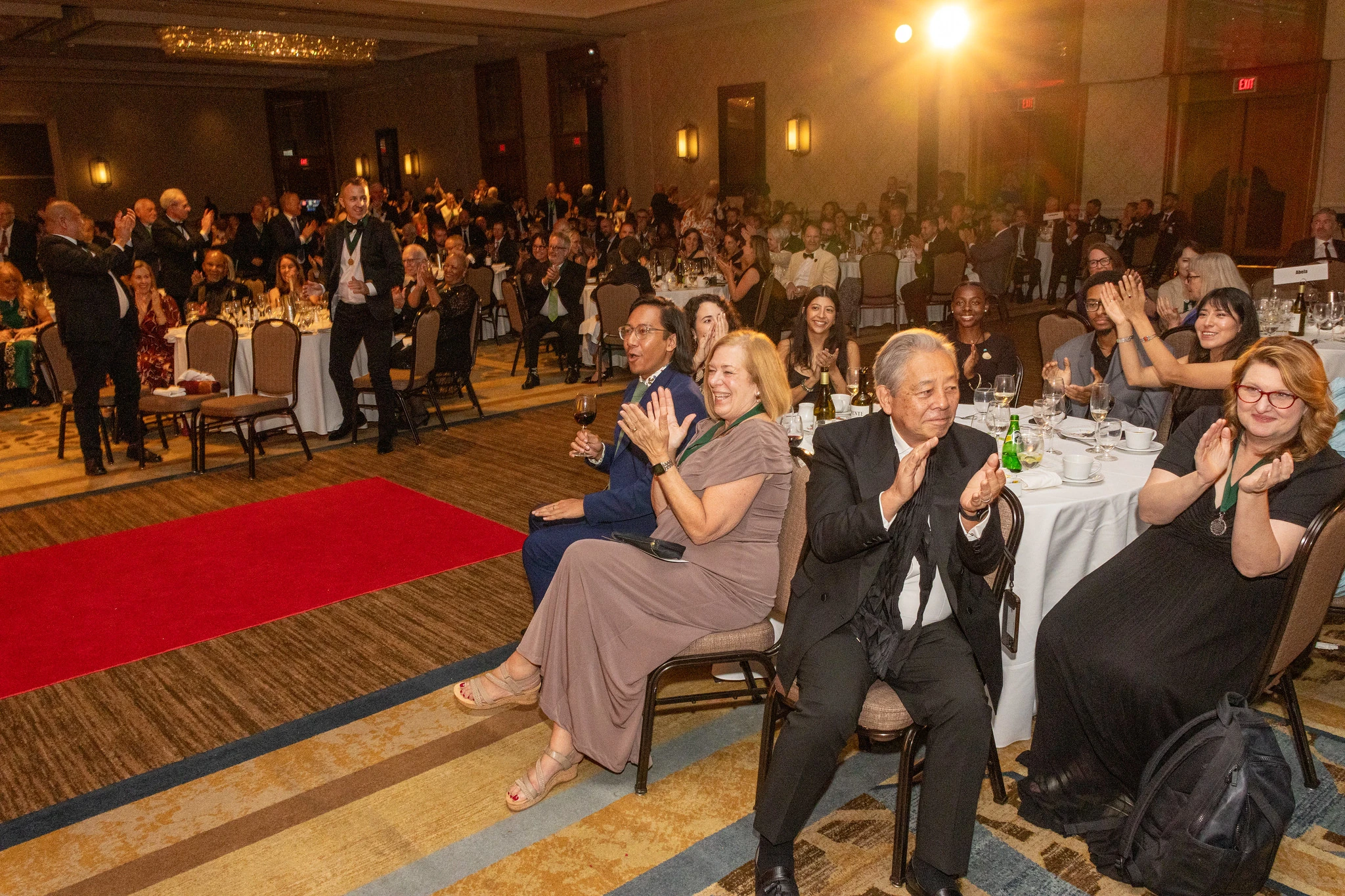
The Fellow designation is awarded to individuals in recognition of exceptional accomplishments sustained over time.
The ASLA Fellows Database is publicly accessible and includes every ASLA Fellow, from the original class of 1899 to the present. Organized much like a résumé, each entry includes historical information such as work examples, awards, employment history, and more. You can search the database to learn about the work and achievements of all ASLA Fellows.
ASLA Fellows may log in with their email address and member number to update their profiles and keep their information current. When updating or adding records, please follow the official style guide. Doing so ensures a consistent appearance and improves search accuracy.
If you have questions or need assistance finding an ASLA Fellow, please contact [email protected].