

.webp?language=en-US)

.webp?language=en-US)
An ambitious plan that successfully weaves together cultural, ecological and economic revitalization solutions to reinvigorate a region in sore need of all three.
Awards Jury
-
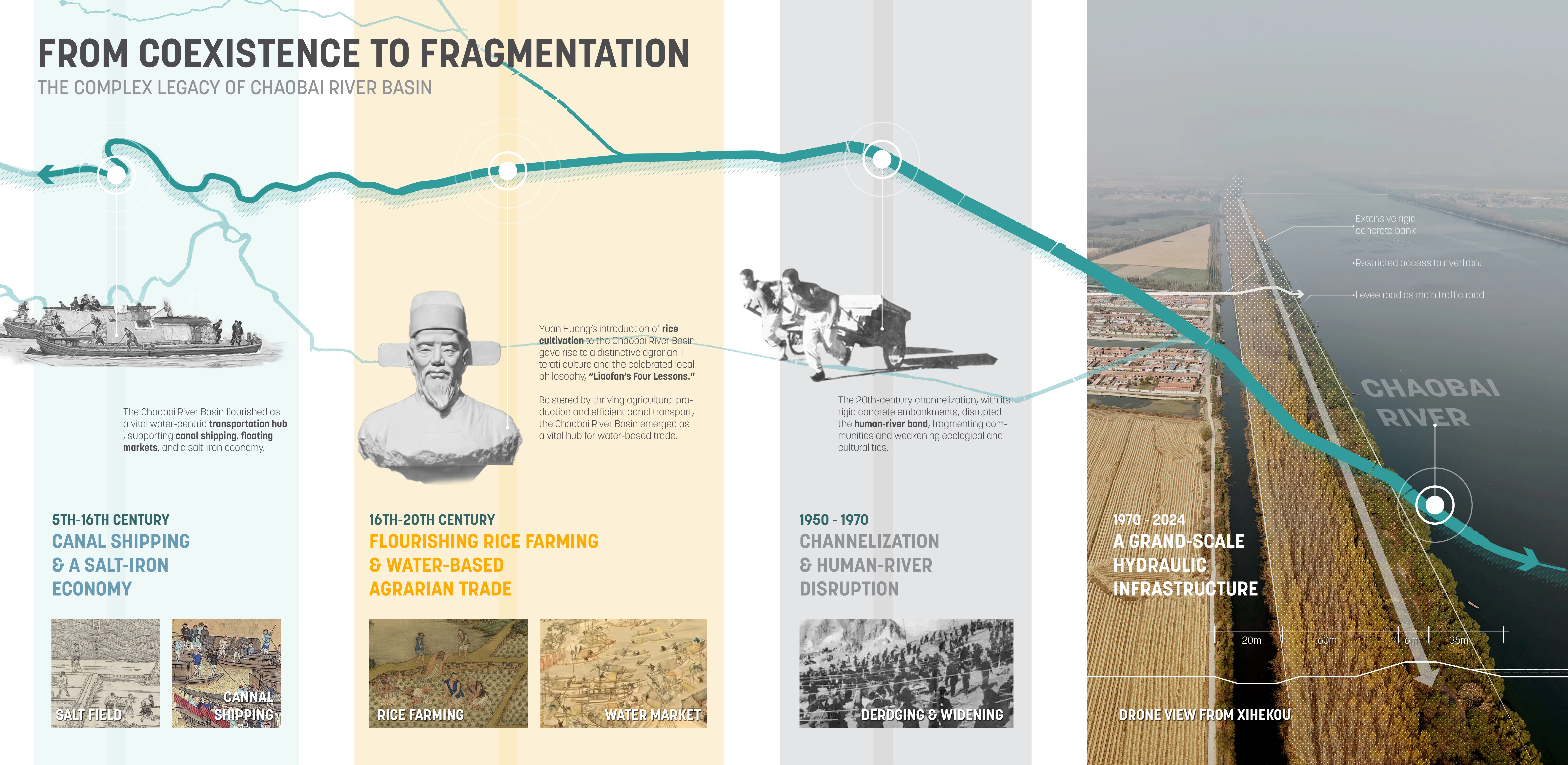
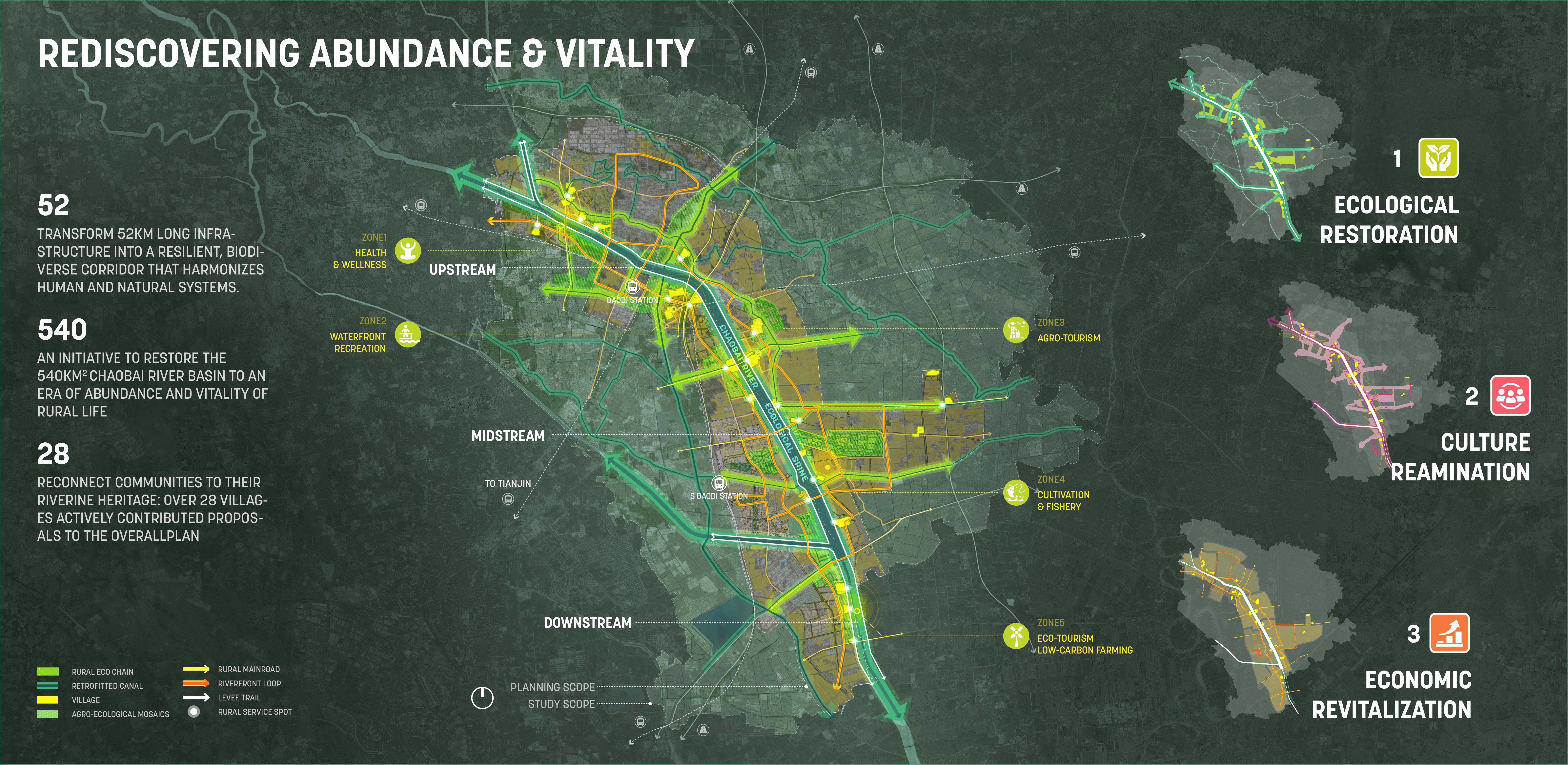
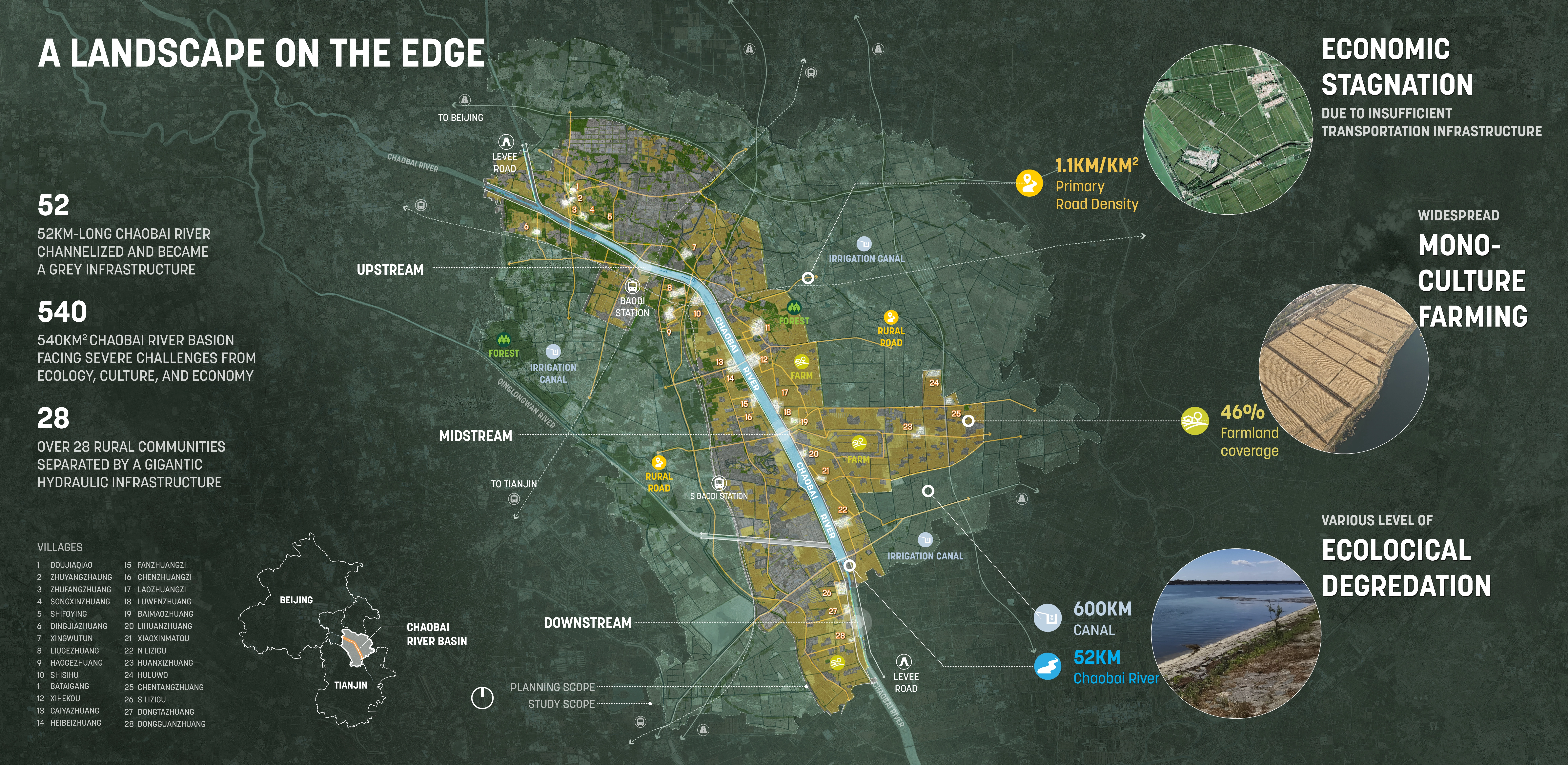
The Chaobai River Basin, a historically vibrant agrarian landscape, faced ecological, cultural, and economic fragmentation after 20th-century channelization disrupted its human-river symbiosis. This rural regeneration initiative integrates ecological restoration, cultural reanimation, and economic revitalization into a cohesive framework. Collaborating with 28 partner villages, the plan restores riparian habitats, revives cultural traditions, and transitions monoculture farming to diverse agroecological systems. By reconnecting communities to their riverine heritage, the basin emerges as a resilient landscape where ecological health, cultural pride, and sustainable livelihoods thrive—exemplifying a model of rural abundance and vitality.
-
For centuries, the 28 villages of the Chaobai River Basin thrived through adaptive coexistence with seasonal flooding, rice cultivation, and water-based cultural practices. 20th-century channelization, however, imposed rigid concrete embankments that fragmented communities and eroded ecological-cultural connections. In response, an initiative to return the basin to an era of abundance and vitality launched a three-pronged regeneration process.
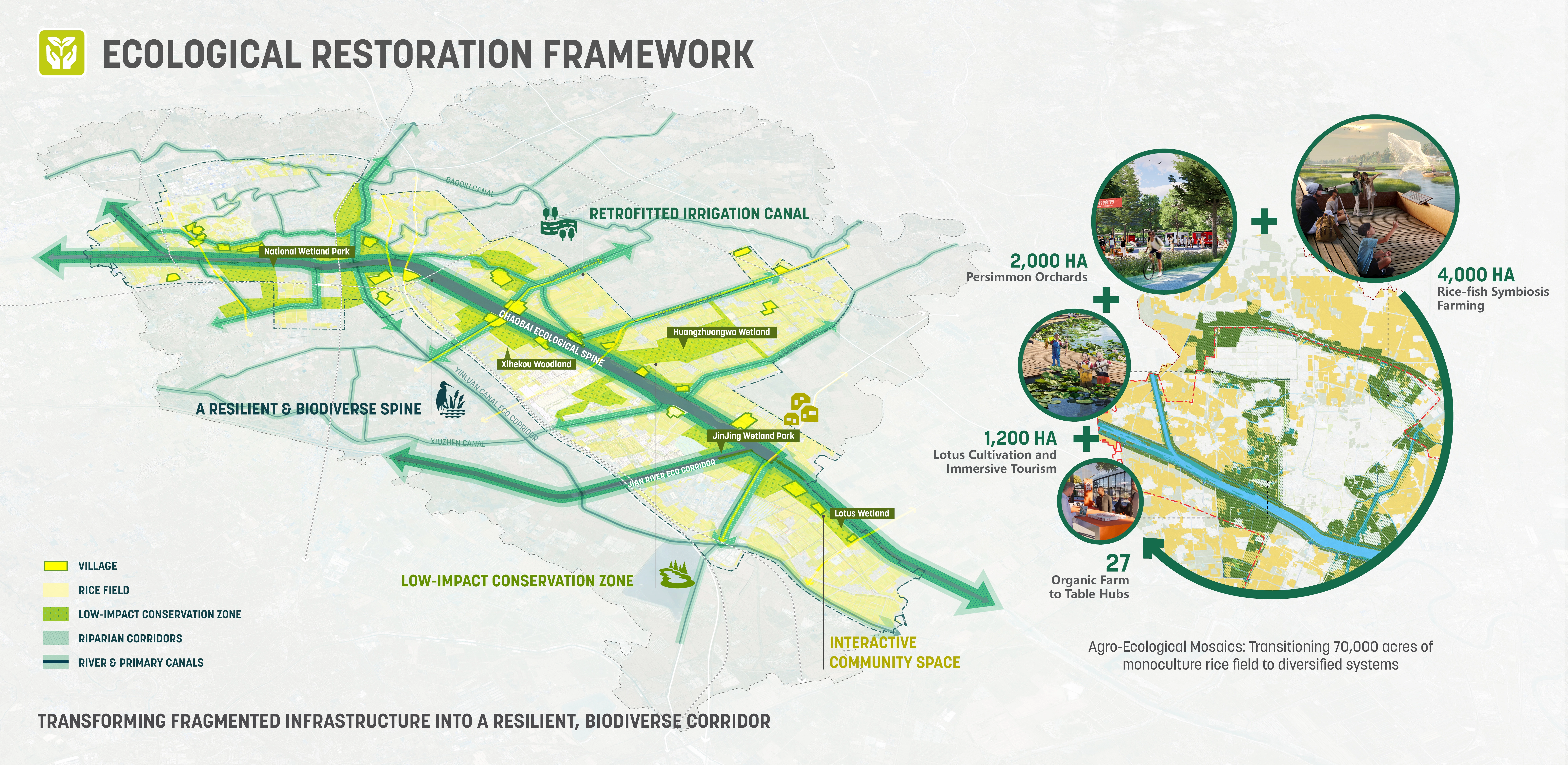
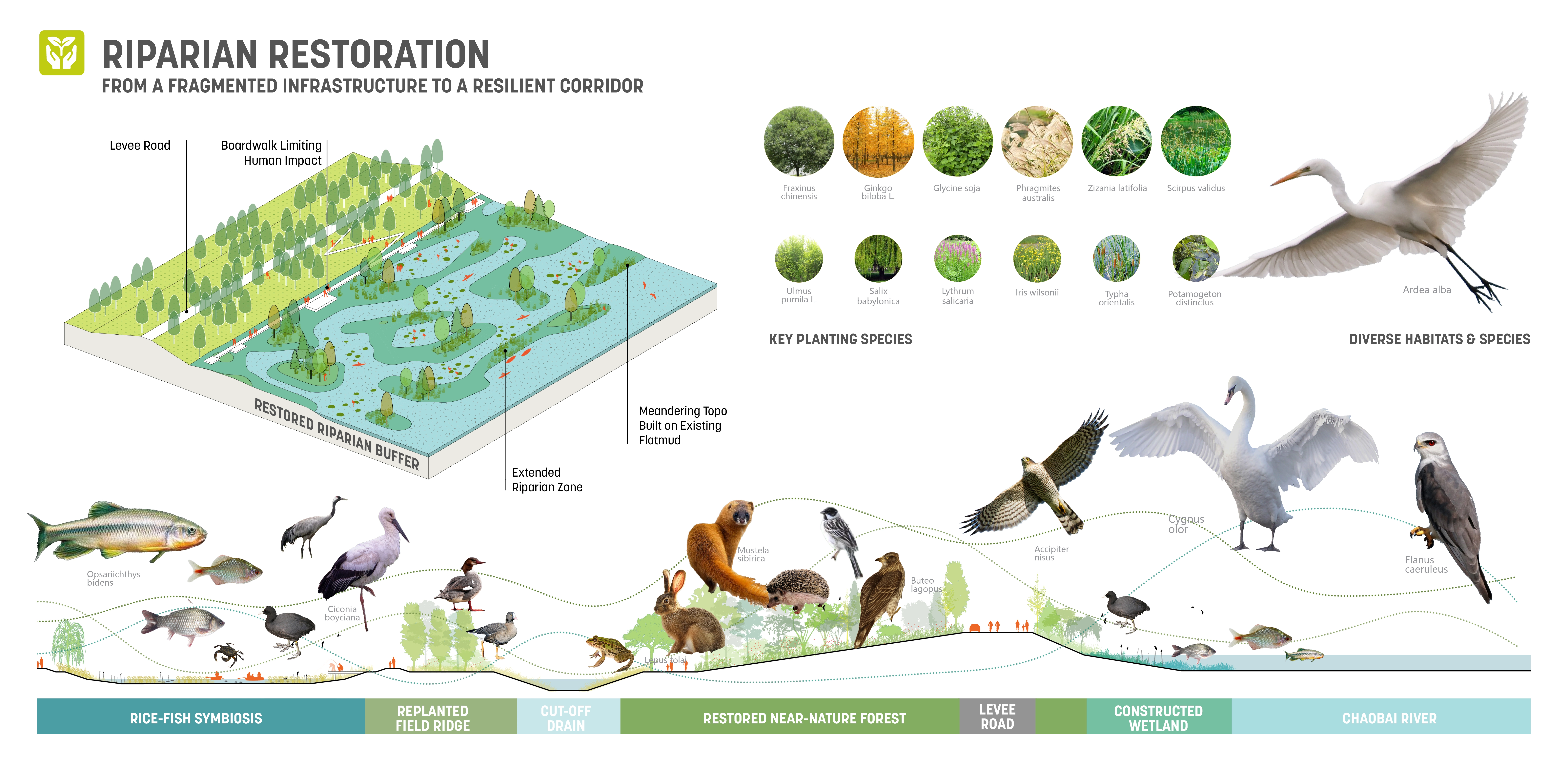
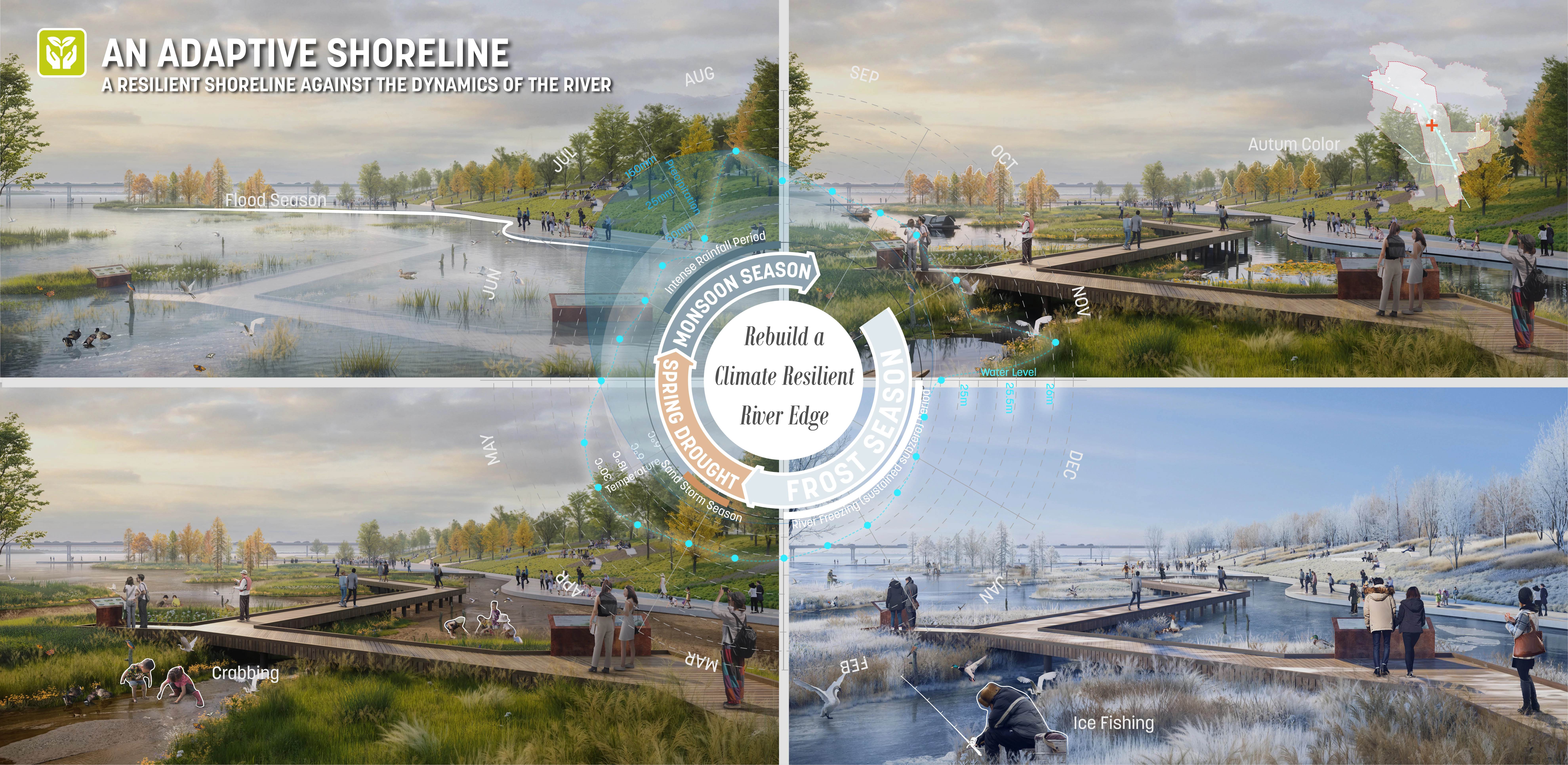
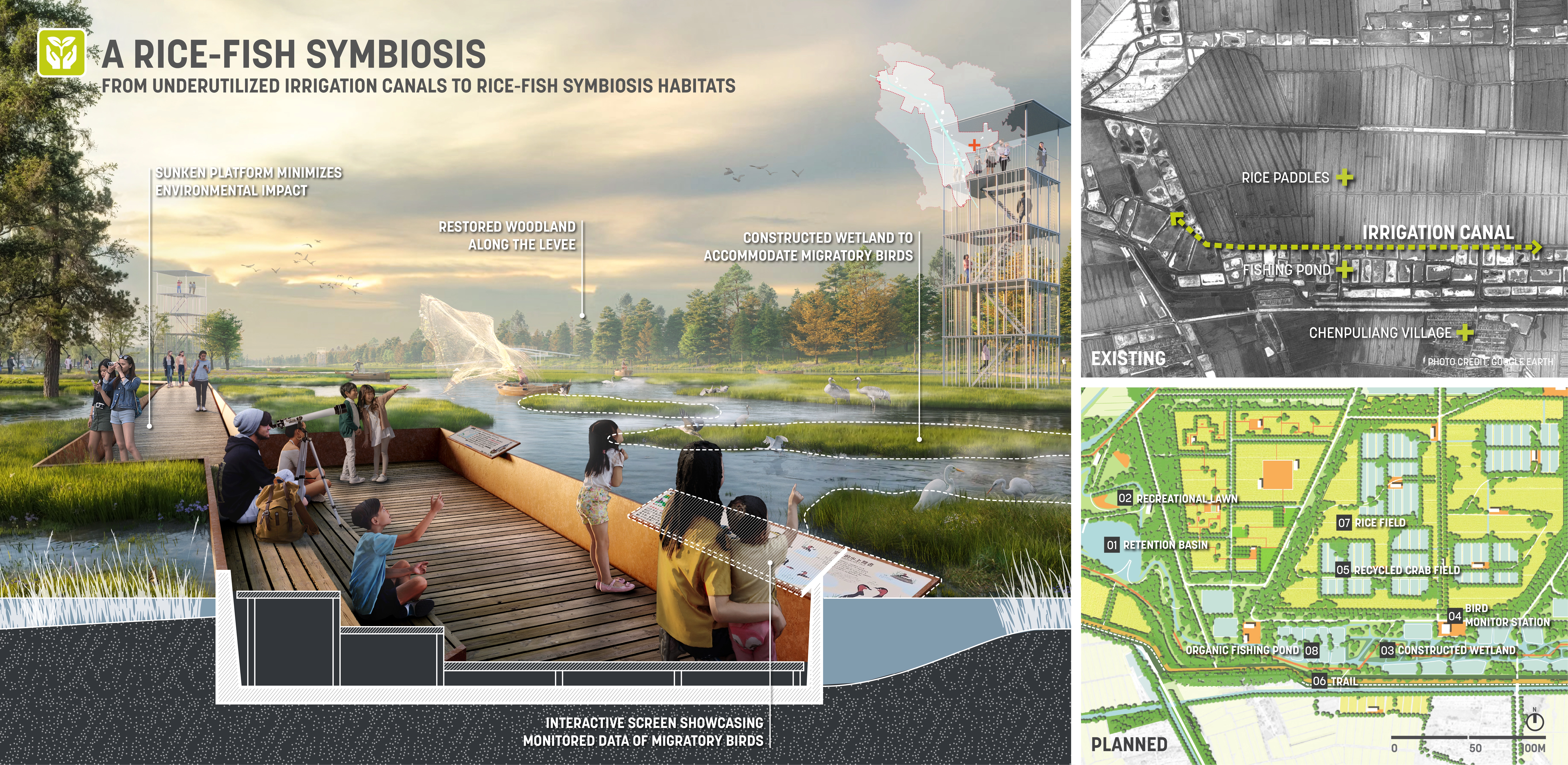
The first tenet includes a comprehensive ecological restoration strategy to transform fragmented infrastructure into resilient, biodiverse corridors that harmonize human and natural systems. Riverbanks are redesigned as adaptive typologies—from low-impact conservation zones to interactive community spaces. These interventions enhance habitat diversity, create migratory bird corridors along the East Asian-Australasian Flyway, and integrate seasonal floodplains as multifunctional spaces. 600km of underutilized irrigation canals are retrofitted into vibrant eco-corridors, blending constructed wetlands and native vegetation to filter agricultural runoff and replenish groundwater. Agroecological practices, including rice-fish symbiosis and crab co-cultivation replace monocultures, fostering soil health and sustainable yields.
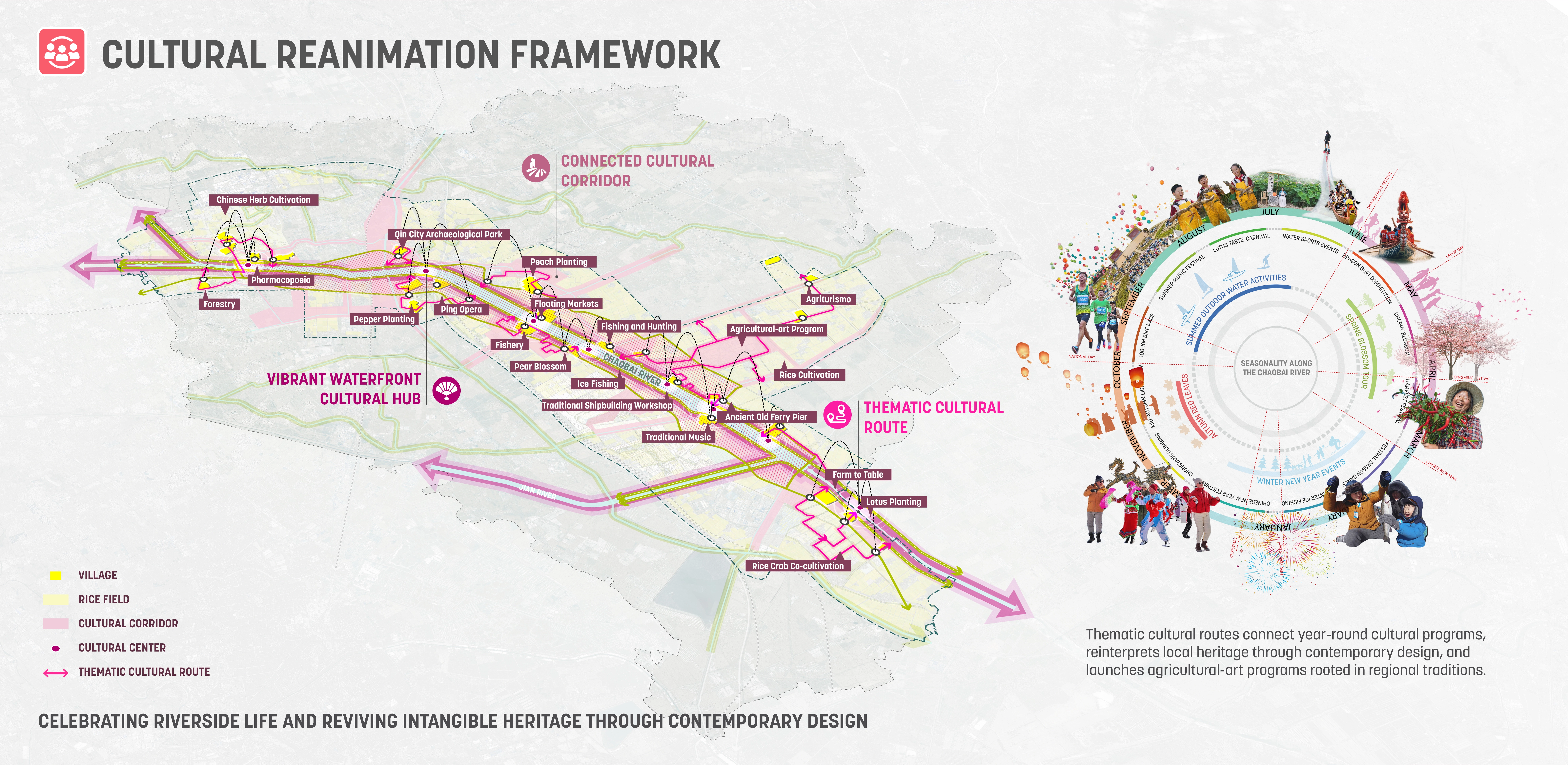
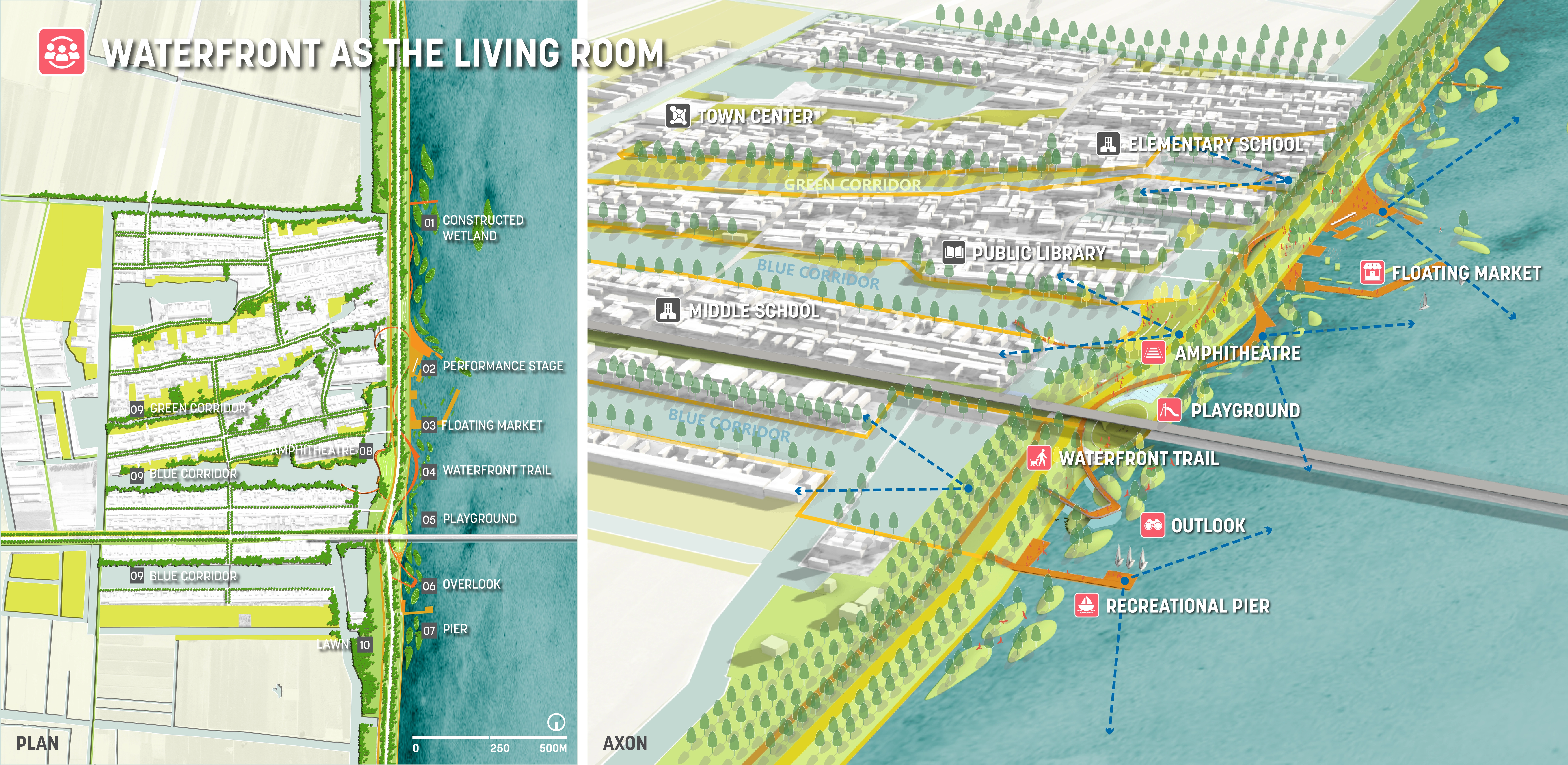
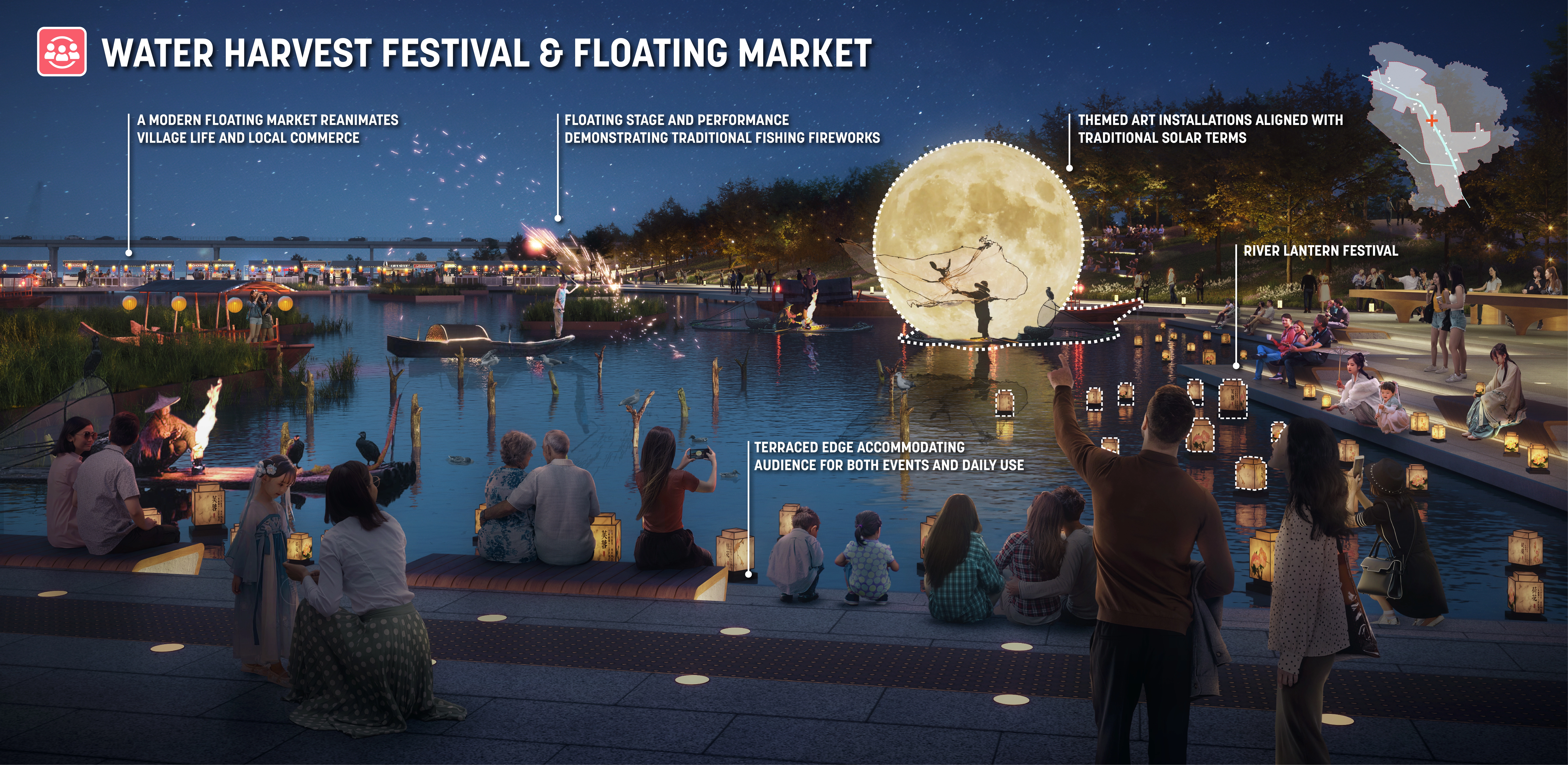
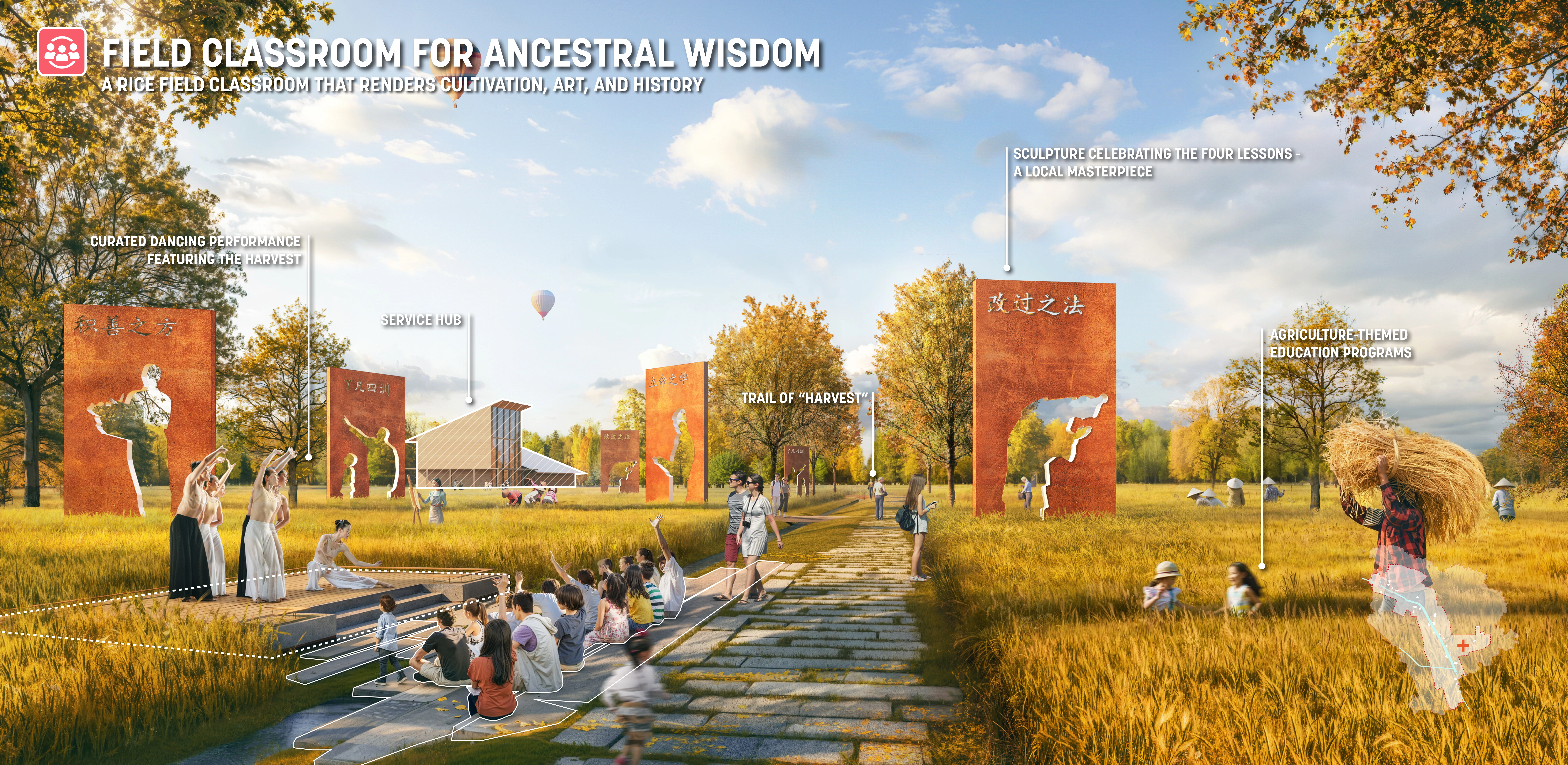
The second tenet establishes a vibrant waterfront cultural district with public spaces that celebrate riverside life, reinterprets local heritage through contemporary design, and launches agricultural-art programs rooted in regional traditions. Interactive exhibits celebrate the basin’s shipbuilding legacy; an annual Water Harvest Festival reanimates ancient rituals like floating markets to blend intangible heritage with contemporary activities; and outdoor classrooms reinterpret ancestral farming wisdom while fostering pride in local identity.
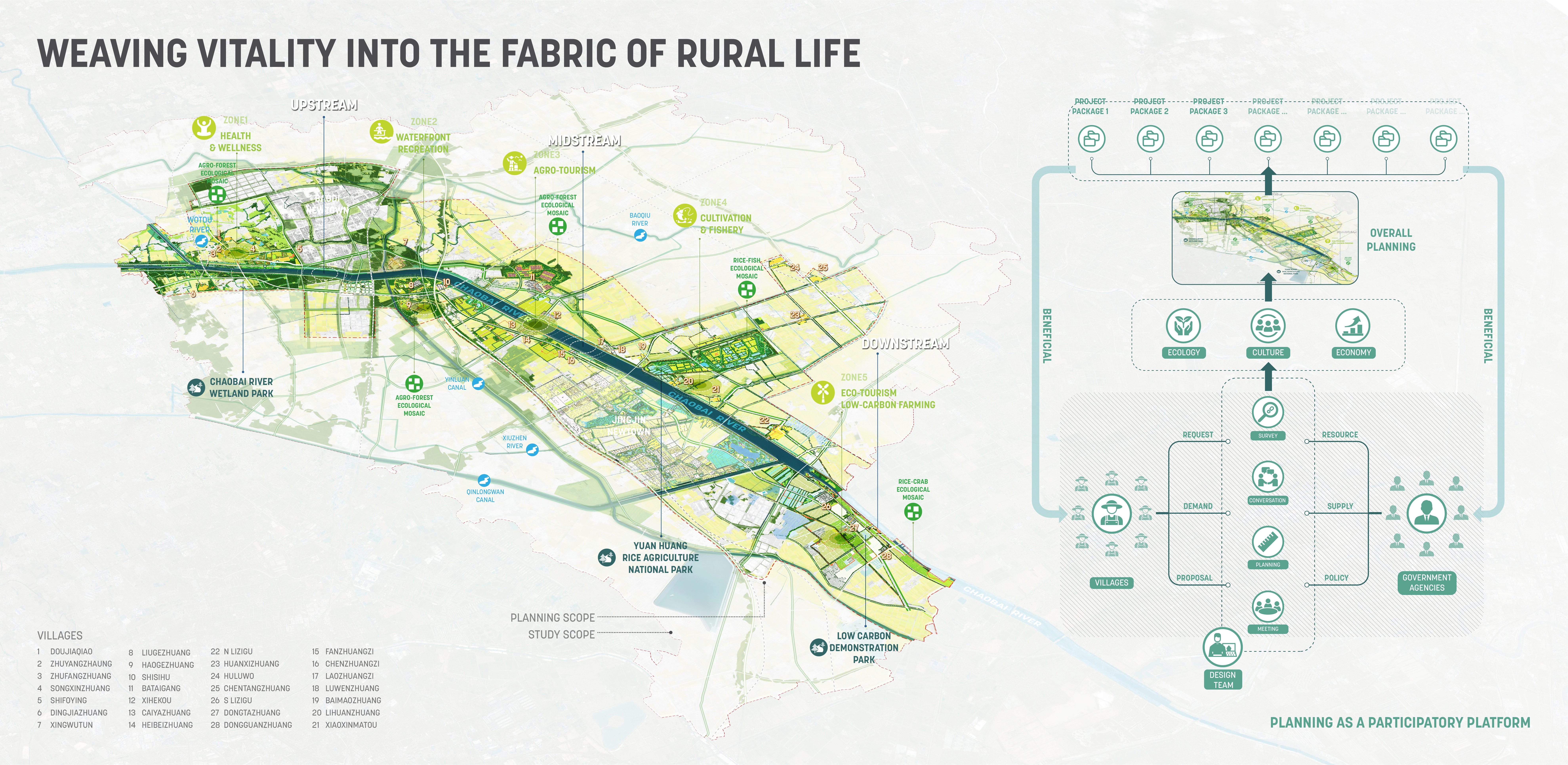
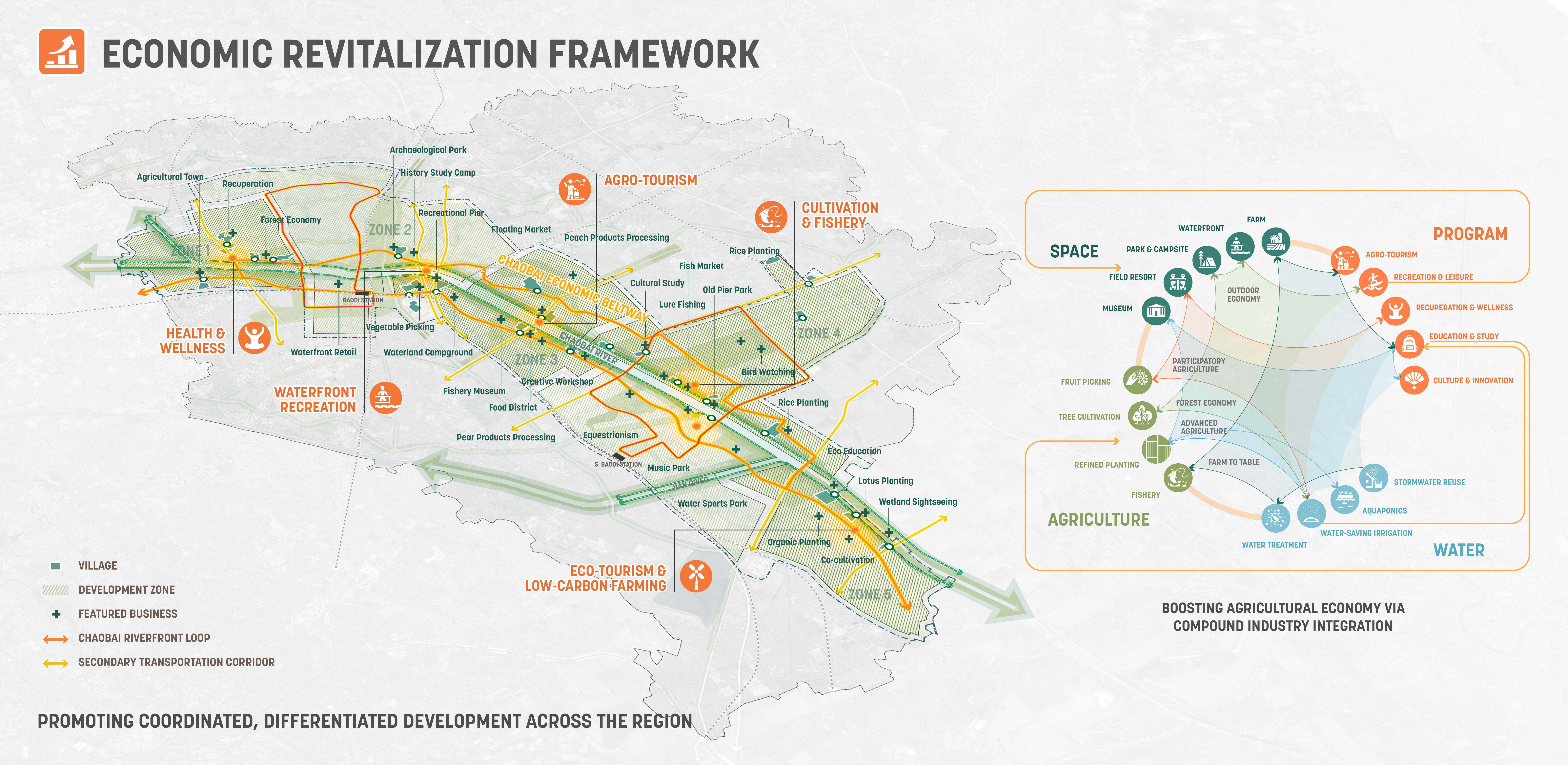
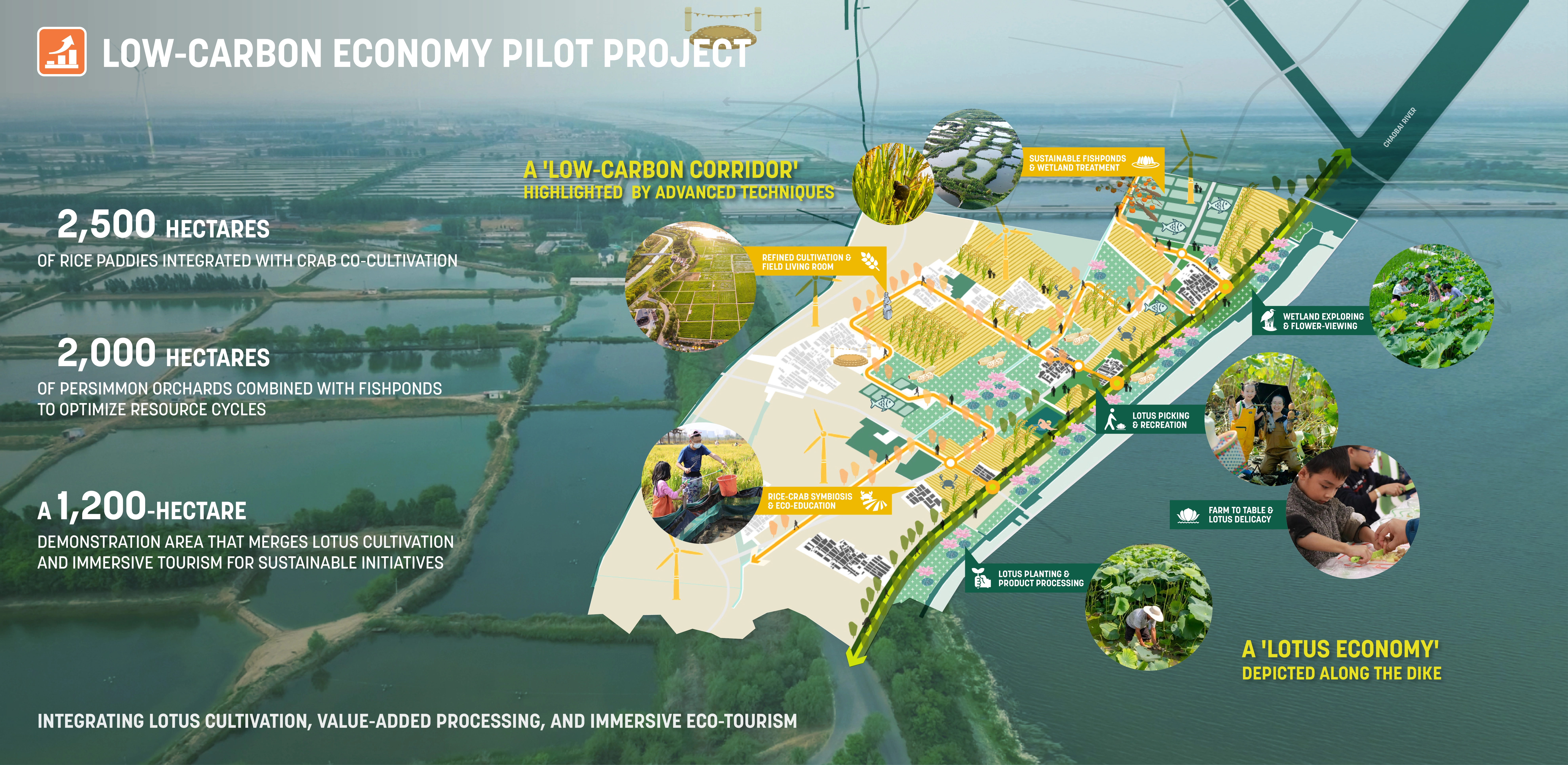
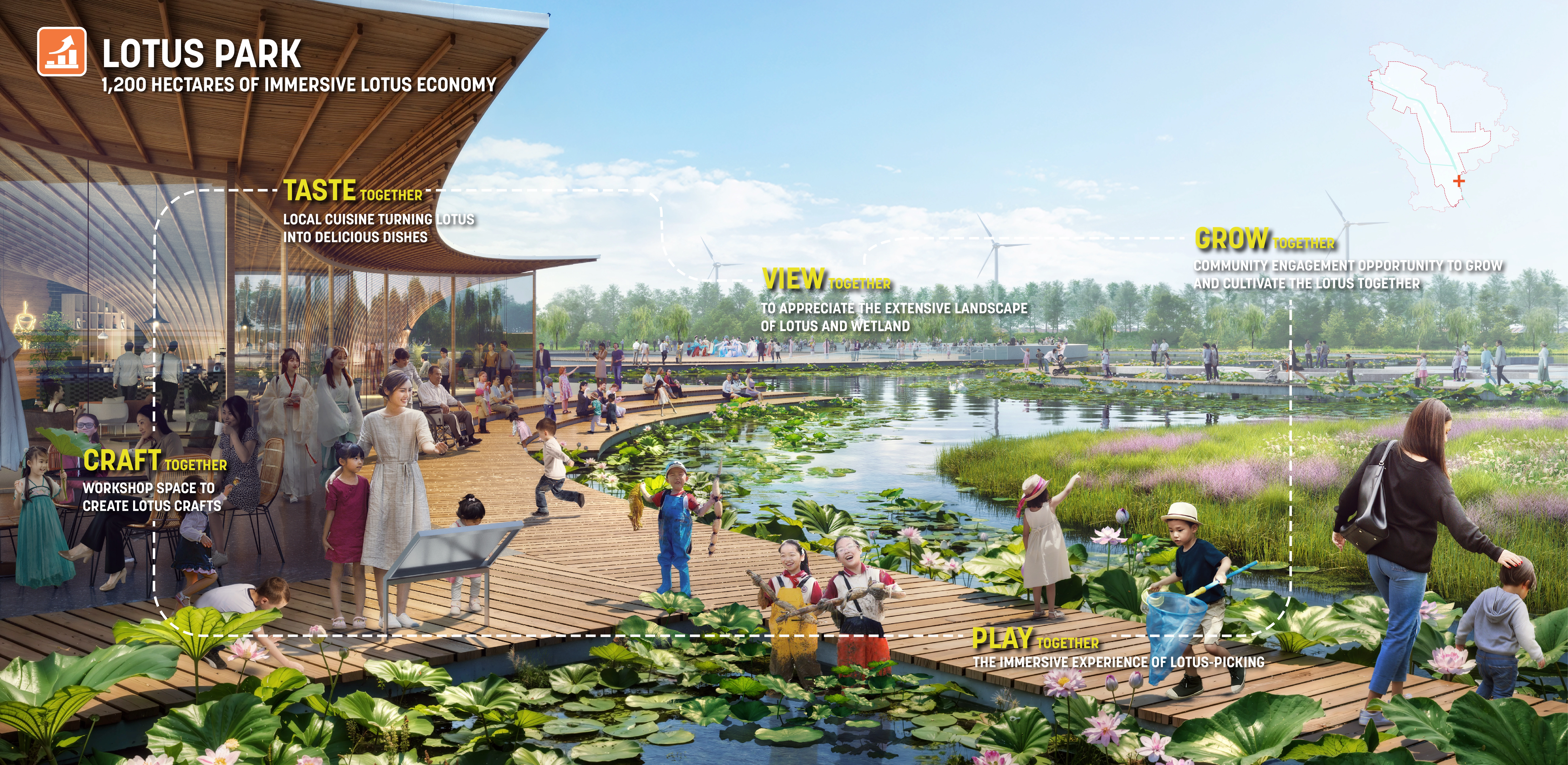
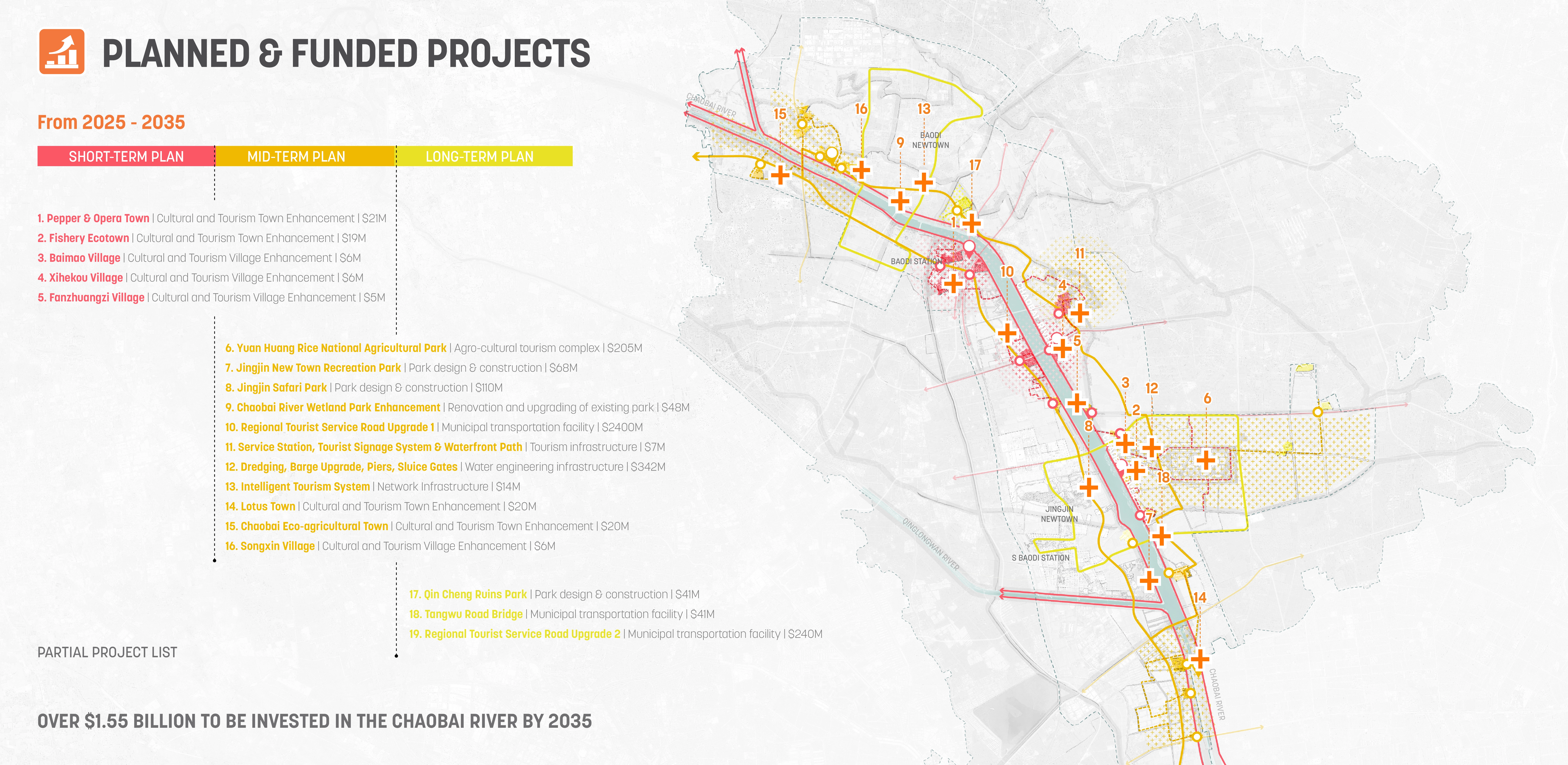
The third tenet is an economic revitalization framework that guides upgrades to agricultural systems and promotes coordinated, differentiated development across the region. Upstream areas focus on wellness and agro-tourism; midstream areas include a waterfront living room and agriculture park; and downstream areas focus on low-carbon farming pilot projects. Breaking free from the constraints of single‑crop farming, the project champions a diversified agroecological model that integrates low‑carbon agriculture, value‑added processing, and immersive eco‑tourism. This includes 2,500 hectares of rice paddies integrated with crab co-cultivation; 2,000 hectares of persimmon orchards combined with fishponds to optimize resource cycles; and a 1,200-hectare demonstration area that merges lotus cultivation and immersive tourism to create a flagship hub for sustainable initiatives. These measures stimulate youth‐led enterprises and forge pathways to livelihood for the next generation of farmers.
Critical to this transformation was a 16-month participatory process. Over 28 villages actively contributed proposals aligned with their development priorities, while cross-sector partnerships with 5 key government agencies ensured policy alignment and resource coordination. This platform enabled large-scale, collaborative long-term planning—a rare achievement in rural revitalization efforts. The Chaobai River Basin’s renewal exemplifies how ecological stewardship, cultural reinterpretation, and economic innovation intertwine to create landscapes of abundance where the river is no longer a boundary but a thread weaving vitality into the fabric of rural life.
-
- Leo’s Planners & Architects - Local Planning and Design Firm
-
- Amygdalus persica, peach
- Armeniaca vulgaris, apricot
- Castanea mollissima, Chinese chestnut
- Catalpa ovata, Chinese catalpa
- Fraxinus chinensis, Chinese ash
- Ginkgo biloba L., ginkgo
- Koelreuteria paniculata, golden rain tree
- Liriodendron chinense x Liriodendron tulipfera, Chinese tulip
- Morus alba, common mulberry
- Quercus acutissima, sawtooth oak
- Quercus variabilis, Chinese cork oak
- Salix babylonica, weeping willow
- Sophora japonica, pagoda tree
- Ulmus pumila, Siberian elm
- Caryopteris incana (Thunb.) Miq., common bluebeard
- Crataegus pinnatifida, mountain hawthorn
- Iris wilsonii, yellow iris
- Lythrum salicaria, purple loosestrife
- Polygonum orientale, princess-feather
- Ceratophyllum demersum, coontail
- Alisma plantago-aquatica, common water-plantain
- Triglochin palustr, marsh arrowgrass
- Nelumbo nucifera, lotus
- Nymphaea, waterlily
- Phalaris arundinacea L., reed canary grass
- Phragmites australis, common reed
- Salvinianatans, aquatic fern
- Scirpus Validus, softstem bulrush
- Euryales ferox, prickly waterlily
- Trapa natans, water chestnut
- Typha orientalis, bulrush
- Zizania latifolia, Manchurian wild rice
Advertisement
Related Awards
Award of Excellence, Analysis & Planning
H2Oquirrh: Regional Water Reform for a Resilient Salt Lake Valley
Location: Salt Lake City, UT
Firm: Design Workshop
Client: Wasatch Front Regional Council, Salt Lake County
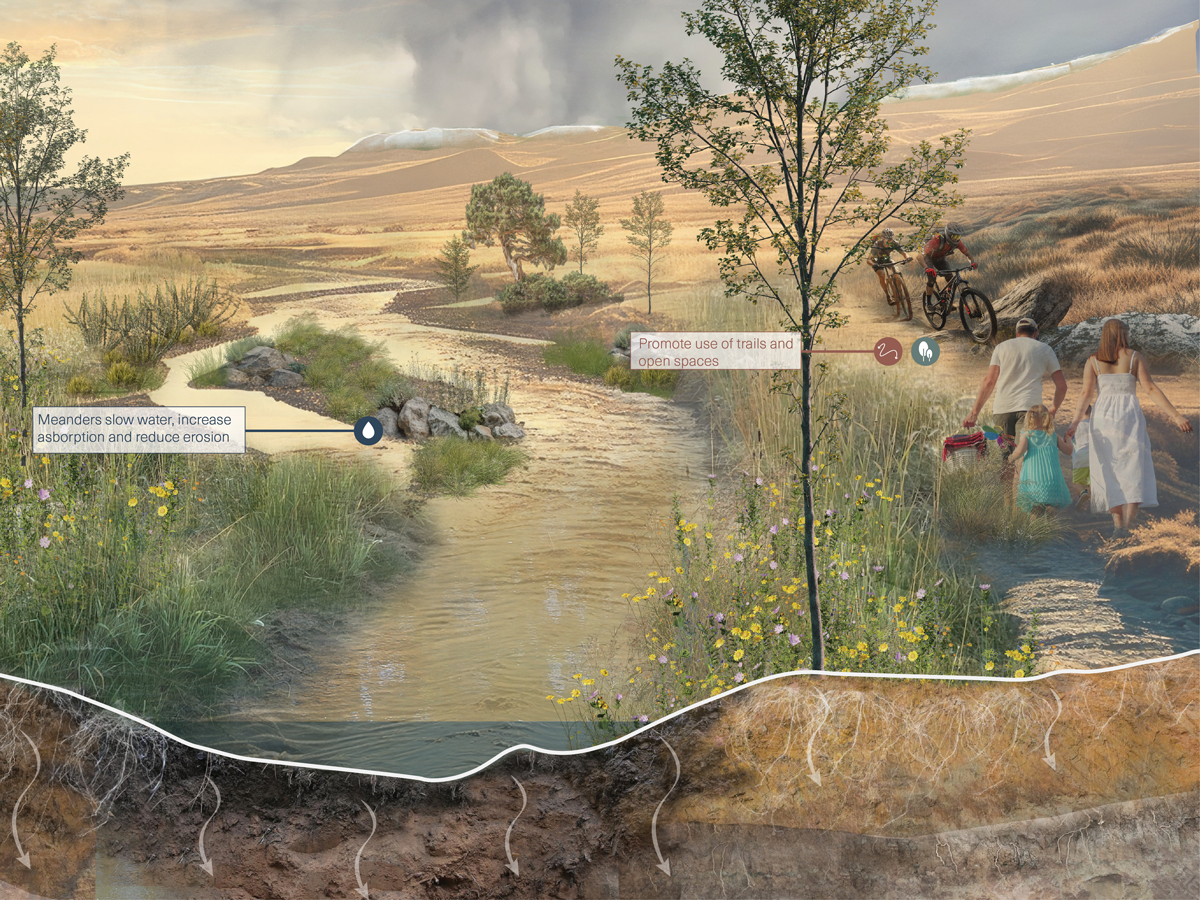
Water flowing from the Oquirrh Mountains is a critical contributor to the Great Salt Lake. Severe drought and human-caused decline threaten the lake’s viability, with cascading impacts on ecosystems and public health. This regional collaboration of seven jurisdictions, the H2Oquirrh Vision Plan, undertakes a large systems analysis of hydrologic cycles, land cover, and land-use decisions to identify site-specific interventions across nine creeks and washes. Led by landscape architects and water resource engineers, the study advances a deeper understanding of localized drivers of water loss and proposes innovative solutions through integrated landscape infrastructure design and policy.
-listing-img.webp?language=en-US)
Related Articles

ASLA Fund
American Society of Landscape Architects Announces its 2026 Student Awards
39 Student Award winners elevate the future of the landscape architecture profession
Aug 24 2026