

.webp?language=en-US)

.webp?language=en-US)
Guitou Wetland Park: Reclaiming Public Space for the Rural Forgotten
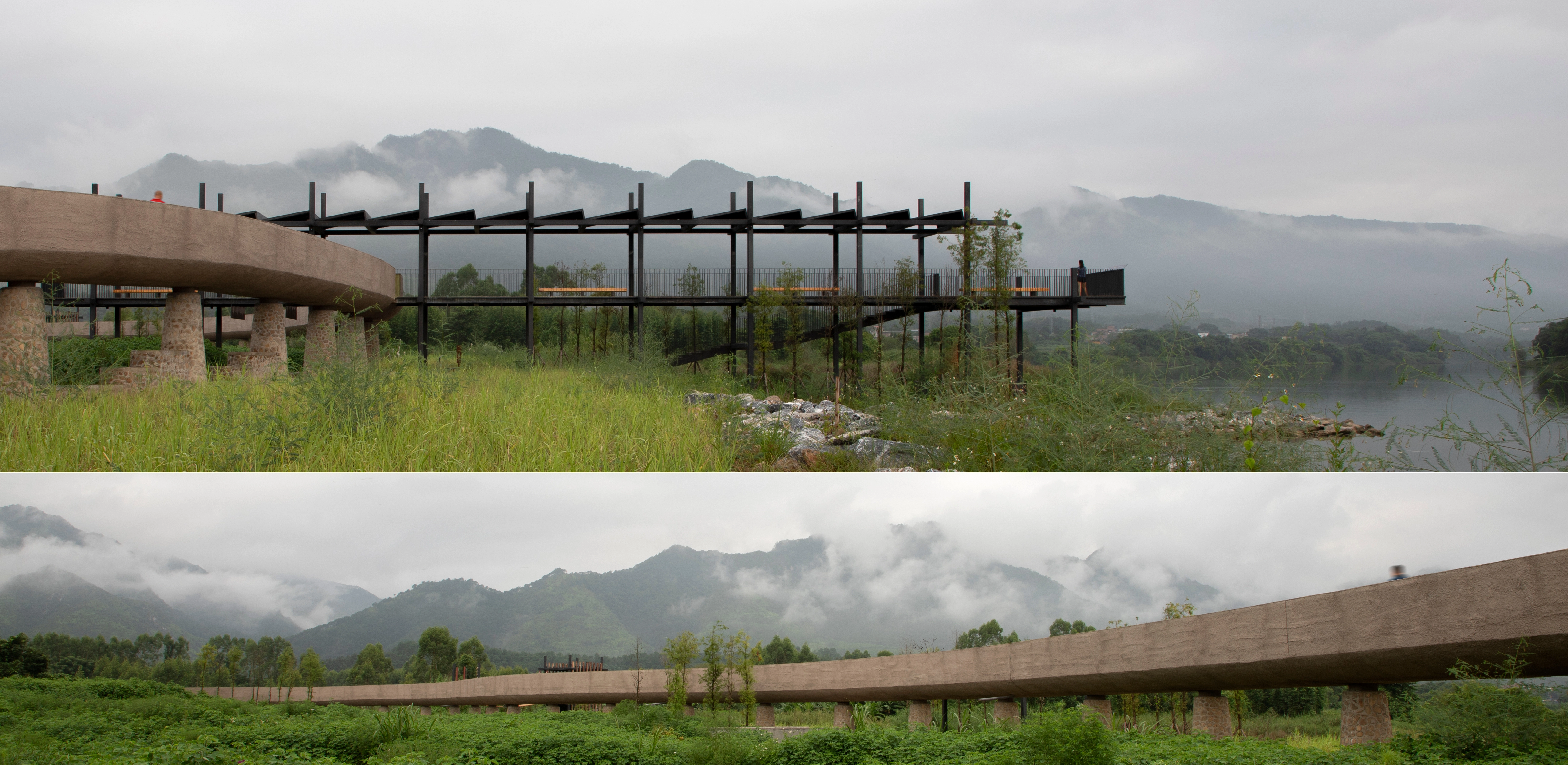

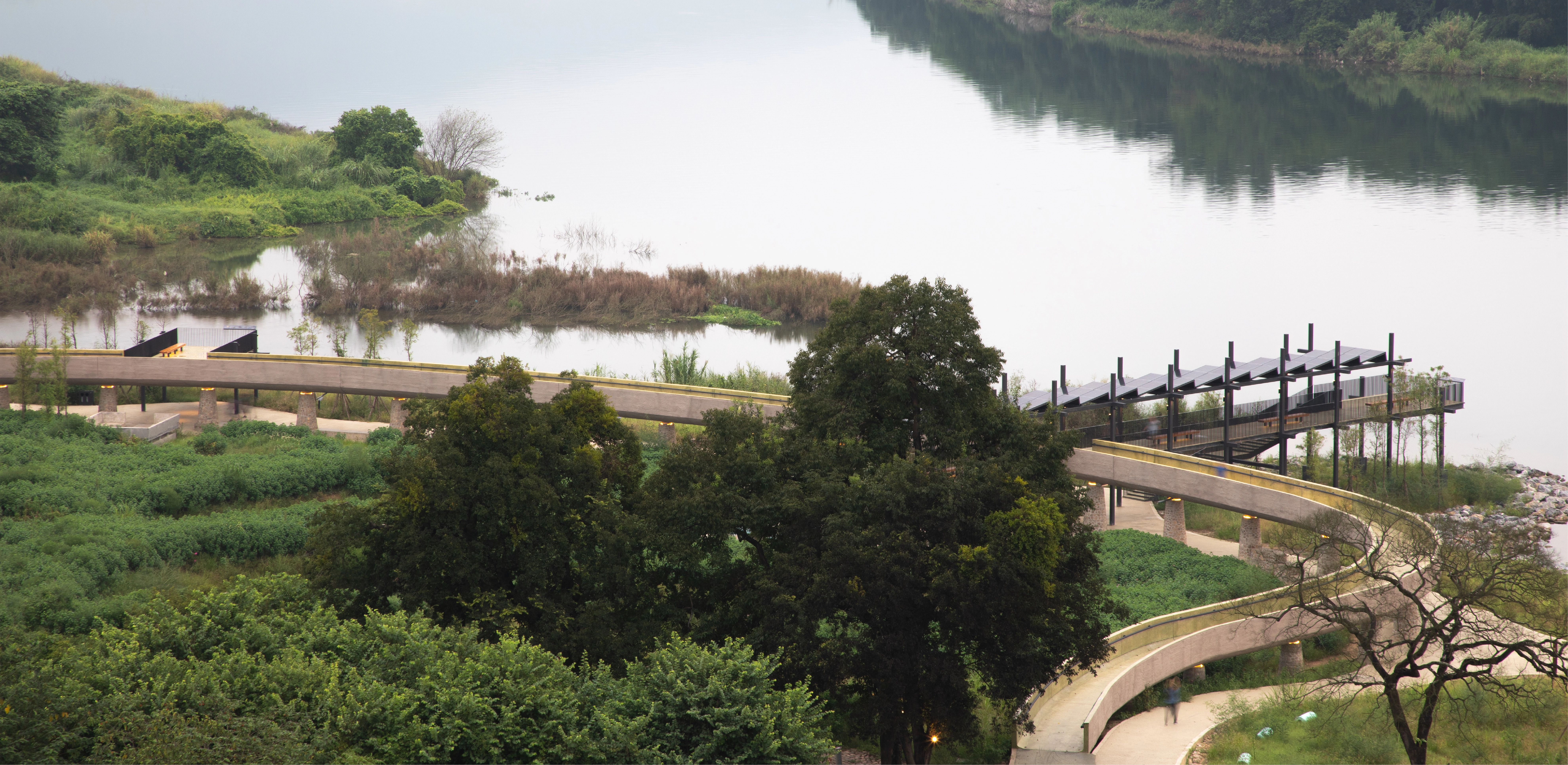
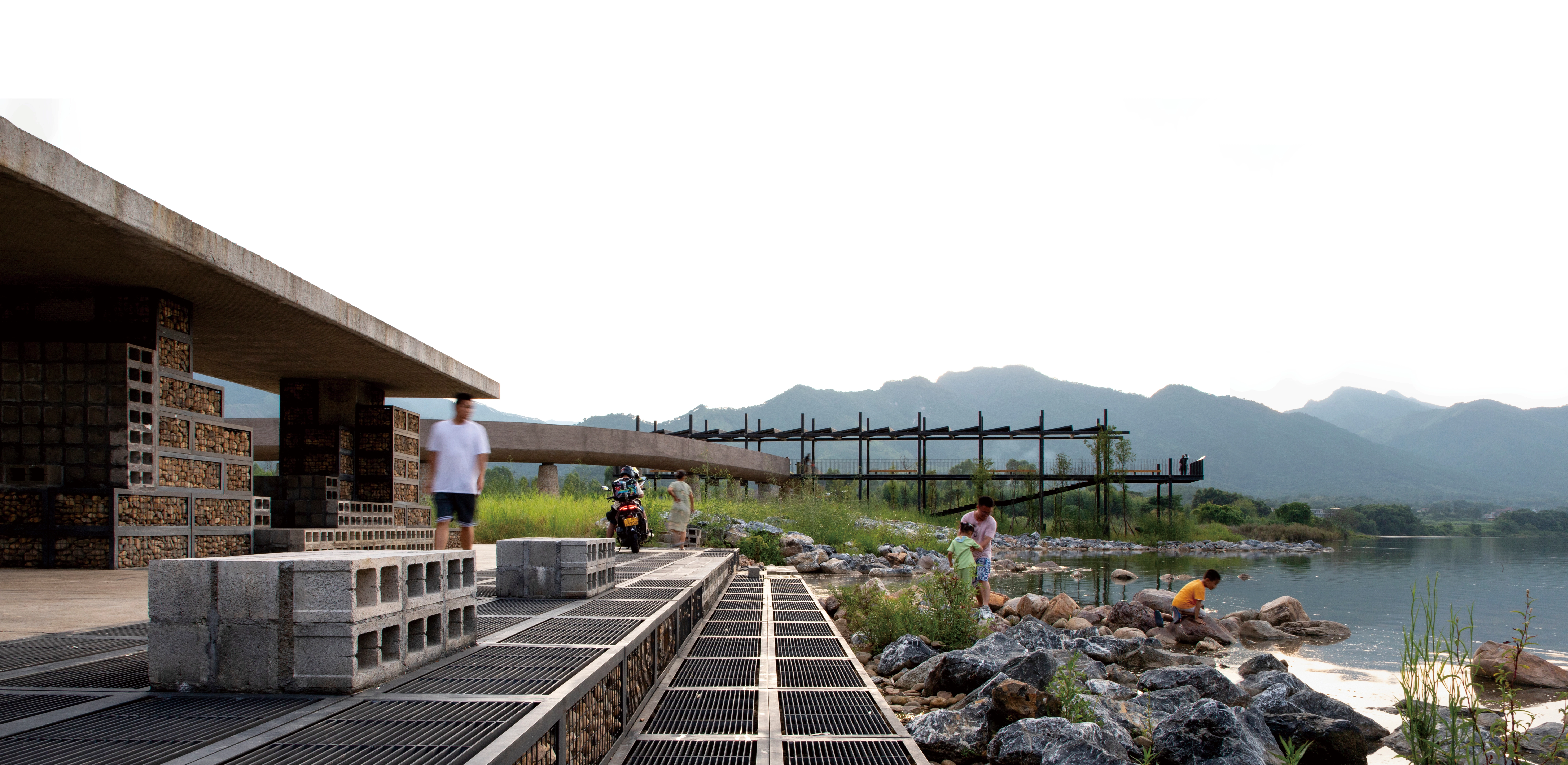
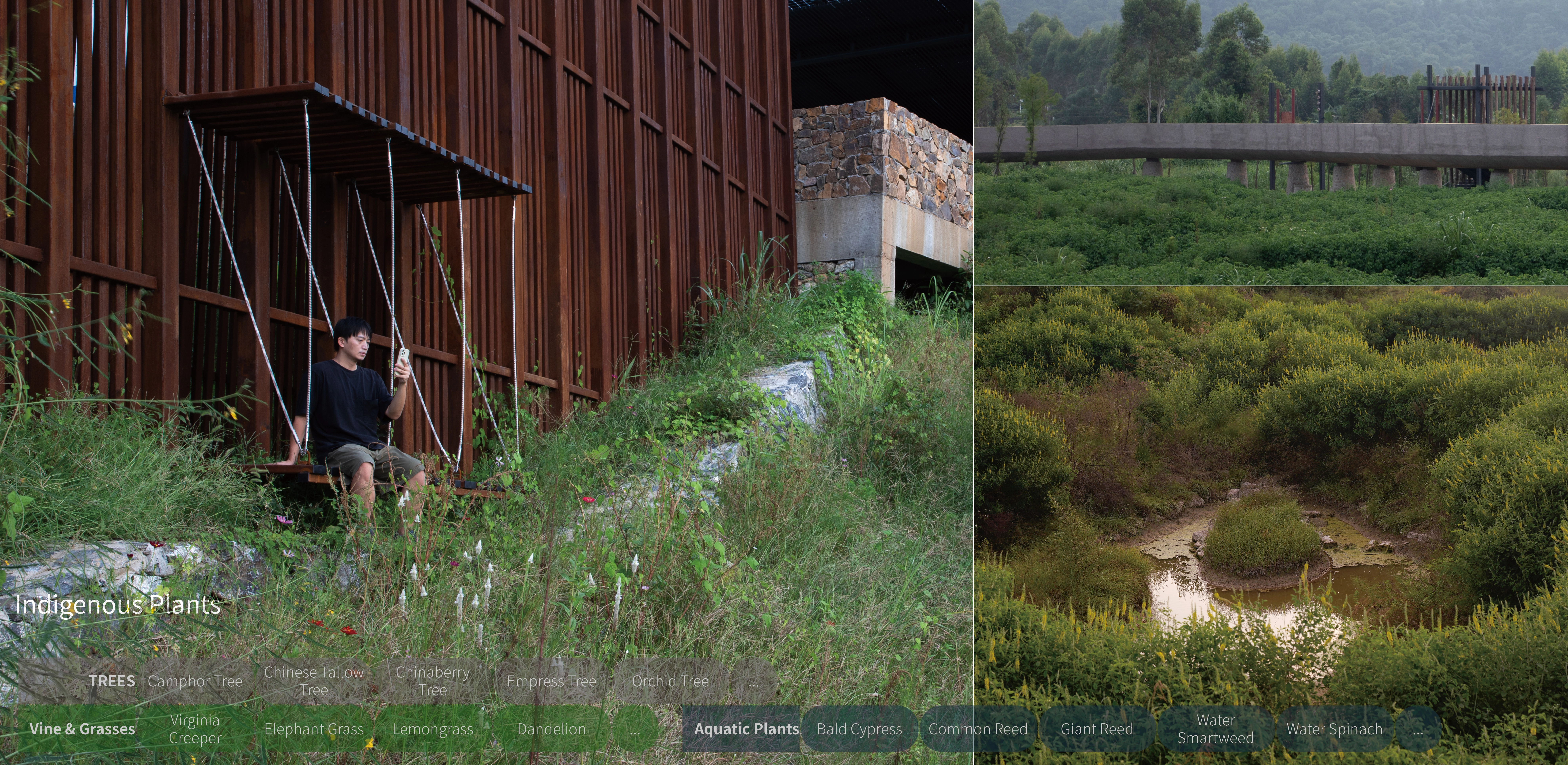

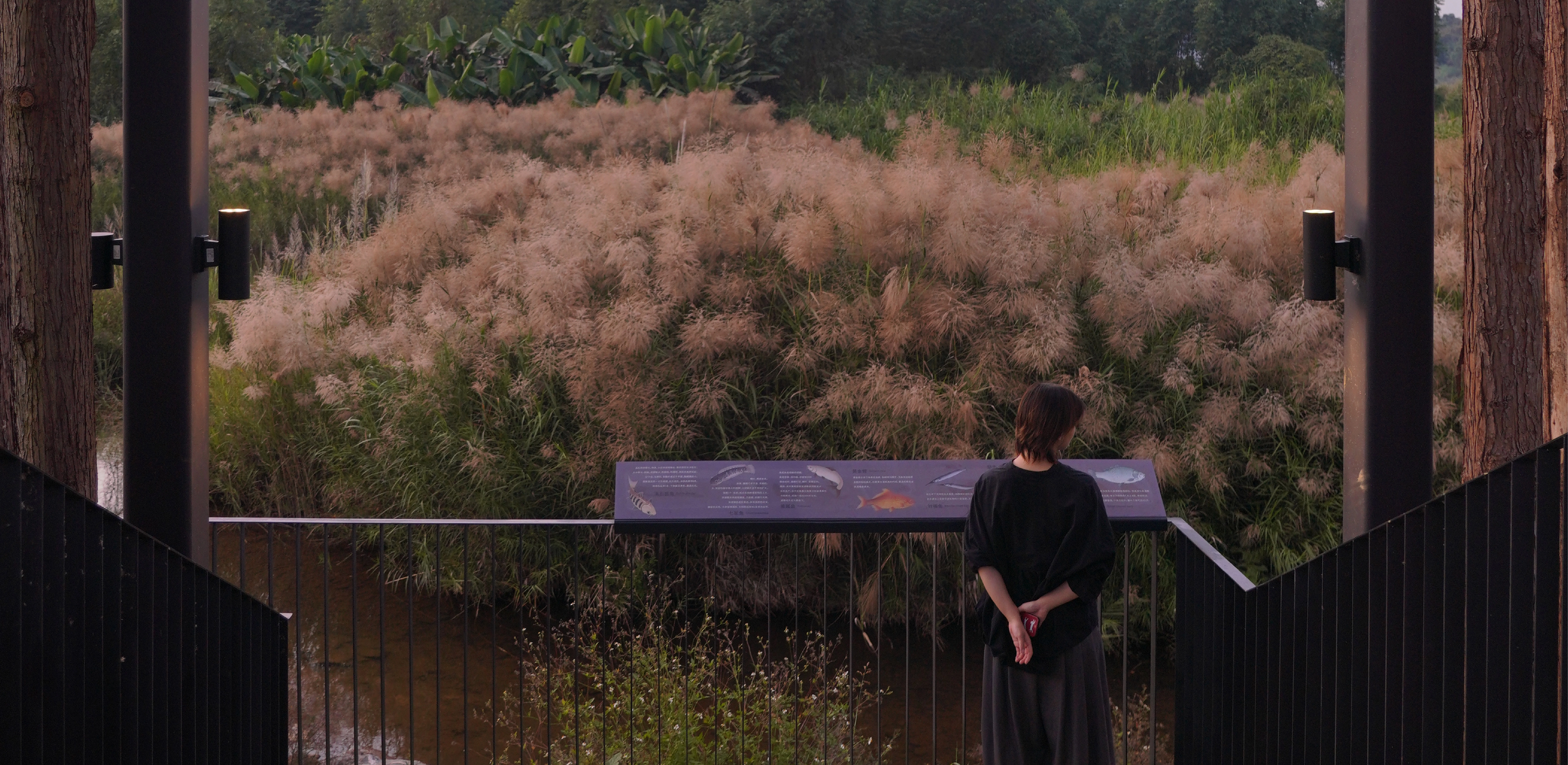
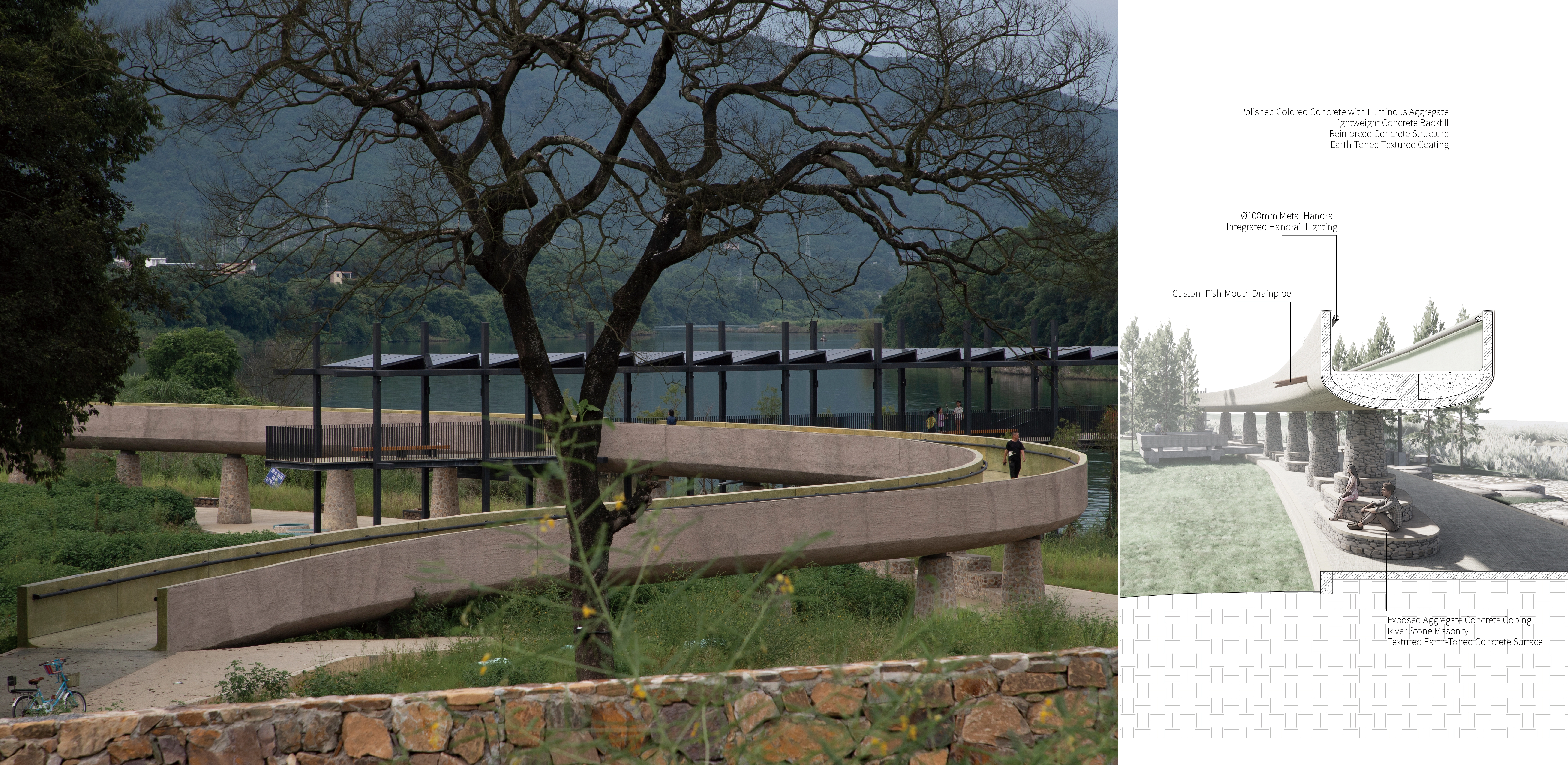


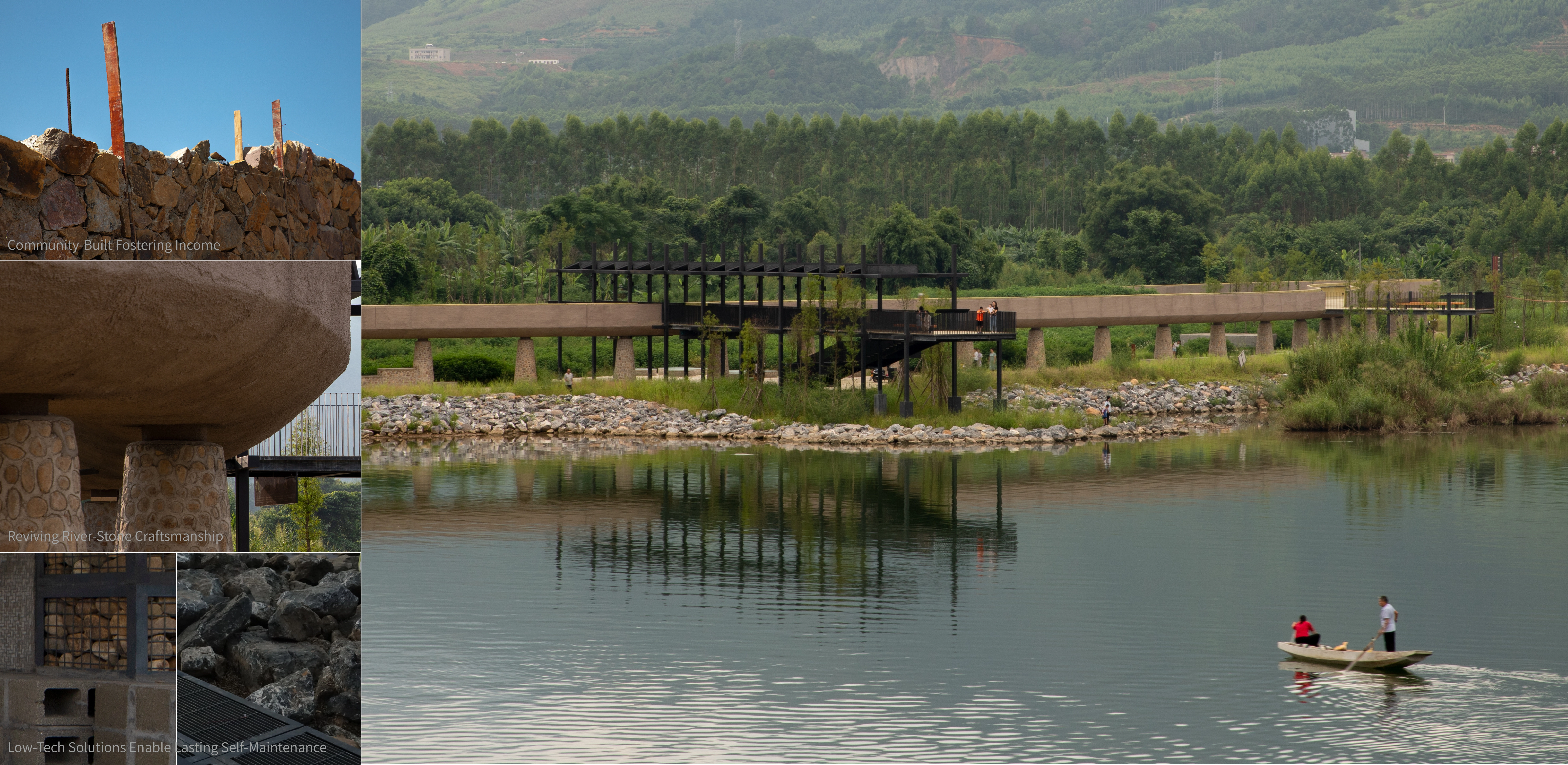

Wonderful site plan and modest use of indigenous materials. Unique and inventive material usage reimagines how low-cost materials can be used to create high-impact spaces.
Awards Jury
-
Addressing urban-rural public resource disparities, the project regenerates abandoned wetland into a resilient and inclusive public space for South China’s Yao-Hakka communities. Flood-adaptive boardwalks and basins boost biodiversity as ecological classrooms. Locals restore craft traditions like river-stone masonry through self-built infrastructure, generating income and fostering self-sustaining governance via community covenants. Seamlessly woven into local routines, the design enables full-route e-bike and motorcycle access while celebrating cultural motifs and supporting multi-generational spaces. Beyond a rural park, it offers a framework bridging systemic gaps through climate adaptation, cultural resurgence, and community-led equity.
-
Guitou lies in the poorest region of China’s most economically divided province, where rural communities have long lacked access to quality public resources. Spanning 8 acres, this riverside terrain faces erosion and seasonal floods up to 4m, making it hazardous and inaccessible. With no public space or management system, interventions risk abandonment, prompting the conventional hard embankment plan, which reclassified land while ignoring long-term viability. The challenge was to manage flooding while fostering self-sustainability through locally rooted functions and cultural relevance—reconnecting it with the Yao and Hakka nature-centered traditions and rural rhythms.
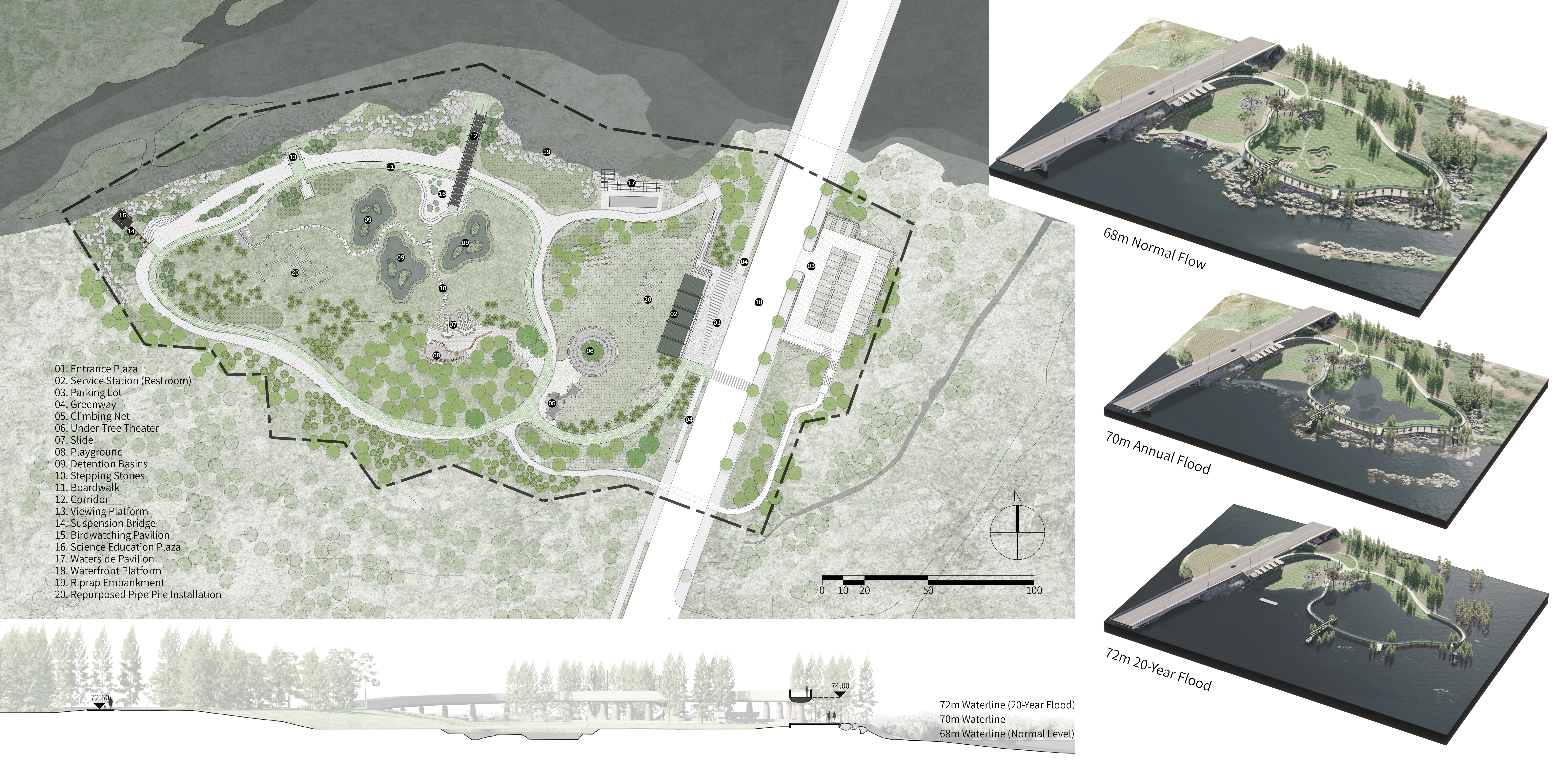
Terraced elevations, elevated boardwalks, and flood basins ensure continuous year-round accessibility. At a normal water level (68m), a continuous waterfront platform remains accessible. During annual floods (70m), three detention basins transform into lush wetland habitats, supporting biodiversity. In 20-year floods (72m), an elevated boardwalk allows safe movement above water. This approach provides continuous public access and strengthens ecology.
After necessary site work, native plant seeds were introduced to facilitate self-sustaining vegetation recovery, mirroring natural succession processes. Riprap embankments and gabion stabilize shorelines, ensuring a permeable land-water transition free of rigid concrete. As floodwaters recede, detention basins create temporary habitats for amphibians, invertebrates, and aquatic plants. Wetland pockets attract migratory birds. Since completion, 2 additional waterbird species have been observed, indicating improved wetland habitat quality. This evolving landscape applies sustainable floodplain management strategies and serves as an ecological classroom for local students.
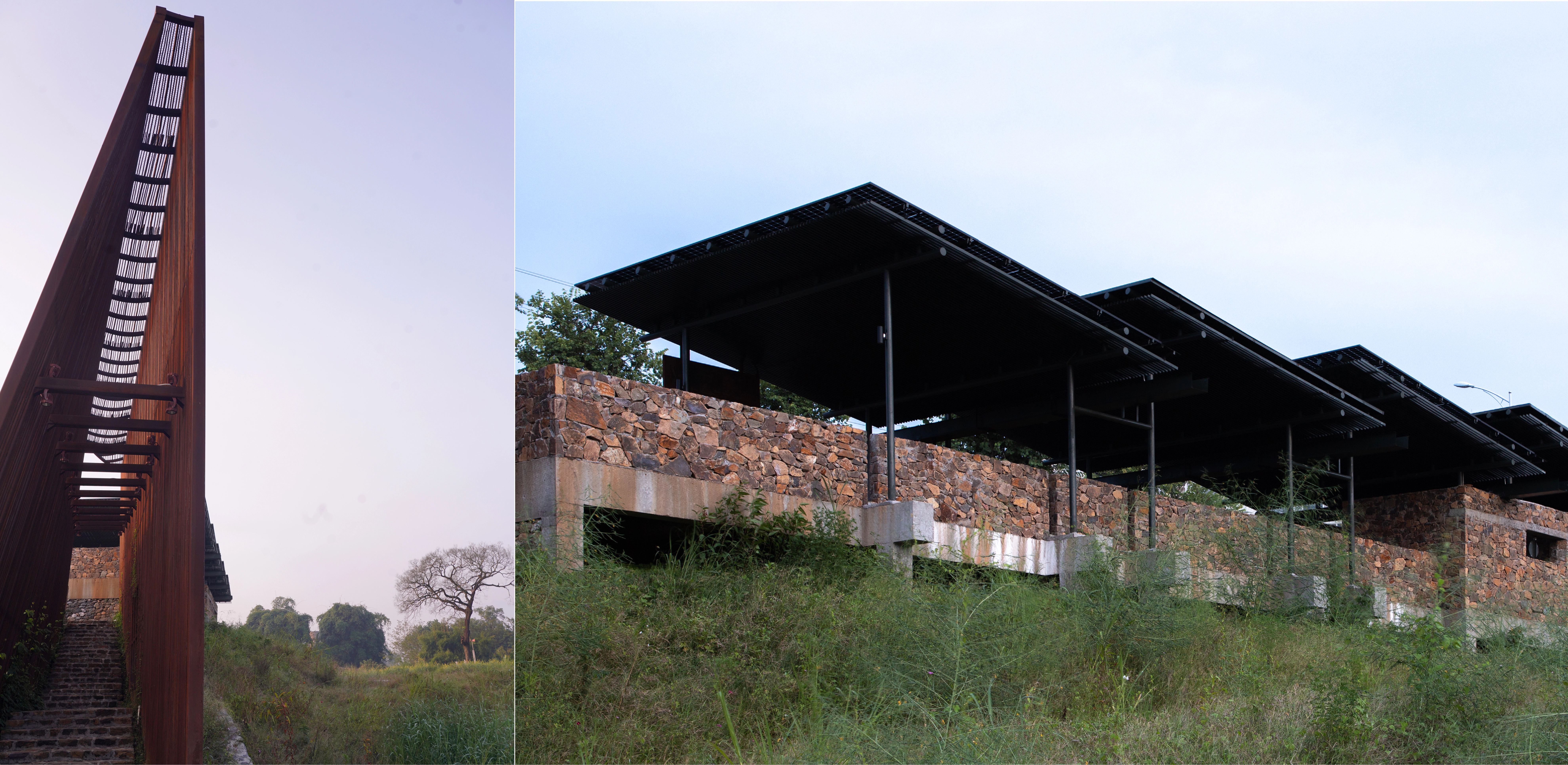
Overwater pavilions reflect Yao stilt houses, while the colonnade’s robust stonework recalls Hakka dwellings, both anchoring the design in regional traditions. Embedded glow stones trace the paths, evoking Yao cosmology. A participatory process engaged local artisans, reviving river-stone techniques and strengthening intergenerational craftsmanship.
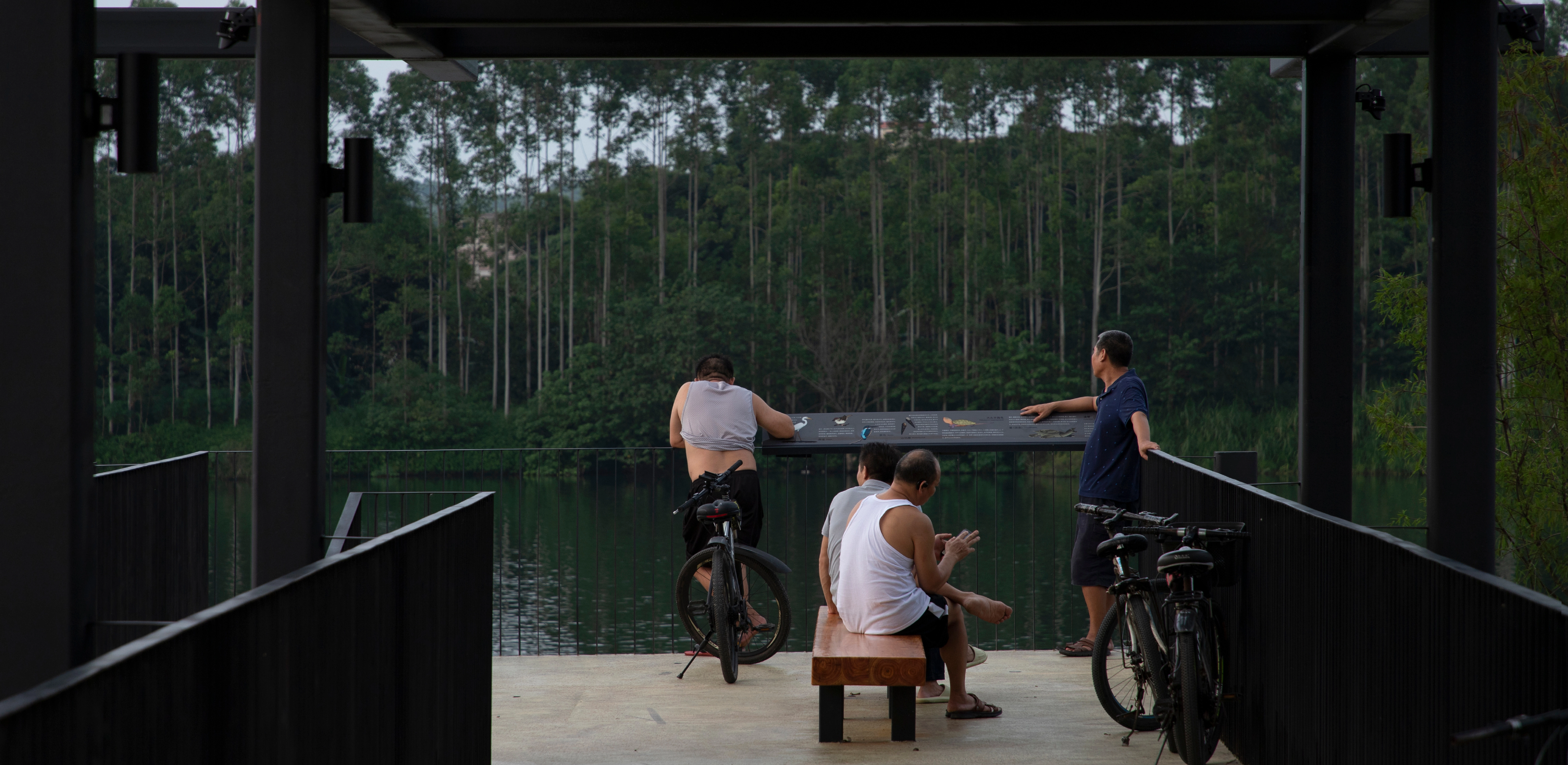
Seamless, full-route access for e-bikes and motorcycles—essential in rural China—integrates the park into daily life rather than making it a distant amenity. A reclaimed pipe-pile playground repurposes unused construction stock into a tactile playscape, inviting children to climb and explore while subtly educating visitors on material circularity. Unfenced edges and open circulation invite daily rhythms, from morning walks to evening strolls, dancing, and informal gatherings. A floodable pavilion shifts with the seasons, doubling as a kayak launch and communal stage, while stone embankments offer spaces for fishing and shellfishing along the water’s edge.
The community-managed framework ensures local participation in park maintenance. Low-maintenance, self-sustaining ecosystems require minimal human intervention, while a solar-roofed park station provides off-grid energy for basic site functions. Traditional upkeep methods—such as seasonal flood channel clearing and stone-filled reinforcement—are conducted by village teams, sustaining local autonomy.
Since opening, the park is used nearly 24 hours a day by villagers, not as a static design, but as a shared landscape that continues to evolve—shaped by shifting waters, collective hands, and the everyday life it sustains for a community long left without such spaces.
-
- Urban Research Institute of China Vanke - Design Management
- Congyi Li, Zheng Wang, Yufei Pei - Design managers
- Jiaxue Luo, Wei Cao, Keming Zhang, Zhuoqi Huang - Construction management team
- Shenzhen Branch of Zhonghangguorun (Shenzhen) Architectural Technology Development Co., Ltd. - Construction drawings
- CSCEC8B Southern Construction Co., Ltd - Construction constultant
- SHANGHAI ADDING PLUME LIGHTING DESIGN CO.,LTD - Lighting consultant
- Deep Origin Lab - Entrance Art installation
-
Products
- Furniture
- Fences/Gates/Walls
- Parks/Recreation Equipment
- Structures
- Hardscape
- Lighting
-
- Bald Cypress
- Common Reed
- Water Smartweed
- Giant Reed
- Water Spinach
- Chinese Arrowhead
- Water Plantain
- Camphor Tree
- Chinese Tallow Tree
- Chinaberry Tree
- Empress Tree
- Paper Mulberry
- Cedar
- Orchid Tree
- Virginia Creeper
- Nine-section Vine
- Honeysuckle
- Bamboo
- Elephant Grass
- Lemongrass
- Blackhair Grass
- Dandelion
- Chinese Violet
- Lobelia
- Bloodwort
- Polygonum Herb
- Mock Strawberry
- Sow Thistle
- Dayflower
Advertisement
Related Awards
Honor Award, General Design
Houston Arboretum & Nature Center
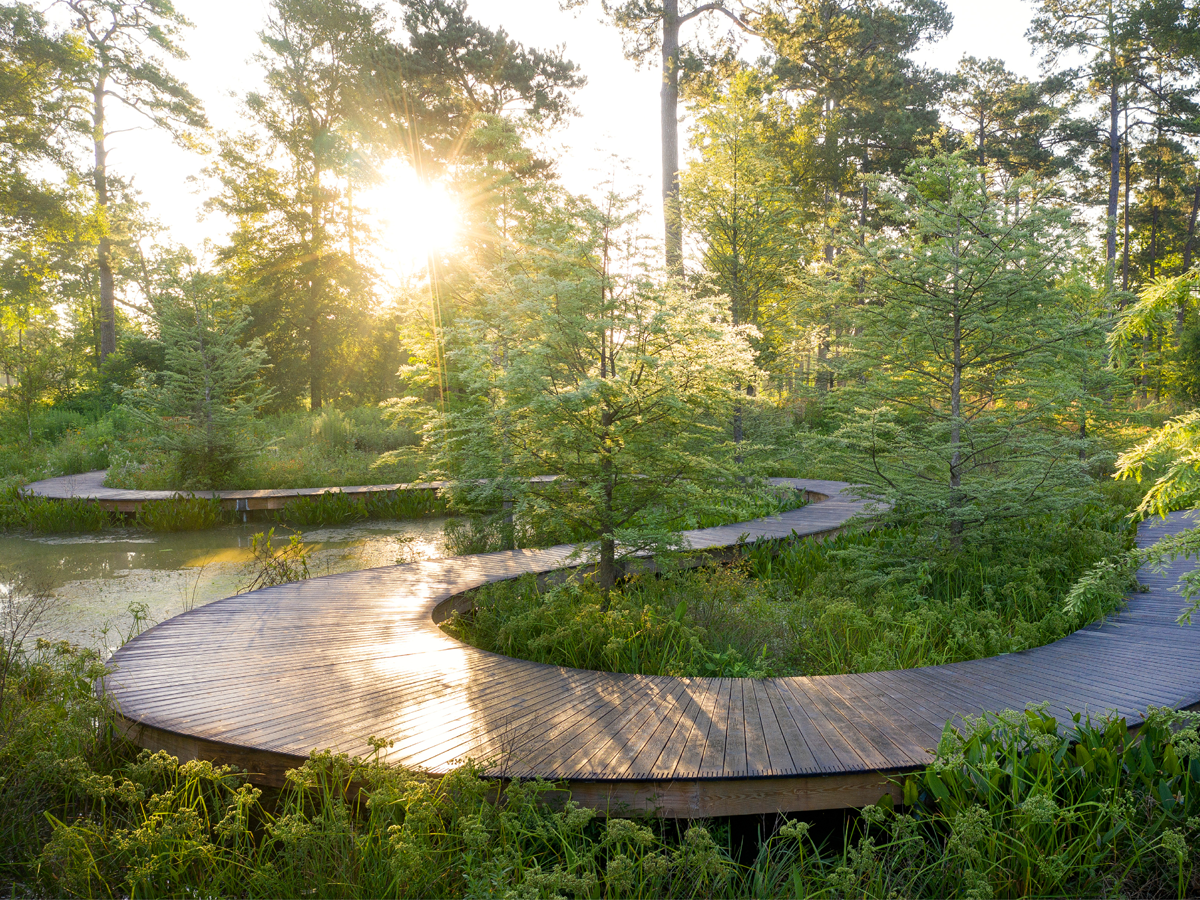
The Houston Arboretum & Nature Center sits within Memorial Park, one of the largest urban parks in the United States, in one of the nation's fastest growing and most climate-challenged cities. The site's story is one of repeated loss and deliberate reinvention. Hurricane Ike in 2008 and a severe drought in 2011 destroyed much of the Arboretum's tree canopy, exposing the limits of conventional reforestation in a city defined by flooding, heat, and ecological volatility.
Related Articles
ASLA Fund
American Society of Landscape Architects Announces its 2026 Student Awards
39 Student Award winners elevate the future of the landscape architecture profession
Aug 24 2026