
.webp?language=en-US)

.webp?language=en-US)
Kìwekì Point - Returning to One's Homeland
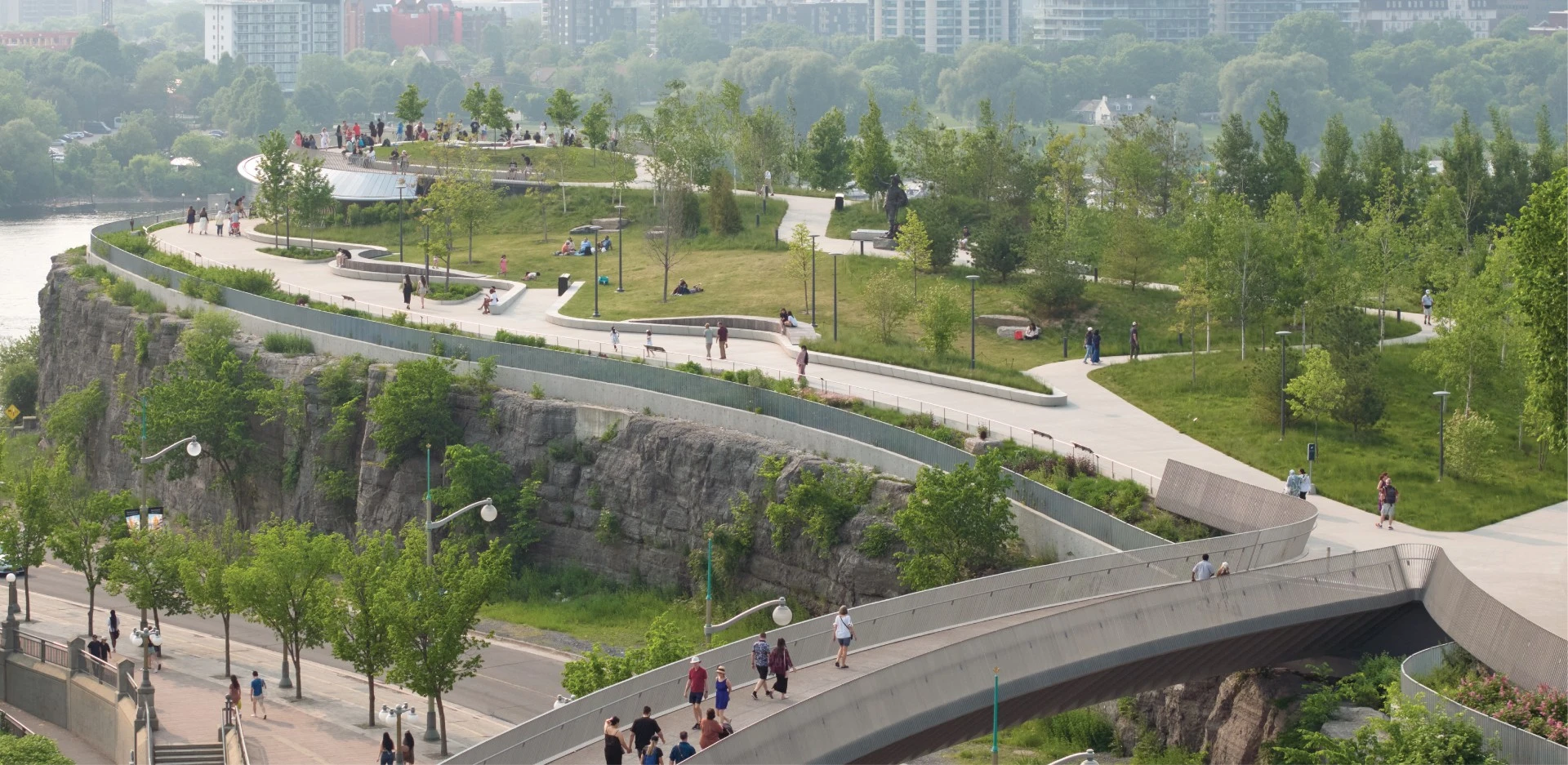
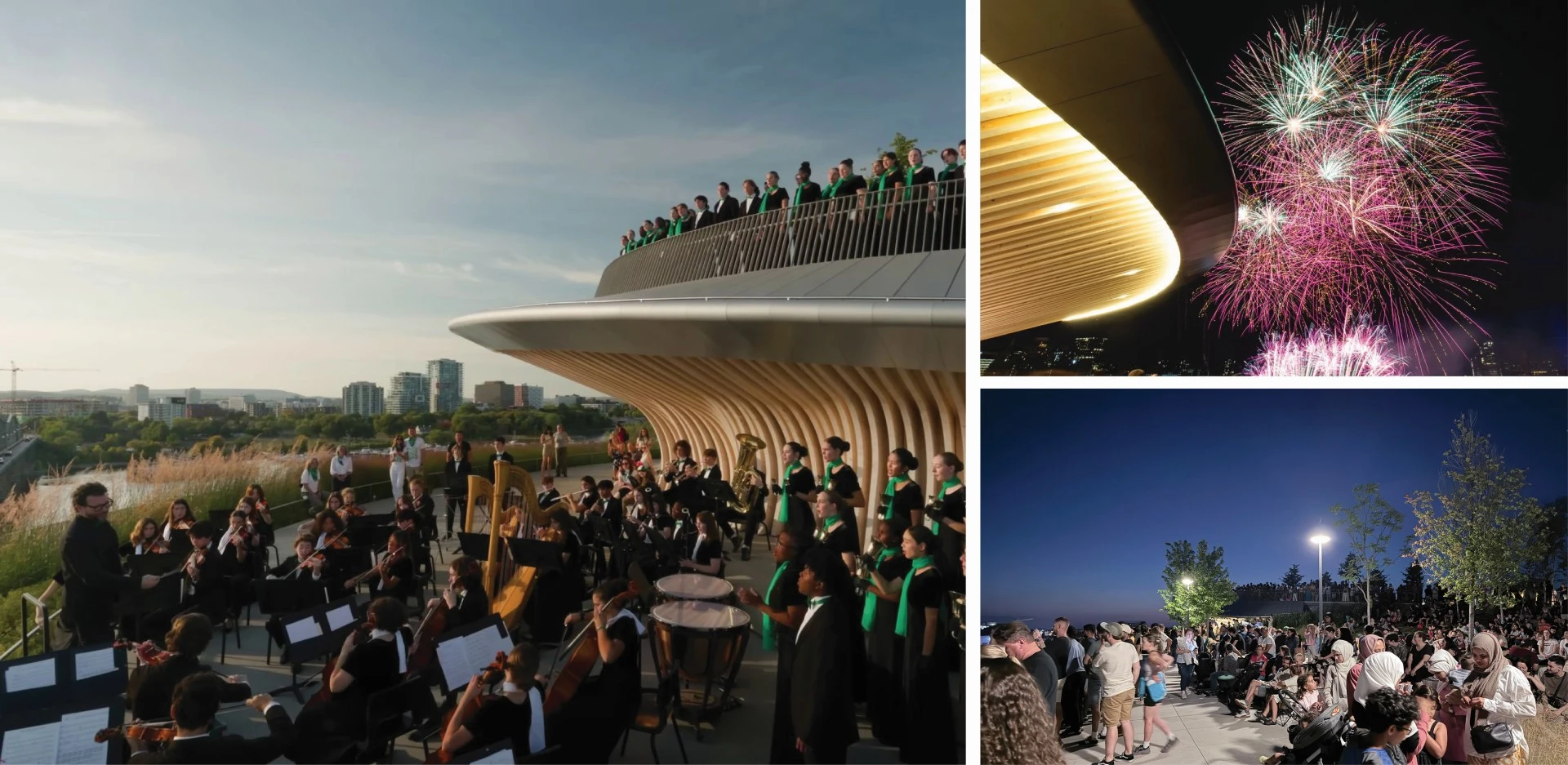
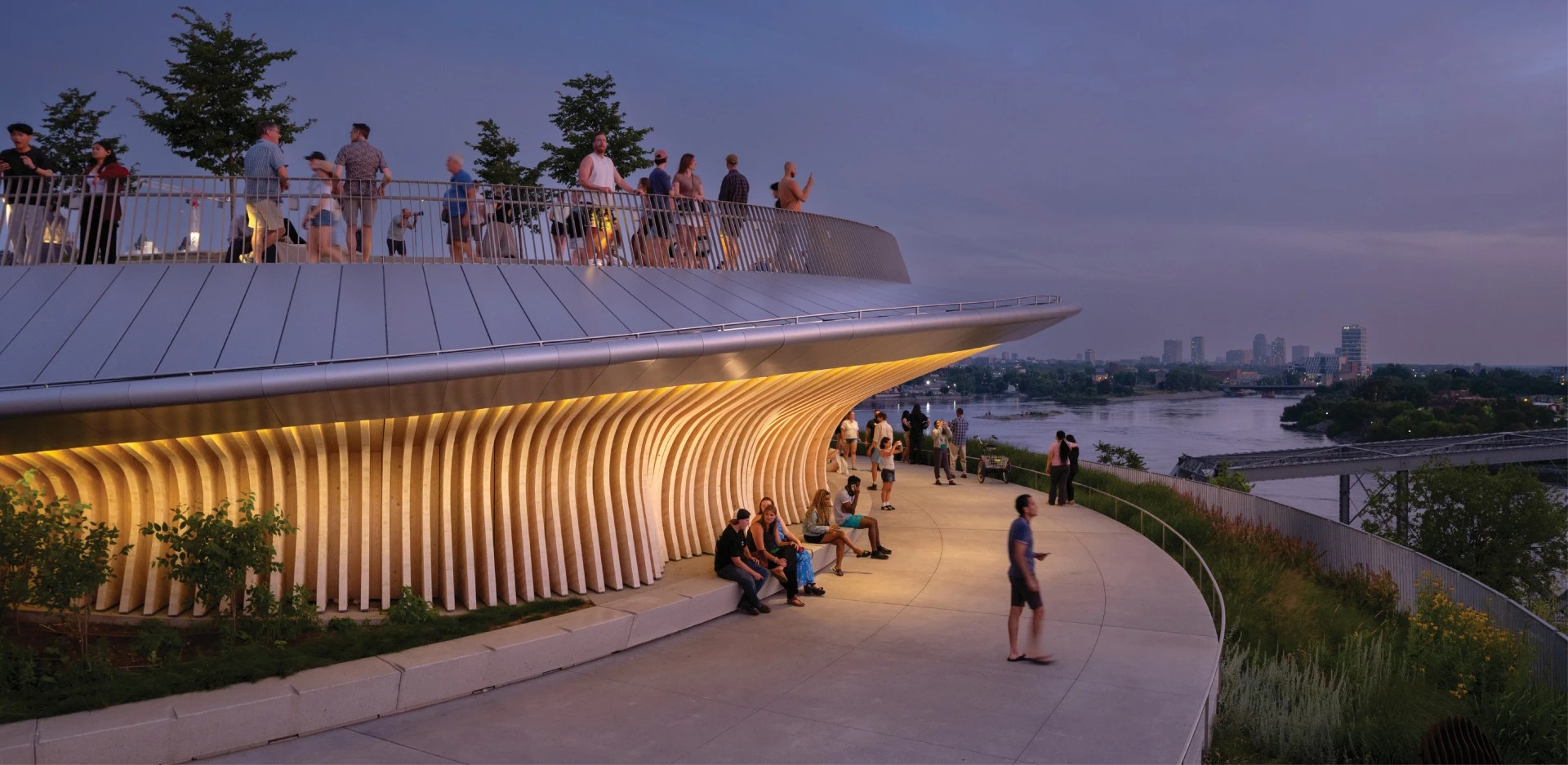
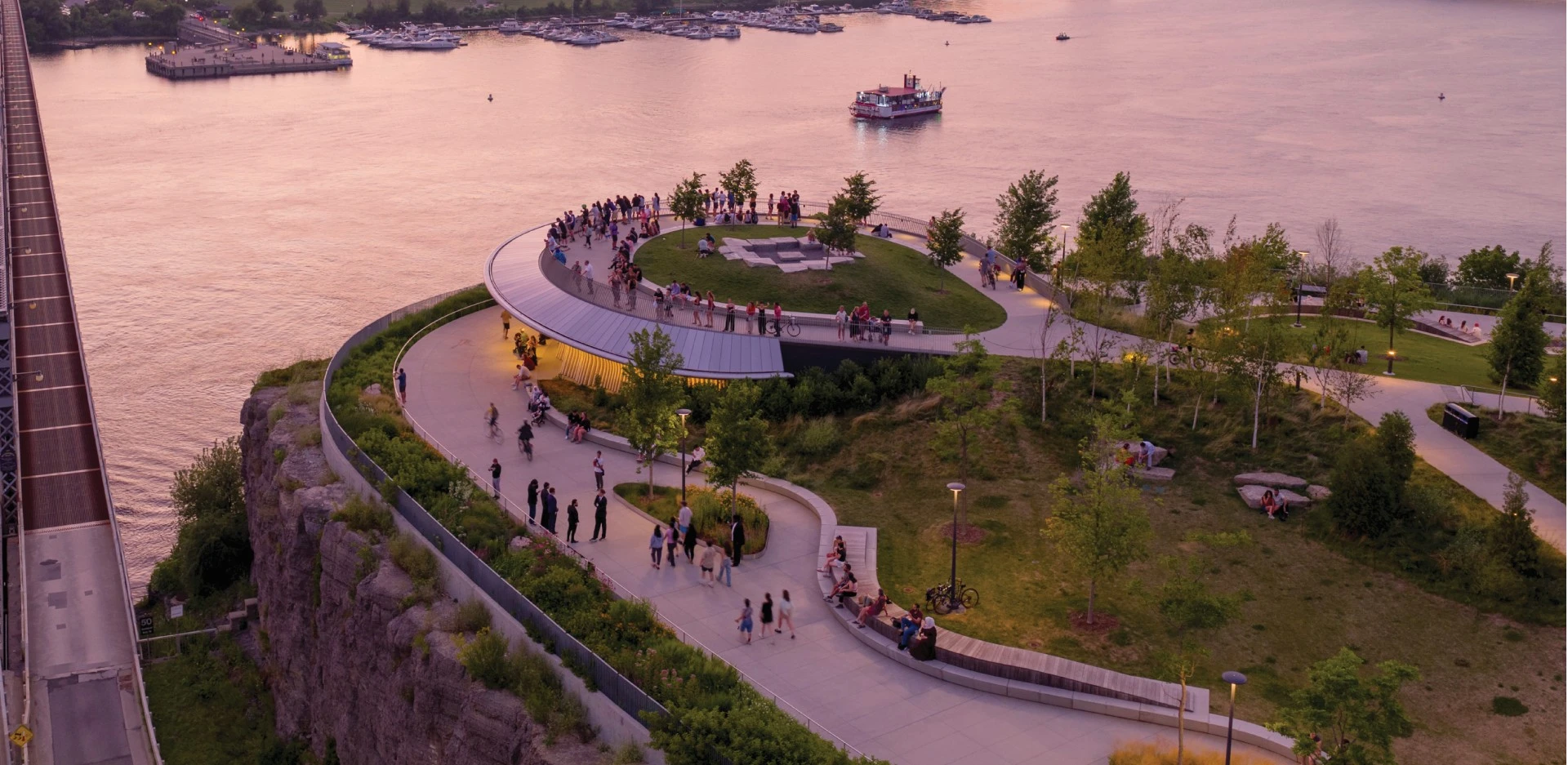
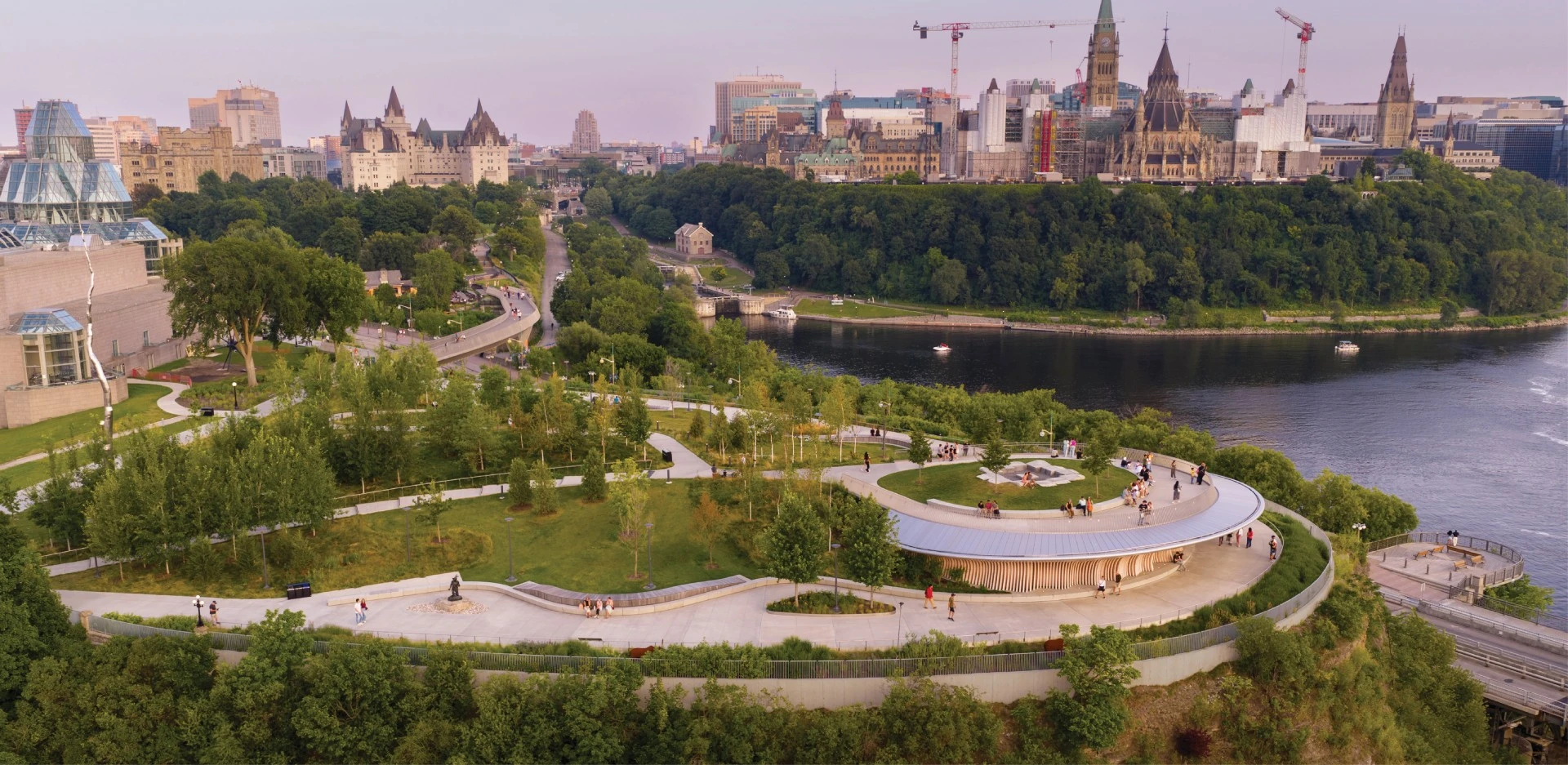
Courageous, precise, and deeply considered. A new standard for how landscape architecture can reframe national narratives without erasure.
Awards Jury
-
Kìwekì means “to return to one’s homeland” in Algonquin. Kìwekì Point challenges what it means to design a park in a nation’s capital, inviting visitors to return to the river and the land. The park is conceived as a sensory landscape that shifts attention away from monumentality toward the Ottawa River valley. New landforms, pathways, and ecologically rich plantings frame views, engage sound and scent, and create spaces for gathering and dialogue. These design moves recontextualize two existing monuments within a broader landscape experience. Renamed by the host Anishinaabe Algonquin Nation, the park layers complex histories and restores Indigenous storytelling to the promontory, informed by extensive engagement and connection to place.
-
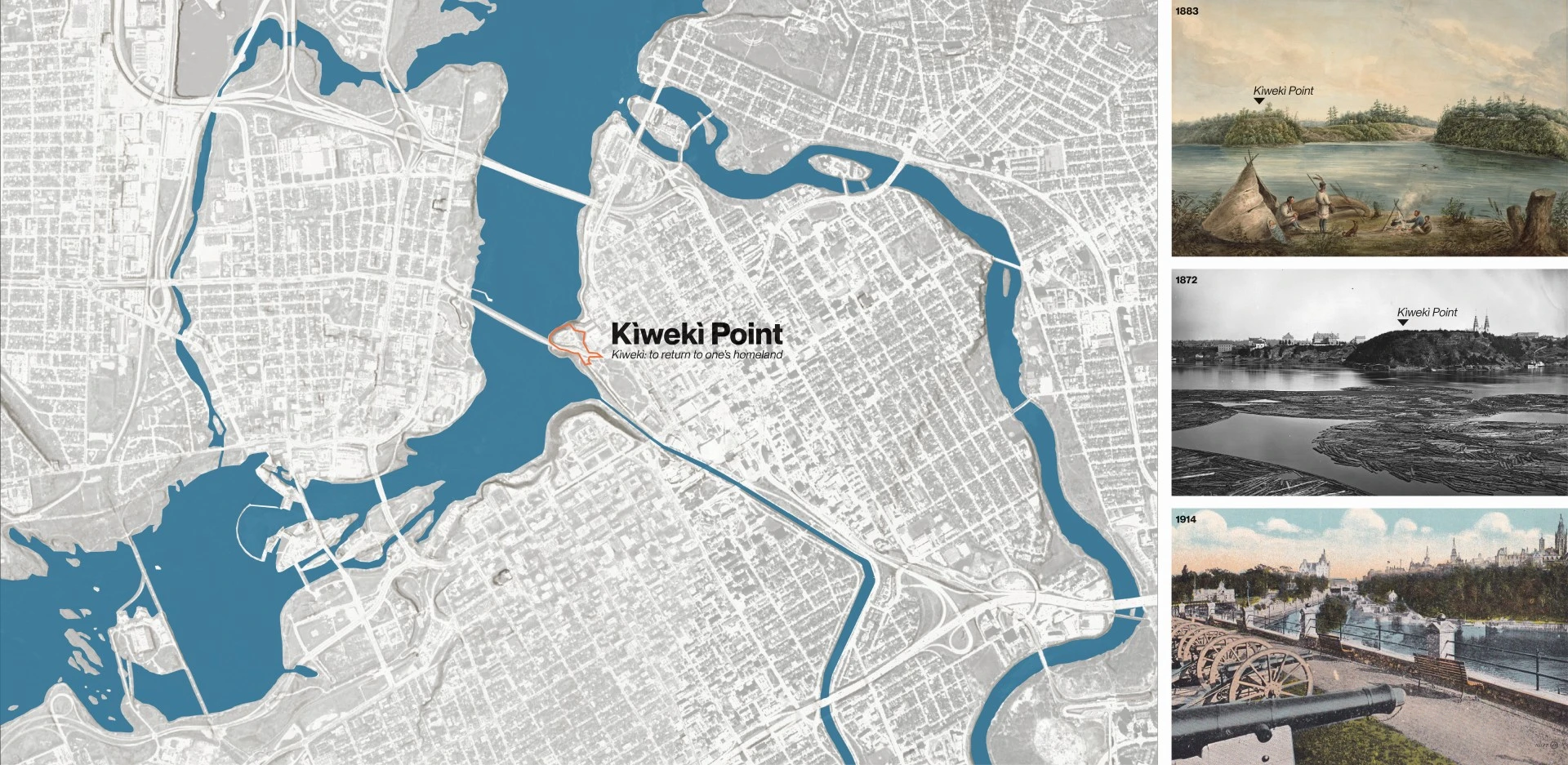
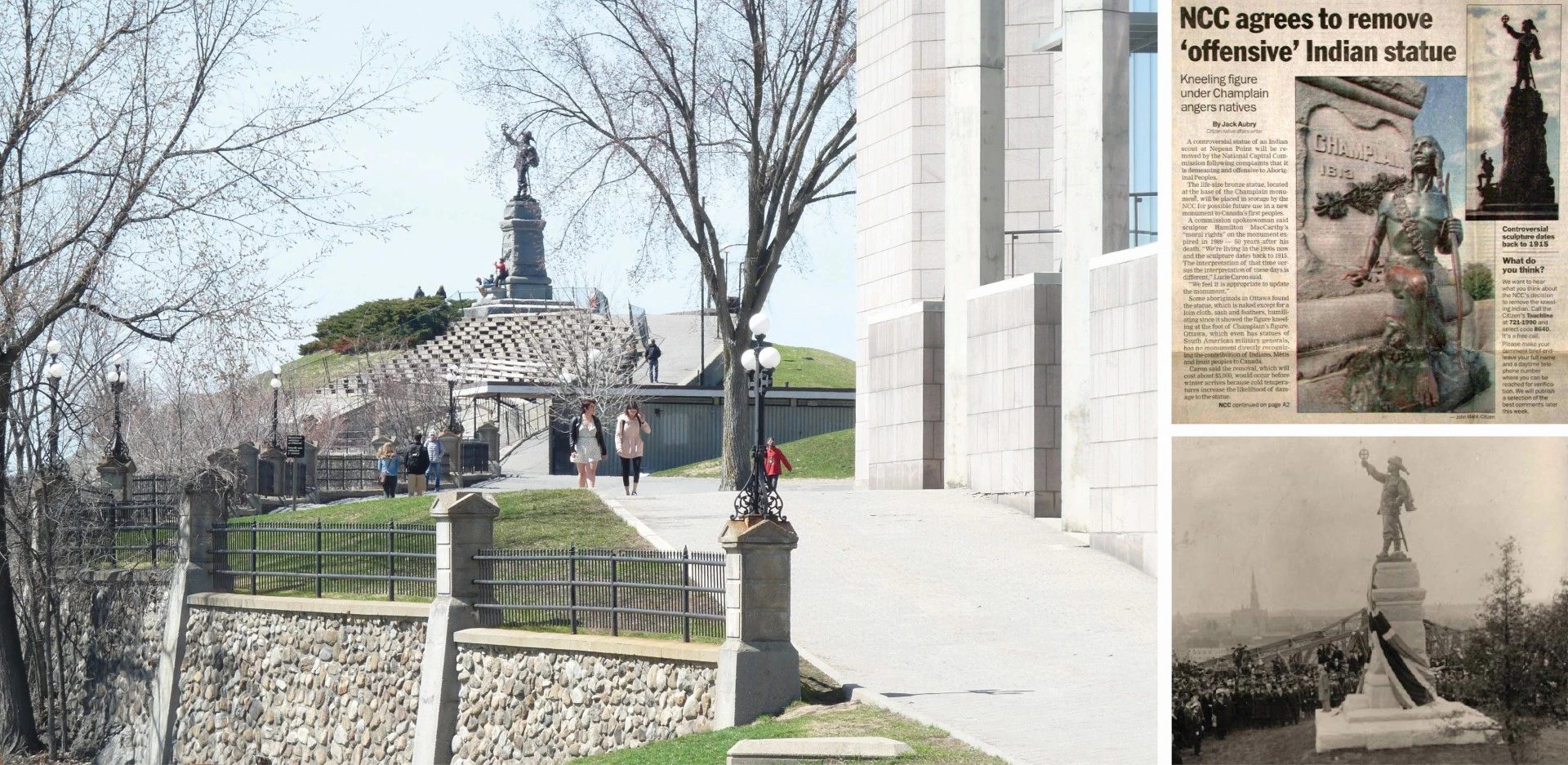
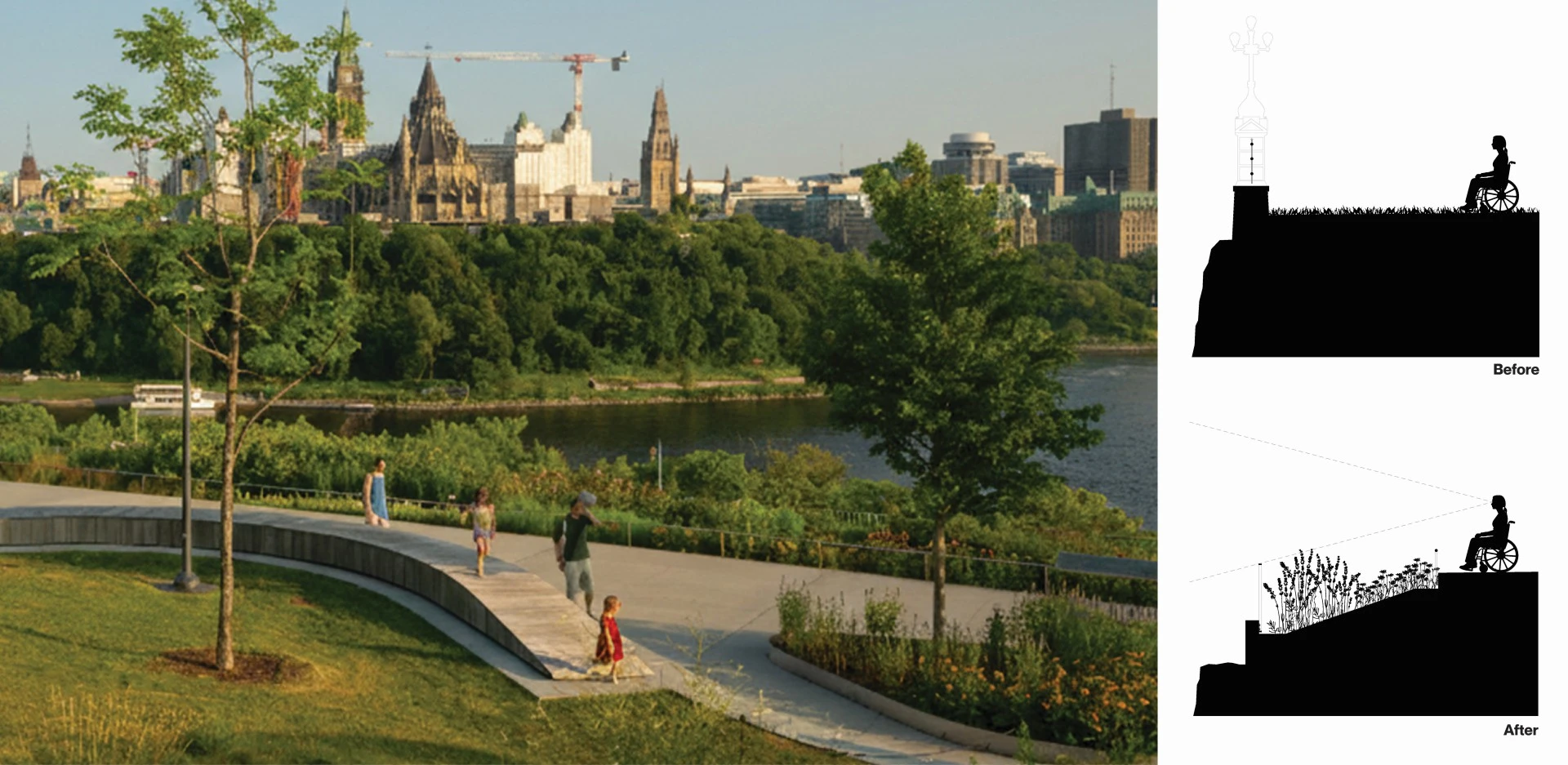
Kìwekì Point is a new civic landscape in Canada’s capital, located near Parliament on a formerly inaccessible promontory overlooking the Kichi Zibi (Ottawa River). The project reimagines a park long dominated by a colonial monument as an inclusive, ecologically rich public space that reconnects visitors to the river and reveals multiple stories of the land. Previously known as Nepean Point, the site offered panoramic views yet remained largely underused for over two decades due to mold, asbestos, and failing infrastructure. A steep, vehicle-oriented entrance encouraged unsafe crossings and severed the park from Ottawa’s public space network. At its centre, a controversial monument to Samuel de Champlain asserted a singular narrative, visually dominating the lawn and river valley.
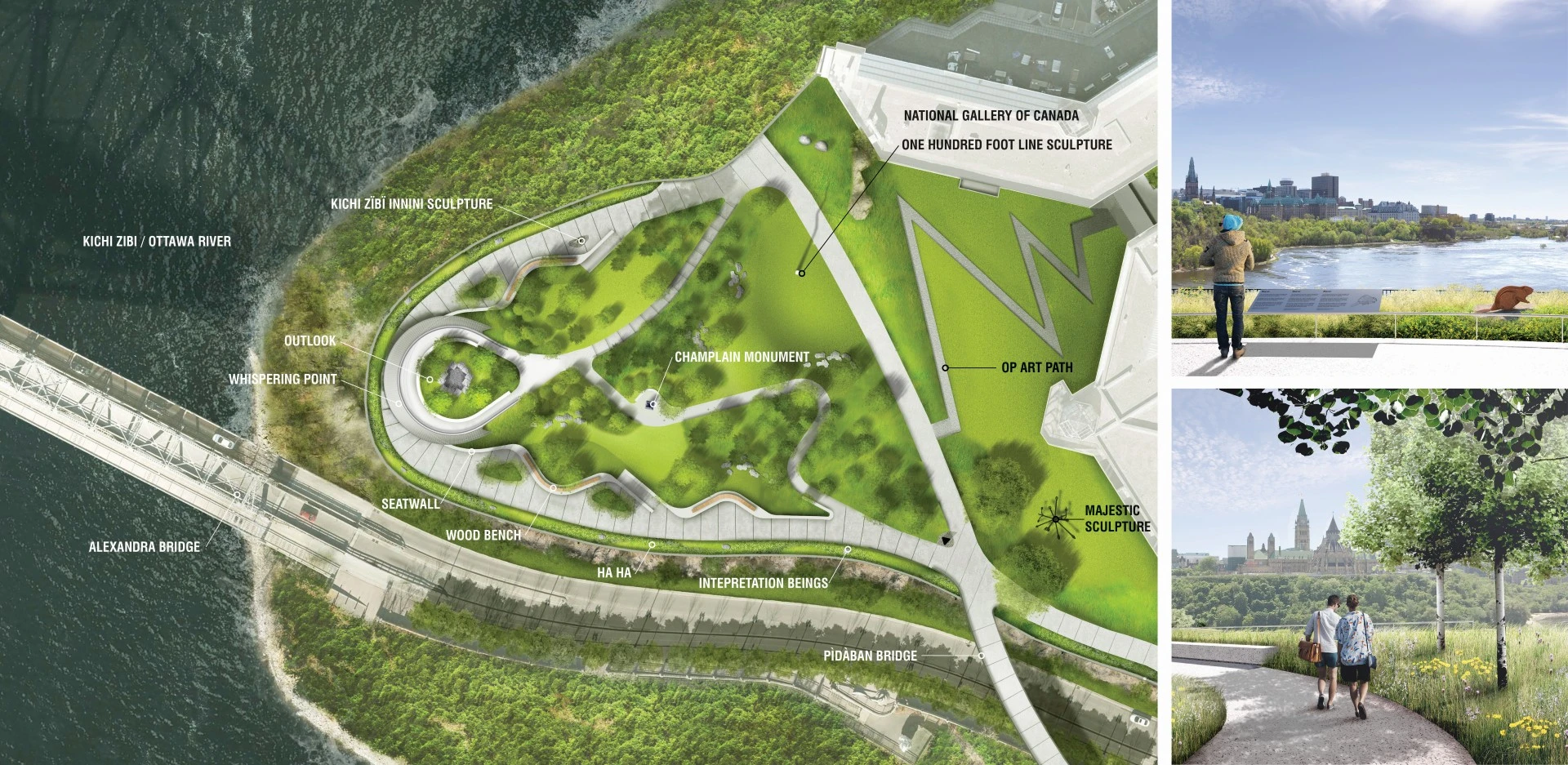
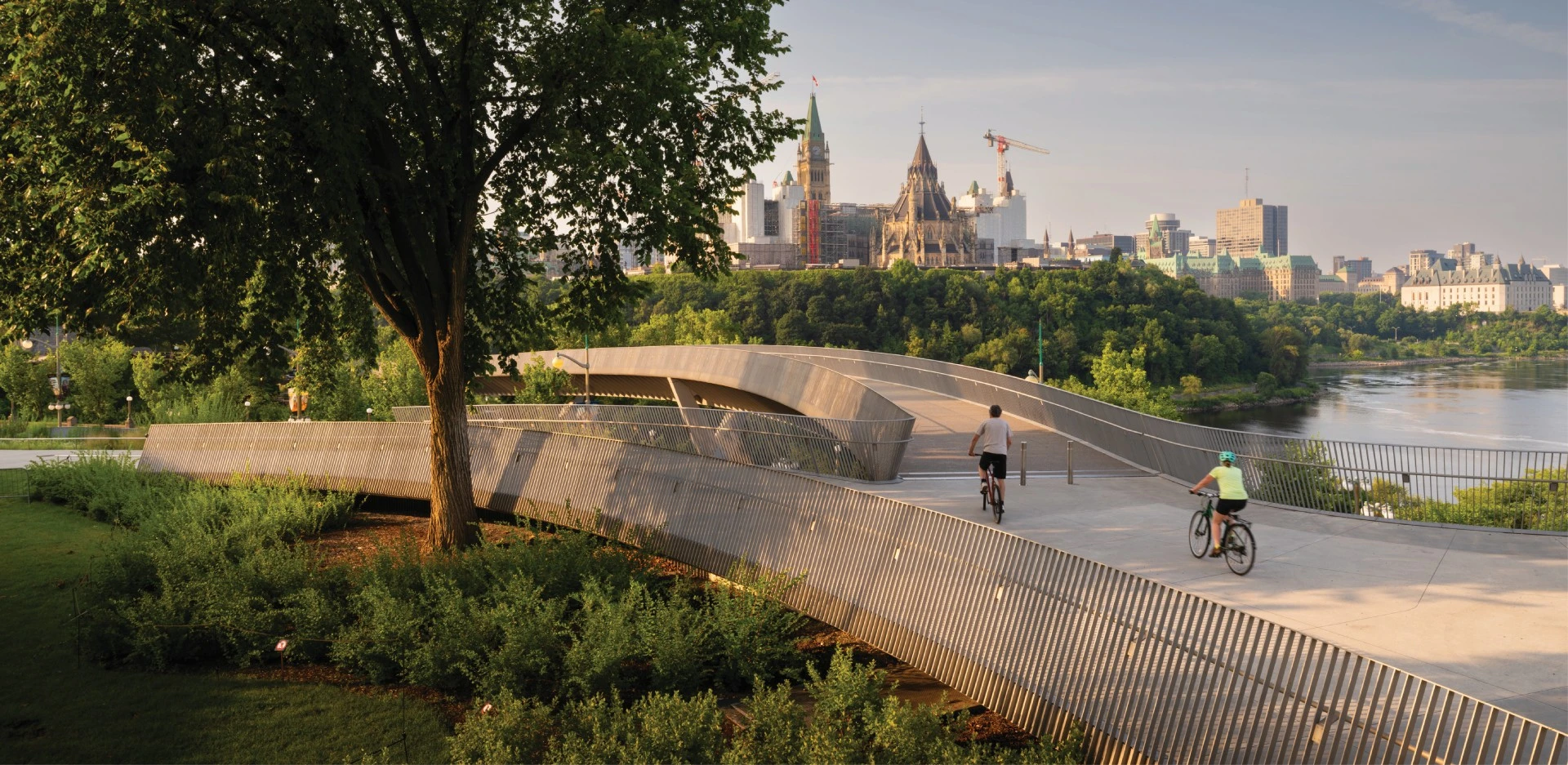
In response to these challenges, Kìwekì Point strengthens Ottawa’s social and environmental fabric through close collaboration with Indigenous communities. Designed for year-round use, the park enhances biodiversity, manages stormwater, and reduces operational carbon through low-maintenance, drought-tolerant planting. The new Pìdàban Bridge establishes a critical pedestrian and cycling link to the regional open space network while navigating complex cliff conditions. At the promontory’s edge, Whispering Point, a sculptural pavilion of Alaskan Yellow Cedar, offers shelter and orients visitors toward the river.
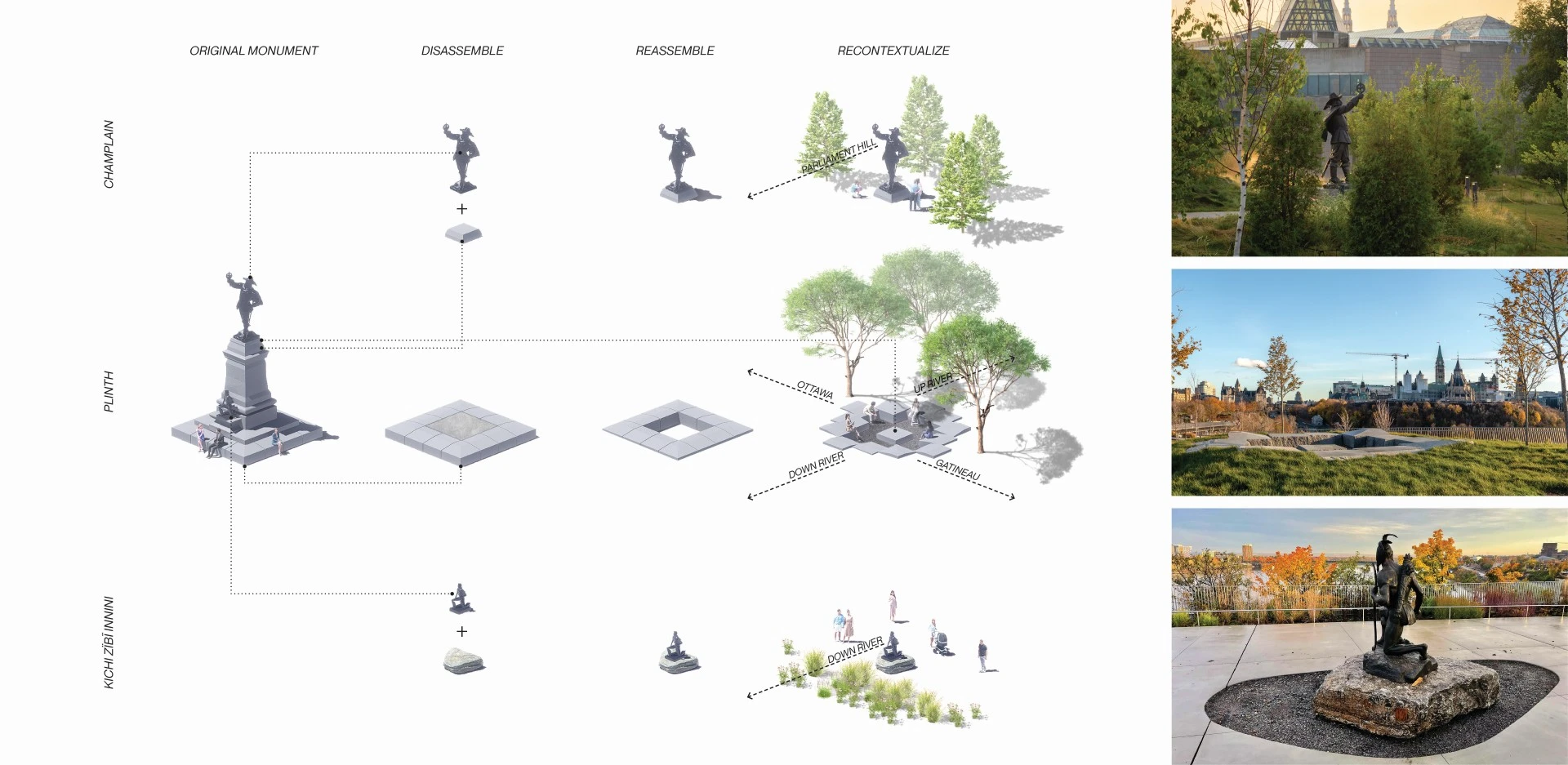
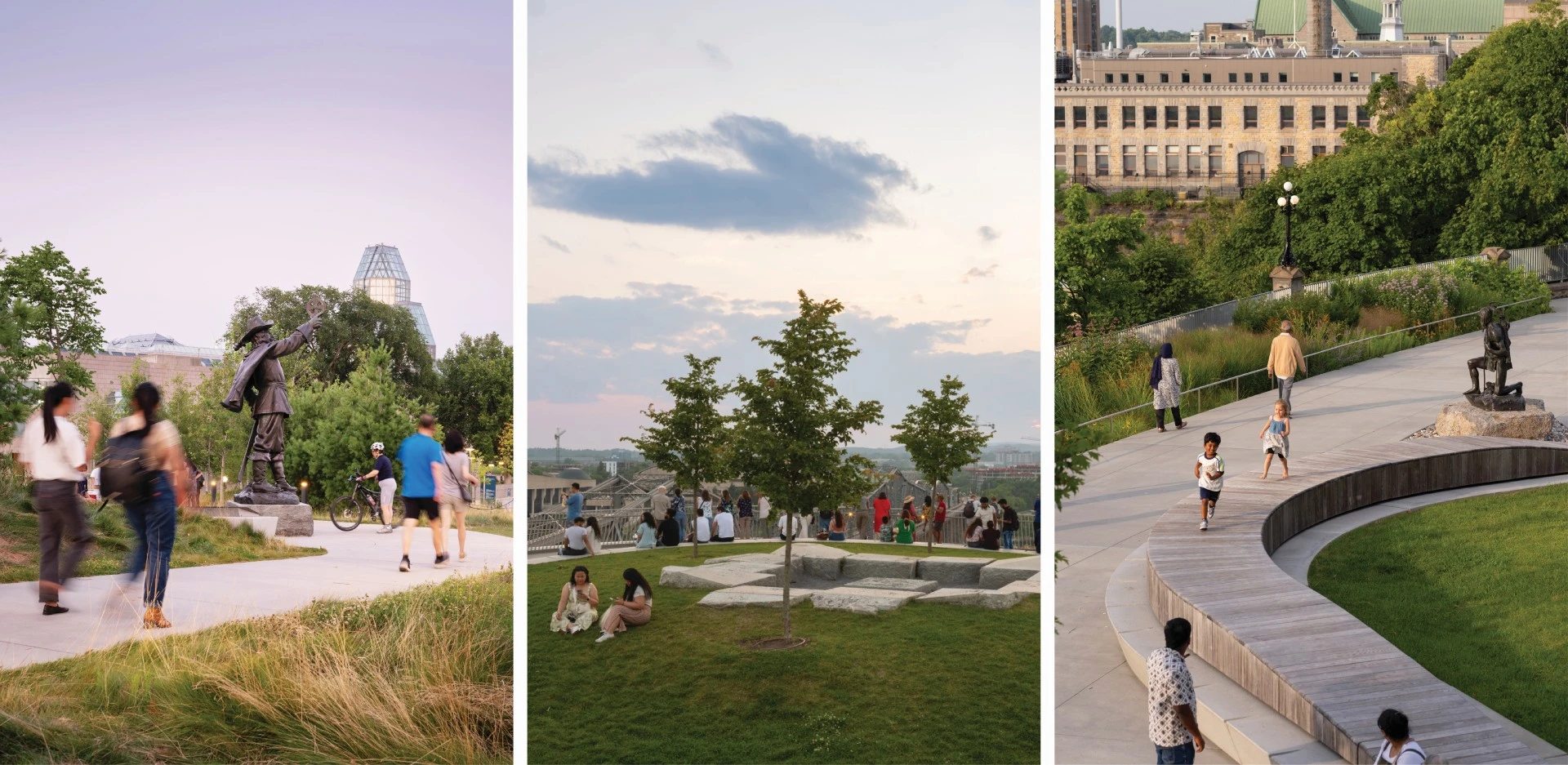
Collaboration with the Algonquins of Pikwakanagan and Kitigan Zibi Anishinabeg informed multiple layers of the design, including a new interpretive framework rooted in Algonquin perspectives. This engagement led to the renaming of the site Kìwekì Point (“to return to one’s homeland”) and the bridge Pìdàban (“dawn”), and to the recontextualization of the monuments. The Kichi Zibi Innini (Anishinaabe Scout) statue was relocated to a new site selected by the local Indigenous community. The Champlain monument was relocated to a white pine grove, its placement informed by diary accounts of Champlain’s first visit to this region, reducing its visual dominance. Its granite plinth was reused as seating for reflection and gathering.
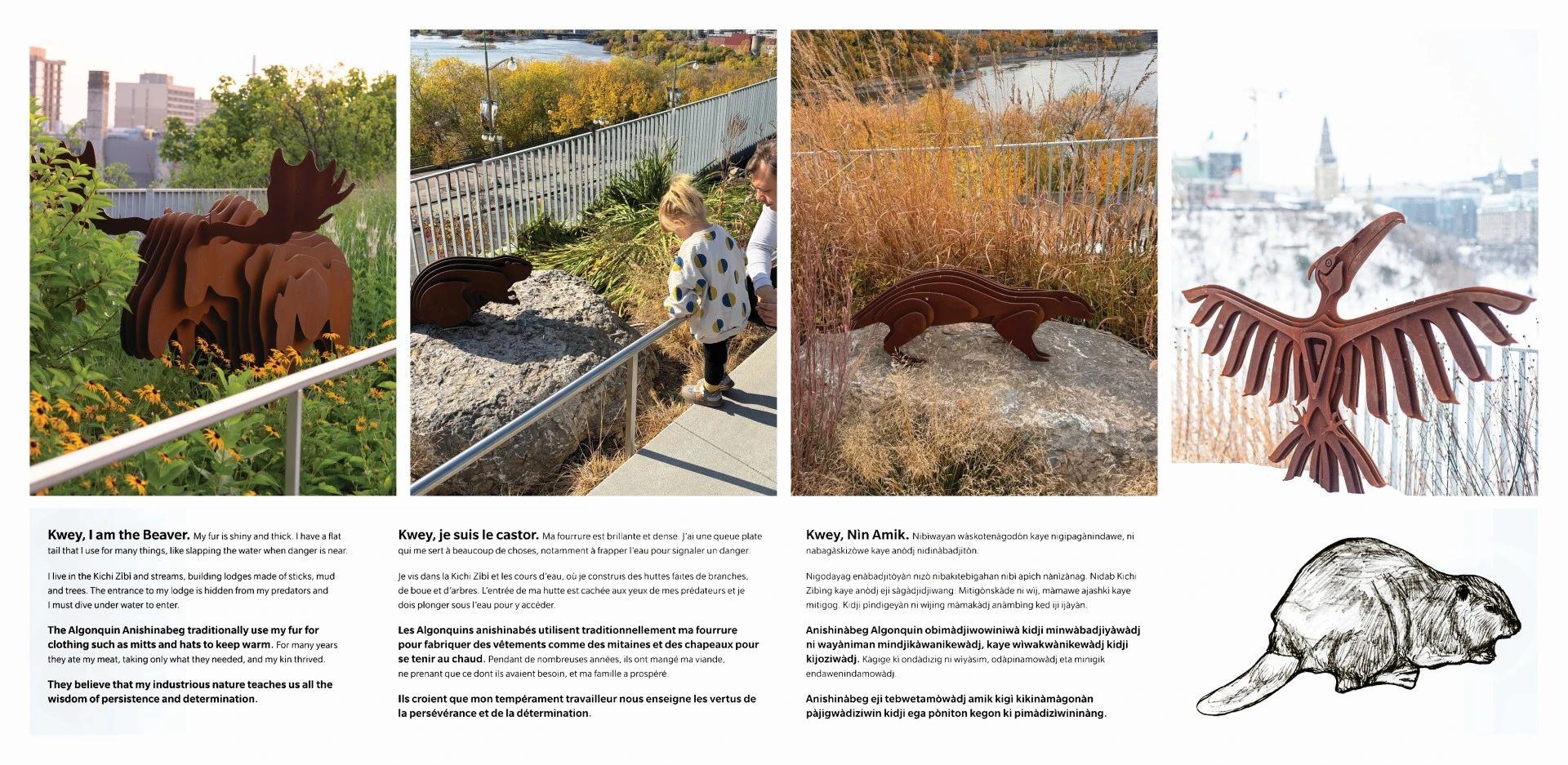
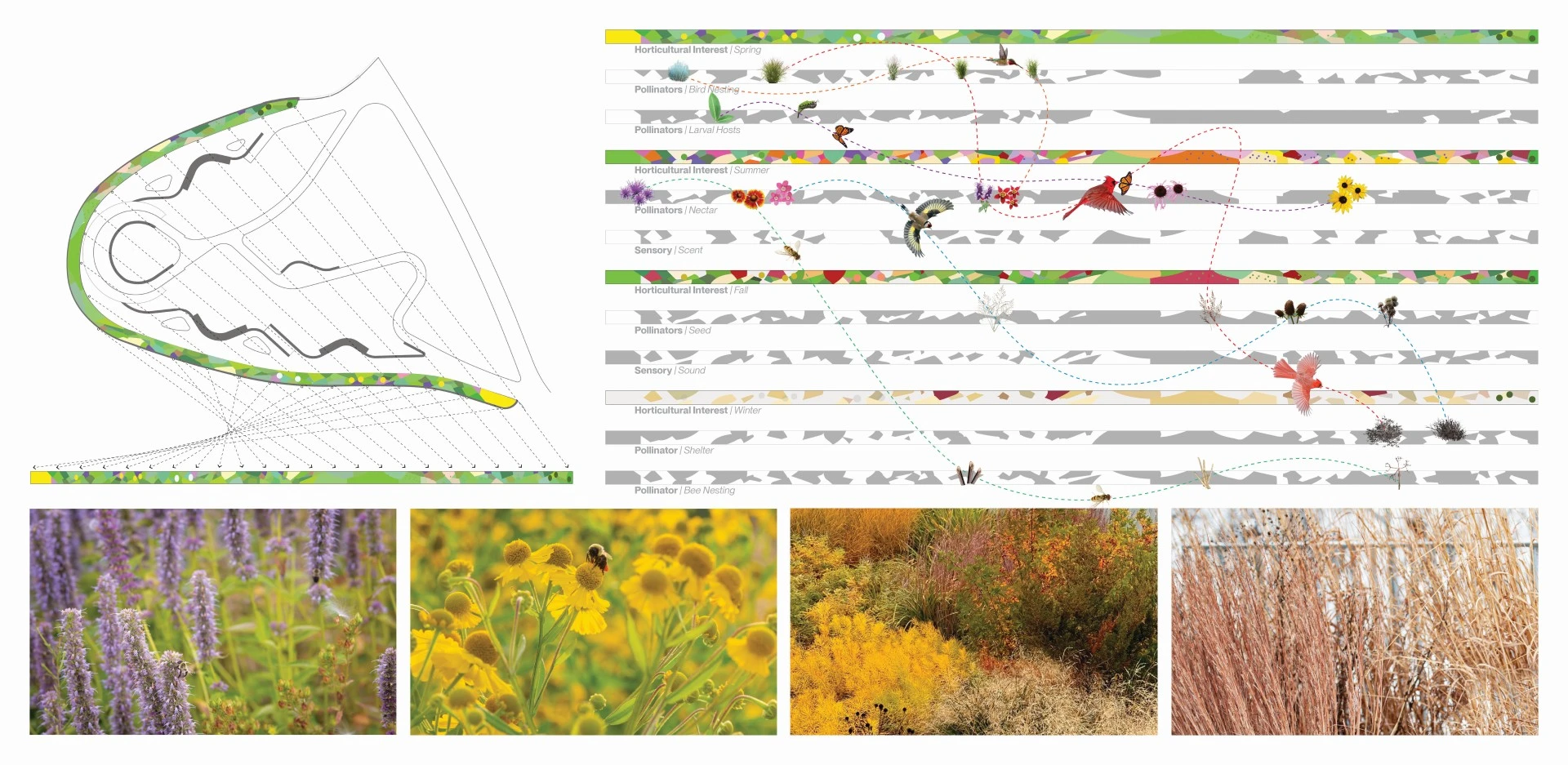
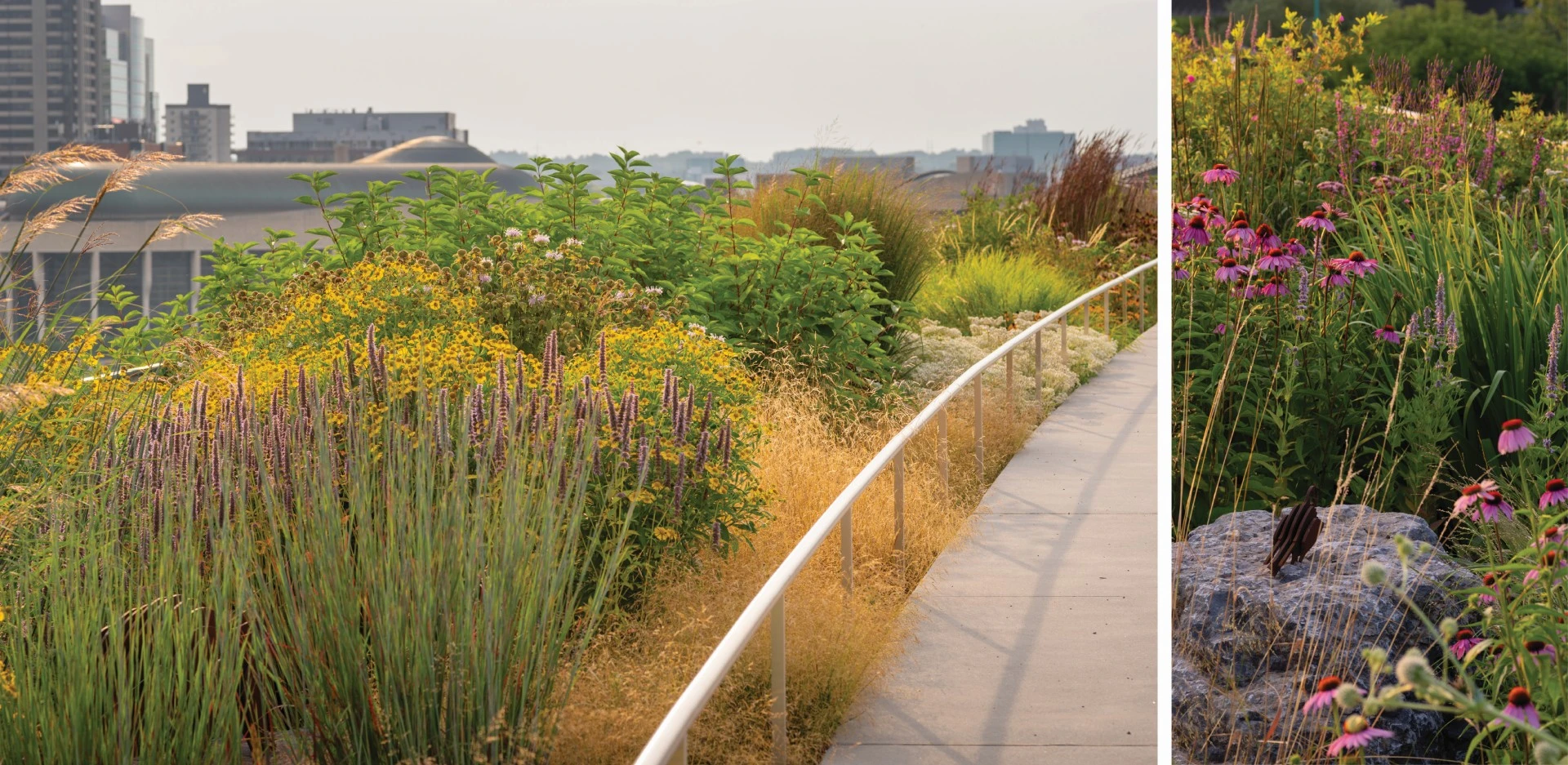
Ottawa’s horticultural legacy informed a resilient planting strategy blending ecological performance with cultural reference. A recessed ha-ha dissolves the park perimeter and conceals safety barriers, providing uninterrupted river views. Along this edge, a 1,200 m² linear garden of nearly 9,000 native and nativar pollinator plants softens the escarpment. Seven river-associated creatures, selected in consultation with Algonquin communities, are embedded in the planting and paired with trilingual interpretive panels illustrated by Algonquin artist John Tenasco.
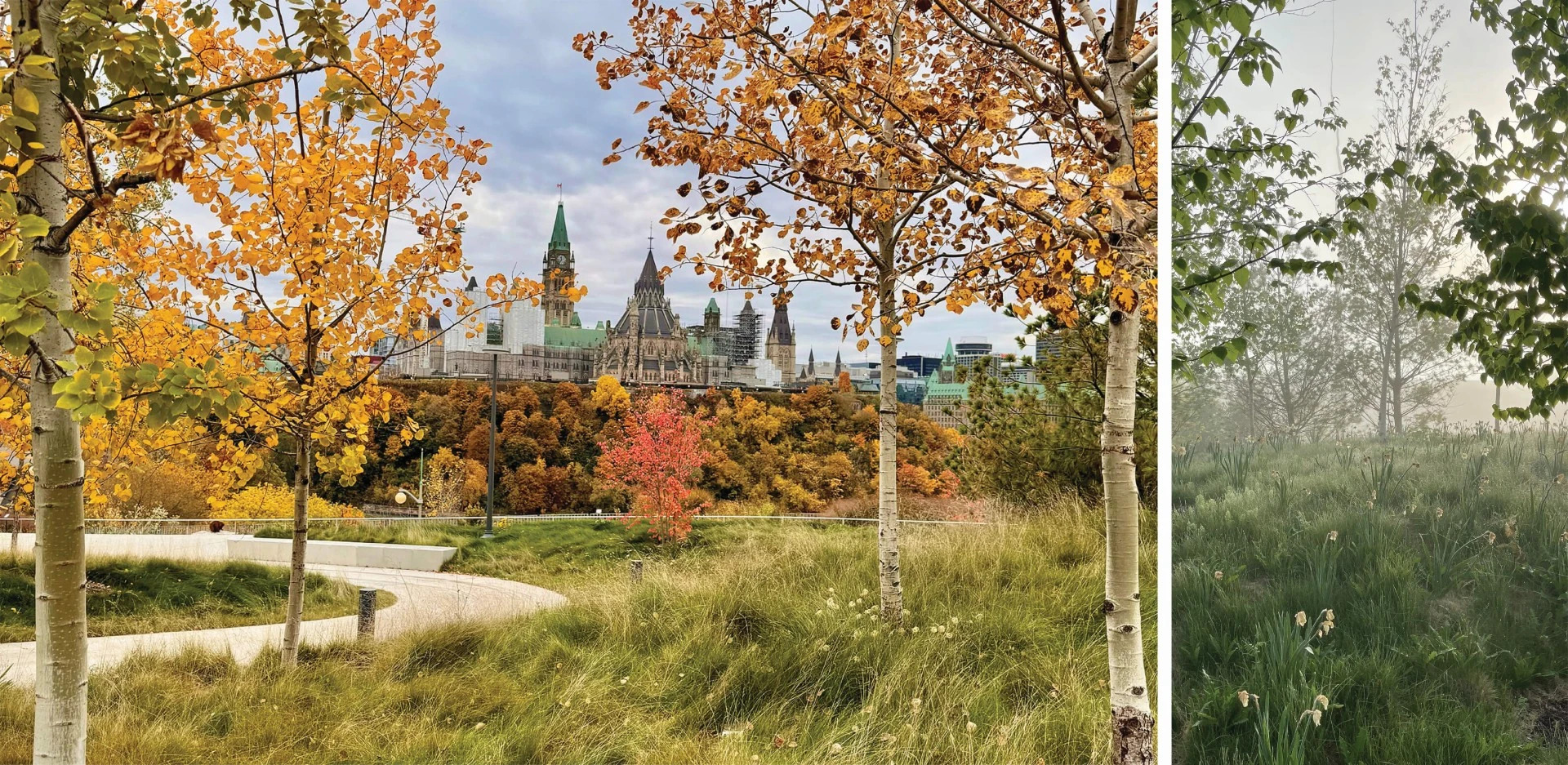
Within the park, 264 metres of seating define open meadows planted with drought-tolerant fescue requiring no irrigation and a single annual cut. The landscape includes 150 new trees, 2,100 native perennials, and 13,500 spring bulbs, providing habitat, shade, and seasonal change. Tree placement was inspired by psithurism, the sound of wind through leaves. Circulation and infrastructure preserve two 80-year-old white elms at the park gateway. Kìwekì Point demonstrates how landscape architecture can reconcile history, elevate community voices, and operate in an ecologically sound manner while reframing national narratives, inviting all who visit to return to the river and the land.
-
- Garry Meus, National Capital Commission, Senior Landscape Architect (Client Contact)
- Janet Rosenberg, Landscape Architect
- Wayne Swanton, JRS, Principal in Charge
- Nicholas Gosselin, JRS Senior Associate & Project Leader
- Robert Beaudin, JRS Horticulturist
- Bang Wang, JRS Junior Landscape Designer
- Patkau Architects, Pavilion and Bridge Design
- Blackwell Engineers, Structural Engineering
- ERA Architects, Heritage/Interpretation
- MCLD, Lighting
- EXP, Engineering
- CIMA, Transportation
-
- Custom domestic thermally-modified ash wooden benches by Racks Unlimited — Furniture
- Custom precast concrete seatwalls by Wausau Tile — Furniture
- Storm Chamber and Pipework by Stormtech — Drainage/Erosion
- Silva Cells by DeepRoot — Drainage/Erosion
- Trench Drains by ACO Canada — Drainage/Erosion
- Custom stainless steel guardrails by Walters Group Inc. and custom galvanized guardrails by Marc Marine Welding — Fences/Gates/Walls
- Irrigation components by Hunter Industries — Irrigation
- Stainless steel edging by Marc Marine Welding — Lumber/Decking/Edging
- Water Fountain by Most Dependable Fountains, Inc. — Parks/Recreation Equipment
- Custom sandblasted concrete — Hardscape
- BEGA — Lighting
-
- Acer rubrum
- Acer saccharum
- Acer x freemanii
- Betula papyrifera
- Celtis occidentalis
- Gymnocladus dioicus
- Populus tremuloides
- Prunus serotina
- Quercus macrocarpa
- Tilia Americana
- Juniperus virginiana
- Pinus strobus
- Thuja occidentalis
- Amelanchier alnifolia
- Cornus racemosa
- Cornus sericea
- Forsythia suspensa
- Hypericum kalmianum
- Hypericum prolificum
- Lindera benzoin
- Rhus aromatica
- Rhus typhina
- Rosa carolina
- Rosa Hansa
- Rosa setigera
- Rubus odoratus
- Salix candida
- Spirea tomentosa
- Symphoricarpos albus
- Syringa x prestoniae
- Viburnum cassinoides
- Andropogon gerardii
- Bouteloua gracilis
- Carex pensylvanica
- Calamagrostis canadensis
- Deschampsia cespitosa
- Panicum virgatum
- Schizachyrium scoparium
- Sorghastrum nutans
- Sporobolus heterolepis
- Agastache foeniculum
- Allium cernuum
- Amorpha canescens
- Anaphalis margaritacea
- Artemisia ludoviciana
- Aquilegia canadensis
- Asclepias incarnata
- Asclepias syriaca
- Asclepias tuberosa
- Aster divaricatus
- Aster laevis
- Aster novae angliae
- Aster oolentangiensis
- Aster shortii
- Baptisia australis
- Callirhoe digitata
- Coreopsis lanceolata
- Echinacea pallida
- Echinacea purpurea
- Echinacea 'Rubinstern'
- Eryngium yuccifolium
- Eupatorium maculatum
- Eupatorium rugosum
- Geranium maculatum
- Geum triflorum
- Gillenia trifoliata
- Helenium autumnale
- Iris versicolor
- Liatris cylindracea
- Liatris spicata
- Monarda fistulosa
- Monarda punctata
- Penstemon digitalis
- Penstemon hirsutus
- Ratibida pinnata
- Rudbeckia fulgida Deamii
- Rudbeckia hirta
- Rudbeckia subtomentosa
- Verbena hastata
- Verbena stricta
- Veronicastrum virginicum
- Chionodoxa luciliae
- Narcissus Ice Follies
- Scilla siberica
Advertisement
Related Awards
Honor Award, General Design
Houston Arboretum & Nature Center
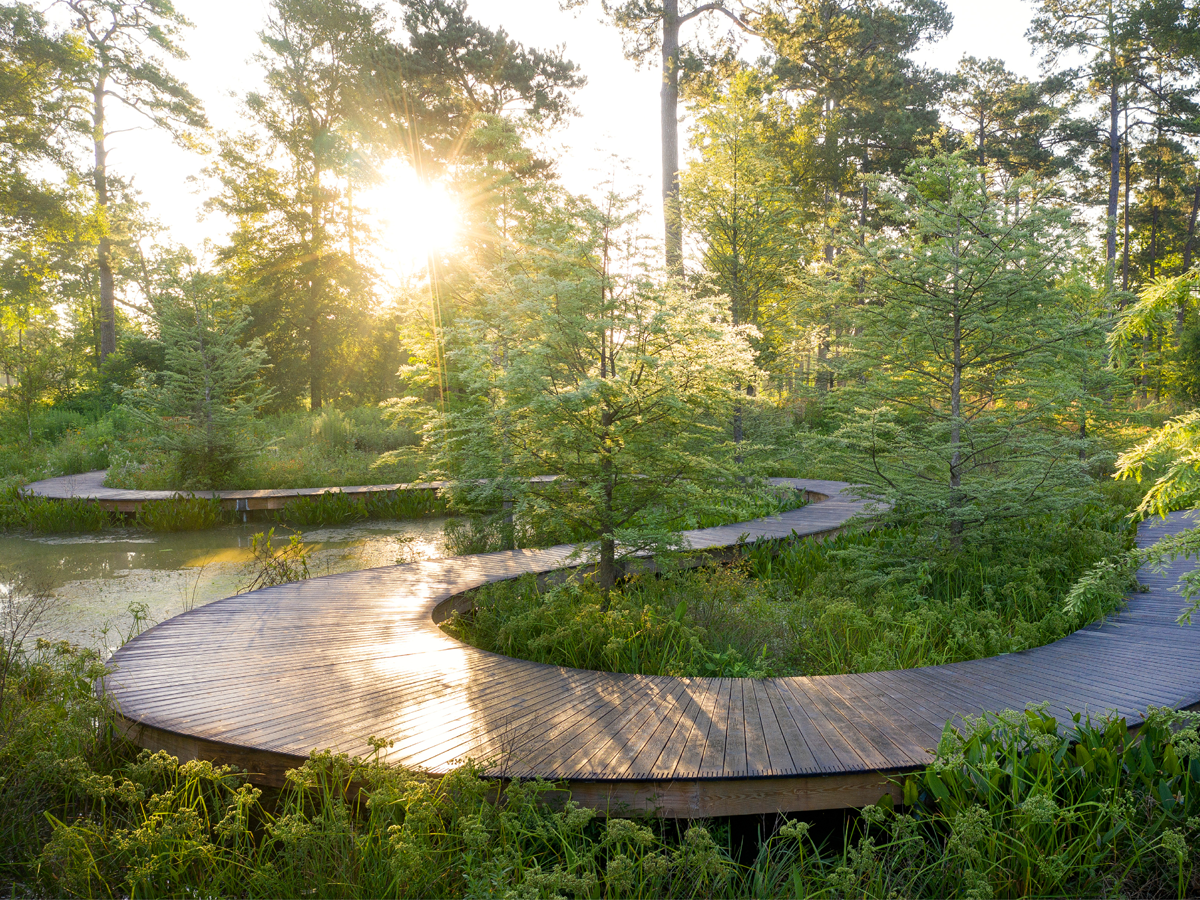
The Houston Arboretum & Nature Center sits within Memorial Park, one of the largest urban parks in the United States, in one of the nation's fastest growing and most climate-challenged cities. The site's story is one of repeated loss and deliberate reinvention. Hurricane Ike in 2008 and a severe drought in 2011 destroyed much of the Arboretum's tree canopy, exposing the limits of conventional reforestation in a city defined by flooding, heat, and ecological volatility.