
.webp?language=en-US)

.webp?language=en-US)
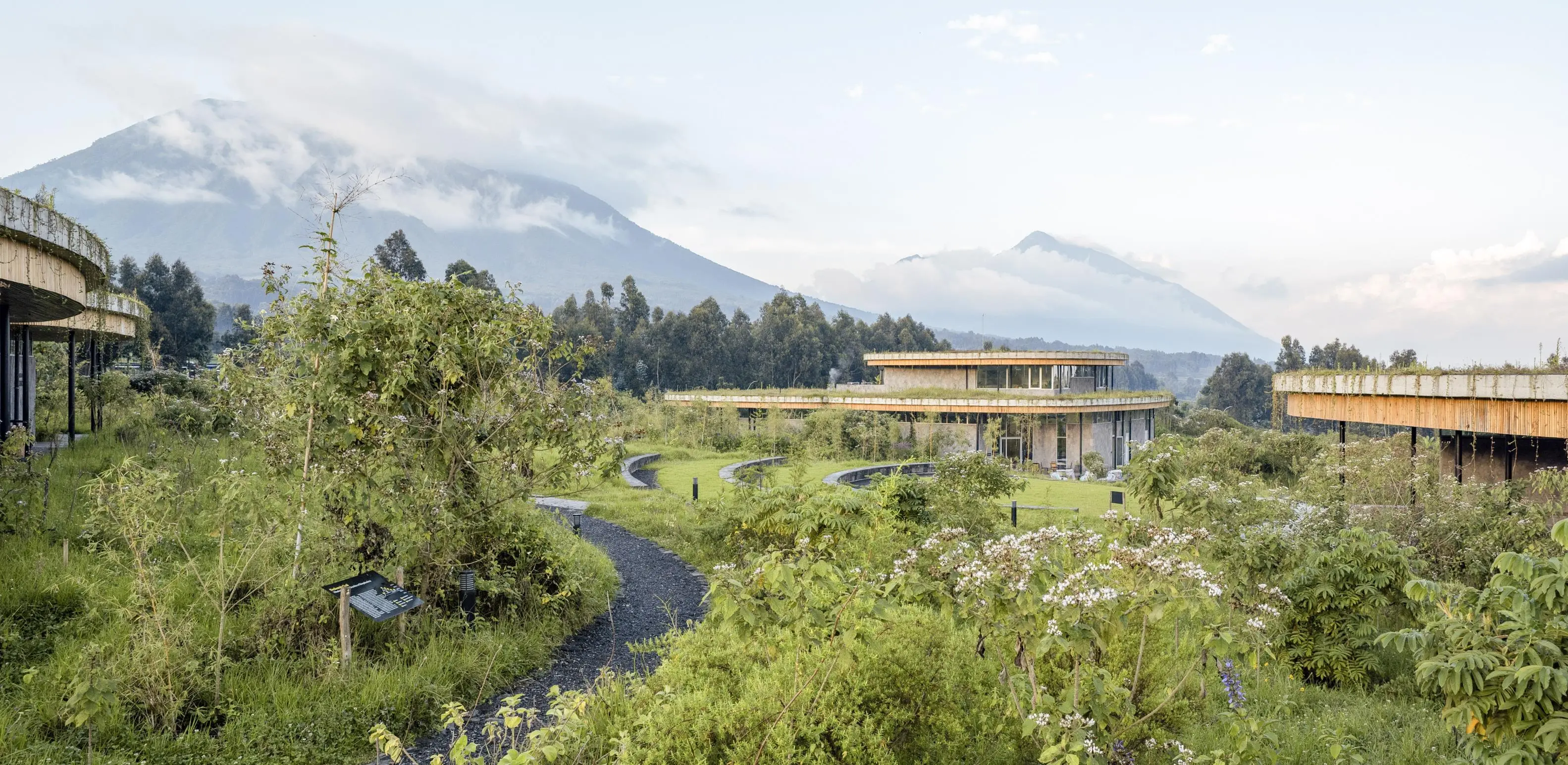
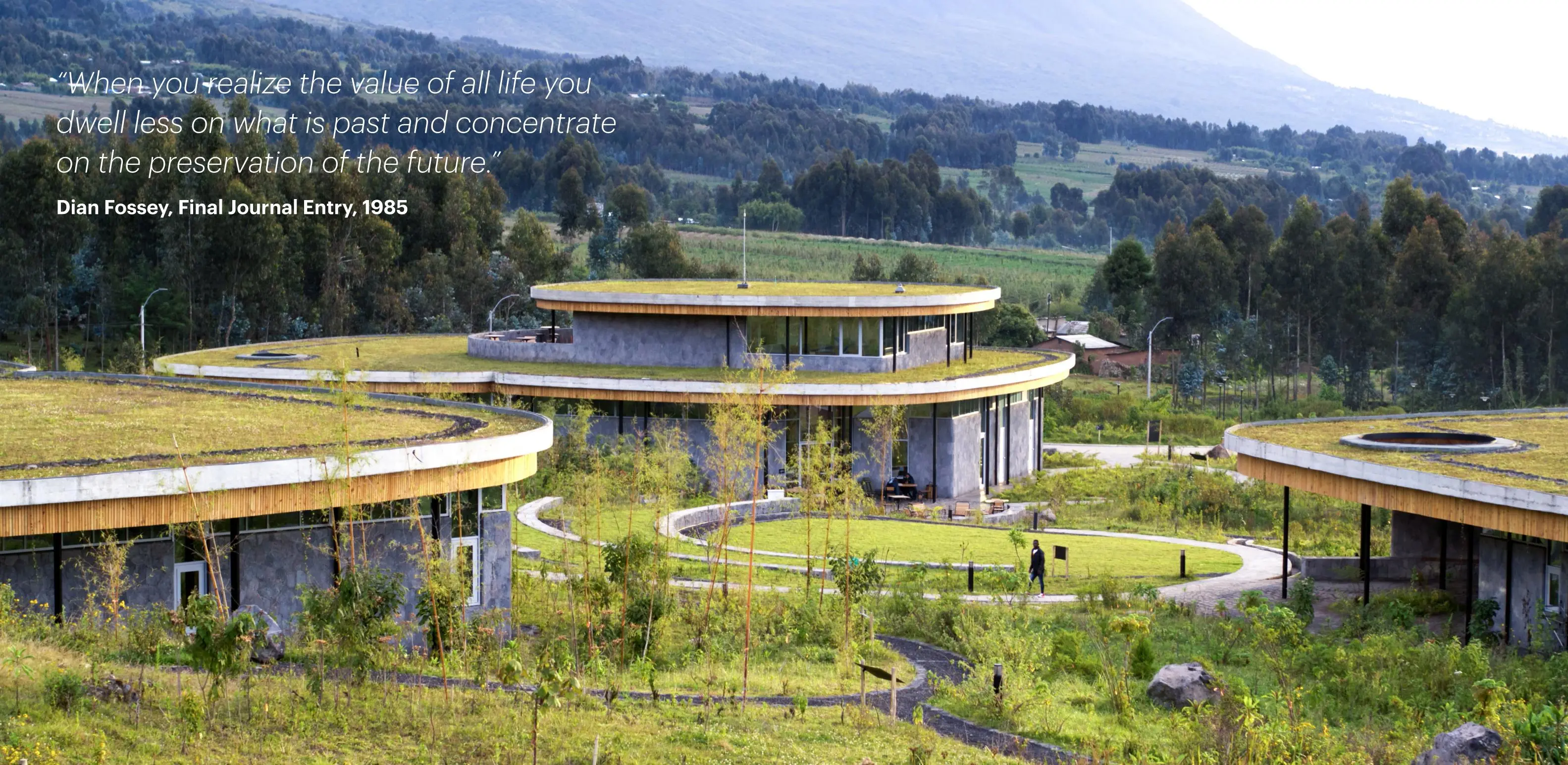
Lovely and a timeless project! The design wonderfully demonstrates an incredible utilization of local materials, detailing and craft. A really artful engagement with local materials, methods and plant species to create a fitting environment for the campus.
Awards Jury
-
The loss of biodiversity caused by climate change and urbanization is expected to lead to the extinction of over one million species. The critically-endangered mountain gorilla of Rwanda is particularly susceptible to these threats.
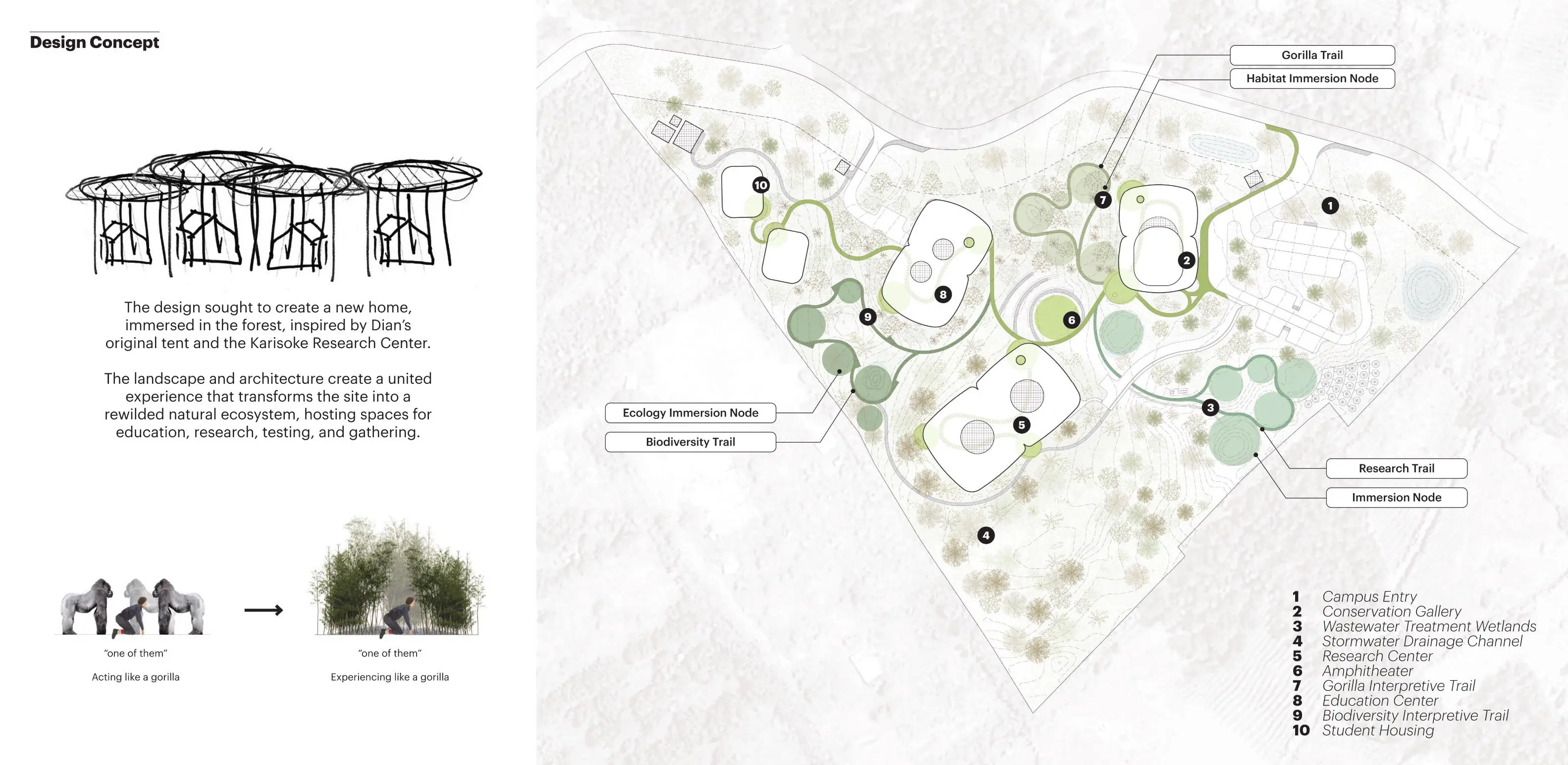
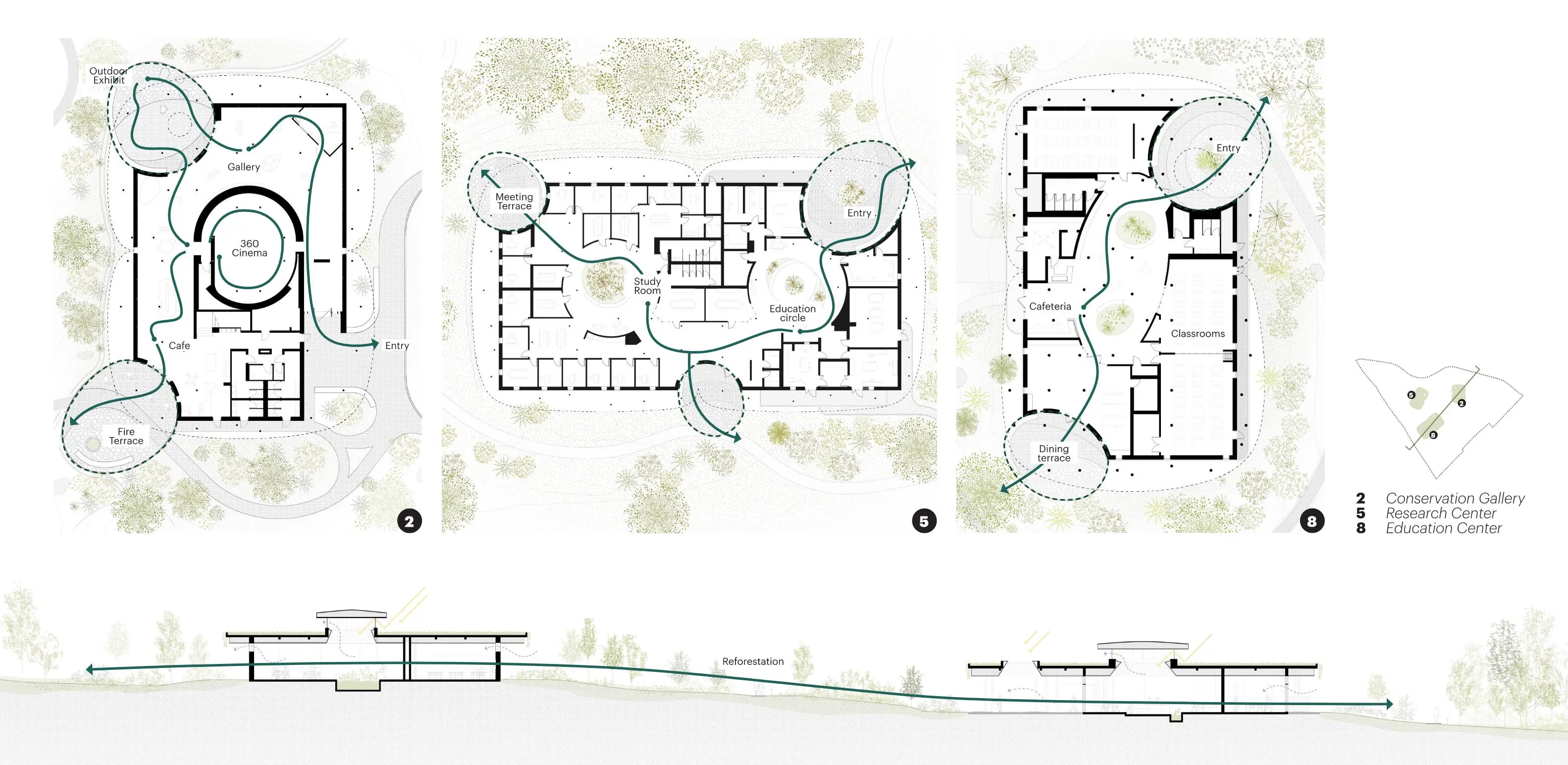
The Ellen DeGeneres Campus for the Dian Fossey Fund, situated at the foot of the Virunga Mountains in Central Africa, is designed to provide state-of-the-art facilities for gorilla research, educate and inspire visitors, and test ecologically driven techniques for biodiversity conservation, rewilding, and reforestation of the five Afromontane ecologies that comprise the gorilla territory. The campus serves as a living laboratory and an outdoor classroom to train future generations of African conservationists.
-
A Research-Driven Campus Opening in 2022, a purpose-built campus covering 5 hectares at the base of Rwanda's Volcanoes National Park provides the Dian Fossey Fund with a permanent home to engage local communities–both human and non-human–in their conservation mission. With the construction of this new campus, the world's largest and longest-running organization dedicated entirely to gorilla conservation will be enabled to further support, protect, and study gorillas, train the next generation of African conservationists, and increase the ecological resilience of local communities.
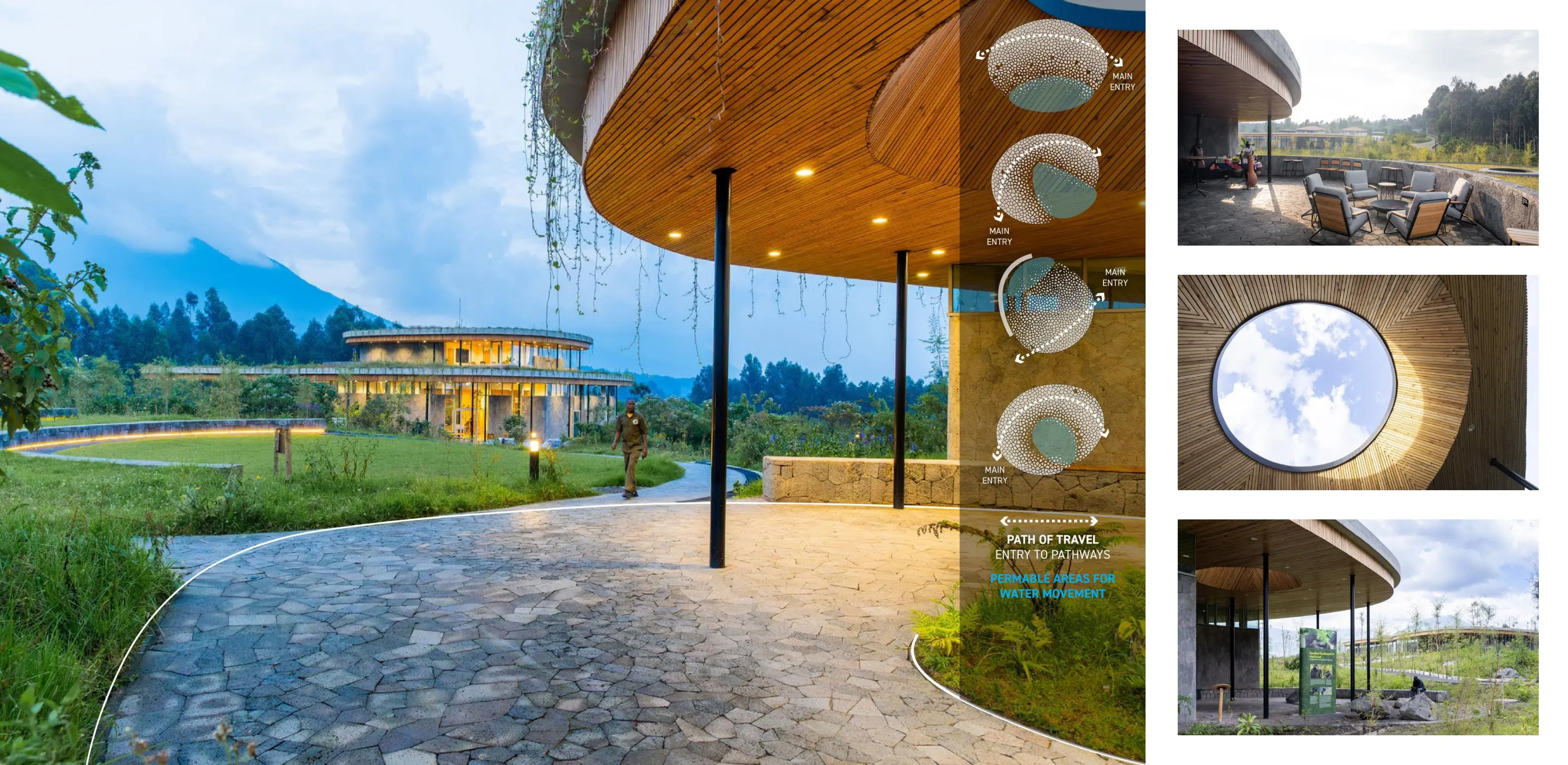
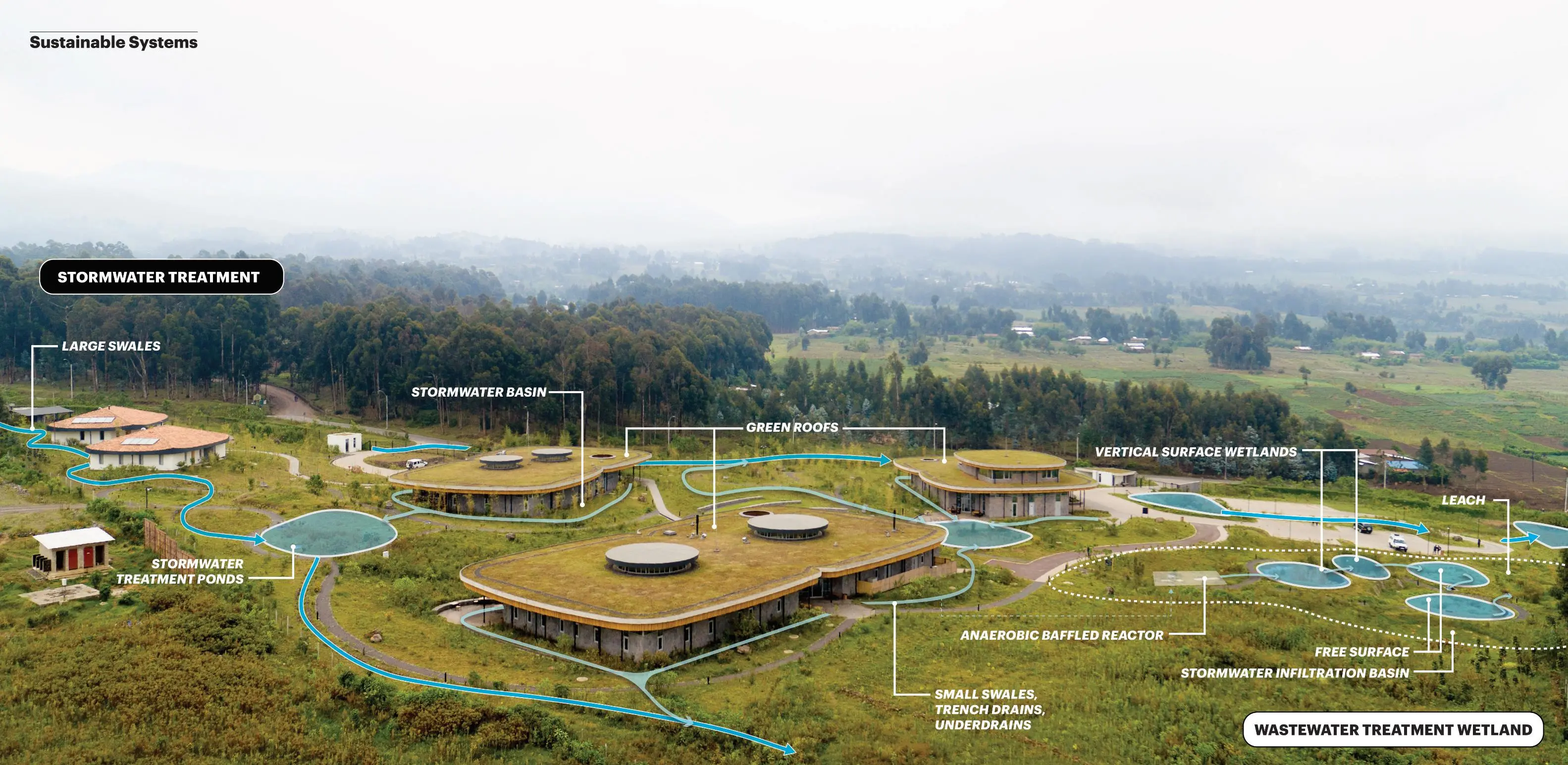
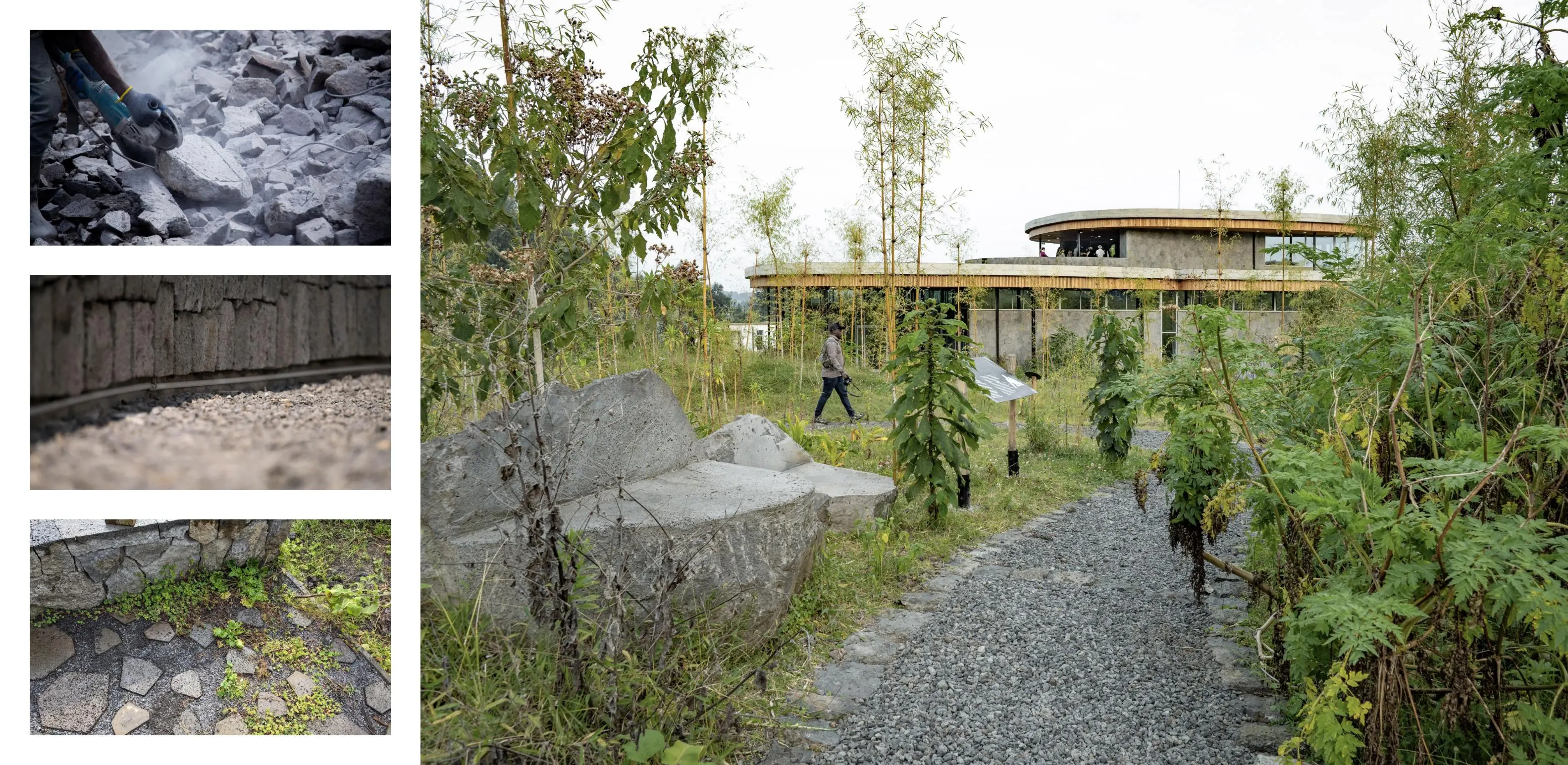
The campus consists of state-of-the-art facilities for education, outreach, research, and housing. The buildings and campus are built from locally sourced materials and utilize sustainable construction methods to conserve resources and minimize environmental impact. The campus integrates rainwater harvesting, green roofs, acres of reforestation, and a constructed wetland to treat wastewater and promote biodiversity.
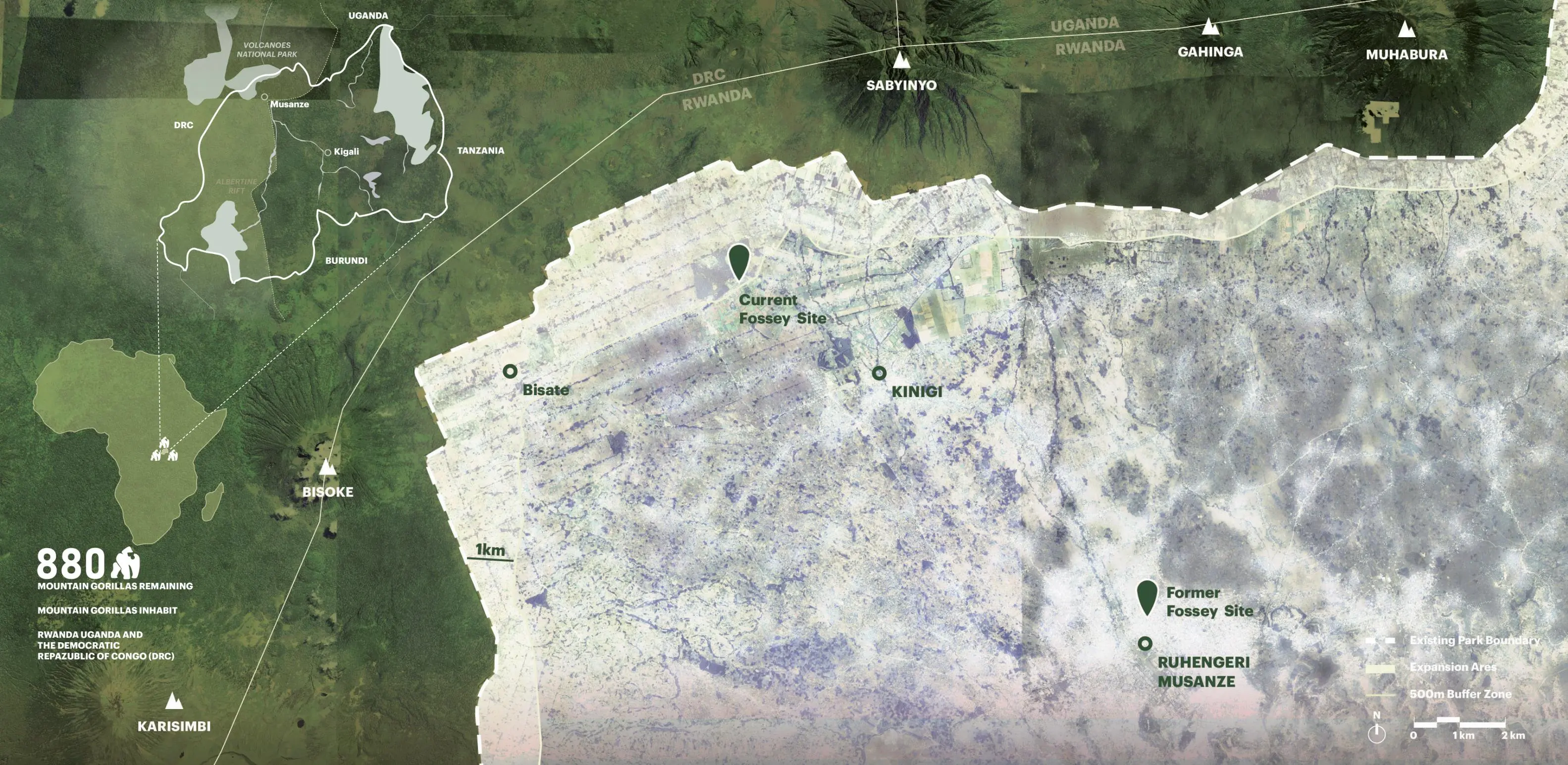
Biodiversity and Resilience Straddling the equator at an 'ecological crossroads' in central Africa, where three bio-geographic regions intersect, the Virunga National Park supports an exceptional diversity of habitat types. Sitting at the base of the Virunga Mountains, the campus serves as a test for the Rwandan government's plan to expand the park's boundary by 1 km along its entire border to invest in the richness of this biodiversity, as well as to reduce the overlap between human and gorilla territories.
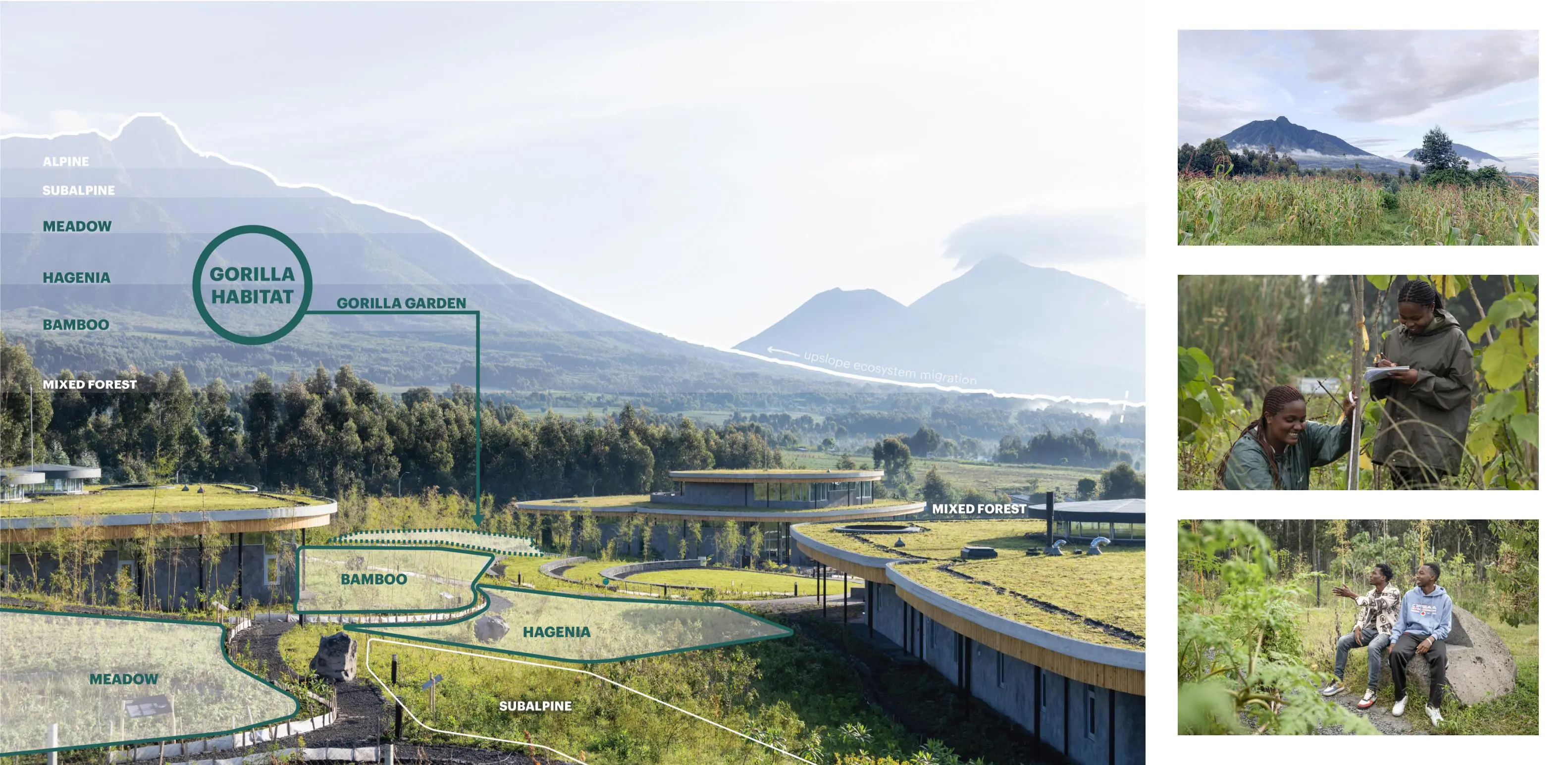
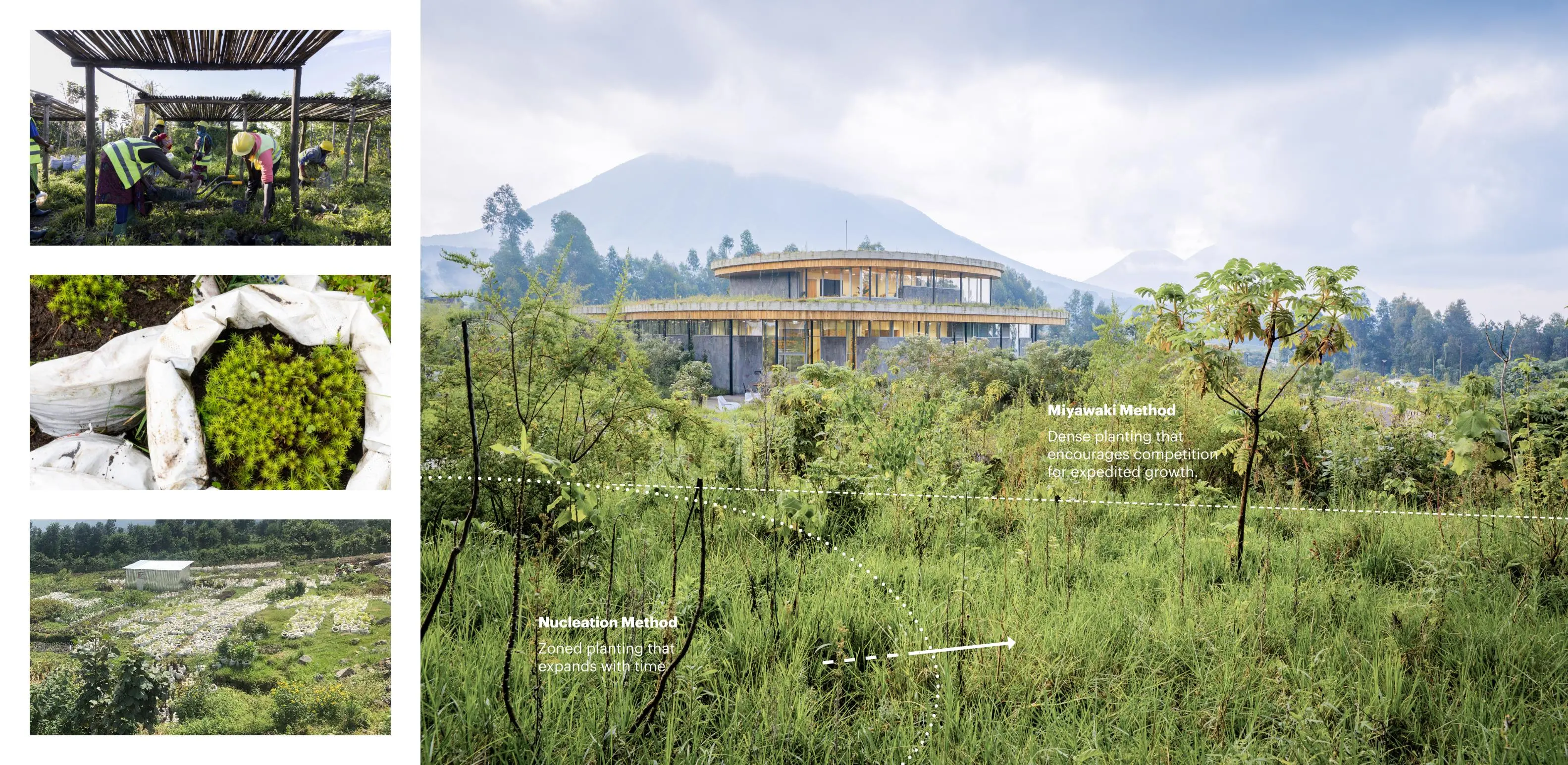
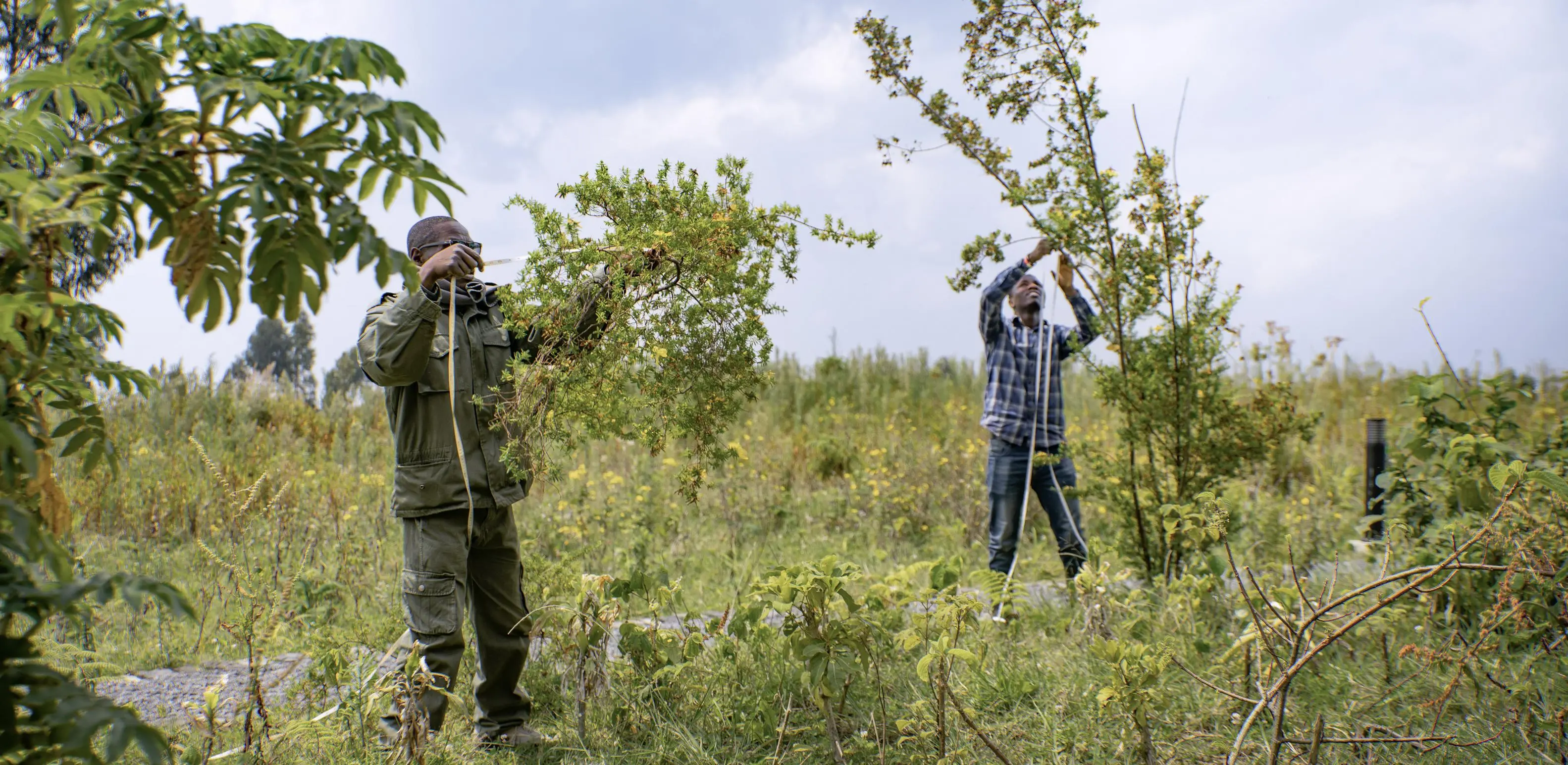
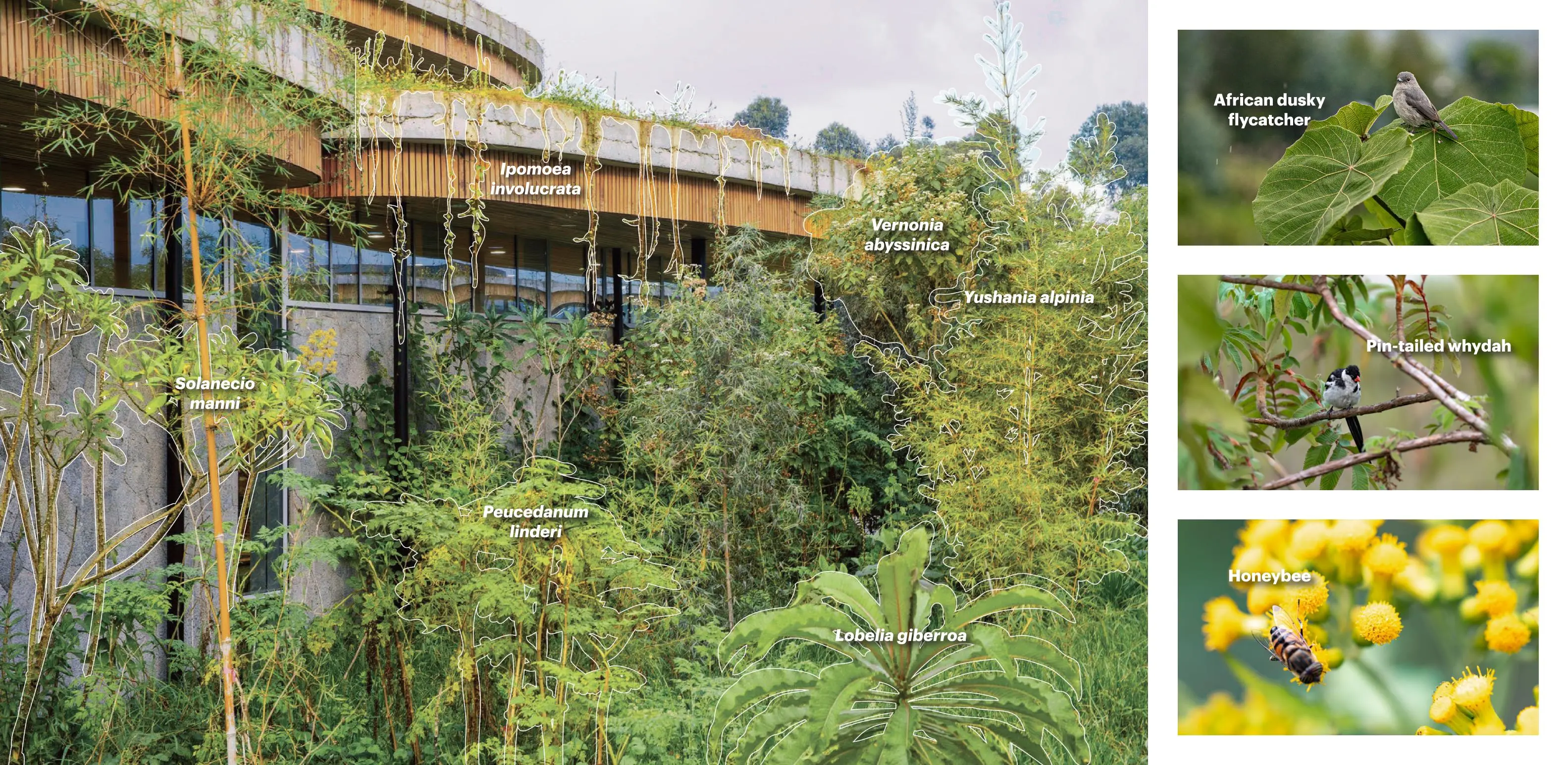
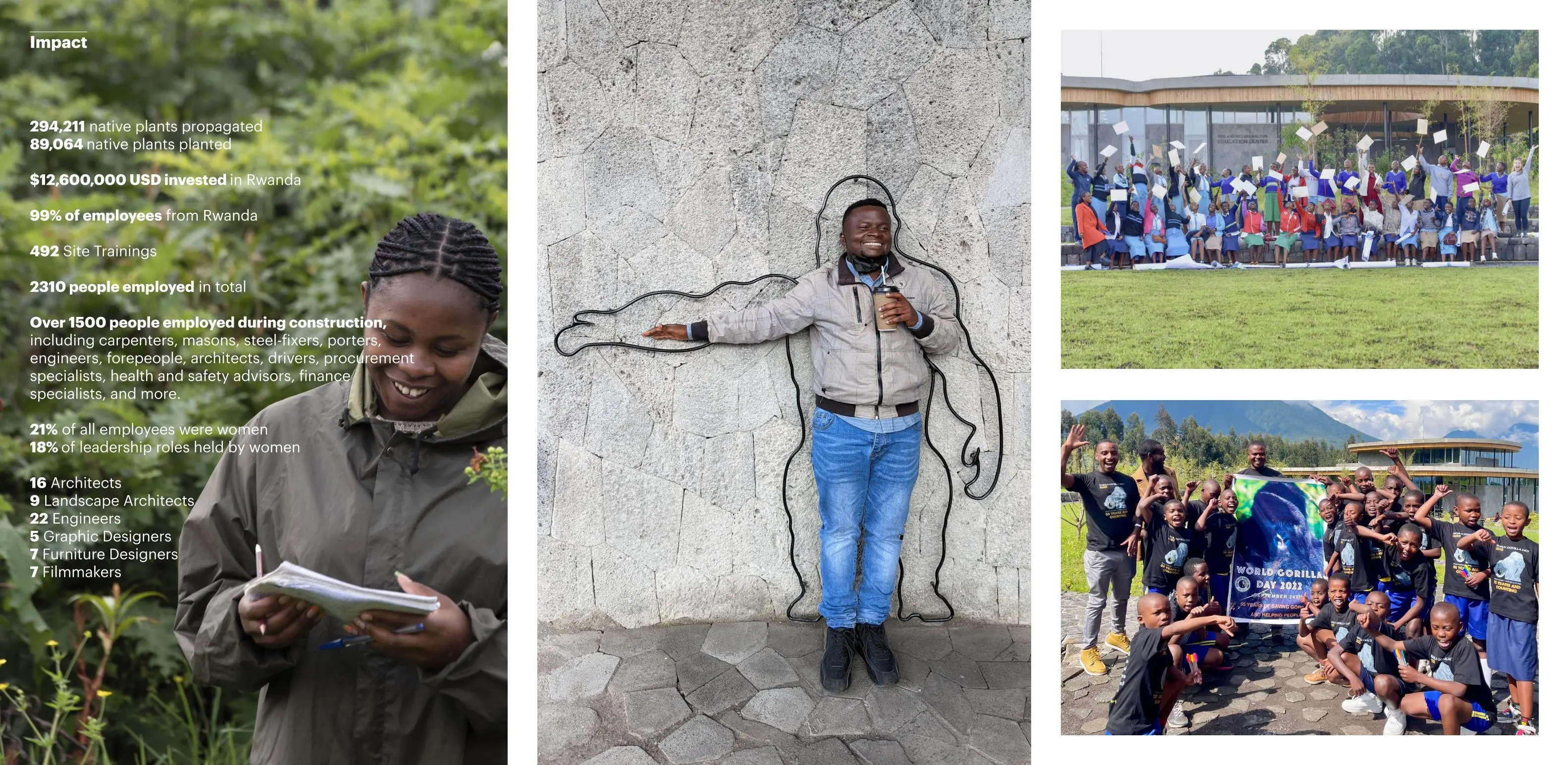
The design transforms an agricultural plot overgrown with invasive Eucalyptus trees into a reforested landscape that supports four native ecologies found in the park: mixed Afromontane forest, Arundinaria bamboo forest, Hagenia-Hypericum forest, and Afromontane meadow. In a country with no commercial plant nurseries, over 250,000 native plants were collected, propagated, and planted from key ecological zones for the campus.
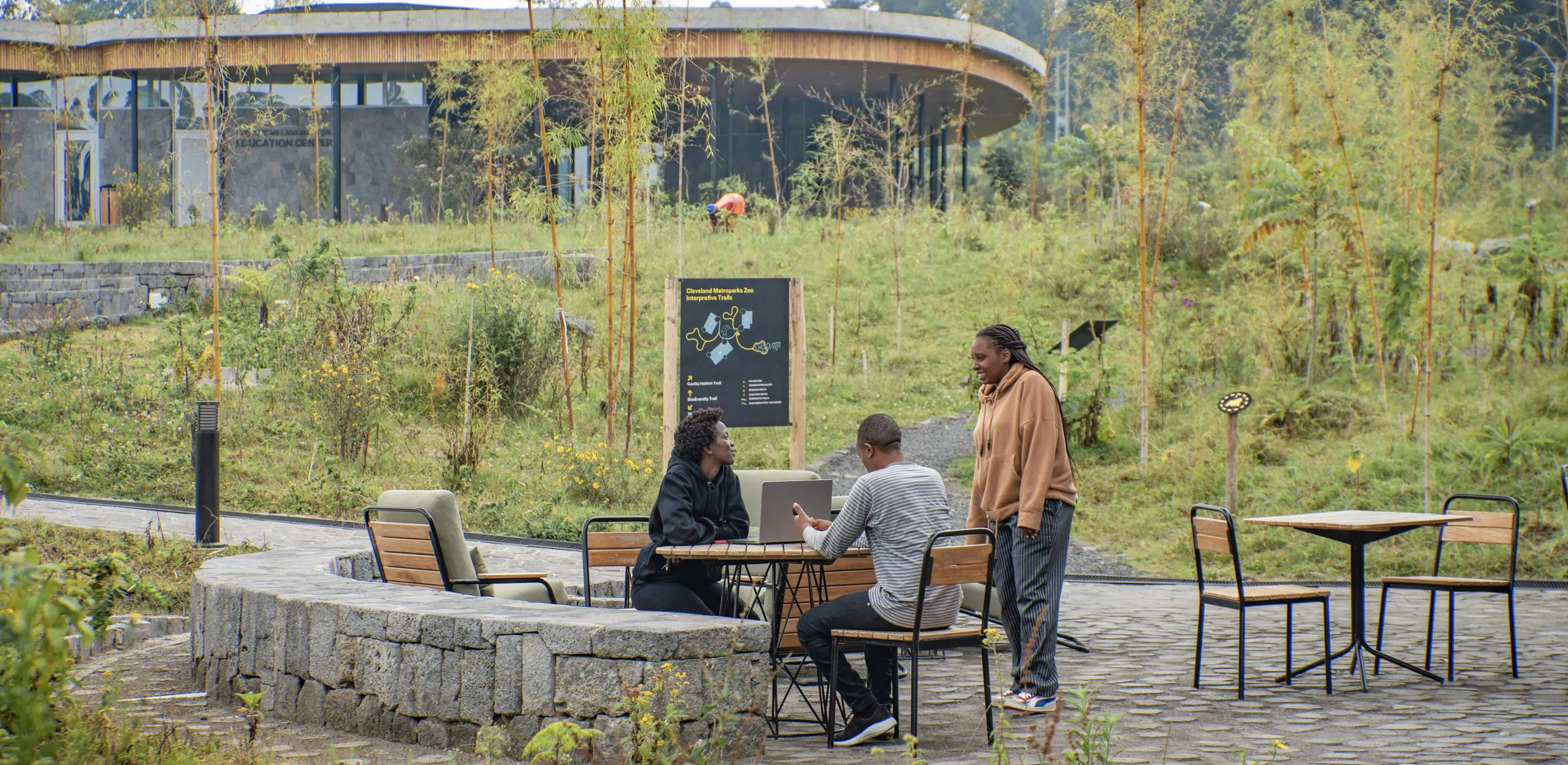
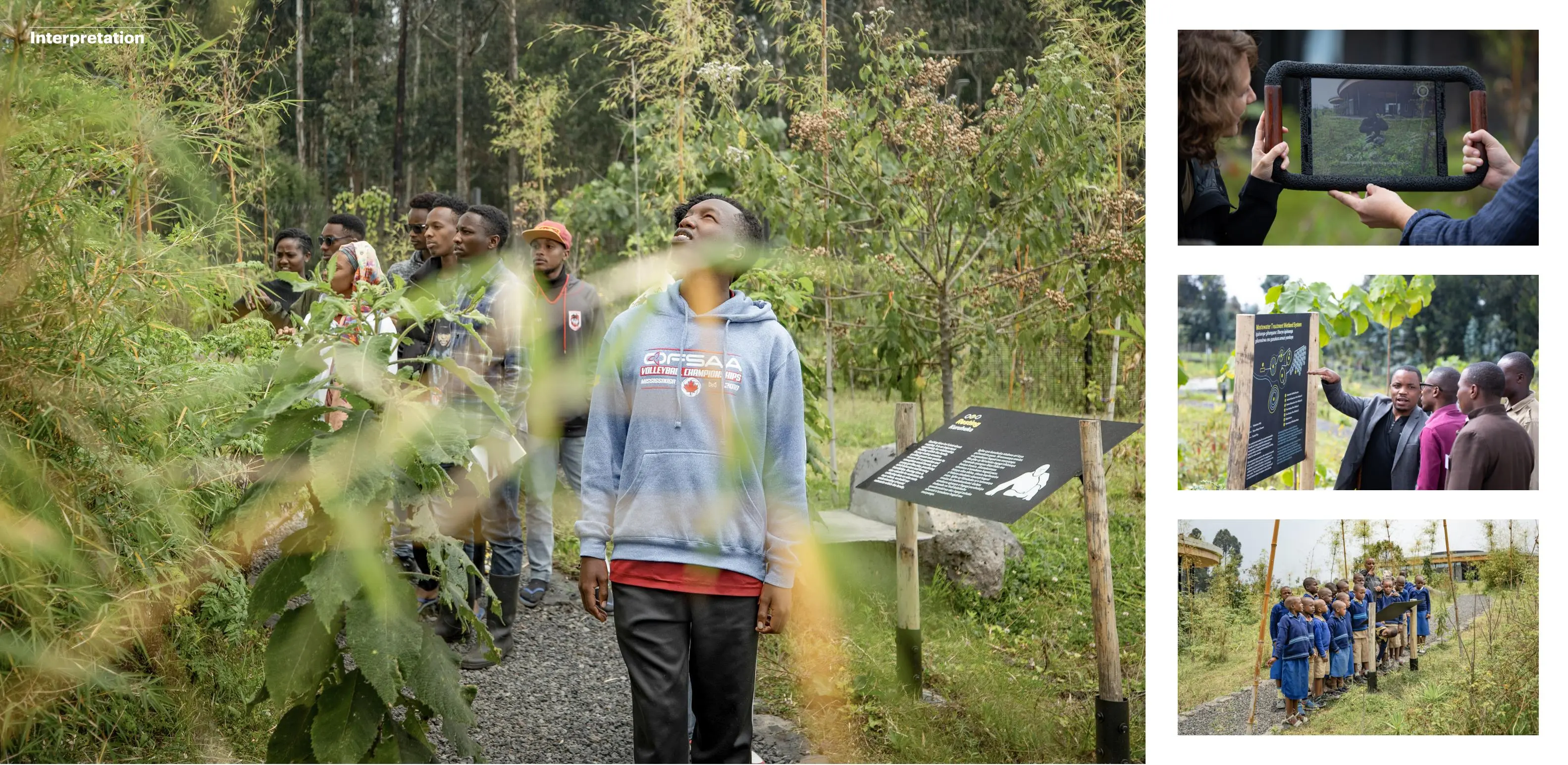
A Gateway to Conservation Three interpretive trails encourage visitors to experience the Fossey Fund’s work firsthand. The Gorilla Garden trail leads visitors through typical foraging and resting movements of gorillas, allowing them to experience the sensory and tactile qualities of their natural environment. The Biodiversity Trail showcases the different habitats within the surrounding mountain range, providing opportunities for researchers to monitor the evolution of local plants and the potential effects of climate change right on campus. The Wetland Trail circumnavigates the wastewater treatment wetland, interpreting the complex engineered system and engaging visitors with the explosion of biodiversity thriving in the wetland.
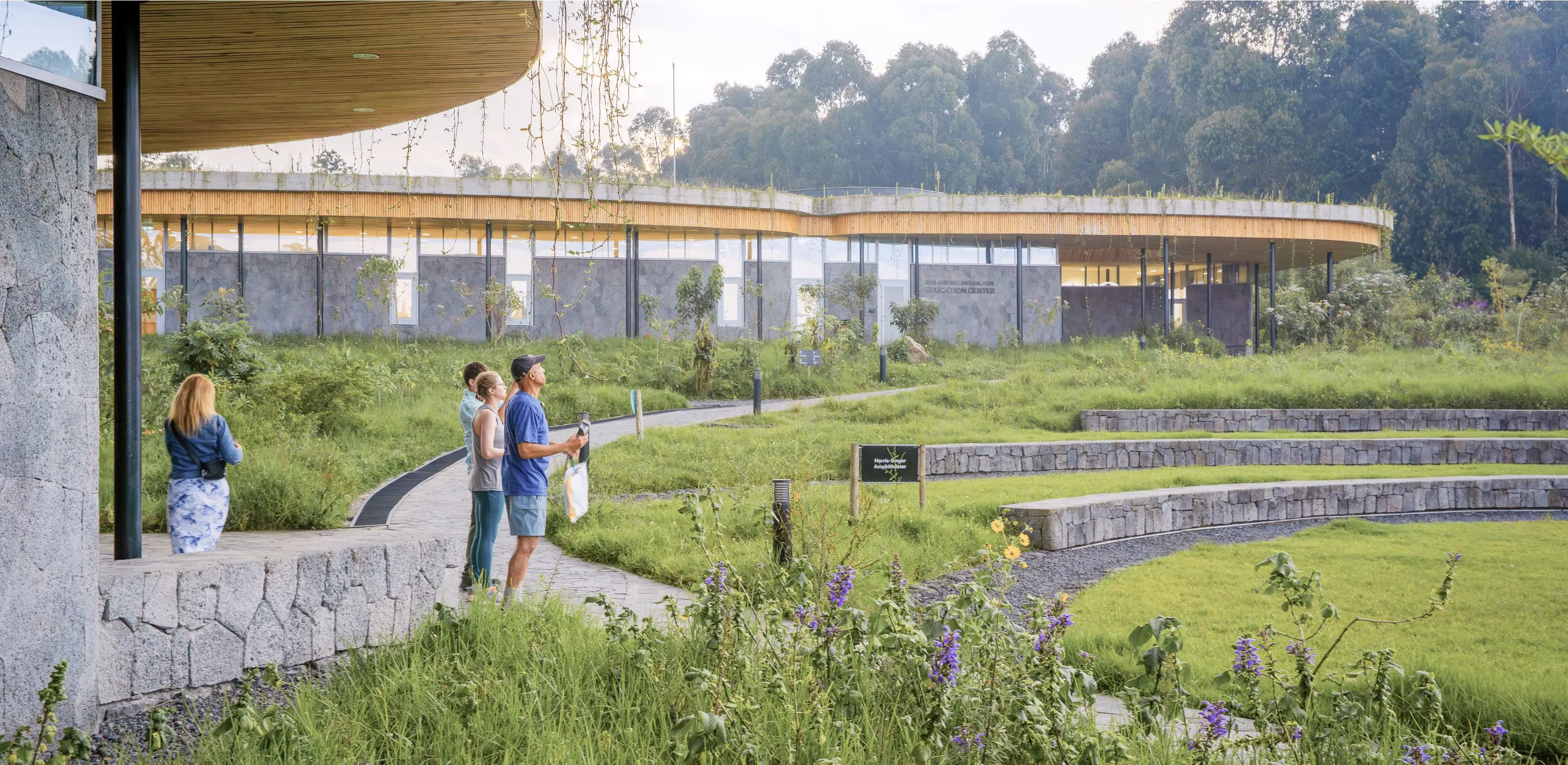
The trails provide interactive opportunities for visitors to engage with the campus and experience a day in the life of a gorilla. A large amphitheater at the heart of campus provides space for lectures, demonstrations, and gatherings. Porches made of volcanic stone, with low seat walls and custom wood seating, are integrated into each building to provide both public and private-facing spaces for visitors to socialize and observe the volcanoes above the campus.
The mission of the project is to create spaces to engage the many stakeholders in conservation – students, scientists, tourists, partners, community members – to advance the goal of saving gorillas. Today, the campus blossoms with wildlife and is a living laboratory for researchers and students who leave inspired to make a difference.
-
- The Dian Fossey Gorilla Fund - Project Client/Owner
- The Ellen Fund - Project Client
- TEN x TEN Studio - Landscape Architects
- Transsolar - Sustainability/Environmental Engineers
- BuroHappold Engineers - Engineering (MEFP/Technical Advisory)
- Oak Consulting Group - Civil Engineering (Technical Advisory)
- AEGIS Development Solutions - Quantity Surveyors
- TECHNO Engineering Company - ICT / Security
- Local Projects - Exhibit Design, concepts
- Formula D Interactive - Exhibit Fabricators
- HabitatXR - 360 Immersive Theater
- Sherwood Design Engineers - Constructed Wetland
- Jacques Nsengiyumva - Constructed Wetland
- Sheffield - Kitchen/Cafe
- MASS.Build, MASS Design Group - Construction
- MASS.Made, MASS Design Group - Furniture Design & Fabrication
- MASS Design Group - Exhibit Design, Schematic through Installation
- MASS Design Group - Project Management, Architecture Design, Landscape Design, Civil/Geotechnical/Structural Engineering, Film and Media
-
Products
- Furniture
- Drainage/Erosion
- Fences/Gates/Walls
- Parks/Recreation Equipment
- Green Roofs/Living Walls
- Soils
- Hardscape
- Lighting
- Other
-
- Acanthus pubescens
- Albizia gummifera
- Albizia Schimperiana
- Alchemira cryptanta
- Basela alba
- Begonia meyeri-johannis
- Blechnum Tabulare
- Brillantaisia cicatricosa
- Carapa grandiflora
- Carduus nyassanus
- Carex bequaertii
- Carex conferte
- Carex runesorensis
- Chrysopogon Nigritanus
- Clerodendron johnstonii
- Clutia abyssinica
- Crassocephalum ducis-aprutii
- Crassula graviinkii
- Crotalaria mesopontica
- Croton megalocarpus
- Cyathea Manniana
- Cynodon dactylon
- Cynoglossum amplifolium
- Cyperus denudatus
- Cyperus difformis
- Cyphostemma bambussetti
- Discopodium penninervum
- Dombeya goetzenii
- Draceana afromontana
- Droguetia iners
- Drynaria Laurentii
- Dryopteris pentheri
- Eriocaulon schimperi
- Erythrina abyssinica
- Festuca abyssinica
- Galiniera coffeoides
- Galium ruwensoriense
- Geranium aculeolatum
- Girardinia bullosa
- Gynura scandens
- Hagenia abyssinica
- Helichrysum mildbraedii
- Helichrysum nudifolium
- Hypericum humberti
- Hypericum revolutum
- Hypolepis sparsisora
- Impatiens burtonnii
- Ipomoea involucrata
- Juncus effusus
- Kigalia africana
- Kyllinga appendiculata
- Laportea Alatipes
- Leucus deflexa
- Lindernia subracemosa
- Lobelia giberroa
- Lobelia stuhlmanii
- Lycopodiella Cernua
- Macaranga capensis
- Maesa lanceolata
- Mariscus karisimbiensis
- Mimulopsis arborescens
- Mimulopsis solmsii
- Neobutonia macrocalyx
- Panicum hymeniochilum
- Pavetta rwandensis
- Pennisetum clandestinum
- Pentas zanzibarica
- Peucedanum linderi
- Pilea bambuseti
- Piper capense
- Plagiochila colorans
- Plantago palmata
- Plectranthus lanuginosus
- Pleopeltis excavatus
- Polyscias fulva
- Presicaria senegalensis
- Prunus africana
- Psychotria mahonii
- Pycnostachys goetzenii
- Rubus Kirungesis
- Rumex bequaertii
- Scadoxus multiflorus
- Schefflera kivuensis
- Secamone africana
- Selaginella knacusiana
- Senecio manni
- Senecio maranguensis
- Senecio Marietta
- Senecio trichopterygius
- Stachys aculeolata
- Stephania abyssinica
- Syzygium guineense
- Tabernaemontana stapfiana
- Uebelinia kivuensis
- Urera lypsolodendron
- Urtica massaica
- Vernonia abyssinica
- Viola abysinnica
- Xymalos monospora
- Yushania alpina
Advertisement
Related Awards
Honor Award, General Design
Houston Arboretum & Nature Center
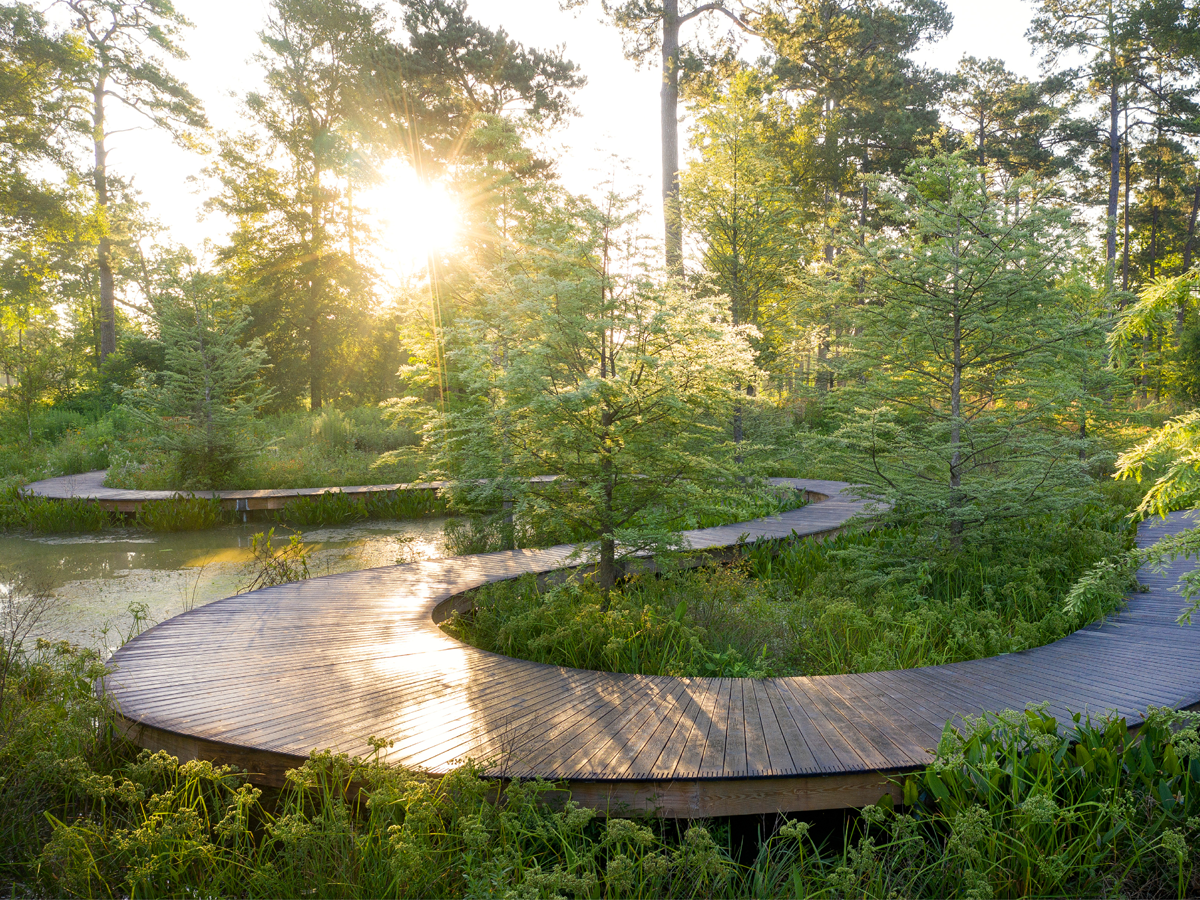
The Houston Arboretum & Nature Center sits within Memorial Park, one of the largest urban parks in the United States, in one of the nation's fastest growing and most climate-challenged cities. The site's story is one of repeated loss and deliberate reinvention. Hurricane Ike in 2008 and a severe drought in 2011 destroyed much of the Arboretum's tree canopy, exposing the limits of conventional reforestation in a city defined by flooding, heat, and ecological volatility.
Related Articles
ASLA Fund
American Society of Landscape Architects Announces its 2026 Student Awards
39 Student Award winners elevate the future of the landscape architecture profession
Aug 24 2026