
.webp?language=en-US)
.webp?language=en-US)
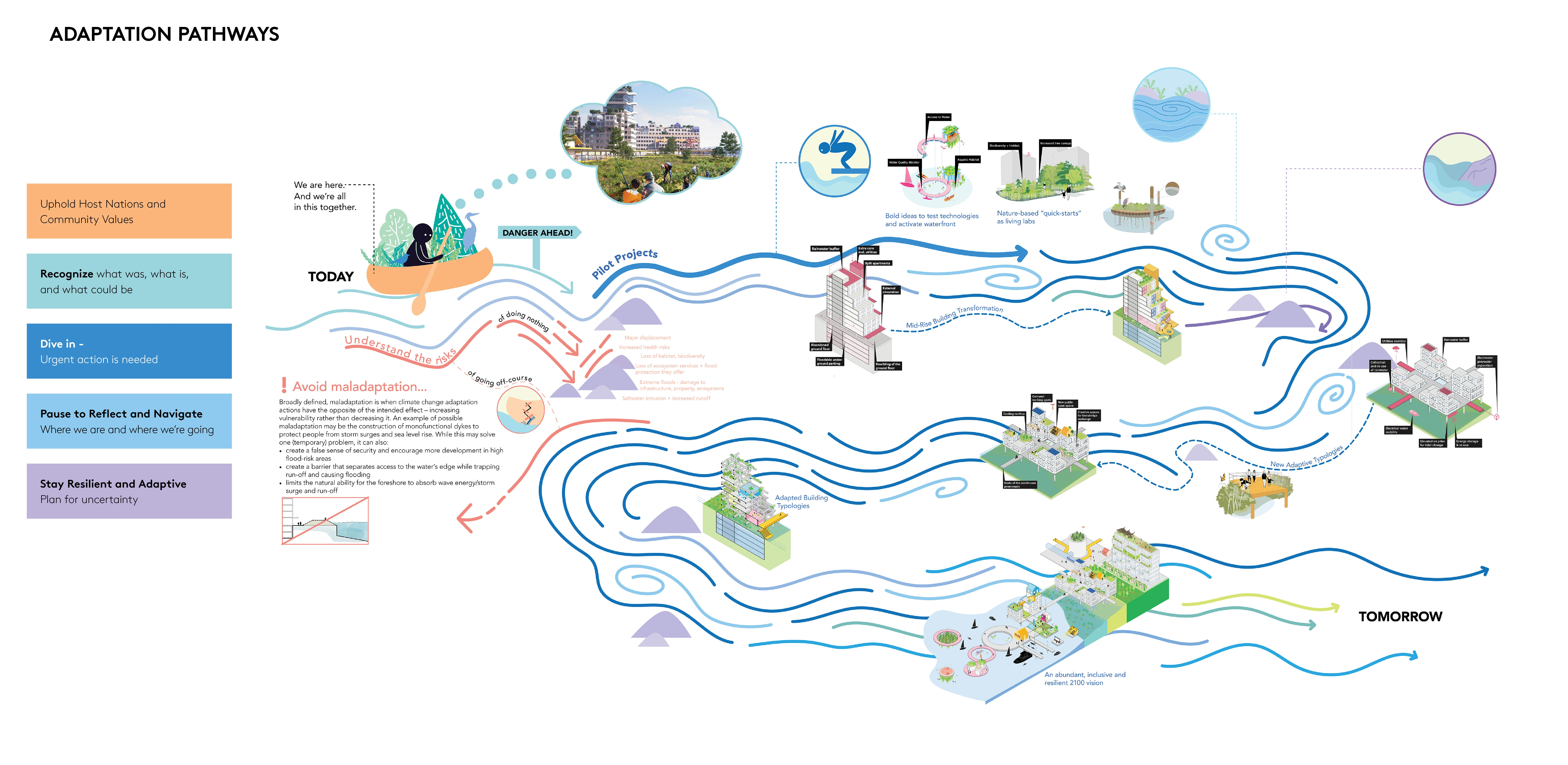
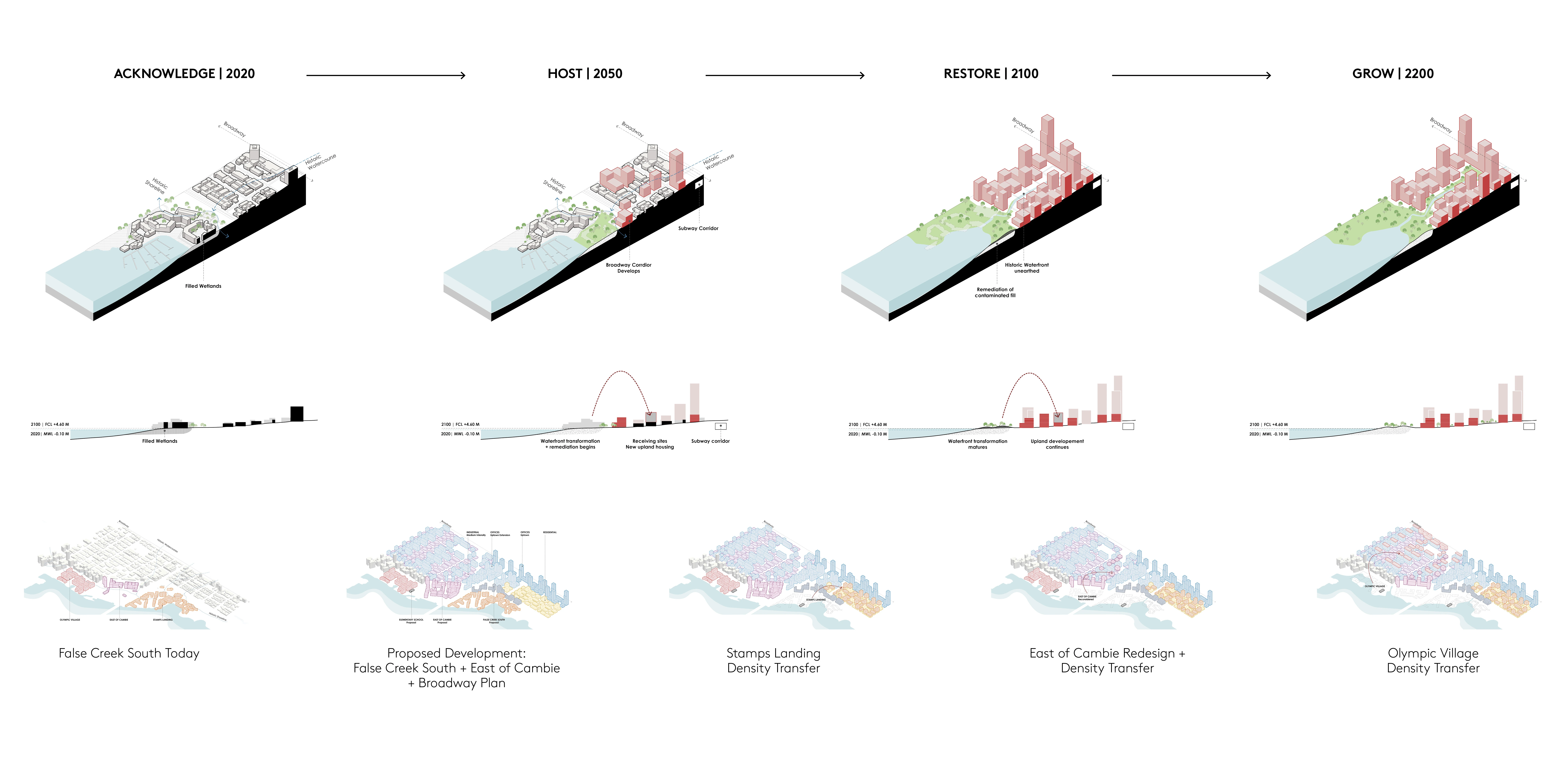
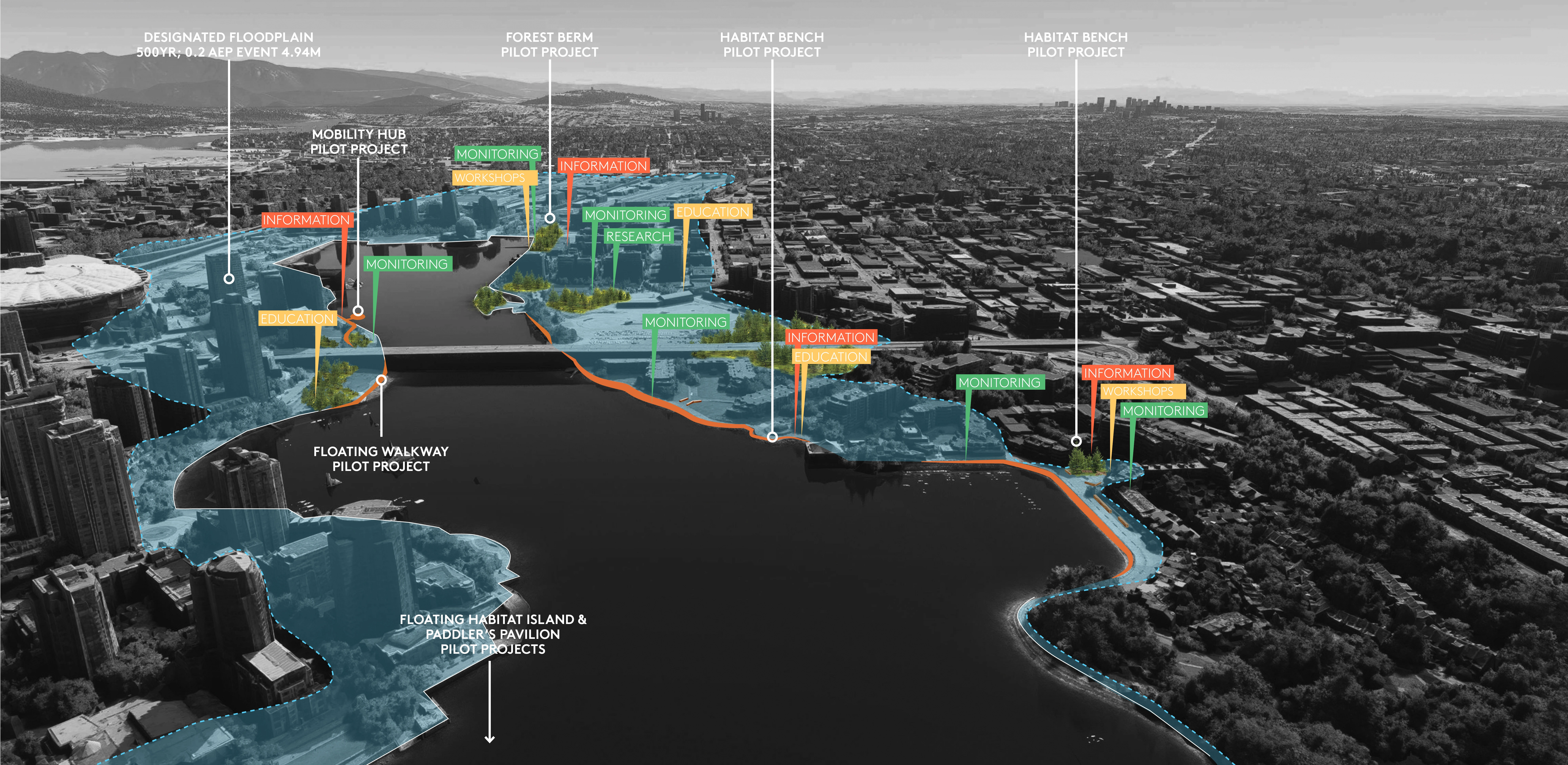
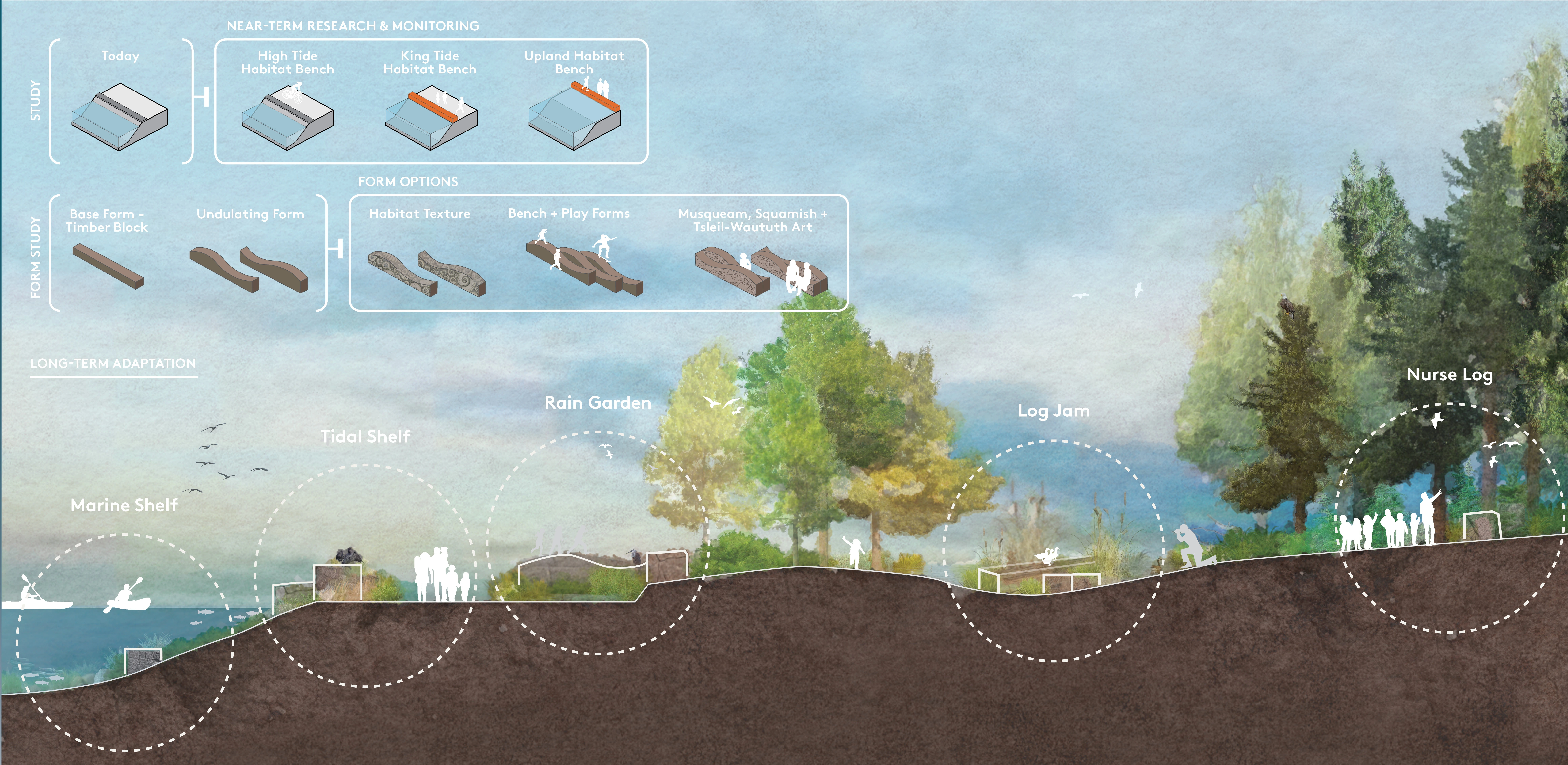
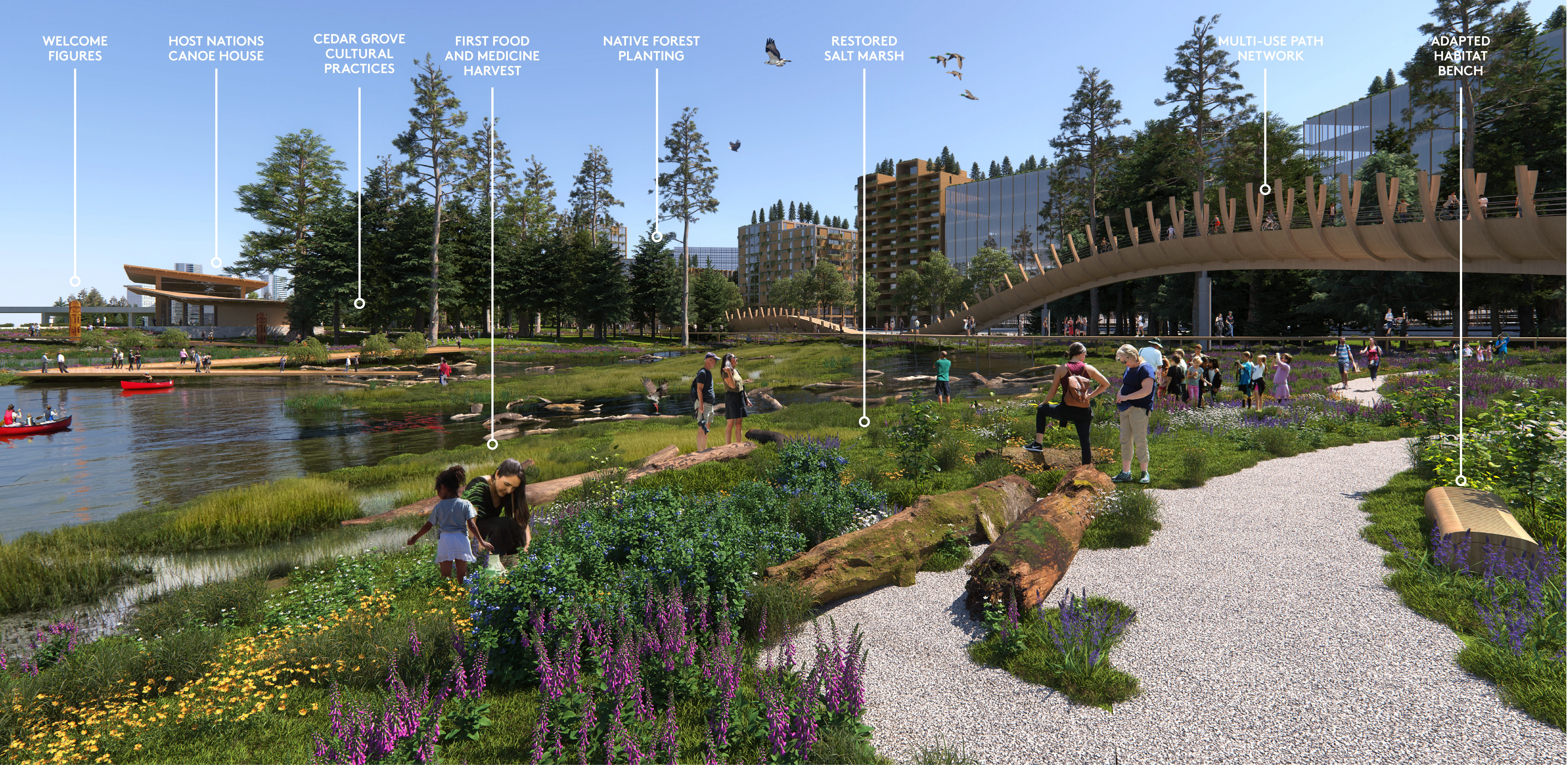
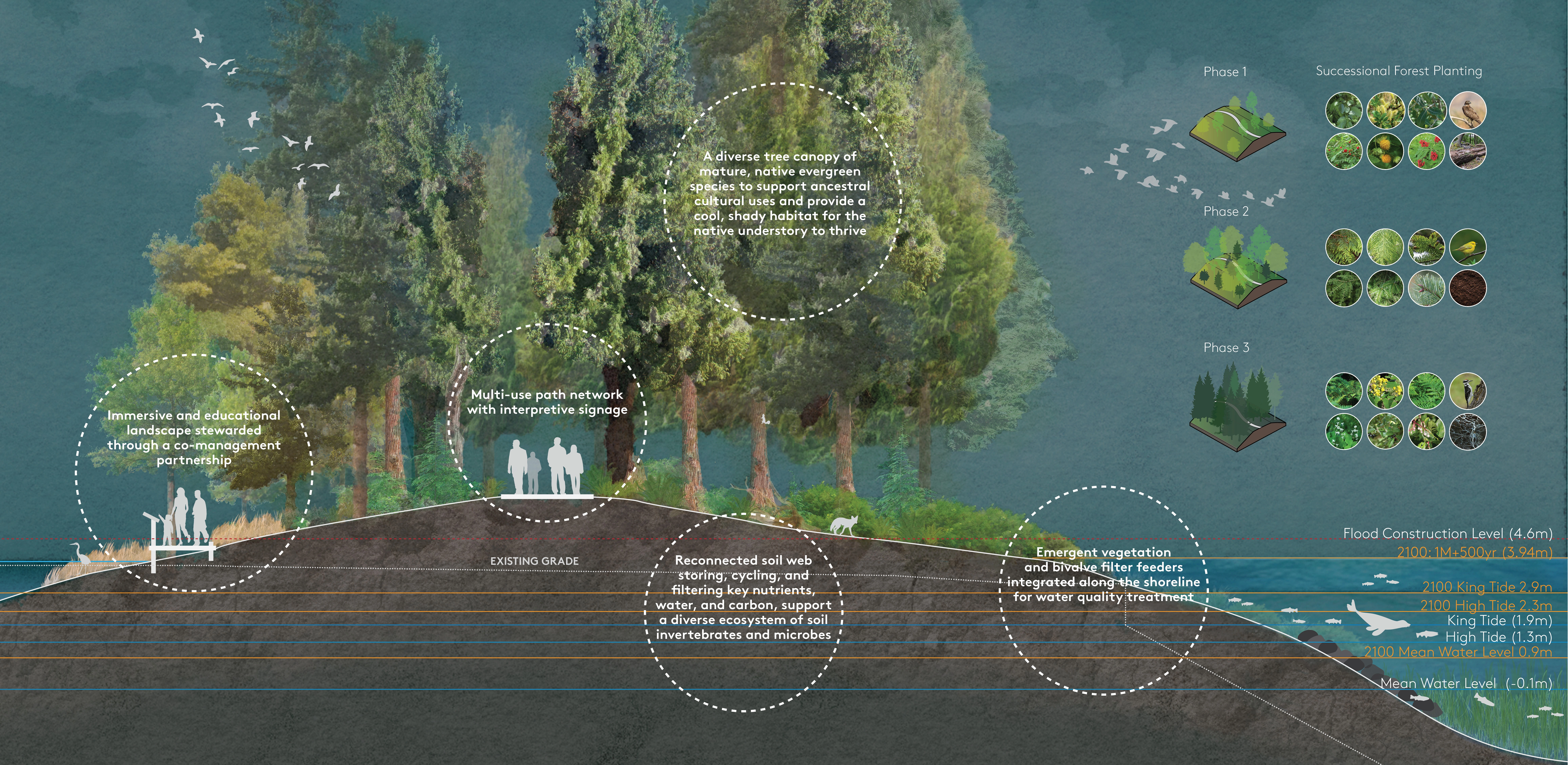
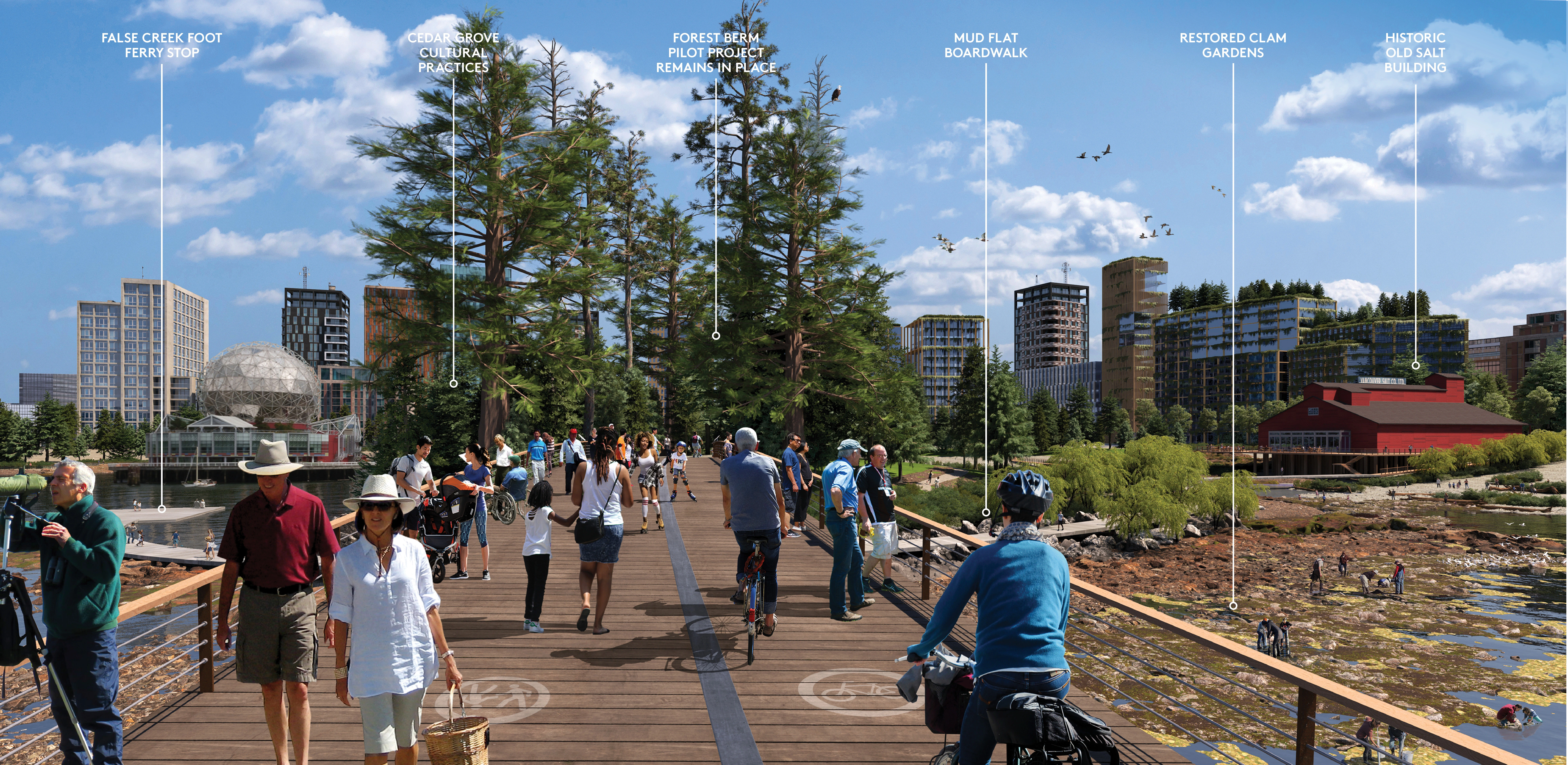
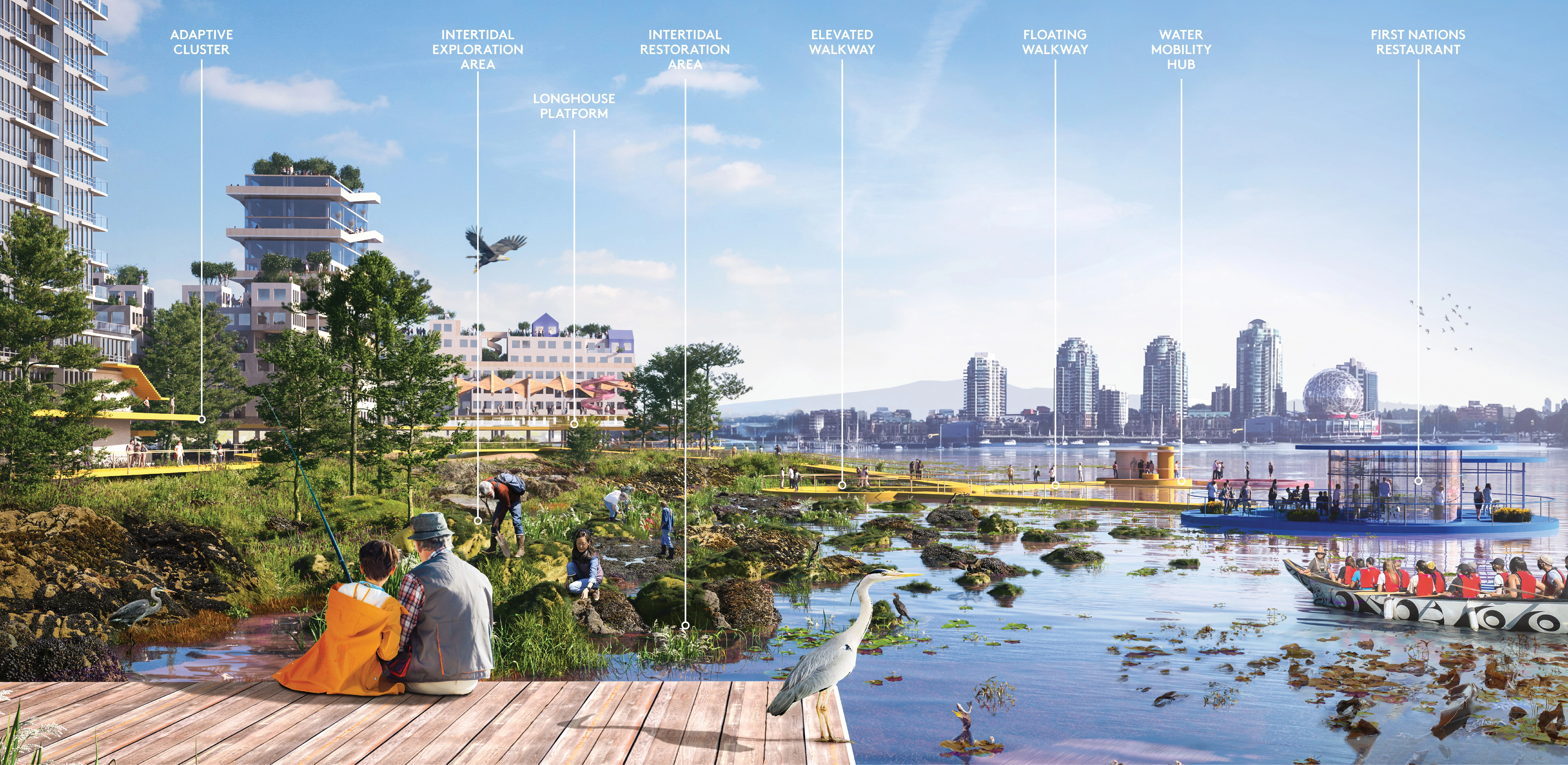
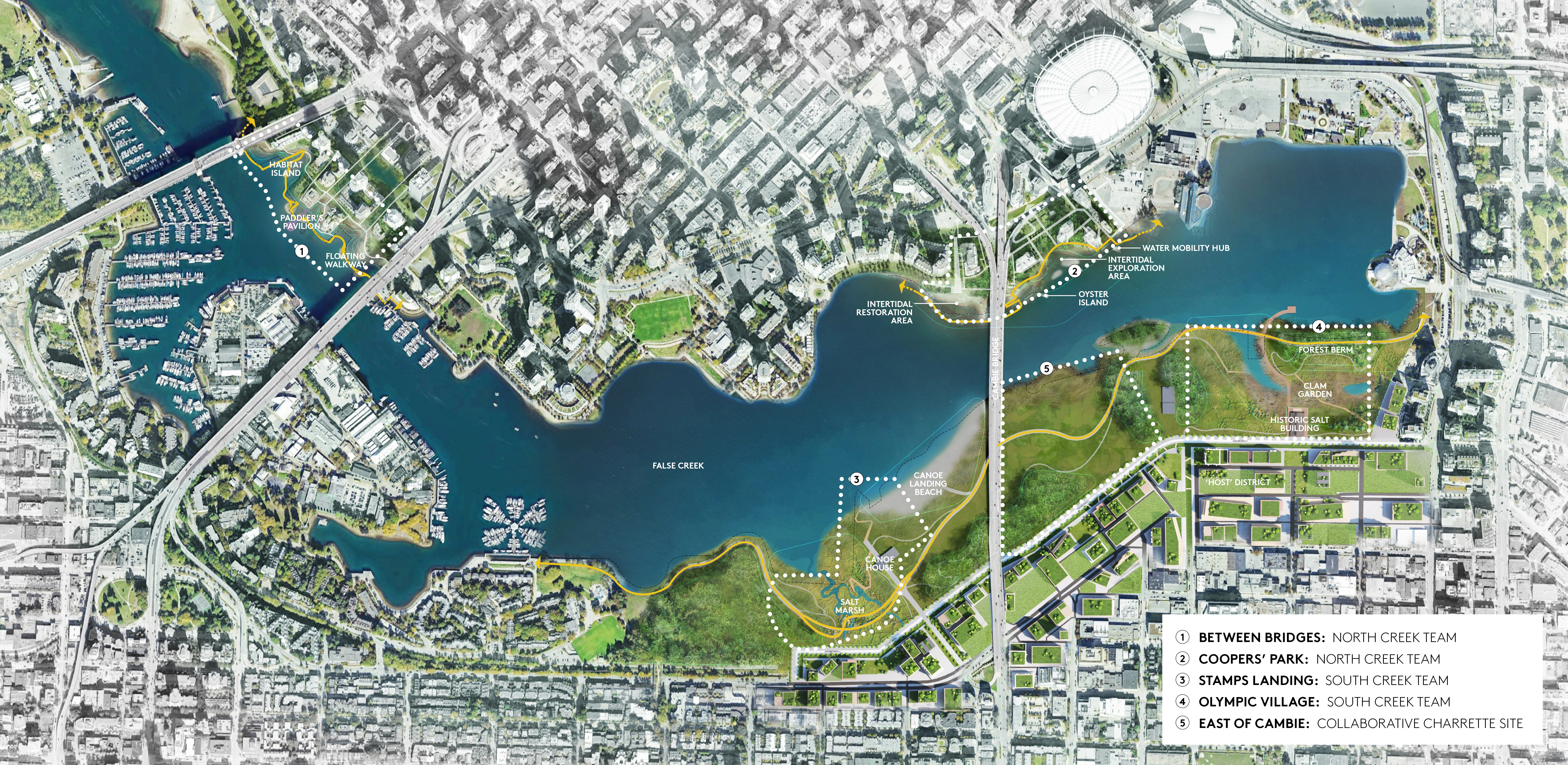
A very collaborative project with a refreshing approach, combining sound planning principles. A plan that seeks to address the harsh realities of sea level rise by working together with host nations to arrive at mutually beneficial long term green solutions.
Awards Jury
-
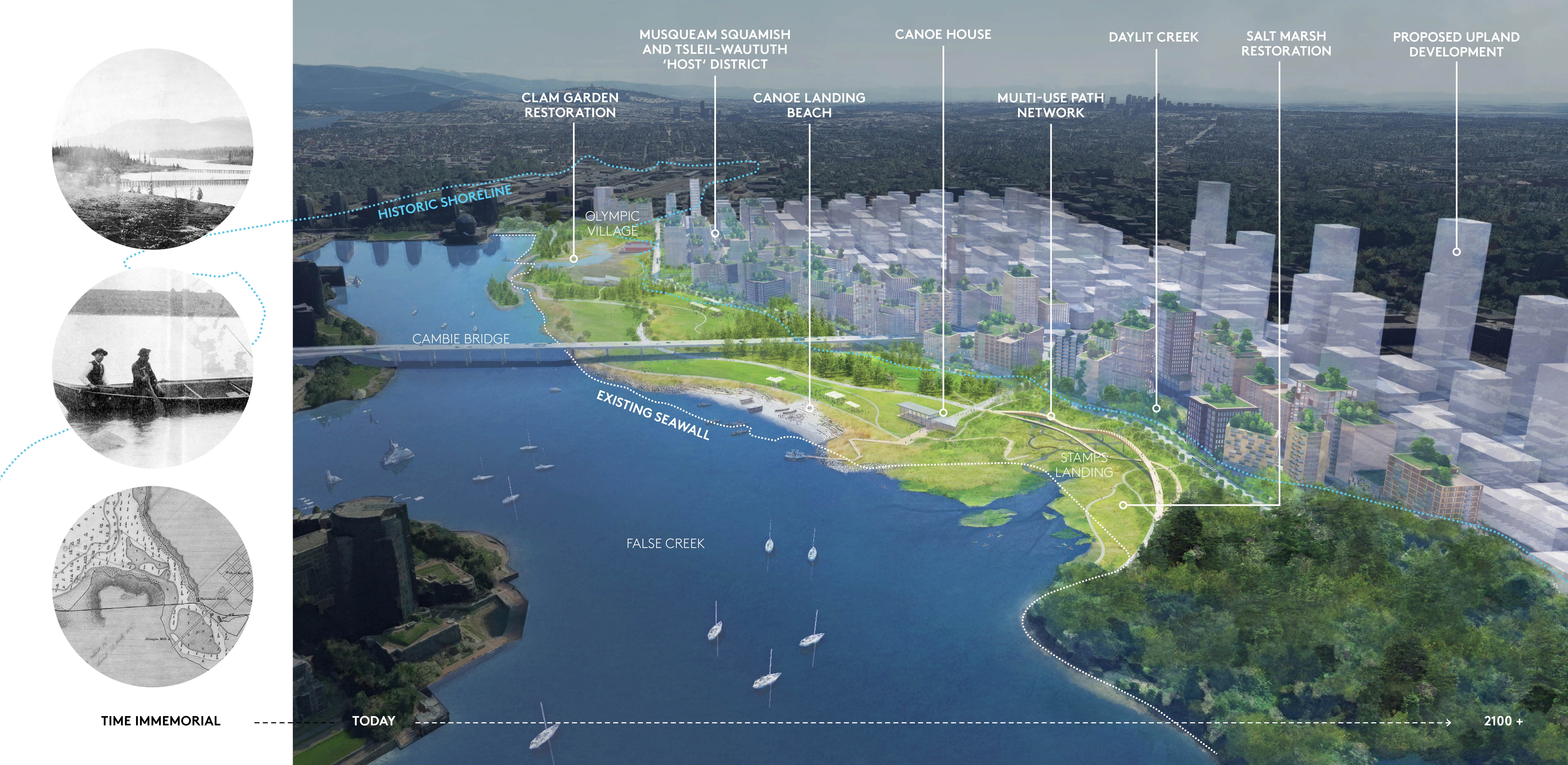
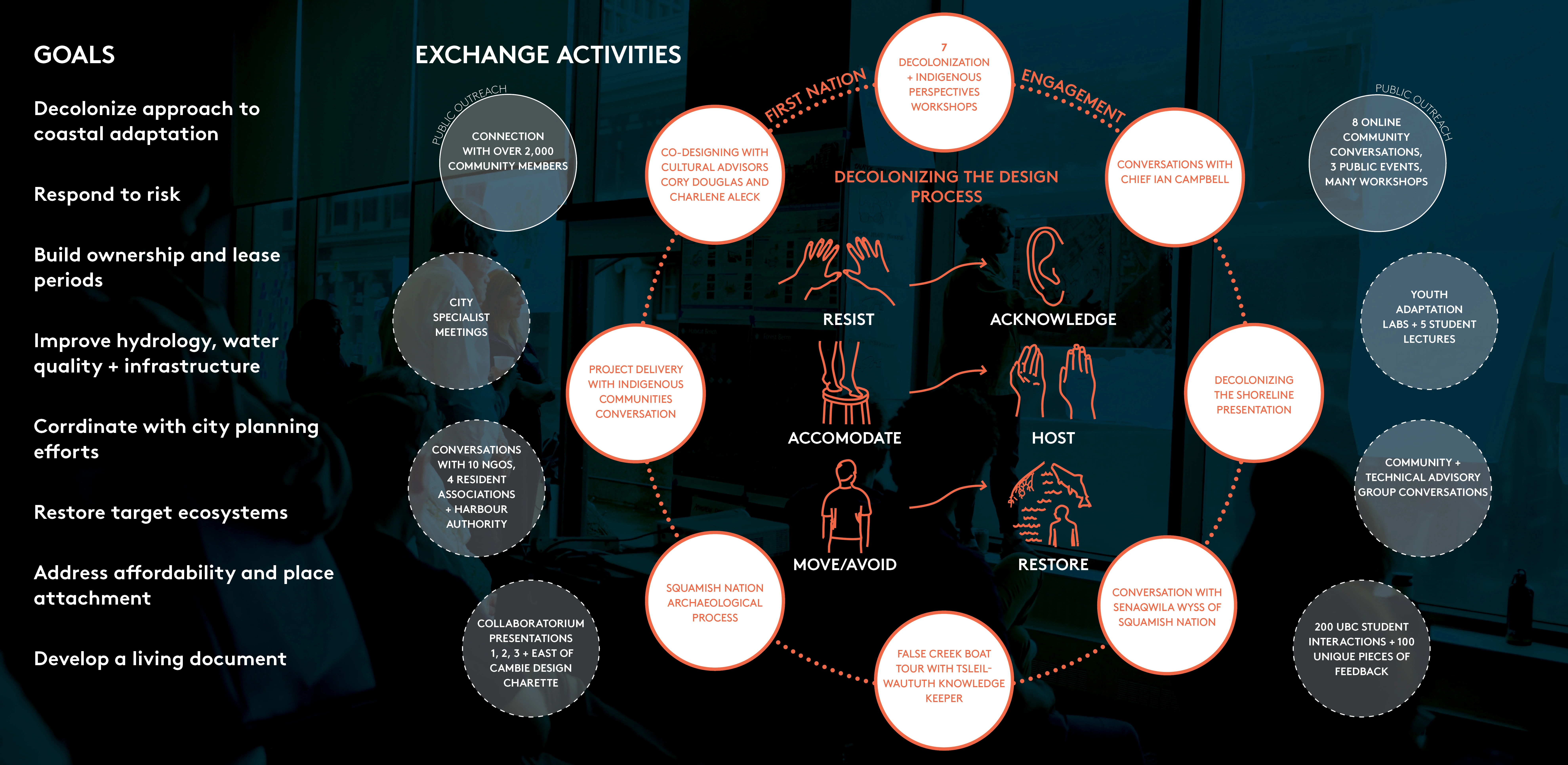
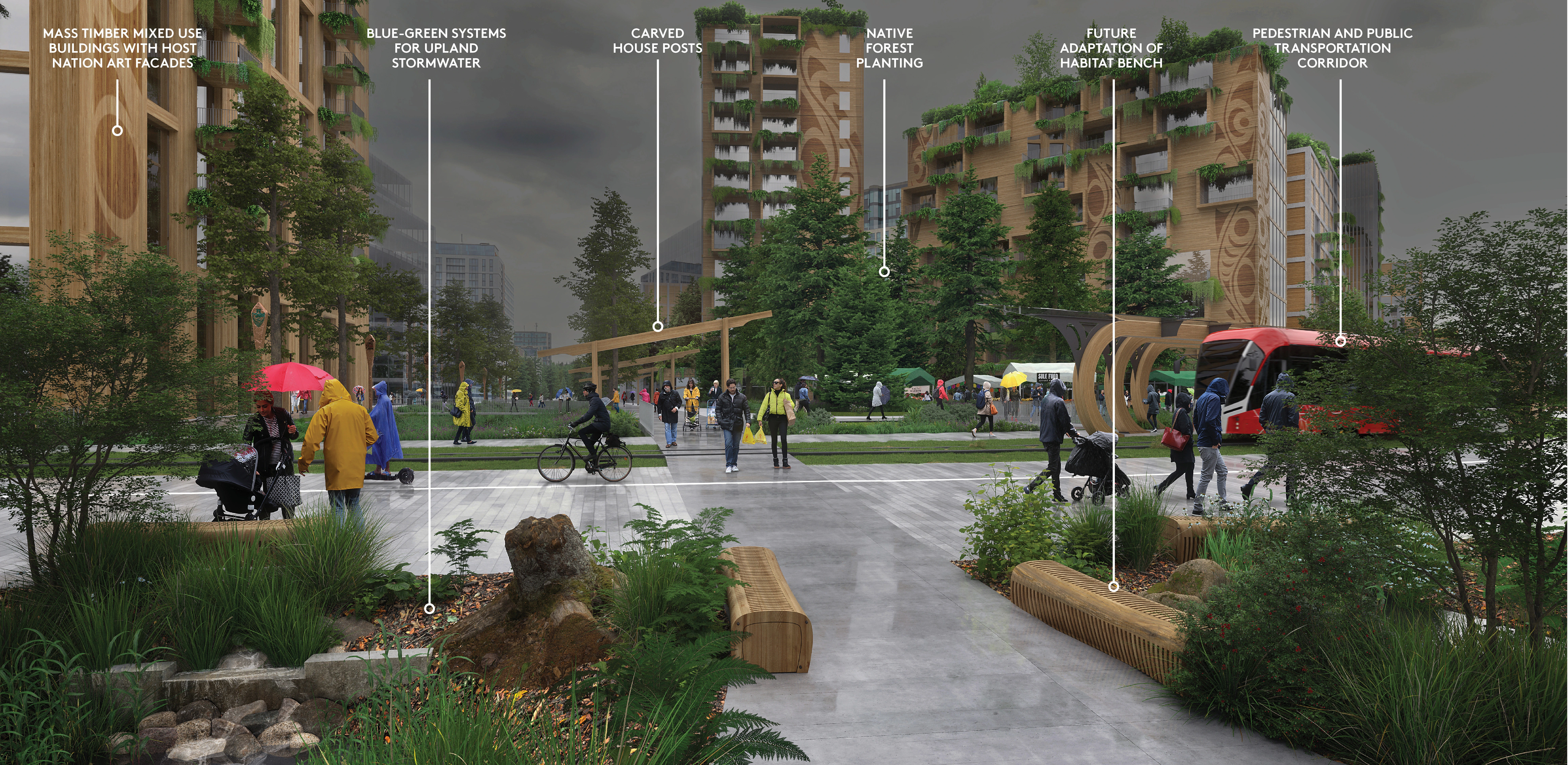
Grounded in the city of Vancouver B.C.’s commitment to truth and reconciliation, this nature-based climate adaptation approach envisions a return to the historic False Creek shoreline. A precedent-setting process prompted ongoing, continuous learning between city and province agencies, a youth adaptation lab, cultural artists, designers, the public, and Host Nation cultural advisors. With reconciliation and reciprocity as the foundation, design outcomes represent a future in which Host Nations are active, celebrated partners in the strategic transformation of an ever-changing shoreline over generations. Both visionary and technically informed, this work inspires the practice of adaptation and charts a course for meaningful reconciliation.
-
RECIPROCITY AND EXCHANGE Vancouver is situated on the unceded traditional homelands of the xwməθkwəy’əm (Musqueam), Skwxwú7mesh (Squamish), and səlilwətaɬ (Tsleil-Waututh) Host Nations. The area currently known as False Creek has significant meaning to Host Nations who have stewarded the land since time immemorial. Today, the shoreline is a major destination for residents and visitors, and vulnerable to flooding as sea level rises to one meter and beyond in the coming century. The Sea2City Design Challenge was a 12-month initiative to reimagine Vancouver's False Creek shoreline in the context of reconciliation between Host Nations, the City, the province and wider community. Embodying values of reciprocity and exchange, this challenge positioned teams as collaborators rather than competitors, with shared cultural advisors and “collaboratorium” workshops with the city and both teams. The design outcomes inform a framework and vision that prioritizes reconciliation with Host Nations to guide City and regional Coastal Adaptation Plans.
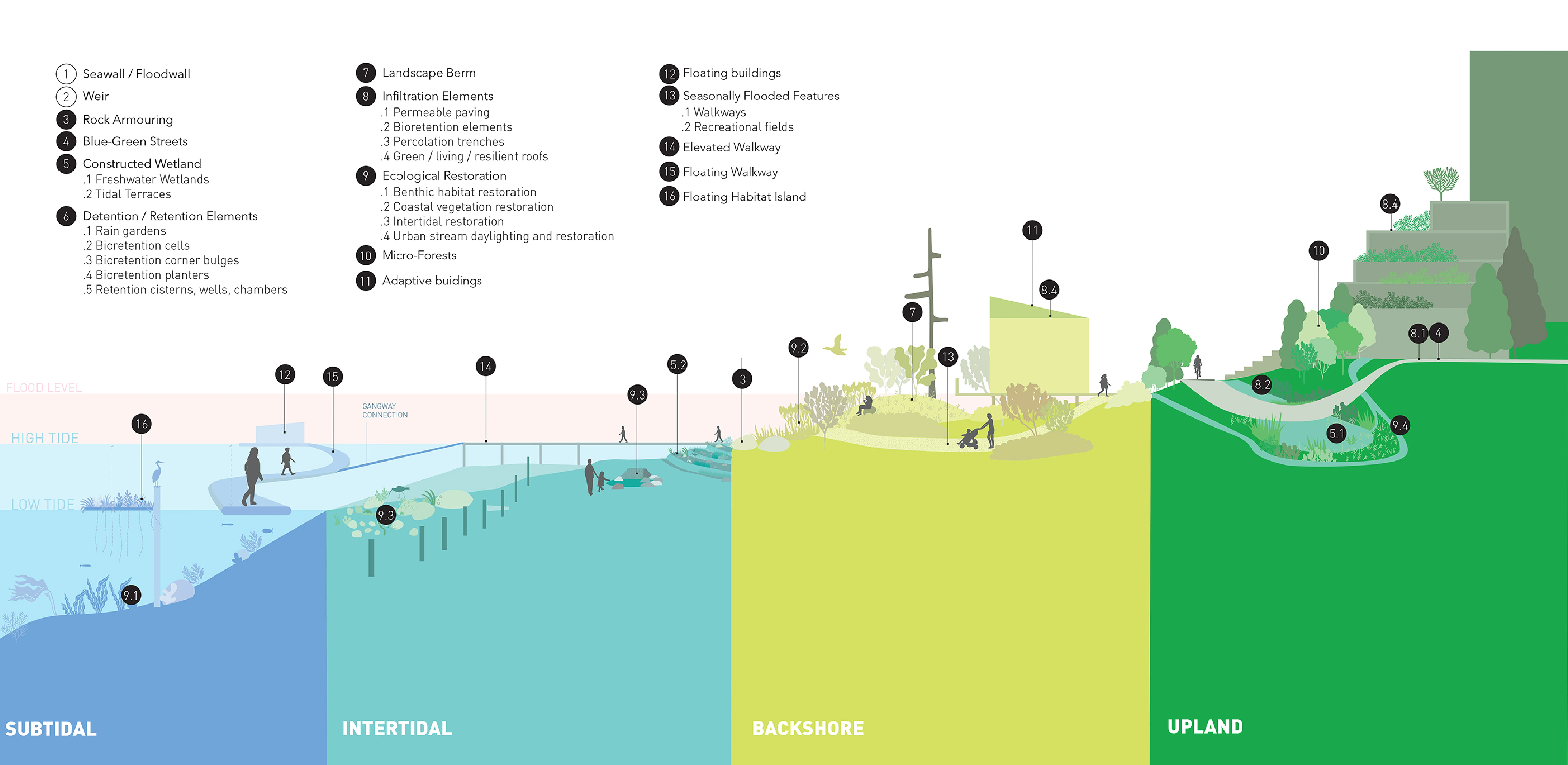
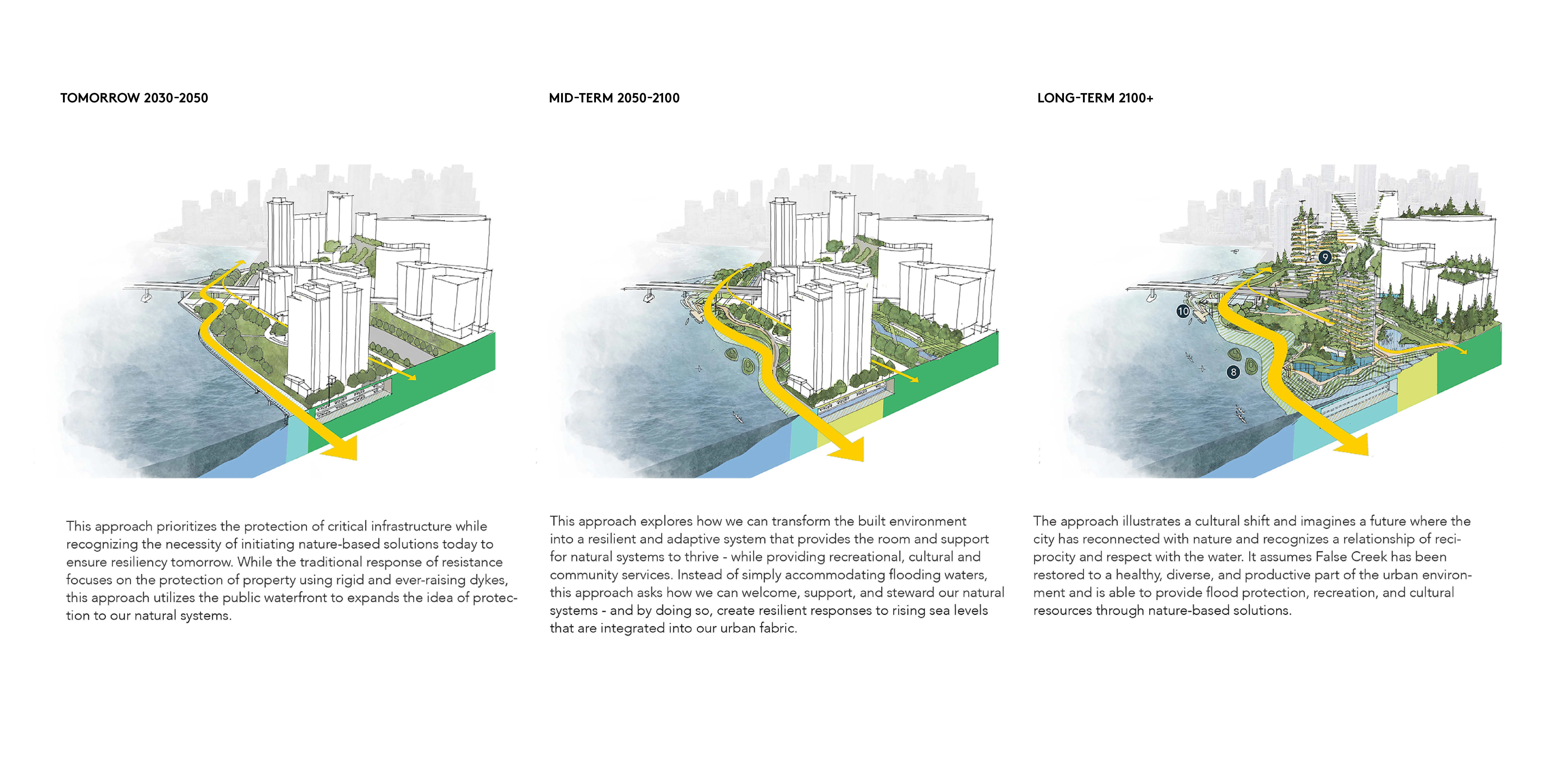
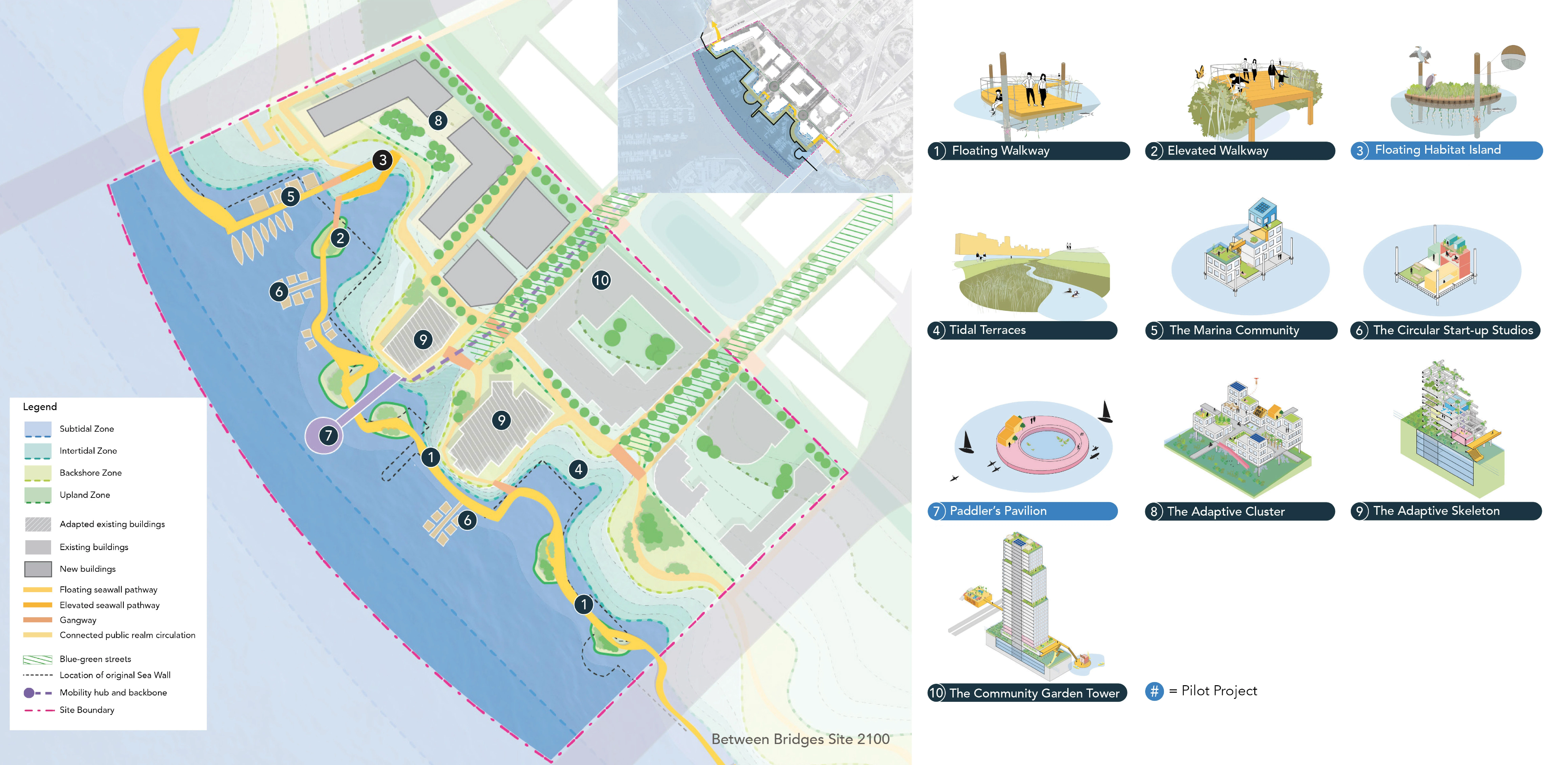
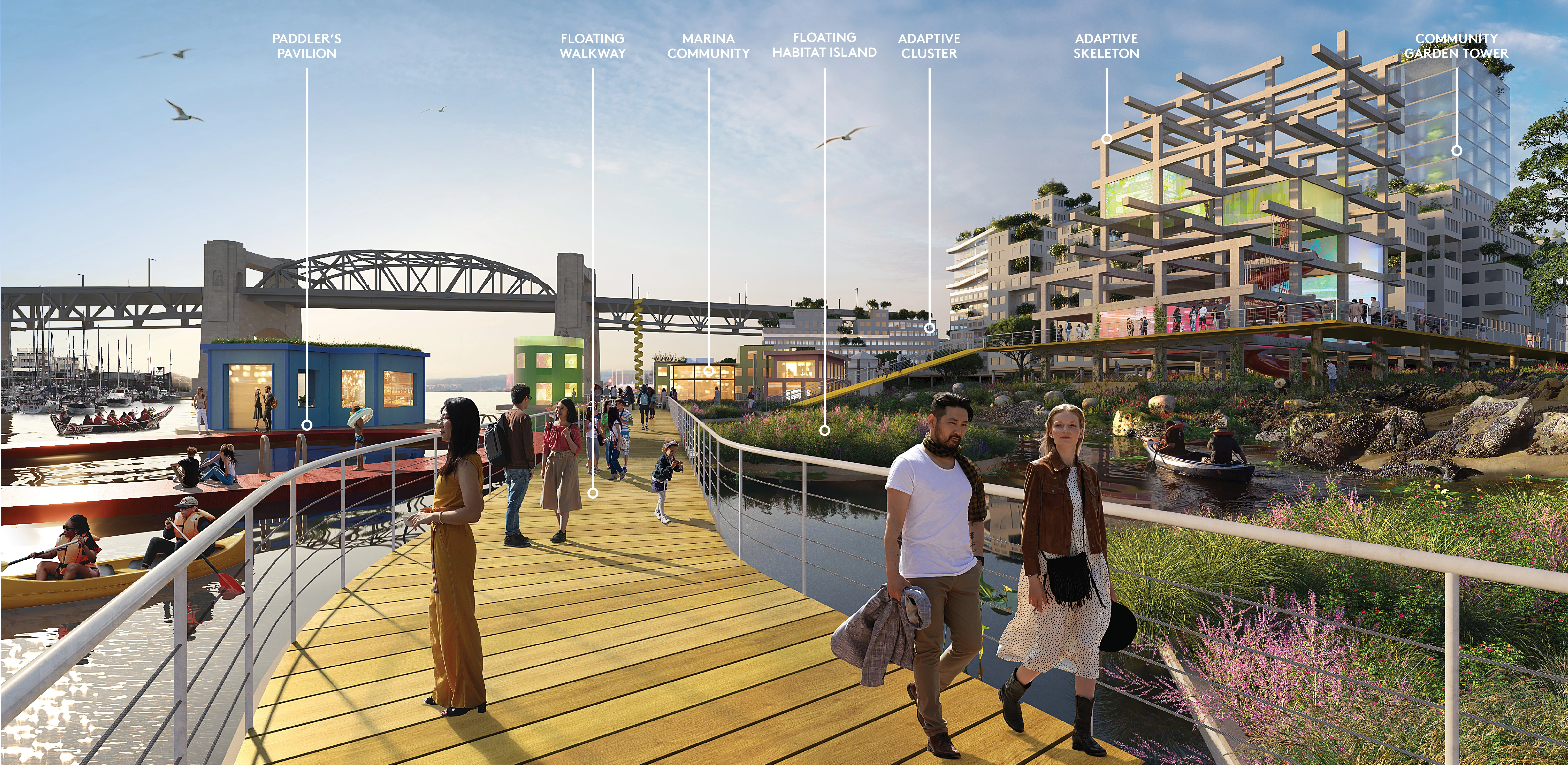
DESIGN OUTCOMES The design of Sea2City achieved three significant outcomes. Firstly, it disrupted the language of coastal planning by recognizing the inseparable connection between land and water. Secondly, it created a forward-looking and positive vision for the False Creek shoreline, where Indigenous voices, values, and aspirations were integrated with community needs. Finally, it resulted in implementable site concepts and pilot projects, refined through public input, introducing novel, decolonized ideas unprecedented in Canadian urban contexts.
ANALYSIS INFORMED BY “WAYS OF SEEING” Stories, oral histories, knowledge, and values were heard directly from Musqueam, Squamish and Tsleil-Waututh peoples. An Indigenous Knowledge Keeper emphasized the profound impact of conventional adaptation terminology. By reframing language to align with Indigenous values of reciprocity, a paradigm shift fundamentally transformed the meaning behind returning to the historic shoreline and how that was communicated with the city teams and broader public.
COMPREHENDING THE CLIMATE CRISIS The adaptive design responses illustrated short-term and long-term design opportunities to protect and adapt the promenade and surrounding land and water scapes. Responding to the urgent need for shared comprehension of the climate crisis, curated cultural events specific to climate adaptation supported collective learning and capacity building. This work was recognized by the International Association for Public Participation (IAP2), with the Canada Indigenous Engagement Award and the International Project of the Year Award.
IMMEDIATE IMPACT OF RECONCILIATION AND RELATIONSHIP BUILDING This work is being consistently integrated into regional agency and city department work. It has inspired the city to change direction on existing land use decisions and informs the City’s overarching Coastal Adaptation Plan. Implementation is well funded, including the floating walkways pilot project which is under construction. This work set a precedent for future planning methods and created foundations for meaningful reconciliation. In 2024 the Canada Society of Landscape Architects recognized the project with a National Award of Excellence in Communication and the top Jury's Award of Excellence, given to one project annually that best demonstrates the CSLA's vision of advancing the art, science, and practice of landscape architecture.
-
- Deb Guenther, FASLA - Mithun
- Laura Durgerian, ASLA - Mithun
- Shannon Lee - Mithun
- Zoe Kasperyzyk - Mithun
- Derek Lee - PWL Partnership
- D'Arcy Hutton - PWL + North False Creek Collective
- Meredith Wilson - PWL + North False Creek Collective
- Beau Wuthrich - PWL + North False Creek Collective
- Moffatt & Nichol - Civil and Waterfront Engineering, Mithun + One Architecture Team / South Creek
- Younes Nouri - Moffatt & Nichol
- Herrera Environmental Consultants - Blue Green Systems and Coastal Ecosystem Adaptation, Mithun + One Architecture Team / South Creek
- Chuck McDowell - Herrera (formerly with Mithun)
- Deltares - Civil Engineering, PWL Partnership + MVRDV Team / North Creek
- Happy Cities - Social Planning, PWL Partnership + MVRDV Team / North Creek
- Westmar Advisors - Shoreline Engineering, PWL Partnership + MVRDV Team / North Creek
- GW Williams Associates, Ltd - Environment, PWL Partnership + MVRDV Team / North Creek
- Goudappel - Mobility, PWL Partnership + MVRDV Team / North Creek
- Modus - Policy Planning, PWL Partnership + MVRDV Team / North Creek
- Corey Douglas, Modern Formline - Cultural Advisor, Squamish Nation (Both Teams)
- Charlene Aleck - Knowledge Keeper, Tsleil Waututh Nation (Both Teams)
- Sophie MacNeill - City of Vancouver Parks (formerly with PWL)
-
- Red Alder, Alnus rubra
- Sitka Willow, Salix sitchensis
- Hooker Willow, Salix hookeriana
- Red Huckleberry, Vaccinium parvifolium
- Salmonberry, Rubus spectabilis
- Red Elderberry, Sambucus racemosa
- Saskatoon Serviceberry, Amelanchier alnifolia
- Western Red Cedar, Thuja plicata
- Yellow Cedar, Chamaecyparis nootkatensis
- Sitka Spruce, Picea sitchensis
- Western Hemlock, Tsuga heterophylla
- Grand Fir, Abies grandis
- Douglas Fir, Pseudotsuga menziesii
- Western Swordfern, Polystichum munitum
- Low Oregon Grape, Mahonia nervosa
- Bracken Fern, Pteridium aquilinum
- Inside-Out Flower, Vancouveria hexandra
- Evergreen Huckleberry, Vaccinium ovatum
- Salal, Gaultheria shallon
- Mycellium Fungus Network
- Woody Debris
- Nutrient-Rich Soil
Advertisement
Related Awards
Award of Excellence, Analysis & Planning
H2Oquirrh: Regional Water Reform for a Resilient Salt Lake Valley
Location: Salt Lake City, UT
Firm: Design Workshop
Client: Wasatch Front Regional Council, Salt Lake County
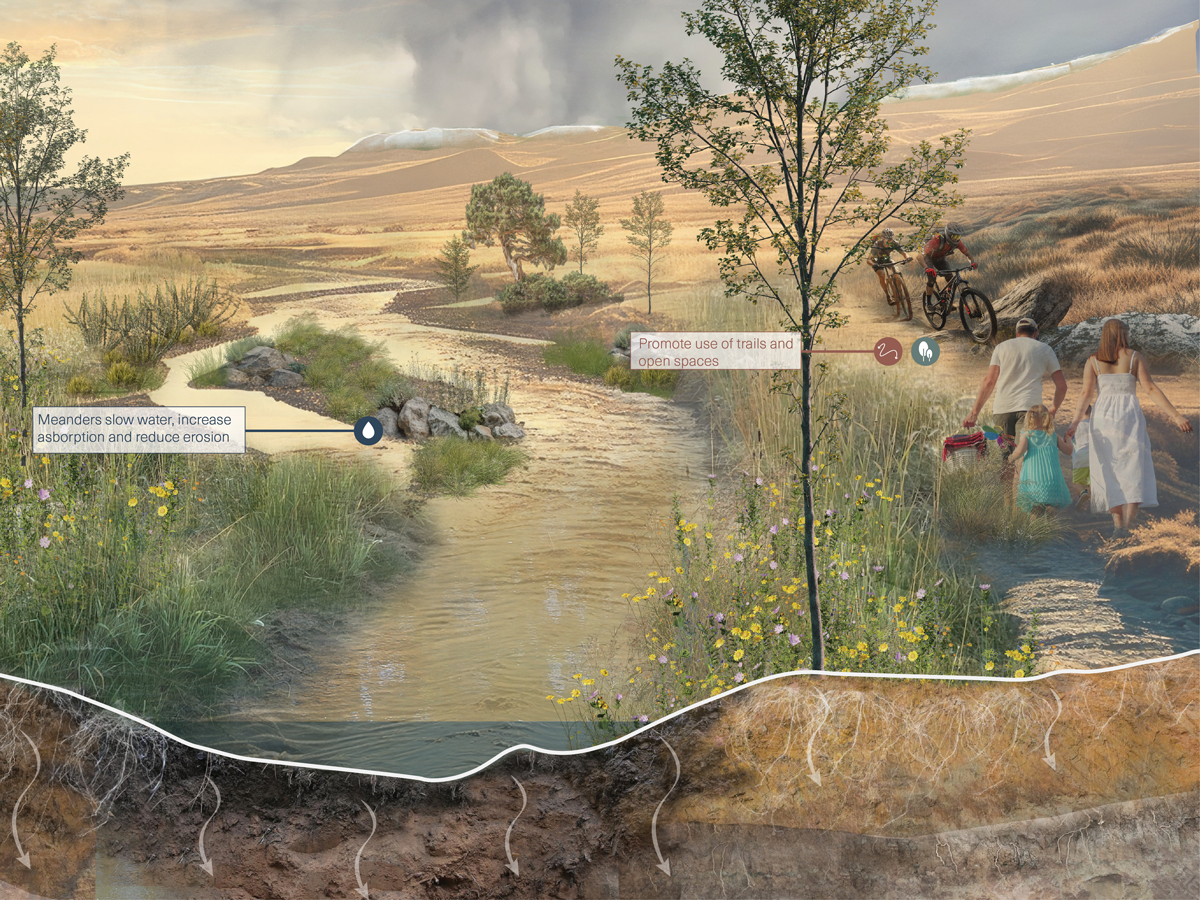
Water flowing from the Oquirrh Mountains is a critical contributor to the Great Salt Lake. Severe drought and human-caused decline threaten the lake’s viability, with cascading impacts on ecosystems and public health. This regional collaboration of seven jurisdictions, the H2Oquirrh Vision Plan, undertakes a large systems analysis of hydrologic cycles, land cover, and land-use decisions to identify site-specific interventions across nine creeks and washes. Led by landscape architects and water resource engineers, the study advances a deeper understanding of localized drivers of water loss and proposes innovative solutions through integrated landscape infrastructure design and policy.
-listing-img.webp?language=en-US)
Related Articles
ASLA Fund
American Society of Landscape Architects Announces its 2026 Student Awards
39 Student Award winners elevate the future of the landscape architecture profession
Aug 24 2026