
.webp?language=en-US)

.webp?language=en-US)
Datum House
The sustainability strategies are impressive, especially the integration of renewable energy and ecological restoration at this scale.
Awards Jury
-
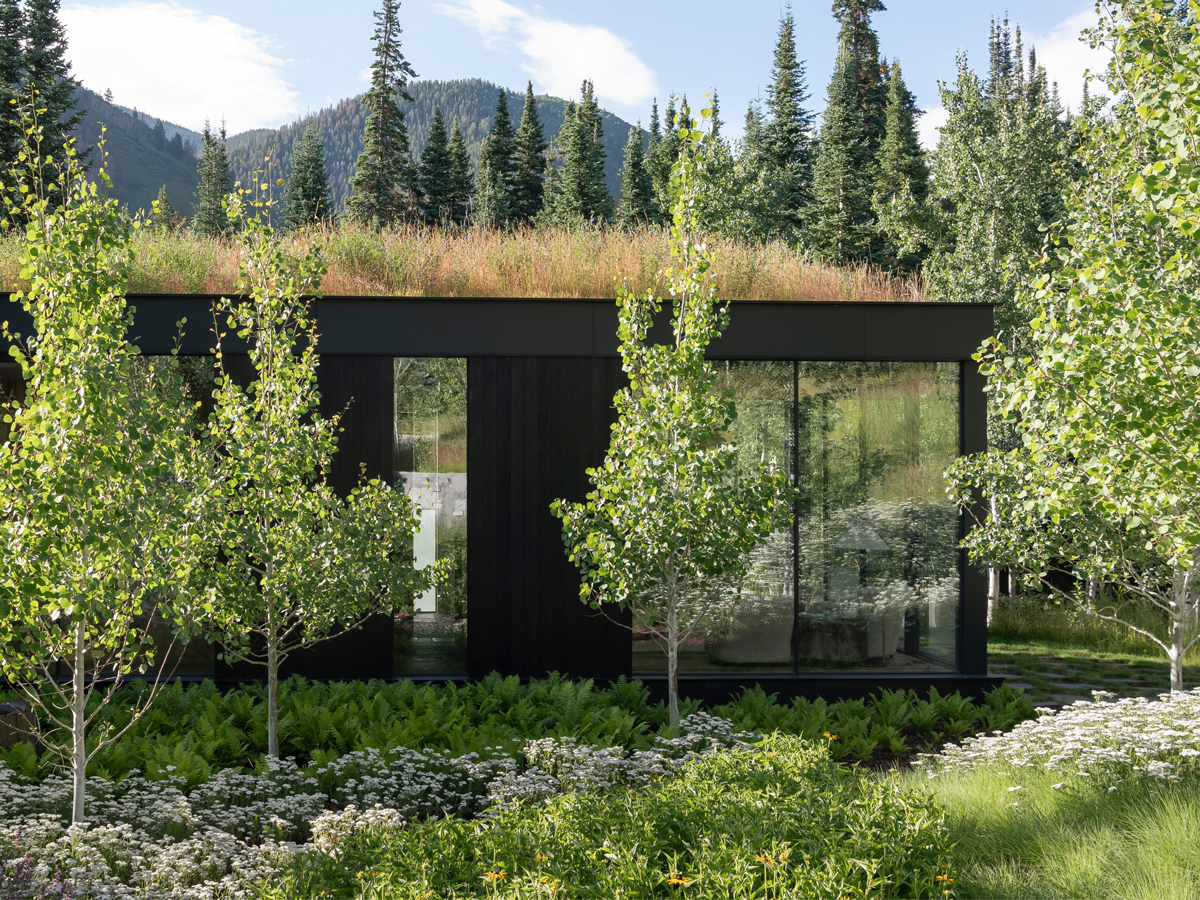
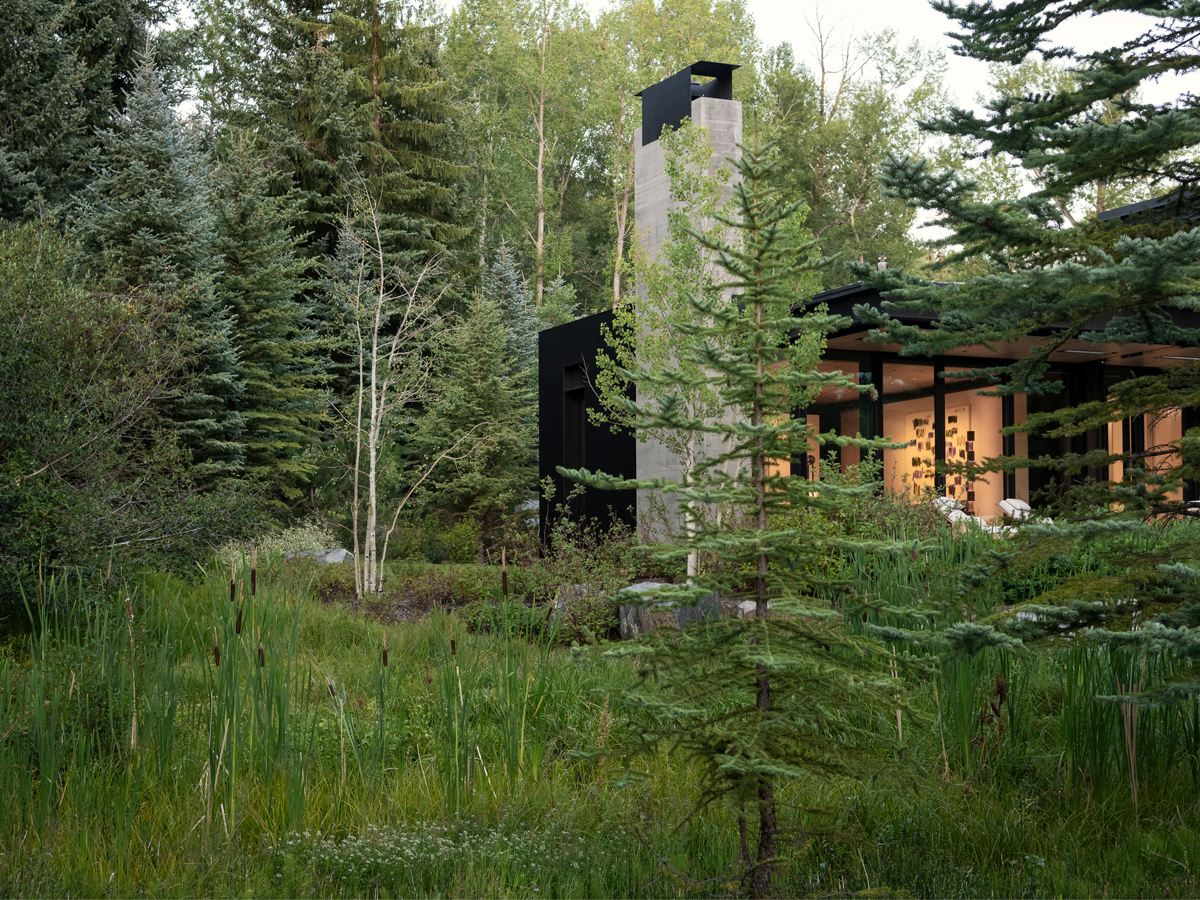
This modern homestead was designed for a family with a passion for the arts and a deep connection to the region. The project was guided by three principles: (1) create dynamic spaces to support the needs for everyday residential living and large philanthropic events, (2) contribute to the cultural legacy of western Massachusetts, and (3) use sustainable practices to guide design and restore the ecological integrity of the site. A prominent view of Massachusetts's tallest peak offered an organizing framework, serving as the datum for architectural and landscape design. With these parameters, the project team explored creative and sustainable solutions to harmoniously blend a variety of spatial scales into a sensitive agrarian vernacular.
-
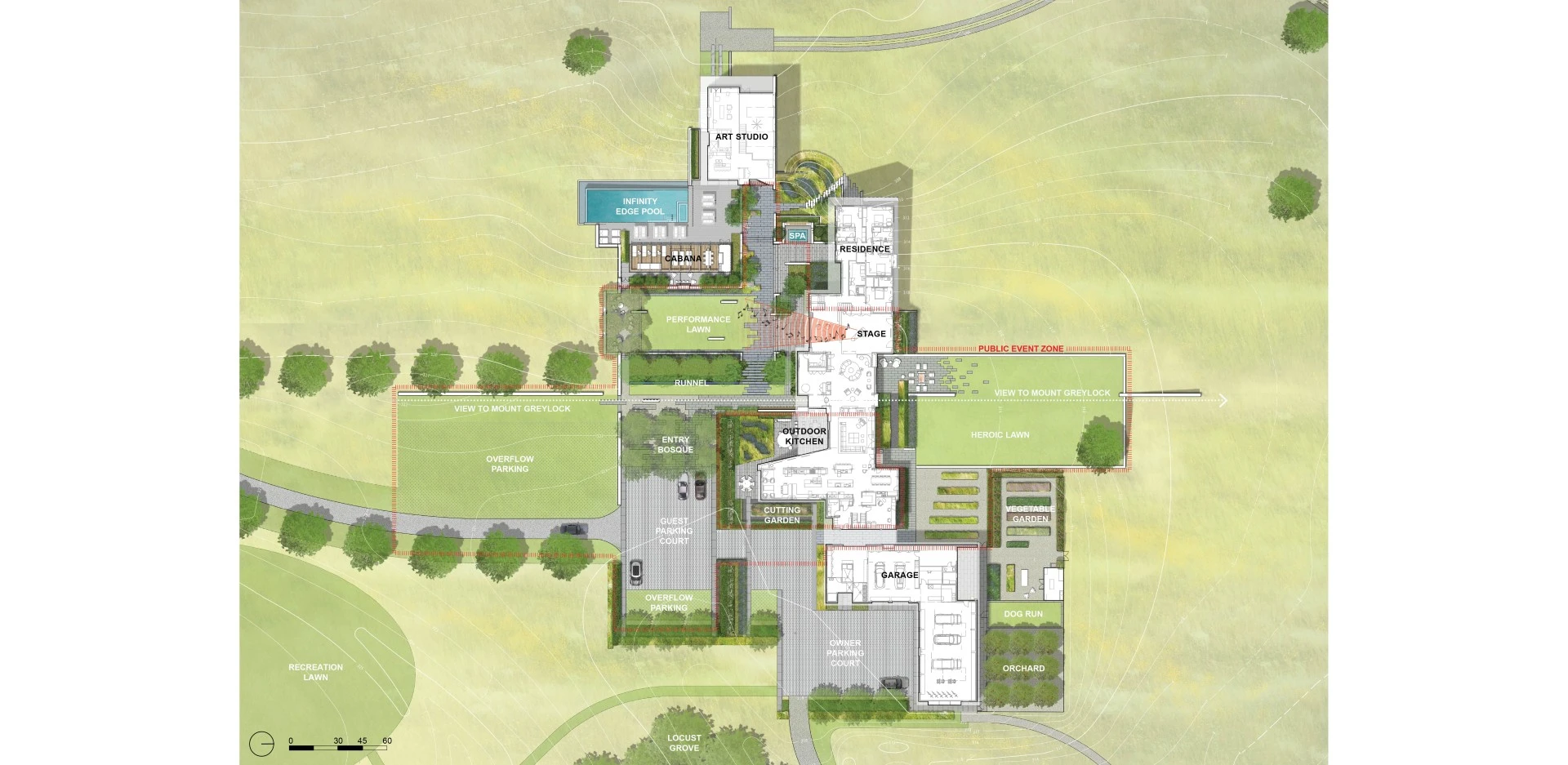
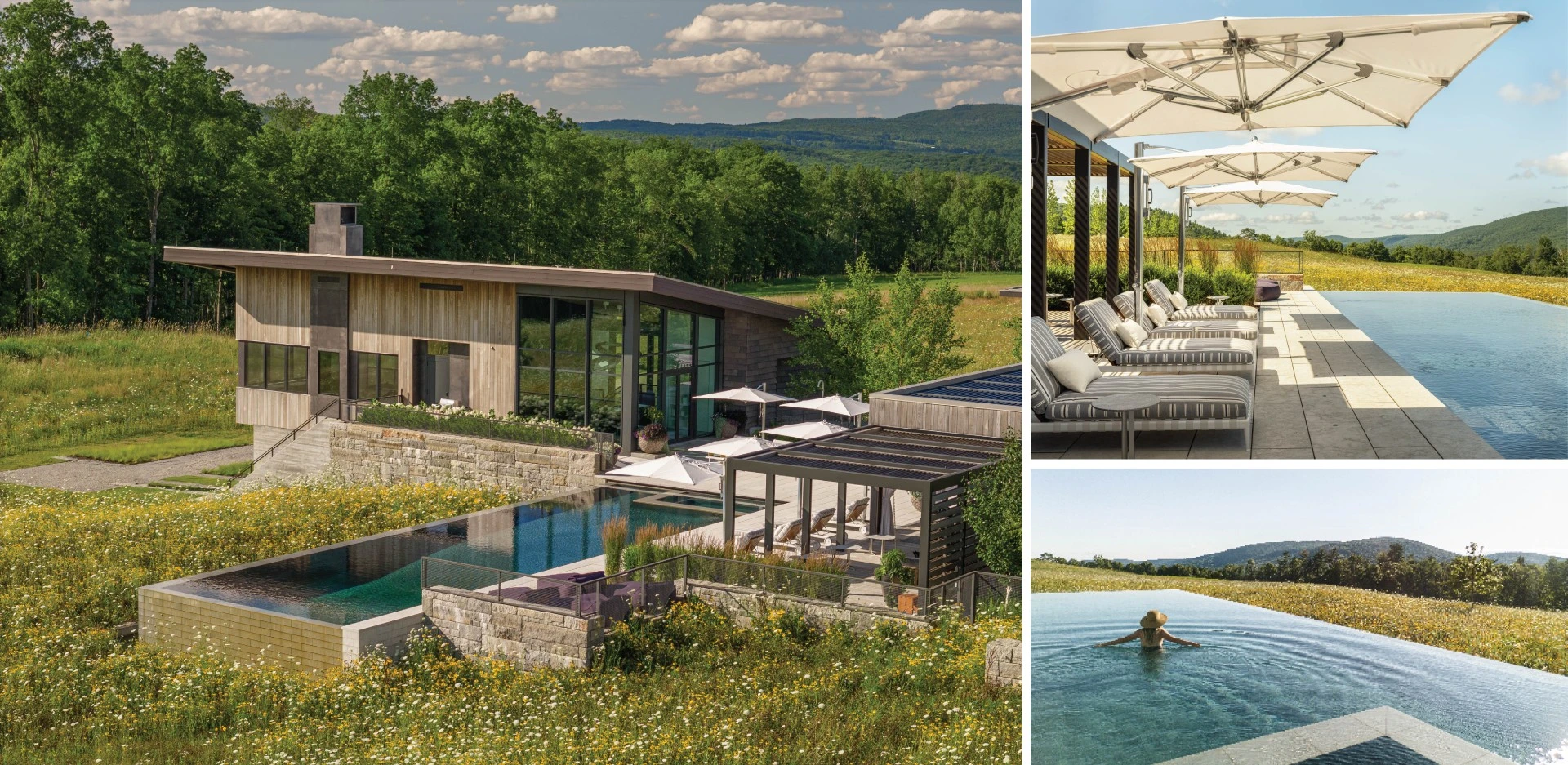
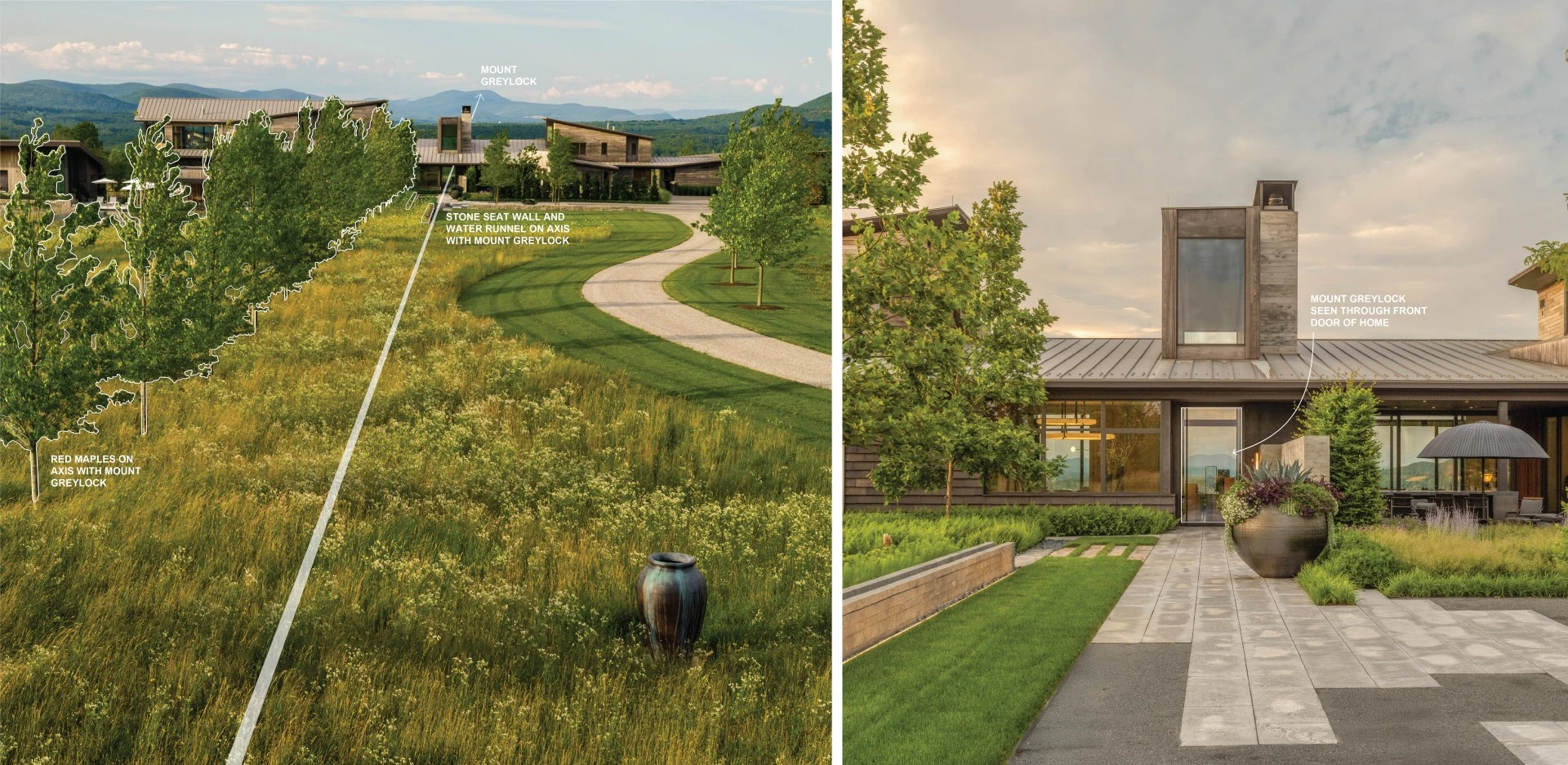
The site's prominent view of Massachusetts's tallest peak, Mount Greylock, offered an organizing framework for the site, serving as the datum for the architectural and landscape design. Beyond the client's personal connection to Mt. Greylock, it was paramount to the owners that sustainable stewardship practices guide site development decisions.
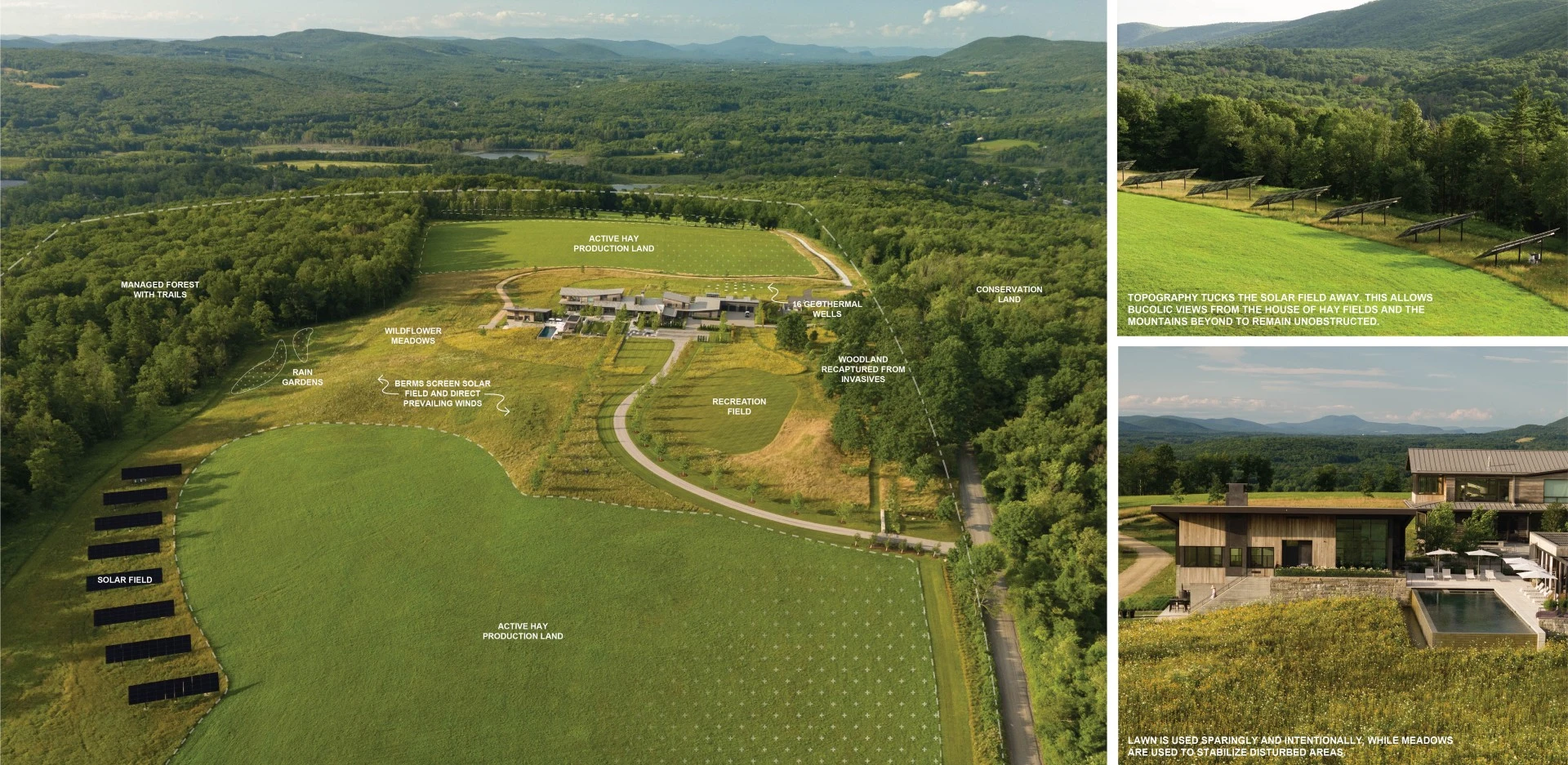
Several sources of renewable energy were employed to help the home to be self-sufficient and reduce the overall energy needed for everyday living. Sixteen geothermal wells provide year-round climate control to the home. An on-site array of solar panels supplies the home with additional energy throughout the year. Passive architectural design takes advantage of the sun to naturally light the home and art studio. Sculpting of landforms visually screen the solar panels and directs prevailing winds, creating sculptural winter snowdrifts, and causing ephemeral shadows in the meadow throughout the day.
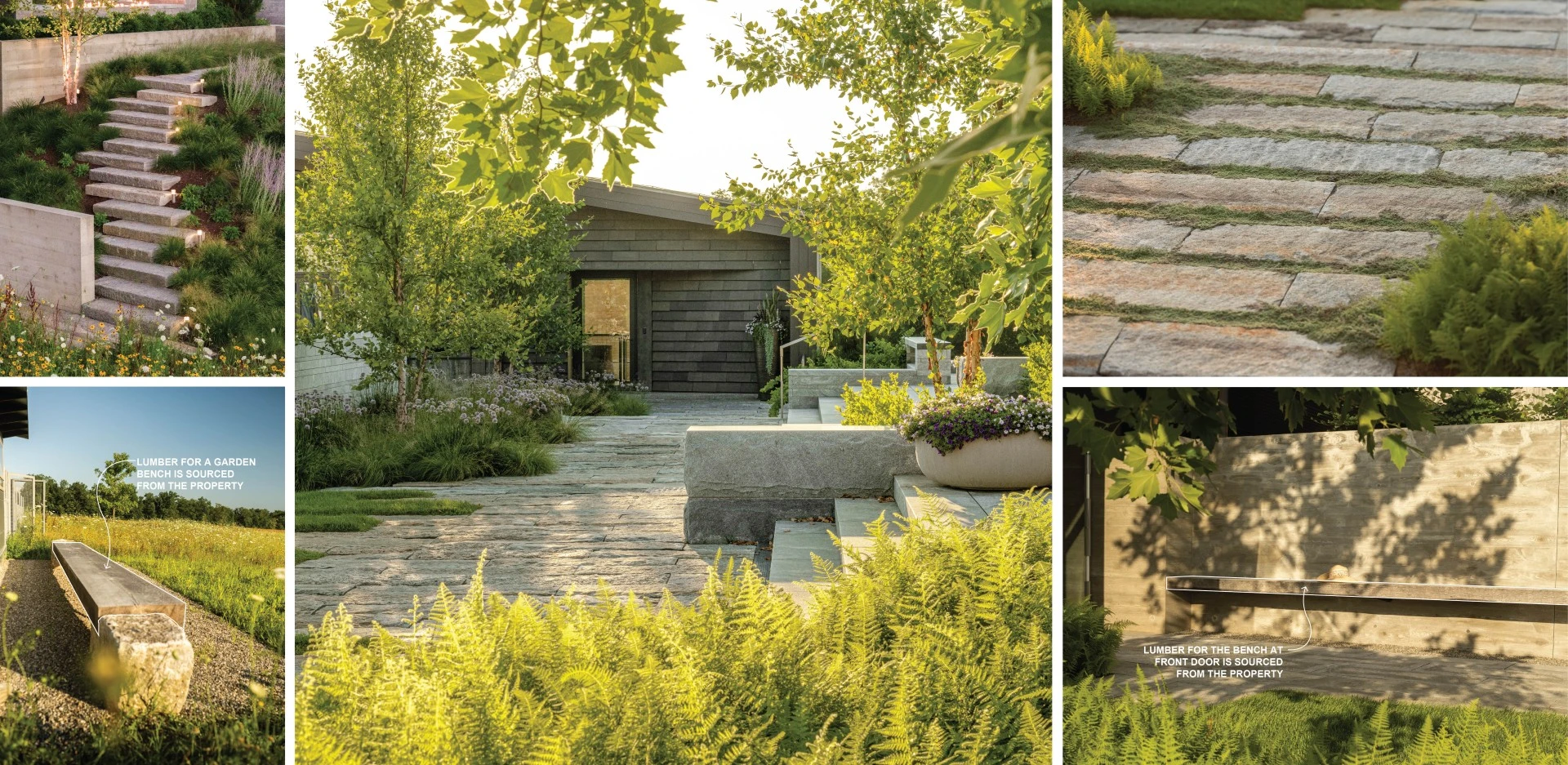
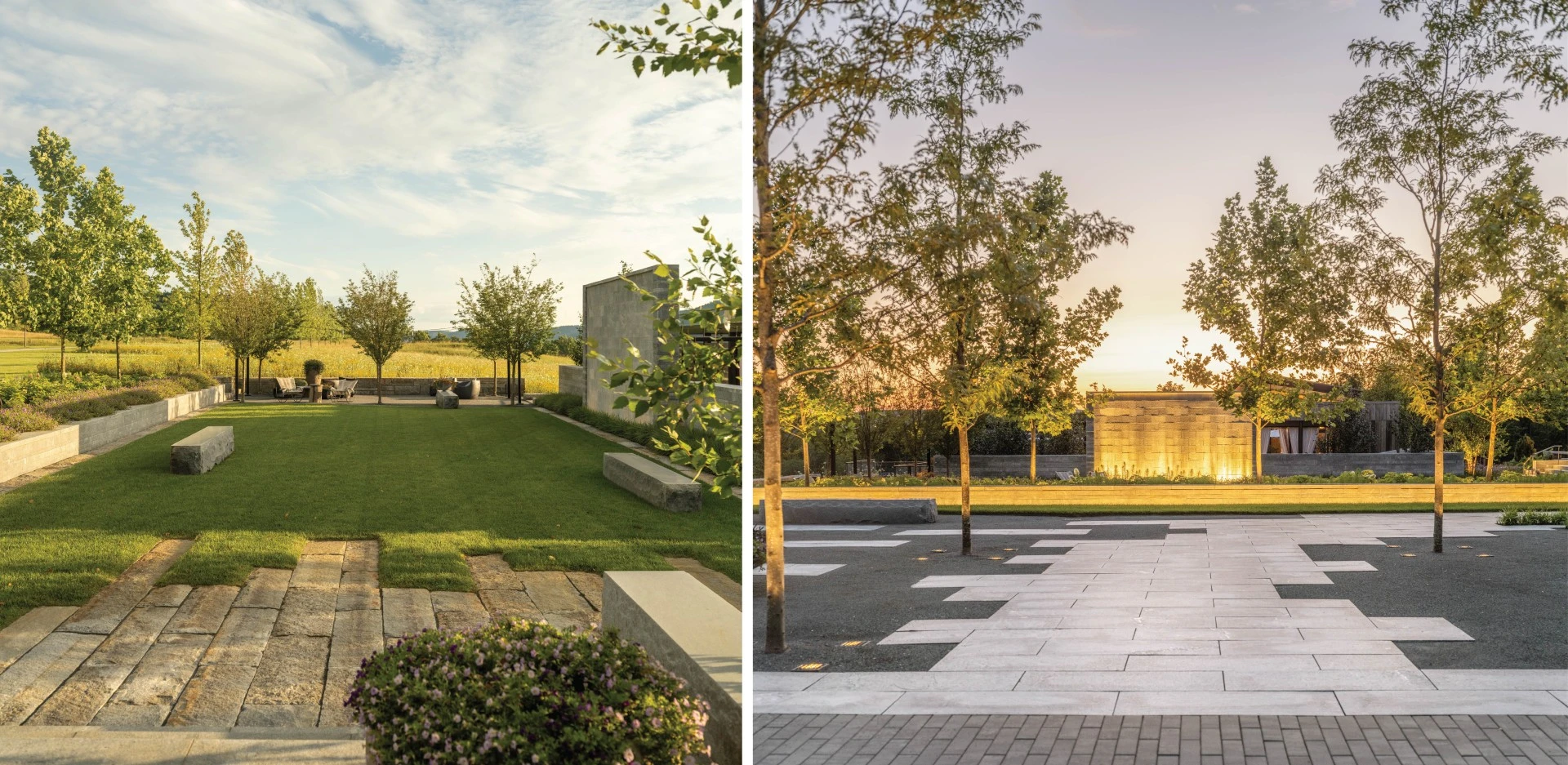
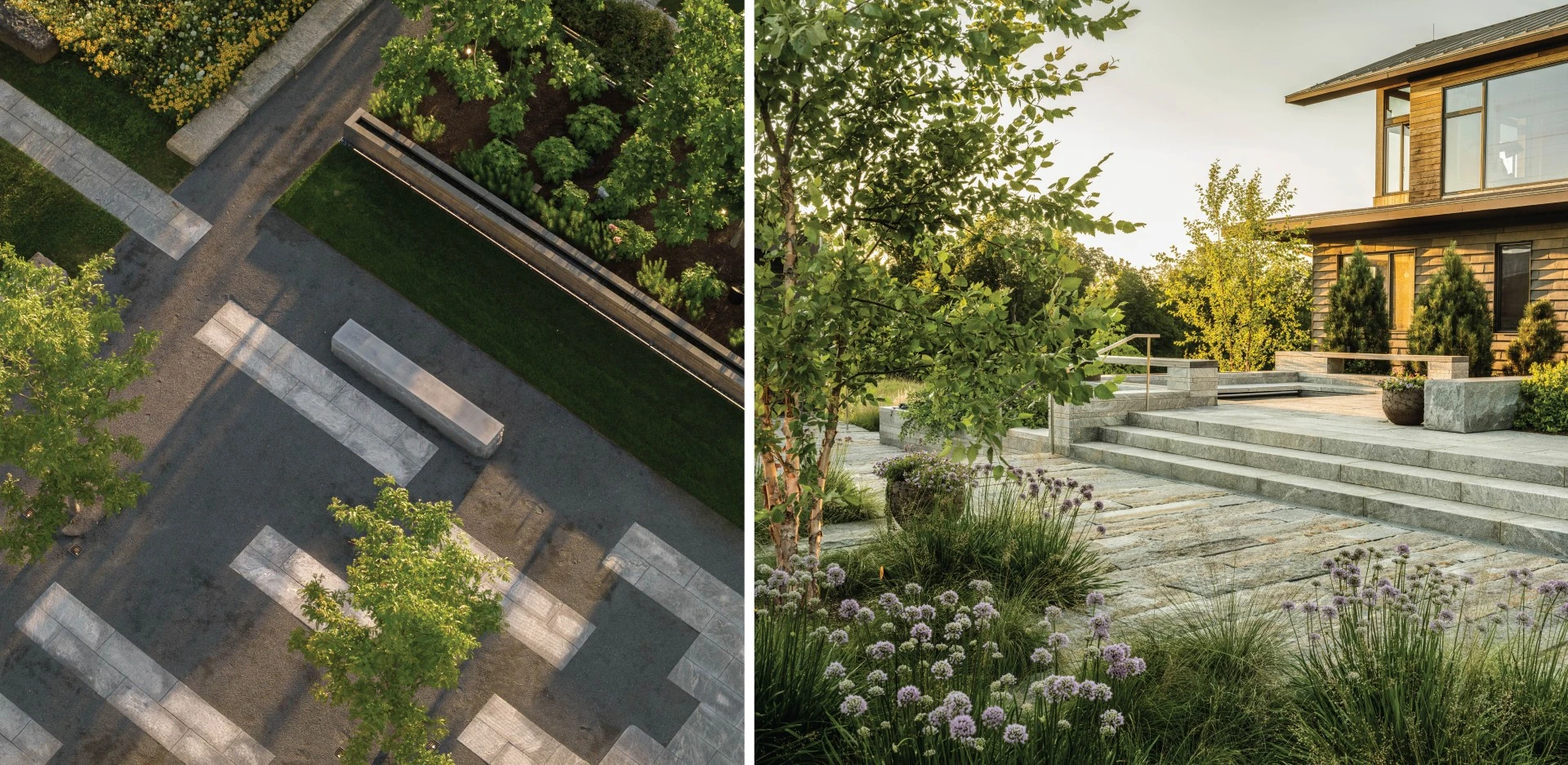
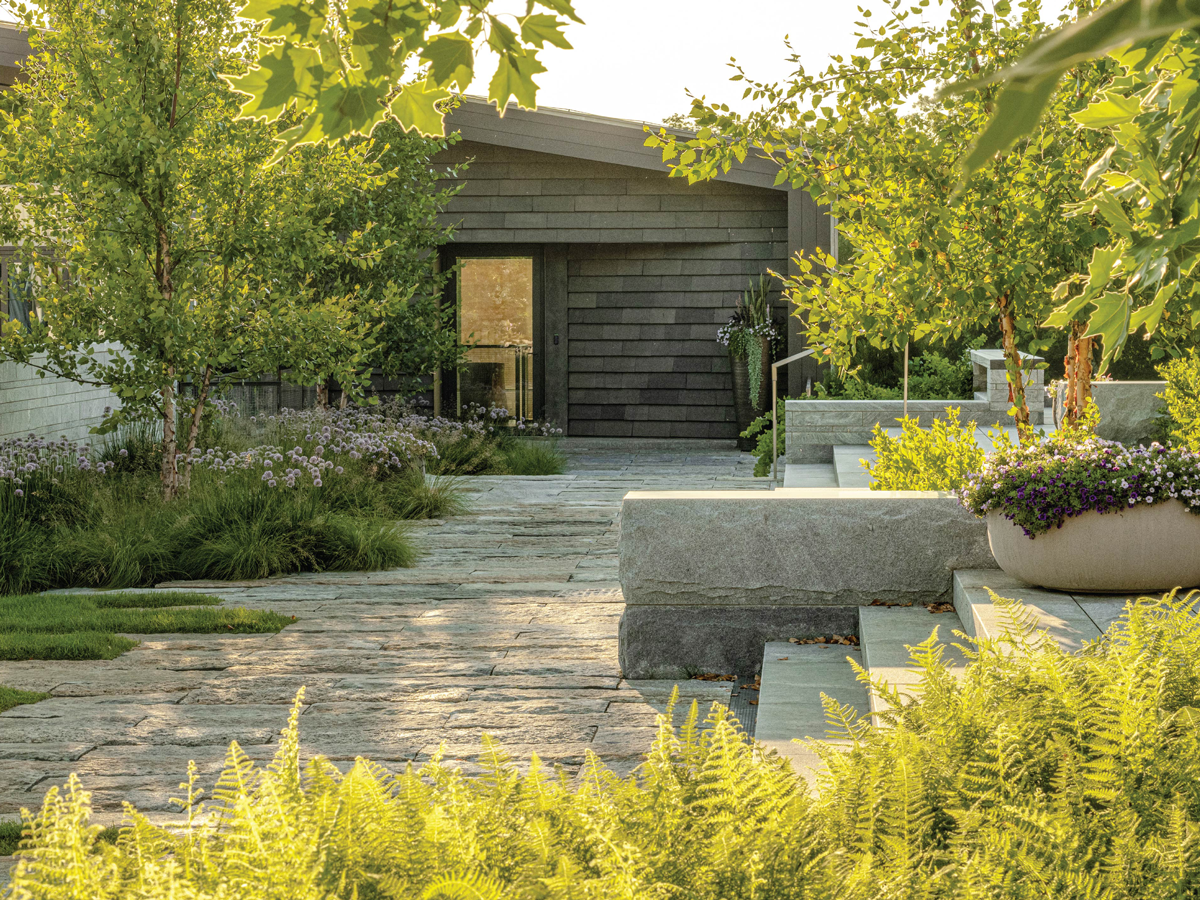
Materials were carefully selected to reduce overall embodied energy. Locally reclaimed stone comprises a large portion of walls, paving, and steps. Timber sourced from the property's woodlands was used to construct exterior benches and tables. Where new materials were specified, they were selected for their natural and durable qualities, and sourced locally where possible.
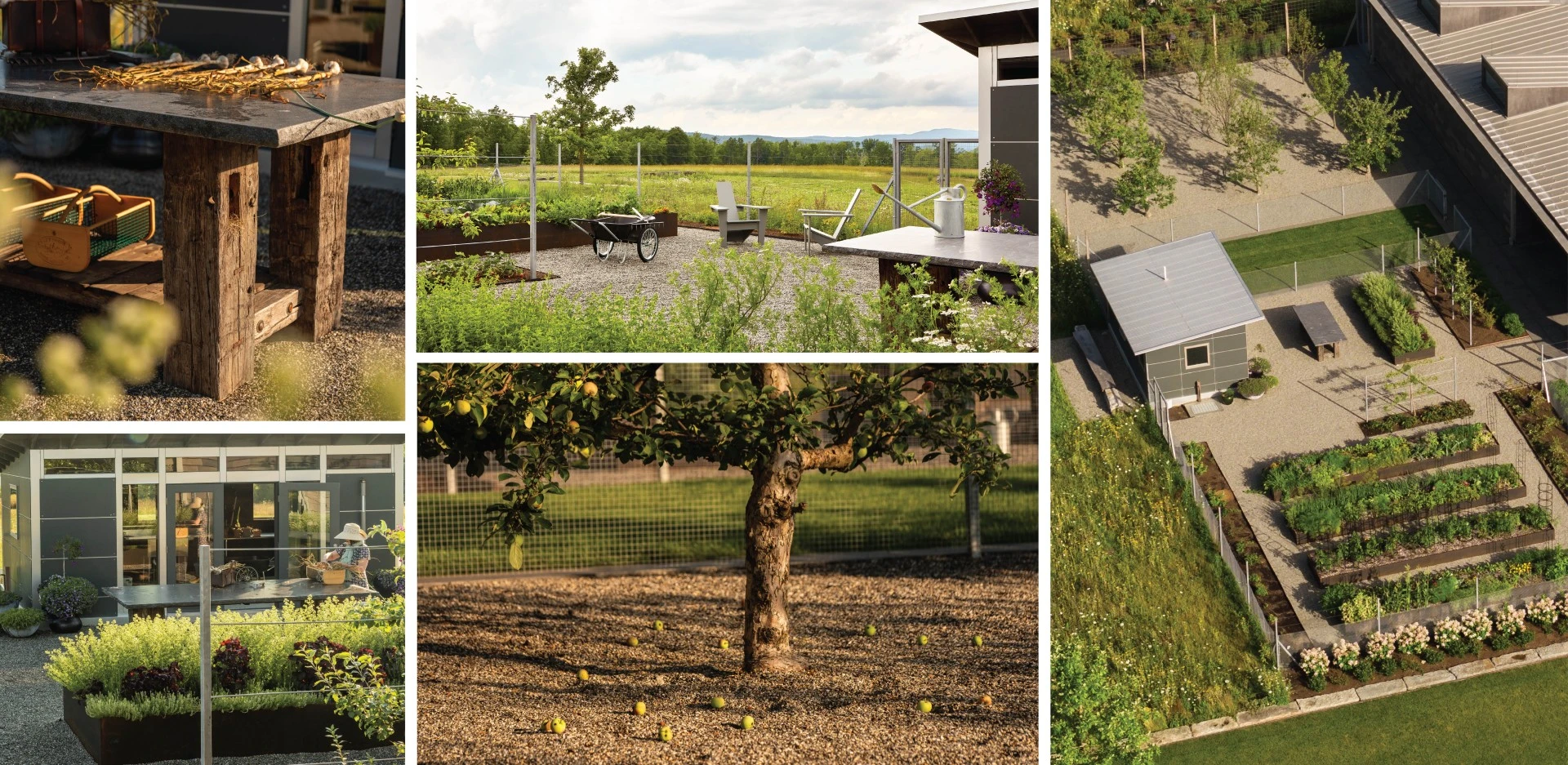
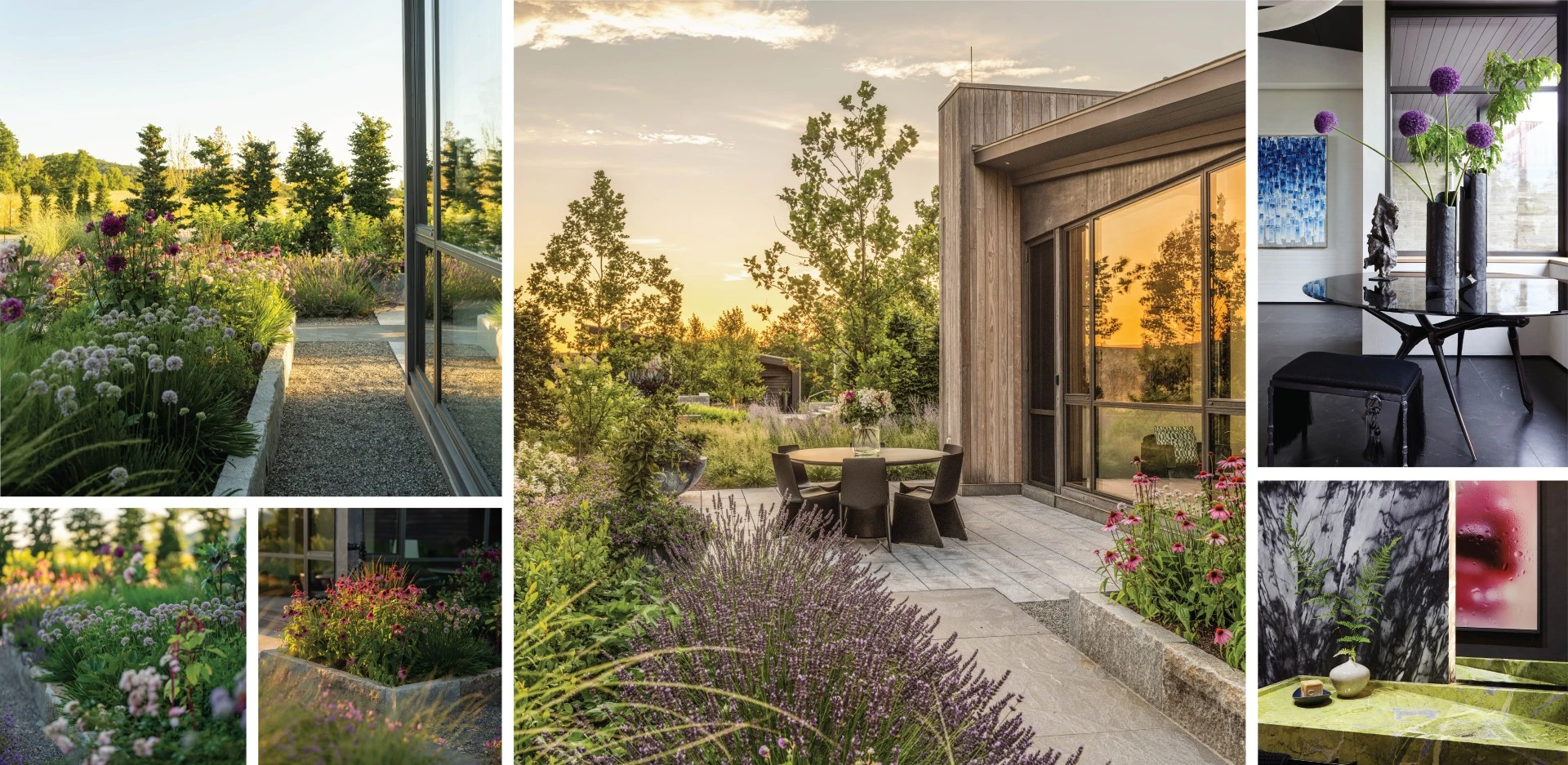
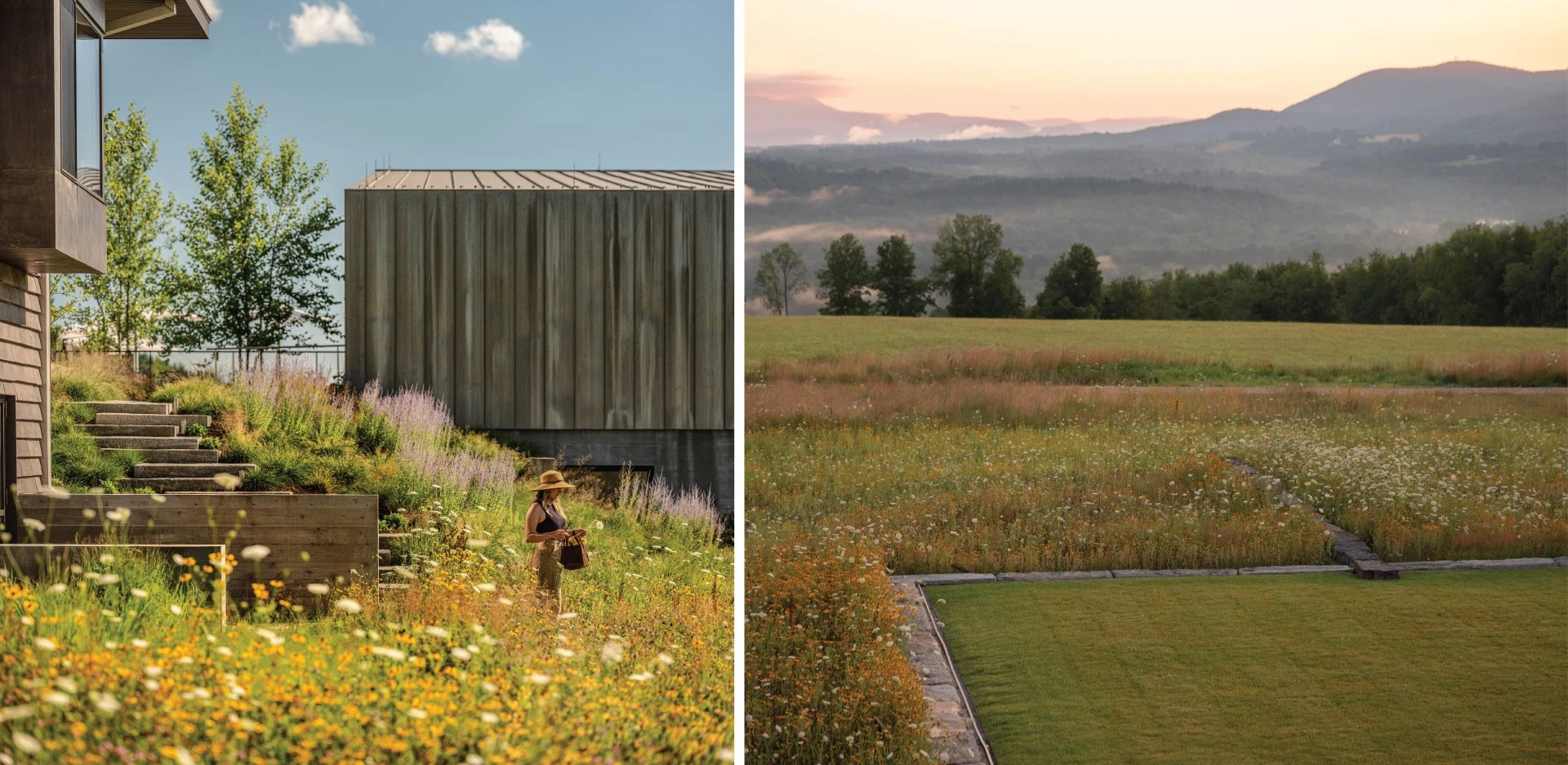
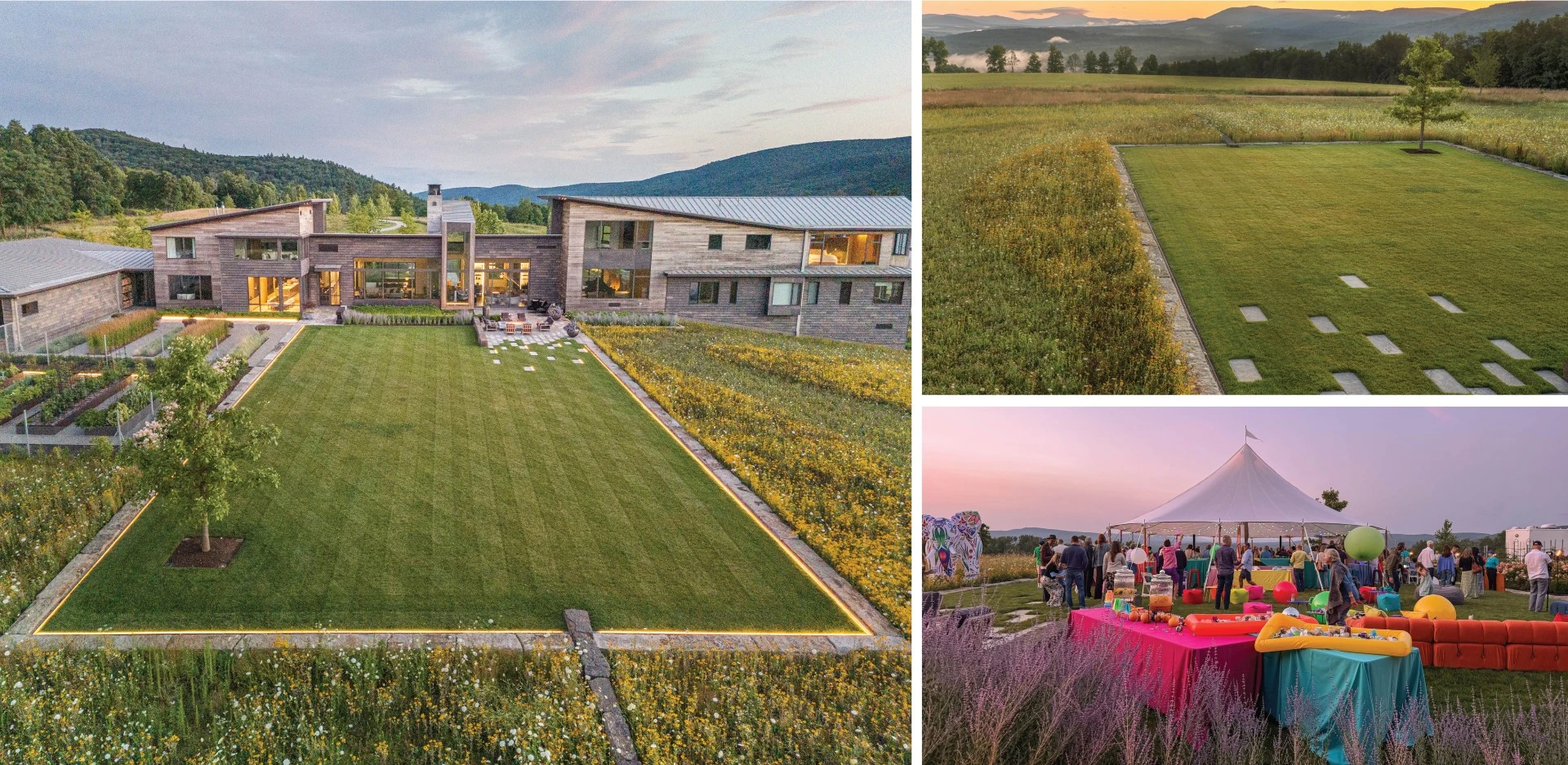
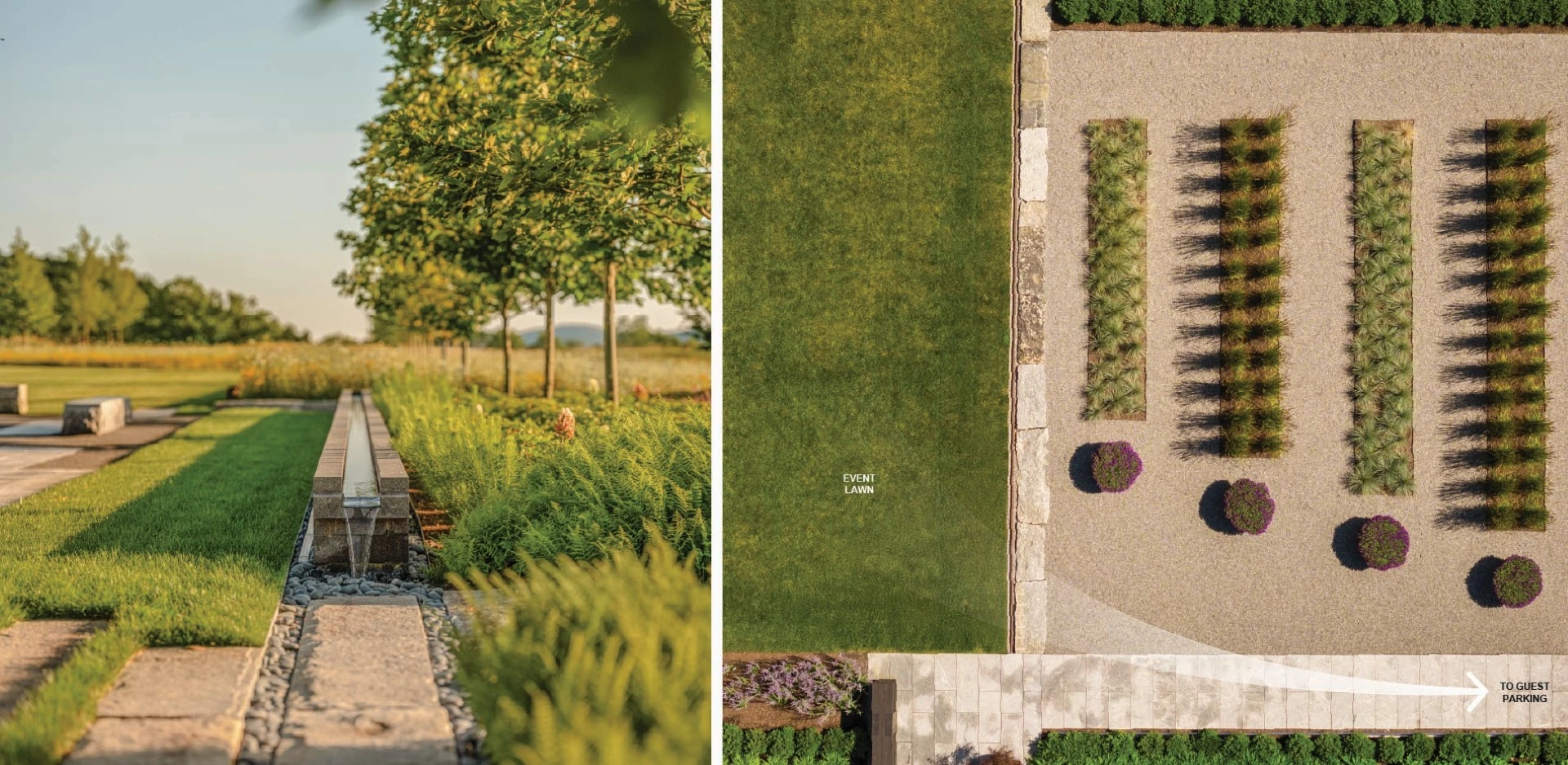
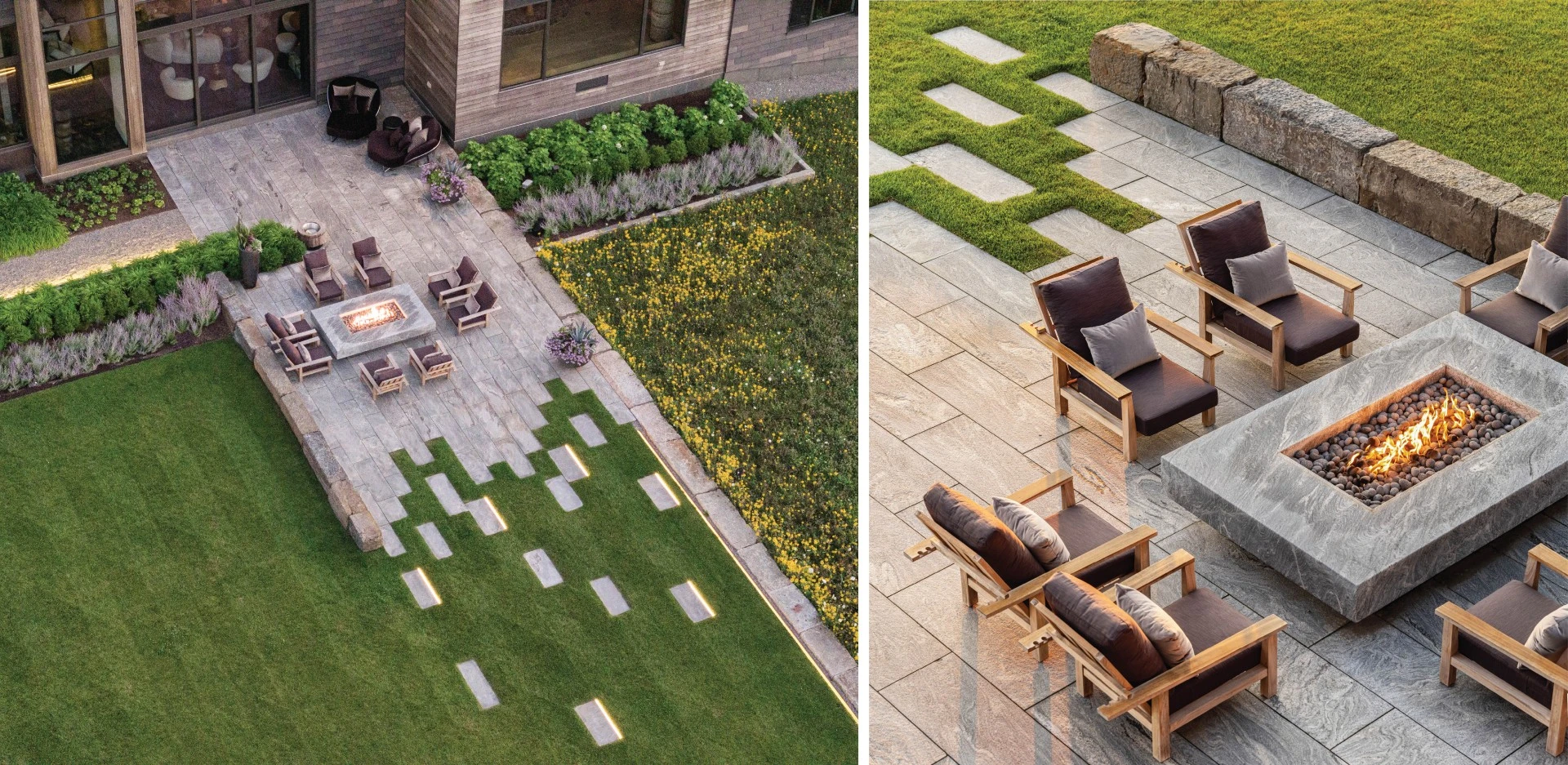
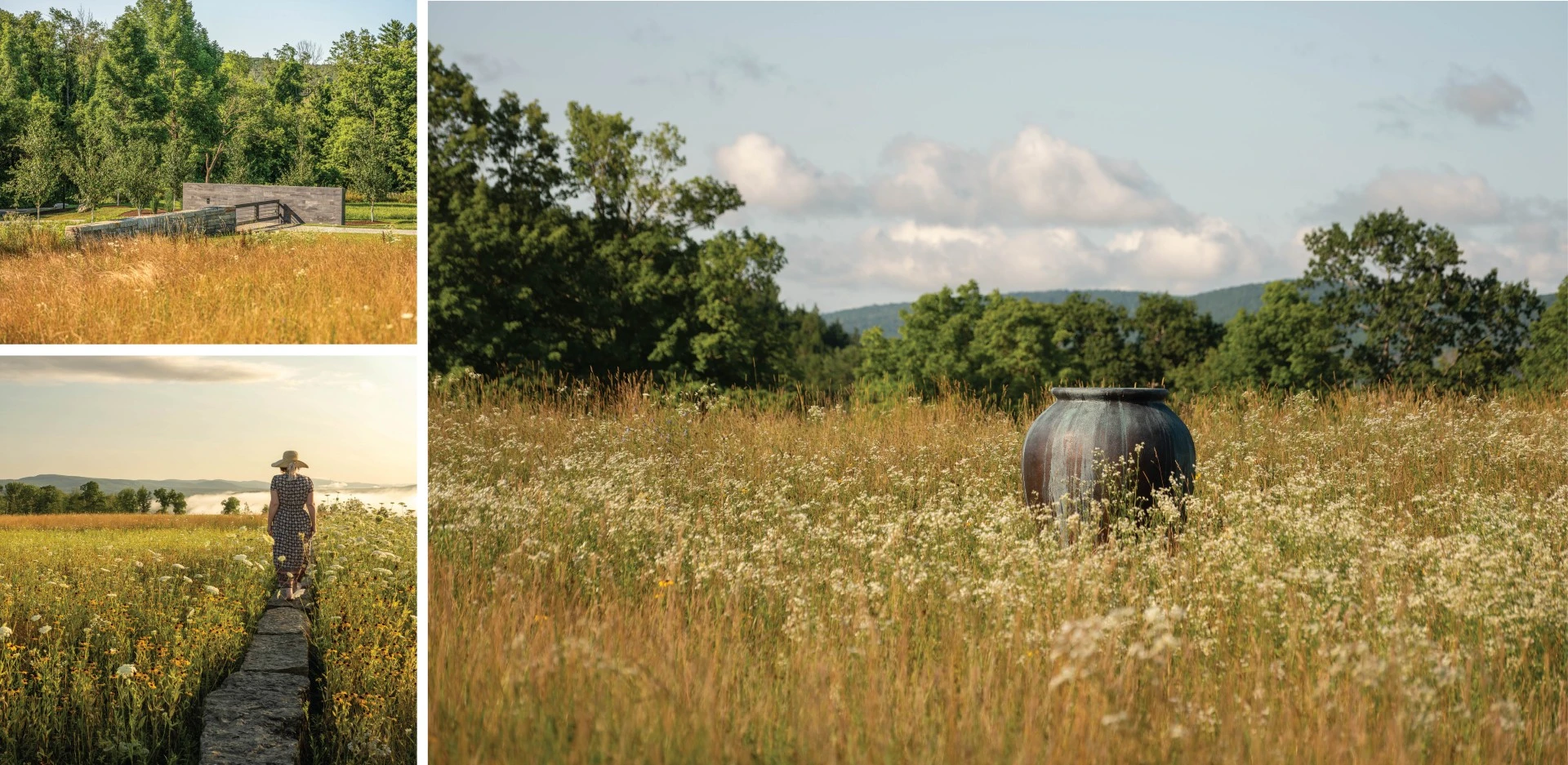
A broad range of sustainable land stewardship practices were thoughtfully implemented to reduce the footprint of the house. A large edible garden produces a variety of fresh fruits, vegetables, and herbs for the family, fostering a personal relationship with the land and reducing the family's reliance on non-local food sources. Lawn is used intentionally and sparingly as a porous surface for overflow parking and to host large outdoor gatherings. Meadows march up to the foundation of the house and terraces, giving the meadow a sense of prominence. To extend the meadow theme into home gardens, a contained "constructed meadow" adjacent to the kitchen was designed for the cutting flower garden.
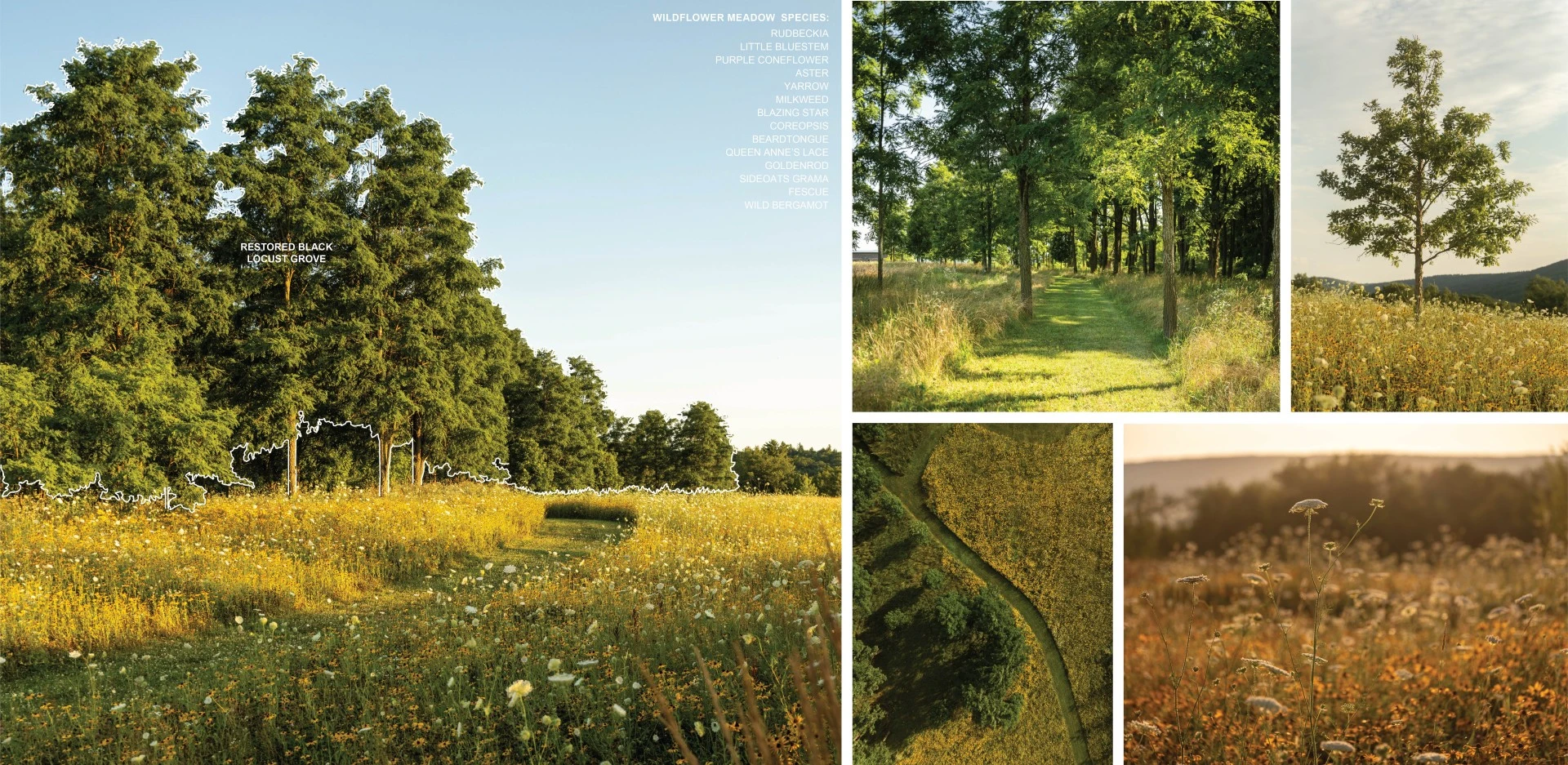
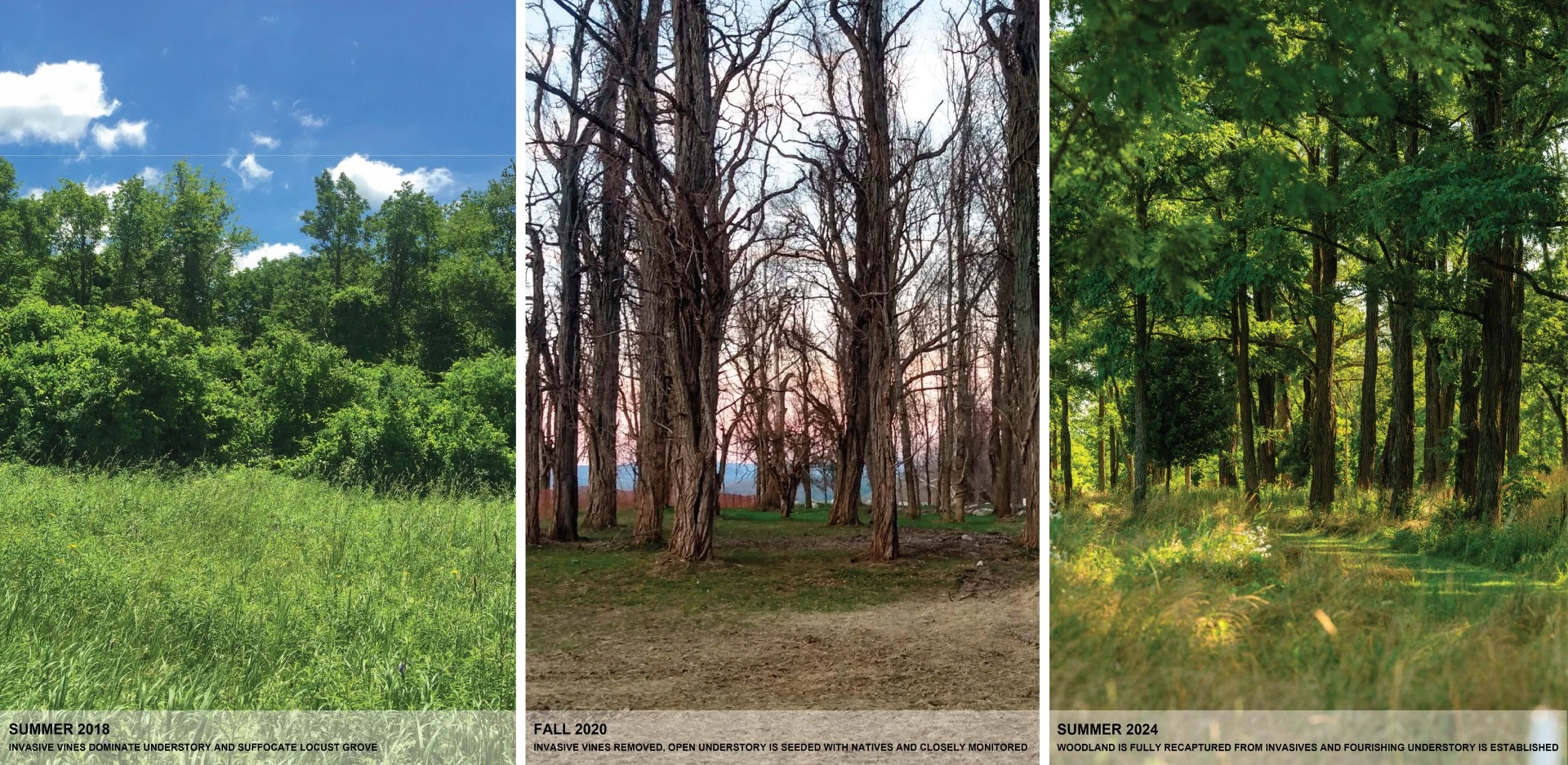
Beyond the house precinct, stormwater runoff is managed by rain gardens populated with native wet meadow species, seamlessly blending into the surrounding landscape. Nine acres of diverse wildflower meadows replaced once eroded hillsides. These acres now host an ecosystem rich with insects, birds, and bats that further bolster the region's vast swaths of protected lands. Surrounding woodlands were recaptured from invasive species, and a lush understory of woodland grasses and ferns was reestablished. A winding network of trails through the meadows and woodlands allows the owners and guests to enjoy the site's natural beauty. In keeping with the historic use of the site and region, several fields remain in active hay production, continuing the rich agricultural heritage of western Massachusetts.
In addition to the project team's commitment to land stewardship, the property gives back to the community. While it is a private residence, philanthropic art events are regularly hosted, particularly providing a venue for young musicians to gain experience and grow. A "performance lawn" was designed adjacent to the interior stage to accommodate guests to view and applaud rising artists. Meanwhile, the property's exposure to the public allows it to showcase sustainability practices, serving as a classroom for environmental stewardship at both residential and public scales.
-
- Dale Schafer, Lead Designer
- Robert Mooney, Lead Designer
- Planeta Design Group, Architect
- Foresight Land Services, Inc., Civil Engineer
- Proper & O'Leary, Structural Engineer
- Woodmeister Master Builders, General Contractor
- R.P. Marzilli & Co., Landscape Contractor
- Marras Lighting Design, Lighting Consultant
- Drakeley Pool Company, Pool Contractor
- Koncerted, Audio and Visual Design
- Tapler Tree Care, Arborist
-
- Furniture: Domani Home, Ralph Pucci International, Flexform, Dedon, Richard Schultz
- Drainage/Erosion: ACO Drainage Solutions, NDS Drainage, McNichols
- Soils: Reed Custom Soils
- Hardscape: New York Quarries, Williams Stone Co., Marmiro Stones, Techo-Bloc
- Other: Tuuci, Lunaform, BRONZINO Handmade
-
- Acer rubrum (Red Maple)
- Acer saccharum (Sugar Maple)
- Amelanchier canadensis 'Autumn Brilliance' (Serviceberry)
- Betula nigra 'Heritage' (River Birch)
- Cercis canadensis (Eastern Redbud)
- Crataegus viridis 'Winterking' (Hawthorn)
- Fagus sylvatica 'Fastigiata' (Fastigiate European Birch)
- Gleditsia triacanthos 'Skyline' (Skyline Honey Locust)
- Itea virginica 'Little Henry' (Dwarf Virginia Sweetspire)
- Malus domestica 'Semi-dwarf' (Apple Semi-Dwarf)
- Nyssa sylvatica 'Wildfire' (Black Gum)
- Platanus x acerifolia 'Exclamation' (London Planetree)
- Platanus occidentalis (American Sycamore)
- Pinus parviflora 'Glauca' (Japanese White Pine)
- Prunus subhirtella 'Autumnalis' (Higan Cherry)
- Quercus bicolor (Swamp White Oak)
- Quercus palustris (Pin Oak)
- Tsuga canadensis (Eastern Hemlock)
- Aronia melanocarpa 'Low Scape Mound' (Low Scape Mound Chokeberry)
- Buxus spp. (Boxwood)
- Cornus mas (Cornelian Cherry Dogwood)
- Diervilla lonicera (Northern Bush Honeysuckle)
- Hydrangea spp. (Hydrangea)
- Rhus aromatica 'Gro-Low' (Gro Low Sumac)
- Ribes rubrum (Red Currant)
- Rosa spp. (Rose)
- Rubus idaeus (Raspberry)
- Rubus fruticosus (Blackberry)
- Spiraea spp. (Spirea)
- Vaccinium corymbosum (Highbush Blueberry)
- Viburnum dentatum (Arrowwood Viburnum)
- Achillea millefolium (Common Yarrow)
- Allium 'All Summer Beauty' (Allium)
- Amsonia hubrichtii (Threadlead Bluestar)
- Anemone x hybrida 'Honorine Jobert' (Windflower)
- Asarum (Wild Ginger)
- Asclepias syriaca (Common Milkweed)
- Baptisia 'Purple Smoke' (False Indigo)
- Calamagrostis x acutiflora 'Karl Forester' (Feathered Reed Grass)
- Deschampsia cespitosa 'Goldtau' (Tufted Hair Grass)
- Echinacea purpurea 'Magnus' (Purple Coneflower)
- Eryngium x 'Big Blue' (Sea Holly)
- Festuca rubra (Red Fescue)
- Geranium 'Rozanne' (Cranesbill)
- Hakonechloa macra (Japanese Forest Grass)
- Helictotrichon sempervirens (Blue Oat Grass)
- Lavandula x intermedia 'Phenomenal' (Lavender)
- Liriope spicata (Creeping Liriope)
- Miscanthus 'Morning Light' (Maidenhair Grass)
- Molinia caerulea (Moorgrass)
- Paeonia 'Festiva Maxima' (Peony)
- Panicum virgatum 'Northwind' (Northwind Switch Grass)
- Panicum virgatum 'Shenandoah' (Shenandoah Switchgrass)
- Perovskia atriplicifolia 'Little Spire' (Russian Sage 'Little Spire')
- Phlox paniculata 'David' (Garden Phlox)
- Salvia spp. (Sage)
- Schizachyrium scoparium 'Standing Ovation' (Little Bluestem)
- Sesleria autumnalis (Autumn Moor Grass)
- Symphyotrichum novae-angliae (New England Aster)
- Thymus pseudolanuginosus (Wooly Thyme)
- Veronicastrum virginicum (Culver's Root)
- Dennstaedtia punctilobula (Hay-Scented Fern)
- Meadow Seed Mix
- Native Sun & Shade Grass Mix
Advertisement
Related Awards
Award of Excellence, Residential Design
Datum House
Location: West Stockbridge, MA
Firm: Wagner Hodgson
This modern homestead was designed for a family with a passion for the arts and a deep connection to the region. The project was guided by three principles: (1) create dynamic spaces to support the needs for everyday residential living and large philanthropic events, (2) contribute to the cultural legacy of western Massachusetts, and (3) use sustainable practices to guide design and restore the ecological integrity of the site. A prominent view of Massachusetts's tallest peak offered an organizing framework, serving as the datum for architectural and landscape design. With these parameters, the project team explored creative and sustainable solutions to harmoniously blend a variety of spatial scales into a sensitive agrarian vernacular.