
.webp?language=en-US)

.webp?language=en-US)
Safety Beyond Surveillance: Guidelines for Safe Urban Public Spaces
Samantha Fajardo, Assoc. ASLA

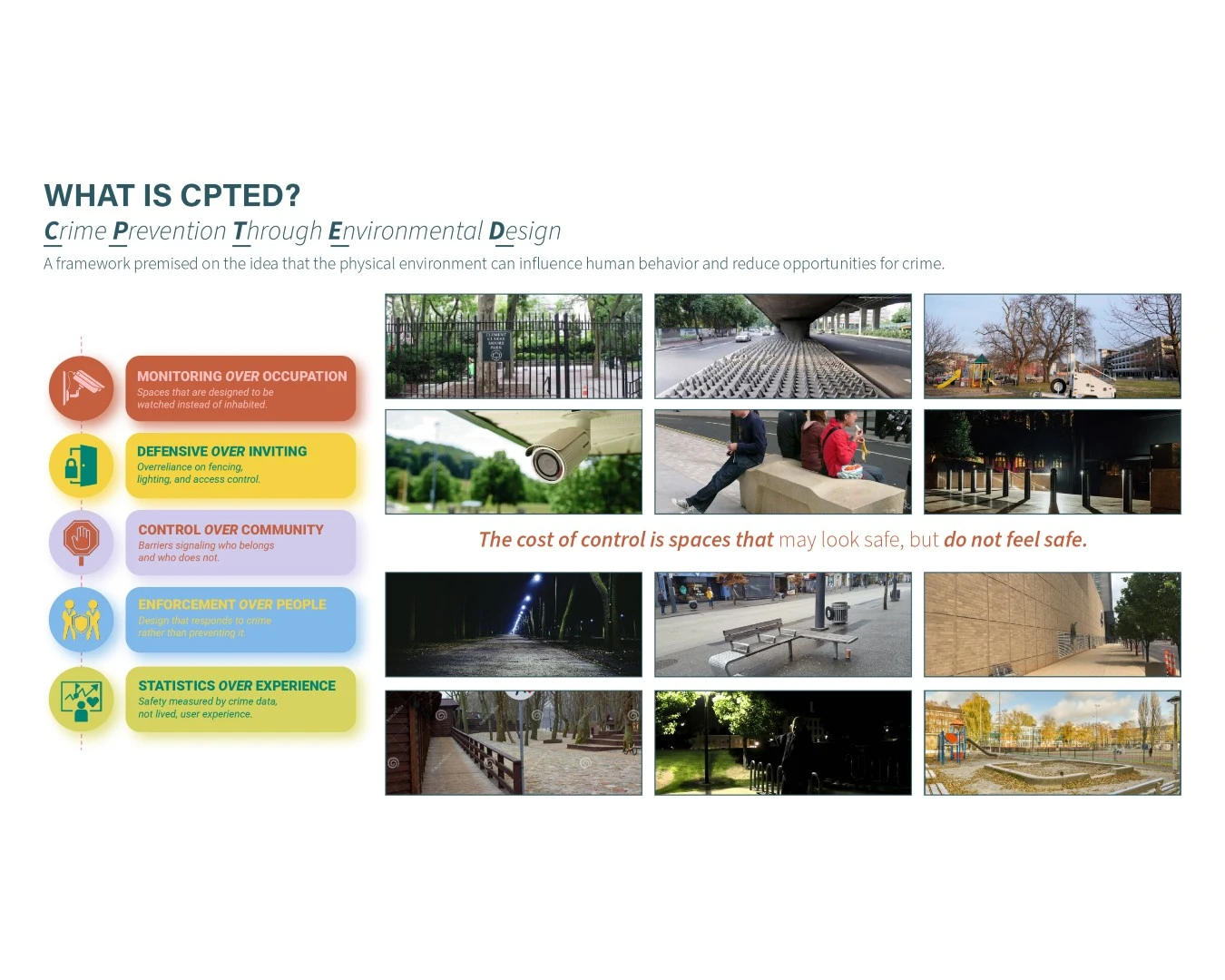
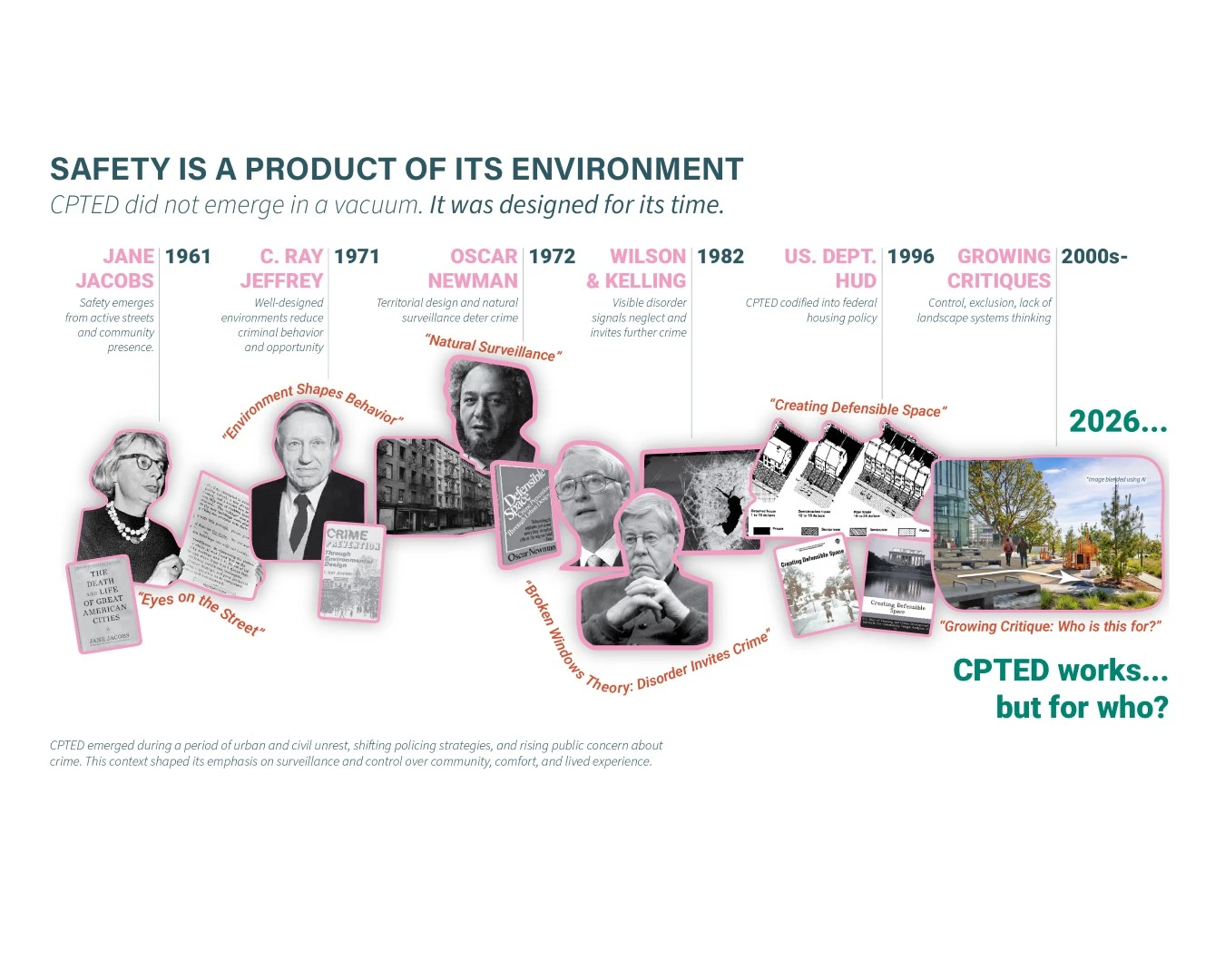
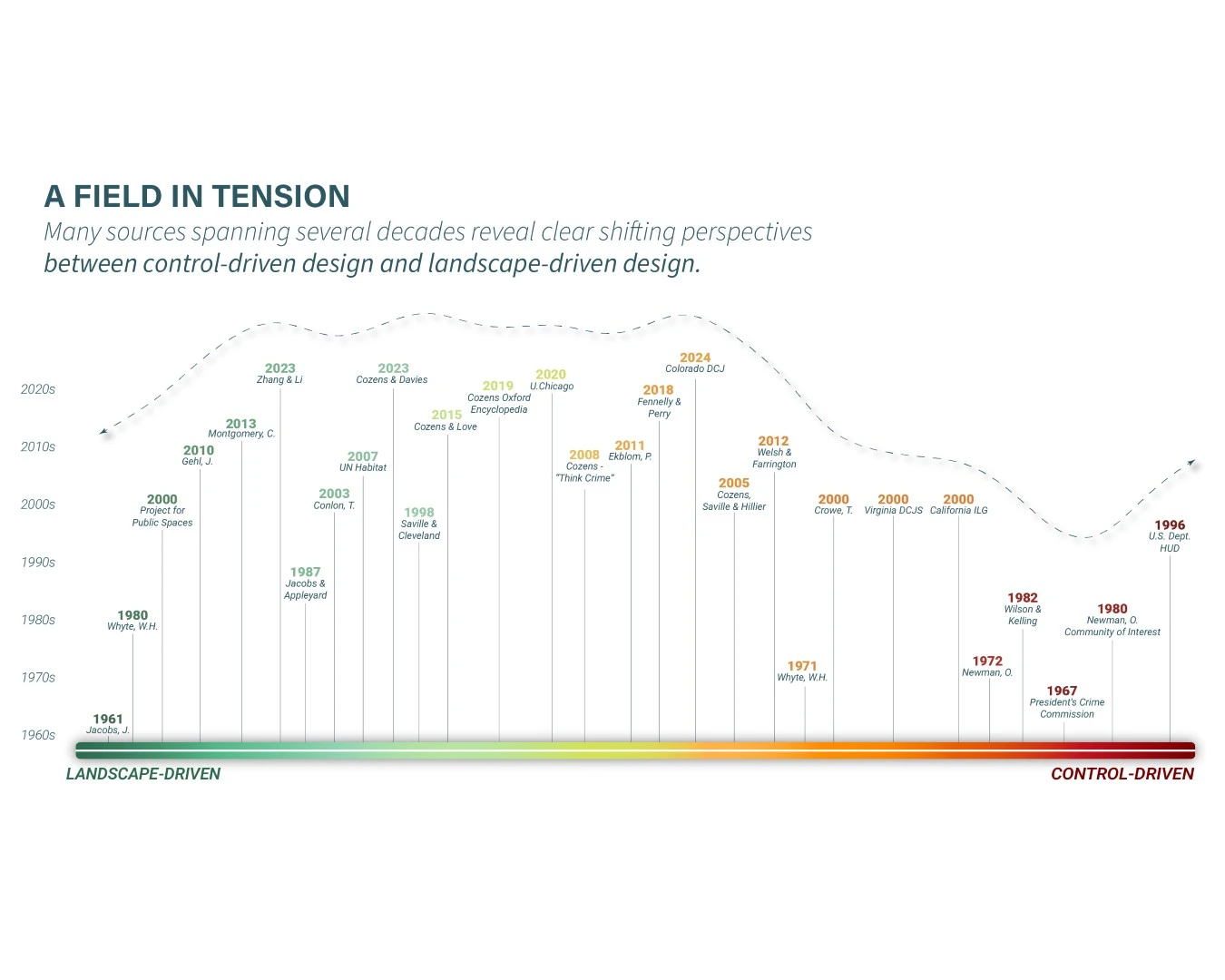
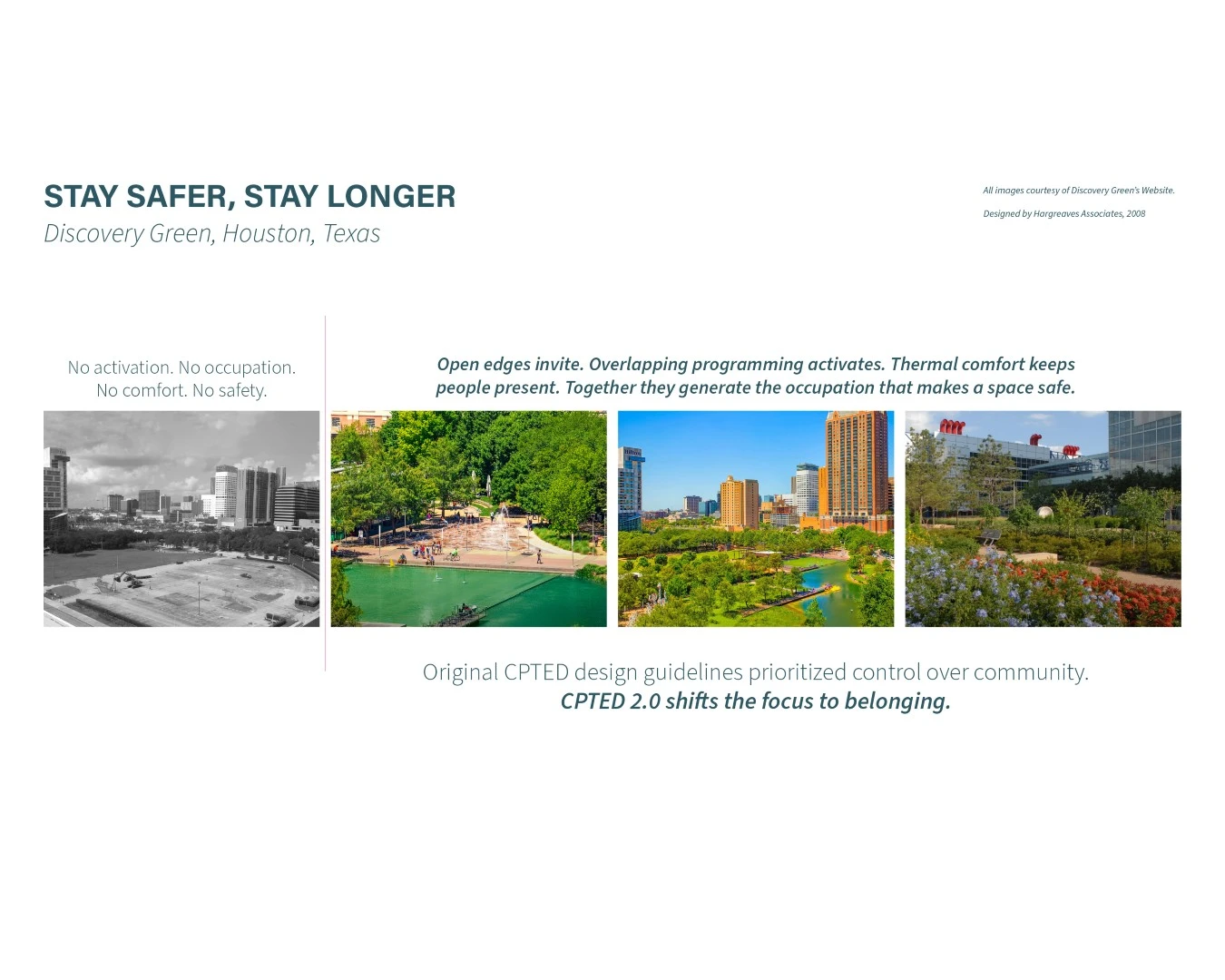
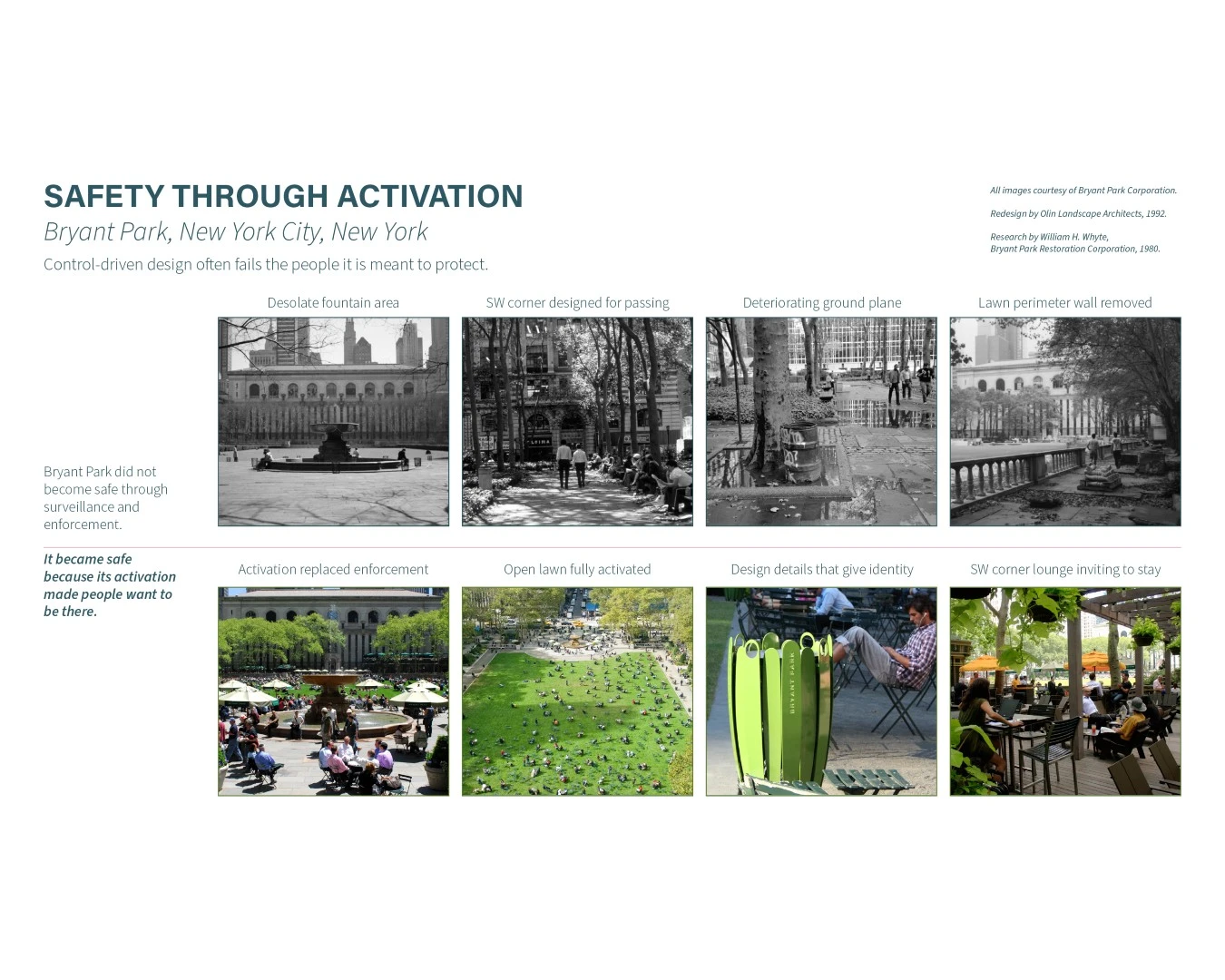
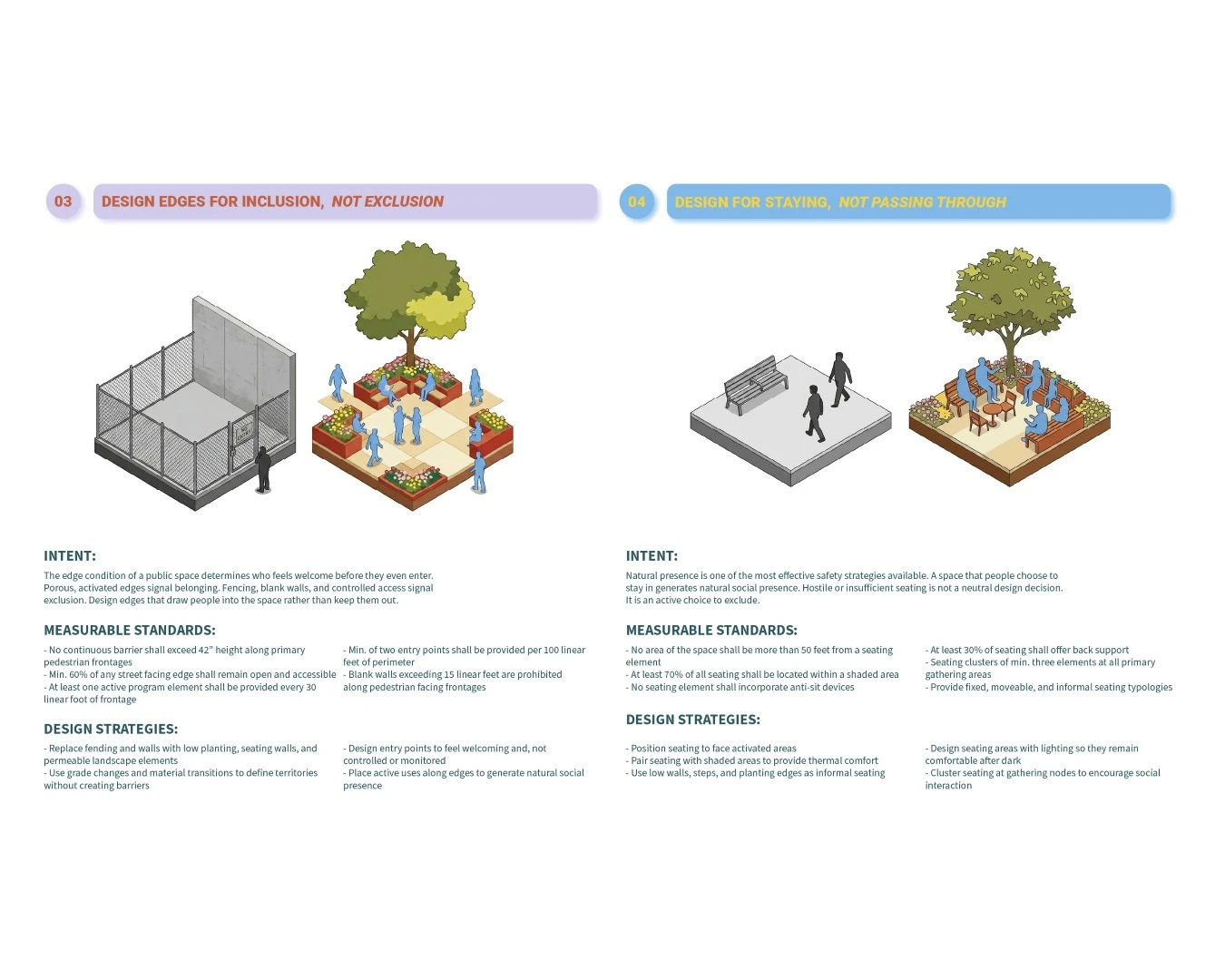
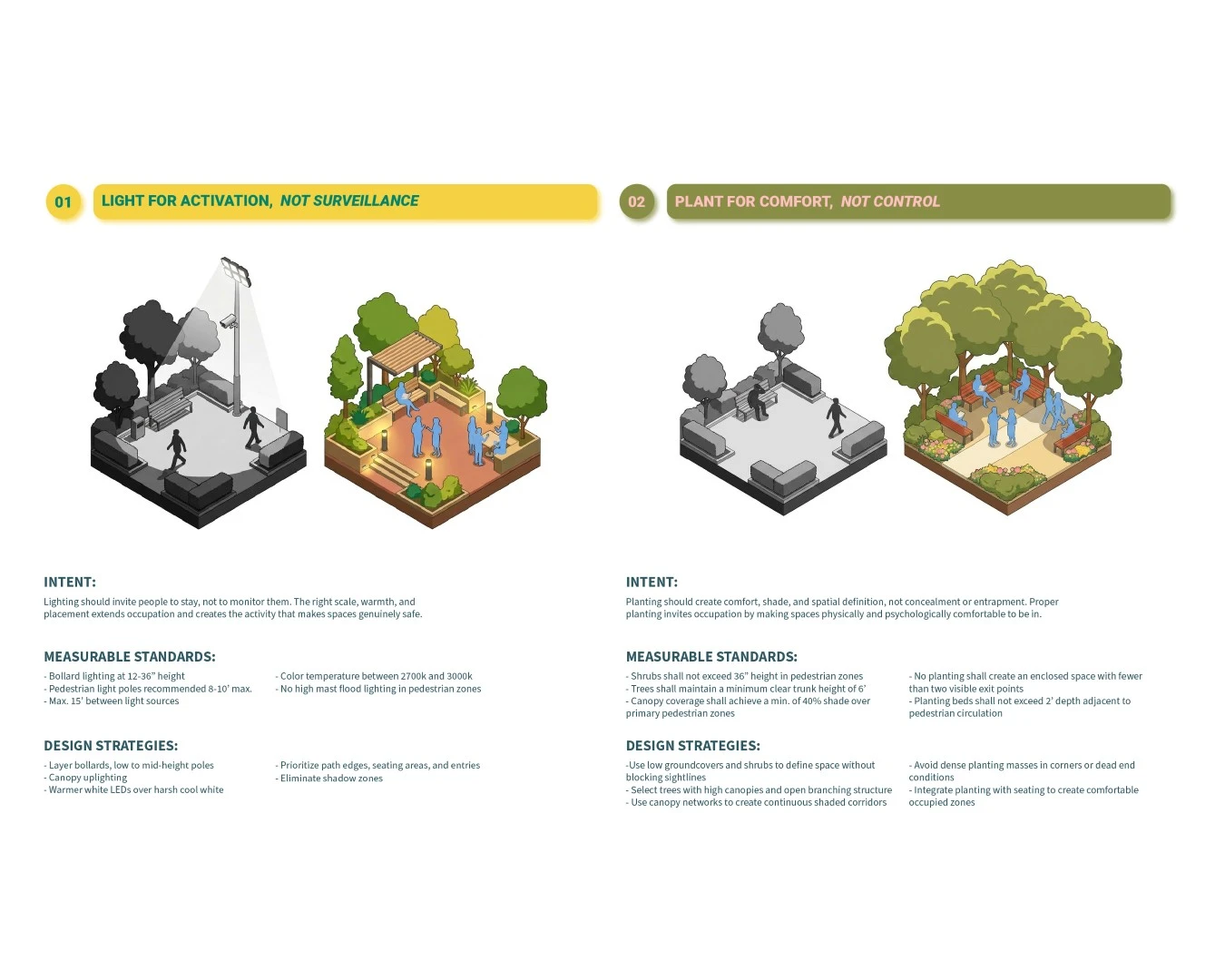
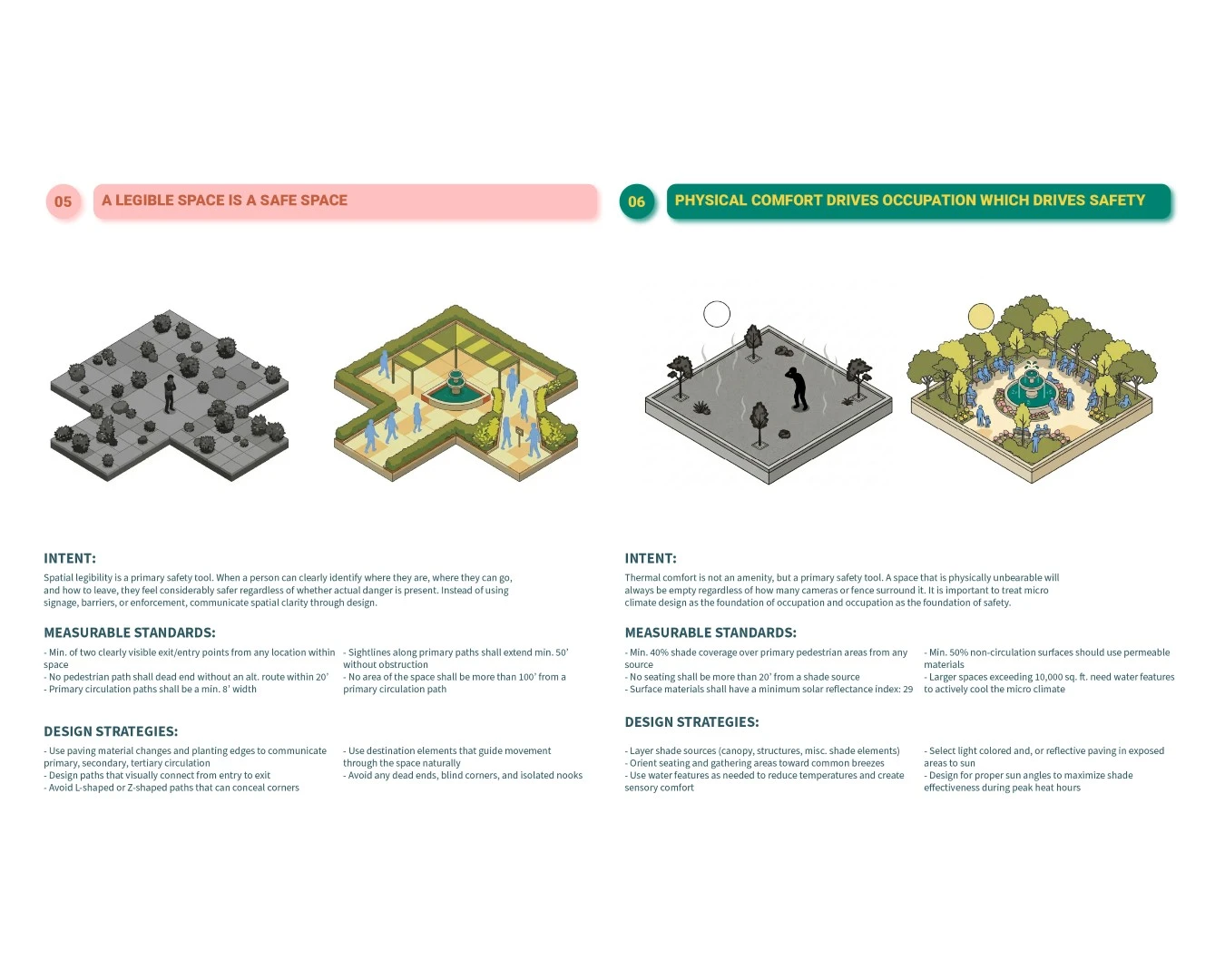
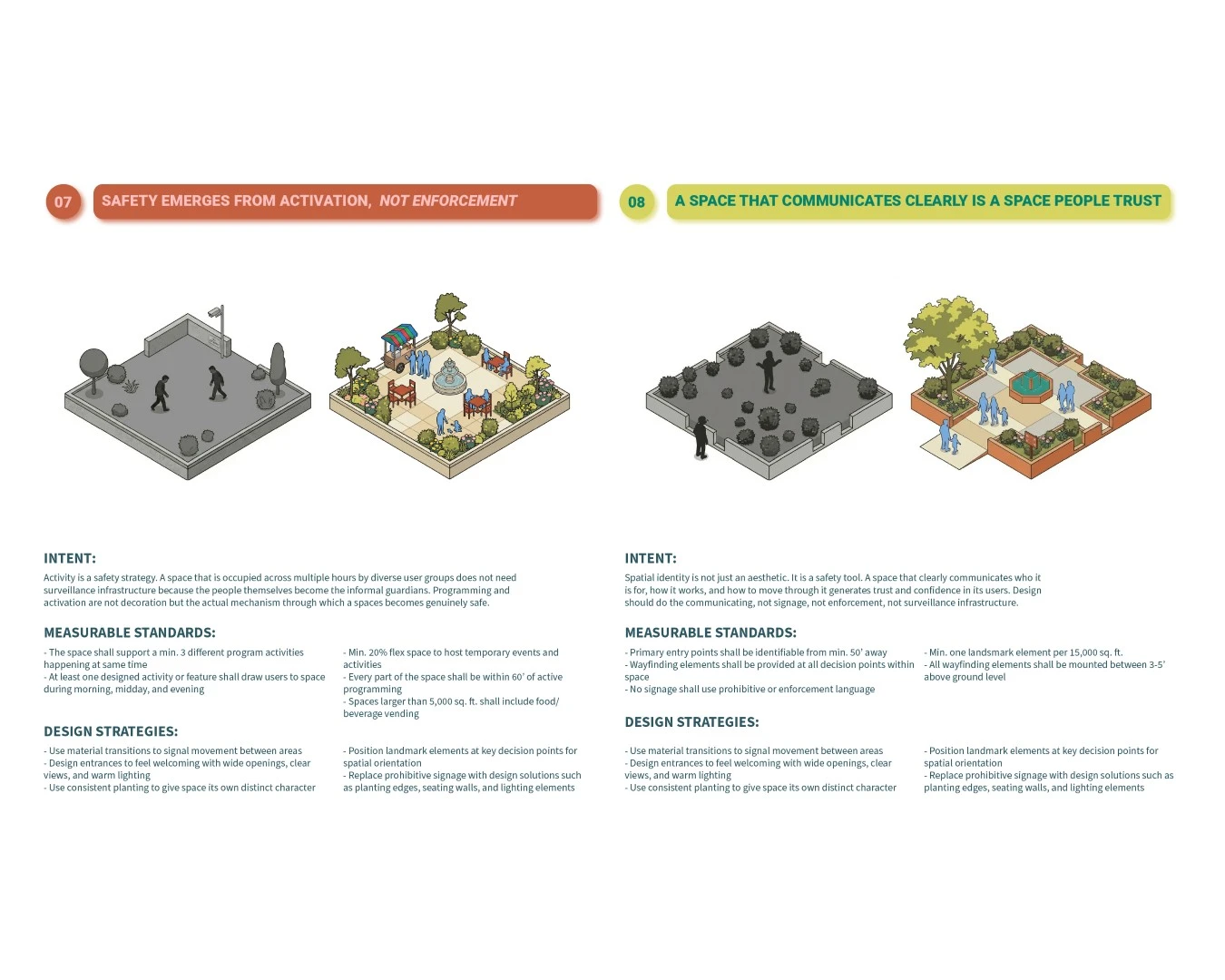
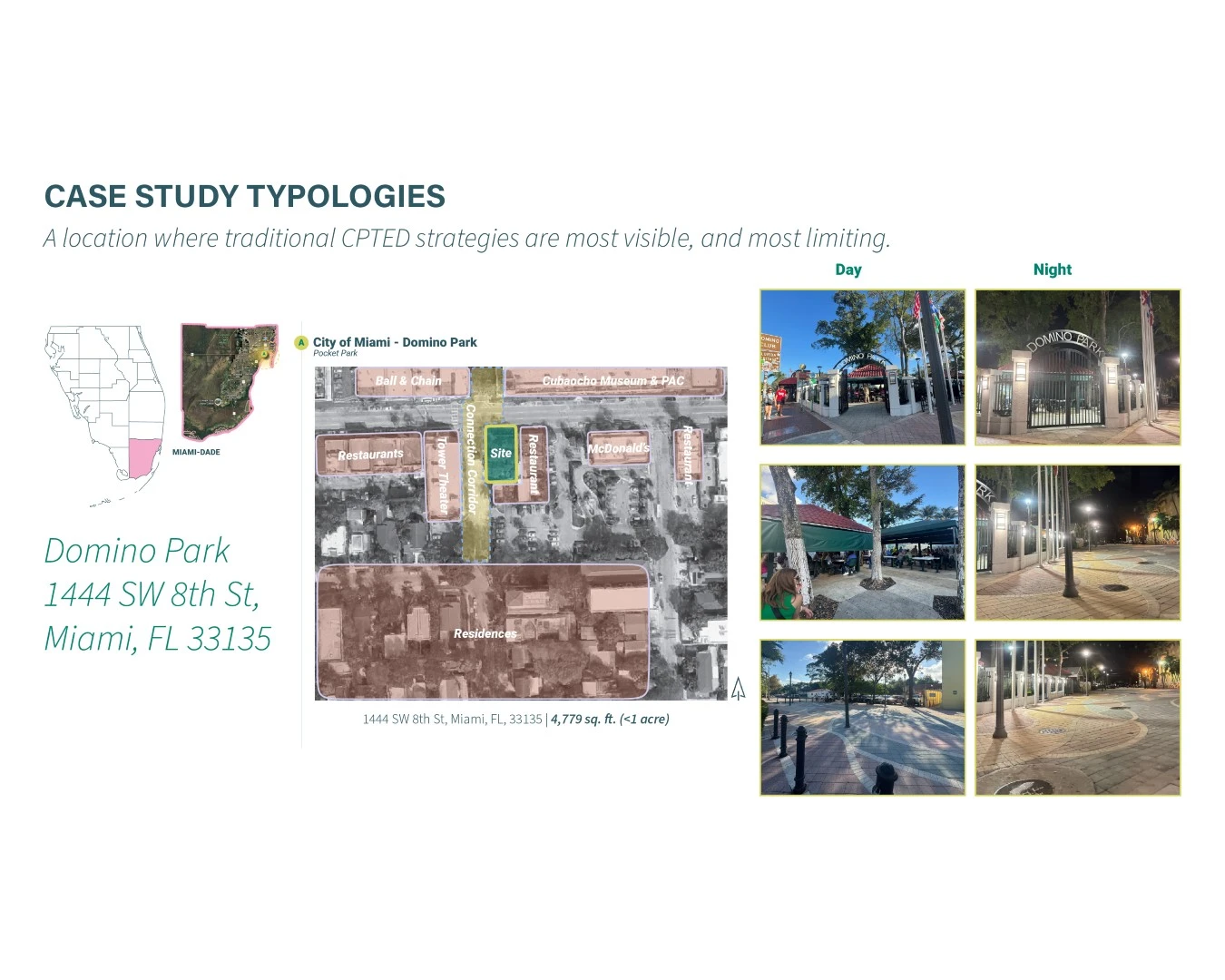
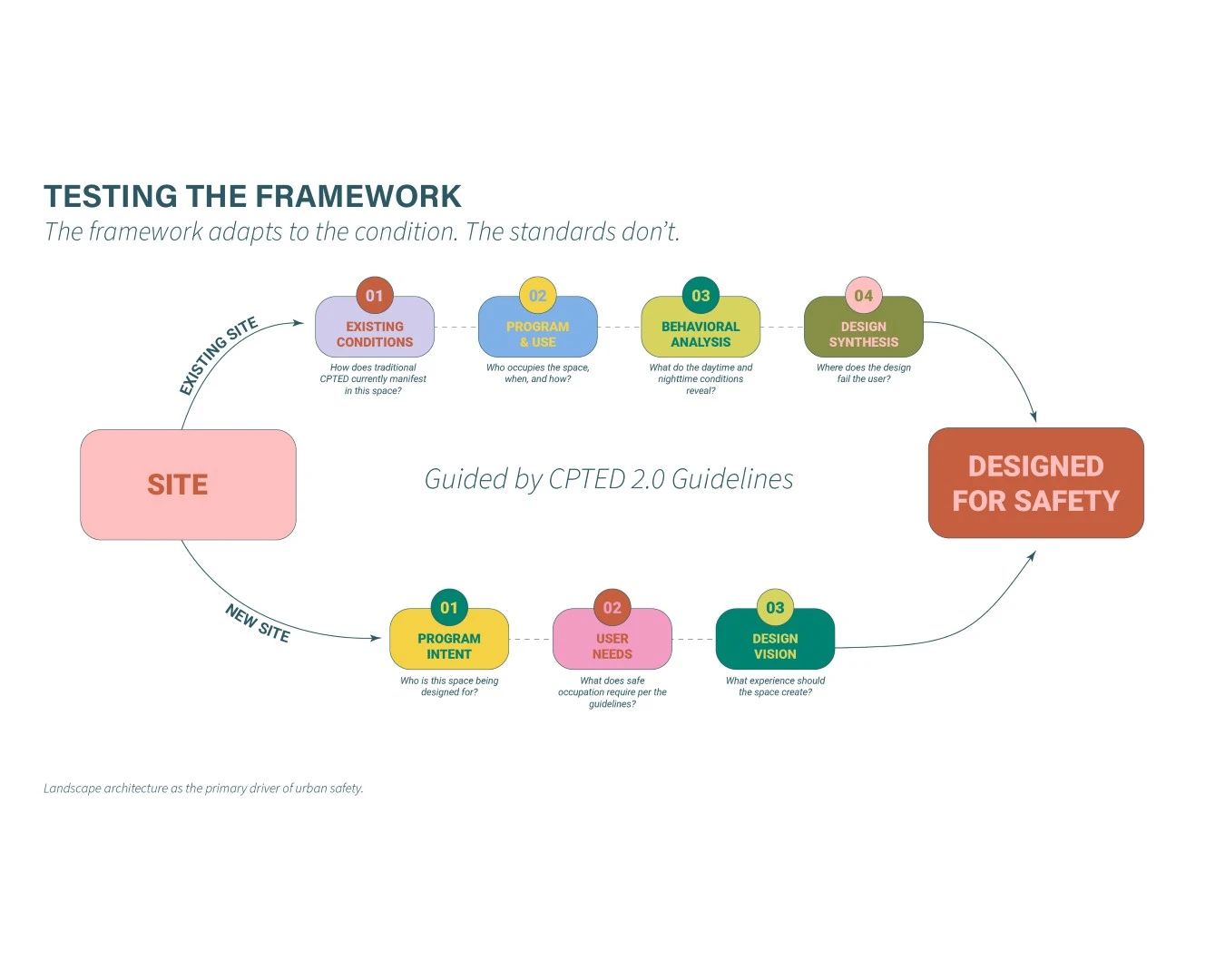
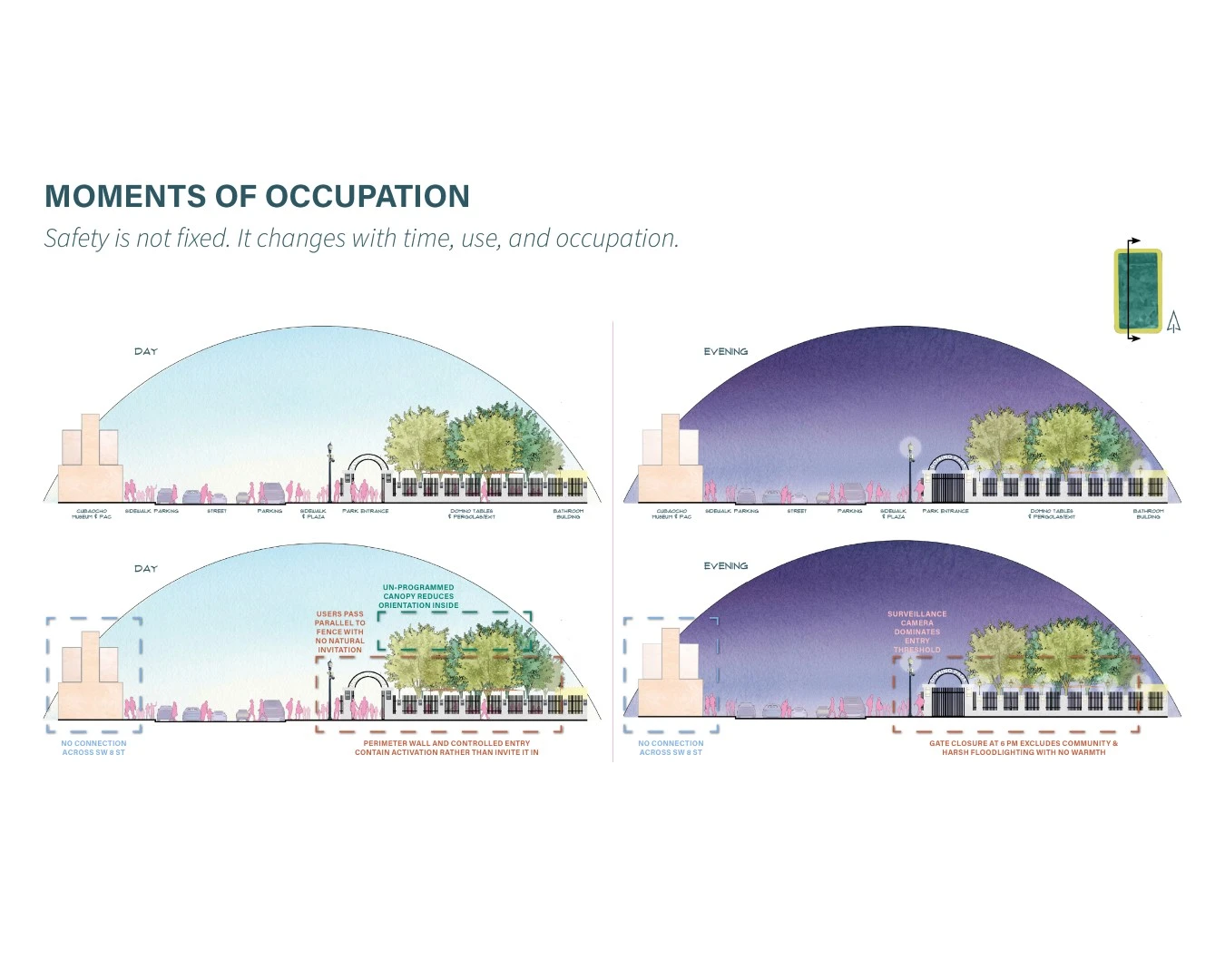
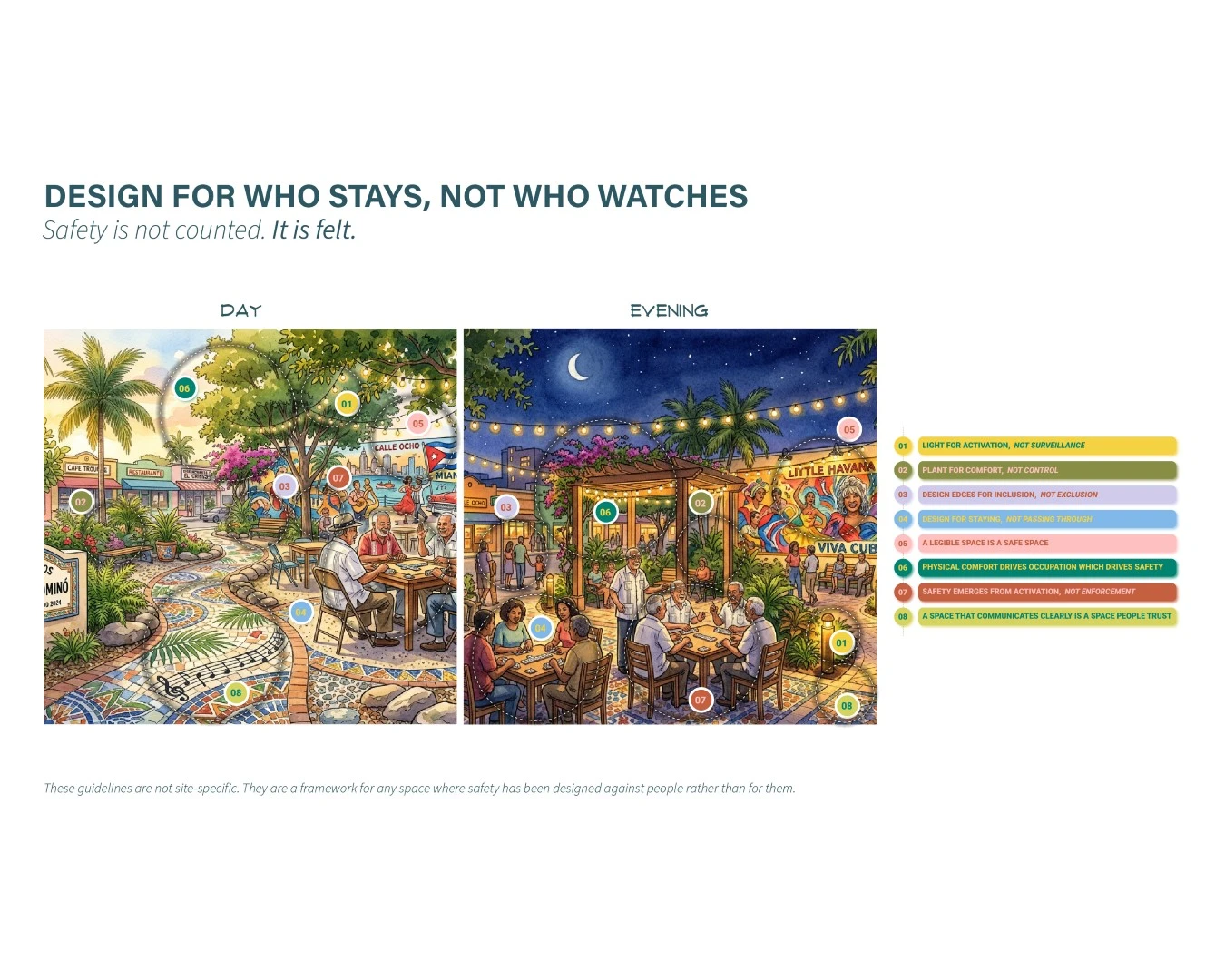

Great precedent studies and historical timelines. The before and after comparisons do a great job of showing the design applications.
Awards Jury
-
Urban spaces have become environments of constant surveillance, yet crime and exclusion persist. This research challenges the foundational assumptions of Crime Prevention Through Environmental Design through historical analysis along with multi-visit site observations, conducted day and evening, across five diverse public space typologies including parks, plazas, and civic facilities. Each site revealed the same pattern: current guidelines prioritize control over community. The result is a fresh framework that redefines safety as belonging, activation, and natural guardianship, with real legislative potential to move from academic research into statute, reshaping how cities design and evaluate public space for everyone.
-
Crime has never been a design problem. It is a human one. Yet for decades, the dominant framework shaping the safety of public space has treated people as variables to be monitored, movement as a threat to be controlled, and presence as something to be managed rather than welcomed. Crime Prevention Through Environmental Design (CPTEd) was never wrong. It was never finished.
Born during a period of urban unrest, shifting policing strategies, and rising public fear, the framework arrived with surveillance at its center. Its four pillars, surveillance, access control, territorial reinforcement, and maintenance, reflected the anxieties of their time. But that time has passed. The context changed; the framework did not.
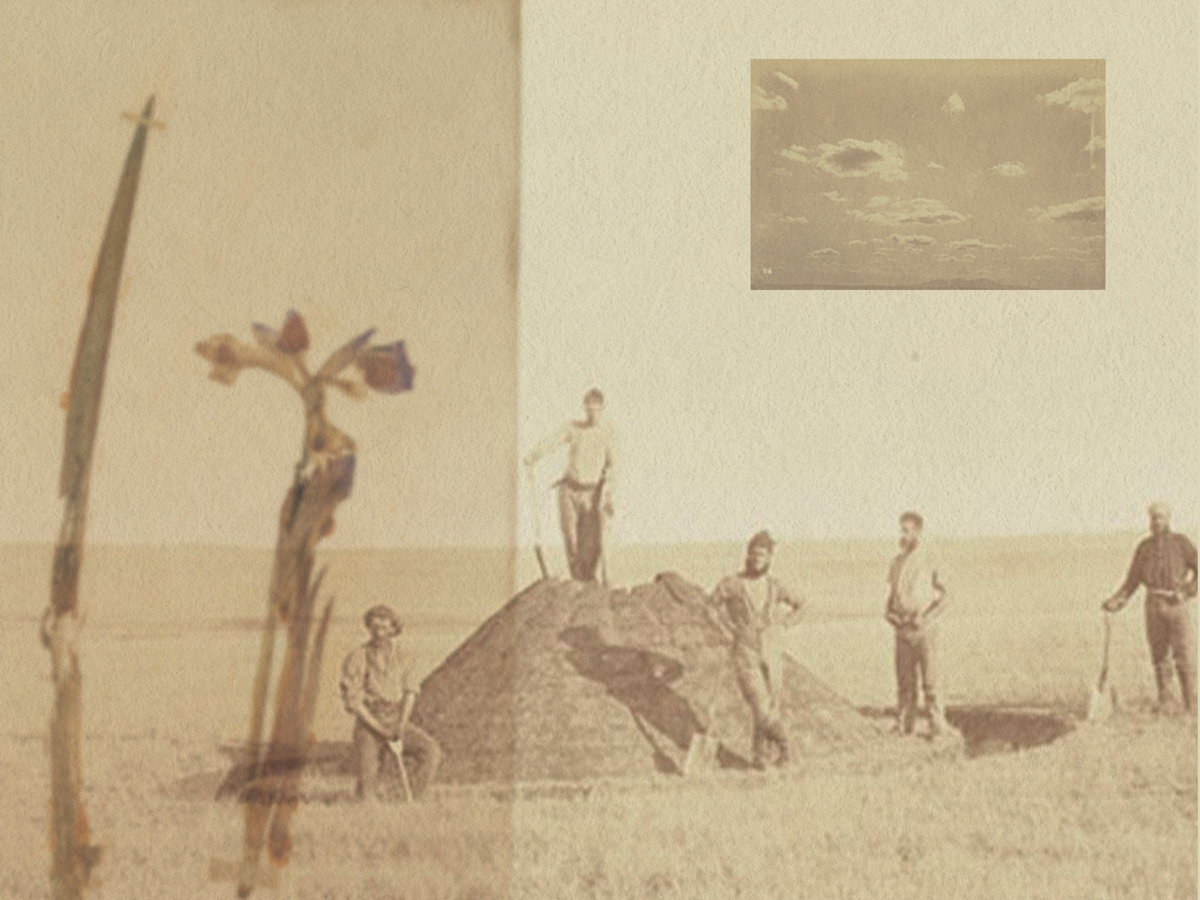
A review of sources spanning about six decades reveals no clear consensus, only competing philosophies running in parallel. In 1961, Jane Jacobs was writing about the power of natural presence and "eyes on the street". At the same moment, the President's Crime Commission was pushing enforcement. From federal housing policy to contemporary urban design theory, the field has never resolved this tension. This research argues it is time to build the standard that was never established.
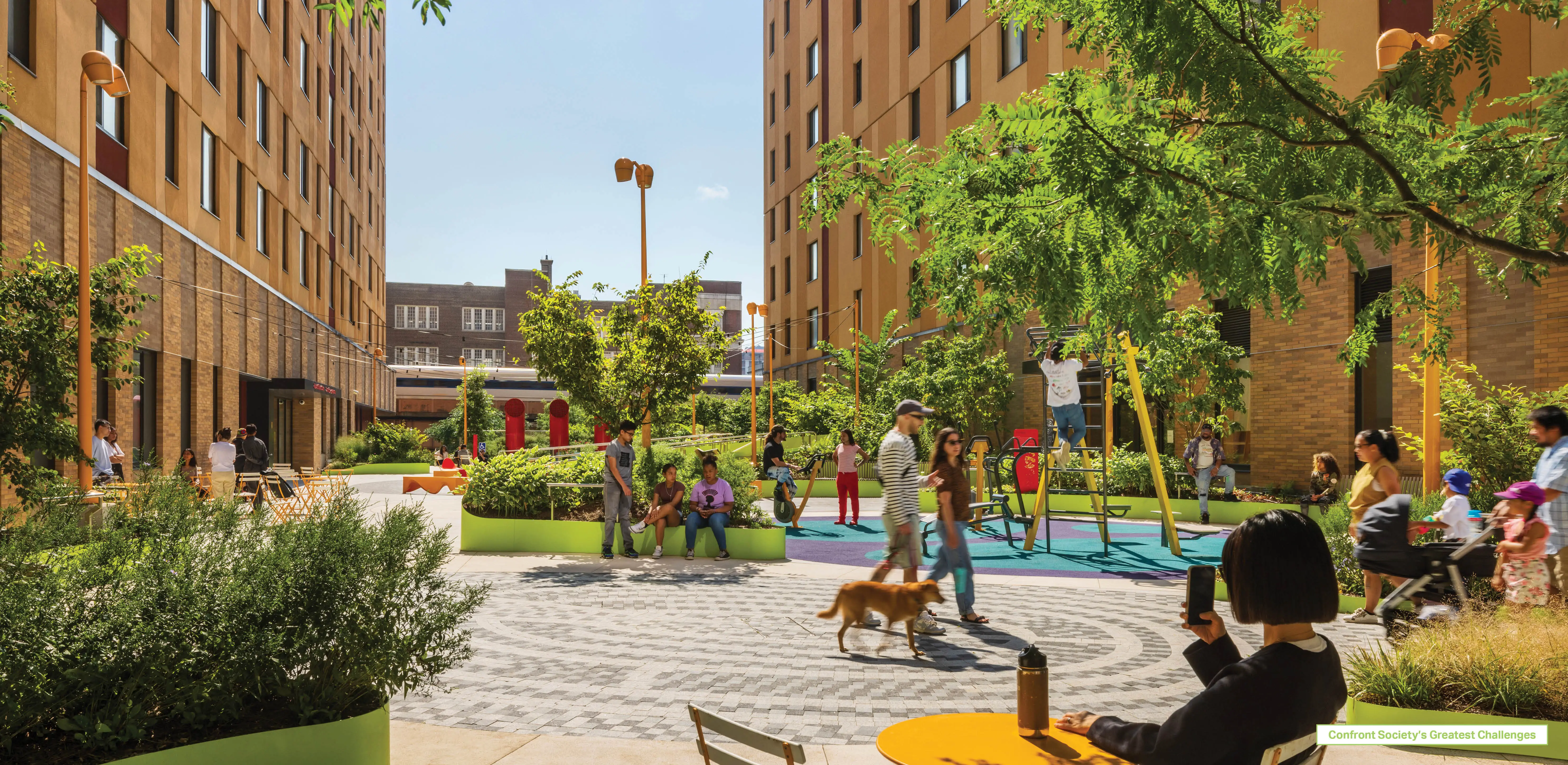
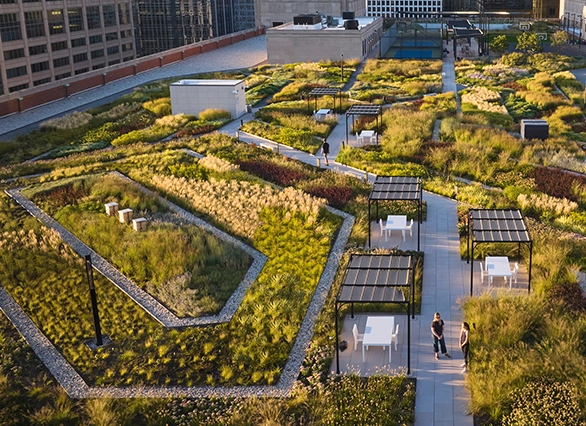
The method of inquiry combined historical literature analysis with direct site observation across five diverse public space typologies, including parks, plazas, pocket parks, civic facilities, and libraries. Each site was visited multiple times, during the day and in the evening, to evaluate how current guidelines perform across time, use, and population. Case studies including Bryant Park and Discovery Green were examined as proof of concept, demonstrating that when activation, comfort, and programming replace surveillance and control, occupation increases and safety follows. Not because the space was watched. Because people chose to stay.
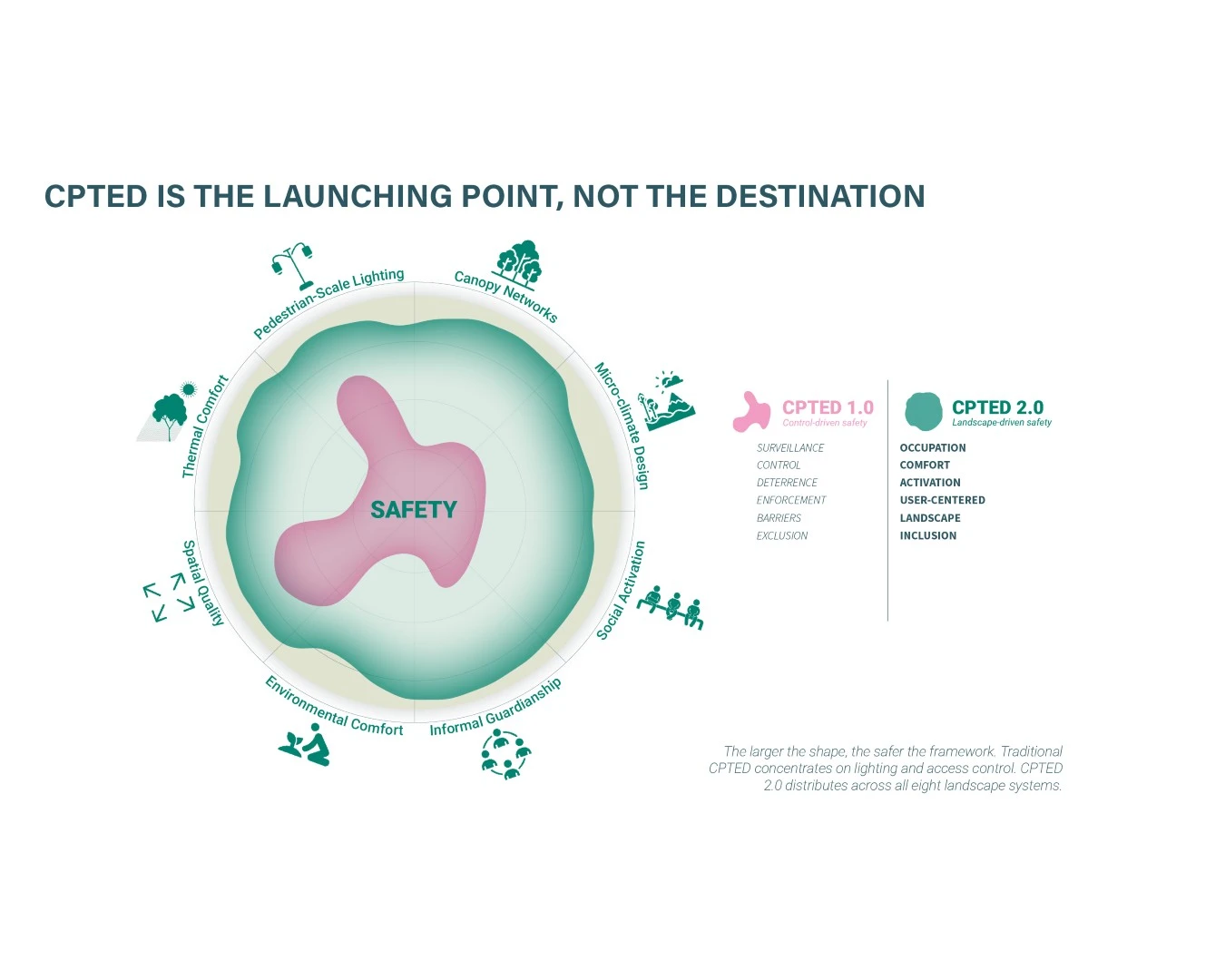
The findings were consistent across every site. Current guidelines prioritize control over community. Fences signal exclusion before anyone enters. Floodlighting performs surveillance rather than comfort. Planting blocks sightlines instead of creating shade. Gates close at night and cameras take over, leaving no reason for anyone to remain. The framework does not fail because of poor execution. It fails because it was never designed around the people it was meant to protect.
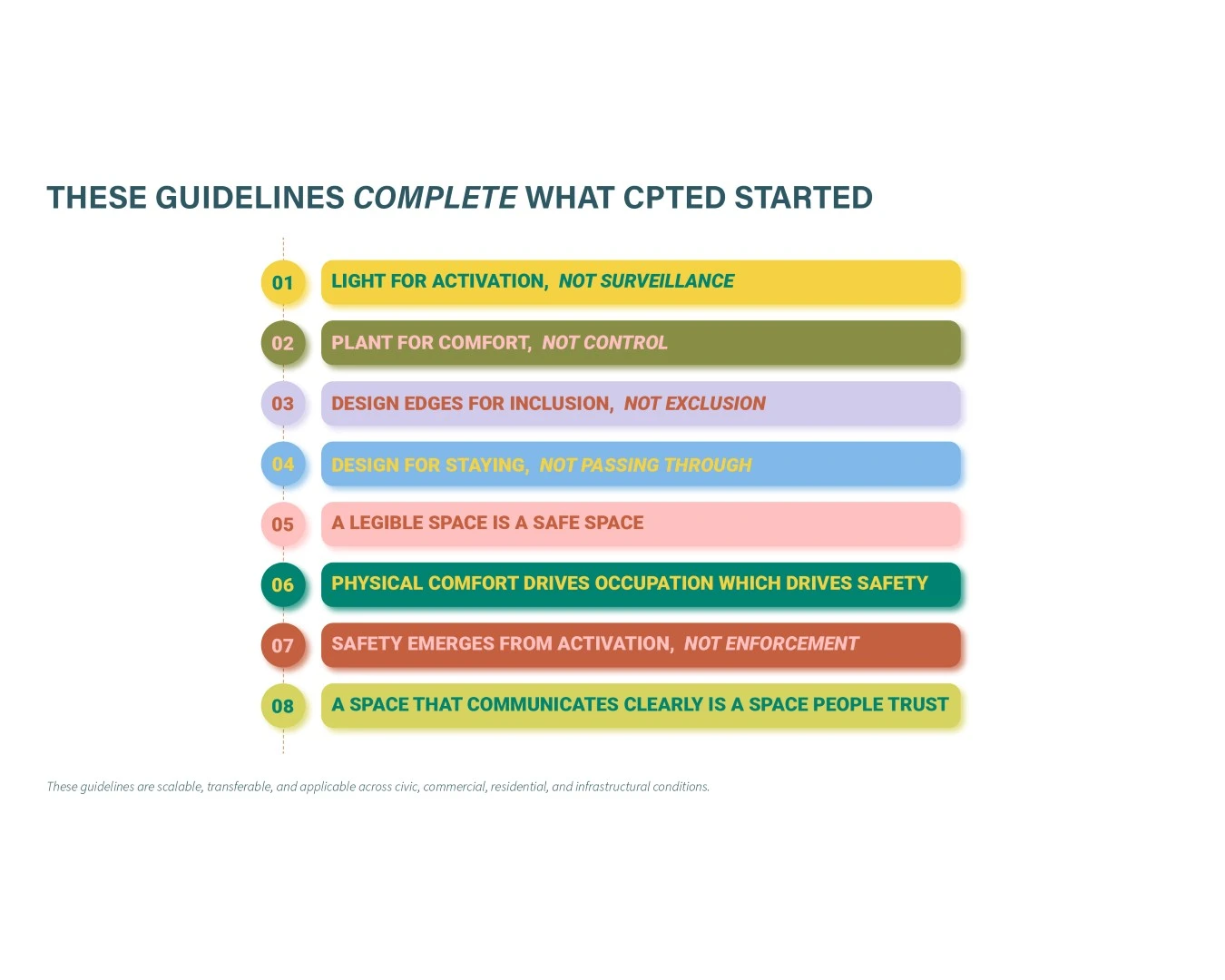
This research proposes eight landscape driven guidelines that redistribute safety across multiple systems including lighting, planting, edges, gathering, legibility, thermal comfort, activation, and communication. Together they shift safety from something enforced to something experienced. These are not site specific interventions. They are a transferable standard, tested across multiple typologies, ready to be applied wherever public space is designed.
The goal is not to replace what exists. It is to complete it. These guidelines are written to move beyond academic research and into legislative statute, giving municipalities, planners, and landscape architects a framework that is not a suggestion but a standard. This research is ongoing, and each new site tested, including the one shown as an example here, strengthens the case for a transferable, evidence-based standard that cities can adopt and build upon. Safety is not counted; it is felt. It is time the guidelines we build our cities around finally reflected that.
Advertisement
Related Awards
Honor Award, Research
Heat Health: A pre- and 5-year post-occupancy thermal case study
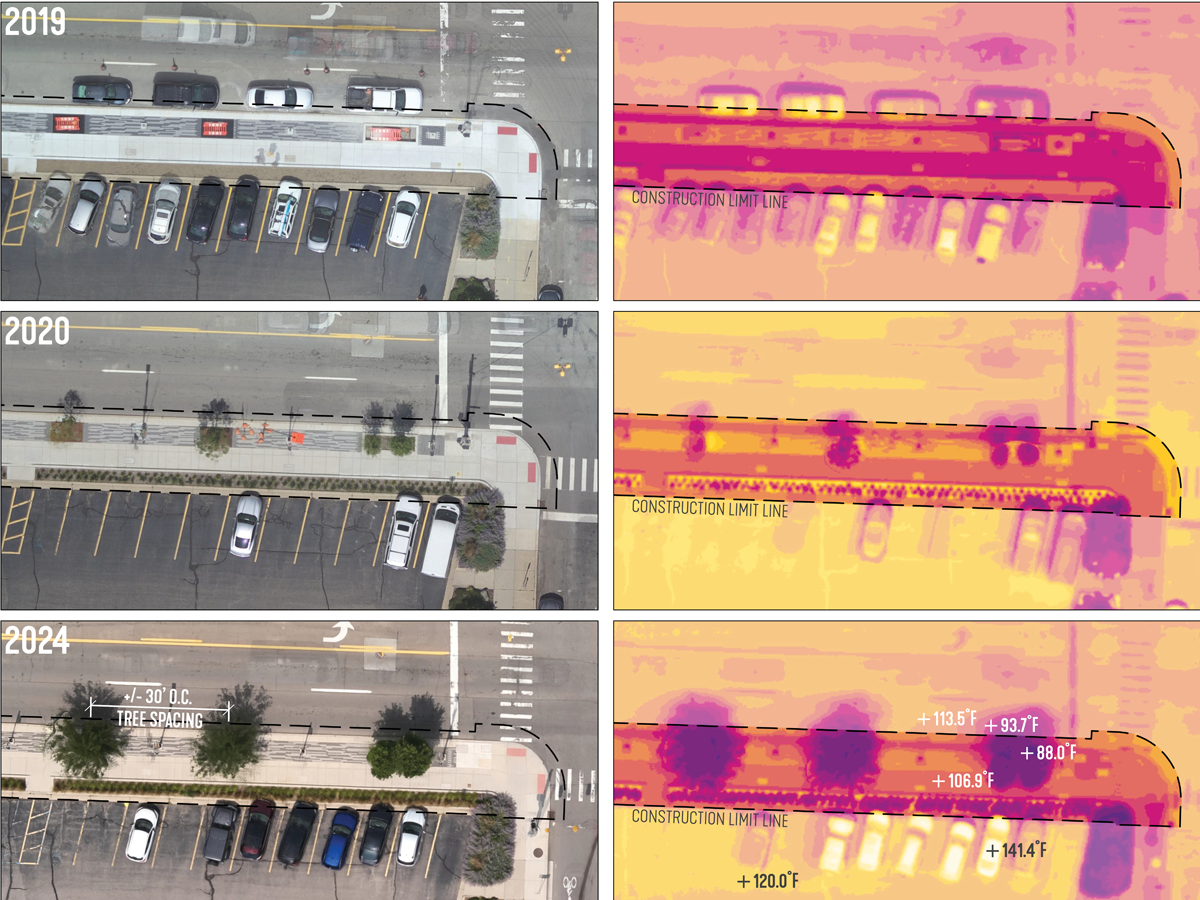
This is not a design solution. It is a case study to inform better design solutions and policy. Novel research uses cutting-edge drone-based thermal visualization to address the heat island effect, which contributes to severe health risks. By combining high-resolution thermal and color imagery, this study reveals how materials and green space impact surface temperatures, offering a precise, scalable method for assessing heat in any setting.