
.webp?language=en-US)
.webp?language=en-US)
Bird Sanctuary
Dingding Ren; Na Wang, Student ASLA; Zhelin Liu, Associate ASLA; Siyuan Zhao, Associate ASLA; Riley Simmons, Student ASLA; Leo Lefebre, Student ASLA; Lauren Kasel, Student ASLA; Oscar Trevino, Student ASLA; Sydney Puentes, Student ASLA; Trevor Deines, Associate ASLA; Yizhi Shi
-
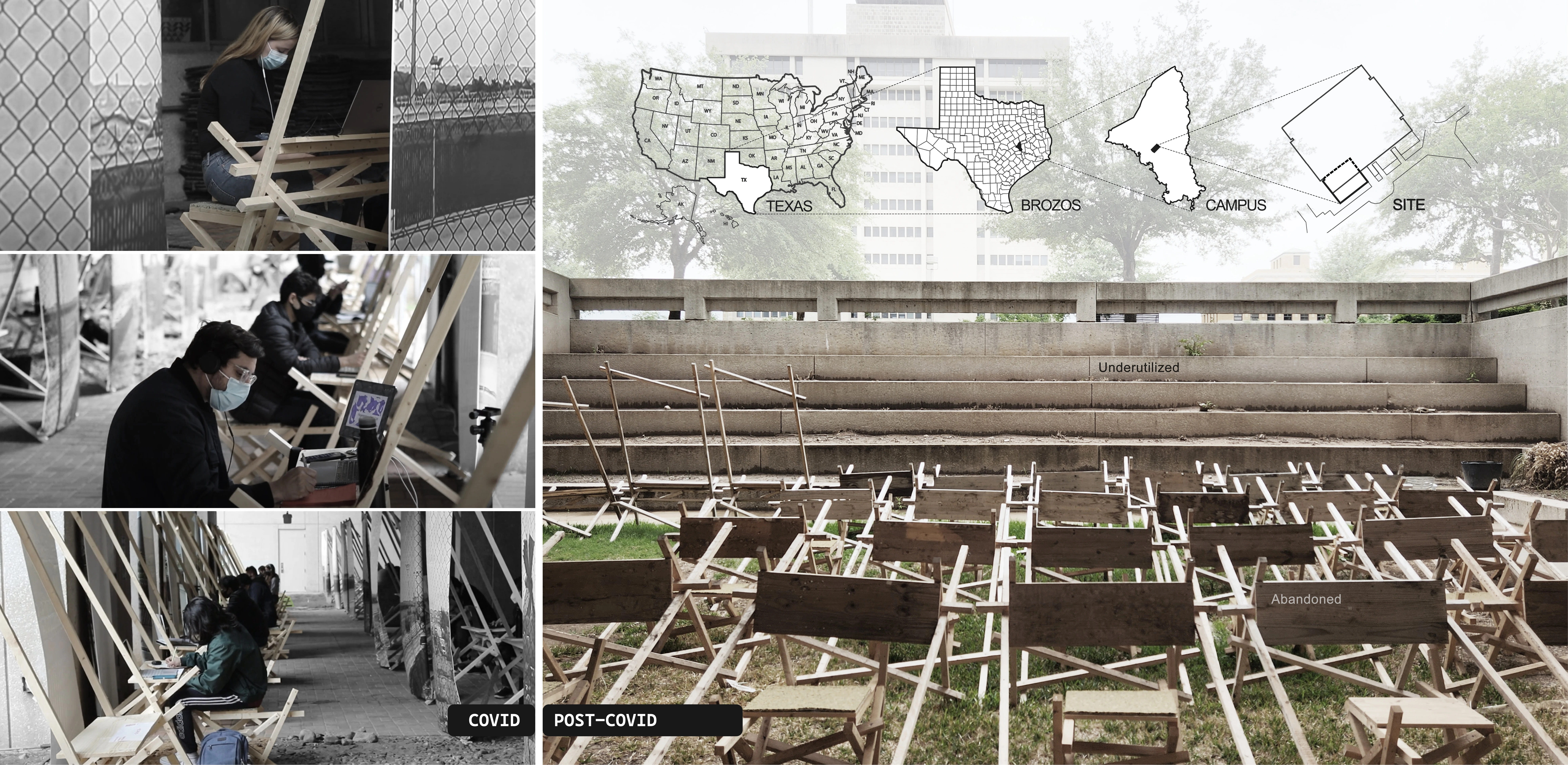
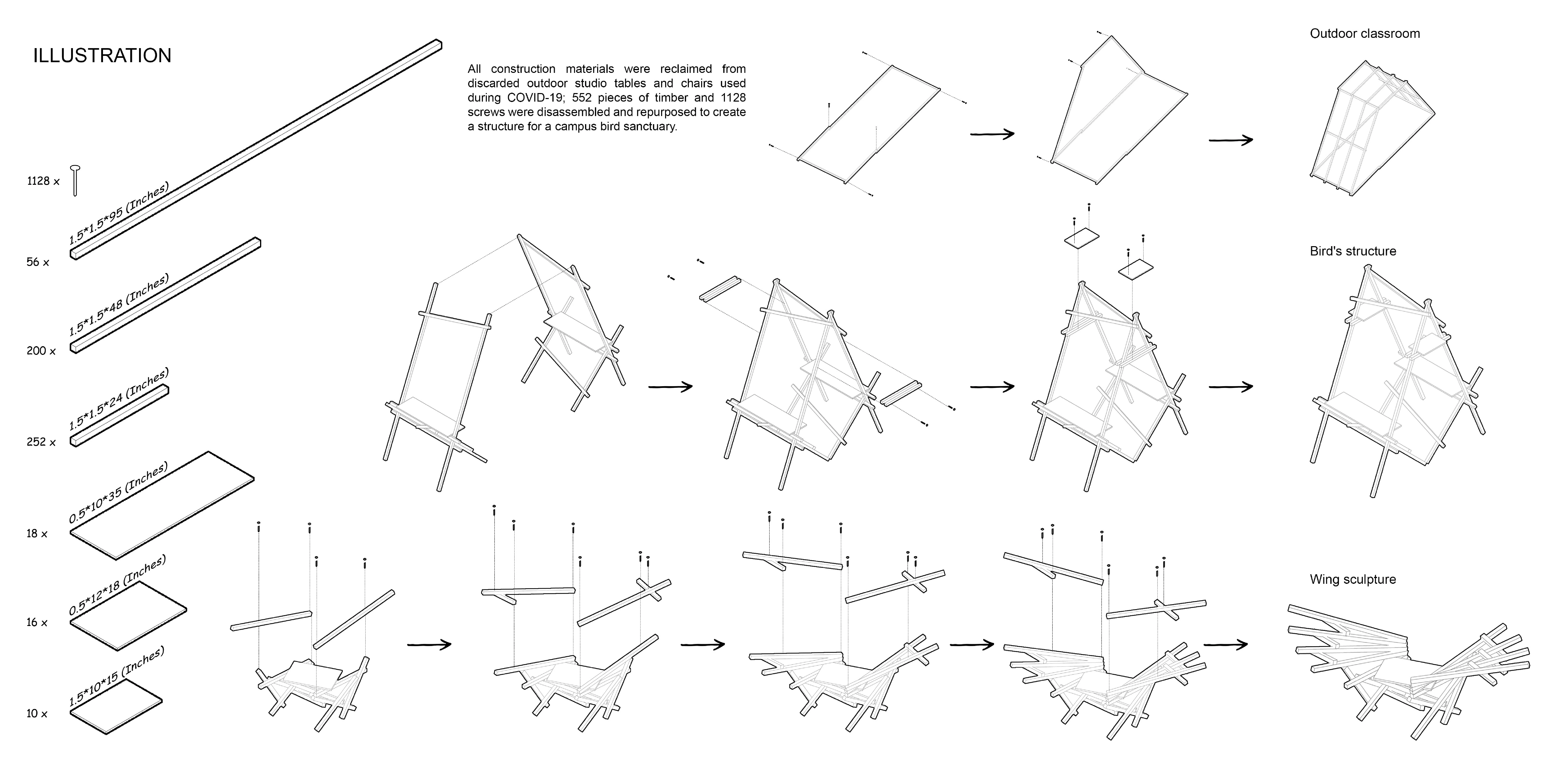
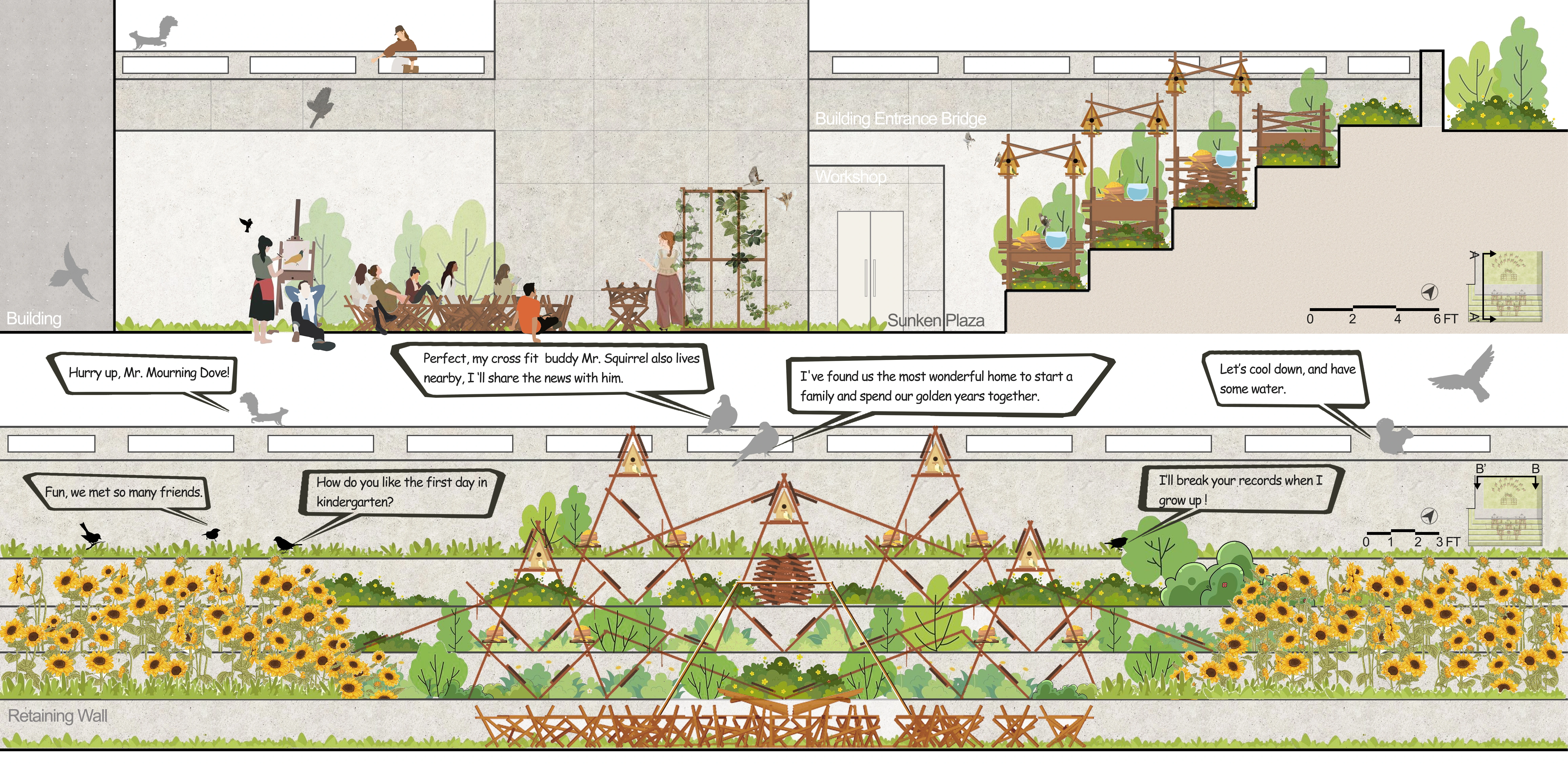
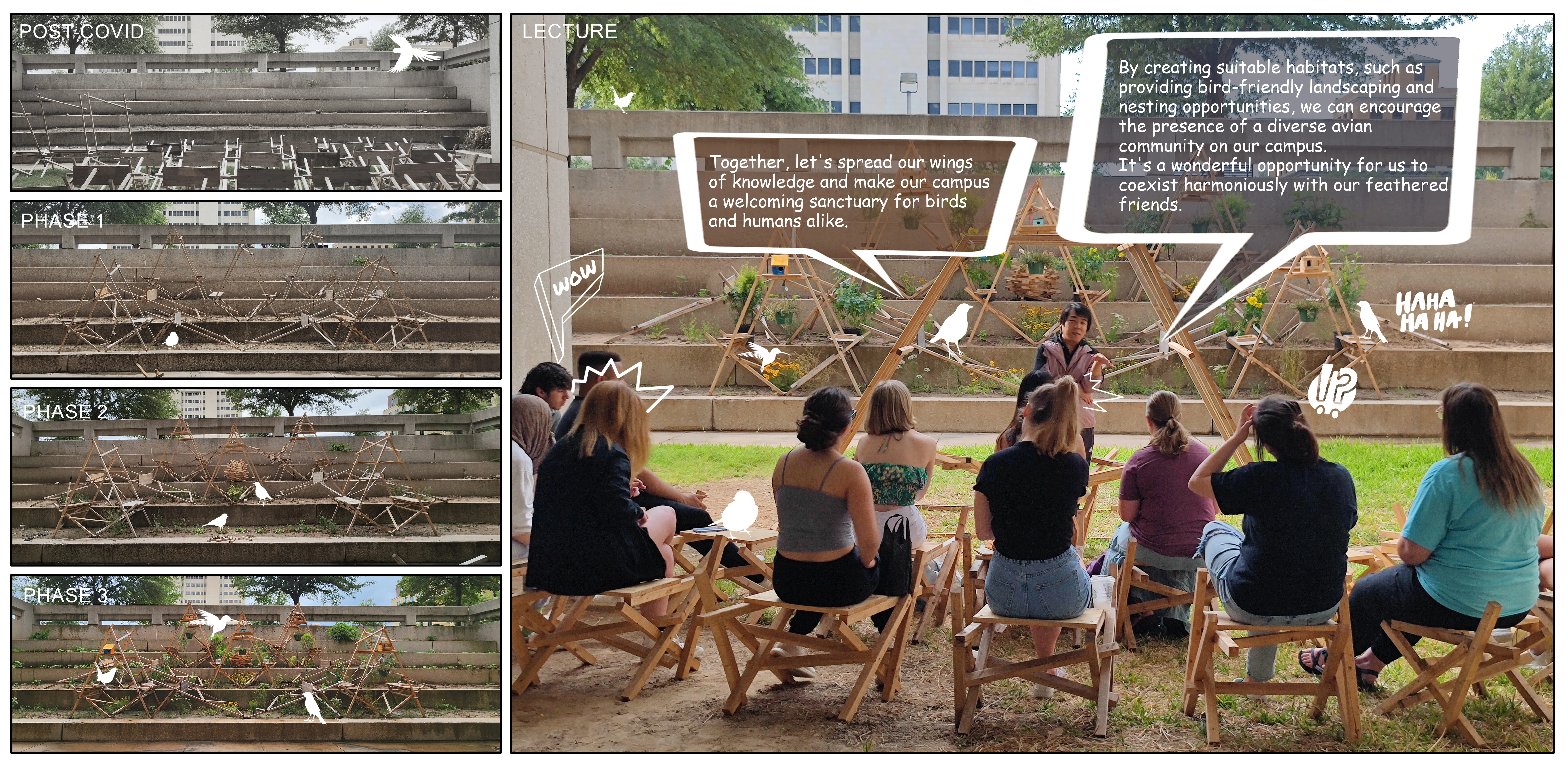
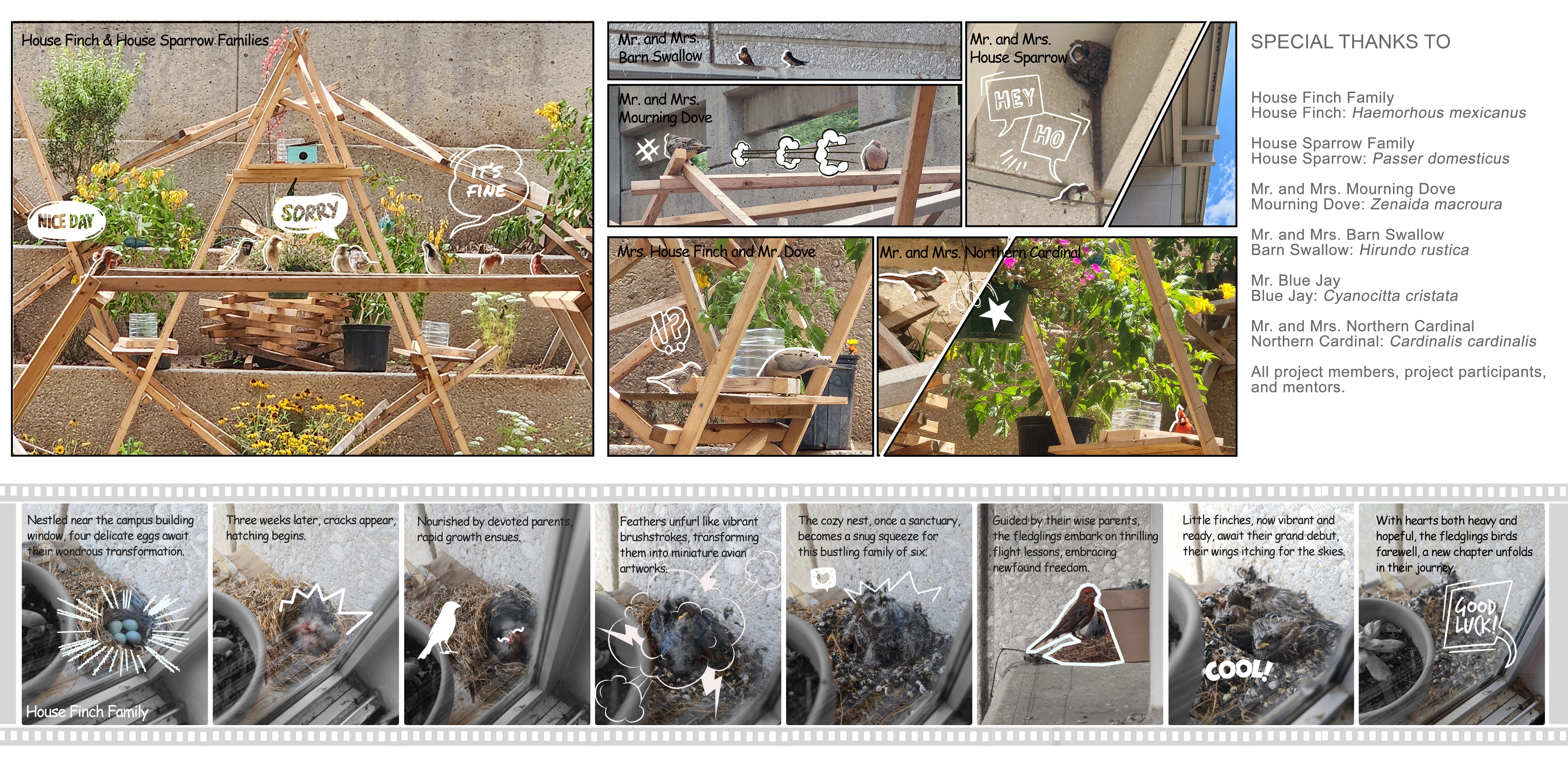
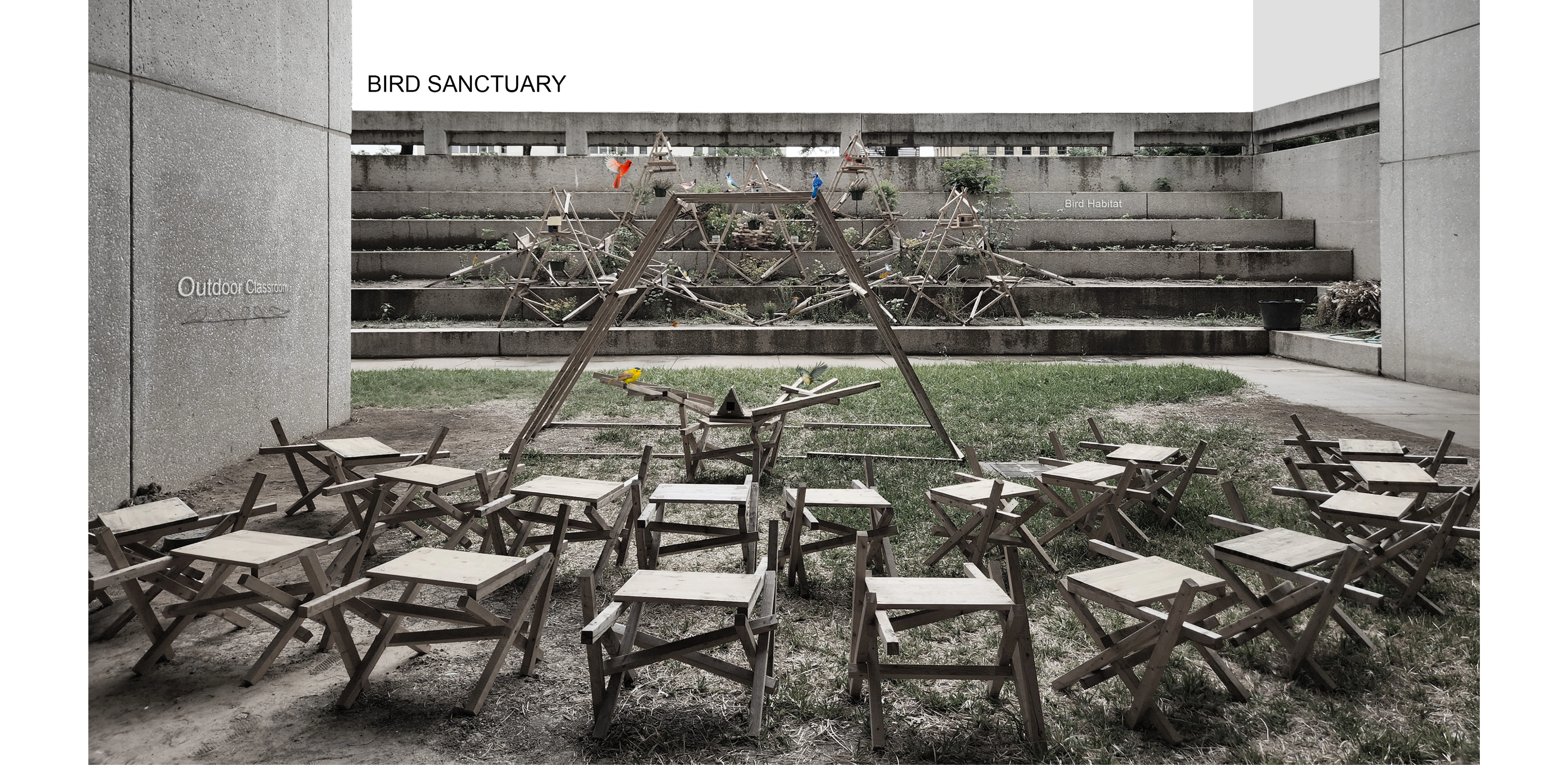
As campuses urbanize, bird habitats diminish, leading to population declines. Exposure to pesticides and herbicides further contributes to the decline in the diversity of birds. It is imperative that educational institutions prioritize conservation efforts, construct bird-friendly spaces, and educate the public on the significance of preserving bird habitats. An interdisciplinary team was formed to design and construct a bird sanctuary on campus to serve as a center for bird habitat and education. All materials were reclaimed from discarded studio tables and chairs used during COVID-19. Meanwhile, 25 edible plant species that hold medicinal properties and act as pollinator-attractants were selected and applied.
-
Background
This project aims to promote bird diversity on campus and educate the public about local bird species, while also creating an outdoor classroom to foster biophilia.
Problem Statement
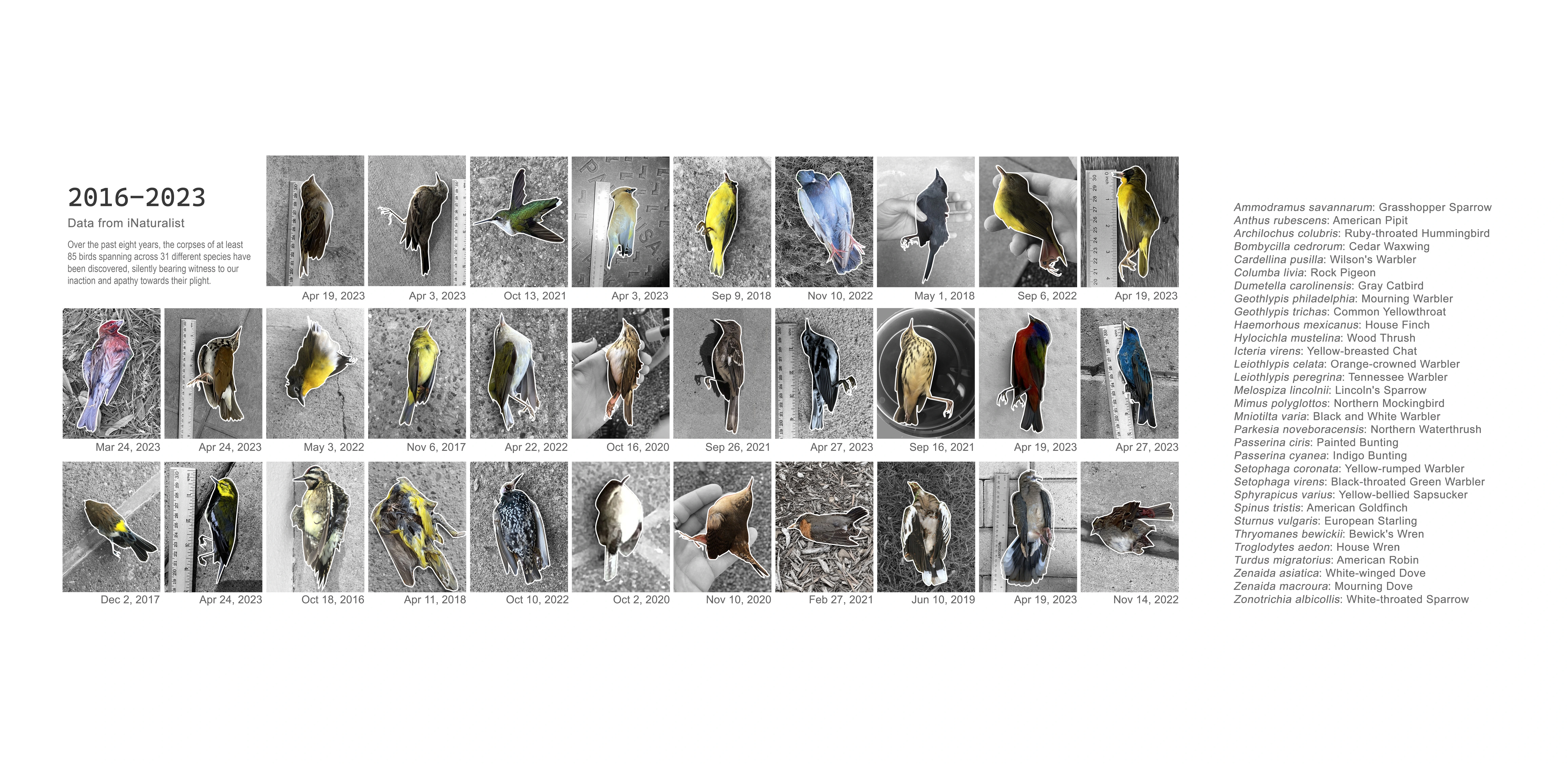
Worldwide, bird populations decline due to habitat loss from deforestation, urbanization, and agriculture, exacerbated by climate change affecting migration, breeding, and food availability. On campus, urban expansion poses threats like fatal collisions and toxin exposure, accelerating their decline. Habitat fragmentation further limits suitable nesting and foraging areas for bird species.
Design Goals
1. Reclaiming and repurposing unused COVID-era studio structures.
2. Increase the birds’ biodiversity on campus.
3. Create an iconic art installation to encourage outdoor campus activities.
4. Program a multipurpose, stress relieving space and outdoor classroom.
Design Solutions and Impacts
1. On-site problem-solving
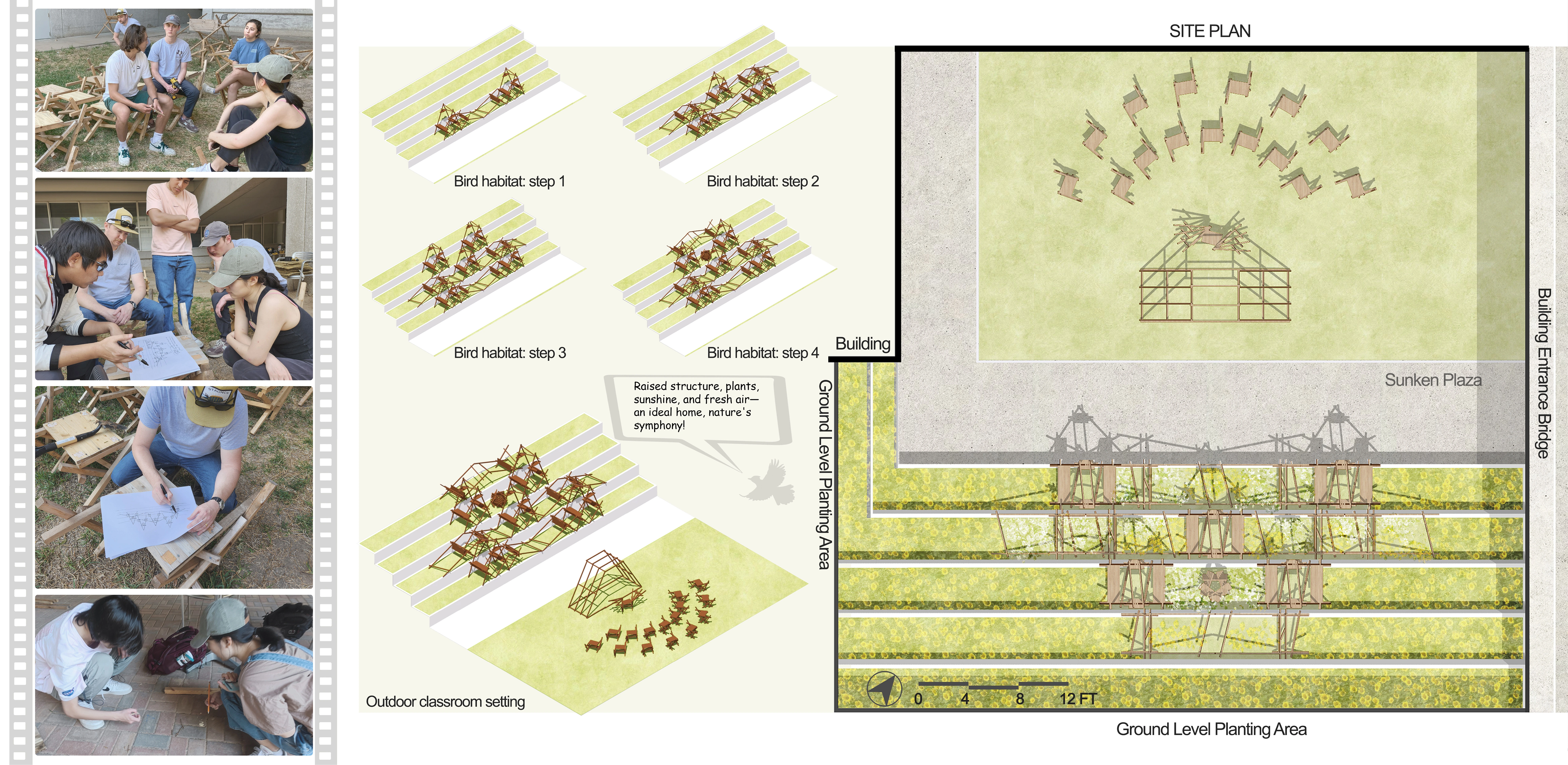
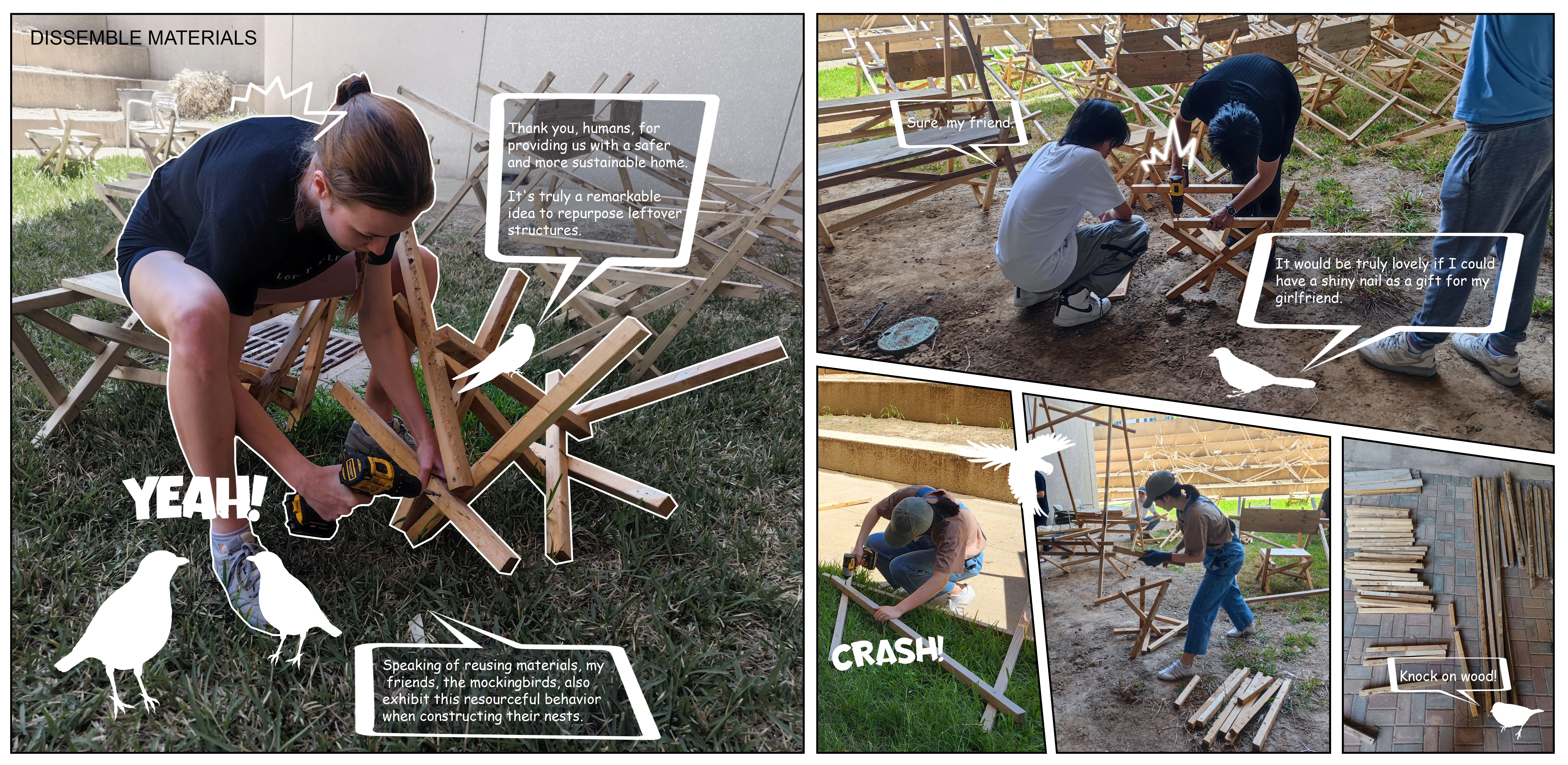
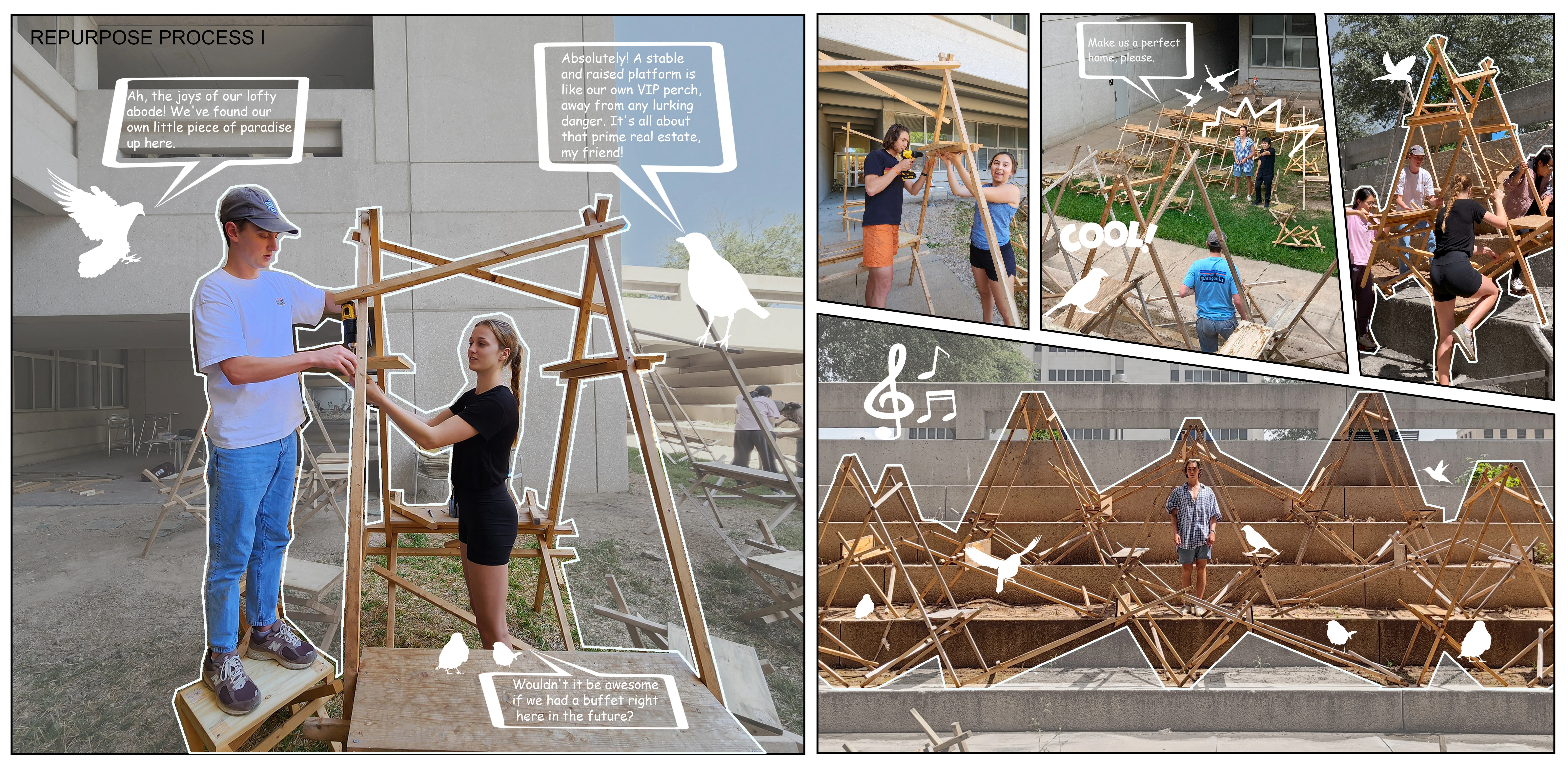
The bird sanctuary is situated on a sunken plaza that is underutilized. Our team began by disassembling the unused structures. Through on-site problem-solving, we bridged the knowledge gap between digital communication in the virtual realm and its application in the real world.
2. Environment
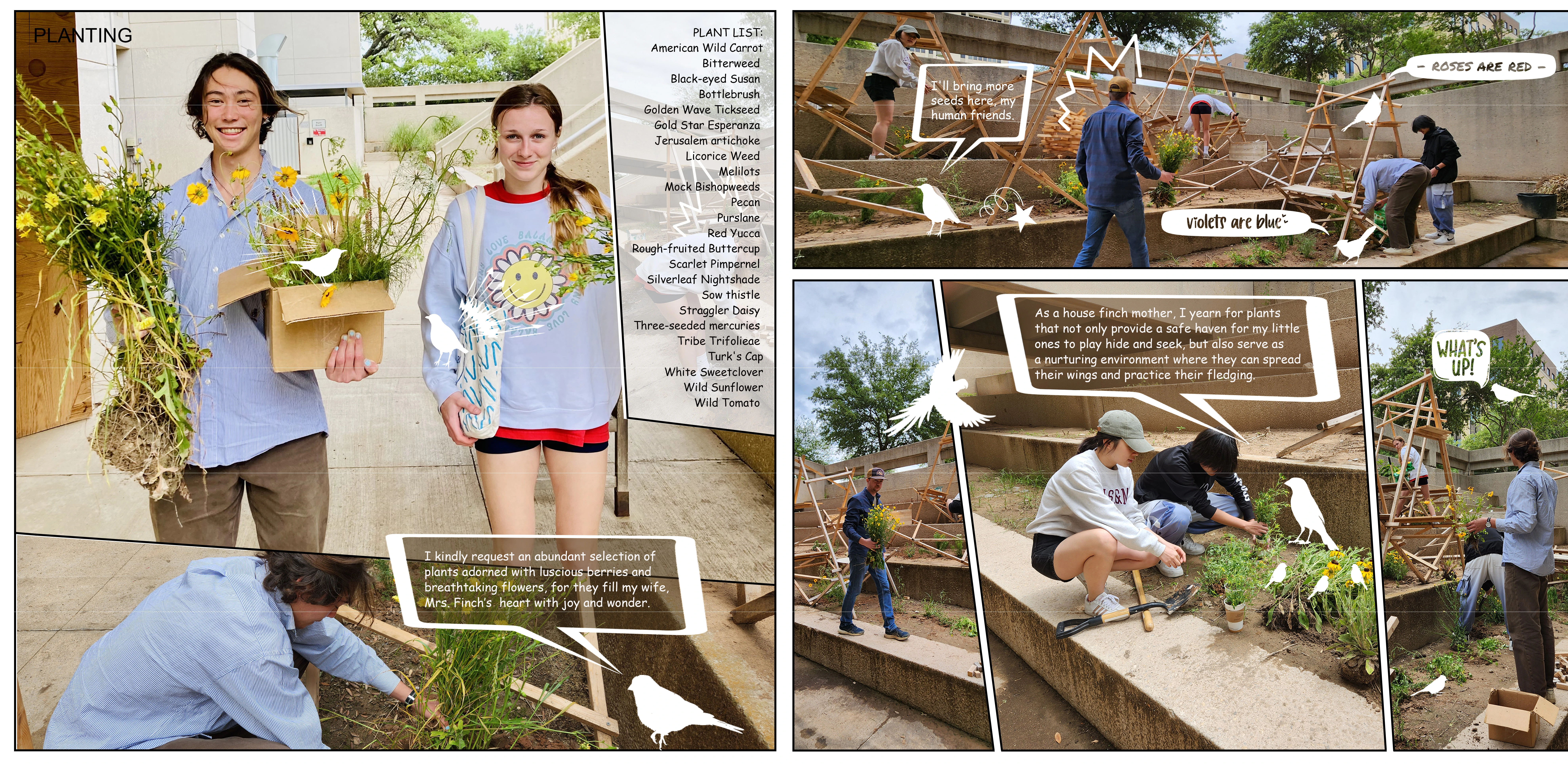
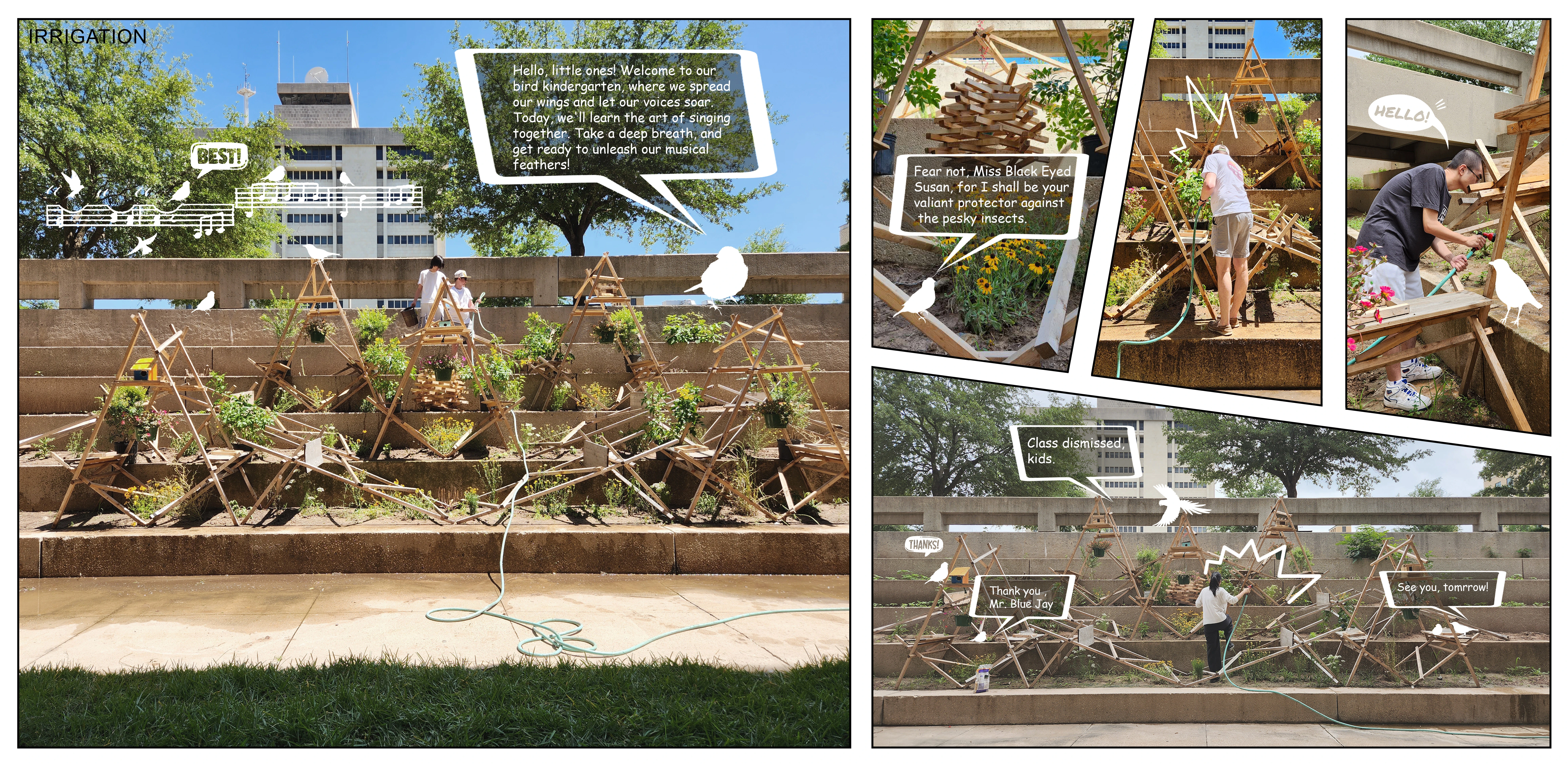
25 wild plant species were introduced to increase biodiversity. We transplanted 12 species into used coffee cups to achieve sustainable practice. This also create a wild-type planting design which converted unwanted weeds to needed ecologies. This project is also an ongoing research lab for students to monitor how many birds are introduced each season.
Education
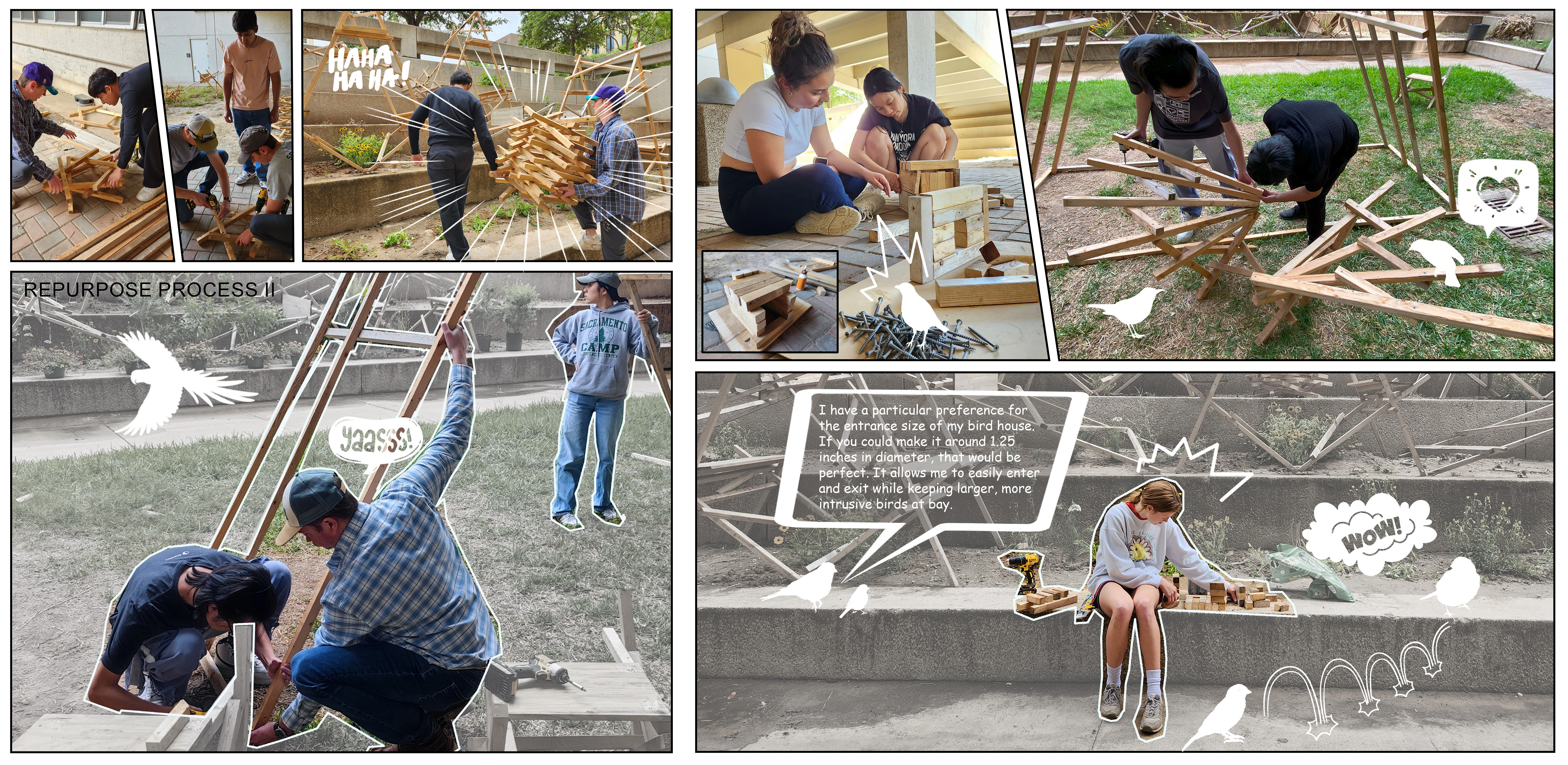
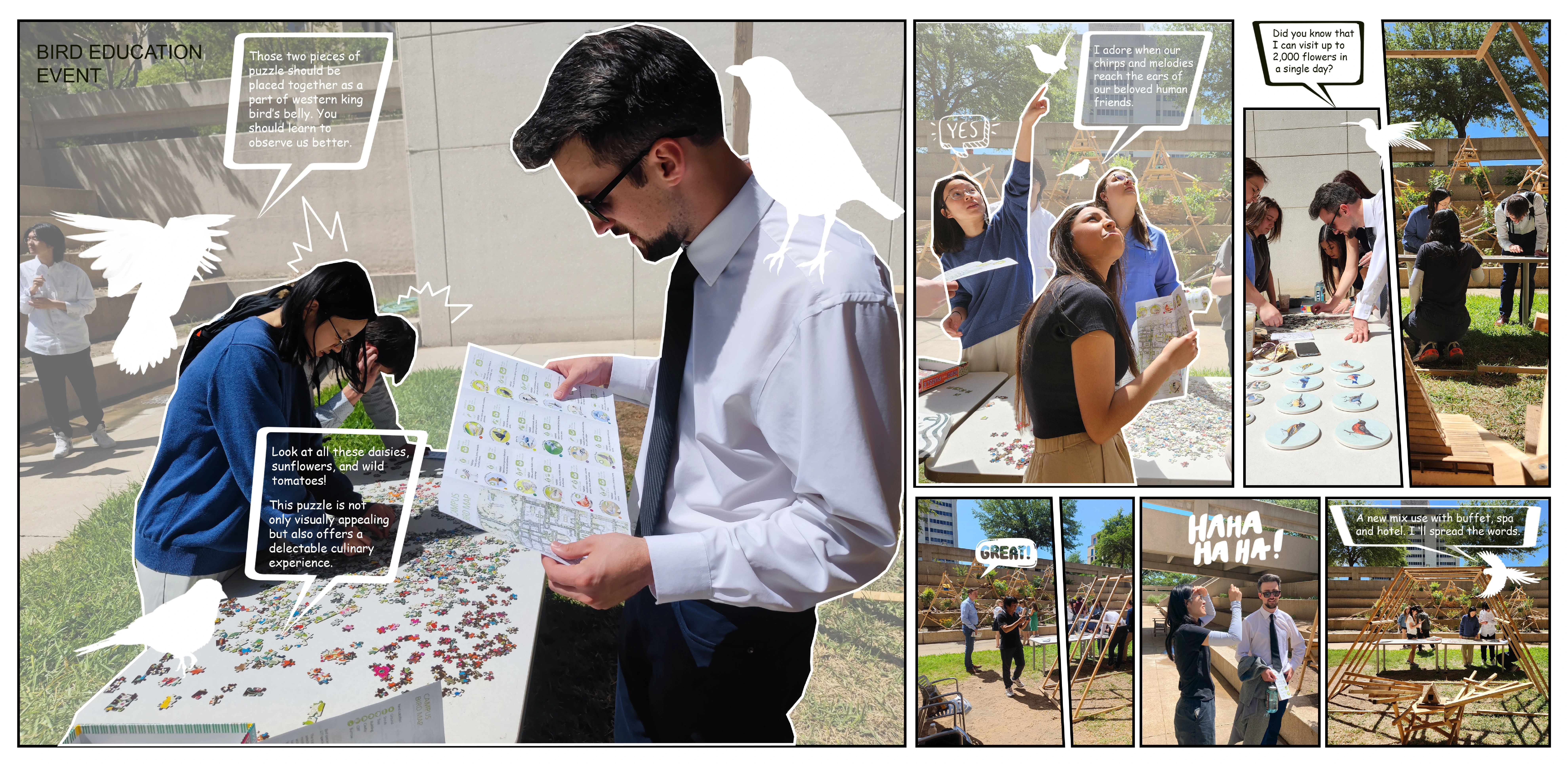
Due to the absence of a designated outdoor classroom, it is we proposed to create one in order to increase outdoor activities. Our team learned how to use drills and impact drivers during construction, as many had never used such tools. To optimize the design and assemble the components, we evaluated a variety of construction methods.
Bird habitat
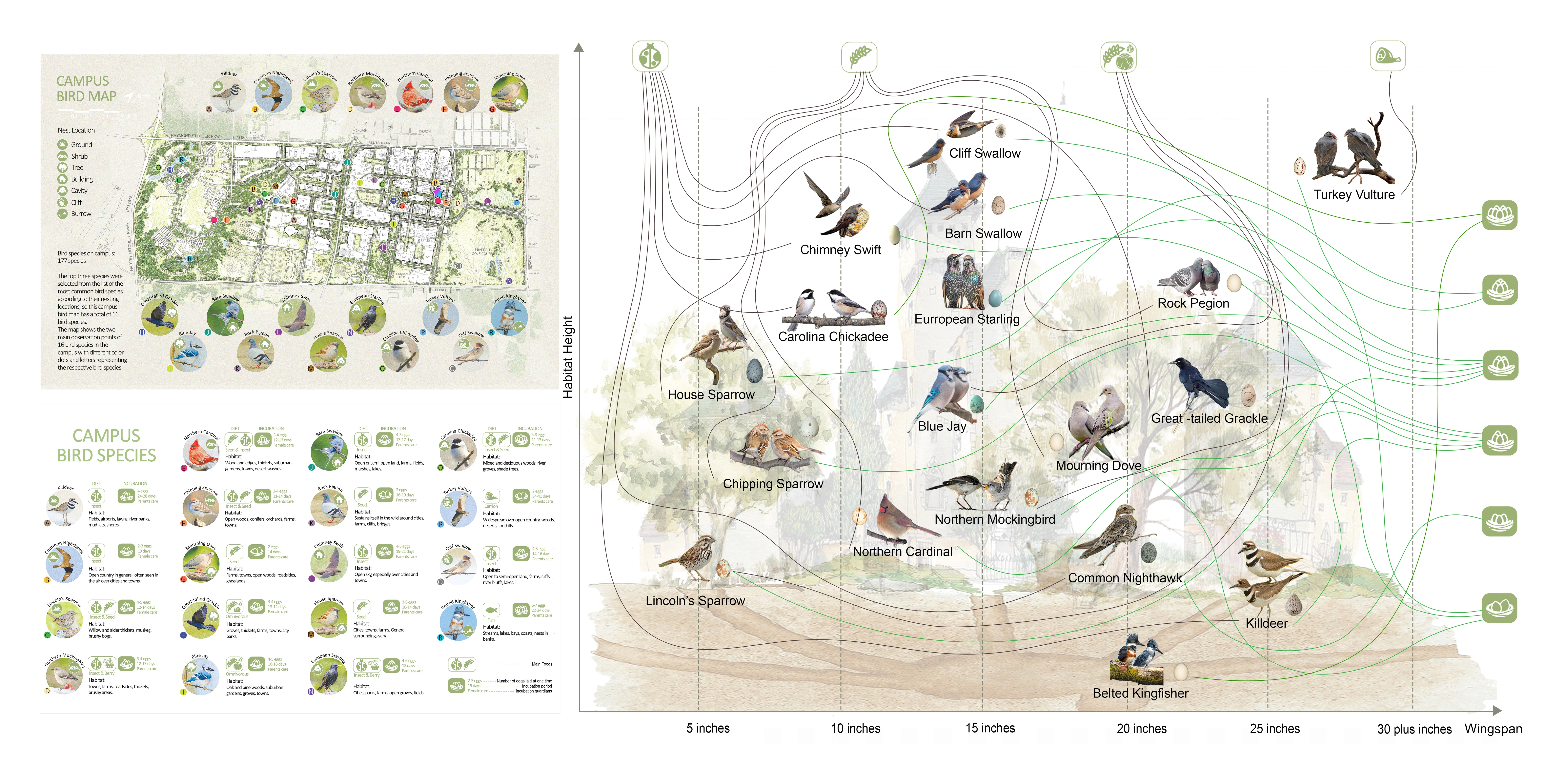
As a solution to the campus biodiversity crisis, this project creates a forest-type sanctuary surrounded by development for birds, resulting a bird paradise.
Programming
The bird sanctuary was designed to serve both natural and human needs; 25 plant species were introduced to diversify the ecosystem, and a multi-level structure was built to foster campus biodiversity. User needs are supported by year-round activities such as a bird soundscape, bird observation, bird feeding, event space, outdoor classroom, and cultivation opportunities. To reduce maintenance costs, BLA and MLA students are encouraged to plant their preferred plants, on-site, with a name tag.
Materials and installation methods
The project used only recycled materials, such as wood, screws, face masks (for bird bath filters), coffee cups, and water bottles. Traditional mortise and tenon joints were employed to fix recycled timbers and reshaped using miter saws to meet birds' needs. Team members donated water hoses and spray nozzles for watering plants, and by transplanting, recycling, reusing unused elements, and repurposing old furniture, a more sustainable design was achieved.
Conclusion
Birds contribute to pollination, seed dispersal, and insect control, so their disappearance has far-reaching ecological effects. To address this crisis, concerted efforts, including habitat conservation, sustainable land-use practices, reduced pesticide use, and international collaboration to preserve and restore bird populations, were required.
-
- American Wild Carrot
- Bitterweed
- Black-eyed Susan
- Golden Wave Tickseed
- Gold Star Esperanza
- Jerusalem Artichoke
- Licorice Weed
- Melilots
- Mock Bishopweeds
- Pecan
- Purslane
- Red Yucca
- Rough-fruited Buttercup
- Scarlet Pimpernel
- Silverleaf Nightshade
- Sow thistle
- Straggler Daisy
- Three-seeded mercuries
- Tribe Trifolieae
- Turk's Cap
- White Sweetclover
- Wild Sunflower
- Wild Tomato
Advertisement
Related Awards
Award of Excellence, Student Collaboration
The Firelighters
Location: Davis, CA
Students: Nicholas Hardt-Mason, Student ASLA; Helene Hoffman; Stasha Leonard; Amber Lin; Vallerie Morones, Student ASLA; Mary Kate O'Connor, Student ASLA; Fermin Pereira; Simone Shupper; Eavan Swanson; Lauren Swing, Student ASLA
School: University of California, Davis
Faculty Advisor(s): Emily Schlickman, ASLA
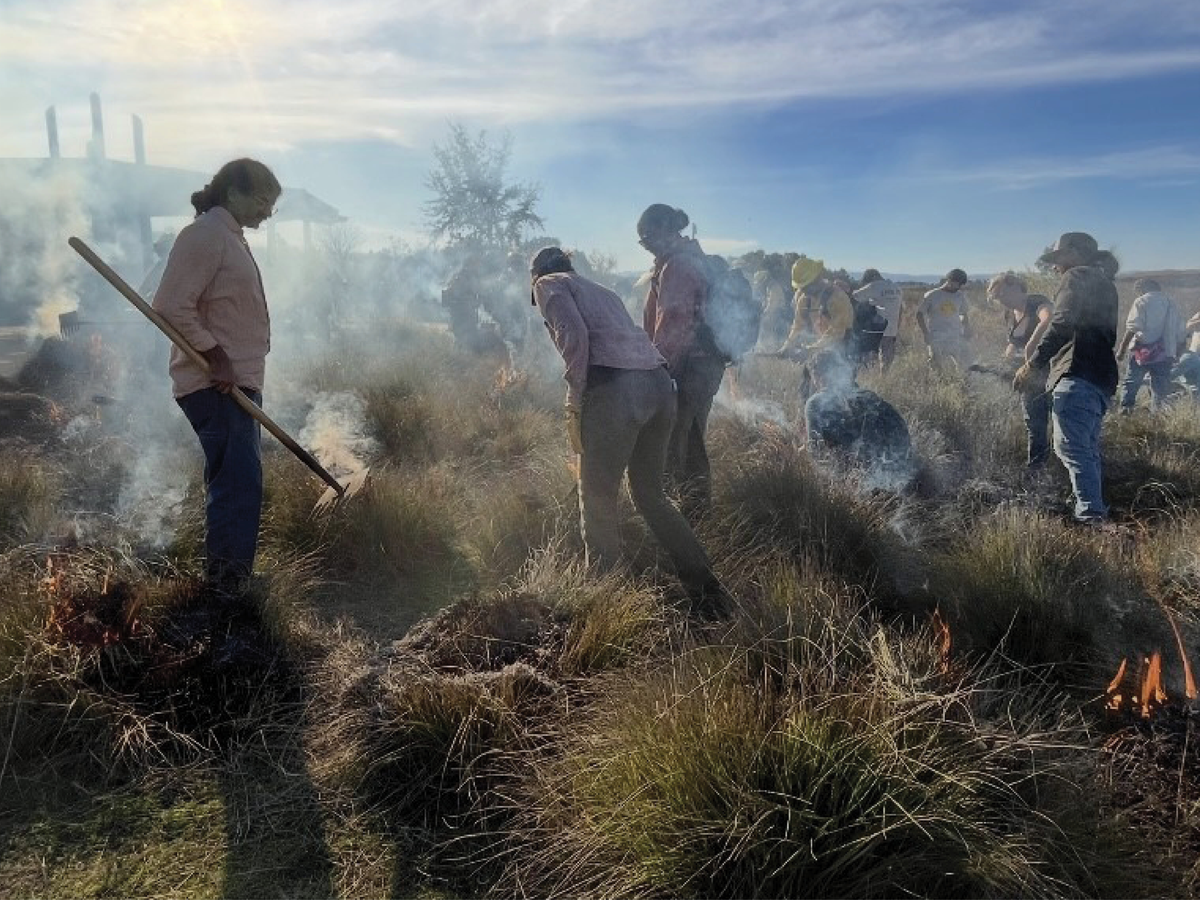
Over ten weeks, eleven landscape architecture and environmental design students trained as prescribed fire practitioners and volunteered on seven burns with community partners. Their service helped to expand prescribed fire capacity, shift wildfire perceptions, and move design education closer to practice, from simply drawing fire on paper to tending it. Working with fire professionals, landowners, prescribed burn associations, fire ecologists, and Indigenous practitioners, students advanced beneficial fire as a key strategy for reducing risk in fire-prone landscapes. The cohort now serves as an on-call volunteer crew, developing a public exhibition on fire messaging, establishing a long-term fire plot, and mentoring future Firelighters.
Related Articles
ASLA Fund
American Society of Landscape Architects Announces its 2026 Student Awards
39 Student Award winners elevate the future of the landscape architecture profession
Aug 24 2026