
.webp?language=en-US)

.webp?language=en-US)
Letitia Carson's Legacy: Healing Ourselves, Our Community, & Our Land
Eva Kahn, Student ASLA; Carson Butler; Steven Garcia; Anna Epstein; Kailee Baumgardner; Emma LoCiero; Miriel Orhai; Mia Owen, Student ASLA; Carlos Lopez Toscano; Dahill Shelvy; Zachary King; Asa DeWitt, Student ASLA
-
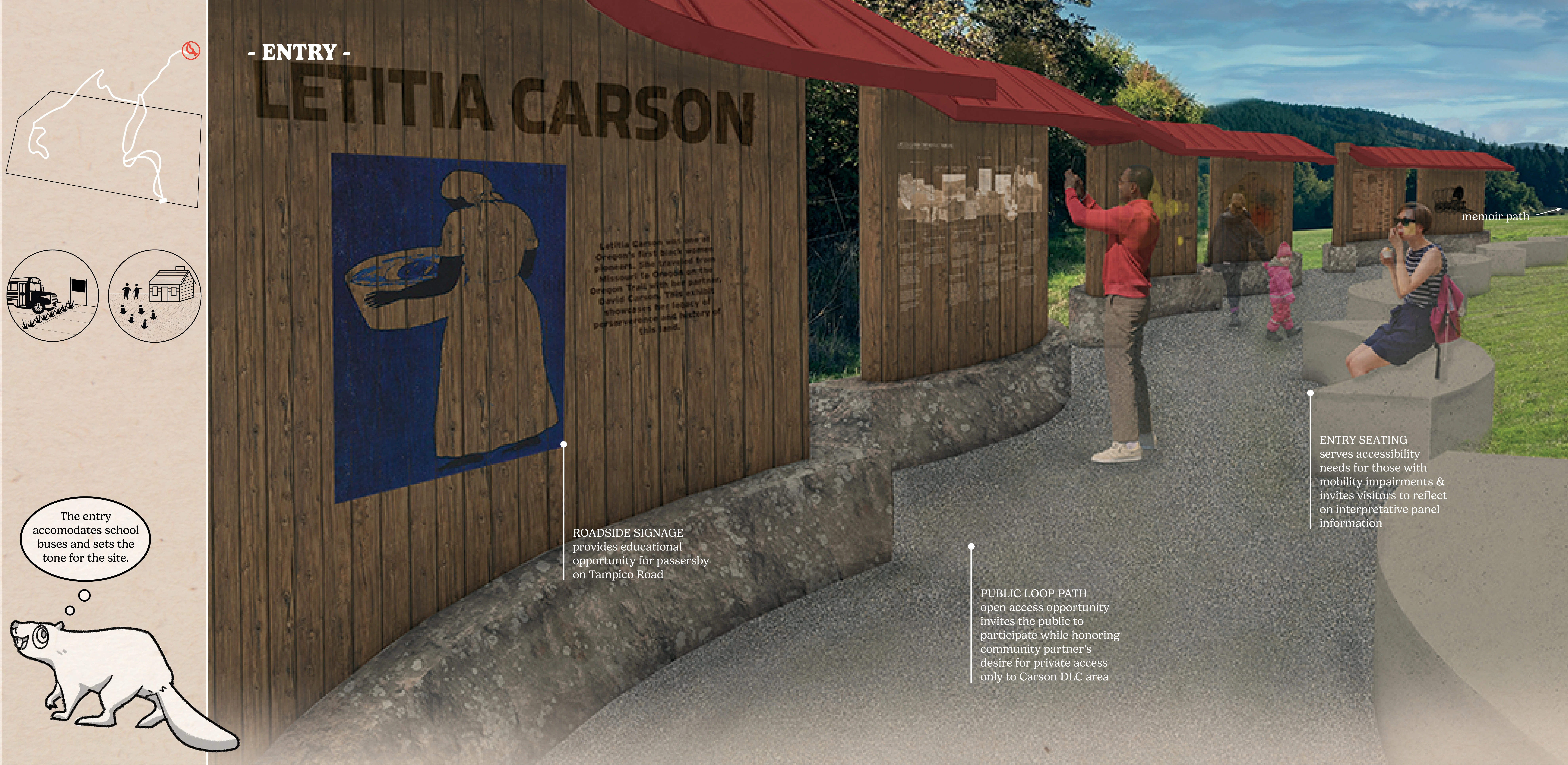
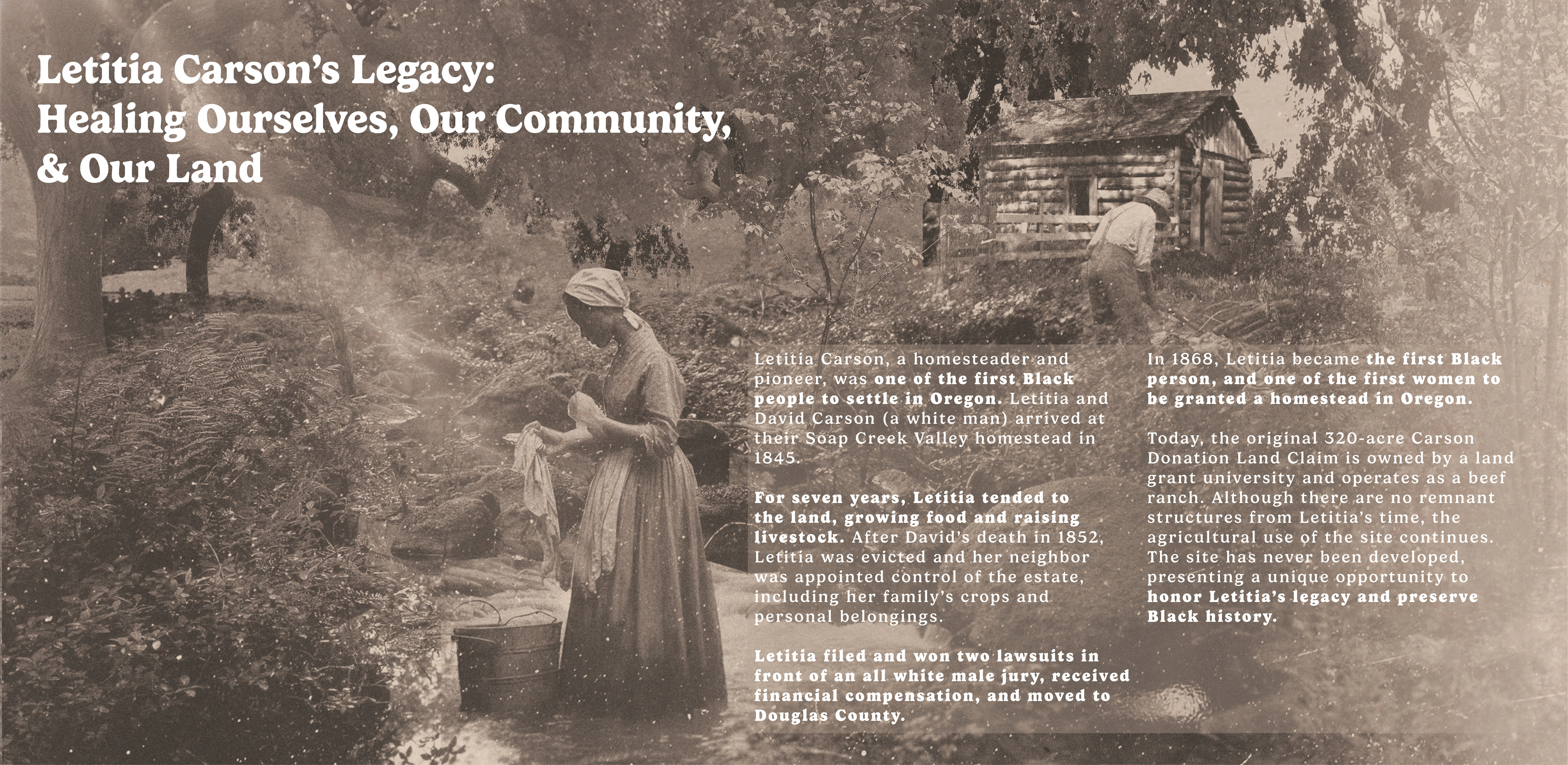
Letitia Carson’s Legacy utilizes the skills of landscape design to uplift several community organizations dedicated to honoring Letitia Carson, one of the first Black homesteaders in Oregon. This conceptual design made tangible the visions of our partners through the process of building authentic relationships and finding common ground through land stewardship. The final booklet has already been used to begin fundraising efforts, support grant applications, and gain approval to begin construction on Phase One. This studio addresses many challenging concepts, including the delicacy of telling a history embedded in narratives of race, gender, displacement, and colonialism, all while supporting current agricultural land use.
-
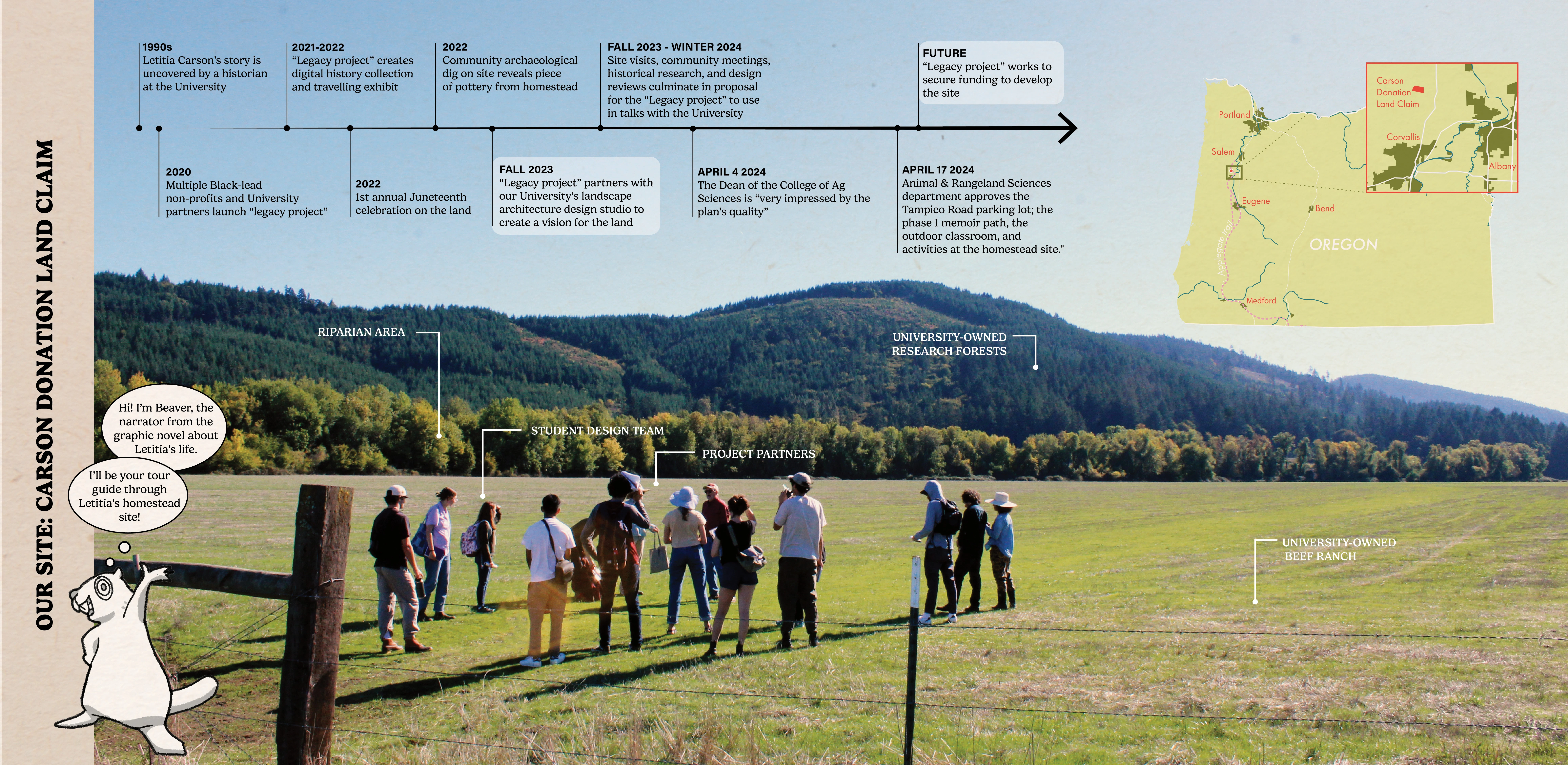
Letitia Carson, a homesteader and pioneer, was one of the Black women to settle in Oregon. She and her white male partner, David Carson, arrived at their Soap Creek Valley homestead in 1845 after a five-month journey along the Oregon Trail. The Carson’s 320-acre Donation Land Claim sits in Benton County, 11 miles north of Corvallis, Oregon on the ancestral homelands of the Kalapuya people. Today, the Carson’s historic Donation Land Claim is owned by a land grant university and is under operation as an educational beef ranch. The site has never been developed, offering the opportunity to celebrate and commemorate Black and Indigenous history through the agricultural landscape.
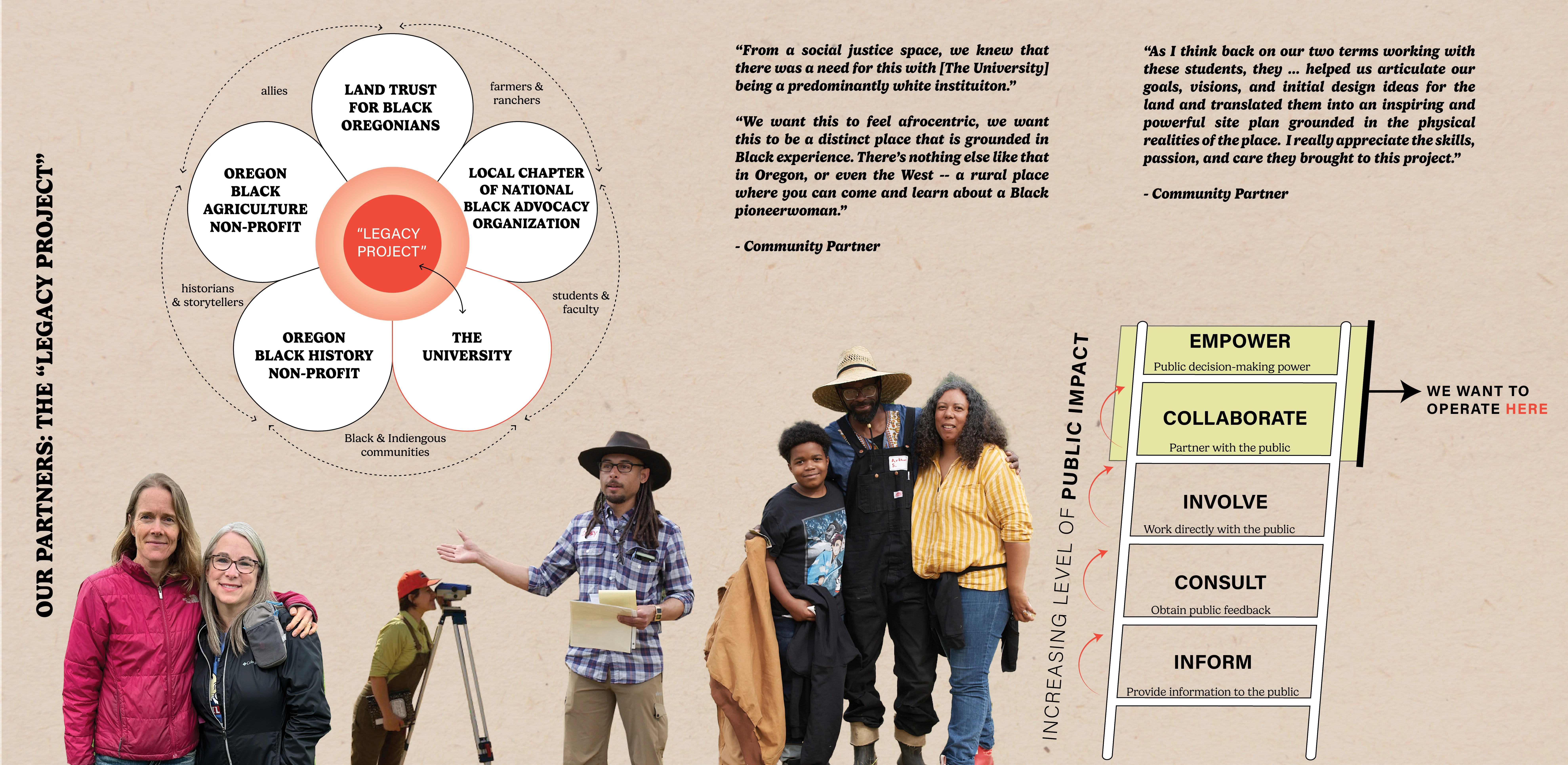
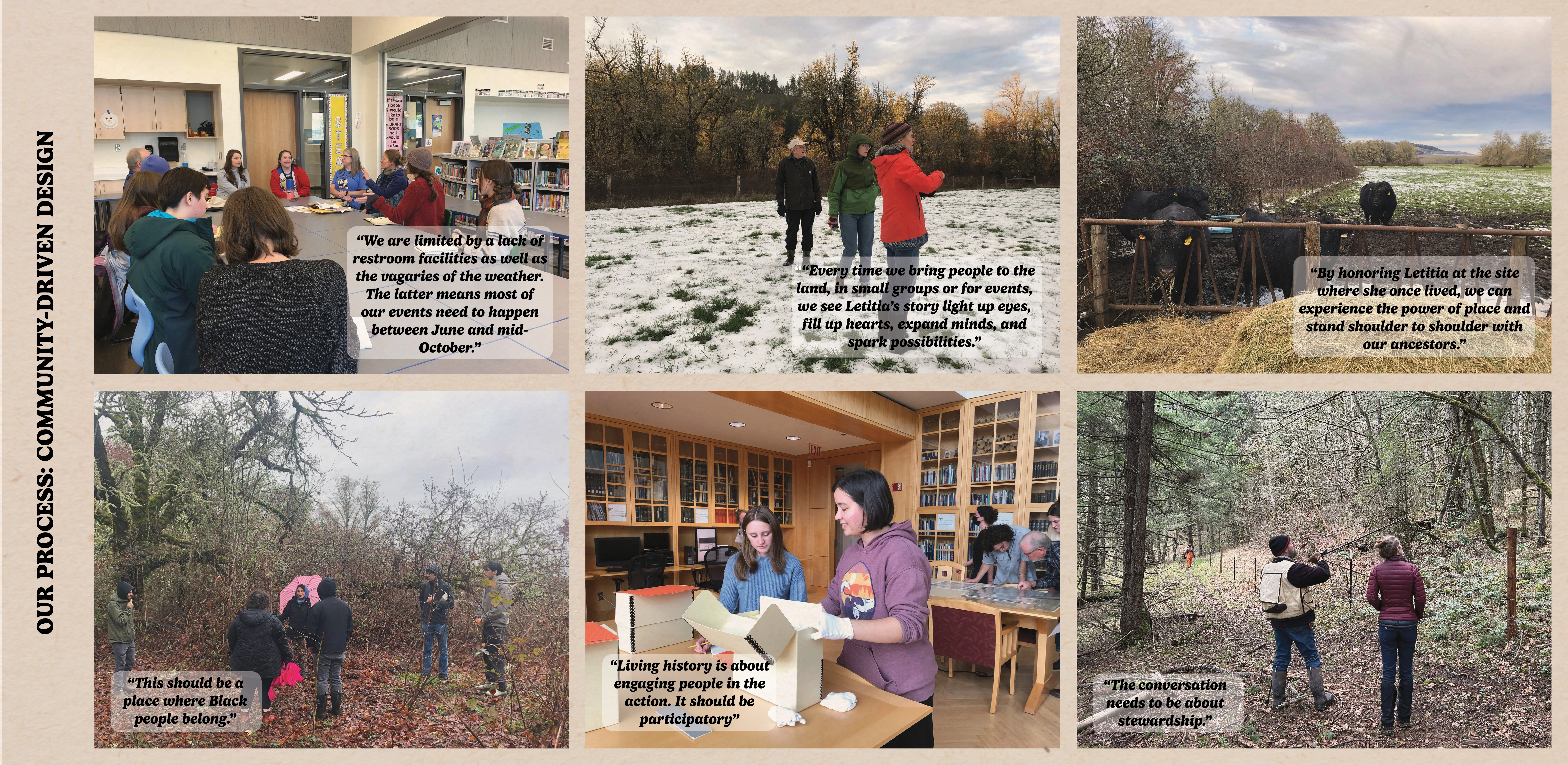
Working with the Legacy Project — a partnership between the land grant university, four Black-led community organizations, and an array of community stakeholders — this studio helped to examine the entangled past and present narratives of this site with an eye towards future programming. Our design process was guided by the goal of building authentic relationships, with active communication and extensive community engagement over 6 months. We approached this process with respect and curiosity, listening to our partners’ needs, desires, feelings, and experiences, and balancing the diverse perspectives of numerous stakeholders. Together we came up with project goals connected by an overarching theme of healing – healing ourselves, healing our community, and healing the land.
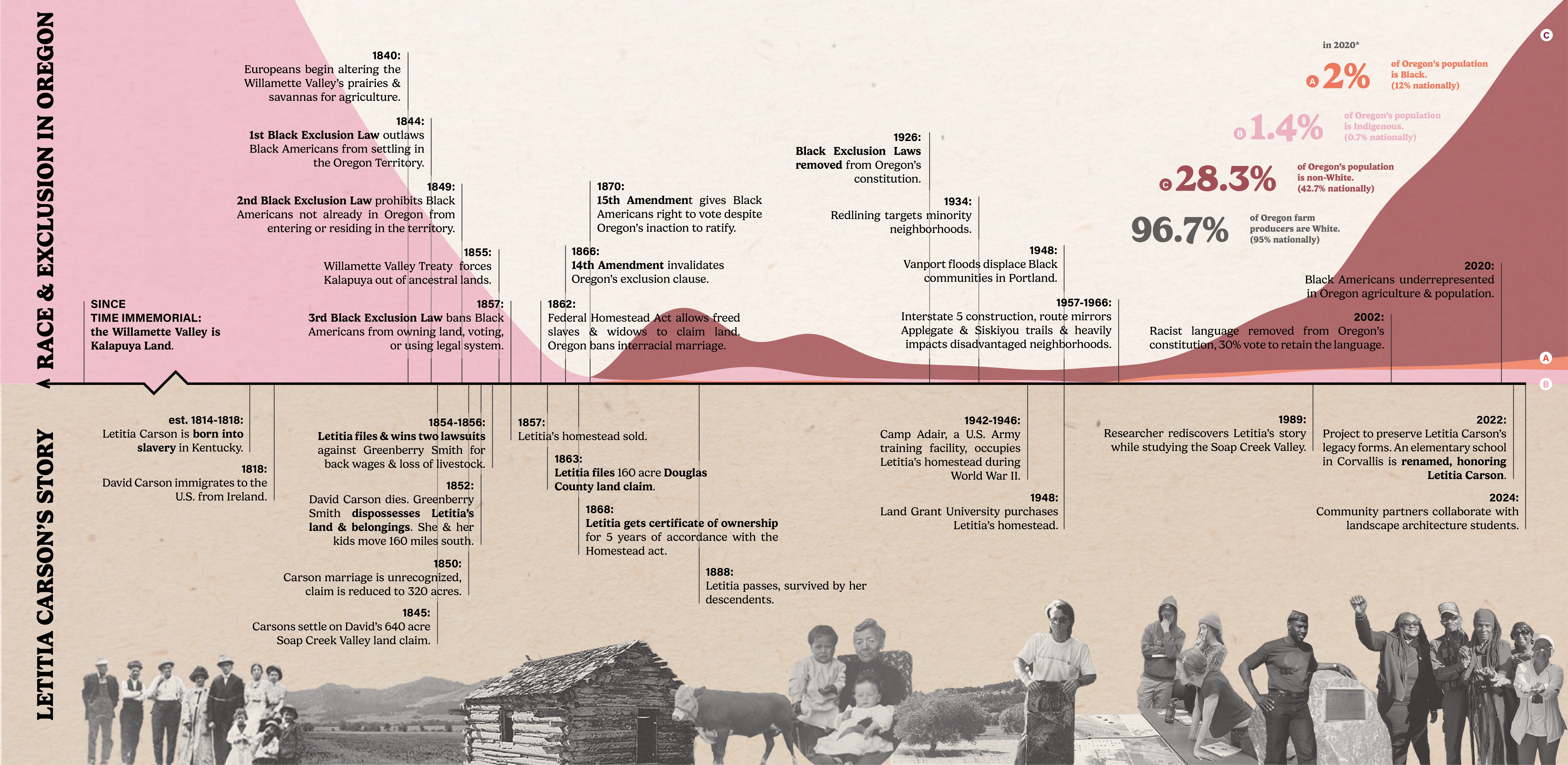
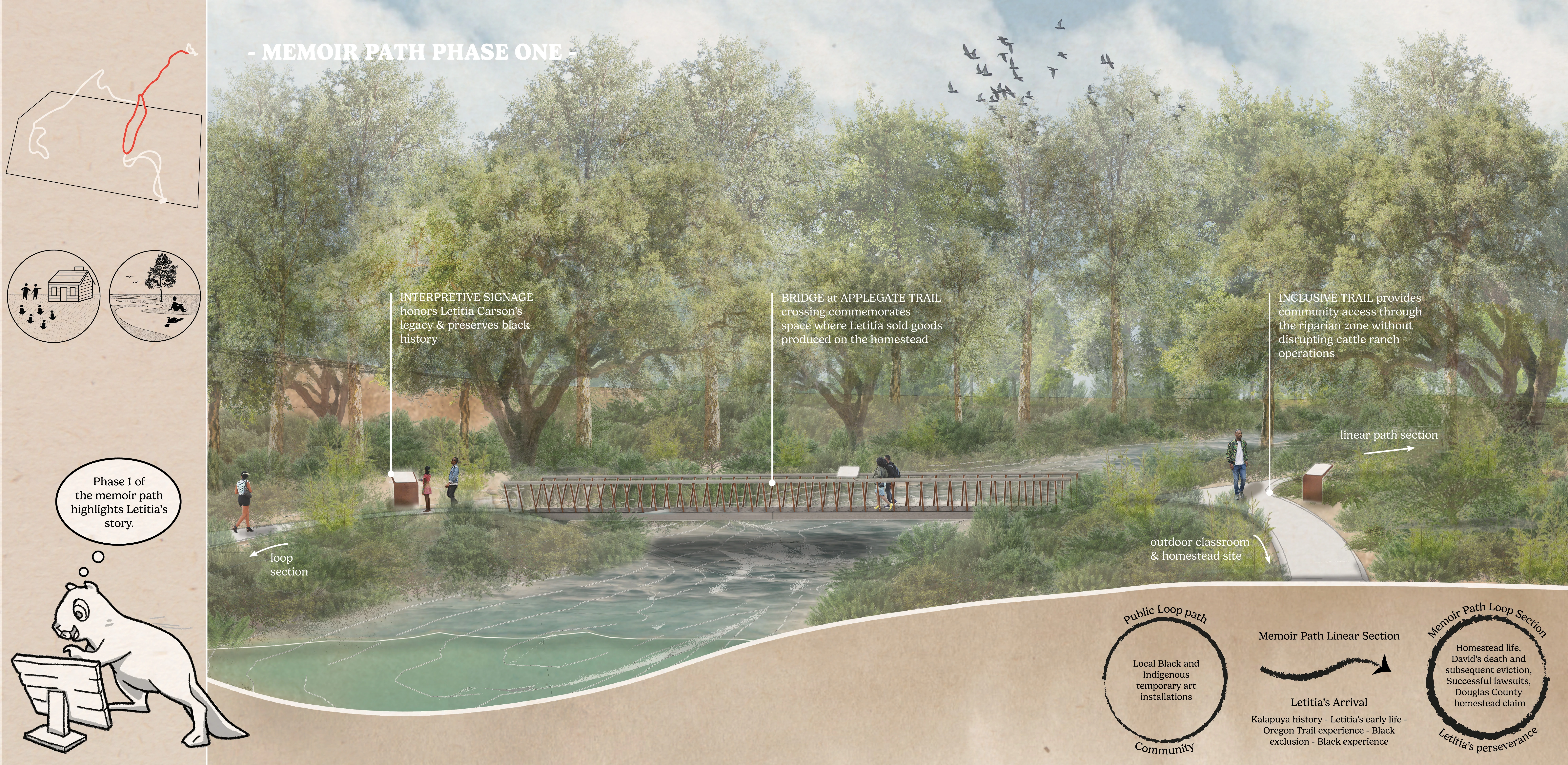
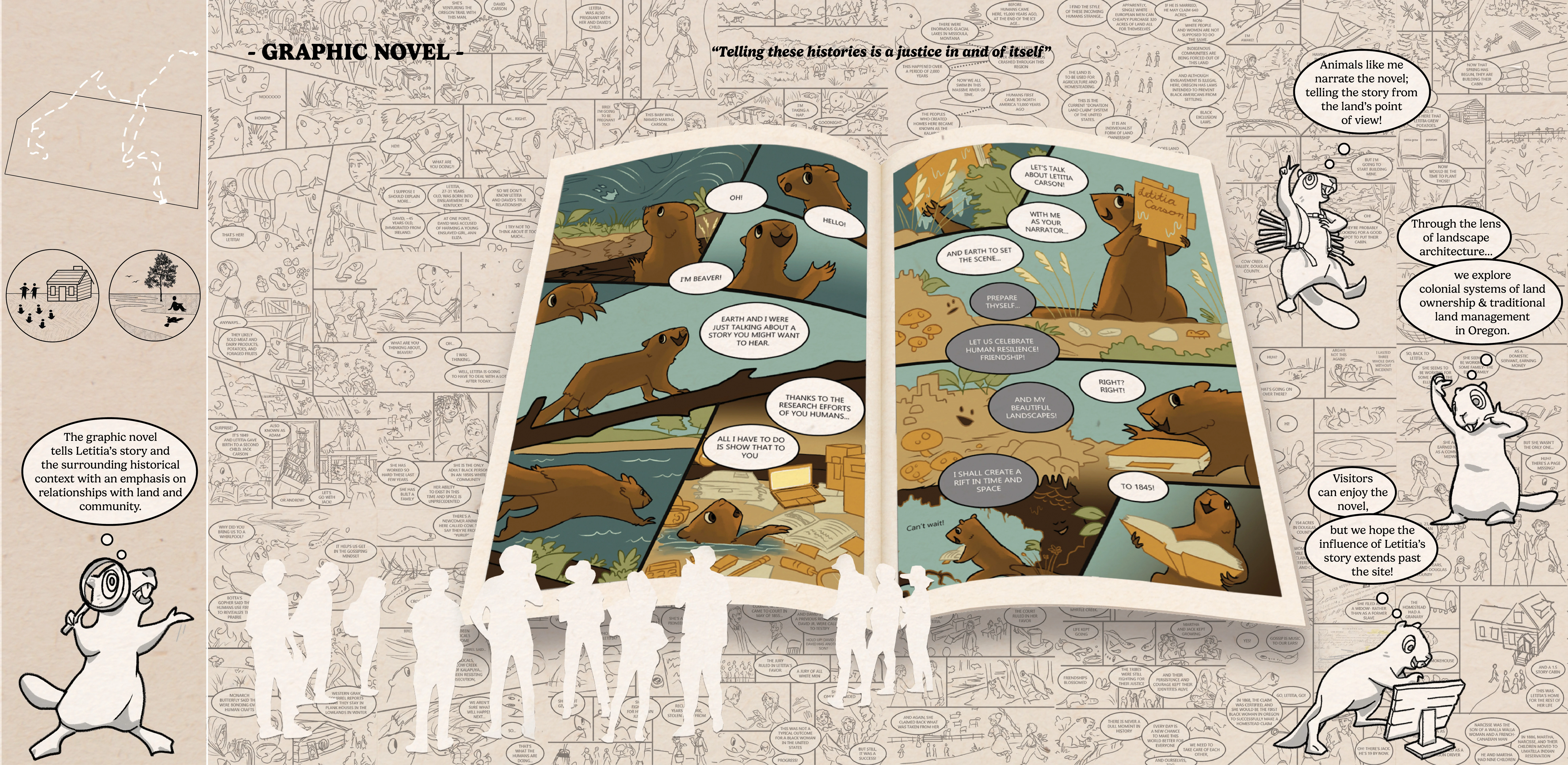
Letitia’s story is one of remarkable perseverance. For seven years, Letitia tended to the land, growing crops and raising livestock. After her husband’s death in 1852, their neighbor was granted control of the Carson estate, evicting Letitia from her land. Forced to leave her home, she traveled south to settle in Douglas County where she was the first Black woman to receive a Homestead Act claim in Oregon. In 1854, Letitia filed two lawsuits against her neighbor, winning both in front of a white male jury despite numerous Black exclusion laws in the state at that time.
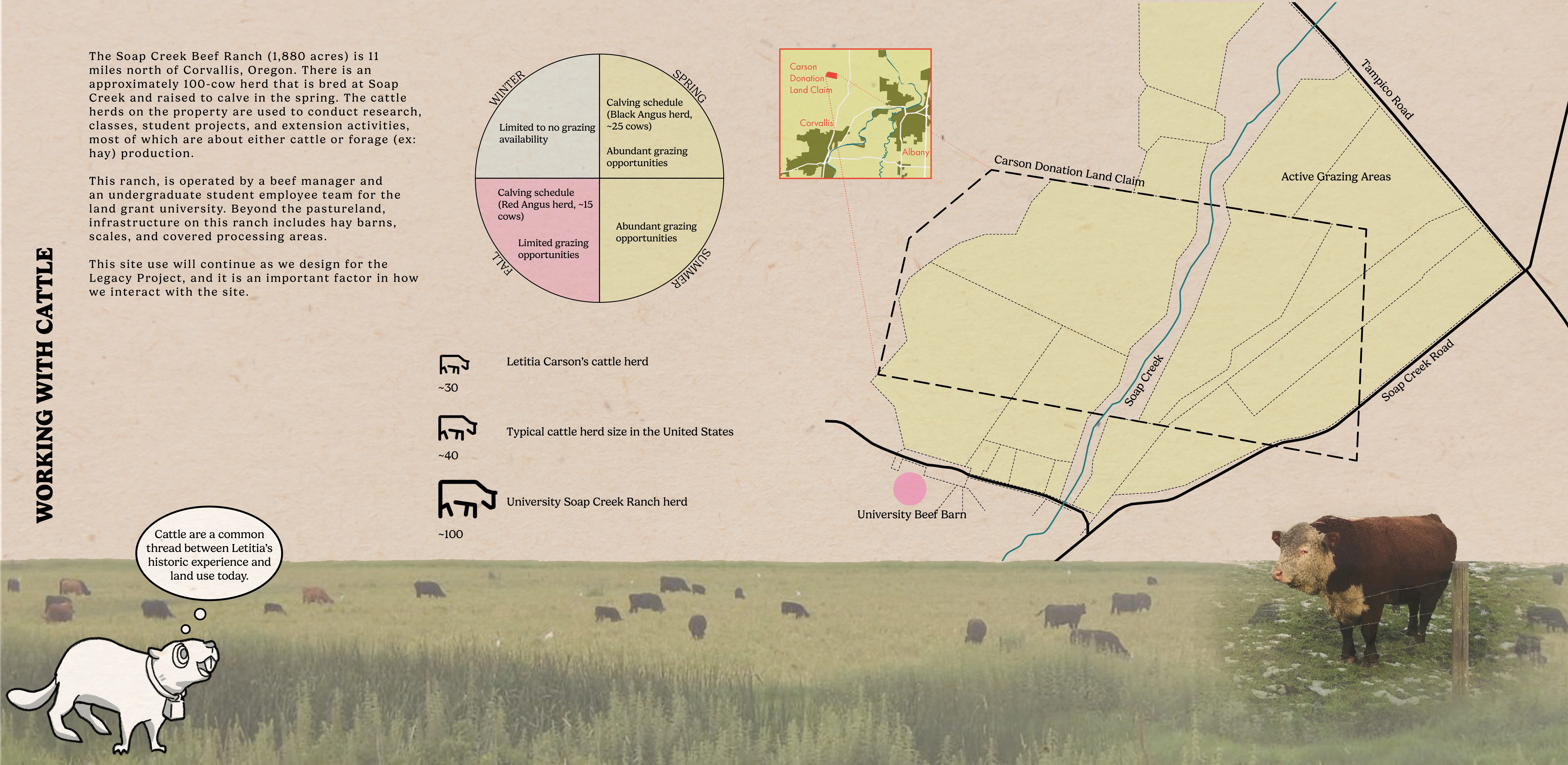
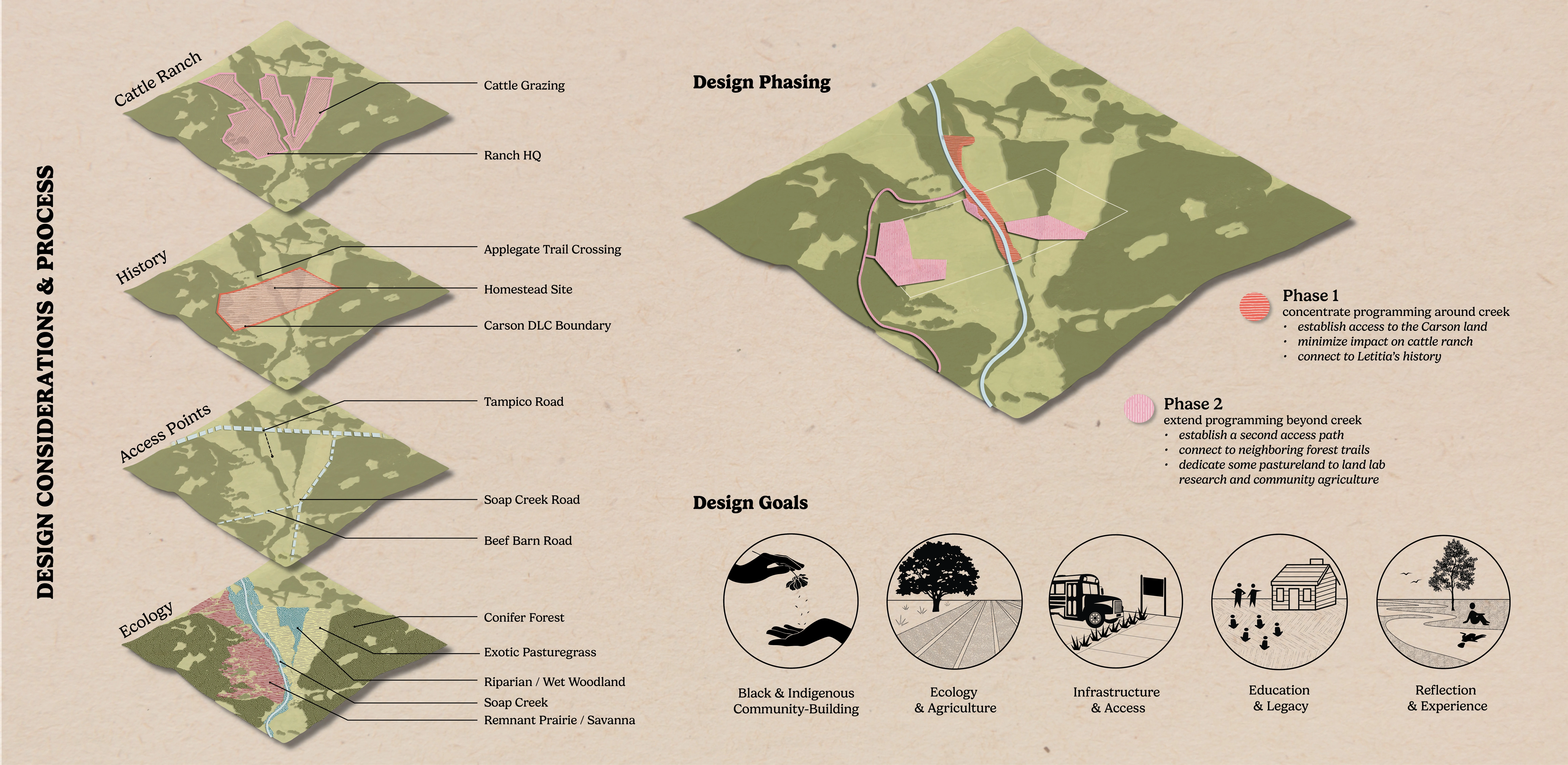
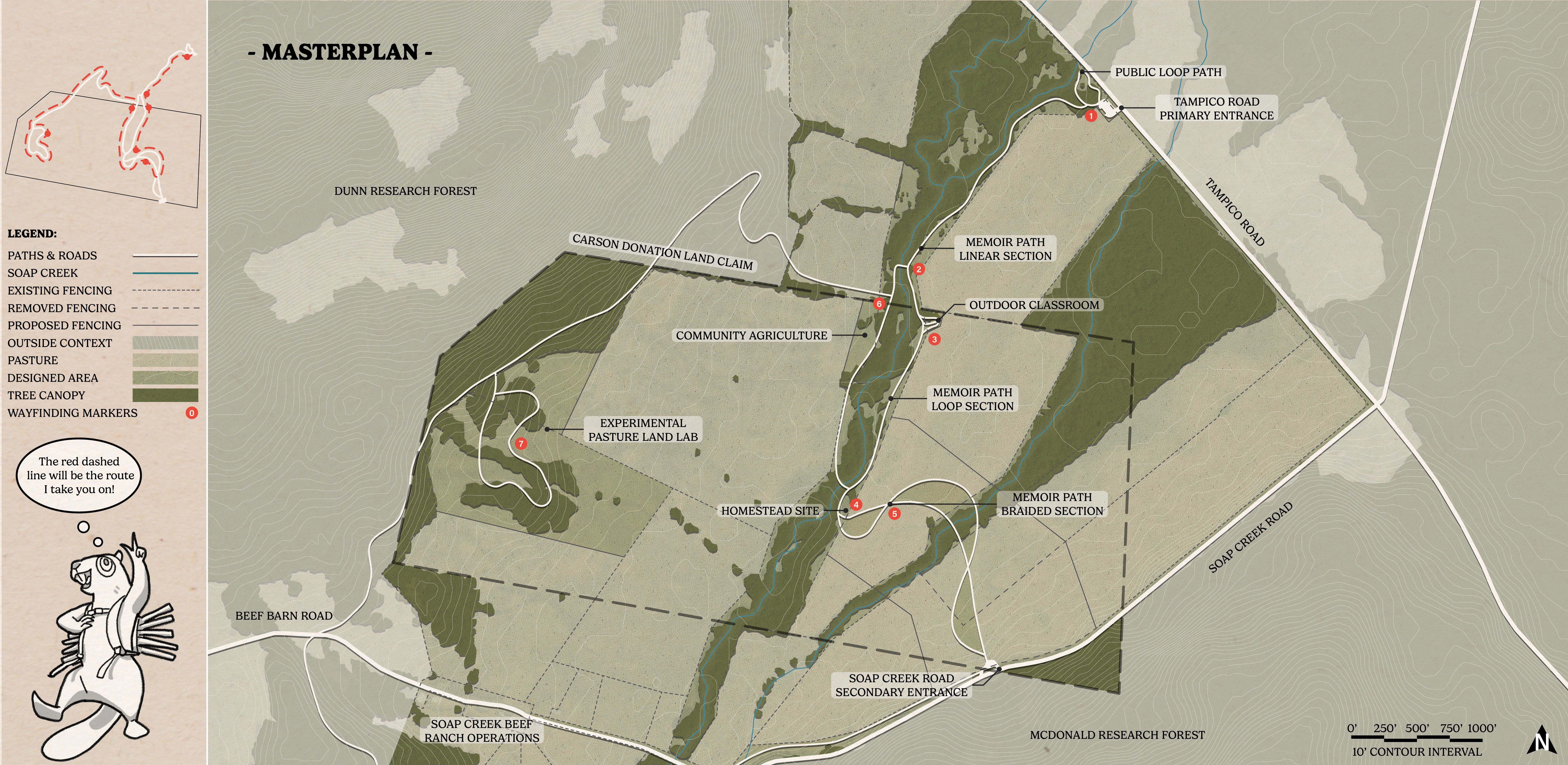
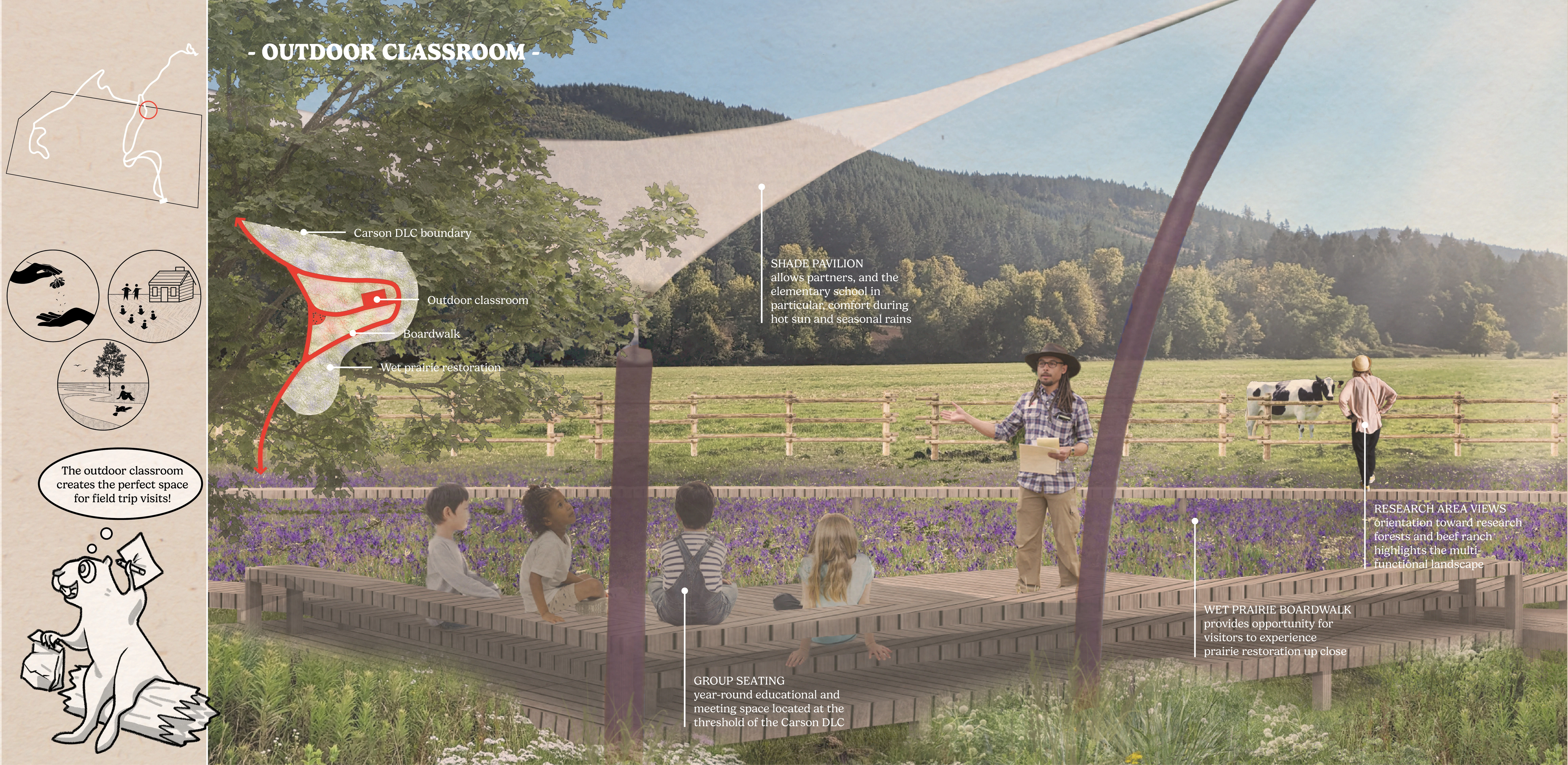
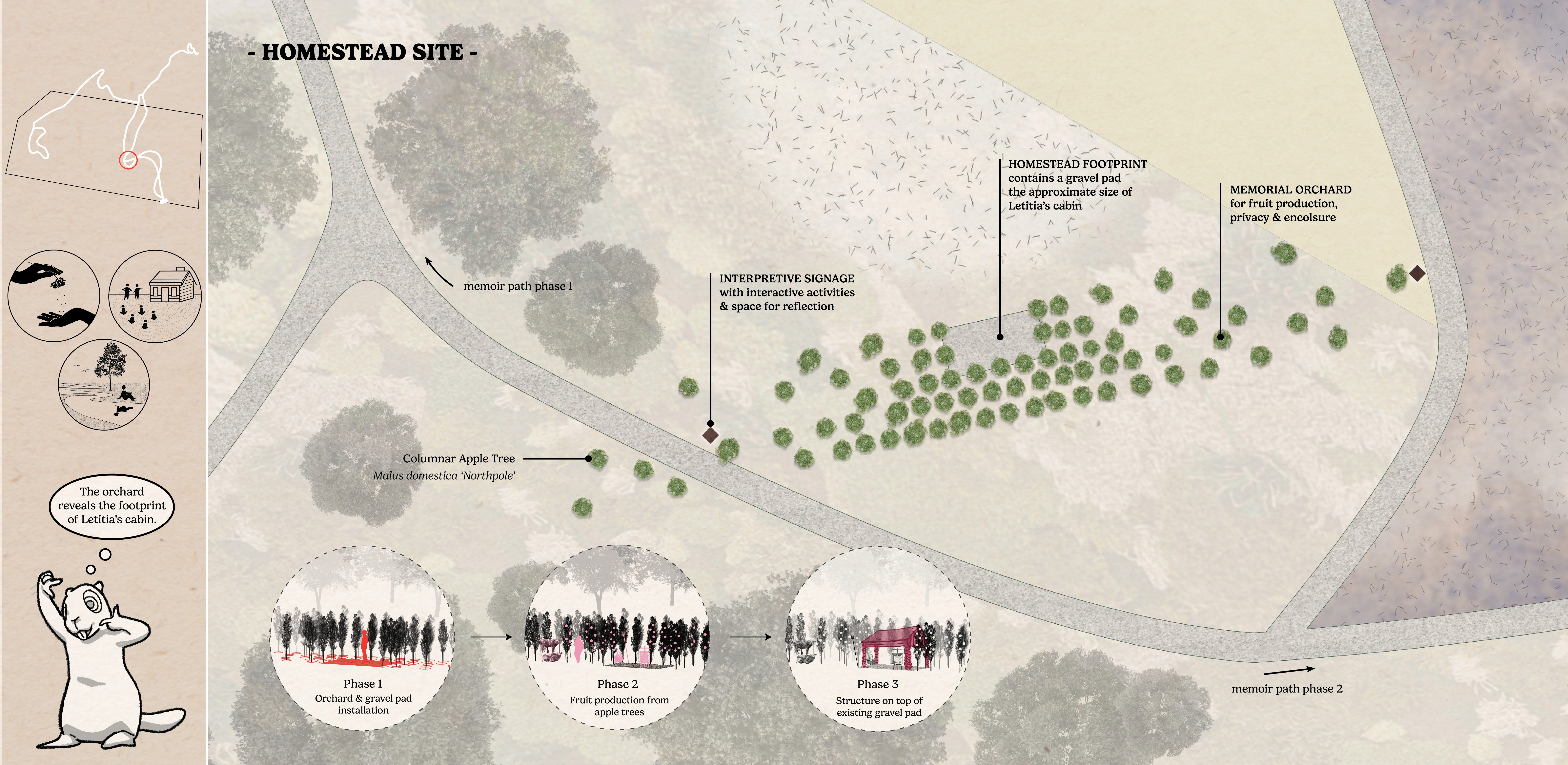
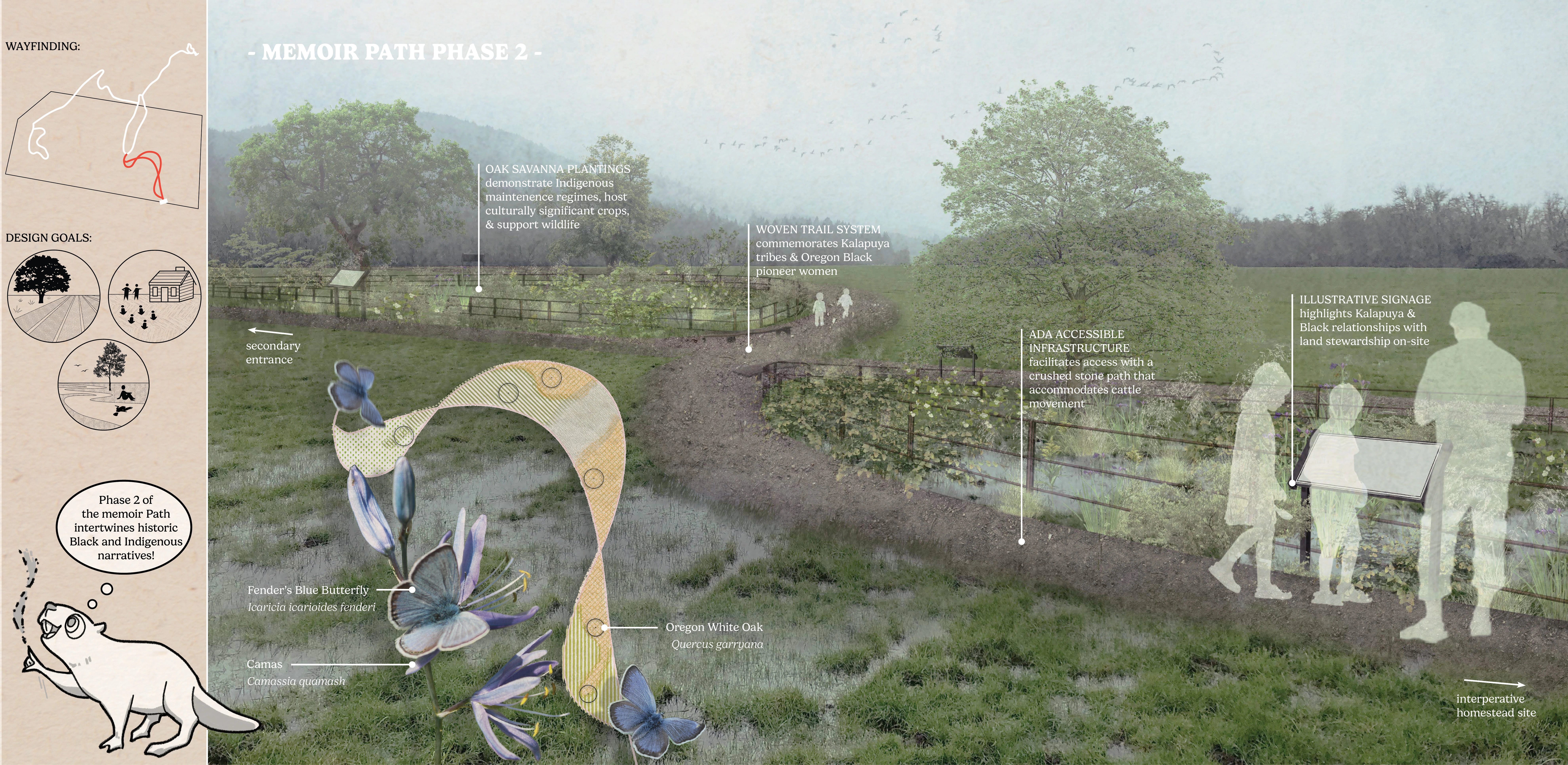
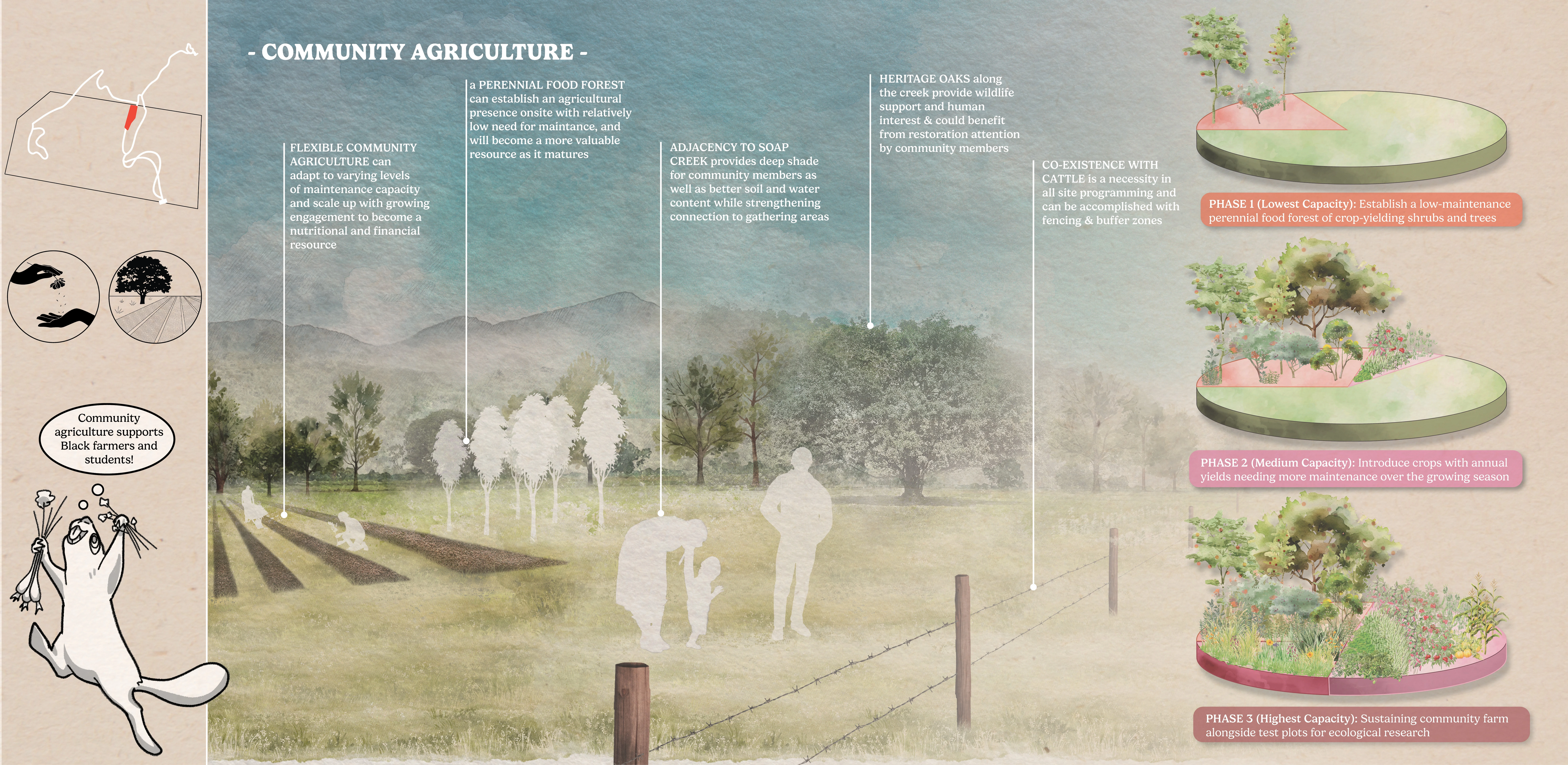
Letitia Carson’s Legacy works to highlight Letitia’s unsung story of resilience and bravery. Design elements reconnect Black and Indigenous communities to the land through education and stewardship and inspire reverence for Letitia’s story through Memoir Trails and an interpretive Homestead Site. The design works within the needs of the existing Beef Ranch, allowing for year-long rotational cattle grazing as currently scheduled. Instead of considering ranch operations as a limitation, this project celebrates current land-use by highlighting Letitia’s identity as a cattle rancher and linking past with present.
Our design proposal seeks to provide opportunities for Black and Indigenous community members, students, and allies to engage with Letitia’s land. This site could be the only place in the rural West for people to learn about Black pioneer history on the same land it happened on. This flexible space aims to provide opportunities for reflection, connect Black and Indigenous community members across generations, and raise awareness about Letitia’s story through place-based historical education.
Since the completion of our design proposals, the Legacy Project has received approval from university administrators to begin work on Phase 1 of the project. The first annual Letitia Carson Symposium was held on the site in May 2024 to unveil this new design vision and celebrate the future of Letitia Carson’s legacy.
-
- Lauren Gwin - Associate Professor, Oregon State University, Letitia Carson Legacy Project
- Larry Landis - Director of Special Collections & Archives, Oregon State University, Letitia Carson Legacy Project
- Charlotte Epps - Oregon State University, Letitia Carson Legacy Project
- Tyler White - Harvard University Graduate School of Design, Letitia Carson Legacy Project
- Zachary Stocks - Oregon Black Pioneers, Letitia Carson Legacy Project
- Black Oregon Land Trust - Black Oregon Land Trust, Letitia Carson Legacy Project
- NAACP Linn Benton Branch - NAACP Linn Benton Branch, Letitia Carson Legacy Project
- Mudbone Grown - Mudbone Grown, Letitia Carson Legacy Project
- Letitia Carson Elementary School - Students & Teachers, Letitia Carson Elementary School
- Soap Creek Beef Ranch - Oregon State University Research Beef Ranch
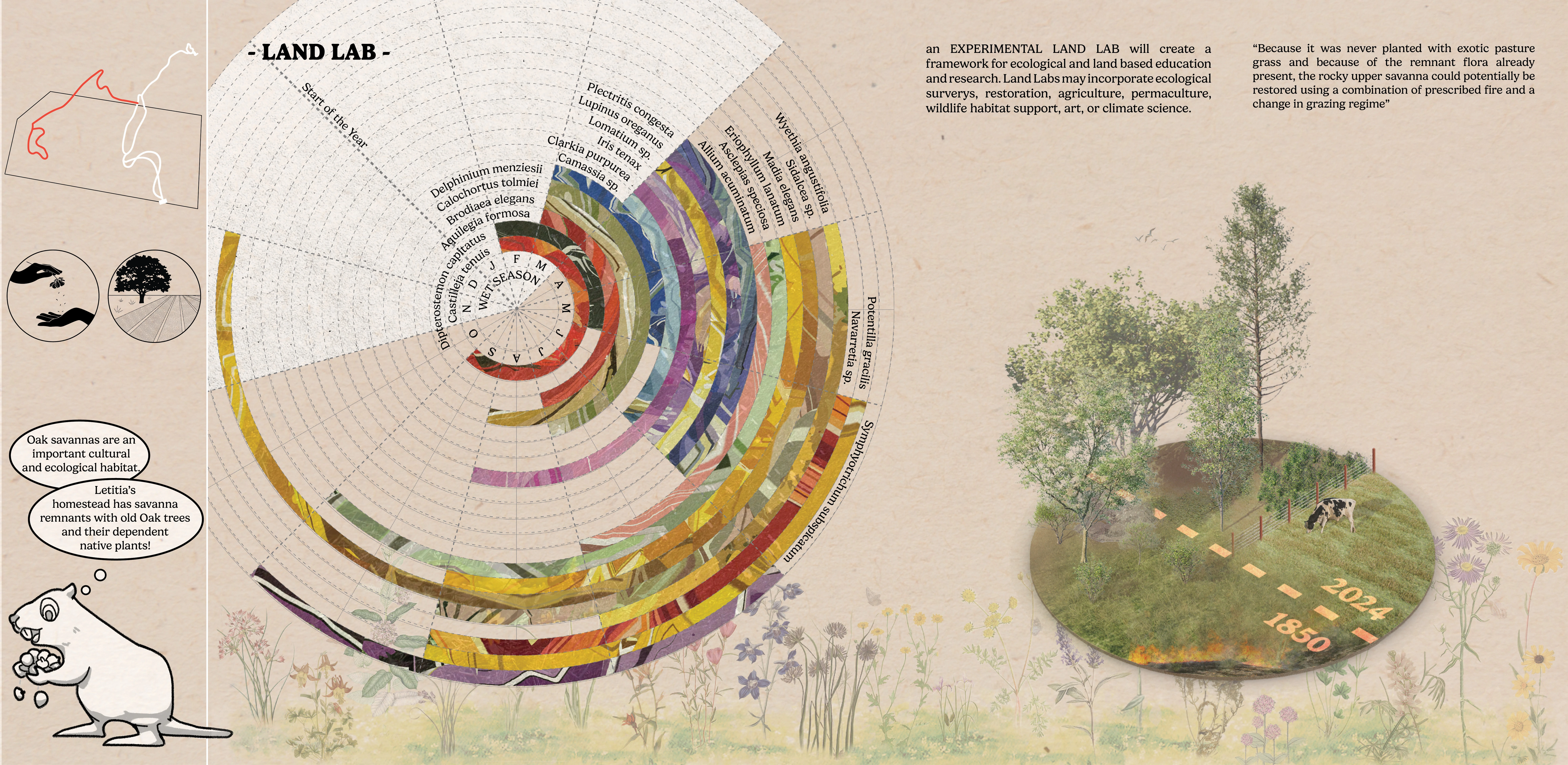
- Camassia quamash - Solidago canadensis ssp. elongata
- Dichelostemma congesta - Allium acuminatum
- Wyethia angustifolia - Grindella integrifolia
- Lupinus sulpherus ssp. kincaidii - Lomatium spp.
- Delphinium leucophaeum - Aquilegia formosa
- Prunella vulgaris - Madia elegans
- Sidalcea campestris - Festuca idahoensis
- Koeleria macrantha - Pseudoroegneria spicata
- Asclepias speciosa - Brodiaea elegans
- Calochortus tolmiei - Castilleja tenuis
- Clarkia purpurea - Sambucus cerulea
- Deschampsia caespitosa - Quercus garryana
- Malus domesticus - Alnus rhombifolia
-
- Camassia quamash
- Solidago canadensis ssp. elongata
- Dichelostemma congesta
- Allium acuminatum
- Wyethia angustifolia
- Grindella integrifolia
- Lupinus sulpherus ssp. kincaidii
- Lomatium spp.
- Delphinium leucophaeum
- Aquilegia formosa
- Prunella vulgaris
- Madia elegans
- Sidalcea campestris
- Festuca idahoensis
- Koeleria macrantha
- Pseudoroegneria spicata
- Asclepias speciosa
- Brodiaea elegans
- Calochortus tolmiei
- Castilleja tenuis
- Clarkia purpurea
- Sambucus cerulea
- Deschampsia caespitosa
- Quercus garryana
- Malus domesticus
- Alnus rhombifolia
Advertisement
Related Awards
Award of Excellence, Student Community Service
Labores y Diseños
Location: Fort Collins, CO
Students: Lilliana Lopez, Bianca Ruiz Chavez; Louise Halaburt, Student ASLA
Faculty Advisor(s): Lindsay Burnette, ASLA
School: Colorado State University (BSLA)
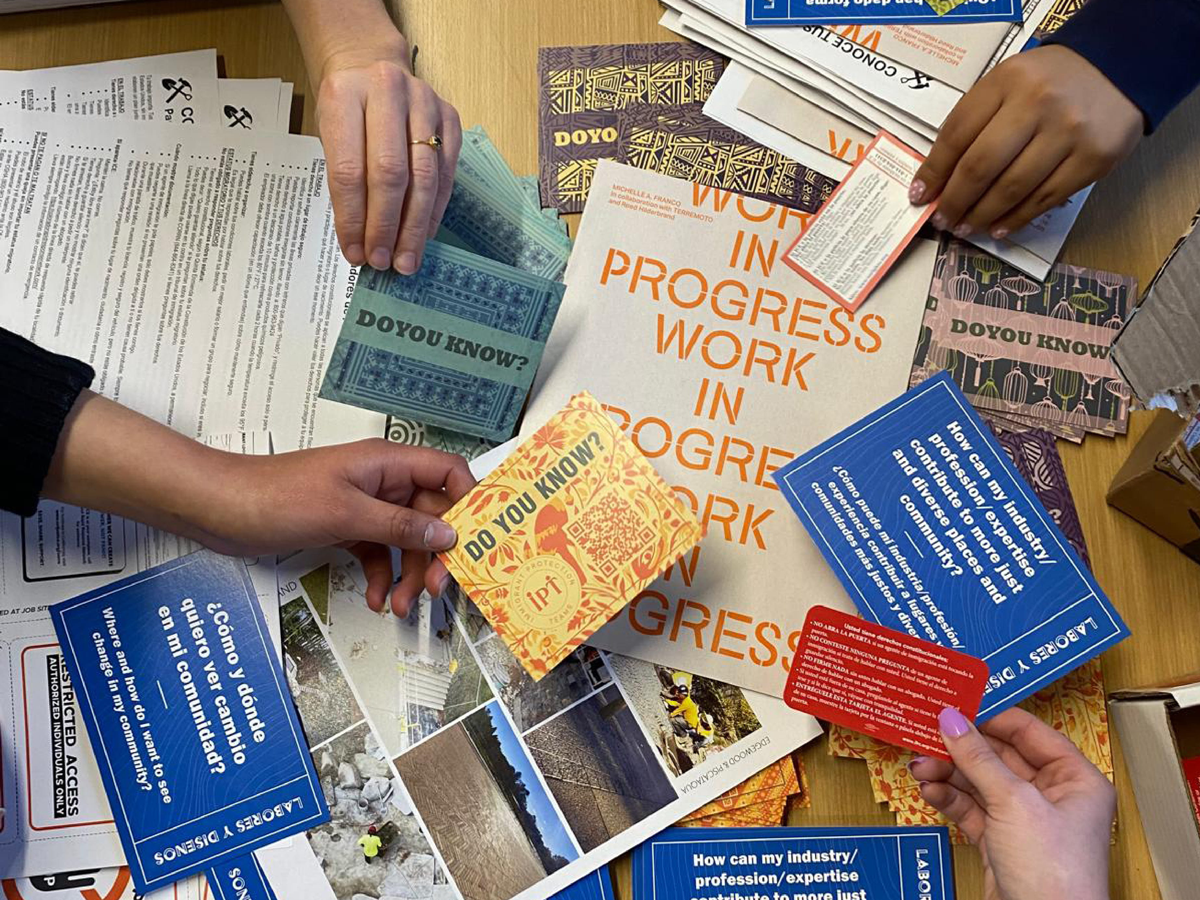
Student-organized pro bono community initiative in partnership with a local immigrant rights organization to honor immigrant labor in the landscape architecture profession. The program included a film screening and an interdisciplinary panel with leaders in landscape architecture, landscape contracting, and construction, creating space for dialogue on ethical labor practices, recognition, and care for immigrant workers. The team raised $7,000 to fund the event, support invited speakers, provide meals for attendees, and donate surplus funds to the community partner.
Related Articles

ASLA Fund
American Society of Landscape Architects Announces its 2026 Student Awards
39 Student Award winners elevate the future of the landscape architecture profession
Aug 24 2026