
.webp?language=en-US)

.webp?language=en-US)
Rooted Together: Where campus and community find common ground
Sieun Oh, Student Intl ASLA; Nakyung Kim, Student Intl ASLA; Jiu Kim, Student Intl ASLA

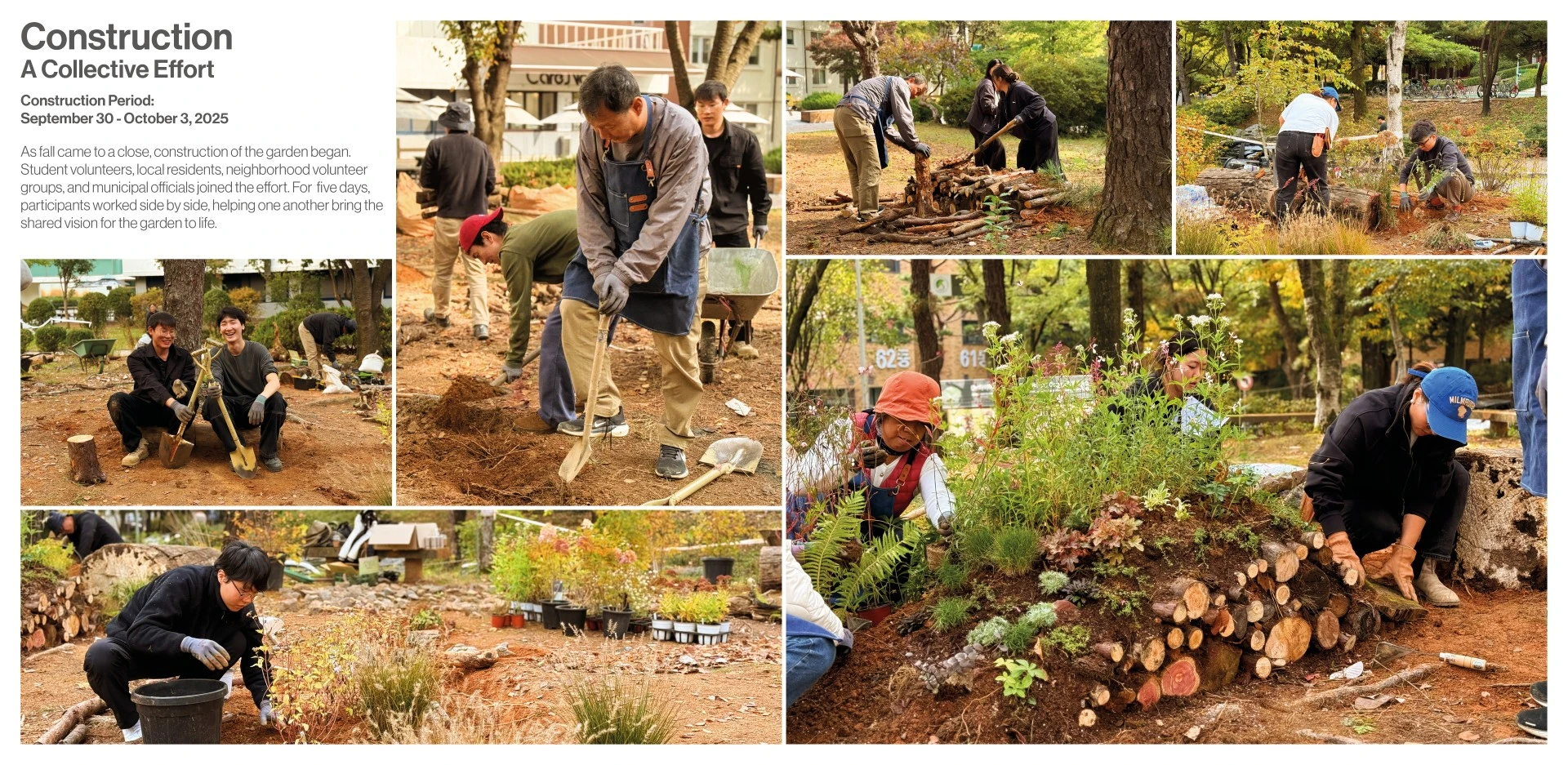

Effective and impactful service. A clear value to other communities, students, and professionals. Process photos clearly display the effective efforts of many.
Awards Jury
-
This project transforms an underused campus green space into common ground within Yuljeon-dong's dense campus town. Through co-design, collaborative construction, the reuse of campus materials, and community events, residents, students, university staff, municipal officials, and volunteers collectively reactivated the site as a community garden for rest, social connection, and shared stewardship. By opening an overlooked campus space to everyday community use, the project demonstrates how small-scale, participatory landscape interventions can strengthen relationships between a university and its surrounding neighborhood while fostering a more inclusive and resilient local community.
-
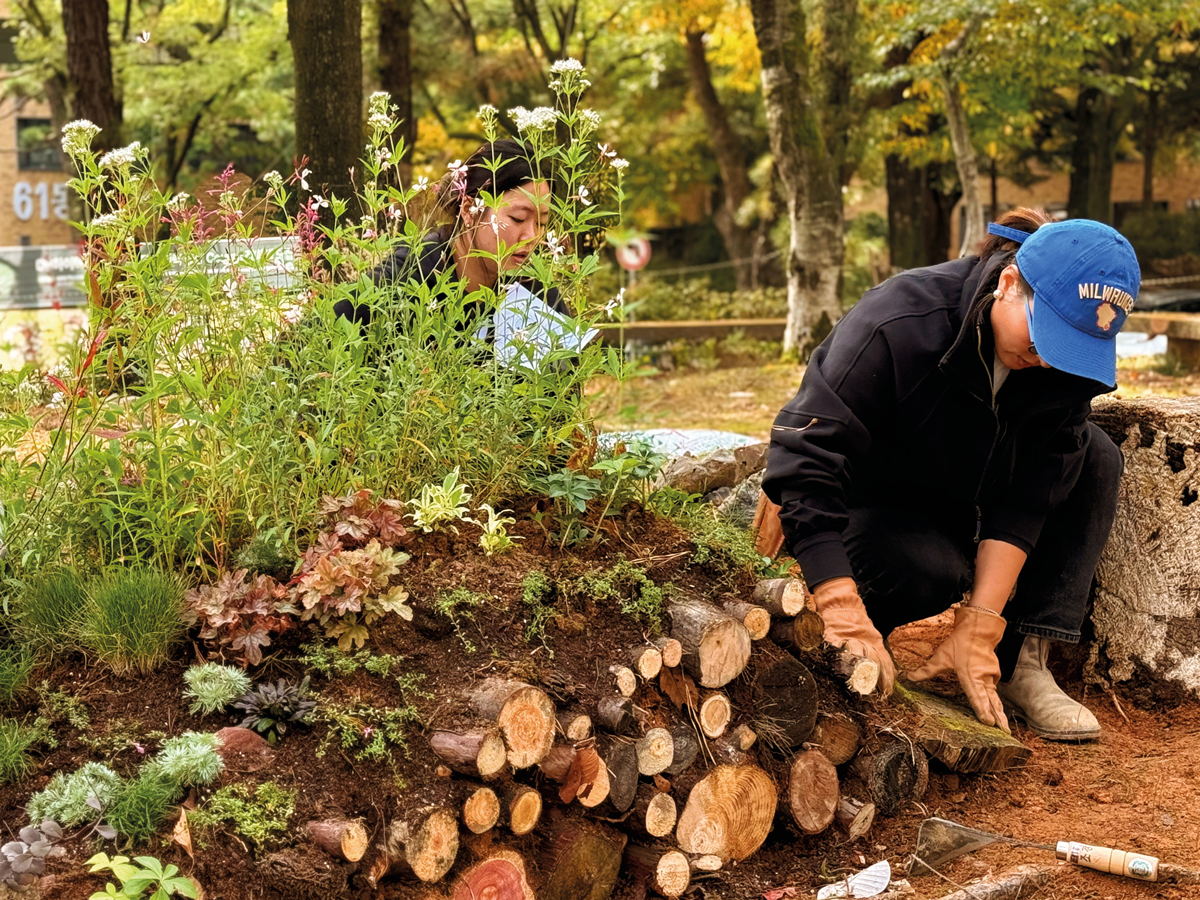
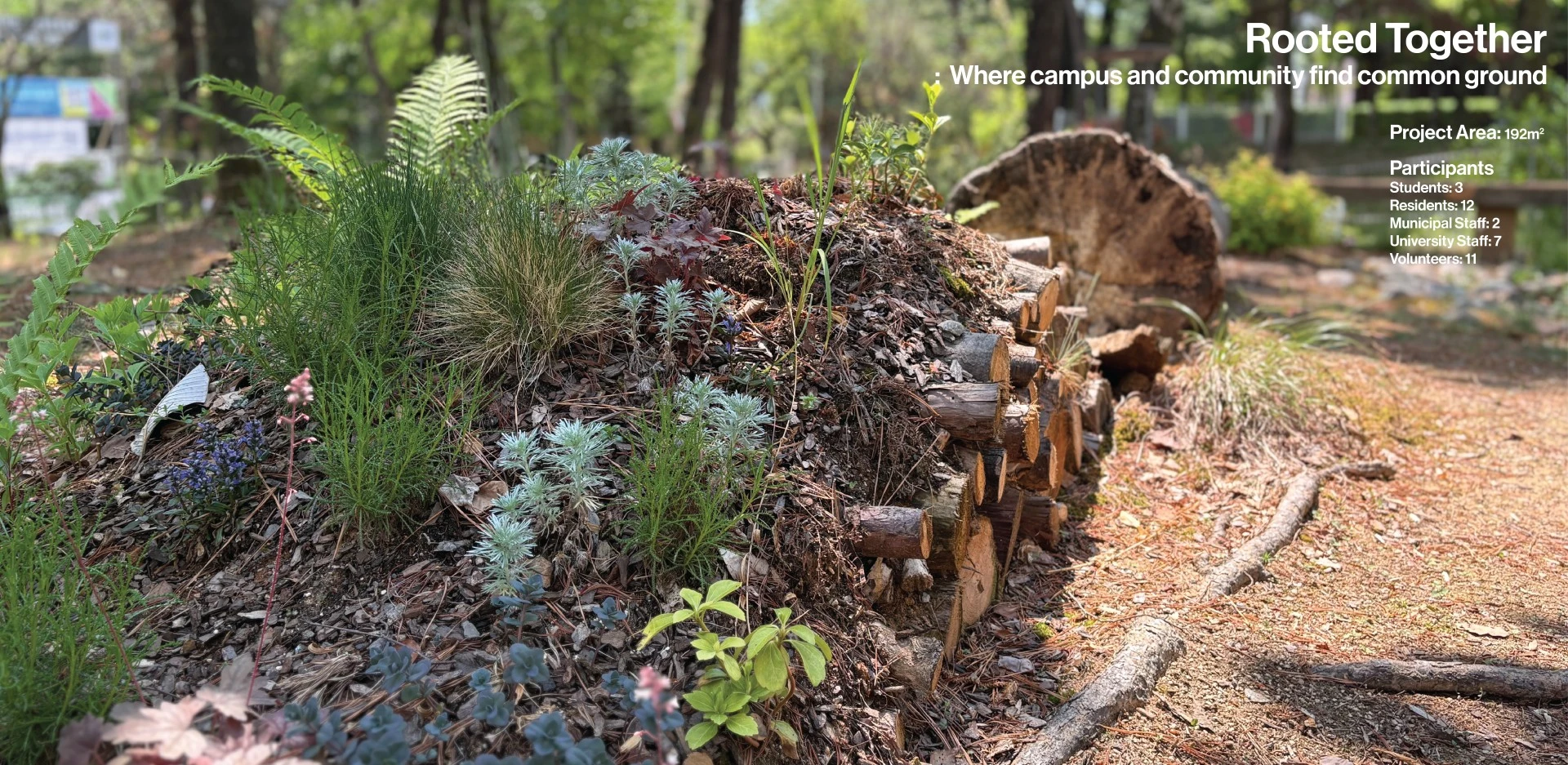
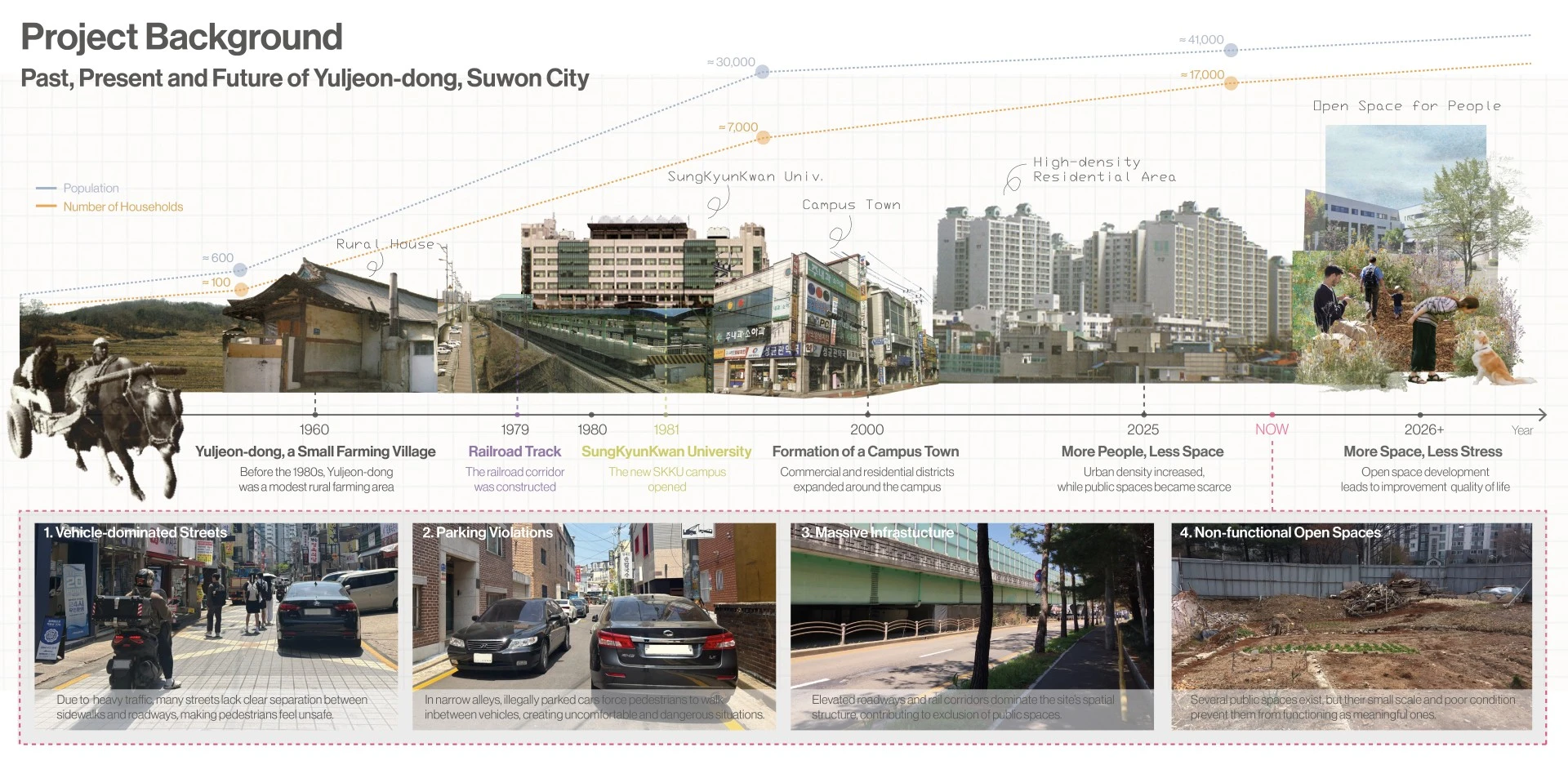
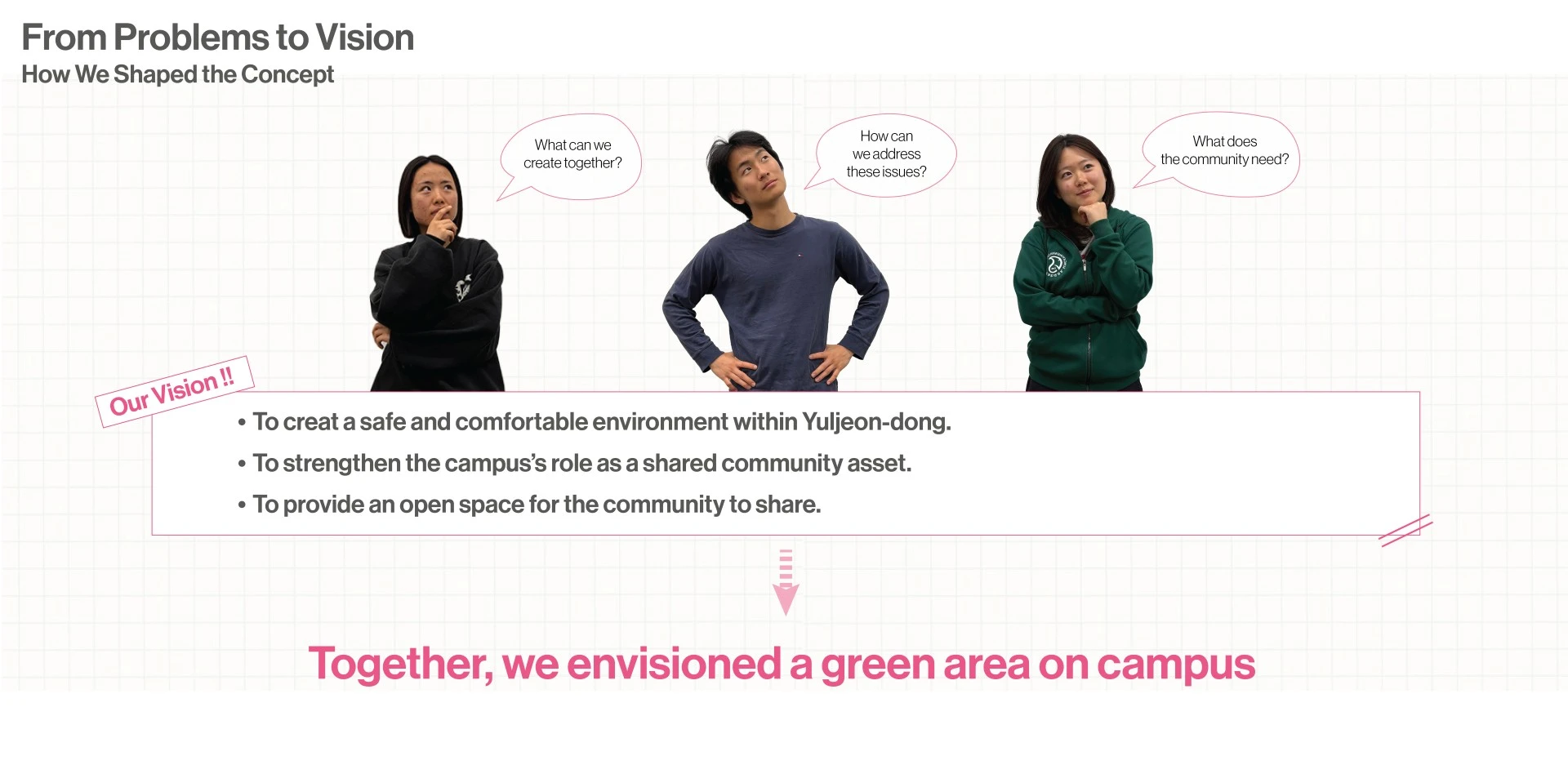
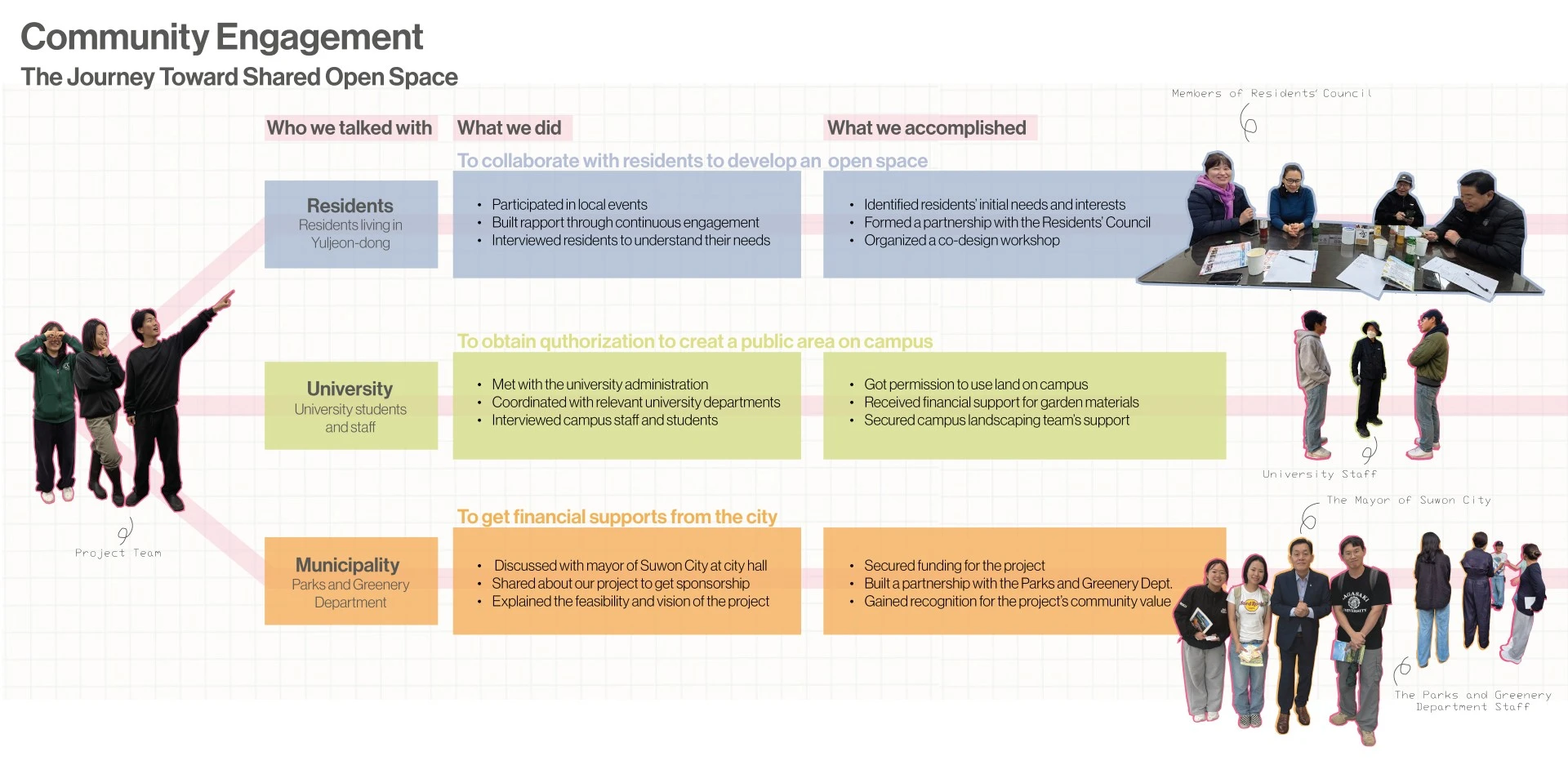
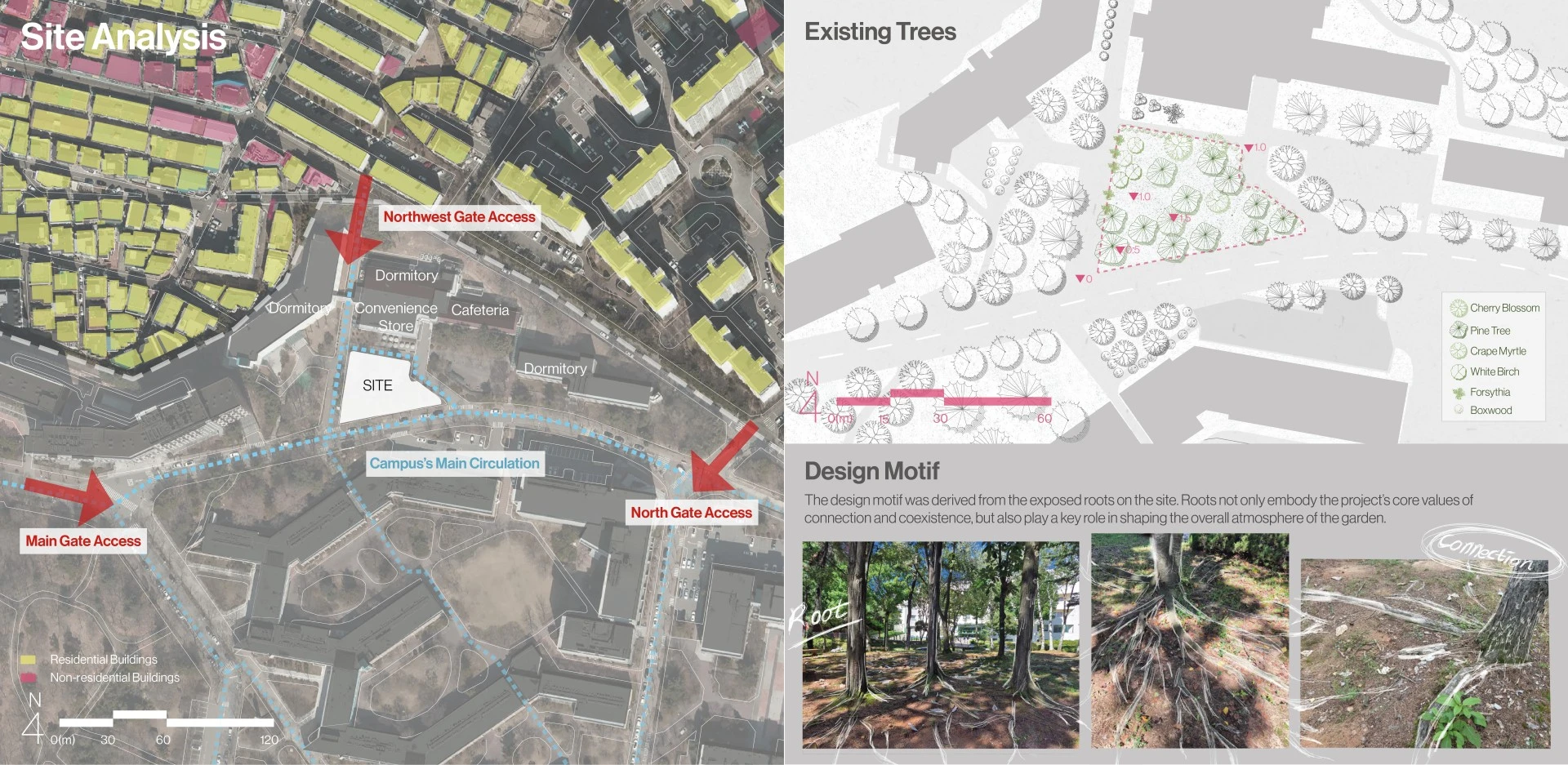
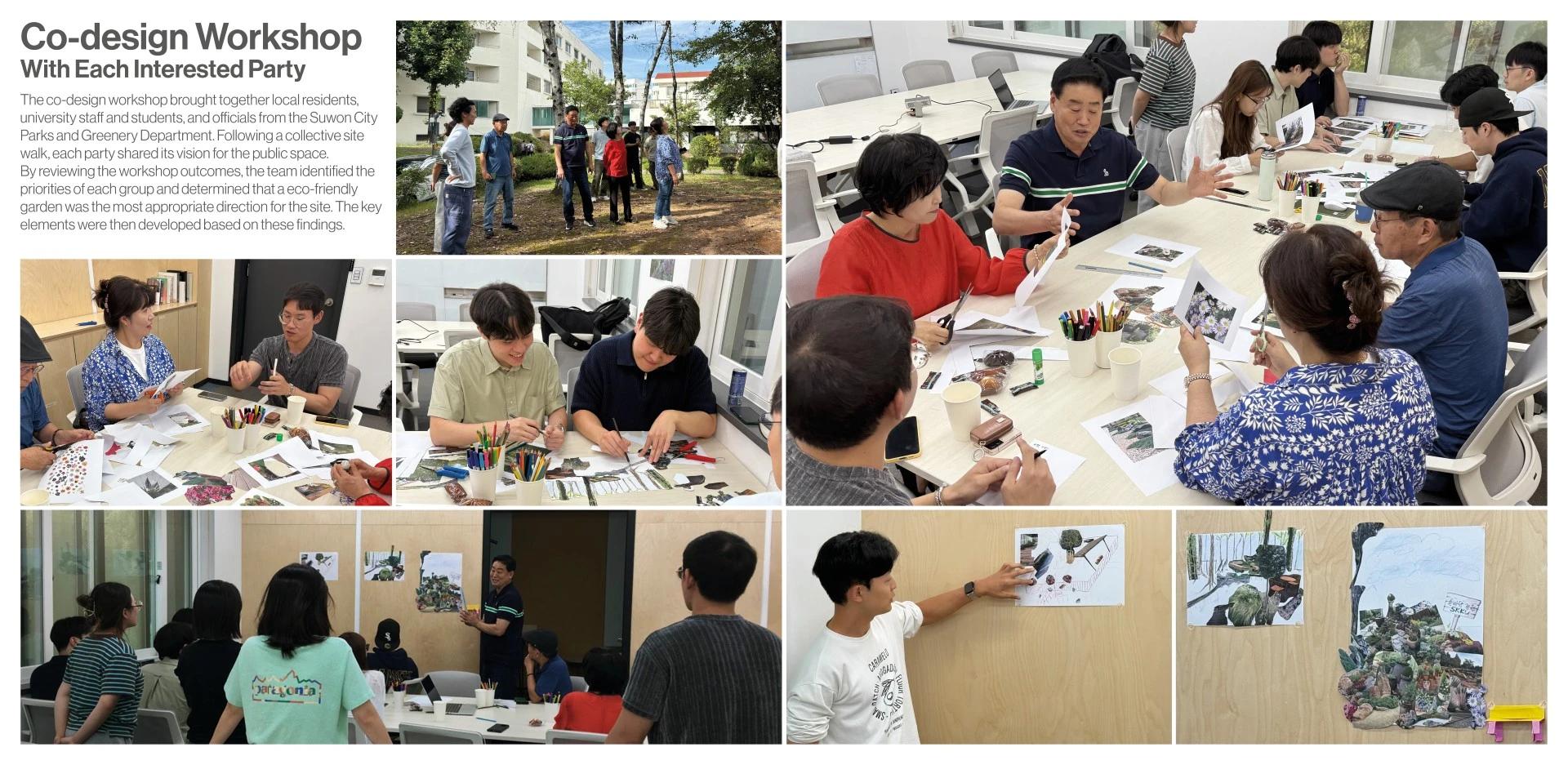
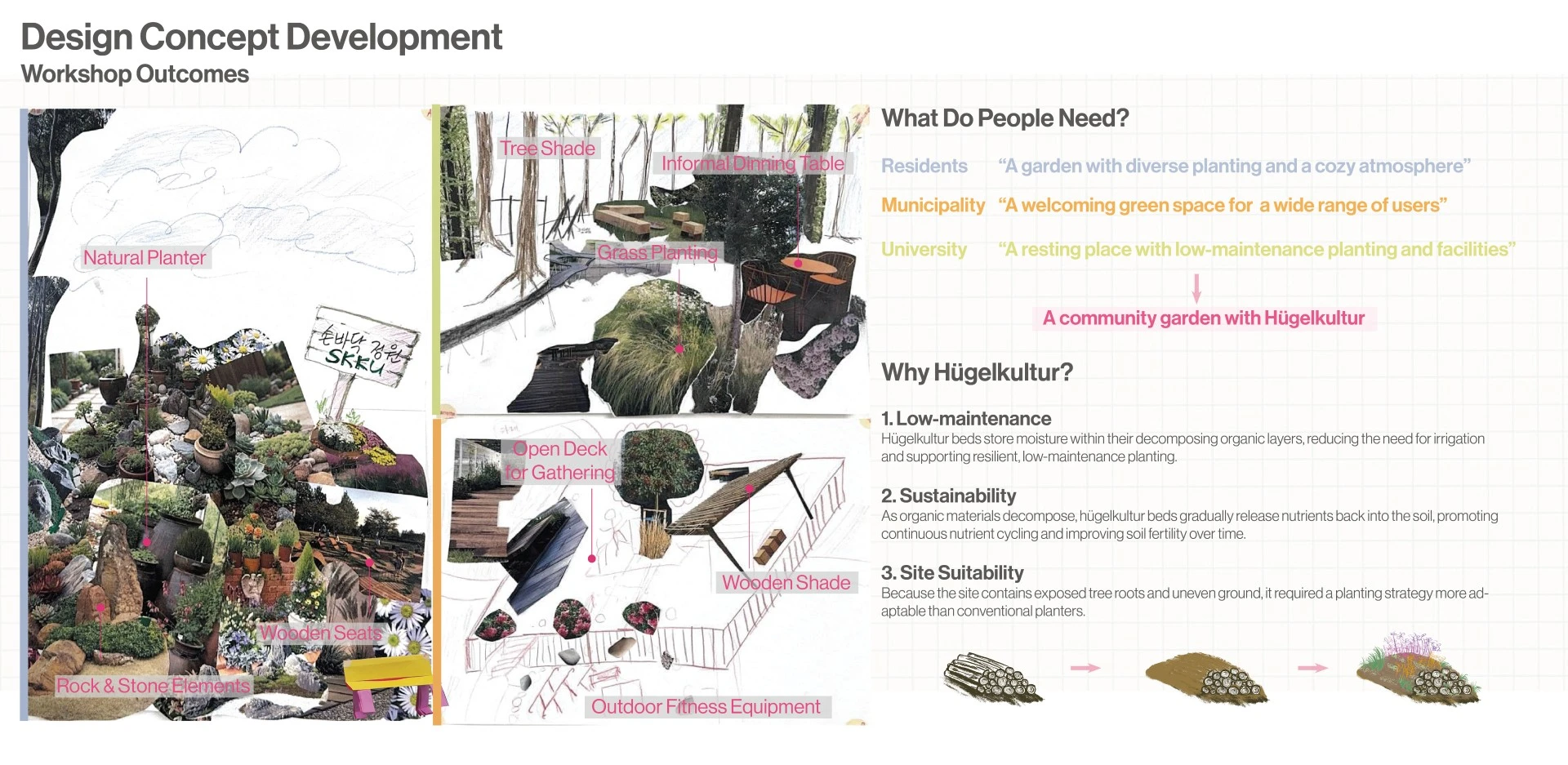
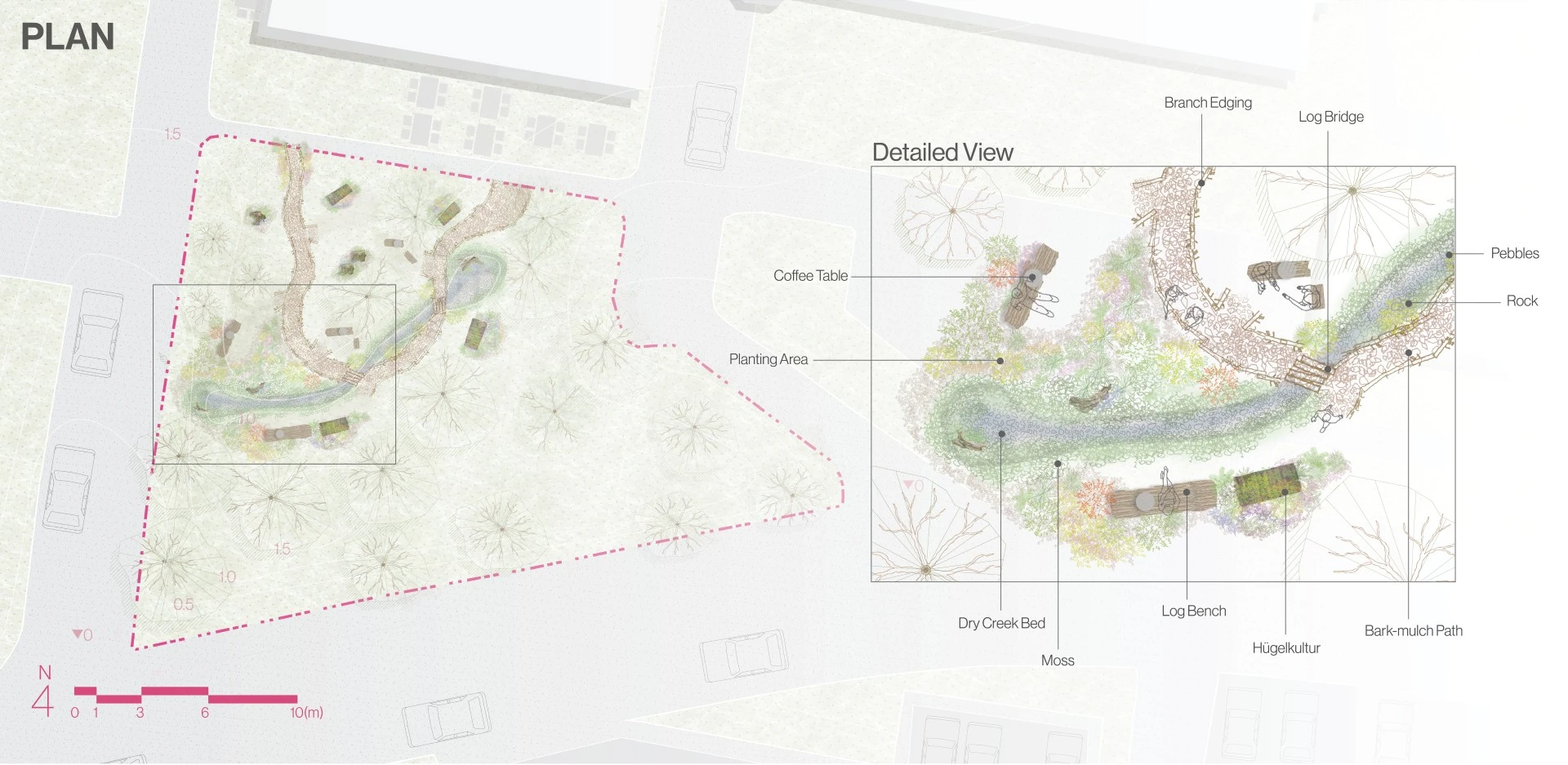
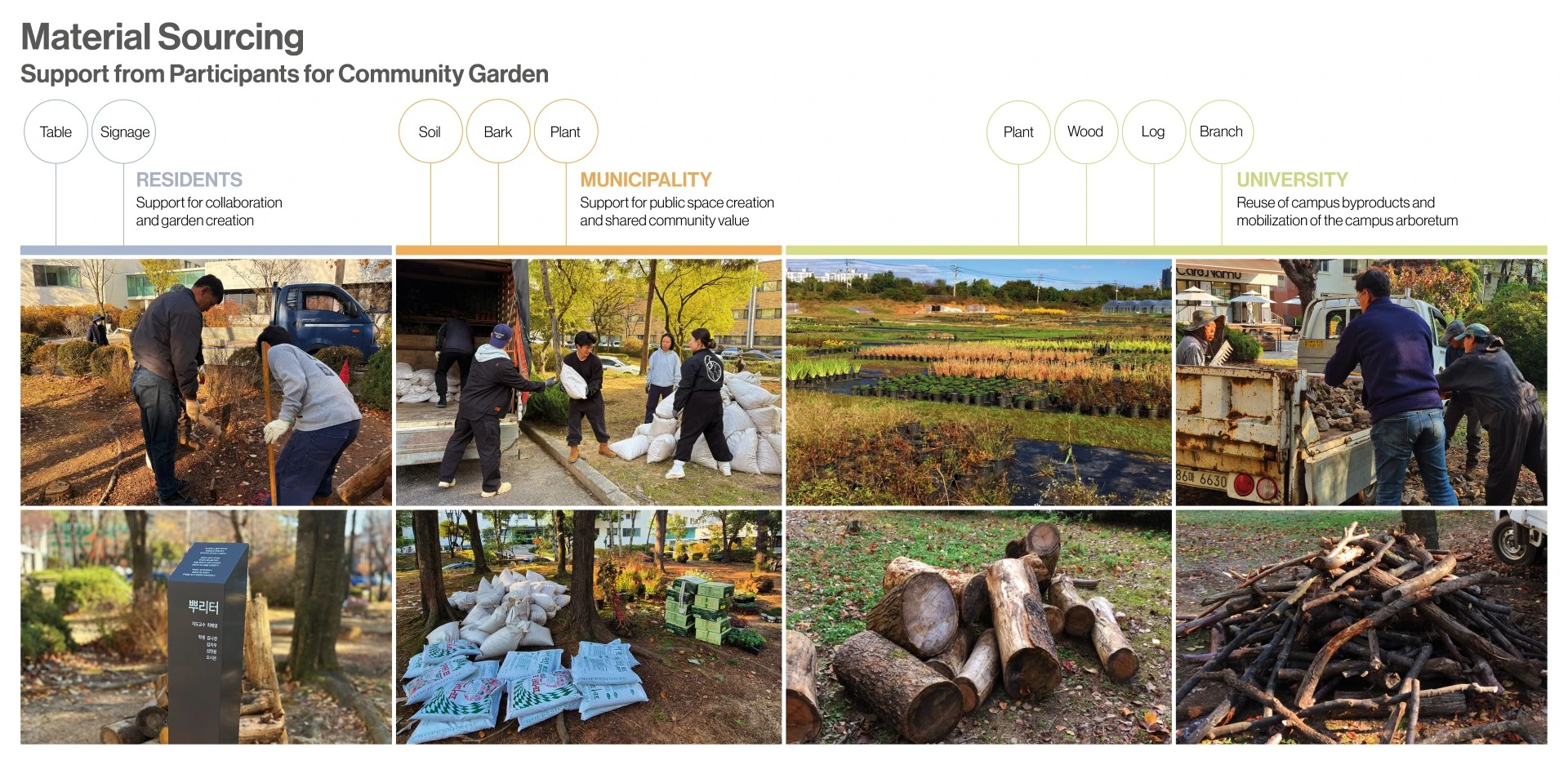
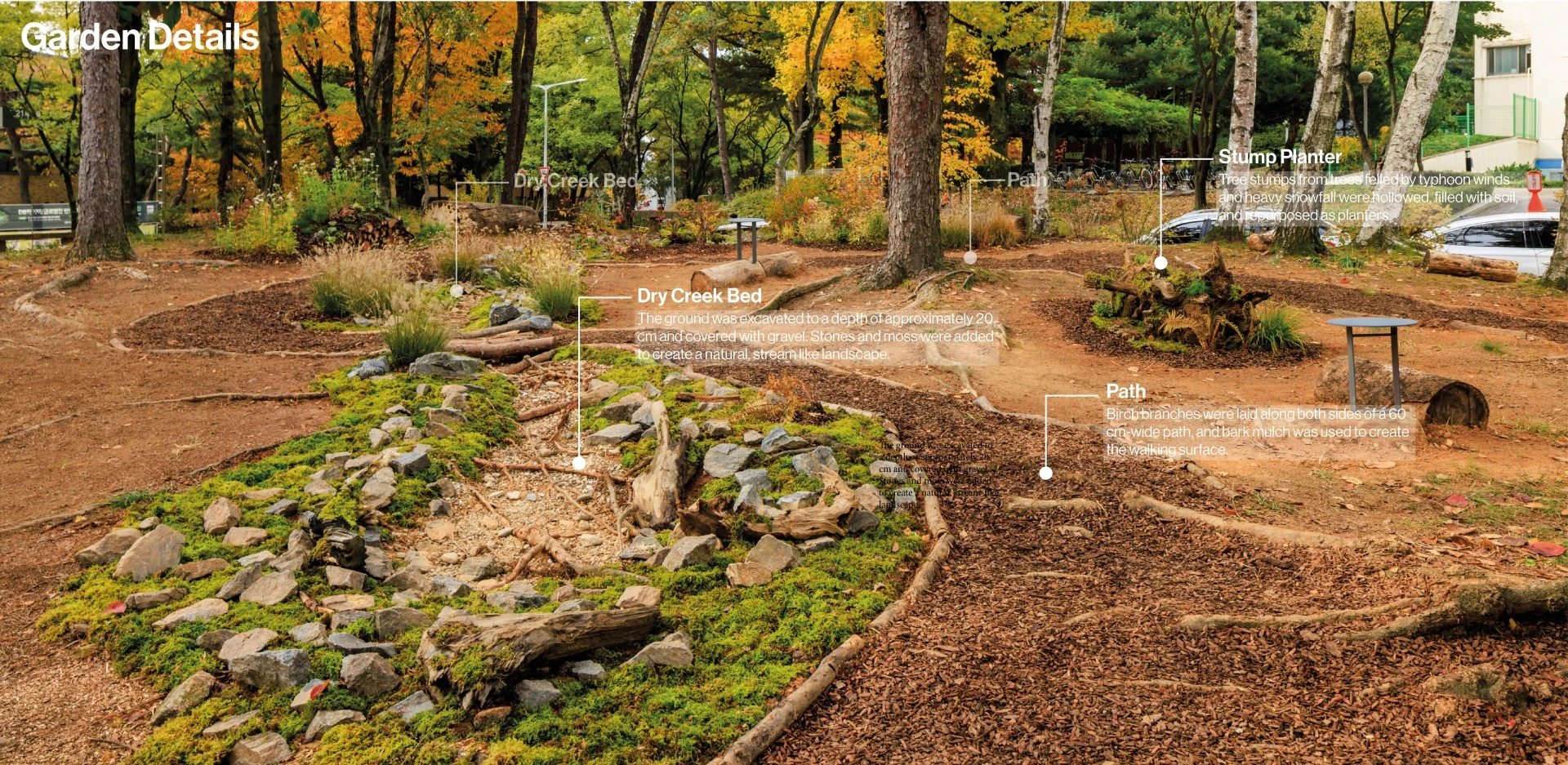
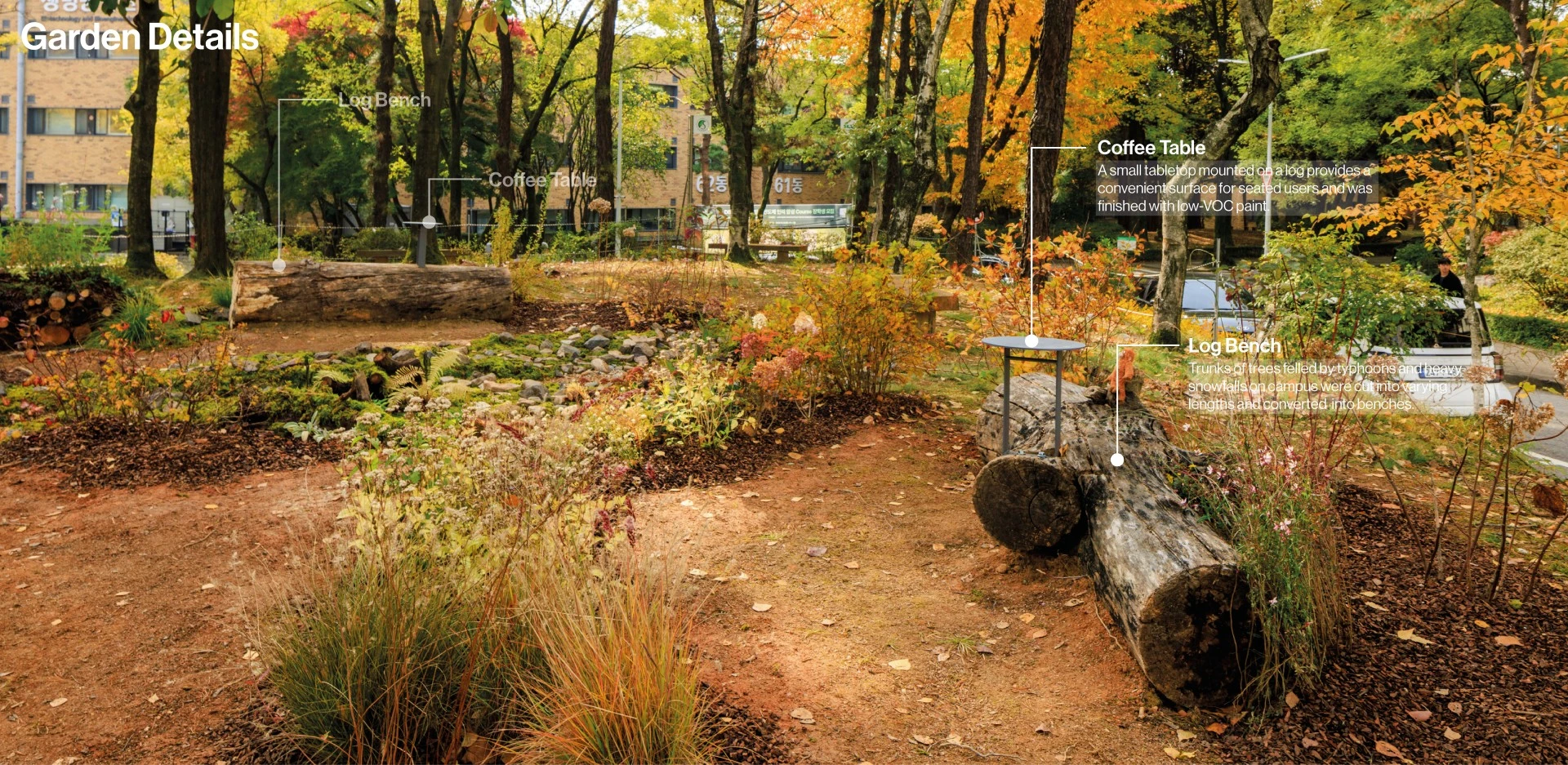
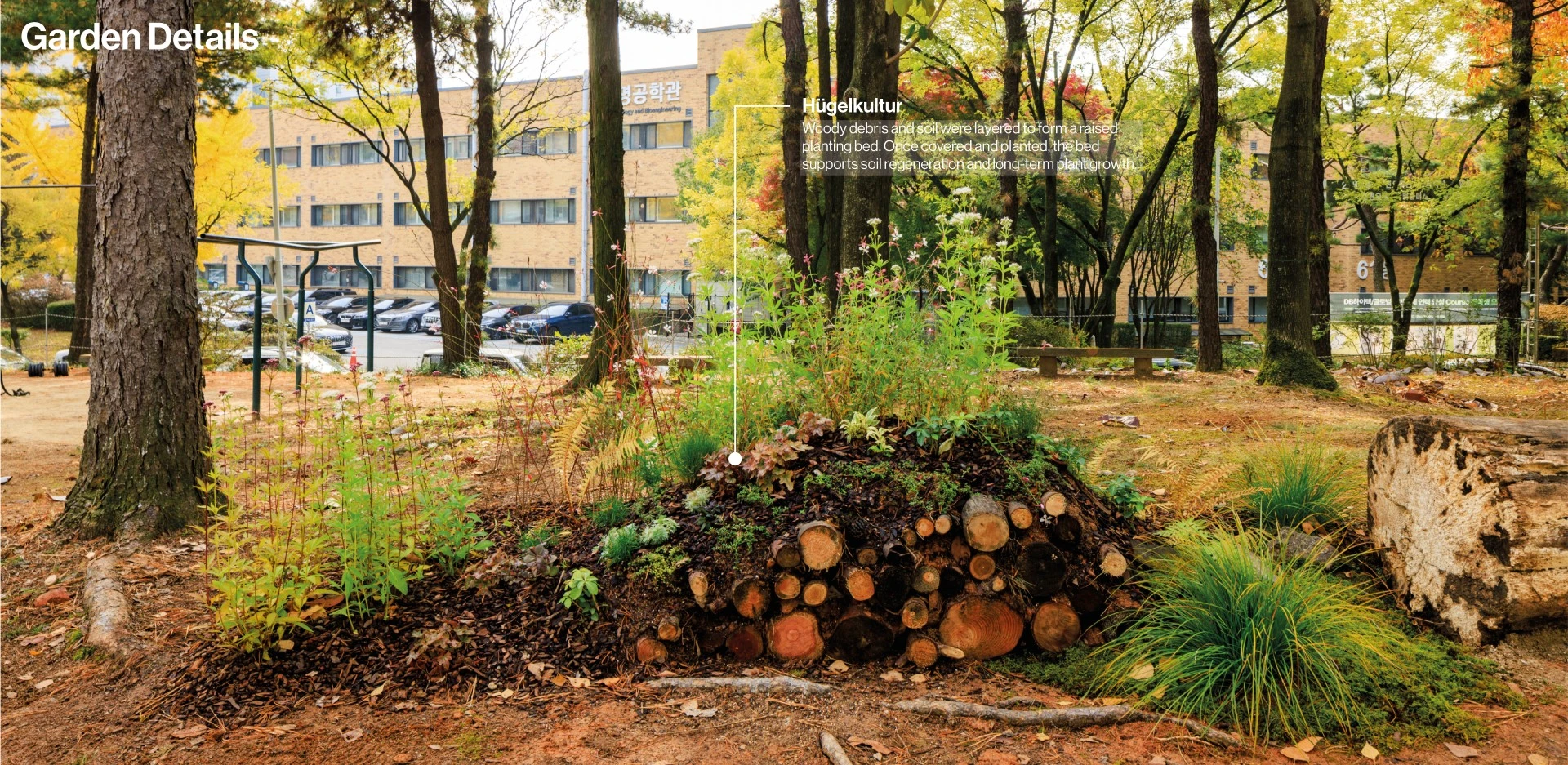
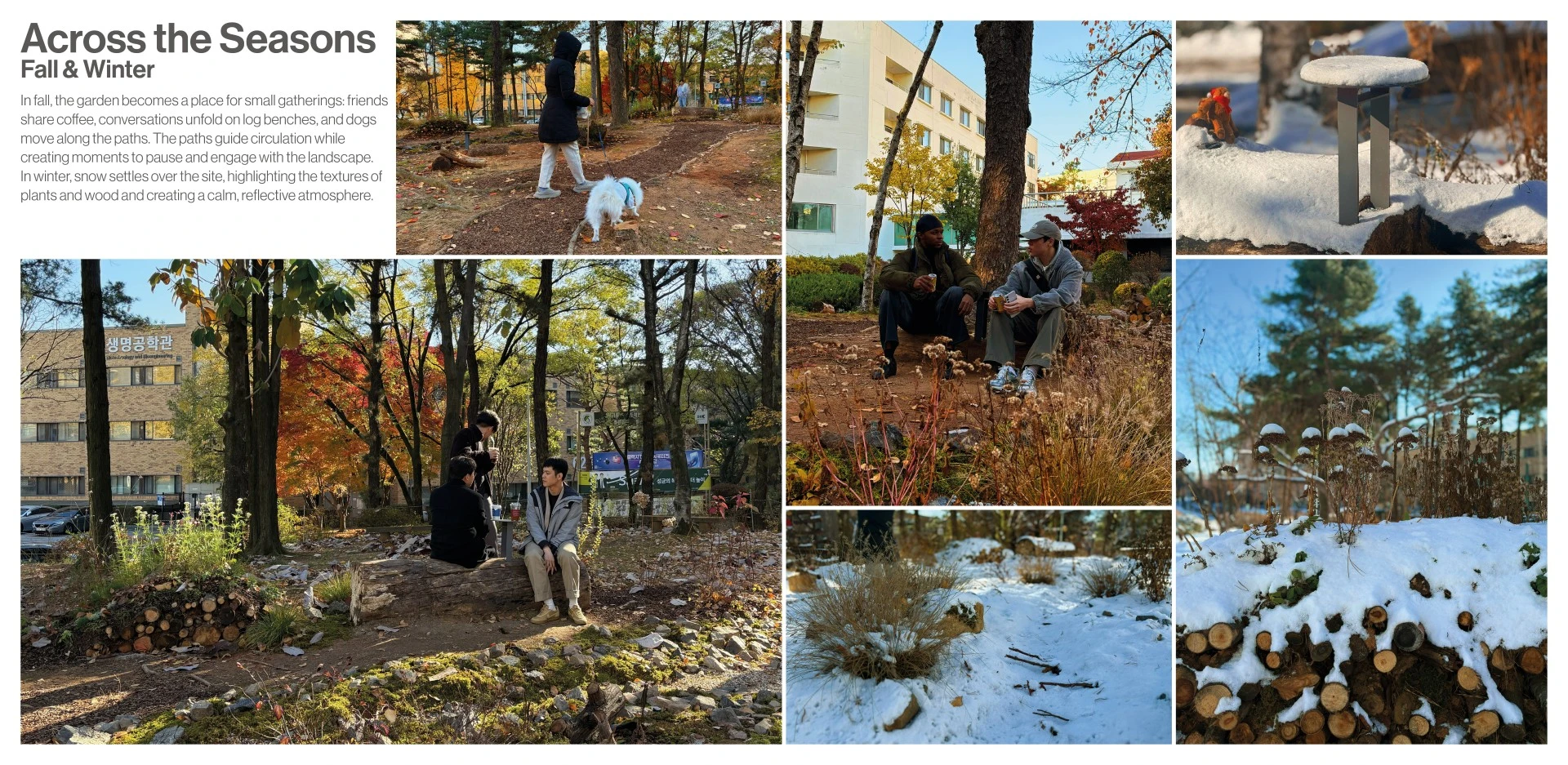
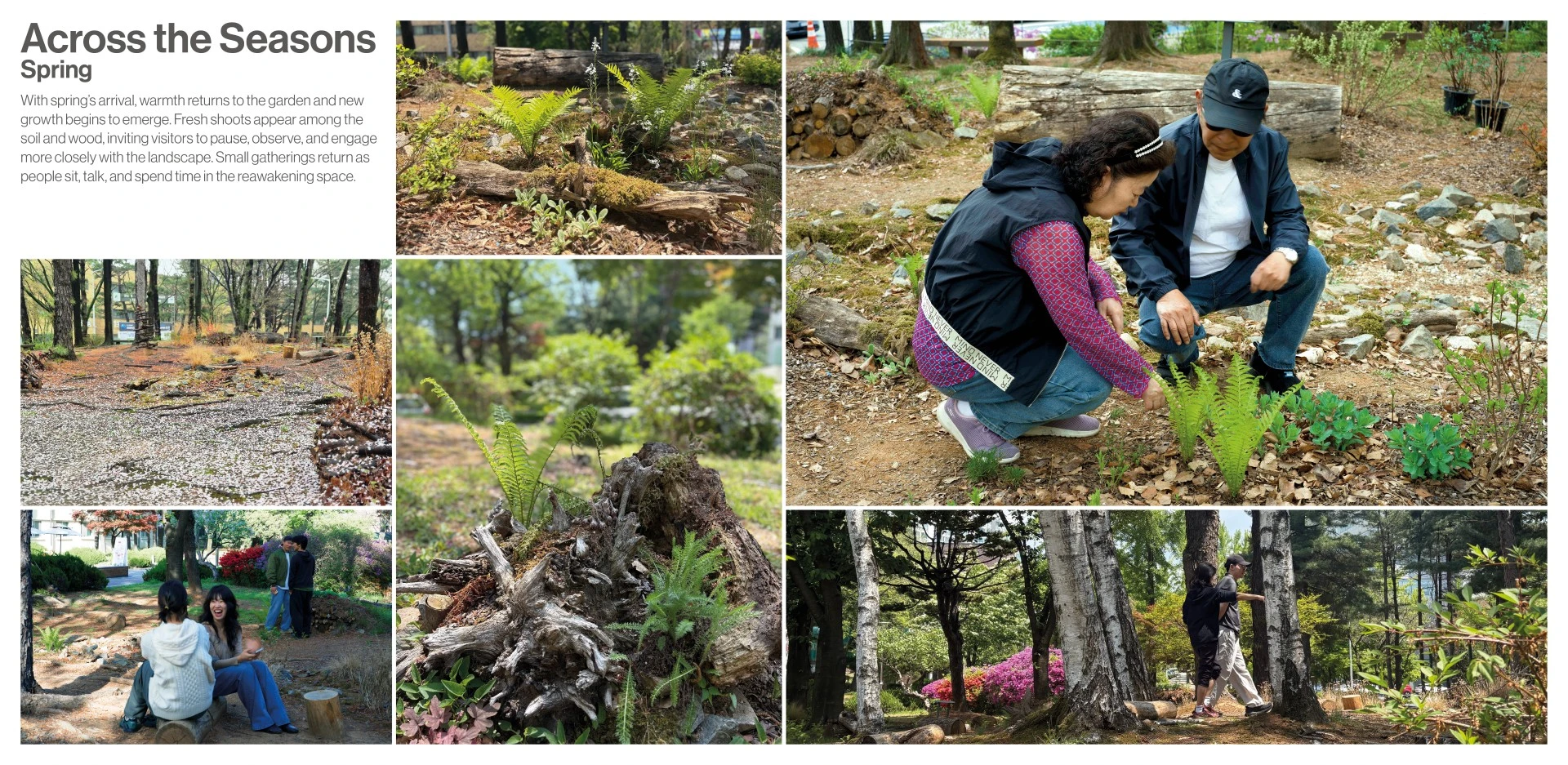
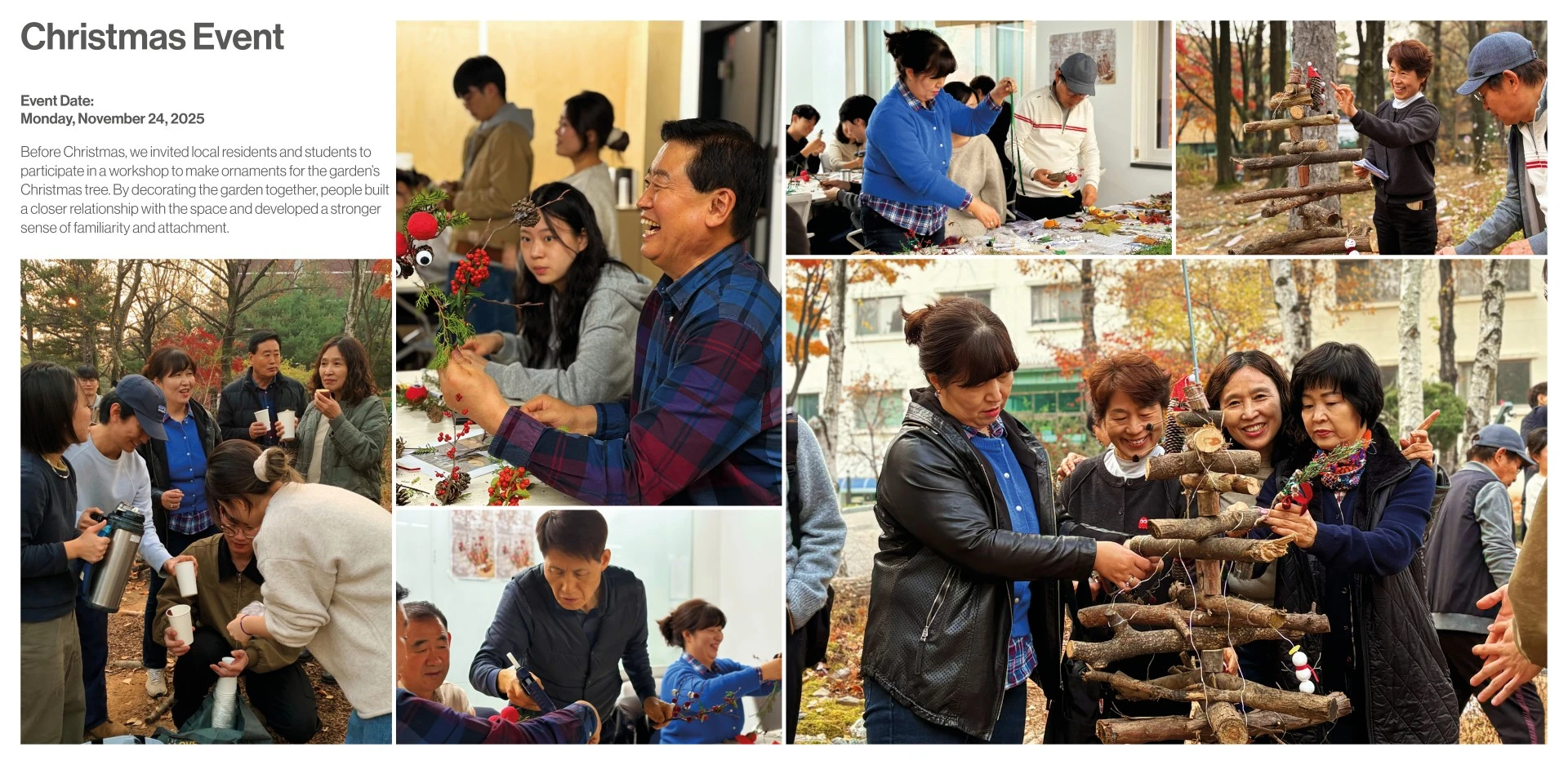
This project transforms an underused campus green space in Yuljeon-dong, a dense campus town in Suwon city, South Korea, into a shared community garden. More than an open-space improvement, the project uses listening, co-design, material reuse, and collaborative construction to reconnect a campus landscape with the everyday life of its surrounding neighborhood. Yuljeon-dong was once a small agricultural village. With the construction of a railway corridor and the growth of a large university campus, the area rapidly urbanized into a campus town where students, residents, and local businesses now coexist. Yet commercial expansion, heavy traffic, illegal parking, and car-oriented streets have gradually displaced the informal places where residents can gather, rest, and spend time outdoors. The neighborhood has been shaped around movement and access rather than comfort and community well-being. Through walking and observing firsthand, the team recognized a dense urban fabric where housing, commerce, mobility, and student life overlap, while accessible public places remain scarce. In this context, the campus emerged as a civic asset rather than a fixed institutional boundary. Its remaining open spaces offered common ground where people could pause. Opening campus space required coordination and collaboration. The team worked with university offices to secure site permission and material support, joined local community events to understand residents' needs, and met with municipal representatives and the Parks and Greenery Department to present the value of space connecting the campus and neighborhood. These conversations led to partnerships with the Residents' Council, university staff, municipal officials, and a city garden-building volunteer group. This collaborative foundation led to a co-design workshop where residents, university staff and students, and municipal officials defined the project's direction together. Through collage exercises, residents imagined a cozy garden with diverse planting, the municipality envisioned a welcoming green space, and the university emphasized low-maintenance planting and facilities. The community garden emerged as a place to rest, stay, cultivate, and build relationships through shared care. The design translates these shared needs into a low-maintenance community garden with places to sit, gather, and care for plants. Hügelkultur planting beds respond to uneven ground and exposed roots while returning campus materials to the garden. Reused logs become benches, branches define paths, bark mulch creates a soft walking surface, and tree stumps become planters. Material choices and support from residents, the municipality, and the university make the garden a visible record of collective contribution. During construction, the shared sense of community and ownership became visible. Participants worked side by side, placing stones, planting vegetation, building paths, and assembling garden elements. In doing so, they created new relationships with the garden. The project continues beyond construction through seasonal use. Plants grow, the atmosphere shifts, and people occupy the area in different ways. A Christmas event with residents and students further strengthened familiarity with the space and attachment to it. These daily uses show that the garden is not a fixed final product, but an open public space continuously shaped by the people who use, maintain, and care for it.
-
- Savanna Grass
- Panic Grass
- Blue Sedge
- Maiden Grass
- Mexican Feather Grass
- Little Bunny Grass
- Hosta
- Heuchera
- Lamb's Ear
- Ostrich Fern
- Feather Moss
- Red Twig Dogwood
- Spirea
- Linden Viburnum
- Lace Shrub
- Blue Mist Shrub
- Korean Chrysanthemum
- Gaura
- Russian Sage
- Wrinkleleaf Goldenrod
- Joe Pye Weed
- Japanese Boneset
- Santolina
- Bluebeard
- Mexican Fleabane
- Japanese Anemone
- Ajuga
- Silver Mound
- Yarrow
- Showy Stonecrop
- Japan Clover
Advertisement
Related Awards
Award of Excellence, Student Community Service
Labores y Diseños
Location: Fort Collins, CO
Students: Lilliana Lopez, Bianca Ruiz Chavez; Louise Halaburt, Student ASLA
Faculty Advisor(s): Lindsay Burnette, ASLA
School: Colorado State University (BSLA)
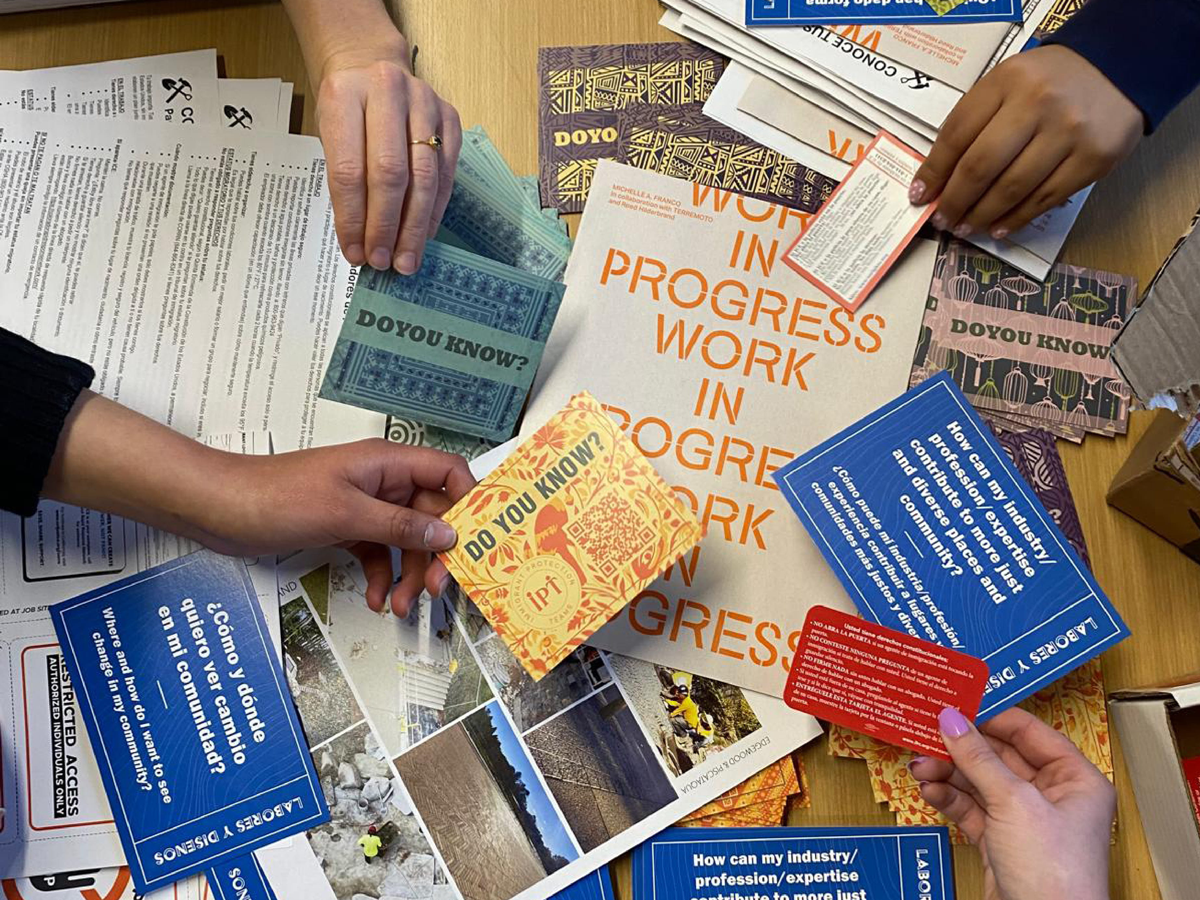
Student-organized pro bono community initiative in partnership with a local immigrant rights organization to honor immigrant labor in the landscape architecture profession. The program included a film screening and an interdisciplinary panel with leaders in landscape architecture, landscape contracting, and construction, creating space for dialogue on ethical labor practices, recognition, and care for immigrant workers. The team raised $7,000 to fund the event, support invited speakers, provide meals for attendees, and donate surplus funds to the community partner.