
.webp?language=en-US)

.webp?language=en-US)
Trinity Road
-
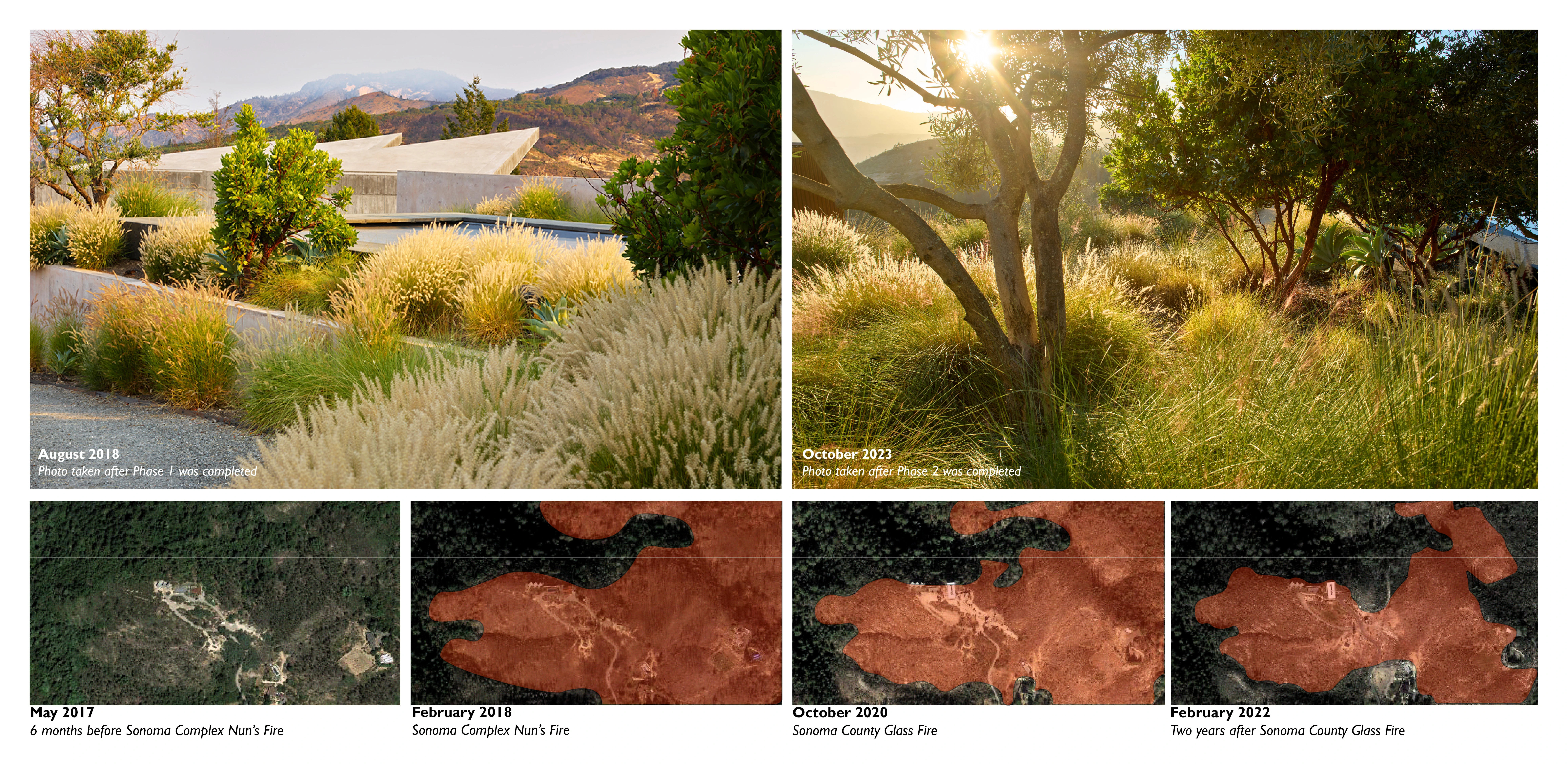
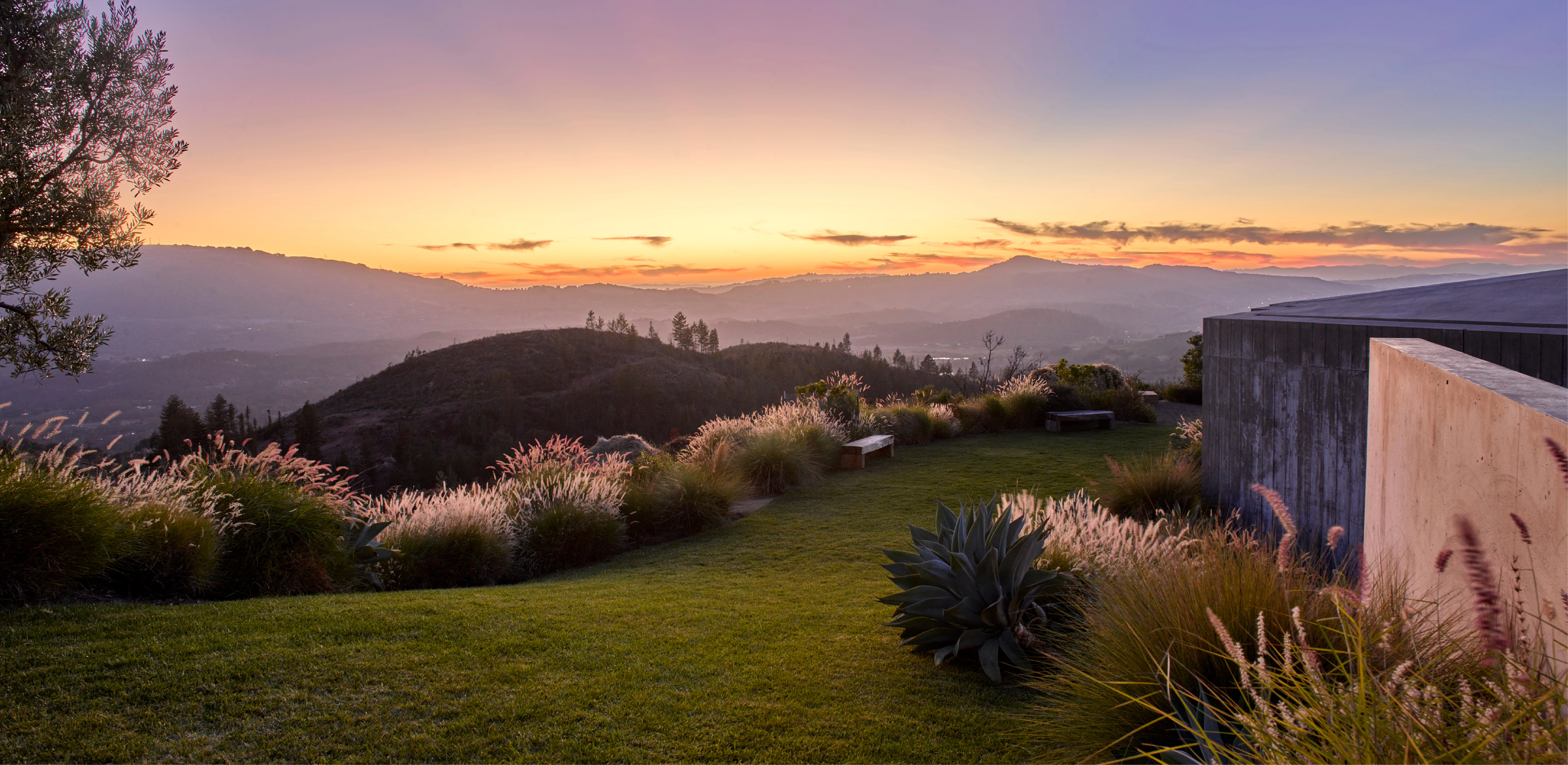
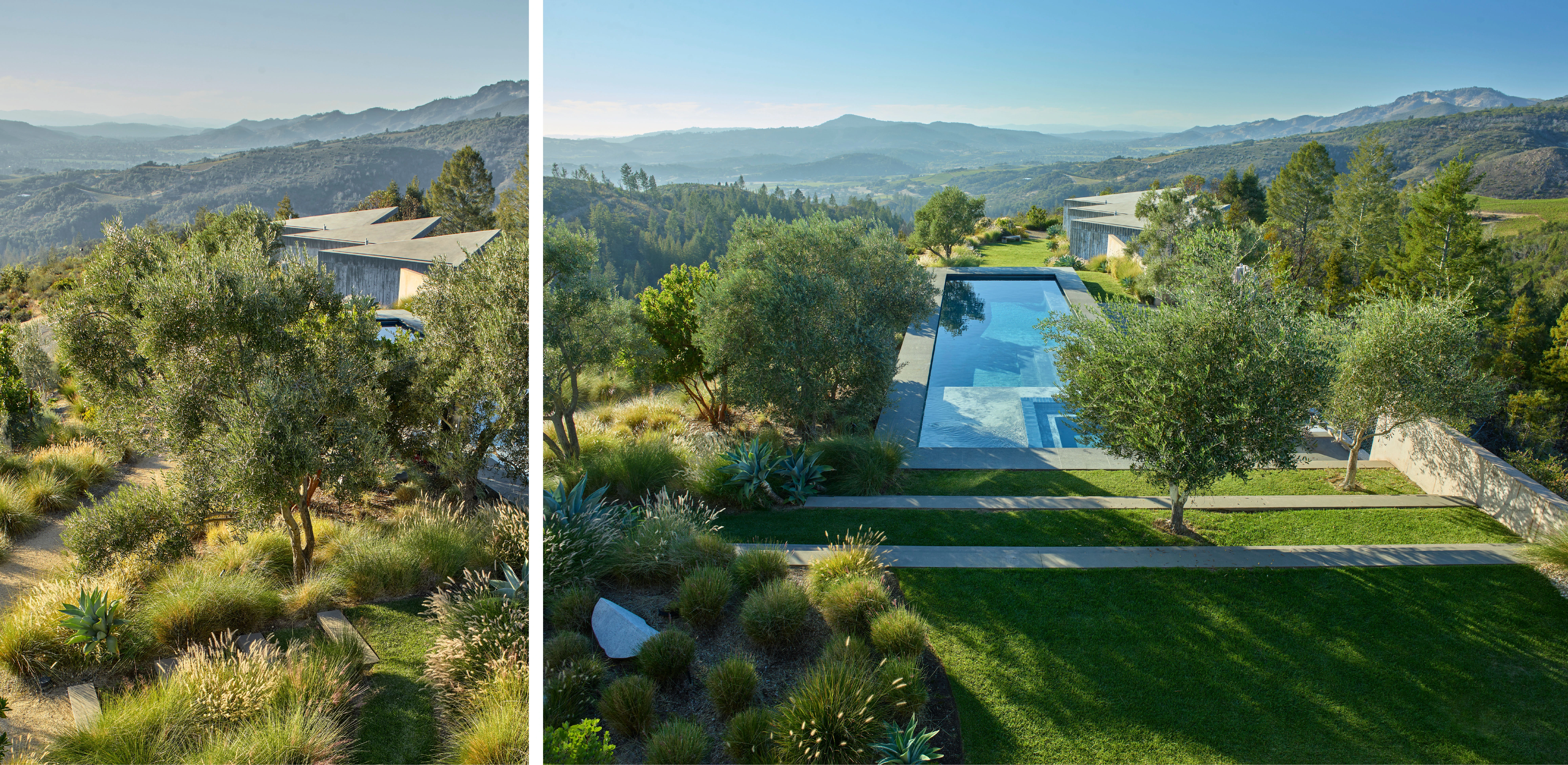
The story of Trinity Road unfolded over the past five years and is fundamentally a story of fire resilience and succession of the surrounding forest. The garden was designed and the project considered completed when two wildfires ravaged the hills immediately surrounding the site. After the fires the landscape design team was brought in to create a new vision for the site that knit together the original planting and a new series of paths and gardens. The designers observed the native species that were first to grow in naturally after the fires and borrowed from their observations to cultivate a landscape that is more resilient. The finished garden incorporates the new character of a forest in transformation.
-
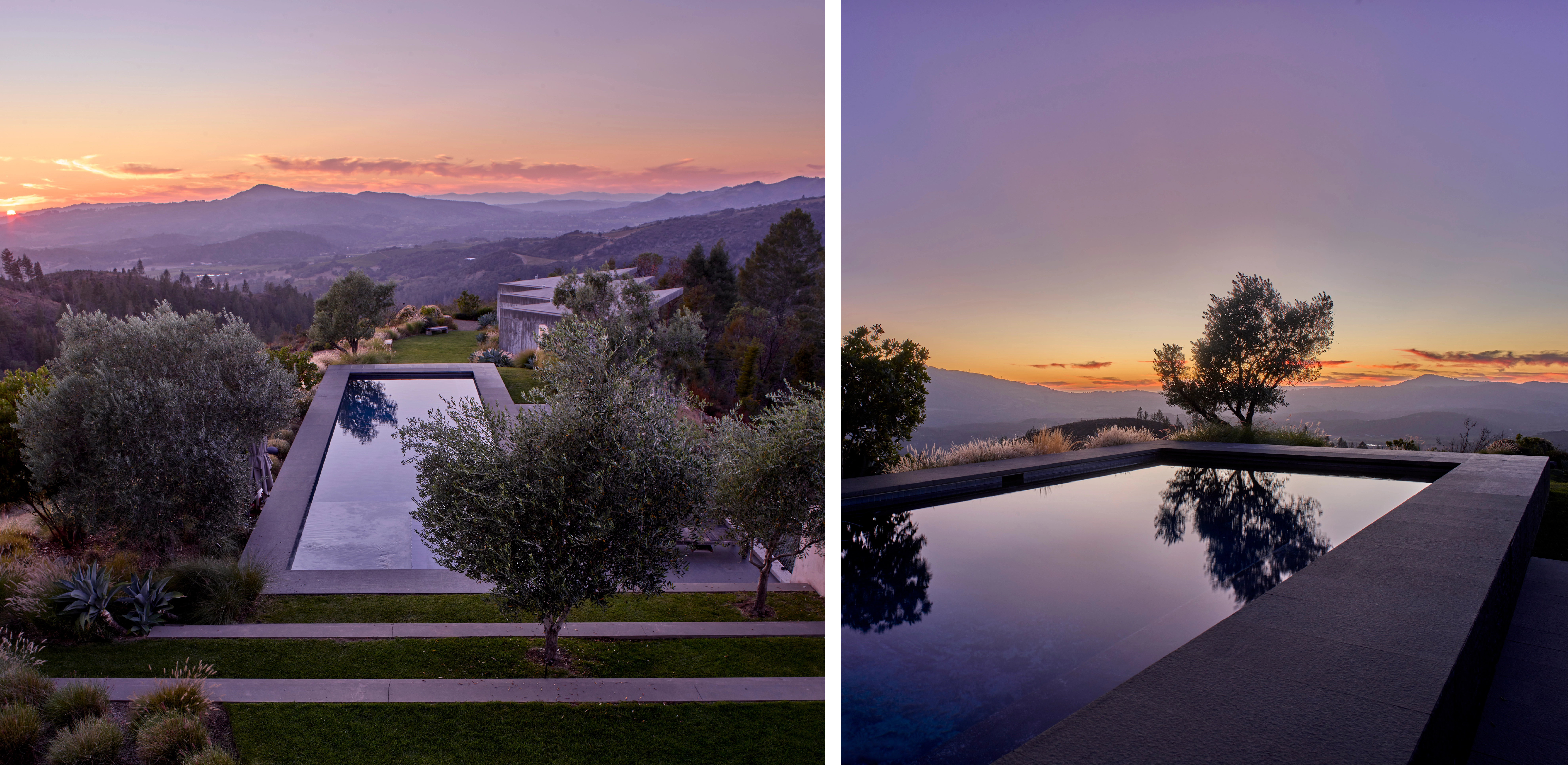
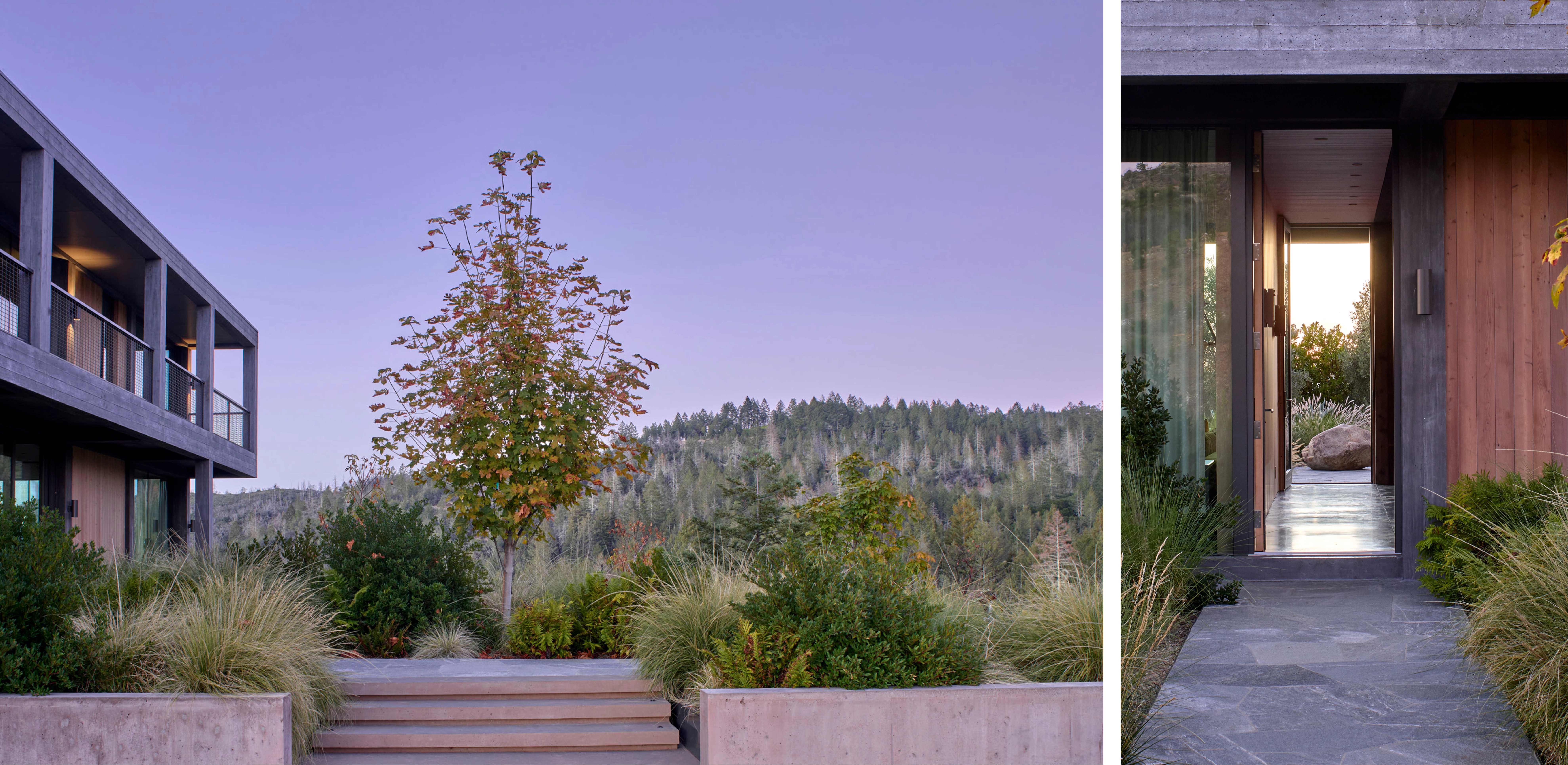
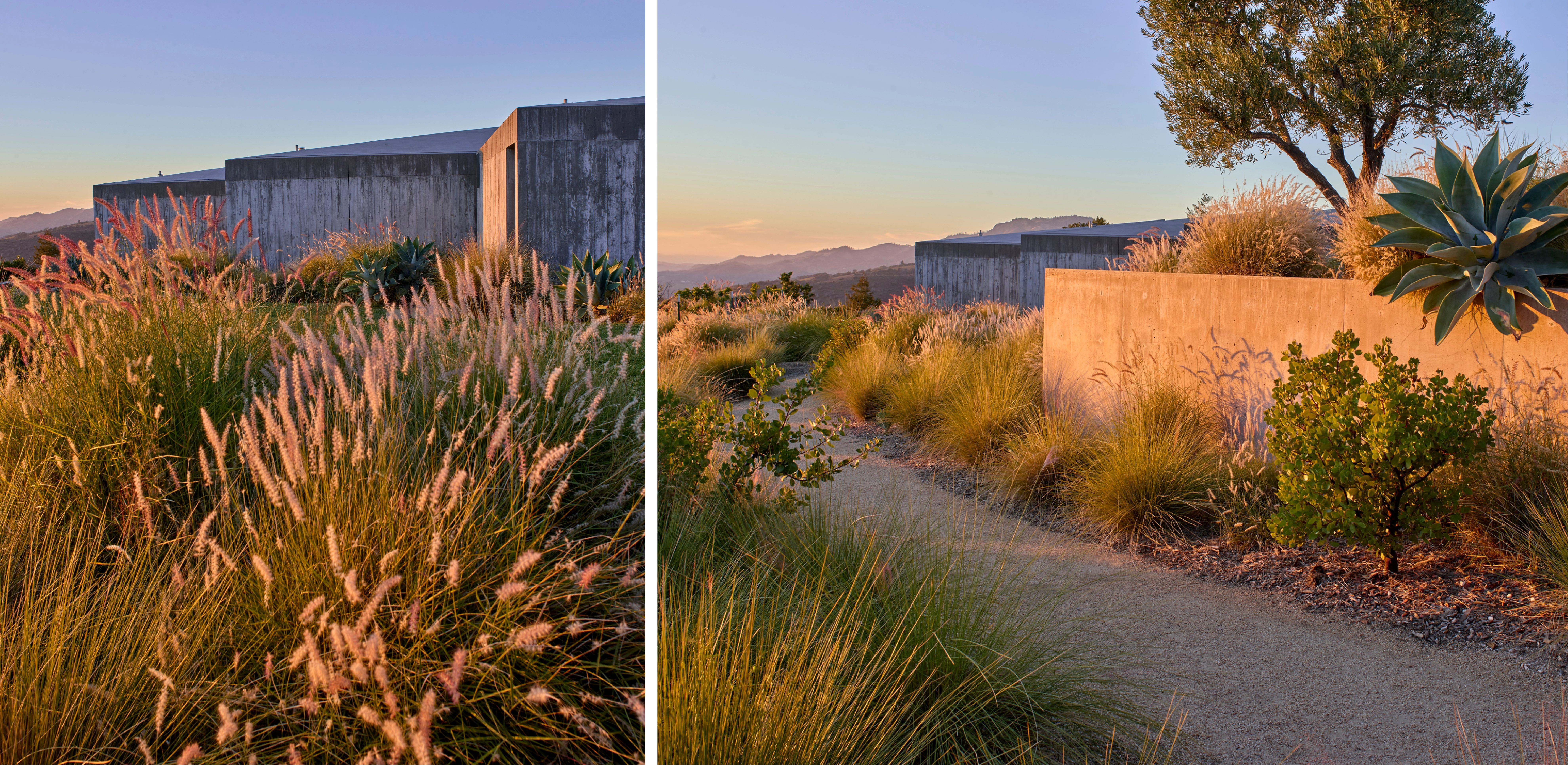
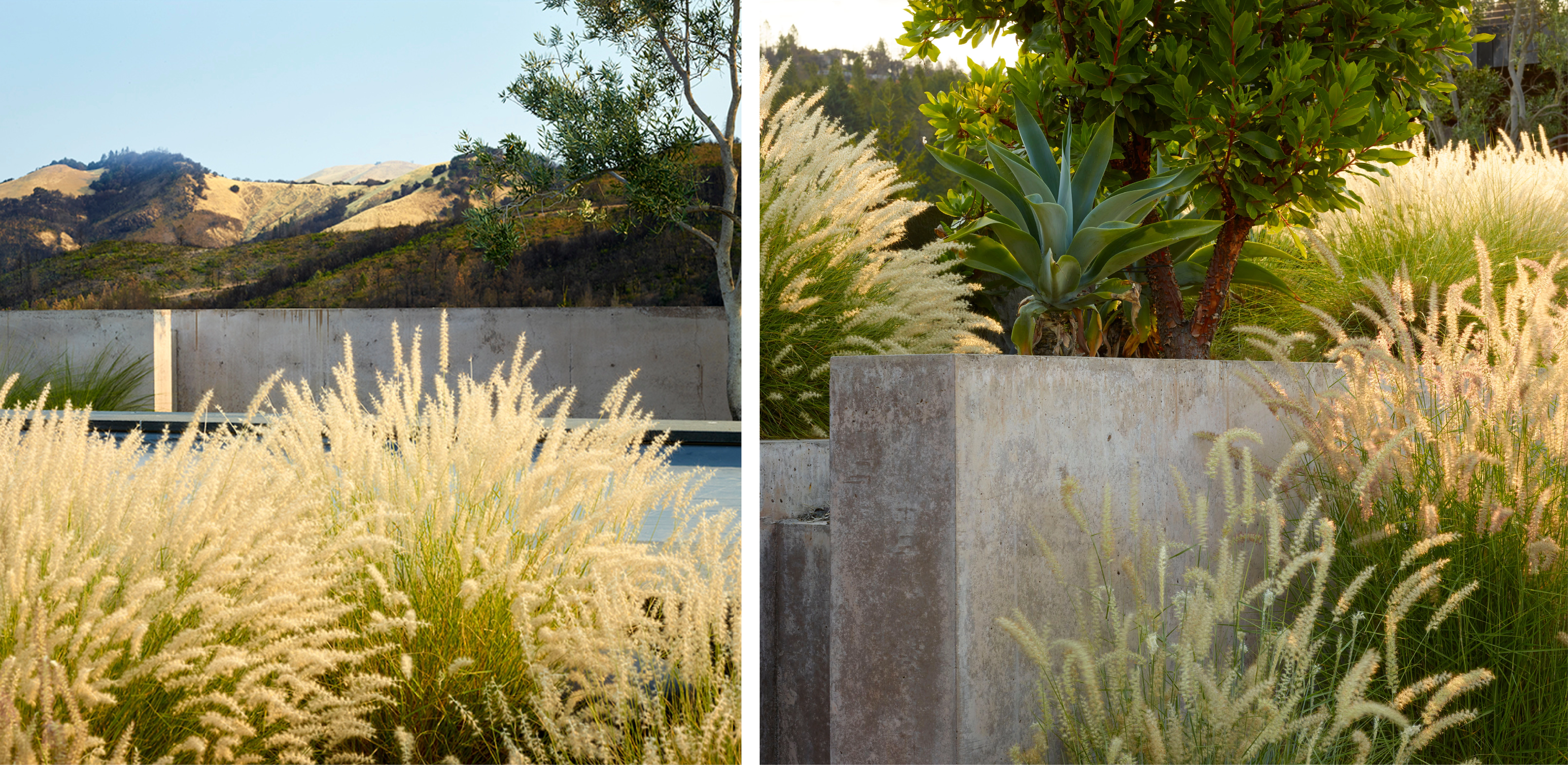
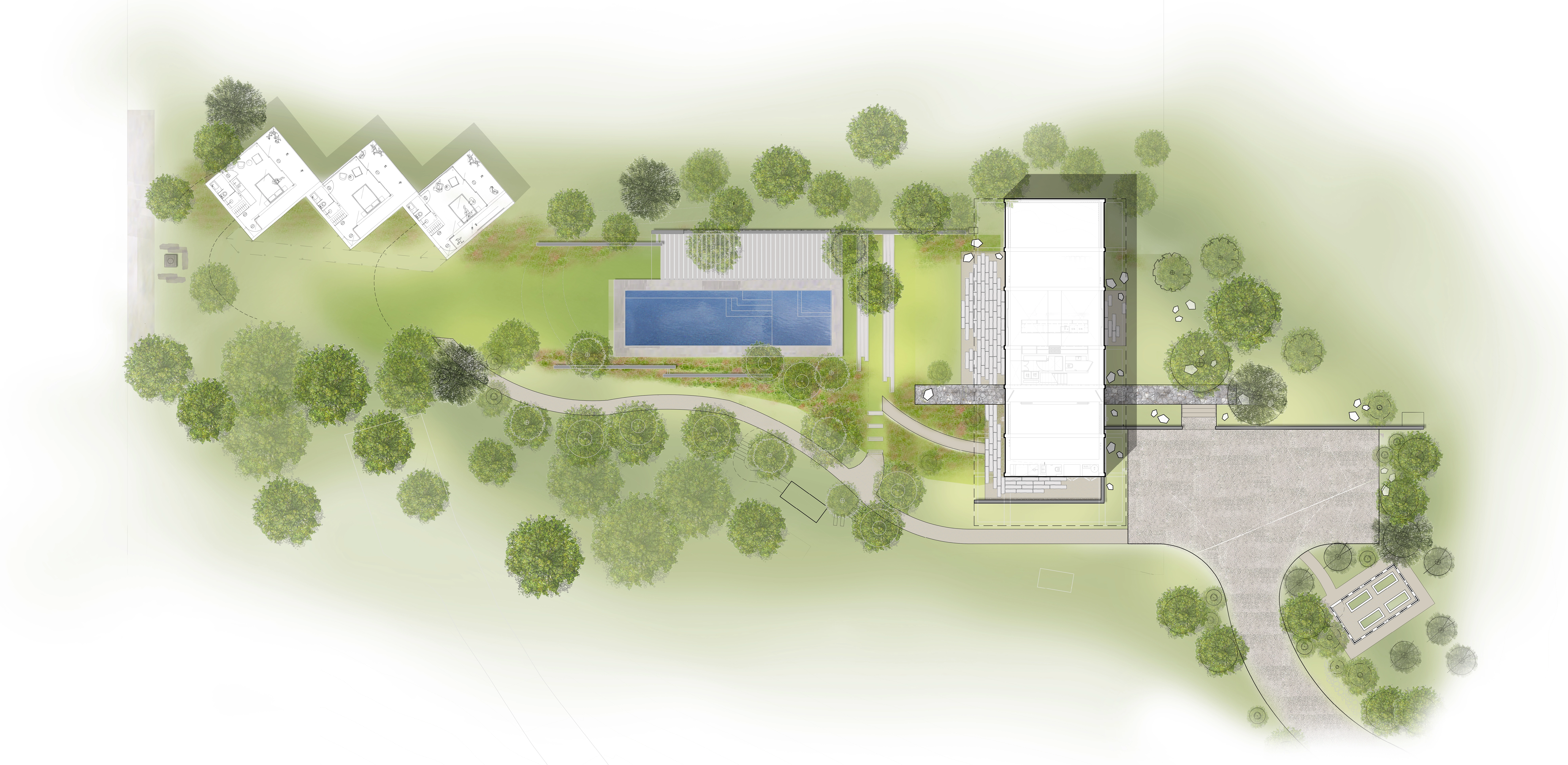
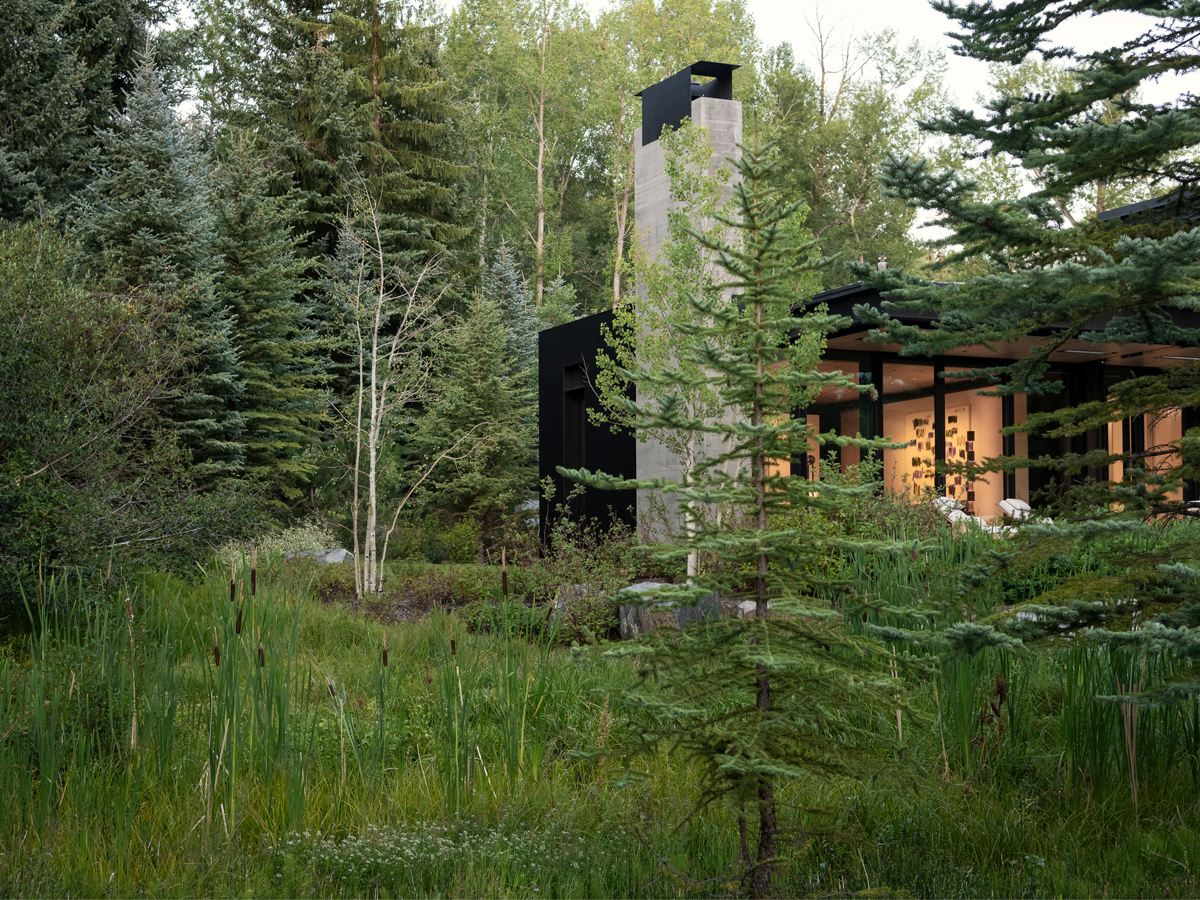
The property sits at the top of Trinity Road, above the forested hills and valleys of Sonoma county. The project unfolded in two phases and is fundamentally a story of resilience. During the first phase, the design team sited three guest houses designed by the architects, downhill from the existing main house on the top of the mountain. They regraded and terraced the sloping landscape to create more usable area and designed a pool in between the main and guest houses. Integral color concrete walls borrowed from the native rock color palette of the hillside and grasses, wildflowers and manzanitas were introduced to blend into the surrounding landscape.
The property was ravaged by wildfires in 2017 and the preexisting main house—which was a wood frame, wood clad structure—was damaged. During the fires, the concrete walls that were holding grade acted as a fire break and protected much of the property. During the second phase of the project, the architects rebuilt the main house using the same concrete structural approach that they had taken to the guest houses in phase 1, which were only minimally damaged during the fires. Most of the landscape survived the fire, but the design was revisited to knit into the broader site.
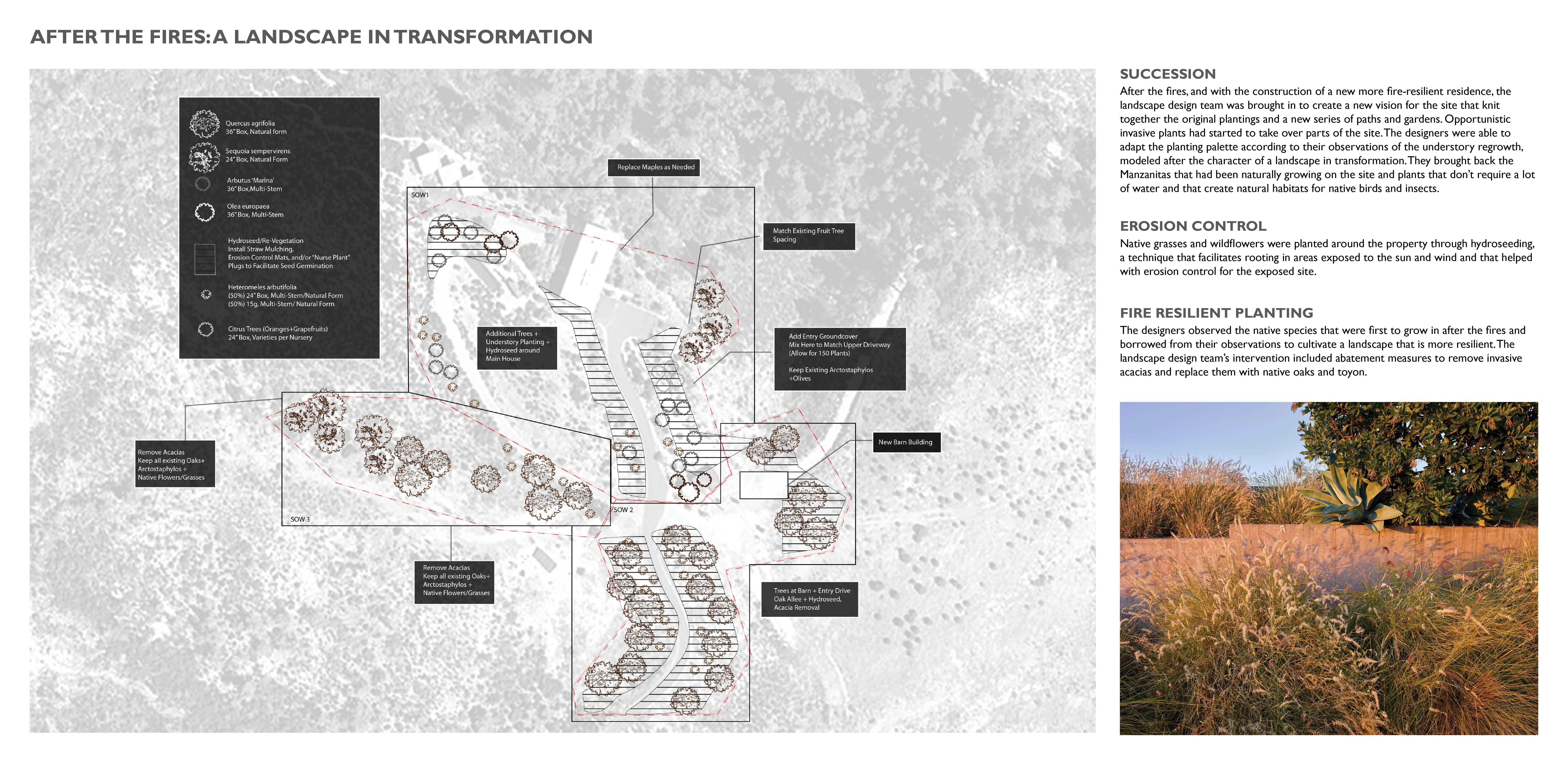
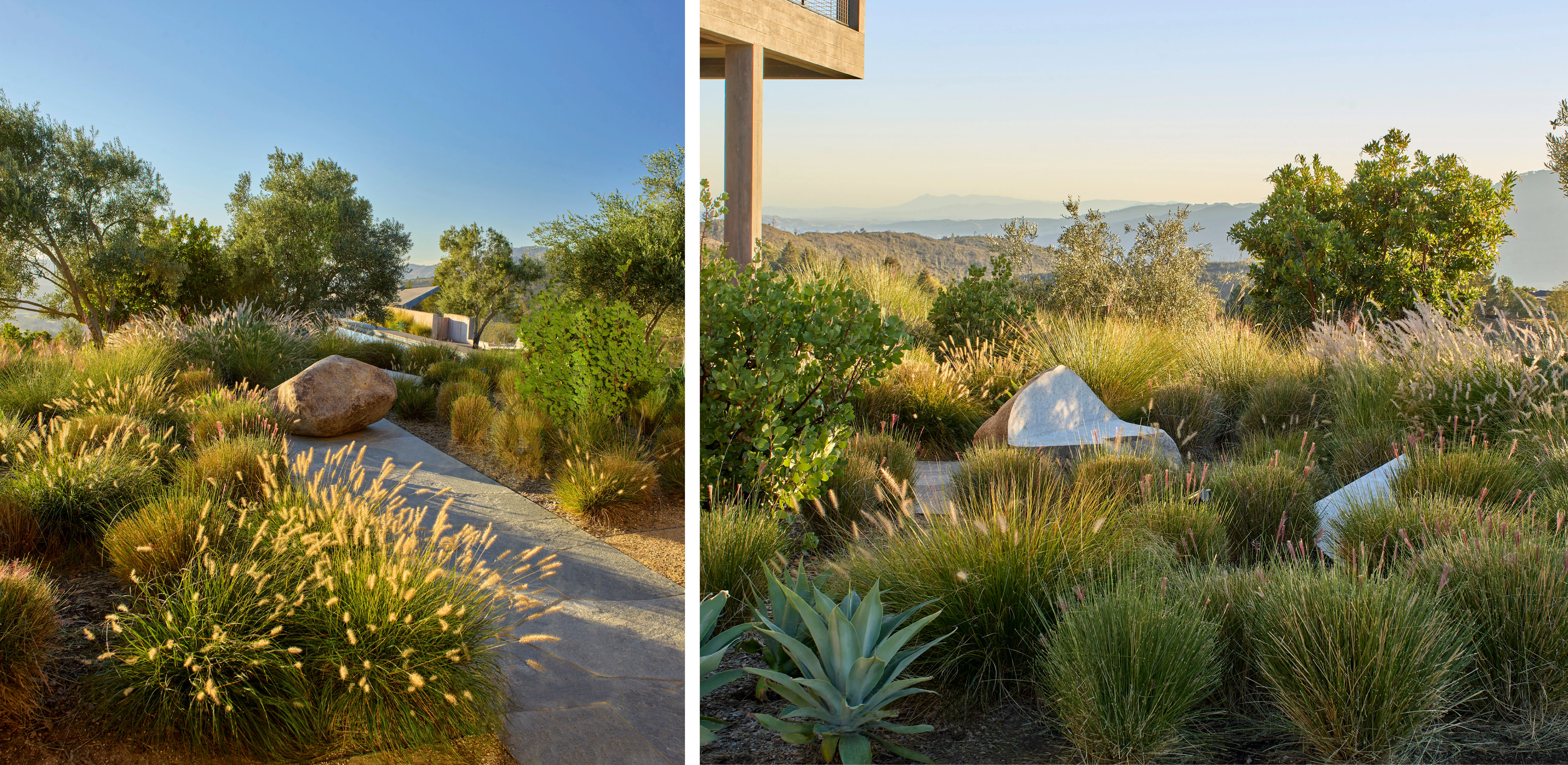
The mountain had been left completely exposed after the fire; the site became very windy and echoey. Opportunistic invasive plants had started to take over parts of the site. The designers were able to adapt the planting palette according to their observations of the forest regrowth, modeled after the character of a landscape in transformation. The landscape design team’s intervention included abatement measures to remove invasive acacias and replace them with native oaks and toyon. They brought back the Arbutus and Manzanitas that had been naturally growing on the site and plants that don't require a lot of water and that create natural habitats for native birds and insects. Native grasses and wildflowers were planted around the property by hydroseeding, a technique that facilitates rooting in areas exposed to the sun and wind and that helped with erosion control for the exposed site.
The new landscape is a celebration of the resilience of the mountain; a space of reflection that borrows views of the surrounding landscape as it evolves. New garden spaces focus on native and adapted species that require low water while facilitating habitat.
-
- Roderick Wyllie, FASLA - Partner
- Michael Kapitulnik, ASLA - Principal
- Penelope Leggett - Associate
- Mork-Ulnes Architects - Architect
- The Office of Charles De Lisle - Interior Design
-
- Olea europaea
- Arbutus x 'Marina'
- Arctostaphylos manzanita 'Dr. Hurd"
- Acer macrophylla
- Arbutus menziesii
- Diospyros virginiana
- Heteromeles arbutifolia 'Davis Gold'
- Muhlenbergia capillaris
- Pennisetum orientale 'Little Bunny'
- Agave attenuata 'Nova'
- Woodwardia fimbriata
- Polystichum munitum
- Heuchera micrantha
- Frangula californica 'Little Sur'
- Muhlenbergia rigens
- Pteridium aquilinum
- Arctostaphylos densiflora 'Harmony'
- Ficus pumila
- Golden State Native Grass
- Quercus agrifolia
- Redwood
- Citrus
Advertisement
Related Awards
Award of Excellence, Residential Design
Datum House
Location: West Stockbridge, MA
Firm: Wagner Hodgson
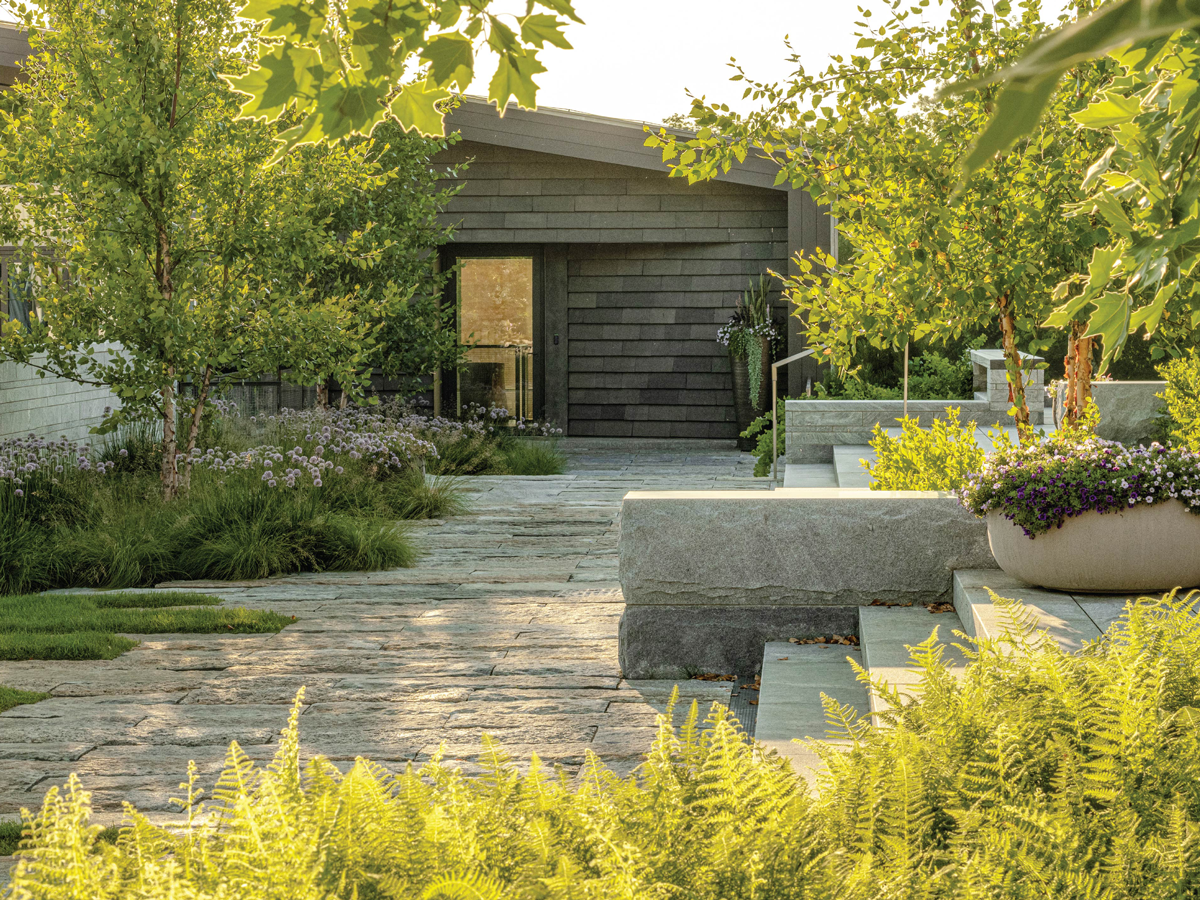
This modern homestead was designed for a family with a passion for the arts and a deep connection to the region. The project was guided by three principles: (1) create dynamic spaces to support the needs for everyday residential living and large philanthropic events, (2) contribute to the cultural legacy of western Massachusetts, and (3) use sustainable practices to guide design and restore the ecological integrity of the site. A prominent view of Massachusetts's tallest peak offered an organizing framework, serving as the datum for architectural and landscape design. With these parameters, the project team explored creative and sustainable solutions to harmoniously blend a variety of spatial scales into a sensitive agrarian vernacular.
Related Articles

ASLA Fund
American Society of Landscape Architects Announces its 2026 Student Awards
39 Student Award winners elevate the future of the landscape architecture profession
Aug 24 2026