

.webp?language=en-US)

.webp?language=en-US)
House on the Bluff
-
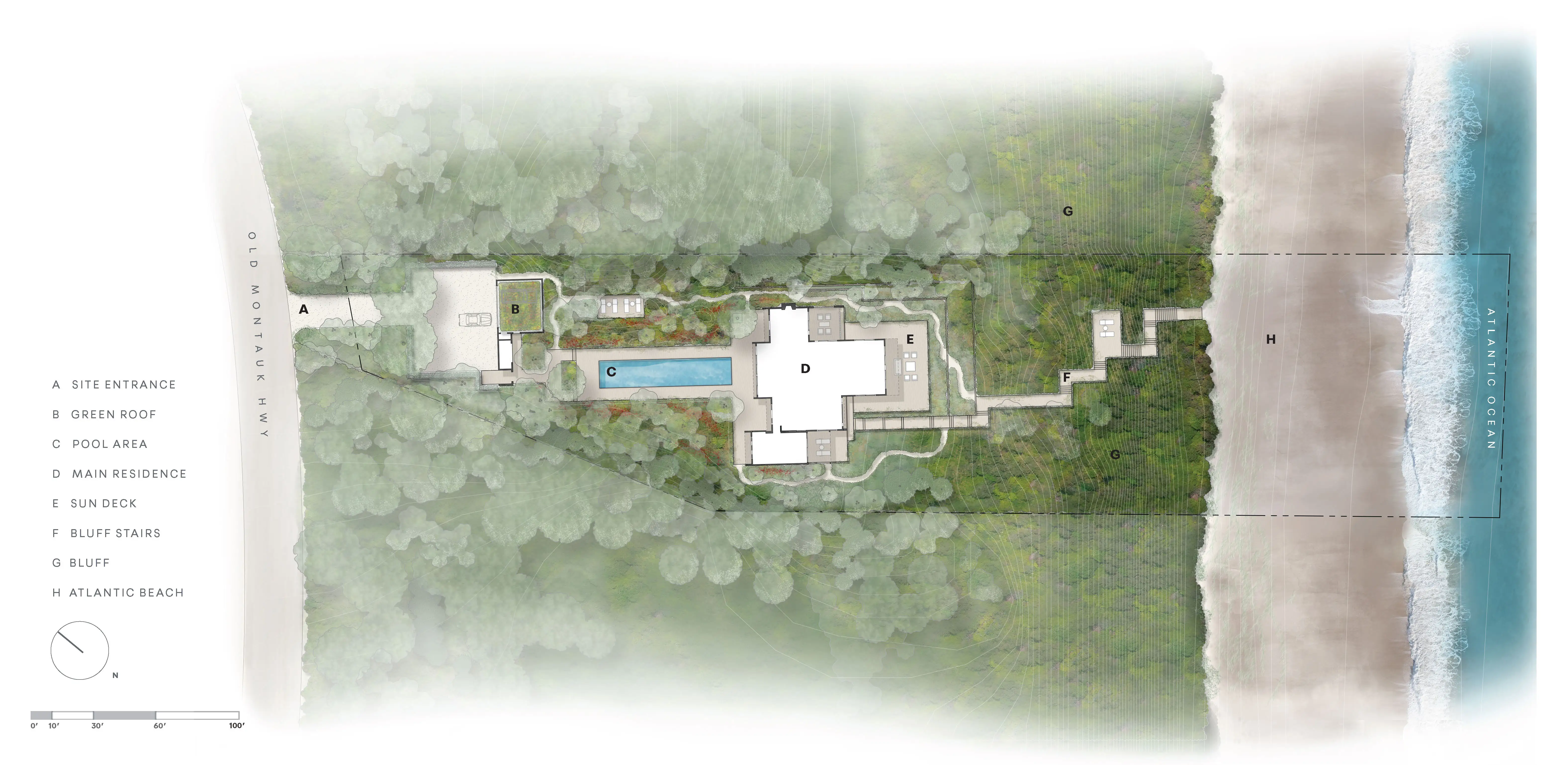
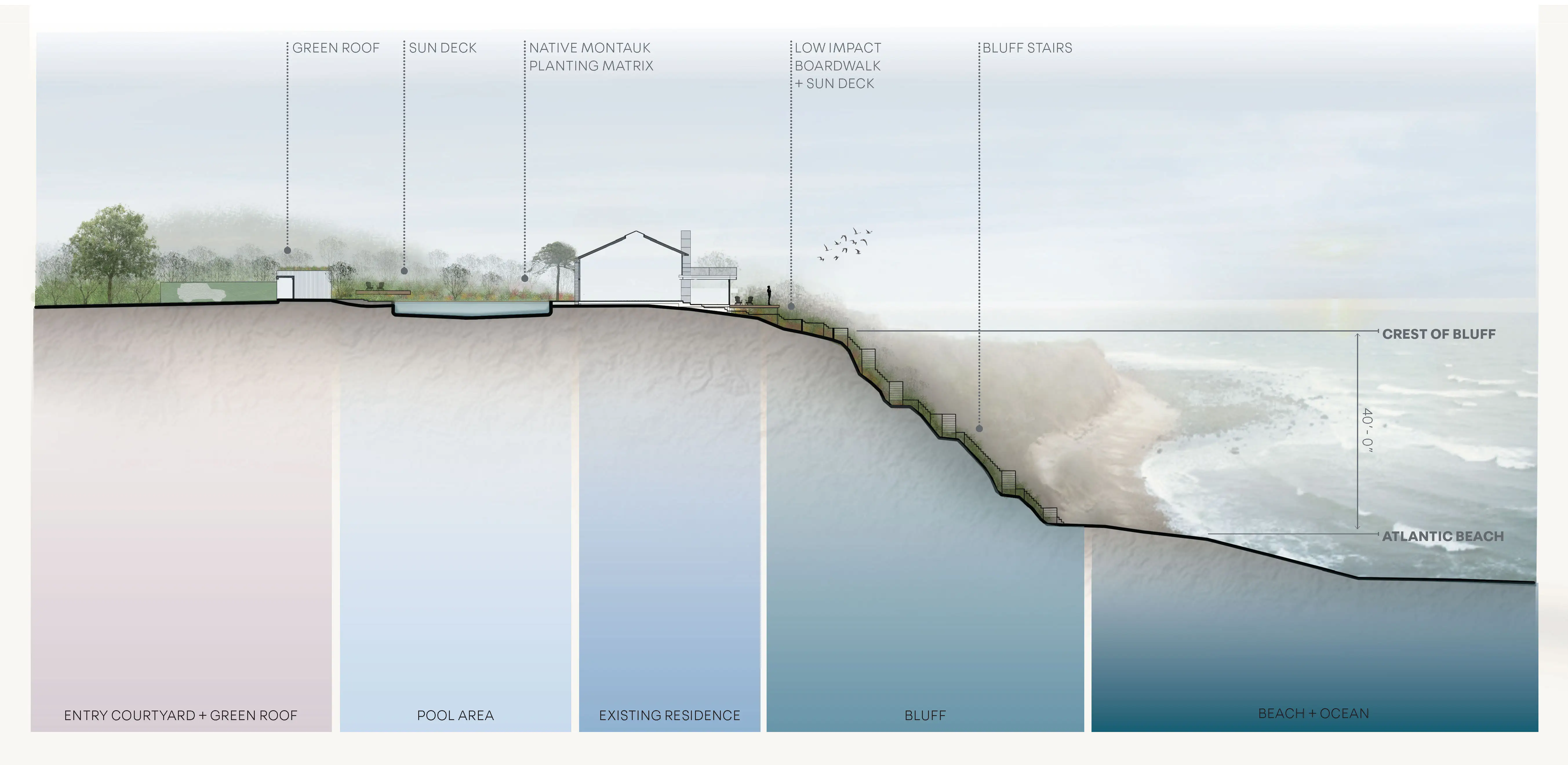
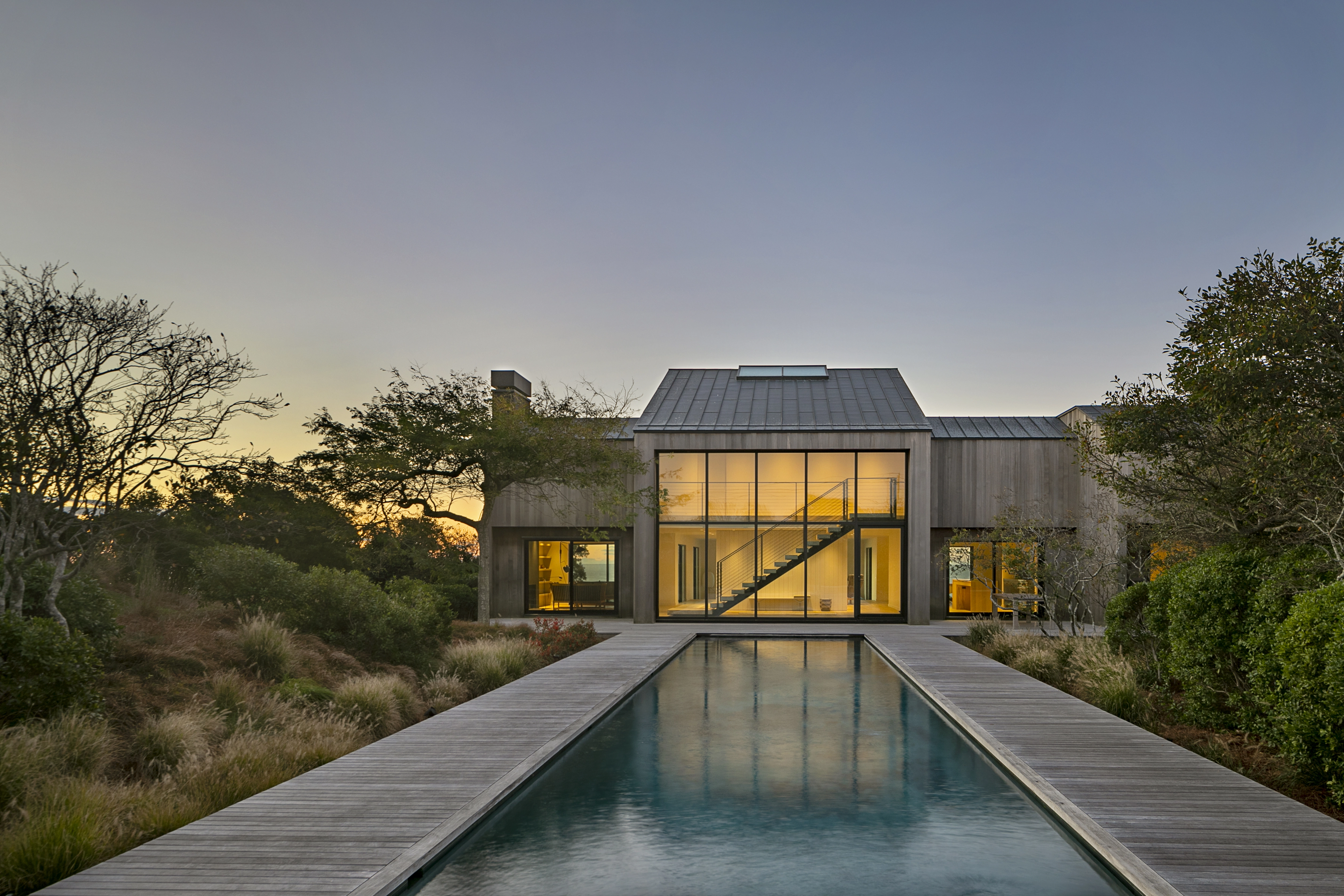
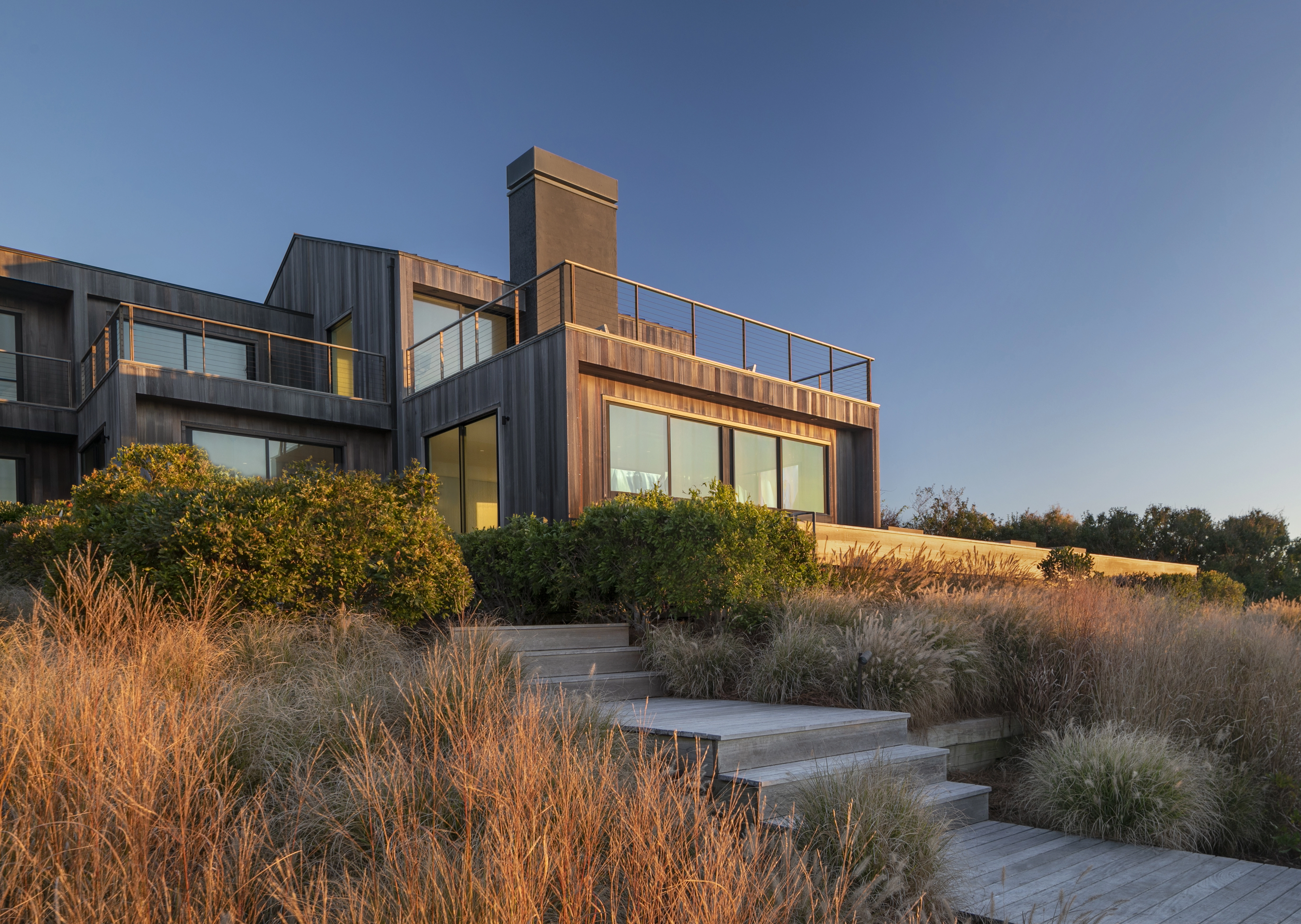
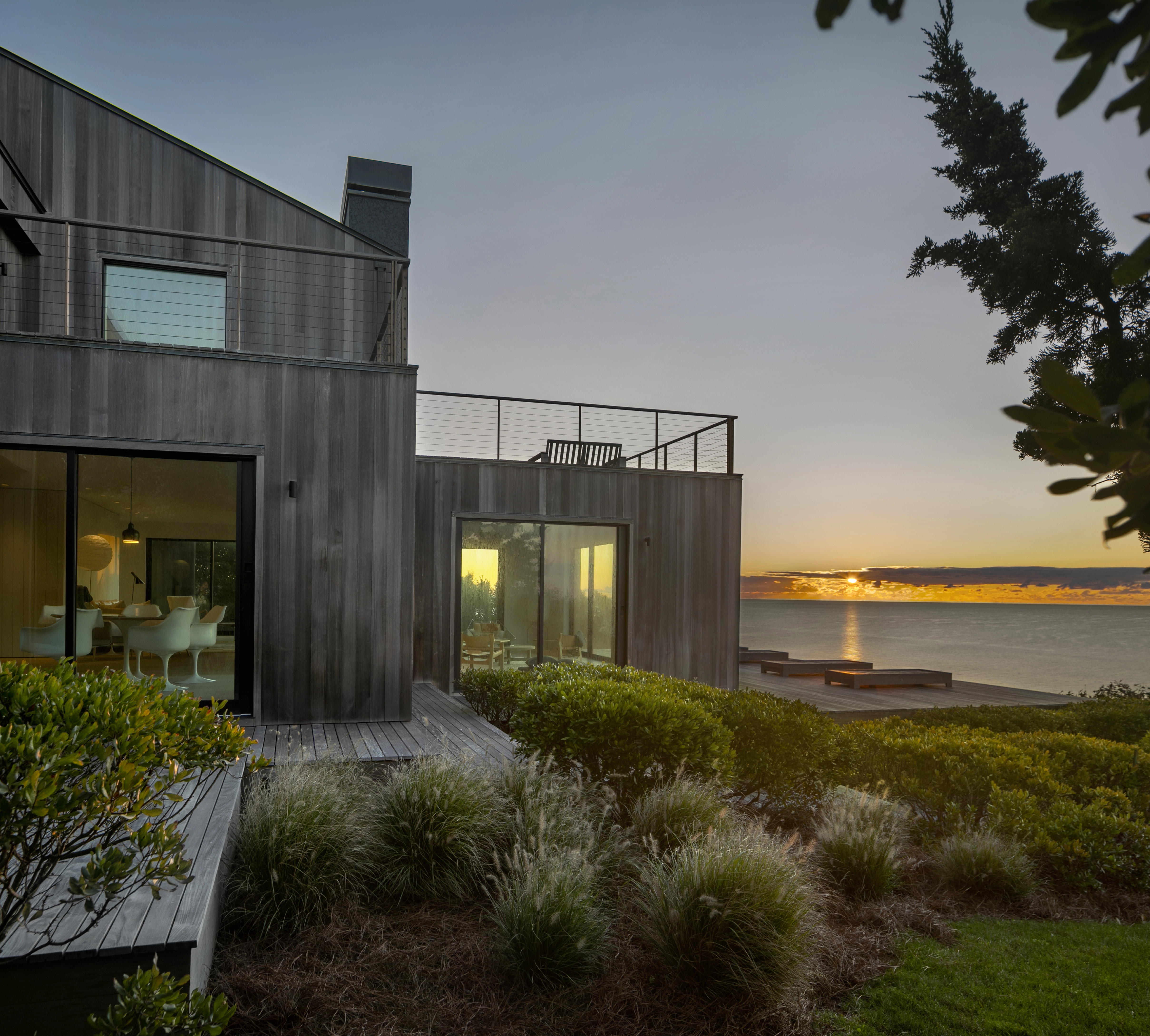
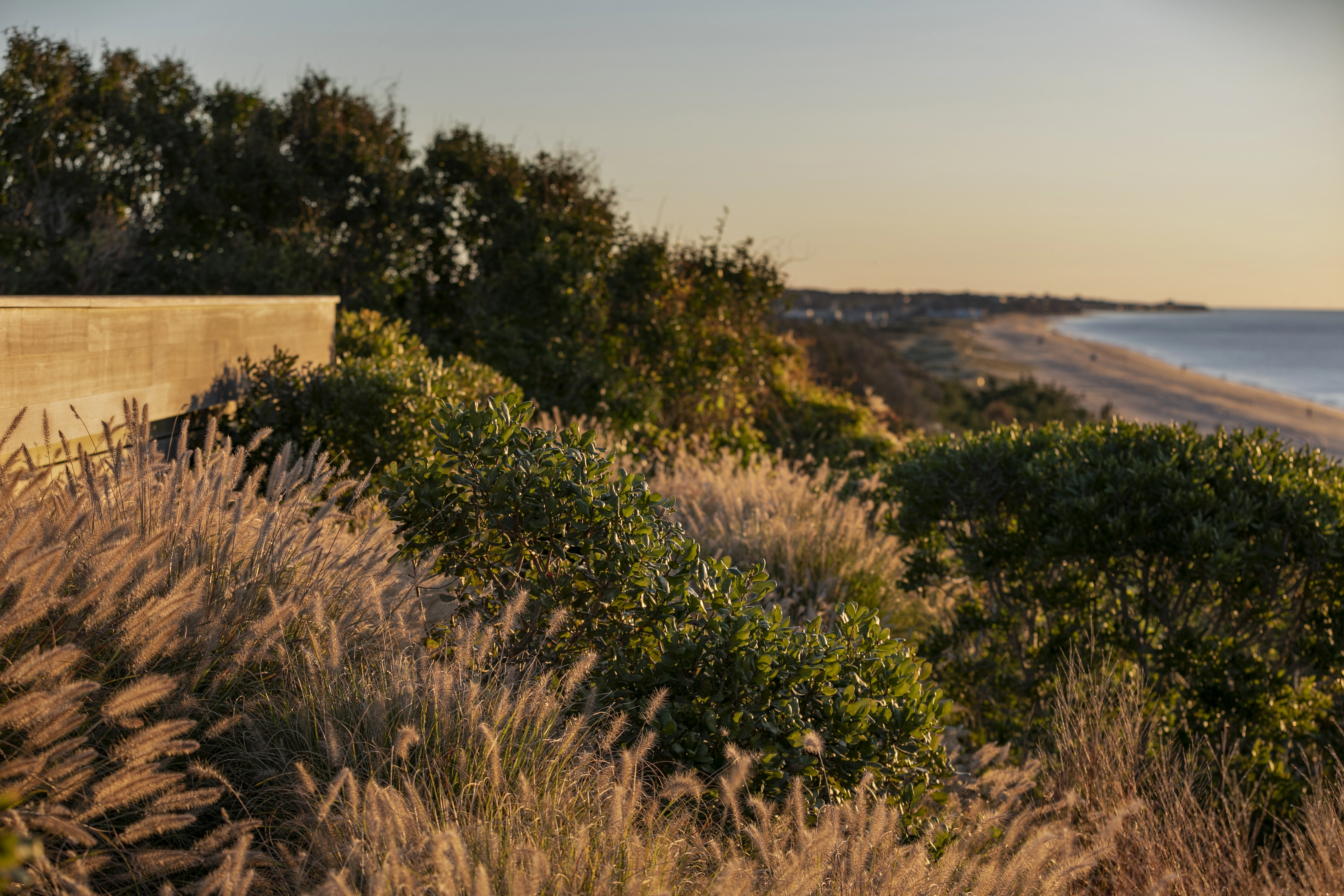
This renovated, modern beach house sits high on the Montauk bluffs with exceptional panoramic ocean views and privacy. Bordered by a nature preserve; this narrow, topographically challenging site presented many initial constraints that became the impetus for the design.
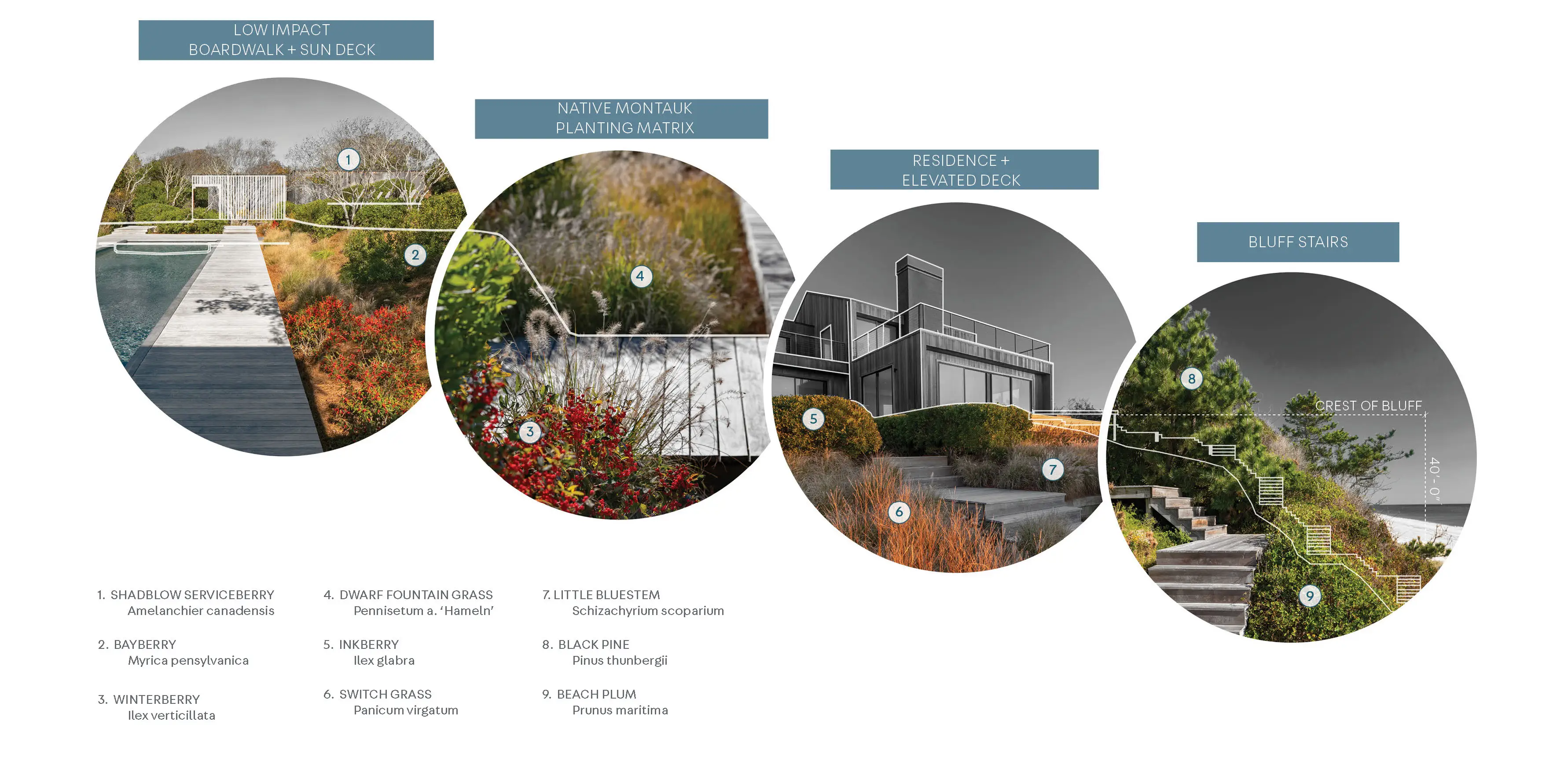
Sensitive interventions such as elevated walkways and the use of native vegetation, provide amenities to the site while preserving the bluff. The use of plants native to the Montauk bluffs, stitch the site into the larger ecological context of the East End.
In confronting future and current bluff destabilization, which plagues Montauk, this project exemplifies low impact development and bluff stabilization techniques.
-
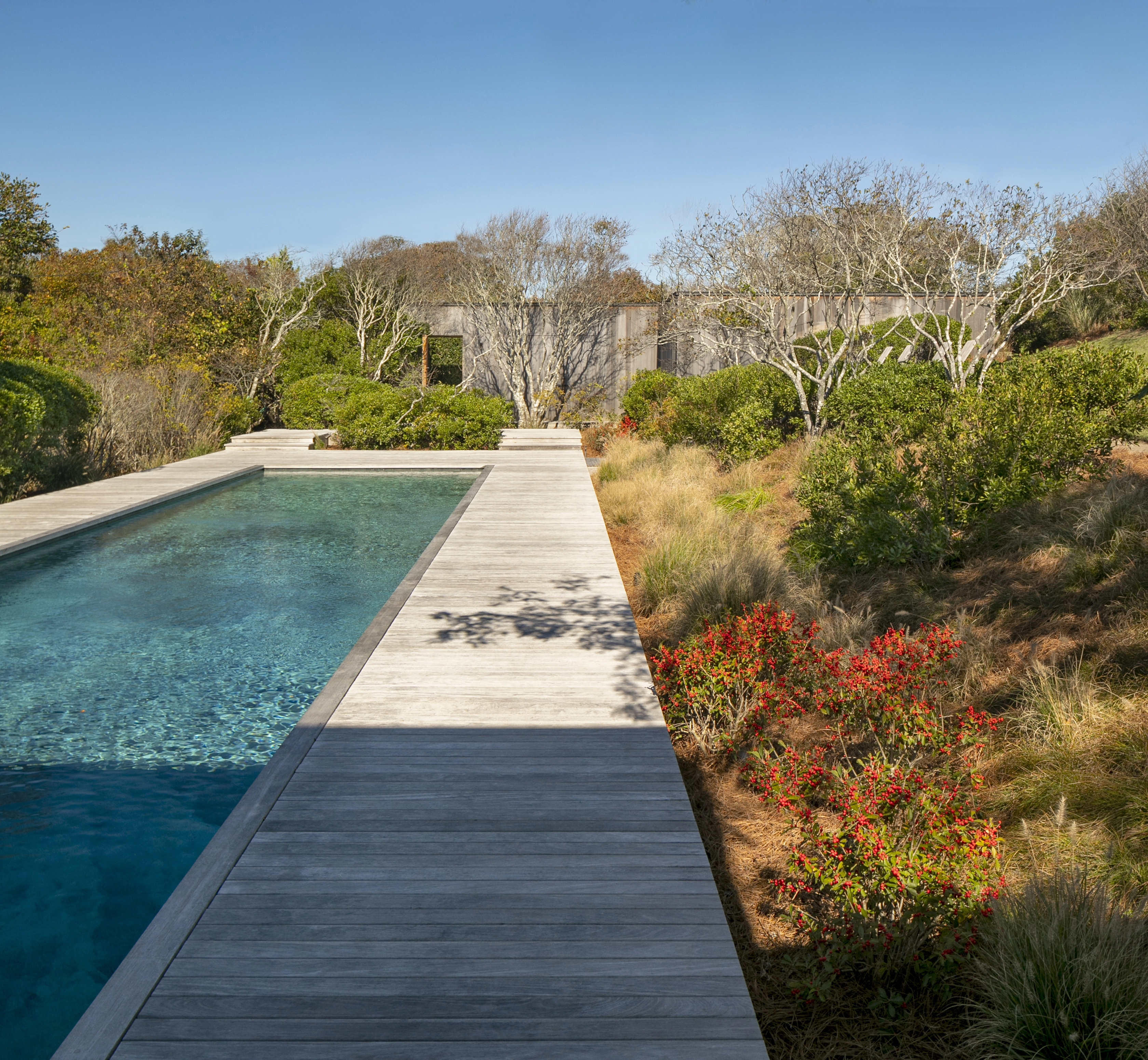
From arrival, the boardwalk leads you through a solid wooden gate, revealing a lush landscape dotted with native Shadblow trees. Limiting the impact on the land was paramount for this project.
A green roof, overtop the garage and entry way, helps disguise and integrate the architecture into the landscape. The green roof plantings utilize native grasses including, Little Bluestem and Pennsylvania sedge. These self-sustaining plants, native to the Montauk Bluffs, are in keeping with the projects goal of reducing maintenance and upkeep.
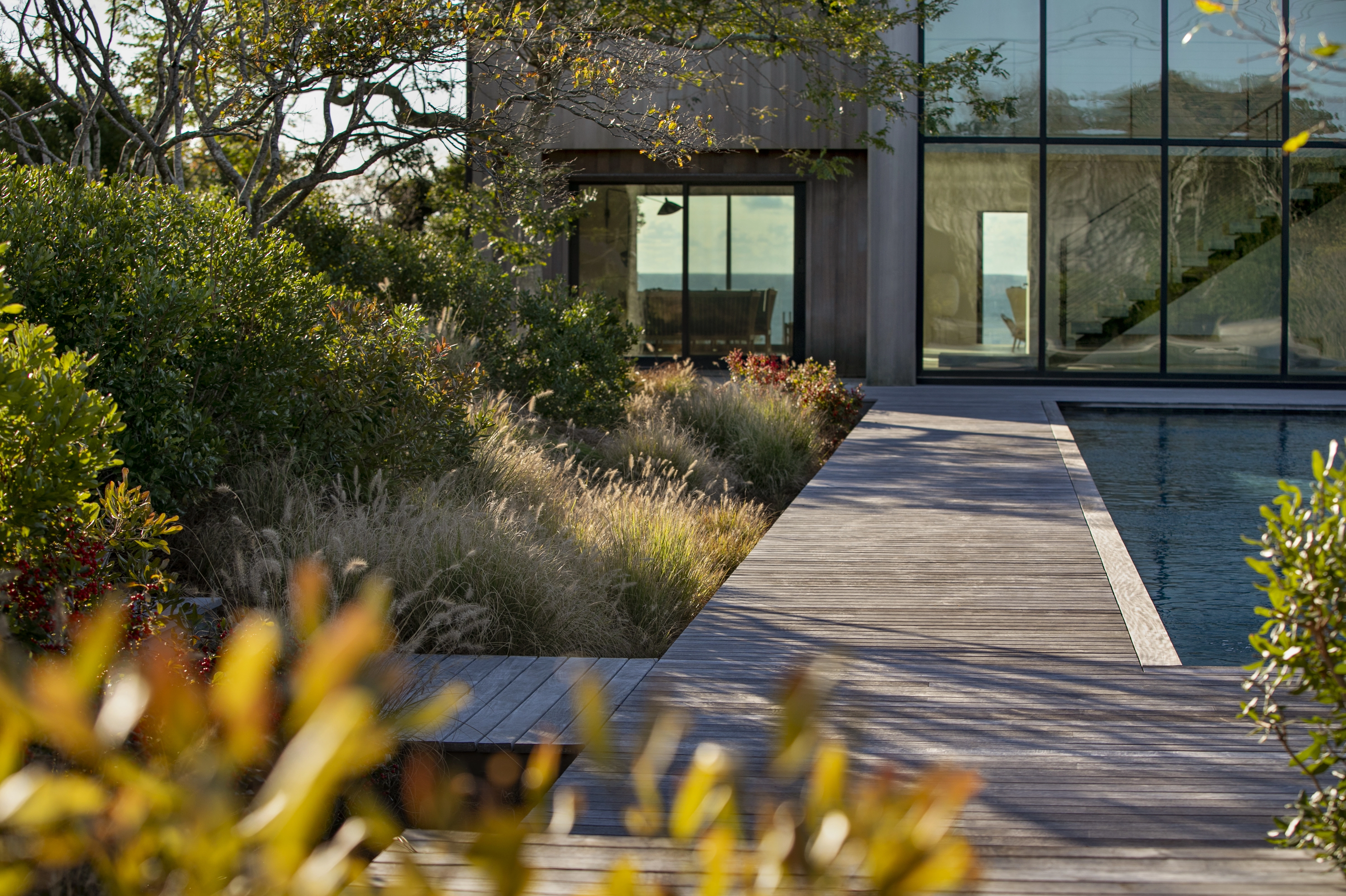
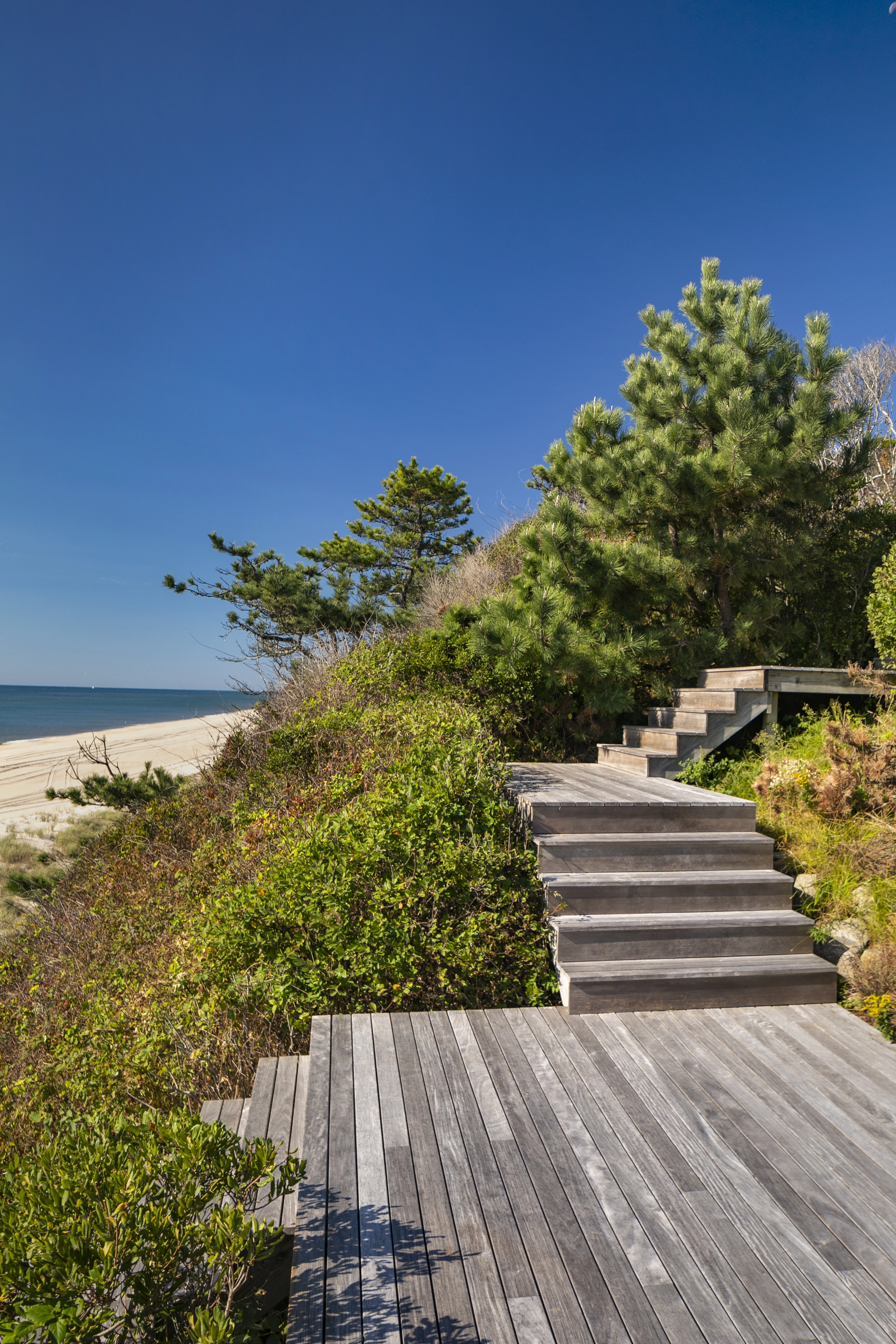
The boardwalks were designed with natural, untreated wood left to weather, echoing the silver hues of the adjacent salty, windblown landscape. Circulation of the property is limited to these elevated walks, preserving the sensitive bluff from disruption. The deck board spacing allows water infiltration and vegetation to grow underneath further promoting slope and soil stabilization.
The house renovation included a facade of glass overlooking the swimming pool, which was designed with sculptural intent to reflect its lush native surroundings. A planting palette of Shad trees, Bayberry, Winter Berry, Inkberry, and massing’s of Switch Grass, Little Bluestem and Dwarf Fountain Grasses were used to enhance and stabilize the bluff. These all work together to additionally provide not only a pleasing aesthetic, but also offers habitat and forage for the migrating bird population.
The native landscape pulls you through the property to an elevated deck that hovers over the bluff, capitalizing on the breathtaking view over the Atlantic Ocean.
-
- Christopher LaGuardia, FASLA - Principal Landscape Architect
- Robert Young Architecture & Interiors - Architect
- Men at Work Construction - General Contractor
- James C Grimes Land Design - Landscape Contractor
- J&P Pools - Pool Contractor
-
- Red Maple - Acer rubrum
- Shadblow Serviceberry - Amelanchier canadensis
- Eastern Red Cedar- Juniperus virginiana
- Hollywood juniper - Juniperus c. ‘Torulosa’
- Honey Locust - Gleditsia triacanthos inermis
- Bayberry - Myrica pensylvanica
- Inkberry - Ilex glabra
- Winterberry - Ilex verticillata
- False Holly - Osmanthus heterophyllus
- Arrowwood Viburnum - Viburunum dentatum
- Switch Grass - Panicum virgatum
- Little Bluestem - Schizachyrium scoparium
- Dwarf fountain Grass - Pennisetum a. ‘Hameln’
- Pennsylvania Sedge - Carex pensylvanica
- American Beachgrass - Ammophila breviligulata
Advertisement
Related Awards
Award of Excellence, Residential Design
Datum House
Location: West Stockbridge, MA
Firm: Wagner Hodgson
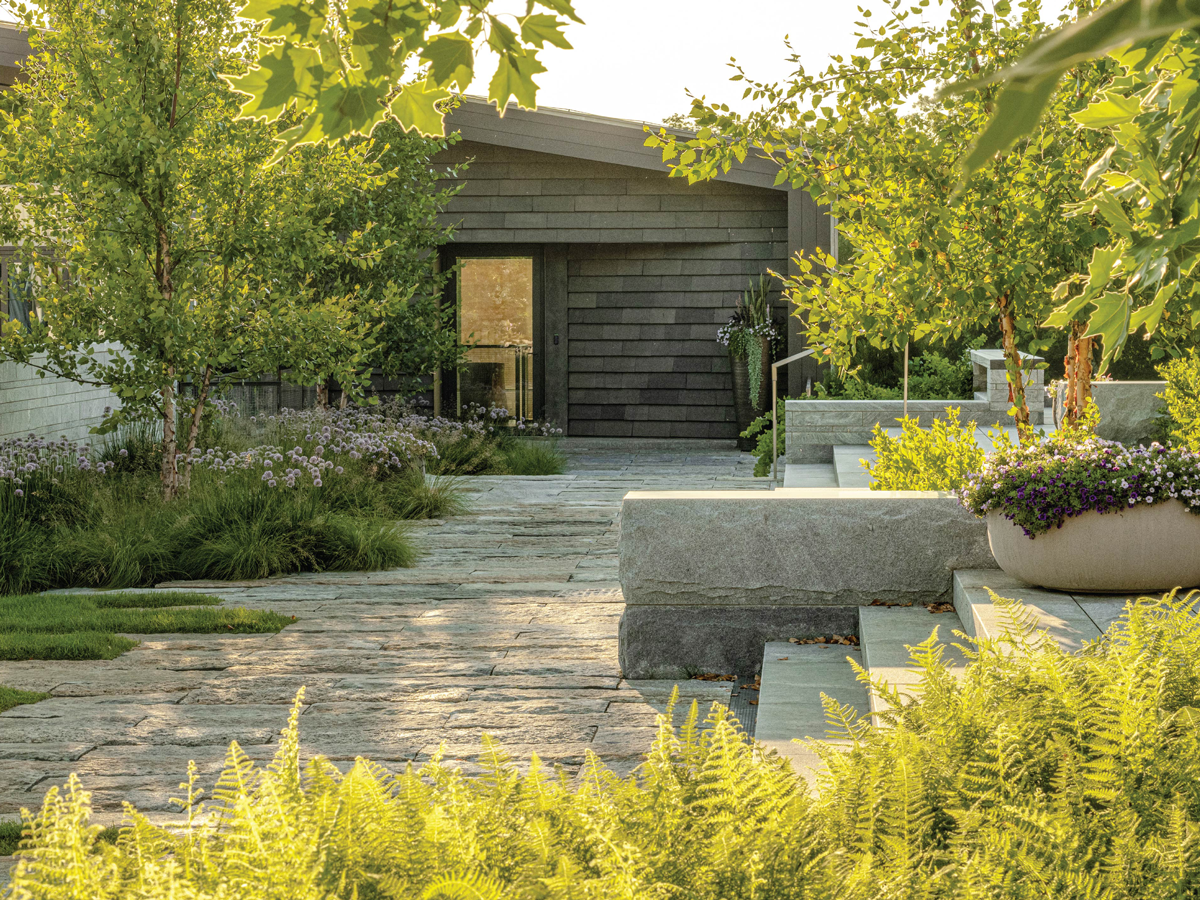
This modern homestead was designed for a family with a passion for the arts and a deep connection to the region. The project was guided by three principles: (1) create dynamic spaces to support the needs for everyday residential living and large philanthropic events, (2) contribute to the cultural legacy of western Massachusetts, and (3) use sustainable practices to guide design and restore the ecological integrity of the site. A prominent view of Massachusetts's tallest peak offered an organizing framework, serving as the datum for architectural and landscape design. With these parameters, the project team explored creative and sustainable solutions to harmoniously blend a variety of spatial scales into a sensitive agrarian vernacular.
Related Articles

ASLA Fund
American Society of Landscape Architects Announces its 2026 Student Awards
39 Student Award winners elevate the future of the landscape architecture profession
Aug 24 2026