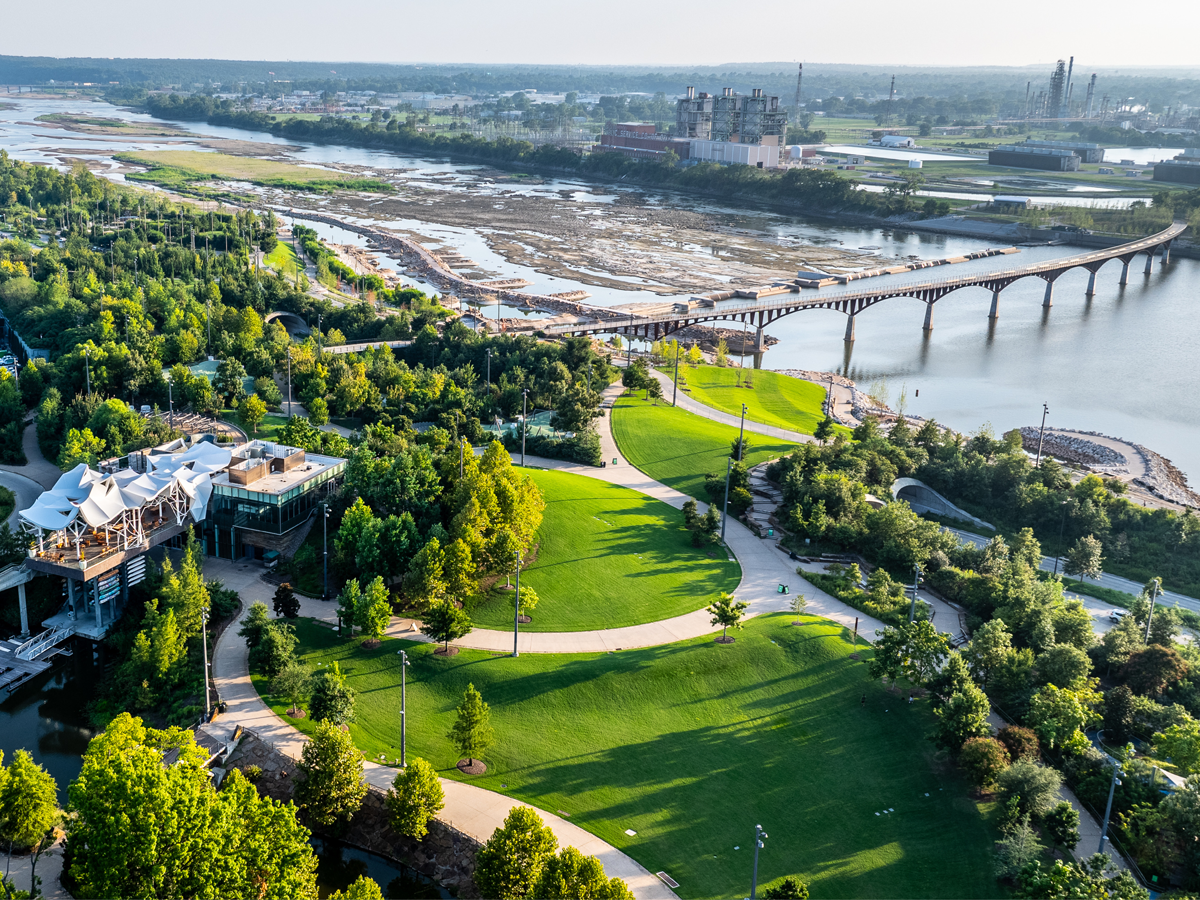

.webp?language=en-US)
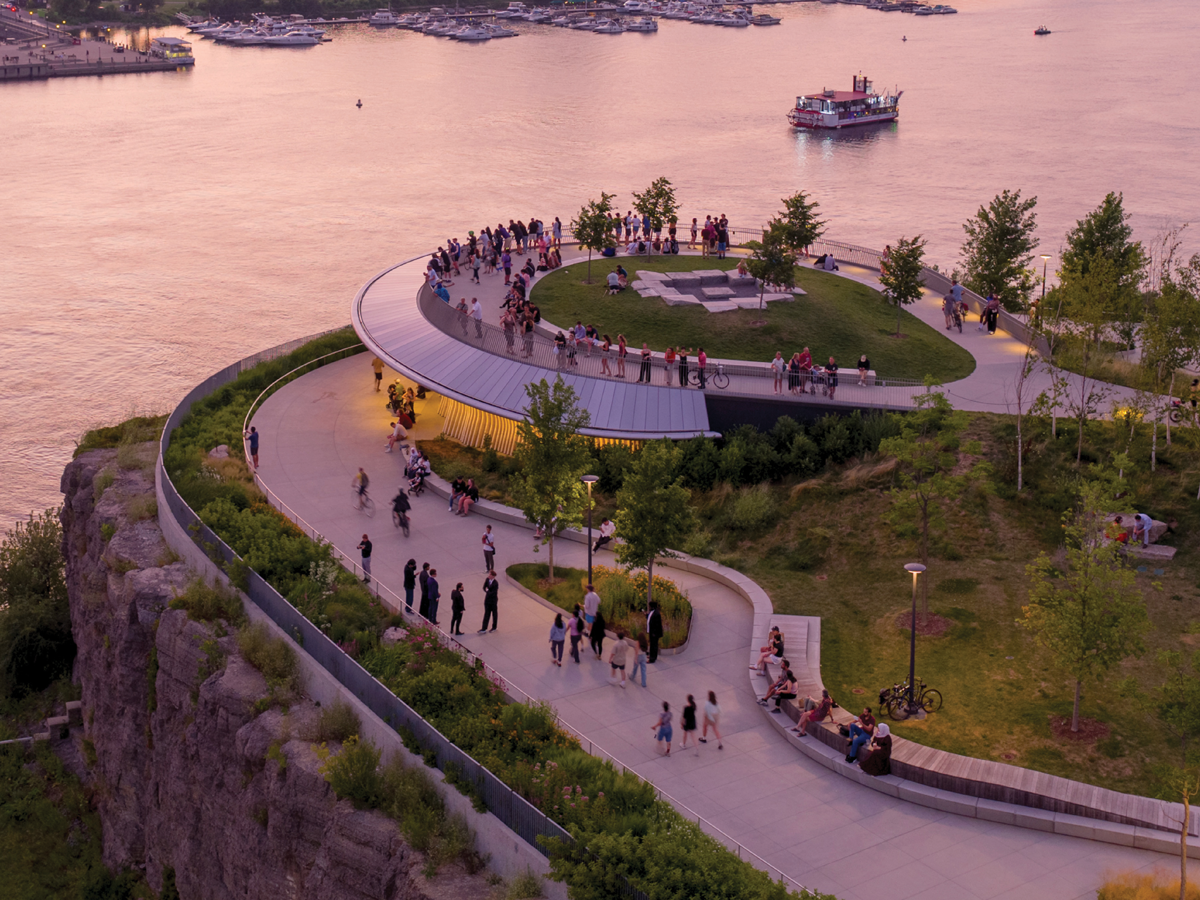
.webp?language=en-US)
Hudson River Park’s Gansevoort Peninsula: Engaging with the River
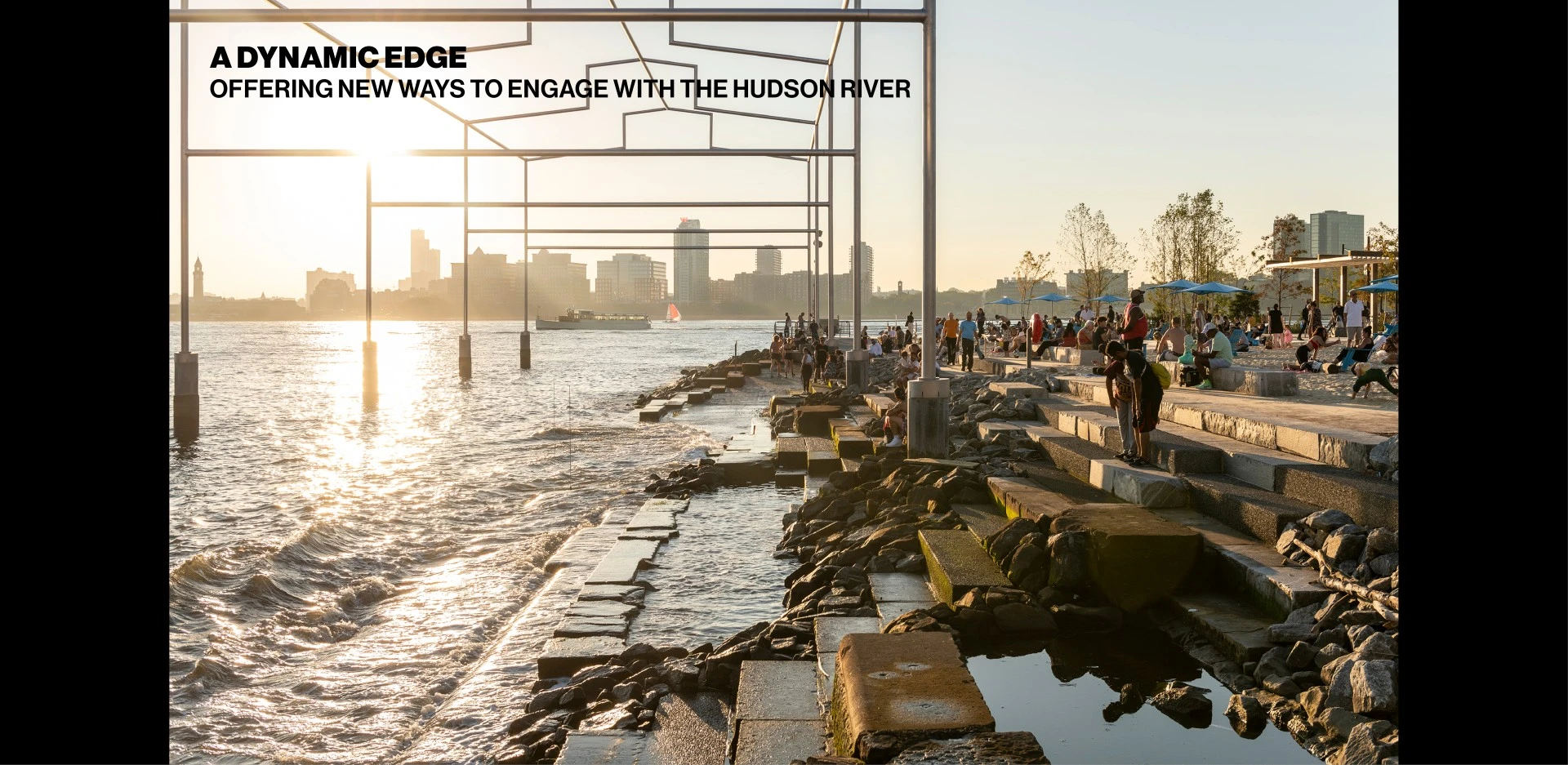
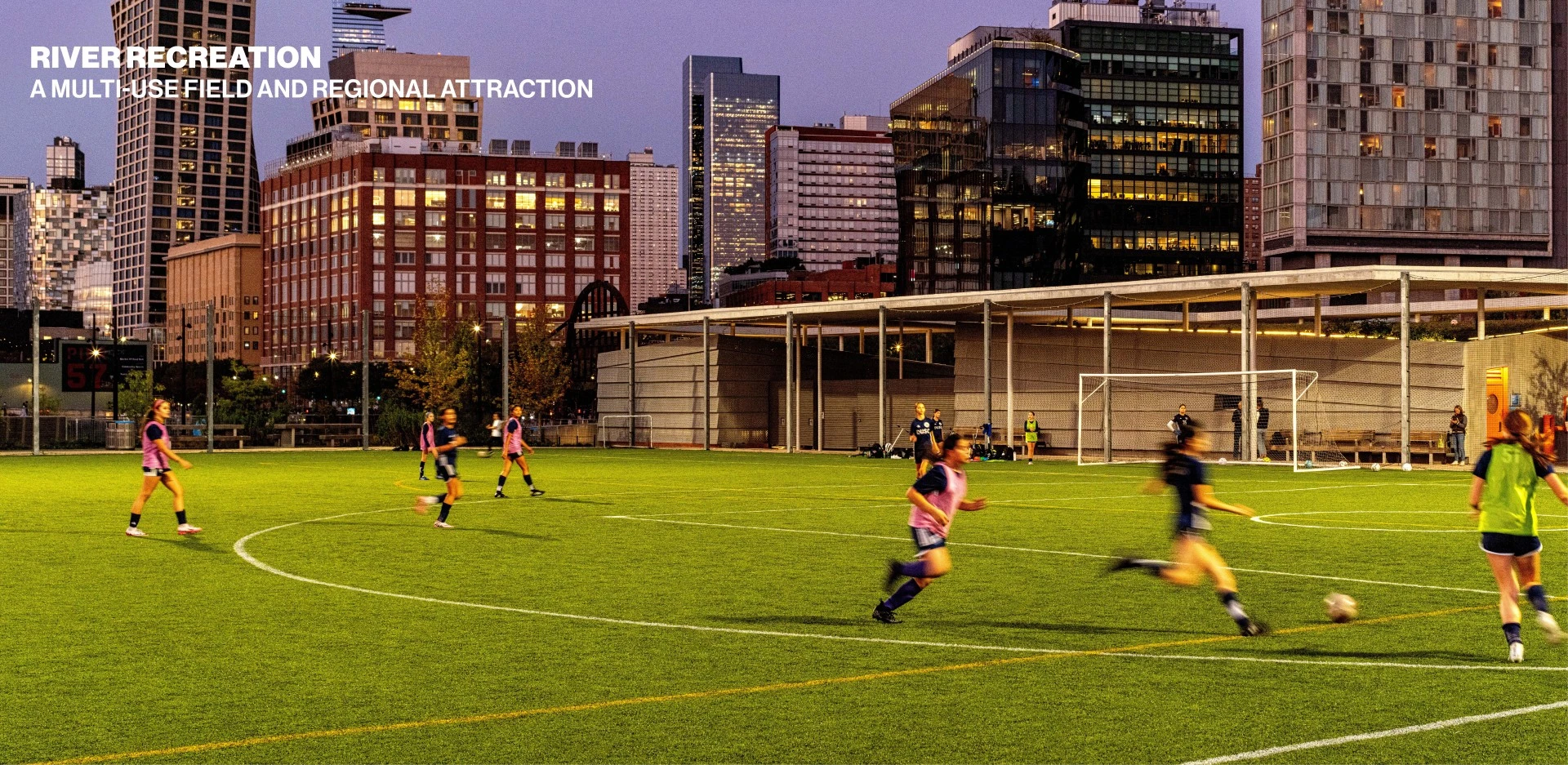
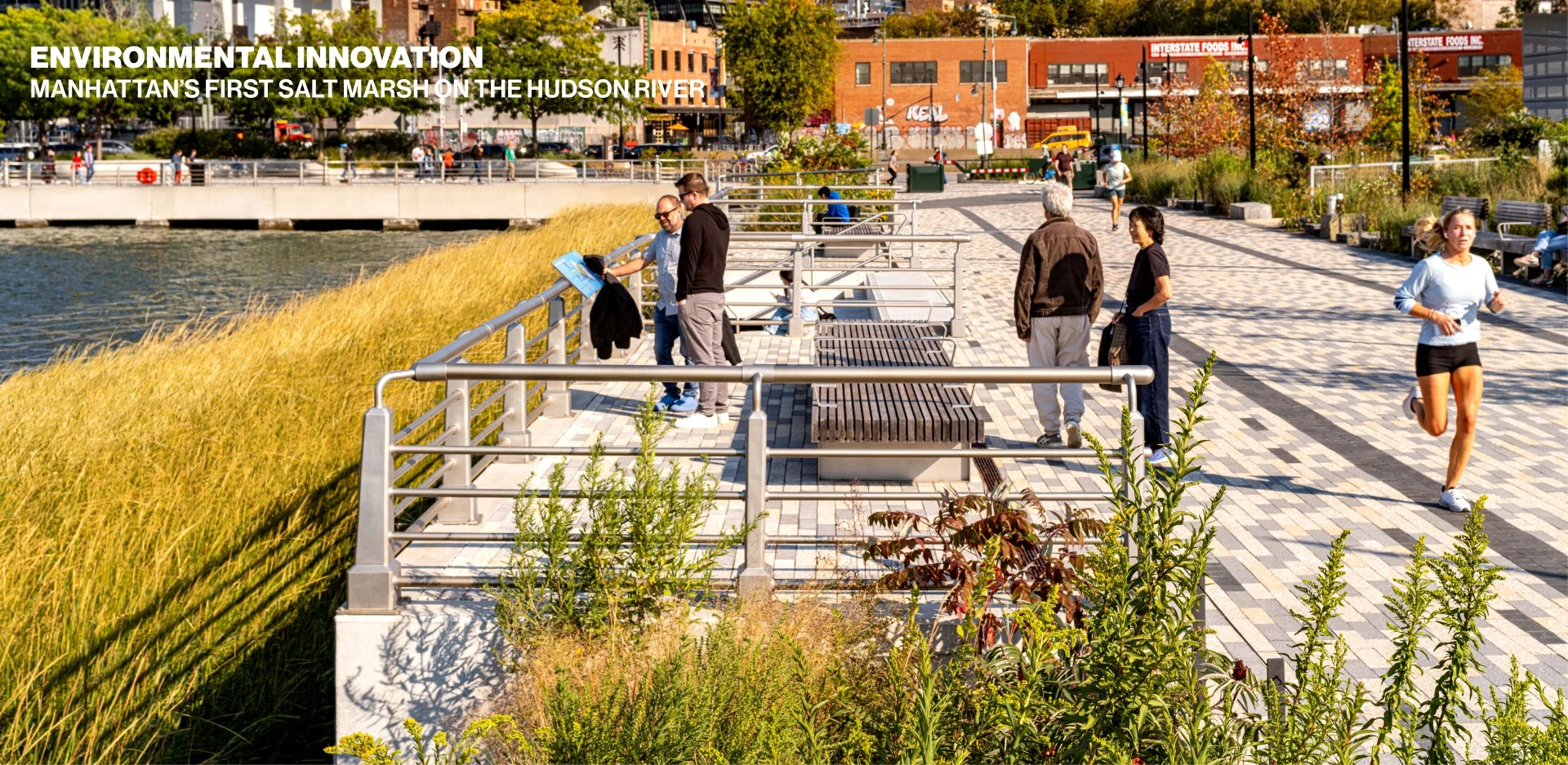
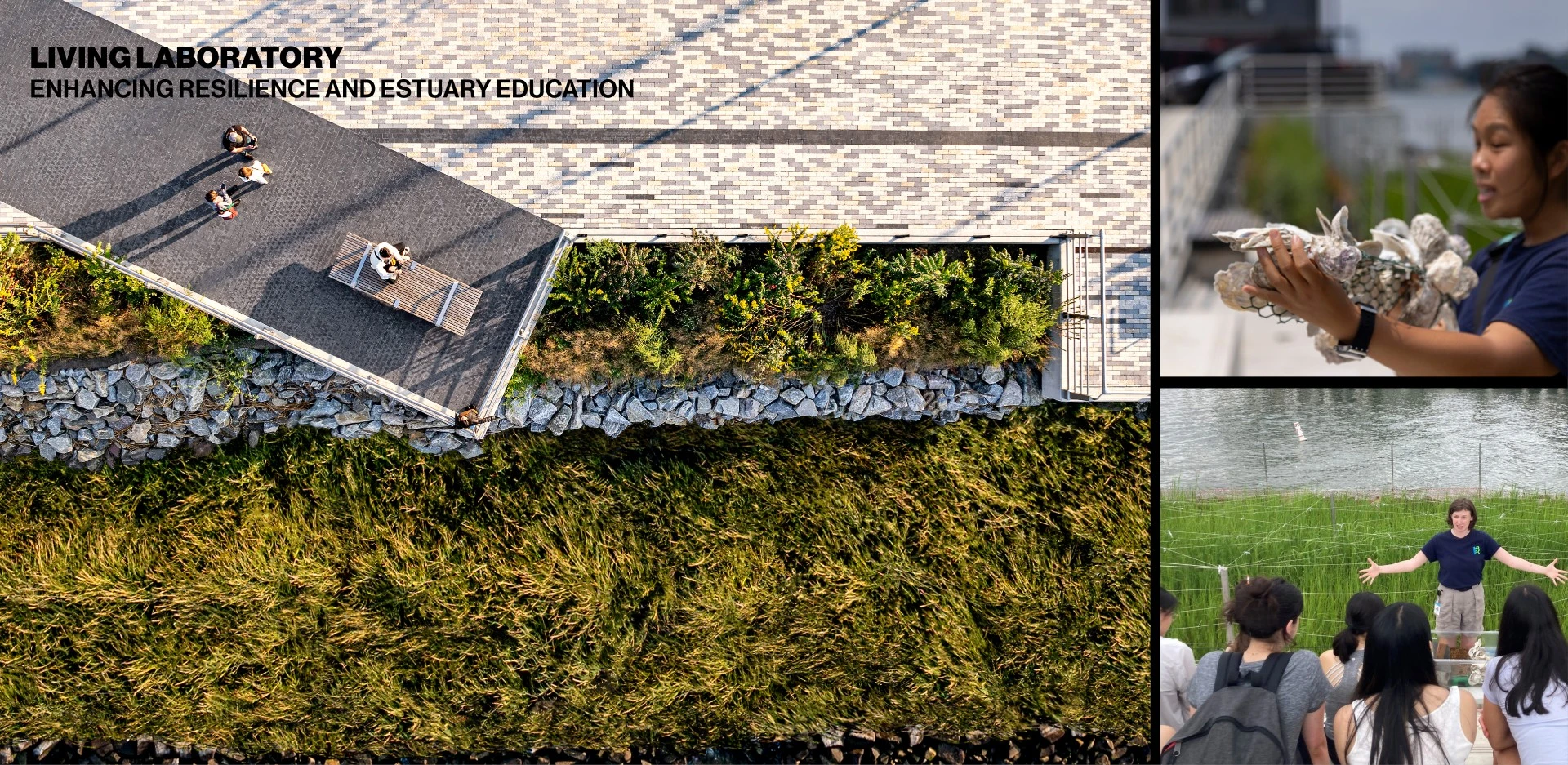
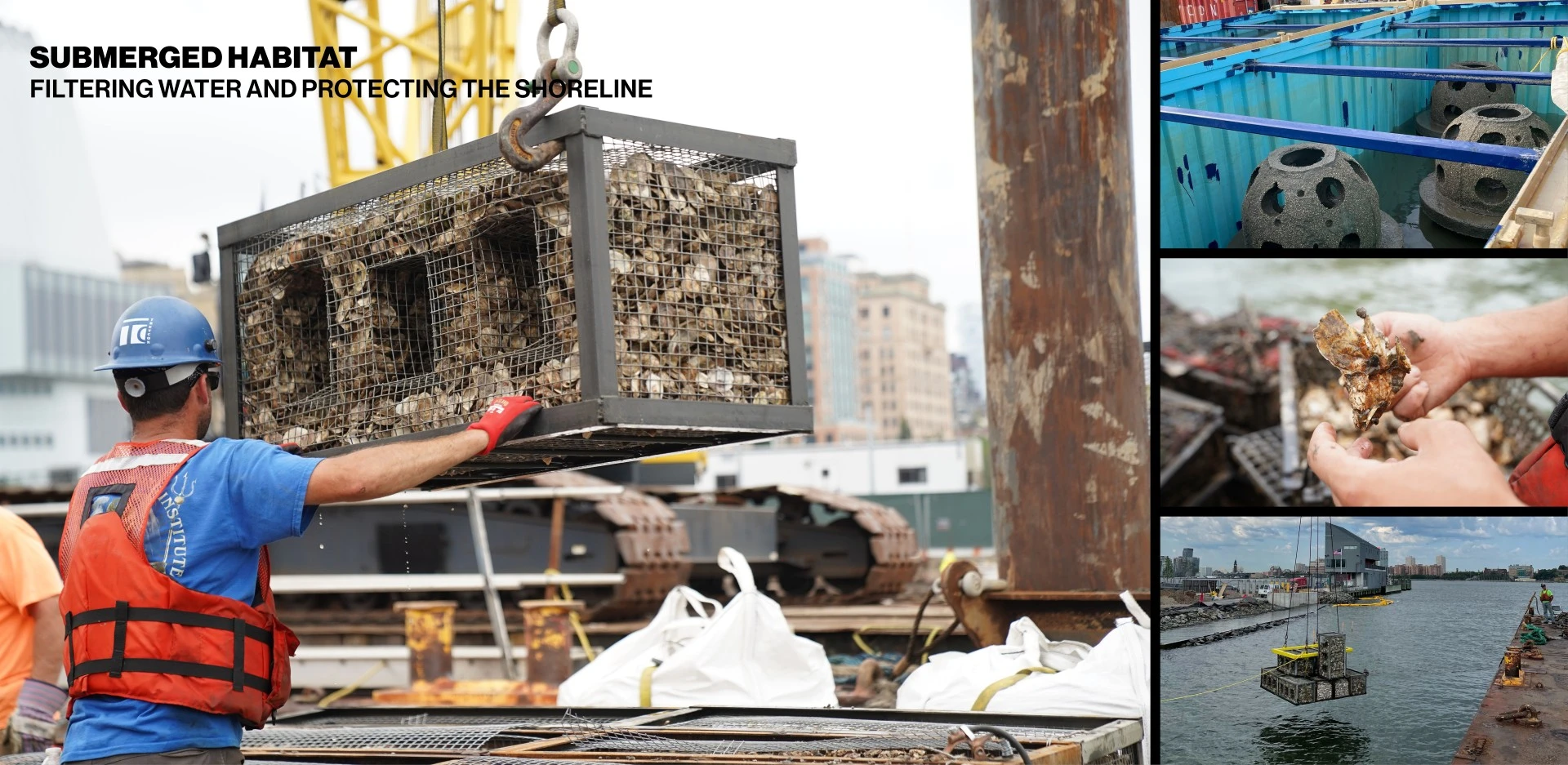
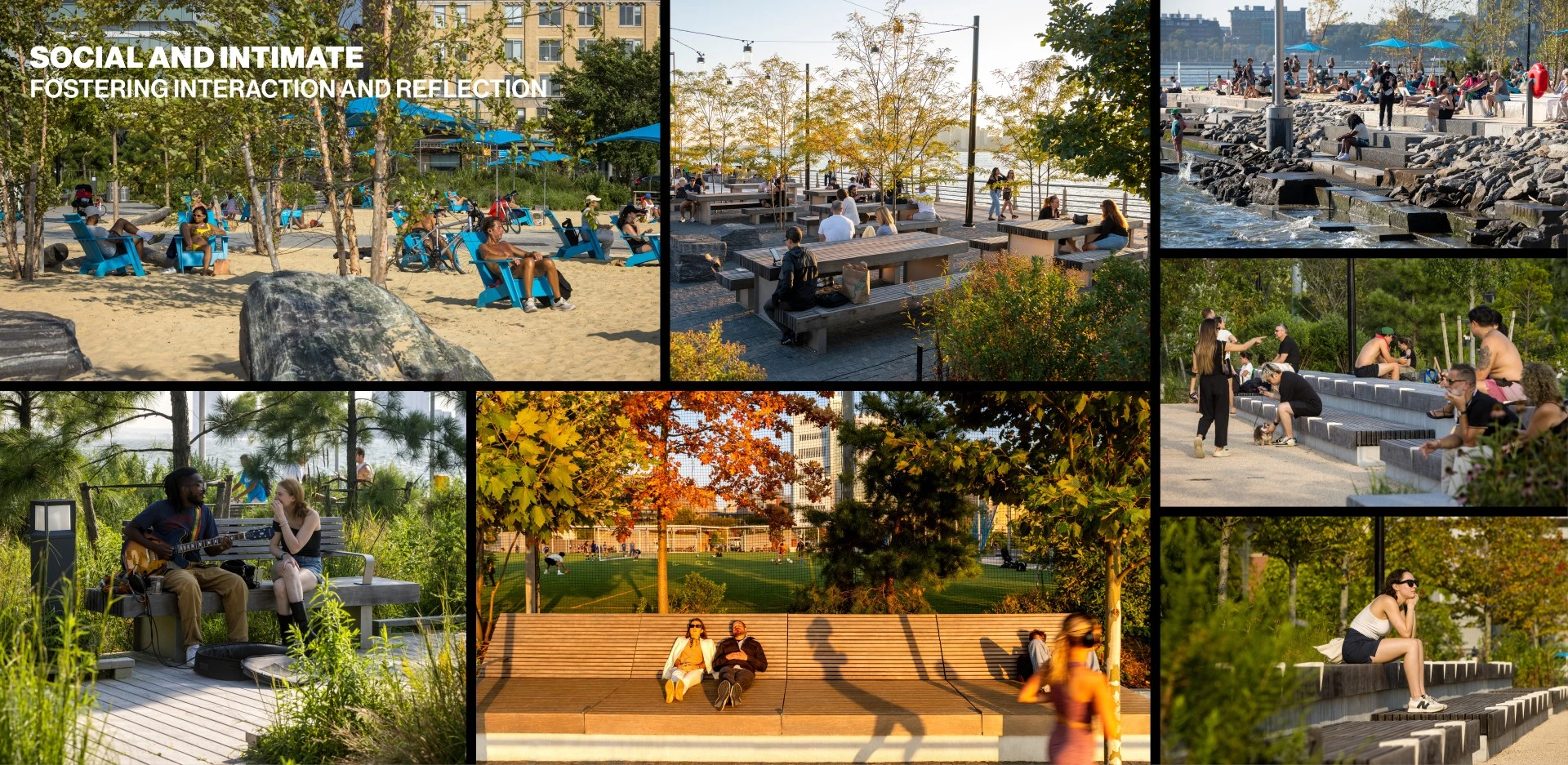
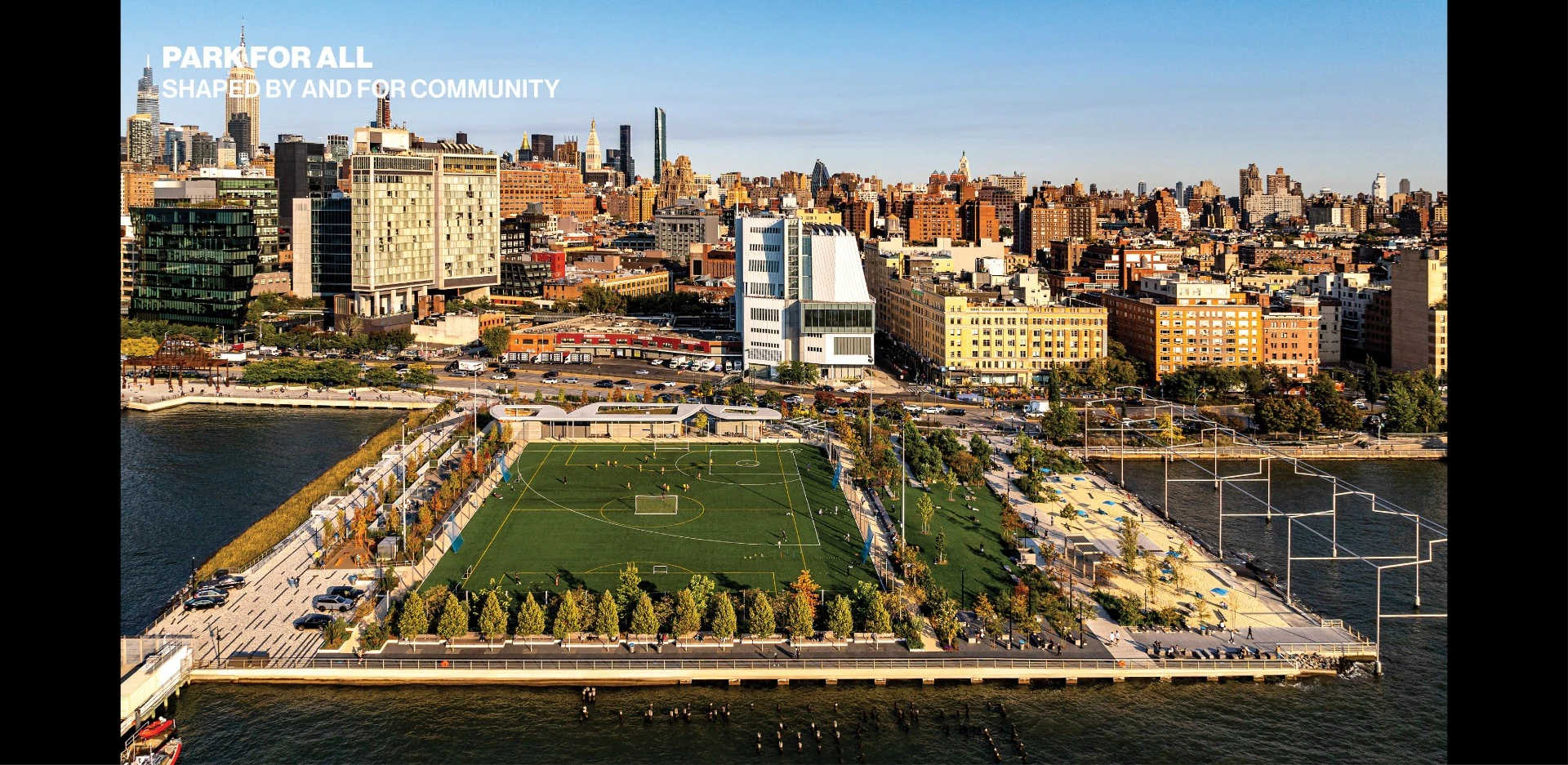
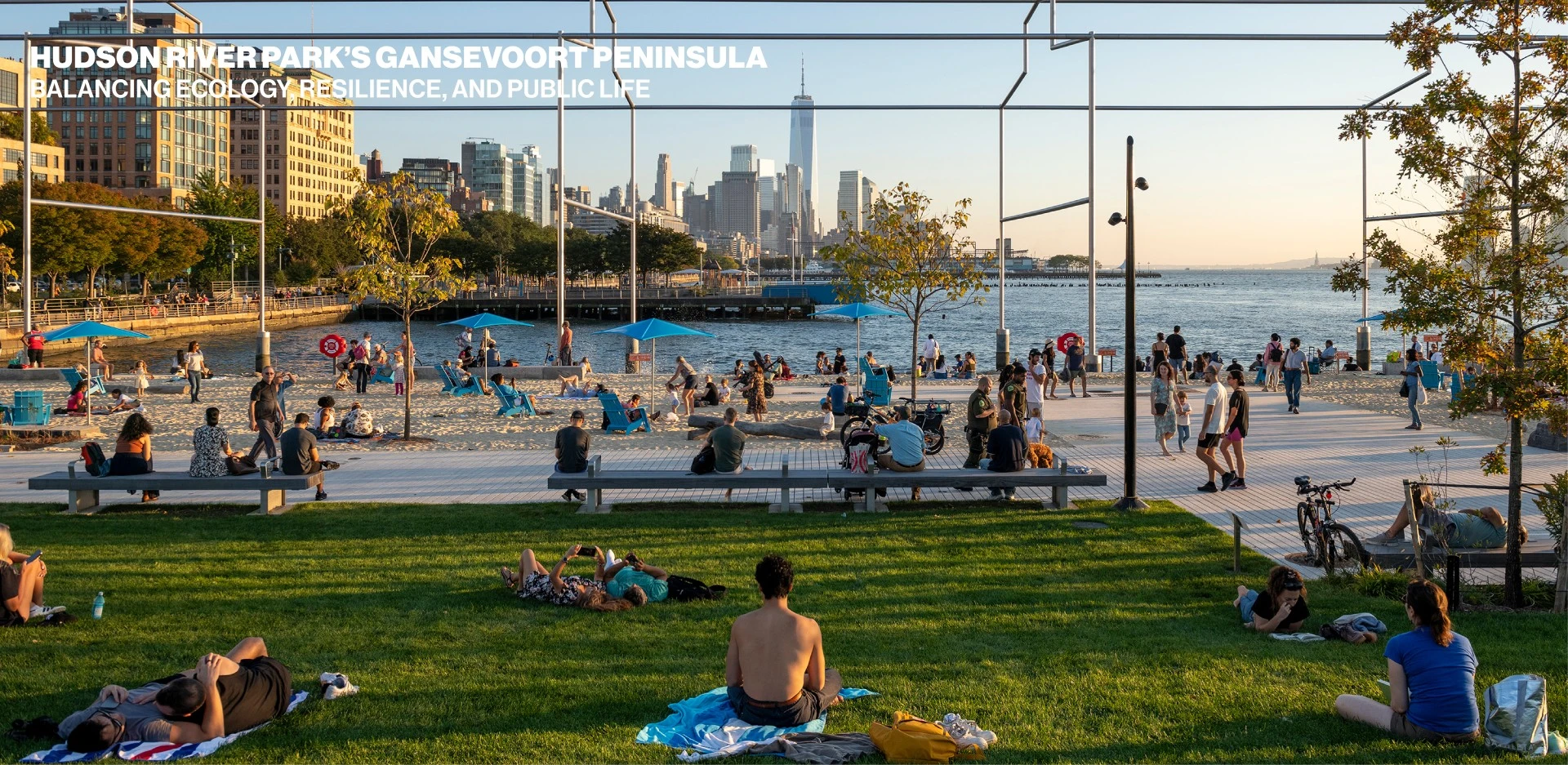
This transformative waterfront park sets a new standard for urban design, combining ecological restoration, resilient infrastructure, and engaging public spaces that foster community, biodiversity, and climate adaptation.
Awards Jury
-
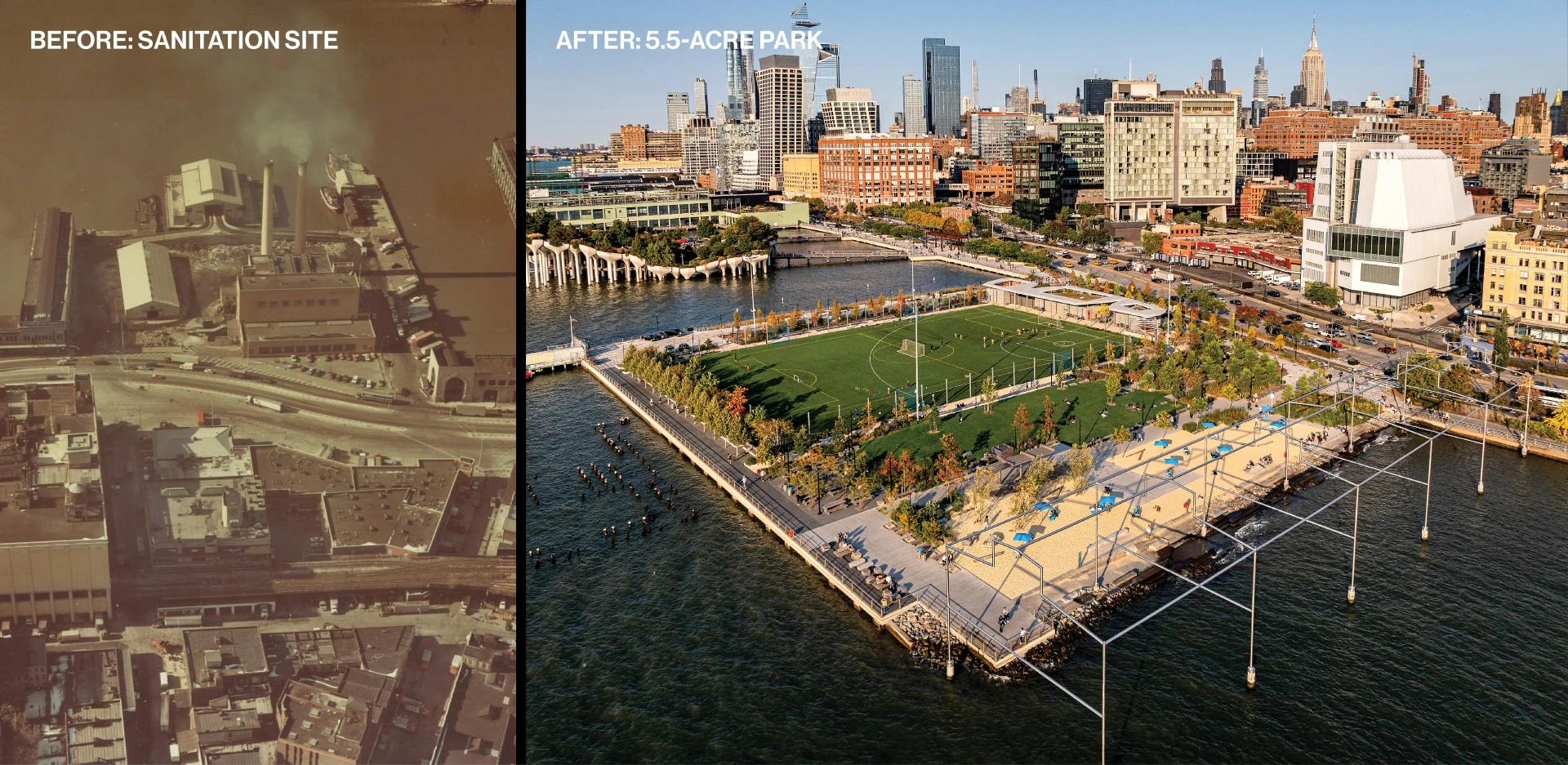
Hudson River Park's 5.5-acre Gansevoort Peninsula transforms a former sanitation site into Manhattan's first public beach and the Hudson River's first salt marsh on the Manhattan side—creating a resilient shoreline that invites New Yorkers to engage with the river. Shaped by and for the community, the project integrates resilient infrastructure with public amenities to create distinctive spaces that address climate adaptation, enhance biodiversity, and provide recreation. The salt marsh sets a pioneering precedent for citywide resilience, demonstrating how urban waterfronts can evolve to meet 21st-century climate challenges and establishing a new model where ecology, history, resilience, and community life thrive.
-
The 5.5-acre Gansevoort Peninsula transforms a former sanitation site into the largest standalone green space in Hudson River Park. Located in the Meatpacking District, it serves one of New York's densest neighborhoods with transit access and proximity to cultural institutions, generating intensive daily use. It features Manhattan's first public beach and the Hudson River's first salt marsh on the Manhattan side—creating a resilient shoreline that invites New Yorkers to engage with the river. Shaped by and for the community, the design balances active recreation with ecological innovation, creating diverse experiences while maximizing waterfront access and views.
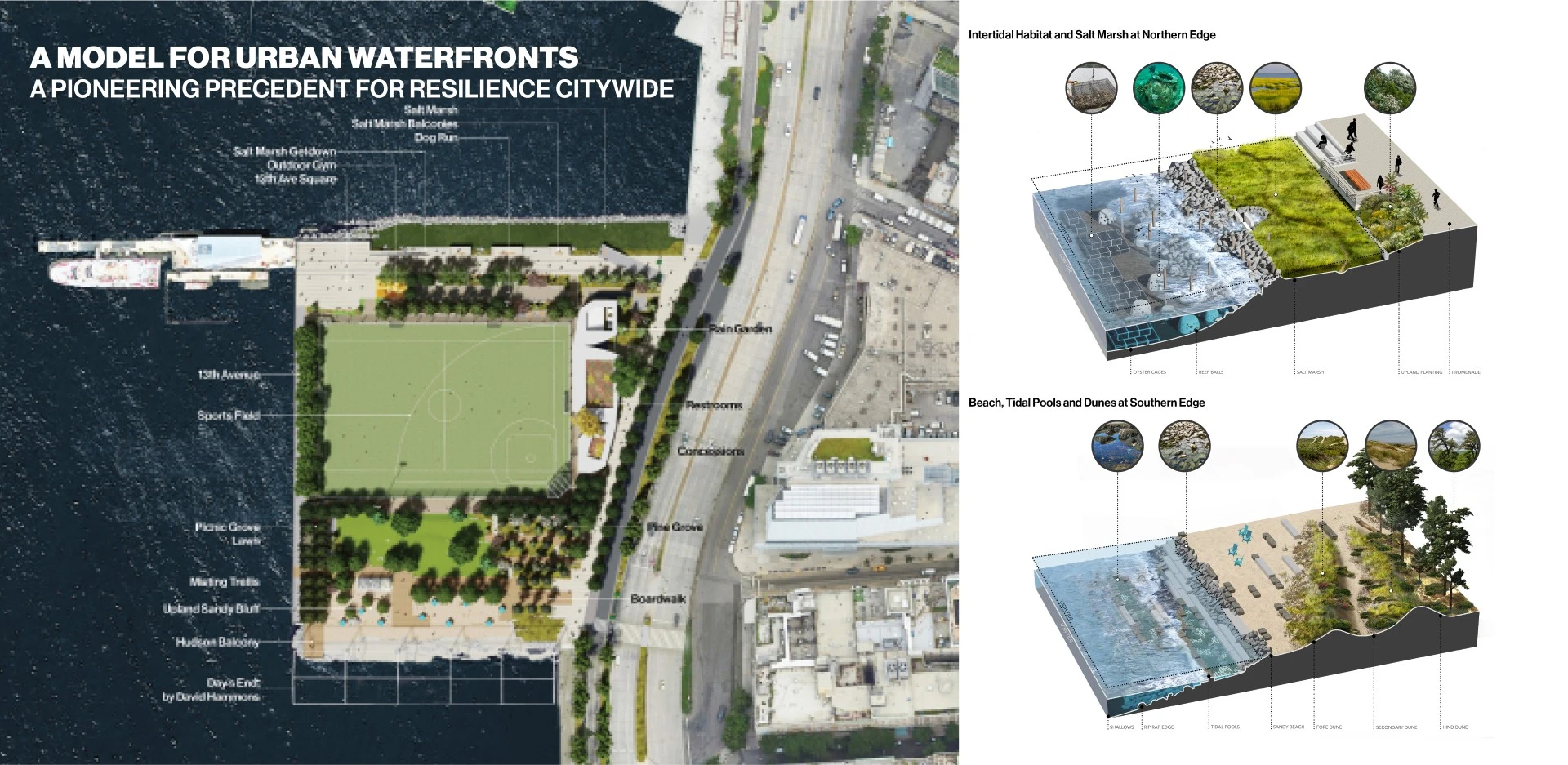
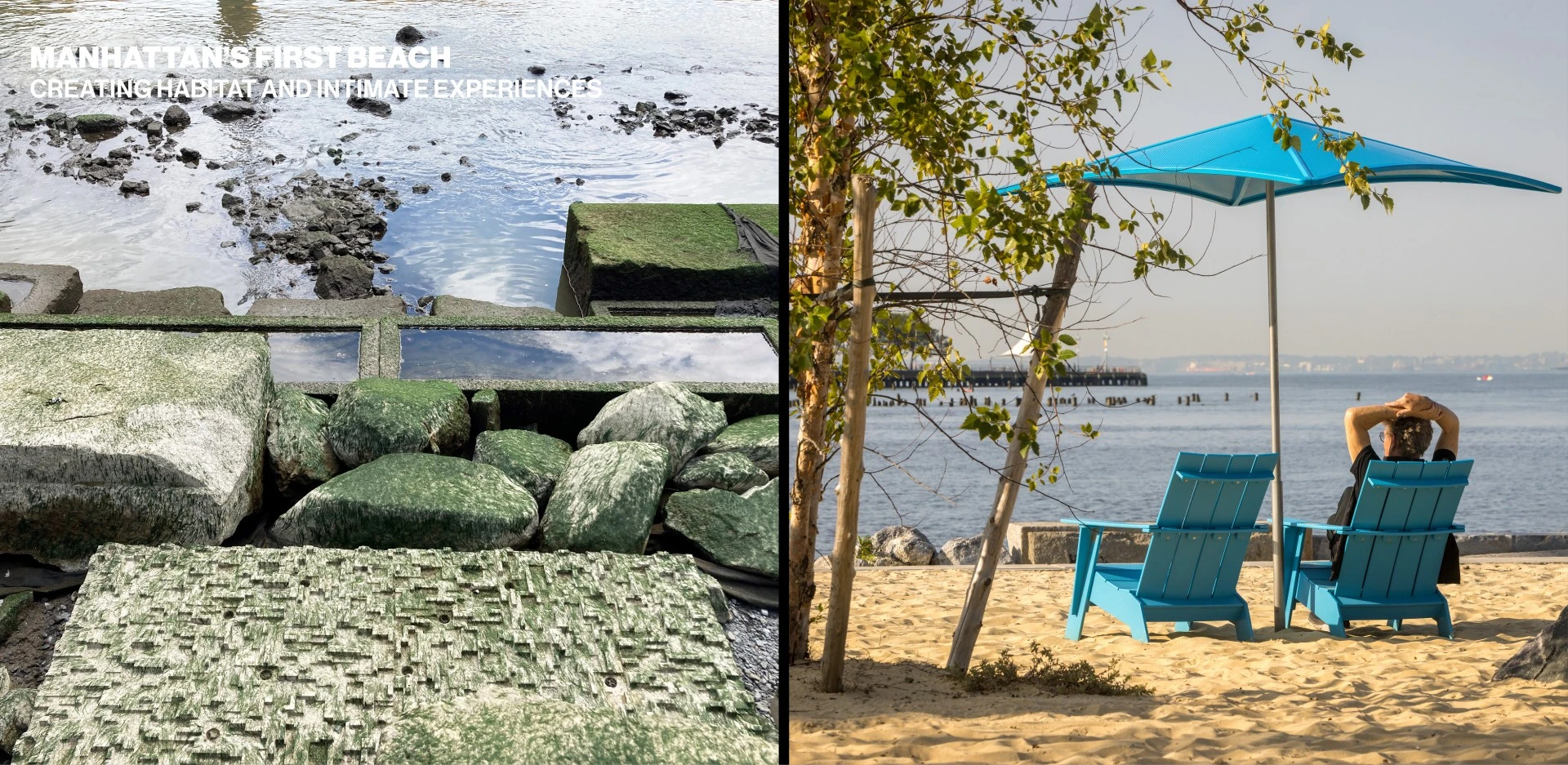
The design's defining move elongates the transition from land to water, embracing each side of the peninsula with distinct experiences that contribute to a healthier, more resilient shoreline. Performance and design are integrated: protective riprap, stone, and concrete ledges create tidal pools and seating; wetlands and intertidal habitat reduce wave action while supporting wildlife and education; and the entire peninsula was elevated to adapt to sea level rise while expanding panoramic views.
Southern Edge: Manhattan's First Public Beach
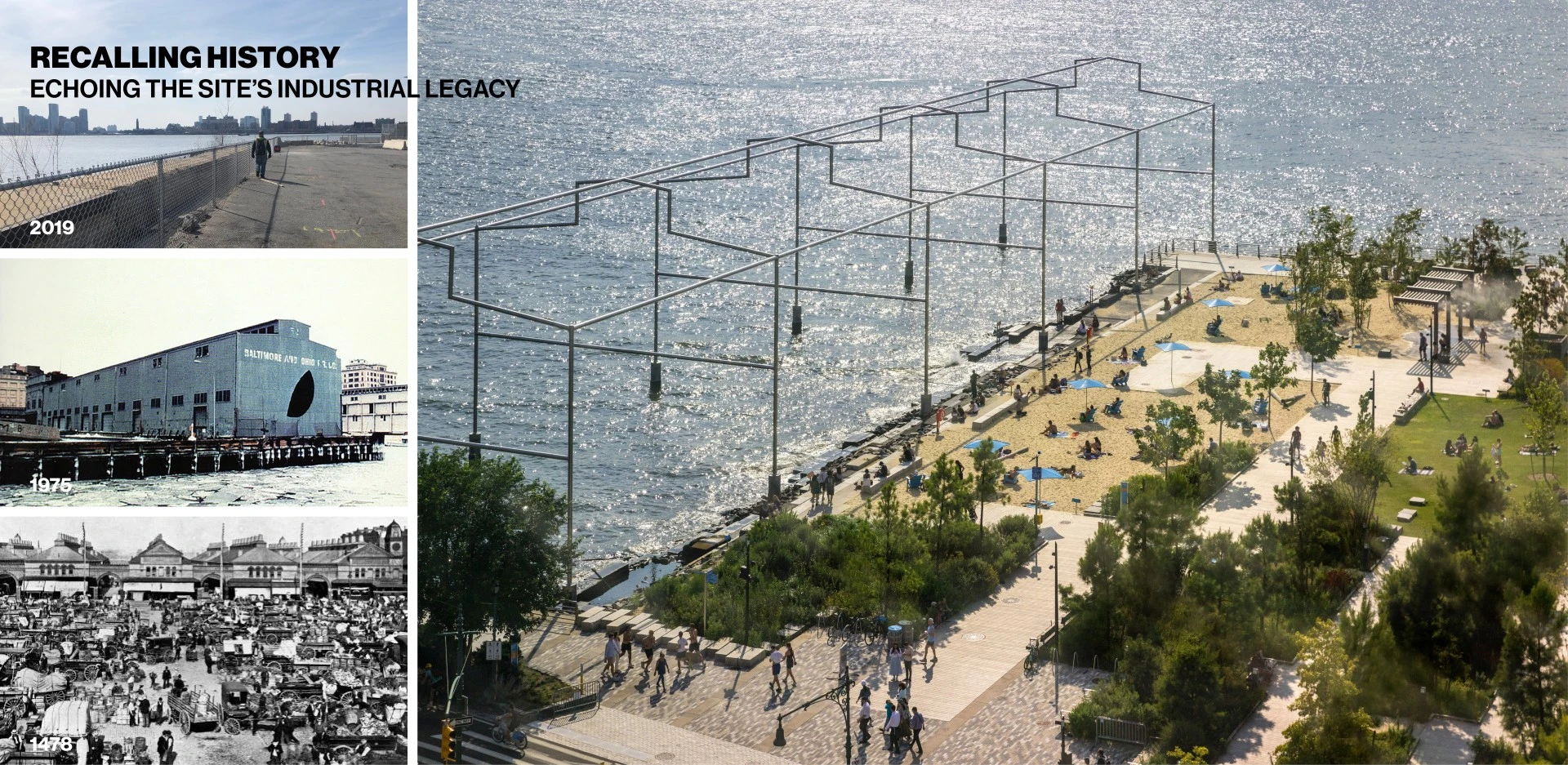
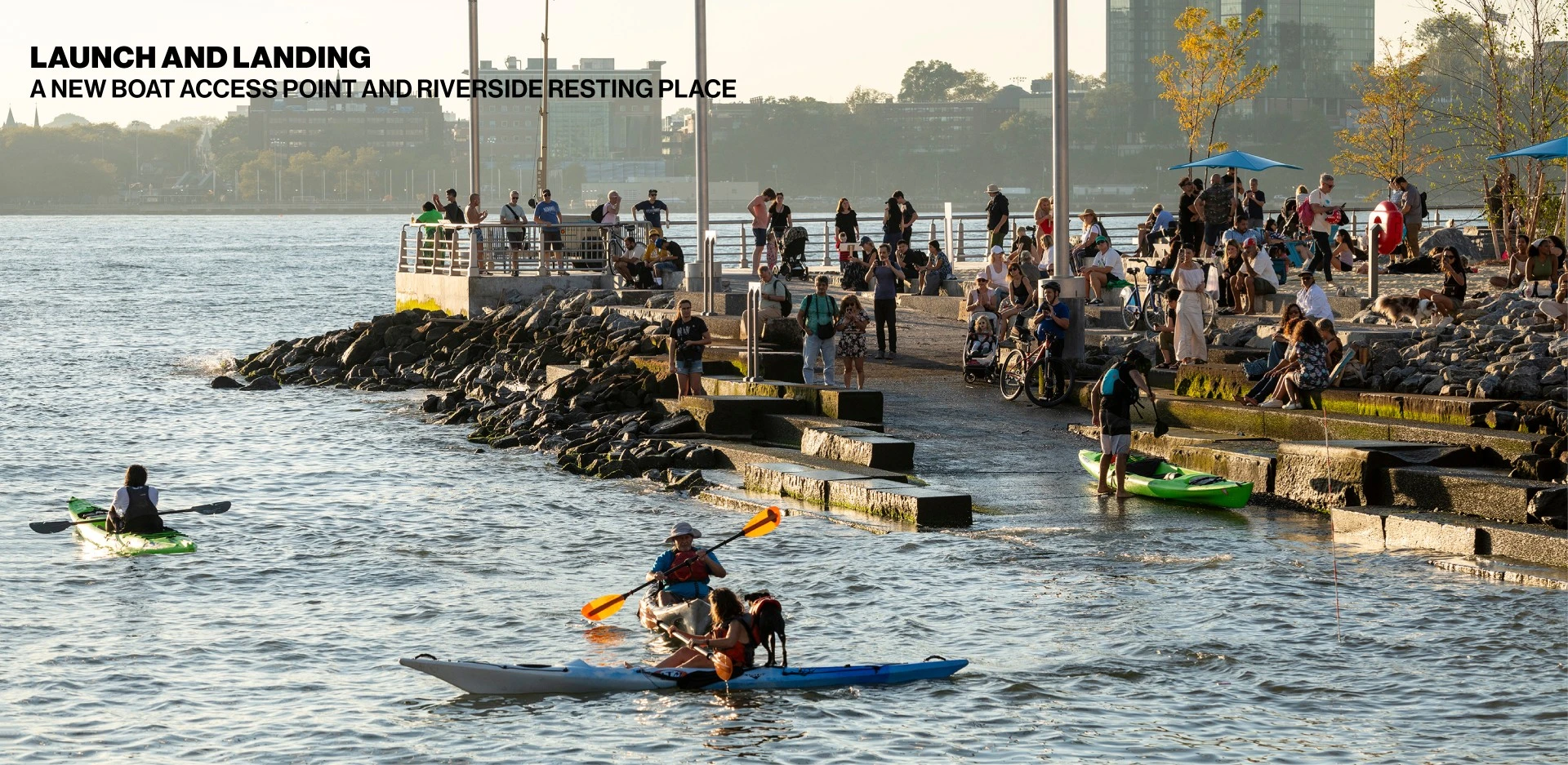
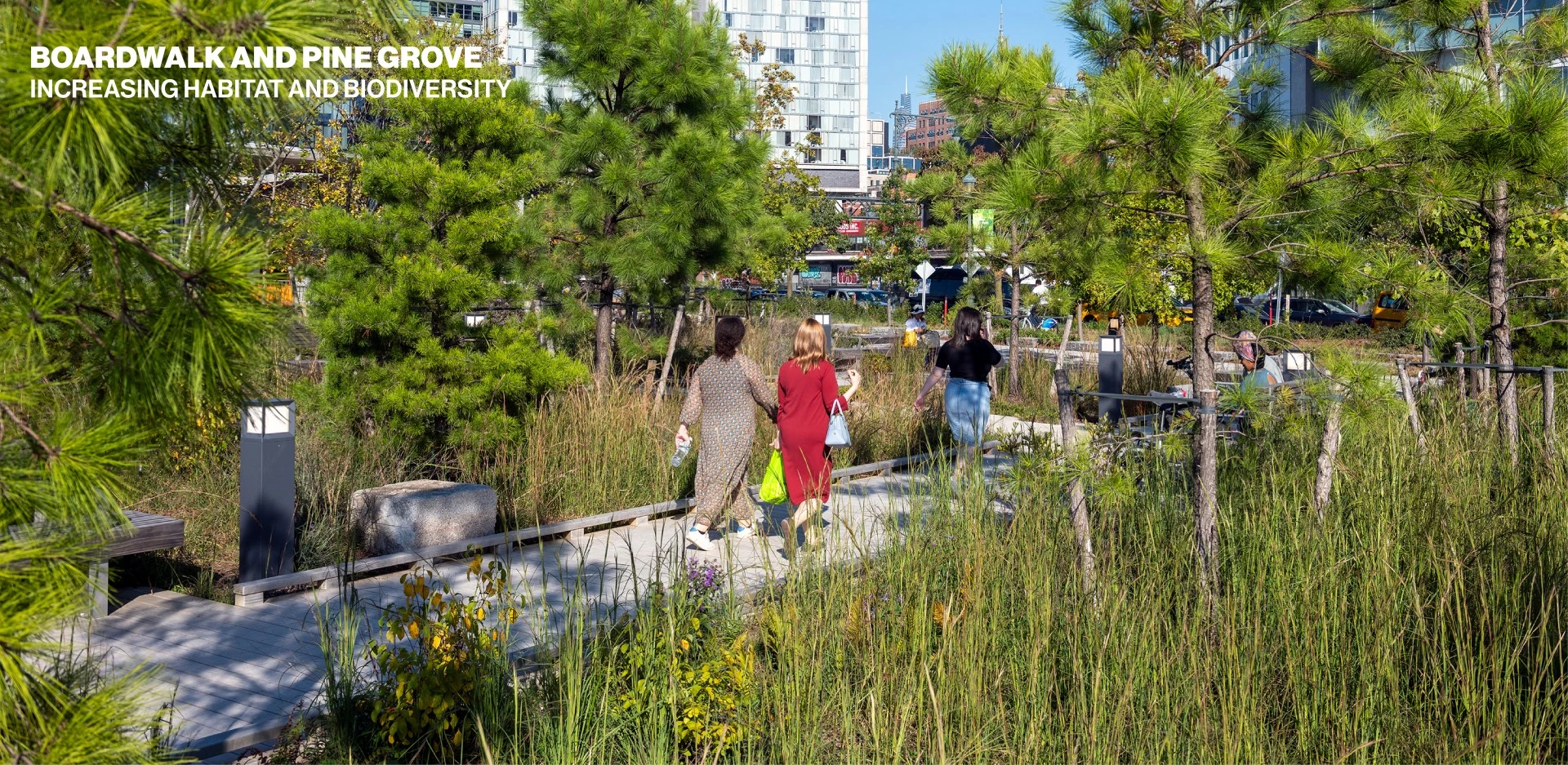
Manhattan's first public beach features a rocky seating ledge, tidal pools, and a new access point for small boats, inviting close engagement with the river. Amenities include shade trees, beach furniture, and a mist feature. David Hammons' monumental Day's End sculpture anchors the beach and recalls Gordon Matta-Clark's 1975 artwork that cut openings into Pier 52's industrial shed. Blocks and riprap protect the beach and create tidal pools and seating. The upland beach transitions to vegetated dunes inspired by New York's Barrier Islands, featuring native plantings to increase biodiversity, add seasonal interest, and withstand wind and salt spray.Northern Edge: Living Laboratory
The salt marsh is the first of its kind on the Manhattan side of the Hudson River. Submerged reef balls and gabions seeded with 20 million juvenile oysters create an artificial reef that supports biodiversity, filters water and reduces wave action. Providing essential habitat within the 400-acre Hudson River Estuarine Sanctuary, it has become a birdwatching destination for herons, egrets, and the previously unseen marsh wren. Balconies and get-downs bring people close to the water and support estuary education.Western Edge & Central Amenities
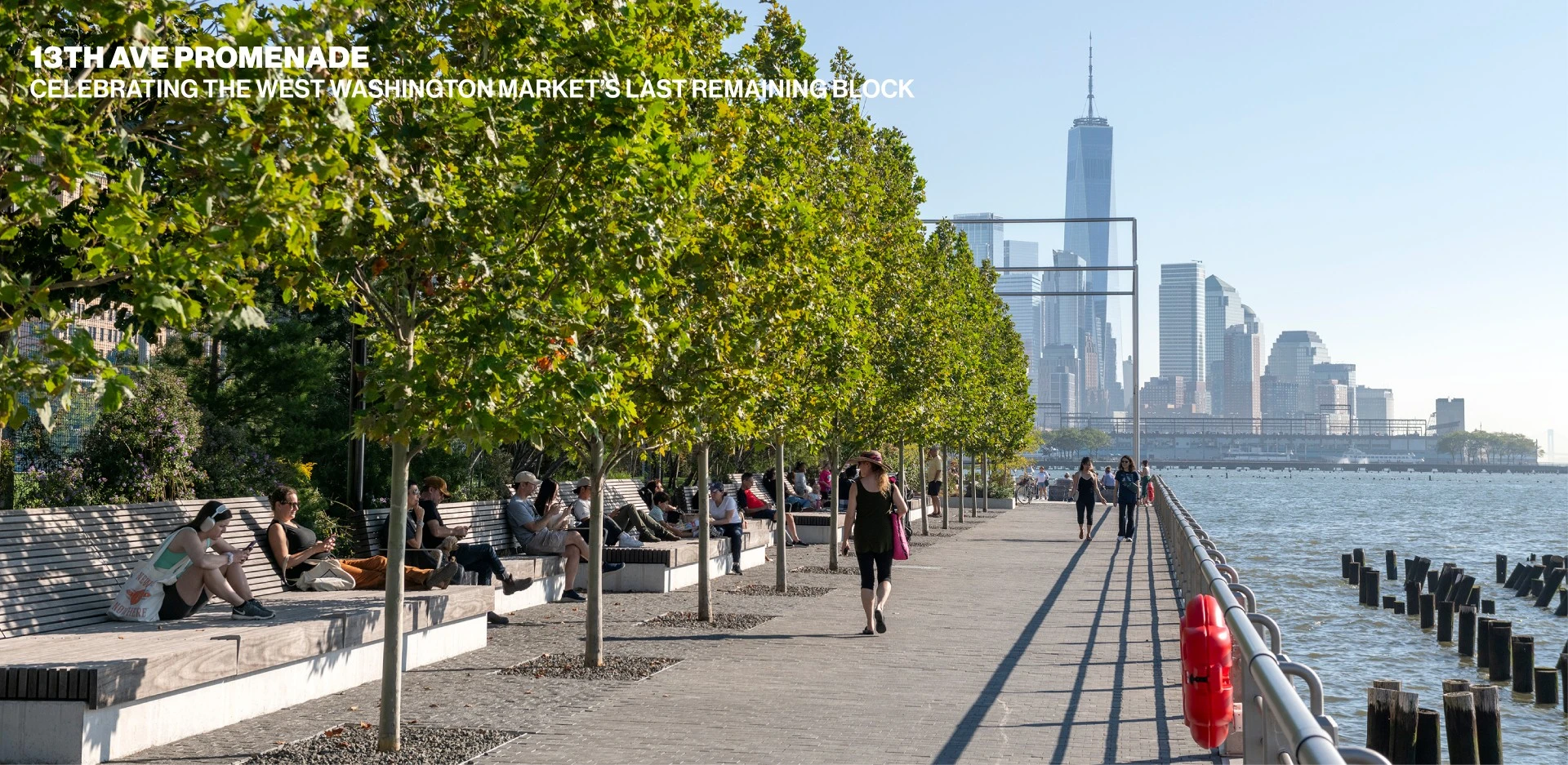
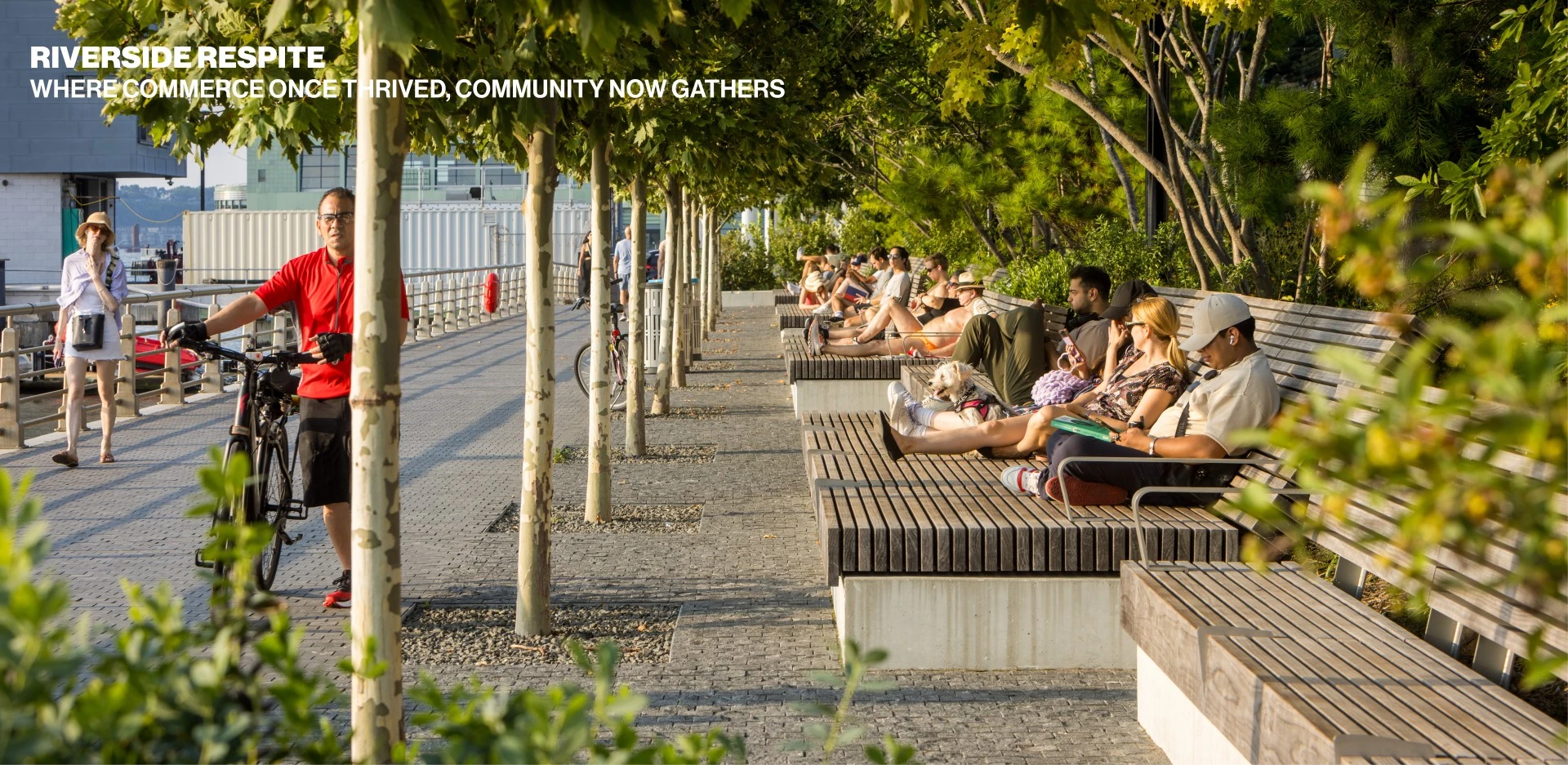
The 13th Ave Promenade celebrates the West Washington Market's last remaining block. Where commerce once thrived, the community now gathers with lounge seating and a picnic grove. At the peninsula's center, the multi-use ballfield draws diverse age groups citywide. An elegant gateway building houses public restrooms, a concession, and park maintenance.Environmental Innovation
The southern edge's rocks and ledges withstand wave action while stabilizing the shoreline. The salt marsh is protected by a wave break, with submerged infrastructure providing natural buffering and serving as a pioneering precedent for future resilience projects citywide. A pre-loading process compressed the ground before construction to address settlement. Gansevoort Peninsula reimagines an inaccessible sanitation site as Hudson River Park’s largest green space—reflecting the neighborhood and its needs, celebrating its history, and establishing a new model for urban waterfronts where ecology, resilience, and public life thrive. -
- Hudson River Park Trust, Client
- Field Operations, Project Lead, Landscape Architecture, Urban Design, Public Engagement
- nARCHITECTS, Architecture
- Philip Habib & Associates, Civil & Traffic Engineering
- Langan, Marine & Geotech Engineering, Topographic Survey
- Altieri Sebor Wieber, LLC, Site MEP & Electrical Engineering
- PlusGroup, Building MEP & Site Electrical
- Silman, Building & Site Structural Engineering
- eDesign Dynamics, Natural Resources & Ecology
- CAS Group, LLC, Hydrology & Sediment Modeling
- KS Engineers, Bathymetric Survey
- Craul Land Scientists, Soil Science
- TMS Waterfront, Permitting & Waterfront Review
- JAM, Expediting
- Northern Designs, Irrigation
- Horton Lees Brogden Lighting Design, Lighting Design
- Pentagram, Signage & Wayfinding Design
- Dharam Consulting, Cost Estimating
- Holmes Keogh Associates, Code & Life Safety Consulting
- Thornton Tomasetti, Security
- Gilbane Building Company and Invictus Engineering, Contractor
-
- Custom Benches: Designed by Field Operations, fabricated by Studio 431 & Landscape Forms — Furniture
- Furnishing Wood Slats: Kebony — Furniture
- Adirondack Chairs: Loll Designs — Furniture
- Beach Umbrellas, Trash Cans: Landscape Forms — Furniture
- Drinking Fountains & Mist Pole: Most Dependable Fountains — Furniture
- Aco — Drainage/Erosion
- Iron Age Designs — Drainage/Erosion
- Nyloplast — Drainage/Erosion
- Sports Field Fencing: Designed by Field Operations, fabricated by Yaboo Fencing — Fences/Gates/Walls
- Sports Field Netting: Keeper Goals, Inc. — Fences/Gates/Walls
- Tucor — Irrigation
- JM Eagle — Irrigation
- Dura — Irrigation
- Boardwalk: Accoya — Lumber/Decking/Edging
- Synthetic Turf: A-Turf — Parks/Recreation Equipment
- Sand: Partac — Parks/Recreation Equipment
- Precast Tidal Pool Bases & Tide Pool Units: ECOncrete — Water Management/Amenities
- Reef Balls: Reef Innovations — Water Management/Amenities
- Soils: Naturcycle — Soils
- Concrete Paving: Hanover — Hardscape
- Granite Paving: Polycor — Hardscape
- Quartzite Paving: Champlain Stone — Hardscape
- Resin Bonded Aggregate Paving: Complete Streets — Hardscape
- Granite Landscape & Seating Boulders: Champlain Stone — Hardscape
- Light Poles: Selux, Bega — Lighting
- Mist Trellis: Designed by Field Operations and Fountain Technologies, fabricated by Forms+Surfaces — Other
-
- Brilliant Red Chokeberry
- Buttonbush
- Silky Dogwood
- Red Twig Dogwood
- Inkberry Holly
- Winterberry
- Virginia Sweetspire
- Mountain Laurel
- Spicebush
- Northern Bayberry
- Beach Plum
- Swamp Azalea
- Fragrant Sumac
- Carolina Rose
- Virginia Rose
- Lowbush Blueberry
- Arrowwood Viburnum
- Coral Honeysuckle
- Cinnamon Fern
- Black Snakeroot
- Poppy Anemone
- Hybrid Columbine
- Kinnikinnick
- Swamp Milkweed
- Common Milkweed
- Butterfly Milkweed
- White Wild Indigo
- Blue Wild Indigo
- Searocket
- Marsh Marigold
- Pennsylvania Sedge
- Coneflower
- Flaxleaf Aster
- Beach Pea
- Spike Blazing-star
- Turk’s-cap Lily
- Cardinal Flower
- Bee Balm
- Pink Muhly Grass
- Beardtongue
- Christmas Fern
- Coneflower
- Coastal Plains Black-eyed Susan
- Seaside Goldenrod
- Prairie Dropseed
- New England Aster
- Giant Ironweed
- Autumn Blaze Maple
- Shadblow Serviceberry
- River Birch
- Northern Catalpa
- Maidenhair Tree
- Sunburst Common Honey Locust
- Eastern Red Cedar
- American Sweetgum
- Sweet Bay
- Sour Gum
- White Pine
- Pitch Pine
- Loblolly Pine
- Virginia Pine
- American Sycamore
- London Plane Tree
- Splendens Scarlet Oak
- Blackjack Oak
- Sovereign Pin Oak
- Willow Oak
- Red Oak
- Staghorn Sumac
- Sassafras
- Bald Cypress
- New Horizon American Elm
Advertisement
Related Awards
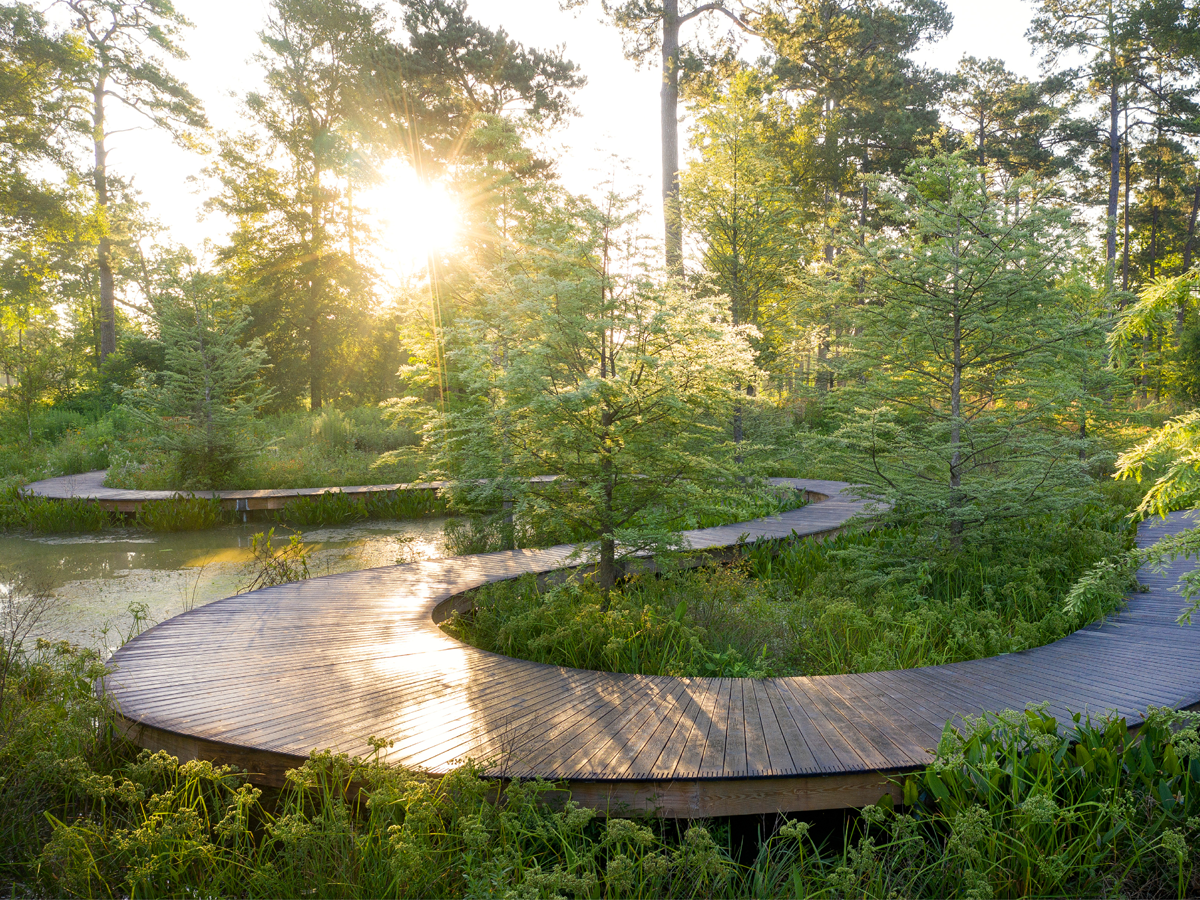
Honor Award, General Design
Houston Arboretum & Nature Center
The Houston Arboretum & Nature Center sits within Memorial Park, one of the largest urban parks in the United States, in one of the nation's fastest growing and most climate-challenged cities. The site's story is one of repeated loss and deliberate reinvention. Hurricane Ike in 2008 and a severe drought in 2011 destroyed much of the Arboretum's tree canopy, exposing the limits of conventional reforestation in a city defined by flooding, heat, and ecological volatility.