
.webp?language=en-US)

.webp?language=en-US)

Where Flamingos Return, Life Returns
Zeliang Lyu, Student ASLA



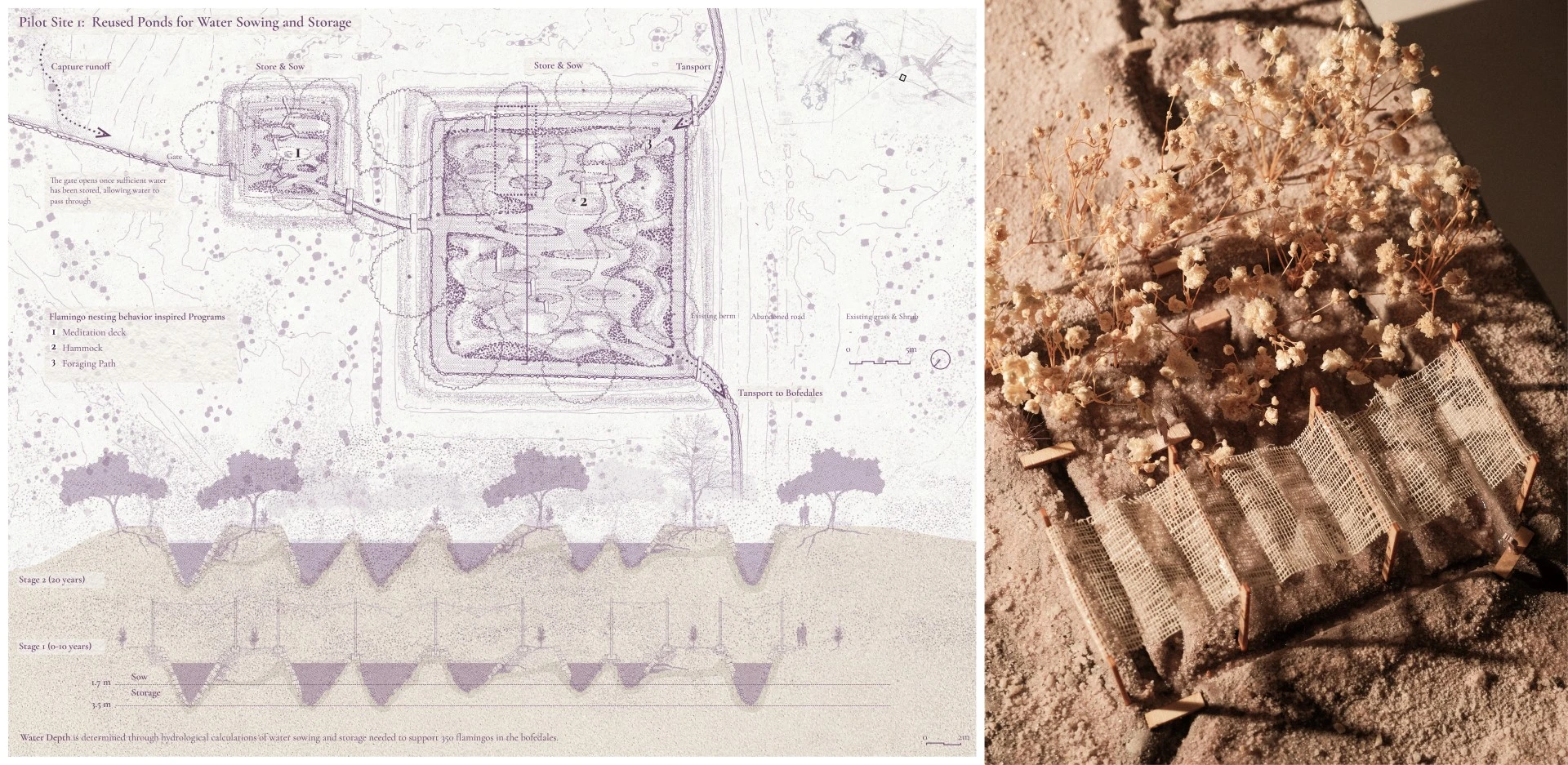


Excellent integration of ecology, governance, and Indigenous stewardship for landscape repair. The narrative presents some strong measurable outcomes. Flamingos are a clear ecological health indicator.
Awards Jury
-
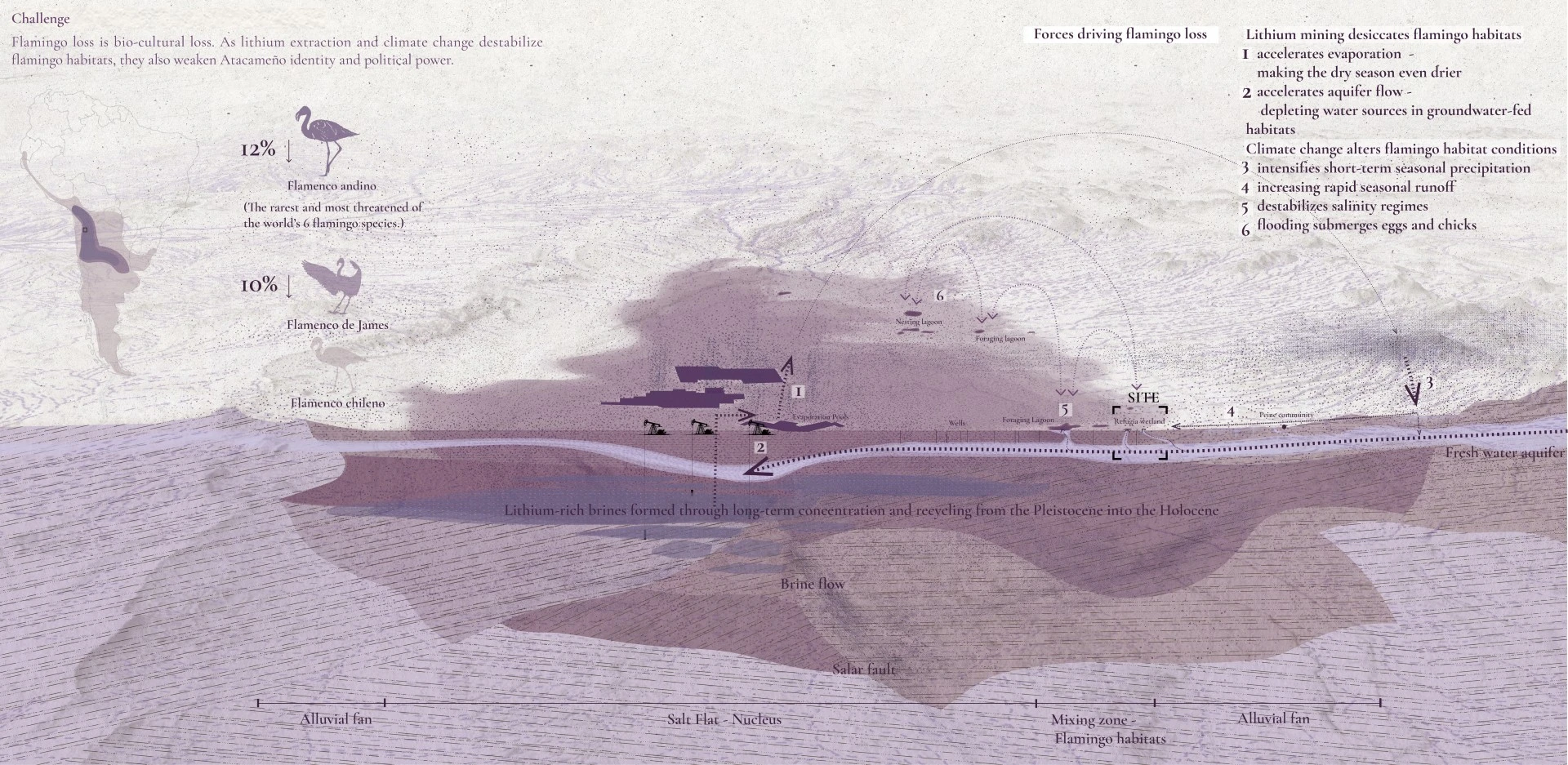
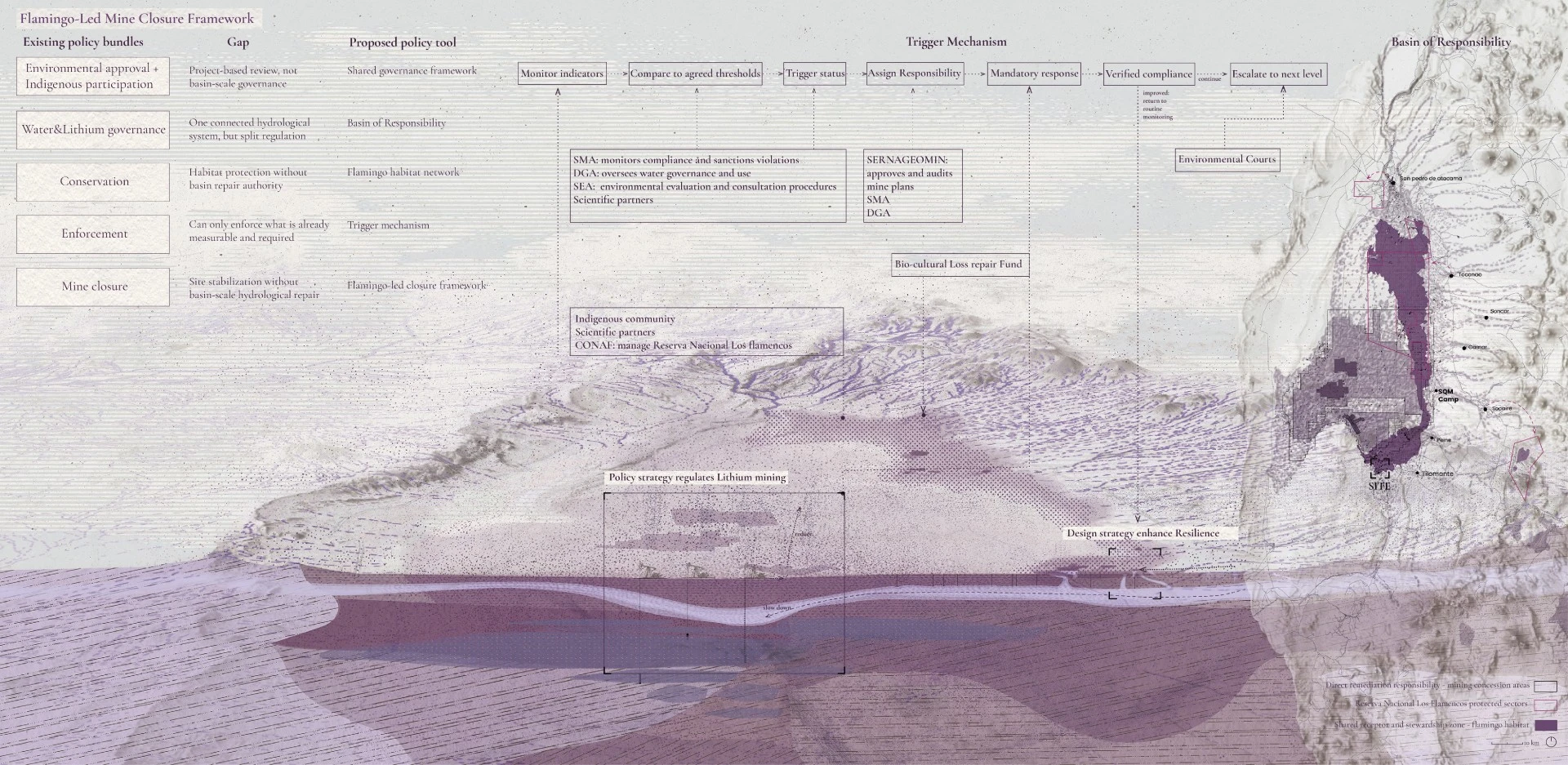
This project redefines lithium mine closure in the Salar de Atacama as a project of ecological justice. In one of the world's fastest-growing extractive frontiers, it offers a cross-scale model linking basin governance to site repair. The project advances a Flamingo-Led Mine Closure Framework that treats flamingo habitat as both design guide and living indicator of basin health, expanding responsibility beyond concession boundaries through shared monitoring and triggered accountability. At the Monturaqui-Negrillar-Tilopozo aquifer, ancestral seeding-water strategies and reused mining infrastructure restore refugia wetlands while fostering dialogue between lithium companies and Atacameño communities around a more just post-extractive future.
-
Located in the Salar de Atacama in northern Chile, this project works in one of the driest non-polar landscapes on Earth, where life depends on calibrated relations among water, salt, soil, and time. The basin is under pressure from lithium extraction, climate variability, and conflict over water. Flamingos are central because they depend on a connected network of hypersaline netting lagoons, saline feeding mudflats, and groundwater-fed refugia. Their decline signals ecological degradation and bio-cultural loss, weakening water-territory relations, community identity, and Indigenous political power.
Cross-Scalar Strategy
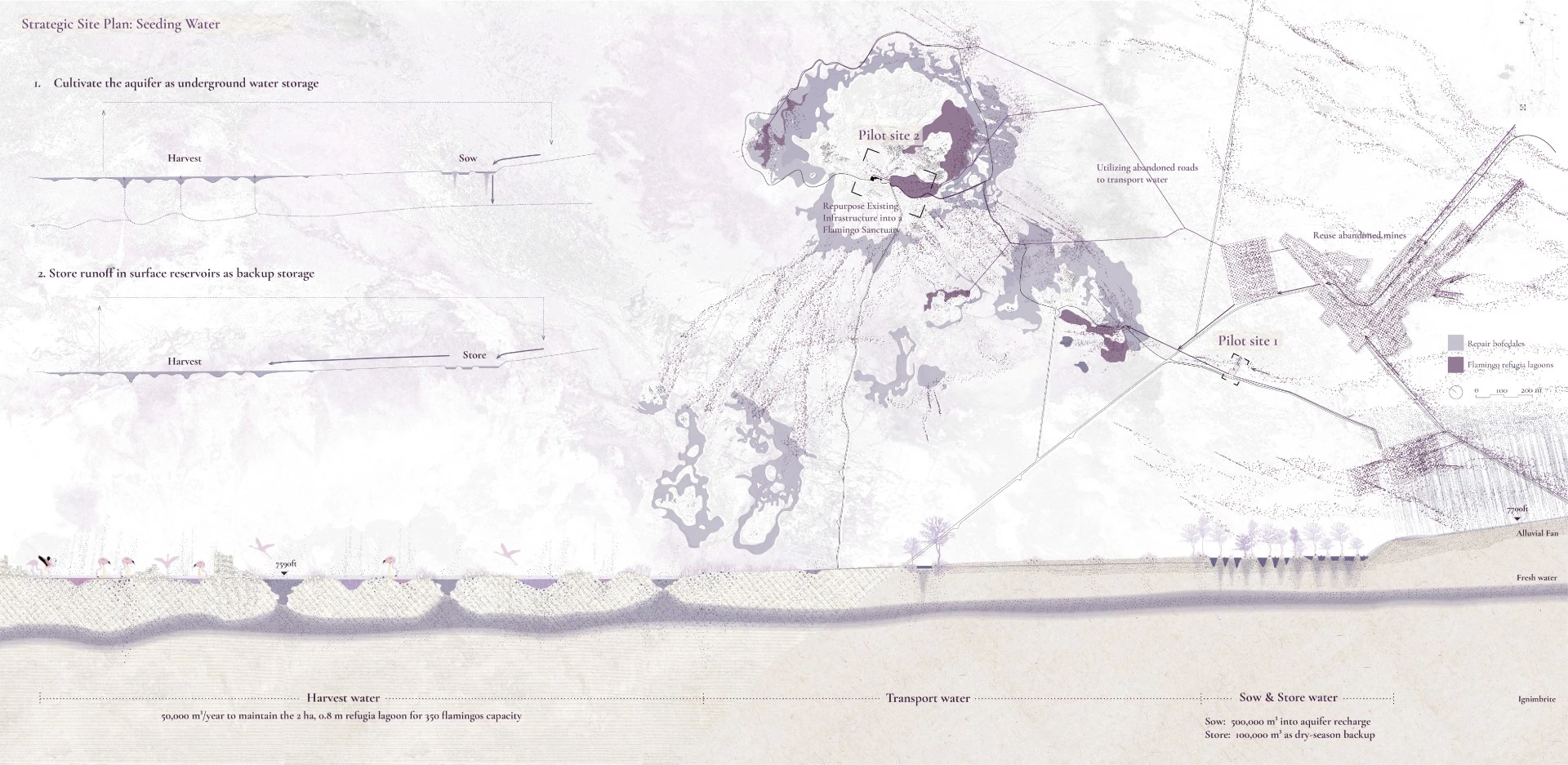
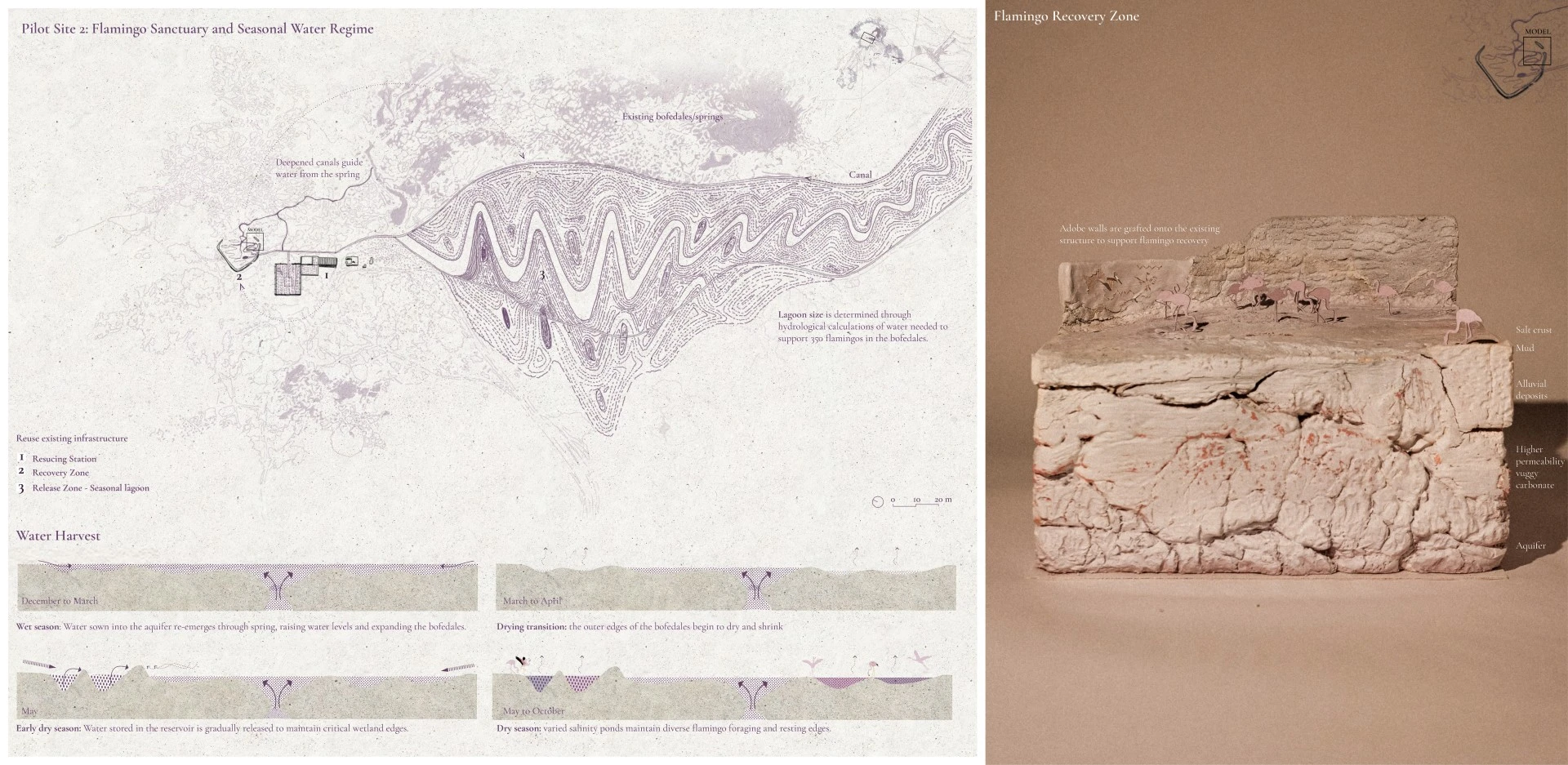
The project operates across two scales: a Flamingo-Led Mine Closure Framework at basin scale and a repair prototype in the Monturaqui-Negrillar-Tilopozo aquifer, including a 2 ha flamingo sanctuary as the first measurable refuge cell within a larger wetland network.Research and Core Contradiction
Site investigation combined hydrological reading, flamingo habitat mapping, policy analysis, and field observation of damaged bofedales and abandoned mining infrastructure. This research revealed a core contradiction: lithium extraction operates through a shared hydrological basin, while responsibility remains fragmented across policy bundles and concession boundaries. Existing closure systems focus on engineering stability and contamination control rather than recovery of hydrology, habitat networks, and bio-cultural systems.Framework
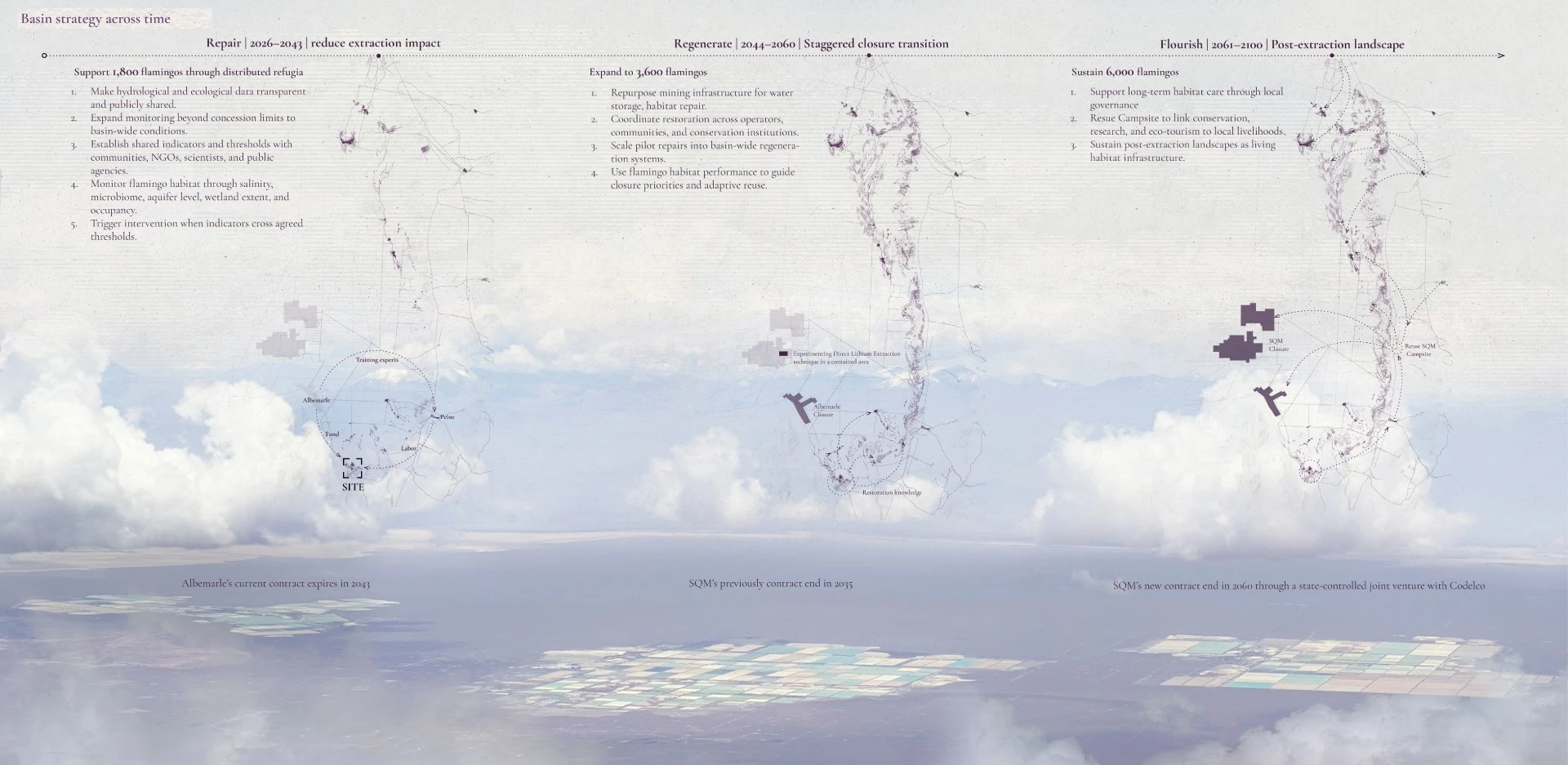
The project builds on existing policy. Flamingo habitat conditions become living indicators of basin health, translated into thresholds, trigger mechanisms, and mandatory action. A Basin of Responsibility expands closure into three zones: direct remediation responsibility, hydrological influence, and shared receptor and stewardship. Through shared monitoring, accountability, and long-term repair funding, closure is judged by whether the basin can continue to support flamingo life, wetland function, and Atacameño stewardship.Pilot Design
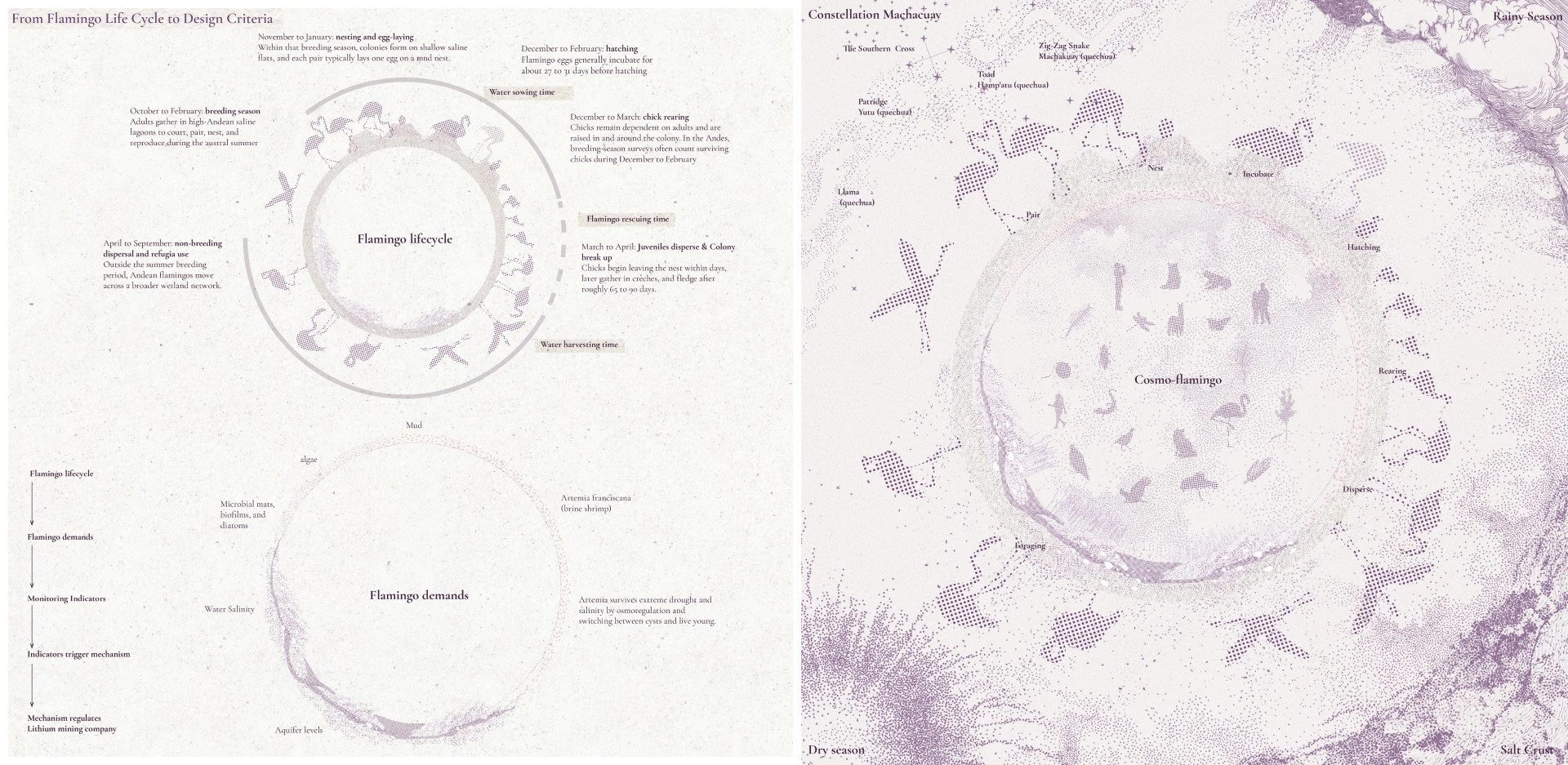
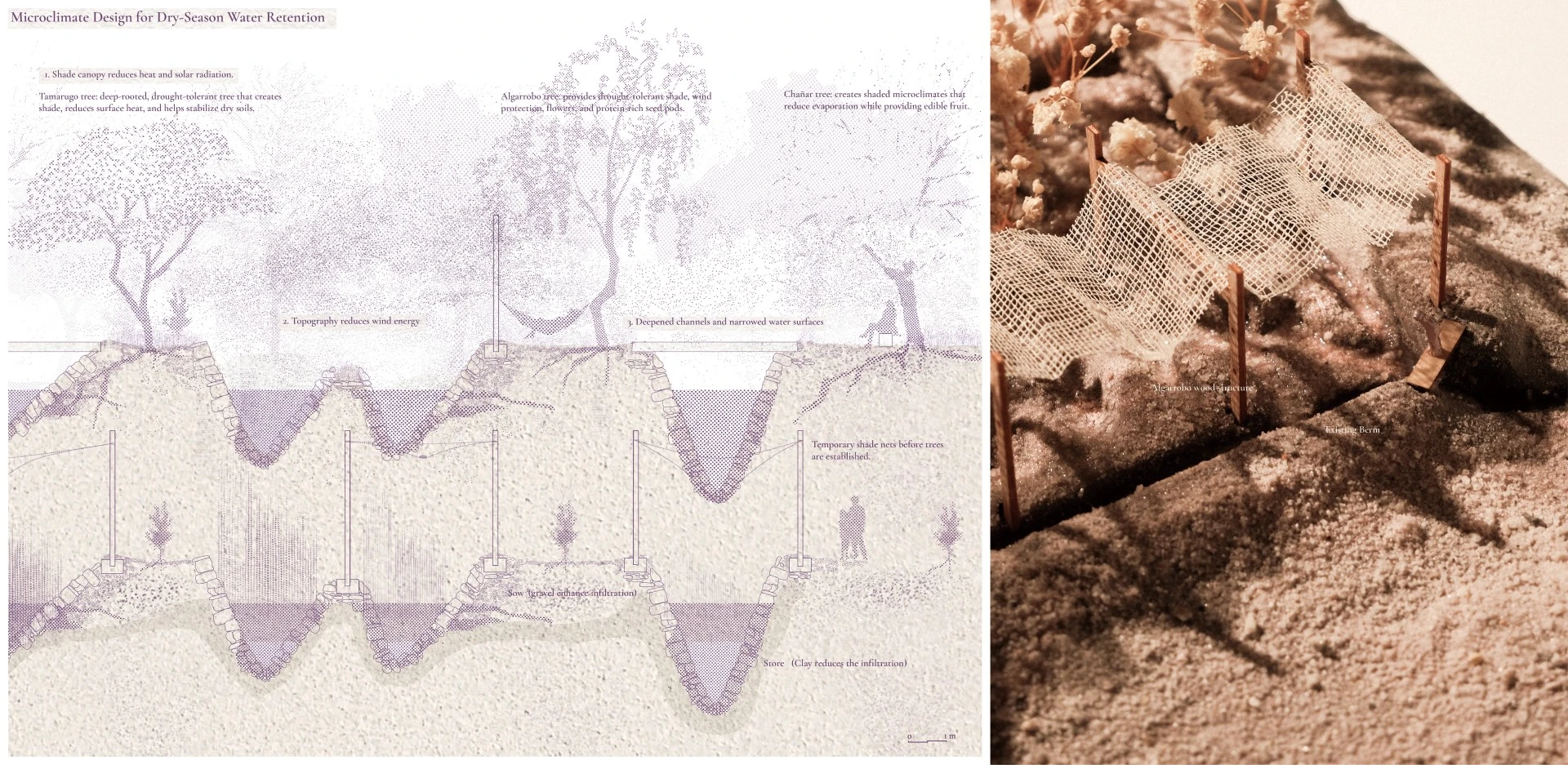
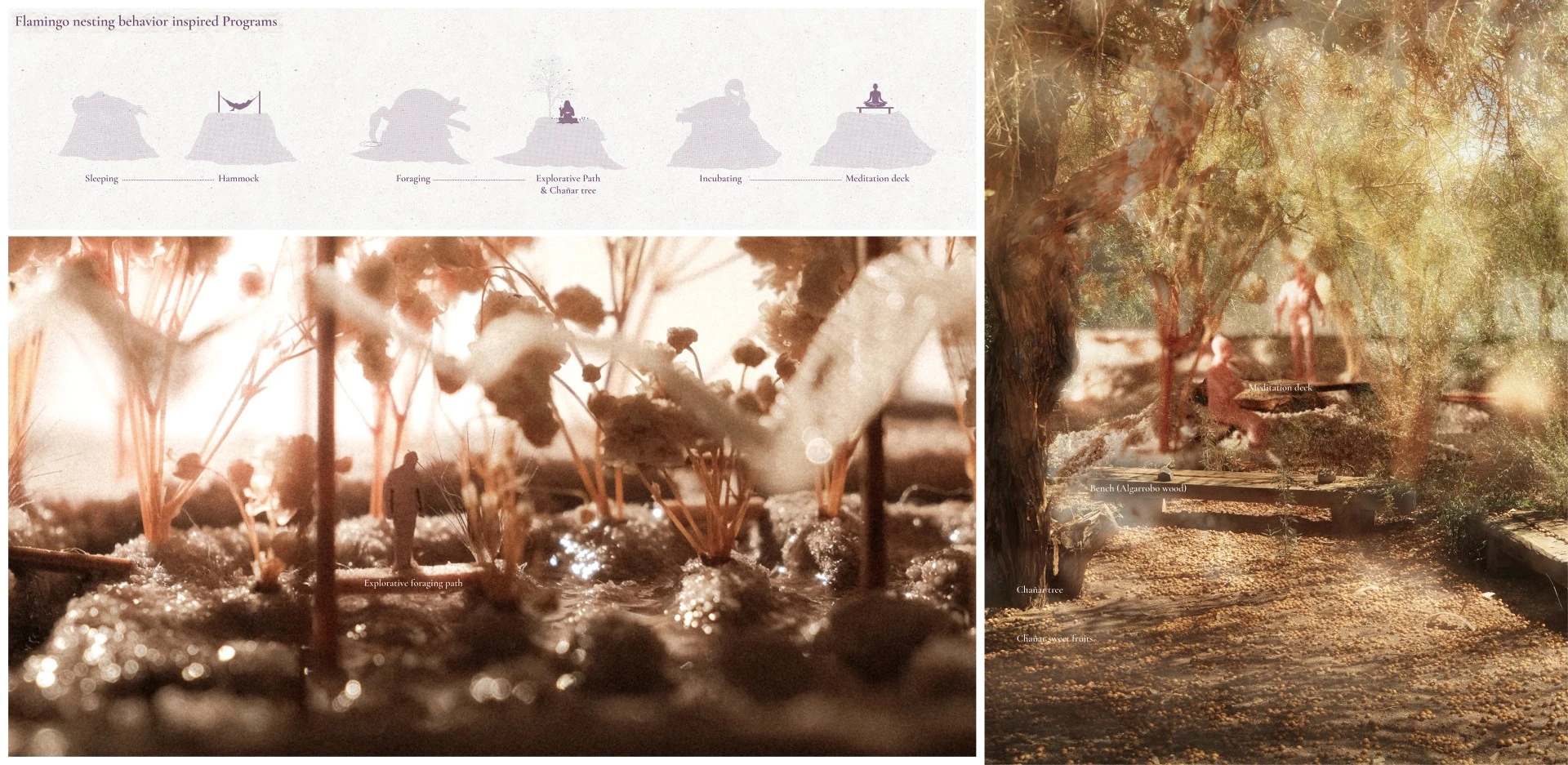
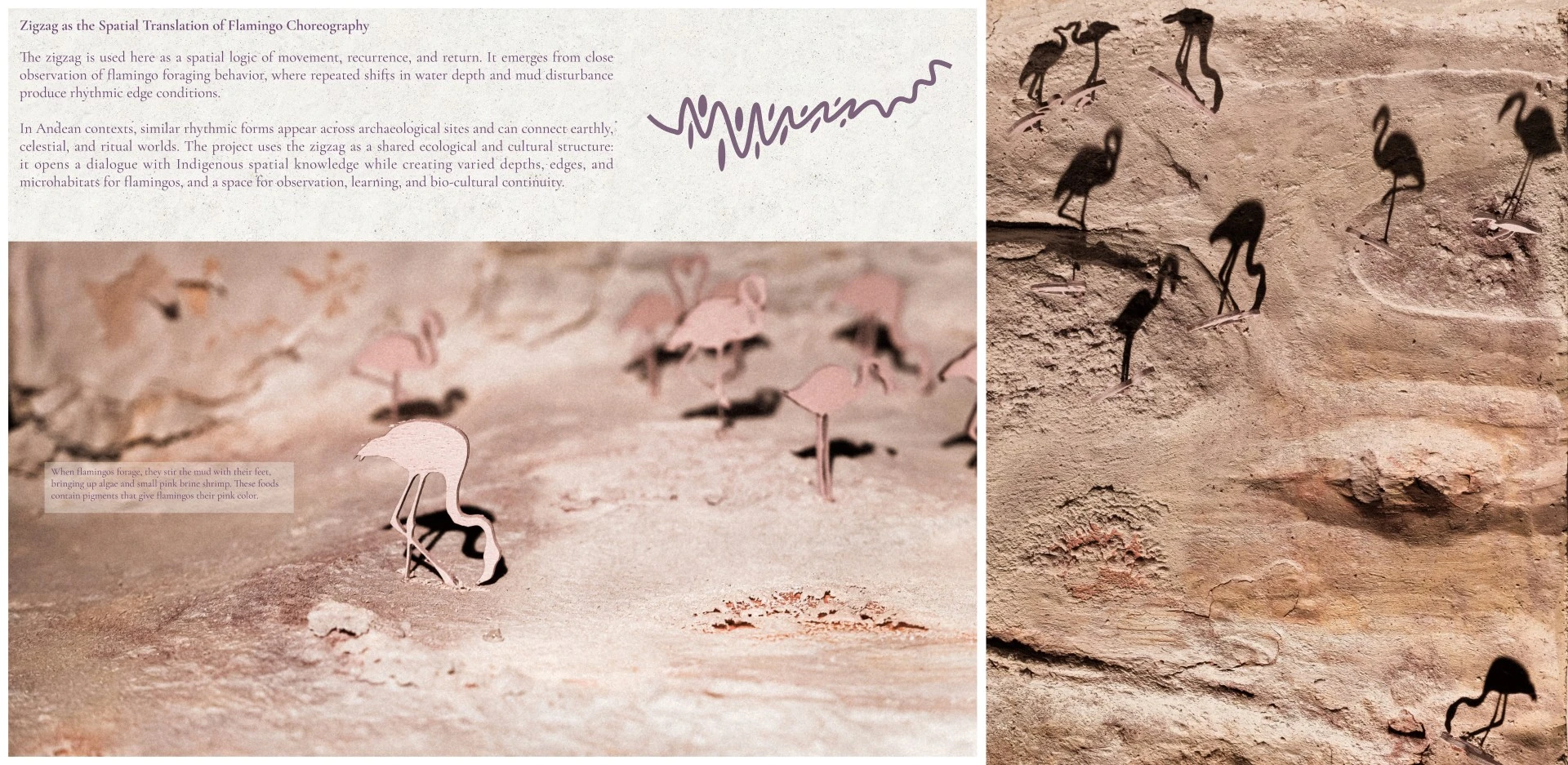
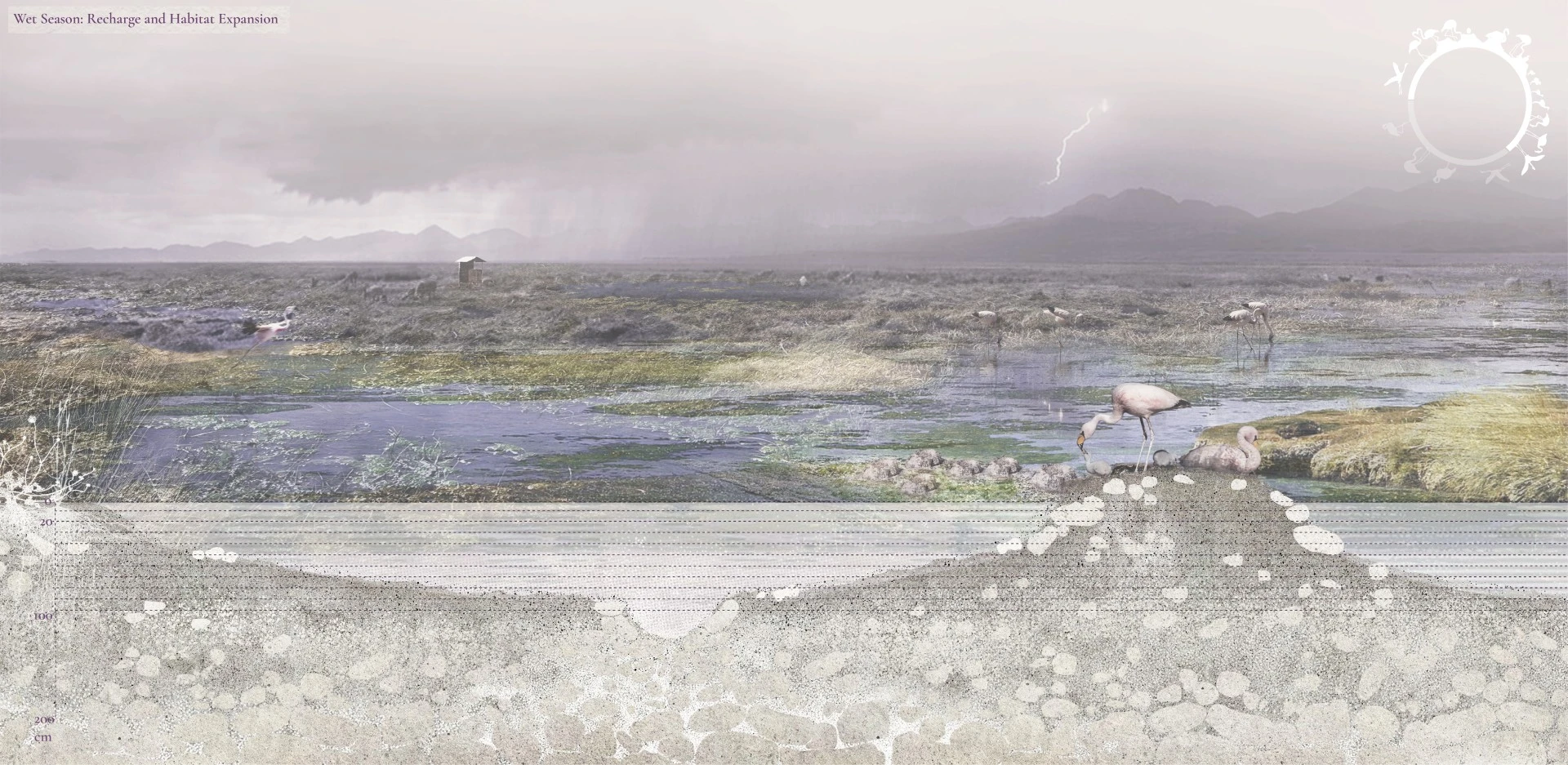
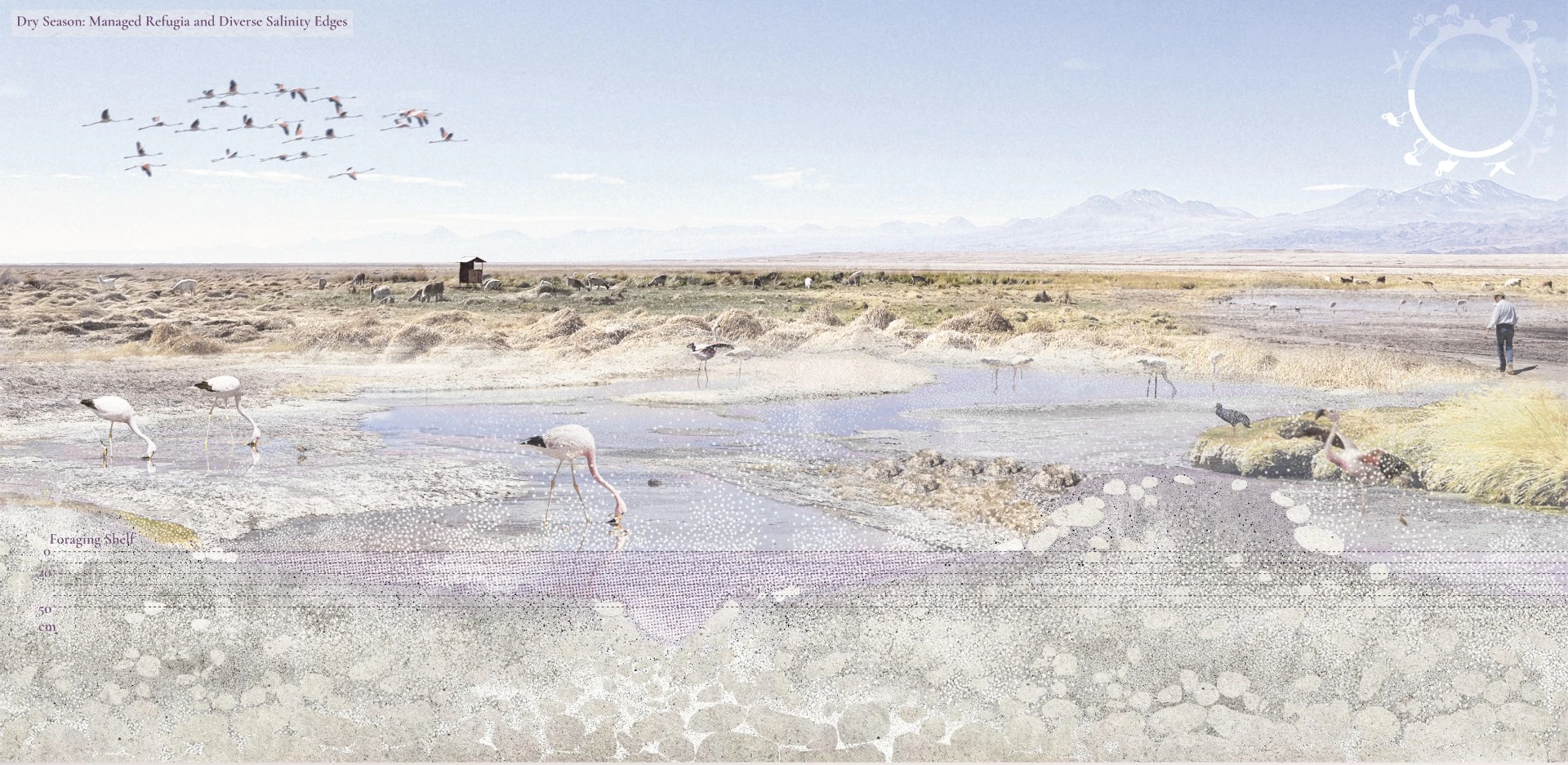
The pilot begins with flamingo life-cycle needs and the habitat conditions required across wet and dry seasons. Drawing on ancestral land knowledge developed in extreme aridity, the design adapts seeding-water techniques to capture runoff, sow water into infiltration zones, store it in shallow basins, transport it through regraded channels and reused roads, and harvest it later to extend dry-season wetness. Nest-inspired topography, varied edge conditions, and evaporation-reduction landforms create a mosaic of water depth and salinity for foraging, nesting, resting, rescue, and recovery. Existing mining structures are retained and repurposed as rescue, quarantine, recovery, and community ritual spaces. The pilot aims to increase seasonal flamingo occupancy from 275 to 375 by 2044.Significance
Rather than erasing mining traces, the project reuses damaged landforms and abandoned structures as living evidence of extraction and as instruments of repair. Grounded in fieldwork and engagement with Likanantay communities, local water authorities, scientists, conservation practitioners, and territorial organizations, it treats ancestral knowledge as a living intelligence of scarcity that can guide adaptive design today. By linking policy, monitoring, memory, and site repair, the project positions landscape architecture as a mediator between extraction, conservation, and Indigenous self-determination. -
- Felicity Arengo (Flamingo Conservation Biologist)
- Hernan Bianchi Benguria (Human Geography Consultant)
- Lickanantay (Ancestral Knowledge Consultants)
- Erica Martinez (Teaching Assistant)
-
- Chañar (Geoffroea Decorticans)
- Algarrobo (Prosopis Chilensis)
- Tamarugo (Prosopis Tamarugo)
- Brea / Atacama Brea (Tessaria Absinthioides)
- Cachiyuyo (Atriplex Atacamensis)
- Totora (Schoenoplectus Californicus)
- Junquillo / Rush (Juncus Balticus)
- Paja Brava (Festuca Orthophylla)
- Grama Salada (Distichlis Spicata)
Advertisement
Related Awards

Honor Award, General Design
Houston Arboretum & Nature Center
The Houston Arboretum & Nature Center sits within Memorial Park, one of the largest urban parks in the United States, in one of the nation's fastest growing and most climate-challenged cities. The site's story is one of repeated loss and deliberate reinvention. Hurricane Ike in 2008 and a severe drought in 2011 destroyed much of the Arboretum's tree canopy, exposing the limits of conventional reforestation in a city defined by flooding, heat, and ecological volatility.