
.webp?language=en-US)

.webp?language=en-US)
Unearthing Wildness: On the Future of Urban Wilds
Erica Martinez, Student ASLA

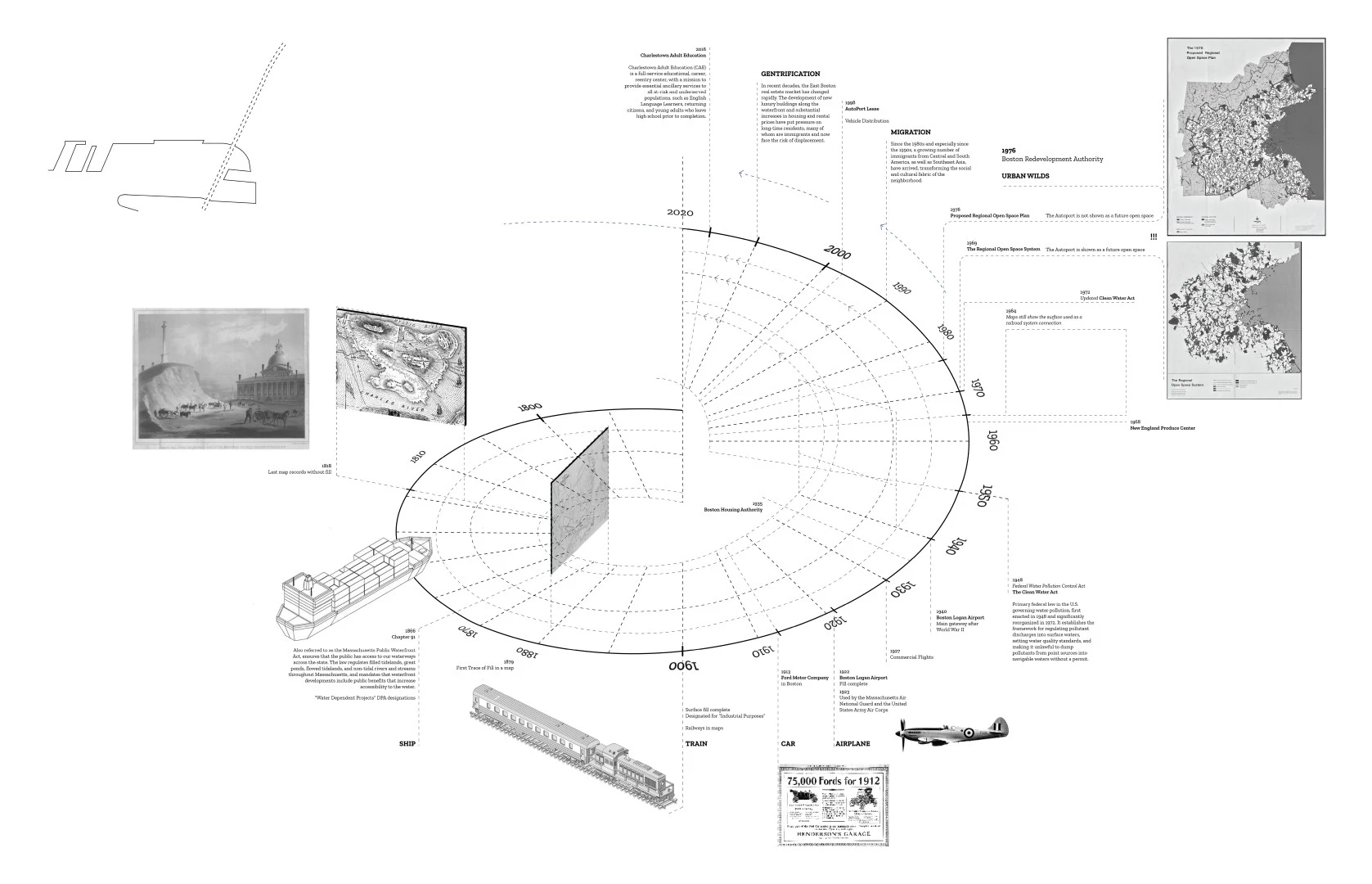
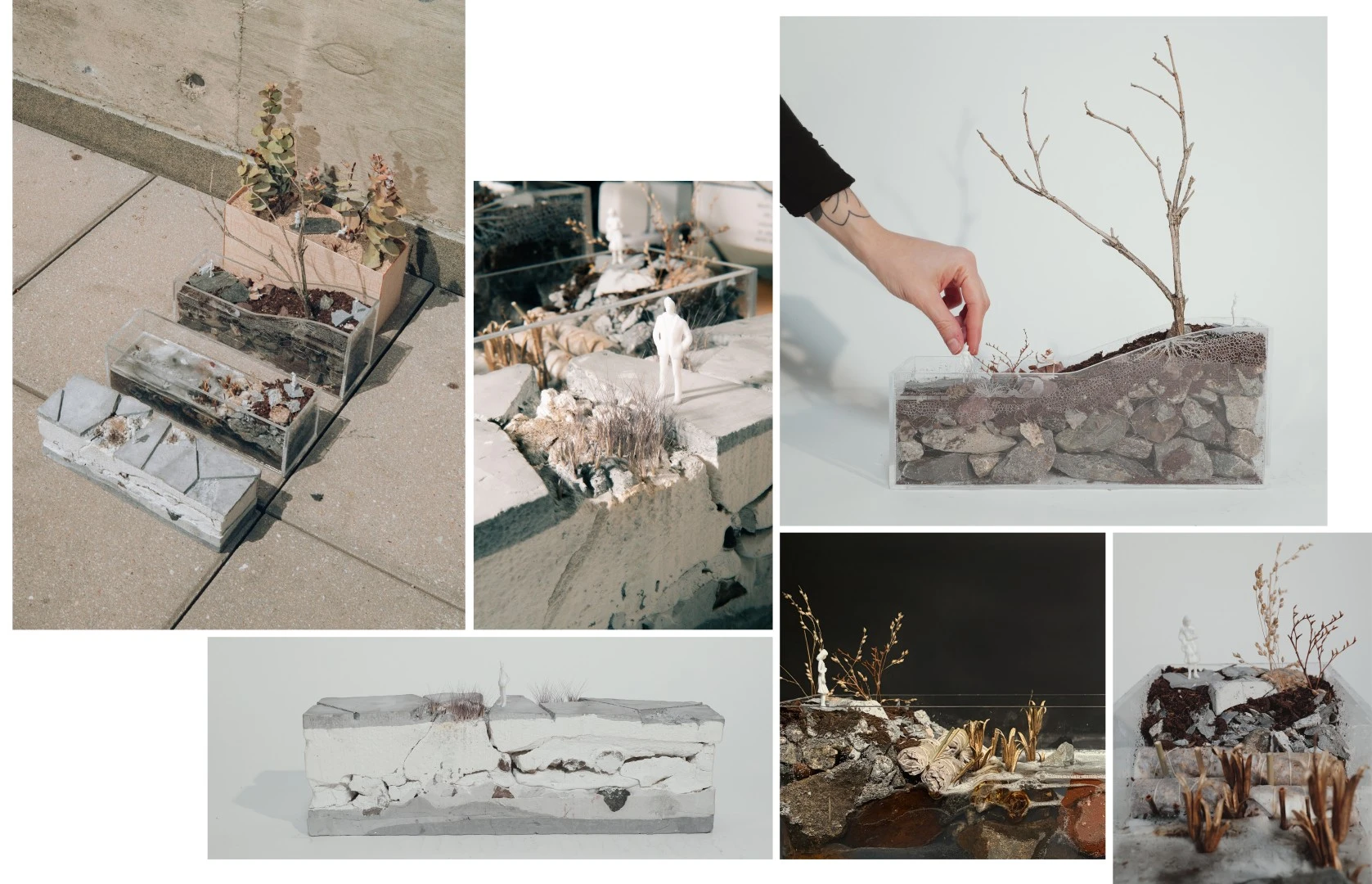
Beautiful timeline drawing. Love the use of simple CAD drawings to create beautiful plans. Pleased to see how physical model helped with design development. Good work!
Awards Jury
-
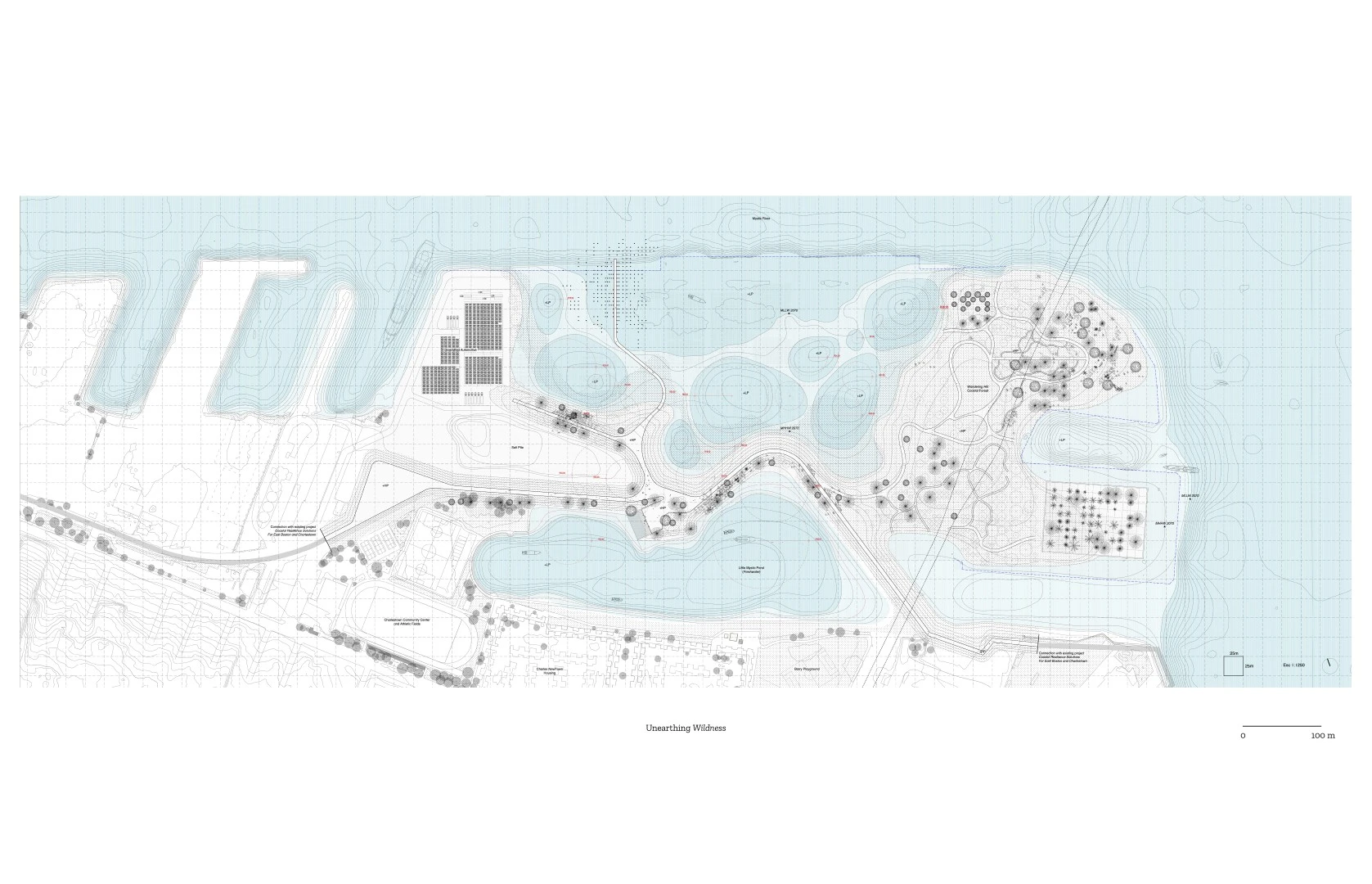
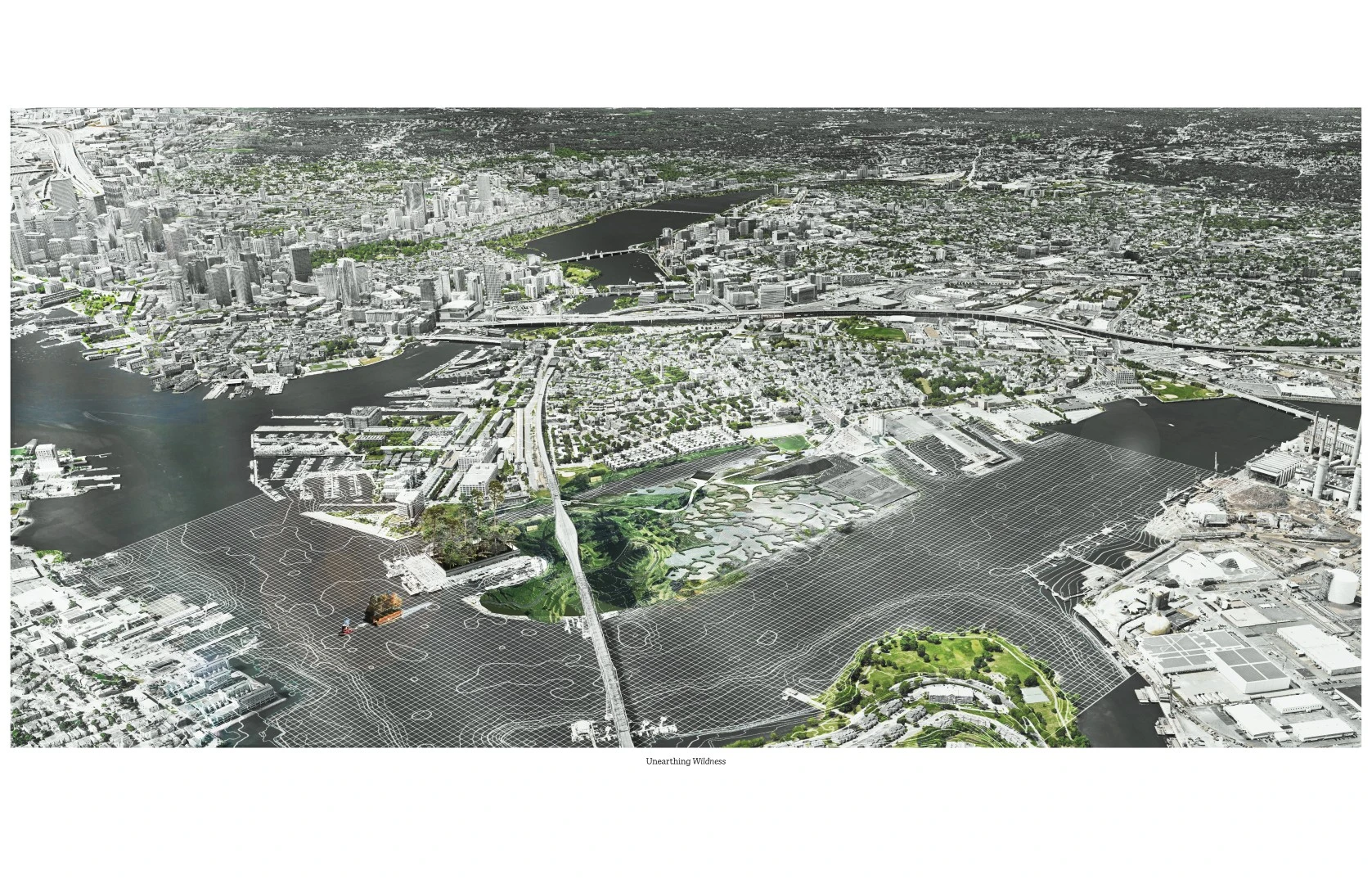
Unearthing Wildness dismantles the 81-acre paved Charlestown Autoport to restore ecological processes: a prototype of a large-scale post-industrial flood-resilient landscape that regenerates a riparian ecosystem hidden beneath layers of historically collected materials. Through the fragmentation of the edge and the surface, water returns and revives a fragment of the Mystic River floodplain. Recovered materials are reconfigured into a protective and livable topography that brings climate resilience, public space, sustainability, and ecological function closer. The project frames flooding, erosion, decay, and vegetation growth as visible processes, turning the site into a place where environmental change can be seen and experienced.
-
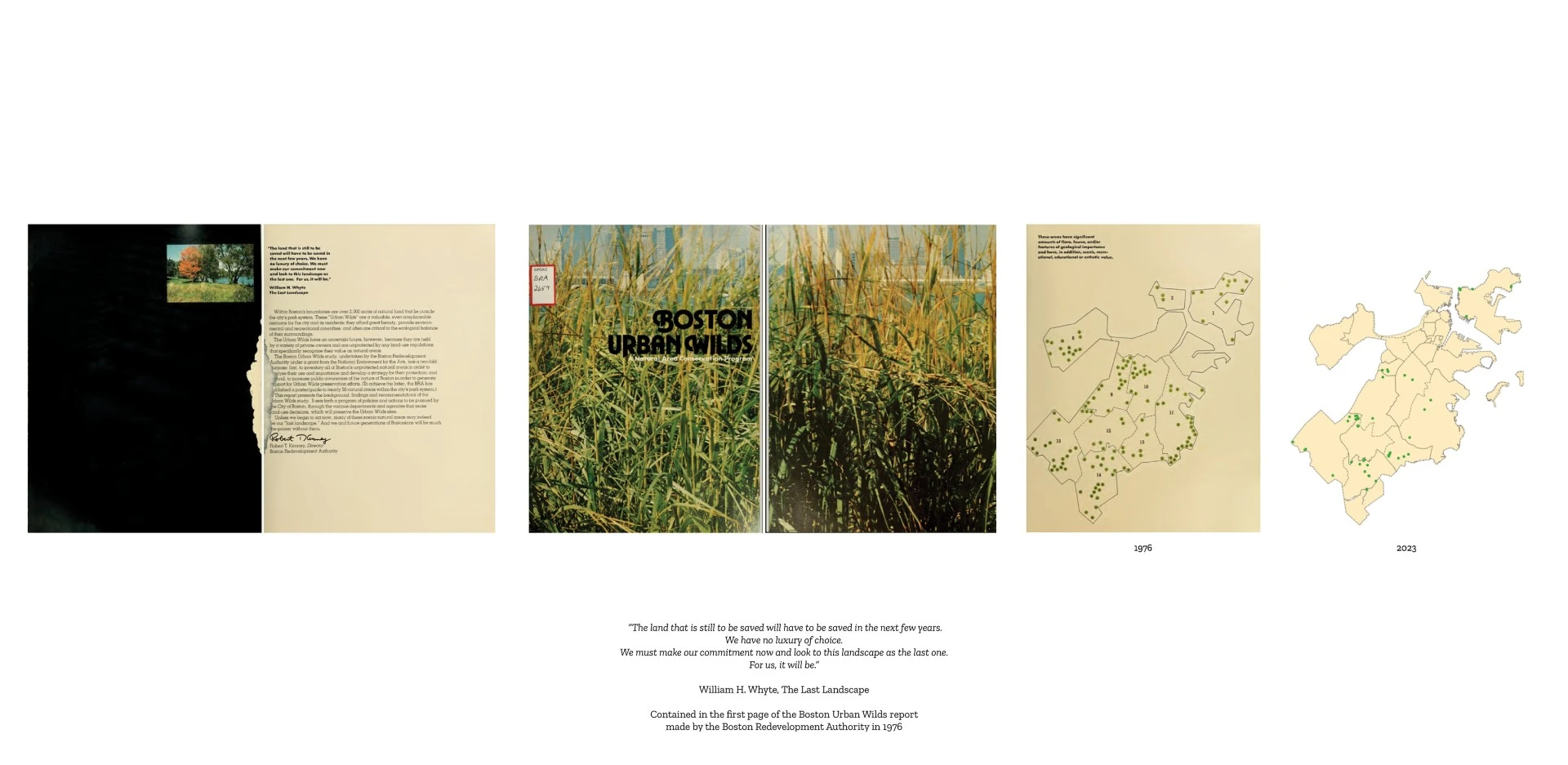
"The land that is still to be saved will have to be saved in the next few years. We have no luxury of choice. We must make our commitment now and look to this landscape as the last one. For us, it will be."
William H. Whyte, The Last LandscapeContained in the first page of the Boston Urban Wilds report made by the Boston Redevelopment Authority in 1976.
The future that was described is now here, and now that the opportunity to protect the urban wilds that existed at that moment has passed, and now, in the time of rapid urban growth, and the continuous transformation of industries that led to new types of spaces in decay, we need not only more urban public spaces, but also wilder ones.
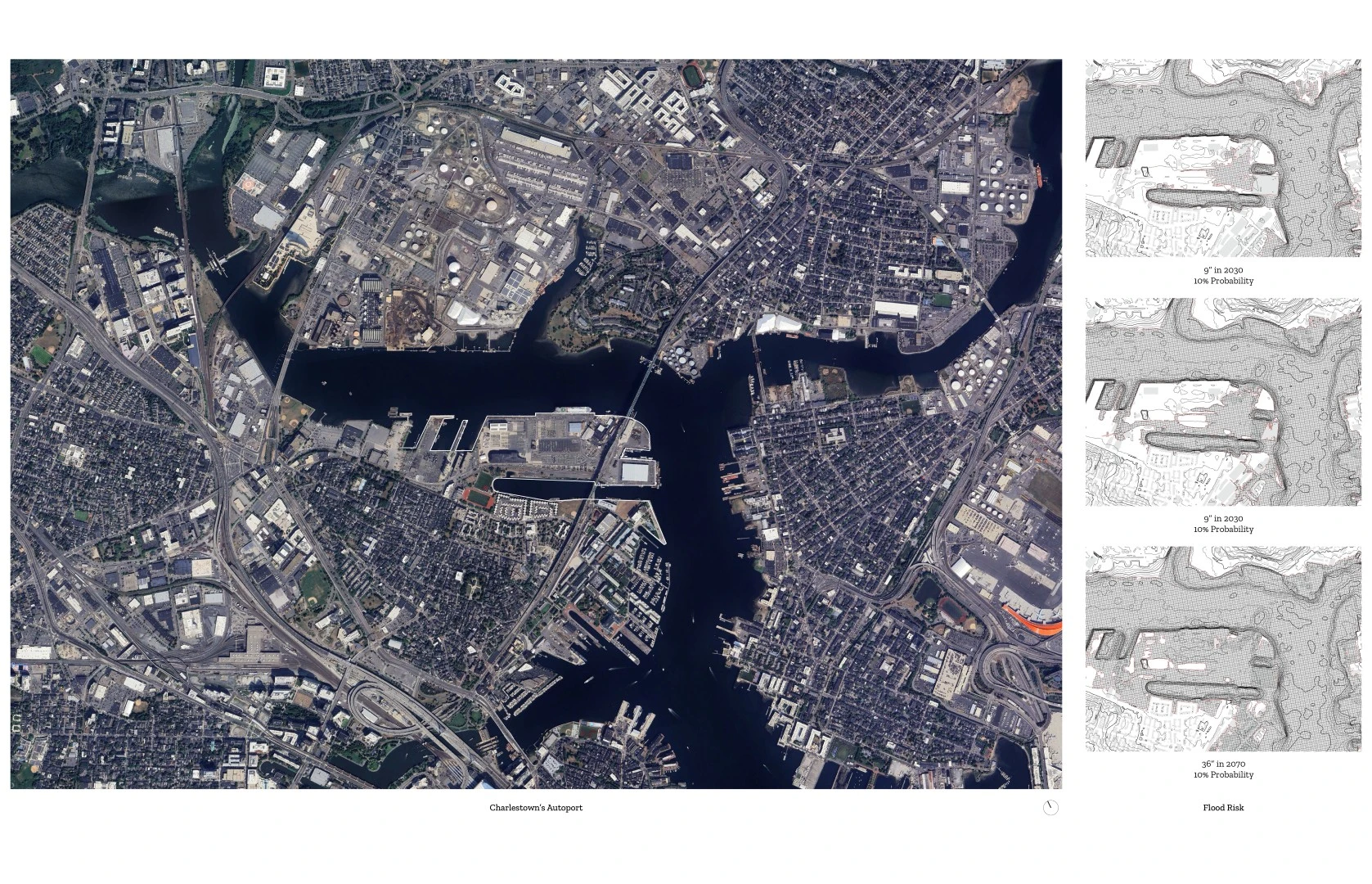
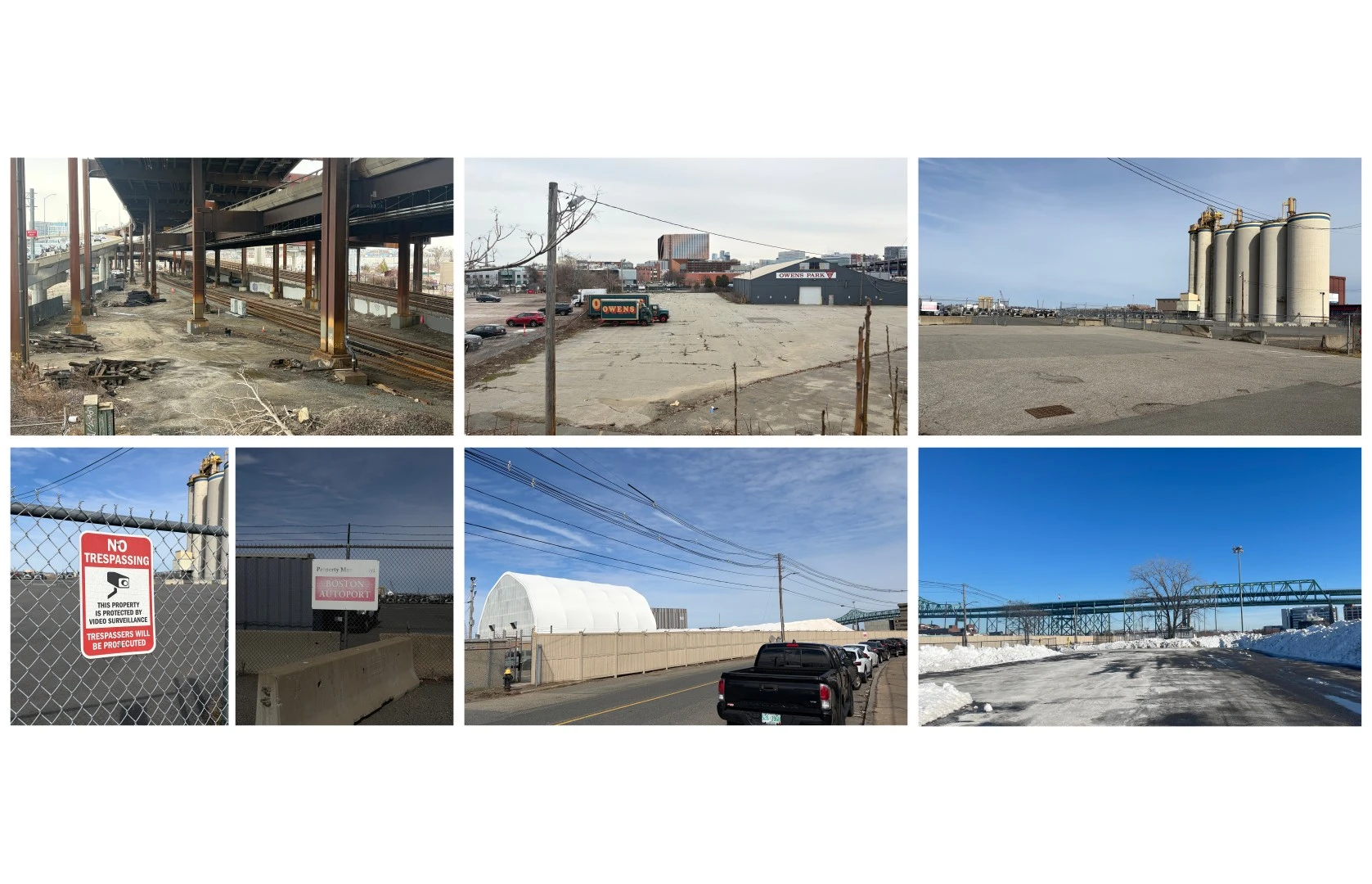
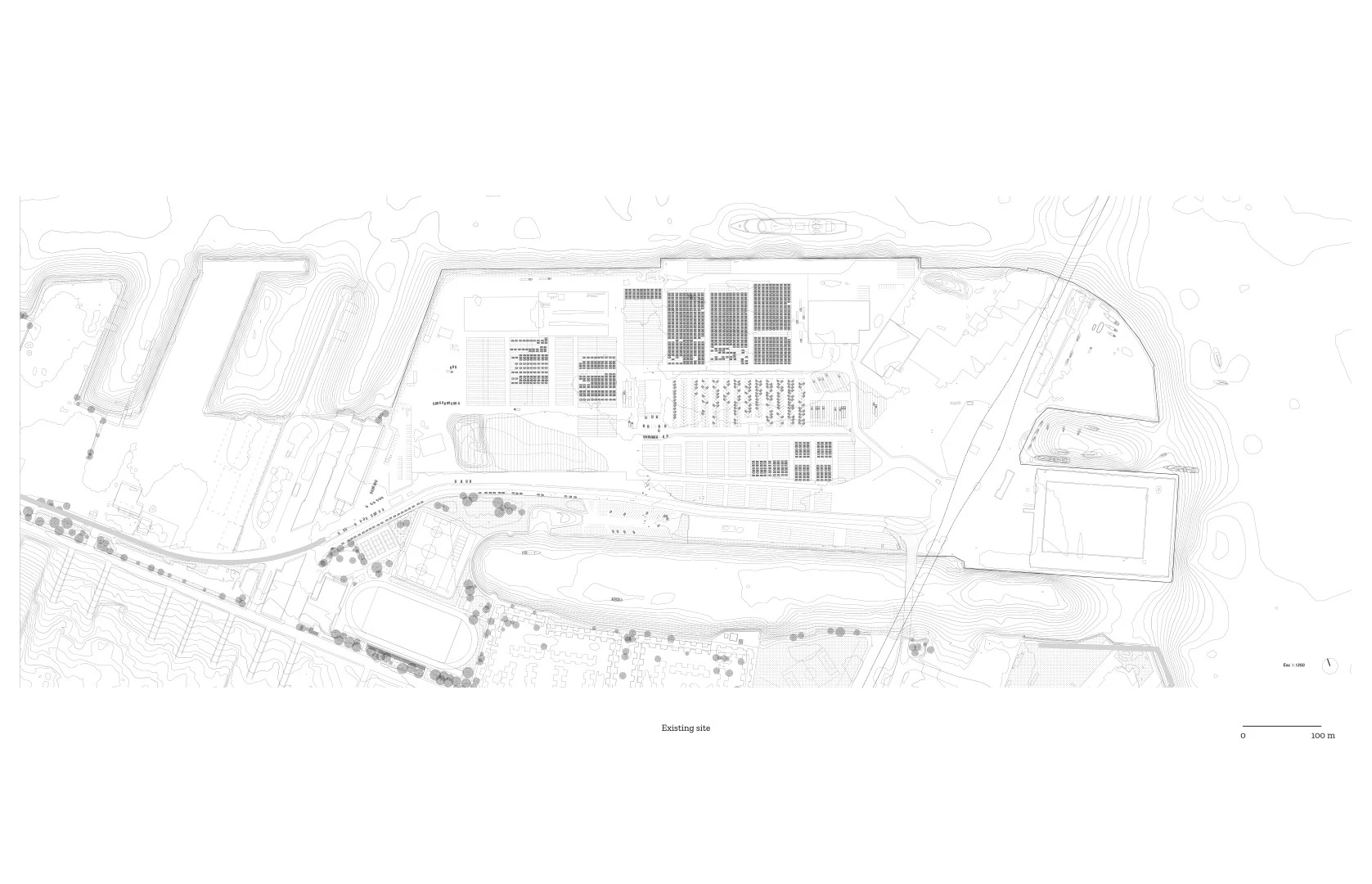
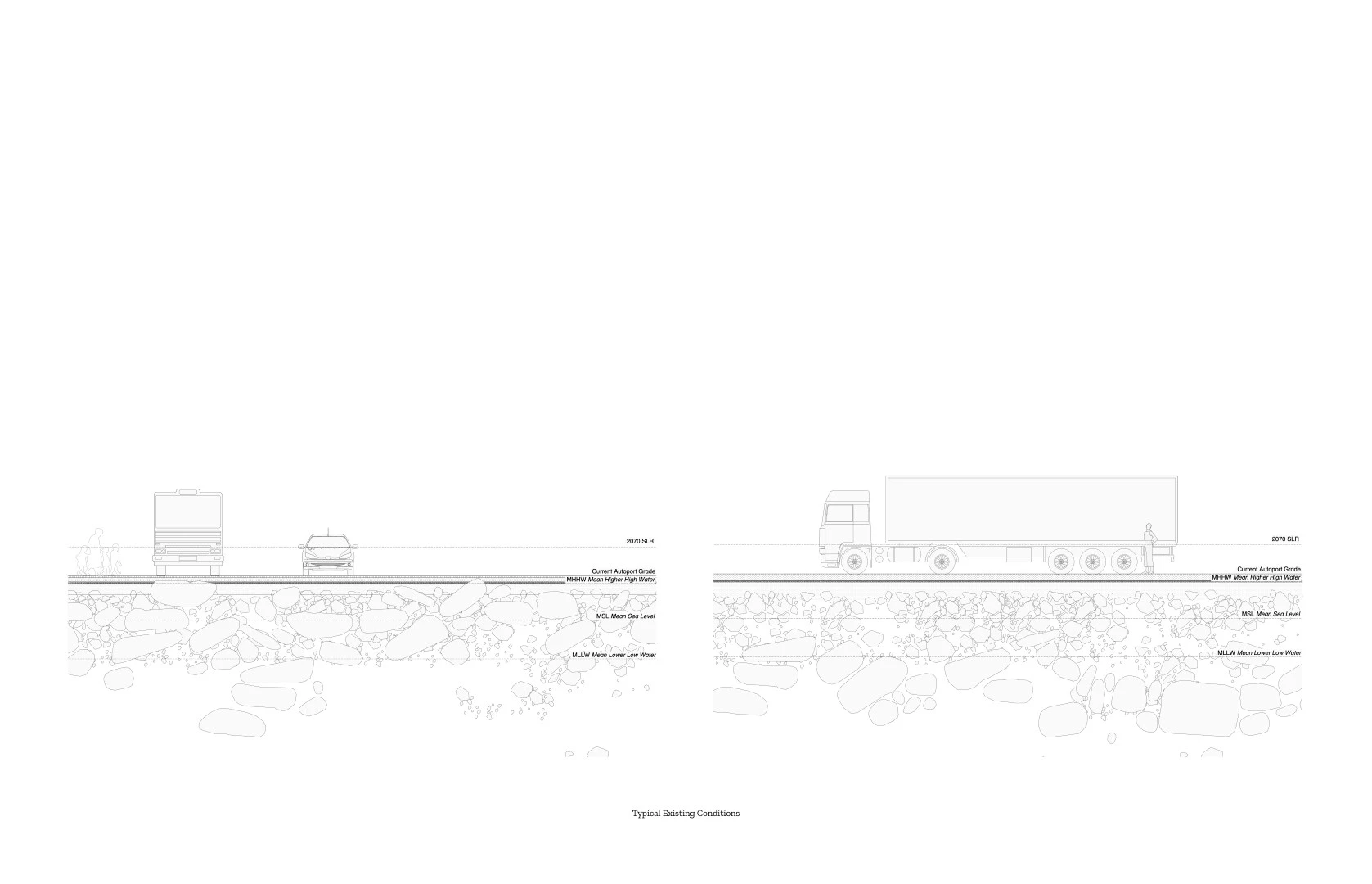
Charlestown's Autoport is an 81-acre paved surface at the edge of the Mystic River, a result of historical filling, regularizing, and hardening the waterfront to control fluctuating tides, maximize human use, and increase economic growth. It is a big opportunity due to its location on the water's edge and its size relative to its immediate urban context.
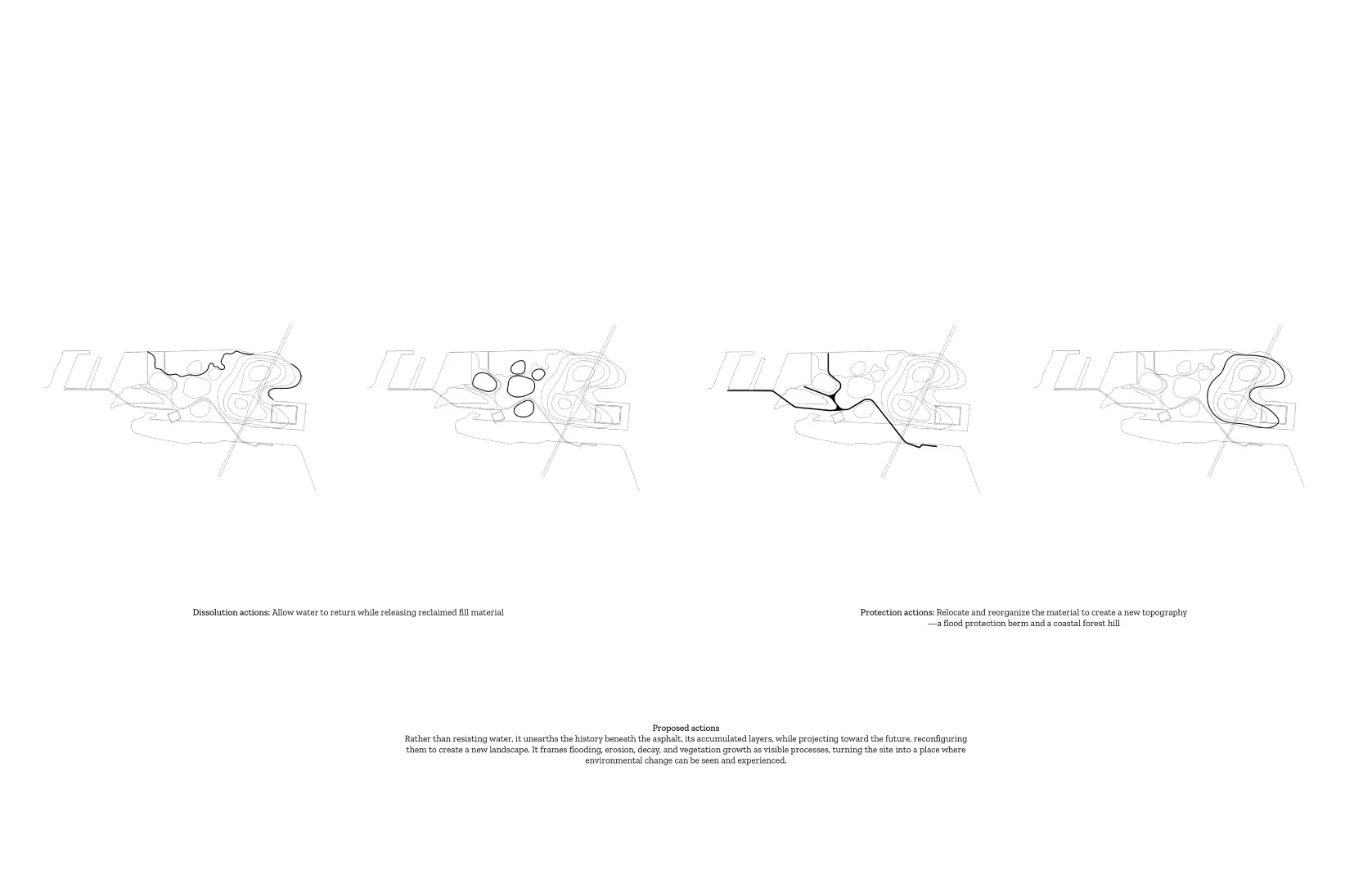
Under the framework of the Urban Wilds and the loss of these areas for protection over the last 50 years, the following actions advocate for renaturalization processes, urban wildness, and the return of this land to the ecological systems it once displaced:
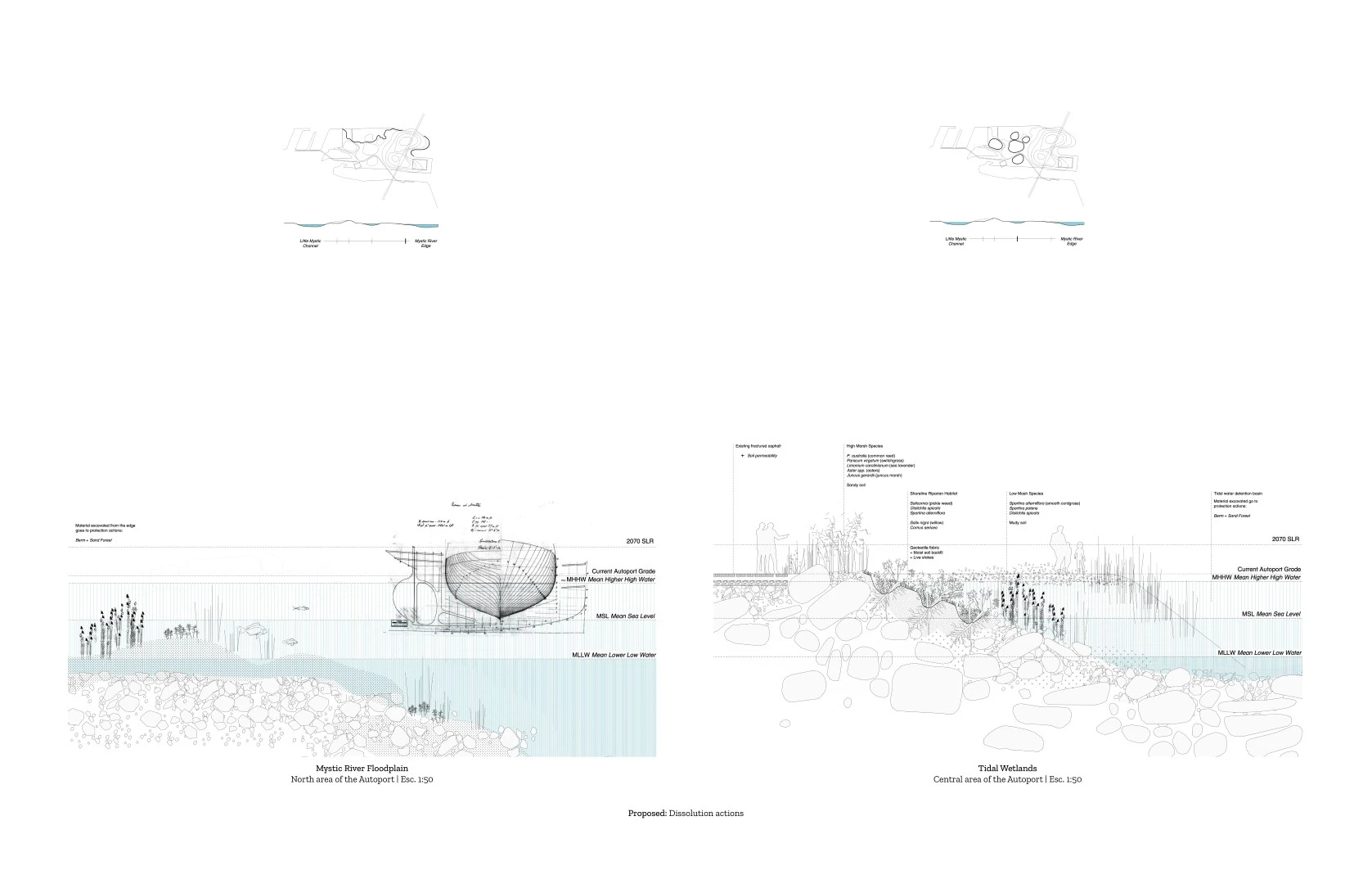
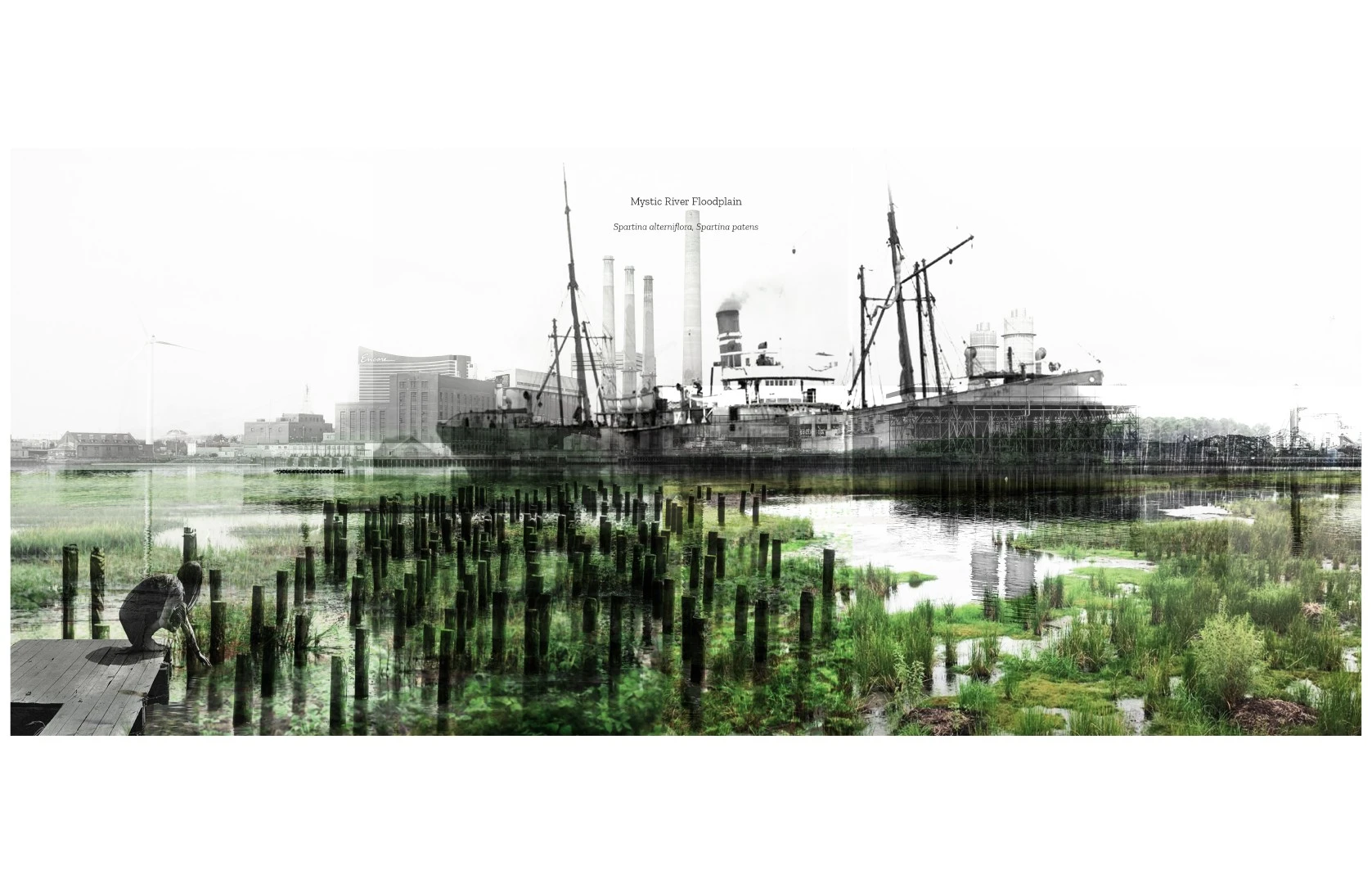
Break apart and dissolve the existing ground, allowing water to return and the floodplain to regenerate.
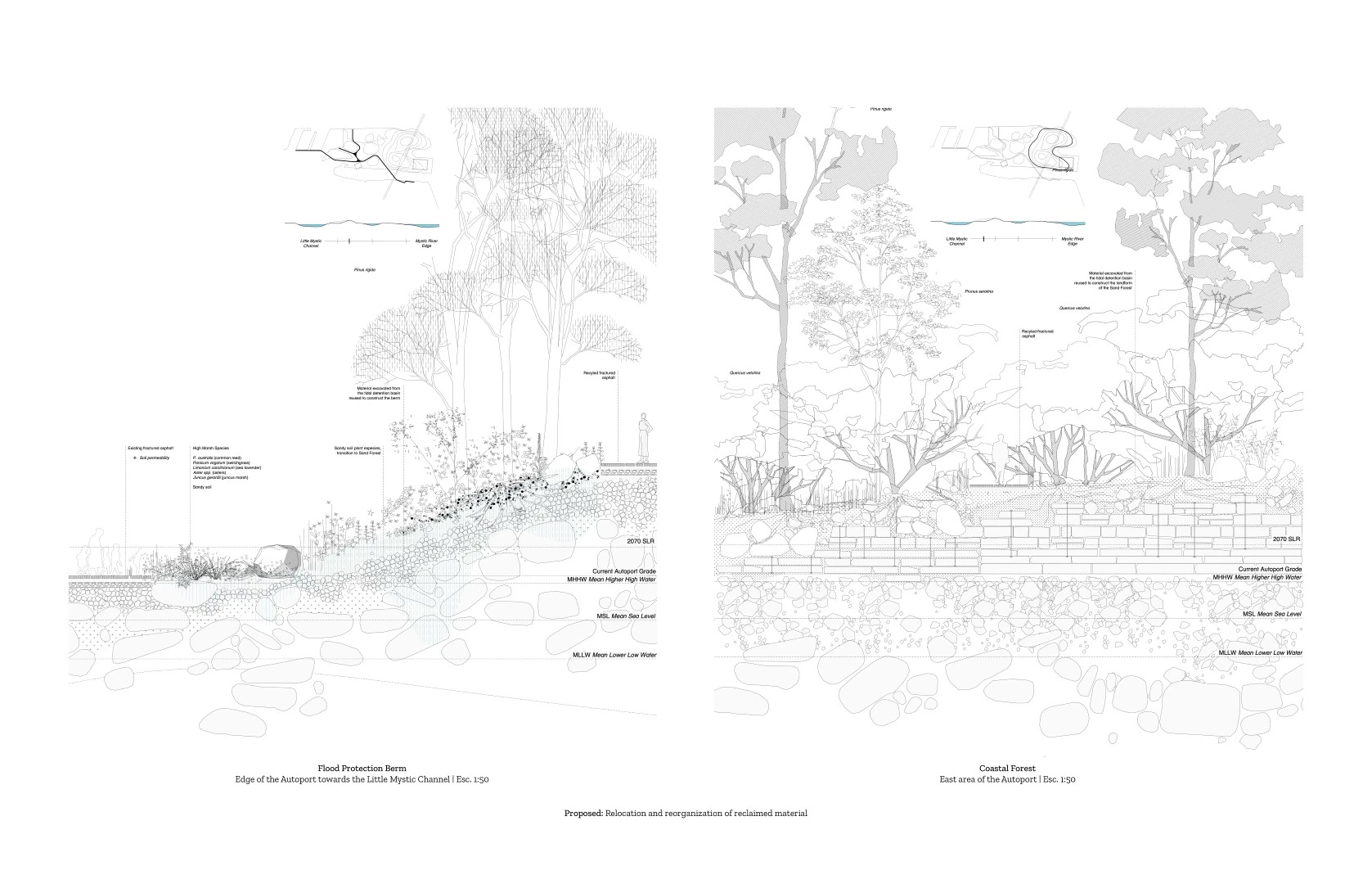
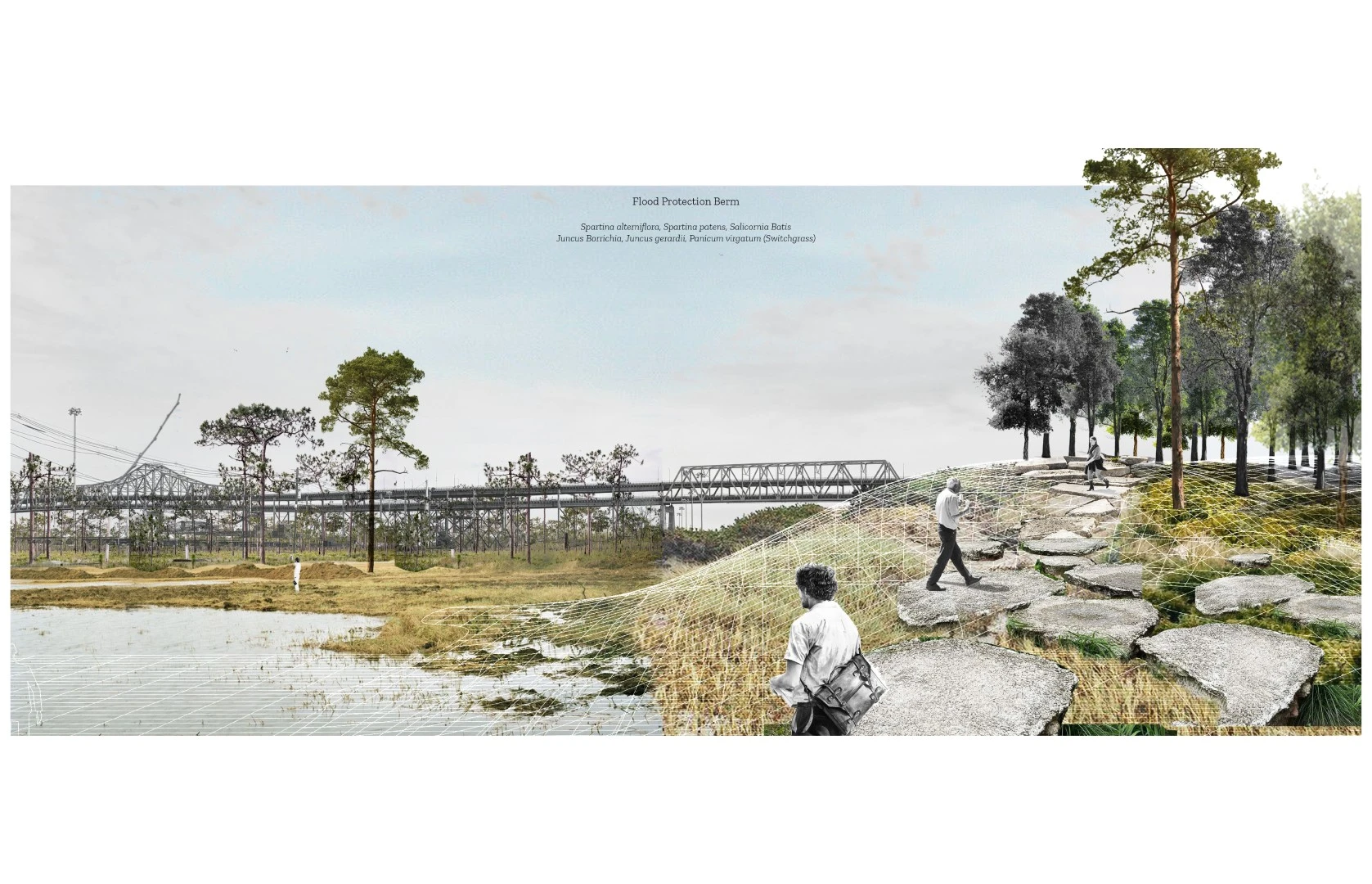
Reuse reclaimed material to construct more than a coastal resilience berm, protecting from flooding while creating a public space with spatial and ecological qualities, hosting a gradient of coastal ecosystems from the lower salt marsh to an upland sand forest.
Rather than resisting water, it unearths the history beneath the asphalt, its accumulated layers, while projecting toward the future, reconfiguring them to create a new landscape. It frames flooding, erosion, decay, and vegetation growth as visible processes, turning the site into a place where environmental change can be seen and experienced. The four actions that Unearthing Wildness proposes are arranged along a gradient from the edge of the Mystic River to the interior.
The first action dilutes the edge and accelerates the entry of water to the surface, facilitating the processes of weathering, the regeneration of the floodplain and its vegetation, and the release of the material required for the other actions.
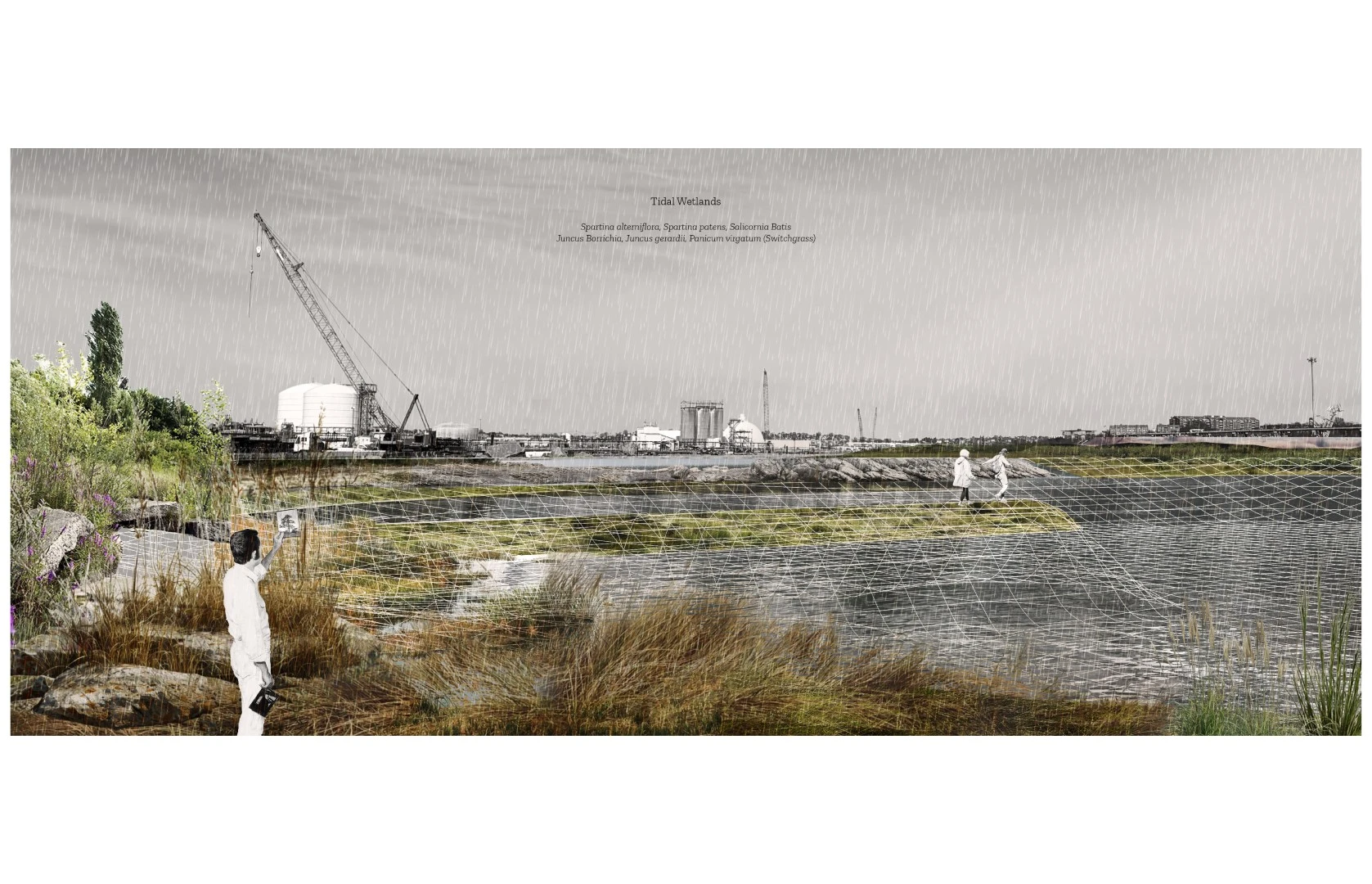
The second one perforates the middle ground of the Autoport, creating tidal wetlands that support a tidal marsh ecosystem and, as sea level rises, would become part of the river ecosystem again, allowing the Mystic River's floodplain to slowly regenerate.
The third one constructs the flood protection berm, which is connected to the proposed projects by the "Boston Coastal Resilience" initiative, making it an integral infrastructure intervention. The berm is more than a protection system: it is a spatial and ecological experience for visitors, an open classroom, a community path, and a biodiversity hub.
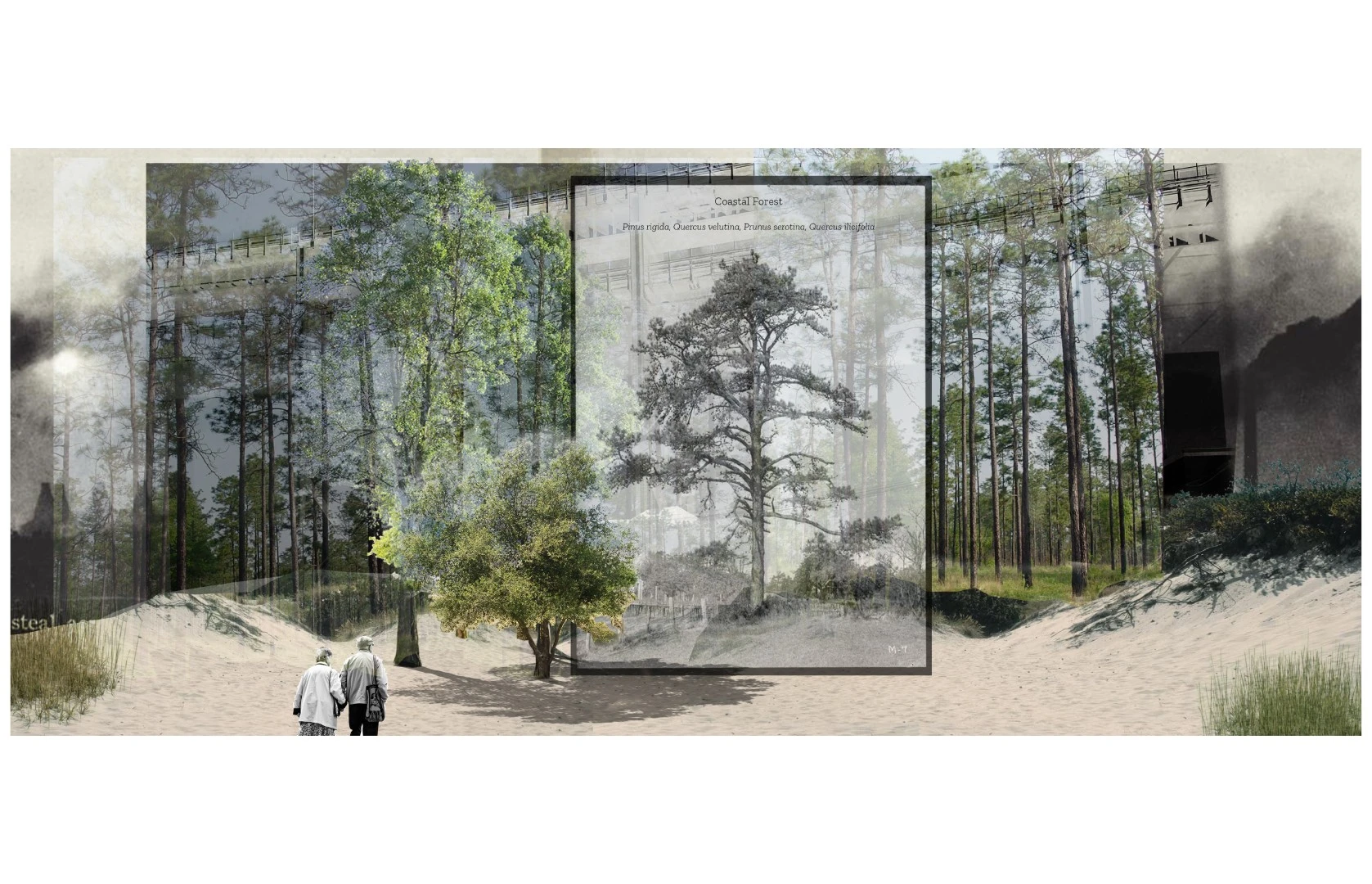
The last action, reusing the remaining fill material, elevates the topography at the intersection of the two rivers, allowing people to view the city from a higher point and creating a spatial experience in conjunction with the majestic Tobin Bridge. A Coastal Forest, a rare ecosystem typical but scarce along the Massachusetts coast, that thrives in poor soils like those under the autoport, would now be a new landscape for the city and its inhabitants.
-
- Spartina Alterniflora
- Spartina Patens
- Salicornia
- Batis Juncus
- Borrichia
- Juncus Gerardii
- Panicum Virgatum
- Pinus Rigida
- Quercus Velutina
- Quercus Alba
- Red Maple | Acer Rubrum
- American Holly | Ilex Opaca Aiton
- Black Cherry | Prunus Serotina
- Sassafras | Sassafras Albidum
Advertisement
Related Awards
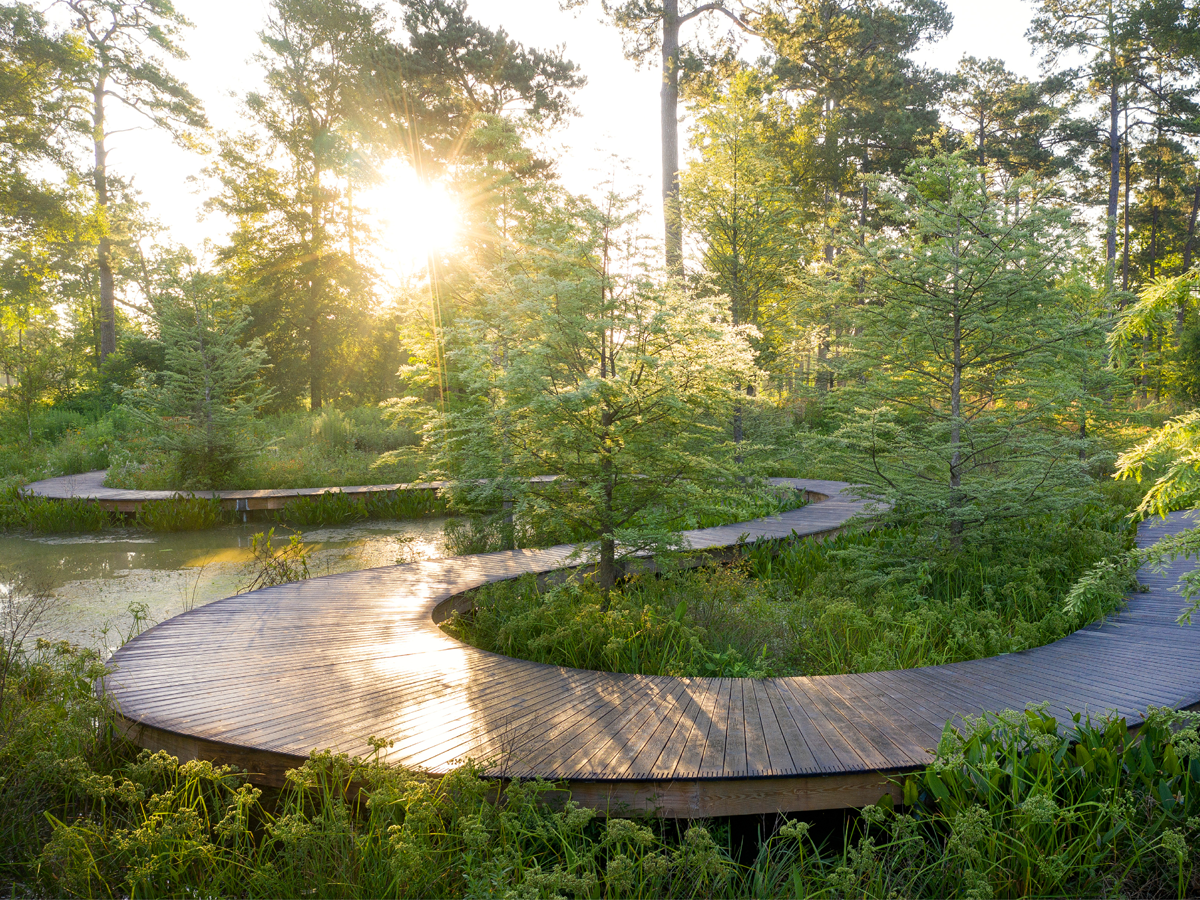
Honor Award, General Design
Houston Arboretum & Nature Center
The Houston Arboretum & Nature Center sits within Memorial Park, one of the largest urban parks in the United States, in one of the nation's fastest growing and most climate-challenged cities. The site's story is one of repeated loss and deliberate reinvention. Hurricane Ike in 2008 and a severe drought in 2011 destroyed much of the Arboretum's tree canopy, exposing the limits of conventional reforestation in a city defined by flooding, heat, and ecological volatility.