
.webp?language=en-US)

.webp?language=en-US)
The Invisible Meadow: A Perceptive Approach to Seagrass Restoration
Desi Roch-Hernandez, Student ASLA

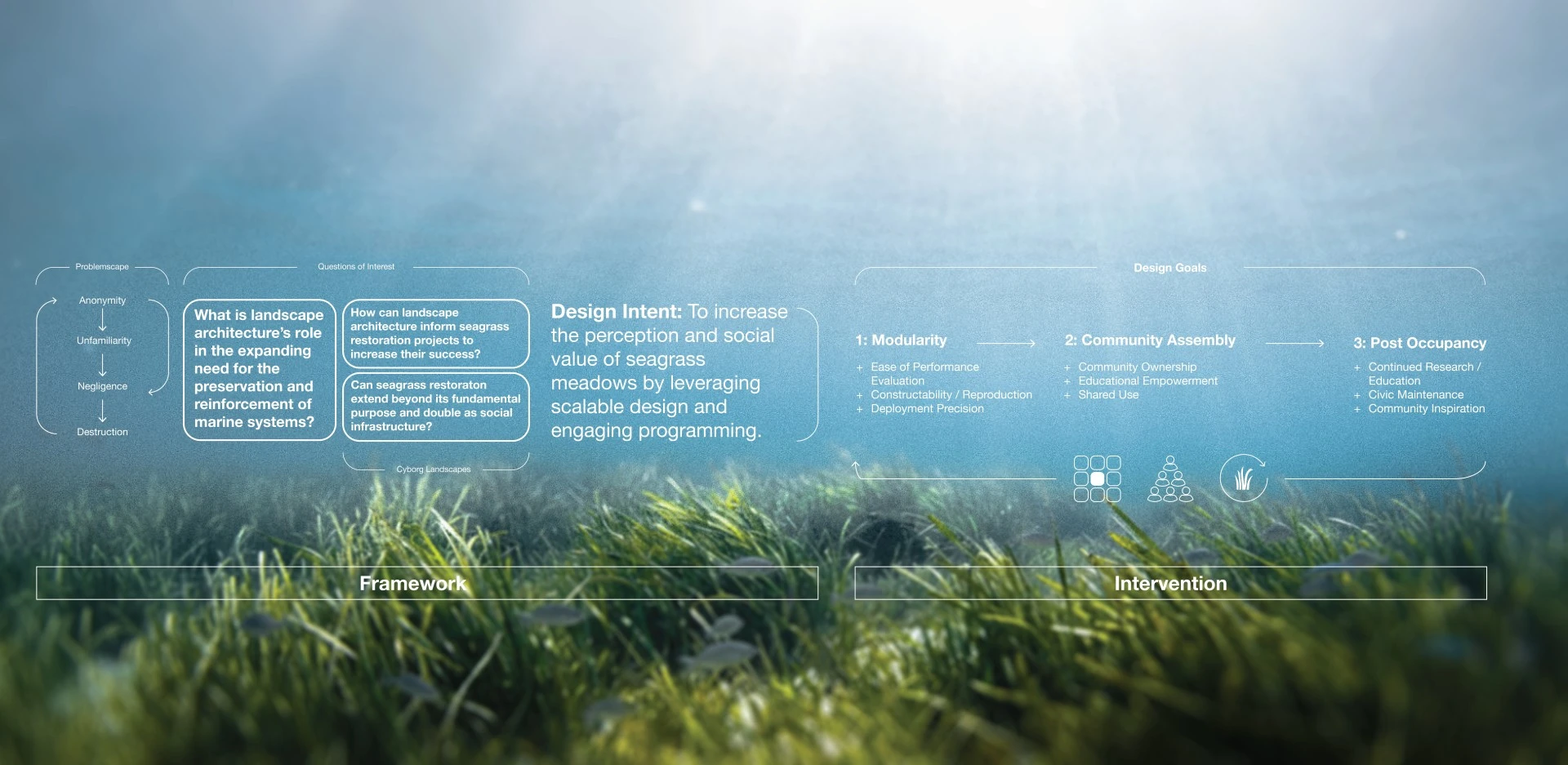
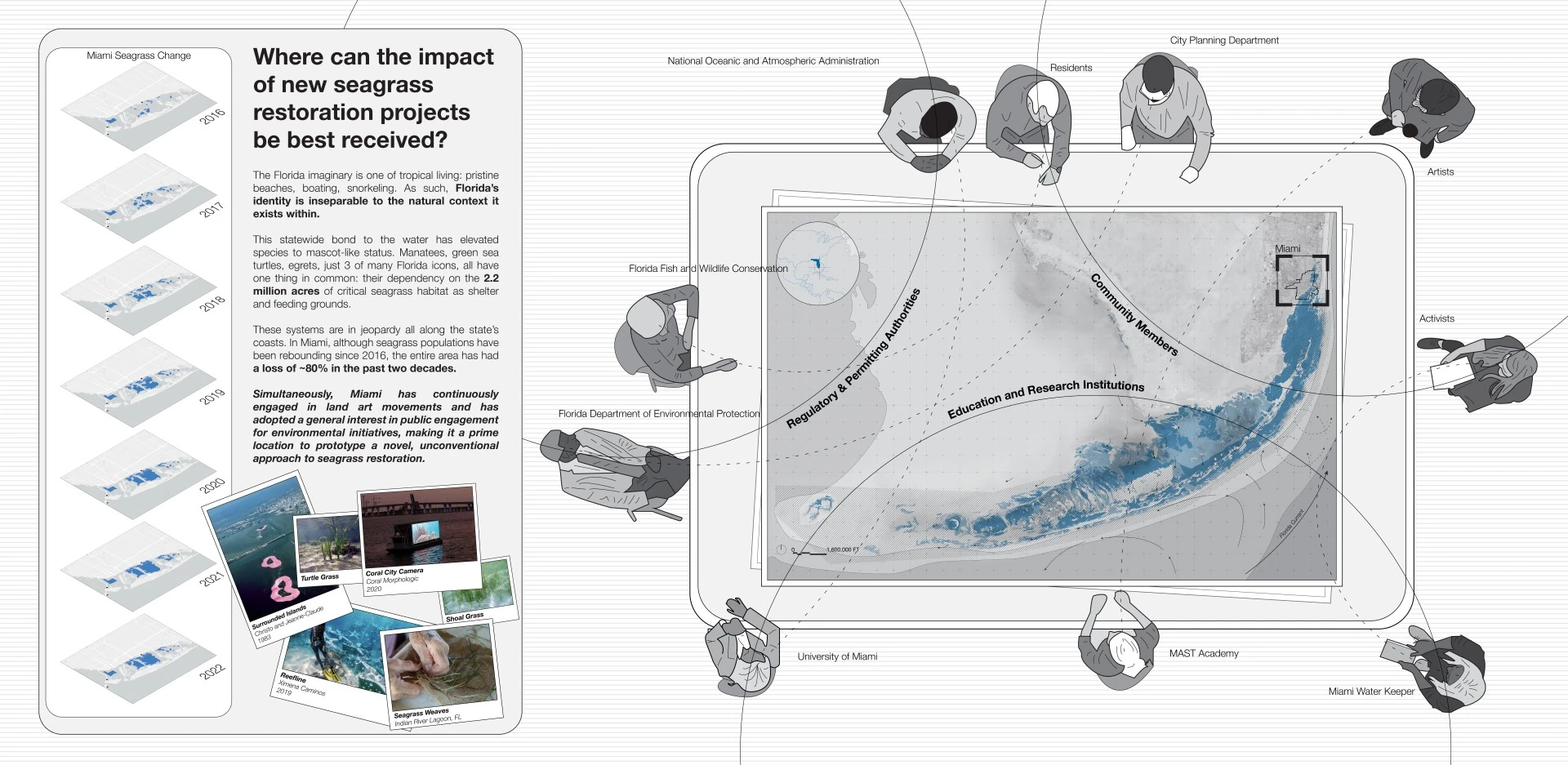
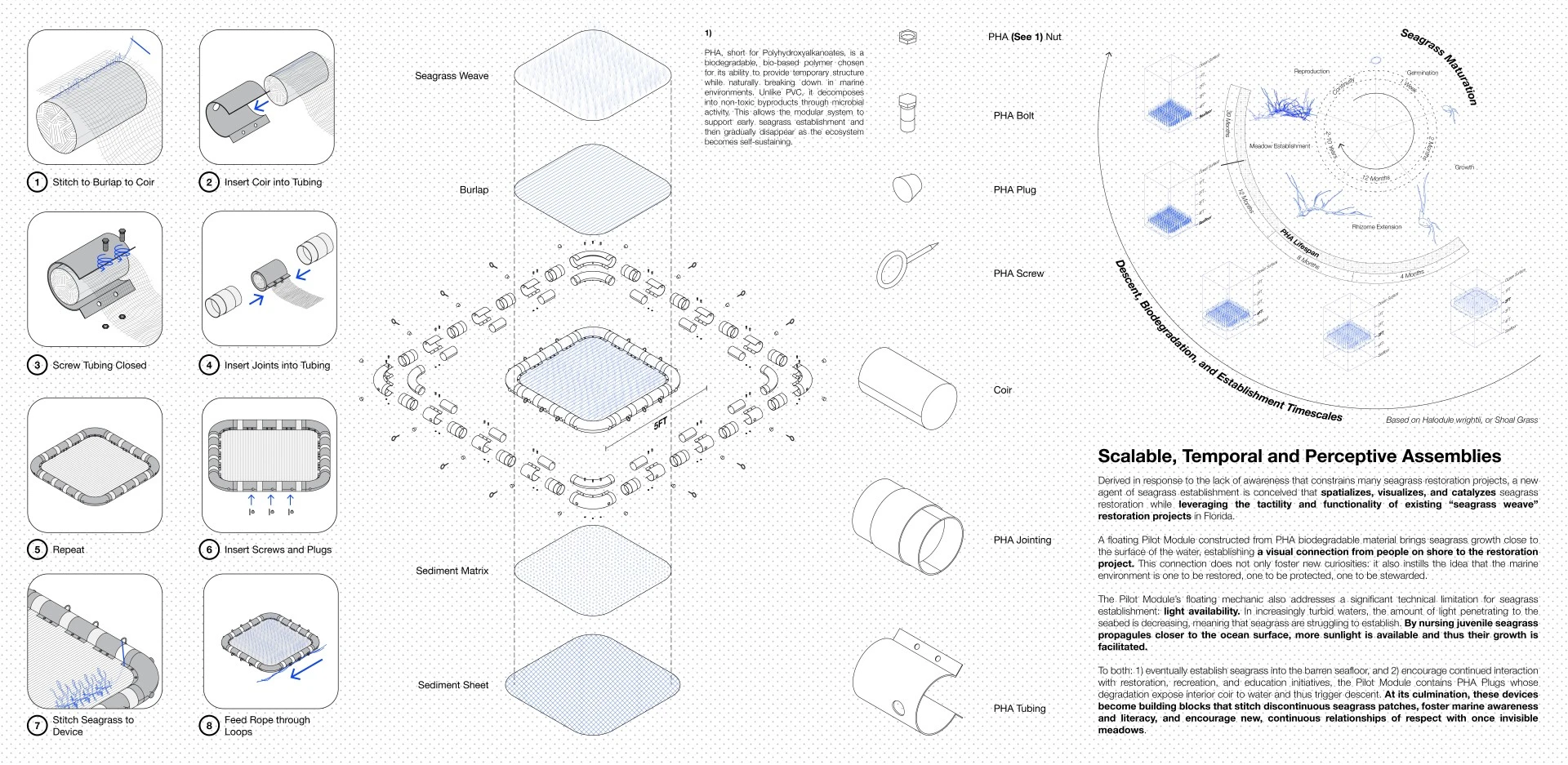
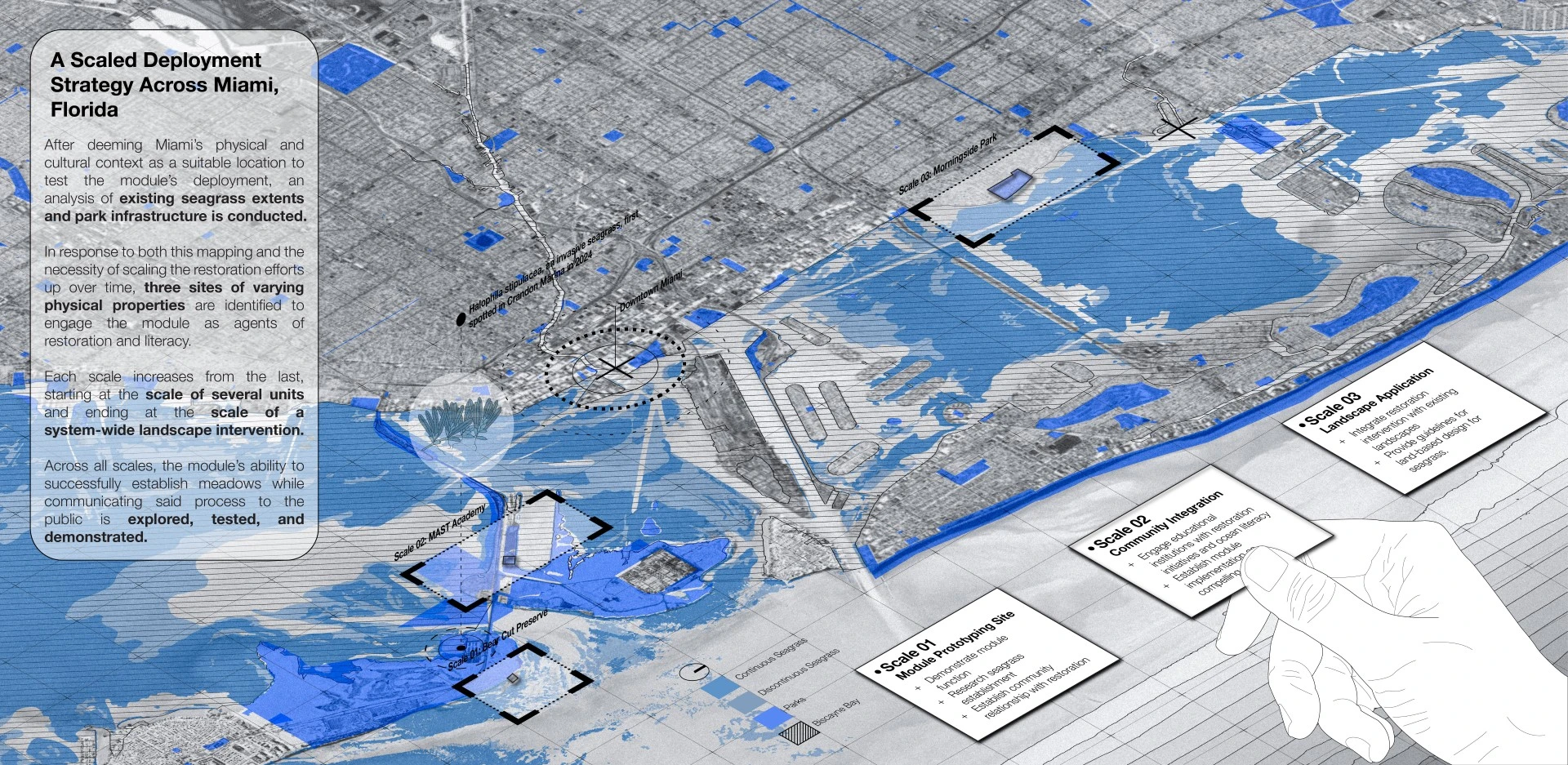
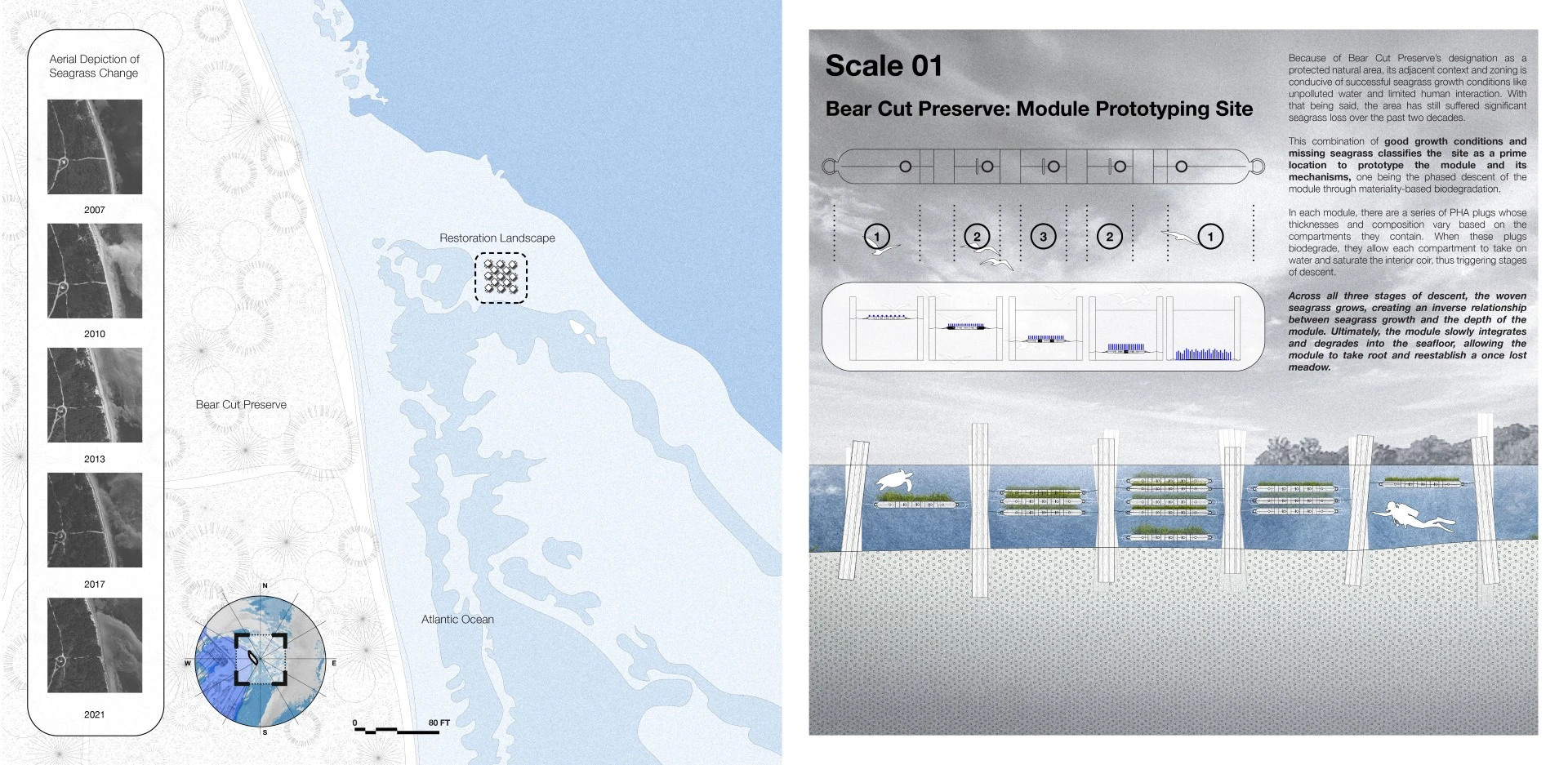
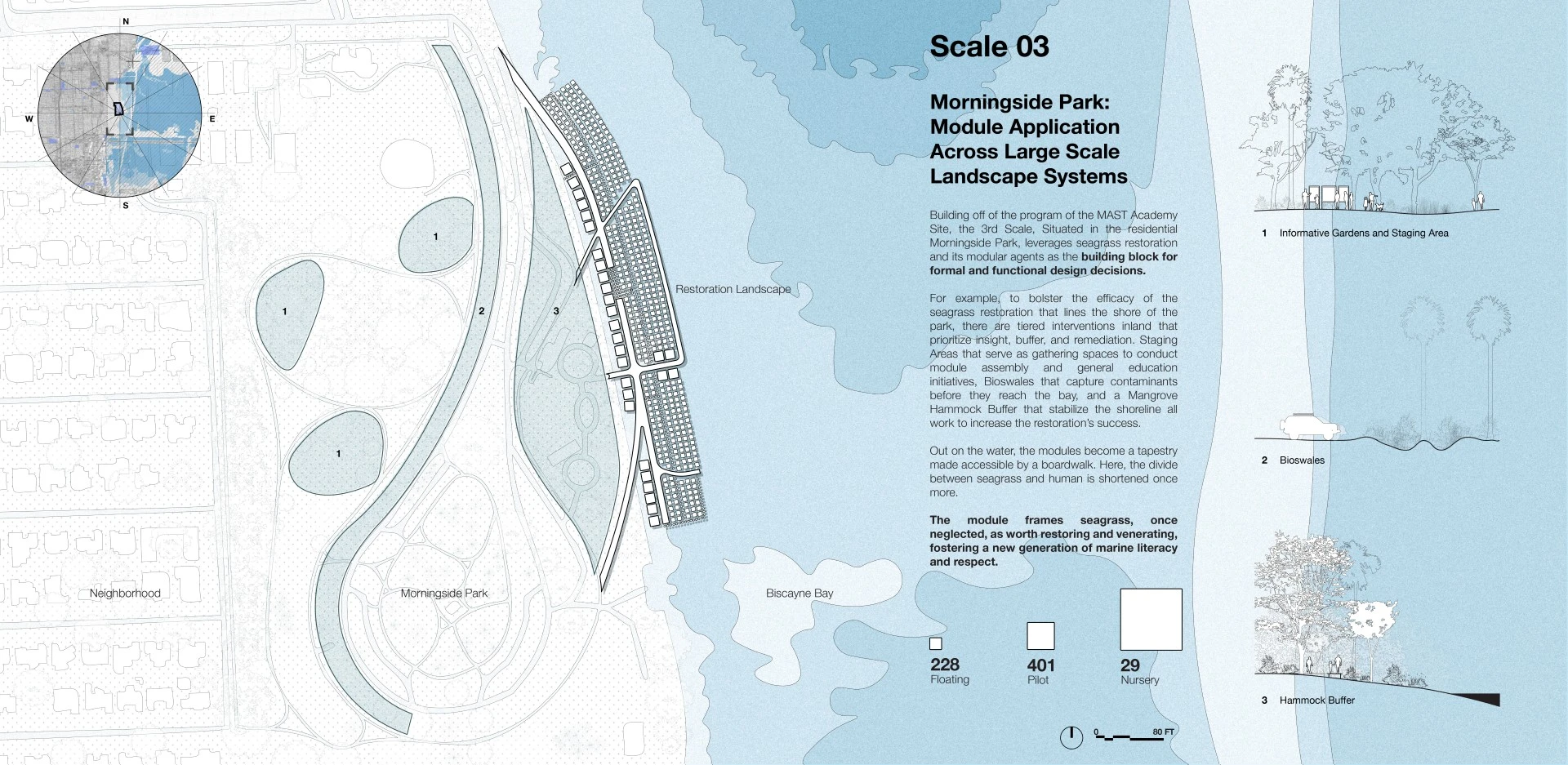
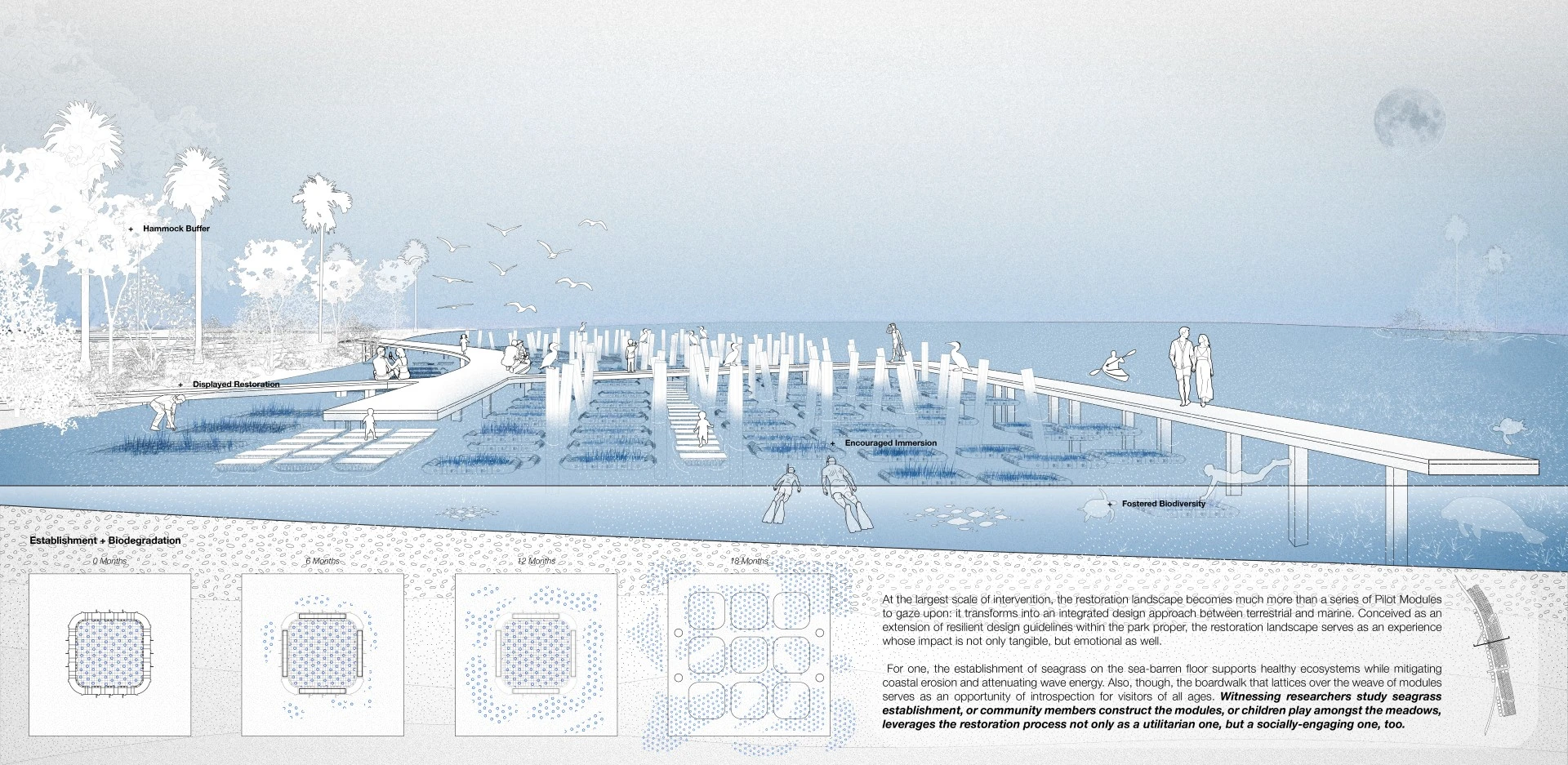
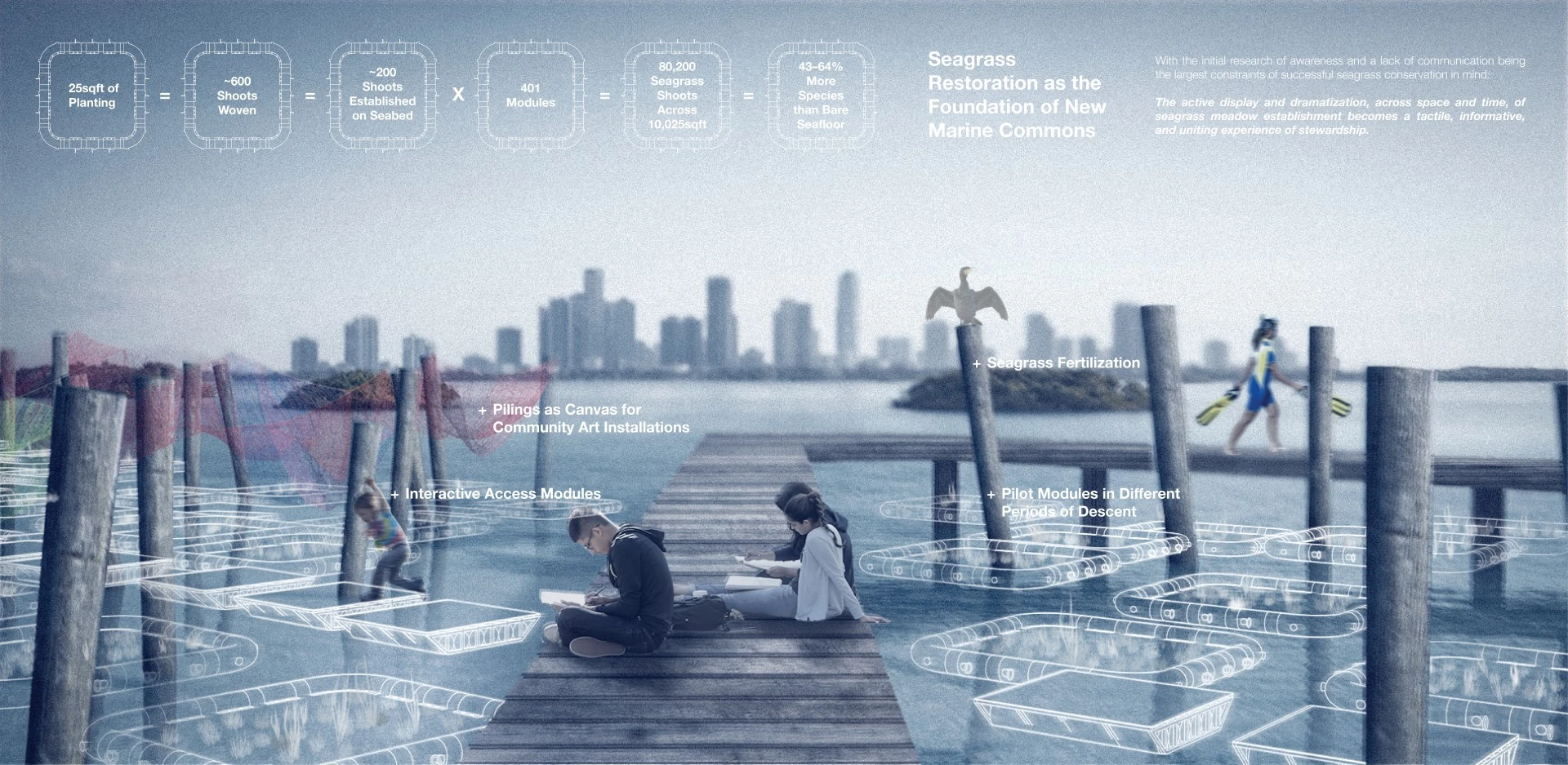
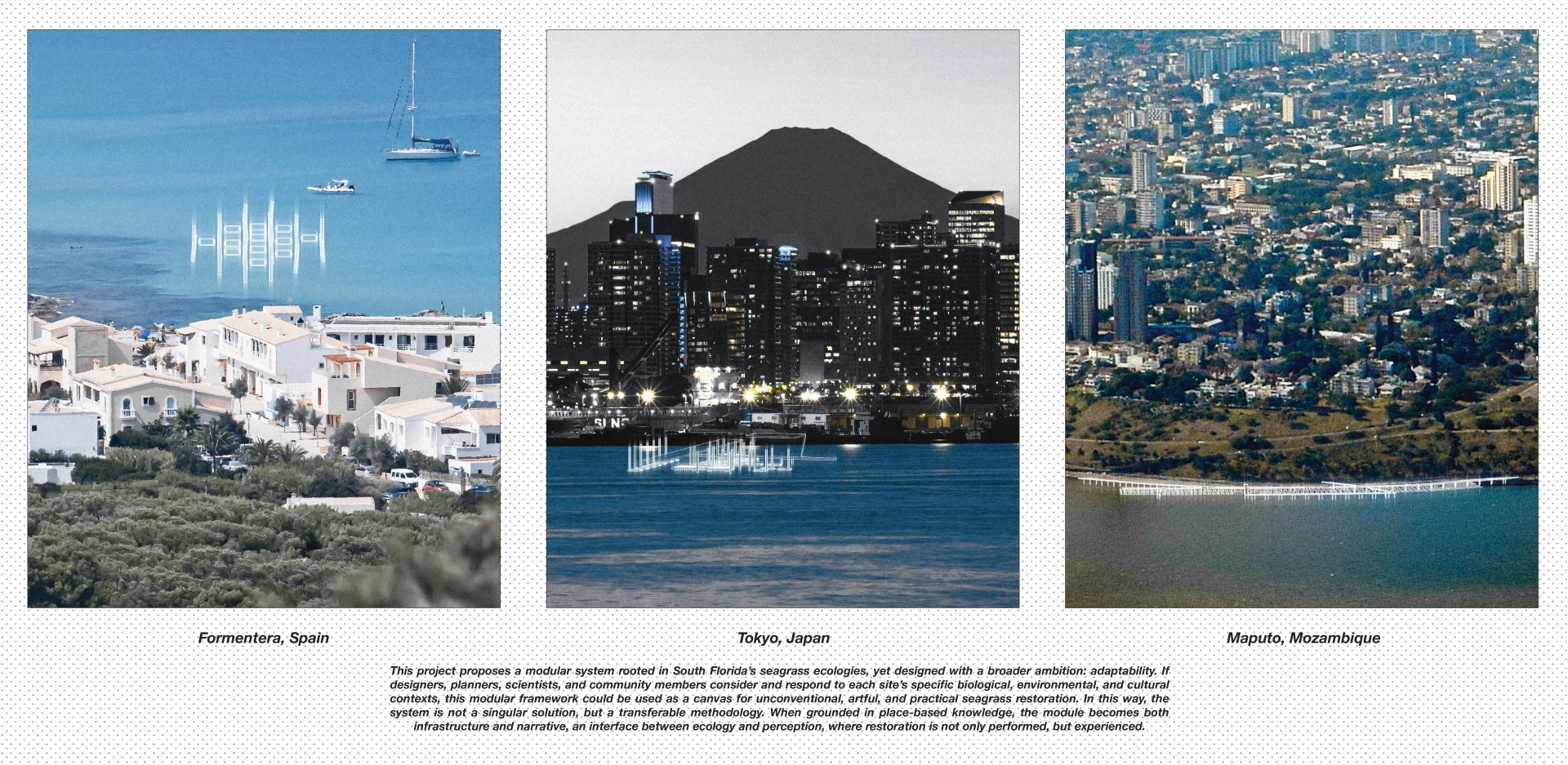
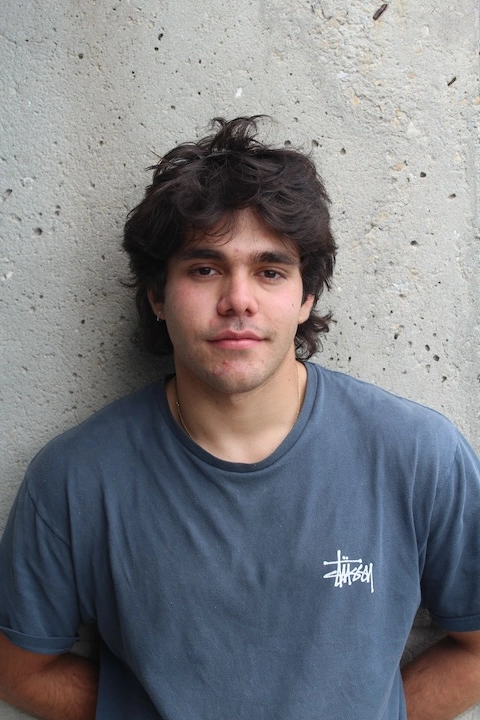
Cleary shows how building community awareness can make hidden natural systems visible and more meaningful to the general public.
Awards Jury
-
This project reimagines seagrass restoration as both ecological infrastructure and public experience. Using biodegradable, buoyant modules, seagrass is supported during early growth before gradually settling to the seafloor, improving establishment success and enabling scalable meadow expansion. Integrated with piers and boardwalks, the design makes restoration visible, engaging visitors through education and interaction. Its impact is measured through biodiversity supported, people reached, and total meadow established. By linking measurable ecological outcomes with public engagement, the project transforms restoration into participatory infrastructure, advancing coastal resilience while reconnecting communities to underwater ecosystems.
-
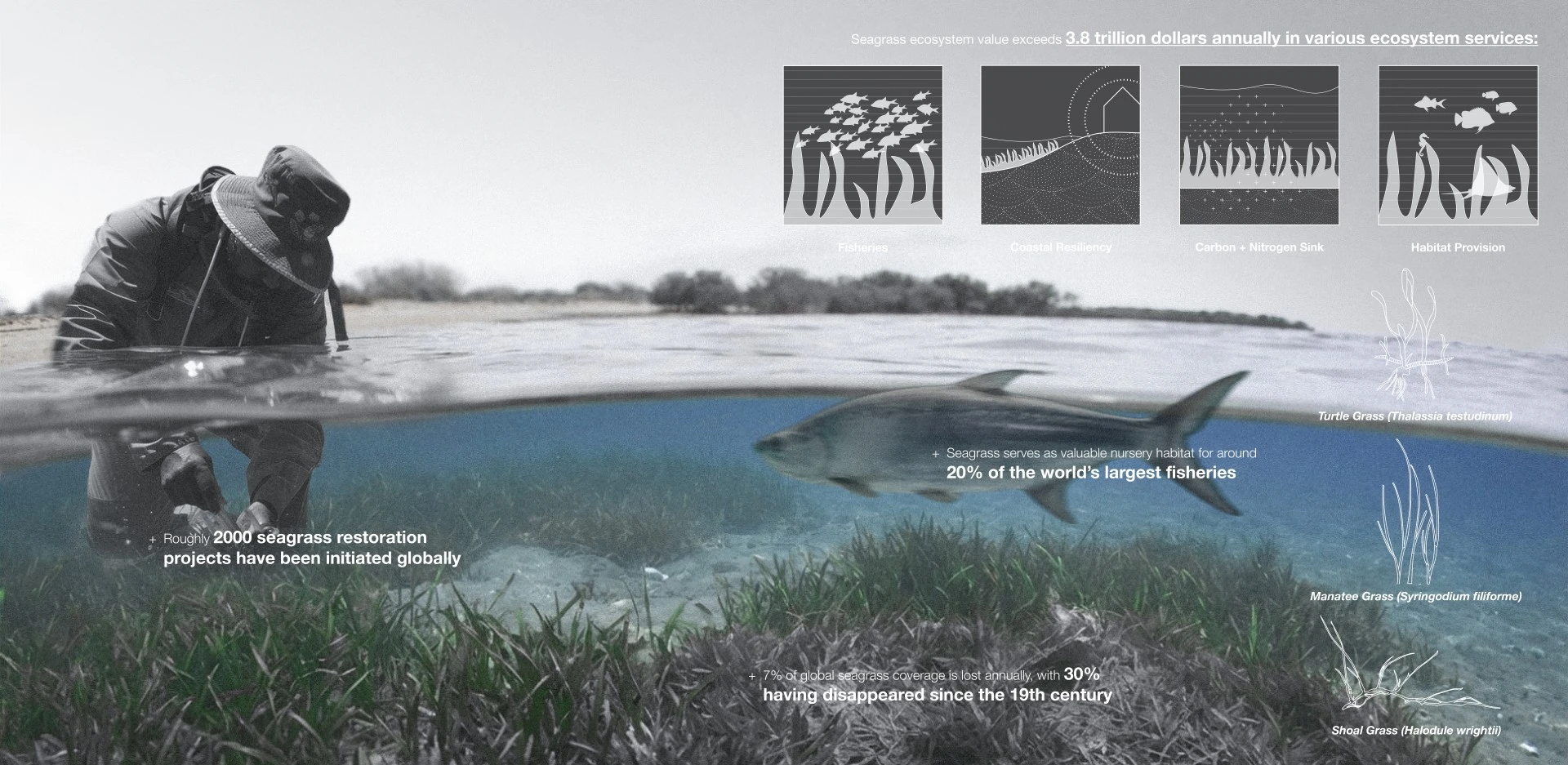
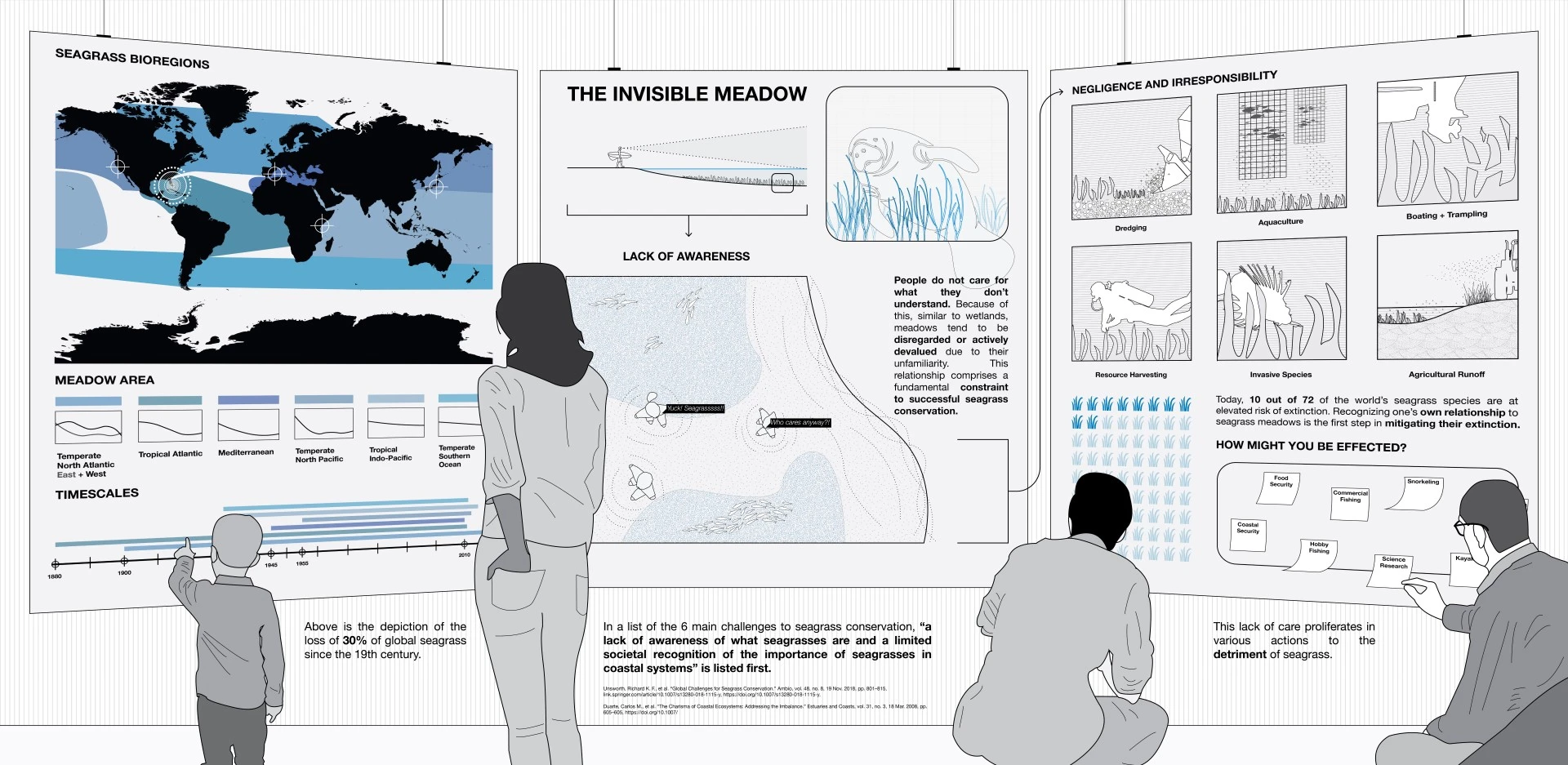
Seagrass meadows are among the most productive coastal ecosystems, supporting marine biodiversity, improving water quality, stabilizing shorelines, and sequestering carbon. Despite their ecological value, they are rapidly declining due to rising temperatures, pollution, and physical disturbance. Conventional restoration methods often face low success rates due to transplant stress, unstable seabed conditions, and, most importantly, a lack of public awareness. This project proposes a modular, adaptive restoration system that reframes seagrass recovery as both ecological infrastructure and a public-facing experience.
The design introduces biodegradable, buoyancy-controlled modules that suspend seagrass propagules within the water column during early growth stages. By reducing exposure to sediment instability and physical stress, the system improves early-stage survivability. As the material gradually decomposes, the modules descend, allowing the seagrass to root naturally into the seafloor. This phased approach supports long-term meadow establishment while remaining responsive to changing coastal conditions. The modular system allows for incremental and scalable deployment across degraded areas.
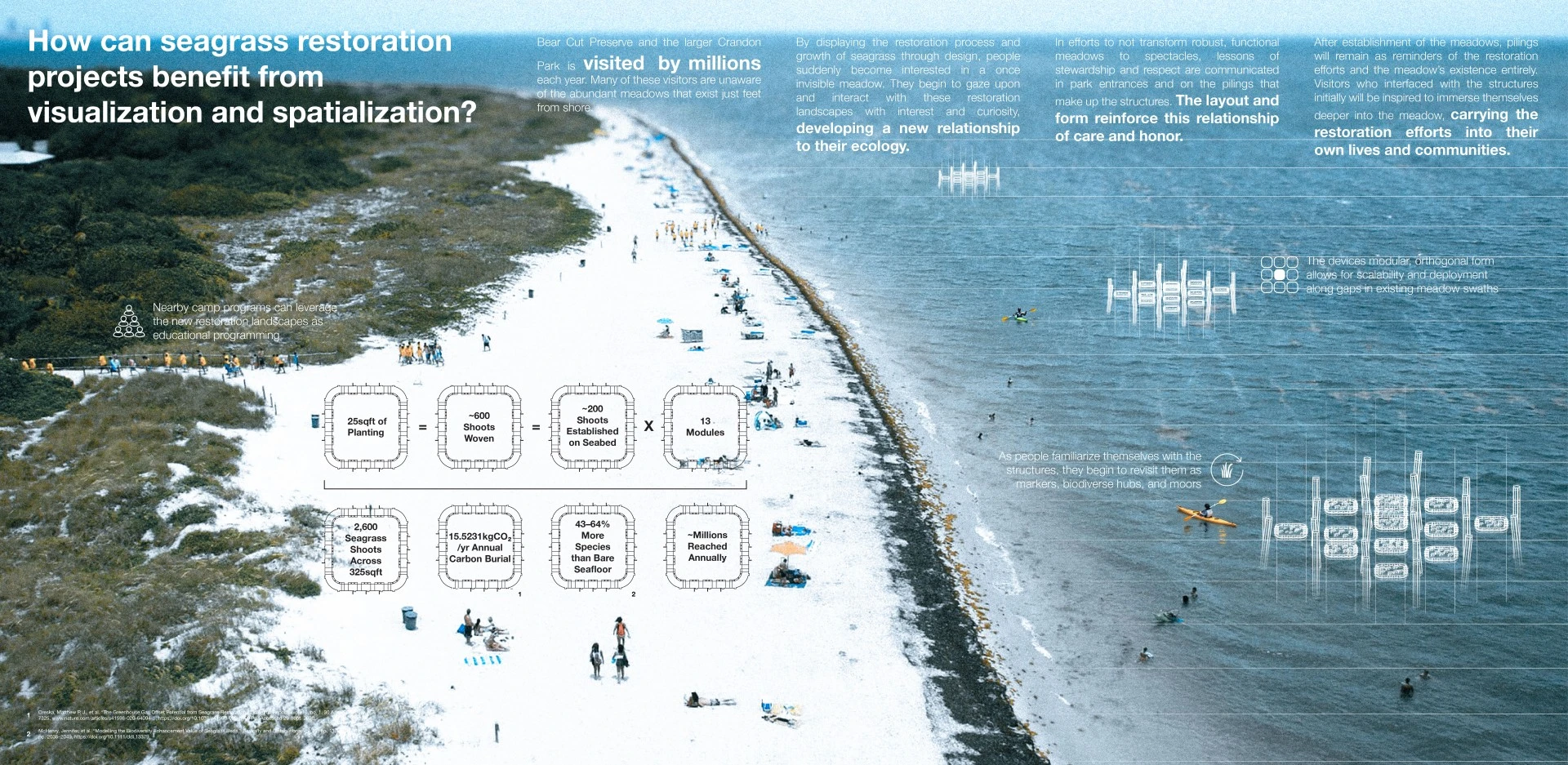
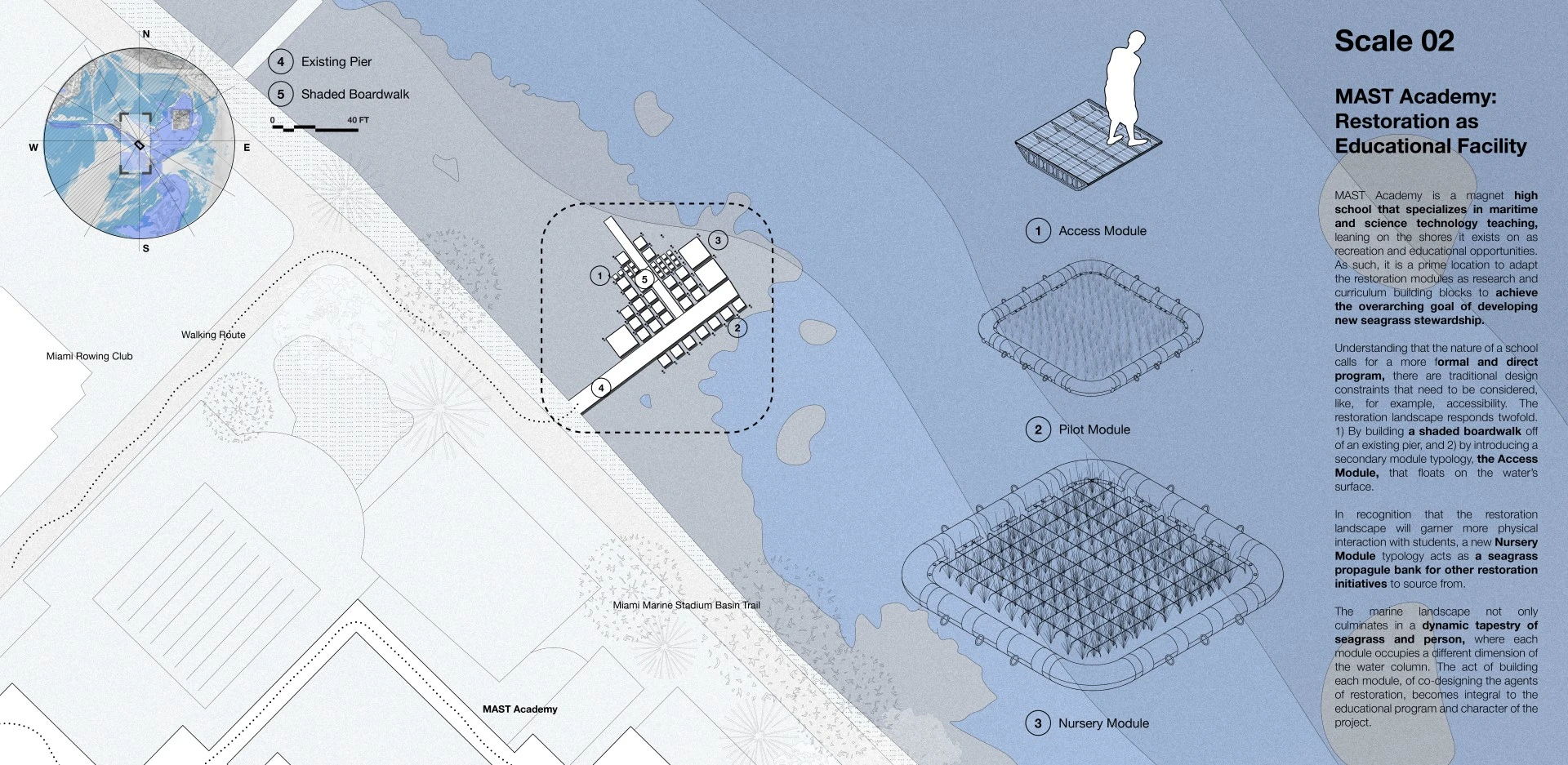
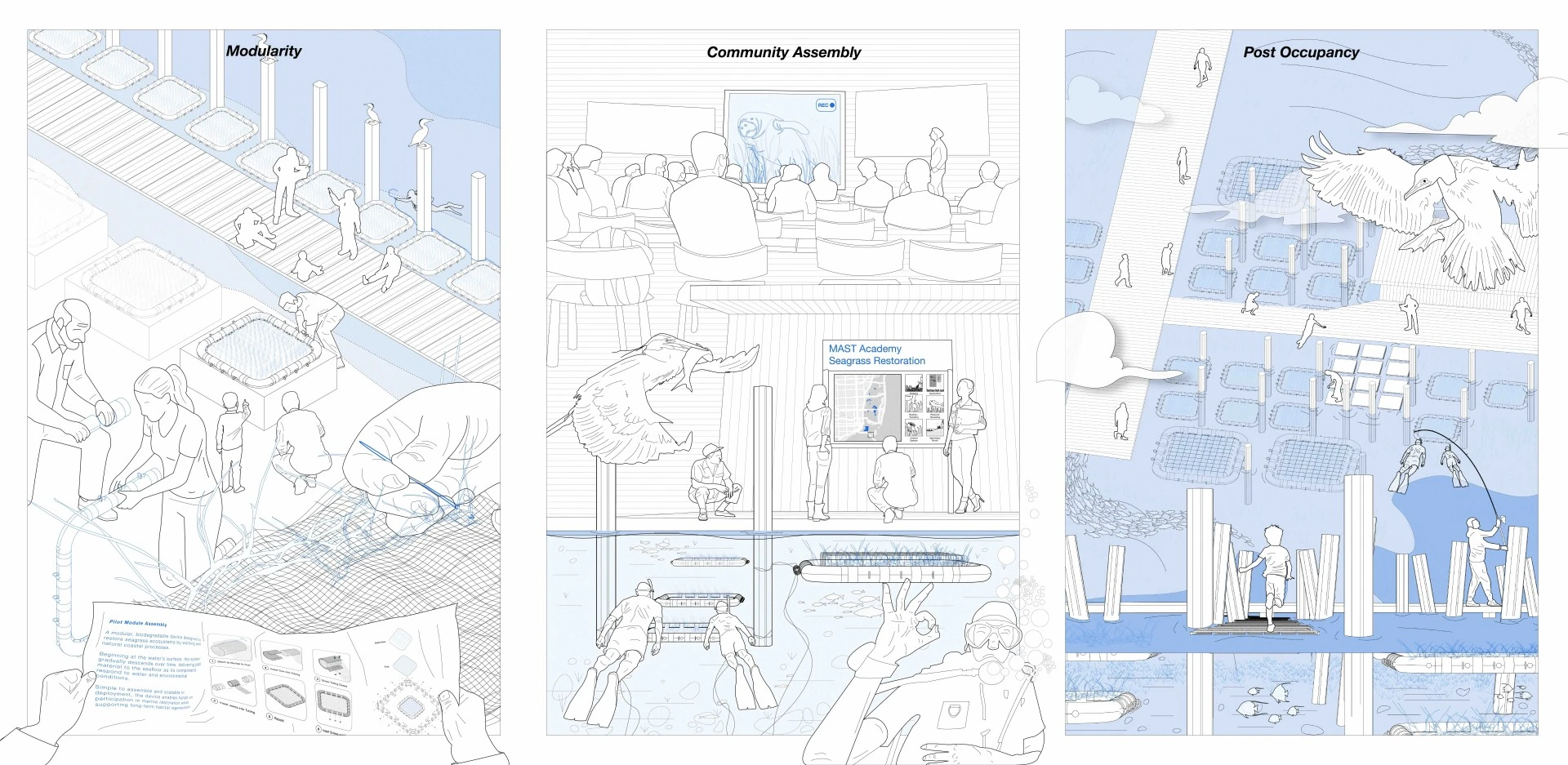
The project integrates a pier and boardwalk network that makes restoration processes visible and accessible. Visitors can observe the evolving underwater landscape through designated viewpoints and engage with interpretive elements that communicate ecological processes. This integration supports environmental education and fosters a stronger connection between people and coastal ecosystems.
Project performance is evaluated through three primary metrics: biodiversity, people reached, and total meadow established. Biodiversity is supported through the creation of habitat that encourages species recruitment and ecological diversity. People reached is measured through public access, educational engagement, and interaction with the site. Meadow established is quantified by the total area of successfully rooted seagrass over time, demonstrating the effectiveness and scalability of the system.
By combining ecological restoration with public engagement, the project presents a framework for coastal intervention that operates across environmental and social scales, supporting both ecosystem recovery and community awareness.
-
- Turtle Grass
- Shoal Grass
- Manatee Grass
Advertisement
Related Awards
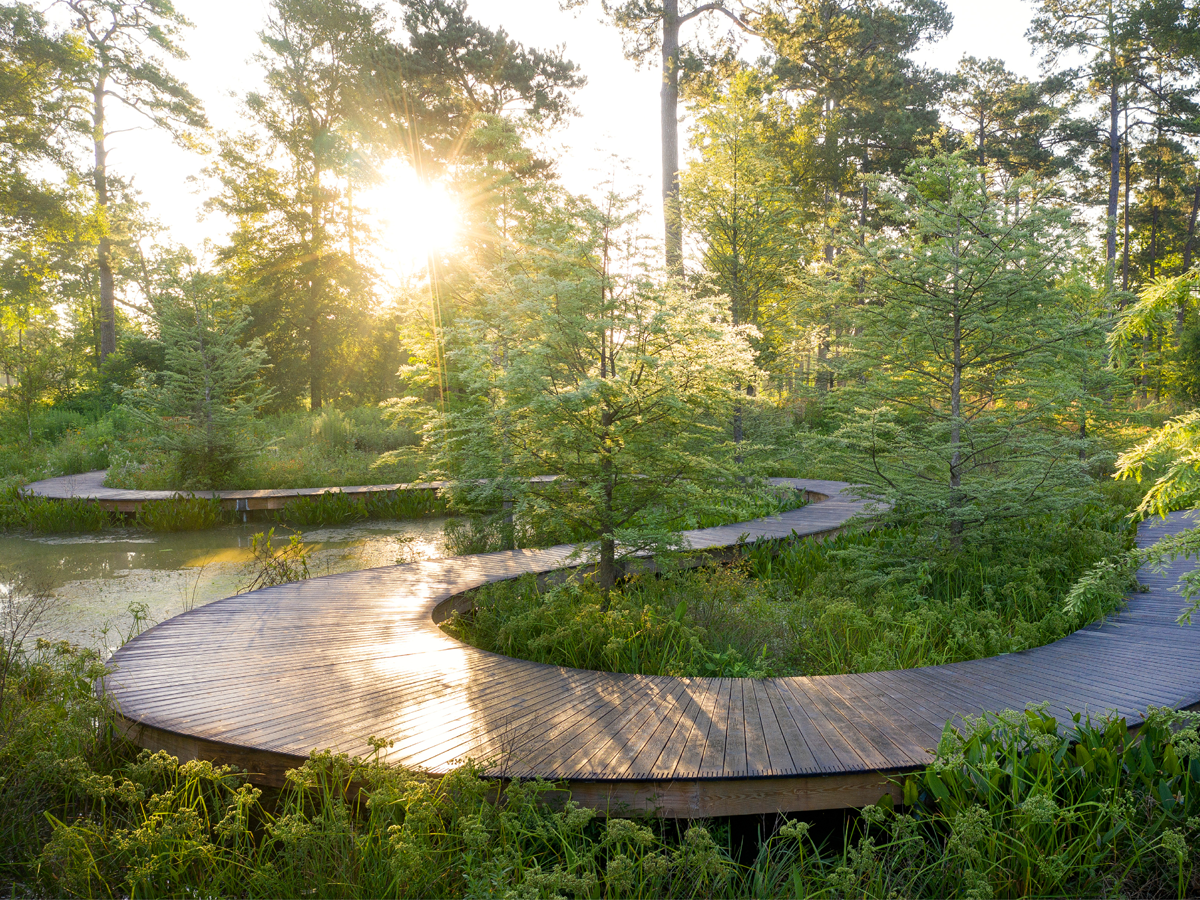
Honor Award, General Design
Houston Arboretum & Nature Center
The Houston Arboretum & Nature Center sits within Memorial Park, one of the largest urban parks in the United States, in one of the nation's fastest growing and most climate-challenged cities. The site's story is one of repeated loss and deliberate reinvention. Hurricane Ike in 2008 and a severe drought in 2011 destroyed much of the Arboretum's tree canopy, exposing the limits of conventional reforestation in a city defined by flooding, heat, and ecological volatility.