
.webp?language=en-US)

.webp?language=en-US)
re-Wrighting Decay: A Regenerative form of Cyclical Forest Stewardship
Kiana Rezvani Baghae, Student ASLA; Michael Harding Student ASLA

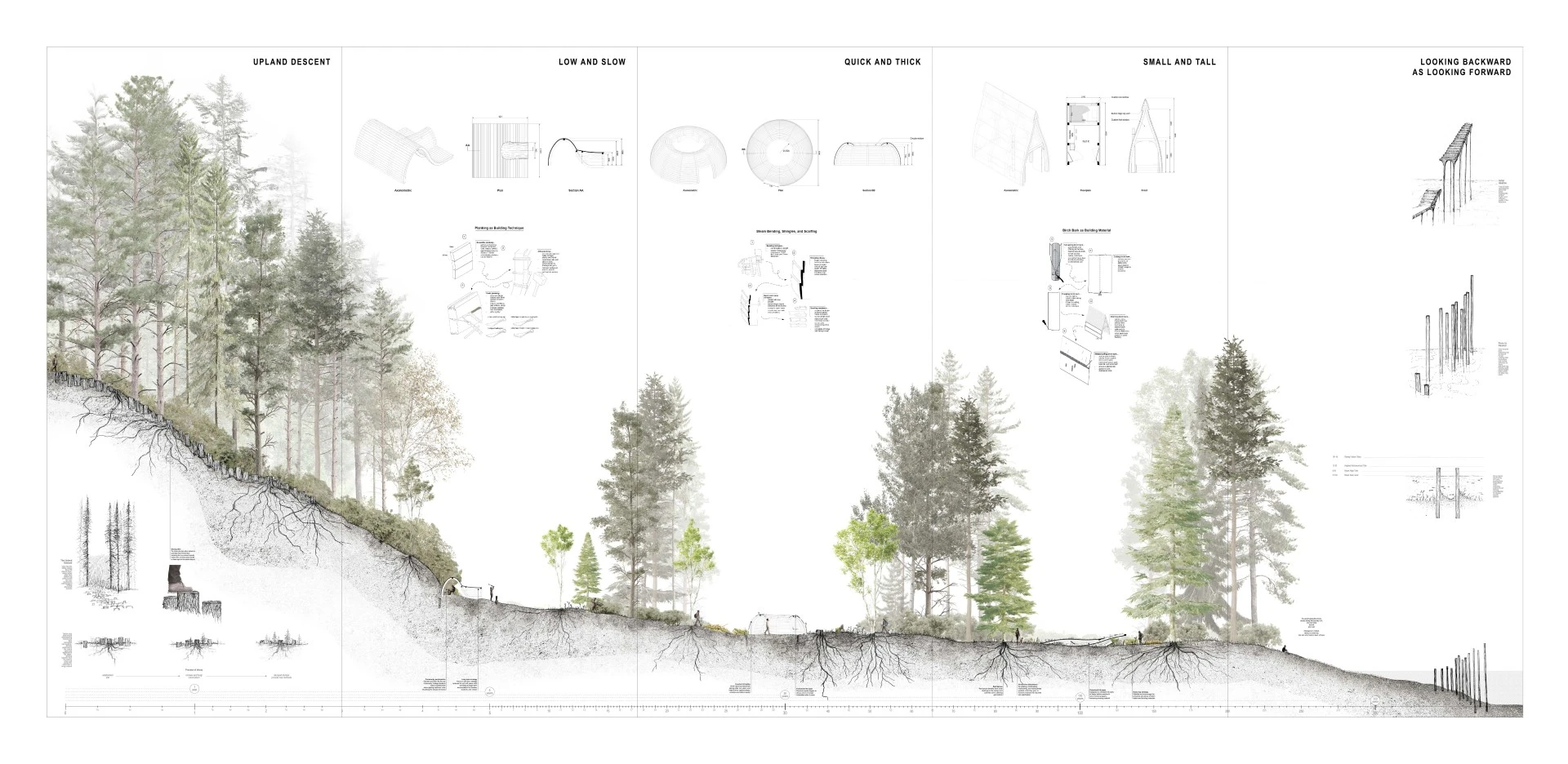
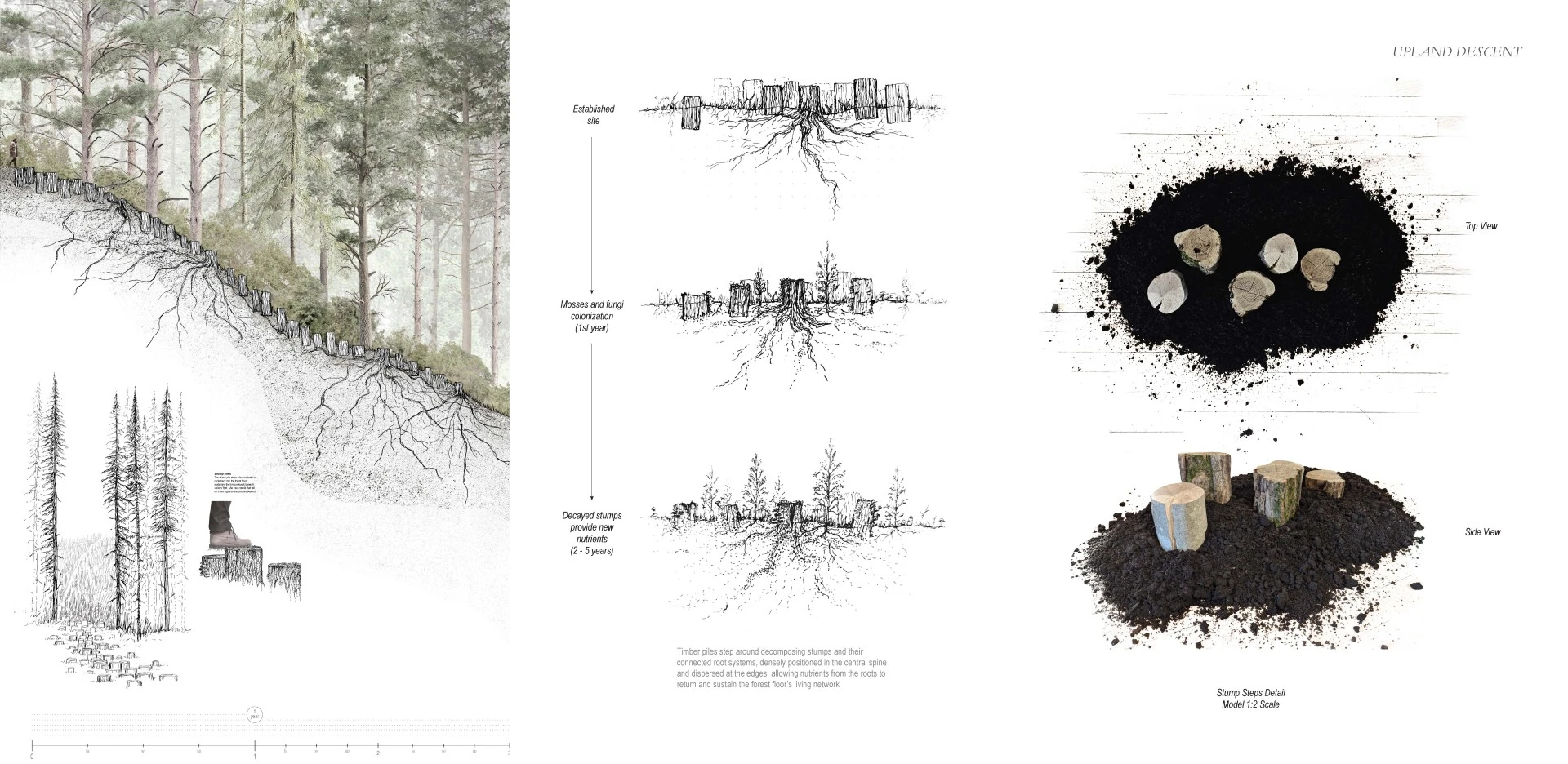
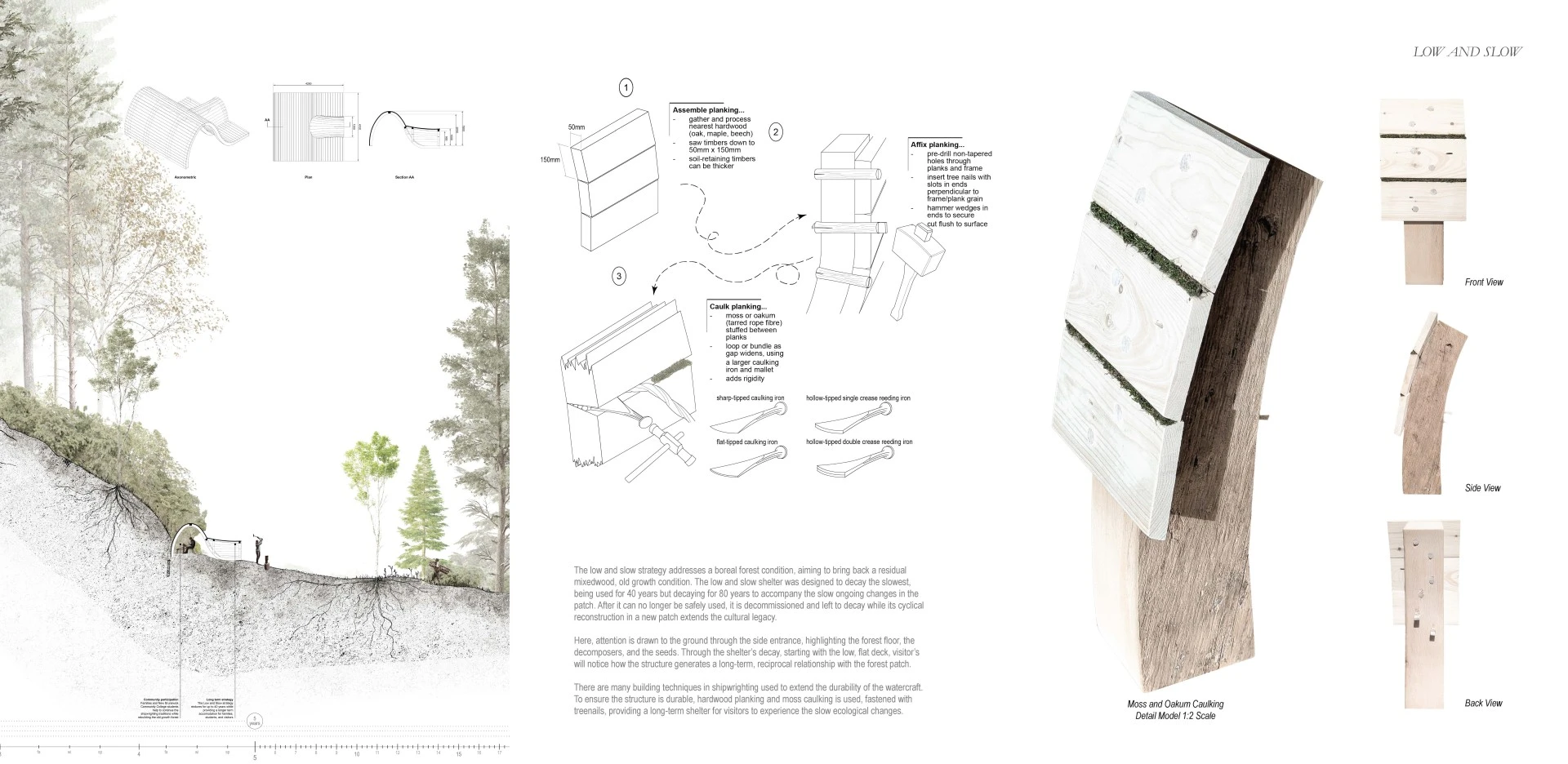
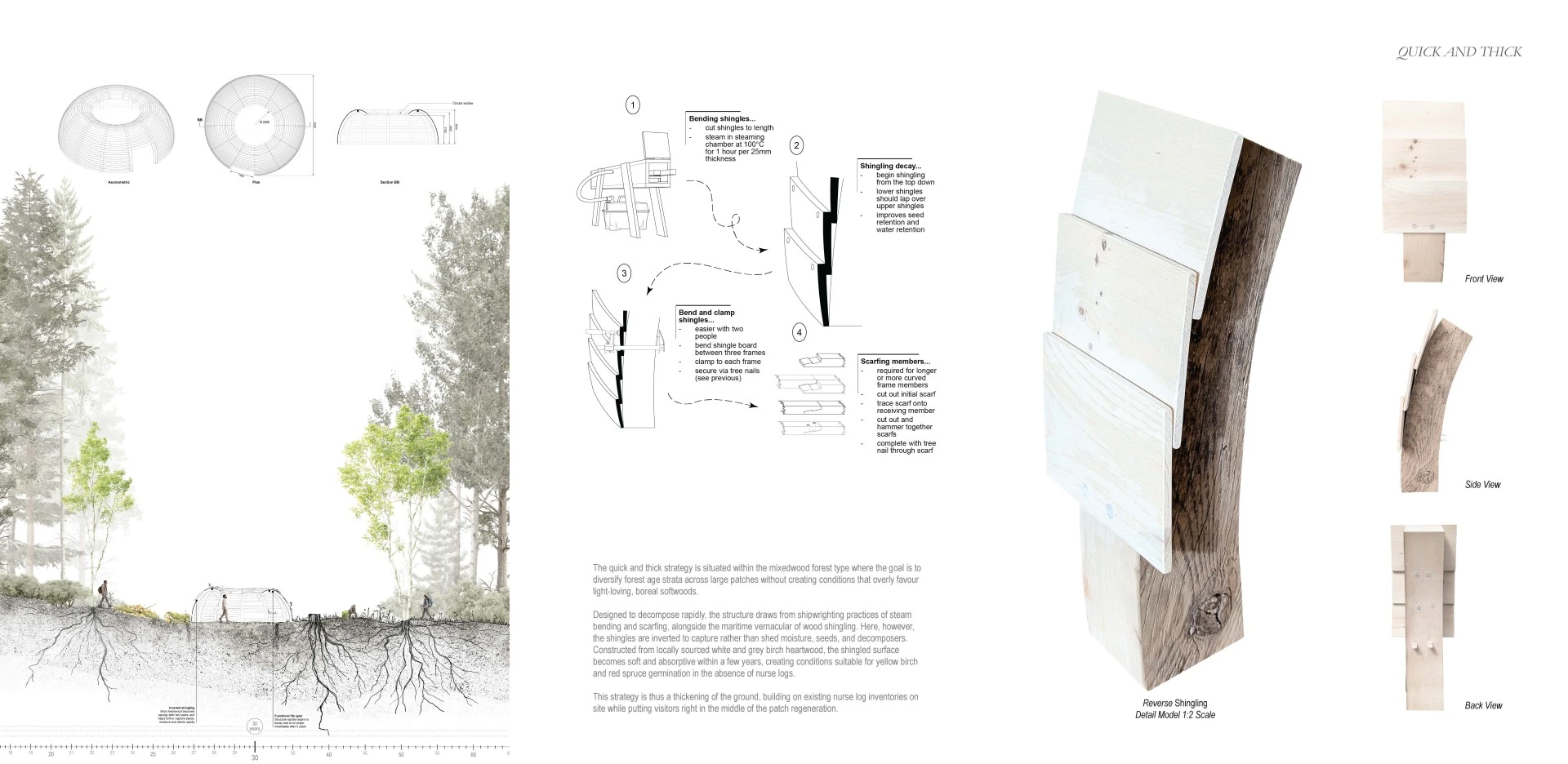
Strong concept integrating culture, ecology, and time. Innovative use of decay as part of the design process.
Awards Jury
-
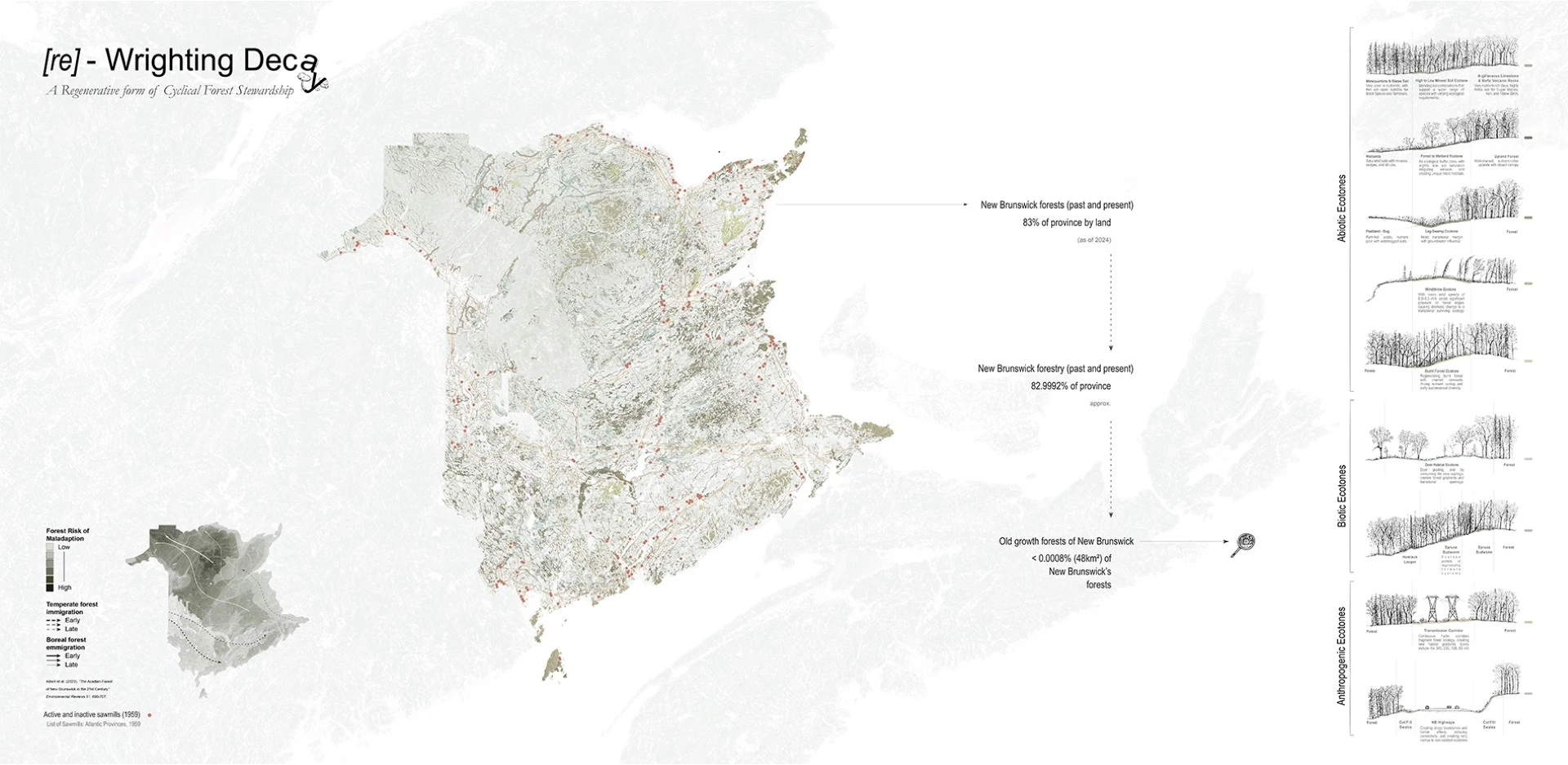
The old growth Wabanaki forest of New Brunswick is dying, reduced from 50% to 0.0008% of the province currently, alongside culture-defining industries such as the wooden shipwrighting industry. At Martin's Head, an Atlantic Canadian coastal property, we ignite old growth succession through cultural production. By reimagining how we can care for the forest we proposed a cyclical form of stewardship that balances the regeneration of the old growth Wabanaki forest and the material practices of the shipwrighting culture. Rather than extractive use, the design advances reciprocal stewardship, biodiversity, and climate resilience, re-establishing a sustainable material relationship between community and forest.
-
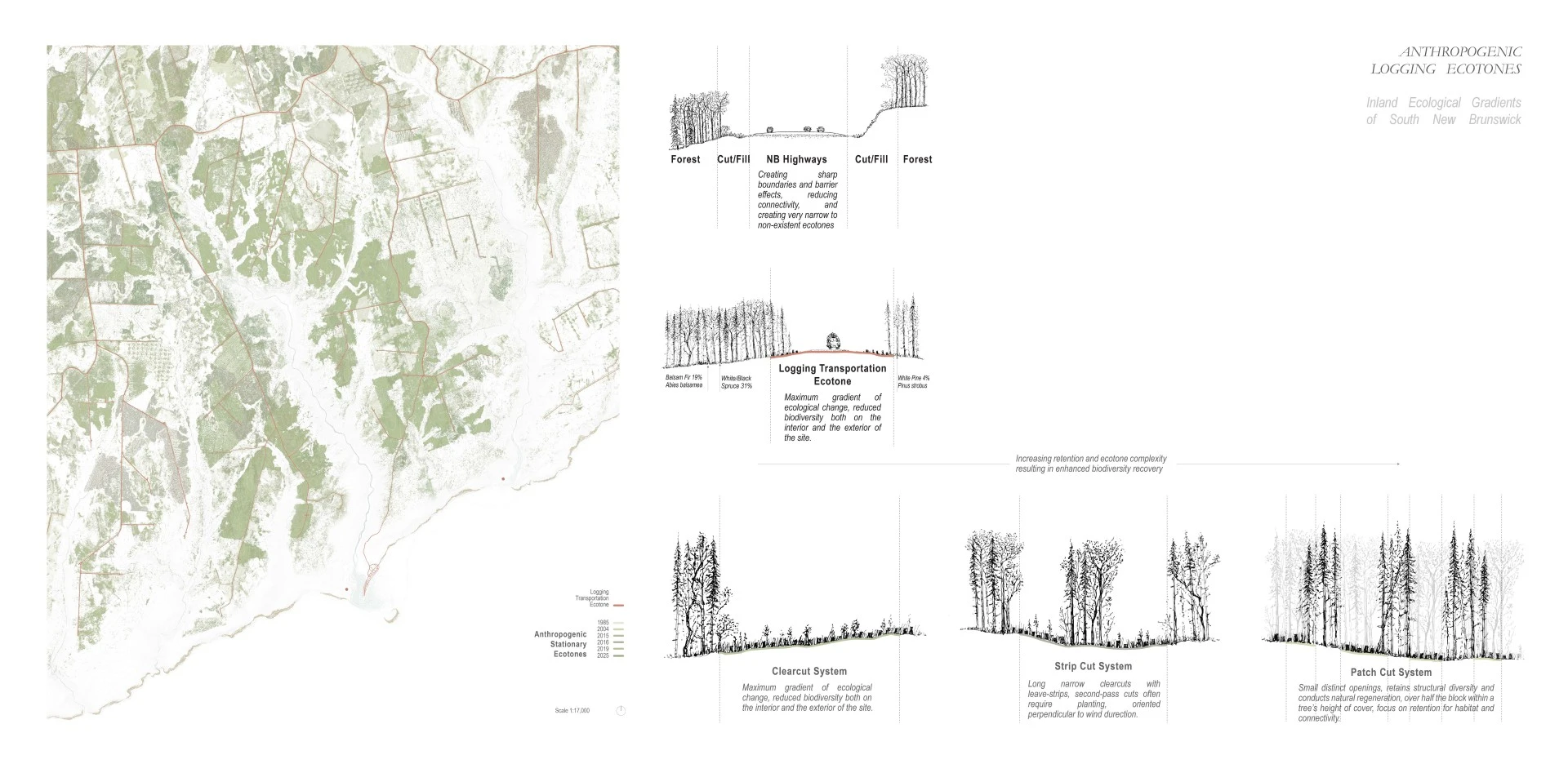
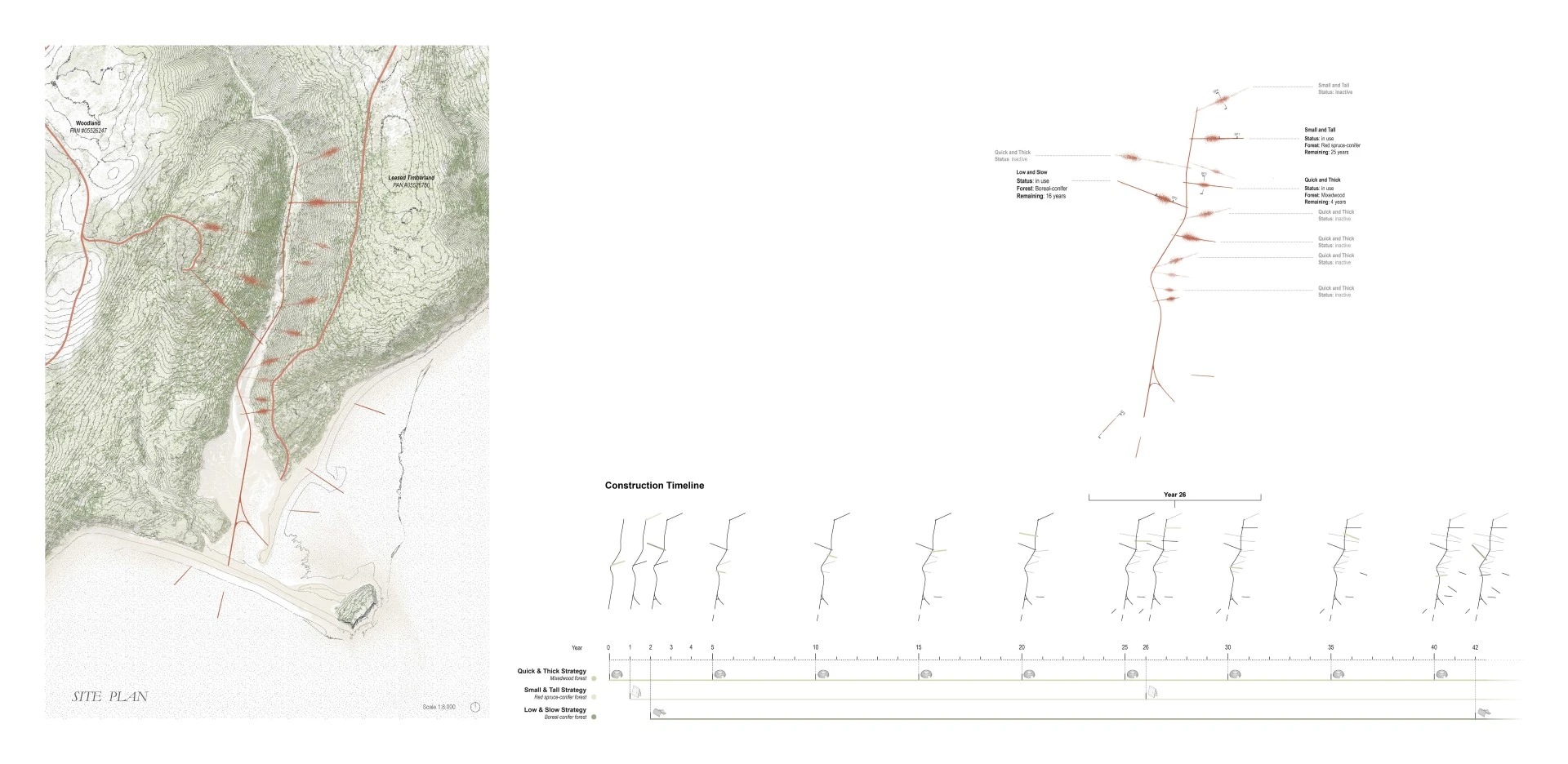
This project repositions old growth forest loss in southern New Brunswick as an opportunity to reframe human-forest relationships through cyclical, regenerative design. Martin's Head, located 70km East of Saint John along the Bay of Fundy is a privately-owned, 800-acre rural property with a rich diversity of ecological, topographic, and climatic conditions. The site and most of the Fundy coastline was historically home to the Canadian wooden ship building industry and its associated logging industry. This project weaves together these strands of ecological and cultural shortfalls through a design that choreographs decay as a regenerative form of forest stewardship.
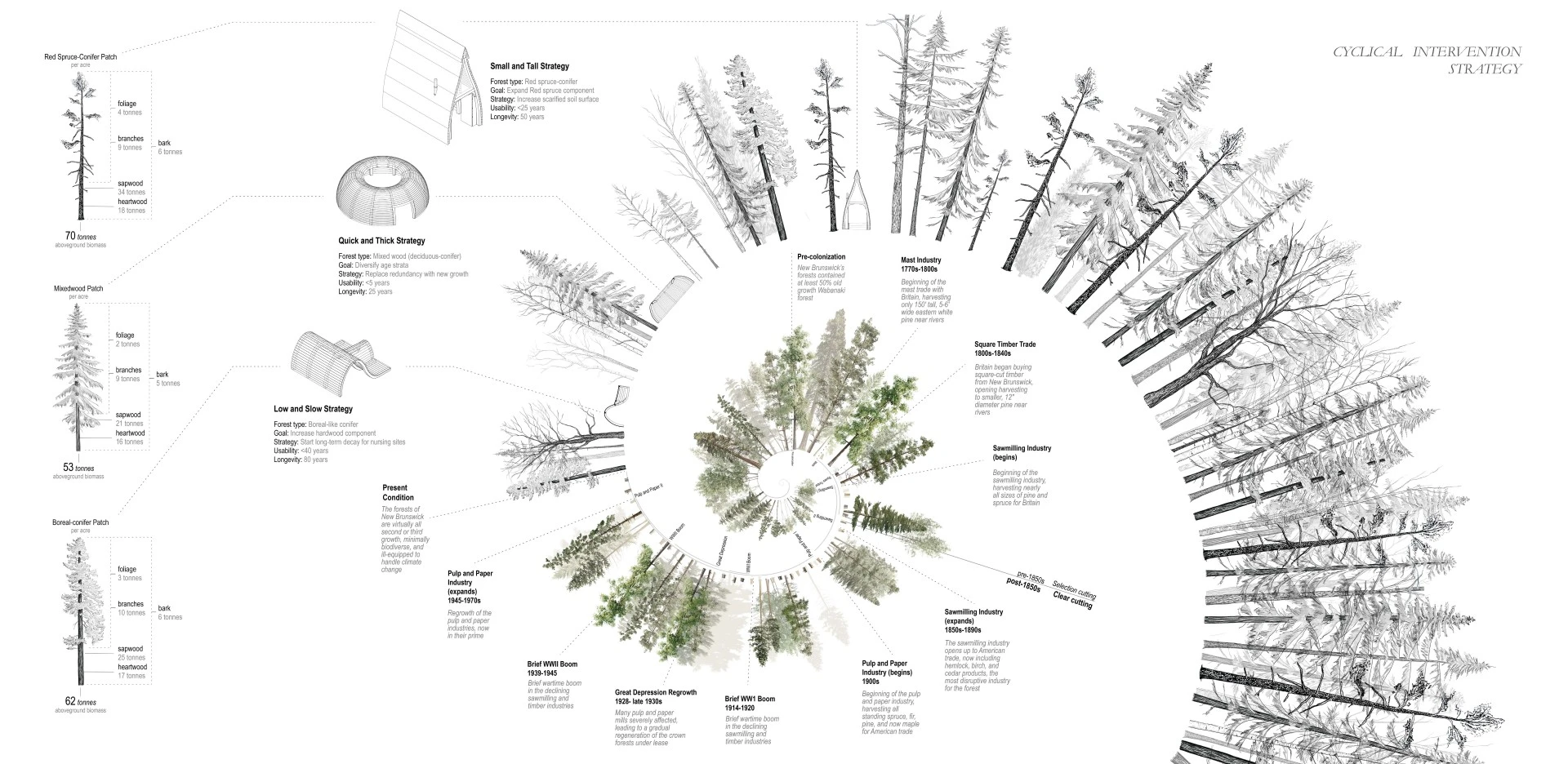
Rooted in a 300-year colonial history of logging and extraction, New Brunswick's economy has been carried to market by the craft of wooden shipbuilders. Early settlers knew the value of the shipwrighting industry, and many building techniques, traditions, and vocabularies were developed around it. Today, rendered obsolete by rail and highway transport, the industry leaves behind a fragile local heritage.
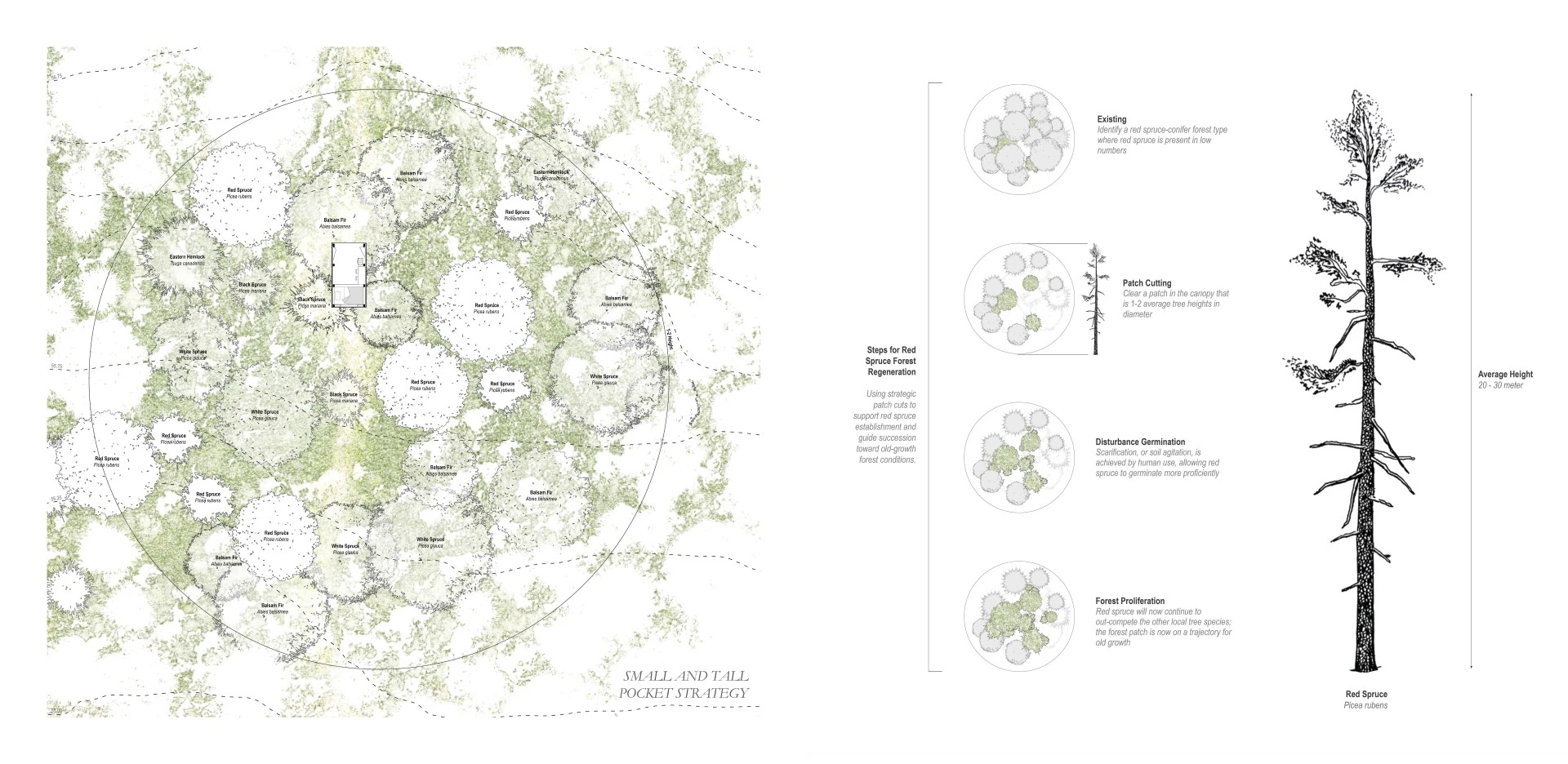
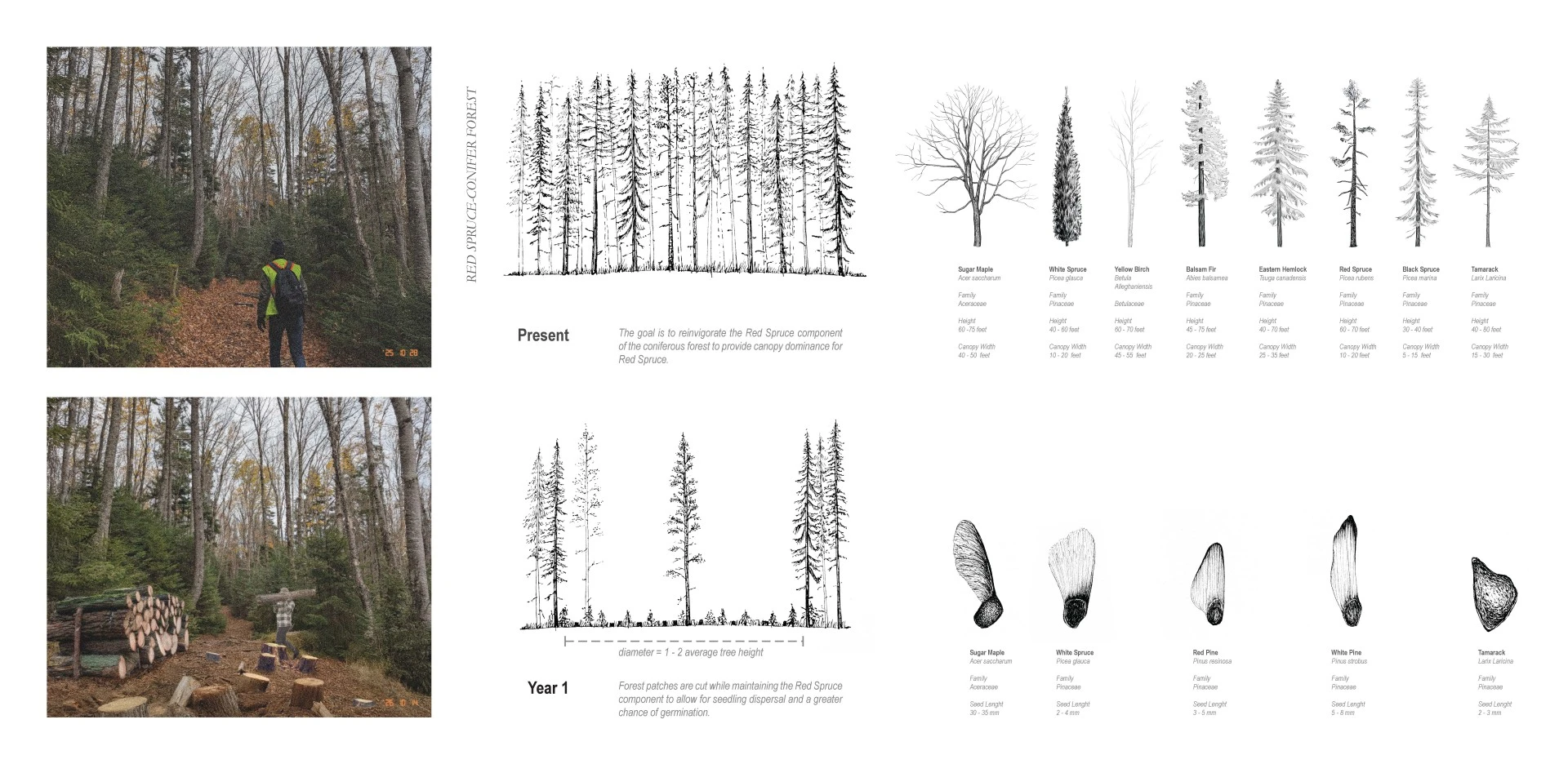
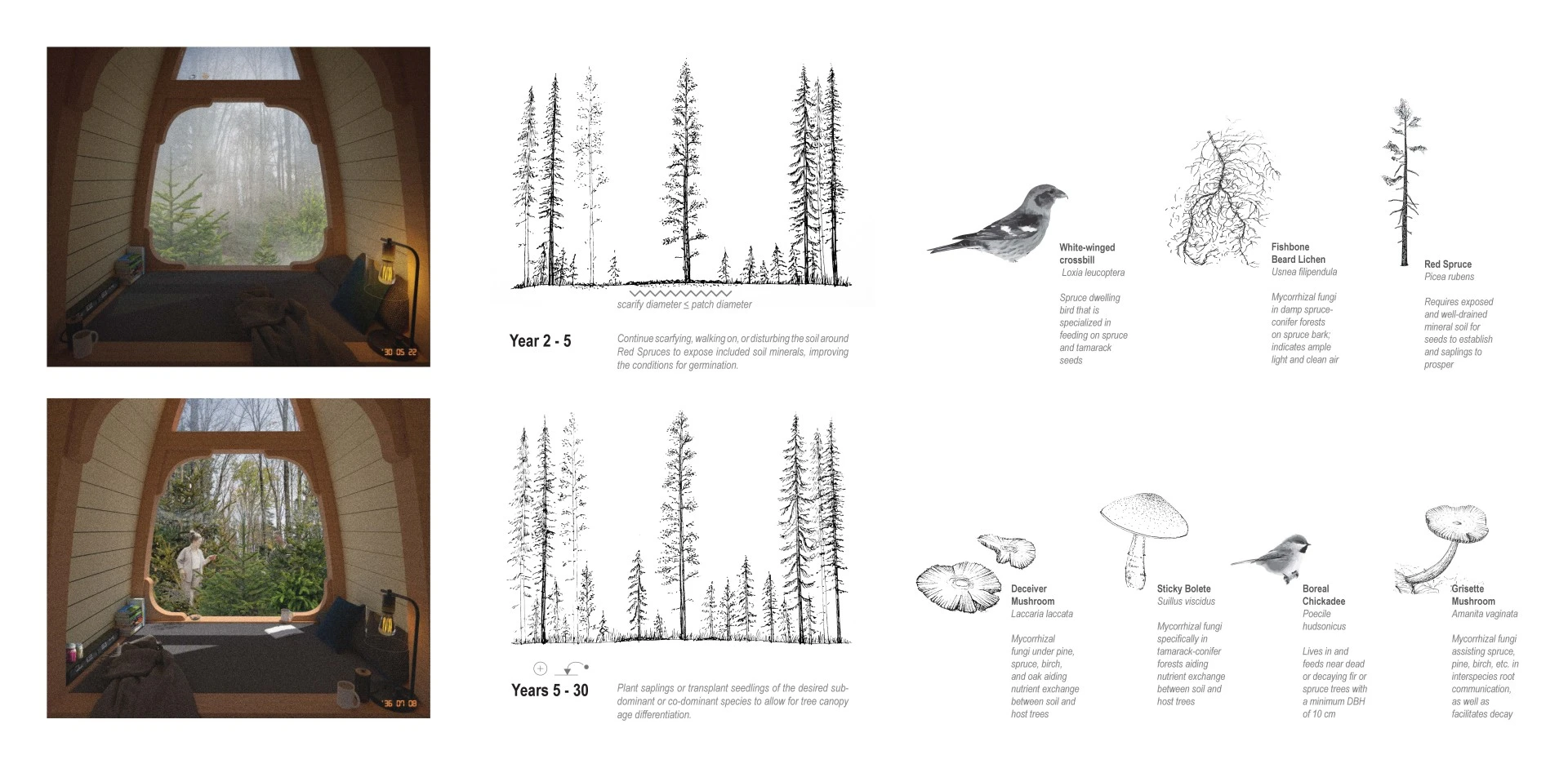
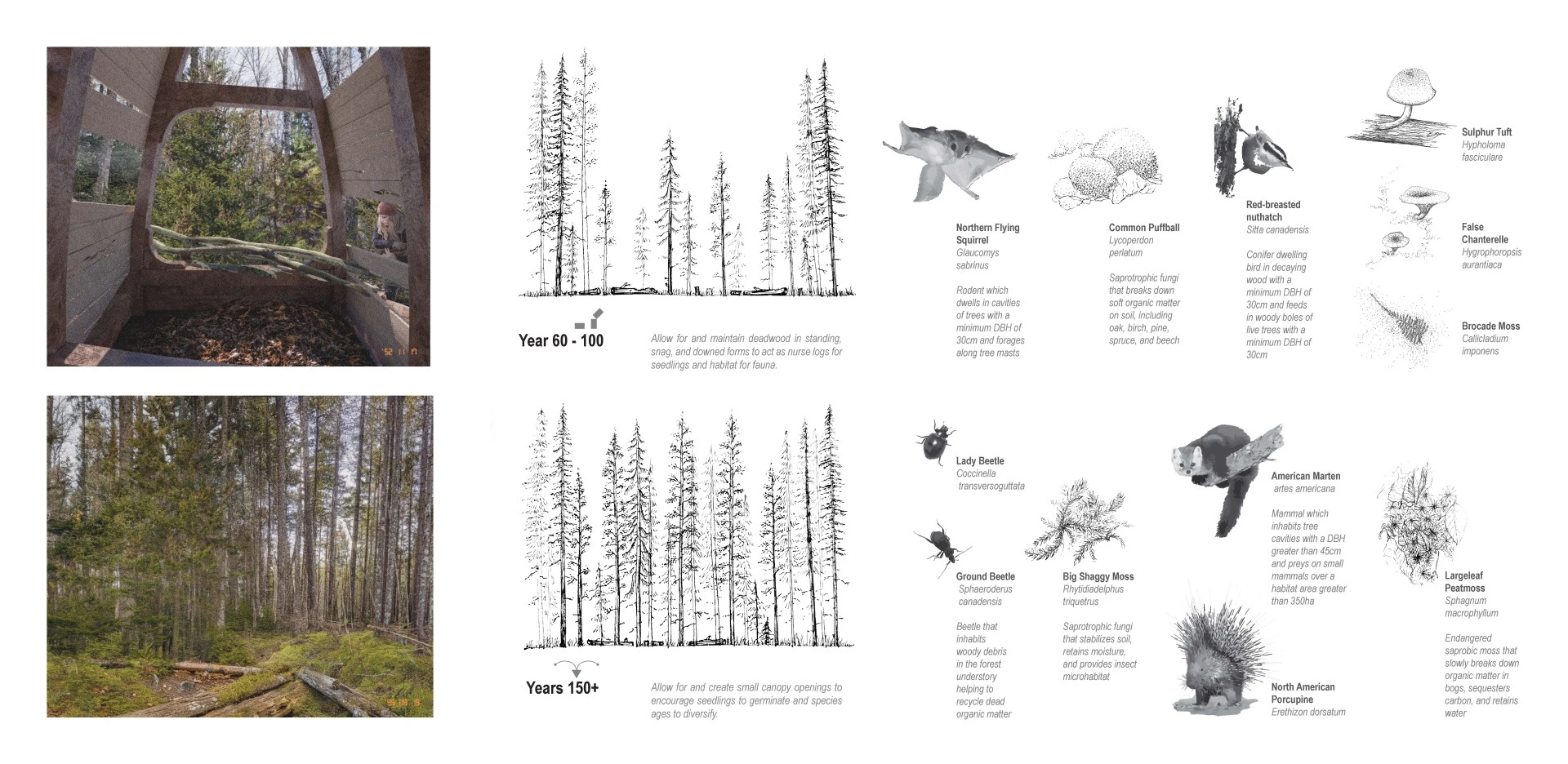
Forecasts of twenty-first century forest migration indicate that the boreal forest will retreat faster than the Wabanaki forest advances, expanding Boreal-Wabanaki ecotones in the province. These transitionary zones are highly susceptible to forest fires and insect infestations, strained further by logging. To slow migration, we propose enhancing forest pockets on site to facilitate old growth succession. Over time these pockets will expand throughout the site, catalyzing the return of old growth conditions beyond the site.
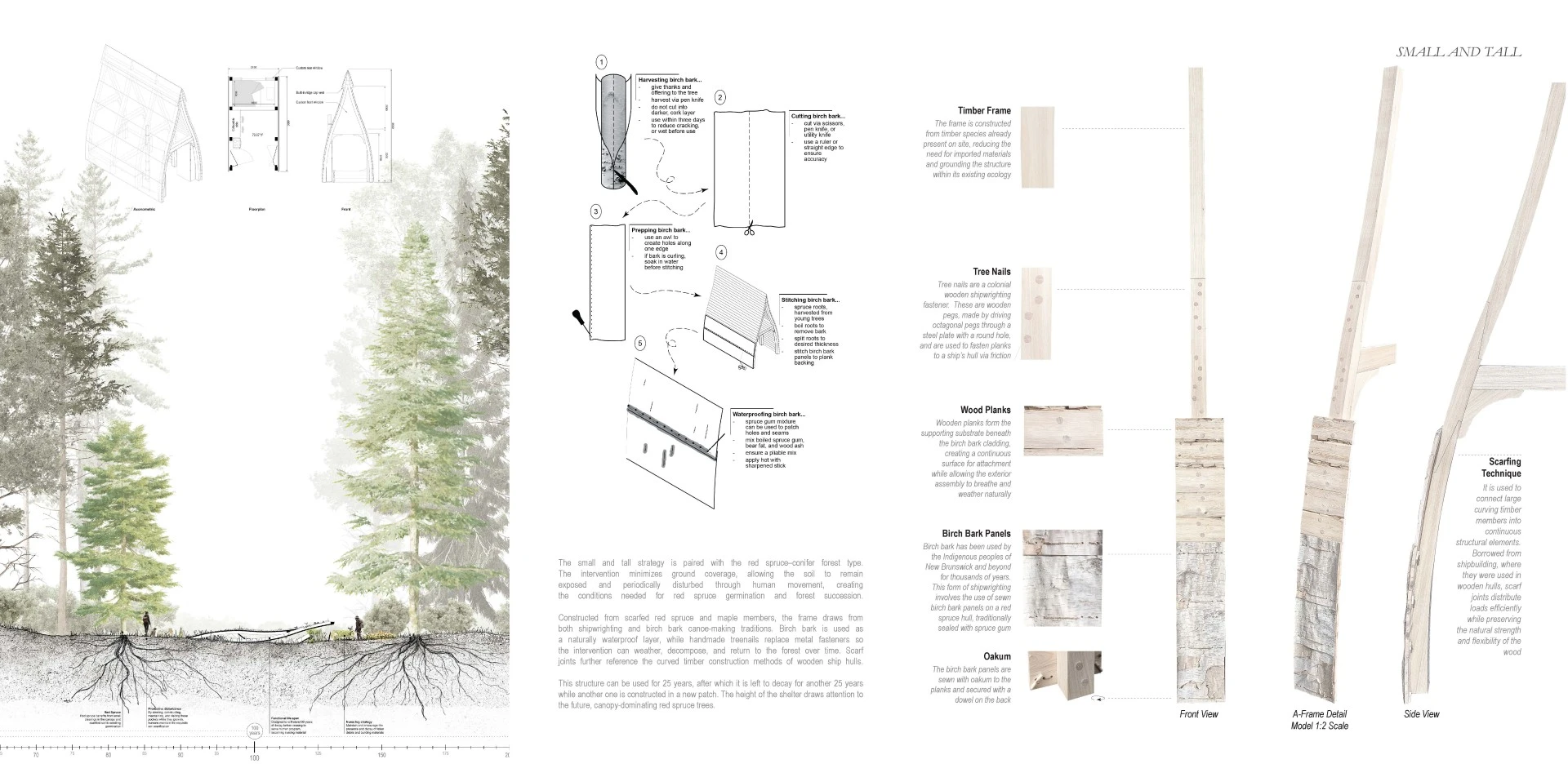
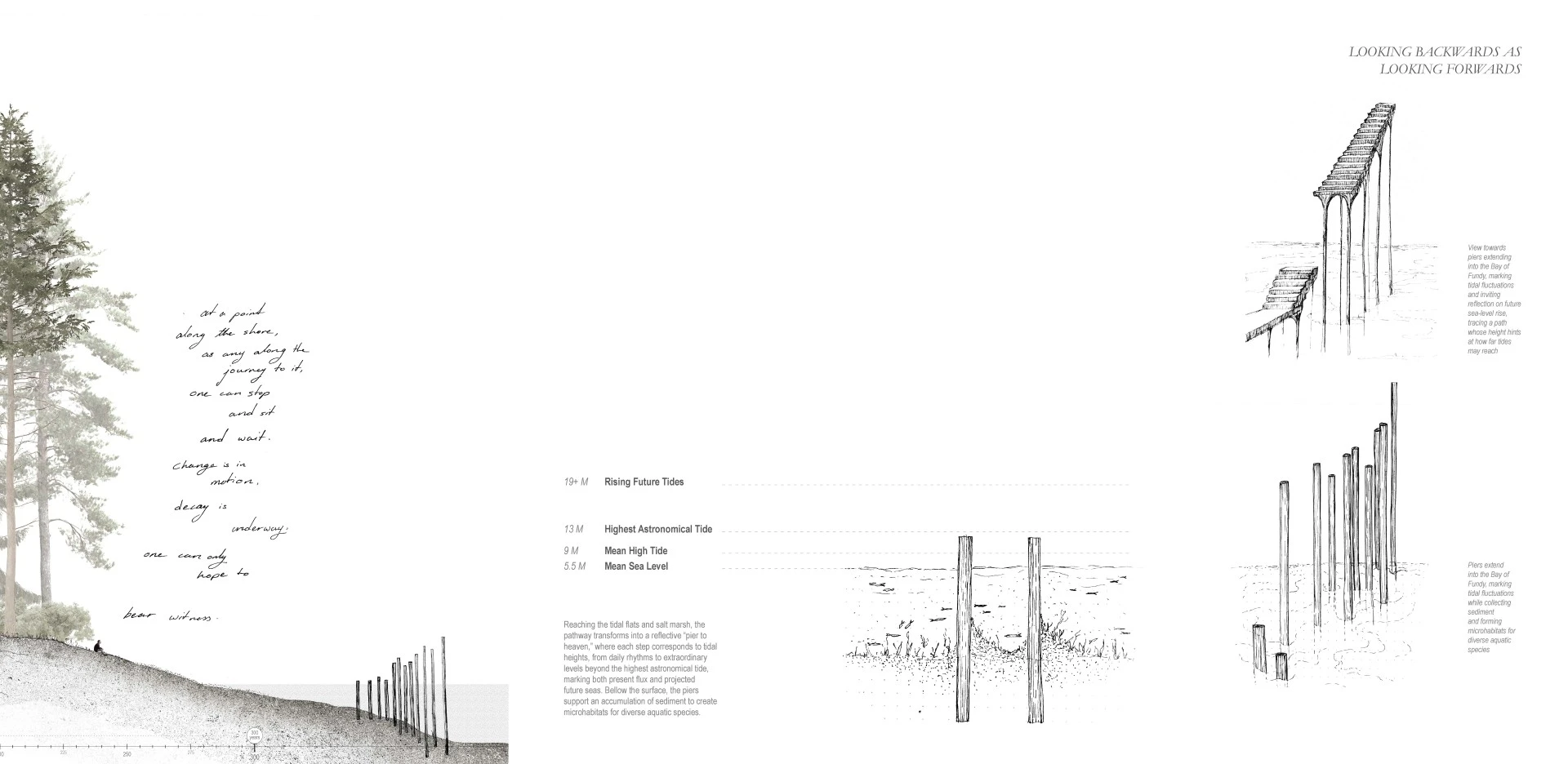
To galvanize this cultural industry and the Indigenous history of birch bark canoe-making, our proposed design adapts wooden ship building practices for shelters. These shelters are designed to age alongside their forest pockets, gradually decaying and falling out of use as each pocket transitions toward a self-sustaining old-growth condition. The project unfolds across five site types and strategies: Upland Descent, Low and Slow, Quick and Thick, Small and Tall, and Looking Backward as Looking Forward. With each site calibrated to different decay and regeneration timelines, they construct a continuous narrative of ecological transition from upland forest to tidal edge. As shelters decay and pockets regenerate, new pockets and shelters are initiated, passing on this practice to future tenants.
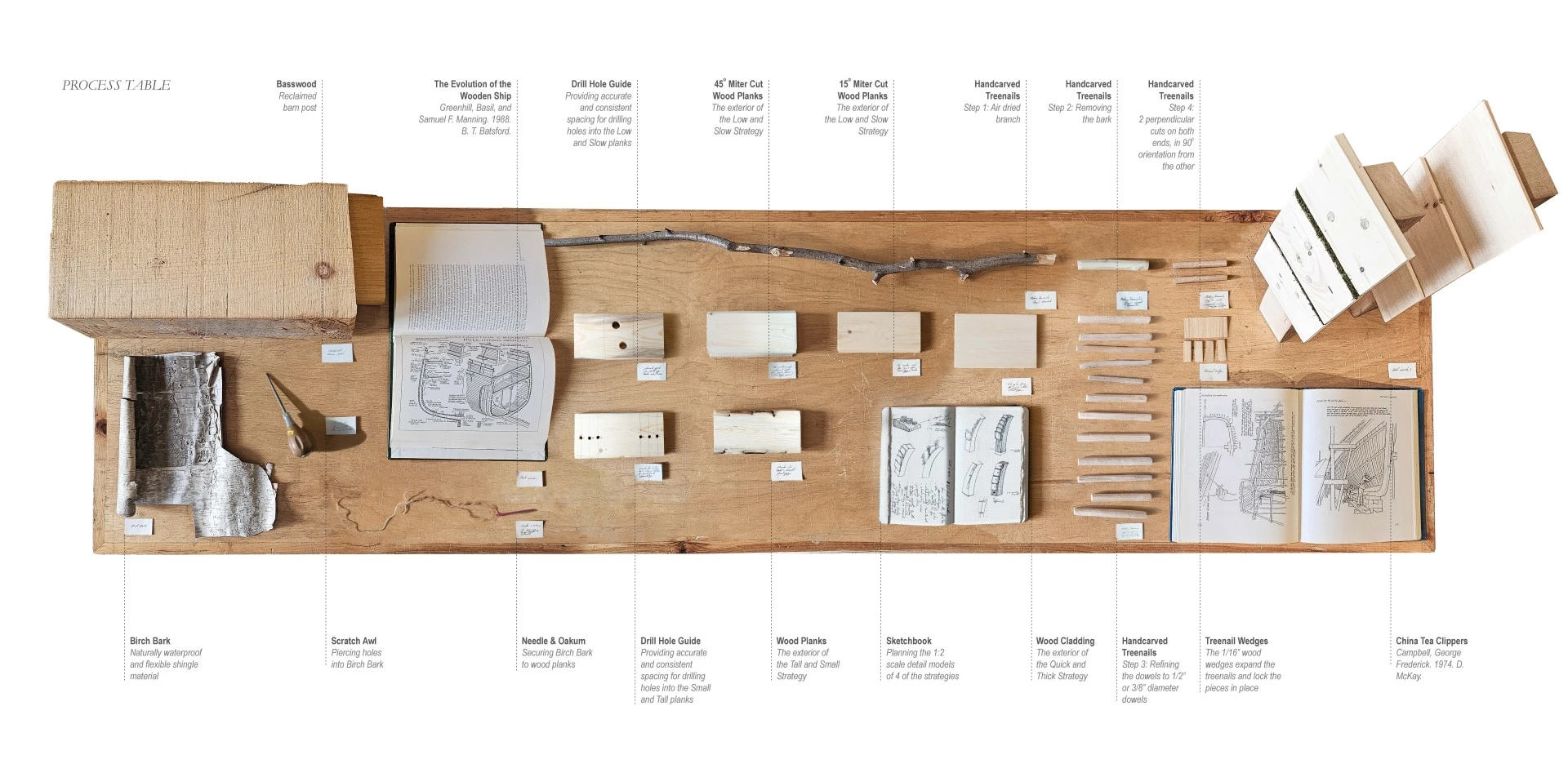
The study adapts shipwrighting techniques into testable detail models; for example, wooden treenails fully decompose without residual impact while clad birchbark panels can extend the durability of shelters. Through their adaptive reuse, these material practices can be made visible and accessible to future generations. Whether stewarded or visited, these structures sustain cultural legitimacy while renewing constructive relationships with the forest.
Landscape and shelter maintenance is envisioned as a collaborative stewardship model which involves the contributions of local families and students from local institutions, ensuring the long term ecological and cultural goals of the project. Developed through funded research with Maritime advisors and in collaboration with the site's owners, the proposal emphasizes rural community development over tourism-based investment.
At Martin's Head we reimagined decay as a cyclical, life-generating force, linking the past and future through material, ecological, and social reciprocity.
-
- Sugar Maple, Acer Saccharum
- White Spruce, Picea Glauca
- Yellow Birch, Betula Alleghaniensis
- Balsam Fir, Abies Balsamea
- Eastern Hemlock, Tsuga Canadensis
- Red Spruce, Picea Rubens
- Black Spruce, Picea Marina
- Tamarack, Larix Laricina
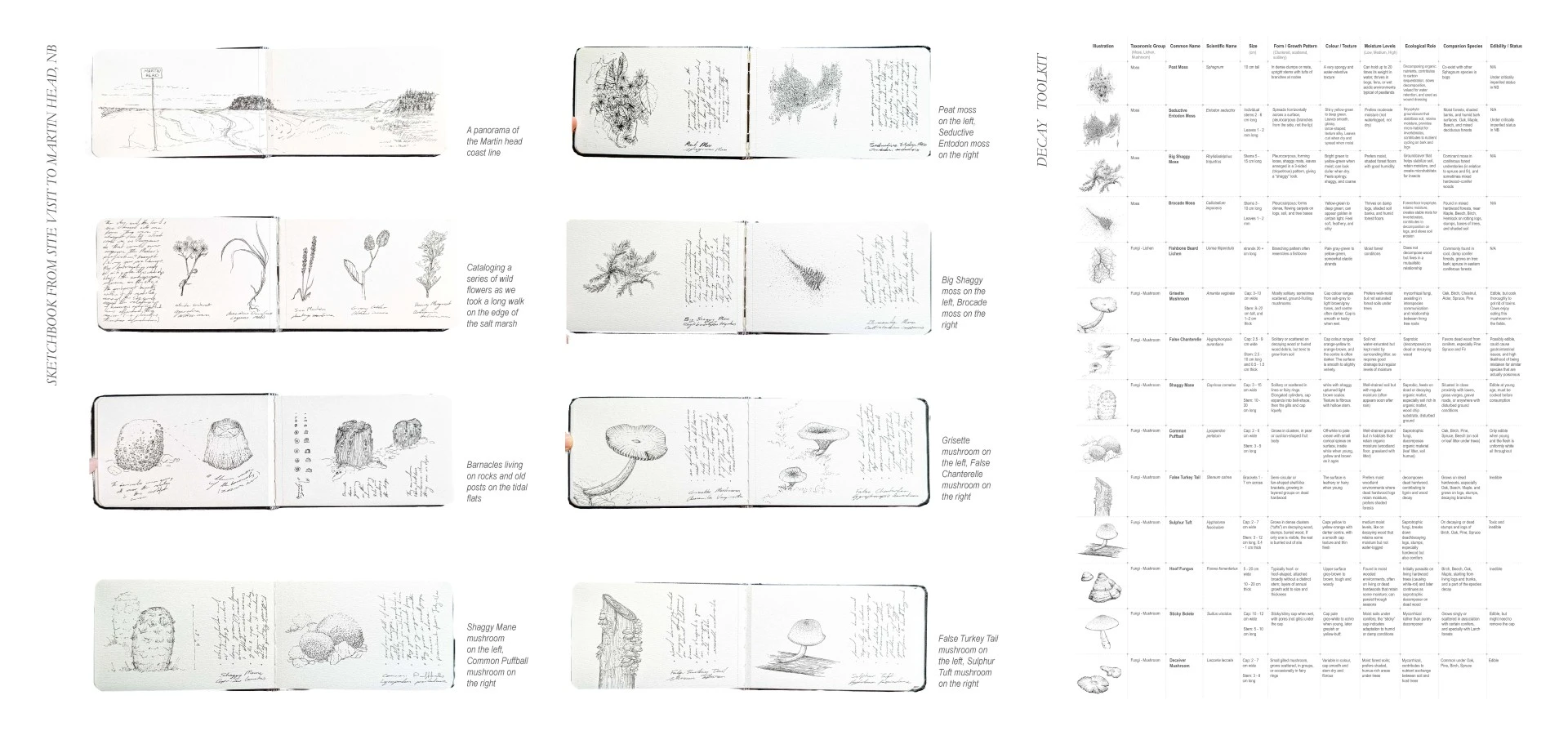
- Largeleaf Peatmoss, Sphagnum Macrophyllum
- Seductive Entodon Moss, Entodon Seductrix
- Big Shaggy Moss, Rhytidiadelphus Triquetrus
- Brocade Moss, Callicladium Imponens
- Fishbone Beard Lichen, Usnea Filipendula
- Grisette Mushroom, Amanita Vaginata
- False Chanterelle, Hygrophoropsis Aurantiaca
- Shaggy Mane, Coprinus Comatus
- Common Puffball, Lycoperdon Perlatum
- False Turkey Tail, Stereum Ostrea
- Sulphur Tuft, Hypholoma Fasciculare
- Hoof Fungus, Fomes Fomentarius
- Sticky Bolete, Suillus Viscidus
- Deceiver Mushroom, Laccaria Laccata
Advertisement
Related Awards
Honor Award, General Design
Houston Arboretum & Nature Center
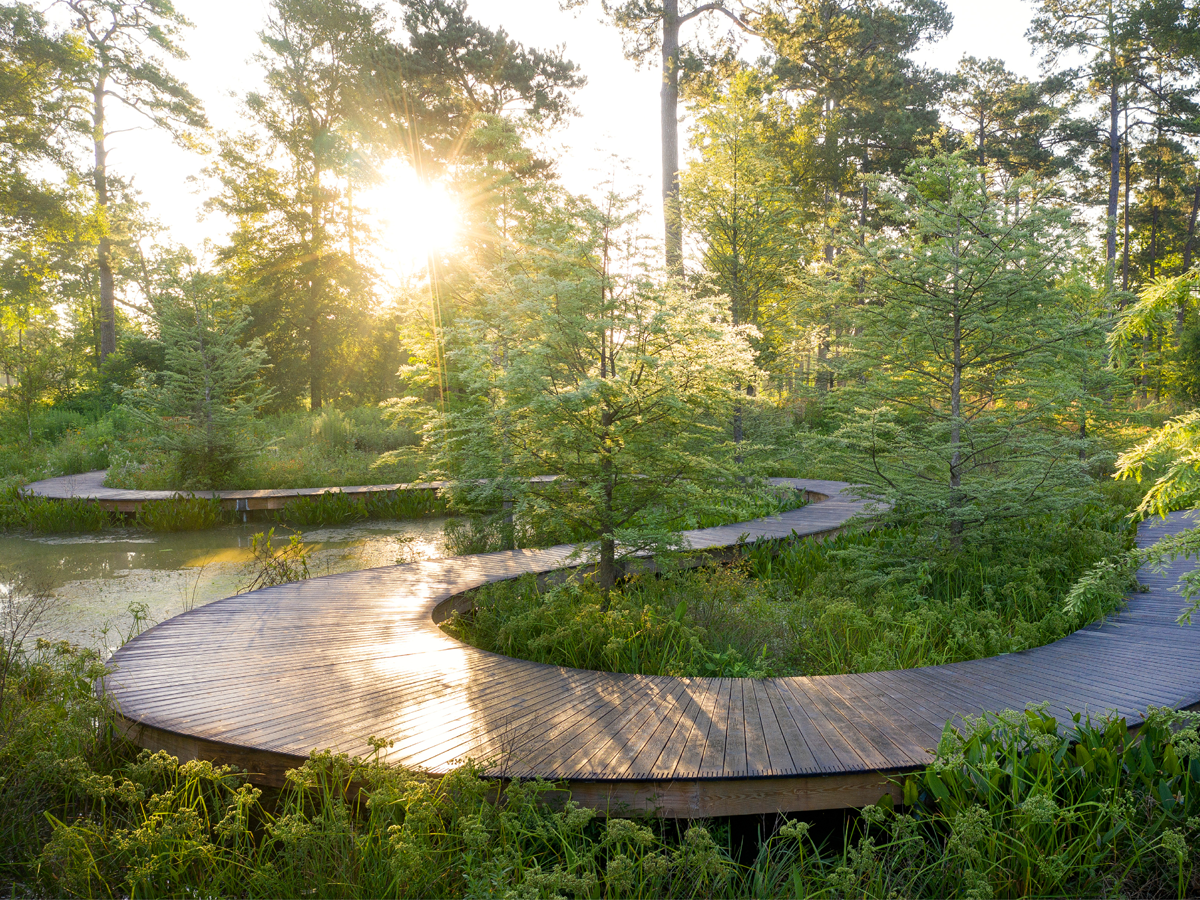
The Houston Arboretum & Nature Center sits within Memorial Park, one of the largest urban parks in the United States, in one of the nation's fastest growing and most climate-challenged cities. The site's story is one of repeated loss and deliberate reinvention. Hurricane Ike in 2008 and a severe drought in 2011 destroyed much of the Arboretum's tree canopy, exposing the limits of conventional reforestation in a city defined by flooding, heat, and ecological volatility.