
.webp?language=en-US)

.webp?language=en-US)
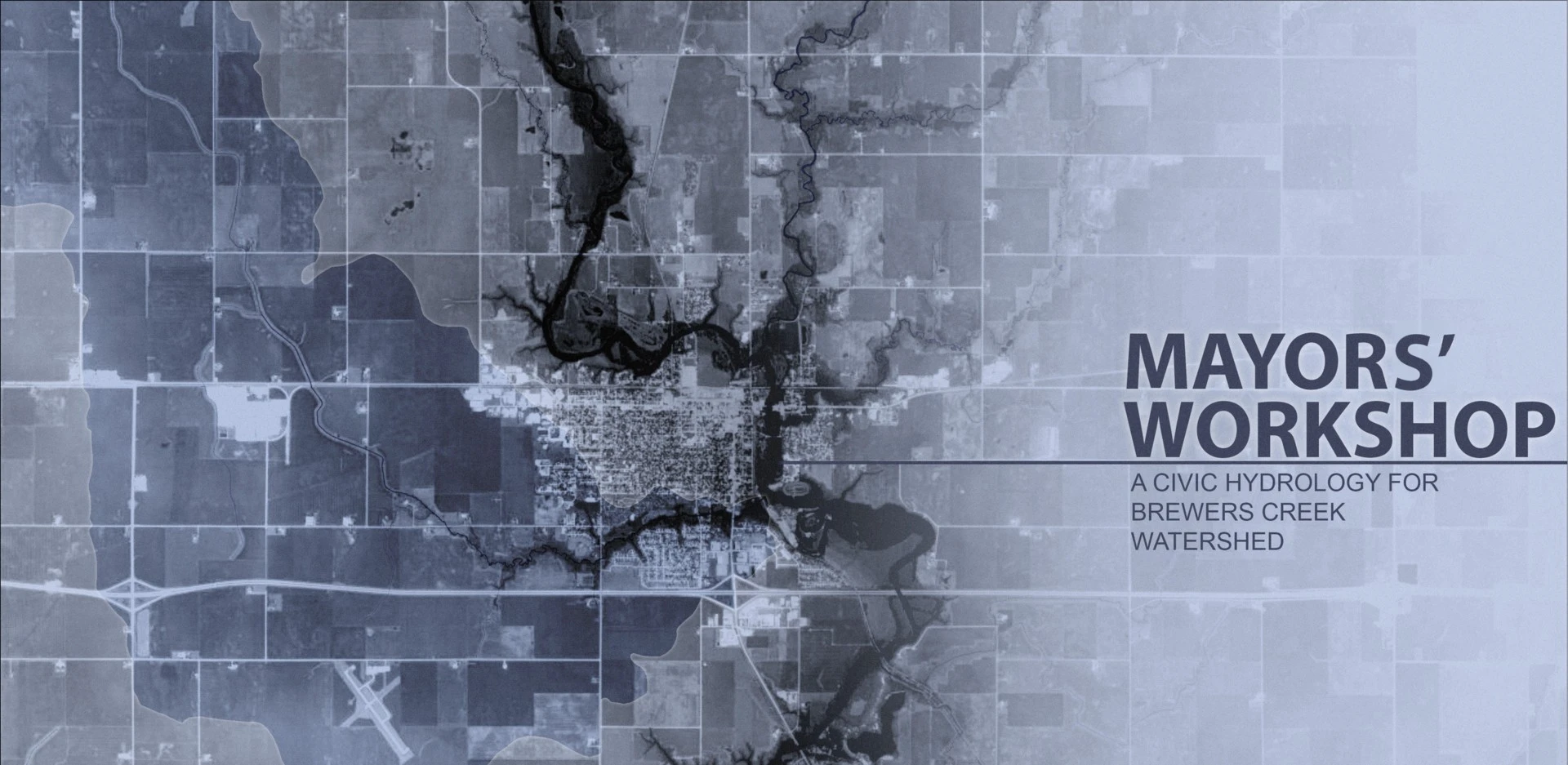
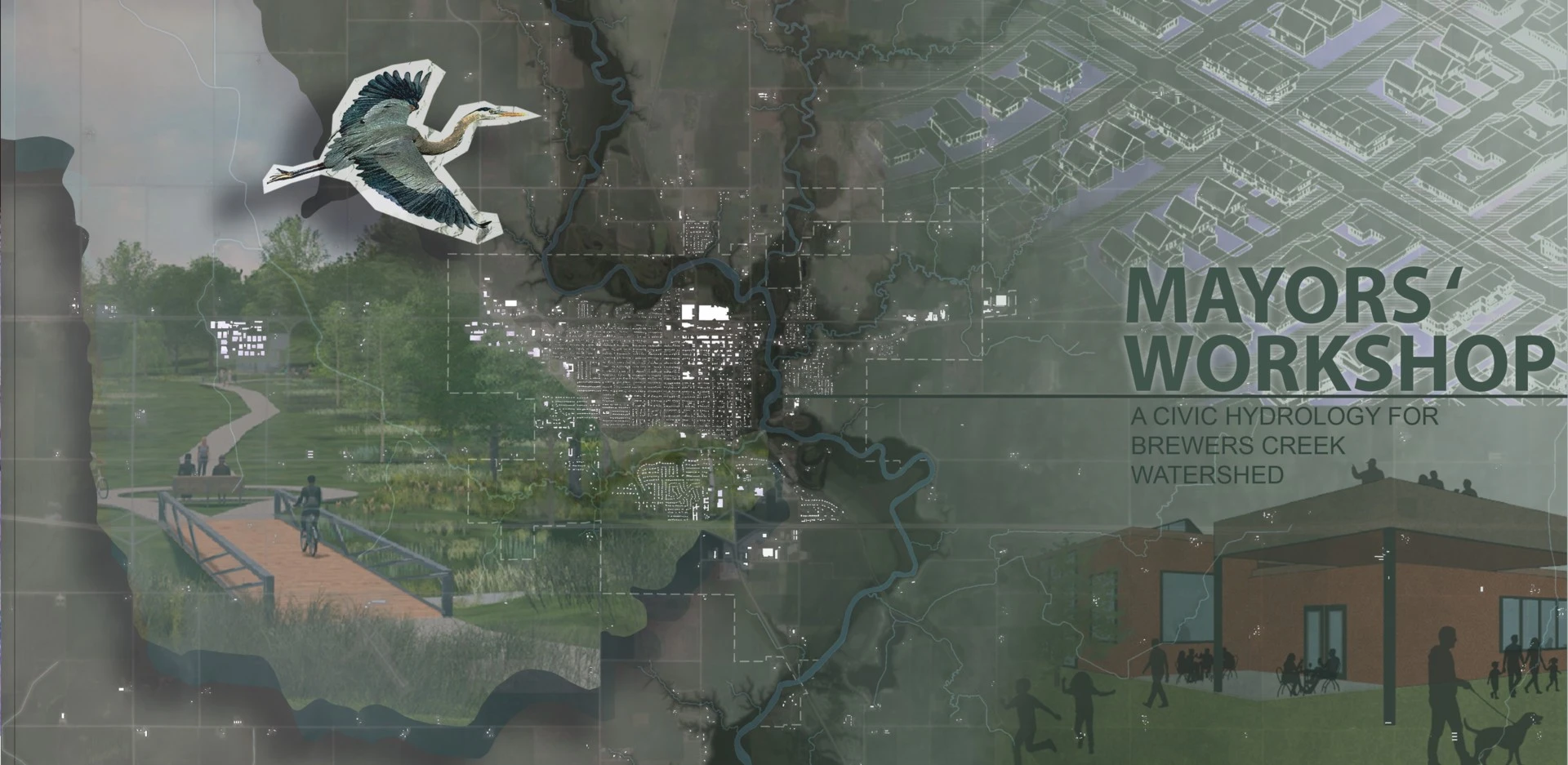
Mayors' Workshop: A Civic Hydrology for Brewers Creek Watershed
Abby Ehrle, Student ASLA; Reagan Vogelaar, Student ASLA; Ian Cuvelier, Student ASLA; Emma Livingston, Student ASLA; Haley Christoffer, Student ASLA; Nolan Bradley, Student ASLA; Mason Baber, Student ASLA; Cash Lilly, Student ASLA; Dominic Balestrieri-Fox, Student ASLA; Nick Hansen, Student ASLA; Abbey Nees, Student ASLA; Sydney Brunaugh, Student ASLA; Adam Larson, Student ASLA; Garrett Malaise, Student ASLA; Eric Hall, Student ASLA; Mouri Tabassum, Student ASLA; Ben Stocksleger; Elise Henrichsen; Lucas Woodbury; Eli Gannon; Usman Daudpota; Raina Pfeifer; Bailey Kyle-Laidlaw; Sydney Chin; Liza Walker; Landon Bettis; Garrett Christensen; Katherine Benscoter; Aiden Bower; Mia Waid; Carter Clayber; Dominic Scudieri Ethan Jost; Michael Folsom

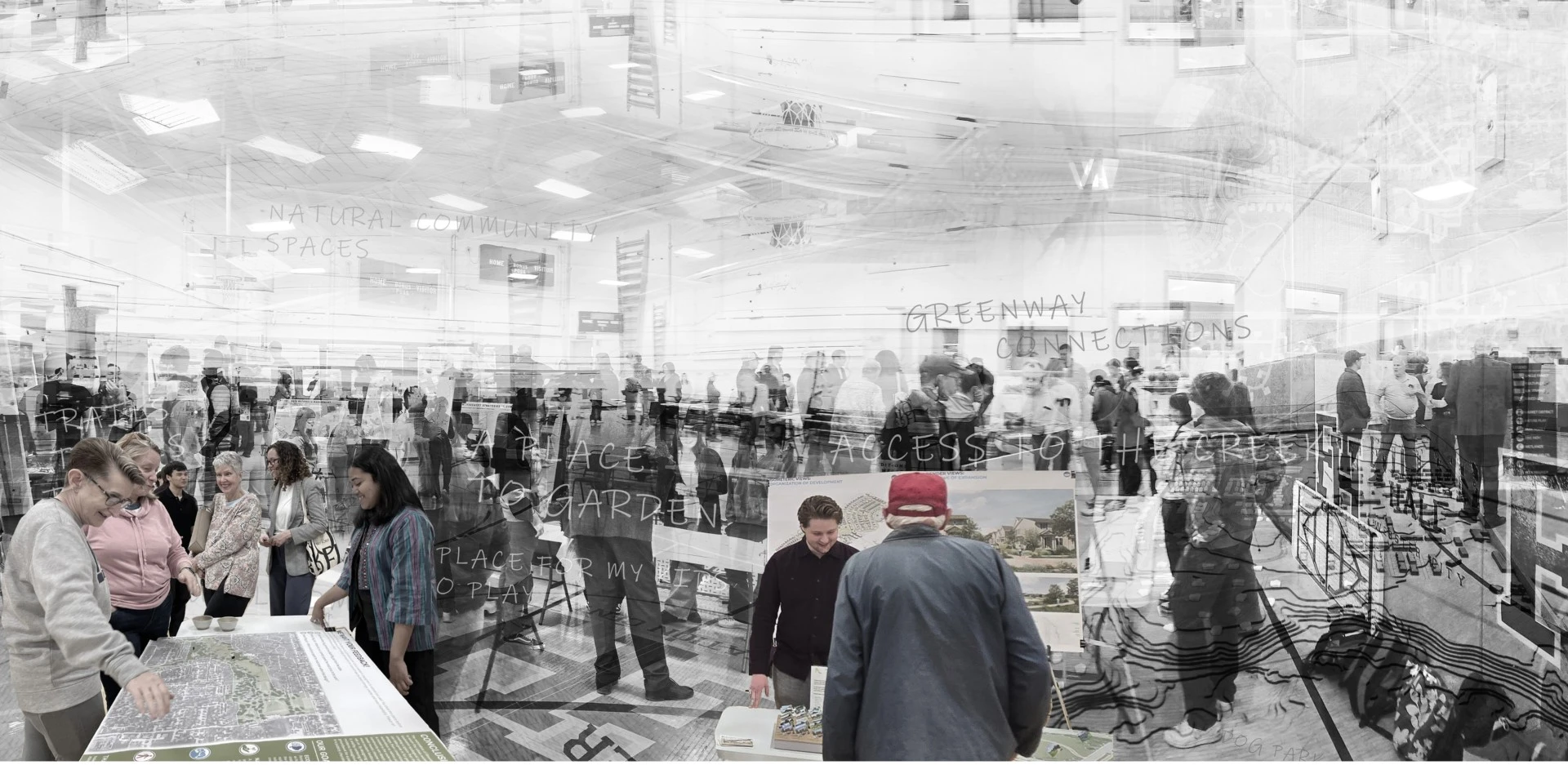
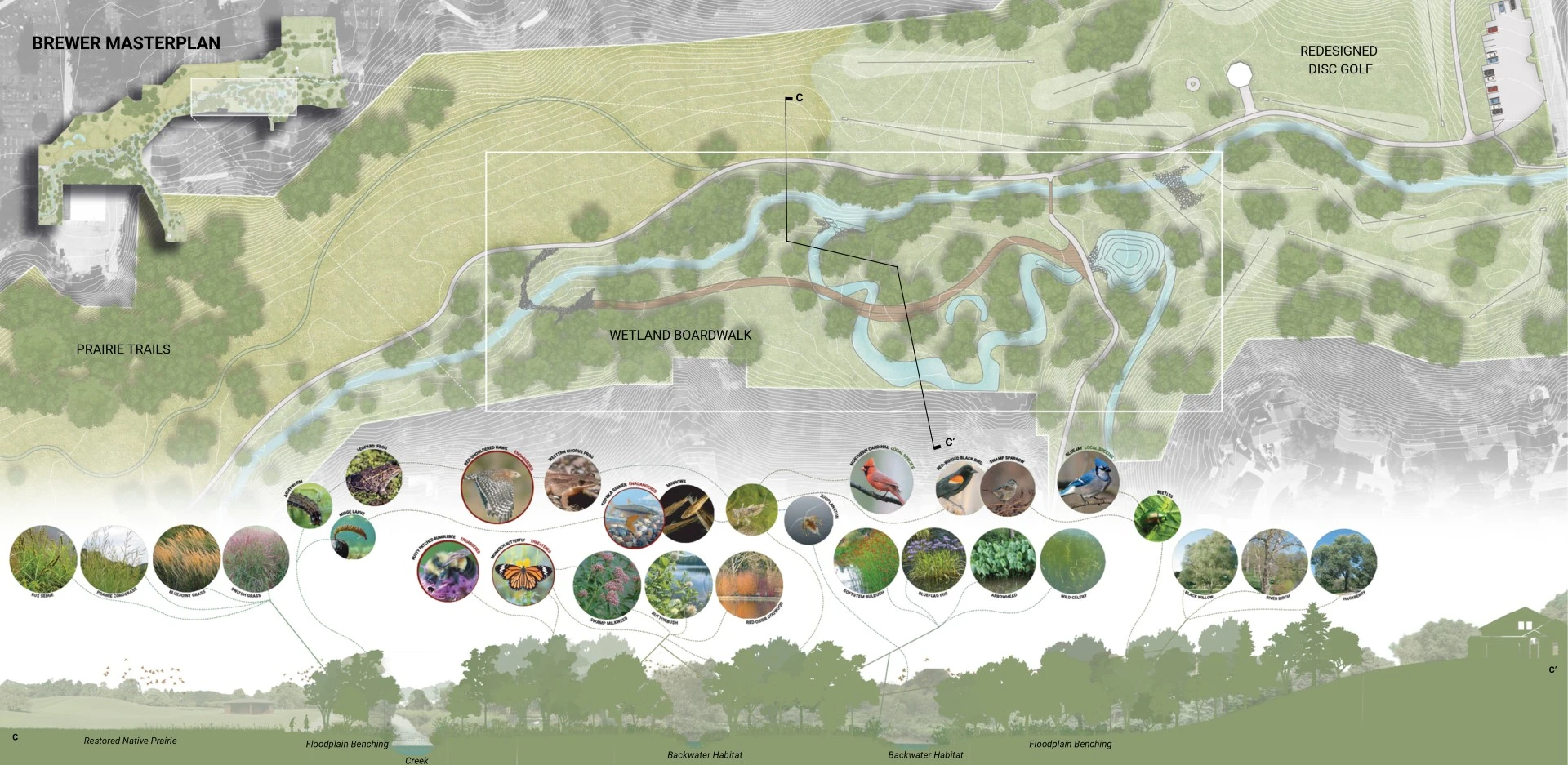
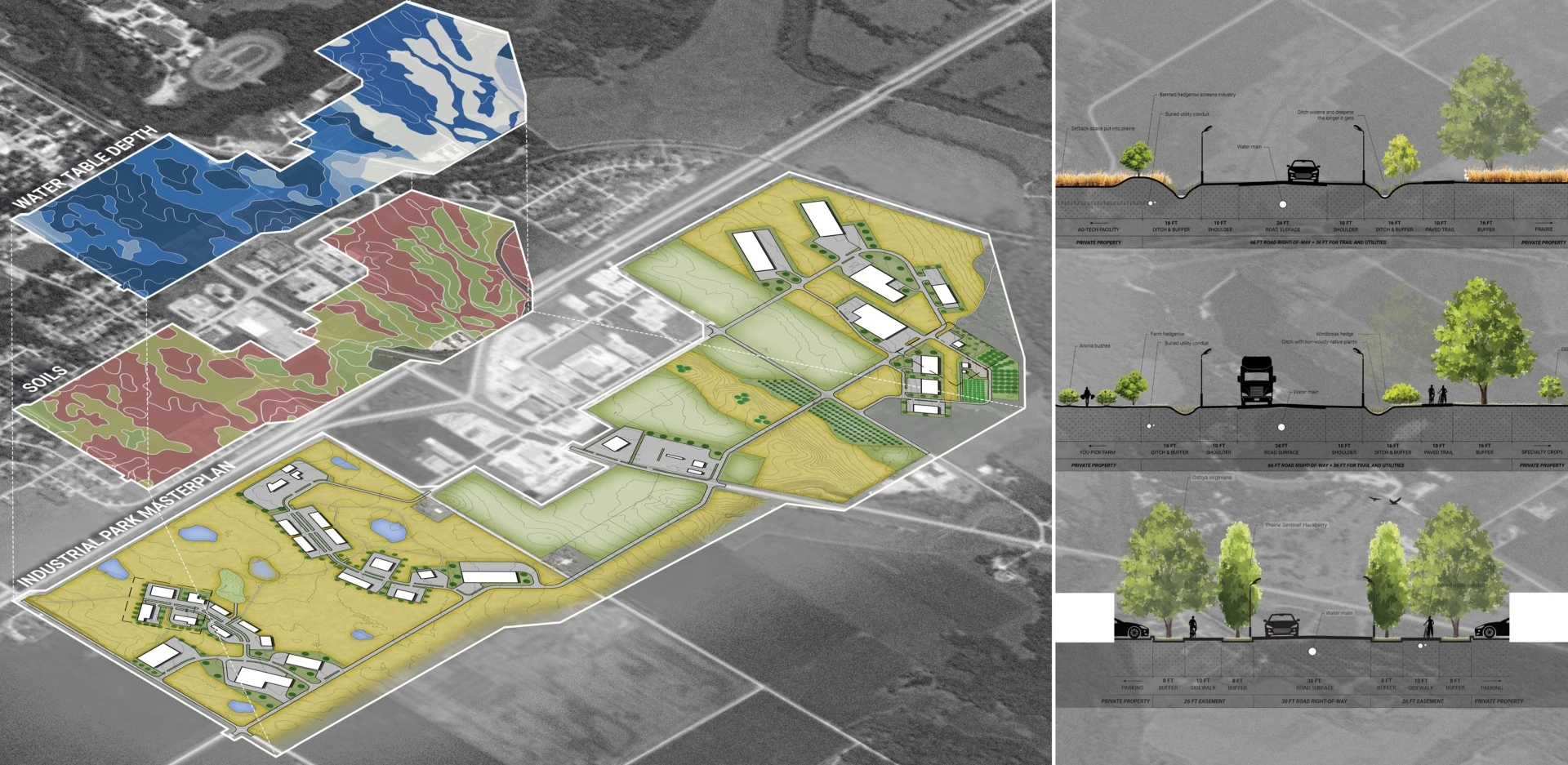
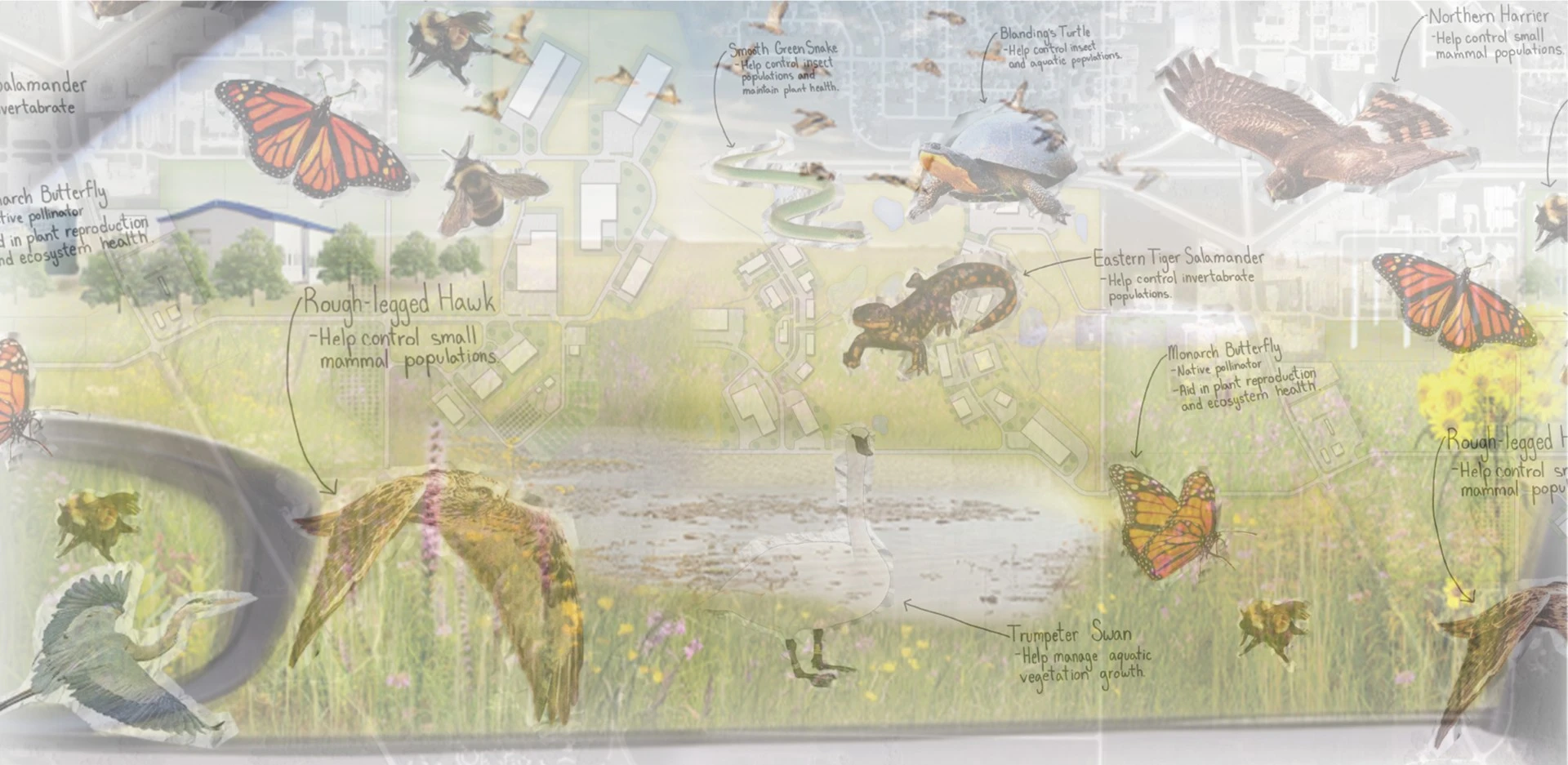
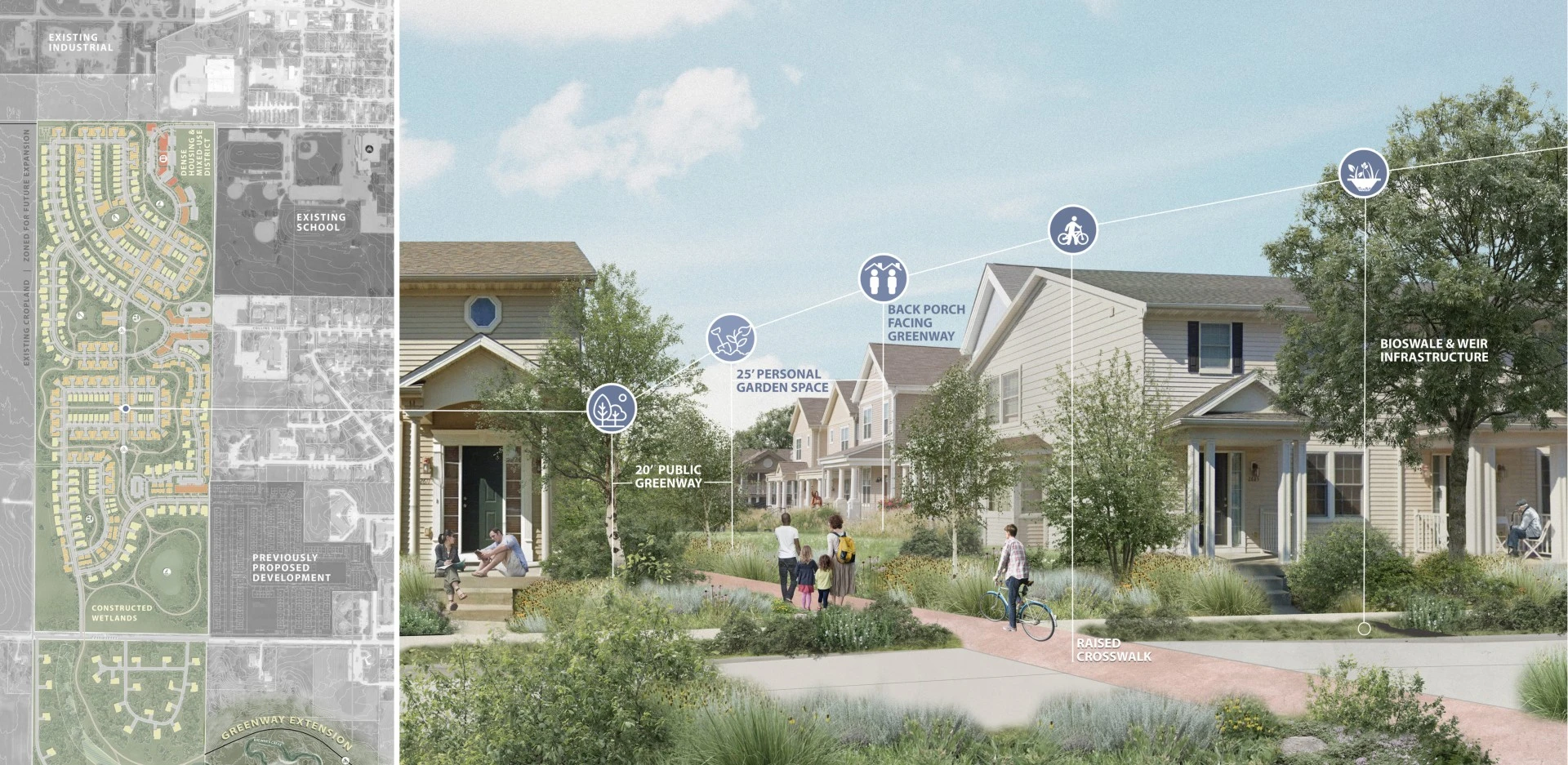
Appreciate the real-world clients and interdisciplinary collaboration. The clear leadership role of landscape architecture is clear and nice to see, with a watershed-scale thinking.
Awards Jury
-
This interdisciplinary studio reimagines the Brewers Creek watershed as a civic and ecological framework for long-term growth in a Midwestern community. Working within the Iowa Mayors' Design Workshop, teams of landscape architecture students collaborated with architecture, engineering, and environmental science students to align watershed health, infrastructure, and community identity. Projects span rural headwaters to urban neighborhoods, integrating hydrological performance with public space, habitat, and development typologies. The resulting work demonstrates how landscape architecture can lead collaborative planning to be technically rigorous, community-centered, and transferable to agricultural-urban watersheds across the Midwest.
-
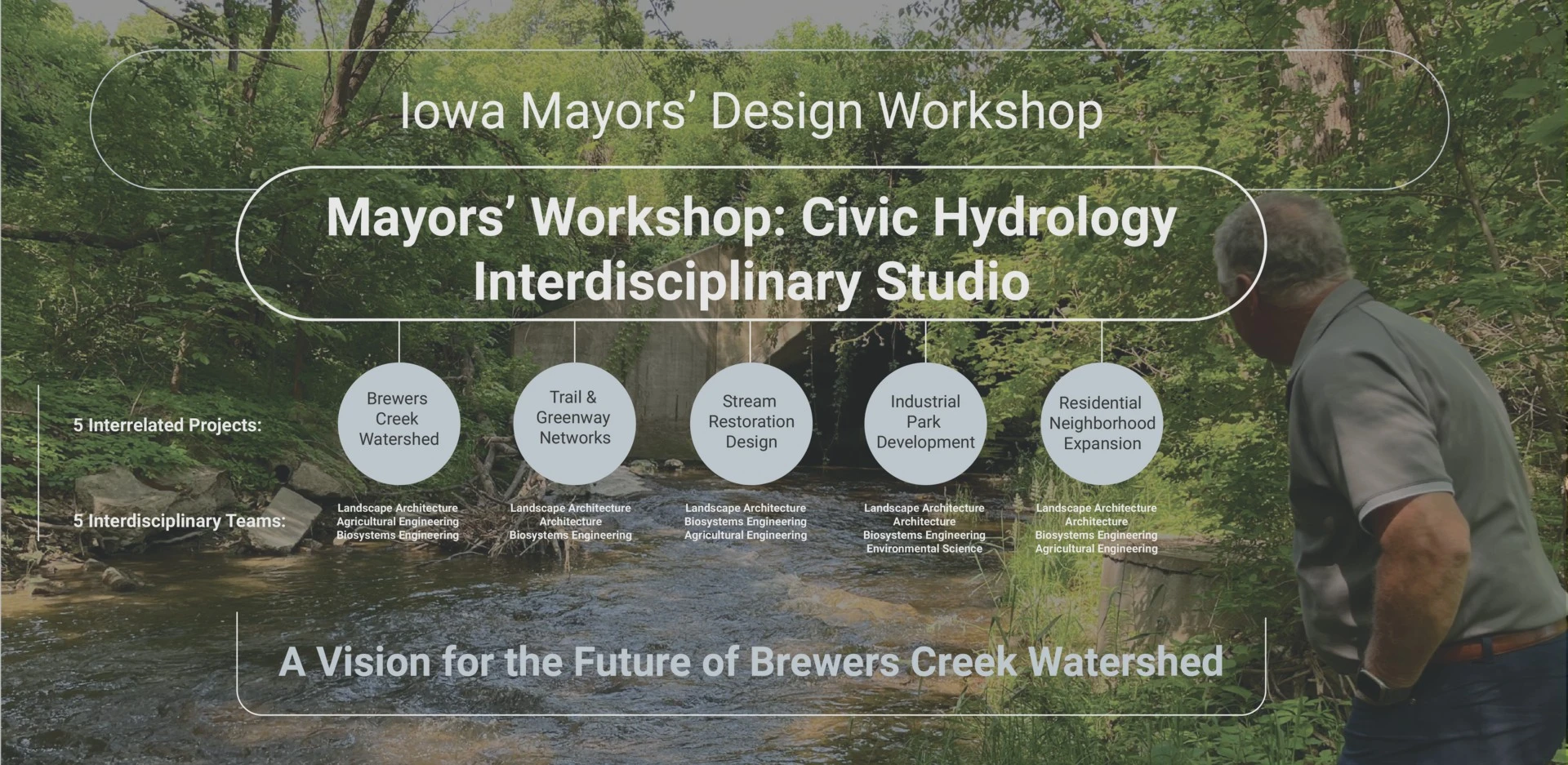
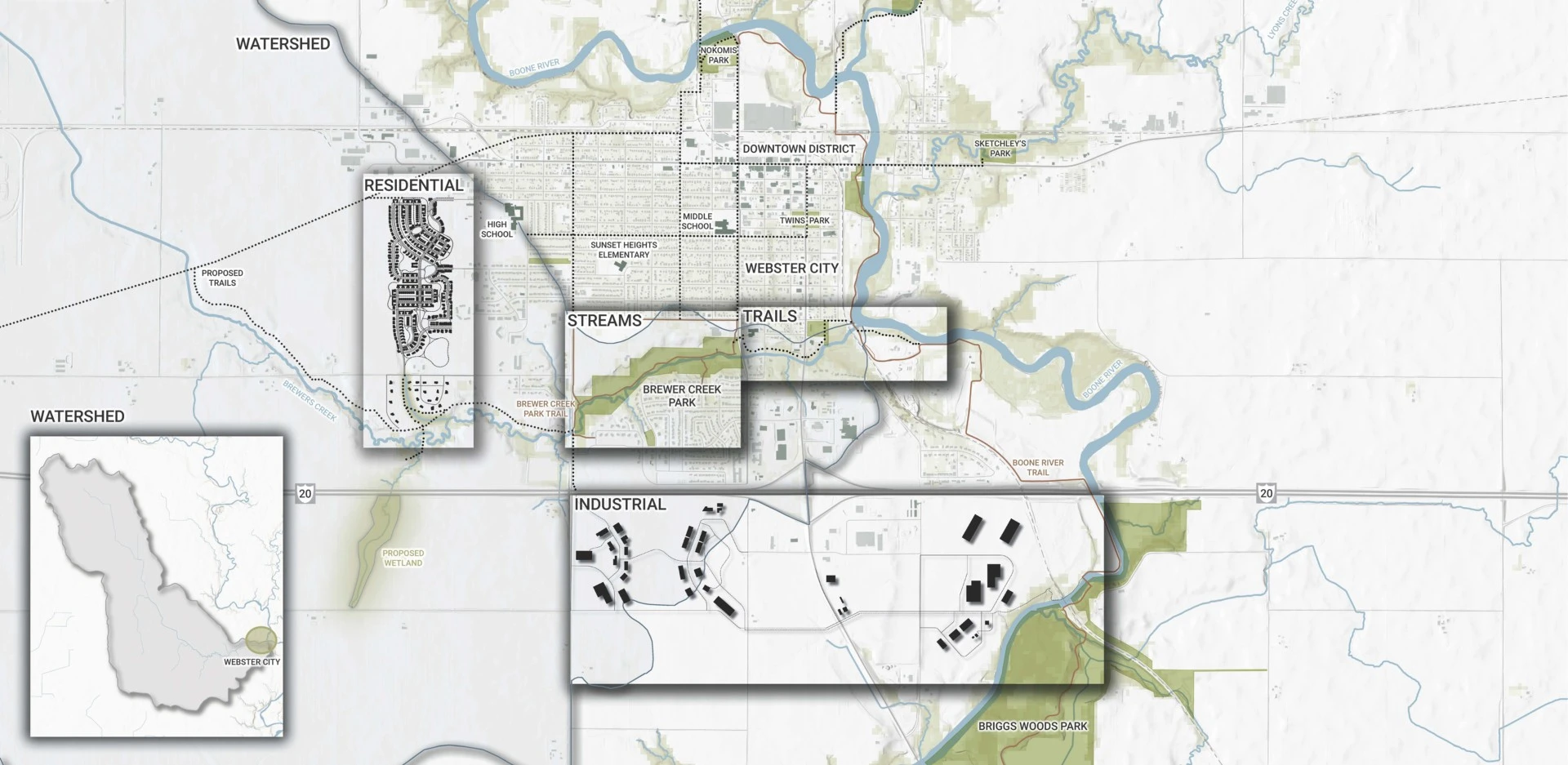
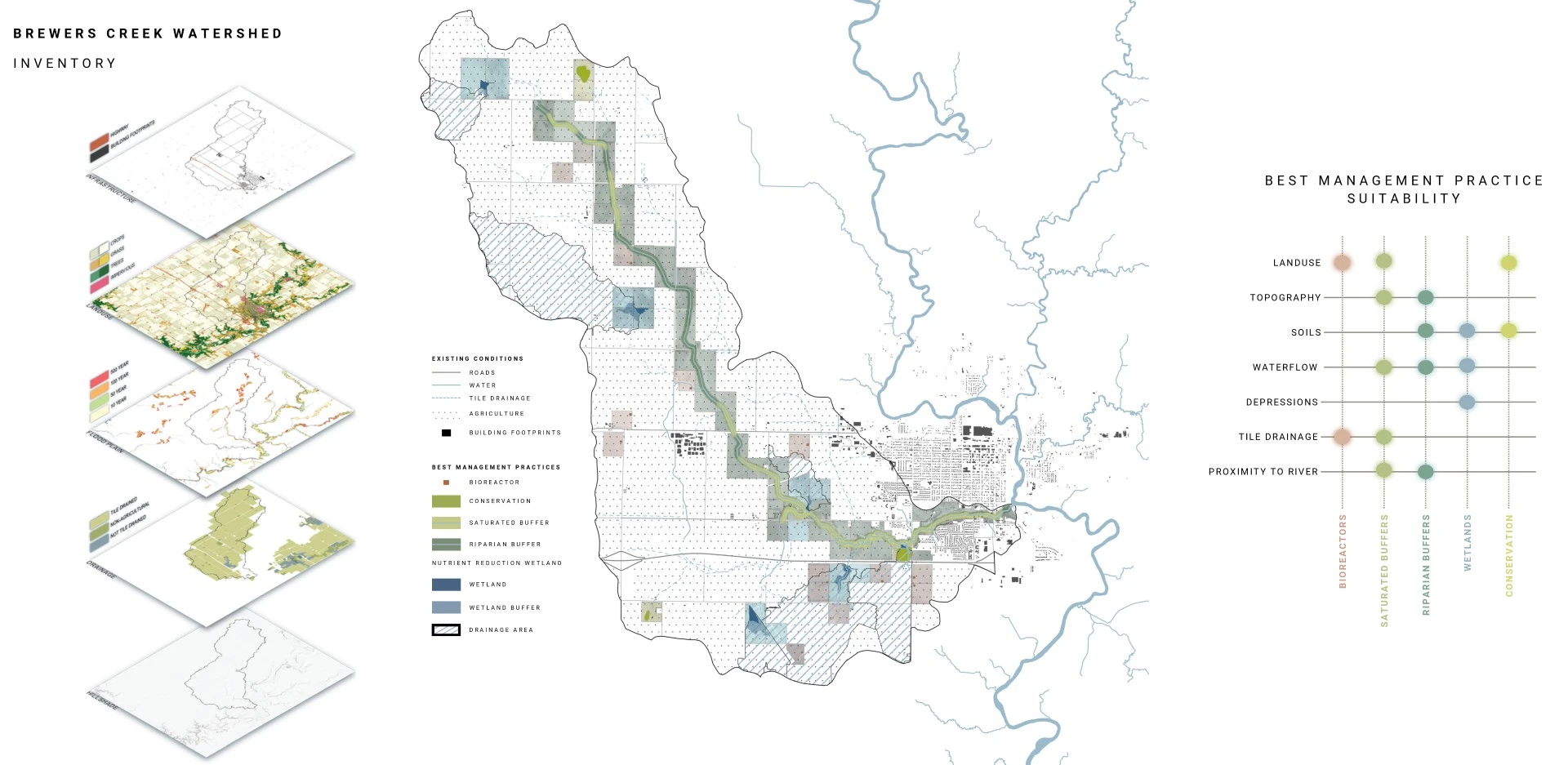
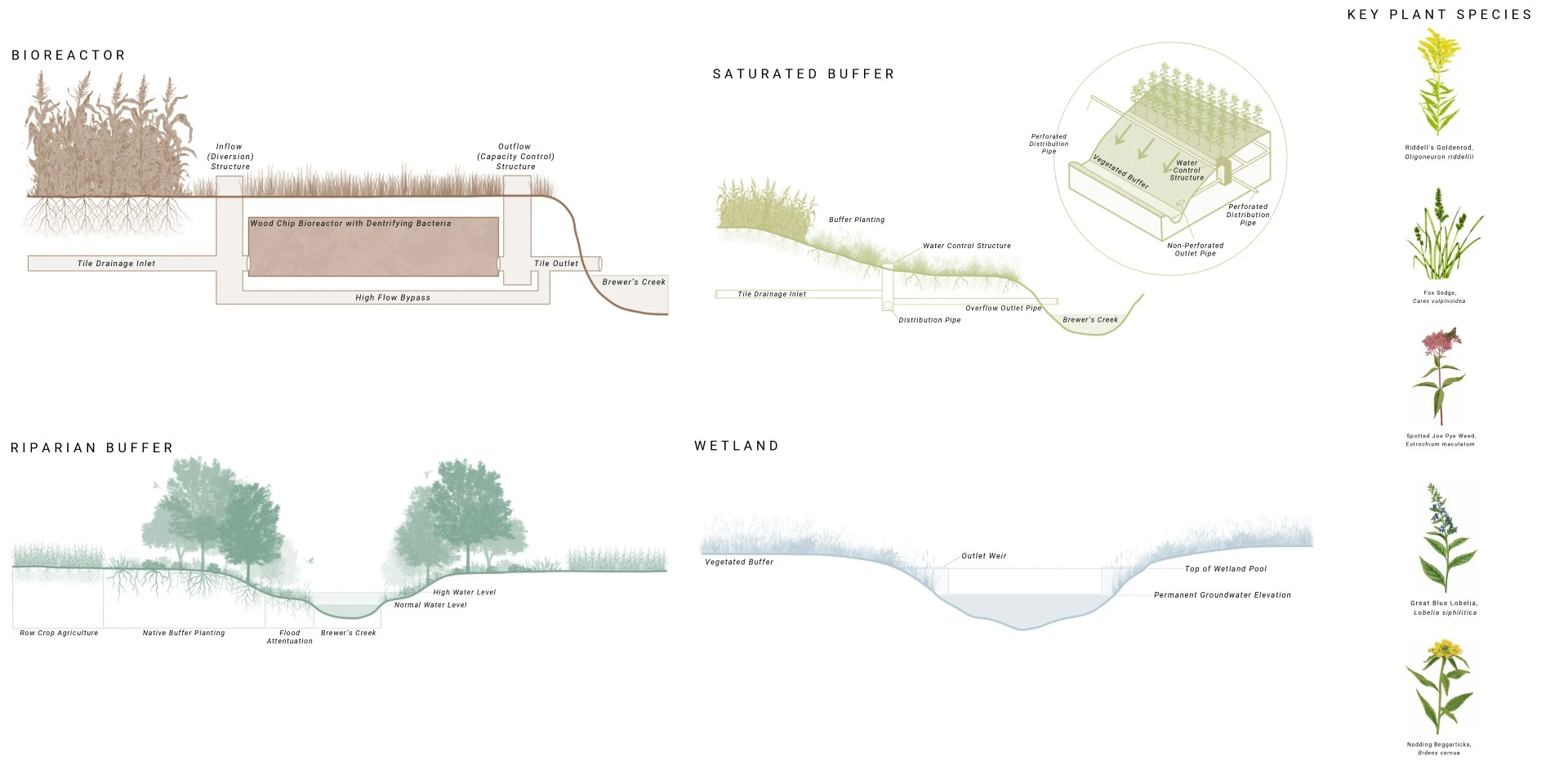
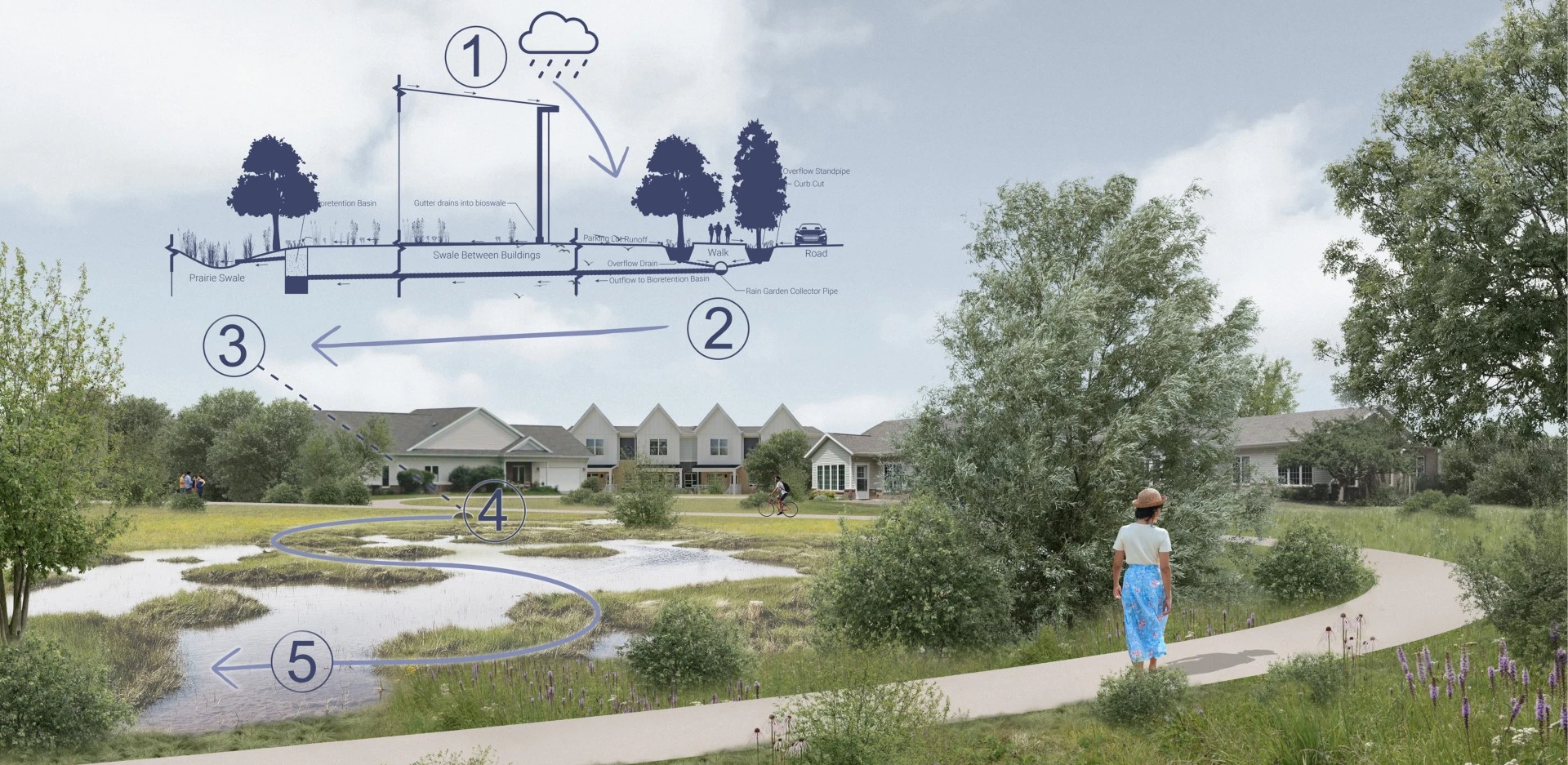
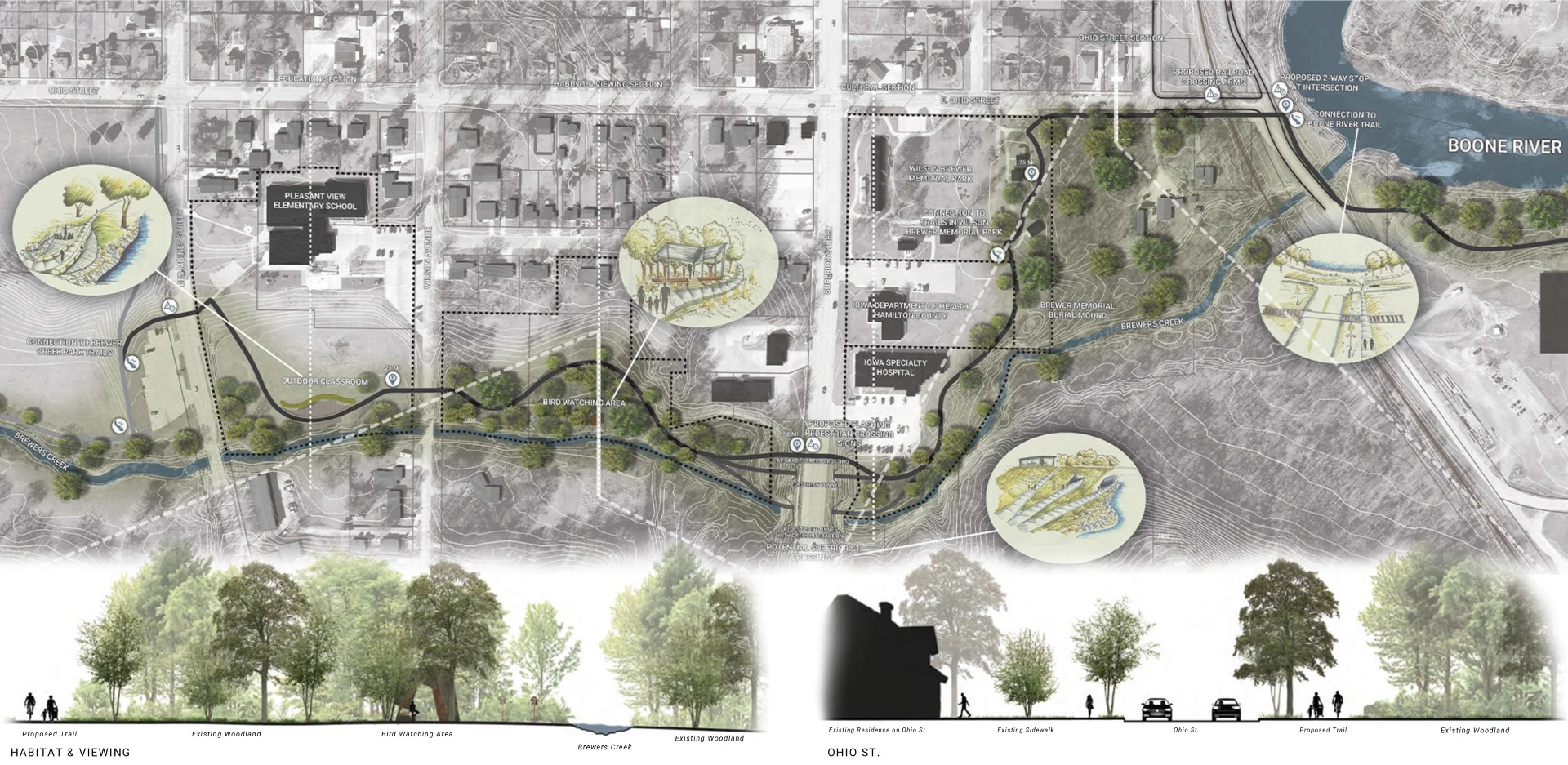
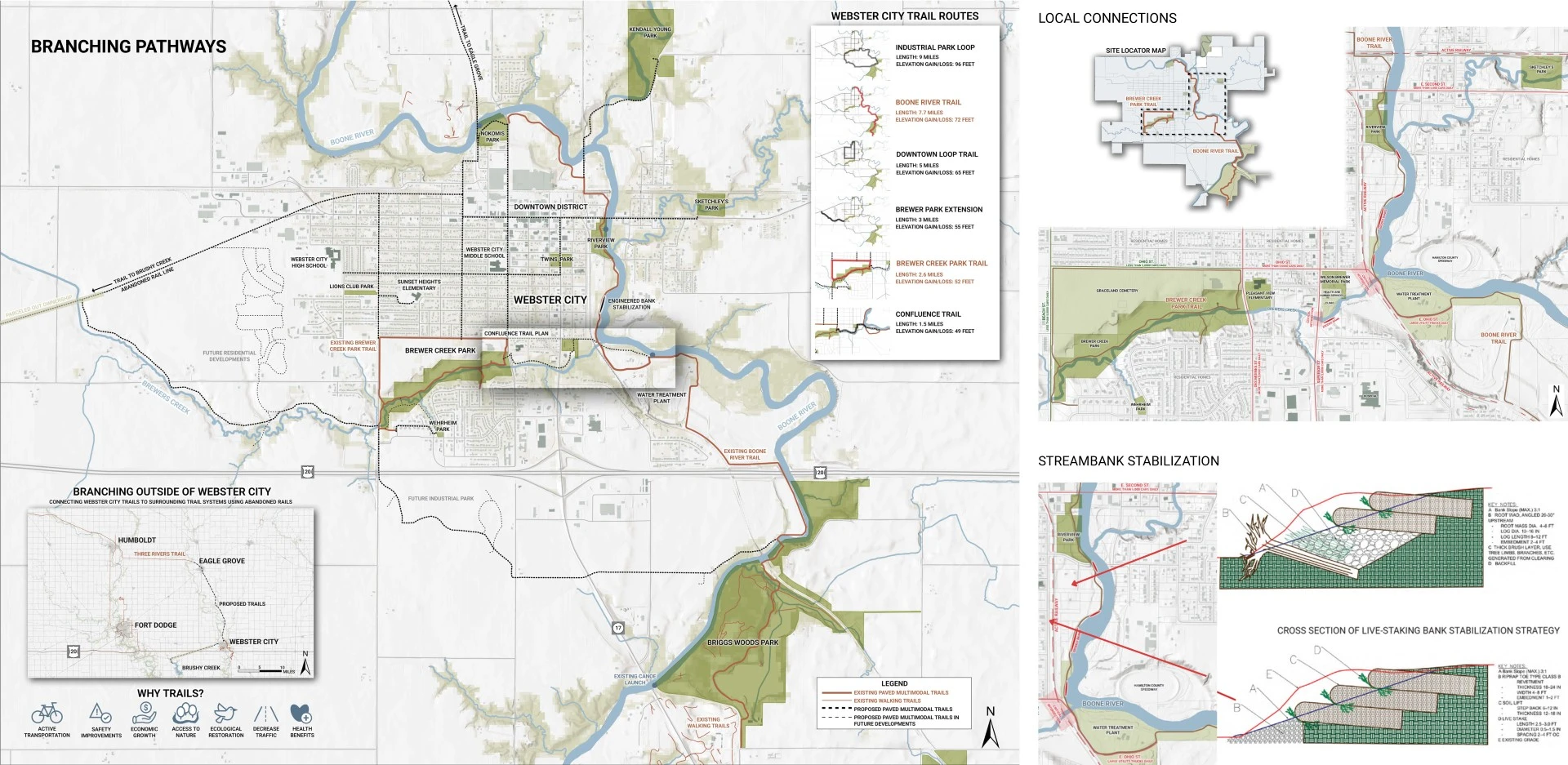
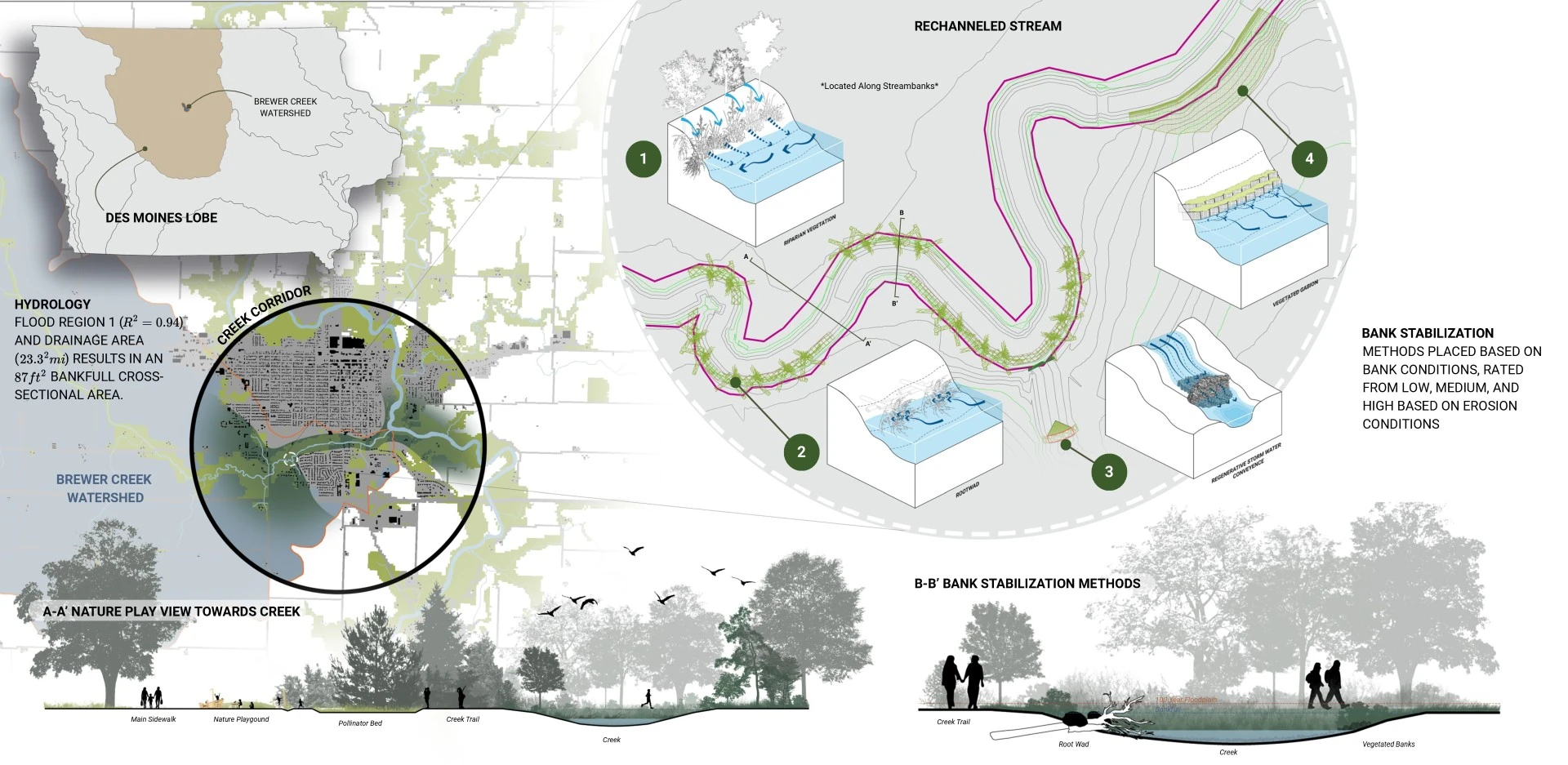
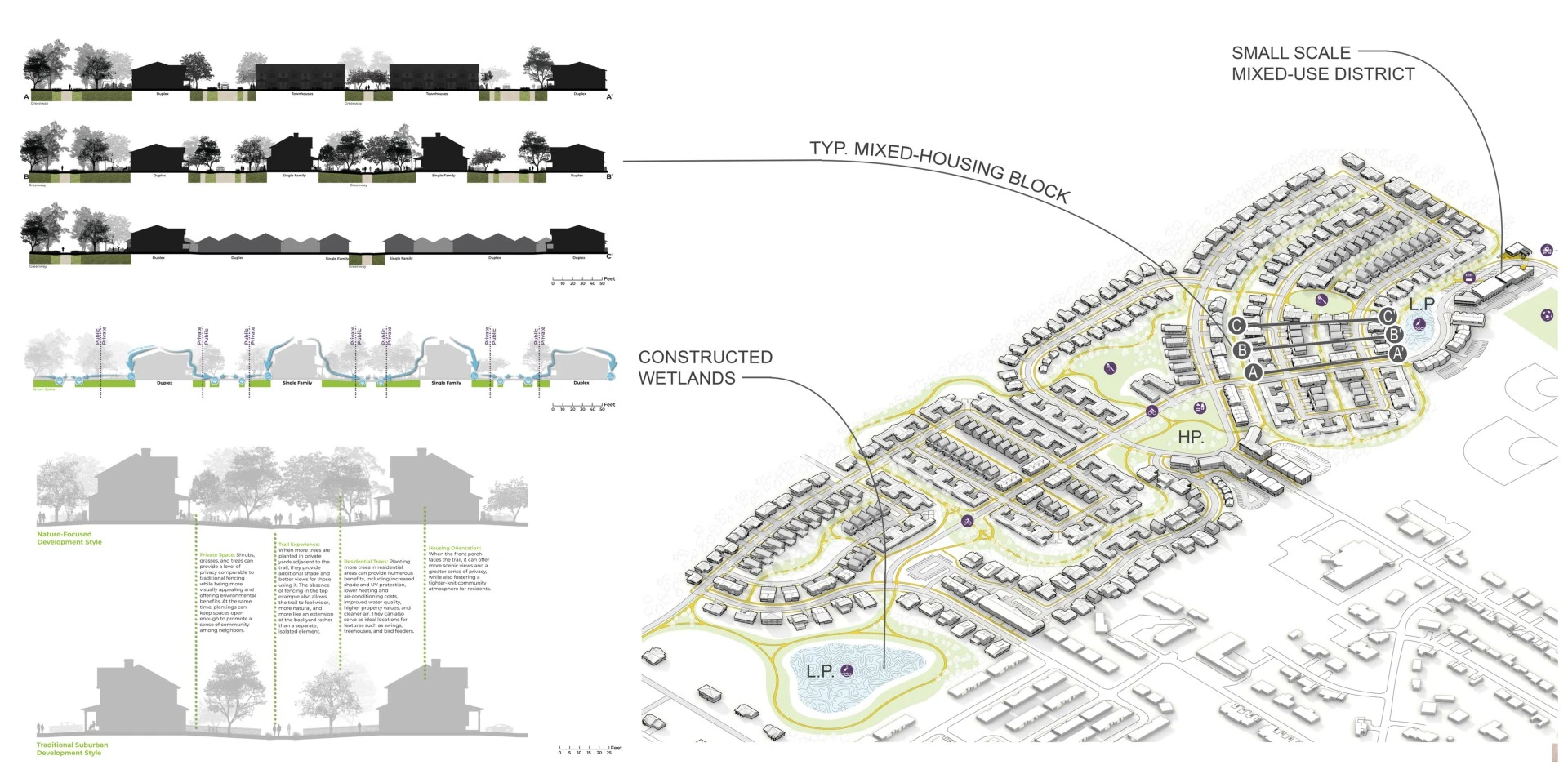
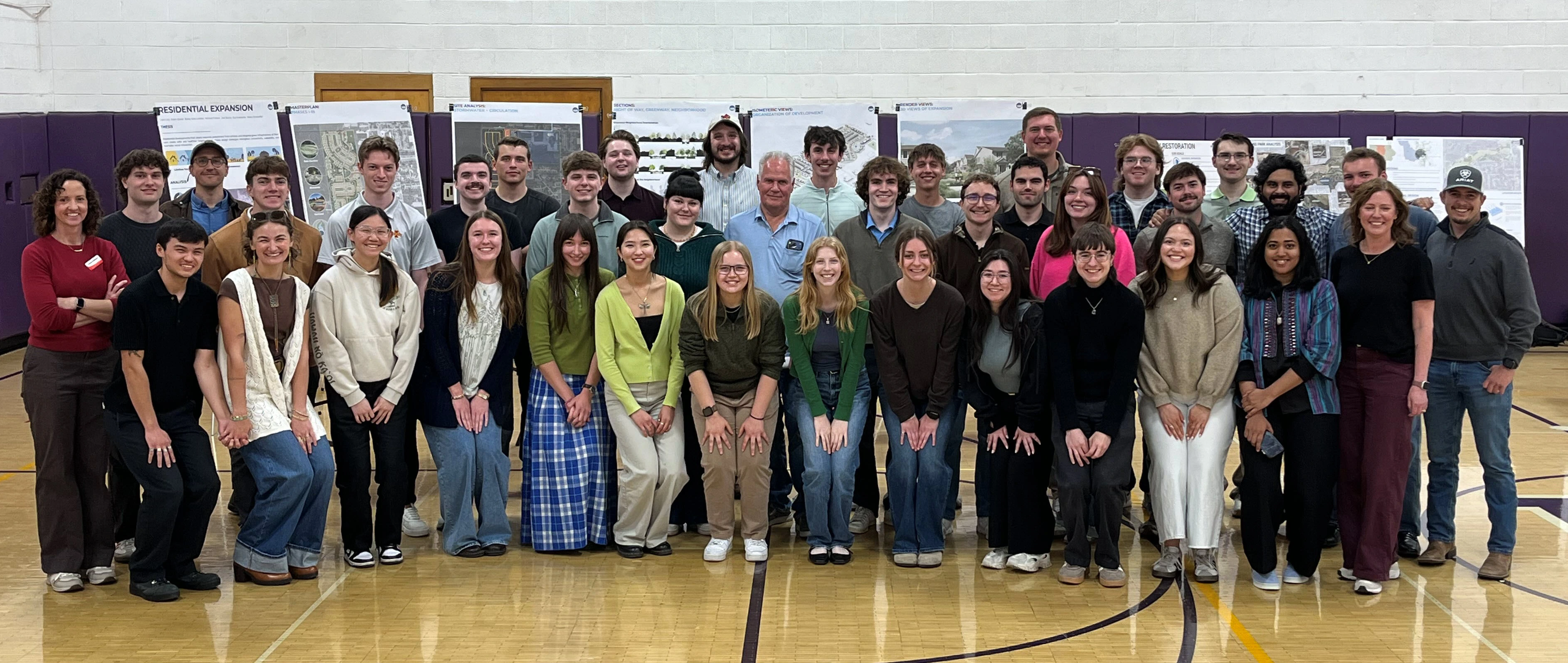
This collaborative design studio brought together students from landscape architecture, architecture, agricultural engineering, biosystems engineering, and environmental science - majors representing 3 different colleges. The studio was situated within the Iowa Mayors' Design Workshop, an outreach program partnering design studios with local elected officials to address real planning and design challenges. The project focused on the Brewers Creek watershed, examining how the community relates to the creek physically, spatially, culturally, and ecologically, and how future growth will impact water quality, quantity, and civic life. Working at nested scales, from the 25-square-mile watershed to individual sites, interdisciplinary teams developed coordinated proposals envisioning a resilient future. Brewers Creek exemplifies a widespread Midwestern condition: agricultural headwaters flowing into urbanized areas before meeting a larger river. As planned growth is concentrated within this watershed, the studio's strategies are applicable beyond the project site. Landscape architecture students played a central integrative role across all teams. They synthesized engineering data, ecological processes, spatial design, and community values into clear frameworks and proposals, while leading visual communication and public engagement. Collaboration with engineers, scientists, and architects added technical rigor, enabling landscape-driven ideas to be tested through hydrologic modeling, soil analysis, and infrastructure planning. Five interdisciplinary teams addressed a range of interrelated environmental and urban opportunities across multiple scales. Starting at the watershed level, one team utilized the USDA and Iowa State University's Agricultural Conservation Planning Framework to explore agricultural and urban best management practices. Their proposed strategies, ranging from constructed wetlands to integrated green infrastructure, aim to improve water quality while reinforcing local character. Connectivity and hydrology drove a second project, which proposed a greenway network to unite fragmented trails, highlighted by a 1.5-mile priority segment integrating bioretention and bank stabilization. Focusing on a specific waterway, a third initiative utilized RTK surveying and drone photogrammetry to design a geomorphically grounded stream restoration through a city park, thoughtfully blending ecological repair with public access. As urban expansion accelerated, a fourth team re-envisioned a planned industrial growth area. By letting soil and hydrologic analysis guide development, they designed a distinctive regional gateway and open-space network. Finally, addressing residential growth, the last group developed future neighborhood typologies. By weaving together housing diversity, green infrastructure, and trail connections, their models provide a sustainable alternative to conventional sprawl that seamlessly extends the existing urban fabric. Throughout the studio, students engaged stakeholders through meetings and a public open house, integrating community input and demonstrating how landscape architecture can lead interdisciplinary teams toward actionable, place-based solutions.
-
- Lindsay Henderson, ISU Community & Economic Development Extension Field Specialist
- John Hawkins, Mayor, City of Webster City
- Ben Stocksleger, Iowa State University Biosystems Engineer Student
- Elise Henrichsen, Iowa State University Agricultural Engineer Student
- Lucas Woodbury, Iowa State University Biosystems Engineer Student
- Eli Gannon, Iowa State University Biosystems Engineer Student
- Usman Daudpota, Iowa State University Agricultural Engineer Student
- Raina Pfeifer, Iowa State University Biosystems Engineer Student
- Bailey Kyle-Laidlaw, Iowa State University Biosystems Engineer Student
- Sydney Chin, Iowa State University Agricultural Engineer Student
- Liza Walker, Iowa State University Biosystems Engineer Student
- Landon Bettis, Iowa State University Agricultural Engineer Student
- Garrett Christensen, Iowa State University Agricultural Engineer Student
- Katherine Benscoter, Iowa State University Agricultural Engineer Student
- Aidan Bower, Iowa State University Biosystems Engineer Student
- Mia Waid, Iowa State University Environmental Science Student
- Carter Clayberg, Iowa State University Architecture Student
- Dominic Scudieri, Iowa State University Architecture Student
- Ethan Jost, Iowa State University Architecture Student
- Michael Folsom, Iowa State University Architecture Student
-
- Rose Milkweed
- Swamp White Oak
- Ironweed
- Sawtooth Sunflower
- New England Aster
- Prairie Blazing Star
- Big Bluestem
- Fox Sedge
- Switchgrass
- Indiangrass
- Bur Oak
- Hackberry
- Buttonbush
- Wild Bergamont
- Swamp Milkweed
- Blue Flag Iris
- Softstem Bulrush
- Sandbar Willow
- Serviceberry
- Golden Alexanders
- Joe Pye Weed
- Showy Goldenrod
- Riddell's Goldenrod
- Arrowhead
- Wild Celery
- Prairie Chordgrass
- Blue-Joint Grass
- Bottlebrush Sedge
- Red-Osier Dogwood
- Silky Dogwood
- Black Willow
- River Birch
- Canadian Plum
- Great Blue Lobelia
- Spotted Joe Pye Weed
- Nodding Beggarticks
Advertisement
Related Awards
Award of Excellence, Student Collaboration
The Firelighters
Location: Davis, CA
Students: Nicholas Hardt-Mason, Student ASLA; Helene Hoffman; Stasha Leonard; Amber Lin; Vallerie Morones, Student ASLA; Mary Kate O'Connor, Student ASLA; Fermin Pereira; Simone Shupper; Eavan Swanson; Lauren Swing, Student ASLA
School: University of California, Davis
Faculty Advisor(s): Emily Schlickman, ASLA
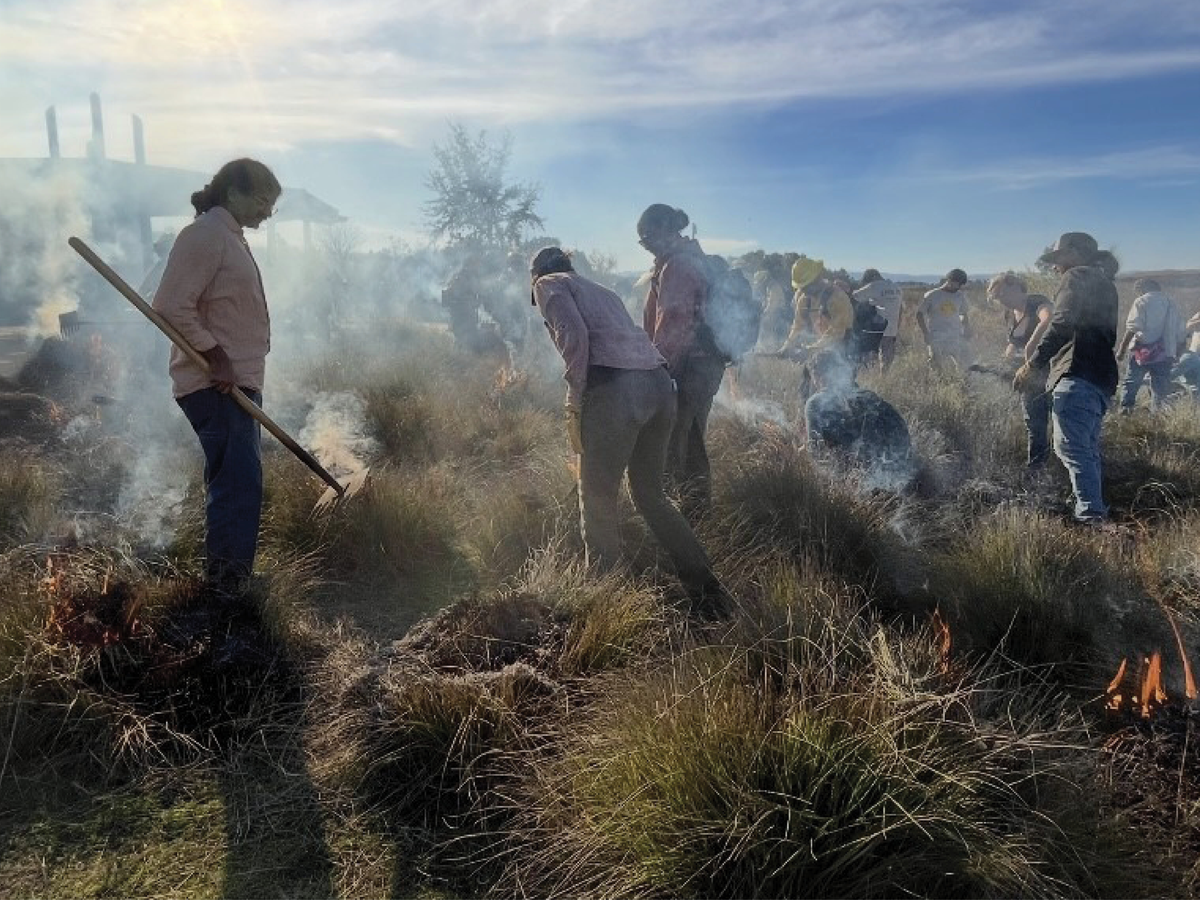
Over ten weeks, eleven landscape architecture and environmental design students trained as prescribed fire practitioners and volunteered on seven burns with community partners. Their service helped to expand prescribed fire capacity, shift wildfire perceptions, and move design education closer to practice, from simply drawing fire on paper to tending it. Working with fire professionals, landowners, prescribed burn associations, fire ecologists, and Indigenous practitioners, students advanced beneficial fire as a key strategy for reducing risk in fire-prone landscapes. The cohort now serves as an on-call volunteer crew, developing a public exhibition on fire messaging, establishing a long-term fire plot, and mentoring future Firelighters.