
.webp?language=en-US)

.webp?language=en-US)
Fluid Itineraries: Rewetting Hobrechtsfelde
Hanrui Fu, Student ASLA

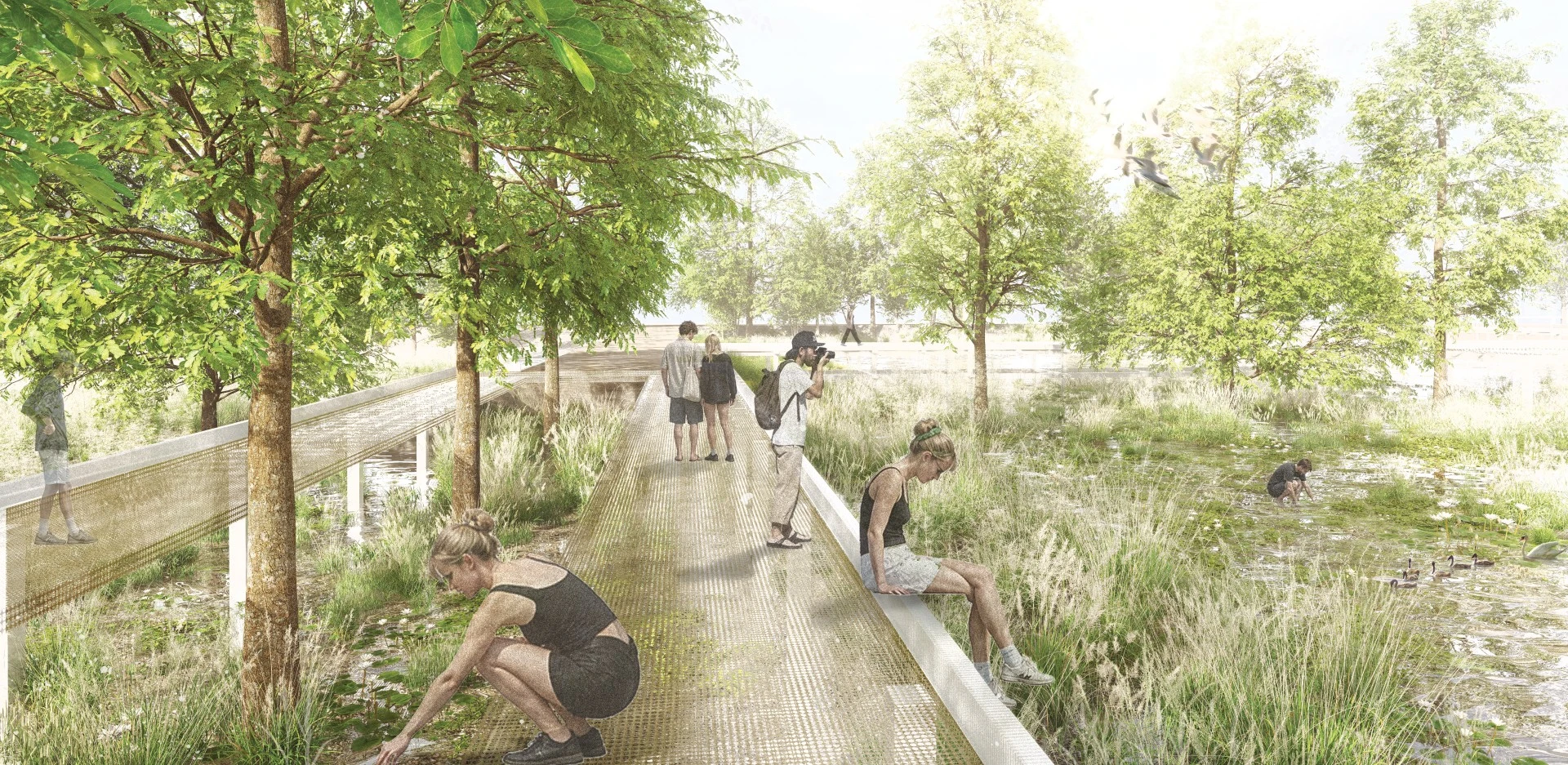
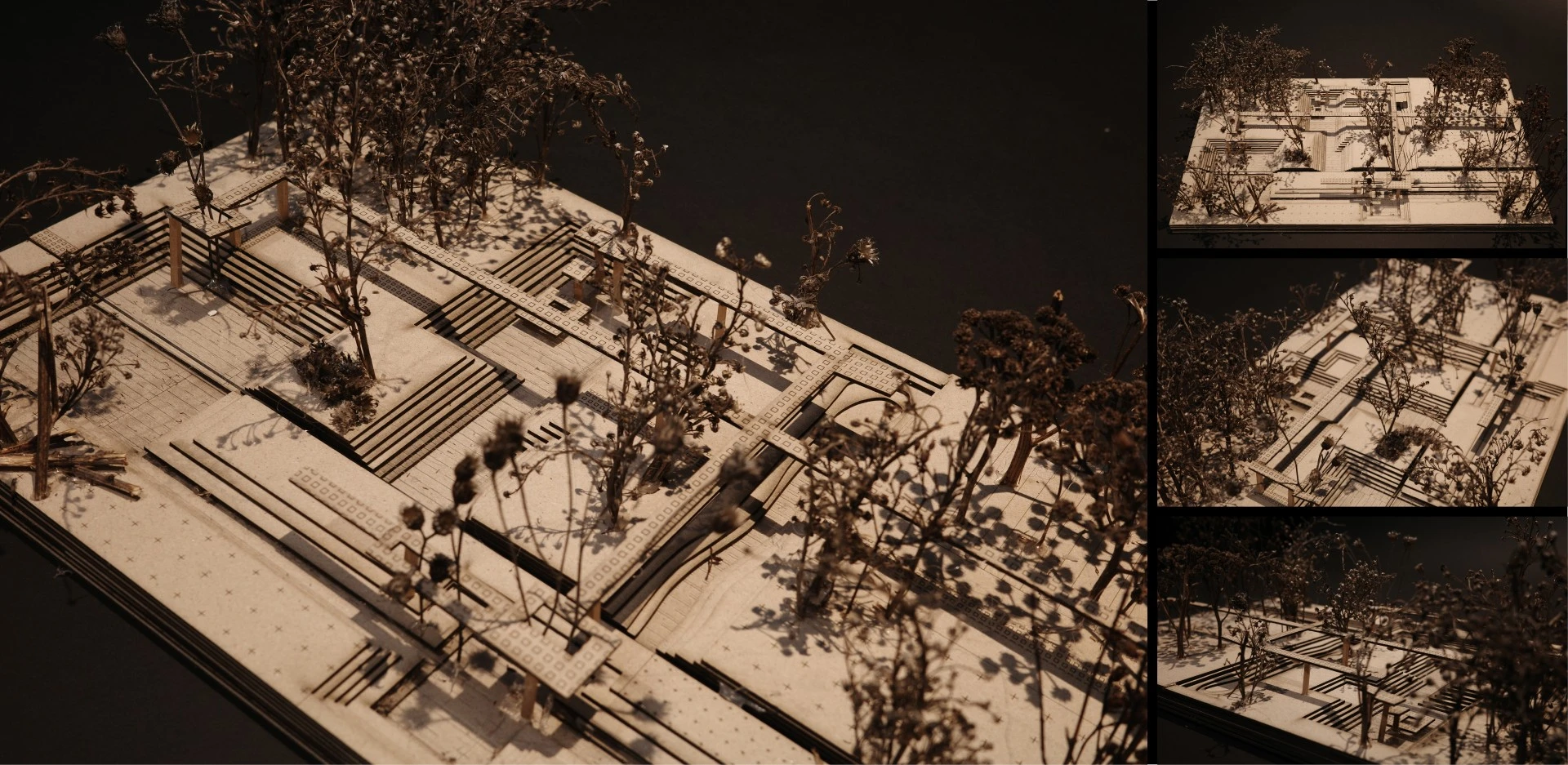

Excellent ecological restoration of an obsolete landscape and creation of a unique experimental public experience.
Awards Jury
-
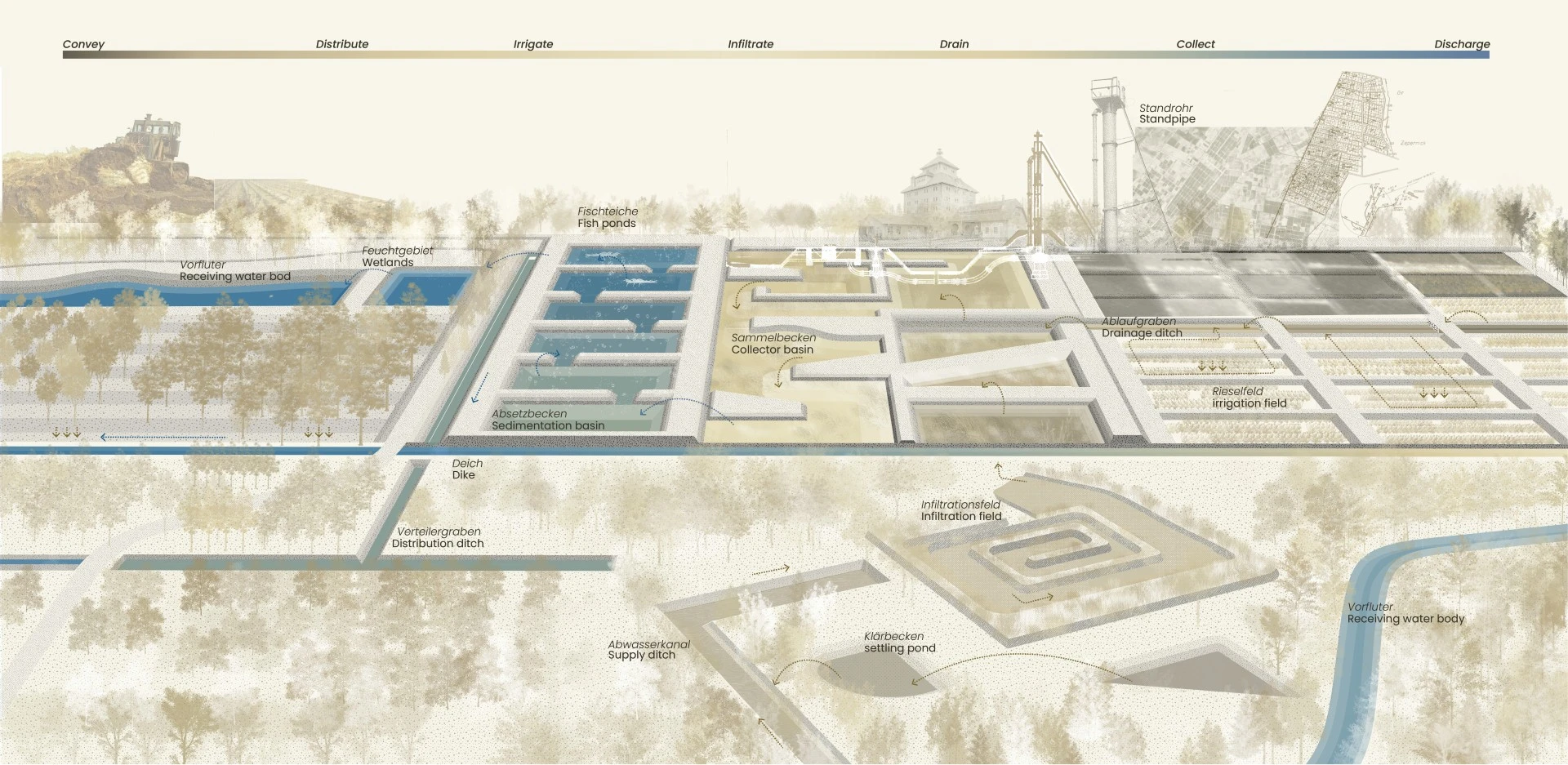
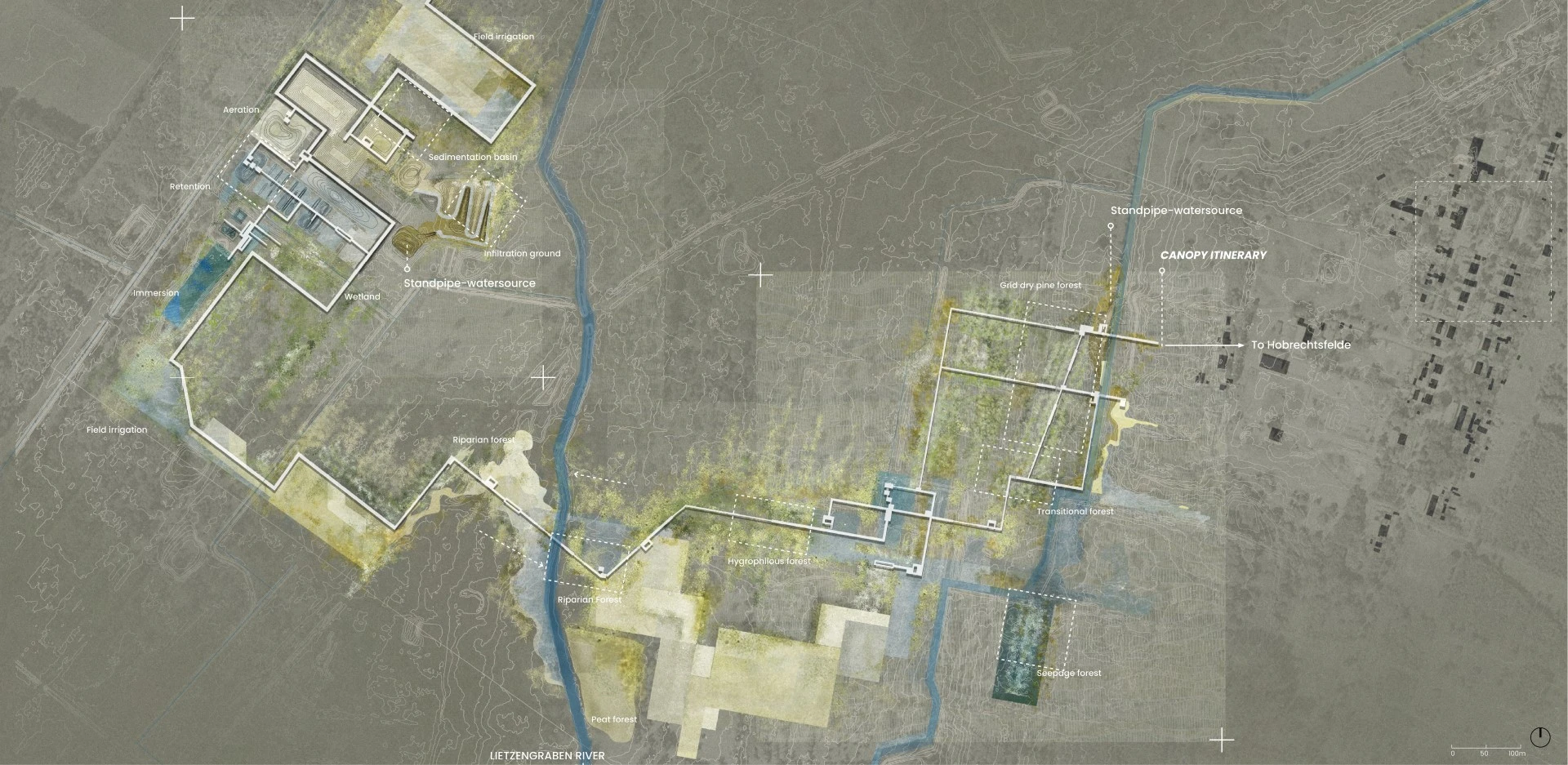
Fluid Itineraries: Rewetting Hobrechtsfelde reimagines Berlin's former sewage fields, once used to process the city's wastewater, as a living landscape of ecological repair and human-water engagement. Residual infrastructures, monocultural forestry plantations, and drainage systems are integrated into a rewetting network that restores hydrological cycles while reconnecting water, woodland, ecology, and human intimacy. Two itineraries choreograph movement through forest and water: one supports woodland succession and rewetting through shifting canopy conditions, while the other transforms former sewage infrastructures into cleansing wetlands and immersive landscapes that choreograph intimacy between body, water, and ecology.
-
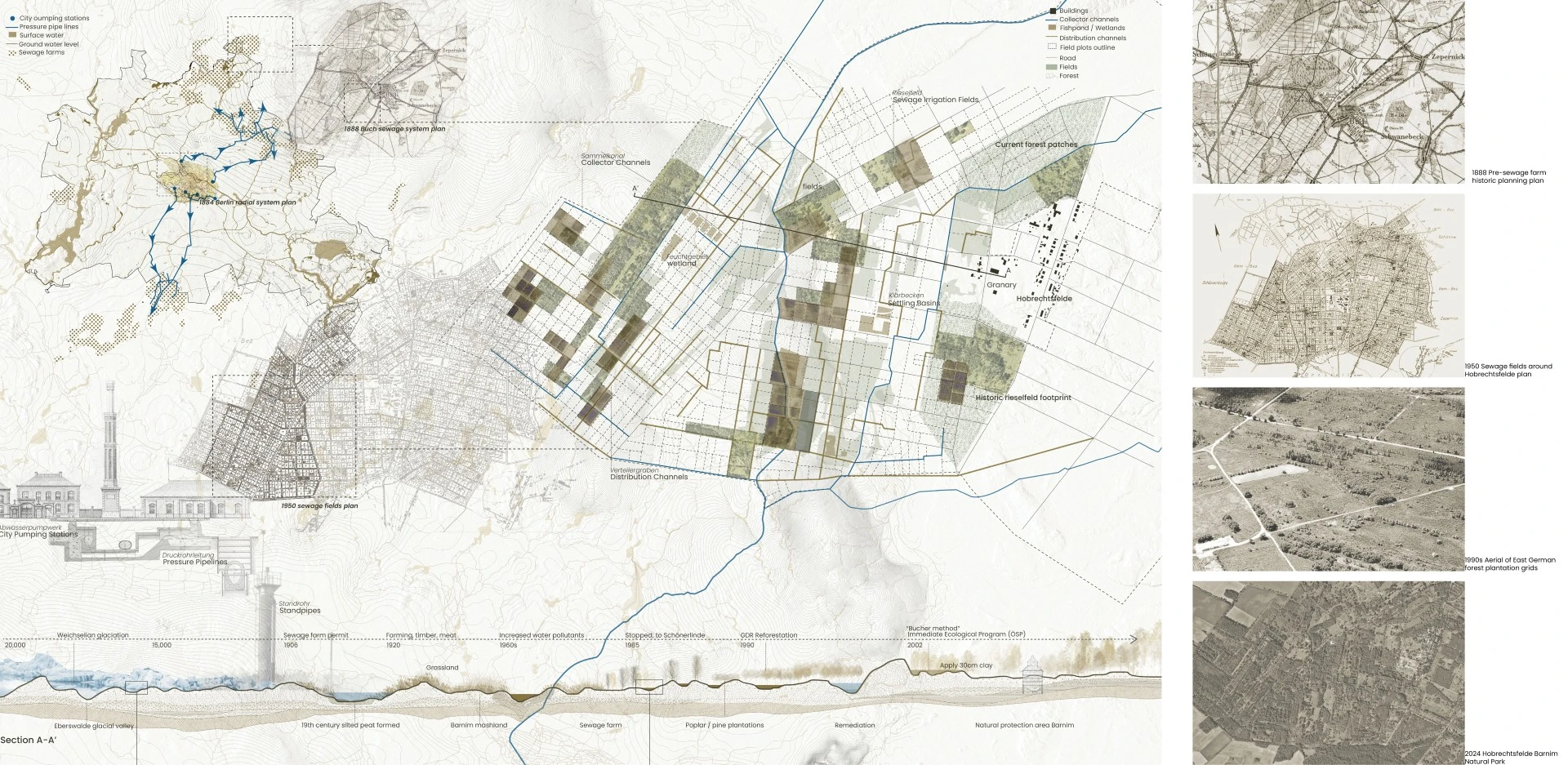
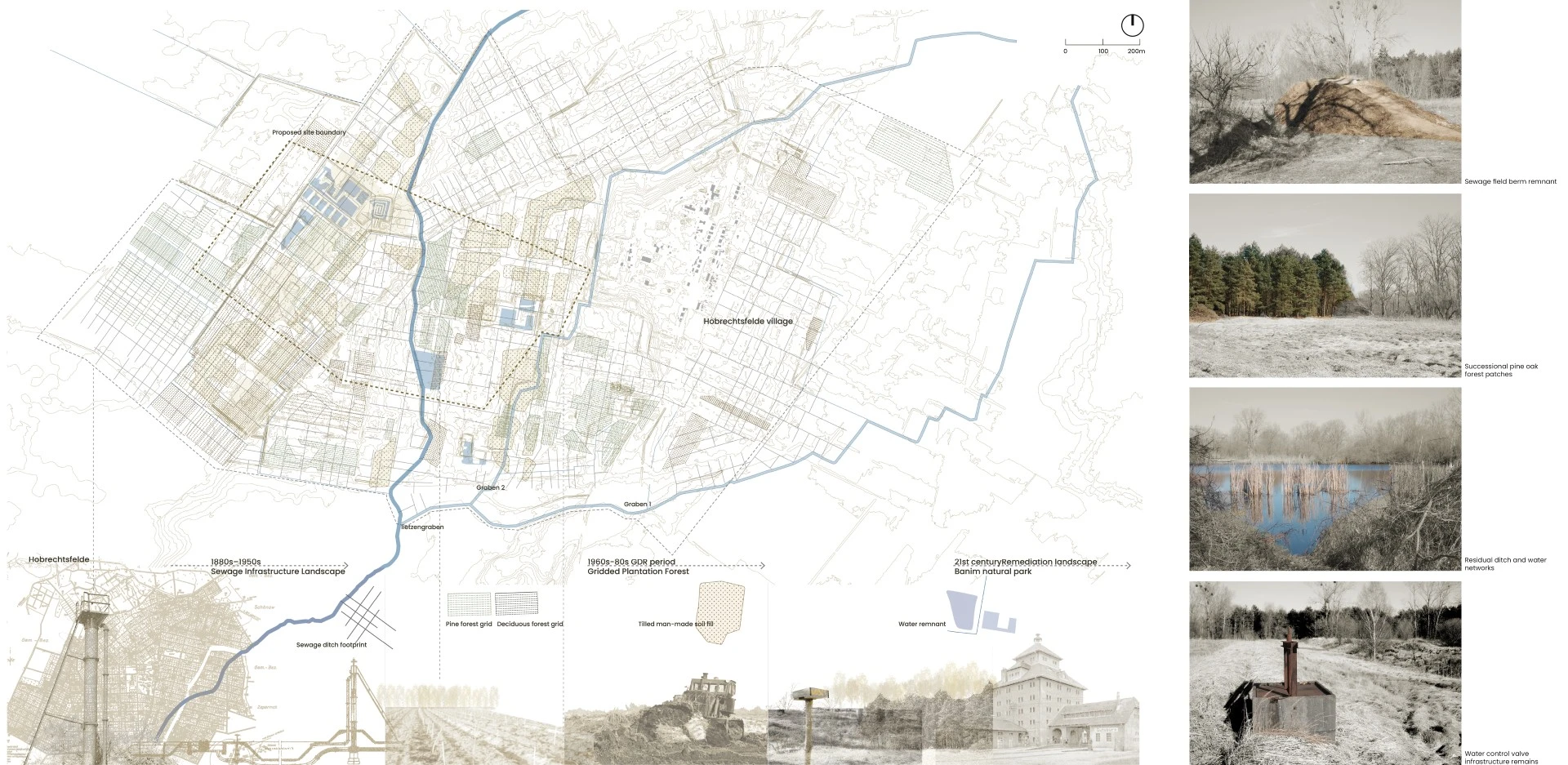
Located on the northeastern outskirts of Berlin, Hobrechtsfelde is a 700-hectare cultural and conservation landscape shaped by a century of sewage processing. From the nineteenth century through the mid-twentieth century, the site operated as Berlin's primary sewage fields, processing wastewater from the growing city. Agricultural production and ecological filtration functioned together through gravity-fed channels, filtration basins, and sewage ditches. Later, as modern treatment facilities displaced these fields, portions of the site were converted to monocultural timber plantations. Today, Hobrechtsfelde is a public landscape managed for conservation, recreation, and carbon sequestration, yet its hydrological systems remain degraded, and its identity as a water-based terrain has faded from collective memory.
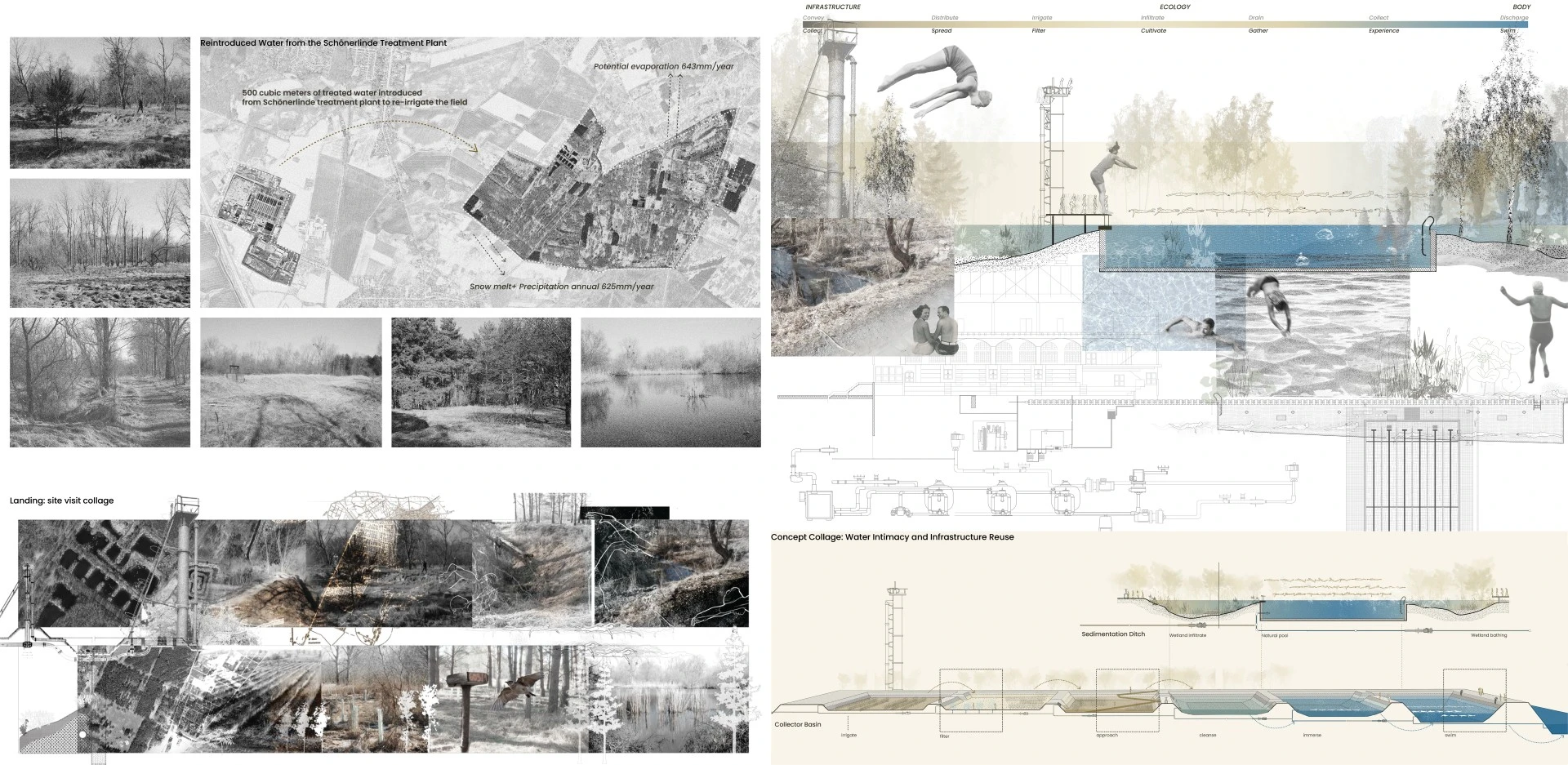
Despite its history as a water-based terrain, Hobrechtsfelde now suffers from drought, groundwater decline, and degraded waterways. Its primary stream, the Lietzengraben, has stopped flowing. Although an adjacent wastewater treatment plant produces large volumes of treated water daily, none is returned to the site. Groundwater extraction, streambed incision, and a negative water balance have disconnected Hobrechtsfelde from its historical identity and ecological function as a wetland ecosystem.
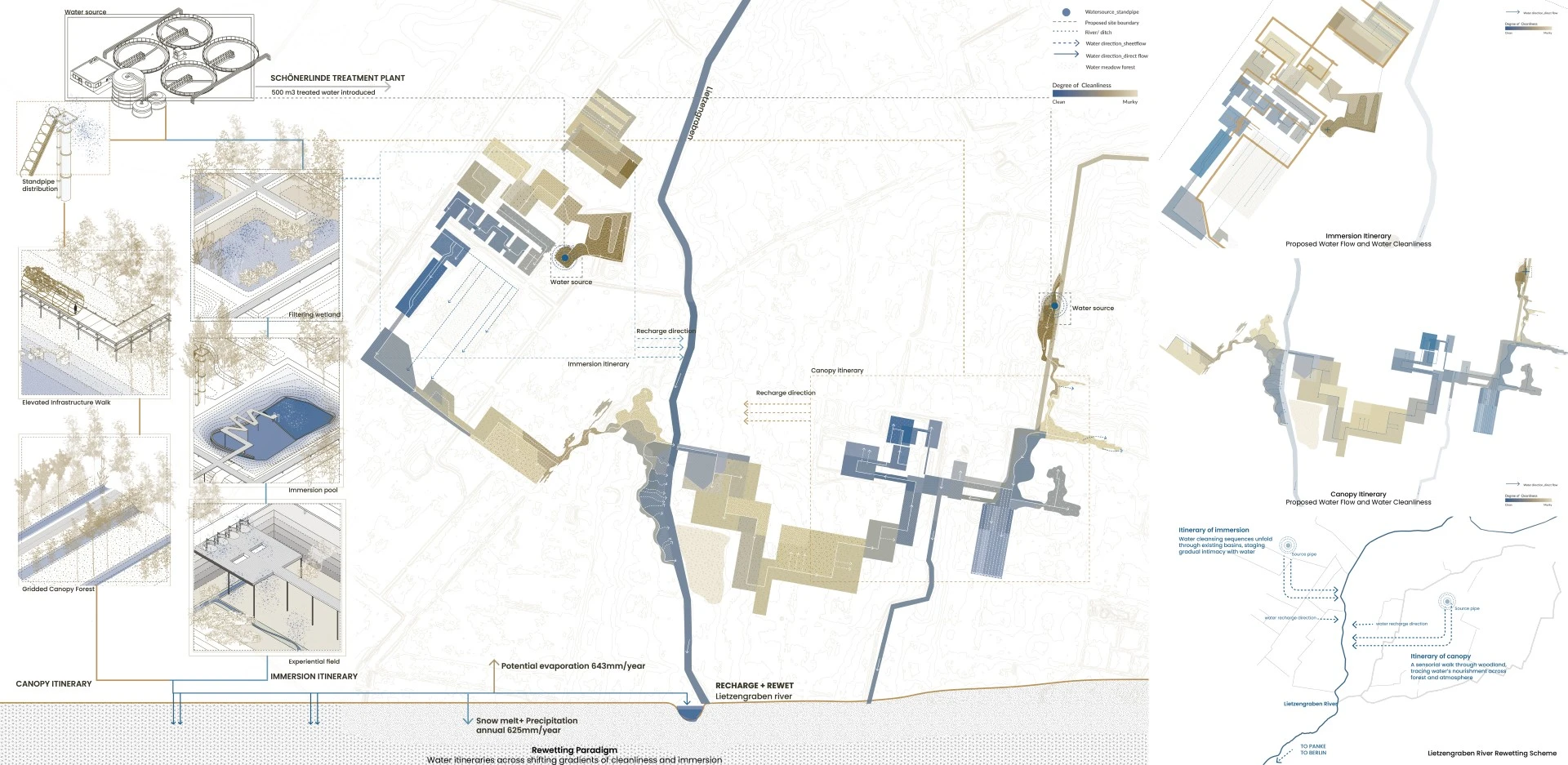
Fluid Itineraries establishes two interconnected landscape systems that introduce treated water back into the site. The design reimagines water not as infrastructure to be hidden, but as an ecological, experiential, and restorative force that can structure movement, forest succession, habitat restoration, and sensory immersion. These two systems recharge the Lietzengraben while choreographing distinct relationships between people, water, and landscape.
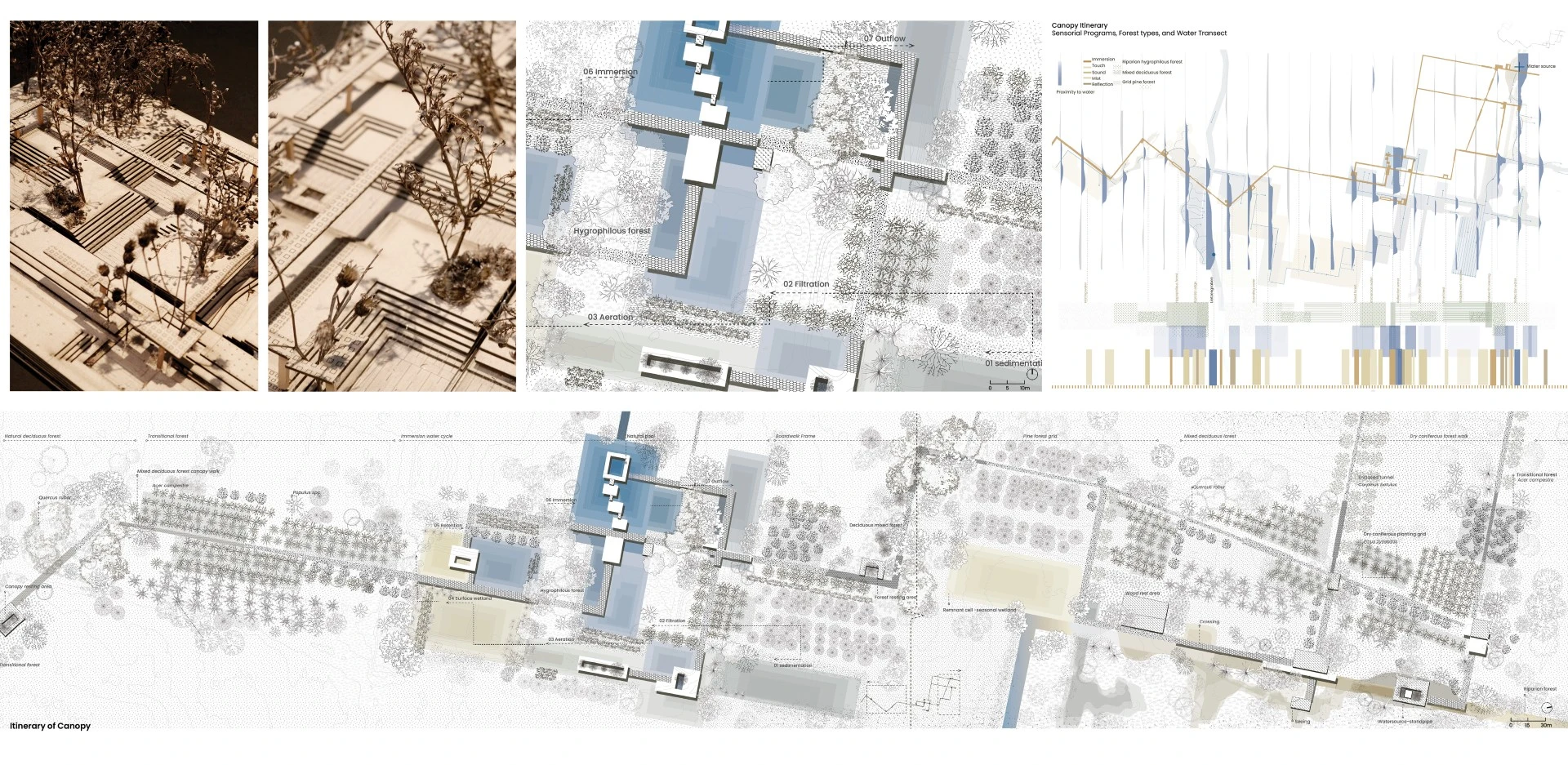
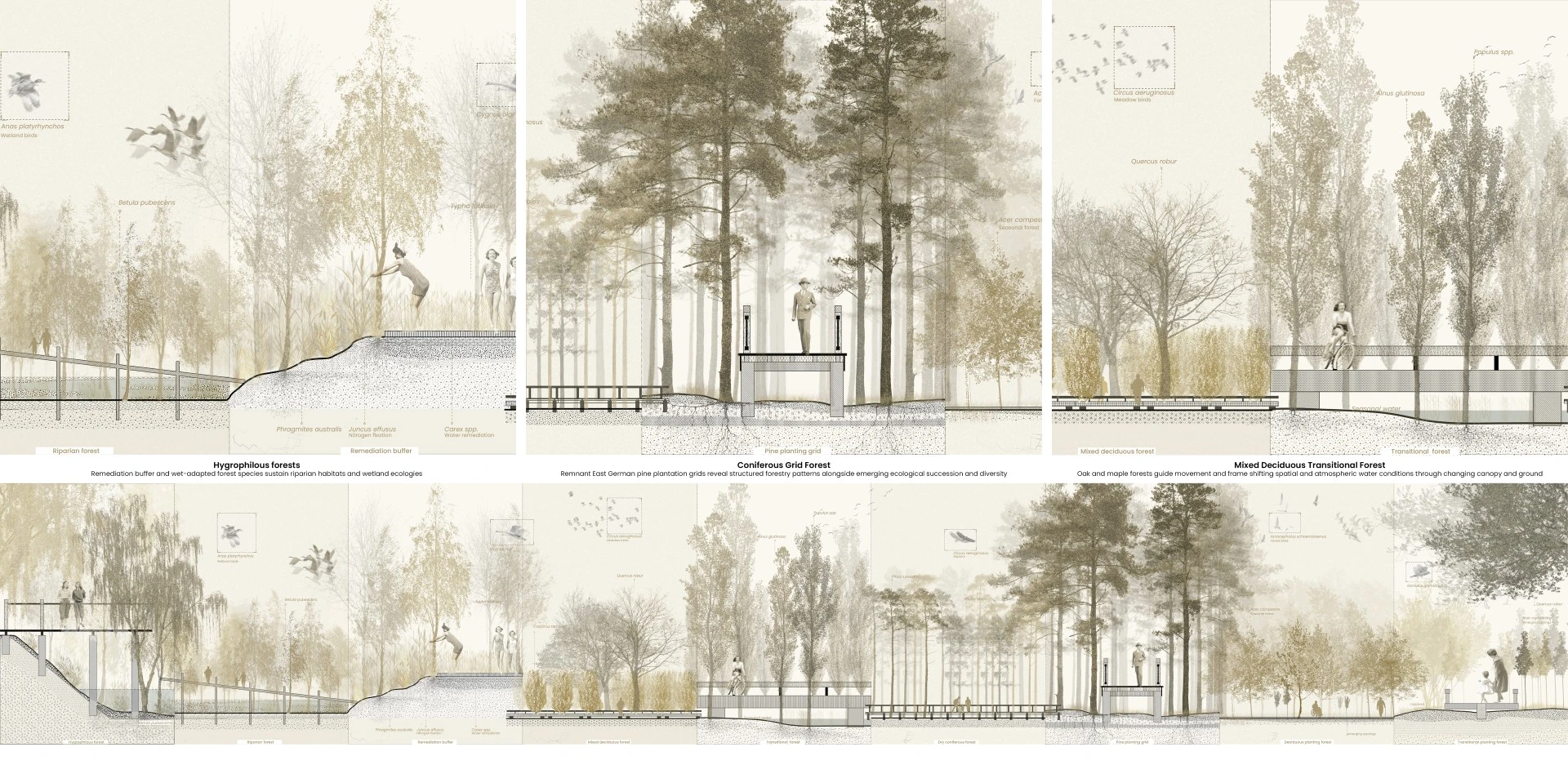
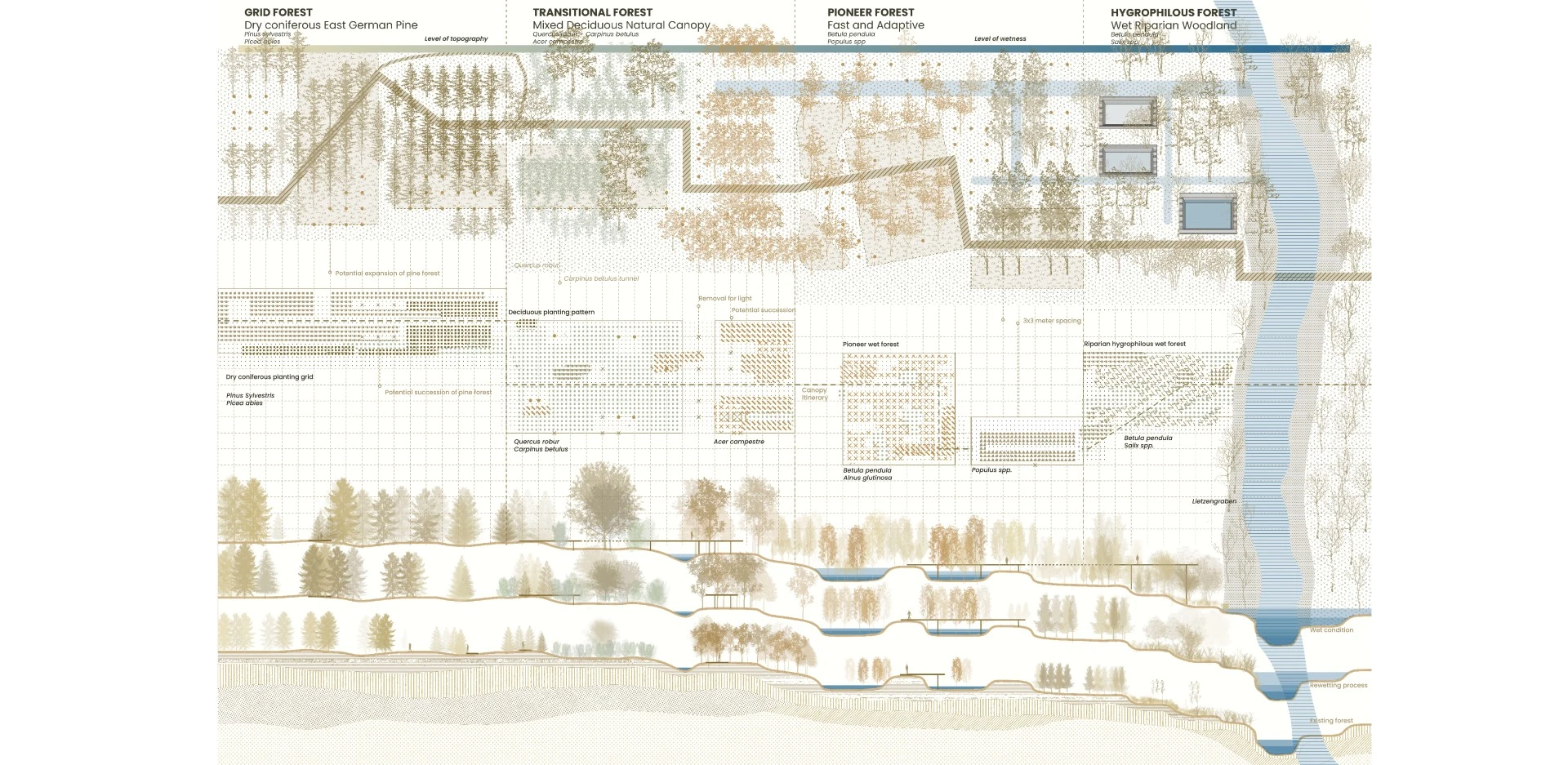
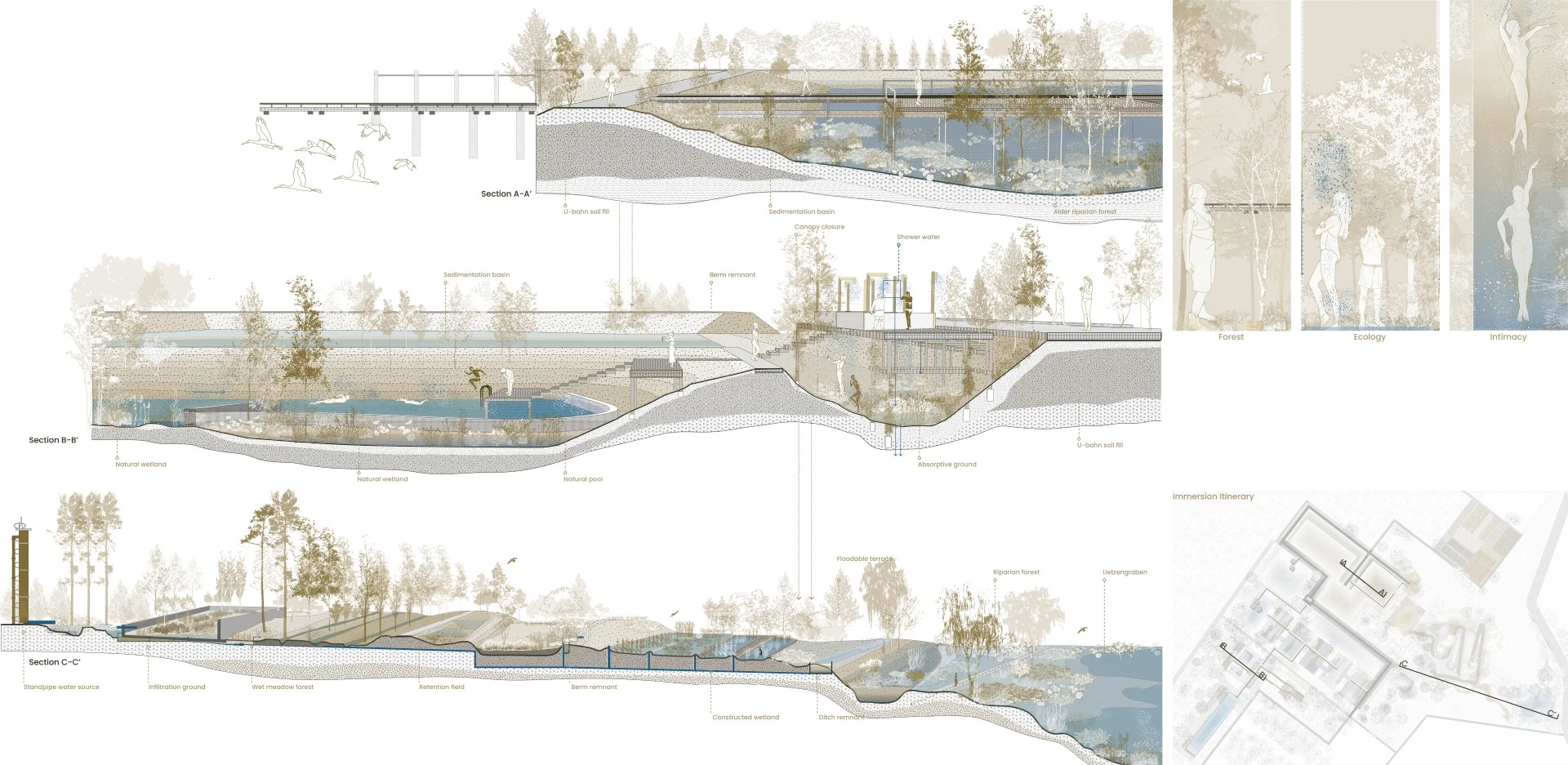
The first system, the Canopy Itinerary, is a 5-kilometer elevated walk that moves through monocultural pine plantations and fragmented remnant forests. It supports a woodland succession strategy by gradually introducing water through gradients of infiltration, ephemeral flooding, and seasonal wetness. As water flows through the forest, it supports shifts from dry coniferous canopy to mixed broadleaf and riparian woodland ecologies. The path follows these transformations, creating moments of immersion, prospect, and encounter across shifting canopy densities, light conditions, and woodland typologies. Forest and water structure each other, and movement through the landscape becomes a form of witnessing ecological change.
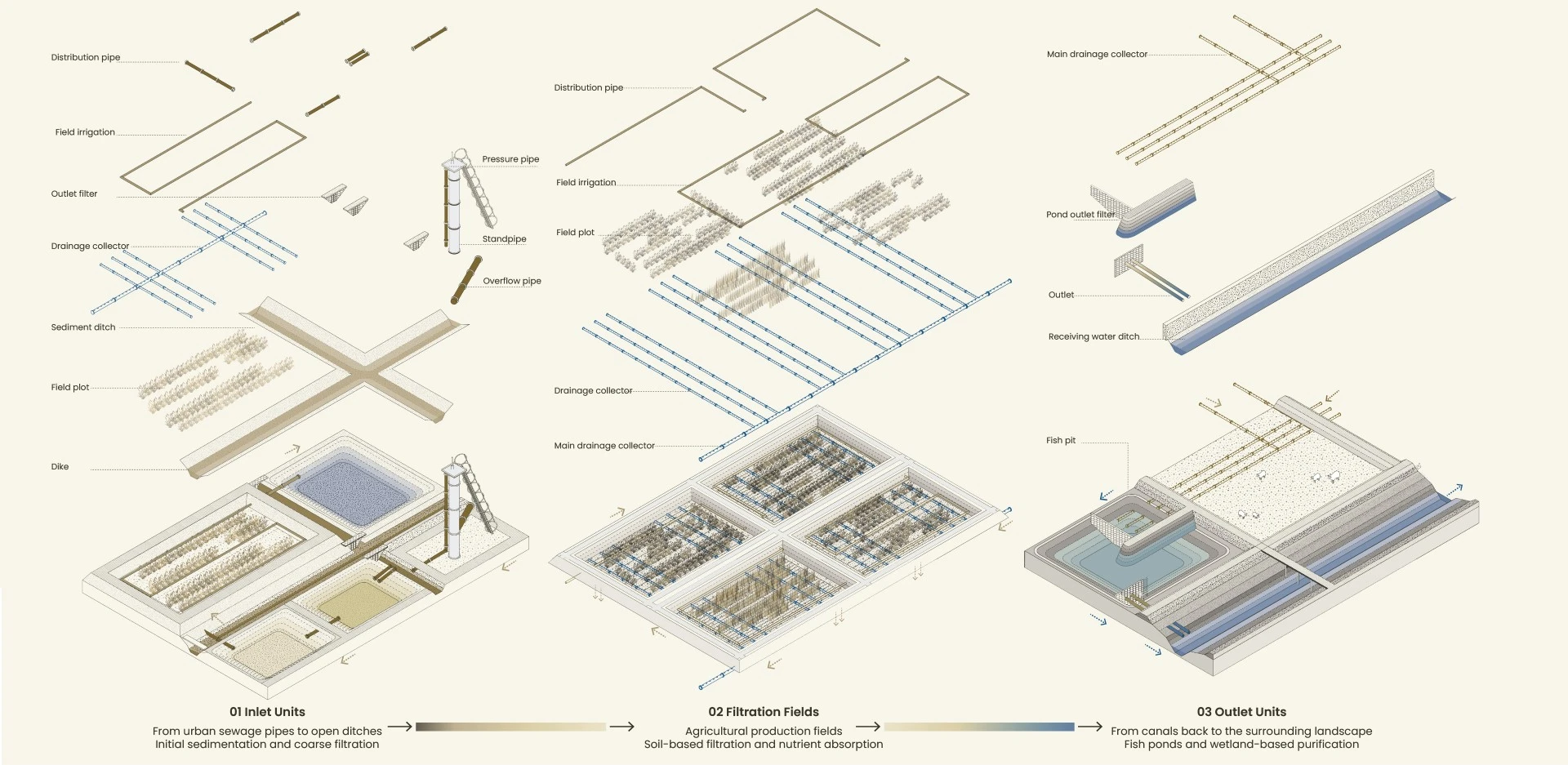
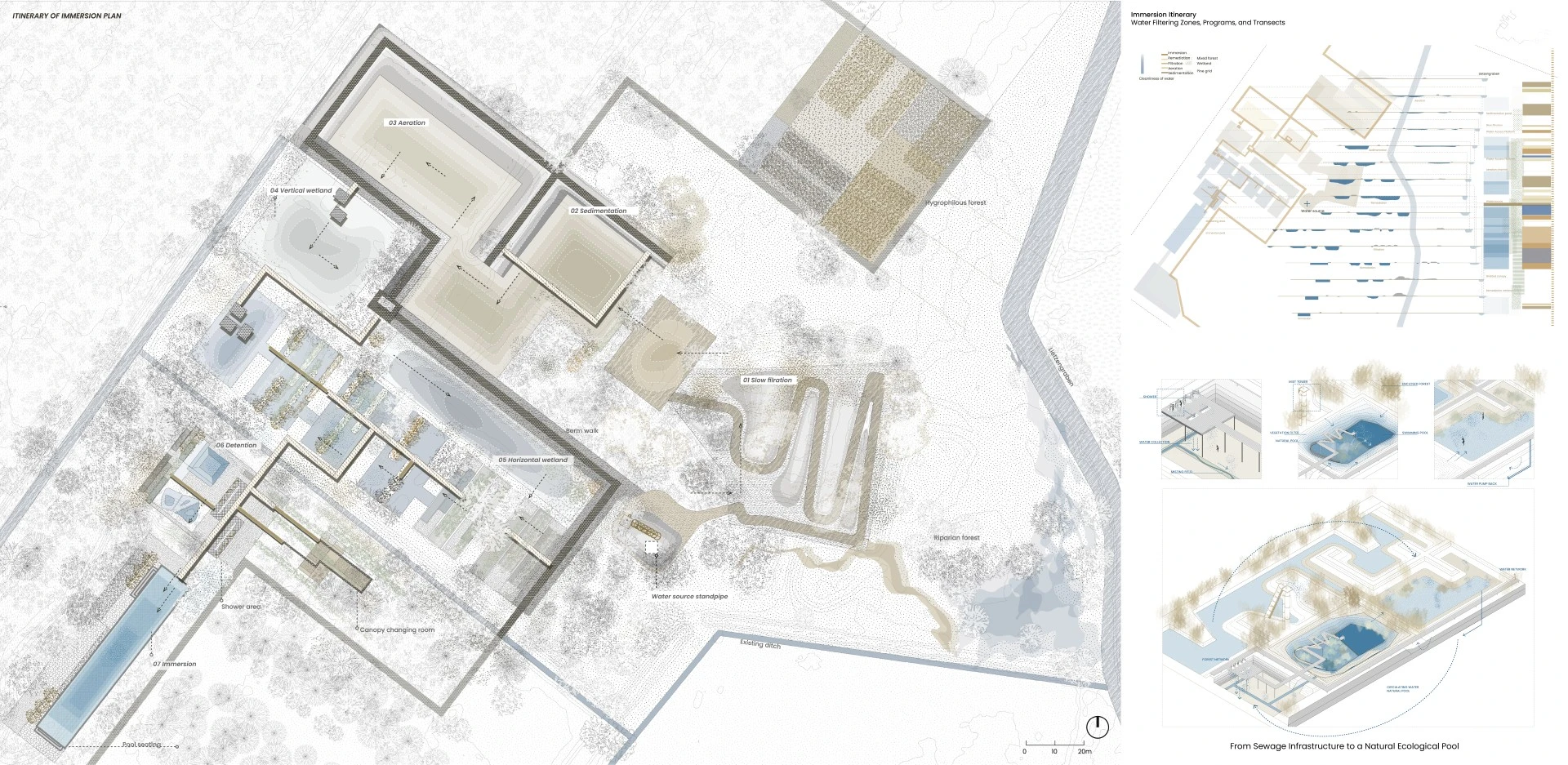
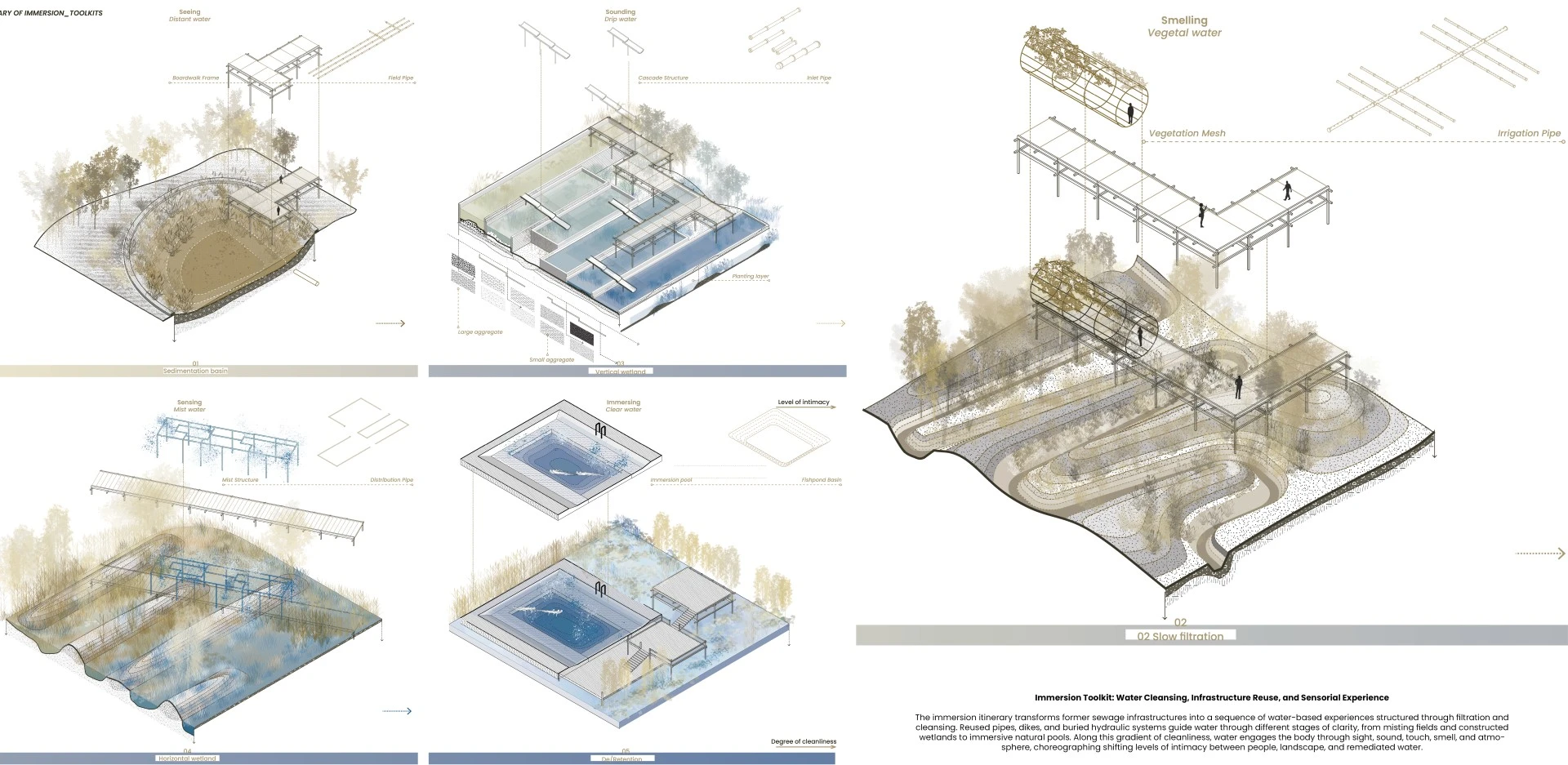
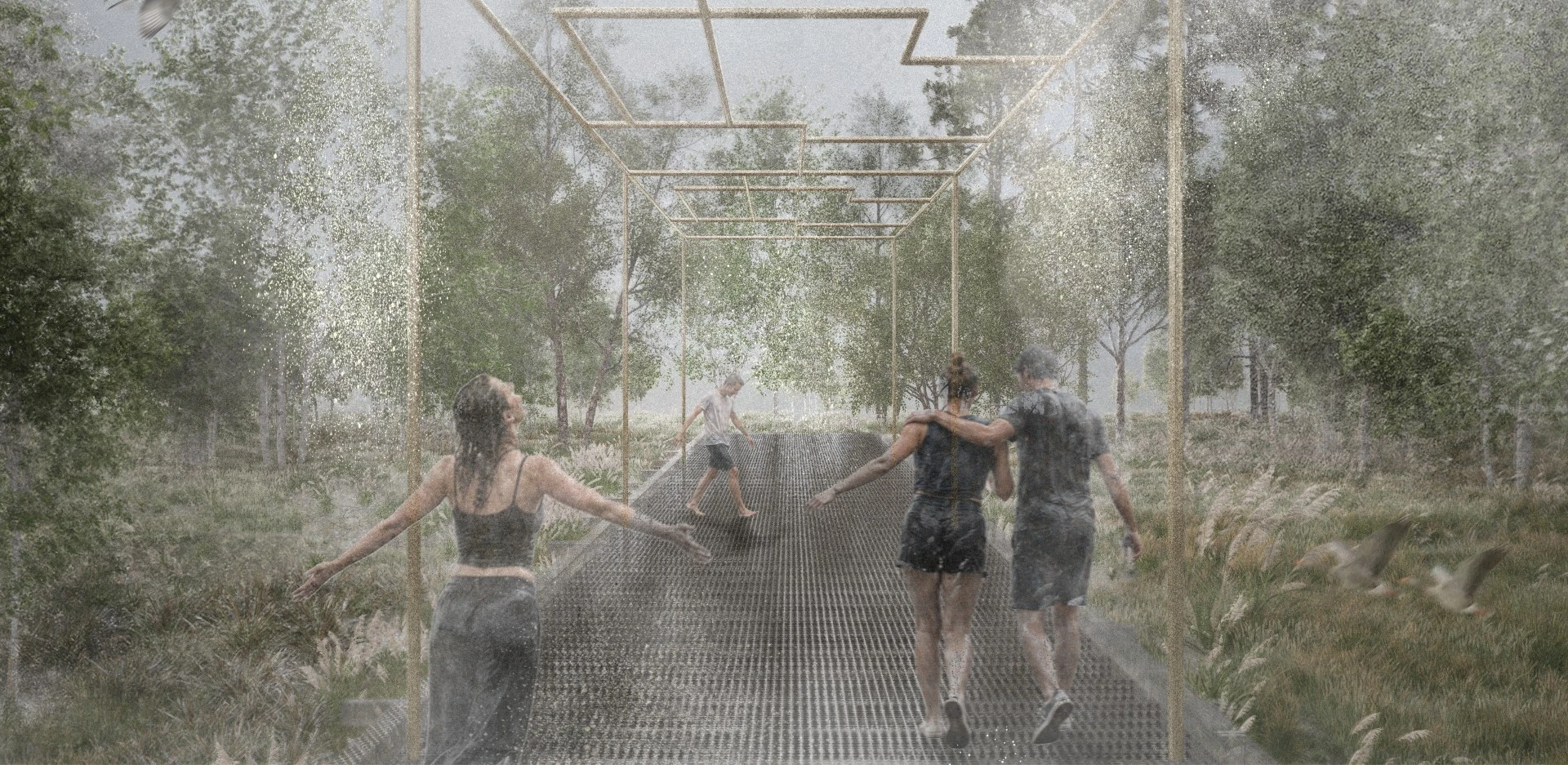
The second system, the Immersion Itinerary, reactivates residual sewage infrastructures, transforming former distribution pipes, settling basins, and filtration ditches into a choreographed wetland journey. Treated water passes through misting channels, sedimentation pools, and reed filtration zones, becoming progressively clearer as it moves downstream. The design stages intimacy with water by guiding the body through encounters with mist, surface, depth, and flow. In early stages, the water is murky; by the end, it is clear enough for immersion. The remnant infrastructures are not erased, but layered with planting, topography, and program to become legible markers of the site's transformation. Water is experienced not only visually, but bodily, spatially, and sensorially.
Together, the itineraries transform water from a hidden utility into an evolving ecological and sensory system. They reinforce each other: the Canopy Itinerary nurtures forest habitats and ecological succession; the Immersion Itinerary choreographs physical and emotional encounters with water. Both contribute to rewetting the landscape and recharging the Lietzengraben, reconnecting Hobrechtsfelde to its hydrological and cultural heritage while imagining a more fluid, resilient future.
-
- Betula Pendula (European White Birch)
- Salix Spp. (Willow)
- Alnus Glutinosa (Alder)
- Phragmites Australis (Common Reed)
- Carex Aquatilis (Water Sedge)
- Juncus Effusus (Common Rush)
- Typha Latifolia (Broadleaf Cattail)
- Quercus Robur (English Oak)
- Acer Campestre (Field Maple)
- Pinus Sylvestris (Scots Pine)
- Carpinus Betulus (European Hornbeam)
- Betula Pubescens (Downy Birch)
- Populus Spp. (Poplar)
Advertisement
Related Awards
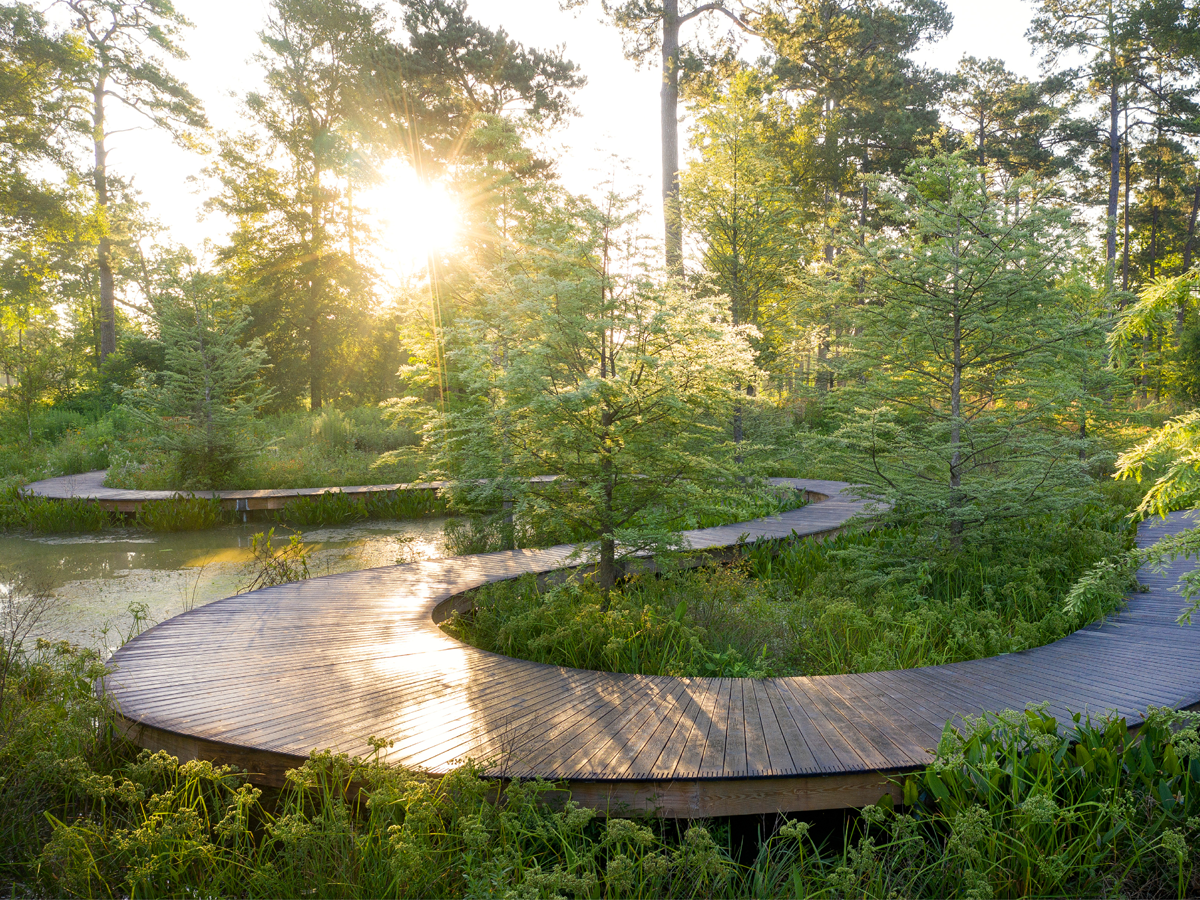
Honor Award, General Design
Houston Arboretum & Nature Center
The Houston Arboretum & Nature Center sits within Memorial Park, one of the largest urban parks in the United States, in one of the nation's fastest growing and most climate-challenged cities. The site's story is one of repeated loss and deliberate reinvention. Hurricane Ike in 2008 and a severe drought in 2011 destroyed much of the Arboretum's tree canopy, exposing the limits of conventional reforestation in a city defined by flooding, heat, and ecological volatility.