
.webp?language=en-US)

.webp?language=en-US)
After Waste: A Post-Landfill Regeneration Framework
Annika Schon, Student ASLA

Excellent, well-presented submittal. This project could serve as a guide for other municipalities in their planning for waste management.
Awards Jury
-
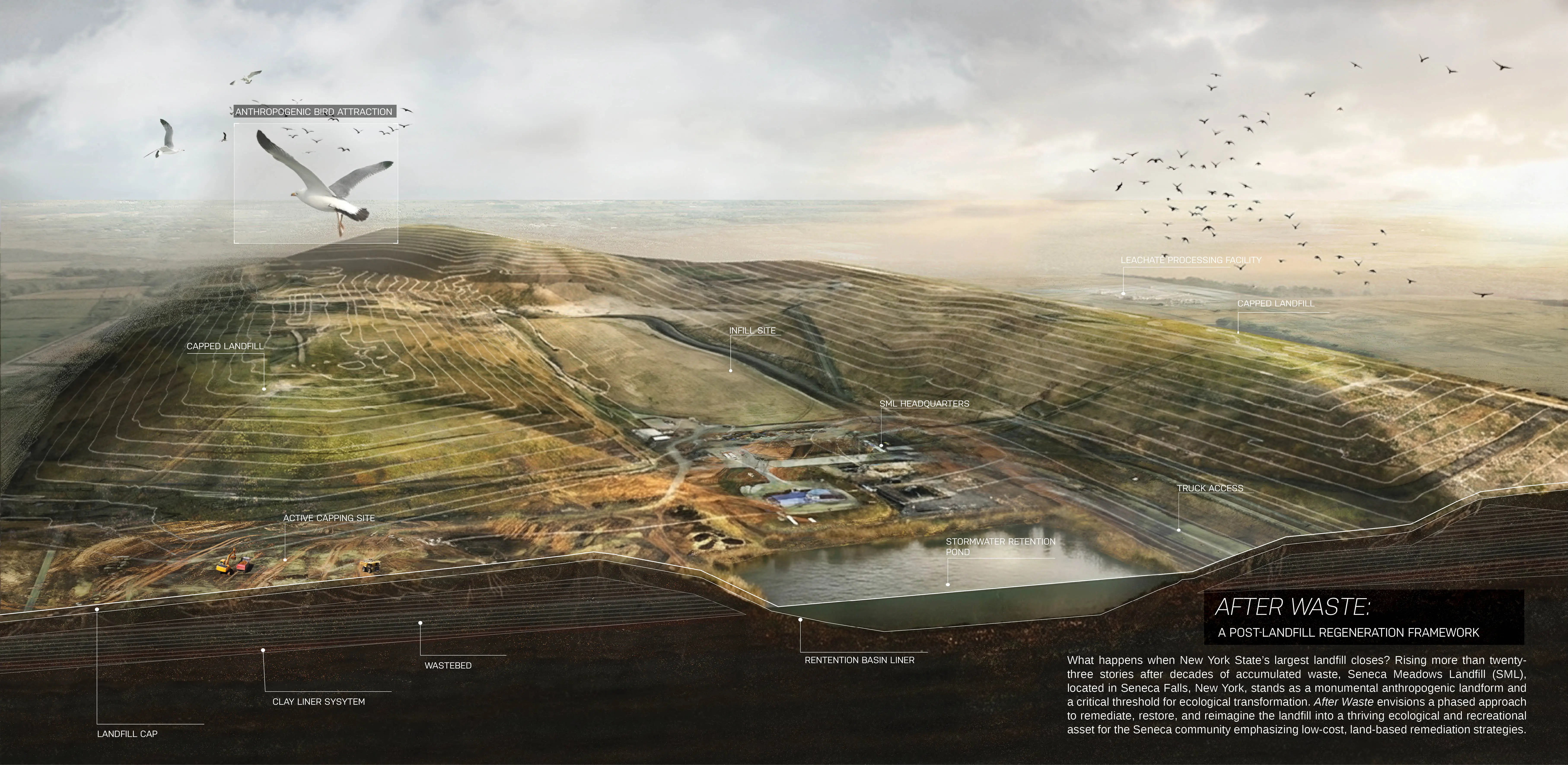
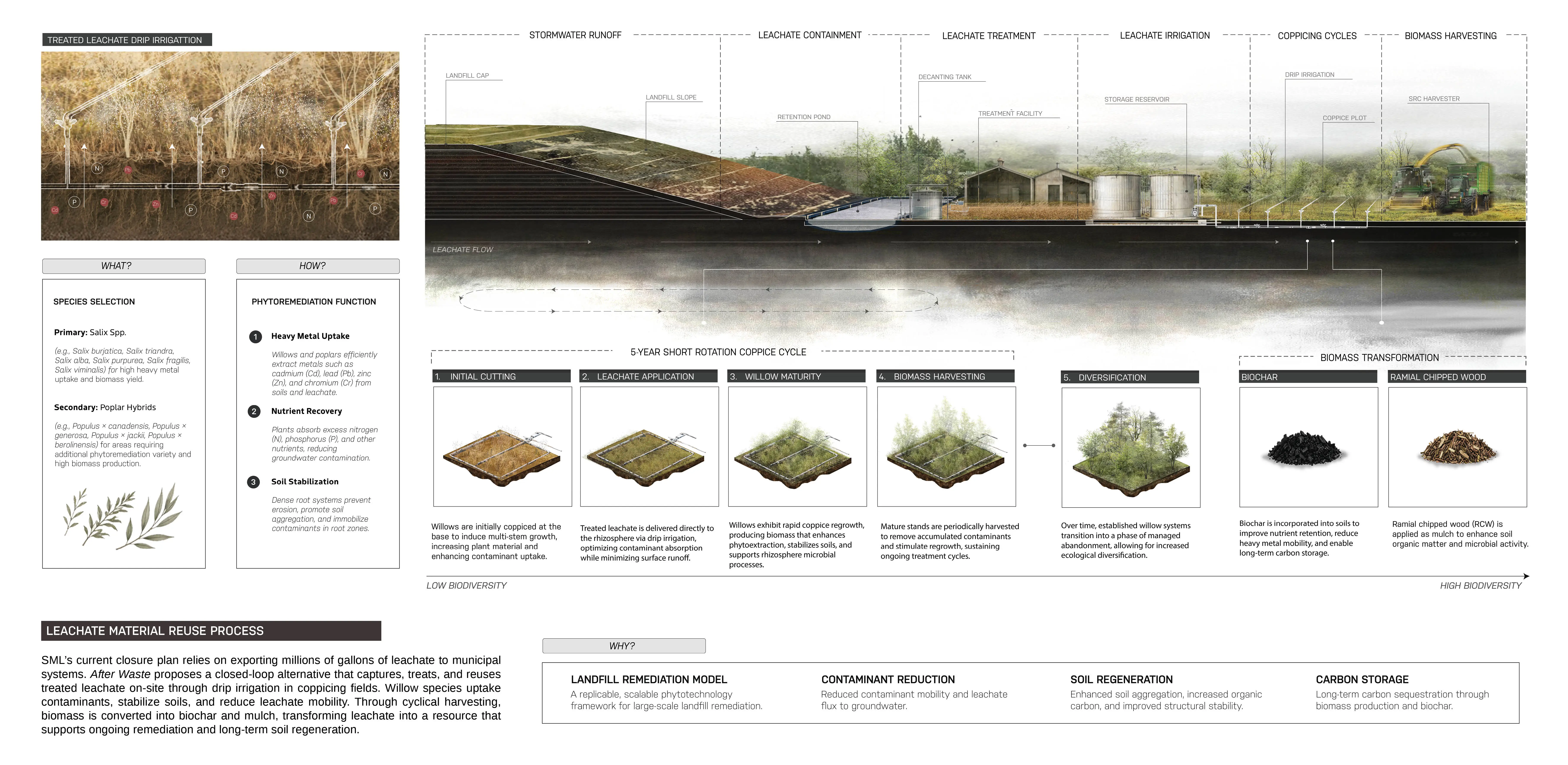
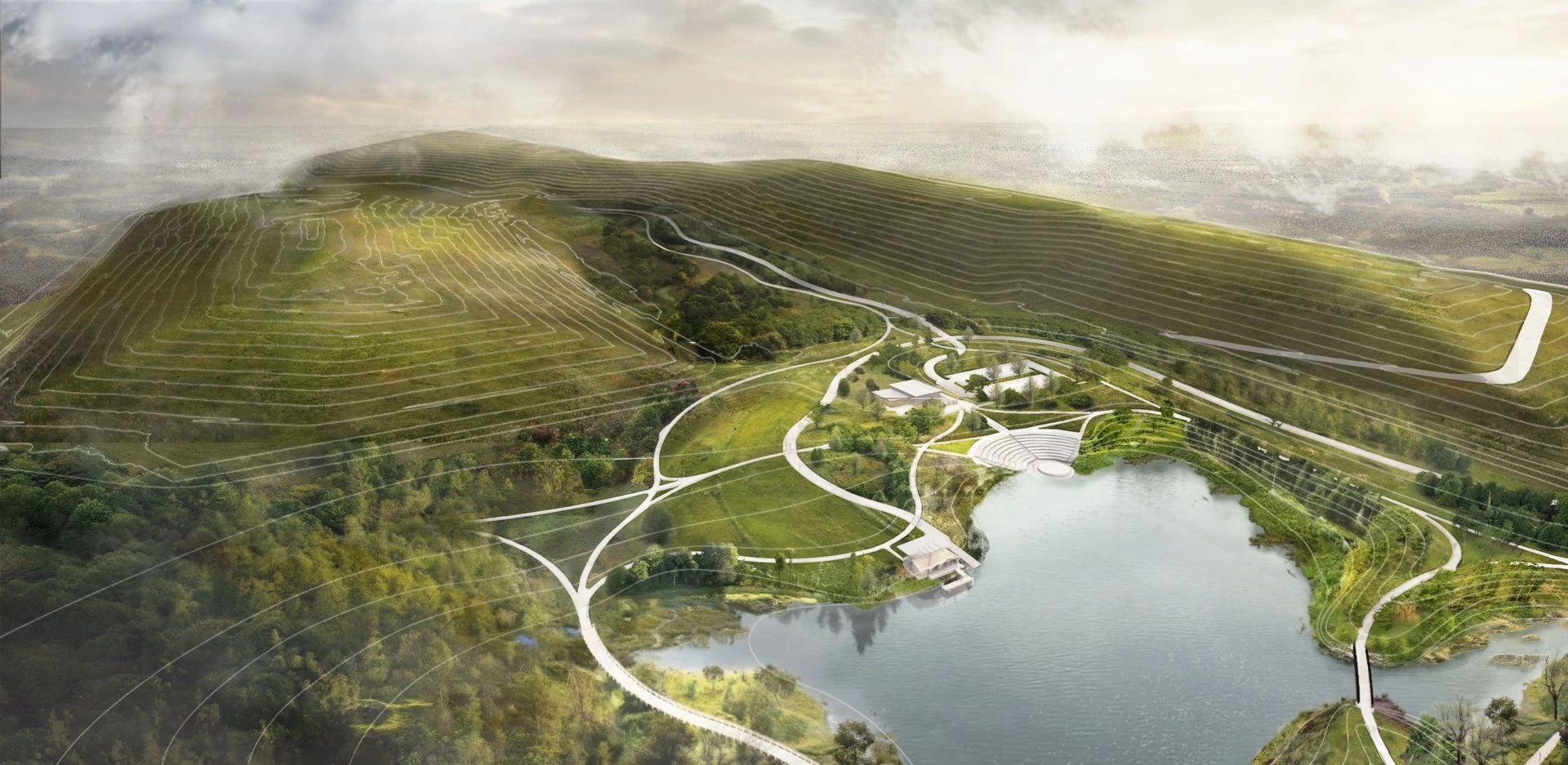
After Waste repositions Seneca Meadows Landfill, New York State's largest landfill, as a long-term ecological system following its mandated closure. Challenging conventional post-closure practices that prioritize synthetic containment and economic efficiency, the project proposes a phased, performance-based framework centered on phytoremediation, biomass cycling, and adaptive land management. A closed-loop system reuses treated leachate on-site to improve soil conditions and reduce off-site discharge. Over a 100-year timeline, the landfill transitions into a diverse, resilient landscape supporting habitat, public access, and sustained environmental function.
-
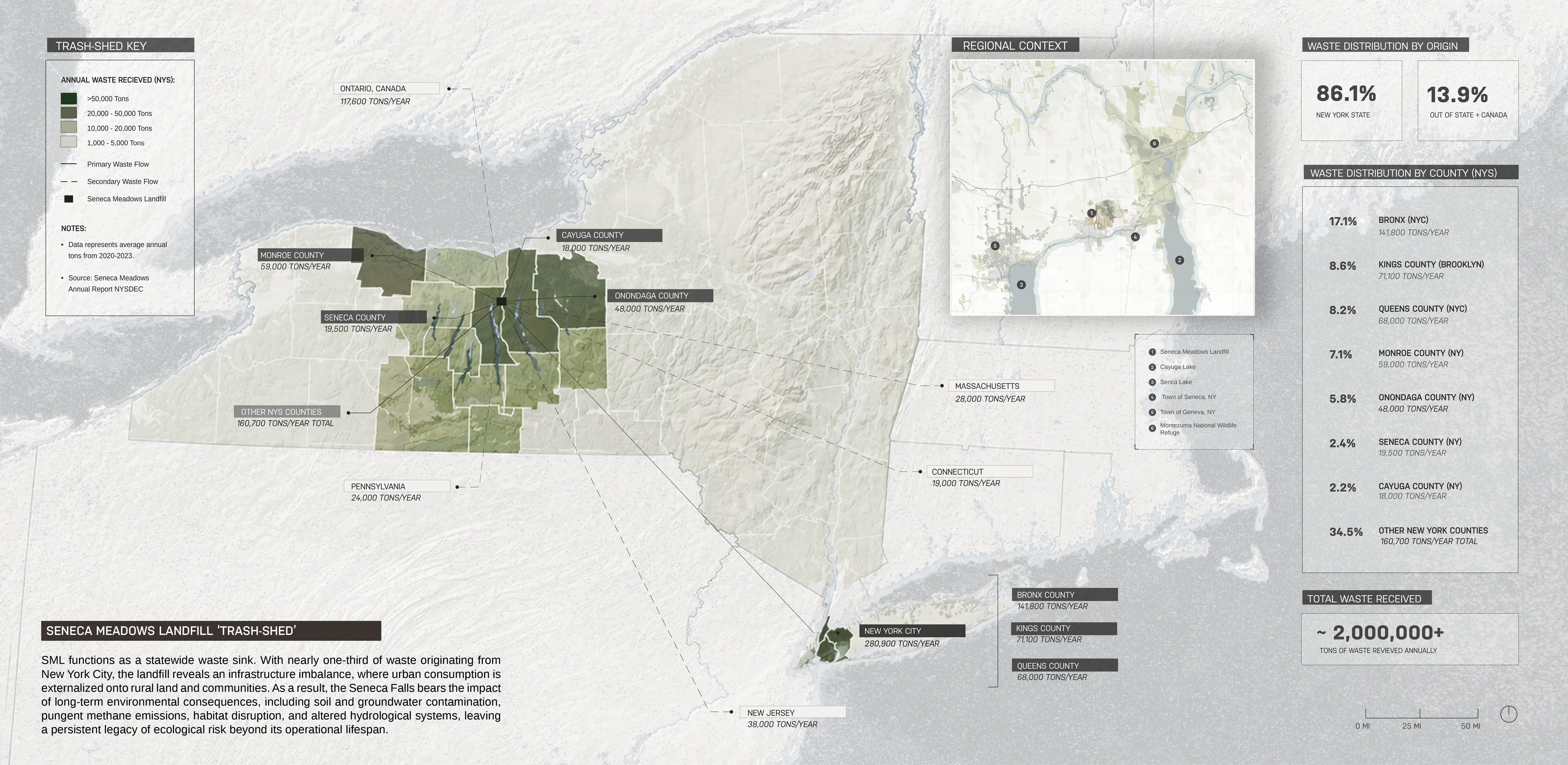
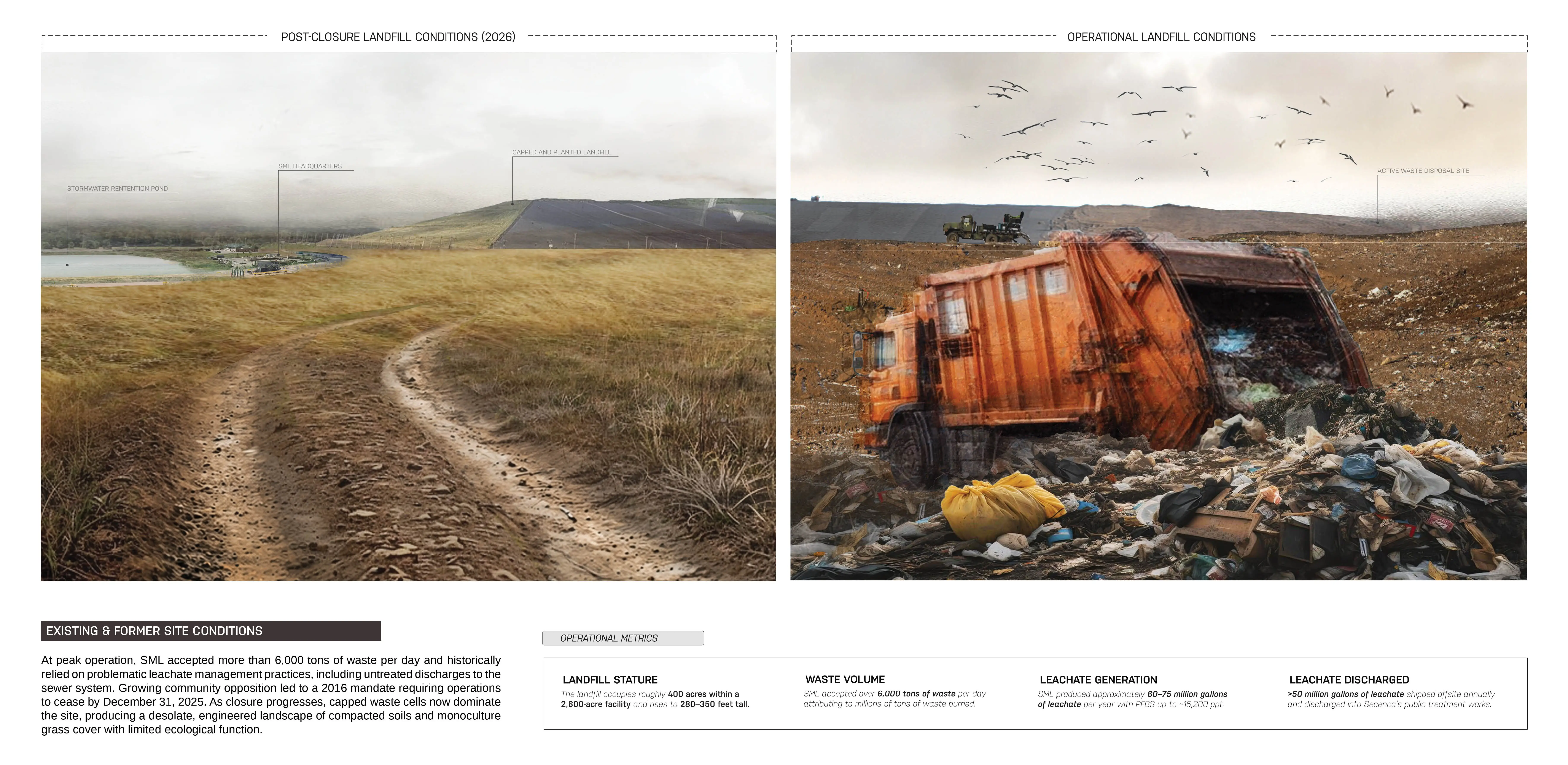
Context: Seneca Meadows Landfill (SML) in Seneca Falls, New York, is the state's largest landfill and a major regional waste repository. Over decades, it concentrated waste flows from dense urban systems—particularly New York City—into a rural landscape, generating significant environmental impacts including leachate production, methane emissions, and ecological degradation. A 2016 mandate requires closure by 2026, initiating a transition to post-closure management.
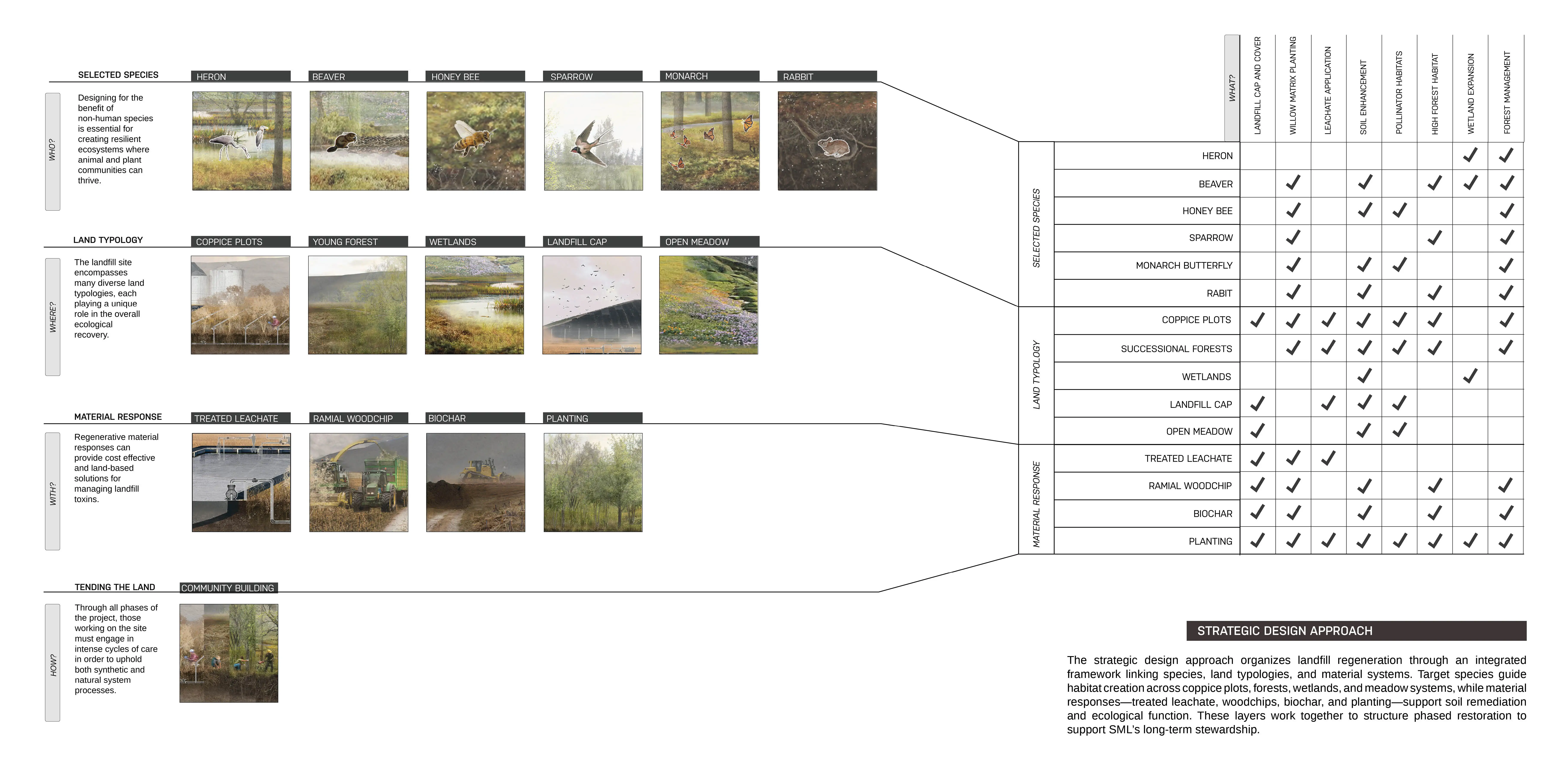
Design Intent: After Waste reframes landfill closure as a long-term ecological process. Rather than relying solely on containment-based engineering, the project proposes a systems-based approach integrating phytoremediation, biomass cycling, and adaptive land management to restore ecological function and reduce long-term environmental risk.
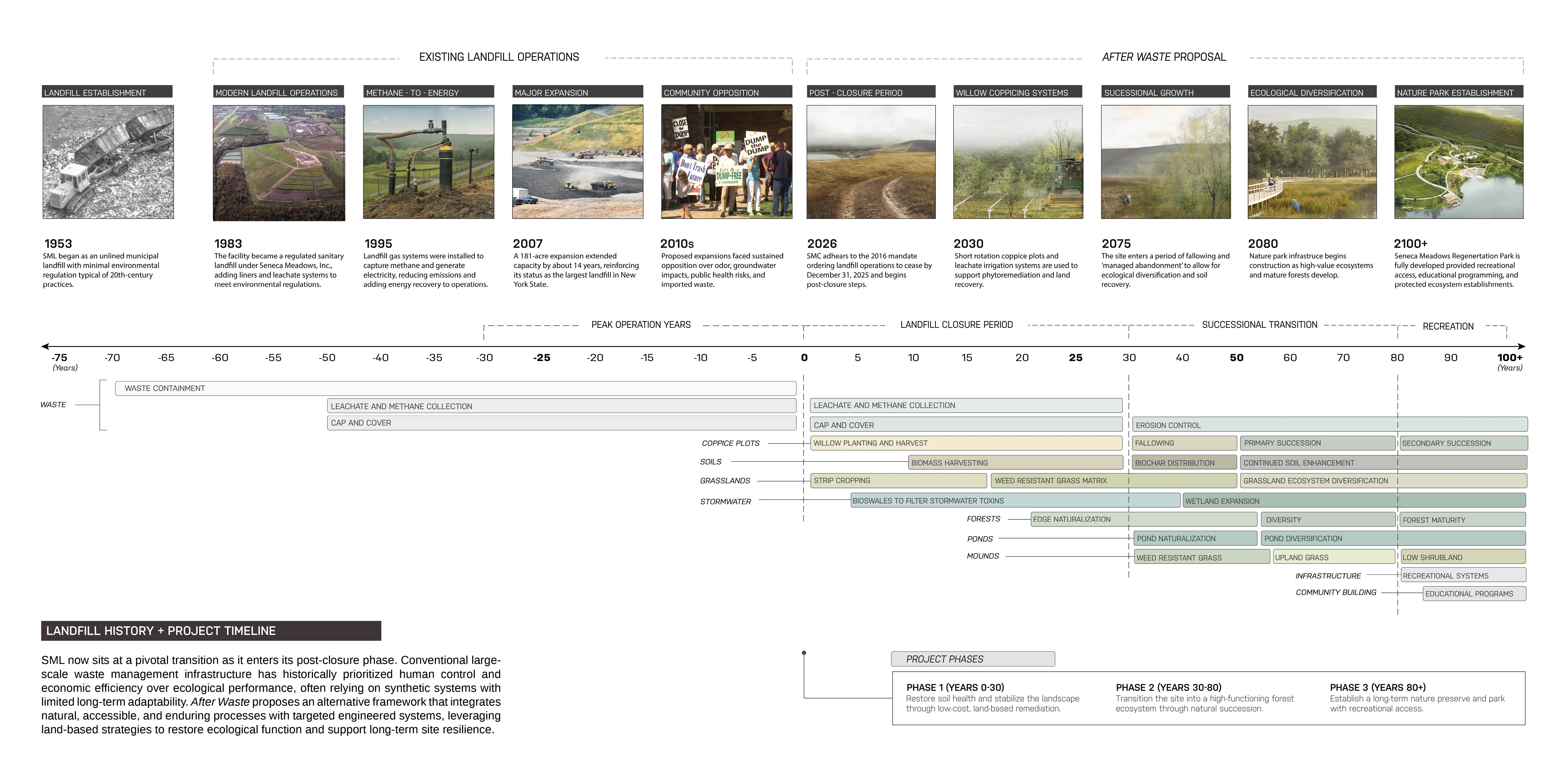
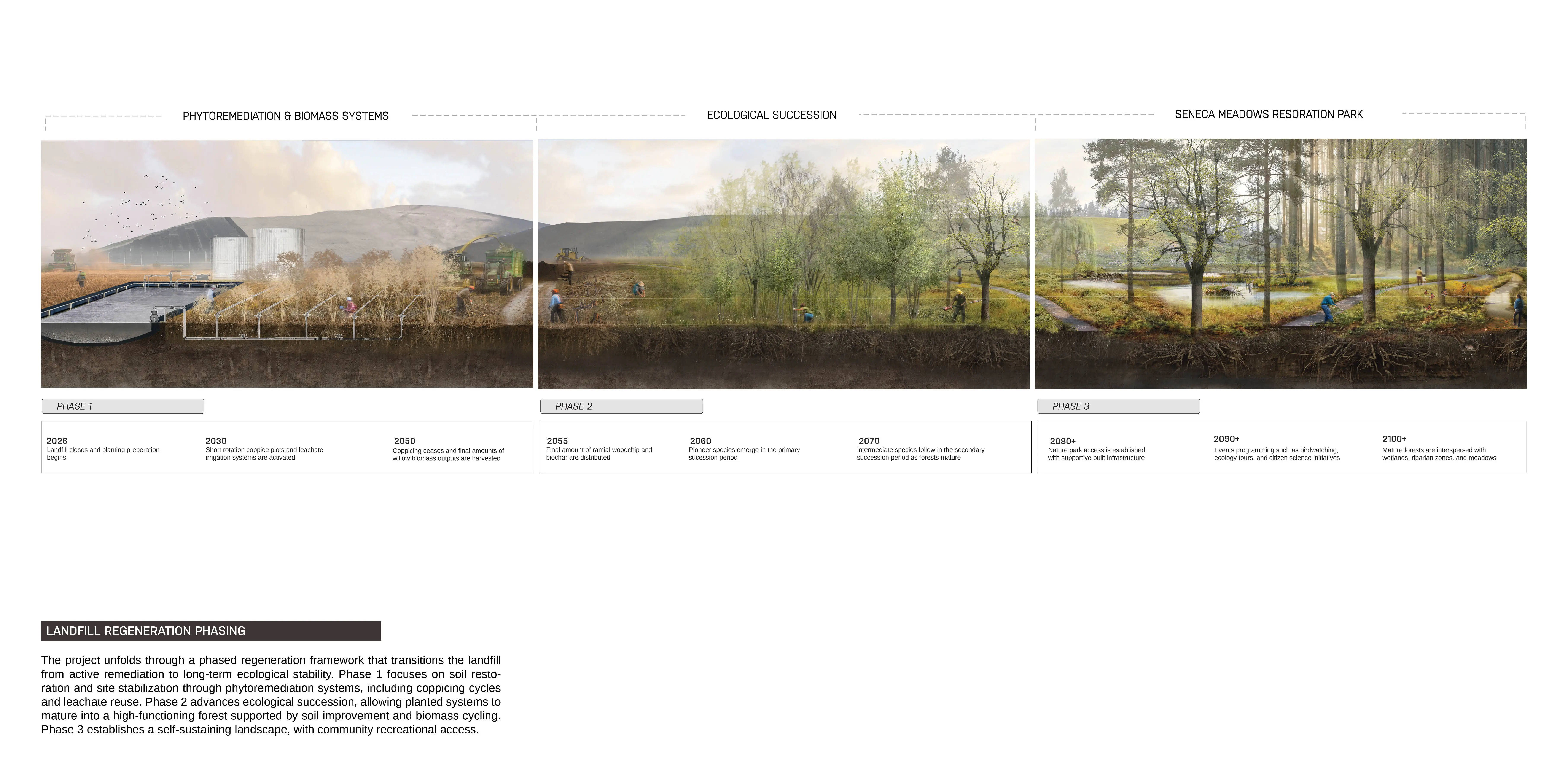
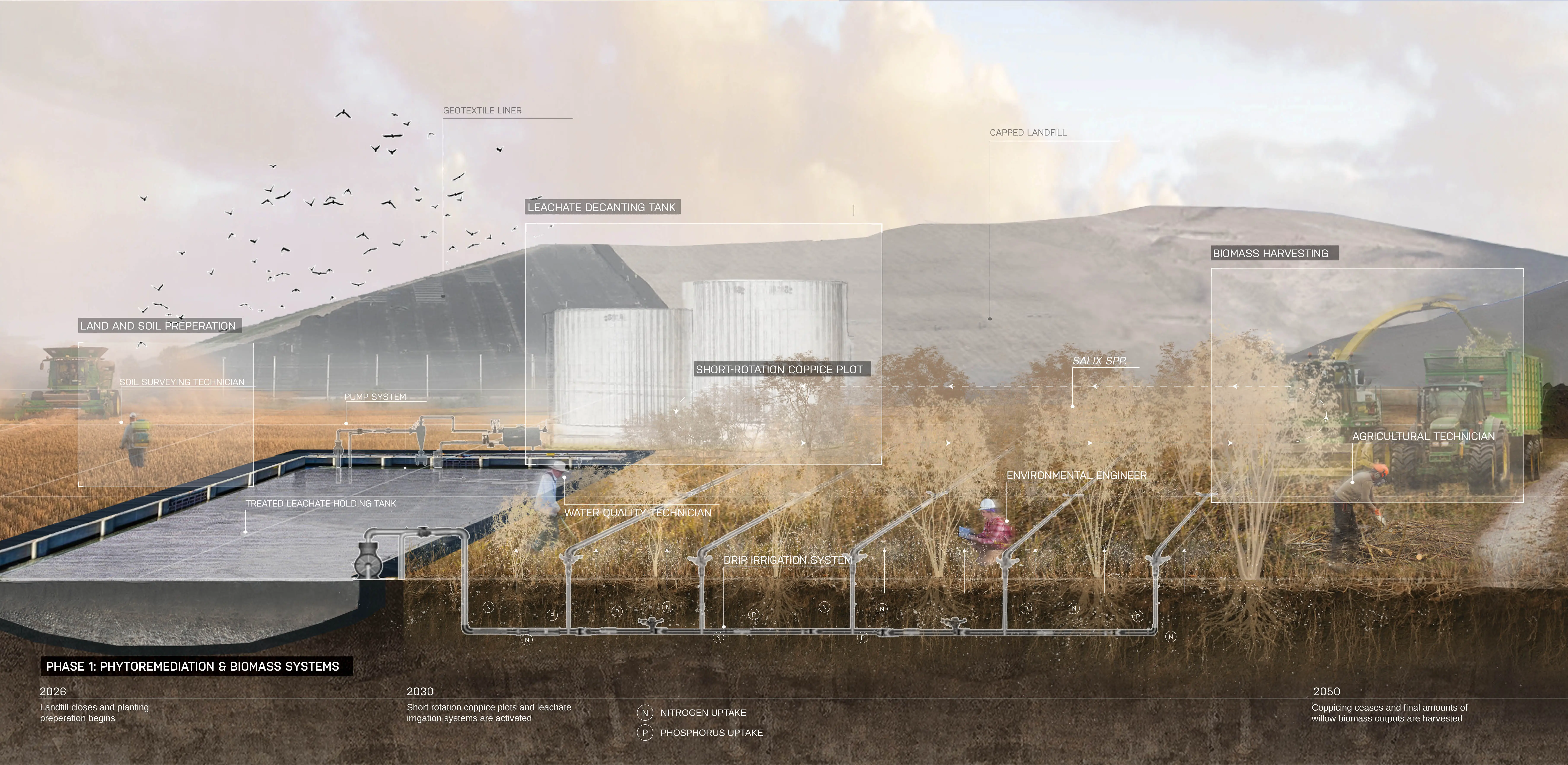
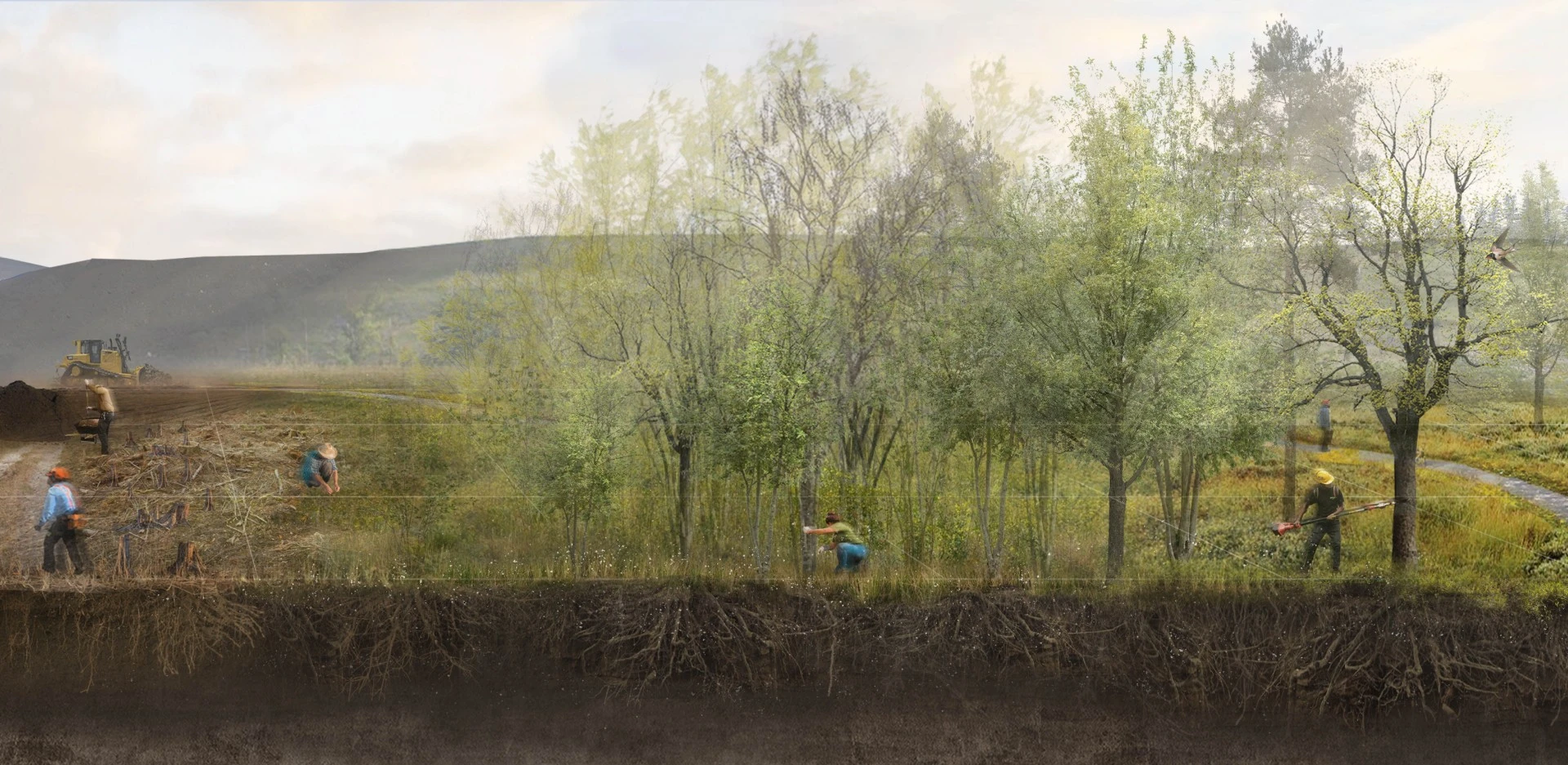
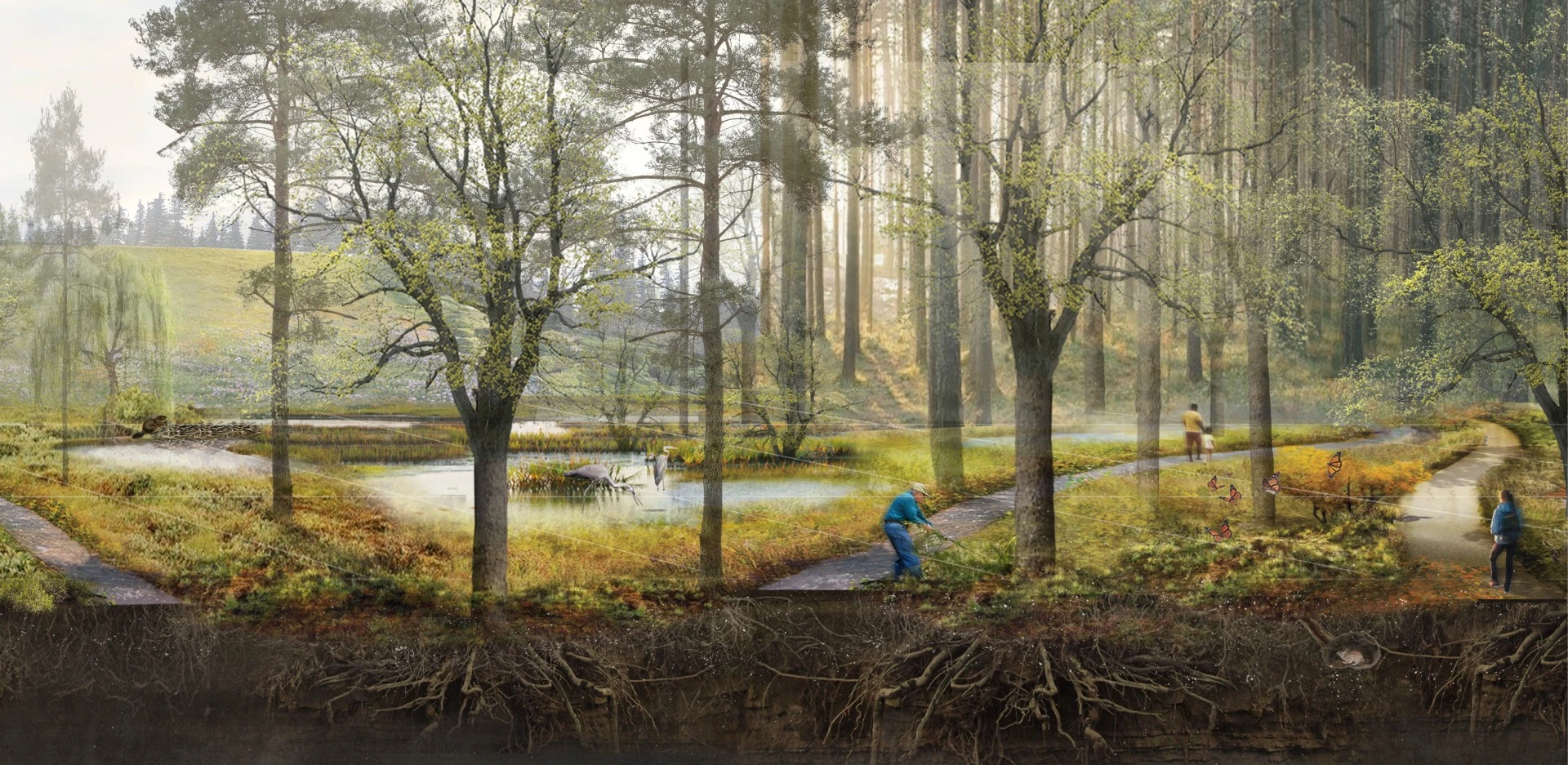
Systems Framework: The design links plant systems, material flows, and land typologies into a closed-loop remediation strategy. Treated leachate is redistributed on-site through drip irrigation systems to short-rotation coppice plots (Salix spp.), facilitating contaminant uptake and evapotranspiration. Biomass is cyclically harvested and converted into ramial woodchips and biochar, enhancing soil carbon, increasing cation exchange capacity, and reducing heavy metal mobility. Phase 1 (0–30 years): Establish short-rotation coppice systems for soil stabilization and leachate uptake. Active management supports contaminant reduction and biomass production. Phase 2 (30–80 years): Transition to successional forest systems through reduced intervention and continued soil improvement. Ecological complexity and habitat diversity increase. Phase 3 (80–100 years): Develop a stabilized landscape supporting wildlife habitat and controlled public access, integrating recreation with long-term ecological performance.
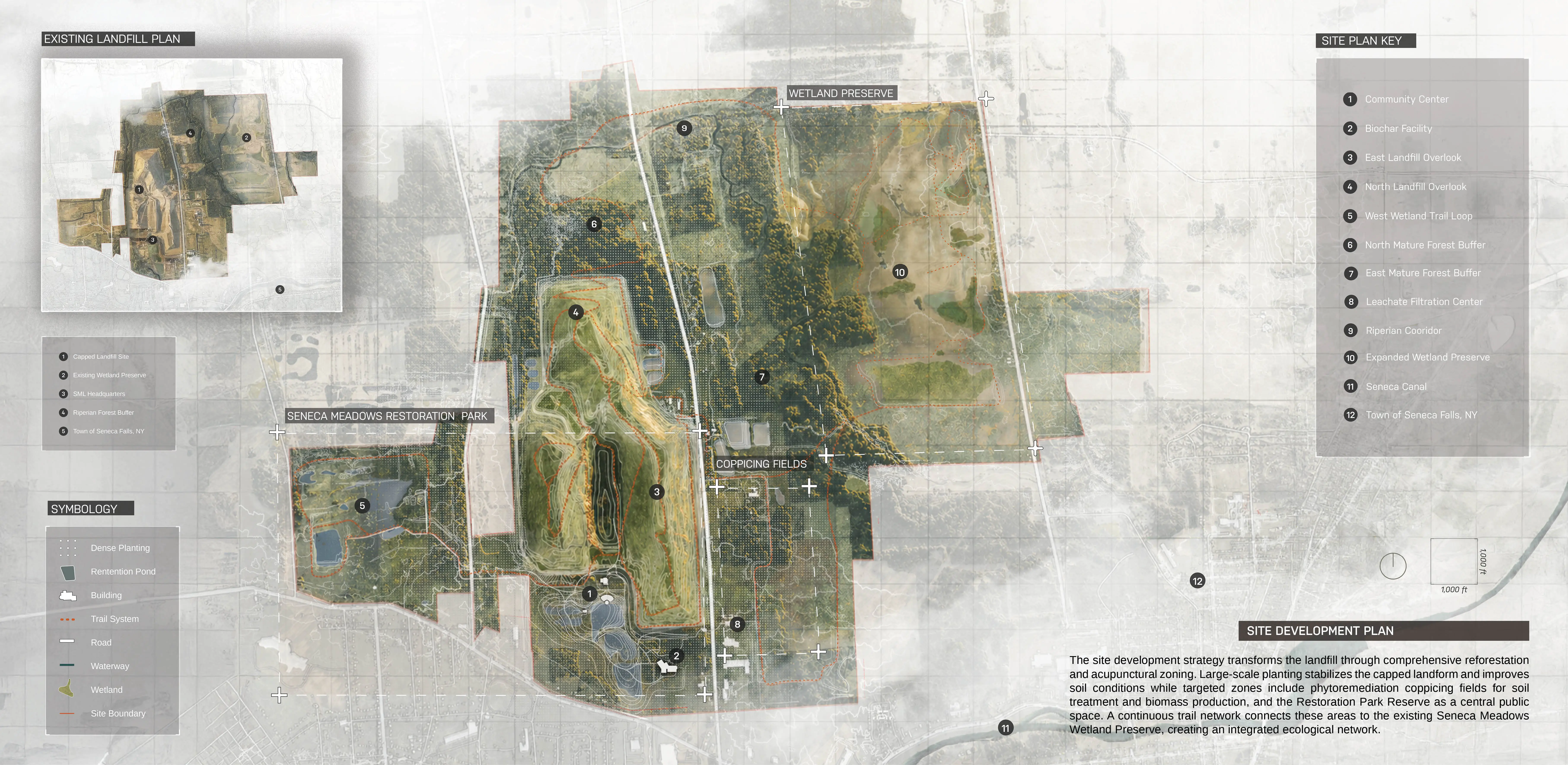
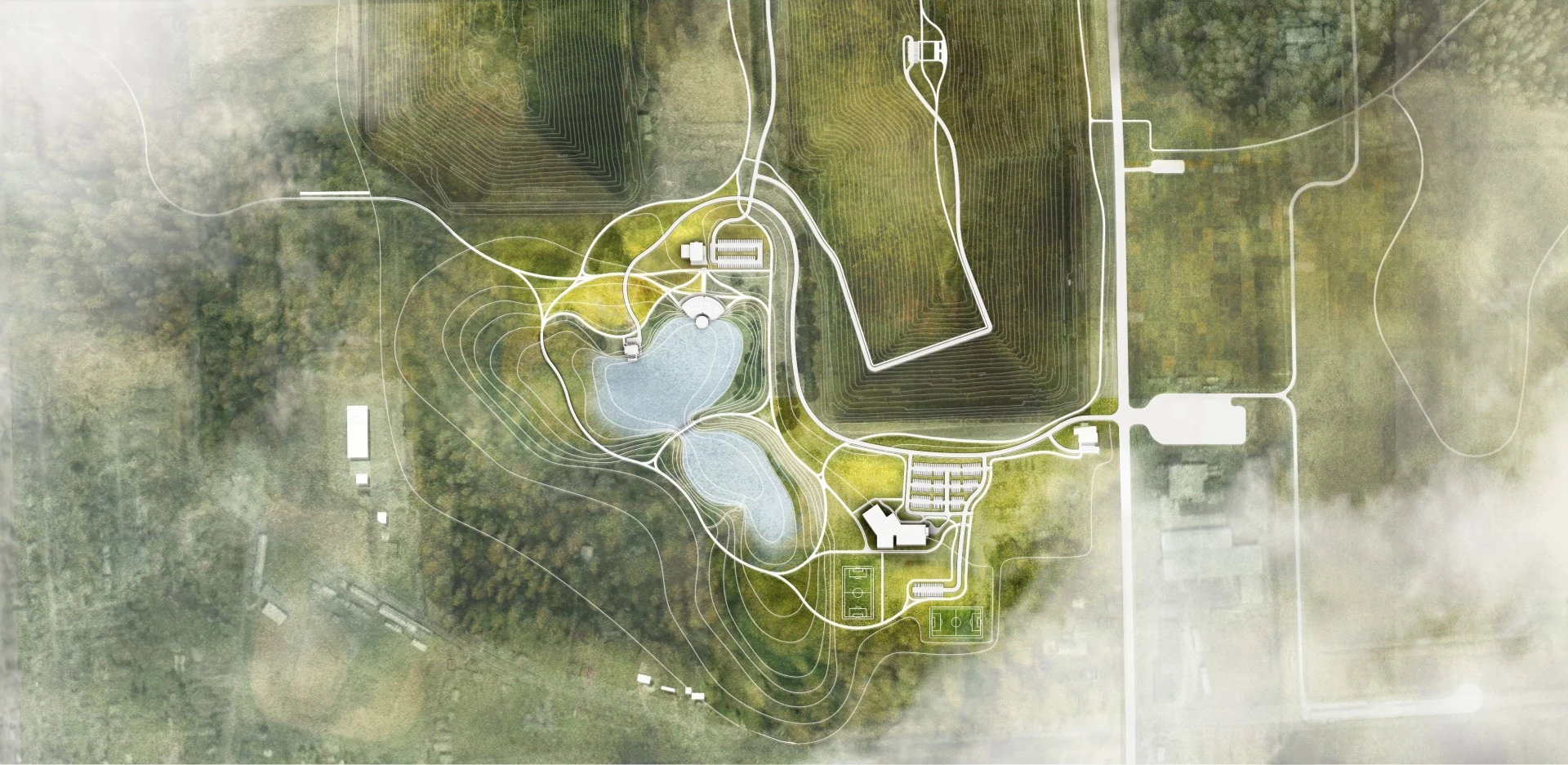
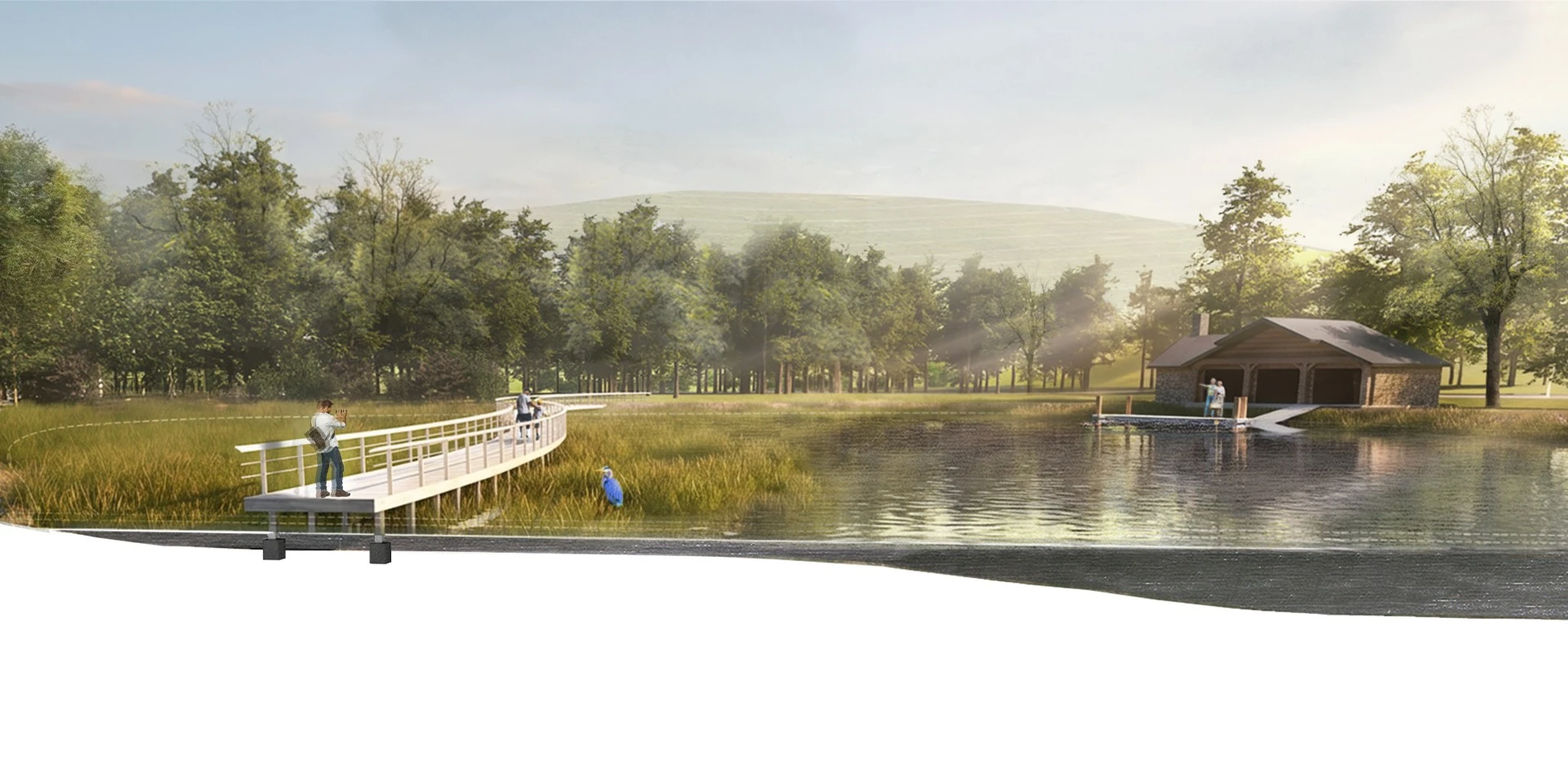
Site Development: Comprehensive reforestation stabilizes the capped landform, while targeted zones such as coppice fields, wetland systems, and public interfaces, structure site performance. Former retention ponds are converted into constructed wetlands for water filtration, flood mitigation, and habitat creation, connected through a continuous trail network.
Environmental Impact: The proposal reduces reliance on off-site leachate treatment, enhances soil health, and supports long-term carbon sequestration and biodiversity. By prioritizing low-cost, land-based processes, the project offers a scalable model for post-landfill remediation. After Waste positions landfill closure not as an endpoint, but as a framework for confronting broader questions of environmental responsibility, rural-urban interdependence, and the long temporal scales required for ecological repair in deeply contaminated landscapes.
-
- Annika Schon (Project Lead)
- Henry Ley (Design Collaborator)
- Hannah Hopewell (Design Consultant)
- Dr. Michael Charles (Systems Consultant)
- Mark Benjamin (Landfill Consultant)
-
- Almond Willow
- Basket Willow
- Black Willow
- Buryat Willow
- Crack Willow
- Purple Willow
- White Willow
- Black Poplar
- Berlin Poplar
- Canadian Poplar
- Eastern Cottonwood
- Quaking Aspen
- Switchgrass
- Canada Wildrye
- Red Maple
- River Birch
- American Sycamore
- Black Locust
- Swamp White Oak
- Black Cherry
- White Oak
- American Beech
- Black Gum
- Shagbark Hickory
- Serviceberry
- Broadleaf Cattail
- Woolgrass
- Tussock Sedge
Advertisement
Related Awards
Honor Award, General Design
Houston Arboretum & Nature Center
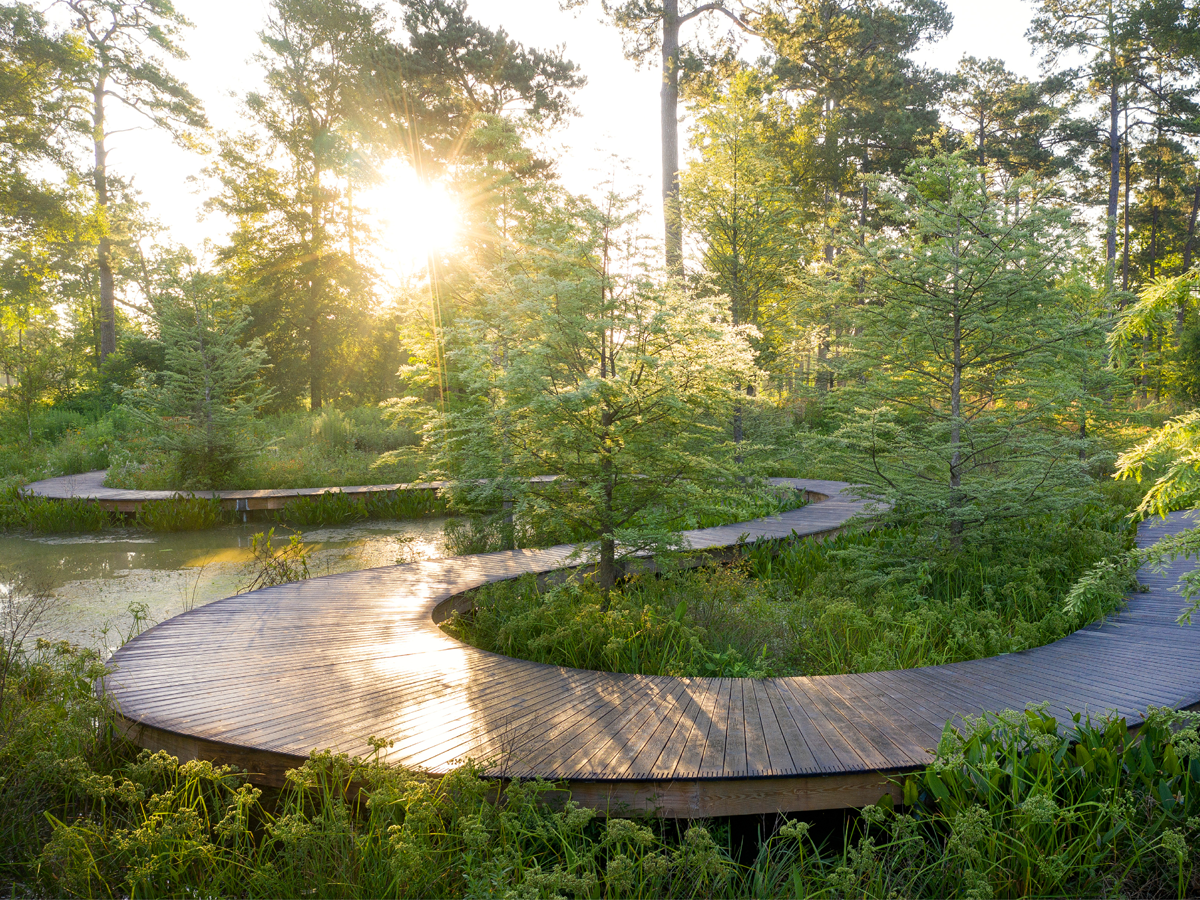
The Houston Arboretum & Nature Center sits within Memorial Park, one of the largest urban parks in the United States, in one of the nation's fastest growing and most climate-challenged cities. The site's story is one of repeated loss and deliberate reinvention. Hurricane Ike in 2008 and a severe drought in 2011 destroyed much of the Arboretum's tree canopy, exposing the limits of conventional reforestation in a city defined by flooding, heat, and ecological volatility.