

.webp?language=en-US)

.webp?language=en-US)
Puente Hills Landfill Park Implementation Plan
-
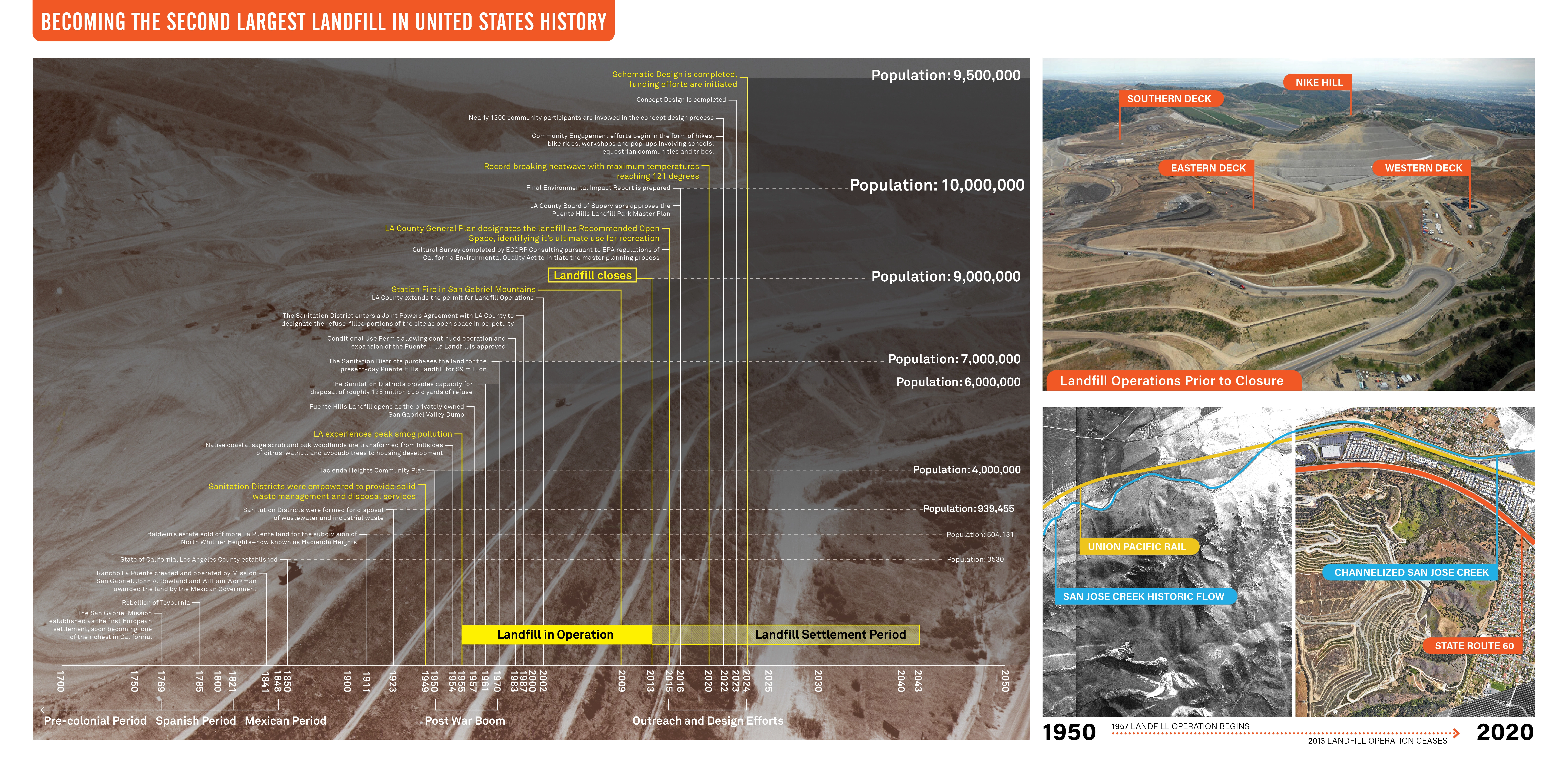
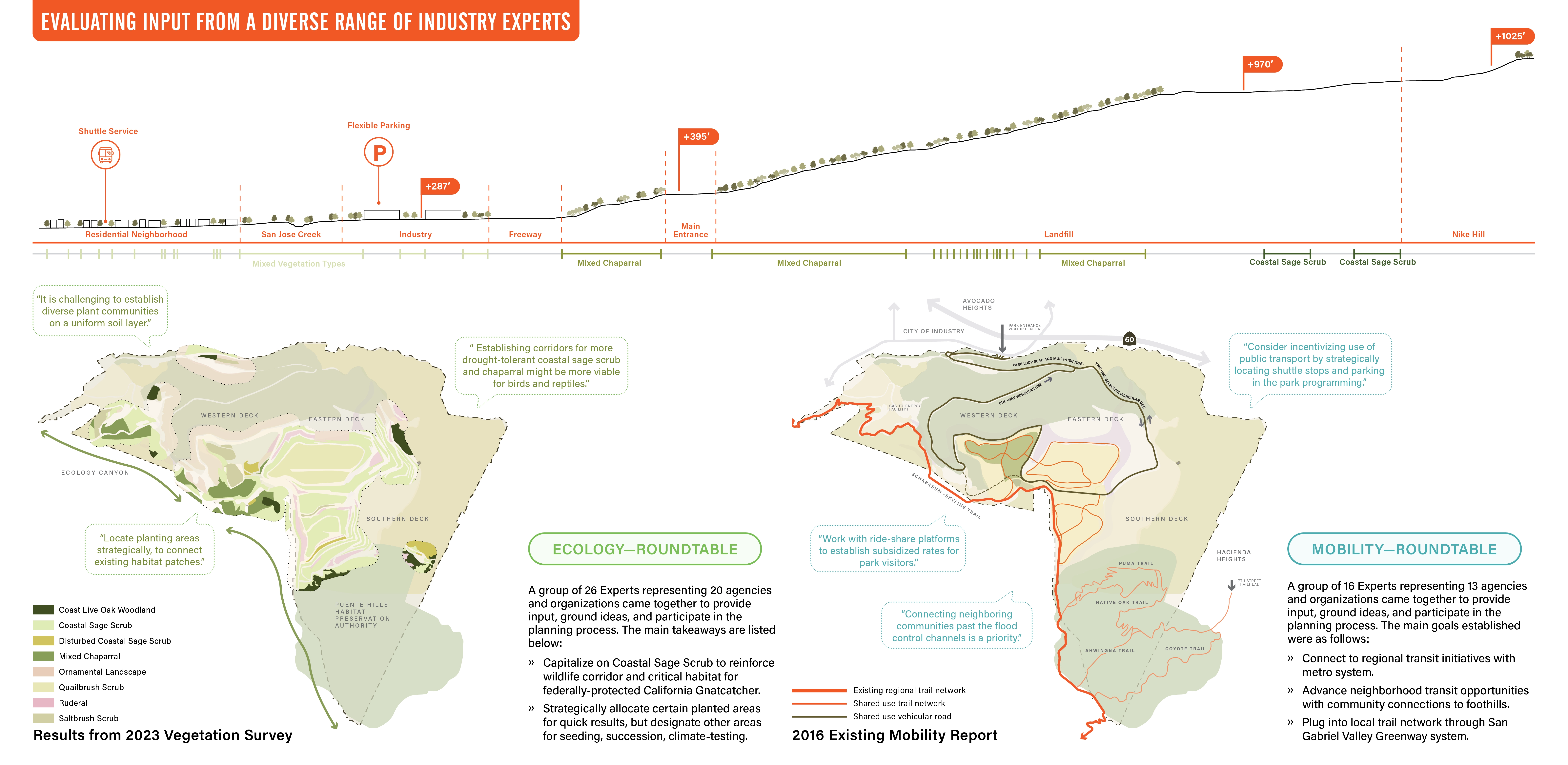
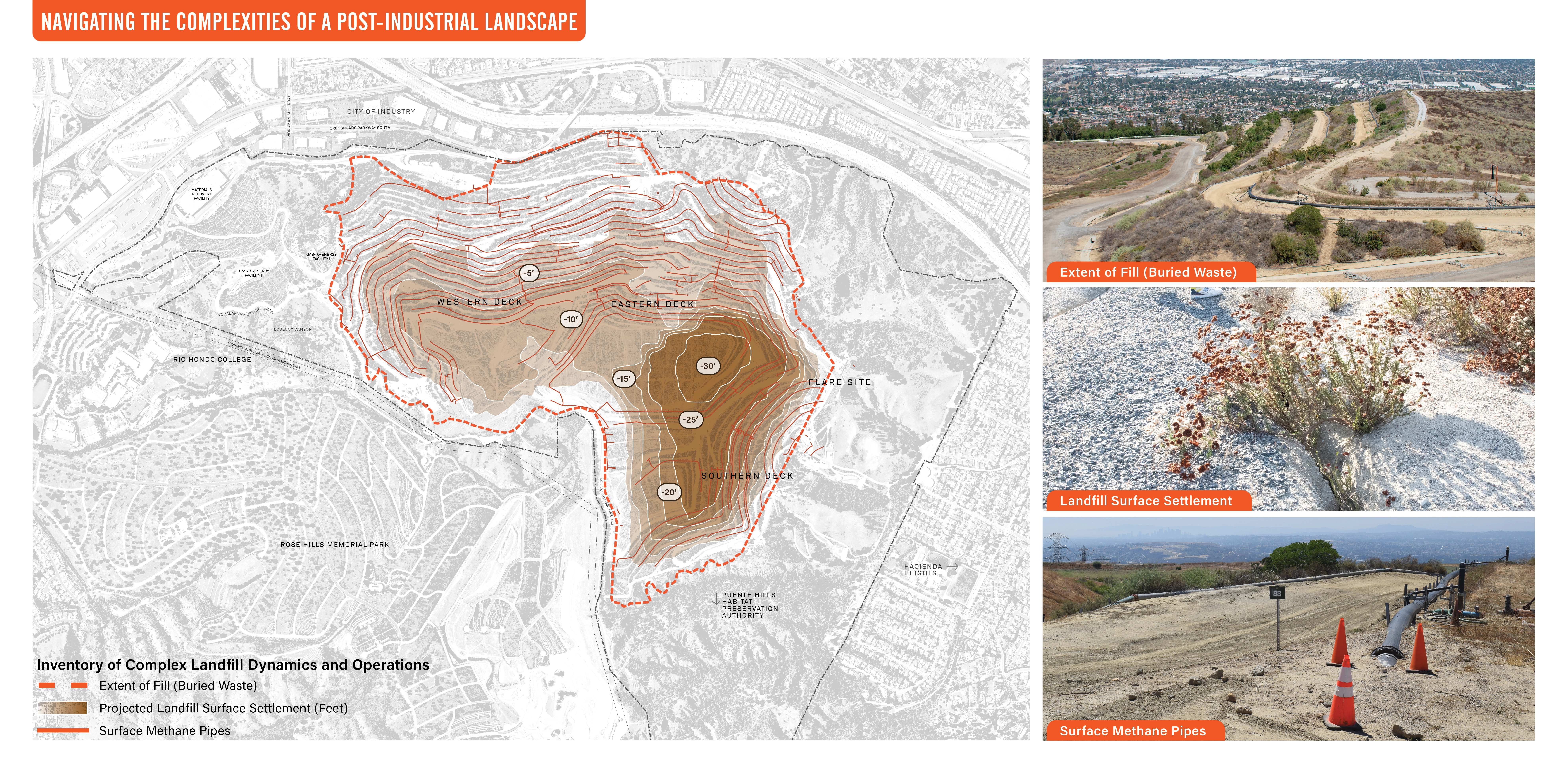
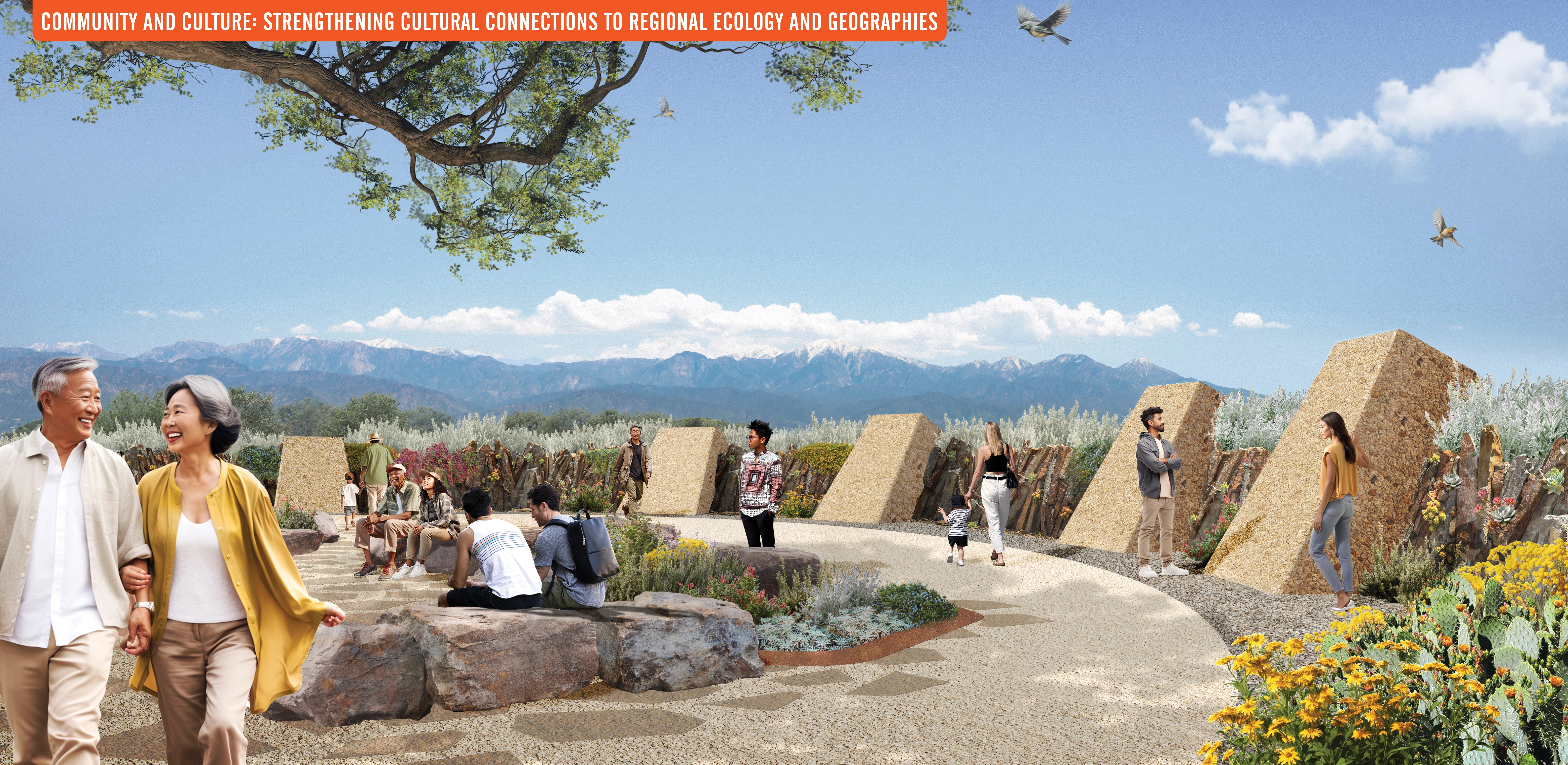
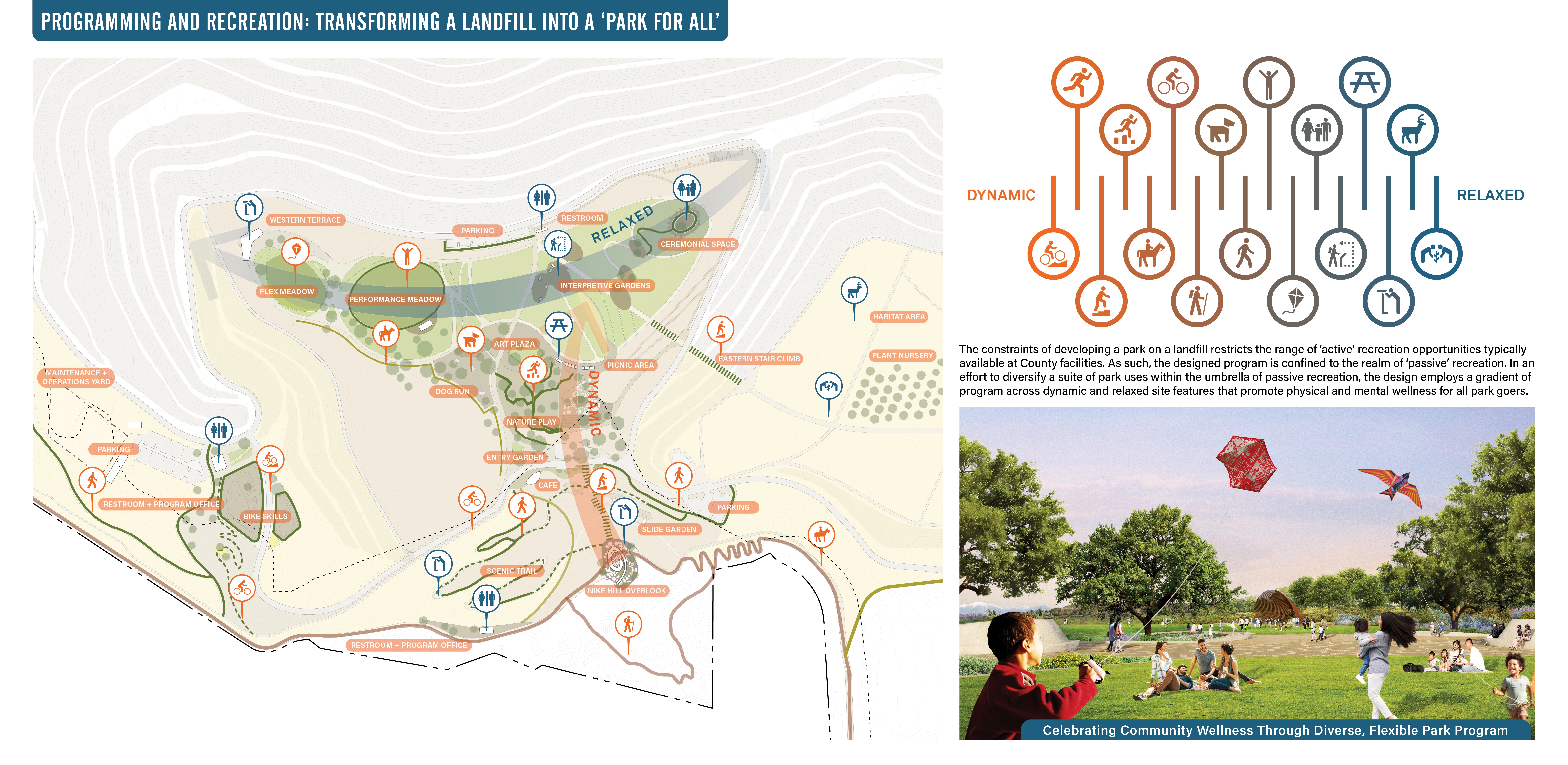
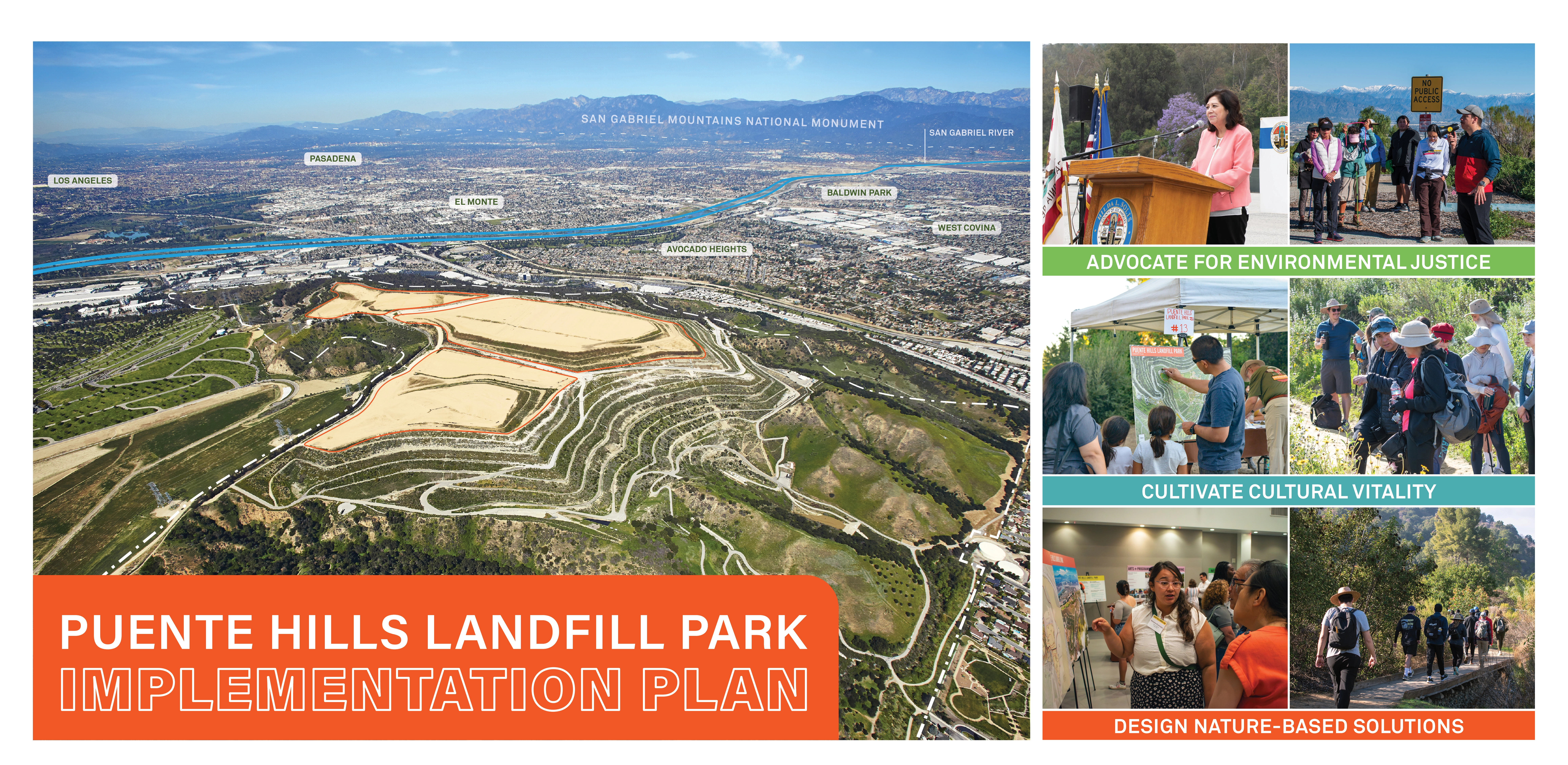
The Puente Hills Landfill was once the second largest landfill in the nation, receiving 150 million tons of refuse from across Los Angeles. For six decades, the growing mountain of waste contributed to environmental degradation and social inequity for nearby communities. The Puente Hills Landfill Park Implementation Plan was developed as a series of robust outreach engagements with residents and focus groups to address concerns about ongoing management of landfill operations, equitable access to open space, a shifting climate, and preservation of a critical wildlife corridor. The plan is anchored by a resiliency framework with a holistic approach to outdoor recreation, cultural vitality, nature-based strategies, and environmental justice.
-
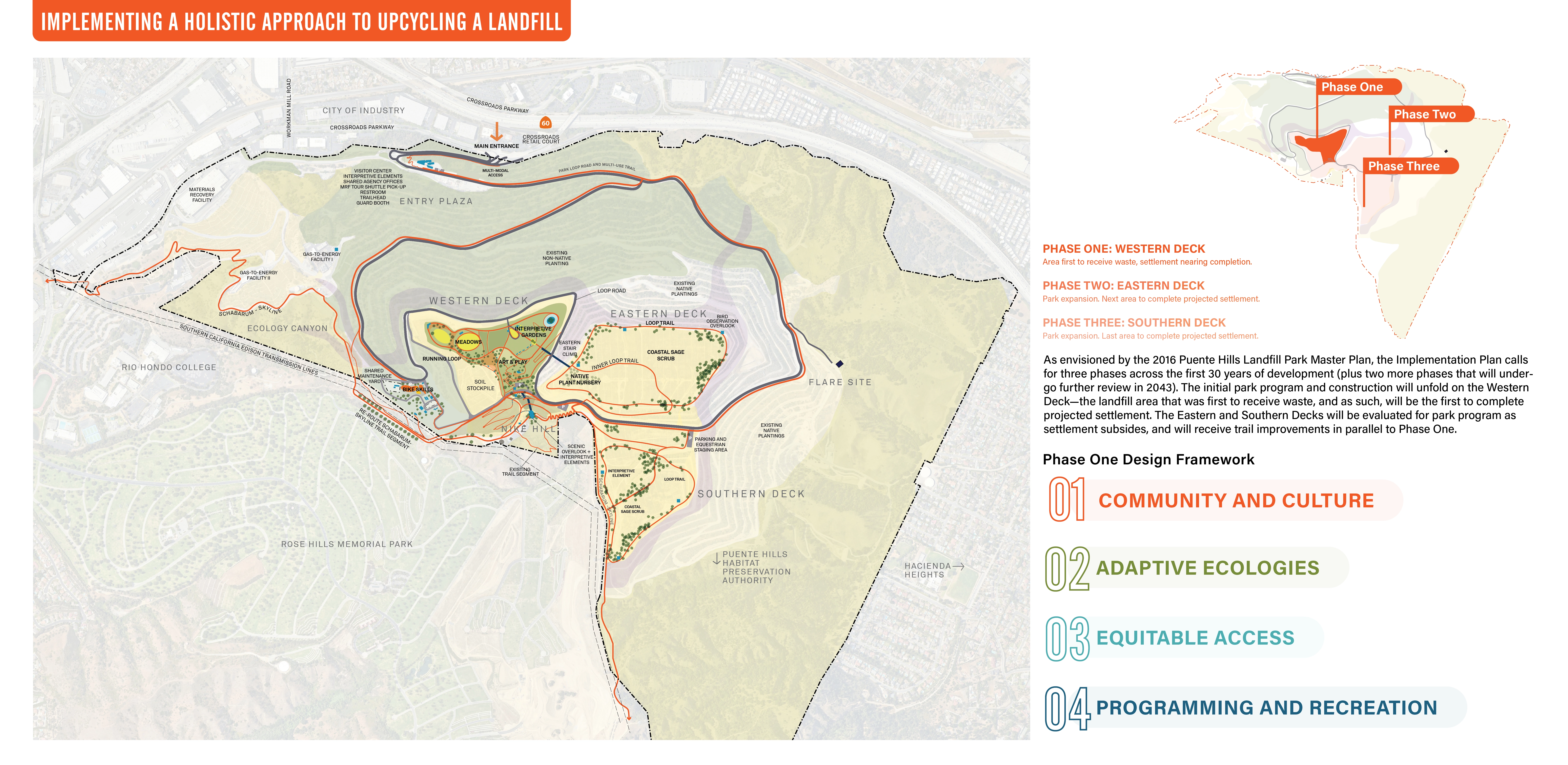
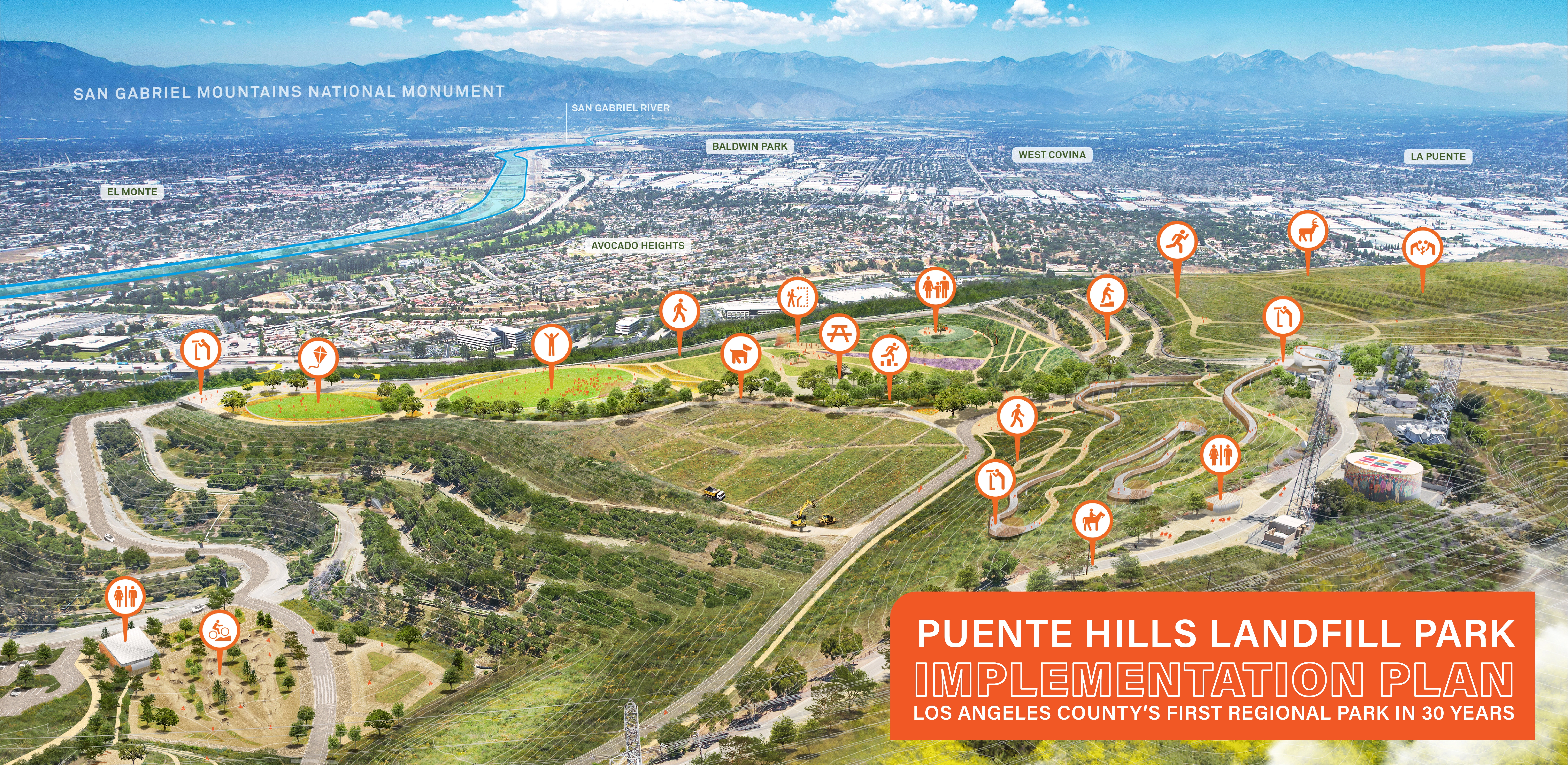
Built atop a pristine native landscape of hills and canyons, the Puente Hills Landfill reigns supreme within a “Valley of Dumps,” an uncanny title once held by a region known for its nearly half-dozen active landfills. The Puente Hills Landfill Park Implementation Plan (LPIP) was developed as a monumental step towards mitigating critical environmental and social impacts on seven vibrant communities, which will see the landfill re-purposed into the first new regional park in Los Angeles County (LA County) in over 30 years. The plan carries forth a vision for implementing a core principle of sustainability- to upcycle, expanding upon a history of brownfield redevelopment to introduce resonant layers of cultural and ecological value with preparation toward a speculative climate future.
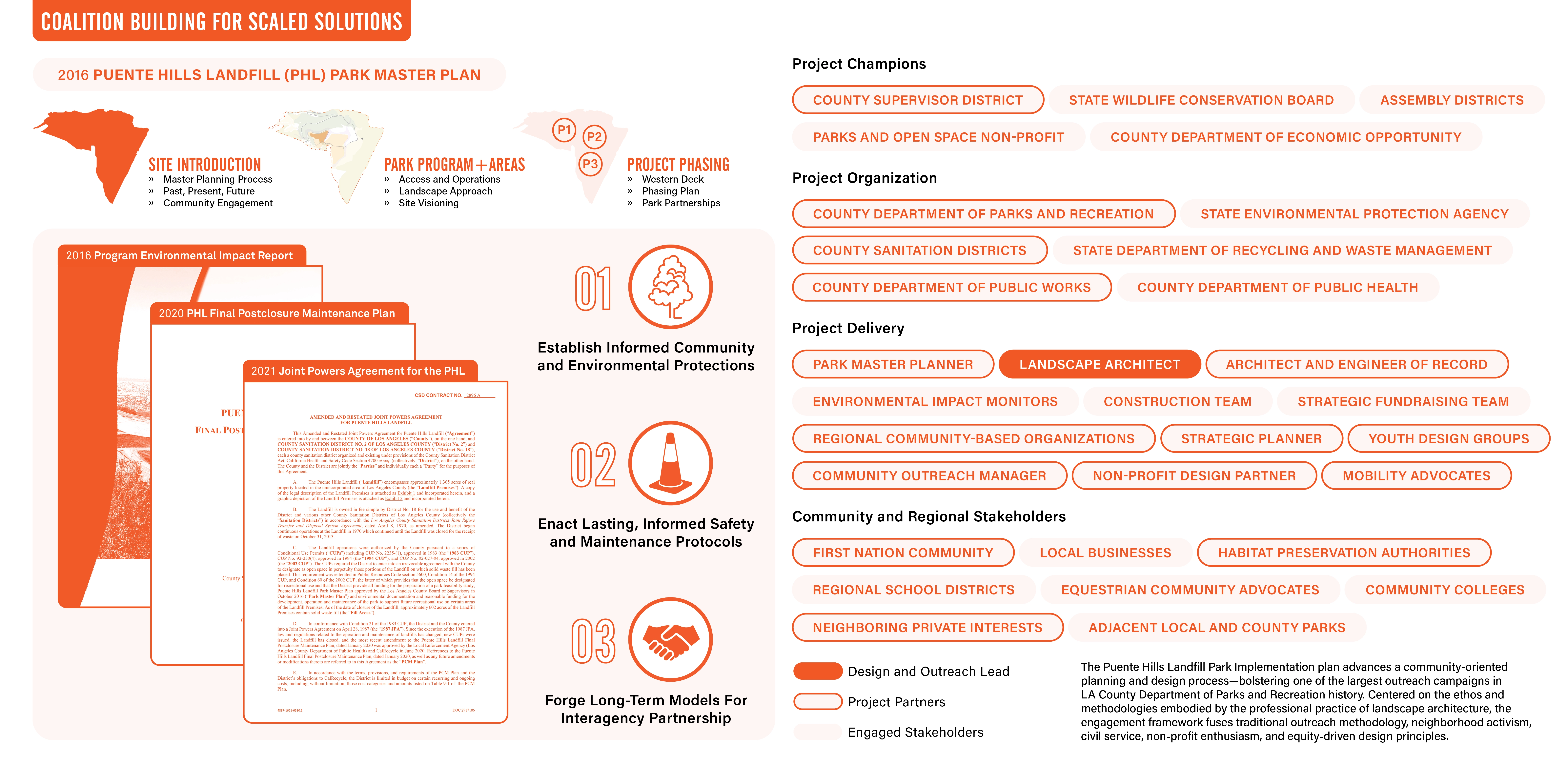
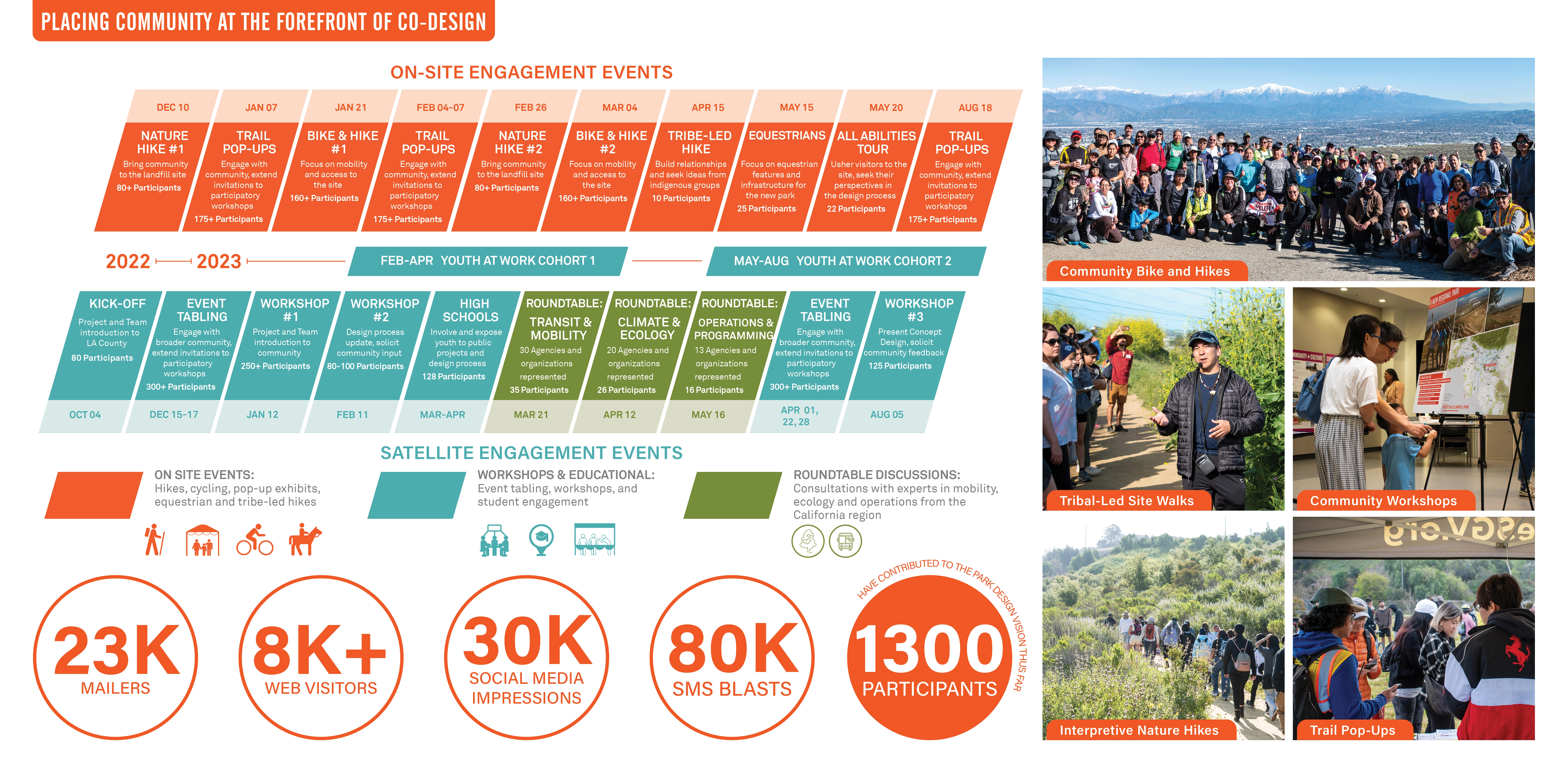
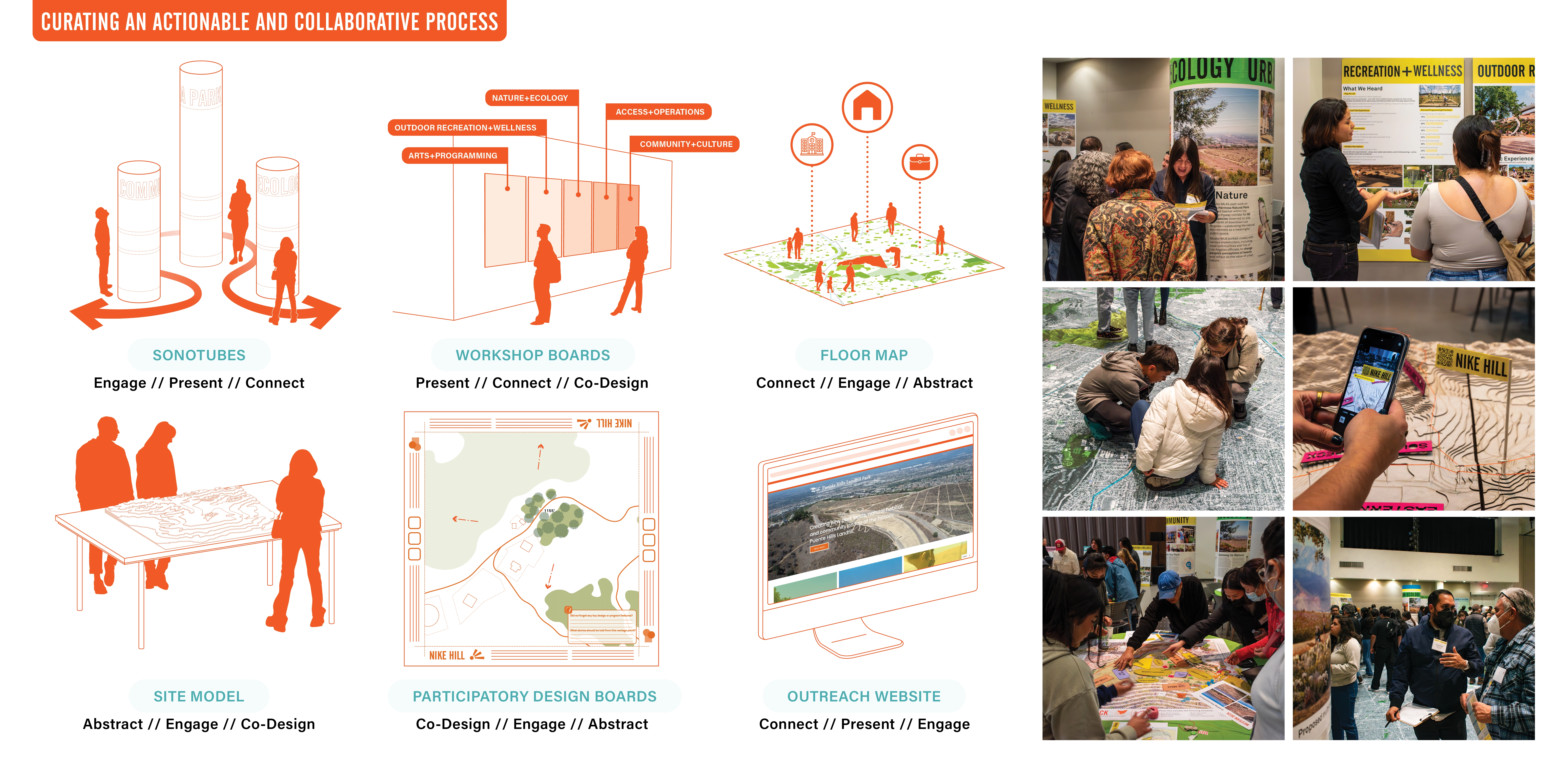
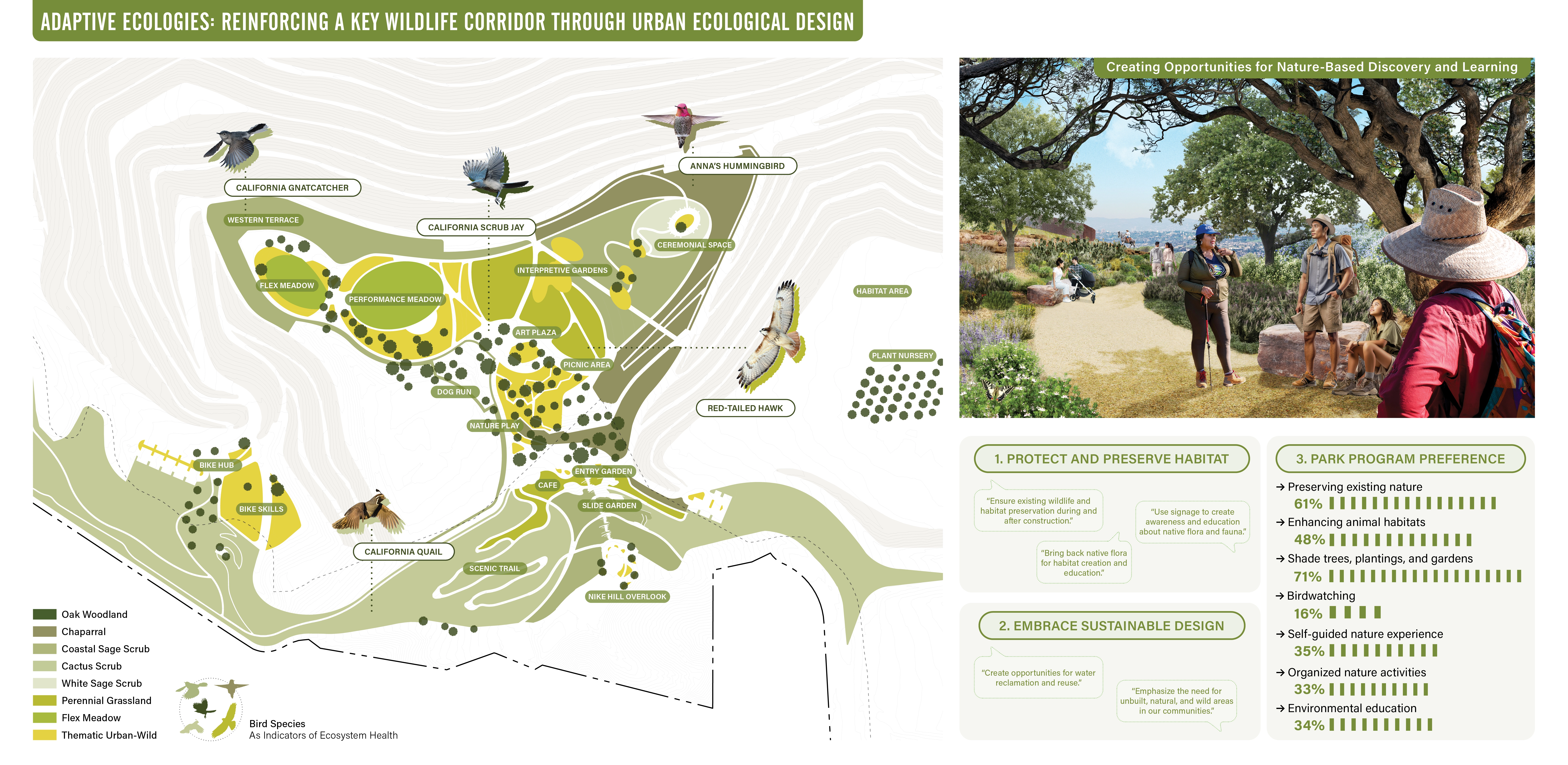
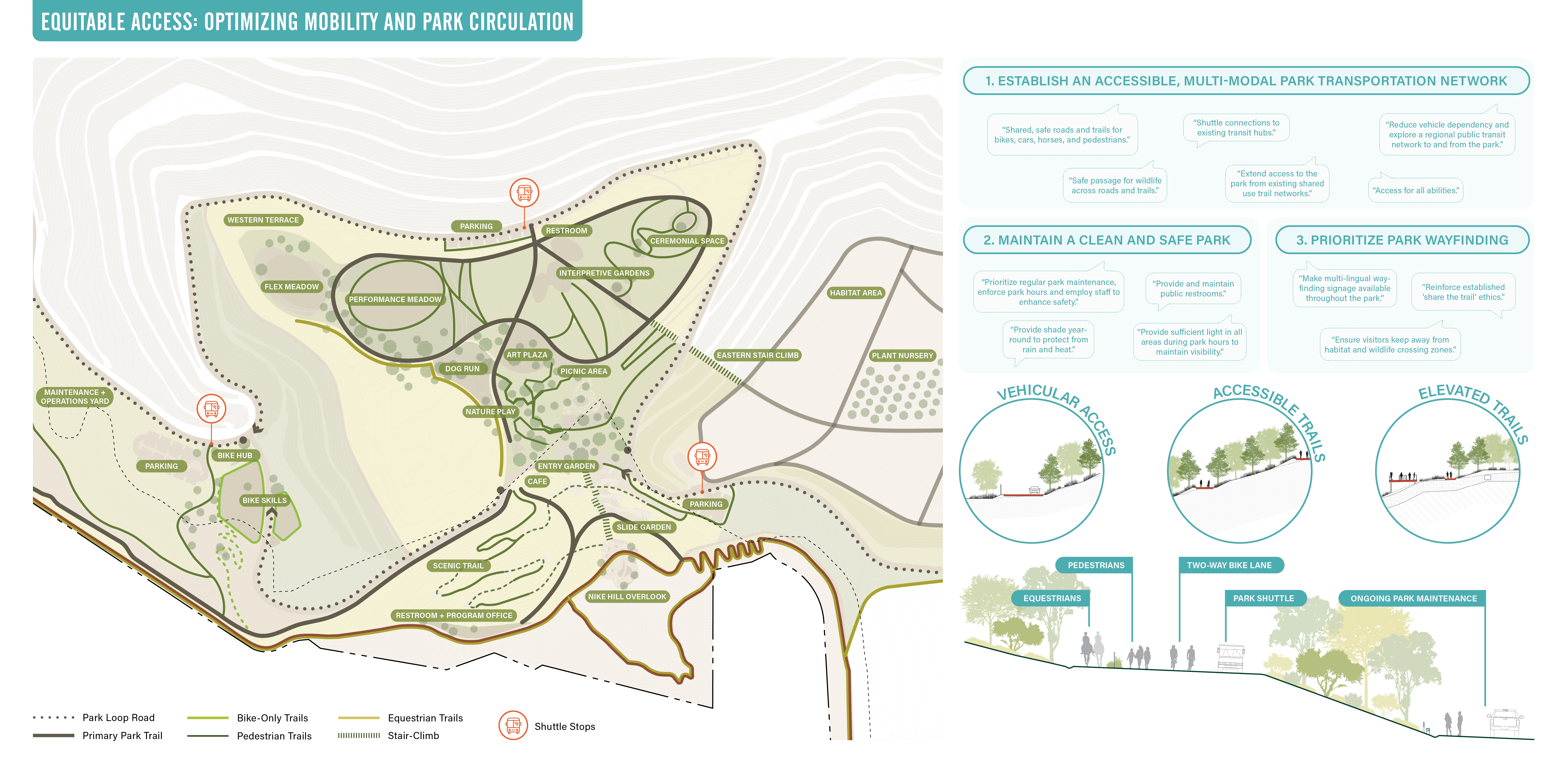
In 2016, the LA County Board of Supervisors approved the Puente Hills Landfill Park Master Plan (LPMP) to reclaim and transform the project site into a ‘Park for All’. The LPIP advanced the LPMP through a community-oriented planning and design process, among the largest in county history. Applying an actionable and collaborative lens, the LPIP emerged as a series of robust outreach engagements with residents and focus groups to address ongoing management of landfill operations, equitable access to open space, a shifting climate, and preservation of a critical wildlife corridor.
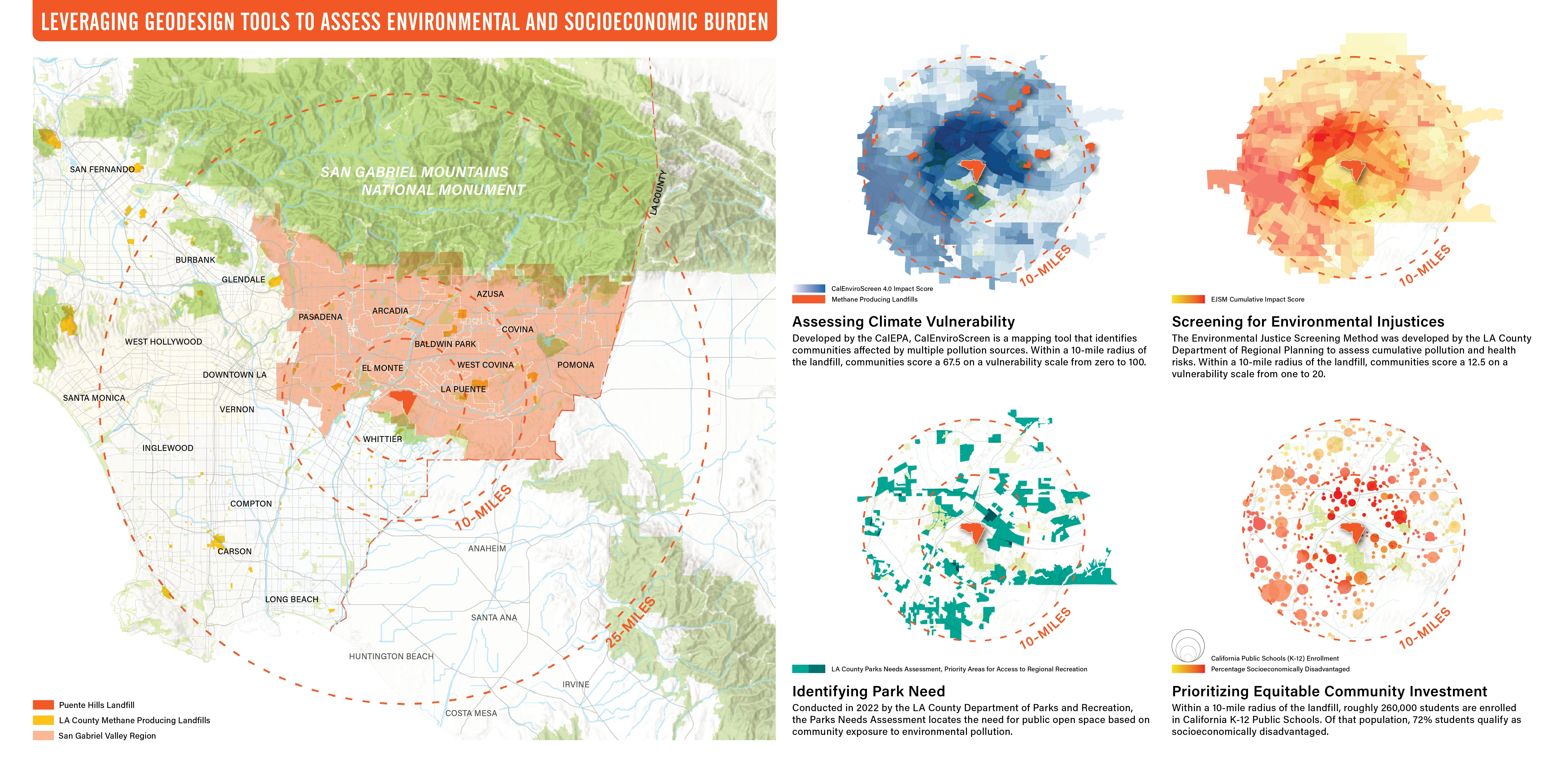
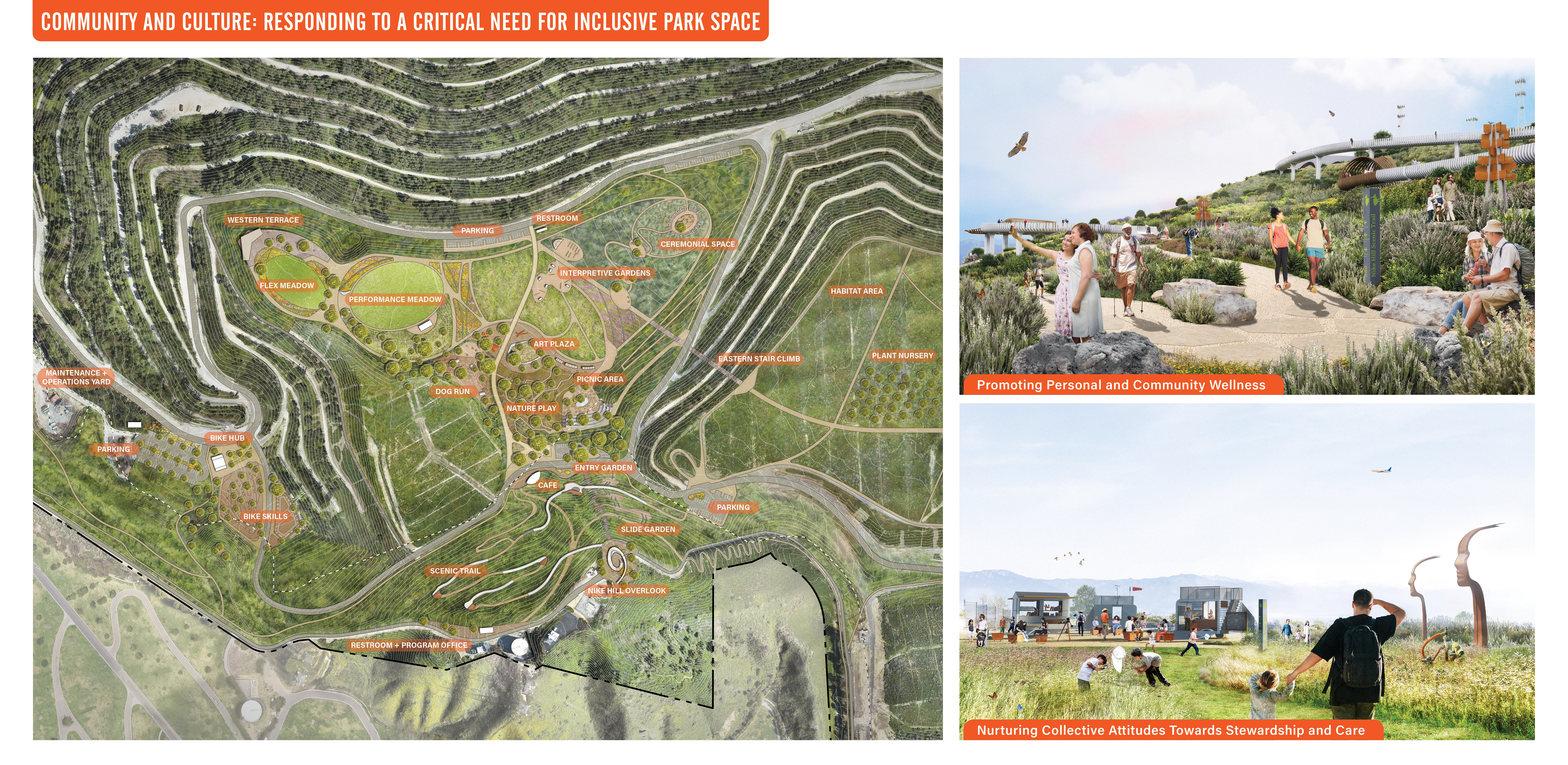
The project site is located within the San Gabriel Valley, whose residents suffer from overlapping concerns relating to high park need, high urban density, a lack of developable parkland, and low socioeconomic thresholds. According to the 2016 LA Countywide Comprehensive Parks and Recreation Needs Assessment, numerous communities with High and Very High park need are located within a 10-mile radius of the project site. The LPIP addresses the high need for park space by transforming the landfill into a place where residents can gather to access personal and collective wellness, learn about the value of regional ecology, and nurture a mindset toward stewardship and care.
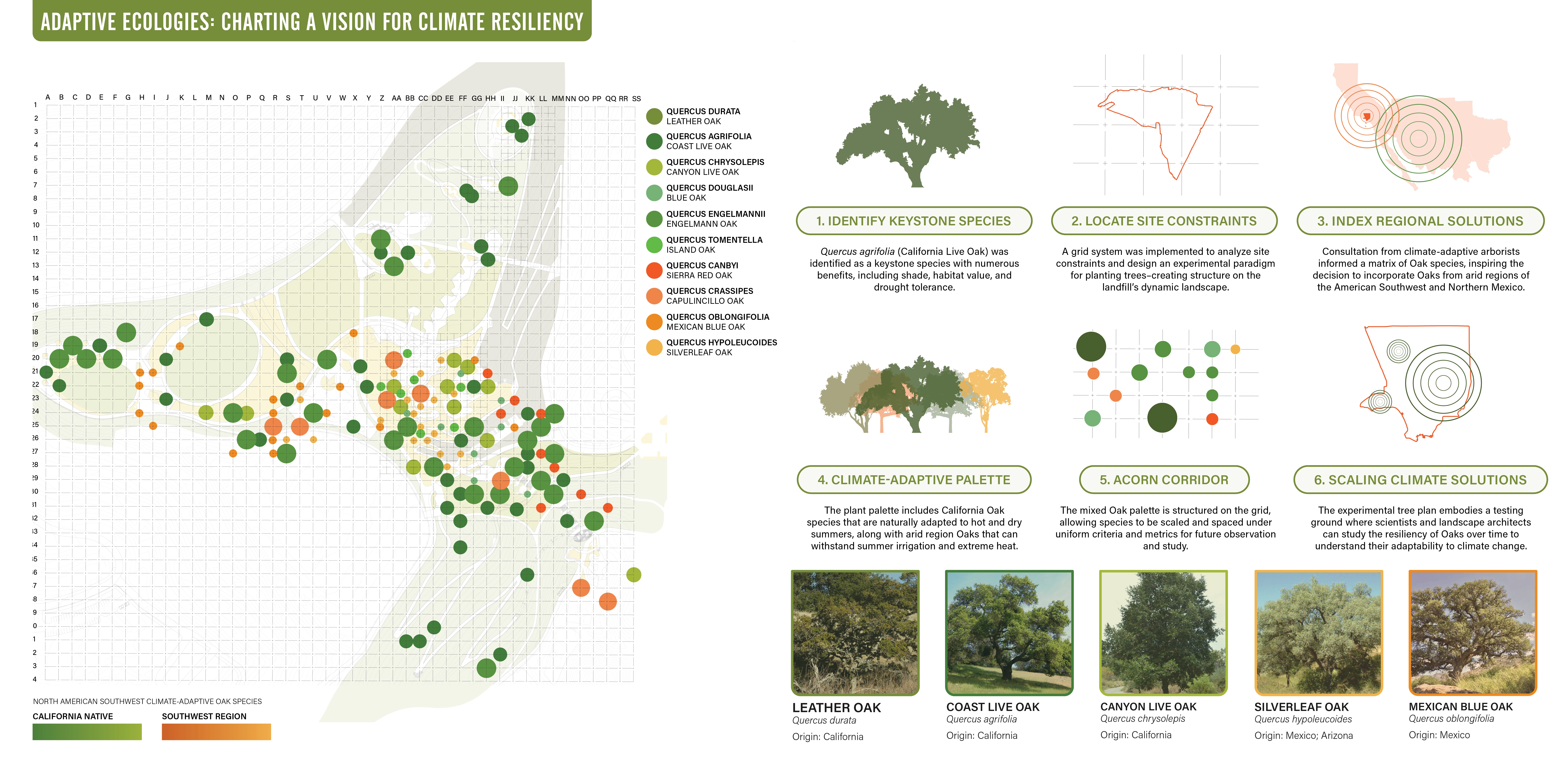
The comprehensive plan leverages important guidelines from the 2019 OurCounty Sustainability Plan that highlights the need for evaluating and understanding both physical and social climate vulnerabilities. LA County comprises diverse landscapes and is subject to a range of climate hazards. The LPIP identified extreme heat and drought as climate stressors that are most likely to affect the project site over time, which helped in prioritizing climate adaptation strategies.
The LPIP recognizes that the project site once supported a thriving ecological system of native plant communities that connected to 30,000 acres of habitat, extending over 30 miles to the Cleveland National Forest in Orange County. Through the re-establishment of approximately 40 acres of plant material in its first phase, the multi-faceted plan incorporates planting design as a catalyst for placemaking, bolstering local biodiversity, and studying the resiliency of plant species, at a large scale, to understand their adaptability to future climate change demands.
The plan demonstrates the interconnectedness of local issues and the power of collective action to effect meaningful change in communities. With visionary leaders, collaborative efforts, and active community engagement, the plan stands as a testament to what can be achieved when communities unite to tackle complex challenges and create lasting legacies of environmental and social justice.
-
- Studio-MLA - Landscape Architects of Record
- Supervisor Hilda Solis (Los Angeles County SD1) - Project Champion
- Los Angeles County Sanitation Districts - Owner
- Los Angeles County Department of Parks & Recreation - Client
- Withers and Sandgren - Master Planner
- The Robert Group - Outreach Coordinator
- Kounkuey Design Initiative - Outreach Partner
- Nature For All - Outreach Partner
- Active-SGV - Outreach Partner
- Los Angeles County Department of Economic Development - Workforce Development Youth at Work
-
- Quercus agrifolia | Coast Live Oak
- Quercus canbyi | Sierra Oak
- Quercus chrysolepis | Canyon Live Oak
- Quercus crassipes | Capulincillo Oak
- Quercus durata | Leather oak
- Quercus engelmannii | Engelmann Oak
- Quercus hypoleucoides | Silverleaf Oak
- Quercus oblongifolia | Mexican Blue Oak
- Quercus tomentella | Channel Island Oak
Advertisement
Related Awards
Award of Excellence, Analysis & Planning
H2Oquirrh: Regional Water Reform for a Resilient Salt Lake Valley
Location: Salt Lake City, UT
Firm: Design Workshop
Client: Wasatch Front Regional Council, Salt Lake County
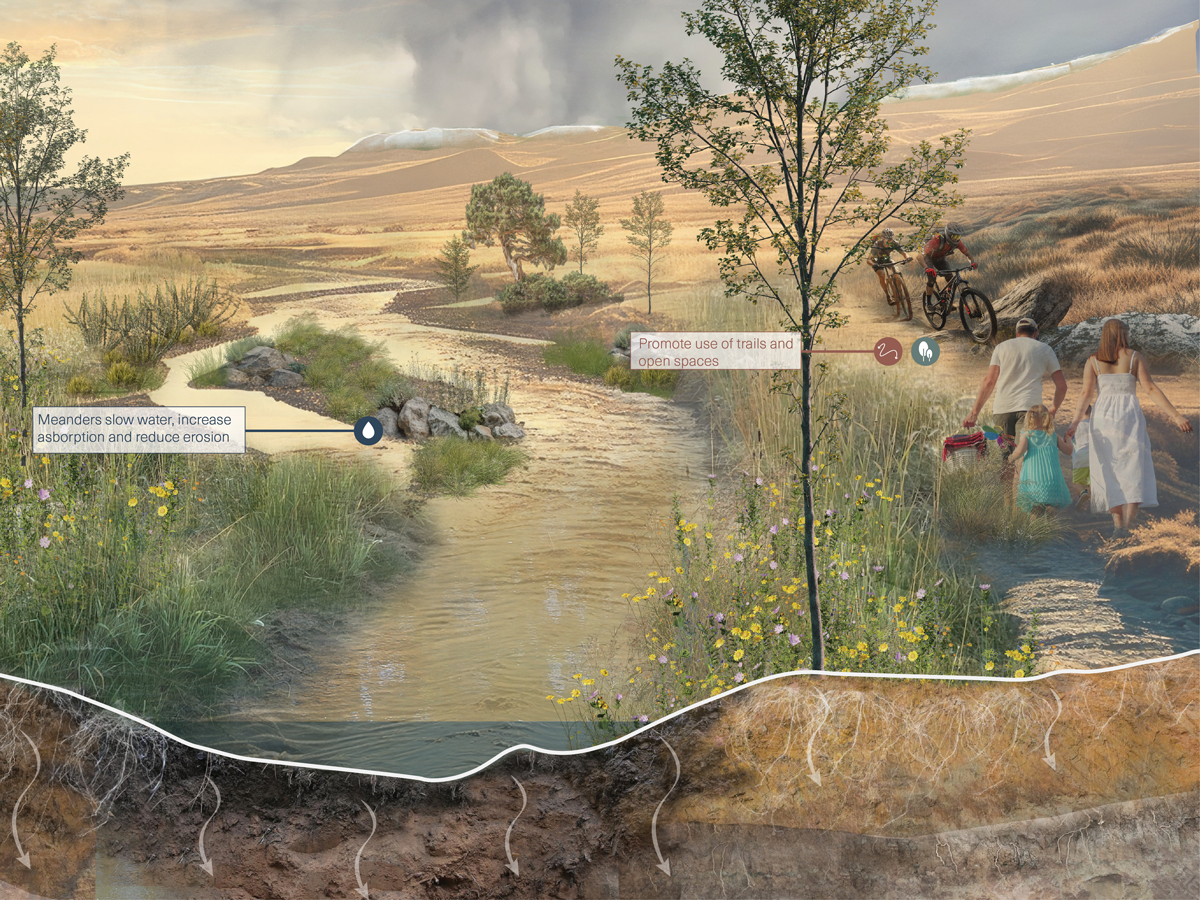
Water flowing from the Oquirrh Mountains is a critical contributor to the Great Salt Lake. Severe drought and human-caused decline threaten the lake’s viability, with cascading impacts on ecosystems and public health. This regional collaboration of seven jurisdictions, the H2Oquirrh Vision Plan, undertakes a large systems analysis of hydrologic cycles, land cover, and land-use decisions to identify site-specific interventions across nine creeks and washes. Led by landscape architects and water resource engineers, the study advances a deeper understanding of localized drivers of water loss and proposes innovative solutions through integrated landscape infrastructure design and policy.
-listing-img.webp?language=en-US)
Related Articles

ASLA Fund
American Society of Landscape Architects Announces its 2026 Student Awards
39 Student Award winners elevate the future of the landscape architecture profession
Aug 24 2026