

.webp?language=en-US)

.webp?language=en-US)
Benjakitti Forest Park: Transforming a Brown Field into an Urban Nature
-
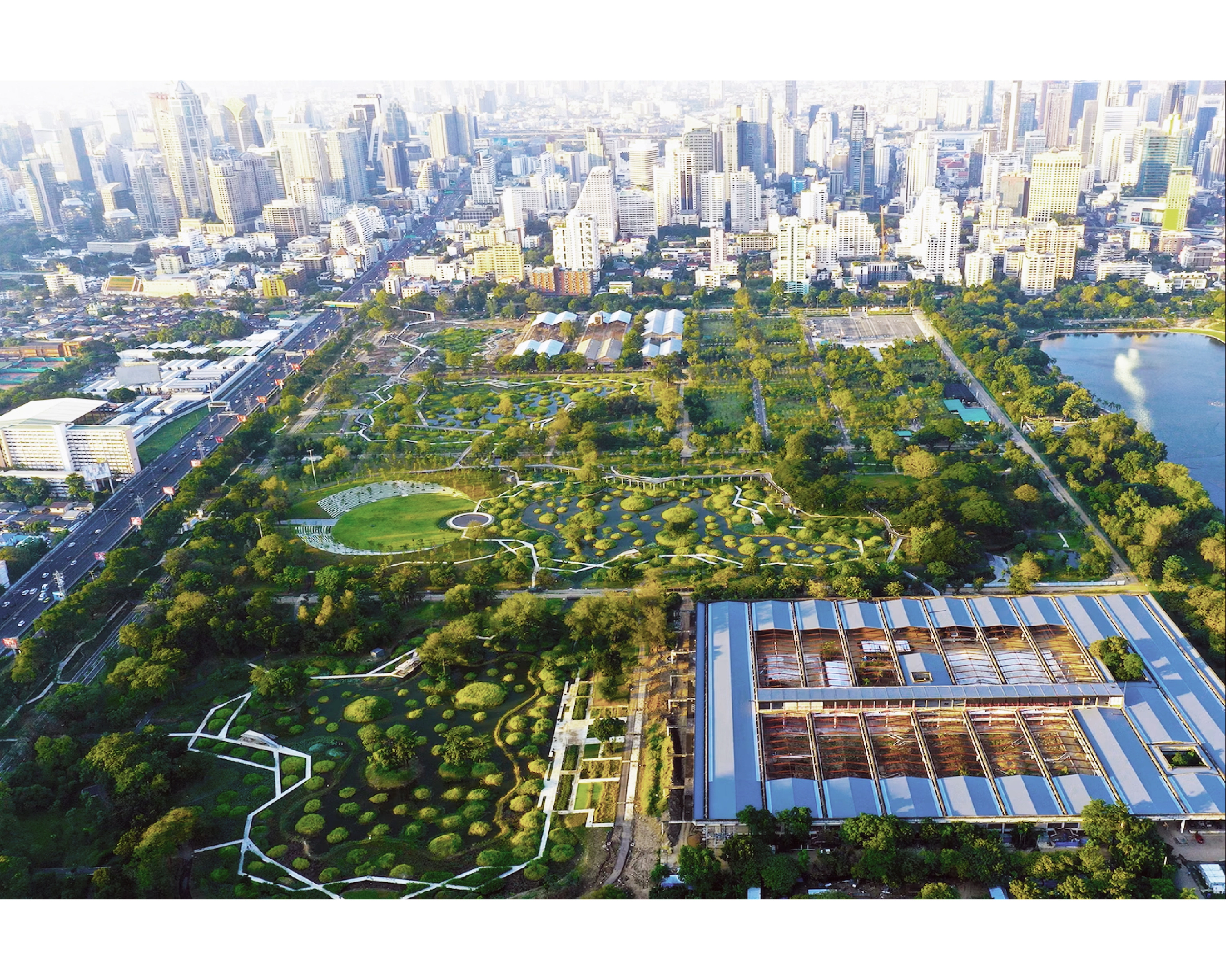
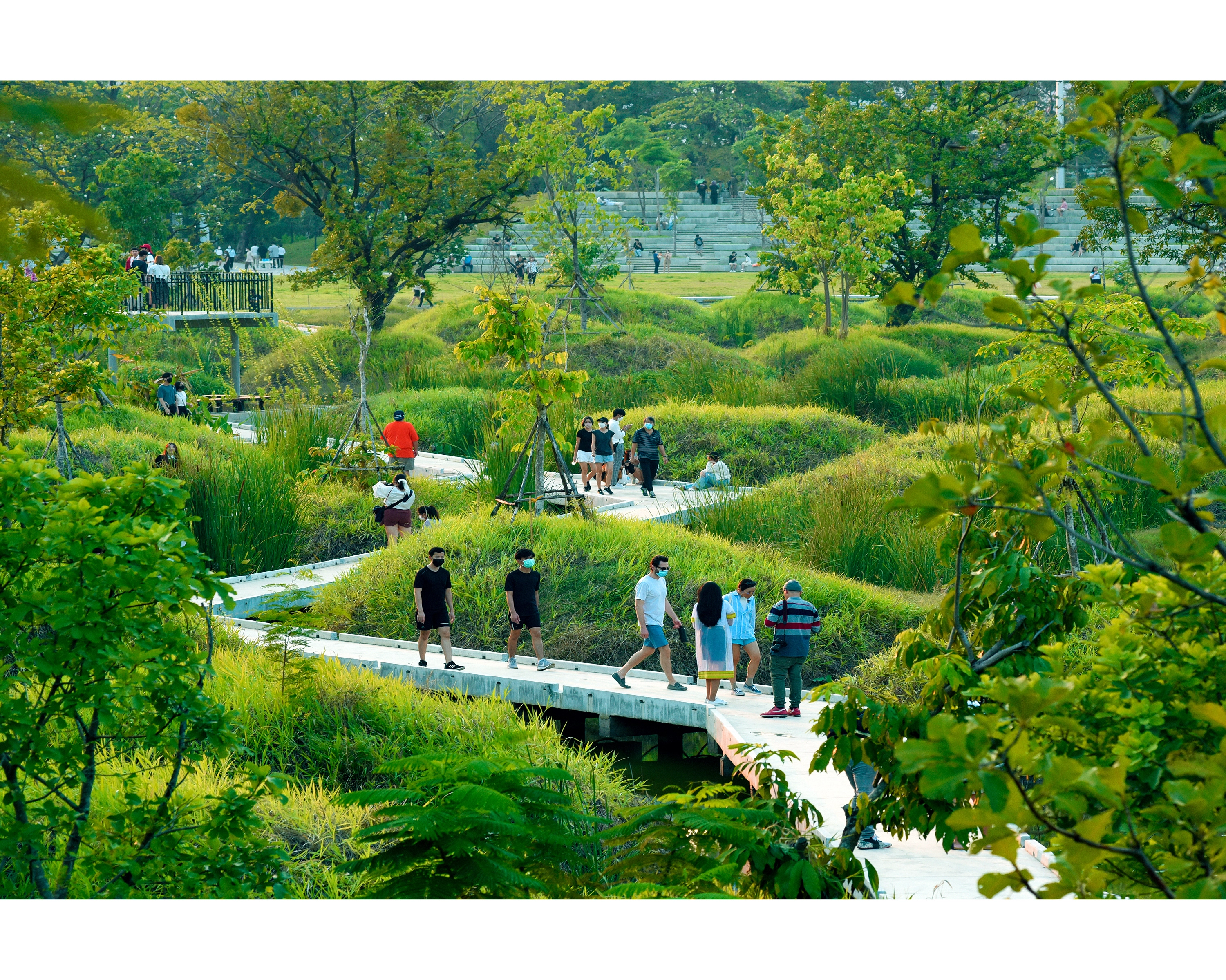
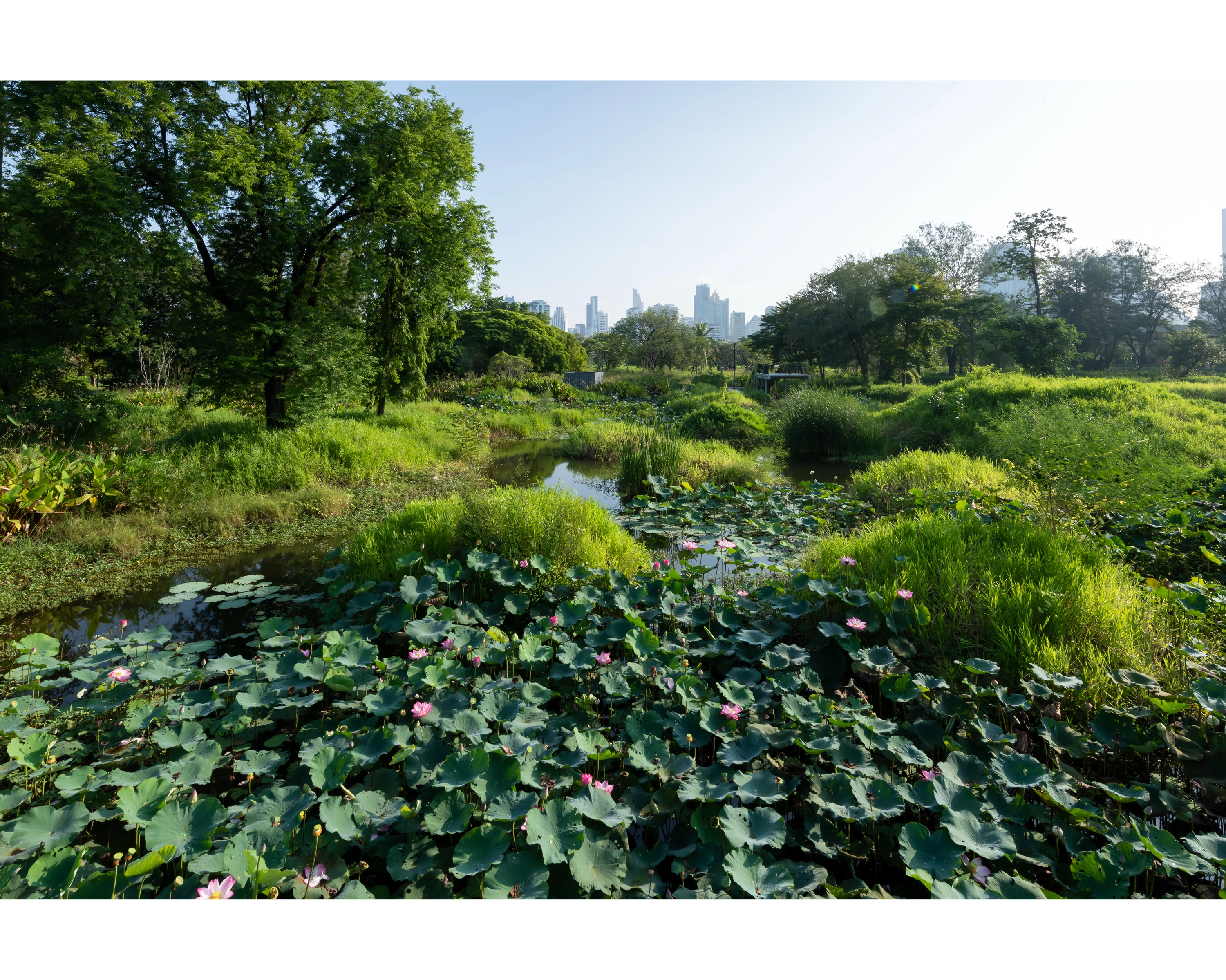
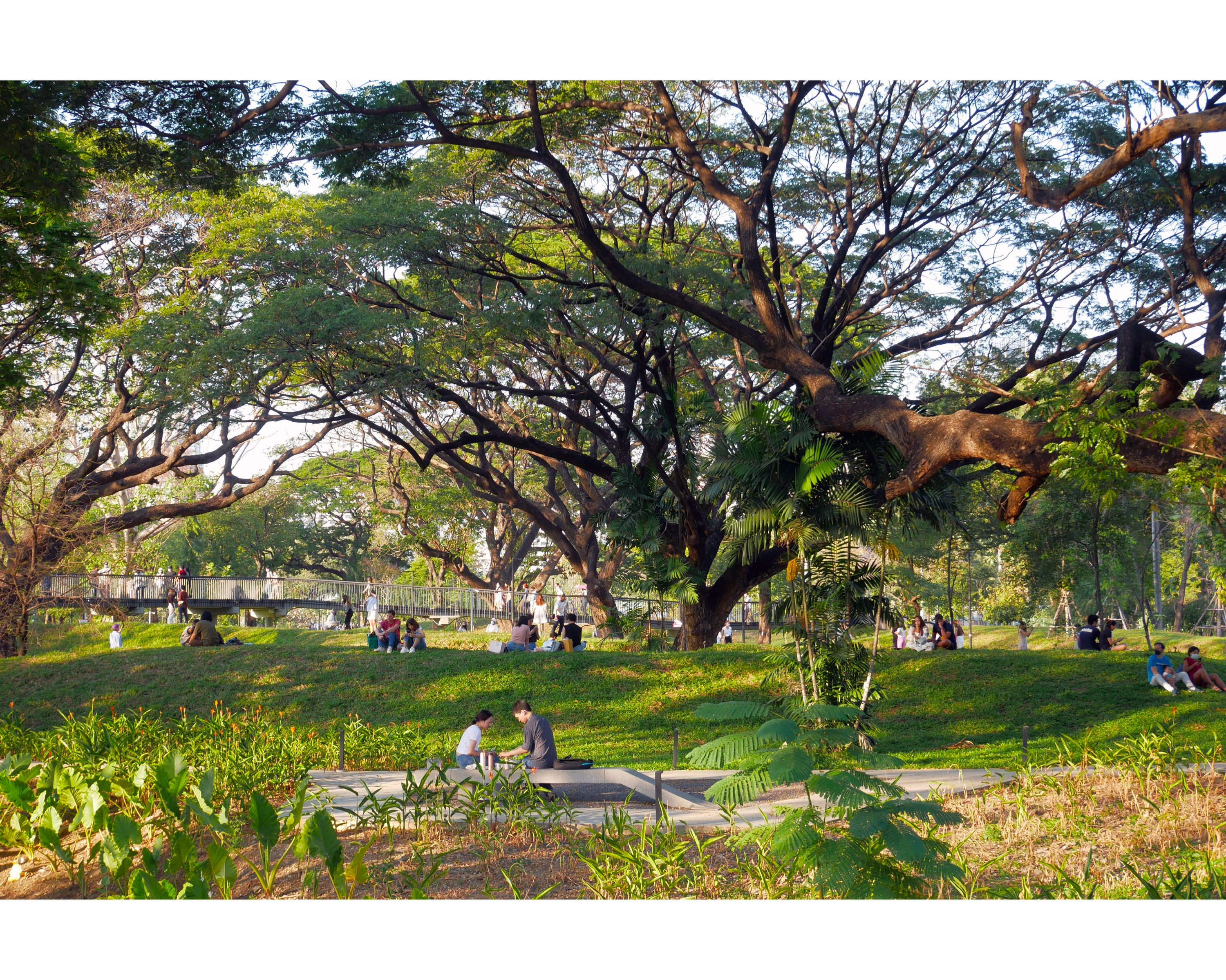
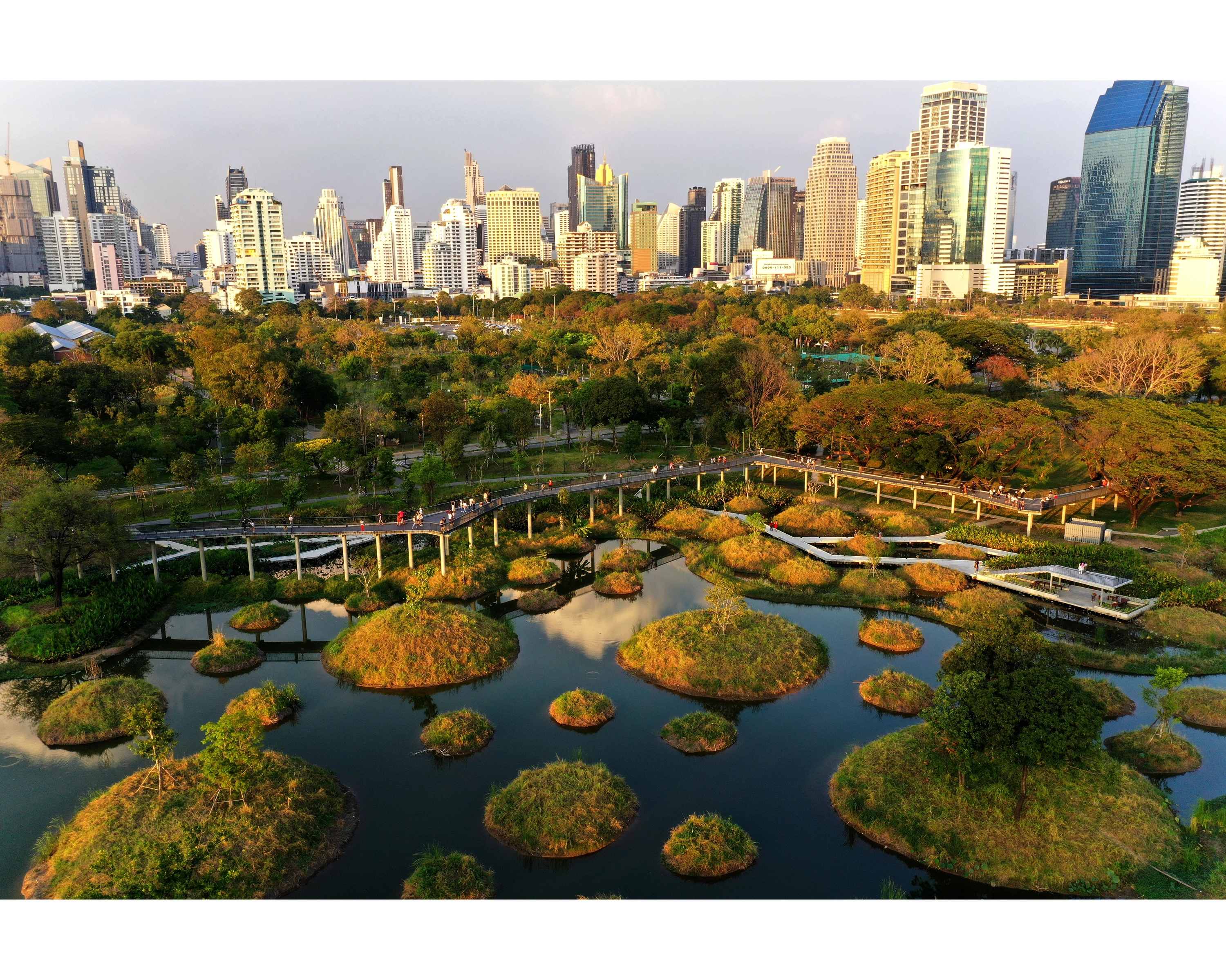
In the bustling urban heart of Bangkok, a former tobacco factory has been transformed into a low-maintenance regenerative system that is climate resilient, filters contaminated water and provides much-needed wildlife habitat. In addition, Benjakitti Forest Park now provides the largest public recreational space for residents of downtown Bangkok and has become a new cultural symbol for the capital city. The project, completed at a low cost in a compressed timeframe of just 18 months, offers a replicable modular approach to urban engineering that can transform the lifeless, concrete-paved ground into a resilient living ecosystem that provides a full range of ecosystem services.
-
1. Site and challenges
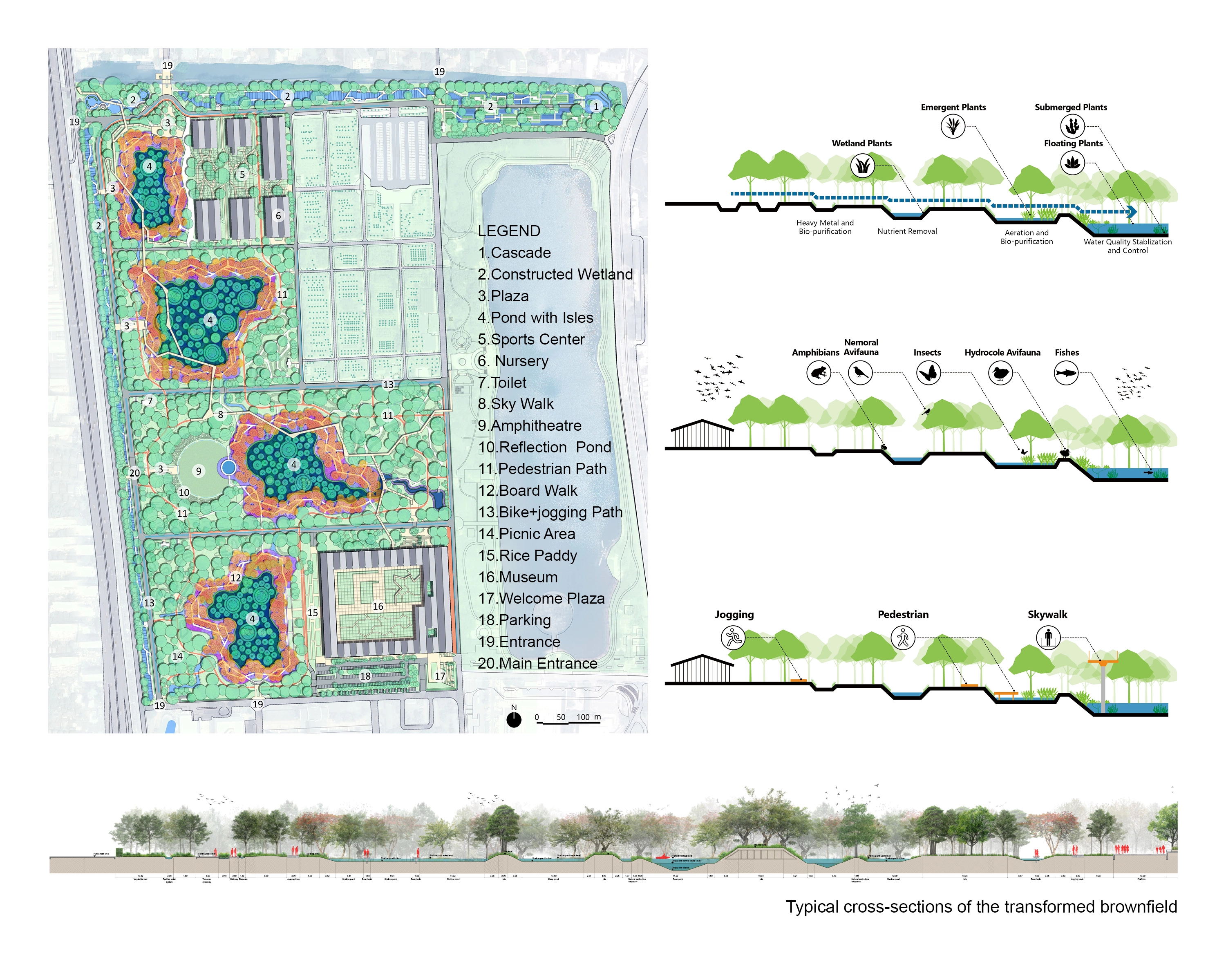
Bangkok is a densely populated city. The region experiences a monsoon climate with an average precipitation of about 1500 mm per year. The effects of global warming have resulted in increased flood risk due to Bangkok’s low elevation. The 102-acre site was formerly a tobacco factory. The budget was limited and was overseen by the army and did not have extensive experience or skills in building landscape projects.
2. Design objectives and strategies
In addressing the multiple challenges of the site, the project was envisioned as a central park capable of providing holistic ecosystem services to the city, including a demonstration of a nature-based solution for urban flood control, as well as providing badly needed public space for daily recreational activities and other cultural services. Three strategies guided our work to meet these objectives:
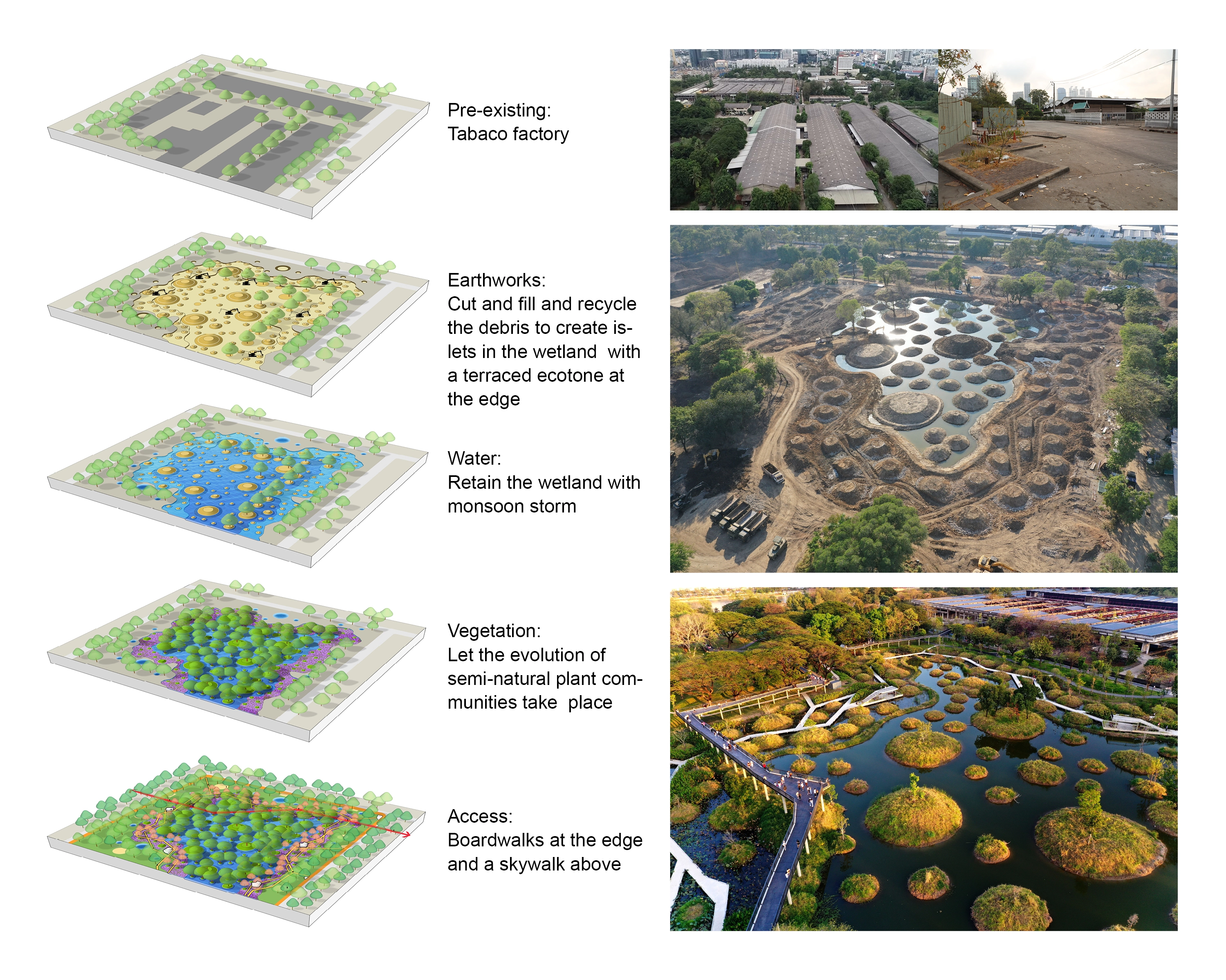
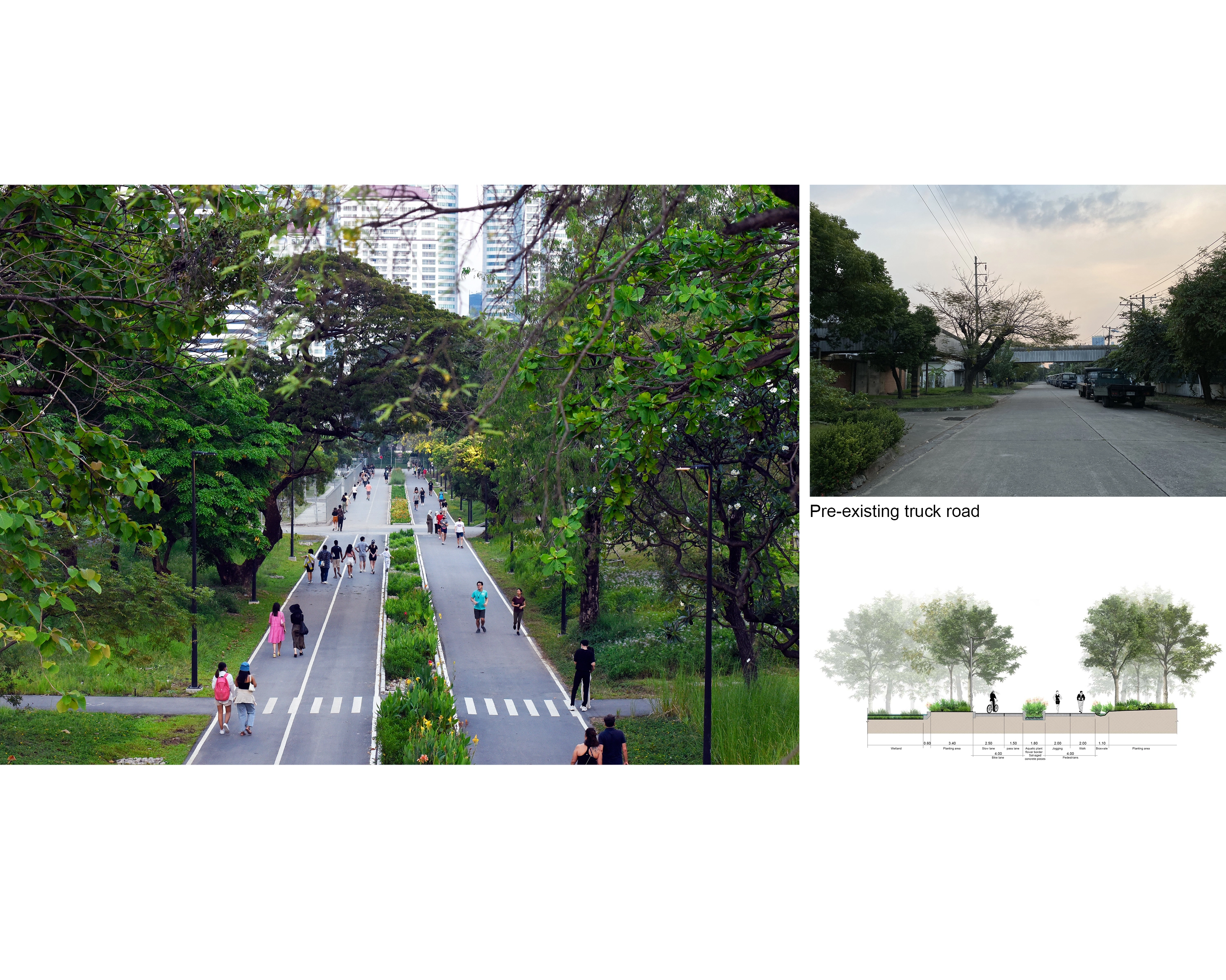
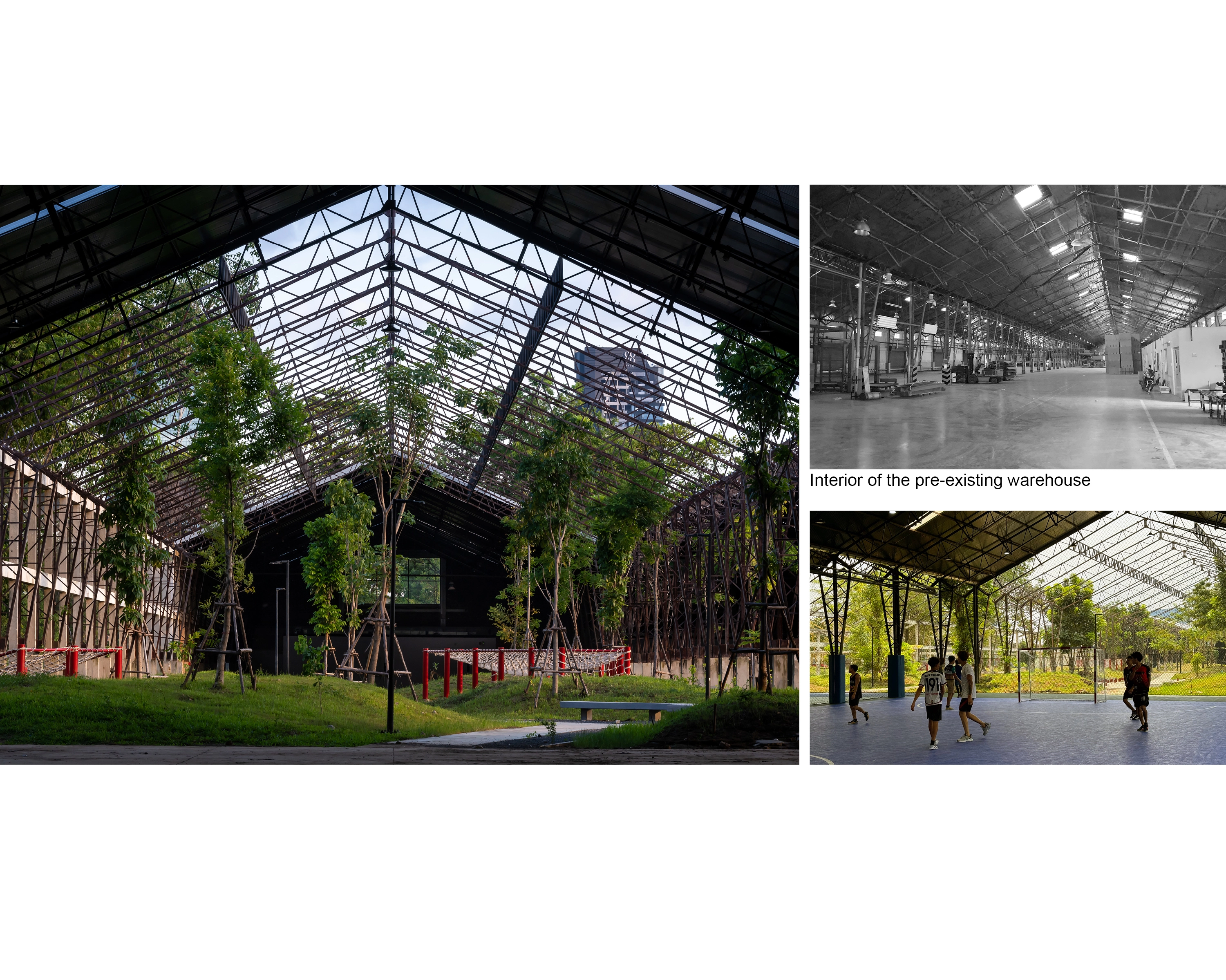
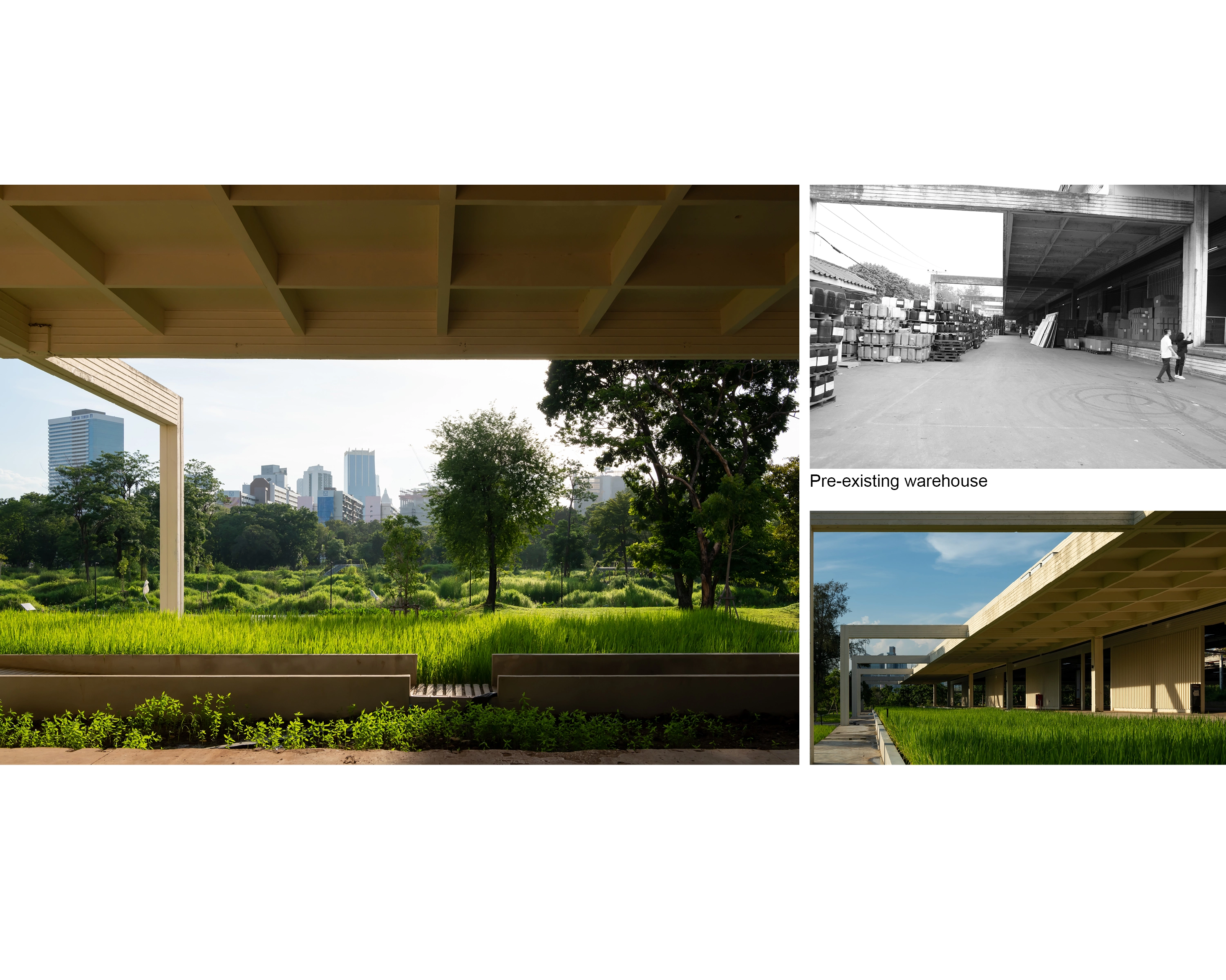
Reuse and recycle: All existing trees on site were preserved and integrated into the park design. Existing factory buildings were repurposed to house the sports center and museum. The demolished concrete materials were recycled for the earthwork foundation and paving.
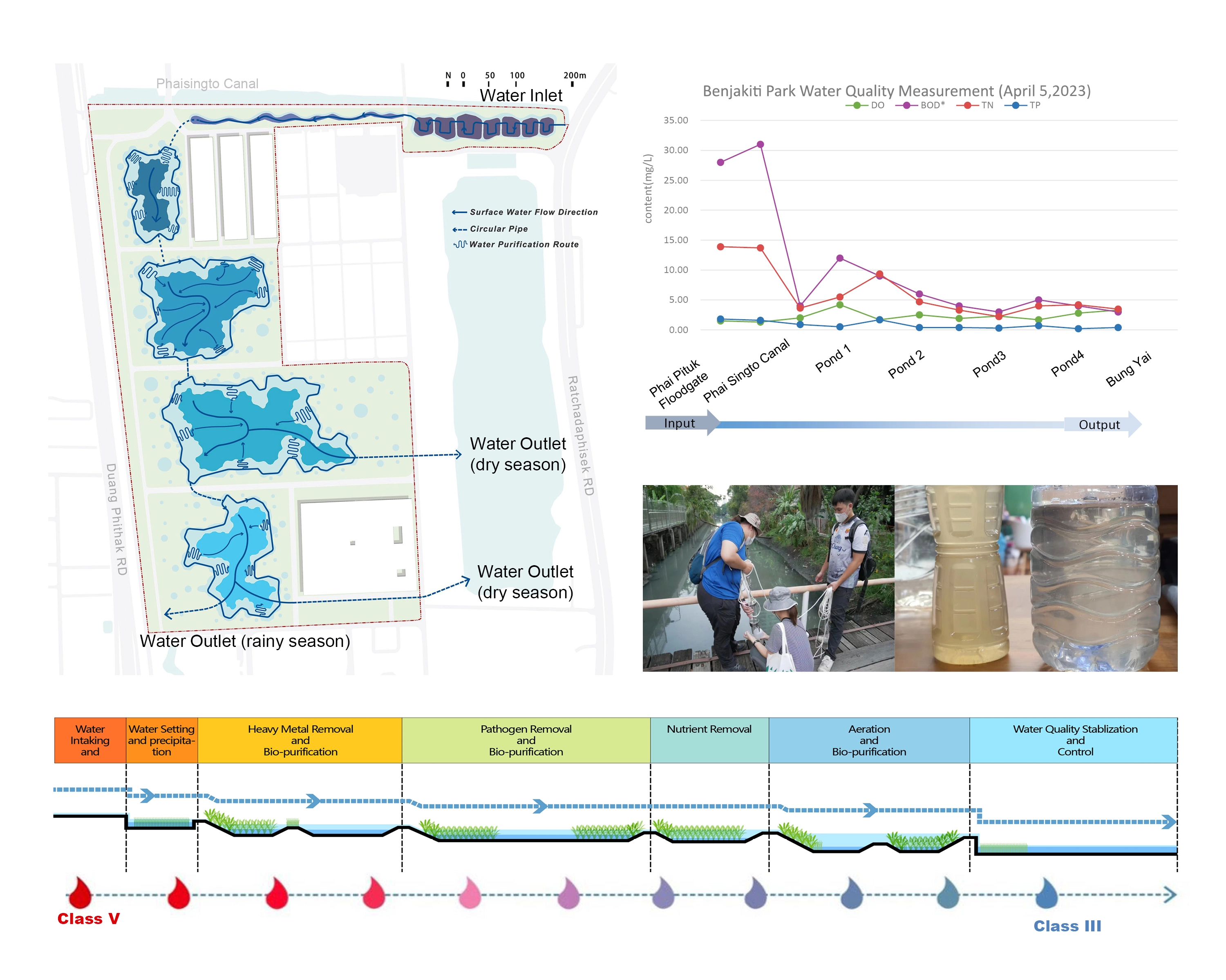
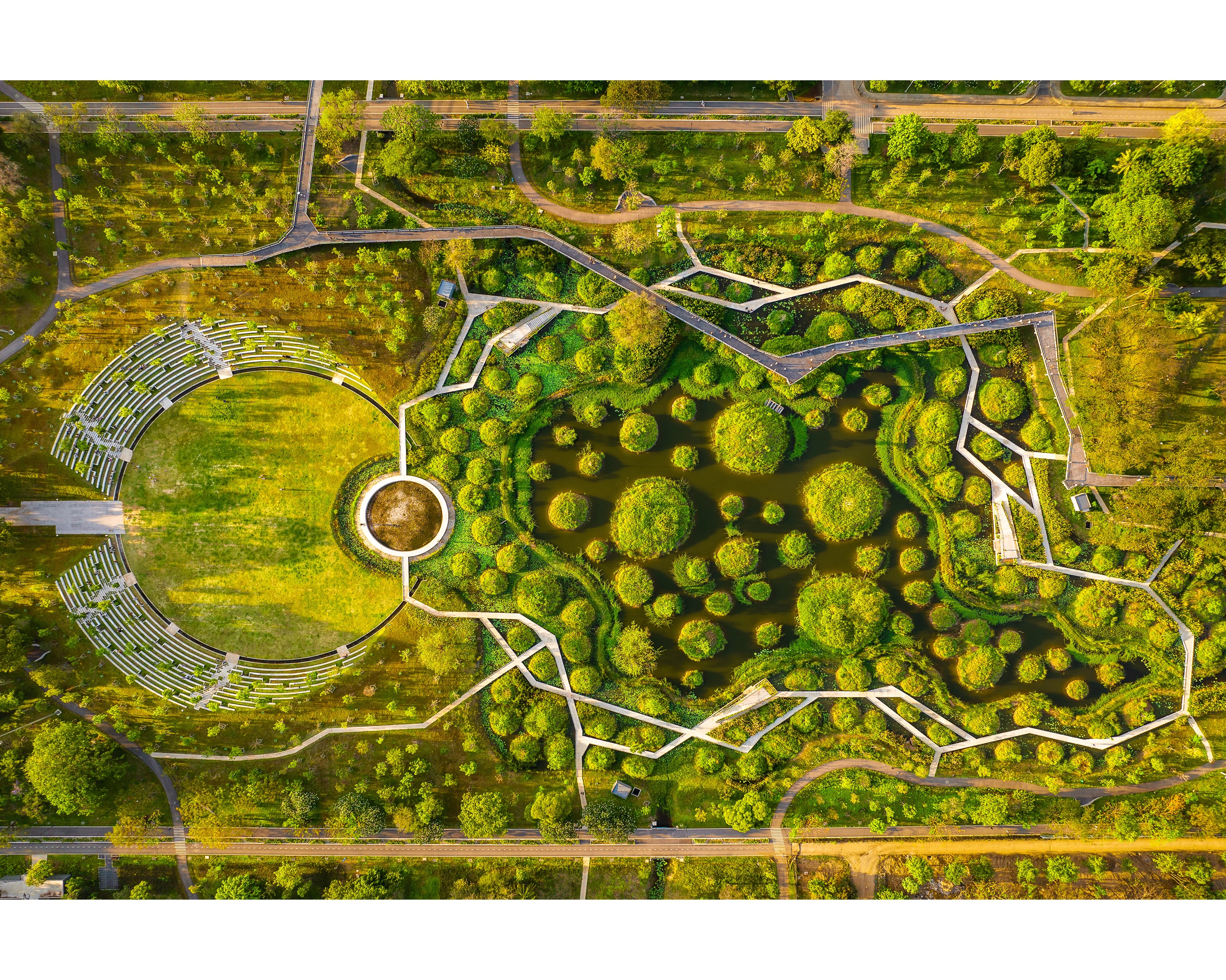
Creating porosity and wetlands: Cut-and-fill techniques were used to transform the impermeable, concrete-paved ground into a spongy and porous landscape of wetlands dotted with islets, which is expected to retain up to 200,000M3 of stormwater from the surrounding area during the monsoon season. This tilled landscape also transformed the otherwise hard clay surface soil into wet and spongy habitat, allowing a rich native plant community to establish itself with minimal irrigation or maintenance needed during the dry season. This modular landscape can be easily executed with a single excavator and minimizes dependence on skilled labor.
Fostering a low-maintenance “Messy Nature”: The modulated landform with diverse micro-environments was sown with seeds and planted with tree seedlings, creating a foundation for the subsequent evolution of a semi-natural plant community creating a new, highly dynamic, and diverse aesthetic that sharply contrasts with the surrounding urban landscape.
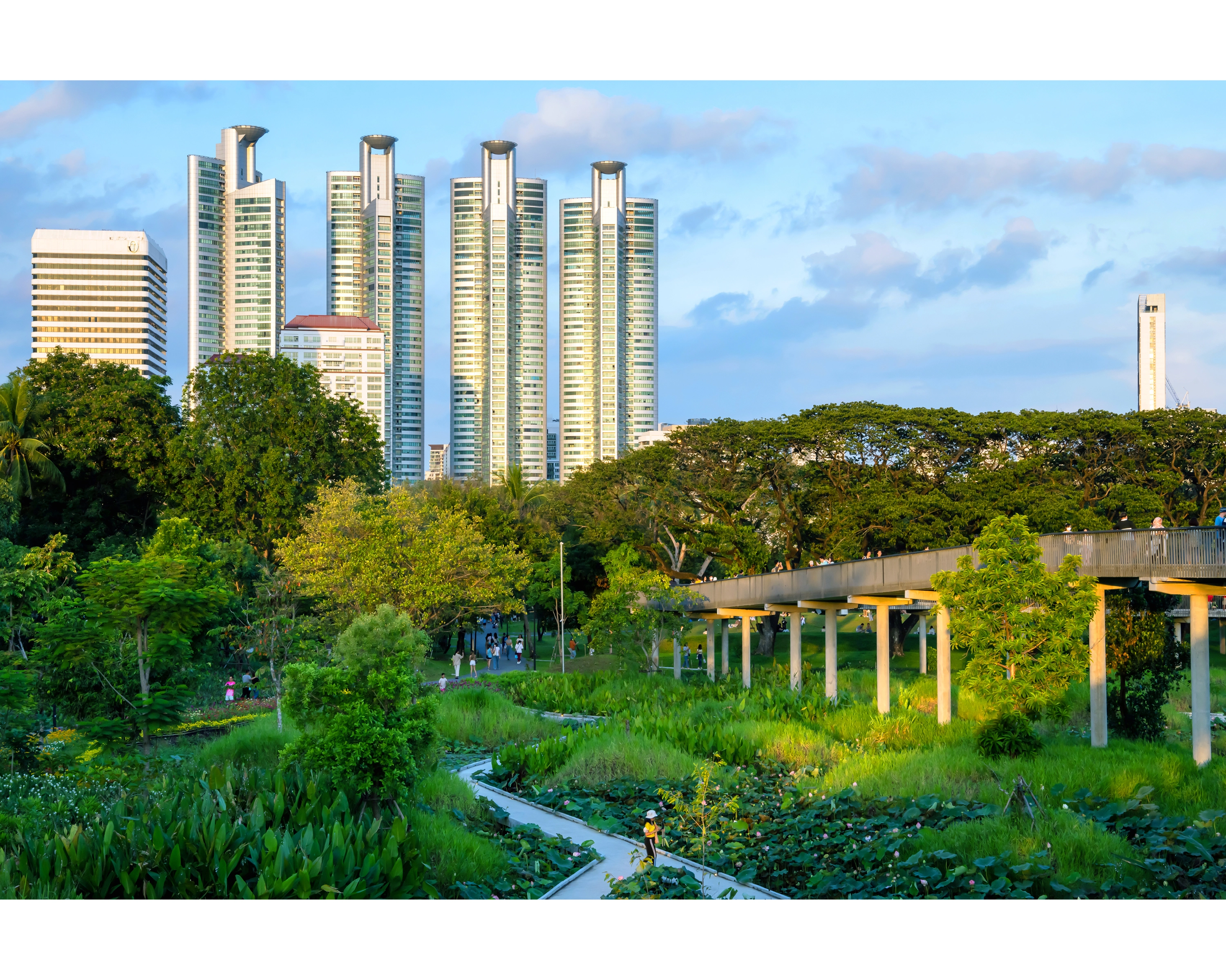
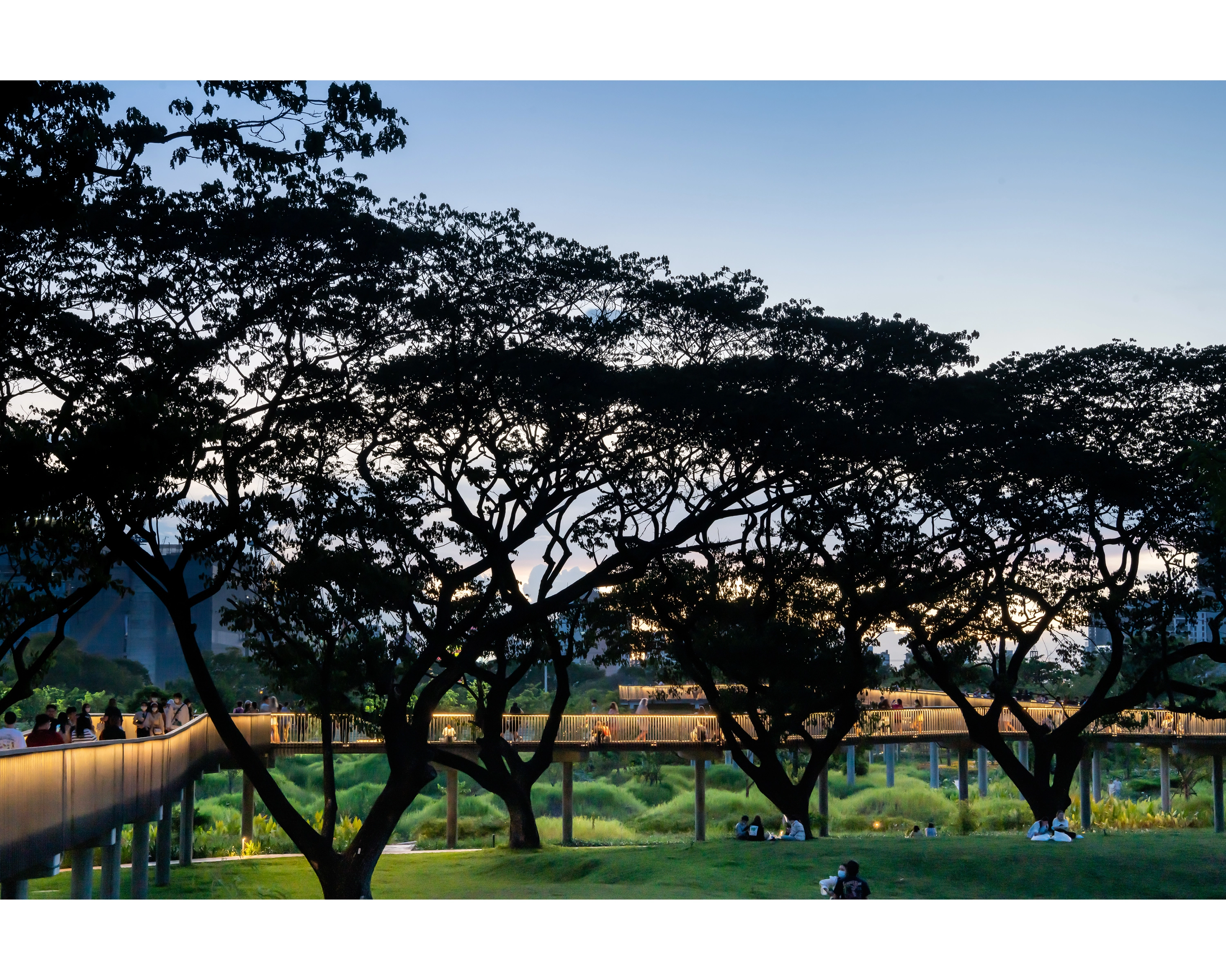
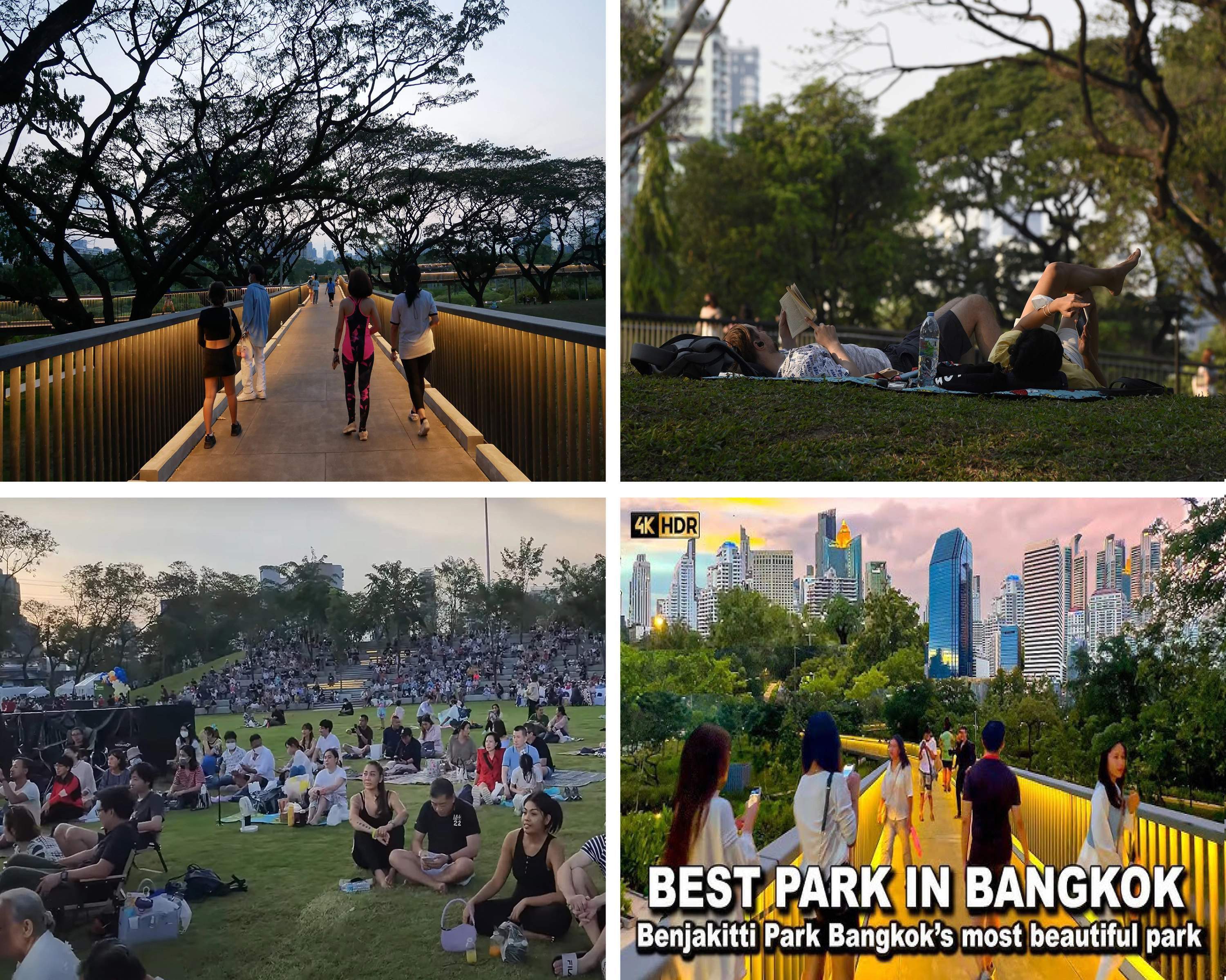
Creating immersive places for people: Multiple boardwalks and a skywalk were designed that tie together the entire park and create a unique immersive experience amidst the tropical foliage.
3. Performance
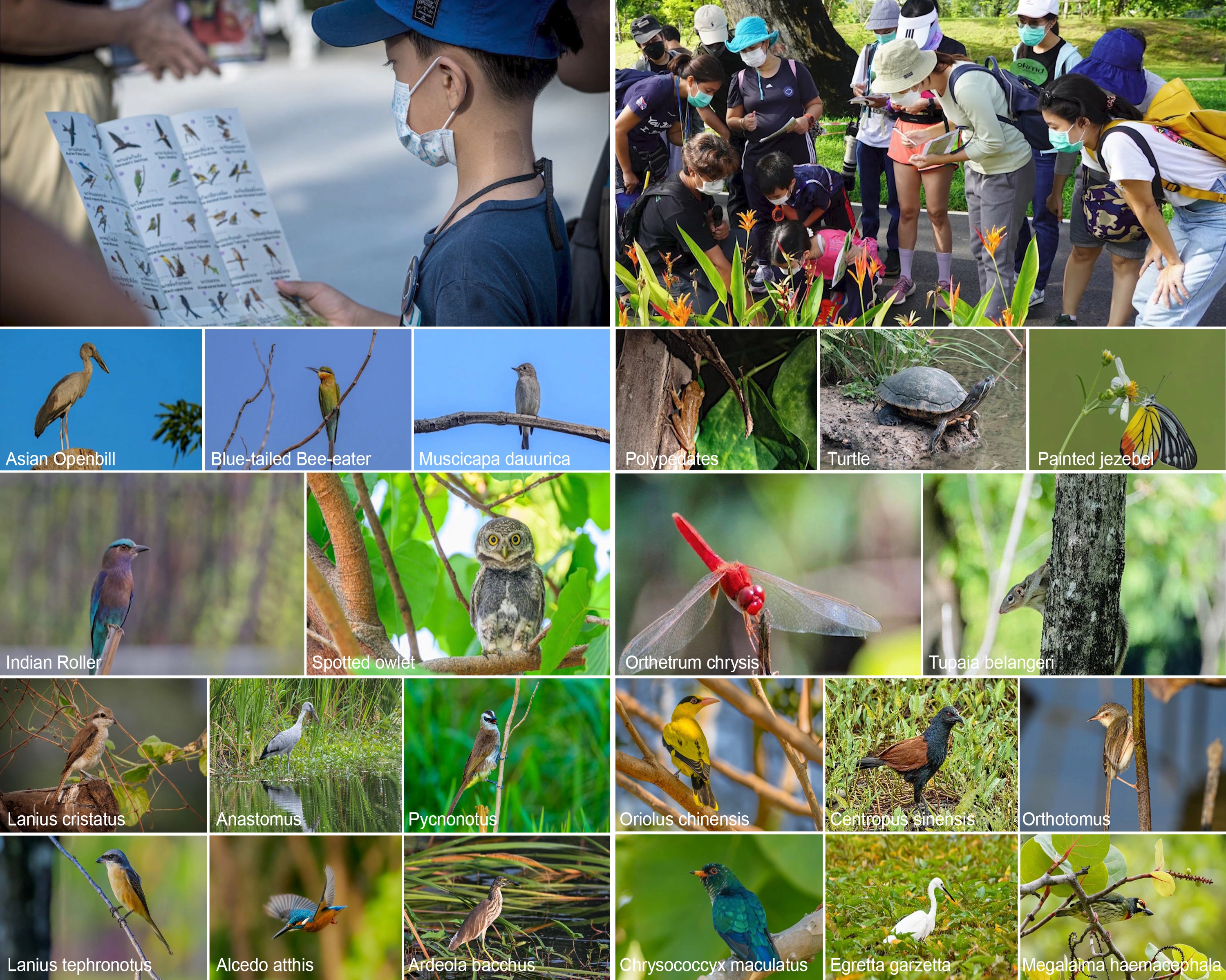
Benjakitti Forest Park, though built in a short period, has demonstrated great success. Last summer, most of Bangkok city was flooded but not this park and its vicinity. The water-remediating wetland performs well and produces enough water to keep the wetland survive the dry season. 91 species of birds were seen in this rewilded urban nature. This green lung has truly become the largest central park for the densely populated Bangkok and attracts tens of thousands of visitors daily who use it for all kinds of recreational activities. It was celebrated as the new icon for the capital city.
-
- Arsomsilp Community and Environmental Architect Co., Ltd. - Associate local firm
- Kongjian Yu, FASLA - Lead Landscape Architect
- Dong WANG - Project Manager and Senior Urban Planner
- Wei LIU - Landscape Architect
- Baiqiang REN - GIS Analyst and Water treatment Engineer
- Liang HE - Landscape Architect
- Yanjin BAI - Landscape Architect
- Jiin-yi HWANG - Landscape Architect
- Yujie LIU - Lanscape Architect
- Kening PAN - Landscape Architect
- Lelai DAI - Landscape Architect
- Defeng LU - Landscape Architect
- Xiaodong LI - Landscape Architect
- Chang YANG - Landscape Architect
- Xianfeng HE - Landscape Architect
- Qiong ZHENG - Landscape Architect
- Wenjing YUE - Landscape Architect
- Boxun YUAN - Architect
- KASEMDESIGN & CONSULTALT - Structure Engineering
- Optimology Co., Ltd - M&E Engineering
- Stonehenge Co., Ltd - Construction Management
- Plan Motif Co., Ltd - Signage Design
- Center of Excellence in Universal Design, Faculty of Architecture, Chulalongkorn University - Universal Design
- Weerachai Nanakorn,Wiwat Salyakamthorn,Kwangsuang Atibodhi,Nilubol Klongvessa,Anek Siripanichgorn,Chaiyuth Chinnarasri,Weerapan Paisarnnan,Thitiphan Tritrakarn, Montathip Sommeechai,Nopparat Naksathit,Pramook Benyasut,Chunlaporn Nuntapanich - Consultant
-
Products
- Furniture
- Drainage/Erosion
- Fences/Gates/Walls
- Lumber/Decking/Edging
- Parks/Recreation Equipment
- Lighting
-
- Red Sandalwood
- Afzelia
- Yellow Cedar
- Jackfruit
- Neem
- Mangrove
- Kapok Tree
- Chittagong Wood
- Gurjan
- Banyan Tree
- Leather fern
- Ardisia polycephala
- Sunn hemp
- Golden leather fern
- Buddha's palm
- Sweet flag
- Umbrella sedge
- Papyrus
- Sacred lotus
- Common reed
- Golden bladderwort
- Thai onion plant
- Water lily
- Water chestnut
Advertisement
Related Awards
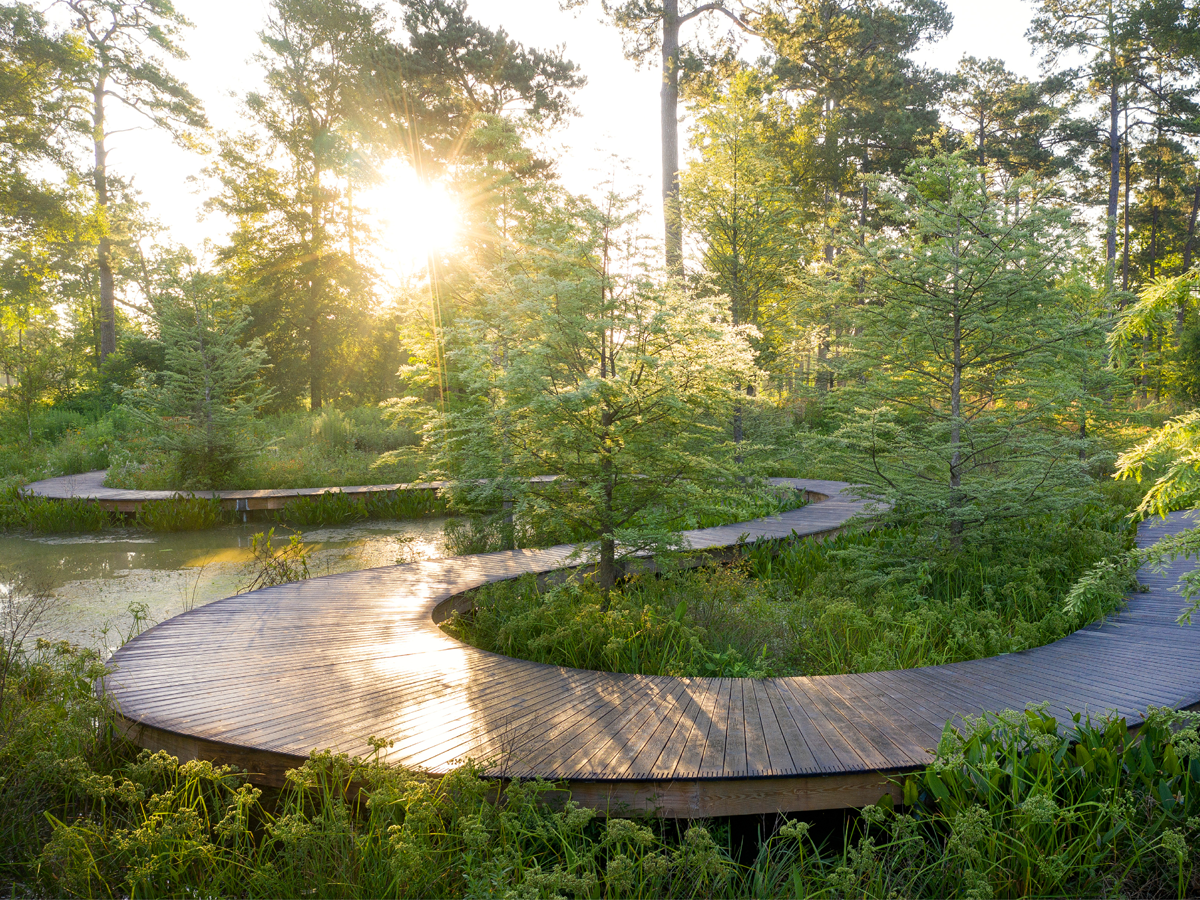
Honor Award, General Design
Houston Arboretum & Nature Center
The Houston Arboretum & Nature Center sits within Memorial Park, one of the largest urban parks in the United States, in one of the nation's fastest growing and most climate-challenged cities. The site's story is one of repeated loss and deliberate reinvention. Hurricane Ike in 2008 and a severe drought in 2011 destroyed much of the Arboretum's tree canopy, exposing the limits of conventional reforestation in a city defined by flooding, heat, and ecological volatility.
Related Articles
ASLA Fund
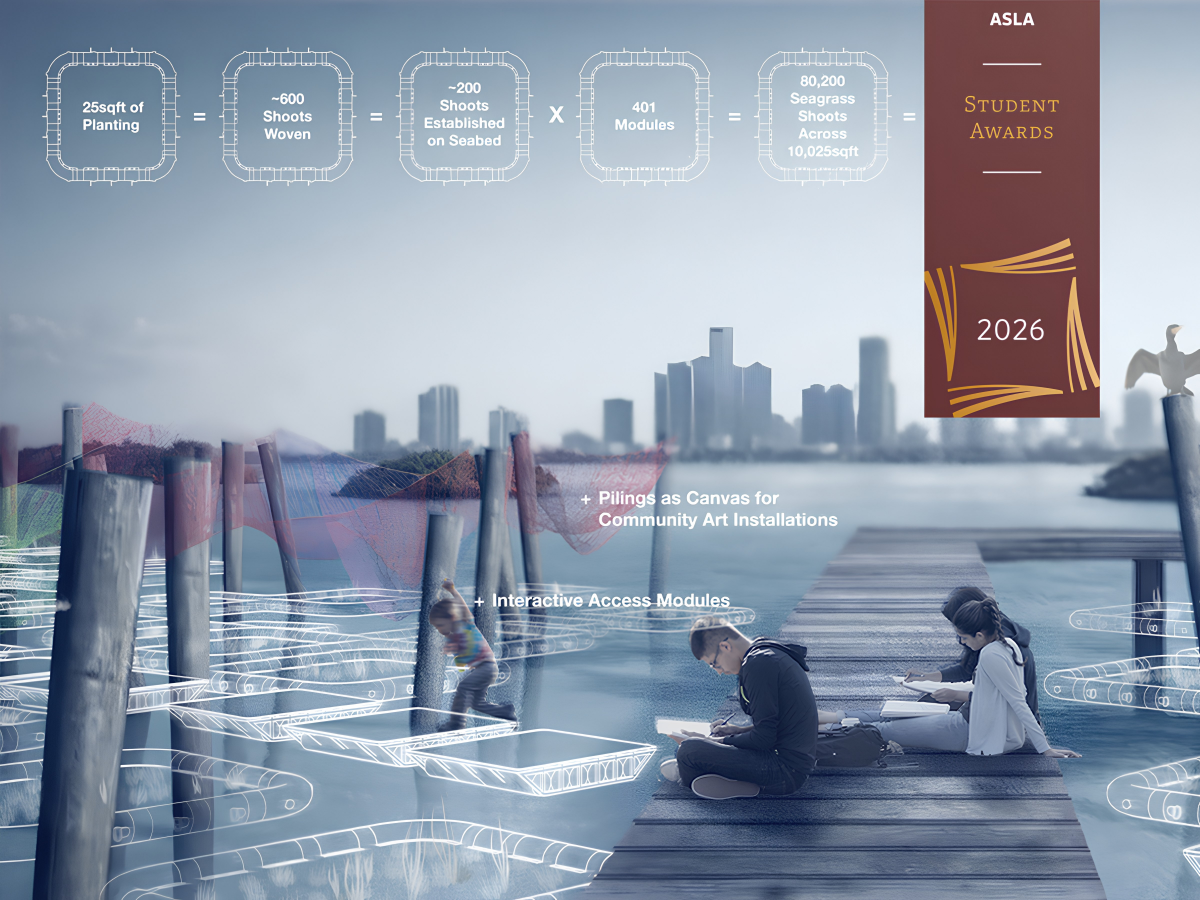
American Society of Landscape Architects Announces its 2026 Student Awards
39 Student Award winners elevate the future of the landscape architecture profession
Aug 24 2026