

.webp?language=en-US)

.webp?language=en-US)

Advertisement
Historic American Landscapes
The Historic American Landscapes Survey (HALS) documents historic landscapes in the United States and its territories to serve as tangible evidence of our nation’s heritage and development.
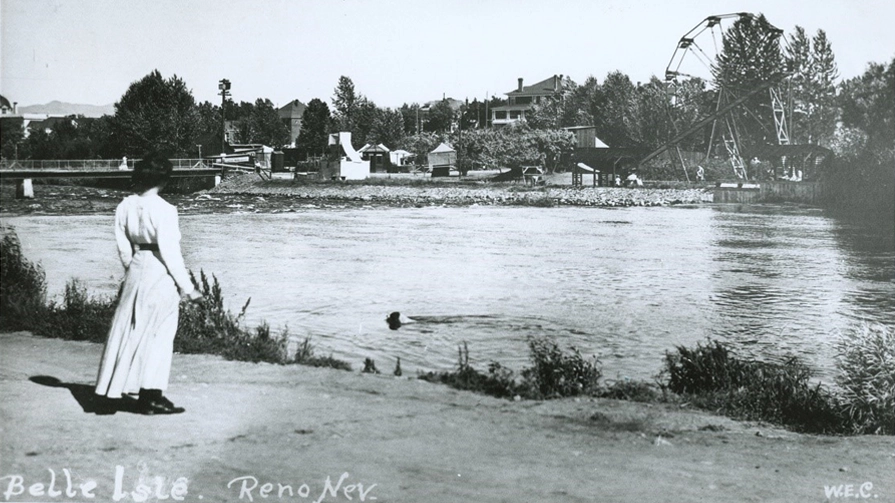
2025 HALS Challenge First Place Winner: Wingfield Park, HALS NV-8, Reno, Nevada
The concept of historic preservation has grown beyond protecting a single building or urban district to include the historic landscape that provides the setting and context for a property as well as much larger landscapes that have regional and national significance. In response to this growing interest in the historic preservation and documentation of landscapes, the American Society of Landscape Architects worked with the National Park Service to create a national program, and in October 2000, the National Park Service established the Historic American Landscapes Survey (HALS) to document historic landscapes in the United States and its territories to serve as tangible evidence of our nation’s heritage and development.
In early 2001, the American Society of Landscape Architects, the National Park Service, and the Library of Congress entered into a Memorandum of Understanding (MOU) that established a framework of cooperation, and in 2010, the three organizations signed a new Tripartite Agreement that made HALS a permanent federal program. The National Park Service administers the planning and operation of HALS, standardizes formats and develops guidelines for recording landscapes, and catalogs and/or publishes the information when appropriate. The American Society of Landscape Architects provides professional guidance and technical advice for the program. The Library of Congress accepts and preserves HALS documents and makes records available to the public.
Historic landscapes vary in size from small gardens to several thousand-acre national parks. In character they range from designed to vernacular, rural to urban, and agricultural to industrial spaces. Vegetable patches, estate gardens, cemeteries, farms, quarries, nuclear test sites, suburbs, and abandoned settlements all may be considered historic landscapes. Like its sister programs, the Historic American Buildings Survey (HABS) and the Historic American Engineering Record (HAER), HALS produces written and graphic records of interest to educators, land managers, and preservation planners, as well as the general public.
Advertisement
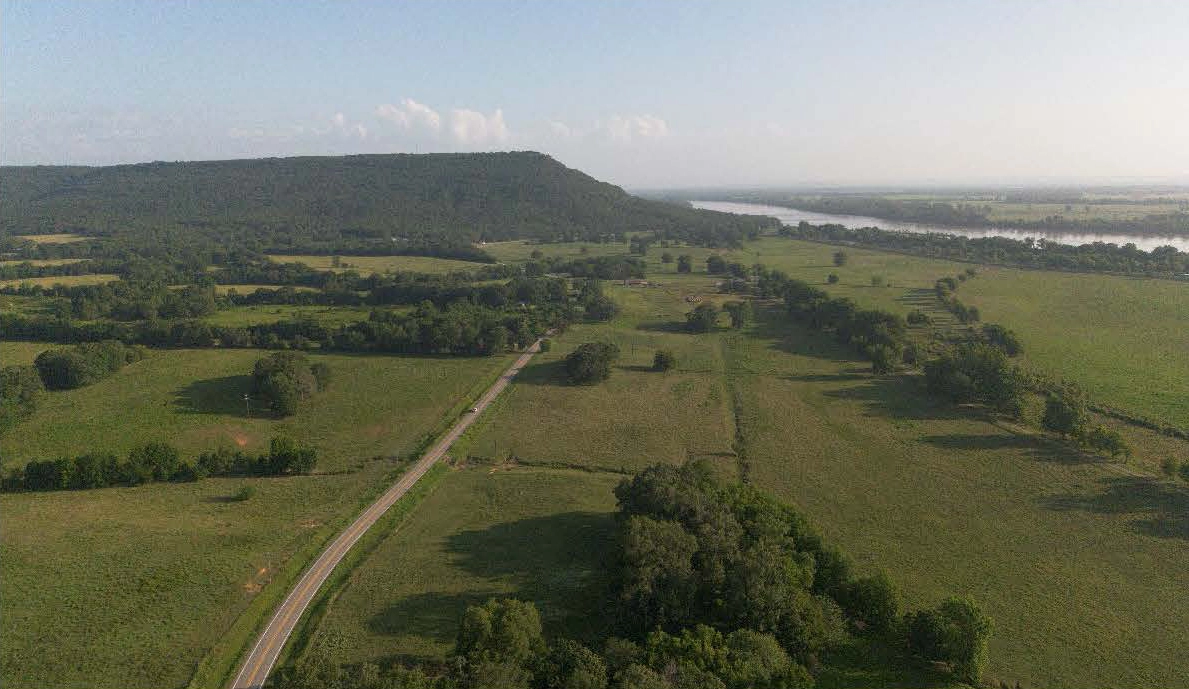

2026 Submissions for the Historic American Landscapes Survey (HALS)
Explore the historic landscapes documented for HALS in 2026, recognized at the ASLA Conference on Landscape Architecture in Los Angeles and highlighted on The Field.
The National Park Service (NPS) administers the planning and operation of the Historic American Landscapes Survey (HALS), which includes: selecting and approving landscapes for documentation, standardizing formats and developing guidelines for recording landscapes, catalogs and/or publishing the information when appropriate.
The Library of Congress accepts and preserves HALS documents, furnishes reproductions of material, and makes records available to NPS.
ASLA’s HALS Leadership Team and the HALS Chapter Liaisons Network provide support on identifying, selecting, and documenting historical landscapes.
HALS Leadership Team:
- Allison Crosbie, ASLA, Co-Chair / Co-Coordinator
- Lincoln Lewis, Student ASLA, Co-Chair / Co-Coordinator
- Gregory De Vries, ASLA
- Christine Donhardt, ASLA
- David Driapsa, FASLA
- Kimball Erdman
- Helen Erickson, ASLA
- Andrea Gaffney, ASLA
- Cari Goetcheus
- Scott Keyes
- Birgit Kibelka, ASLA
- Doug Nelson, ASLA
- Alex Priest, ASLA
- Christa Schaefer, ASLA
- Graham Sones, ASLA
- Jenn Thomas, ASLA
- Jacob Torkelson
- Carol J. H. Yetken, ASLA
- Andrea Weber, ASLA
HALS Chapter Liaisons
HALS Chapter Liaisons are ASLA volunteers appointed by their chapter presidents who provide technical and other types of assistance to carry out the mission of the HALS program.
Typically, each ASLA chapter has one HALS Liaison. Chapters that serve multiple states should have one liaison per state. Assisted by the HALS coordinator, chapter presidents choose a liaison from a pool of volunteer applicants. Applicants must be full, associate, or affiliate members of ASLA. HALS Liaisons may serve for an unspecified term.
HALS Liaisons' responsibilities include:
- Creating and updating lists of local examples of significant historical landscapes
- Coordinating HALS activities with your State Historic Preservation Officer (SHPO)
- Advising on the review and revision of state and local historic preservation laws with the aim of including historic landscape documentation
- Leading advocacy efforts in Congress for funding for HALS
- Enlisting donations to the HALS/HABS/HAER fund
- Promoting public awareness of HALS and historic landscapes
- Continuously seeking out opportunities for local documentation projects
For a sense of HALS at the chapter level, see these chapters that have HALS as part of their chapter websites:
- Arizona
- Northern California
- Ohio
- South Carolina (see the HALS tab)
- Wisconsin
Interested in Getting More Involved?
What to do next:
- Check if your chapter and/or state already has a HALS Liaison, and contact them for more information on how you can get involved.
- If your chapter’s HALS Liaison position is vacant, considering volunteering for the role yourself!
- Contact Allison Crosbie, ASLA, and Lincoln Lewis, Student ASLA, ASLA's HALS co-leaders, with any HALS questions or to get started as a HALS Chapter Liaison. Contact Scott Keyes, Chief, Heritage Documentation Programs, National Park Service, with any HALS Challenge or documentation questions.
- Once you are on board as your chapter's HALS Liaison, contact your chapter president to let them know you've taken on this role.
Anyone with questions or interest in volunteering or assisting with HALS, please email [email protected].
While progress has been made in identifying cultural landscapes during the past decade, more work is needed to document these designed and vernacular places. Since 2010, landscape architecture preservation enthusiasts from every state have been challenged to complete at least one Historic American Landscapes Survey (HALS) short format history to increase awareness of particular cultural landscapes and drive more donations to the HALS collection.
As of 2026, the National Park Service Heritage Documentation Programs division has suspended all competitions, but the ASLA HALS Leadership Team has continued with an open call to encourage continued engagement in this important work.
ASLA HALS Calls to Action:
2027: Genius of Place: Regional and Vernacular Landscape Architecture
2026: Landscapes of Liberty and Freedom
2026 HALS webinar
2026 HALS submissions
Past HALS Challenges:
2025: Landscapes of Roadside America
2025 HALS Challenge webinar
2024 HALS Challenge (open theme)
2023: Working Landscapes
2023 HALS Challenge results video
2022: Olmsted Landscapes
2021: Historic Black Landscapes
2021 HALS Challenge webinar
2020: Vanishing or Lost Landscapes
2019: Historic Streetscapes
2018: Memorialization, Commemorating the Great War
2017: Documenting City or Town Park(s)
2016: Documenting National Register Listed Landscapes
2015: Documenting Modernist Landscapes
2014: Documenting Landscapes of the New Deal
2013: Documenting the Cultural Landscapes of Women
2012: Documenting the American Latino Landscape
Since the Historic American Landscapes Survey (HALS) was established in 2000 to document our country's dynamic landscapes, much progress has been made in identifying and documenting historically significant designed and vernacular cultural landscapes. As documentation is submitted, the full list of HALS sites continues to grow. At the start of 2014, information on more than 450 sites was accessible on the Library of Congress’ website. There are more than 990 sites on the current list.
HALS documented sites with geospatial data can be explored through the map below:
How to Complete a Landscape Documentation Project
Documentation of Historic American Landscapes Survey (HALS) sites are critical to preserving historical landscapes for the benefit of future generations and can provide rationale for the planning and funding of future landscape preservation efforts. Documentation projects can be completed by any interested individuals or organizations. The HABS/HAER/HALS collection is one of the largest and well-organized architectural archives in the world. Standardization of format is one of the highlights of HALS.
The following links will provide information on preparing HALS Histories:
- National Park Service HALS homepage
- HALS report templates
- HALS Documentation Guidelines
- Documentation Transmittal Guidelines
- HALS Documentation and Section 106 Mitigation
For questions regarding HALS documentation, please contact:
Scott Keyes
Chief, Heritage Documentation Programs, and Acting Chief, Historic American Landscapes Survey, National Park Service
State Historic Preservation Officers
Your State Historic Preservation Officer (SHPO) plays a critical role carrying out many responsibilities in historic preservation. Contacting your SHPO and reviewing SHPO Inventories (if available for your state) may be good starting points to identify historic landscapes worthy of documentation in your area.
Explore Historic Preservation
-
Historic American Buildings Survey/Historic American Engineering Record/Historic American Landscapes Survey
As the oldest Federal preservation program, the Historic American Buildings Survey/Historic American Engineering Record/Historic American Landscapes Survey (HABS/HAER/HALS) produces graphic and written documentation of historically significant architectural, engineering and industrial sites and structures.Advisory Council on Historic Preservation
The mission of the Advisory Council on Historic Preservation is to promote the preservation, enhancement, and productive use of our Nation's historic resources, and advise the President and Congress on national historic preservation policy.Alliance for Historic Landscape Preservation
Association of Preservation Technology
State Historic Preservation Officers (SHPOs) Directory
SHPOs play a critical role carrying out many responsibilities in historic preservation. Surveying, evaluating and nominating significant historic buildings, sites, structures, districts, and objects to the National Register is one such key activity. To help find out if a historic place meets the National Register criteria and how the nomination process works in your state, contact the appropriate SHPO for assistance.National Conference of State Historic Preservation Officers
The National Conference of State Historic Preservation Officers is the professional association of the State government officials who carry out the national historic preservation program as delegates of the Secretary of the Interior pursuant to the National Historic Preservation Act of 1966, as amended.National Association of Tribal Historic Preservation Officers
Tribal Historic Preservation Officers are officially designated by a federally-recognized Indian tribe to direct a program approved by the National Park Service and the THPO must have assumed some or all of the functions of State Historic Preservation Officers on Tribal lands.National Center for Preservation Technology and Training
National Landscape Conservation System
In June 2000, the National Landscape Conservation System - the most innovative American land system created in the last 50 years - was established to encompass the crown jewels of the public lands managed by the Bureau of Land Management (BLM). This new conservation system consists of more than 26 million acres: National Monuments, National Conservation Areas, Wilderness, Wilderness Study Areas, Wild and Scenic Rivers, and National and Scenic Trails.National Preservation Institute
The National Preservation Institute (NPI) is a nonprofit, 501(c)(3) organization offering specialized information, continuing education, and professional training to those involved in the management, preservation, and stewardship of our cultural heritage.Olmsted Center for Landscape Preservation
SAH Archipedia, Society of Architectural Historian (SAH)
Trust for Public Land
The Trust for Public Land (TPL) is a national, nonprofit, land conservation organization that conserves land for people to enjoy as parks, community gardens, historic sites, rural lands, and other natural places, ensuring livable communities for generations to come. -
Canadian Association of Professional Heritage Consultants
International Council on Monuments and Sites (ICOMOS)
National Trust For Historic Preservation
The National Trust provides leadership, education, advocacy, and resources to save America's diverse historic places and revitalize our communities.The National Trust (UK)
-
Archives of American Gardens, Smithsonian's Horticulture Services Division
The Archives of American Gardens includes a collection of approximately 60,000 photographs and records that document historic and contemporary gardens throughout the United States. The images include garden furniture and ornamentation and all manner of design styles.Digital Library of Landscape Architecture History (DiLiLAH)
HABS/HAER/HALS Library of Congress Collection
Library of American Landscape History
National Historic Landmarks Program
- Guidelines for Evaluating and Documenting Rural Historic Landscapes
- Guidelines for Evaluating and Documenting Traditional Cultural Properties
- Guidelines for Evaluating and Registering Cemeteries and Burial Places
- Guidelines for Identifying, Evaluating, and Registering America's Historic Battlefields
- Guidelines for Identifying, Evaluating, and Registering Historic Mining Properties
- Historic Residential Suburbs: Guidelines for Evaluation and Documentation for the National Register of Historic Places
- How to Evaluate and Nominate Designed Historic Landscapes
National Register of Historic Places database
National Register of Historic Places: Landscape Initiative
NPS Park History Program
Here you can search for and download many park reports including Cultural Landscape Reports.Preservation Brief 36: Protecting Cultural Landscapes
Secretary of the Interior's Standards and Guidelines: Archeology and Historic Preservation