

.webp?language=en-US)

.webp?language=en-US)

2025 HALS Challenge Results: Landscapes of Roadside America
by Scott Keyes
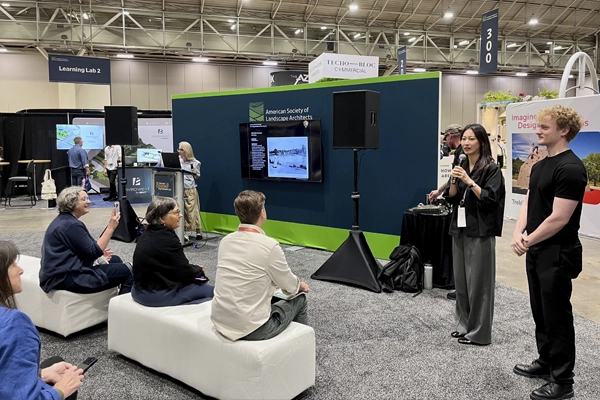
The National Park Service and ASLA are pleased to congratulate the winners of the 16th annual Historic American Landscapes Survey (HALS) Challenge competition. This year’s winners were officially announced at the ASLA 2025 Conference on Landscape Architecture in New Orleans.
Administered by the National Park Service, in collaboration with ASLA and the Library of Congress, the HALS Challenge competition encourages landscape architects, students, and other interested parties to document historic landscapes in their communities. To enter the competition, participants must complete a historical report that highlights the history, significance, and character-defining features of the surveyed landscape. This report can be supplemented with measured drawings or large-format photographs. Competition entries are archived in the HALS collection at the Library of Congress where they contribute to the nation’s largest repository of documentation on American architecture, engineering, and landscapes.
The theme of this year’s HALS Challenge competition was Landscapes of Roadside America. Throughout American history, many unique landscapes have emerged along the nation’s expanding road and highway networks. These landscapes—which include roadside attractions, scenic overlooks, rest stops, service stations, campgrounds, motor courts, and other sites developed to accommodate travelers—are quintessentially American places. However, due to shifts in traffic and commercial patterns, many of these places are now threatened by redevelopment or neglect.
The competition resulted in the donation of 10 surveys to the HALS collection. A jury composed of National Park Service historians and landscape architects reviewed the entries and selected the following winners.
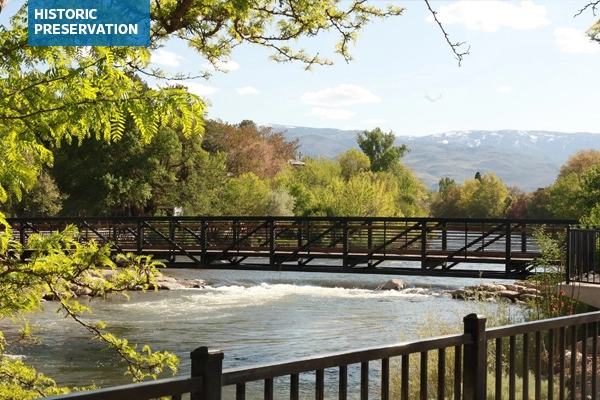
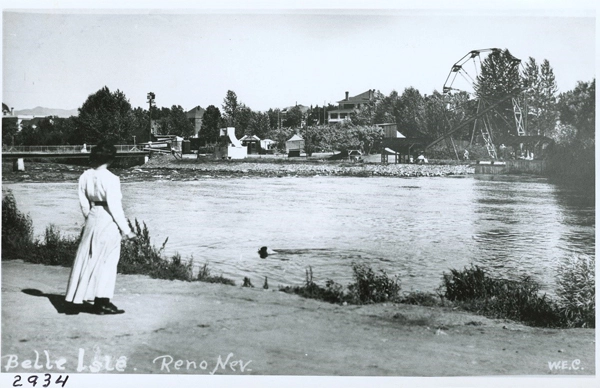
First Place: Wingfield Park, HALS NV-8 Reno, Washoe County, Nevada By Melinda Gustin, ASLA, Adam King, Student ASLA, Dr. Jung-Hwa Kim, Daniel Moss, Amanda Rookey, ASLA, and Jacel Zeres Avila, Student ASLA
Wingfield Park, a small natural island in the Truckee River, is an early twentieth-century recreation park that illustrates the convergence of American automobile culture and democratized leisure landscapes. The park embodies Reno’s growth as a tourist stop following the establishment of the Lincoln Highway. As automobile popularity surged in the 1920s, the construction of the Arlington Avenue Bridges connected the island to the urban grid, transforming this natural landscape into an accessible roadside attraction for automobile travelers. The park also represents western civic improvements influenced by the City Beautiful Movement and funded by industrial wealth, particularly from mining magnate George Wingfield (1876–1959) and the Reno Businessmen’s Association.
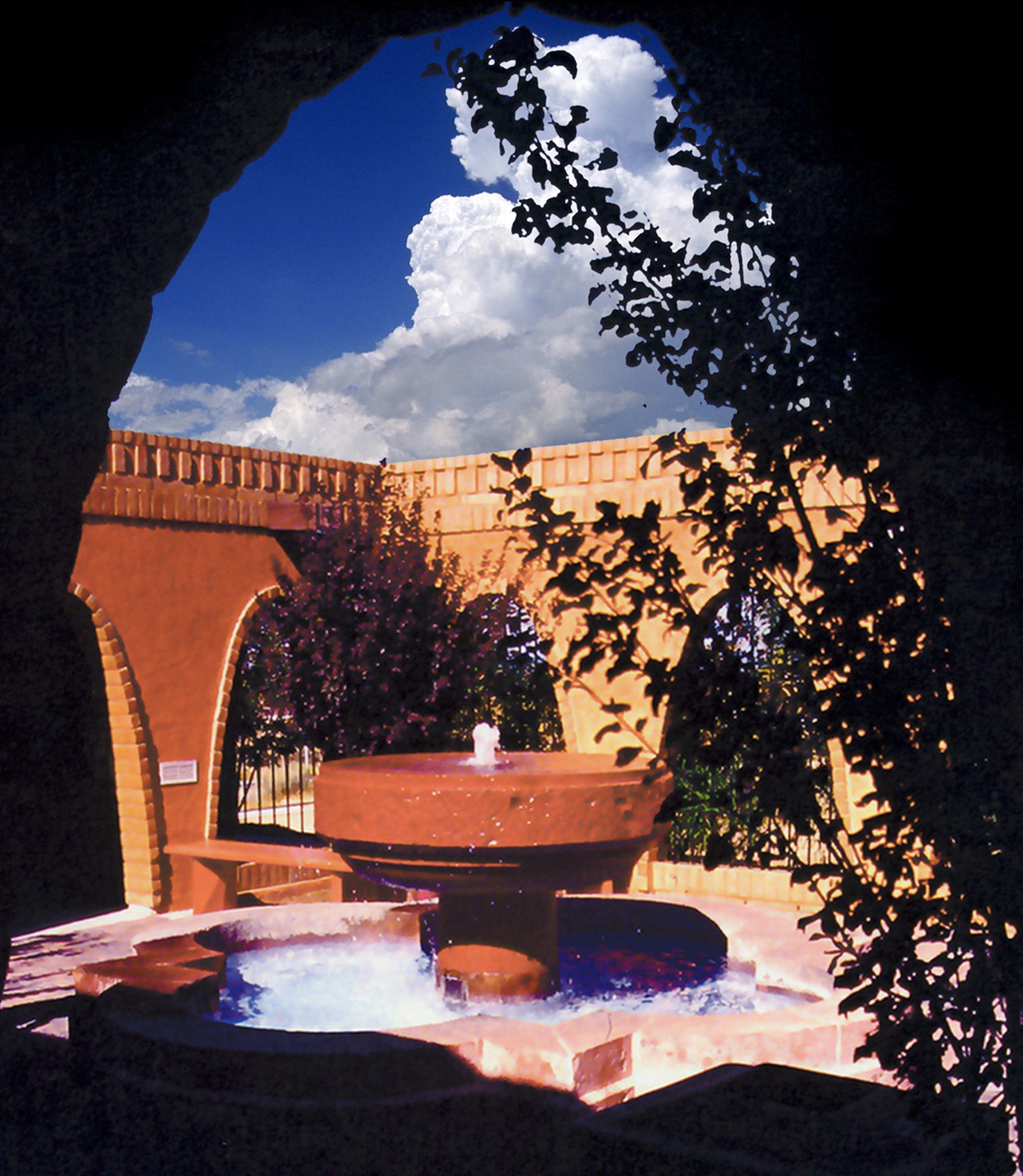
Second Place: Anthony Safety Rest Area, HALS NM-10 Doña Ana County, New Mexico By David Driapsa, FASLA, and William Lutrick, ASLA
Safety rest stops were constructed as integral components of the coast-to-coast U.S. interstate system. Between 1956 and 1974, as the system expanded, these rest areas were funded, designed, and built to reflect the regional styles of the states through which the interstates passed. The Anthony Safety Rest Area is located on westbound Interstate 10 in southern New Mexico. It was designed and constructed between 1971 and 1972 by the New Mexico Department of Transportation. This rest area serves as a key example of state and federal collaboration to achieve roadside safety, a central goal of the Federal-Aid Highway Act. The Anthony Rest Area exemplifies how states integrated regional design elements into roadside infrastructure, transforming a federal mandate for basic travel safety facilities into a distinctive cultural landmark.
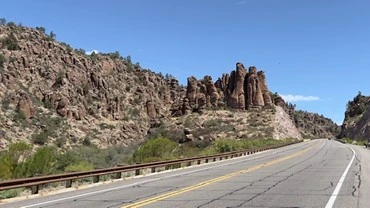
Third Place (co-recipient): Gila-Pinal Scenic Road, HALS AZ-32 Pinal County, Arizona By Steve Venker, ASLA
Gila-Pinal Scenic Road is a segment of U.S. 60, one of the original transcontinental highways commissioned in 1926. The road travels throughout the Sonoran Desert life zone beginning at the desert floor and moving upward through four biotic communities of plants and animals that are associated with elevation gradients. This part of U.S. 60 has its roots in Arizona’s first Territorial wagon road that connected Phoenix to the mining boomtown of Globe, Arizona. Over the past hundred years the road has been modified and improved to incorporate developments in transportation and engineering technologies. Along the route there are several natural features, a historic town and associated mining sites, abandoned highway segments and bridges, cultural sites, trail heads, campgrounds, and a desert arboretum. It was designated a scenic road on June 20, 1986, by the Arizona Department of Transportation.
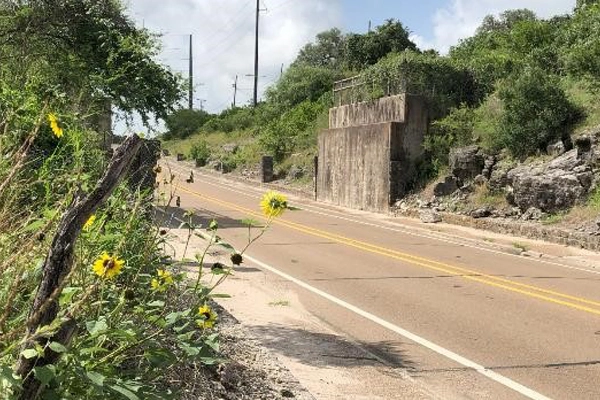
Third Place (co-recipient): Texas and New Orleans Railroad/Southern Pacific Railroad Underpass, HALS TX-18 Goliad, Goliad County, Texas By Jeremy Blad, ASLA, Sandra Chipley, ASLA, Stephen Cook, ASLA, Amy Starling Rampy, ASLA
Constructed between 1935 and 1937 by the Austin Bridge Company, the Texas and New Orleans Railroad/Southern Pacific Railroad Underpass eliminated a dangerous railroad grade crossing along former Highway No. 29 (now U.S. 183), an important route from Austin to the Gulf Coast. This historic landscape feature served as the prominent northern entrance for the newly constructed Texas Revolution Memorial Highway. It also created an architecturally unified entrance to Goliad State Park. Designed to harmonize with the Spanish Colonial Revival architecture of the adjacent park and Mission Espíritu Santo, the project incorporated native limestone walls, decorative pylons, concrete curbing, sidewalks, and native landscaping. As part of Texas Centennial improvements commemorating the state’s independence from Mexico, the surviving pylons and walls are an example of how transportation infrastructure was deliberately integrated into a commemorative cultural landscape. It reflects New Deal-era values of blending utility, regional materiality, and historical significance to create roadside landscapes that conveyed both function and regional identity.
In addition to these winners, the competition received 6 other outstanding entries (listed alphabetically by state):
- Bashford's Hot Mineral Spa, HALS CA-180; Niland, Imperial County, California; by Lauren Kim
- Cabazon Dinosaurs, HALS CA-181; Cabazon, Riverside County, California; by Nicolette Remmel, ASLA
- Tower of Compassion, HALS CO-19; Longmont, Boulder County, Colorado; by Kayleigh M. Vanderwerff
- Graeser Roadside Parking Area, HALS MN-15; Robbinsdale, Hennepin County, Minnesota; by Andrea Salo Weber, ASLA, and Matthew Rentsch, ASLA, adapted from work by Carole Zellie
- Middlegate Shoe Tree, HALS NV-7; Middlegate, Churchill County, Nevada; by Linna Chang, Student ASLA
- Malta Drive-In Theater, HALS NY-19; Malta, Saratoga County, New York; by Lisa M. Floryshak
The Historic American Landscapes Survey (HALS) was created in 2000 as a federal program to document historic landscapes throughout the United States. Documentation, consisting of drawings, photographs, and historical reports, is archived in the Library of Congress where it is available to the public copyright free. Like its companion programs, the Historic American Buildings Survey (HABS) and the Historic American Engineering Record (HAER), HALS documentation is used by a variety of constituents to study and preserve our nation’s significant historic sites.
The National Park Service administers HALS and develops uniform guidelines for recording landscapes; ASLA provides professional guidance and technical advice for the program through its Historic Preservation Professional Practice Network; and the Library of Congress preserves HALS documentation and makes records available to the public.
HALS will continue the HALS Challenge in 2026, inviting all landscape architects, historians, students, and other interested parties to document significant landscapes in their communities. Cash prizes will be awarded to the top three submissions and the results will be announced at the ASLA 2026 Conference on Landscape Architecture in Los Angeles, CA. To learn more about the competition and other ways to contribute to the HALS collection, please visit the program website.
Scott Keyes is the Chief of the Heritage Documentation Programs and acting Chief of the Historic American Landscapes Survey at the National Park Service.