

.webp?language=en-US)

.webp?language=en-US)
The Price of Hot Landscapes
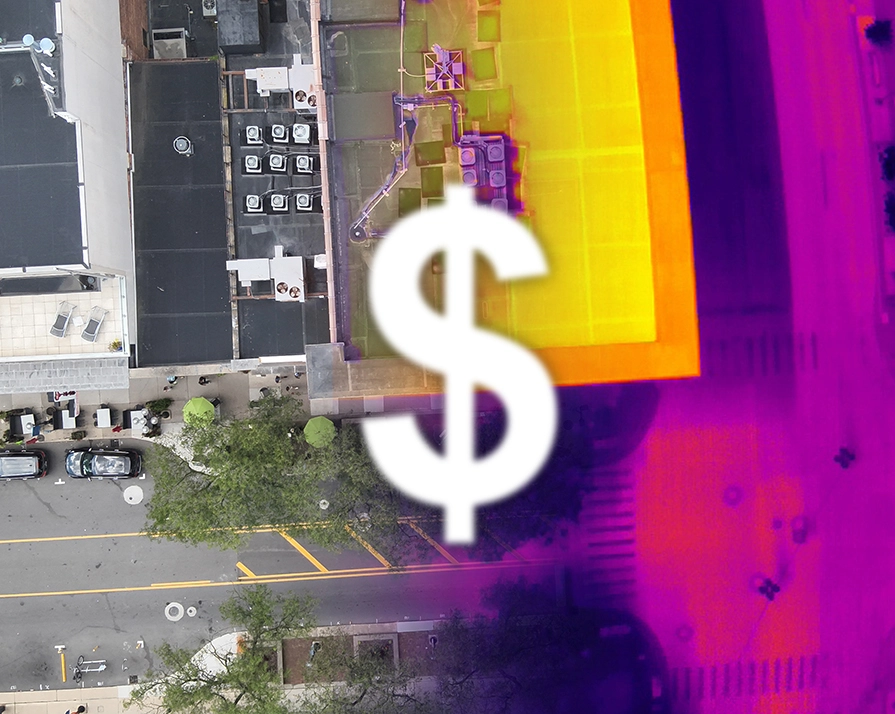
Hi-res RGB + Thermal overlay of a streetscape research study corridor / Keenan Gibbons/SmithGroup
By Keenan Gibbons
Using a thermal drone, I have recorded naturally occurring temperature extremes as high as 1,200°F+ (650°C+) over prairie fires and as low as subzero over frozen lakes that I spent a few days camping on while ice fishing.
The hottest common urban surface material temperature I've recorded was 186°F (86°C) on a conventional black building rooftop. (And for context, when someone orders their food “well done” at a restaurant, they're asking for an internal temperature of 160°F [71°C].)
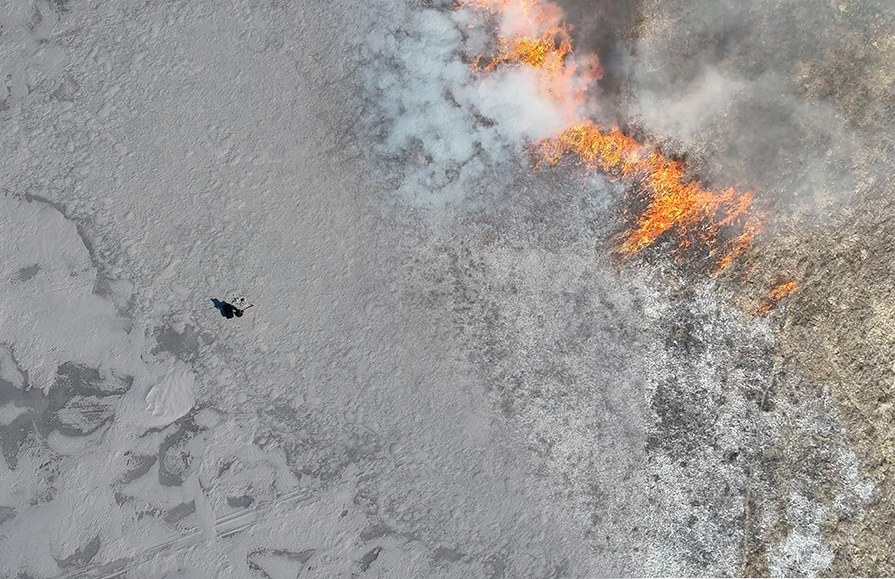
Two extreme landscapes—merged drone aerials of February northern Michigan ice fishing (left) and an April south Michigan prairie fire (right) / Keenan Gibbons
Yet none of the costs associated with that urban heat appear on the project budget that created it. Instead, they are pushed outward—absorbed by hospitals, health and property insurers, homeowners and renters in the form of higher energy bills, employers in the form of missed work days, and individuals in the form of discomfort, health issues, and death.
Economists have a word for costs that are created by one party and paid by another: externalities. Heat is one of the largest and least recognized externalities in our built environment.
In my previous article, I showed how heat happens at the scale of a sidewalk. It is created by design decisions: pavement color, material selection, tree canopy, shade, and solar exposure. Every sidewalk, parking lot, roof, and street is a thermal decision.
The problem is that while we can measure thermal impacts, we rarely pay for them.
A parking lot owner benefits from maximizing pavement. A developer may cut costs by minimizing trees and landscape. A project may even come in under budget. But the resulting heat does not disappear. Society absorbs the consequences with:
- Higher cooling demand
- Increased emergency room visits
- Heat-related mortality
- Reduced worker productivity
- Stressed electrical grids and brownouts
Someone is already paying for heat. The healthcare system offers one of the clearest examples.
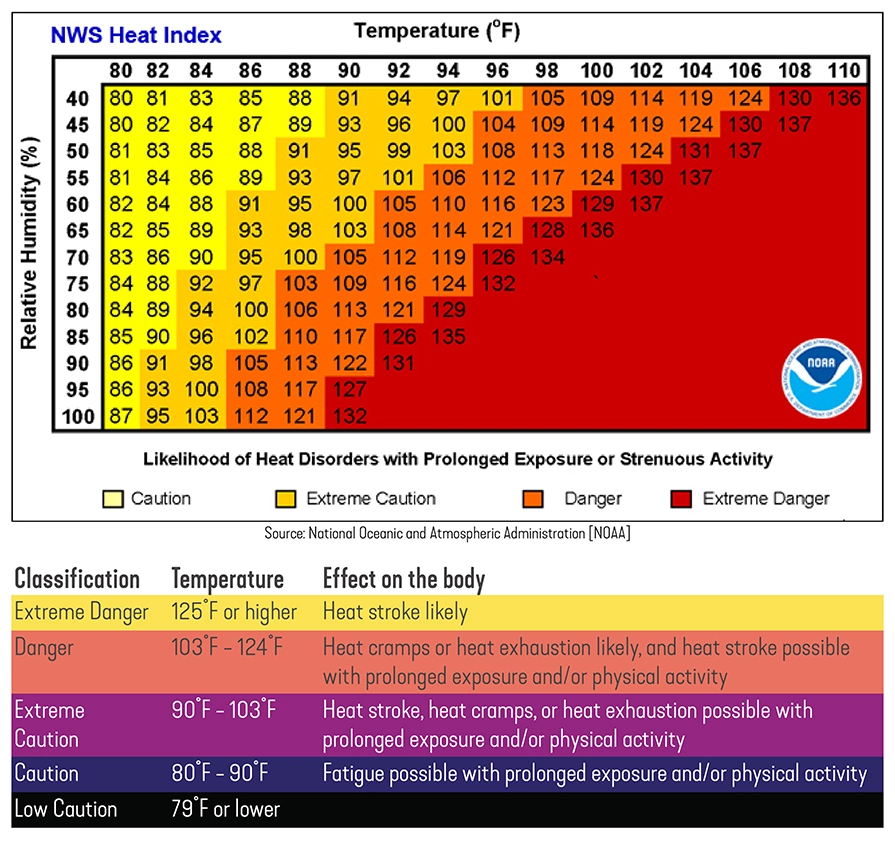
National Oceanic and Atmospheric Association (NOAA) and the National Weather Service (NWS) identify the relationship between heat and human health based on temperature and humidity / Heat Index chart from the NOAA/NWS (upper) | Isolated surface temperature chart prepared by Keenan Gibbons (lower)
Analysis of insurance claims data found that extreme heat contributes to approximately 235,000 additional emergency department visits and more than 56,000 hospitalizations annually in the U.S. The associated healthcare costs approach $1 billion every summer.
These costs are largely invisible within the projects that generate them.
Imagine if a transportation project generated a billion dollars in annual public expense after construction. We would almost certainly account for that outcome. However with heat, the costs are distributed across hospitals, insurers, public health agencies, employers, utilities, and families. No single organization receives the full bill.
This fragmentation creates an unfortunate incentive problem.
Health insurers spend billions treating heat-related illness. Utilities invest billions to meet growing cooling and energy demand. Cities spend millions responding to heat emergencies. Yet relatively little funding is directed toward simple landscape interventions that reduce exposure before illness occurs.
We continue to fund treatment more than prevention. Unlike hurricanes, floods, or tornadoes, heat rarely leaves dramatic images behind. Roofs remain attached. Buildings remain standing. Roads remain open. The damage is harder to see.
But the damage is there. Construction productivity declines. Outdoor labor becomes more dangerous. Cognitive performance suffers. Energy consumption rises. Economic output slows.
Recent estimates find heat-related productivity losses reached approximately $220 billion annually in the U.S. These losses are real. They simply do not arrive as a single insurance claim.
This helps explain why heat remains economically invisible despite becoming increasingly lethal. Our disaster systems were built to recognize broken infrastructure. Heat primarily breaks human bodies.
Why is it easier to fund a storm sewer than a tree?
A storm sewer is recognized as infrastructure. Its purpose, cost, and performance are clearly defined. A tree, rain garden, bioswale, or shaded streetscape often gets treated as an amenity despite delivering measurable services.
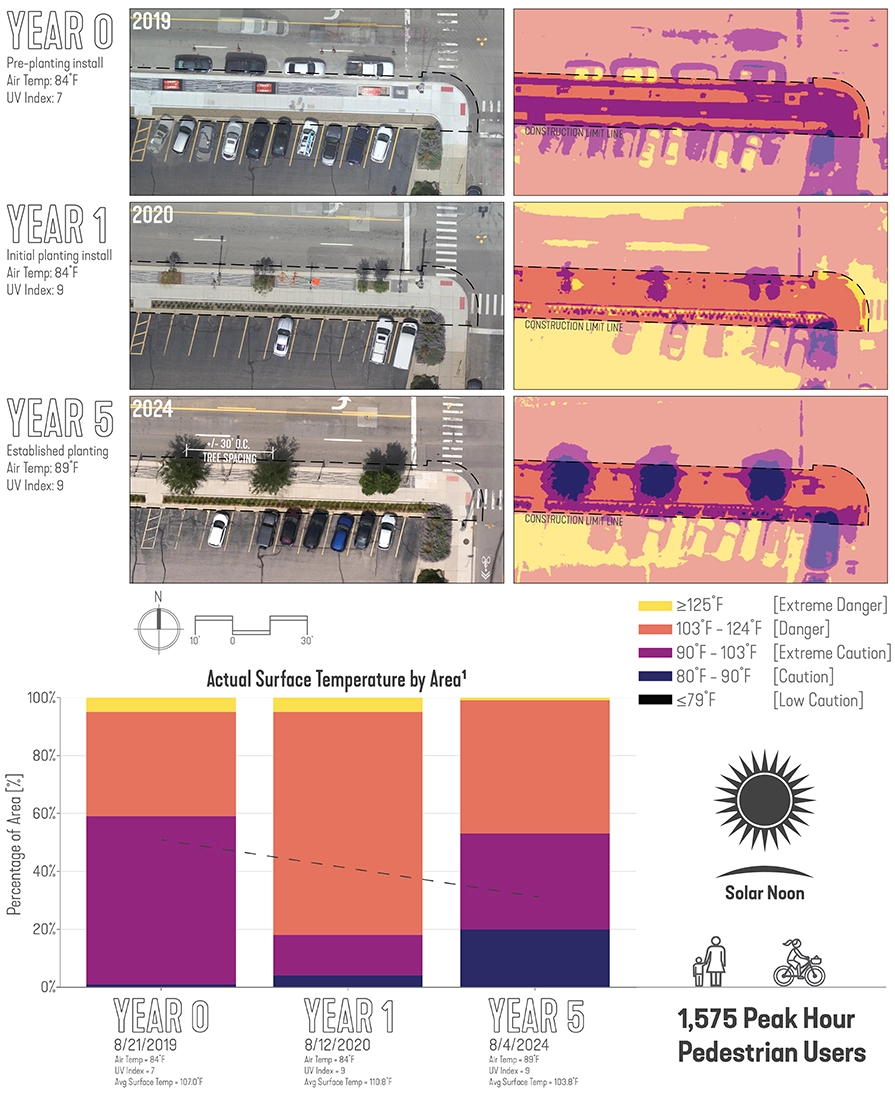
5-year impact on heat health of street tree and planting establishment at solar noon / Keenan Gibbons/SmithGroup
Trees and green space:
- Reduce surface temperatures
- Reduce cooling demand
- Improve thermal comfort
- Intercept stormwater
- Extend pavement life
- Improve public health outcomes
These benefits are known. But the challenge is they are spread across multiple budgets and institutions.
The agency responsible for planting the tree is rarely the agency that benefits from lower healthcare costs. The utility that benefits from reduced peak electricity demand is rarely the organization maintaining the landscape. The incentives remain disconnected from the outcomes.
Heat is an accounting problem.
We systematically count the cost of cooling systems while undervaluing the landscapes and simple nature-based solutions that reduce the need for them. We fund treatment more readily than prevention. We inadvertently reward infrastructure that absorbs and stores heat while struggling to recognize the value of more cost-effective infrastructure that dissipates it.
If heat happens at the scale of a sidewalk, its costs happen at the scale of society.
Until those costs become visible, we will continue to pay for heat long after the projects that created it. If we recognize heat as both a material and economic condition, we can begin to shift incentives toward outcomes that are already within reach: cooler surfaces, shaded spaces, and environments that reduce harm rather than amplify it.
The question is not whether we can afford to do this but whether we can afford not to.
Keenan Gibbons, ASLA, PLA, LEED GA, is ASLA’s Climate & Biodiversity Action Fellow for 2026-2027. He is principal and director of landscape architecture at SmithGroup and lecturer at the University of Michigan.