

.webp?language=en-US)

Voices of Women in Landscape Architecture, Part 24
ASLA's Women in Landscape Architecture Professional Practice Network (WILA PPN) is sharing the next set of profiles of women in the profession (see the previous installment right here). If you'd like to be featured, the PPN's call for submissions remains open, with profiles being shared on an ongoing basis.
These profiles will appear on the PPN's LinkedIn group, Facebook group, and here on The Field. This post includes: Kira Wise, Associate ASLA, Sherly Zhang, and Pu "Melody" Zhao, Associate ASLA.
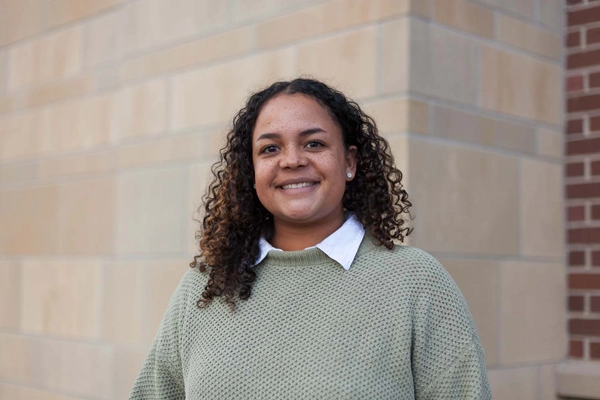
Kira Wise, Associate ASLA
What inspired you to pursue a career in landscape architecture?
In school my favorite subjects were art and math. My love for art influenced what curriculum I wanted in college, but my practical side couldn’t commit to an art major.
As teenager I worked as a gardener in Jackson Hole, Wyoming. I was fully immersed in the greenery for hours, weeks, months, and eventually years. Those years created a love for plants and beautiful, functional backyard spaces.
I knew I wanted a career that would be sustainable for my lifestyle—one that would allow me to get out of the office, interact with the environment, and support my local community.
When I discovered landscape architecture, I instantly knew it was the career path for me.
What advice do you have for other women pursuing a career in landscape architecture?
As a woman entering the field of landscape architecture, you may often find yourself in the minority. Your perspective will naturally differ from those around you, and you’ll notice details others might overlook. This is not a disadvantage; it is one of your greatest strengths.
Landscape architecture thrives on fresh ideas, creative solutions, and thoughtful attention to detail. These qualities are often where women excel. So, embrace your voice, take up space, and trust your vision. Design with the confidence that your ideas will shape and strengthen the future of this industry.
Can you share with us a project you are particularly proud of and why?
I am most proud of my work at Vallivue Academy, an alternative high school located in Caldwell, Idaho. When I first joined the project, the site was nothing more than a dirt lot used for student parking. The final design transformed it into a small campus complete with a courtyard, play field, multiple classrooms, and, of course, parking.
This was the first project where I gained a deeper understanding of both design and the construction process. I was able to create a design, participate in construction management, and help ensure the vision was executed successfully. This experience strengthened my confidence as design professional and, most importantly, resulted in a safe, welcoming place for students.
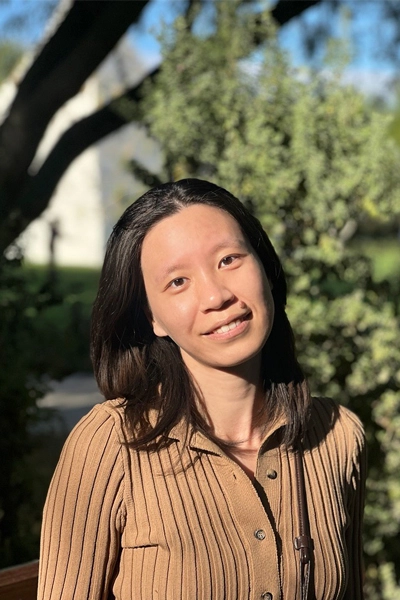
Sherly Zhang
What inspired you to pursue a career in landscape architecture?
Before entering university, I planned to pursue architecture. Yet during an early visit to the faculty building, I was shown the landscape studio—bright and expansive, with a welcoming atmosphere and a notably close teacher-to-student ratio, thanks to its smaller cohort. At the time, I knew very little about landscape architecture, but the space itself was irresistibly appealing. Once I joined the department, I quickly discovered a deep affection for the discipline. What captivates me most is the idea of shaping places that are inherently dynamic, where every design is a journey that unfolds and transforms over time.
Who are the female role models who have influenced your career?
Two remarkable women at the University of Hong Kong—Dorothy Tang and Vincci Mak—were among my first role models in landscape architecture. Both are accomplished designers and researchers whose boundless enthusiasm for sharing knowledge lit a spark for those of us just stepping into the profession.
Martha Schwartz became another role model through my firsthand experience working with her. I interned at her firm during my gap year and returned after graduation. Her passion for design is unforgettable—she can stand at the table sketching for the whole day, completely lost in her ideas and not even stopping for a sip of water. Watching that kind of dedication up close left a lasting mark on me.Another endlessly inspiring figure for me is Jane Jacobs, whose book has a permanent spot on my shelf no matter where I live—whether in China, Europe, or the United States. Her fearless courage, razor-sharp insight, and tireless activism continue to motivate me and serve as a beacon for female designers everywhere.
What advice do you have for other women pursuing a career in landscape architecture?
Interact with a diverse range of professionals in the field. Landscape architecture—and the broader design world—is far more diverse than most newcomers realize. Within it, you’ll find an incredible mix of perspectives, from ecologists and urban activists to digital futurists and experimental artists. It’s a profession that welcomes unconventional ideas and celebrates unexpected career paths, making room for all the “wild” thoughts and quirky journeys that lead to innovation.
Can you share with us a project you are particularly proud of and why?
I have many projects I’m proud of, and it’s impossible to single out just one “best” example. Every project has taught me something valuable—whether it’s shaping a strong concept, wrestling with tricky construction details, or navigating the push and pull between different stakeholders. I am forever thankful to my mentors and those who bear with me during the process. The project that I am most proud of will be my next one!
What advice would you give your younger self?
Speak up early—share your thoughts, even when they feel half-formed. Your perspective matters, and voicing it invites collaboration.
Master the tools, but don’t worship them—Rhino, Grasshopper, GIS, and AI workflows are powerful, but they are only as good as your conceptual clarity. A strong concept should always guide the process, not the other way around.
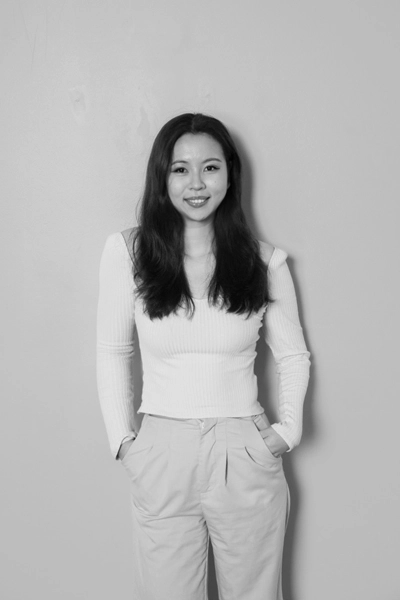
Pu "Melody" Zhao, Associate ASLA
What inspired you to pursue a career in landscape architecture?
My connection to landscape architecture runs deep—it’s something I’ve grown up with and felt instinctively drawn to. My family are landscape architects, so from a young age I was surrounded by conversations about design, ecology, and the beauty of living environments. But what truly inspired me wasn’t just the profession itself—it was the emotional bond I felt with nature.
I believe thoughtful design has the power to heal, to connect people’s emotions, and to help them rediscover beauty in their surroundings. As a child, I loved exploring gardens, watching how light moved across the ground, and sensing how landscapes could quietly shape human feelings. Over time, I realized that design could be both poetic and purposeful—a way to translate those silent emotions into spaces that bring comfort and connection. That’s when I knew landscape architecture was more than a career—it was a calling rooted in both family and heart.
Who are the female role models who have influenced your career?
One of the most influential female role models in my career is Gina Ford, FASLA, my former professor at the Harvard Graduate School of Design. In her studio, I explored how landscape architecture can advance social justice and spatial equity for underrepresented communities. Her approach—grounded in empathy, community engagement, and interdisciplinary collaboration—profoundly shaped how I see design as a tool for connection and care.
Gina’s work and her lecture “Designing for Resilience, Equity, and Democracy” continue to inspire me. She taught me that every public space holds the potential to empower people, amplify unheard voices, and strengthen democracy through design. Her example reminds me that resilience is not only ecological—it is also social and emotional. She showed me what it means to design with integrity, inclusivity, and purpose.
What advice do you have for other women pursuing a career in landscape architecture?
My advice to other women pursuing a career in landscape architecture is to never let gender, race, or self-doubt define your limits. The field needs your voice, your perspective, and your emotional intelligence. Women possess an extraordinary gift—the ability to sense the subtle emotions that live within spaces, to notice the quiet poetry in small details, and to translate those moments into designs that nurture connection, beauty, and belonging.
Sensitivity is a creative talent. It allows us to design with empathy, to listen deeply, and to create environments that speak to both people and nature with grace and authenticity. Trust your intuition as a design instrument, and stand firm in your creativity—it is essential to shaping public spaces that reflect the diverse minds, emotions, and needs of the people who experience them.
Can you share with us a project you are particularly proud of and why?
One of the projects I’m most proud of is Belinda’s Petition, which received both the French Design Silver Award and the London Design Silver Award. Grounded in research from Harvard’s Legacy of Slavery report, the project reimagines the Royall House and Slave Quarters—one of the few surviving sites of slavery in the northern US—through the story of Belinda Sutton, an enslaved African woman who fought for her freedom and reparations.
The design follows Belinda’s emotional journey through three phases—Strive, Determination, and Hope—transforming the site into a space of remembrance and healing. A rammed-earth wall symbolizes endurance, while mist installations and blueberry plantings evoke sisterhood and the fragments of rest once found in hardship. The landscape divides between power and resistance, ending in a fractured wall and circular fountain that embody liberation and renewal.
I’m proud of this project because it allowed me to merge research, emotion, and design into a shared act of storytelling—honoring a woman whose courage transcended centuries. It reminded me that landscape architecture can heal, reveal truth, and give voice to those who history tried to silence.
What advice would you give your younger self?
If I could give advice to my younger self, I would say: stay grounded in practice and learn through making. Understanding construction is as essential as imagination. Every material carries its own language—its texture, weight, and light can profoundly shape how people feel and move through space.
I would remind myself to spend more time on site, to study how materials weather, sound, and interact with the landscape, and to learn from craftsmen and builders who bring design to life. The more deeply you understand how things are built, the more poetic and authentic your designs become.
Design doesn’t end on paper—it lives in the ground, in the textures people touch, and in the emotions those spaces evoke.
2025 WILA Profiles:
Voices of Women in Landscape Architecture, Part 15- Inge Daniels, ASLA
- Alexandria Hernandez
- Abigail Thomas, ASLA
- Lauren Colunga, ASLA
- Nusrat Jahan Nipu
- Tanya Olson, ASLA
- Magic Sun, Associate ASLA
- Nehali Doshi, Associate ASLA
- Lindsay Corica
- Justine Heilner, ASLA
- Megan Terry, ASLA
- Carolyn Pendelton-Parker, ASLA
- Mary G. Padua, ASLA
- Rita Kwong, ASLA
- Angelique Robb
- Han Zhang, ASLA
- Janice Parker, ASLA
- Shachi Patel, Student ASLA
- Yixin Jiang
- Ann Weiland, ASLA
- Jieya Yu
- Stacy Paetzel, ASLA
- April Westcott, FASLA
- Joy Kuebler, FASLA, PLA
- Jie Han, Associate ASLA
- Colleen Williams, PLA
- Mandi Fung, ASLA, PLA
2024 WILA Profiles:
Voices of Women in Landscape Architecture, Part 1- Carolina Jaimes, ASLA
- Connie Scothorn, ASLA
- Emily Greenwood, ASLA
- Kathryn Talty, ASLA
- Aida Curtis, FASLA
- CeCe Haydock, ASLA
- Qing Lana Luo, ASLA
- Caeli Tolar, ASLA
- Jan Satterthwaite, ASLA
- Kristina Snyder, ASLA
- Jennifer Cooper, ASLA
- Anne Chen, ASLA
- Meghan Mick, ASLA
- Dana Hernalsteen, ASLA
- Lucila Silva-Santisteban, ASLA
- Martha Fajardo
- Rituparna Simlai, ASLA
- Laurie Hall, ASLA
- Kristen Sweatland
- Donna Rodman
- Becky Rupel, ASLA
- Maria Debye Saxinger, ASLA
- Liwei Shen, Associate ASLA
- Elizabeth "Violet" Mak, ASLA
- Nicole Cleary, ASLA
- Fatema Ali Tushi, ASLA
- Whitner Kane, ASLA
- Carley Rickles, ASLA
- Rebecca Bradley, ASLA
- Kelly Ream, ASLA
- Chuyi Yin, Associate ASLA
- Stevie Famulari
- Amy Rampy, ASLA
- Peixuan Wu, Associate ASLA
- Jaime Zwiener
- Jingyi Hu, ASLA
- Jolene Rieck, ASLA
- Kaylin Slaughter, Associate ASLA
- Jessica Jacobs, Affiliate ASLA
- Salonee Chadha, Associate ASLA
- Katie Summers, ASLA
- Caroline Donaldson, ASLA
- Emily Bousaada, ASLA
- Brittany Lowe
- Inge Daniels, ASLA
- Alexandria Hernandez
- Abigail Thomas, ASLA
2023 WILA Profiles:
Women in Landscape Architecture Profiles, Part 1- Alexandra Mei, ASLA
- Angelica Rockquemore, ASLA
- Sandy Meulners, ASLA
- SuLin Kotowicz, FASLA
- Shuangwen Yang, Associate ASLA
- Heidi Hohmann, ASLA
- Tristan Fields, ASLA
- Joni Hammons, ASLA
- Sahar Teymouri, ASLA