

.webp?language=en-US)

.webp?language=en-US)
Voices of Women in Landscape Architecture, Part 9
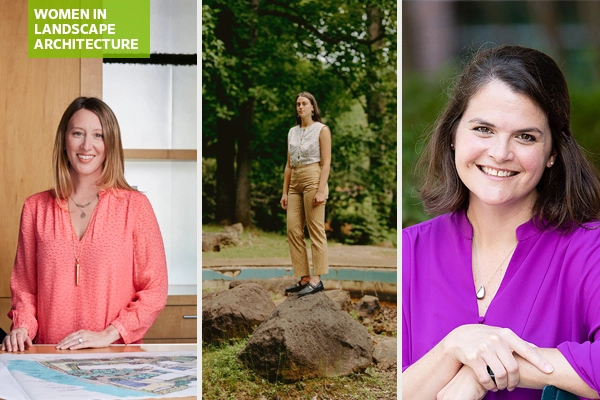
ASLA's Women in Landscape Architecture Professional Practice Network (WILA PPN) is sharing the next set of profiles of women in the profession (see the previous installment right here). If you'd like to be featured, the PPN's call for submissions will remain open, with profiles being shared on an ongoing basis.
These profiles will appear on the PPN's LinkedIn group, Facebook group, and here on The Field. This post includes Whitner Kane, ASLA, Carley Rickles, ASLA, and Rebecca Bradley, ASLA.
Whitner Kane, ASLA
What inspired you to pursue a career in landscape architecture?
I have always loved all different kinds of design (architectural, interiors, fashion, graphic, etc.). Starting as an architecture major in college exposed me to a range of different designers, styles, functions/forms, and allowed me an opportunity to dive into the purpose of design and how it can directly impact how people live. There was a natural progression from building architecture into outdoor space design and urban planning that I particularly enjoyed. Combine that with a desire to be outside more than in, and landscape architecture was a natural fit.
Who are the female role models who have influenced your career?
An early design role model was Cheryl Morgan, my Urban Studio professor at Auburn University. She challenged me in a unique way and really pushed me to explore design and my potential as a designer. That studio was my first opportunity to work with a real client (a small town in Alabama) and understand how what we do on paper can have a big impact on real lives. Her studio went beyond textbooks and lectures and really brought home the ‘why’ and ‘who’ of our profession.
What advice do you have for other women pursuing a career in landscape architecture?
There are many different avenues within landscape architecture that you can focus on—and all of them are important and valid. Lean into what lights you up: you may not find it in every project you work on, and that is okay. All projects can present opportunities to learn and grow if you let them. Be curious and ask questions (and don’t be afraid to follow up with another question!). Use what you learn and be confident in your delivery—a confident woman is a powerful thing.
Can you share with us a project you are particularly proud of and why?
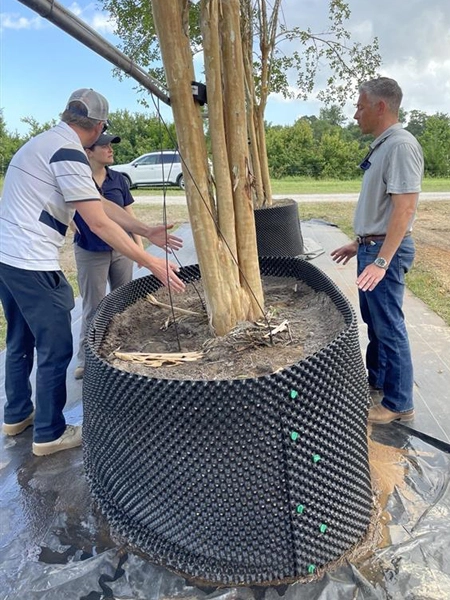
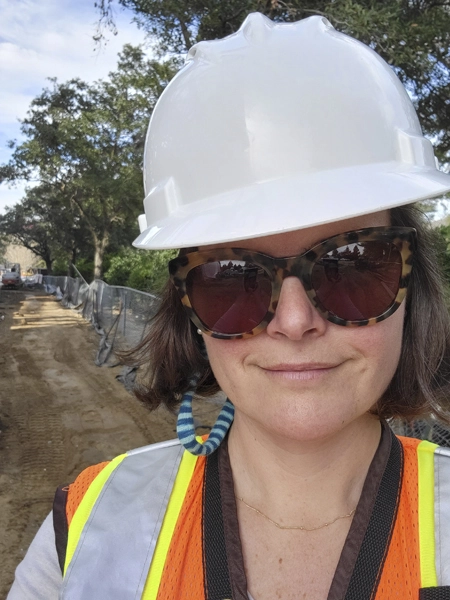
Two come to mind immediately: the renovation of the Credit One Stadium in Charleston, SC, is first. This was a high-profile project with a very tight design and construction timeline. Charleston has strict stormwater guidelines and the open space had to be both beautiful and extremely functional. Working closely with a fantastic design, engineering, and construction team allowed us to realize this goal and bring an amazing space to life. As someone who really enjoys construction drawings and detailing in particular, it was a master class in the creative use of materials.
The second is significantly smaller: a garden and columbarium design for the small church I grew up in, in Clinton, NC. It was a very personal project and one that makes me smile every time I think of it.
What advice would you give your younger self?
Embrace the unexpected and the unknown. My path through this profession (and life in general) has not been linear. What felt like periods of professional upheaval and uncertainty became amazing opportunities for personal growth. And don’t be afraid to really be yourself. I care deeply about my profession and the people we design for—and just as much for the people I share an office with every day.
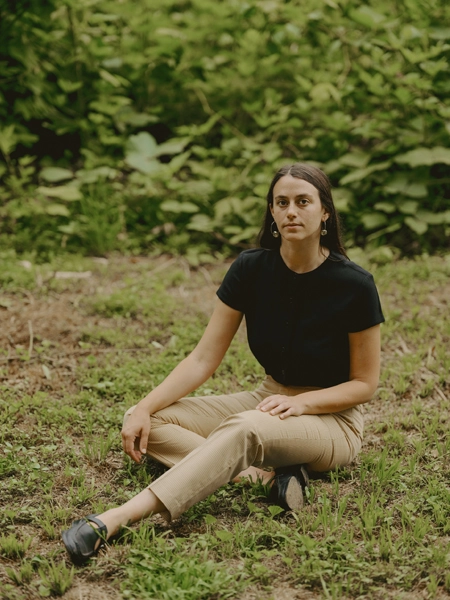
Carley Rickles, ASLA
What inspired you to pursue a career in landscape architecture?
It was not really like that for me. I stumbled into landscape architecture school rather randomly. I took a career test on the internet. I found school to be creatively fulfilling, but felt a lot of imposter syndrome. While I knew I loved the field, I was not sure how to "pursue a career in landscape architecture" that felt authentic to myself. I had a lot of doubts about built environment change and wasn't comfortable sharing them. I didn't think there was a place for me in landscape architecture. I had not been exposed to ways of practicing I identified with. I did not find my footing for a long time. What eventually inspired me was conducting an independent study in graduate school on "alternative public space." I was able to conduct field studies in Europe which exposed me to more radical ideas about public space, urban design, and community engagement. Since that time I've understood the potential of my place in this field.
Who are the female role models who have influenced your career?
Amy Francescini, Julie Bargmann, Suzanne Lacy, Martha Schwartz, FASLA, Cecile Martin, Margaret Crawford, Ellen Dunham-Jones, Ruth DusseaultWhat advice do you have for other women pursuing a career in landscape architecture?
Follow your gut. If not for you, then for the next generation. If you're not seeing yourself in the room or if you're not feeling supported, go to the library. Search for those you can look up to and/or identify with. I promise you they're there. Your life experience and voice are valid and valuable. Sometimes you can only rely on yourself to put the pieces together. Once you've found your footing, pass it on to the next generation. They need you. You've got it.
Can you share with us a project you are particularly proud of and why?
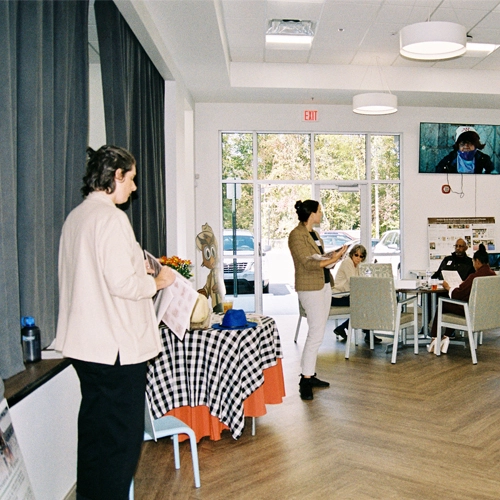
The Historic Bruce Street School. This project utilized a community-centered design approach. My firm, Martin Rickles Studio, worked closely with community members and organizations over two years to craft a conceptual design for an important cultural project. We had incredible participation and outcomes that were continuously supported by folks within the community. We were able to shepherd the design process in a way that folks identified with. The project has been continuously supported from the ground-up.
What advice would you give your younger self?
You deserve to be in the room upon which you've arrived.
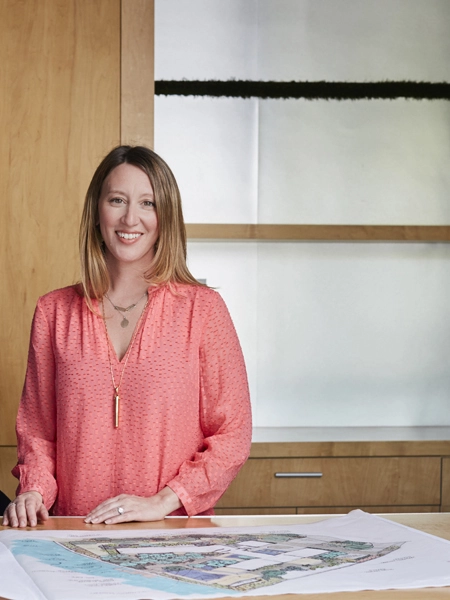
Rebecca Bradley, ASLA
What inspired you to pursue a career in landscape architecture?
I knew I wanted to do something in a creative realm. My mom actually knew Louisiana State University had a good program, as she had a friend that had graduated in the program—my mom gets the credit, as she encouraged me to check it out at the freshman orientation we did.
Who are the female role models who have influenced your career?
My mother, and several women who mentored me early on at the first firm I worked for: Akiko Iwata, ASLA, Fernanda Ferrari, Sarah DelNegri, Mihaela Zaharescu, ASLA, and Penny Billingham. These women did not have “leadership” titles, but they were leaders, they organized the teams and projects, they taught younger staff, and they were incredibly thoughtful designers. Lisa Switkin, ASLA, has been a great role model to me in our industry and outside the landscape architecture industry entrepreneurs I have followed and been inspired by the careers of Liz Lambert, Sylvana Ward Durrett, and Sheila Bridges.
What advice do you have for other women pursuing a career in landscape architecture?
Be patient and learn from even the places or projects that challenge you most. Make it your own space—there is so much potential with this career choice: alternate ways of practicing, different industries we could impact. We need more women-owned and led landscape architecture practices and studios so the traditional firm structure can be rethought.
Can you share with us a project you are particularly proud of and why?
Cadence—keeping a small business thriving for 15 years and having some team members who have joined in this journey beyond the 10 year mark is something I am extremely proud of.What advice would you give your younger self?
Just keep going. You will write and re-write your life multiples time—and that is a gift.
2024 WILA Profiles:
Voices of Women in Landscape Architecture, Part 1- Carolina Jaimes, ASLA
- Connie Scothorn, ASLA
- Emily Greenwood, ASLA
- Kathryn Talty, ASLA
- Aida Curtis, FASLA
- CeCe Haydock, ASLA
- Qing Lana Luo, ASLA
- Caeli Tolar, ASLA
- Jan Satterthwaite, ASLA
- Kristina Snyder, ASLA
- Jennifer Cooper, ASLA
- Anne Chen, ASLA
- Meghan Mick, ASLA
- Dana Hernalsteen, ASLA
- Lucila Silva-Santisteban, ASLA
- Martha Fajardo
- Rituparna Simlai, ASLA
- Laurie Hall, ASLA
- Kristen Sweatland
- Donna Rodman
- Becky Rupel, ASLA
- Maria Debye Saxinger, ASLA
- Liwei Shen, Associate ASLA
- Elizabeth "Violet" Mak, ASLA
- Nicole Cleary, ASLA
- Fatema Ali Tushi, ASLA
2023 WILA Profiles:
Women in Landscape Architecture Profiles, Part 1- Alexandra Mei, ASLA
- Angelica Rockquemore, ASLA
- Sandy Meulners, ASLA
- SuLin Kotowicz, FASLA
- Shuangwen Yang, Associate ASLA
- Heidi Hohmann, ASLA
- Tristan Fields, ASLA
- Joni Hammons, ASLA
- Sahar Teymouri, ASLA