

.webp?language=en-US)

.webp?language=en-US)
Voices of Women in Landscape Architecture, Part 10
ASLA's Women in Landscape Architecture Professional Practice Network (WILA PPN) is sharing the next set of profiles of women in the profession (see the previous installment right here). If you'd like to be featured, the PPN's call for submissions will remain open, with profiles being shared on an ongoing basis.
These profiles will appear on the PPN's LinkedIn group, Facebook group, and here on The Field. This post includes Kelly Ream, ASLA, Chuyi Yin, Associate ASLA, and Stevie Famulari.
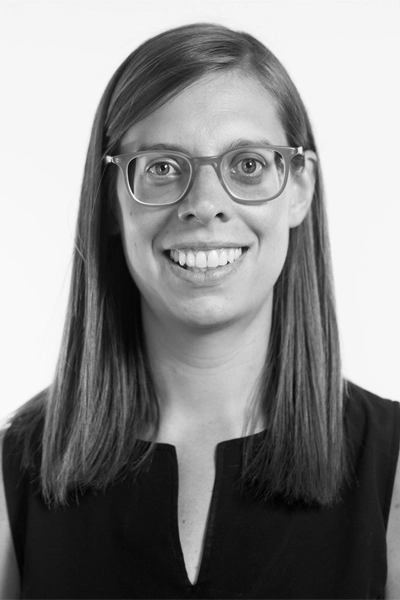
Kelly Ream, ASLA
What inspired you to pursue a career in landscape architecture?
I took a course on the cultural history of designed landscapes and urban spaces while I was at Penn State. I was expecting a run of the mill general education course and was surprised to find myself pulled into these fascinating stories about nature influencing culture and culture shaping nature. I was hooked! In retrospect, I can see that I was always innately drawn to landscape architecture. As a kid I spent hours poring over these National Geographic magazines, fascinated by the breadth of landscapes that exist and the people that inhabit them. And I still am fascinated by the relationship between humans and the natural world, our interdependence, the way we continue to shape one another.
Who are the female role models who have influenced your career?
Jane Jacobs and Lady Bird Johnson. Both of these women shaped the way we think about urban planning and conservation. Jane viewed cities as living beings, as ecosystems that thrive on diversity. She stood up to federal bulldozers demolishing swaths through urban cores and asked us to consider: are cities built for cars or for people? Lady Bird was also fighting against the blight of urban renewal. She believed the environment shapes us. She galvanized support to reintroduce nature into our urban core, developing pocket parks and establishing tree canopies, naturalizing highways and medians with plantings of wildflowers. During a time when women’s voices weren’t a part of the conversation, these women successfully fought back against urban renewal in a male-dominated field and advocated for a whole new approach to urban development. I think that’s pretty spectacular.What advice do you have for other women pursuing a career in landscape architecture?
Seek out diverse experiences! Early in my career, I was certain that my interest lay in urban design. I happened to have the chance work on large park and open space projects and discovered, rather fortuitously, that my passion is actually in this larger scale of design and planning. It’s important to remain open to the unexpected.
Can you share with us a project you are particularly proud of and why?
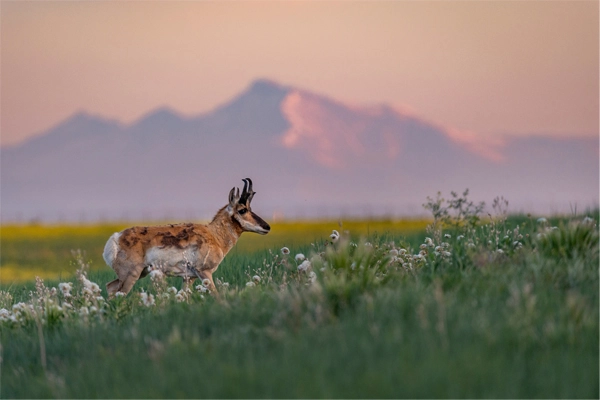
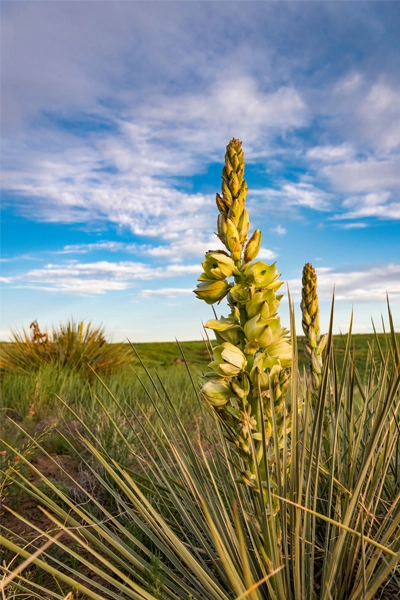
One that is close to my heart is the Plains Conservation Center, which addressed the conservation of North America’s remnant shortgrass prairie in Colorado. Few ecosystems have seen the destruction endured by the prairie. Historically, nearly one third of North America was once covered in a vast, unbroken stretch of grassland teeming with biodiversity. With western expansion, settlers plowed under the grassland, breaking apart the powerful root system that held rich topsoil in place for millennia; they hunted the bison nearly to extinction. Of the hundreds of millions of acres of native prairie that once covered our country, only 1% remains. So, to have this site with 1,100 acres of native grassland was incredibly unique.
The goal of the project was to re-position the site as a preeminent center for conservation and education, to continue to protect this land as well as share with the public the cultural heritage of this area. This master plan presented an integrated approach to balance resource conservation with visitor use, outlining a framework for inspiring and sensitively sited visitor and educational facilities, habitat enhancement, resource conservation, programming, and fiscal resiliency.
I am so proud that we were able to protect these natural resources for future generations.
What advice would you give your younger self?
It’s not just about getting the work done. To succeed, you must find your passion!
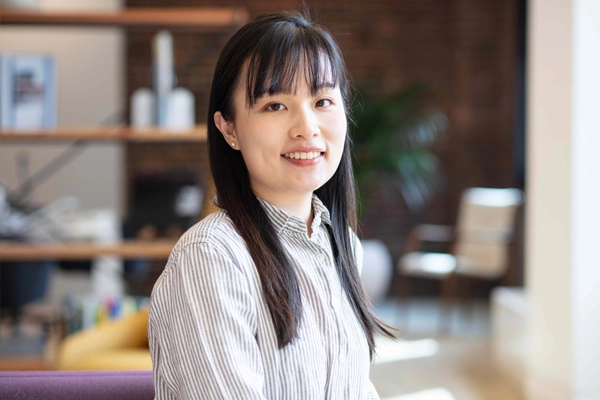
Chuyi Yin, Associate ASLA
What inspired you to pursue a career in landscape architecture?
Growing up near ancient Chinese gardens allowed me to experience thoughtfully designed urban natural spaces firsthand. A trip to the Brazilian rainforest during my undergraduate studies further sparked my passion for ecology, revealing the incredible diversity of ecosystems and inspiring me to explore ways to preserve and reimagine them. With a background in art, design, and environmental science, I see landscape architecture as a means to both understand and shape the world in ways that promote environmental sustainability and social equity.
Who are the female role models who have influenced your career?
Joan Nassauer, FASLA, introduced me to evidence-based ecological design, while Khalil Ligon, an urban planner, inspired me with her positive attitude and commitment to providing professional solutions for communities. Wanjing Ji, ASLA, mentored me with a focus on contextual design as I entered the field. Anna Cawrse, ASLA, motivated me with her energetic and creative design and planning approaches and trust in her interdisciplinary team members and encouraged my focus on sustainability.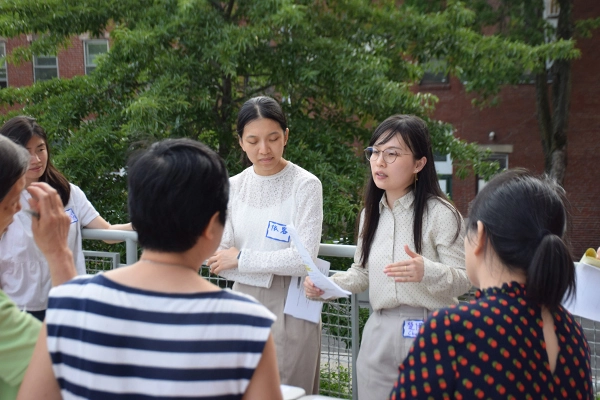
What advice do you have for other women pursuing a career in landscape architecture?
Speak up, believe in yourself, and explore as much as you can. Professional life is also a journey of self-discovery.
Can you share with us a project you are particularly proud of and why?
I am proud of my work on the Minnesota Capitol Mall Framework with a talented team. The process was intuitive, and the outcome has been highly rewarding. The Capitol Mall Design Framework builds on previous planning efforts, such as the Comprehensive Plan, Public Engagement Task Force, and Visitor Experience Survey. With input from Minnesotans and the expertise of those who use and maintain the Capitol Mall daily, we developed a detailed framework with actionable proposals to make the Capitol Mall more welcoming to all. This framework aims to enhance the Capitol Mall Area as an integrated, high-quality, and human-scaled public space. It ensures that new developments respect the community, existing assets, and context, ultimately making the area more accessible, walkable, and resilient.
What advice would you give your younger self?
Embrace your strengths, believe in yourself, and enjoy the journey.
Stevie Famulari
What inspired you to pursue a career in landscape architecture?
My art went from objects to spatial. In that transition, I realized that landscape architectural practices would be useful in some of the ideas I pursue. My undergraduate degree is a BFA, while my graduate degree is a MLA. In the midst of that there are numerous certificates. It is the totality of these fields and countless more that interests me. The art of art, the science of phytoremediation, the joy of choreography—landscape architecture feels infinite in the directions it can go. I removed the traditional boundaries tied to it and let it encompass a large infinite practice.
Who are the female role models who have influenced your career?
Ashley Zidon, ASLA. She was one of my students in landscape architecture when I met her. Now, over 15 years later, she is a colleague and practitioner using her voice to help communities. Beyond her passion and skill in the field, it is her ability to speak her beliefs into practice, and also support others (myself included) that continues to inspire me.
Mary Miss, Nancy Holt, Jeanne-Claude, Yoko Ono, Agnes Martin—all brilliant in art, happenings, and environwomxntal art. They explore questions, concepts, ideas and thoughts in their work that are timeless and caring in ways that only art can express. Terry Clements, FASLA. When I was researching womxn in the field, I was connected to her and she graciously showed me her research before it was published about womxn who were not credited in the field.What advice do you have for other women pursuing a career in landscape architecture?
Being yourself in your style and in your approach is MORE THAN ENOUGH. There is no one way to be in this field—it is far too infinite of a field. And your voice matters. Your story, your approach, your ideas—matter. Do it your way, and stand tall and proud with that.
Can you share with us a project you are particularly proud of and why?
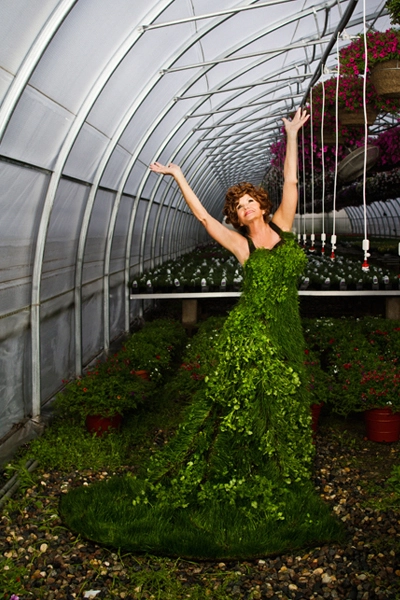
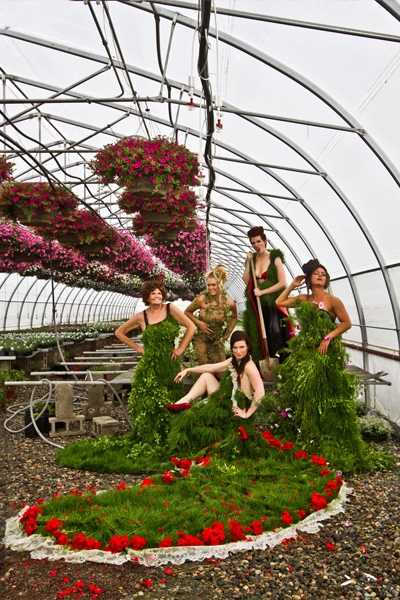
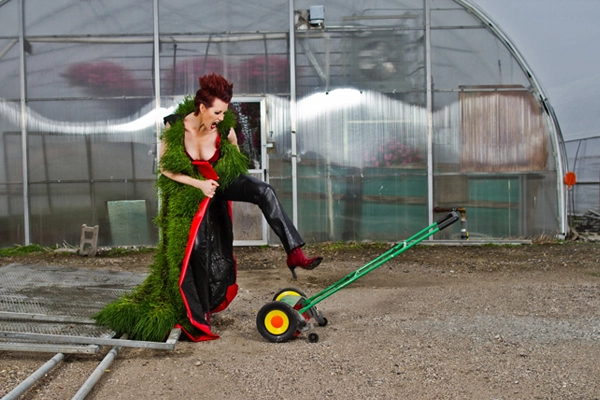
The Green Line–Garden Party Series. In this series I explore the idea of scale, mobility, and the idea of spaces. More specifically, does a landscape have to be specific size; does a landscape get to explore verticality and form; and does a landscape get to move and be on the figure of a womxn. The last exploration comes from being at events where people gather around a very interesting individual—thus creating a space at the event. And when the individual moves, people again gather. This creates a type of space. It is this idea of space and landscapes that The Green Line–Garden Party Series explores.
What advice would you give your younger self?
Laugh much more. Create with lots of joy. What comes easy to me is exactly what I can do. What makes me happy is exactly what I should do- all the time. Release what no longer serves my greatest good. My friends rock. And trust that the process that is happening is for my best outcome- even if I do not know exactly why right now! Trust anyway.
2024 WILA Profiles:
Voices of Women in Landscape Architecture, Part 1- Carolina Jaimes, ASLA
- Connie Scothorn, ASLA
- Emily Greenwood, ASLA
- Kathryn Talty, ASLA
- Aida Curtis, FASLA
- CeCe Haydock, ASLA
- Qing Lana Luo, ASLA
- Caeli Tolar, ASLA
- Jan Satterthwaite, ASLA
- Kristina Snyder, ASLA
- Jennifer Cooper, ASLA
- Anne Chen, ASLA
- Meghan Mick, ASLA
- Dana Hernalsteen, ASLA
- Lucila Silva-Santisteban, ASLA
- Martha Fajardo
- Rituparna Simlai, ASLA
- Laurie Hall, ASLA
- Kristen Sweatland
- Donna Rodman
- Becky Rupel, ASLA
- Maria Debye Saxinger, ASLA
- Liwei Shen, Associate ASLA
- Elizabeth "Violet" Mak, ASLA
- Nicole Cleary, ASLA
- Fatema Ali Tushi, ASLA
- Whitner Kane, ASLA
- Carley Rickles, ASLA
- Rebecca Bradley, ASLA
2023 WILA Profiles:
Women in Landscape Architecture Profiles, Part 1- Alexandra Mei, ASLA
- Angelica Rockquemore, ASLA
- Sandy Meulners, ASLA
- SuLin Kotowicz, FASLA
- Shuangwen Yang, Associate ASLA
- Heidi Hohmann, ASLA
- Tristan Fields, ASLA
- Joni Hammons, ASLA
- Sahar Teymouri, ASLA