

.webp?language=en-US)

.webp?language=en-US)
Advertisement
Biodiversity Loss
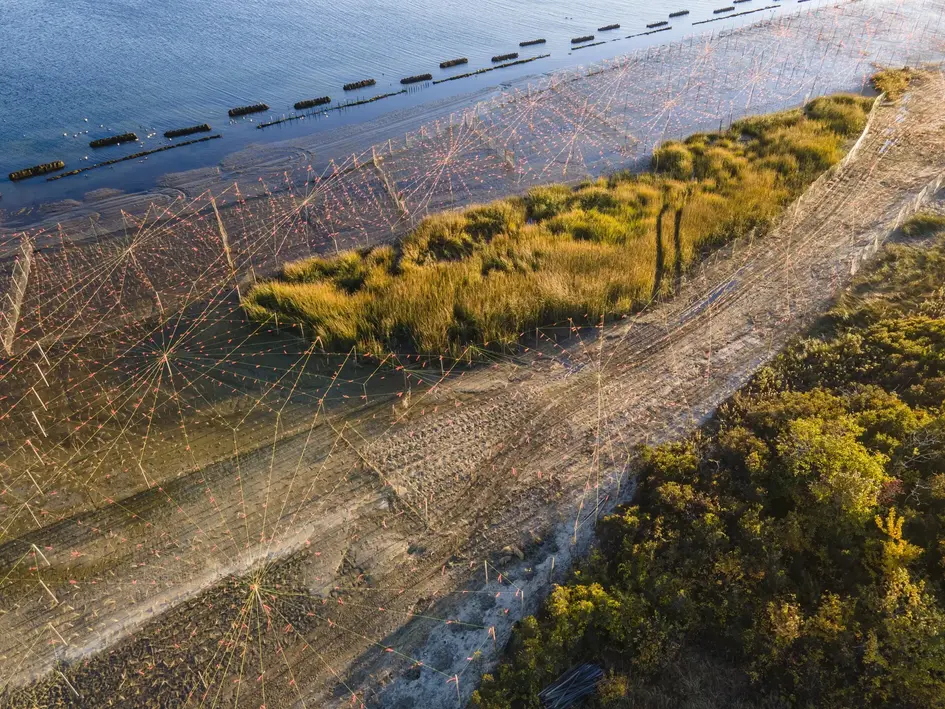
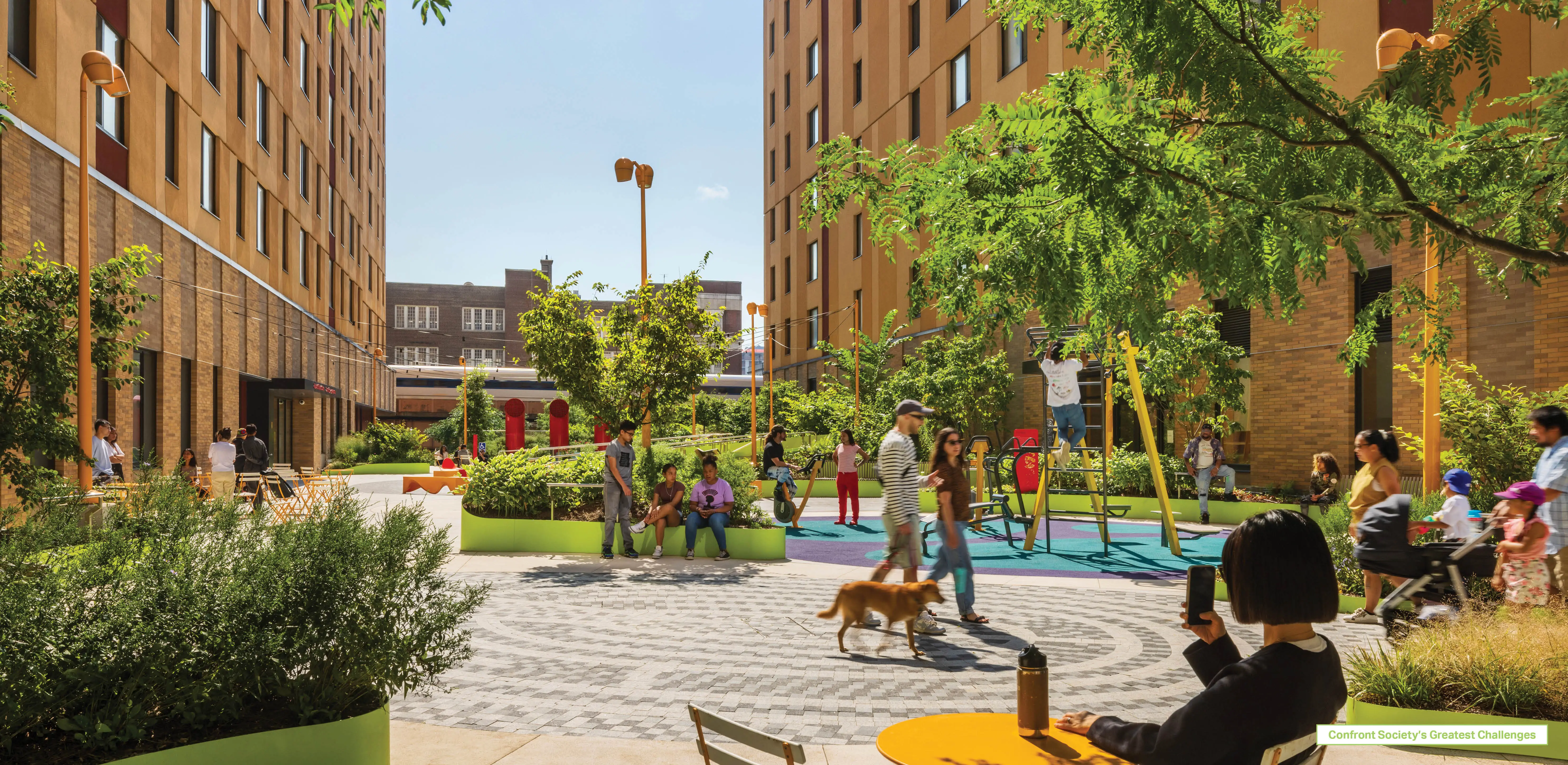
ASLA 2022 Professional General Design Honor Award. West Pond: Living Shoreline, Brooklyn and Queens, New York. Dirtworks Landscape Architecture P.C.
Humans rely heavily on the services that nature provides. The value of these services, such as food, water, medicine, and other resources, was estimated to be $125 trillion per year in 2011. The integrity of these systems is under threat from climate change and human activity, particularly agriculture. Farming activities use 40 percent of the planet’s land, according to National Geographic. That use is only expanding as the human population increases.
The resultant biodiversity loss has a severe impact on these ecosystem services and works to undermines long term resilience and general human well-being. Extinction rates vary widely, but several scientists agree that human activity has induced an extinction crisis among wildlife and plant life that threatens to undermine human survival. Maintaining biodiversity in these systems is critical to their survival, as diversity is central to system resilience and function.
How Resilient Planning and Design Helps
Communities must accommodate wildlife and native plants. Services that natural ecosystems provide should be taken into account when planning new agriculture and development. Agriculture should prioritize ecological health and plant diversity, as opposed to homogenized and destructive mono-cultures. Restorative tactics, such as the design of wildlife corridors and habitat restoration, can help reinvigorate ecosystems.
Co-benefits
Designing to sustain and increase biodiversity enhances the quality and quantity of services that ecosystems provide. This includes everything from medicine to food to recreation areas. Restoration projects can also serve as a way to build communities.
Role of the Landscape Architect
Landscape architects can reconcile the needs of communities and healthy ecosystems in order to serve both. Landscape architects can design corridors that are not only public parks but also facilitate wildlife movement through human developments, allowing both wildlife and humans to coexist. Landscape architects can design plant communities and ecosystems that are not only beautiful but also increase ecosystem services. In addition, designers can adapt these designed ecosystems to the stresses of urban life, using the approaches of biophilic urbanism.
Advertisement
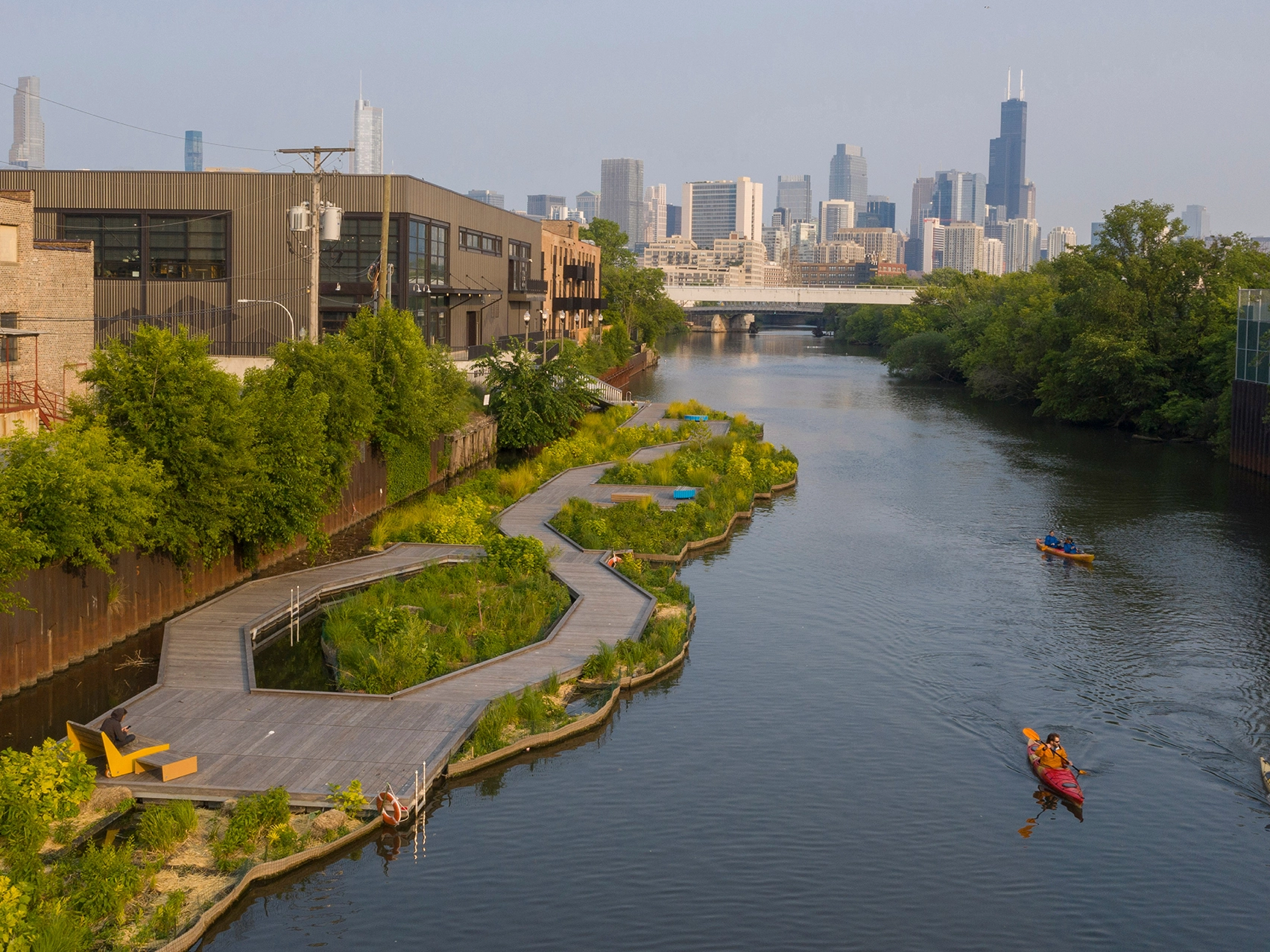
Biodiversity Primer for Landscape Architects
A guide to the real, concrete actions landscape architects can take on every project to protect, conserve, enhance, and restore habitats for more species.
Relevant Projects
Orongo Station Conservation Masterplan, Poverty Bay, New Zealand, NBWLA
The Banff Wildlife Crossing, Alberta, Canada, Parks Canada and Tony Clevenger
Harvard Yard Restoration, Cambridge, MA, MVVA
Greenest City Action Plan, Vancouver, Canada
Breathe: The Future of Edmonton's Green Network, Edmonton, Canada
Plan NYC Reforestation Initiative, New York, NY
Toronto's Green Roofs Bylaws, Toronto, Canada
Toronto Green Standard, Toronto, Canada
ASLA 2010 Professional General Design Honor Award, Tianjin Qiaoyuan Park, Tianjin City, China, Turenscape
ASLA 2011 Professional Analysis and Planning Honor Award, Menomonee Valley Restoration, Mequon, WI, Landscapes of Place, LLC
Seven Ponds Farm, Virginia, NBWLA
ASLA 2013 Professional Analysis and Planning Honor Award, Ningbo Eco-Corridor - 3.3 km Living Filter, Ningbo, China, SWA Group
San Francisco Estuary Preserve, San Francisco, CA
Resources
Biophilic Cities Lead the Way to Urban Sustainability, The Dirt blog
Thomas Rainer: There Are No Mulch Circles in the Forest, The Dirt blog
Why Are Animals Dying on Our Roads?, ARC Solutions
Interview with Janine Benyus on Designing Like Nature, ASLA
Interview with Nina-Marie Lister on Ecological Urbanism, ASLA
Interview with Kristina Hill on Climate Change and Biodiversity, ASLA
Interview with Os Schmitz on Recovering Polluted Ecosystems, ASLA