




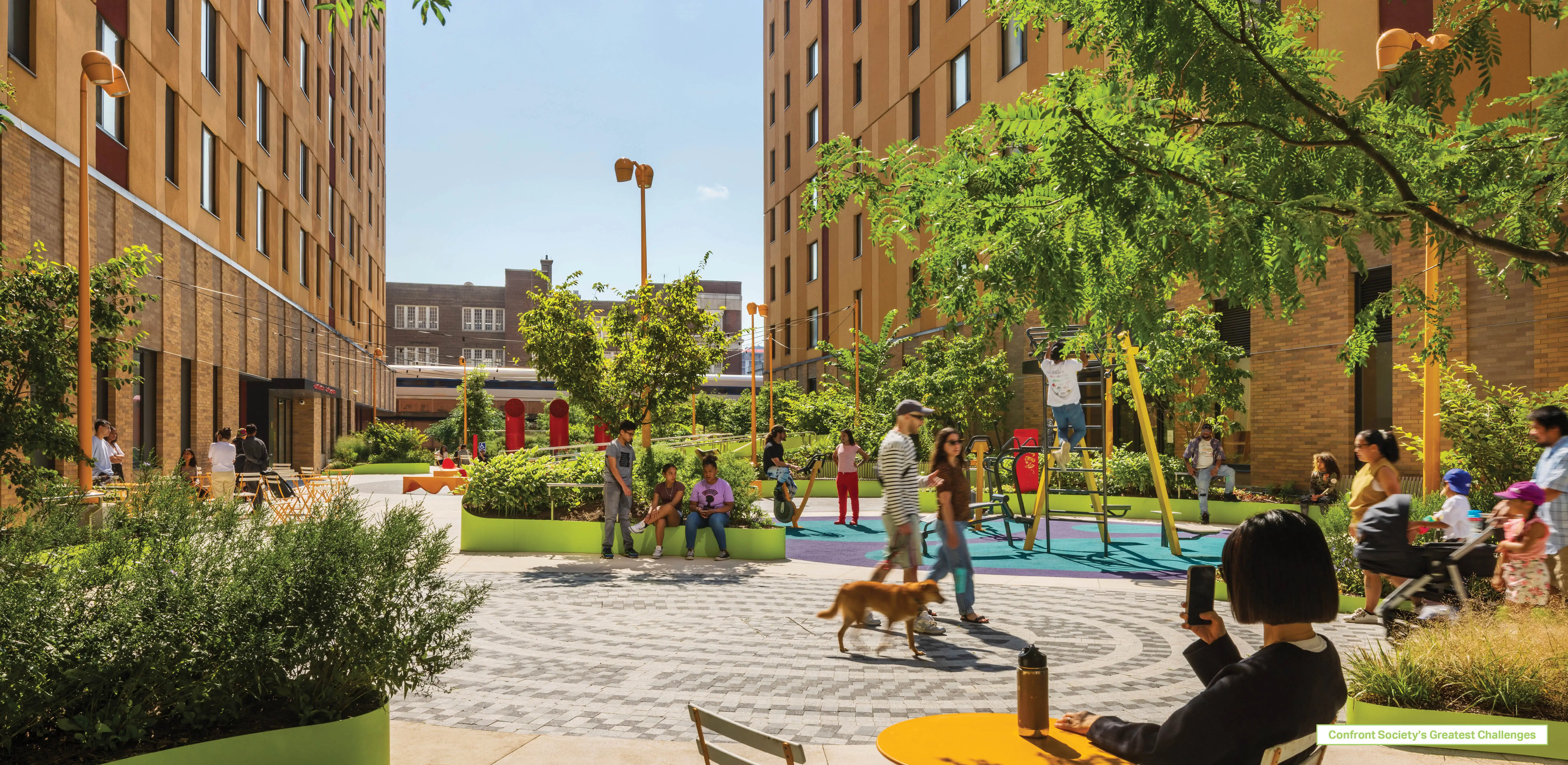
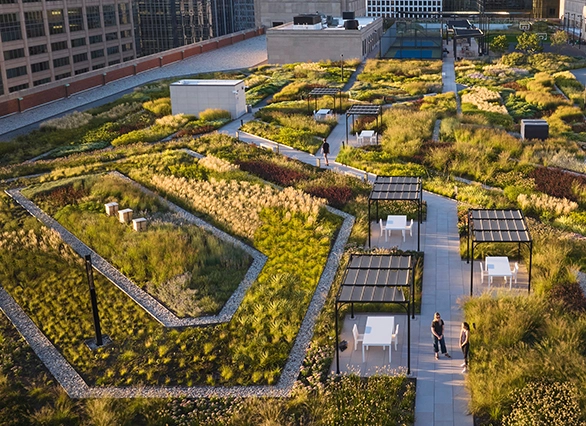
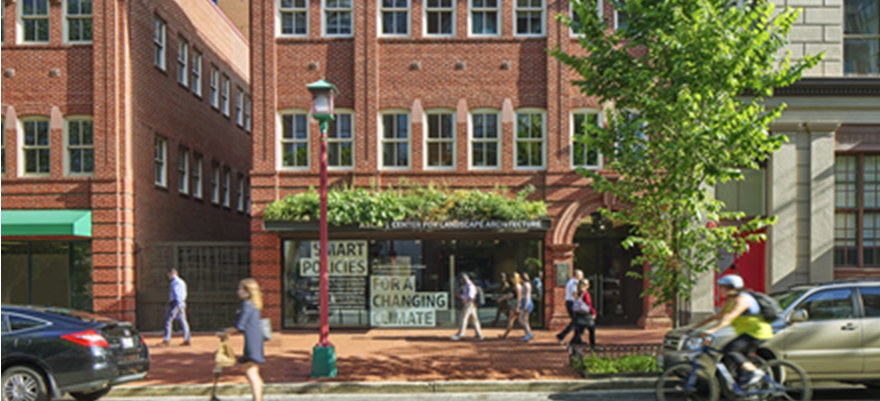
Pro Bono
Recognizes built or planned projects that create meaningful community change through volunteer and pro bono landscape architecture services.
Explore:
Category Overview
What This Category Recognizes
Built or planned projects that demonstrate how individuals, firms, and organizations provide meaningful change through volunteer and pro bono landscape architecture activities.
Typical Entries Include
Projects completed by individuals, firms, and organizations through volunteer and pro bono activities.

Eligibility
To enter the Pro Bono category, the official entrant must be an Associate, Full, or International ASLA member, or eligible to join ASLA in one of those categories.
This category is intended for built or planned landscape architecture projects where individuals, firms, or organizations provide professional services without customary compensation and those donated services create meaningful benefit for the community served.
Choose Community Service instead when the project is undertaken primarily as community-based advocacy or public service and the strongest case for recognition is the effectiveness of that service and its demonstration value to other communities and professionals.
Choose another Professional Awards category if the work was completed for customary compensation.
How Your Entry Will Be Evaluated
Pro Bono entries are evaluated using the jury rubric for the project type with which the submission most closely aligns, along with consideration of the impact of the project on the community served.
Applicants should make the pro bono context clear. The submission should give jurors enough information to understand the community need, the professional services contributed, the nature of the volunteer or pro bono work, and the usefulness and benefit of the project to the community.
Applicable Project-Type Rubric
Each entry will be evaluated using the jury criteria for the Professional Awards project type with which the submission most closely aligns:
Analysis & Planning: Regional & City Scale, Analysis & Planning: District & Block Scale, Built Works: Residential, Built Works: Public Spaces & Recreation, Built Works: Campus & Mixed Use, Built Works: Regenerative & Ecological, Built Works: Reuse, Historic Preservation, or Communication.
The applicable rubric uses the five Professional Awards criteria:
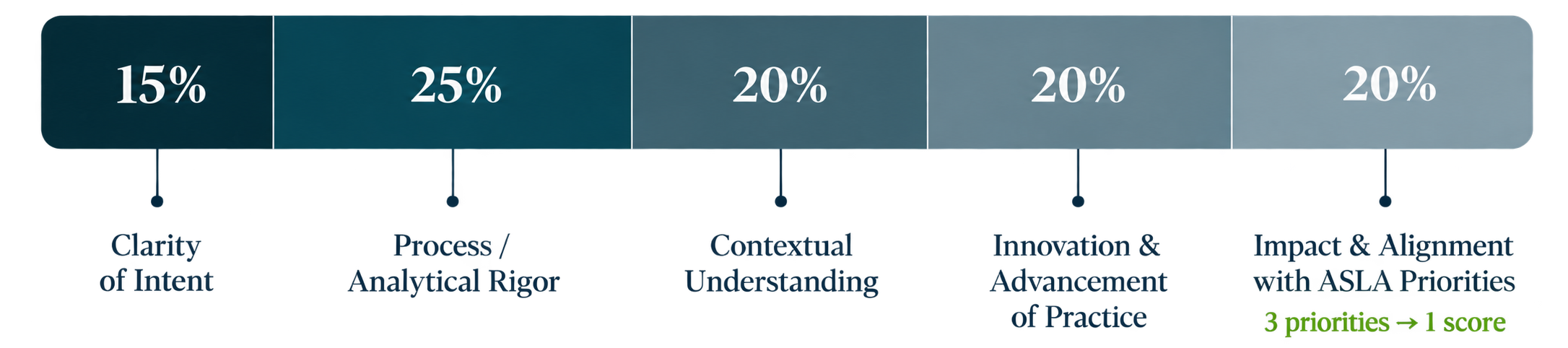
In addition to the applicable project-type rubric, the jury will consider the impact of the project on the community served and how the volunteer or pro bono landscape architecture services contributed to that impact.
What to Submit
Prepare each component of your entry carefully. The requirements below cover anonymity, written materials, images, and disclosure of artificial intelligence use.
Anonymity
All submission materials must be anonymous. Do not include the names of the entrant, landscape architects, firms, other designers, or photographers anywhere in the materials viewed by the jury.
Anonymity helps ensure that entries are evaluated fairly and without bias based on the reputation, identity, or prior work of the people or firms involved. Photography credits must still be provided where required, but they will be concealed from the jury during evaluation.
Text Requirements
Image Requirements
Artificial Intelligence Disclosure
Applicants must disclose any use of AI in the project itself and in the preparation of the award submission. This includes, but is not limited to, AI used for design exploration, research, analysis, modeling, visualization, image generation or modification, data analysis, text preparation, and presentation graphics.
Applicants will be asked to identify the tasks for which AI was used and, where applicable, the platforms used.
The jury will consider disclosed AI use in the context of the entry, including the relationship between the tools used and the project’s authorship, design process, analysis, evidence, decision-making, and visual communication. Disclosure of AI use does not, by itself, disqualify or diminish an entry.
Recognition
The jury may select any number of Honor Awards and may select one Award of Excellence in the Pro Bono category.