
.webp?language=en-US)

.webp?language=en-US)
Roots Over Roads: Reclaiming Oakland’s I-980 Corridor
Samuel Green, Student ASLA

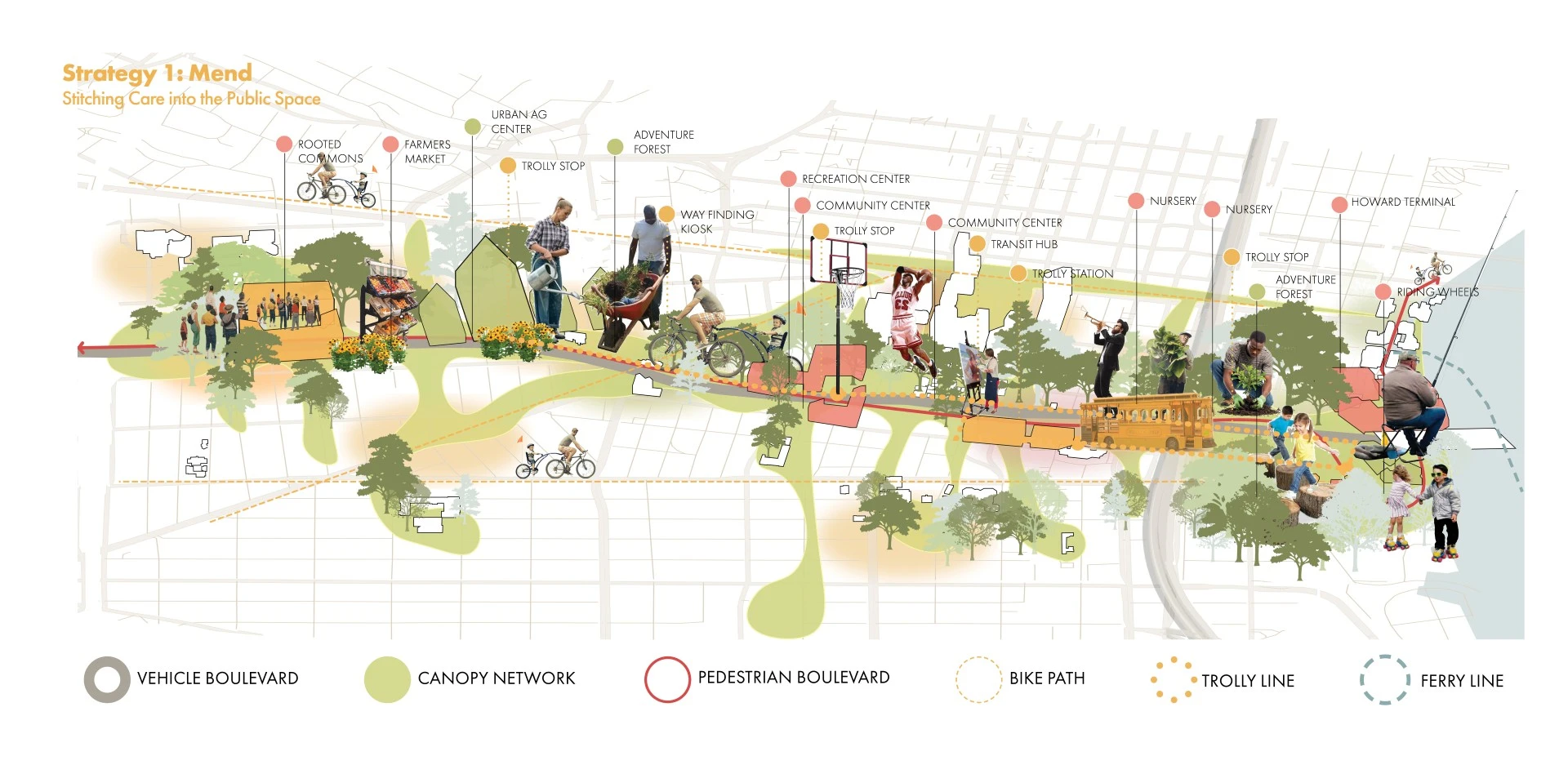
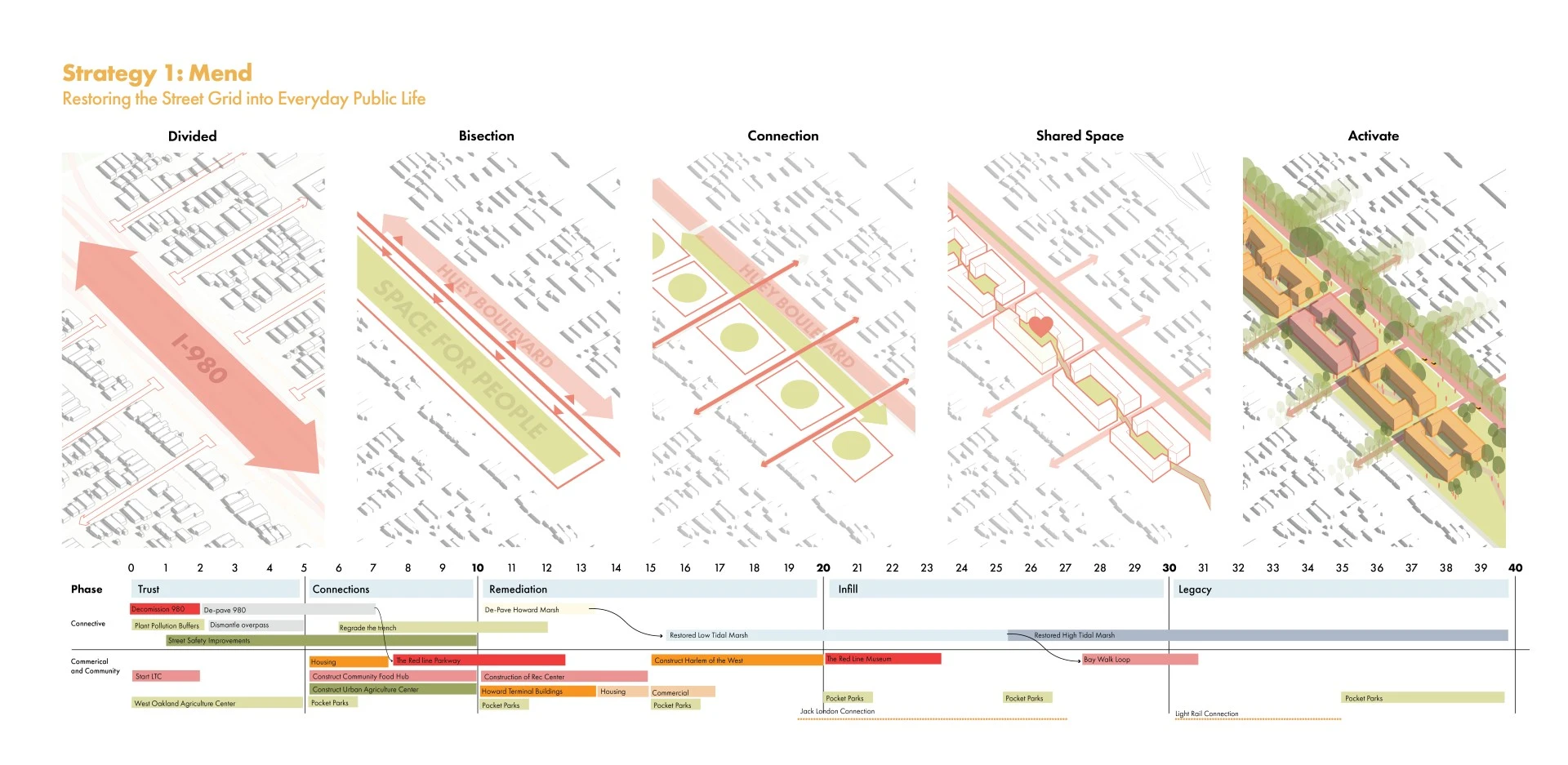
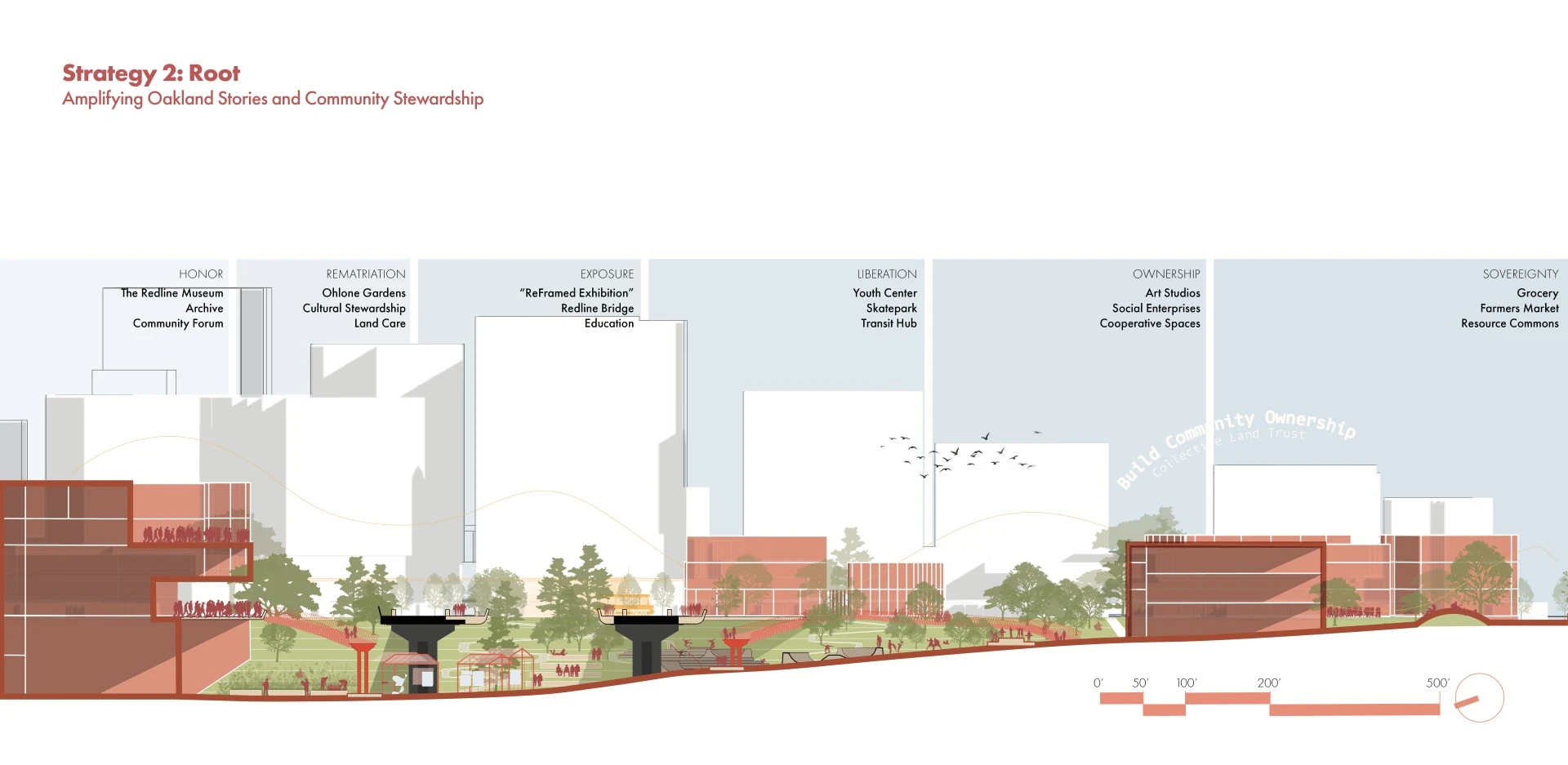
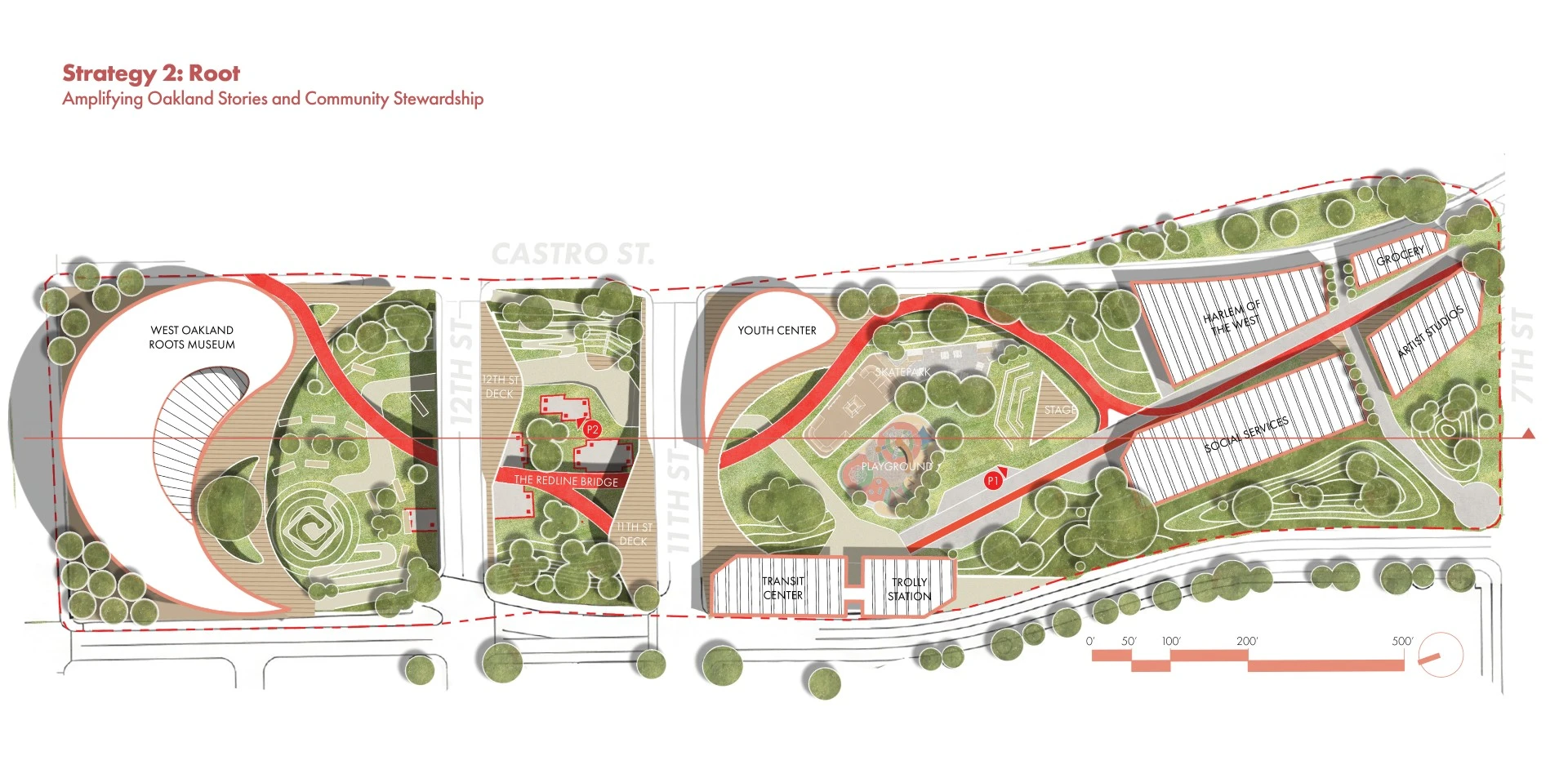
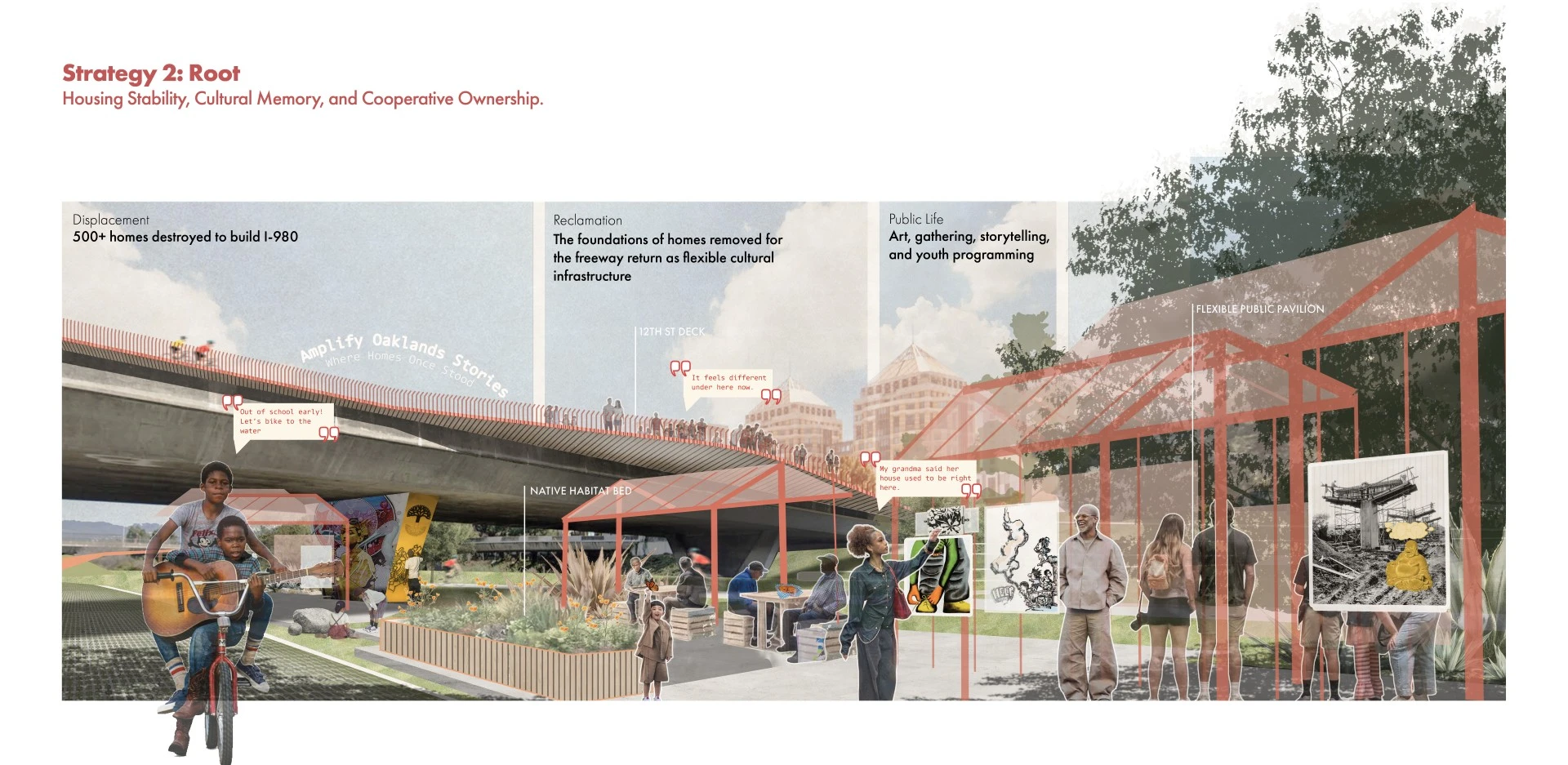
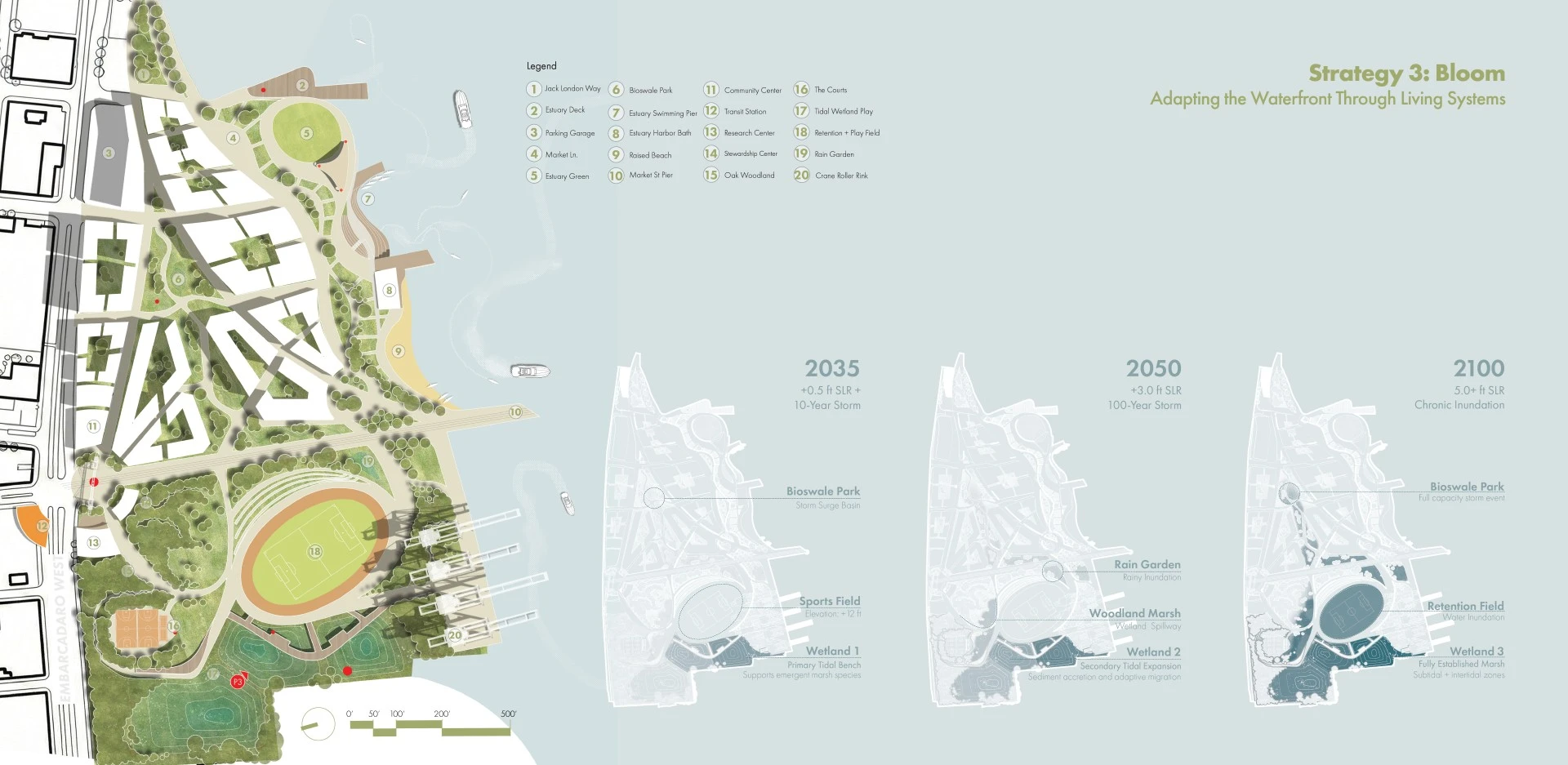
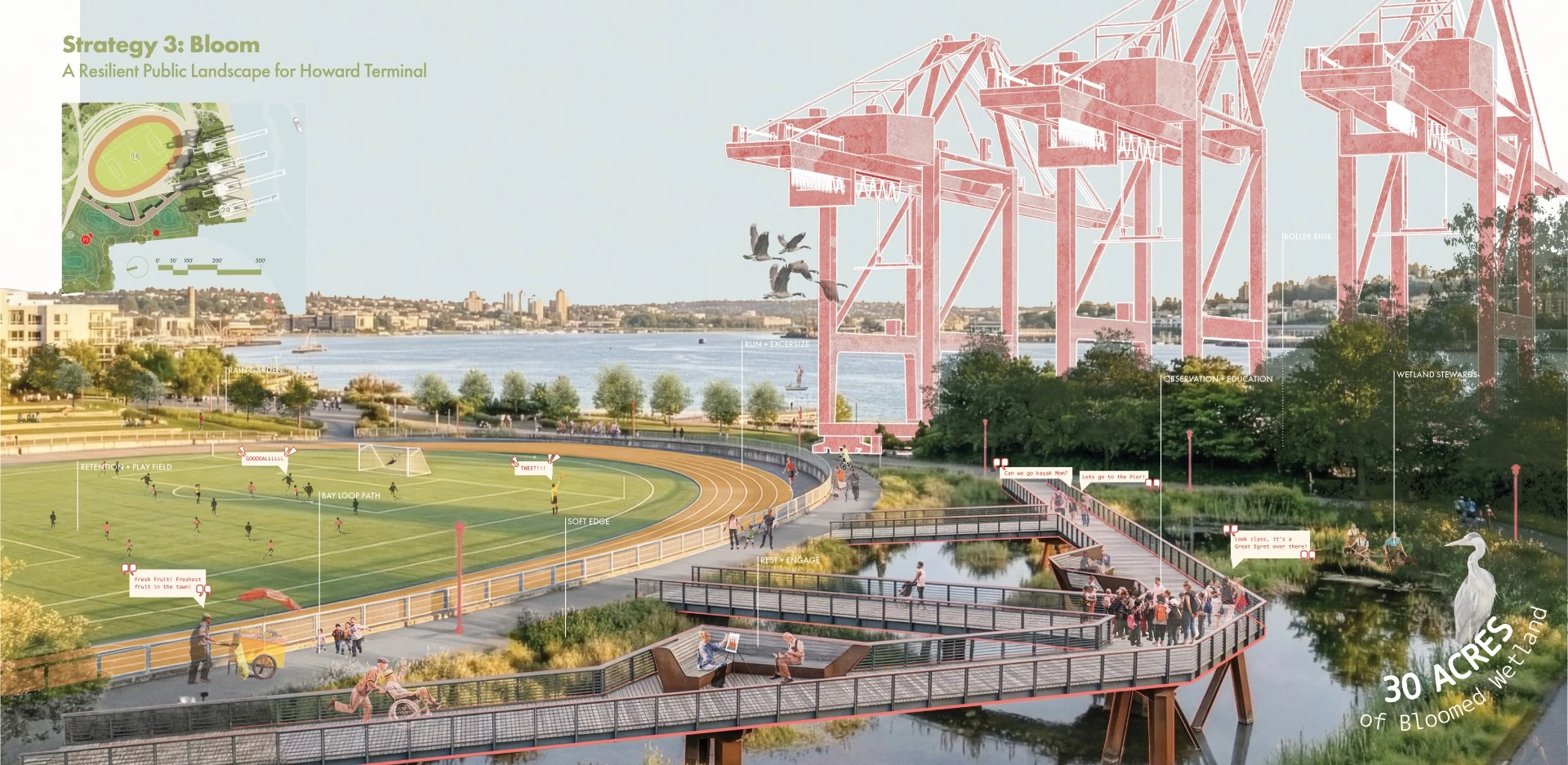
Deep historical grounding that helps address one of the most urban landscape issues. Great integration of social and environmental justice, mobility, ecology, and climate adaptation. Strong community engagement helps connect ecological restoration to community ownership.
Awards Jury
-
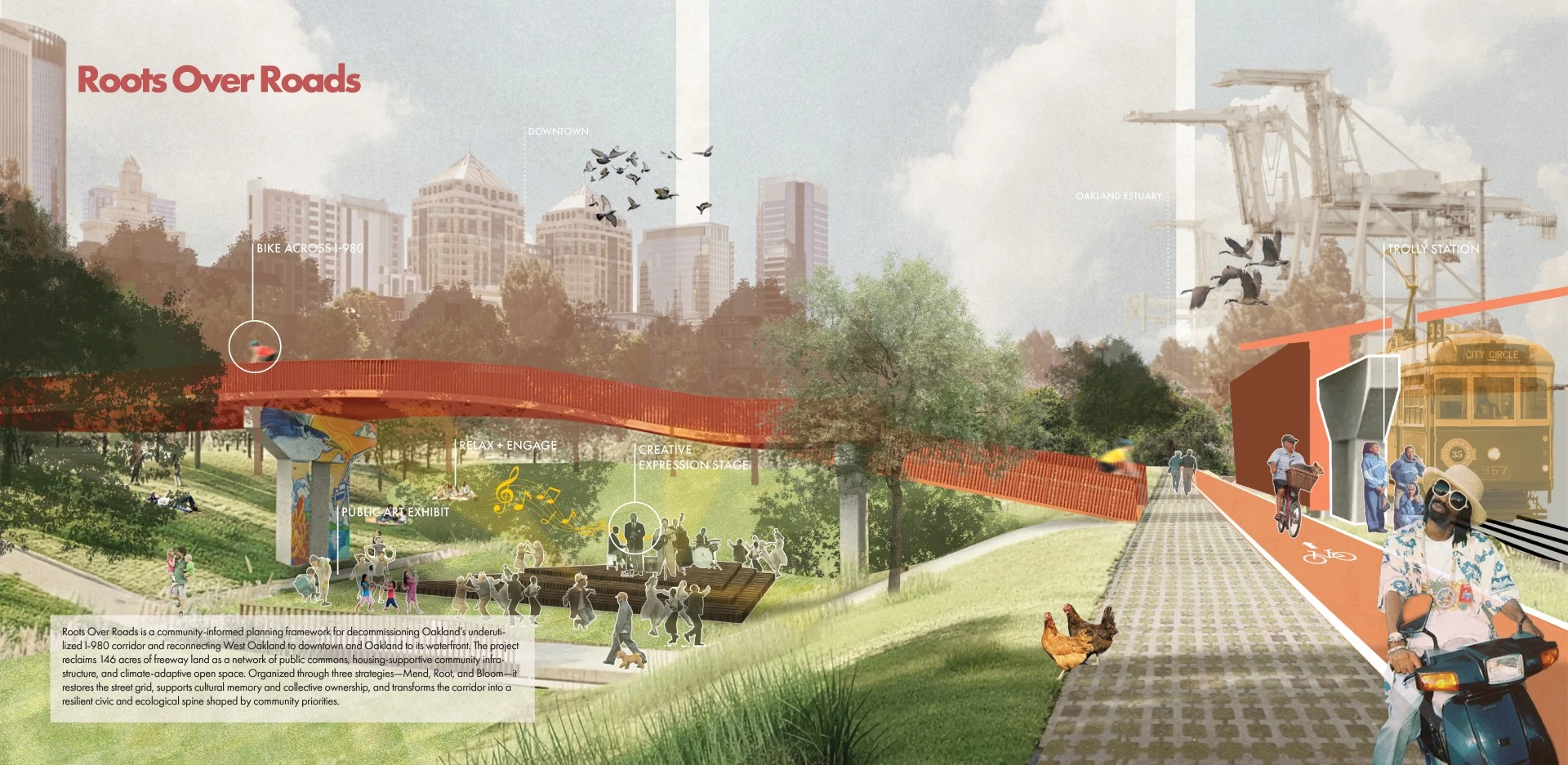
Roots Over Roads is a community-informed planning framework for decommissioning Oakland's I-980 and reclaiming 146 acres of freeway land as public commons. Built on sustained community engagement and Caltrans' Vision 980 study, the project responds to decades of infrastructural harm. Built from redlining, displacement, and environmental inequity the project responds by restoring the street grid, amplifying cultural memory, and rewilding the urban waterfront. Organized through three strategies, Mend, Root, and Bloom, it transforms a redundant highway into a resilient civic and ecological spine shaped by West Oakland's own priorities.
-
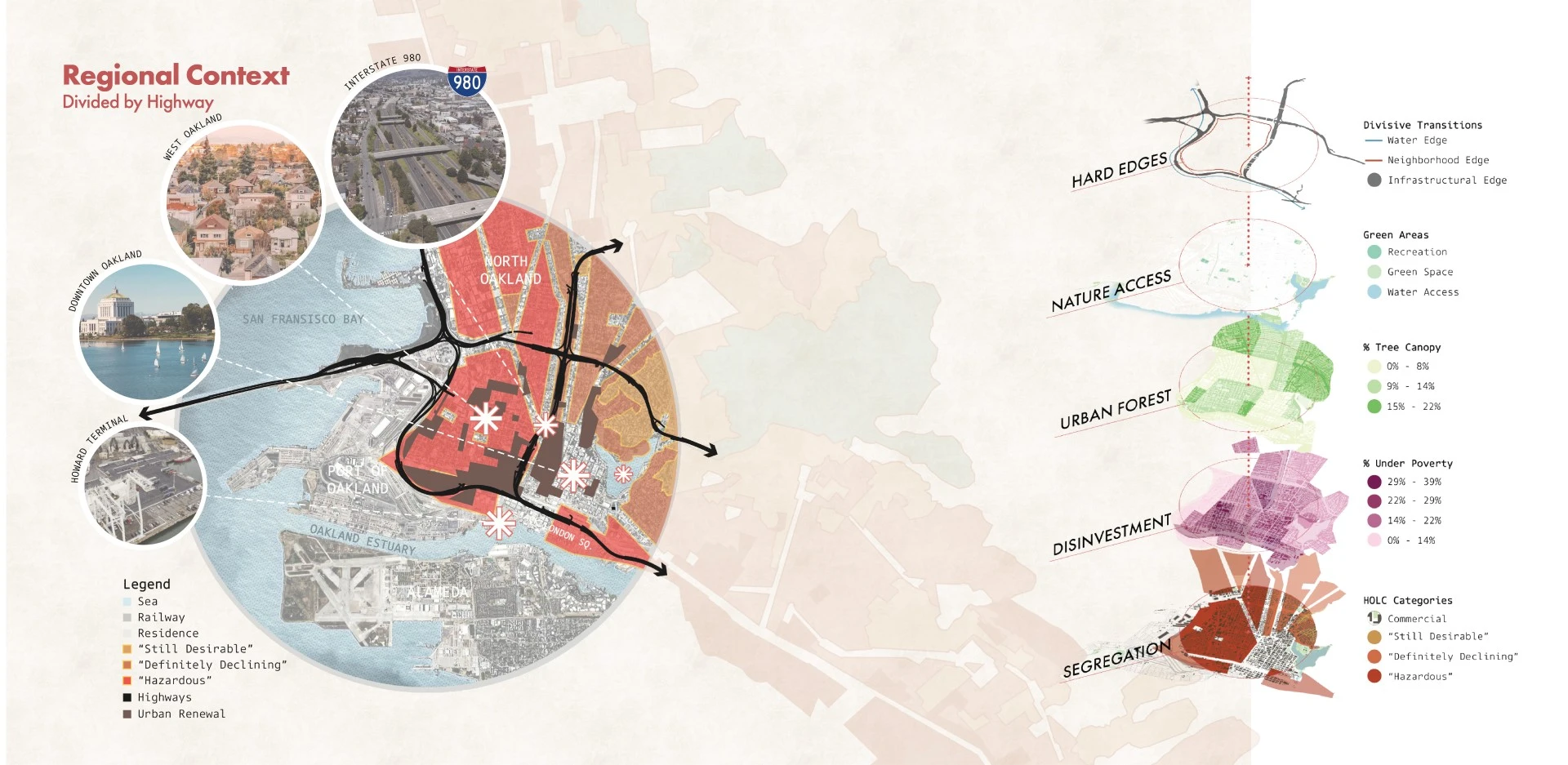
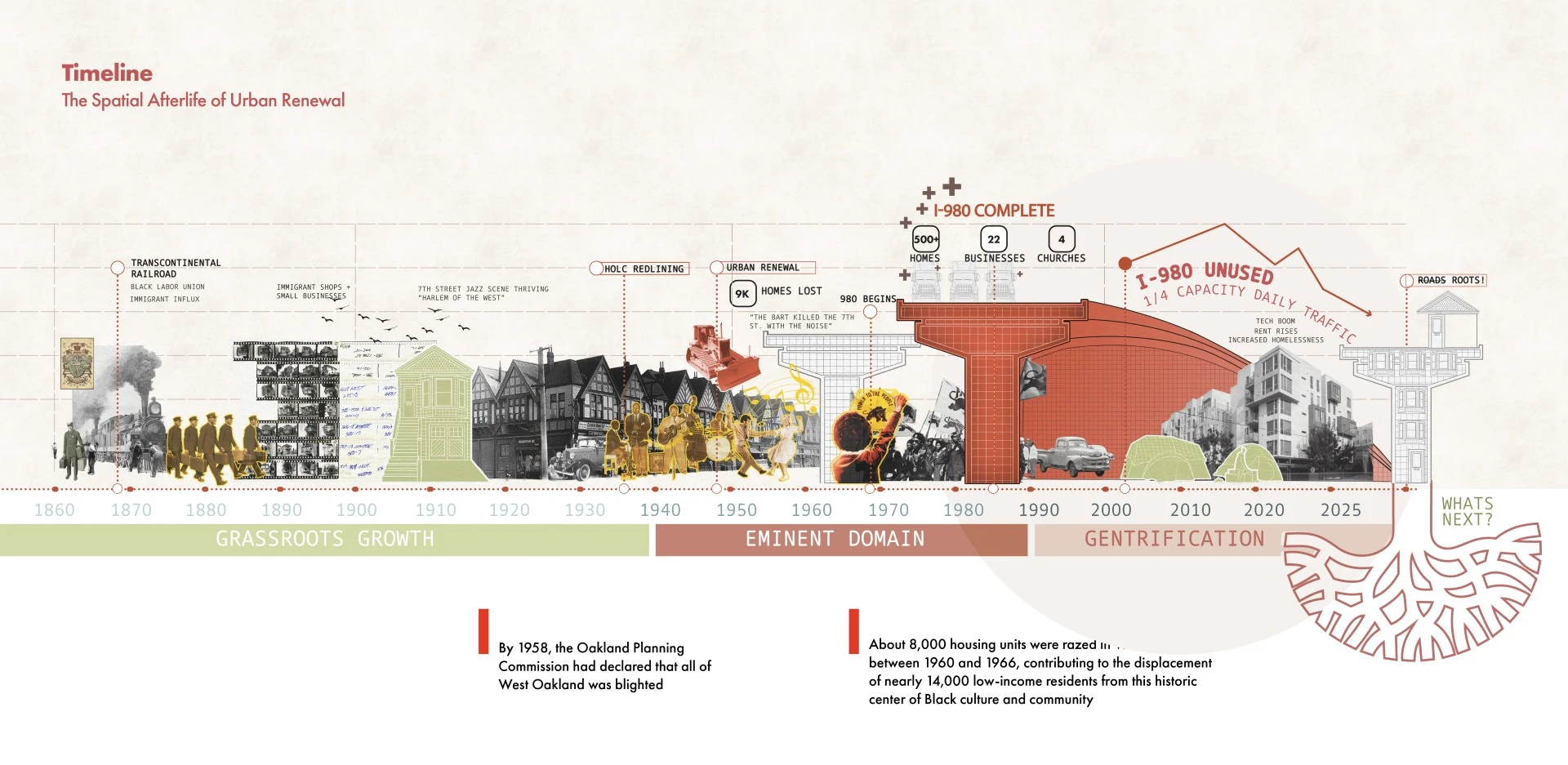
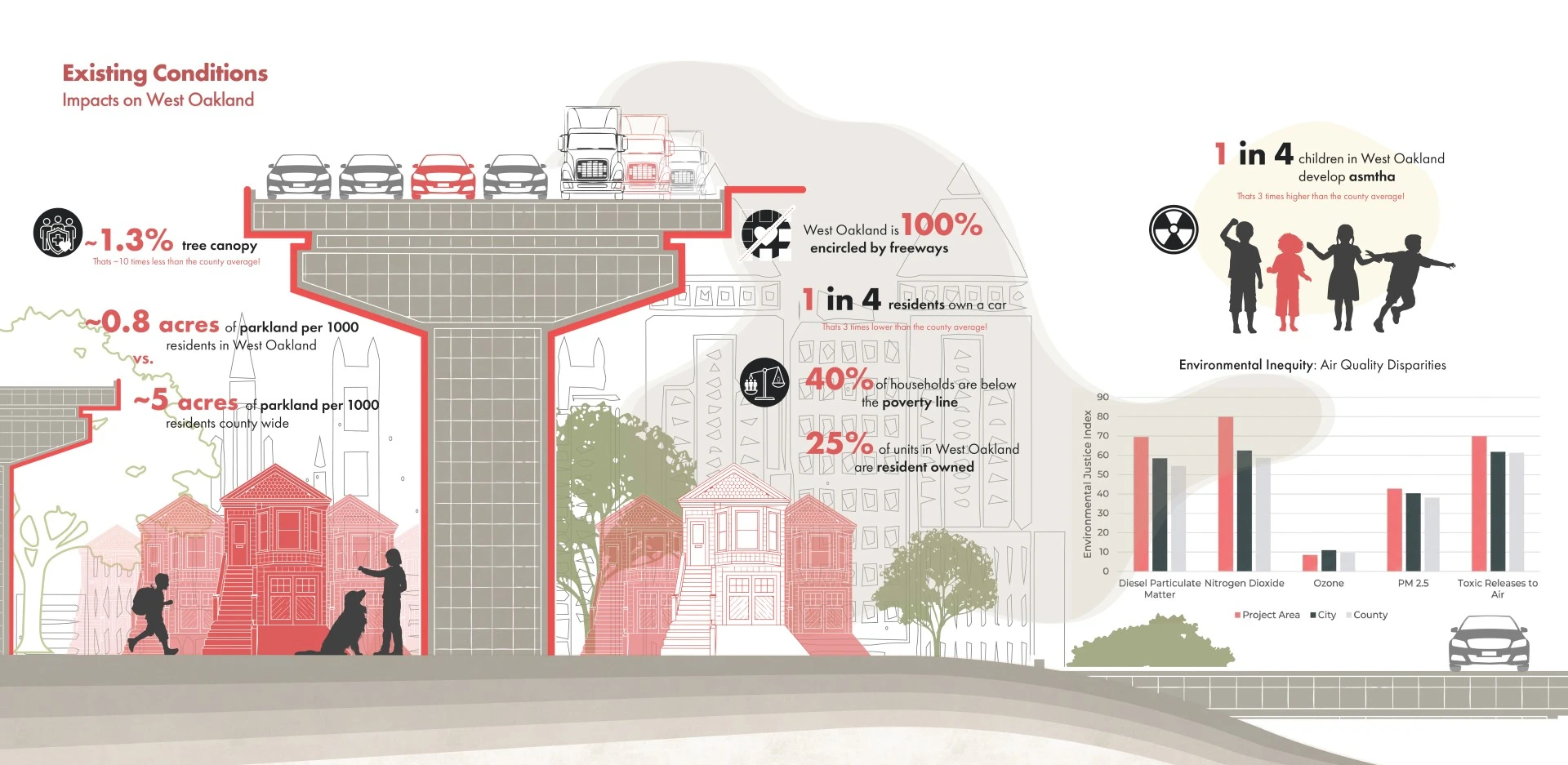
West Oakland has been 100% encircled by freeways; a condition not of geographical means, but of policy. Beginning in the 1940s, HOLC redlining marked West Oakland's thriving Black neighborhoods as "hazardous," and mid-century urban renewal followed with demolition. The construction of I-980 destroyed over 500 homes, 22 businesses, and 4 churches, displacing nearly 14,000 residents from what had been called the Harlem of the West. Today, the freeway operates at just one-quarter capacity while the surrounding community bears its full burden: 1.3% tree canopy - ten times below the county average, 0.8 acres of parkland per 1,000 residents versus 5 countywide, and a childhood asthma rate three times the county mean.
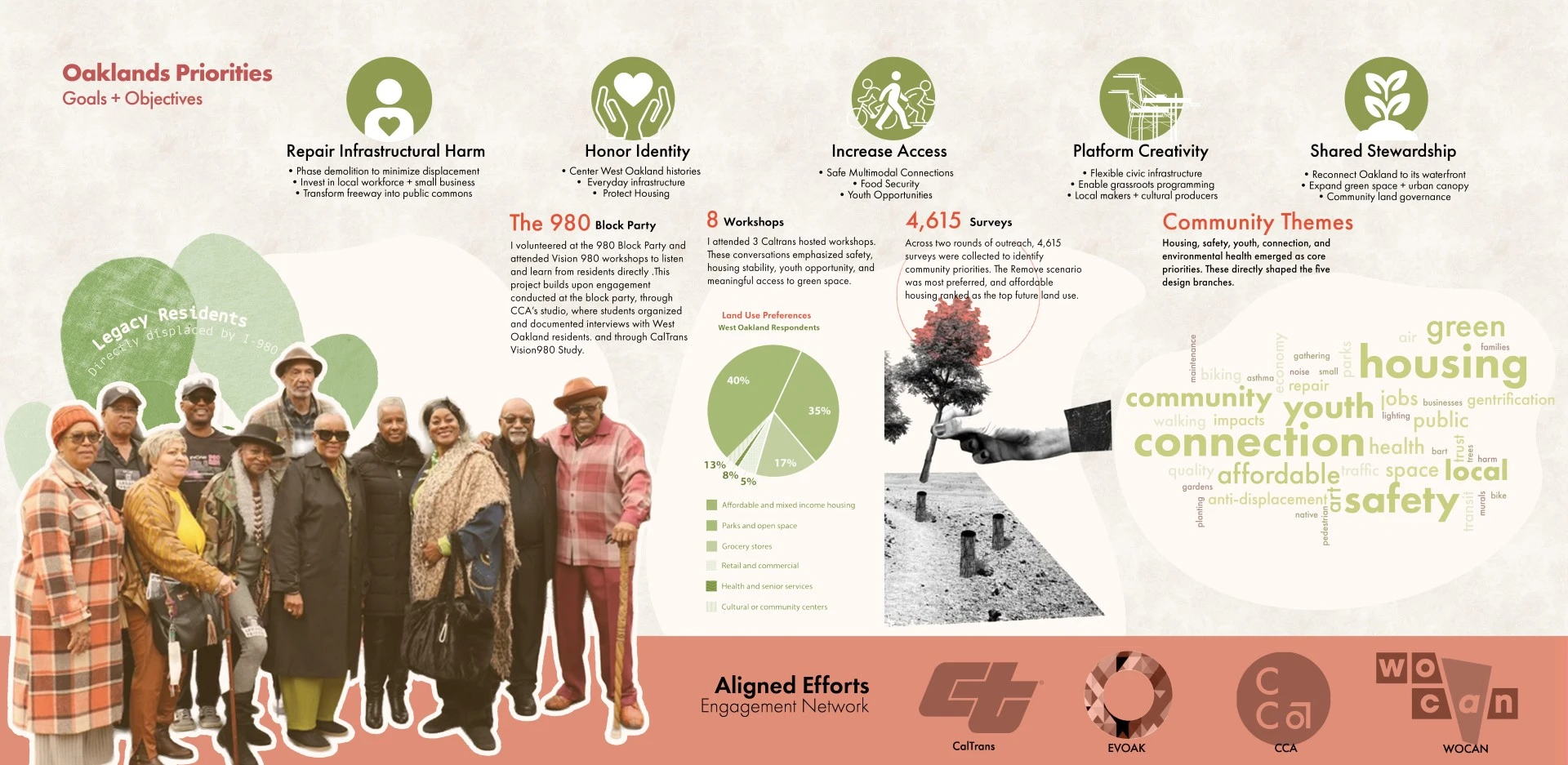
Roots Over Roads is a community-informed planning framework to decommission I-980 and reclaim those 146 acres as a network of public commons, housing-supportive infrastructure, and climate-adaptive open space. The project builds upon Caltrans' Vision 980 feasibility study, 4,615 community surveys, and direct engagement with West Oakland residents through the 980 Block Party, CCA studio partnerships, CalTrans workshops, and organizations including EVOAK and WOCAN. Community themes of housing stability, safety, youth opportunity, environmental health, and connectivity directly shaped every design move.
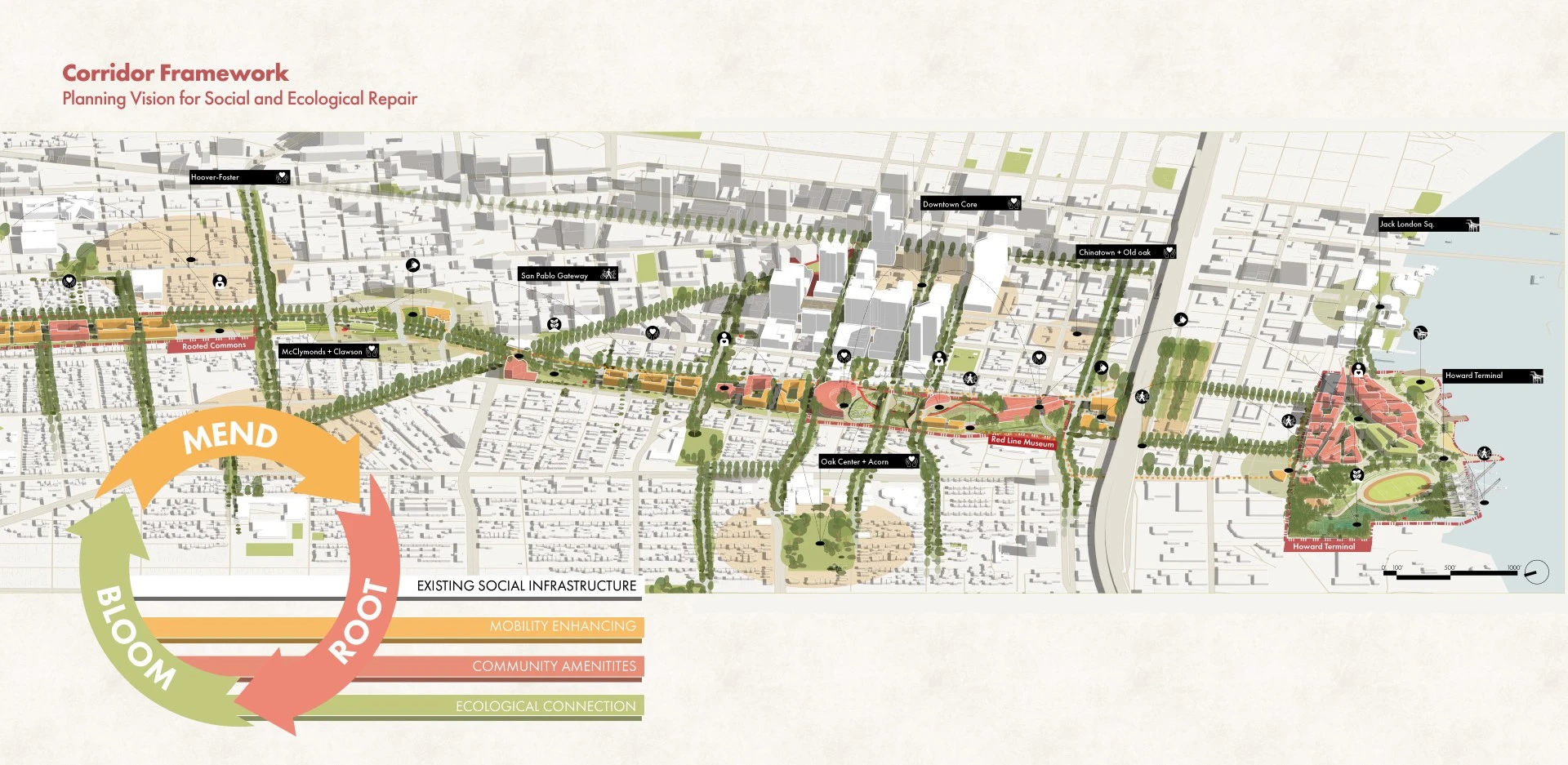
The framework is organized through three interlocking strategies. Mend restores the historic street grid by decommissioning and depaving the freeway trench, establishing Huey Boulevard as a new multimodal spine connecting West Oakland to downtown and to the waterfront. Trolley lines, bike paths, farmers markets, urban agriculture, and neighborhood-scale community centers stitch care into everyday public life across a 40-year phased implementation. Root amplifies cultural memory and builds community ownership through a suite of civic anchors at the corridor's heart - the Redline Museum, Ohlone Gardens, youth center, skatepark, cooperative art studios, and a community grocery and resource commons. Where 500+ homes were razed, reclaimed foundations return as flexible cultural infrastructure. Bloom adapts the corridor's western edge at Howard Terminal into a resilient public waterfront using living systems - tidal wetlands, bioswale parks, and raised beaches - calibrated to sea level rise scenarios through 2100, producing 30 acres of restored estuary habitat while opening Oakland's waterfront to its residents for the first time in generations.
Together, Mend, Root, and Bloom transform the I-980 corridor from a redundant scar into a civic and ecological spine - one that restores the street grid, honors the community's cultural history, and builds collective resilience from the ground up. Oakland's future is not the cars that pass through it, but the people who care for it.
-
- Randolph Belle (EVOAK & Caltrans– Community Engagement Partner)
- David Peters (WOCAN (West Oakland Community Action Network) – Community Engagement Partner)
- Janette Kim (CCA Studio – Academic Partner)
- Paul Cobb (Legacy Resident and Civil Rights Advocate)
- Anisha Rasheed (West Oakland Community Advocate)
- Ernestine Nettles (Legacy Resident and Story Teller)
-
- Valley Oak
- Coast Live Oak
- California Bay Laurel
- Blue Elderberry
- Toyon
- Coffeeberry
- Coyote Brush
- California Sagebrush
- Wild Strawberry
- California Poppy
- Tule
- Wild Onion
- Sword Fern
- Wood Fern
- Western Sycamore
- London Plane Tree
- Ginkgo Tree
- Red Maple Tree
- Western Redbud
- Blue Grama Grass
- Pickleweed
- Pacific Cordgrass
- Saltgrass
- Alkali Bulrush
- Arroyo Willow
- Red Willow
Advertisement
Related Awards
Honors Award, Urban Design
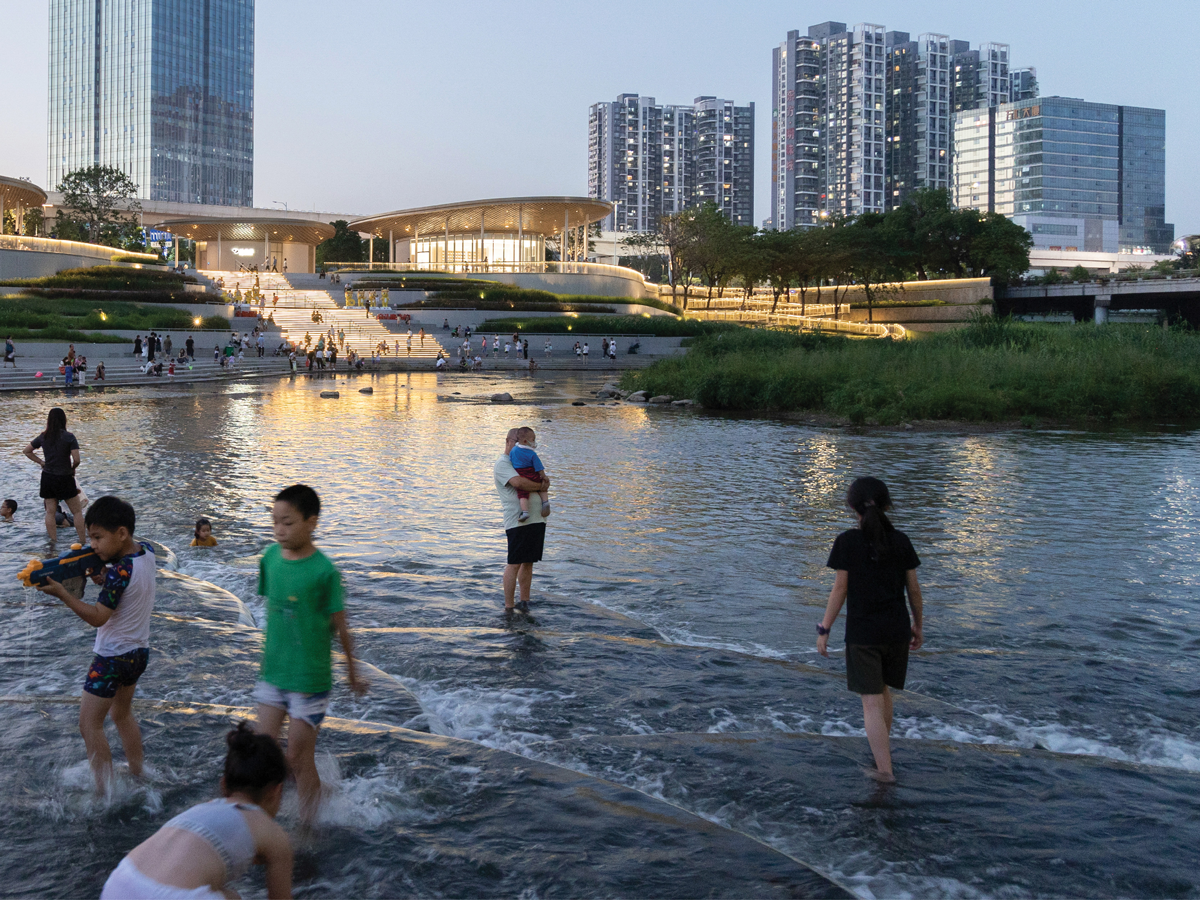
Restoring a River, Reconnecting a City: Longgang River Blueway
Over the past half century, rapid urbanization forced Shenzhen rivers into concrete channels, cutting communities off from nature and increasing flood risk. Spanning 20 kilometers, the Longgang River Blueway reshapes a former drainage corridor into a resilient, accessible public landscape.