
.webp?language=en-US)

.webp?language=en-US)
From Dumping Grounds To Living Systems
Jiho Park, Student ASLA

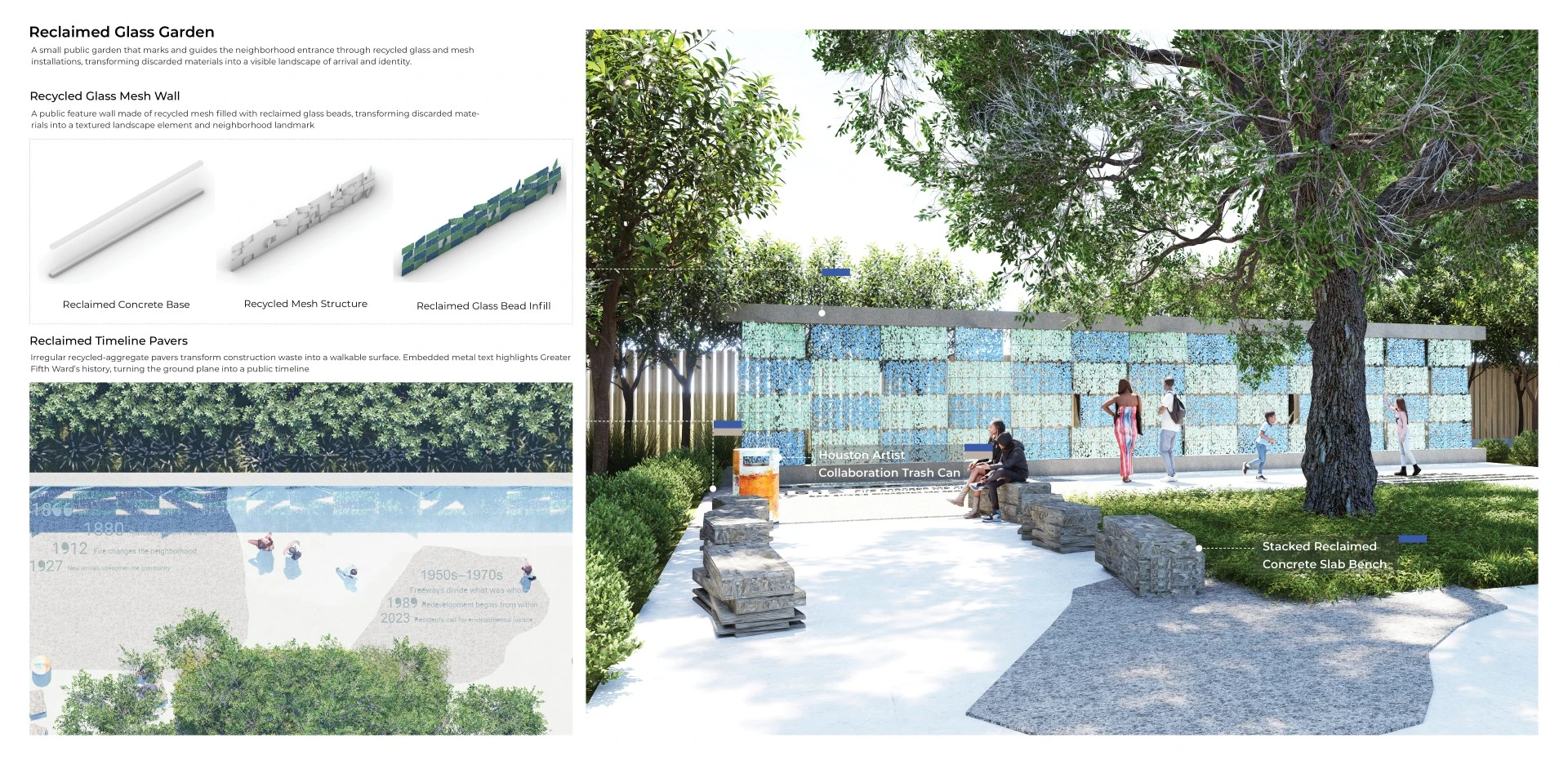
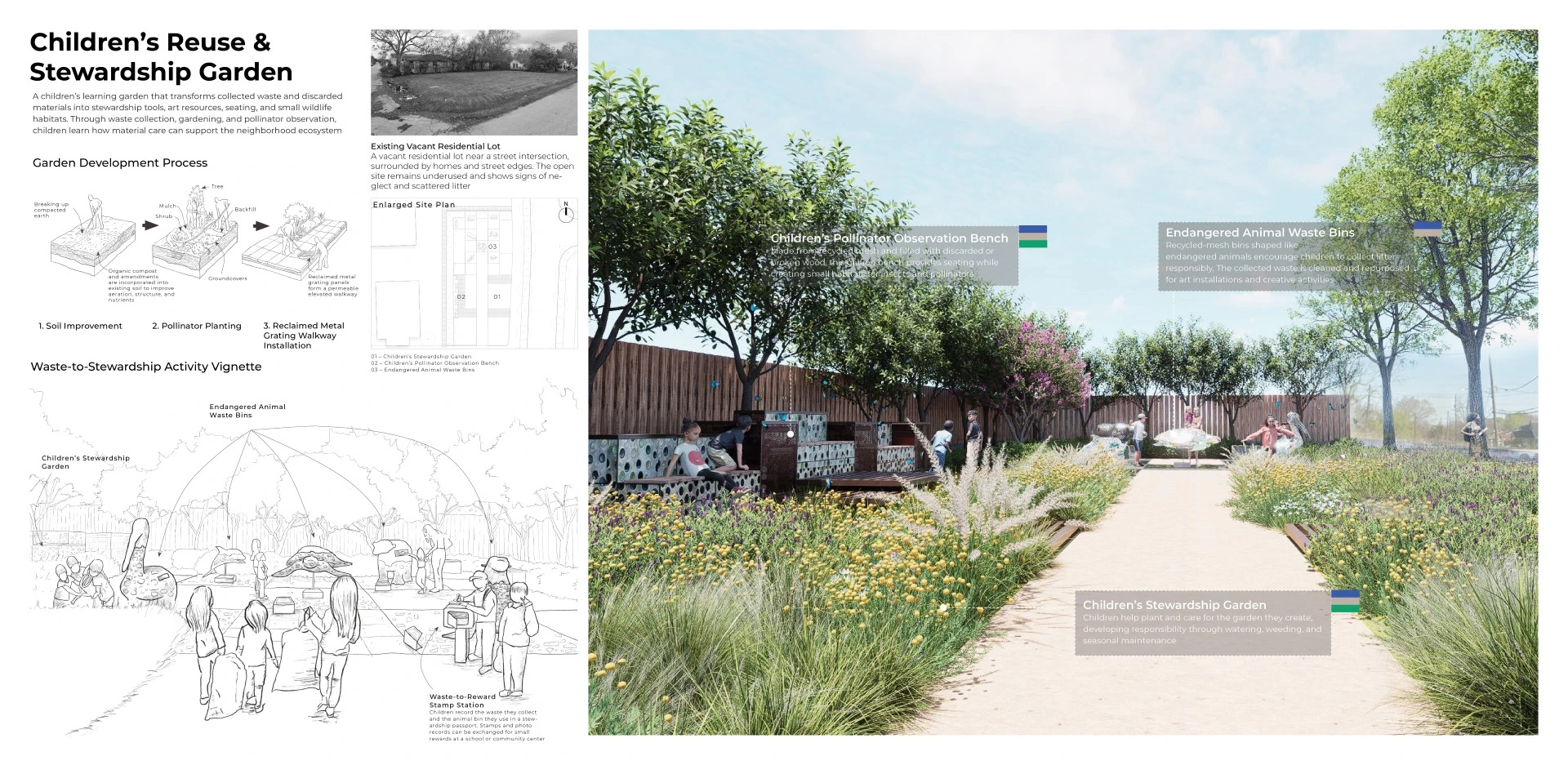
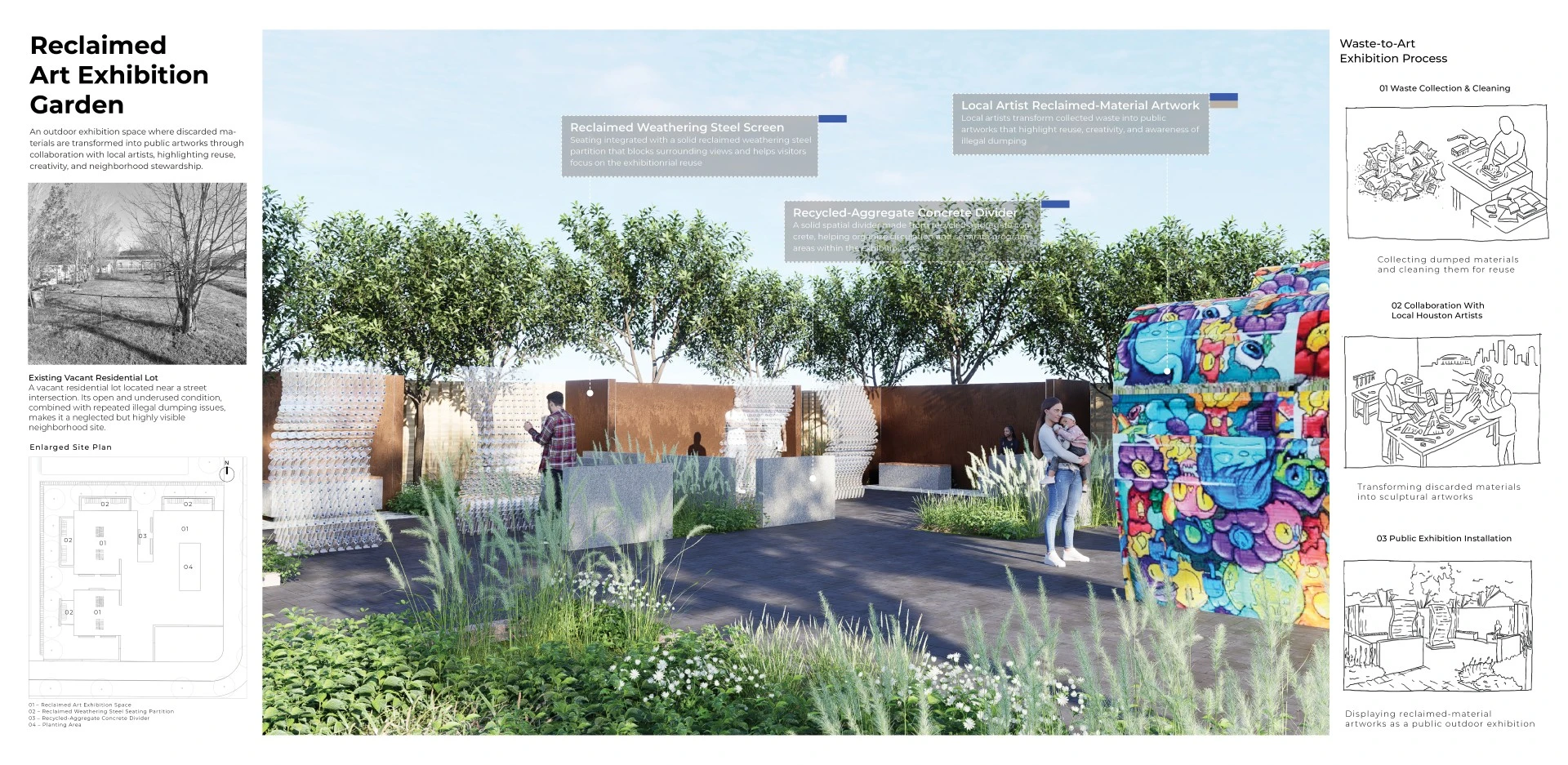
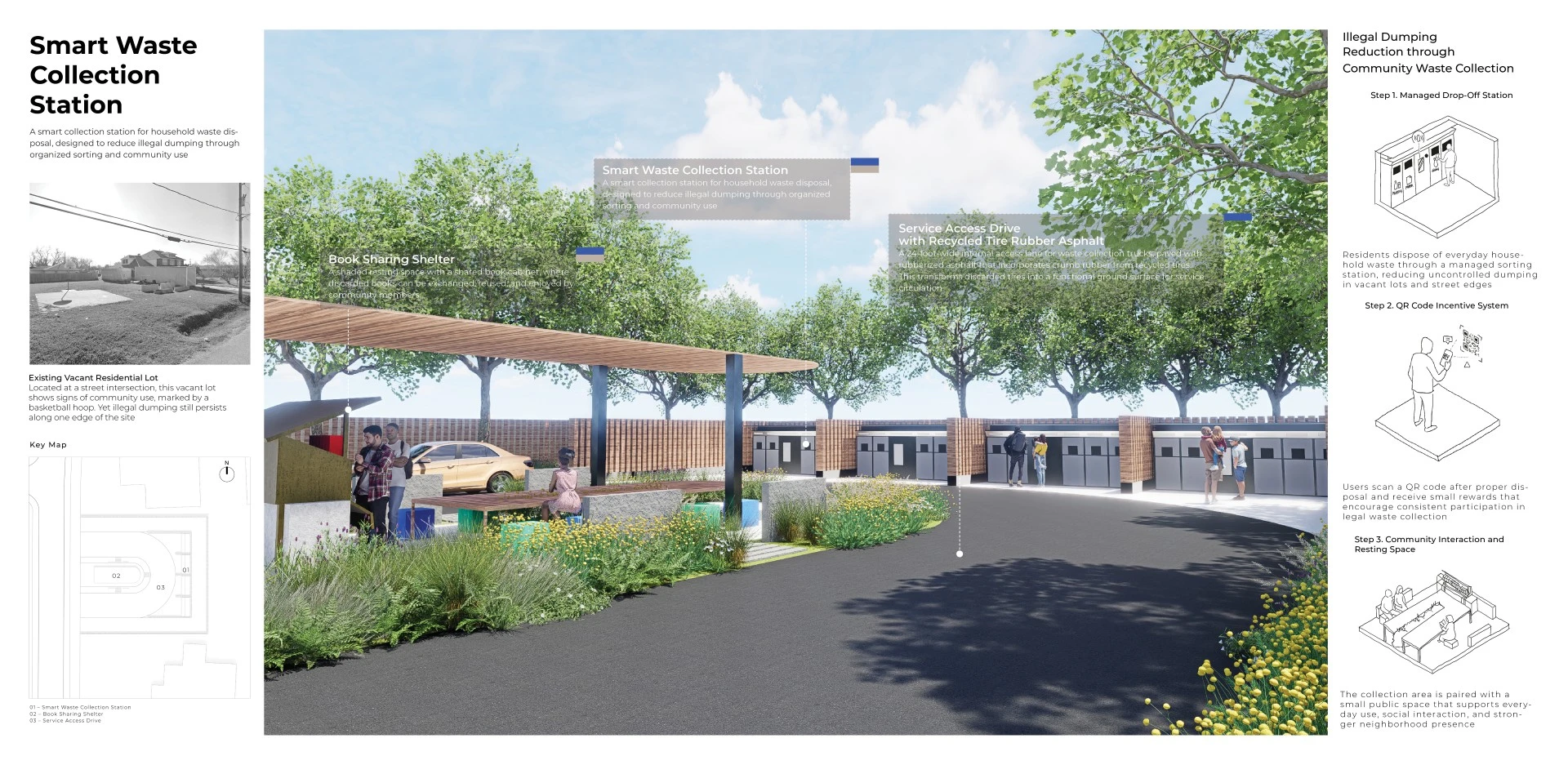

Directly address environmental justice and a good example of circular-economies dialog.
Awards Jury
-
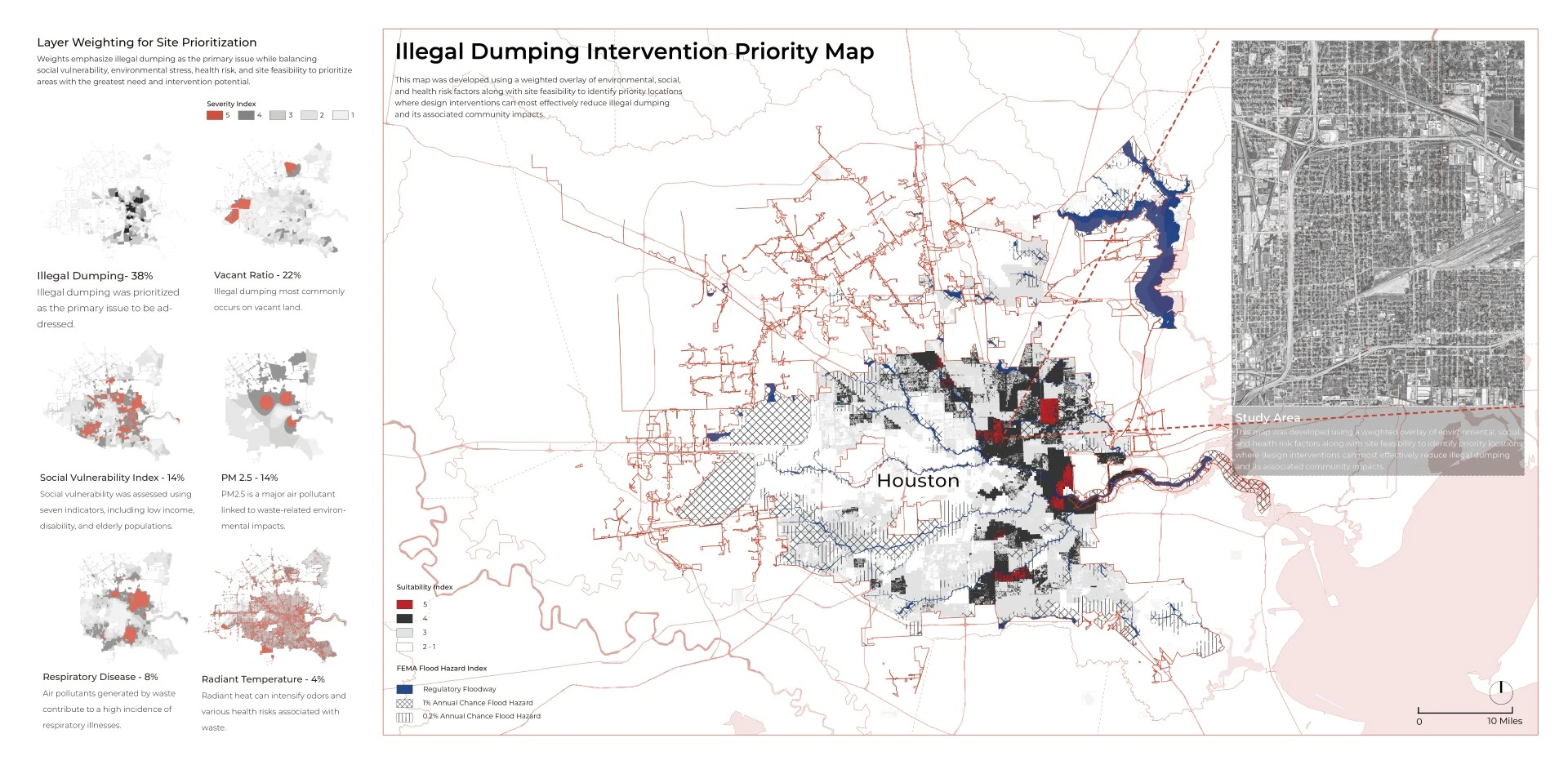
When vacant land becomes a dumping ground, it sends a message that a neighborhood has been forgotten. From Dumping Grounds to Living Systems challenges that message. Focused on Houston's Greater Fifth Ward, the project transforms dumping-prone spaces into visible, cared-for landscapes that prevent illegal dumping through daily use, stewardship, education, and material recovery. Reuse gateways, learning gardens, art spaces, smart collection stations, meadows, and green corridors turn neglect into public care and discarded materials into tools for awareness, responsibility, and neighborhood renewal.
-
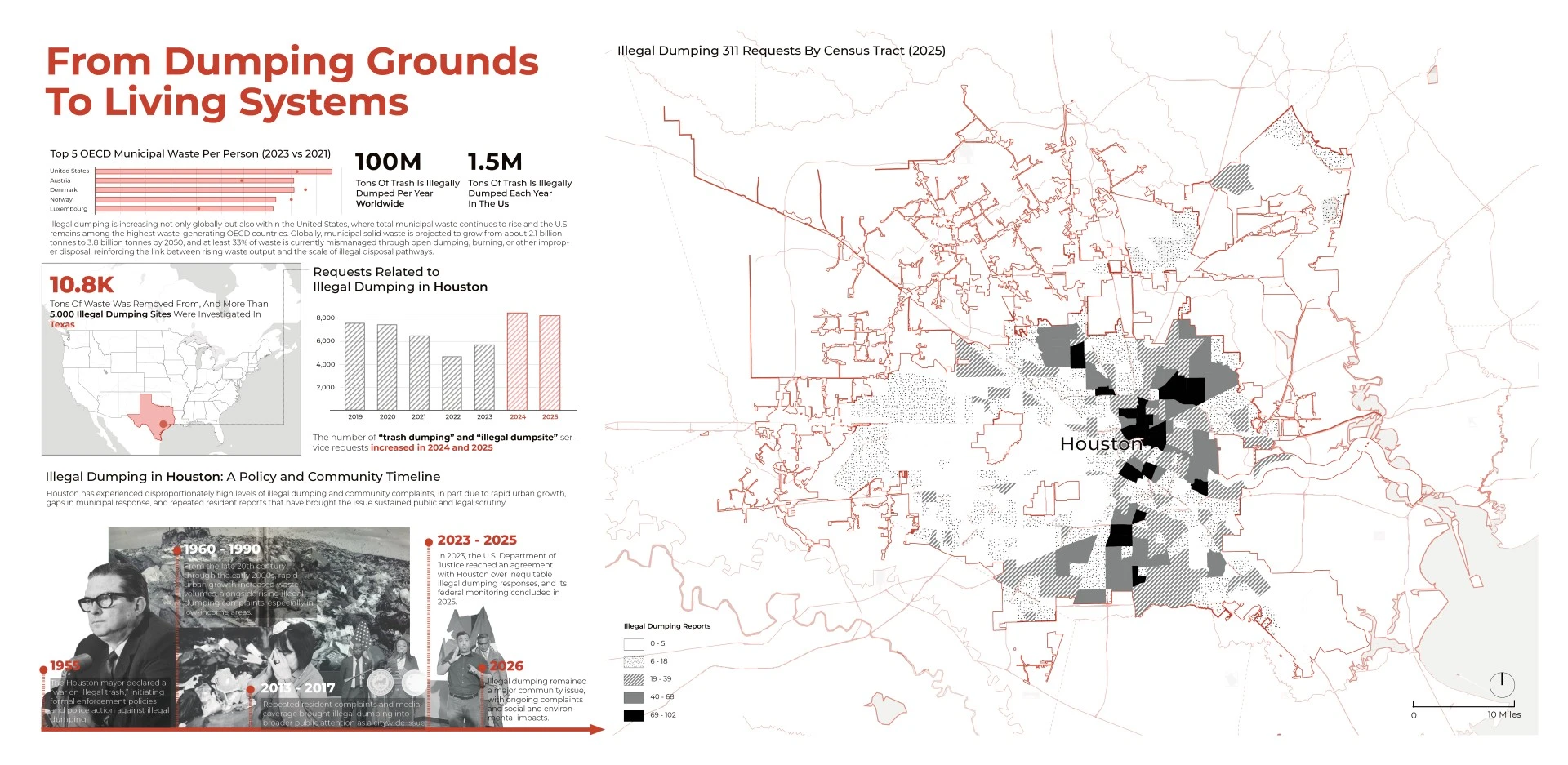
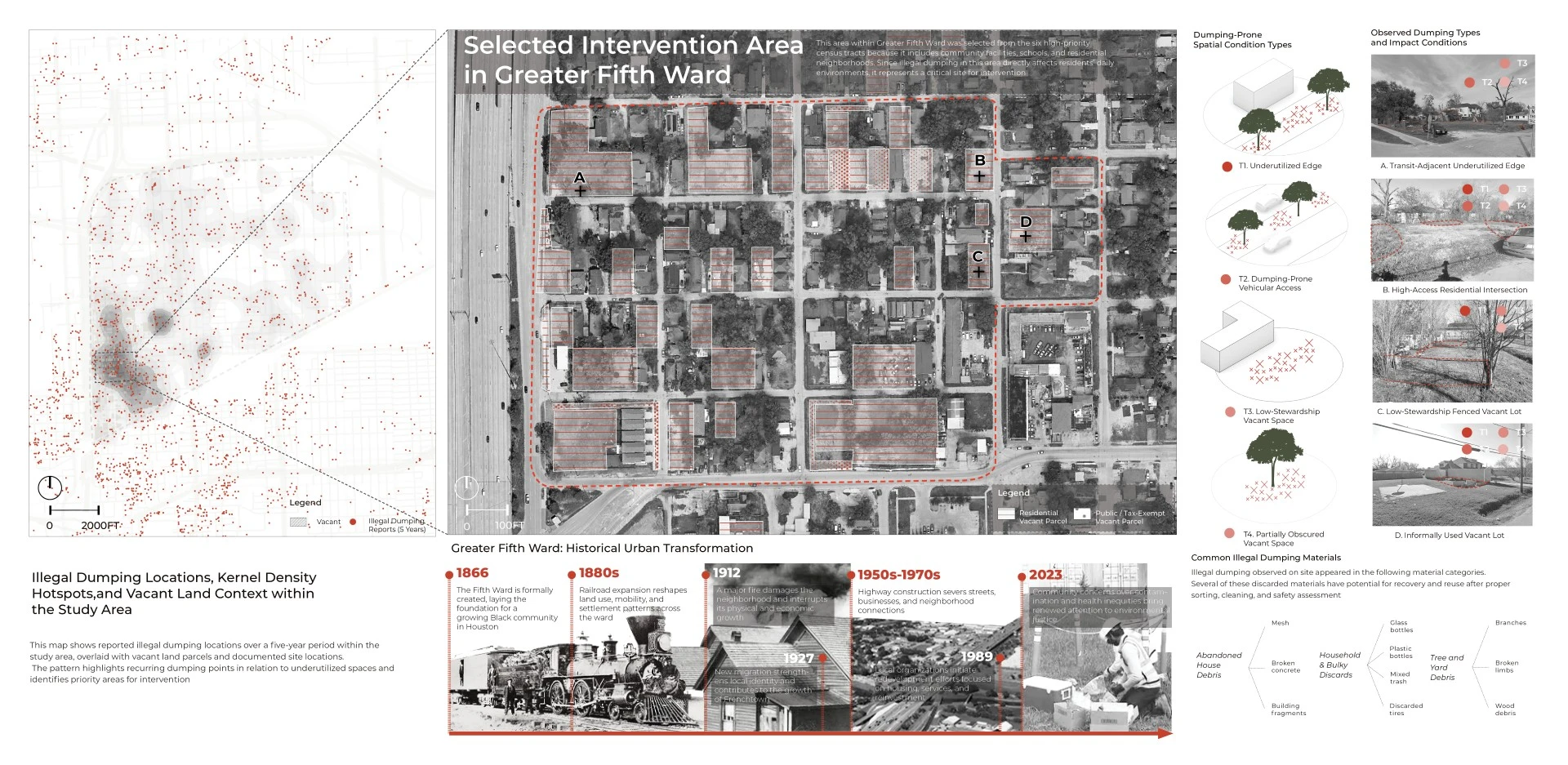
From Dumping Grounds to Living Systems reimagines illegal dumping prevention as a landscape system rooted in visibility, daily use, material recovery, and community stewardship. Focused on Houston's Greater Fifth Ward, the project addresses a persistent environmental justice issue: dumping-prone vacant land that burdens residential blocks, school routes, community facilities, and everyday neighborhood life.
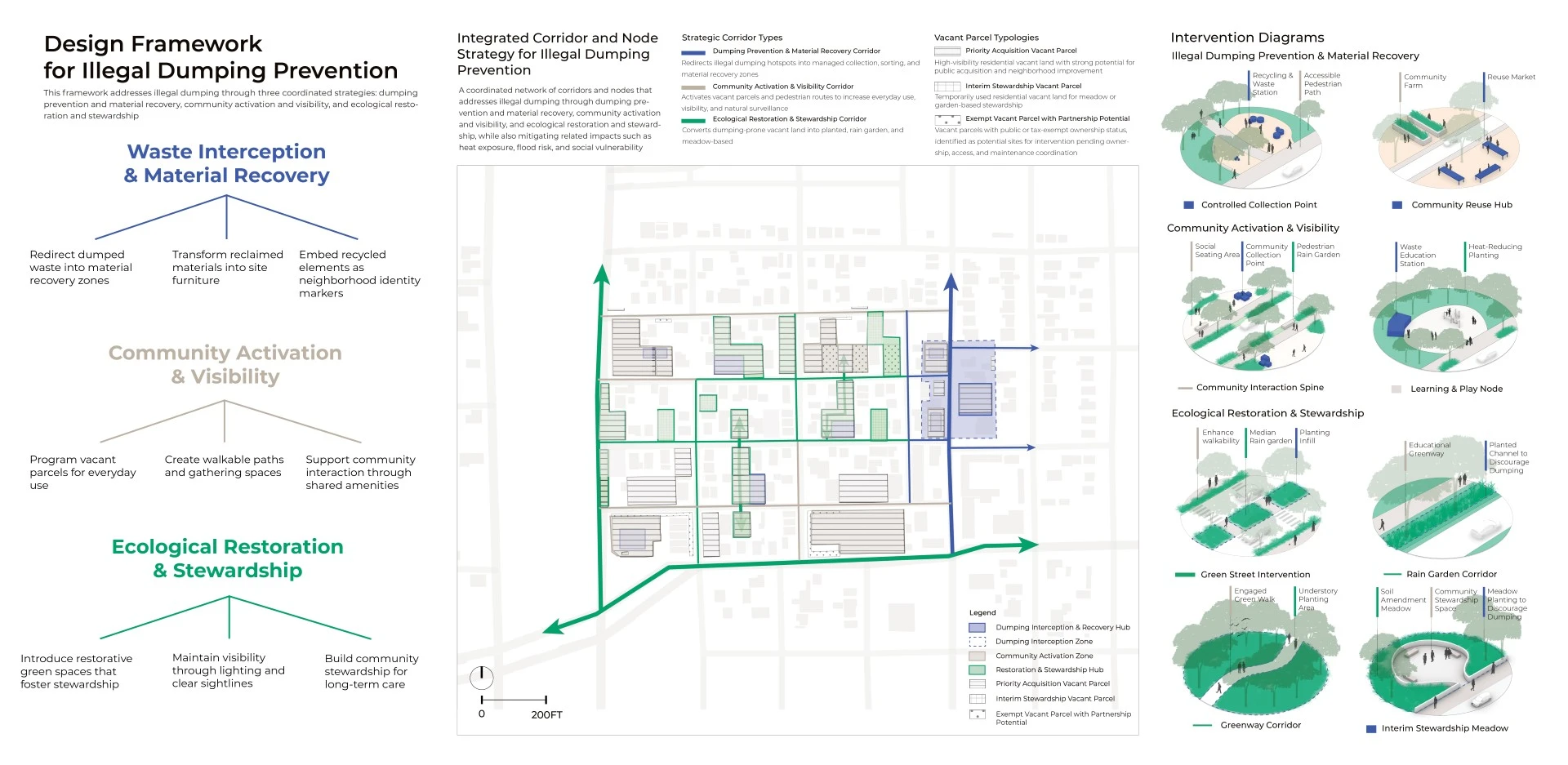
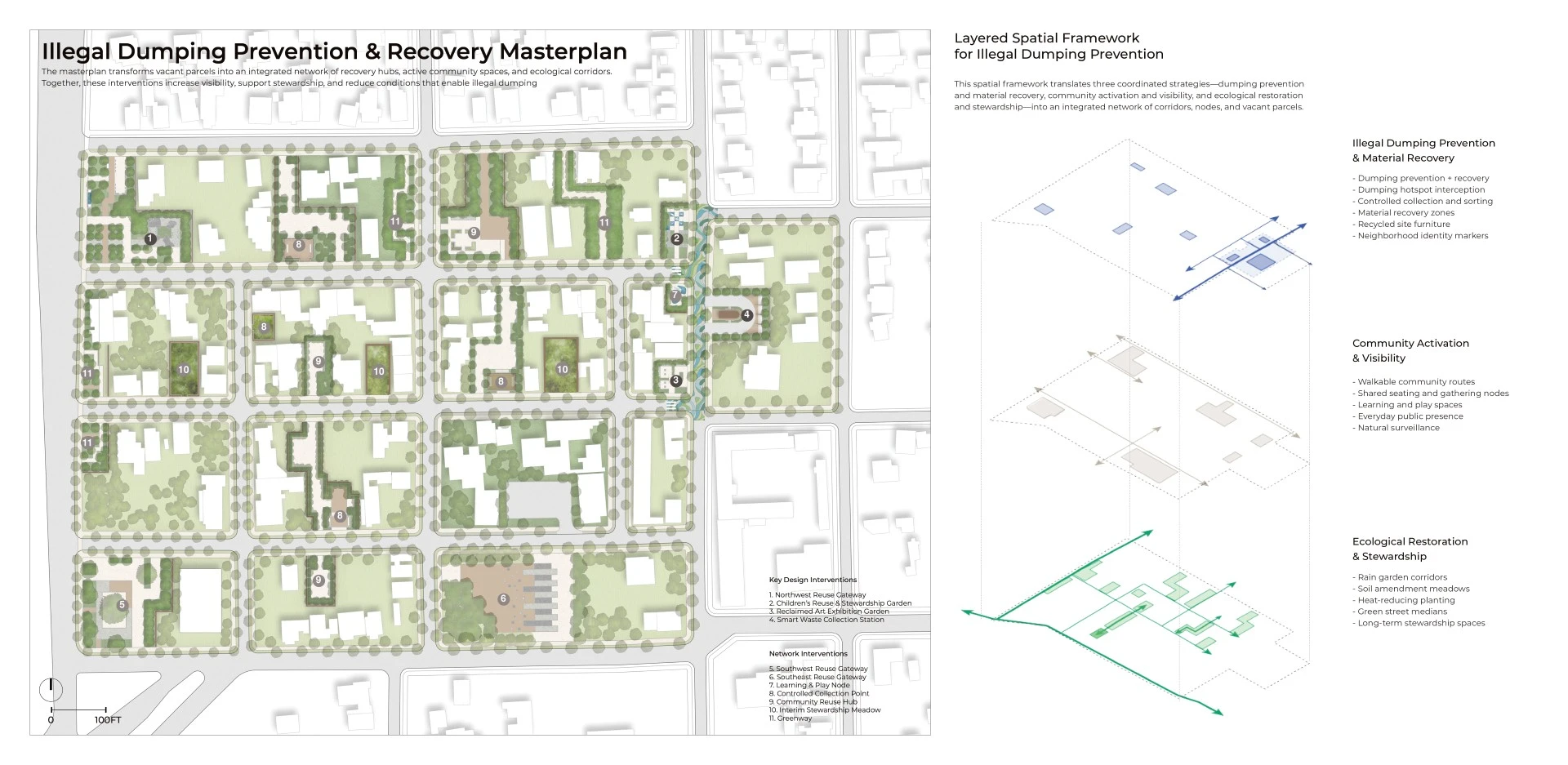
Rather than treating illegal dumping as a problem solved only through cleanup or enforcement, the project asks how landscape architecture can change the spatial conditions that allow dumping to return. Vacant parcels, street edges, and underused lots are transformed into a connected network of reuse gateways, learning gardens, reclaimed-material art spaces, smart waste collection stations, stewardship meadows, and green corridors. Each intervention increases public presence, improves visibility, supports proper disposal, and makes care visible in places previously marked by neglect.
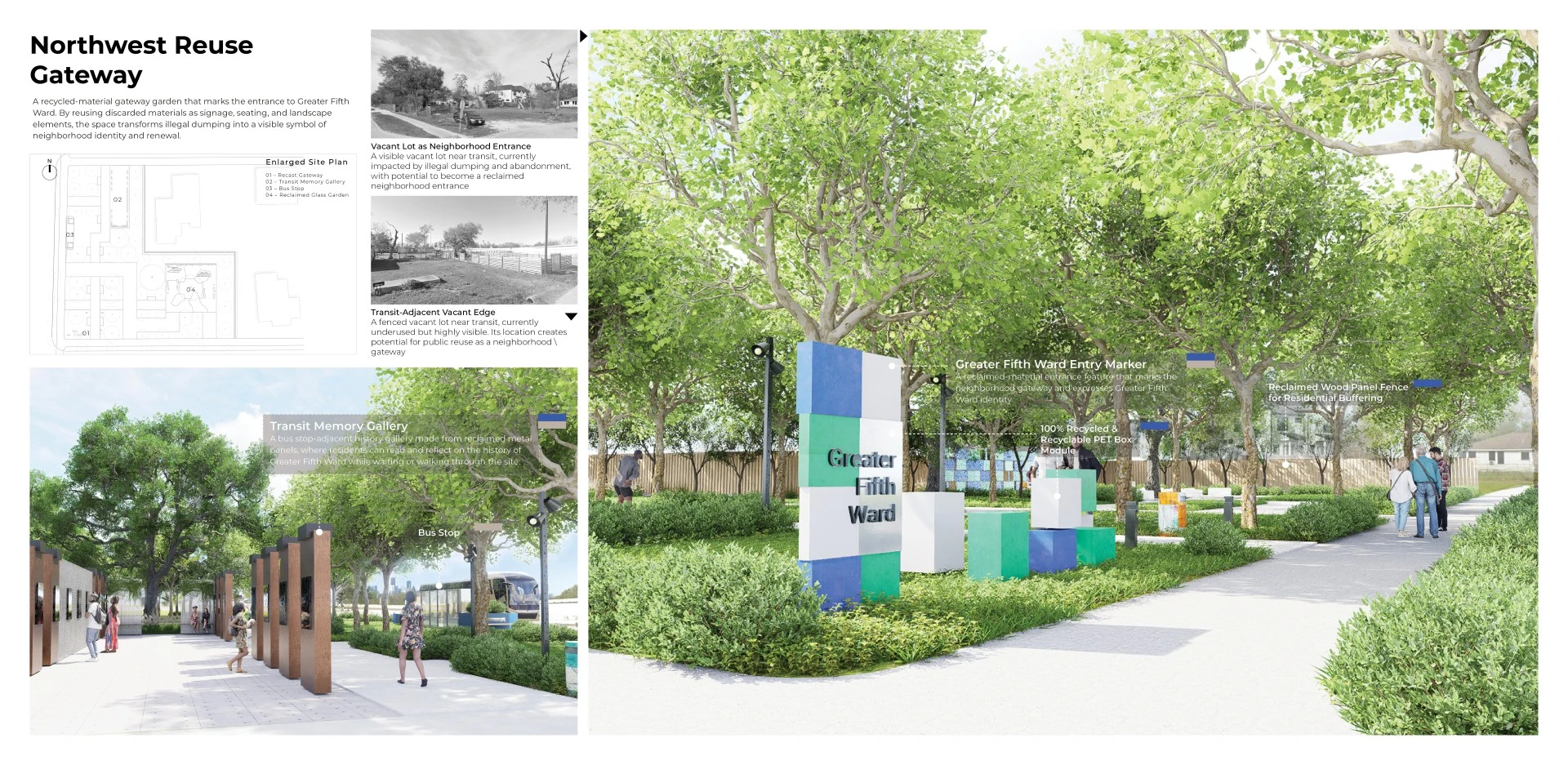
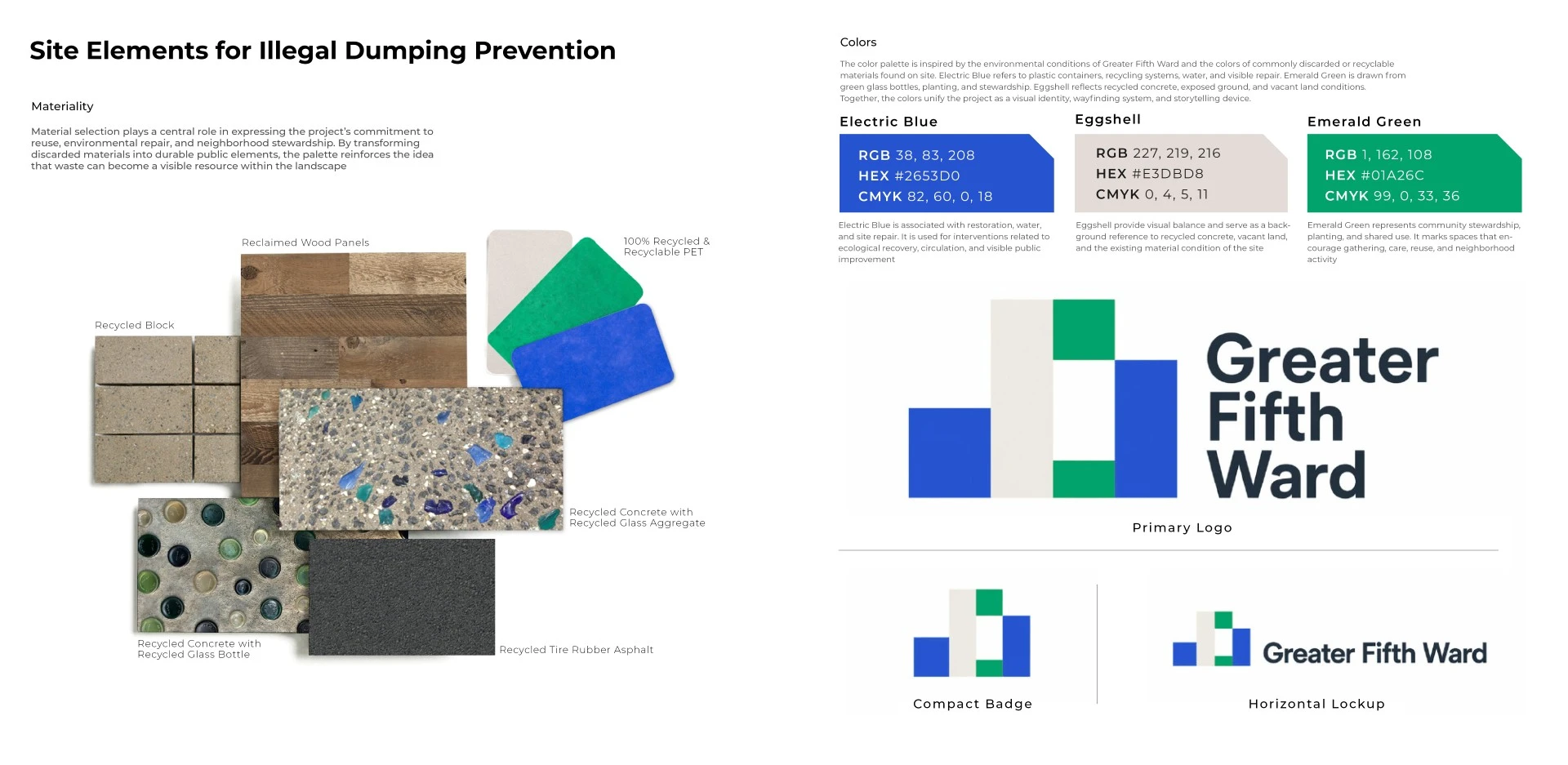
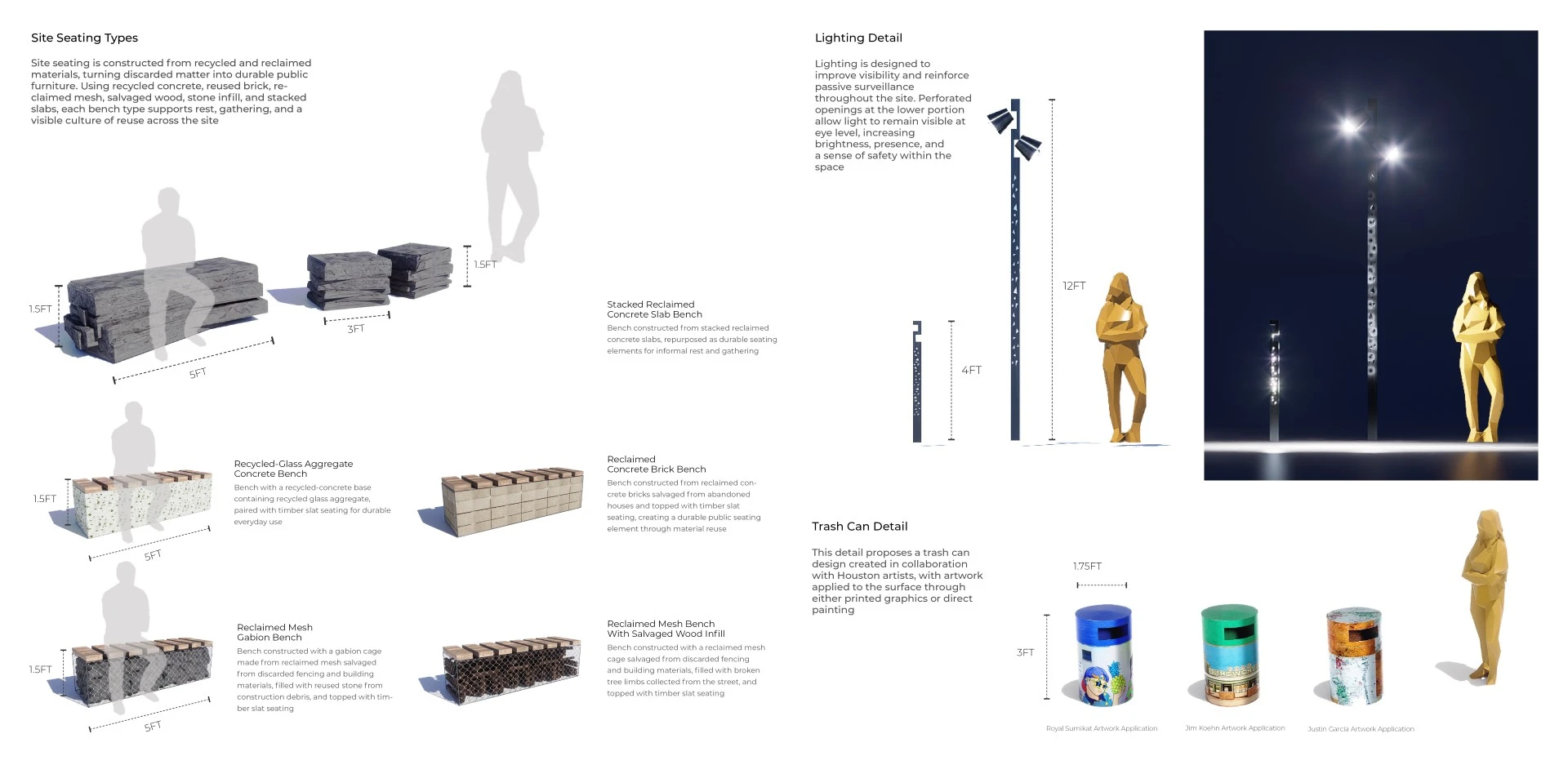
Material reuse is used as a tool for prevention, not as an end in itself. Discarded concrete, glass, wood, tires, mesh, and metal are collected, cleaned, and reintroduced as paving, seating, signage, public art, habitat structures, and service surfaces. These elements show residents how dumped materials can be redirected into public value, while also creating physical reminders of the consequences and possibilities of waste. A smart collection station provides a clear and accessible alternative to informal dumping. Children's stewardship gardens, endangered-animal waste bins, and local artist collaborations turn waste education into a visible, participatory experience.
The project also addresses resilience, sustainability, climate change, and social equity. Green corridors, shade planting, rain gardens, and meadow-based stewardship help reduce heat exposure, improve stormwater performance, and repair vacant land. Reused materials reduce demand for new construction resources and support a circular approach to site-making. Most importantly, the project focuses on a community where illegal dumping is not only an environmental problem, but also a sign of uneven public investment and social vulnerability.
By converting dumping-prone spaces into cared-for public landscapes, From Dumping Grounds to Living Systems proposes a replicable framework for neighborhoods facing similar conditions. It prevents illegal dumping by making vacant land visible, useful, maintained, and socially valued. The project is award-worthy because it moves beyond removal and reframes prevention as a civic landscape strategy-one that builds awareness, strengthens neighborhood responsibility, and turns neglected ground into living systems of recovery, care, and public life.
-
- Porous Paver
- Rain Garden
- Reclaimed Wood Fence
-
- Live Oak (Quercus Virginiana)
- Cedar Elm (Ulmus Crassifolia)
- Bald Cypress (Taxodium Distichum)
- Mexican Sycamore (Platanus Mexicana)
- Eastern Redbud (Cercis Canadensis)
- Desert Willow (Chilopsis Linearis)
- Texas Mountain Laurel (Dermatophyllum Secundiflorum)
- Yaupon Holly (Ilex Vomitoria)
- Wax Myrtle (Morella Cerifera)
Advertisement
Related Awards
Honors Award, Urban Design
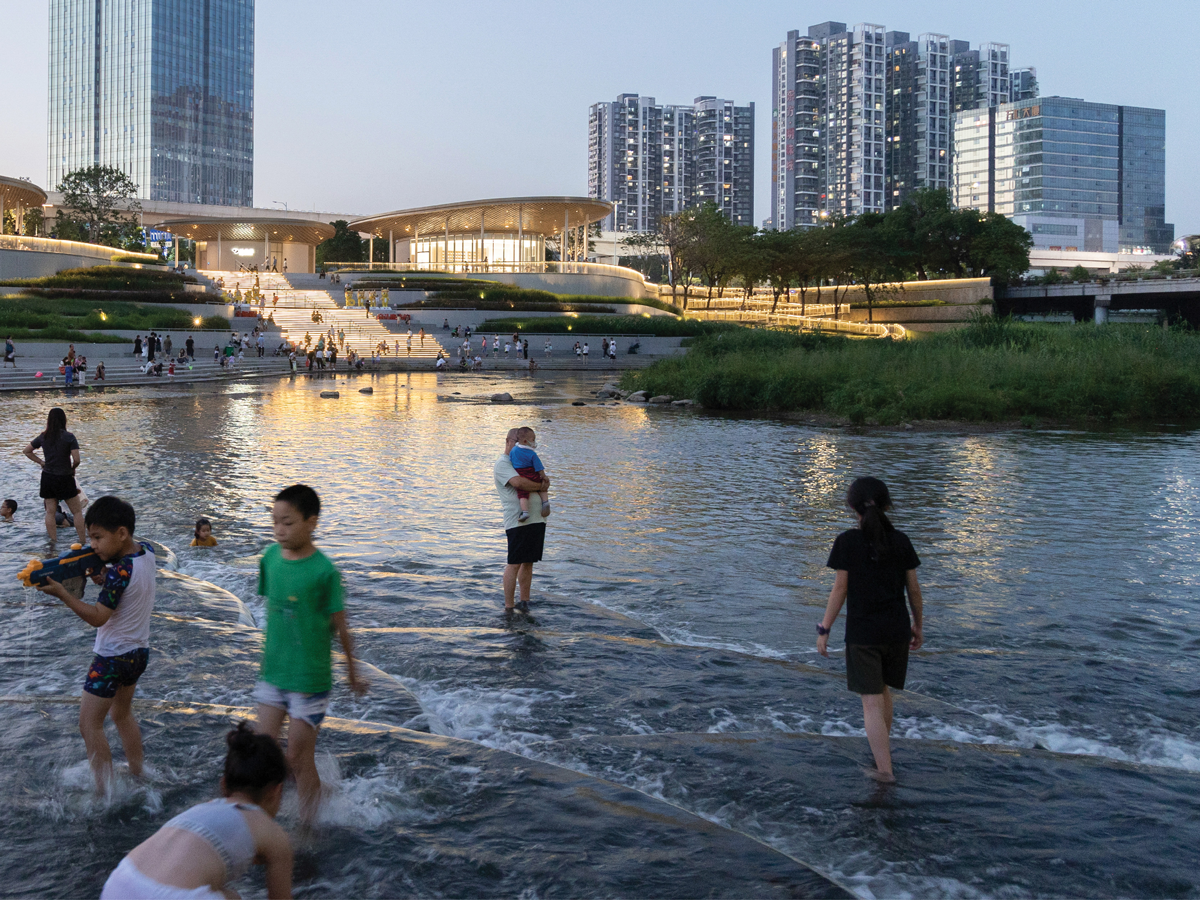
Restoring a River, Reconnecting a City: Longgang River Blueway
Over the past half century, rapid urbanization forced Shenzhen rivers into concrete channels, cutting communities off from nature and increasing flood risk. Spanning 20 kilometers, the Longgang River Blueway reshapes a former drainage corridor into a resilient, accessible public landscape.