
.webp?language=en-US)

.webp?language=en-US)
Catalyzing with Water
Bo-Huai Huang, Student Affiliate ASLA; Hannah Jun, Student Affiliate ASLA; Niharika Yashasvi Yenamandra, Student Affiliate ASLA; Raul Brito, Student Affiliate ASLA

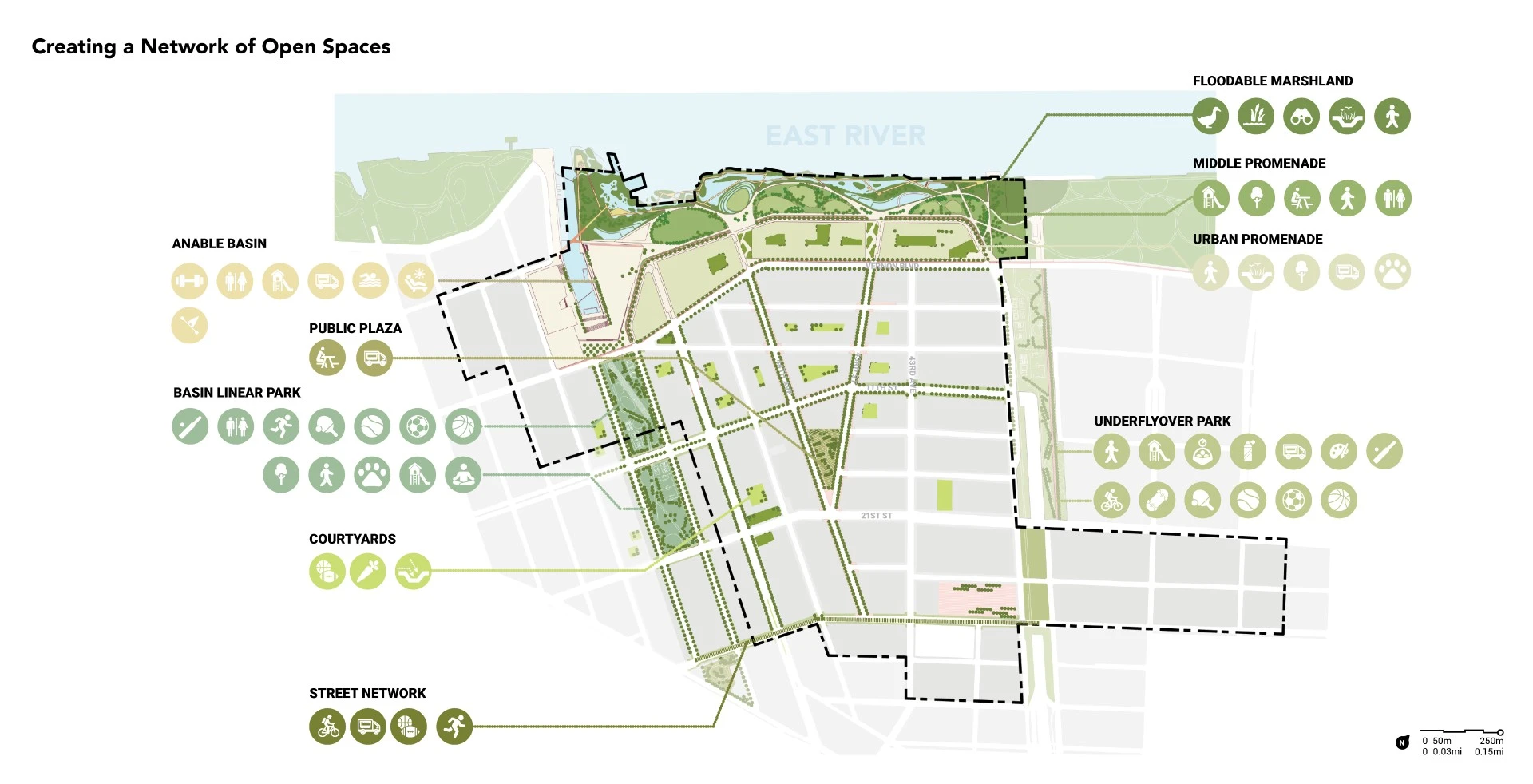
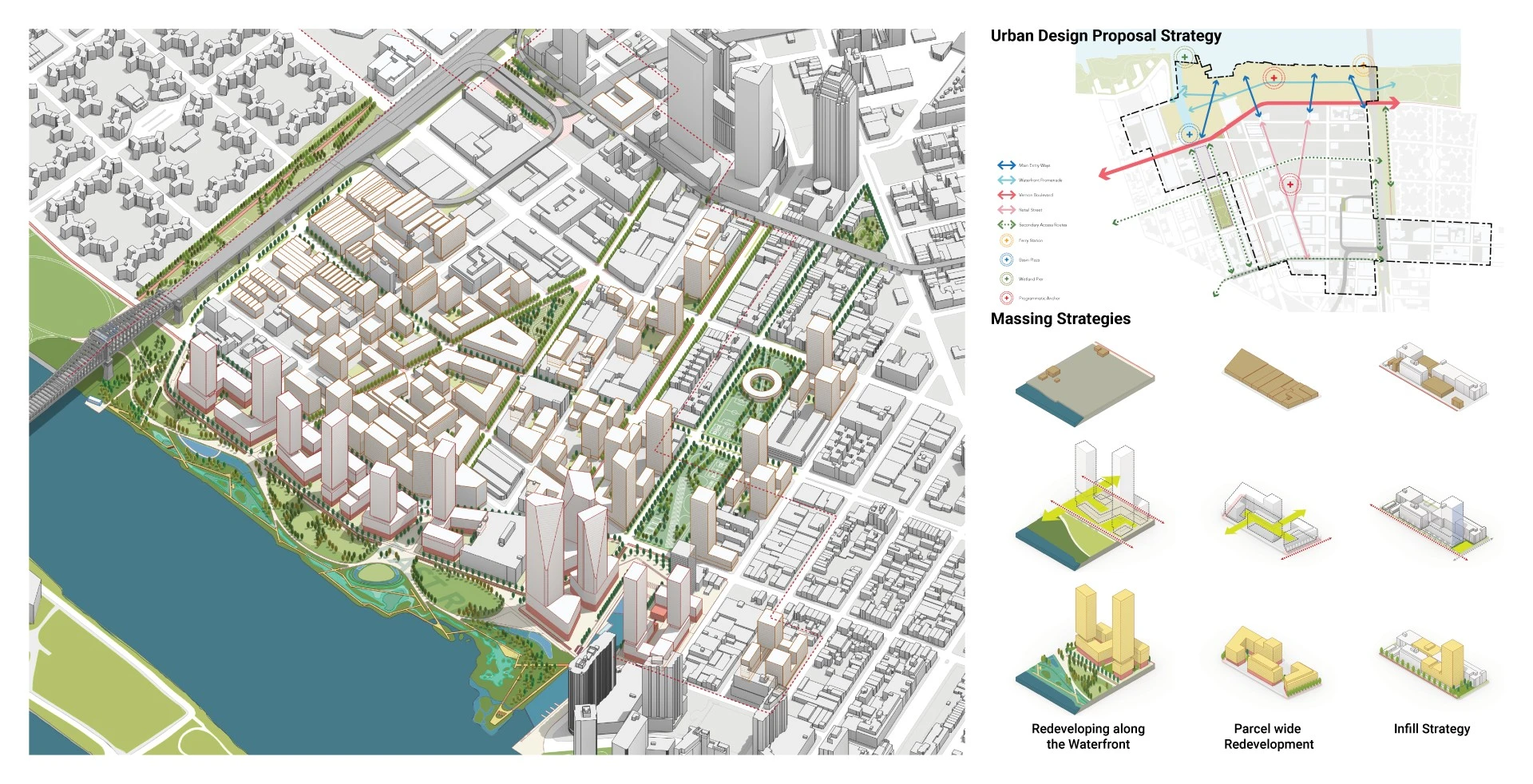
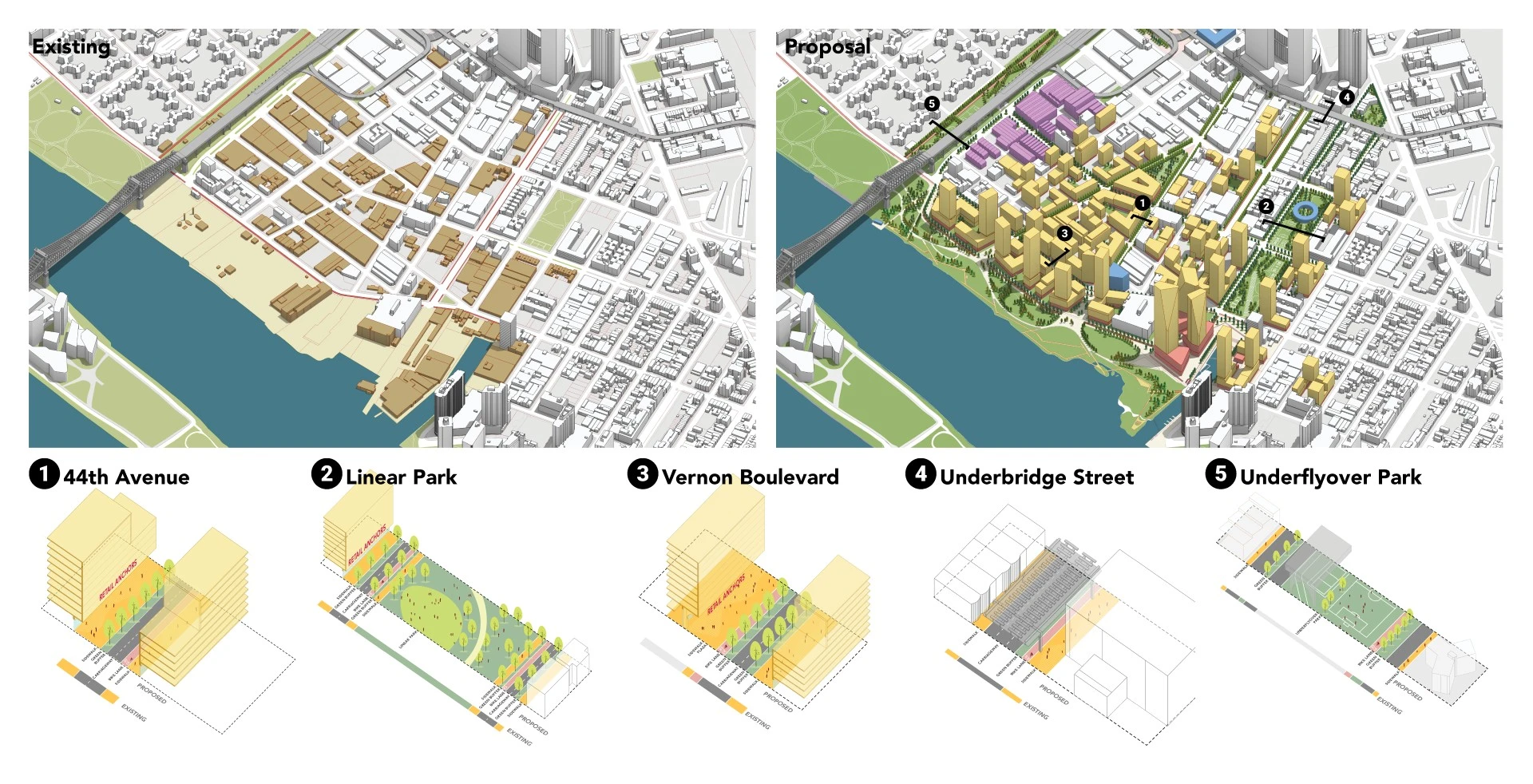
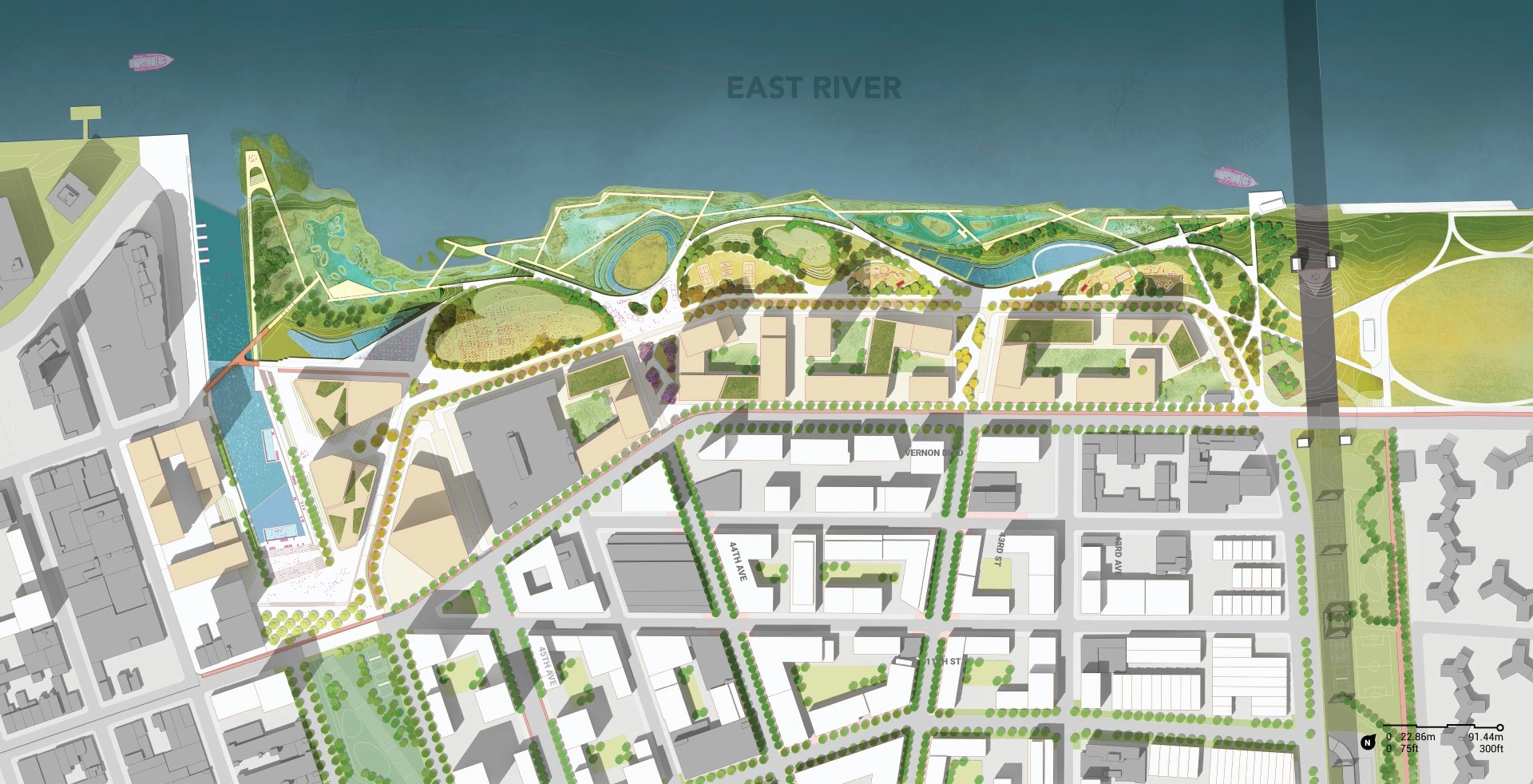
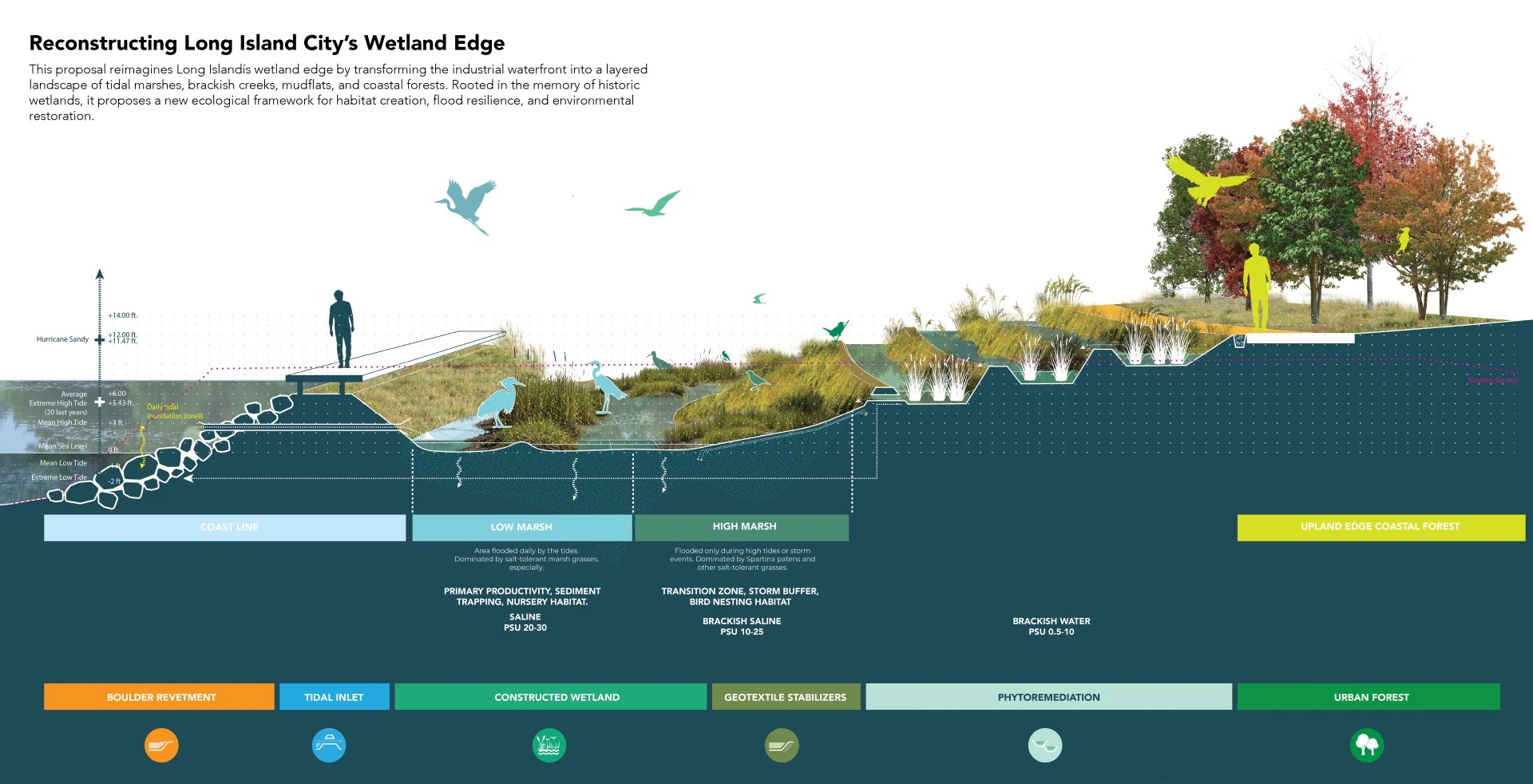
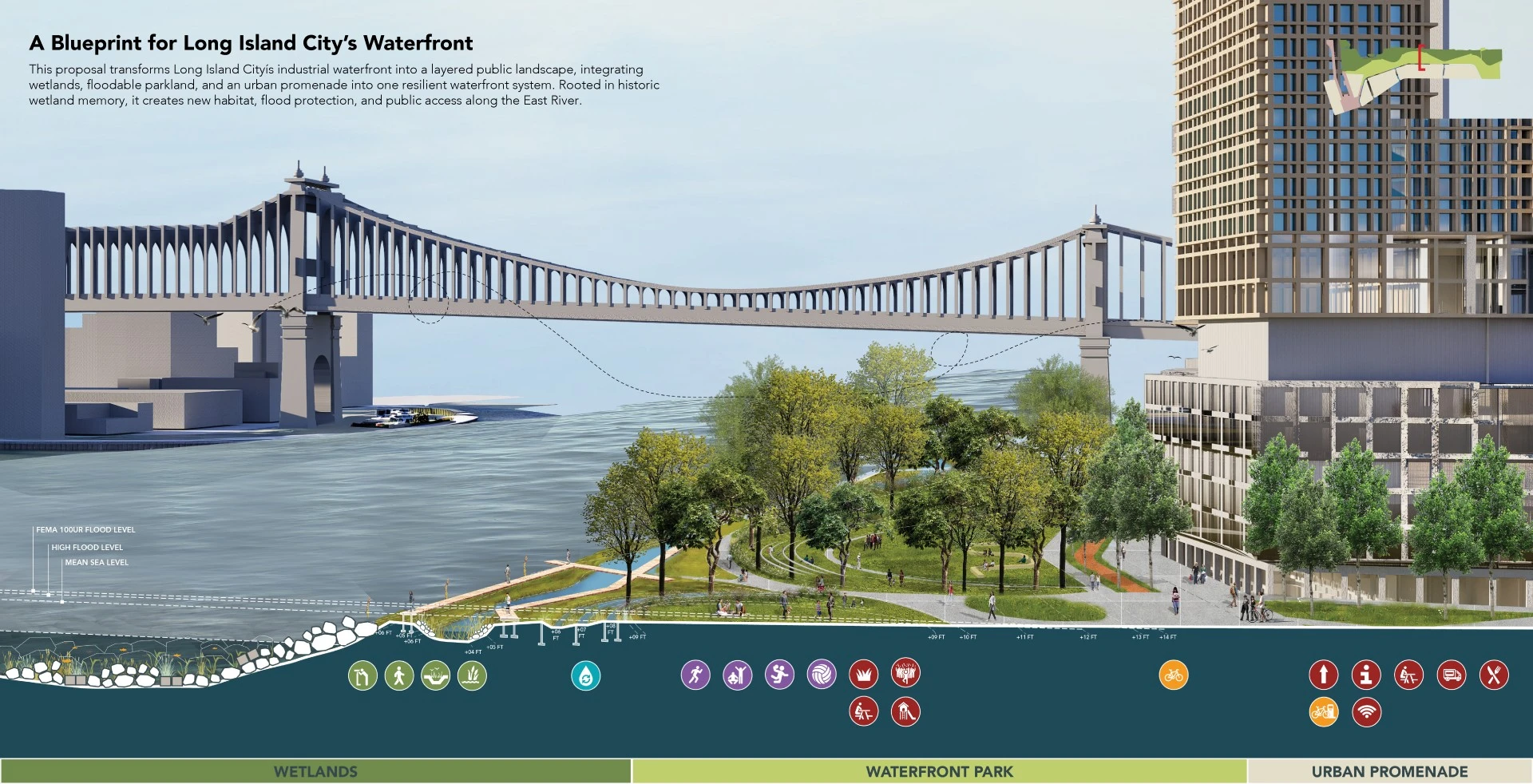
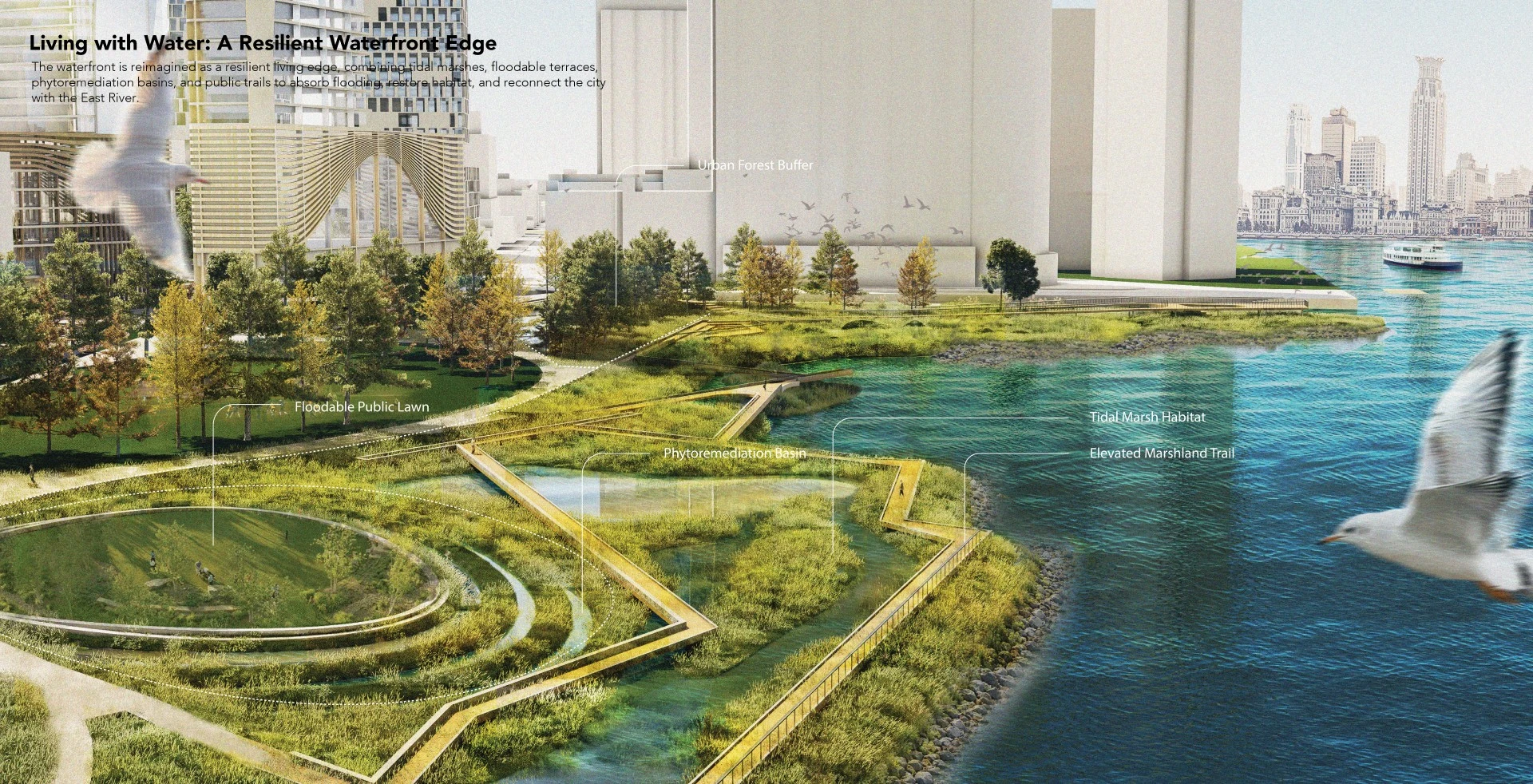
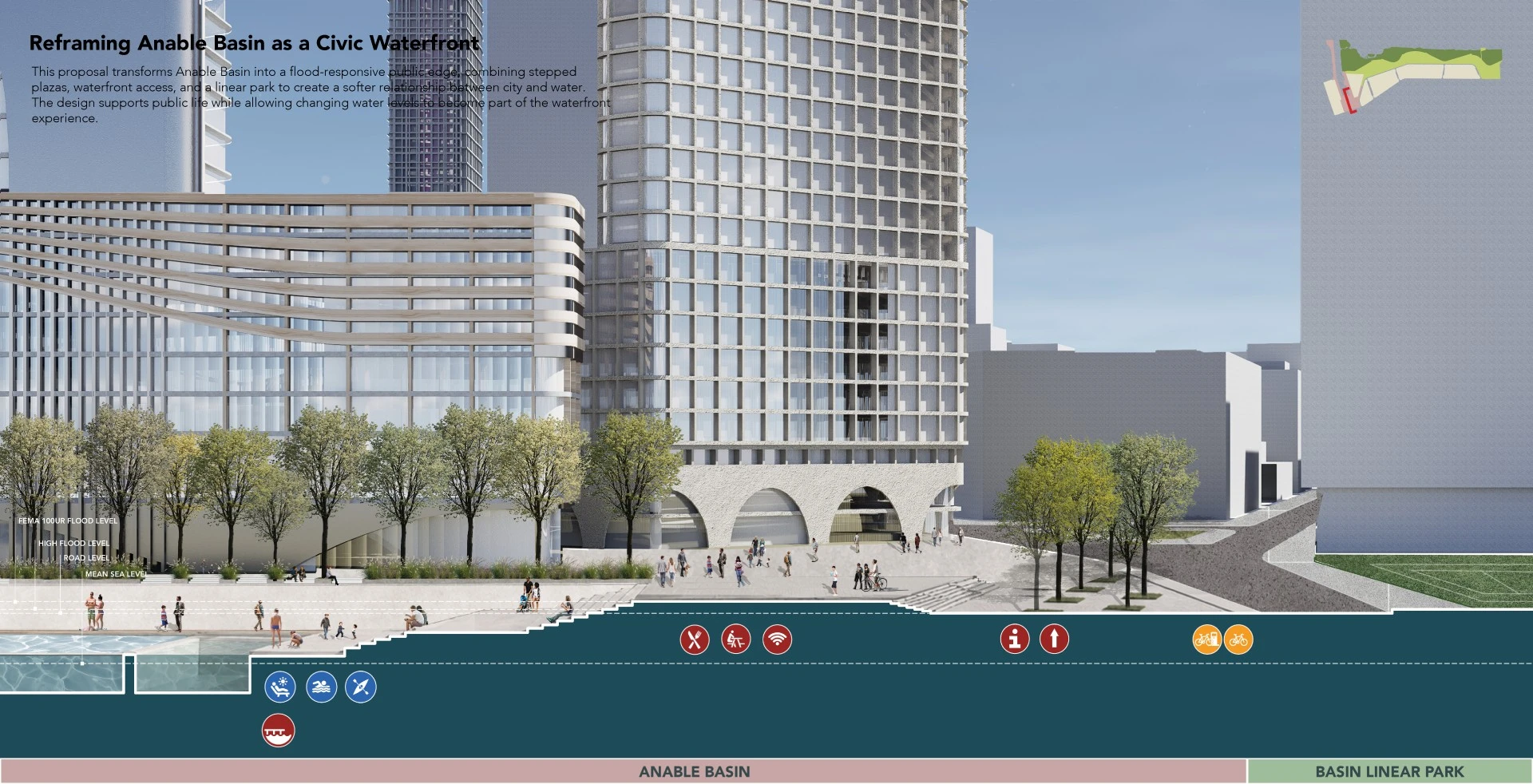
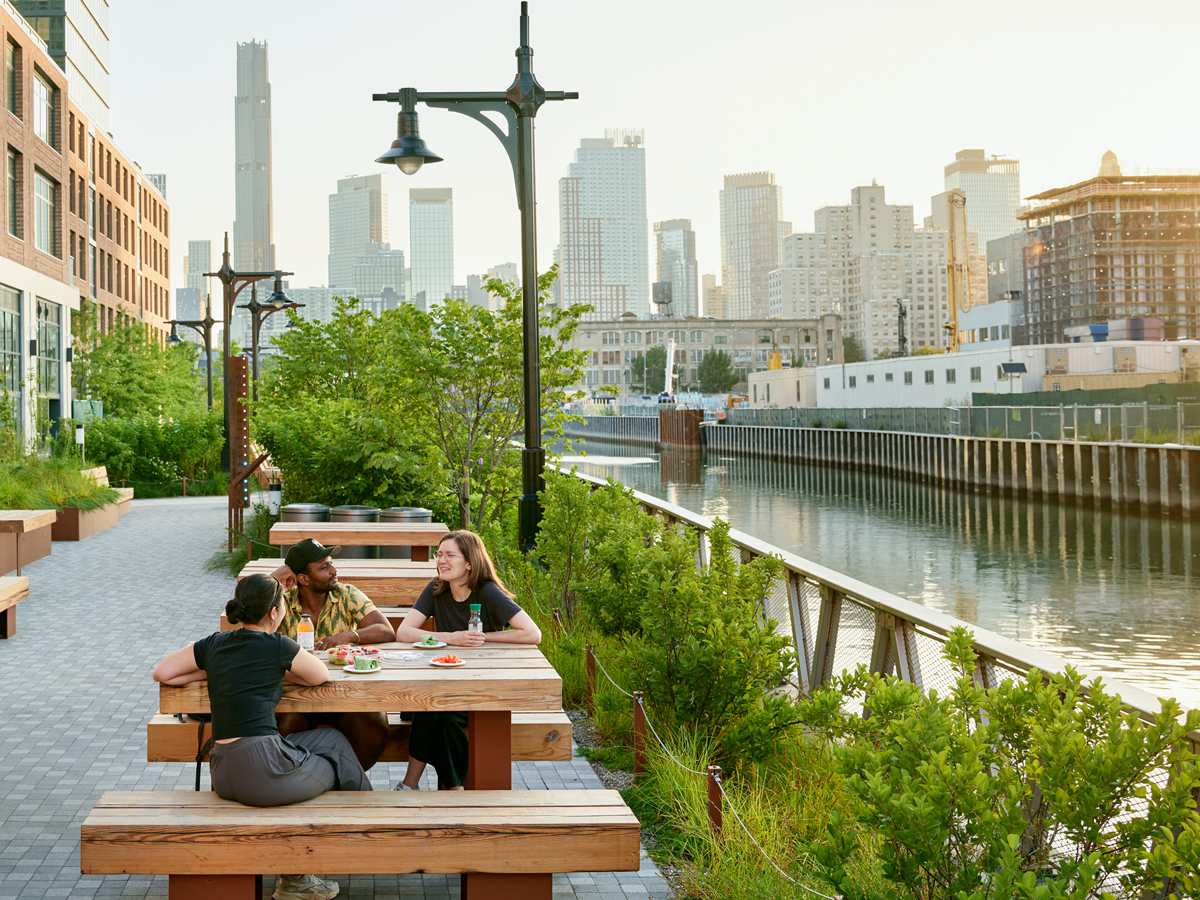
Great ecological restoration and an example of waterfront redevelopment that is guided by climate-adaptation strategies.
Awards Jury
-
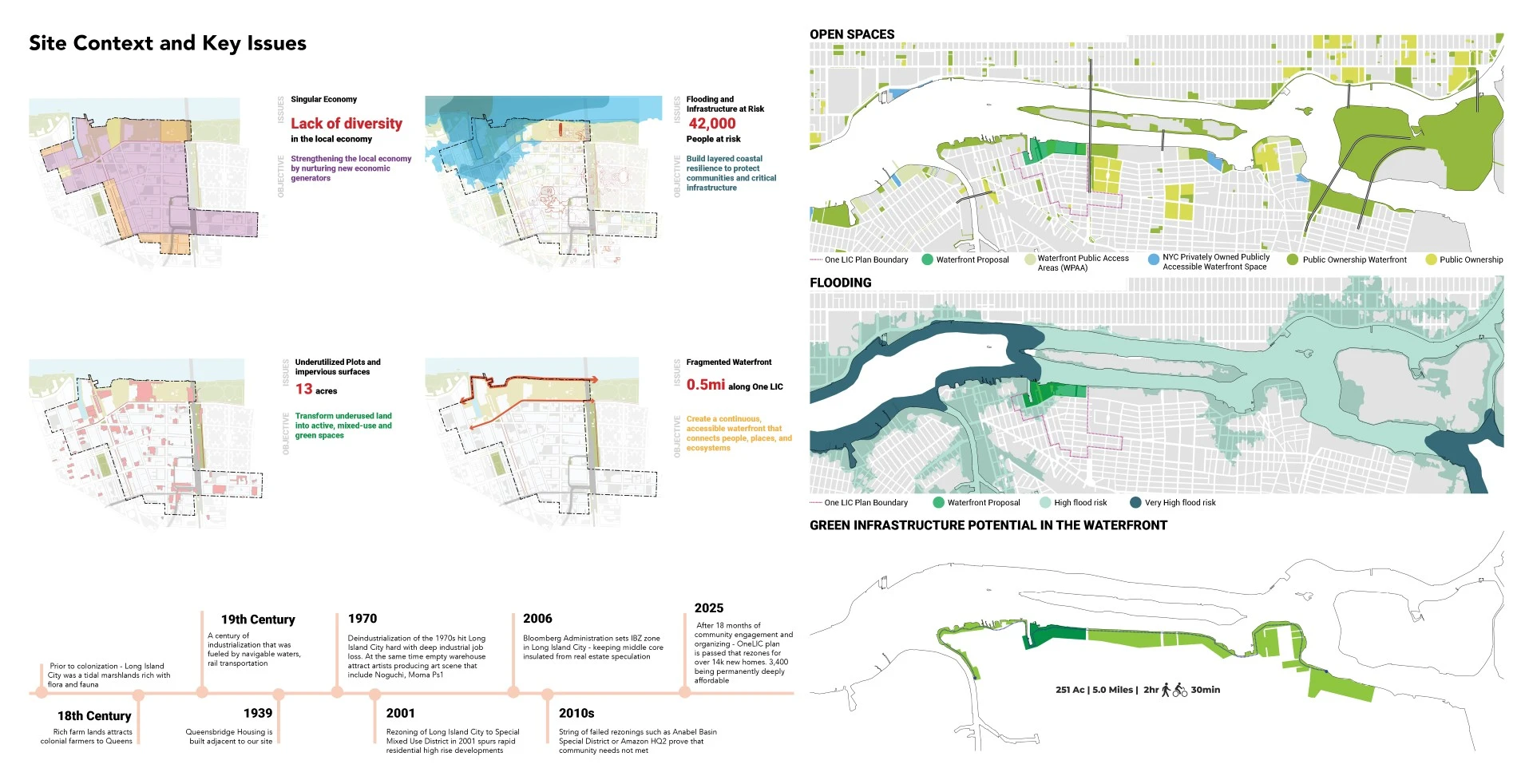
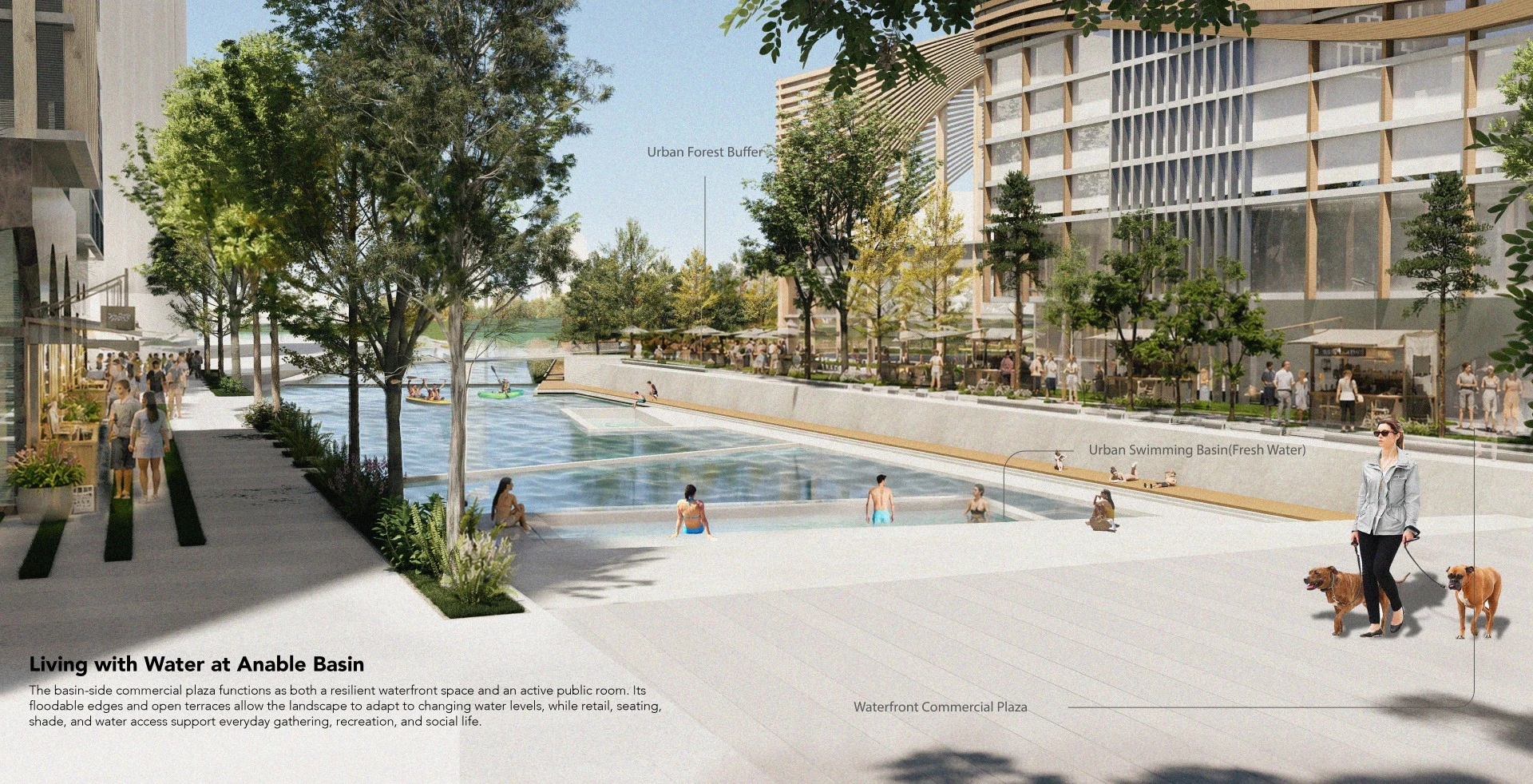
Long Island City is projected to absorb over 30,000 new residents into a waterfront neighborhood disconnected from its shoreline by private parcels, aging infrastructure, and a public realm built for industrial production, not people. Catalyze with Water reimagines the public realm vision as resilient civic infrastructure through three interconnected interventions: a restored public waterfront, the adaptive reuse of space beneath the Queensboro Bridge, and a continuous linear greenspace network. Each intervention has a two-fold nature--reconnecting community to water while building flood-resilient infrastructure that defends the neighborhood from rising seas. As landscape leads, a walkable, mixed-use urban form follows.
-
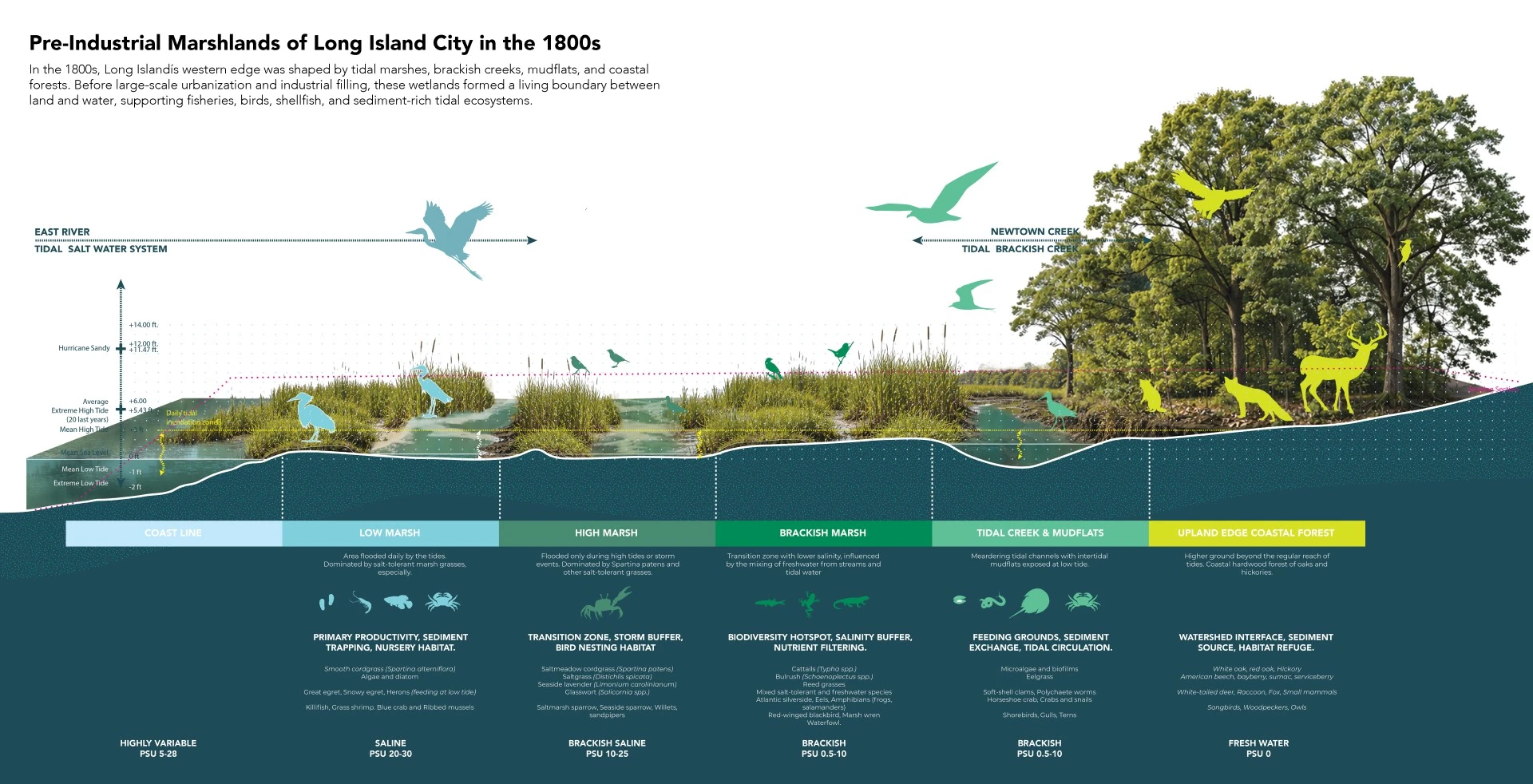
Long Island City is projected to absorb over 30,000 new residents through the OneLIC neighborhood plan, yet much of its waterfront remains disconnected from the public realm by private parcels, aging infrastructure, industrial edges, and flood-vulnerable landscapes. Historically, the East River shoreline supported tidal marshes, estuarine ecologies, and coastal woodland systems that were progressively erased through industrialization, land reclamation, and shoreline hardening. Today, the waterfront faces increasing pressure from sea level rise, storm surge events, and ecological fragmentation while lacking meaningful public access to the water.
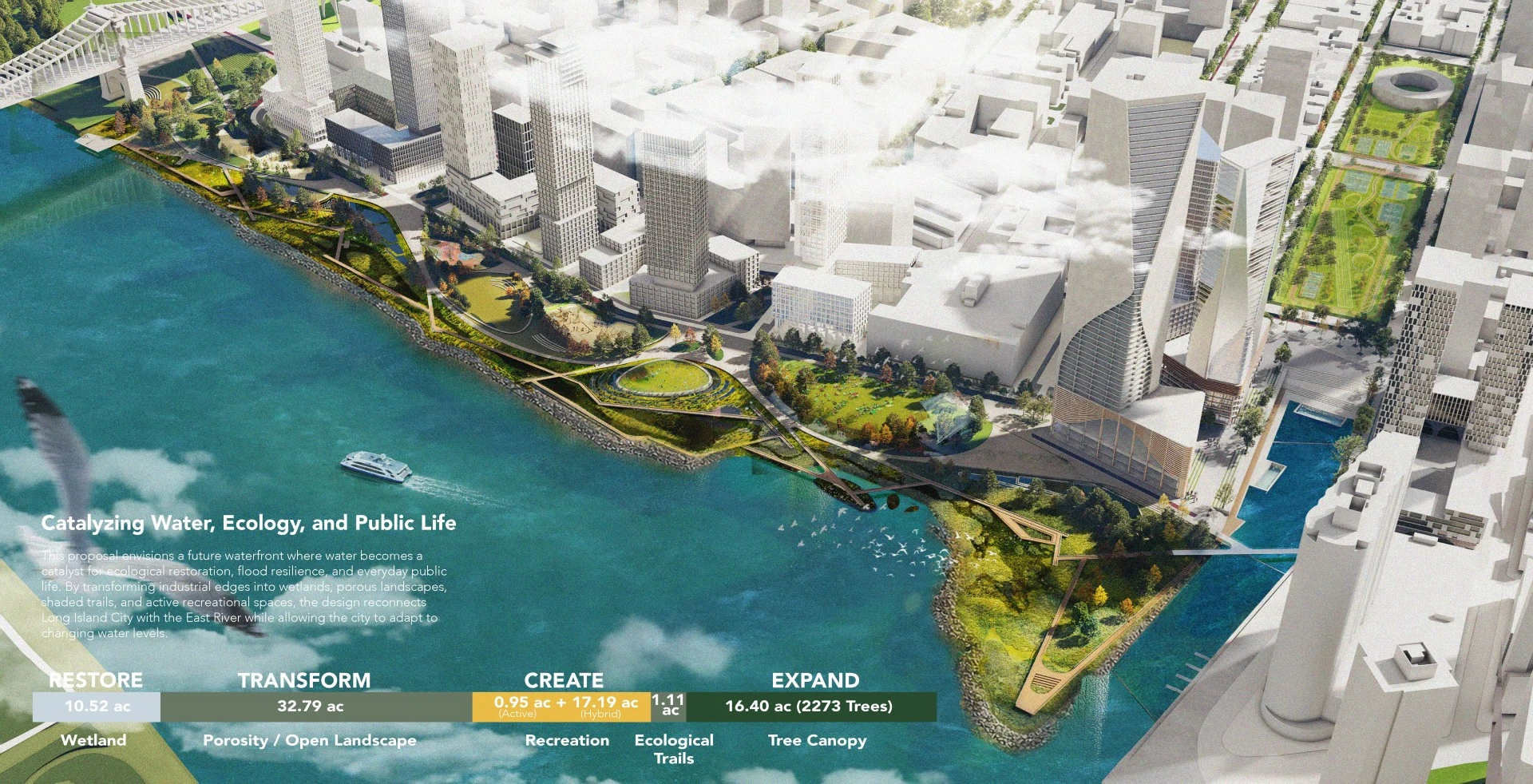
Catalyzing with Water reimagines the Long Island City waterfront as resilient civic infrastructure where ecological restoration, flood adaptation, and public life operate together as an integrated urban framework. Building upon the OneLIC neighborhood plan, the proposal advances a landscape-led strategy through three interconnected interventions: a restored East River waterfront, the adaptive reuse of residual space beneath the Queensboro Bridge, and the expansion of existing open space into a continuous linear greenspace network.
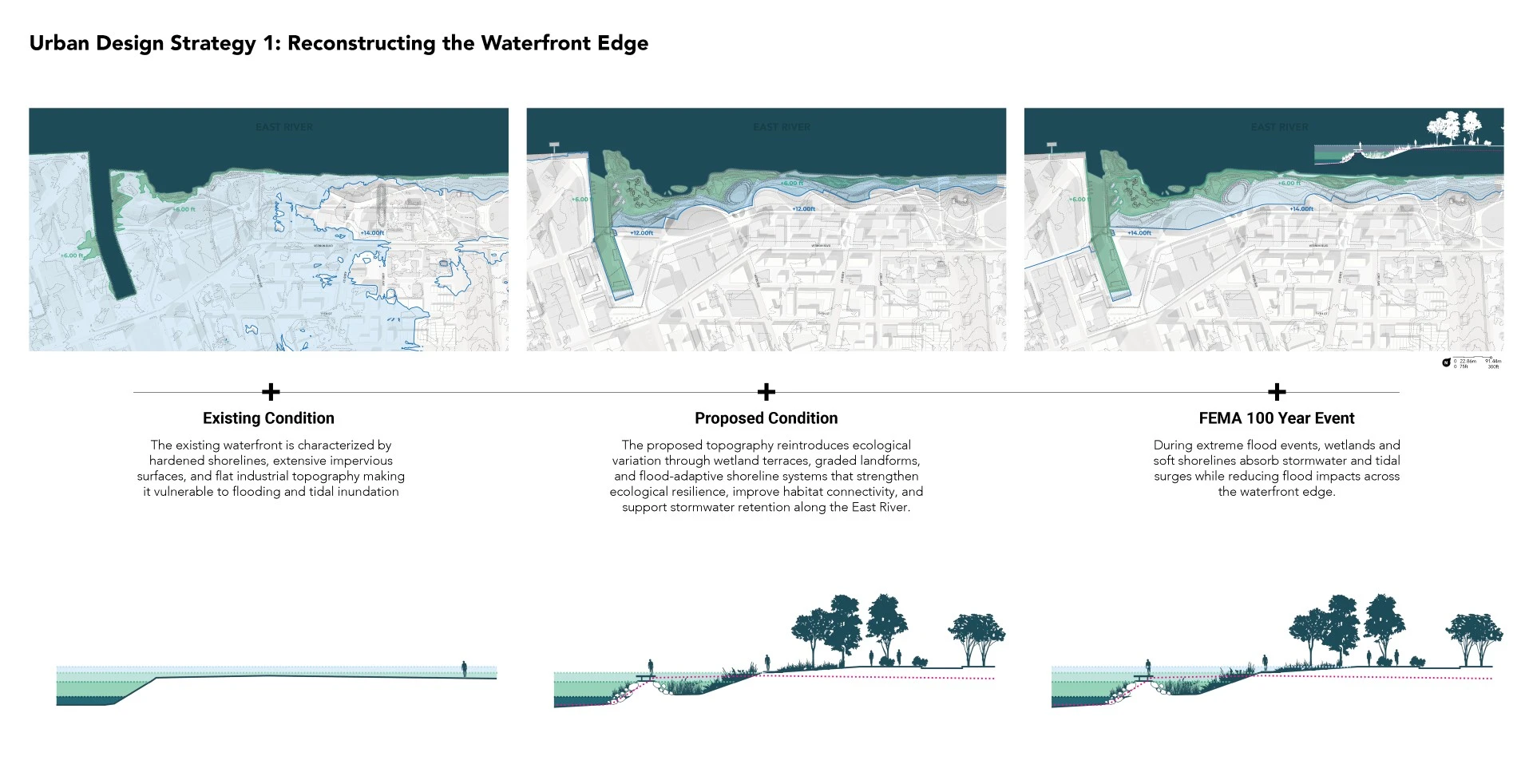
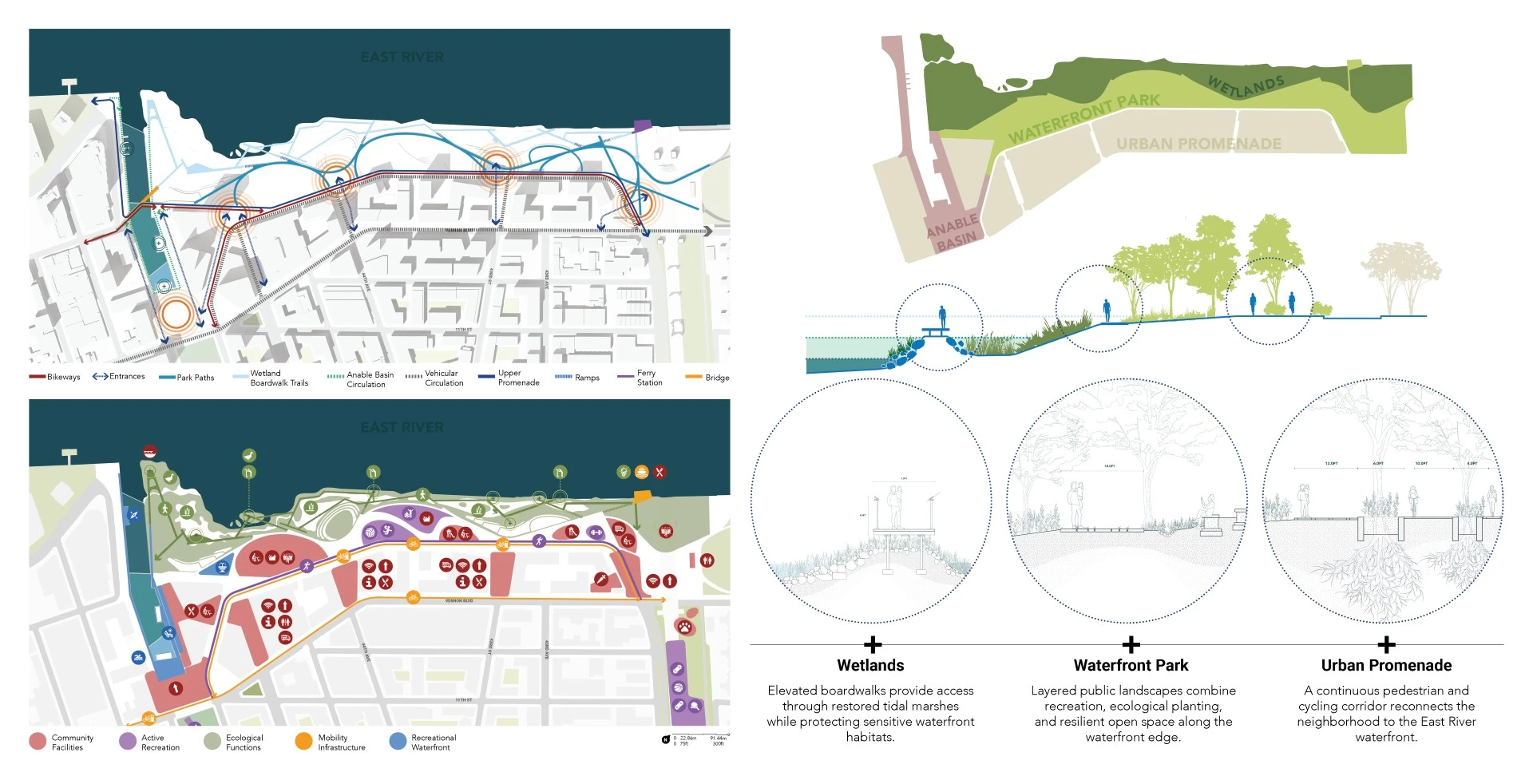
The proposal positions landscape as the primary organizing system for future urban growth. Rather than treating resilience as isolated infrastructure, the project integrates wetlands, flood-adaptive topography, ecological corridors, and public open space into a continuous waterfront system capable of responding to rising sea levels and extreme storm events while strengthening biodiversity and social connectivity.
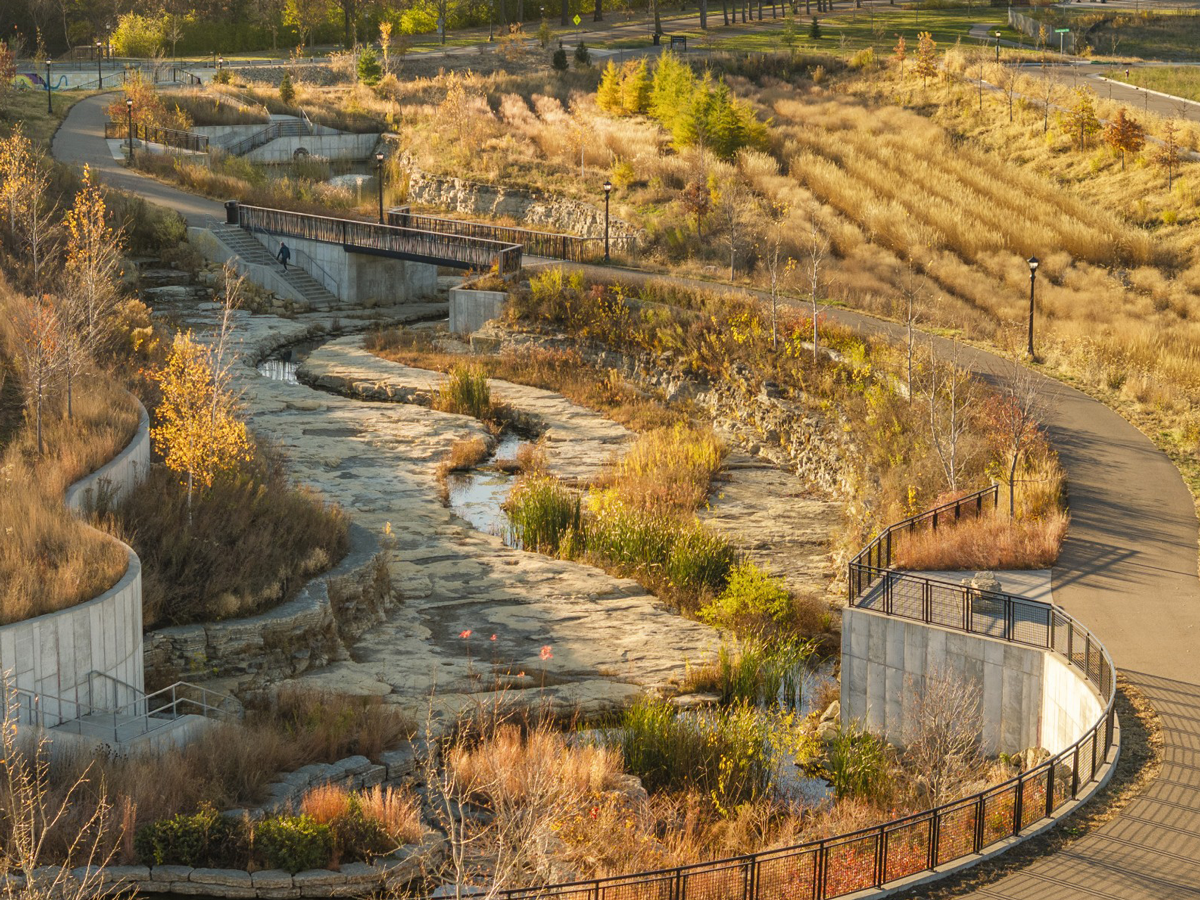
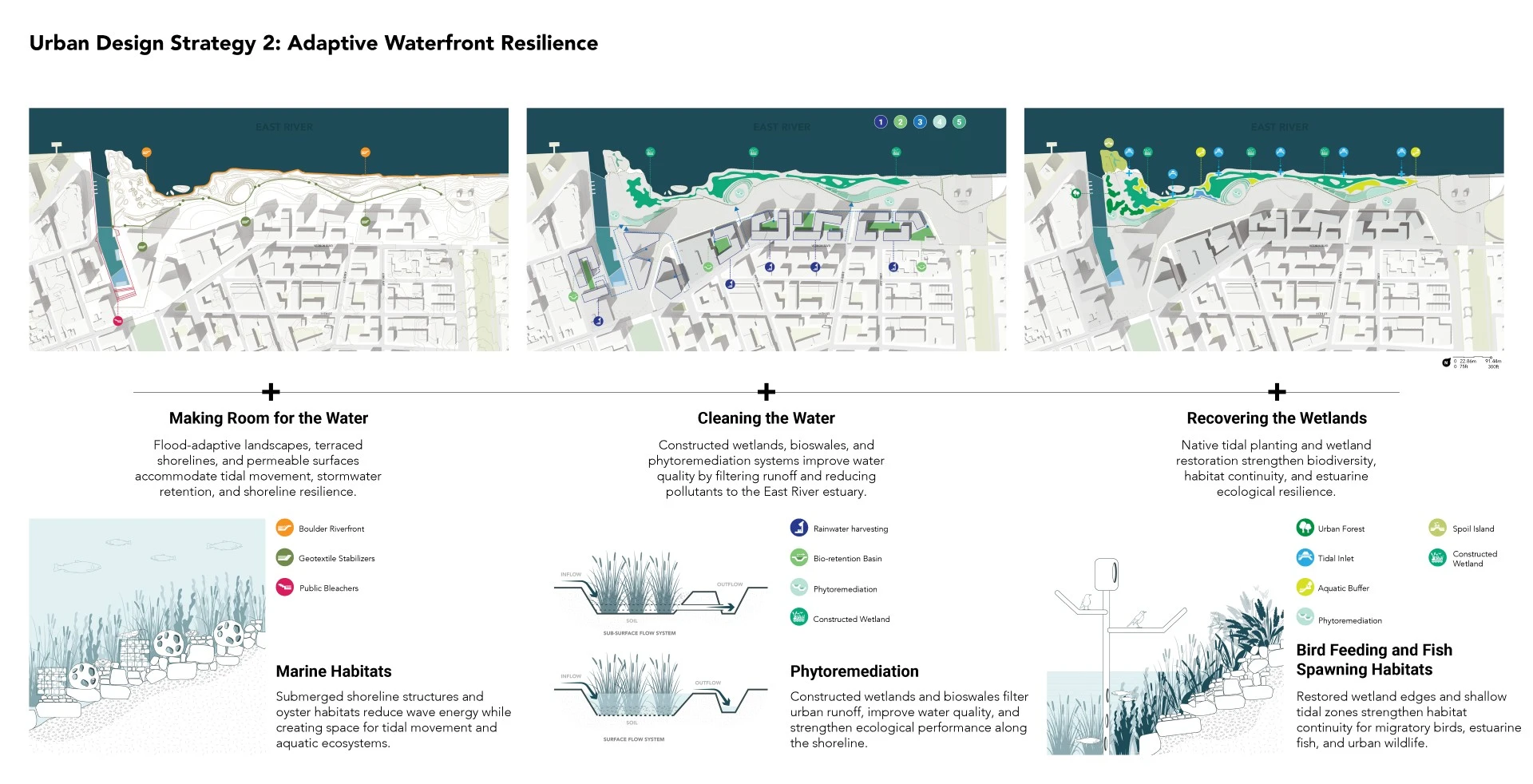
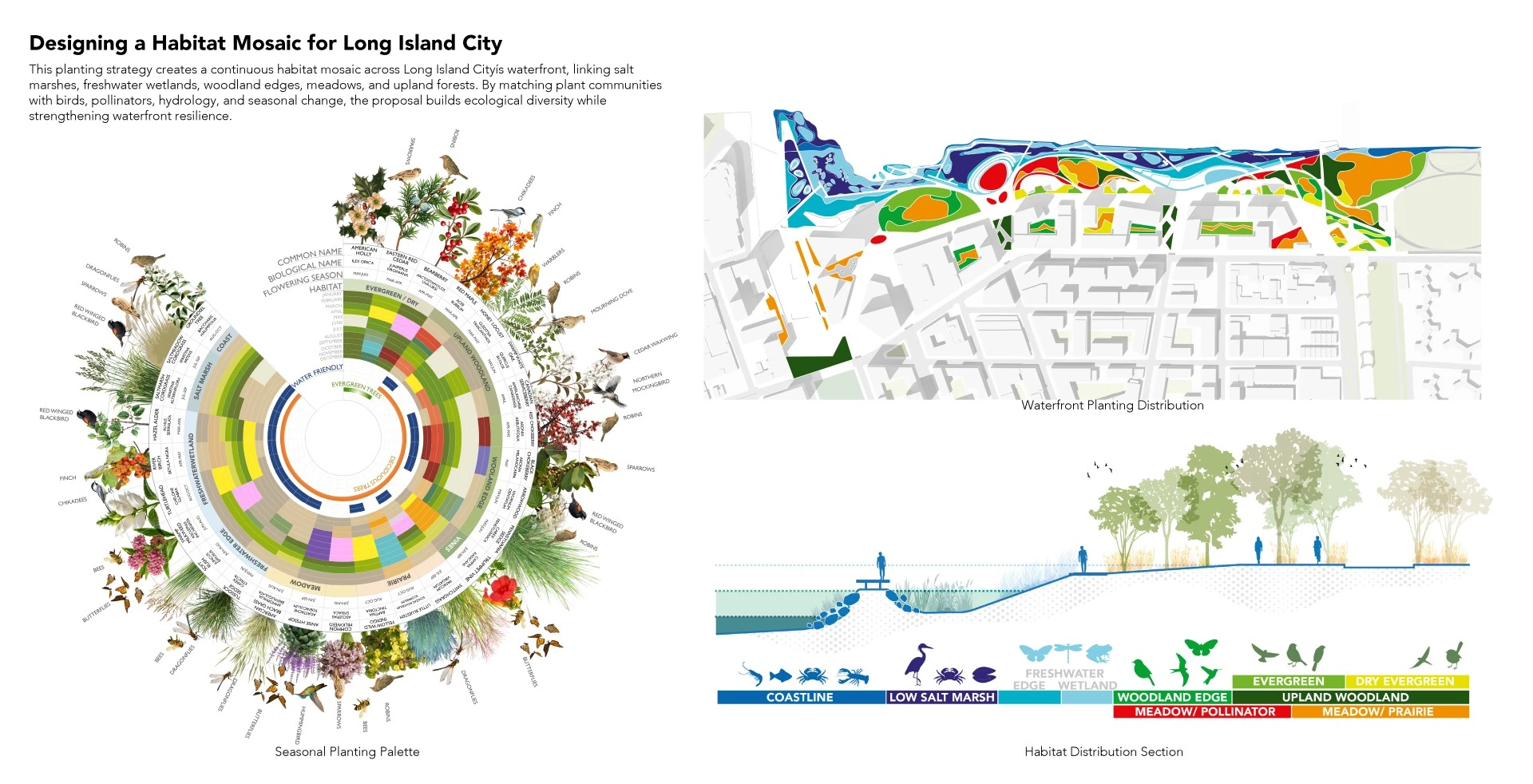
The waterfront edge is transformed through soft shoreline systems, tidal marsh restoration, and constructed wetland ecologies that improve hydrological performance, habitat continuity, and stormwater retention. Graded landforms and wetland terraces create transitional ecological zones that absorb tidal fluctuations while reducing the impact of storm surge along the urban edge. Native estuarine planting systems support migratory birds, aquatic habitats, pollinators, and urban wildlife while restoring ecological relationships historically present along the East River corridor.
Beneath the Queensboro Bridge, underutilized infrastructural space is adaptively reused as an ecological and civic connector linking surrounding neighborhoods to the waterfront. Green corridors, active mobility networks, and public gathering spaces strengthen pedestrian accessibility while reconnecting fragmented urban and ecological systems across the site.
The project also integrates living infrastructure strategies including bioswales, phytoremediation landscapes, reef balls, oyster habitats, and permeable public surfaces that improve water quality and ecological performance across the waterfront corridor. These systems operate simultaneously as environmental infrastructure and public space, creating a waterfront landscape that is both performative and accessible.
At multiple scales, the proposal demonstrates how ecological restoration can function as a catalyst for resilient urban transformation. By reconnecting communities to the East River through landscape-based systems, Catalyzing with Water establishes a new model for climate-adaptive waterfront urbanism where ecology, infrastructure, and public life coexist within a shared civic landscape.
-
- American Holly
- Eastern Red Cedar
- Red Maple
- Bearberry
- Honey Locust
- Swamp White Oak
- Canadian Serviceberry
- Red Chokeberry
- Black Chokeberry
- Arrowwood
- Pennsylvania Sedge
- Trumpet Vine
- Switchgrass
- Little Bluestem
- Yellow Wild Indigo
- Common Milkweed
- Anise Hyssop
- American Beach Grass
- Tussock Edge
- Soft Rush
- Swamp Milkweed
- Turtlehead
- River Birch
- Hazel Alder
- Saltmarsh Cordgrass
- Saltmeadow Cordgrass
- Groundsel Tree
Advertisement
Related Awards
Honors Award, Urban Design
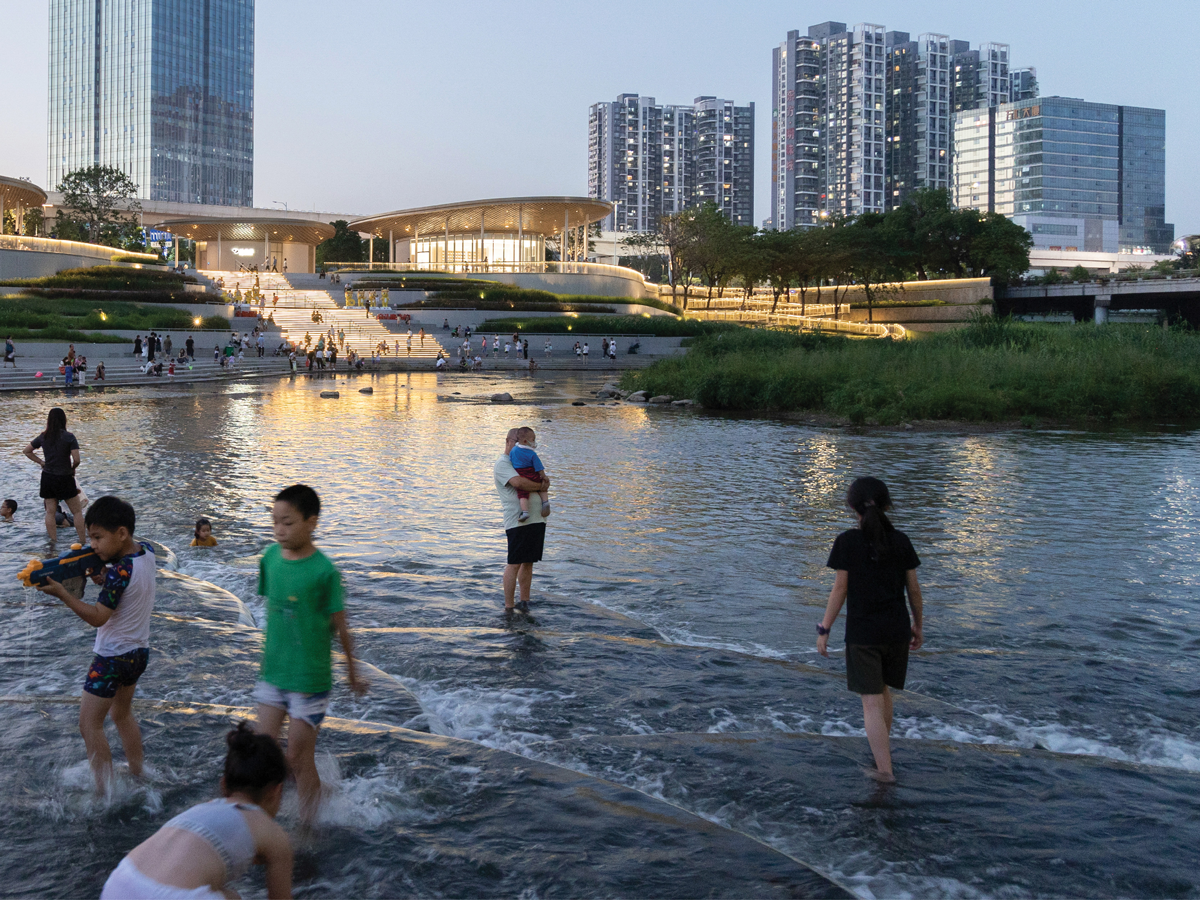
Restoring a River, Reconnecting a City: Longgang River Blueway
Over the past half century, rapid urbanization forced Shenzhen rivers into concrete channels, cutting communities off from nature and increasing flood risk. Spanning 20 kilometers, the Longgang River Blueway reshapes a former drainage corridor into a resilient, accessible public landscape.