
.webp?language=en-US)



Sediment Strategies: Considerations and Case Studies for Beneficial Use
-
Half of the wetlands on the Atlantic coast are projected to be lost by 2050. At the same time, hundreds of millions of cubic yards of sediment are dredged annually. Sediment Strategies is an innovative guide that sees this as an opportunity to transform the byproduct of dredging into a lifeline for marshes. It draws on applied research from across the U.S., presenting proven best practices to align dredging and restoration. Complex information is presented in an accessible and engaging format answering questions and providing a common language for those involved in sediment management and coastal restoration. This document empowers agencies, communities, and practitioners to turn a looming crisis into a model for climate resilience.
-
Sediment Strategies is a how-to guide that provides common language and an accessible technical reference for practitioners, agencies, and communities who want to utilize the beneficial use of dredged material (BUDM) as a lifeline for coastal marshes across the United States, with an emphasis on implementation in Maryland.
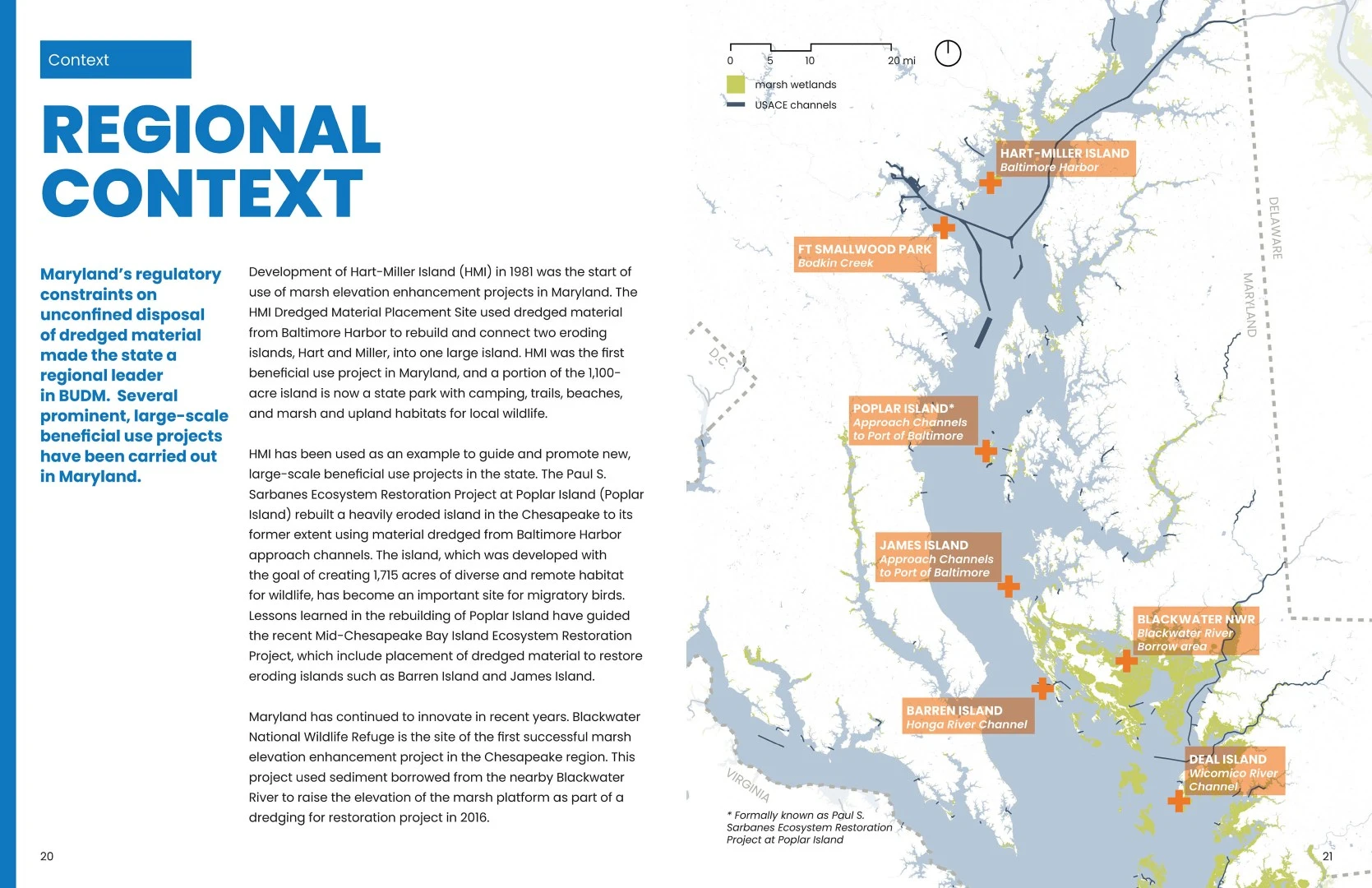
Up and down the Atlantic Coast, marshes play an essential role in daily life. They buffer storms, filter water, support fisheries, and store carbon. They are the backbone of aquatic recreation, commerce, and community. Yet by 2050, nearly half are projected to be lost. At the same time, hundreds of millions of cubic yards of sediment are moved annually through dredging—a critical management action that keeps ports open, tributaries navigable, and commerce flowing. The link between these systems is sediment. Yet even though one is a sediment source and the other a sediment sink, they are not often managed together.
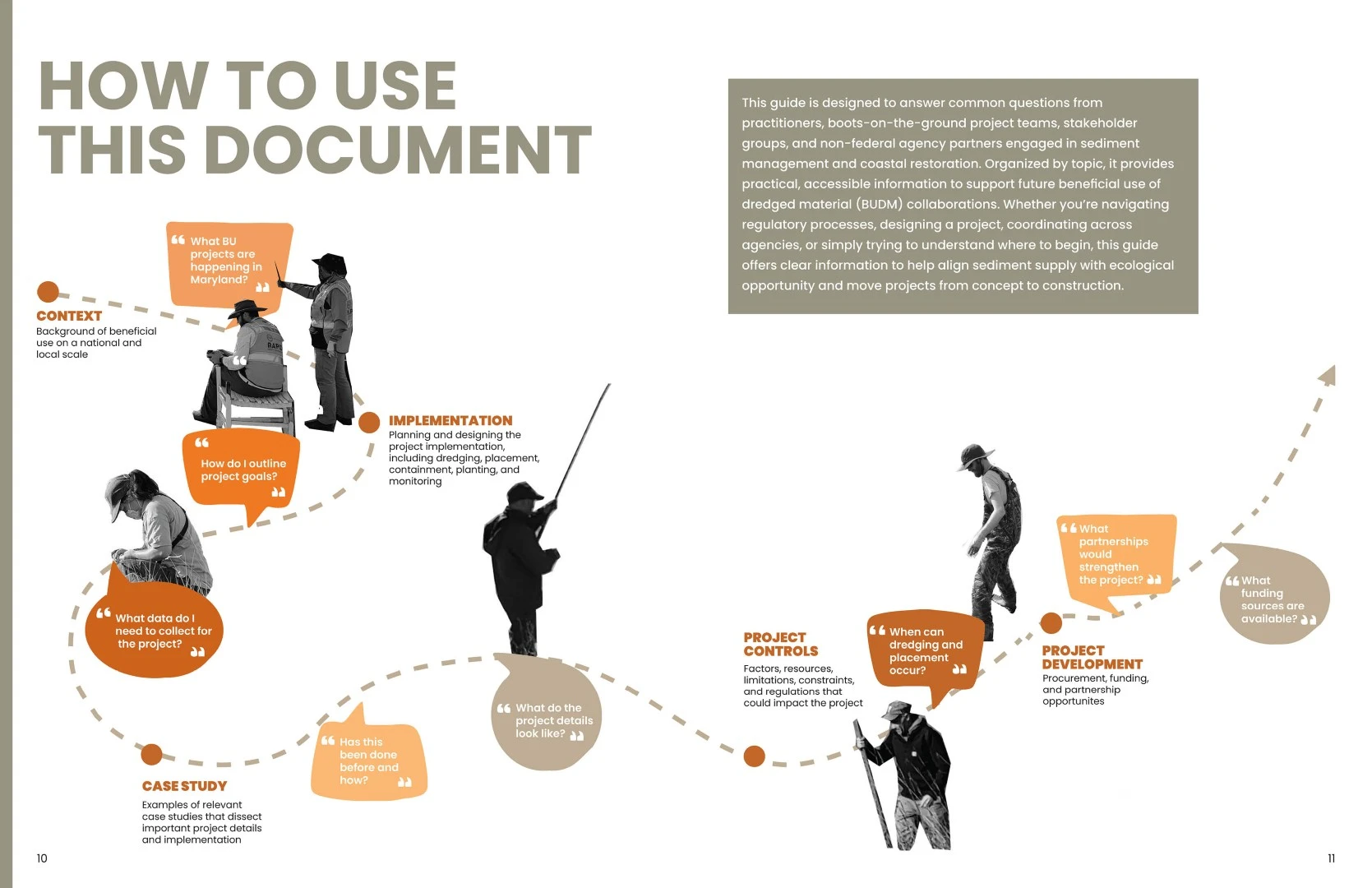
That is the beauty of beneficial use: recycling sediment to enhance aquatic ecosystems and lower the cost of dredging. It is a simple idea, but making it happen is anything but simple. It requires a shared vision, intentional coordination, and technical understanding. Sediment Strategies is a BUDM resource for both seasoned practitioners and early adopters. The document is organized in five user-friendly sections:
- Context — Frames the ecological and policy drivers for sediment recycling
- Implementation — Outlines technical considerations and implementation tactics
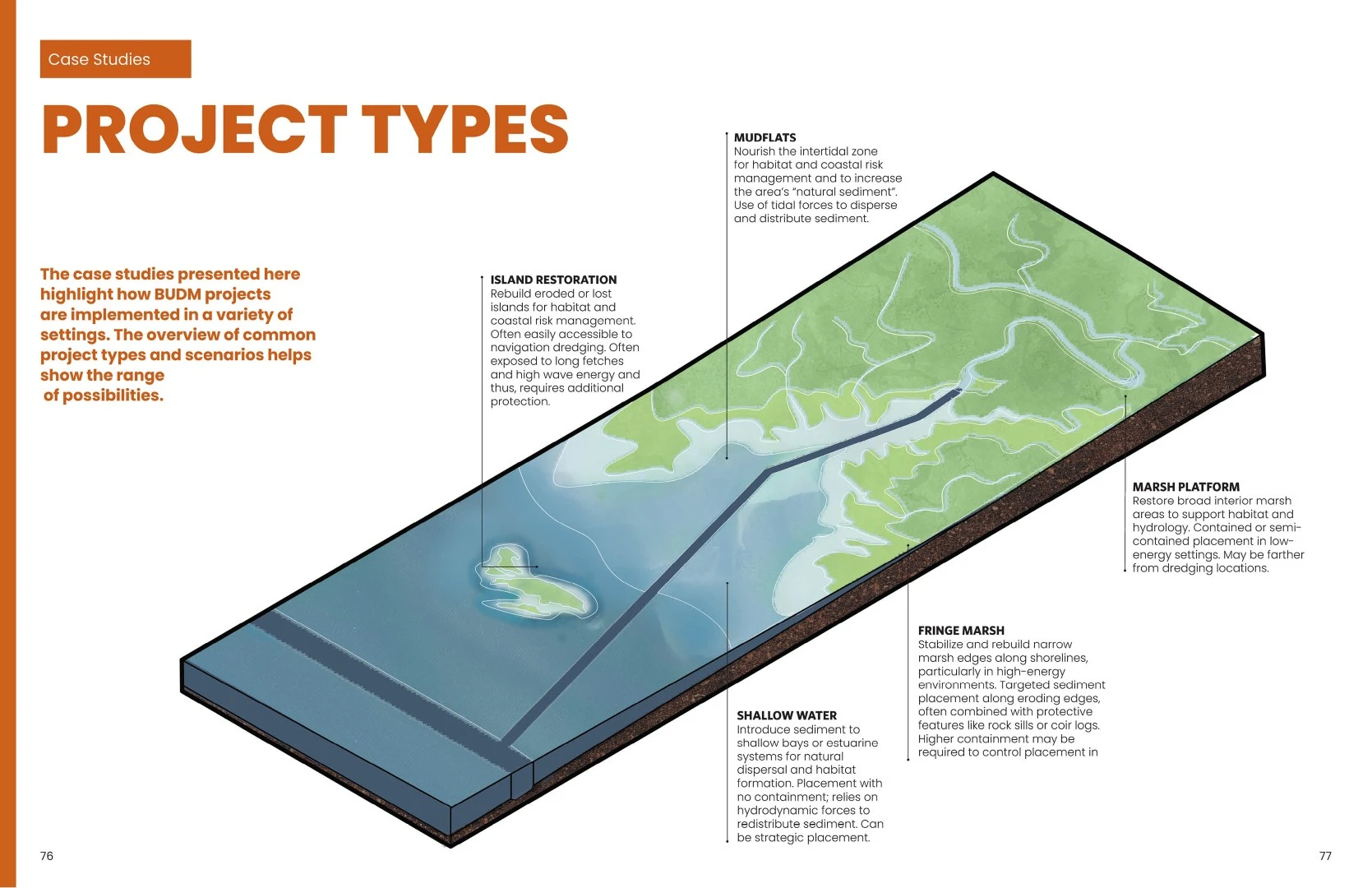
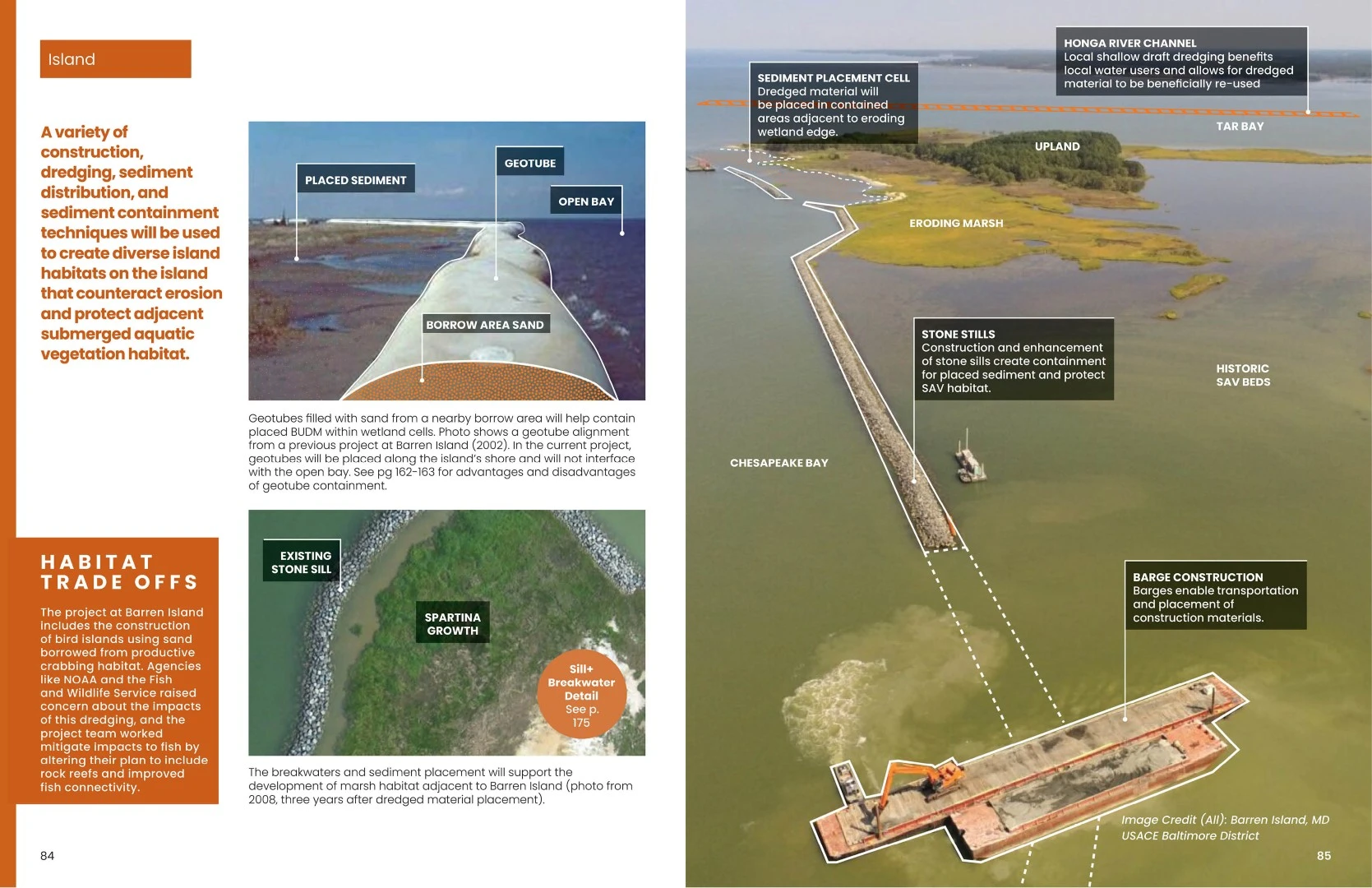
- Case Studies — In-depth examinations of exemplary projects
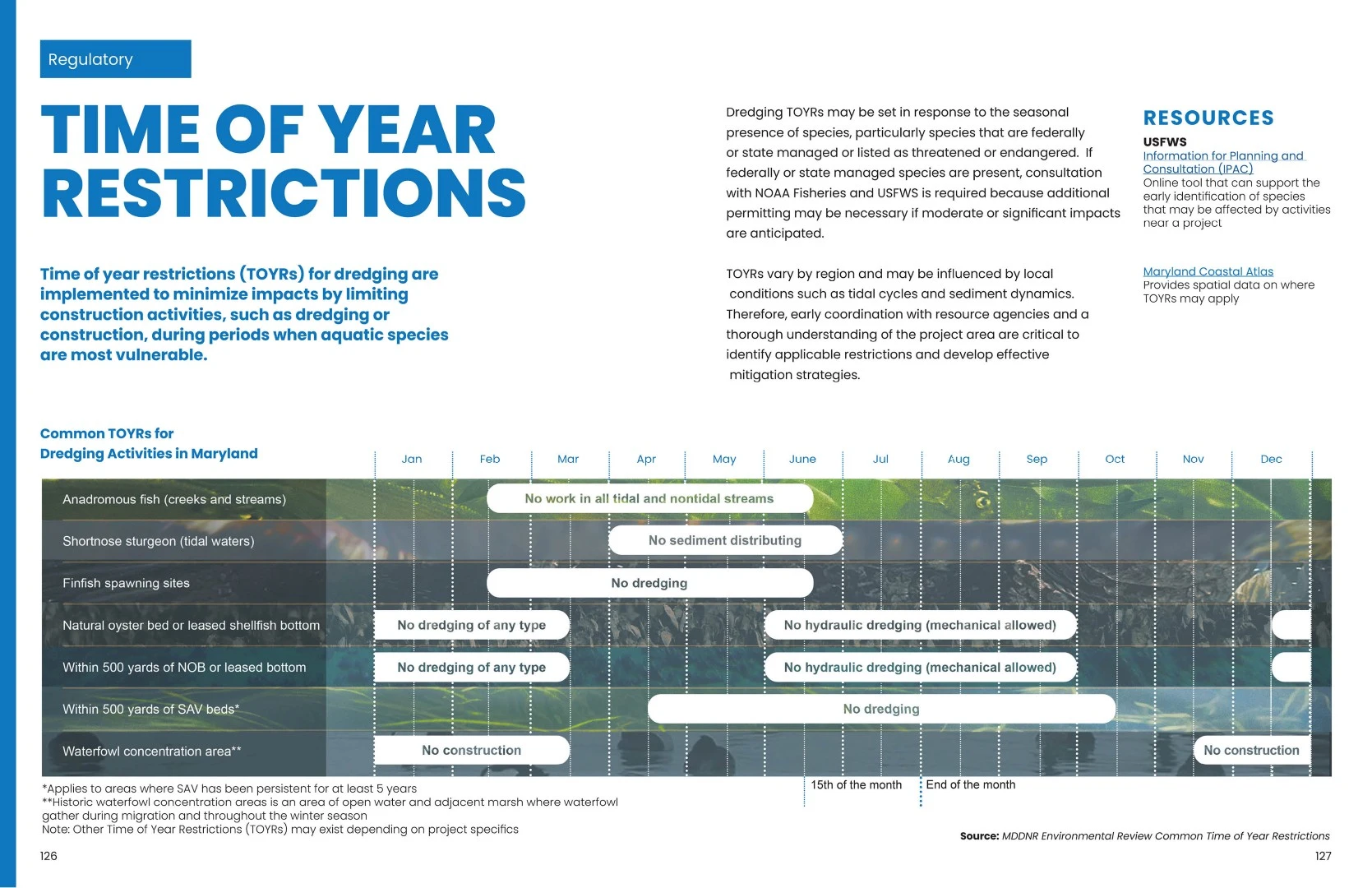
- Project Controls — Gives insight on how to navigate permitting and procurement pathways
- Project Development — Identifies key funding and strategic partnership opportunities
The biggest hurdle to BUDM projects is the complex, multidisciplinary process involving numerous organizations and constantly changing coastal conditions. Sediment Strategies was developed through collaboration with state and federal agencies, nonprofits, and practitioners. It draws from peer-reviewed research, state and federal regulatory frameworks, USACE best practices, and exemplary case studies from across the United States.
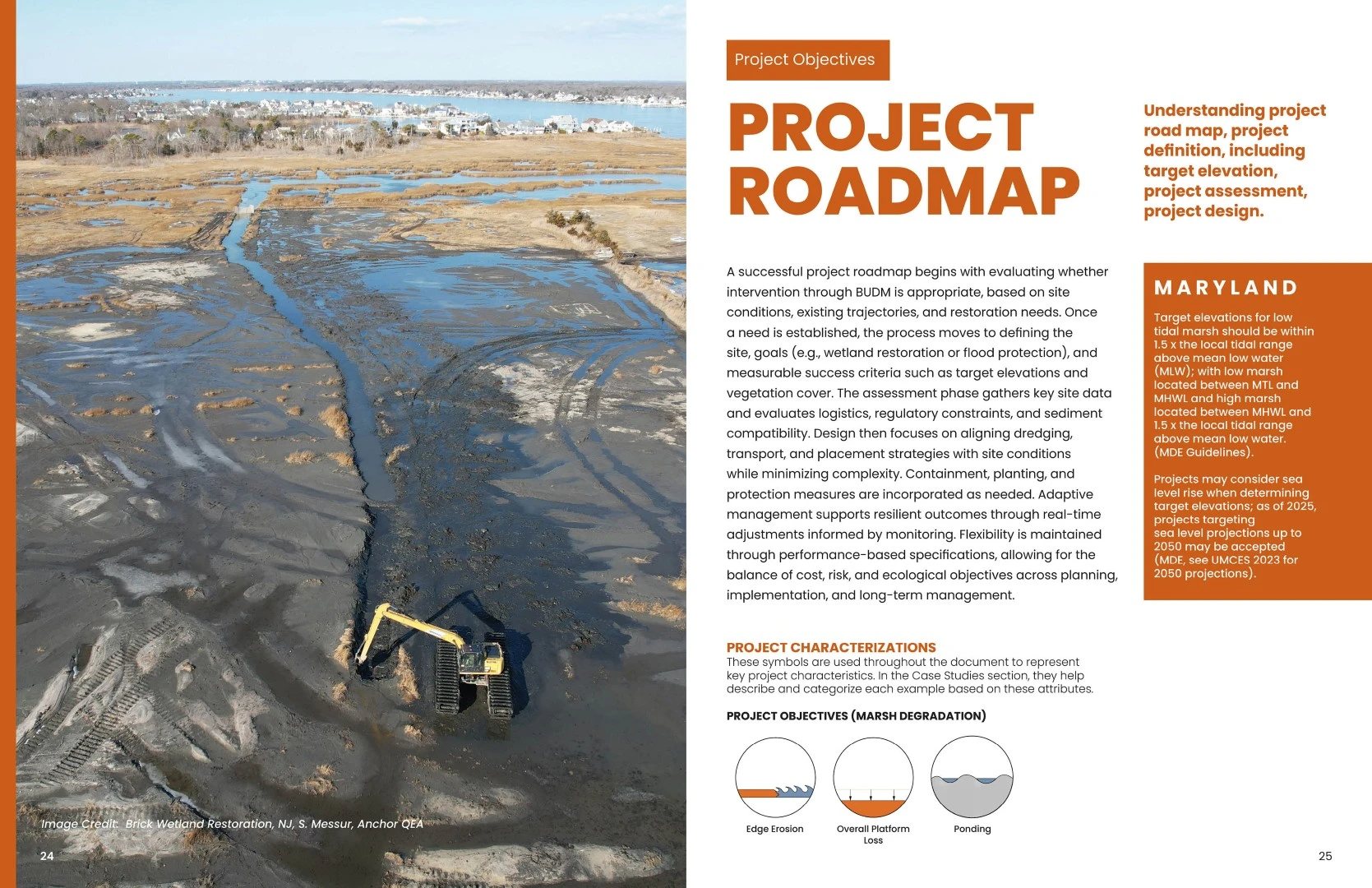
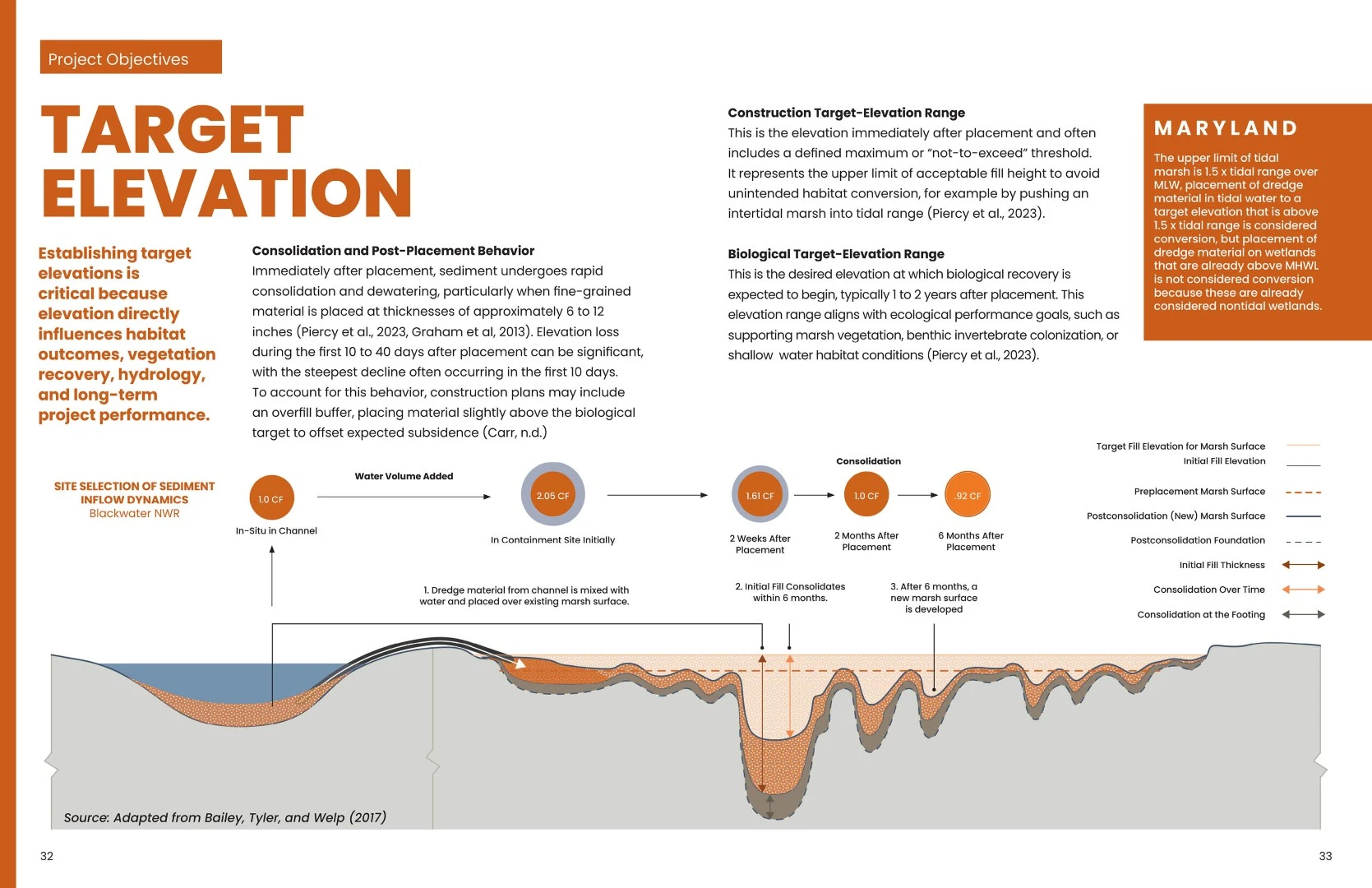
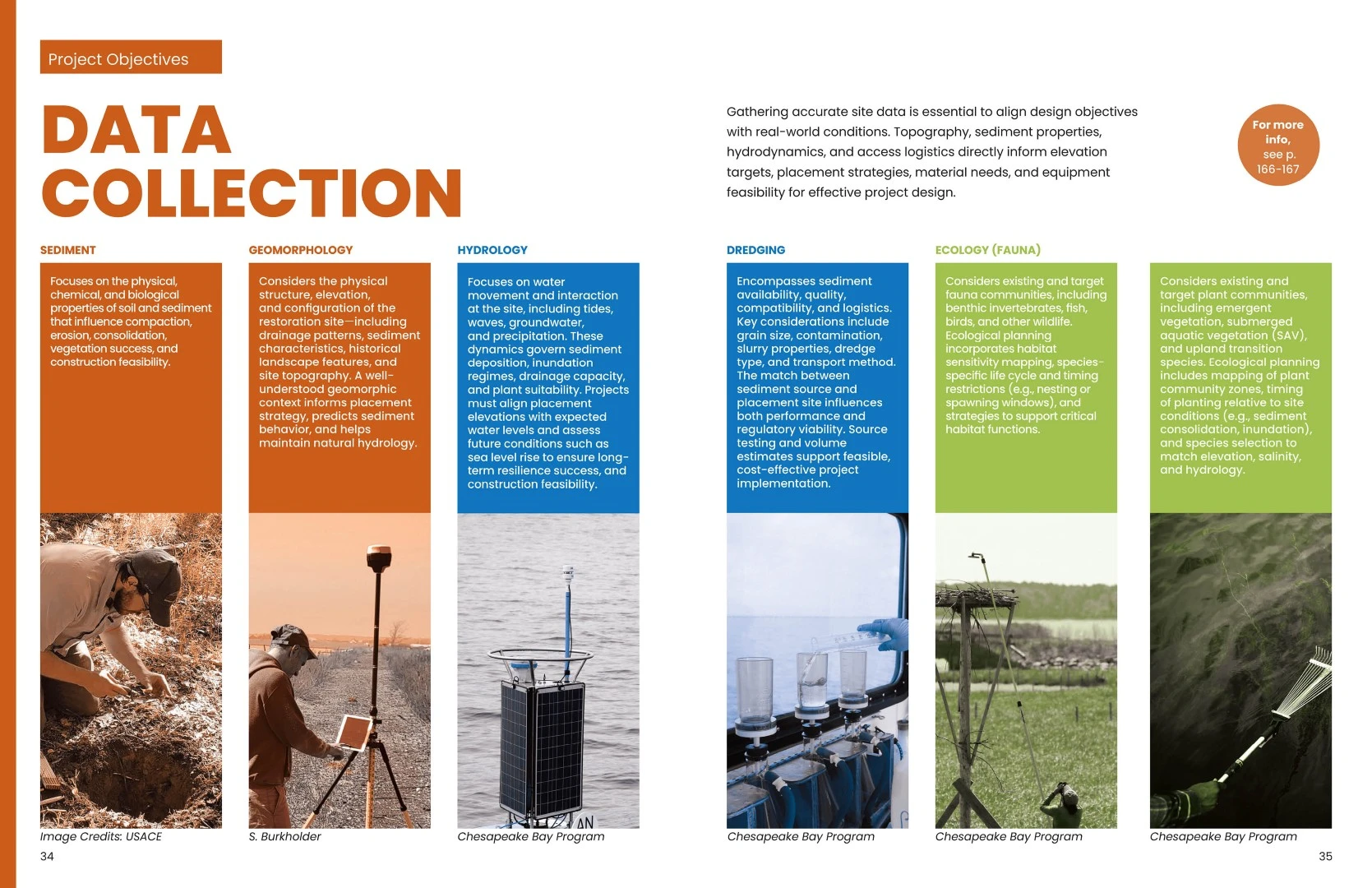
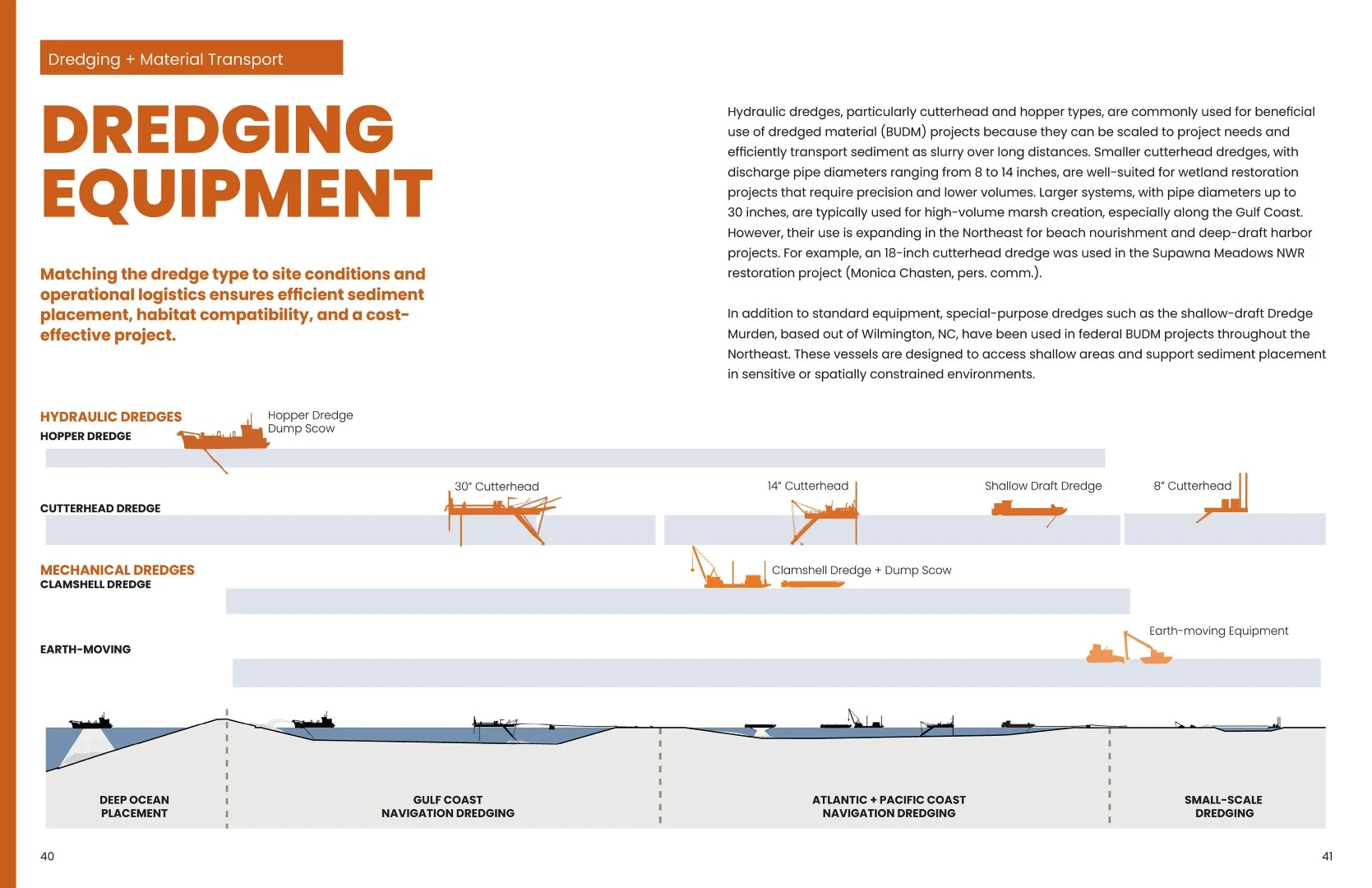
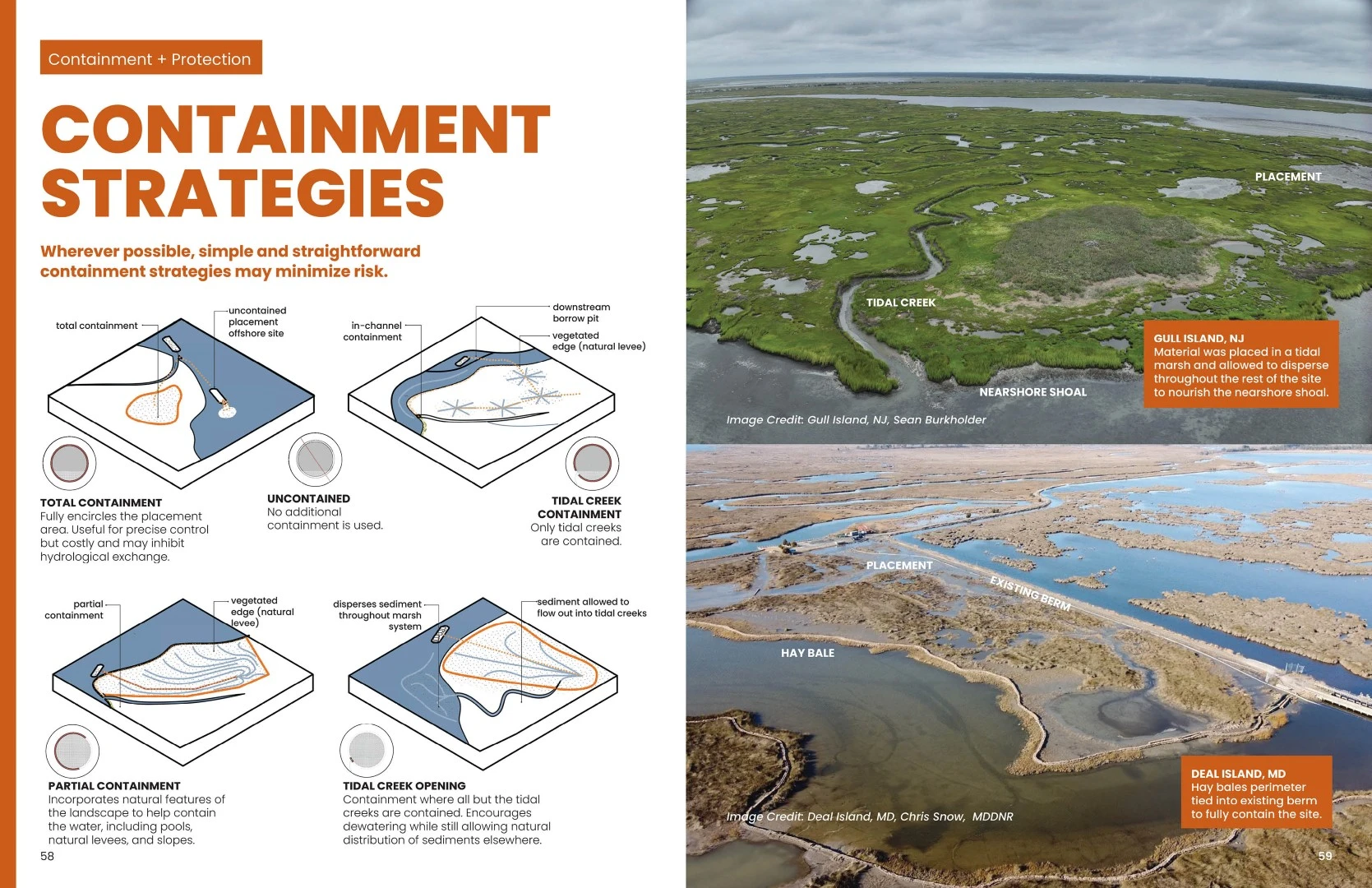
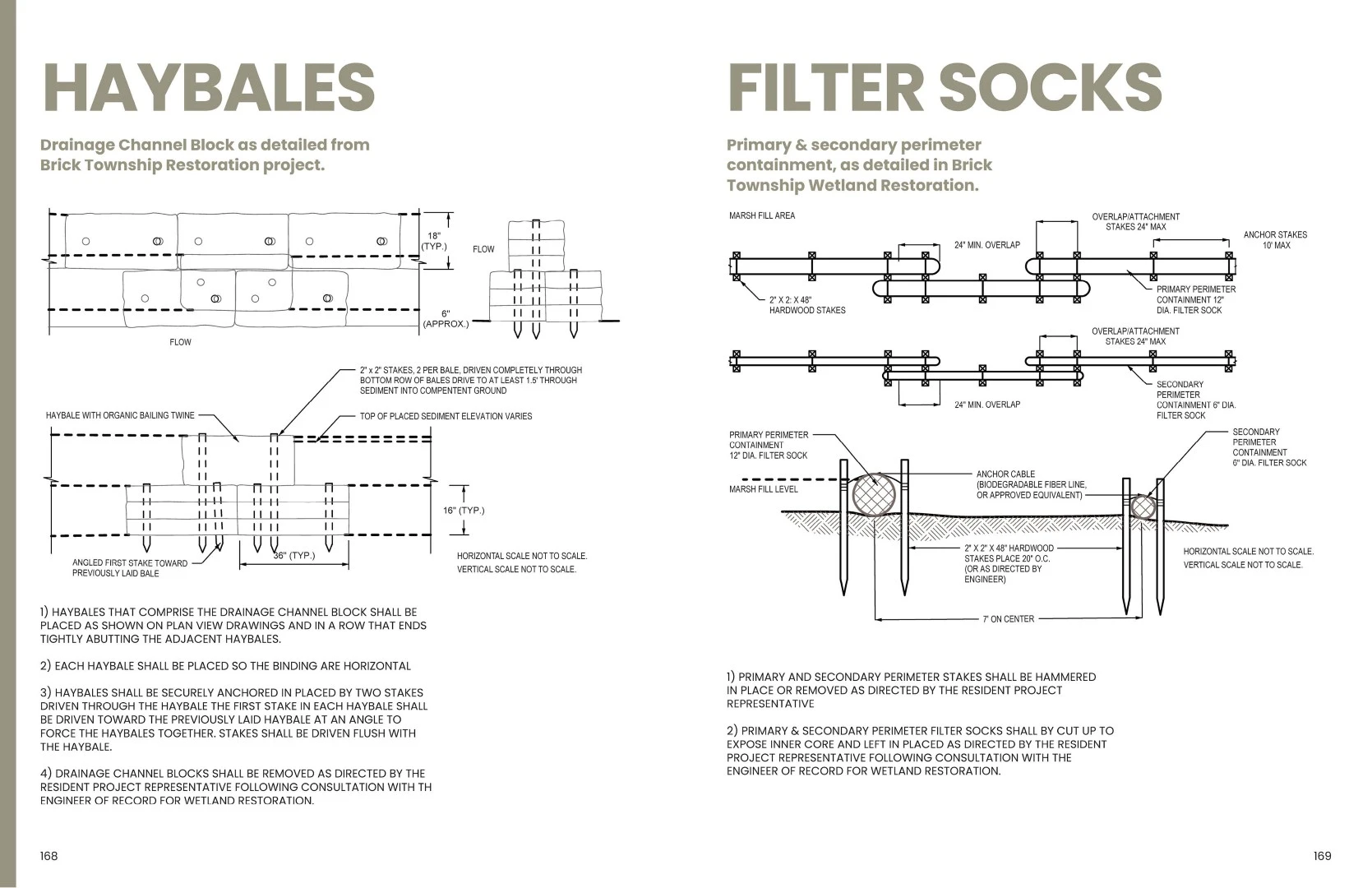
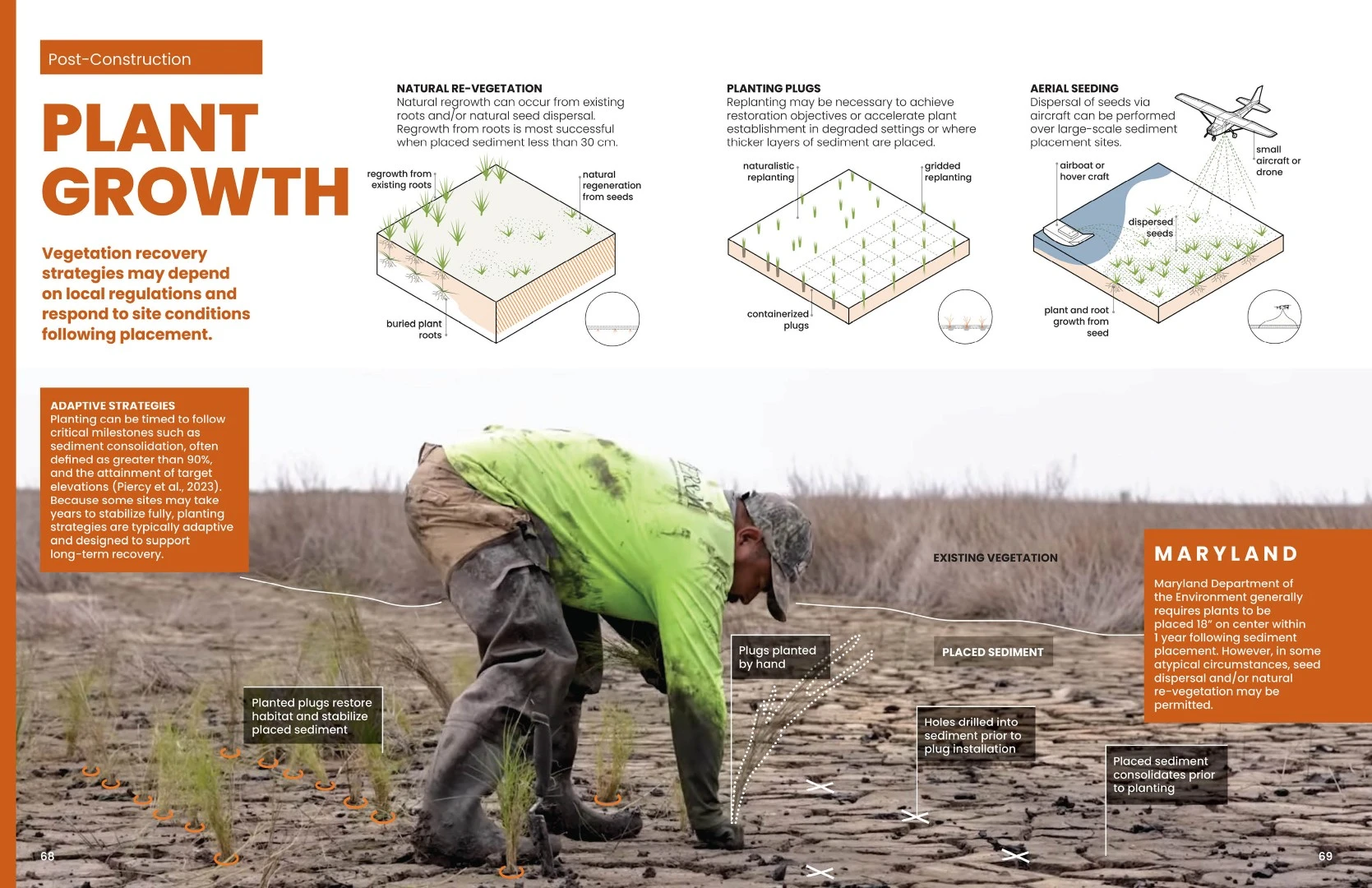
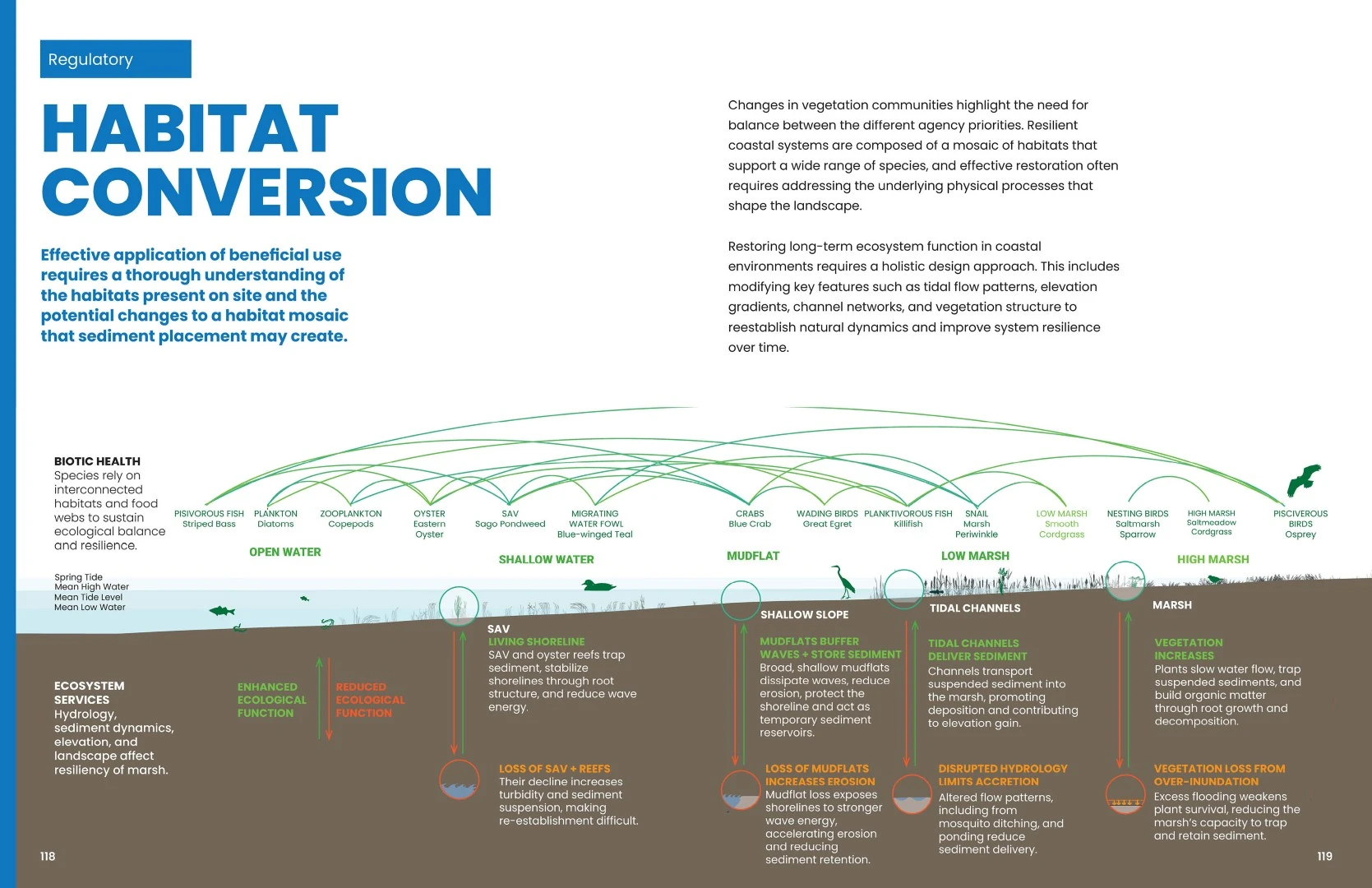
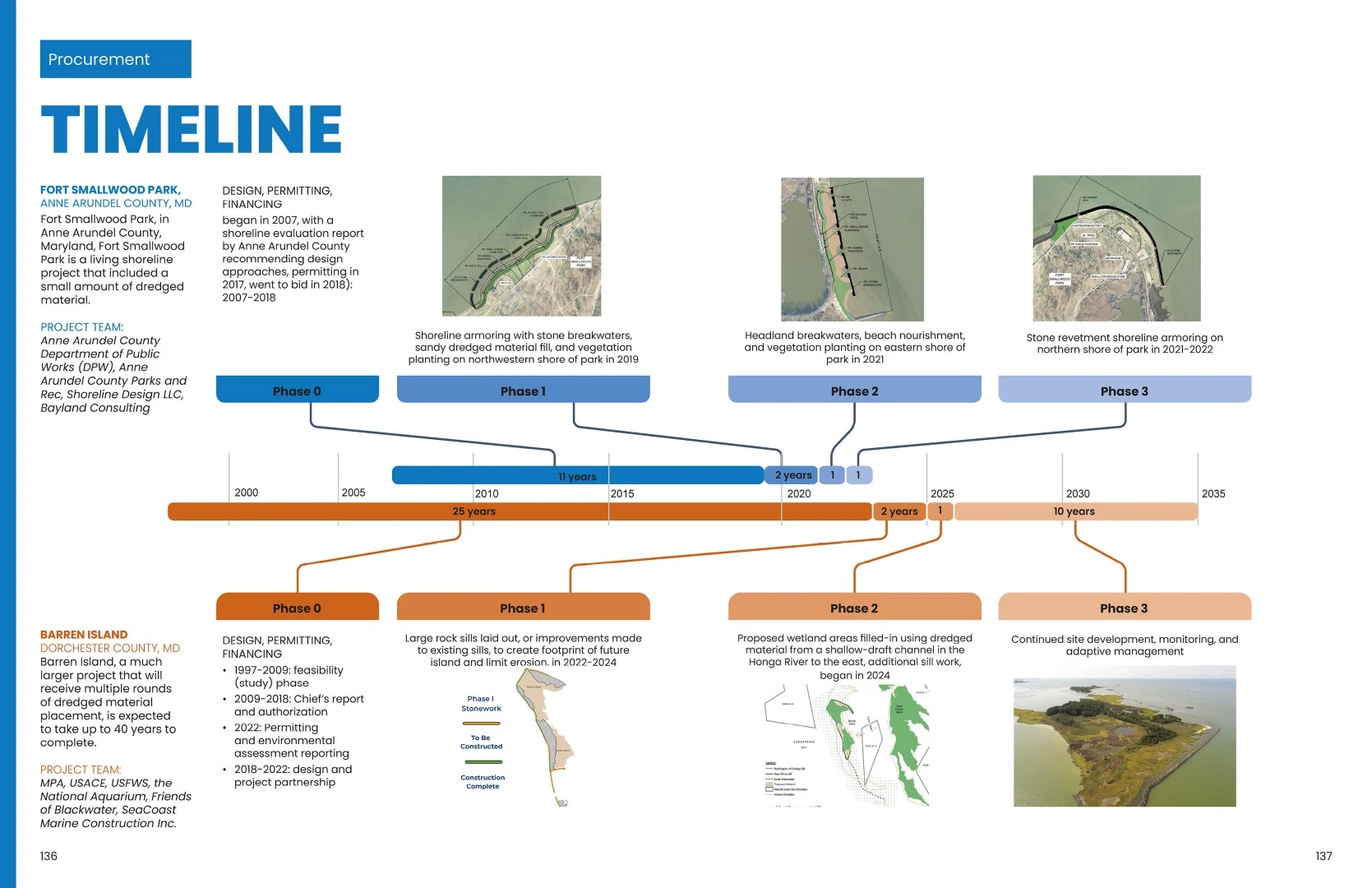
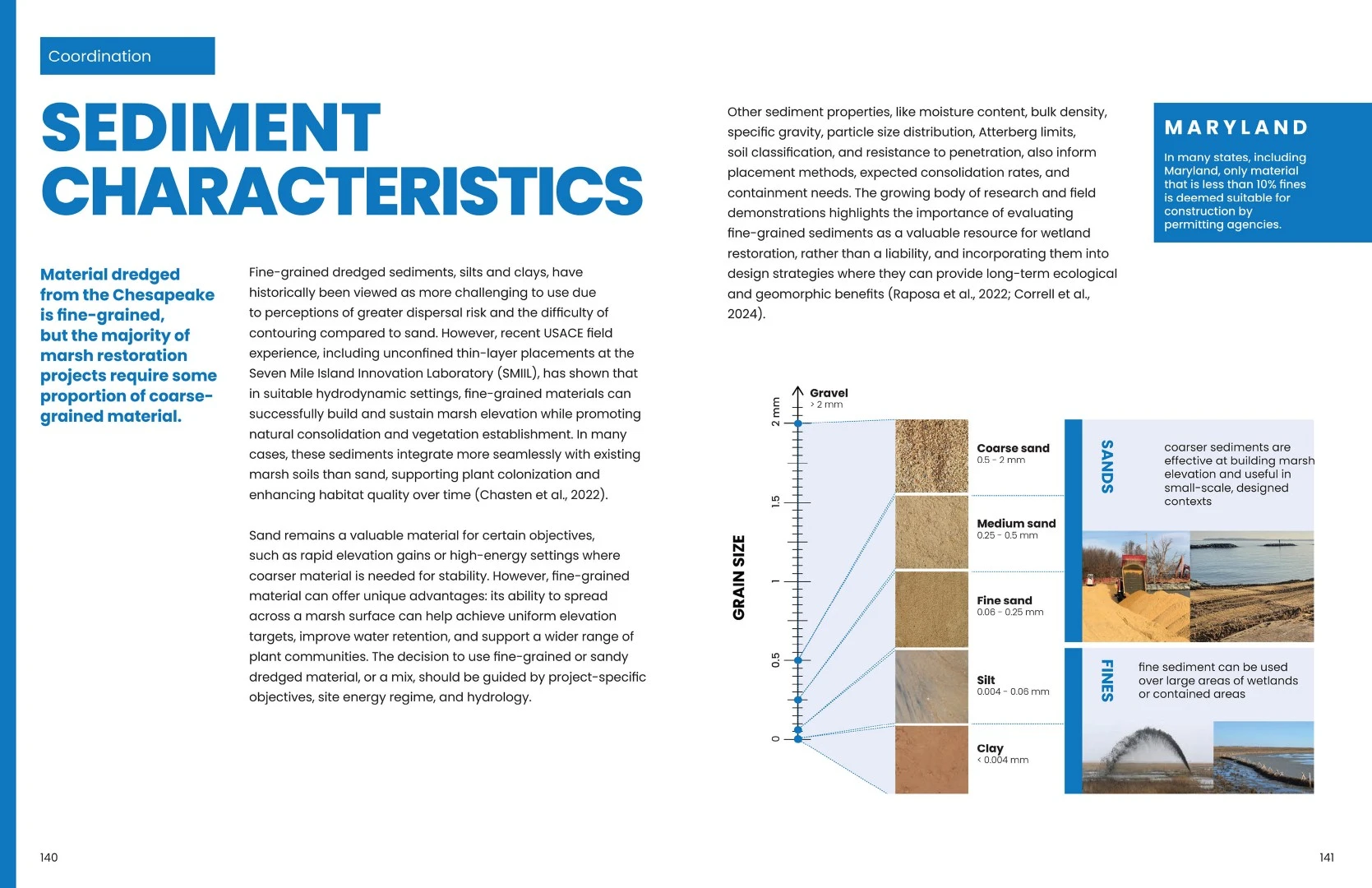
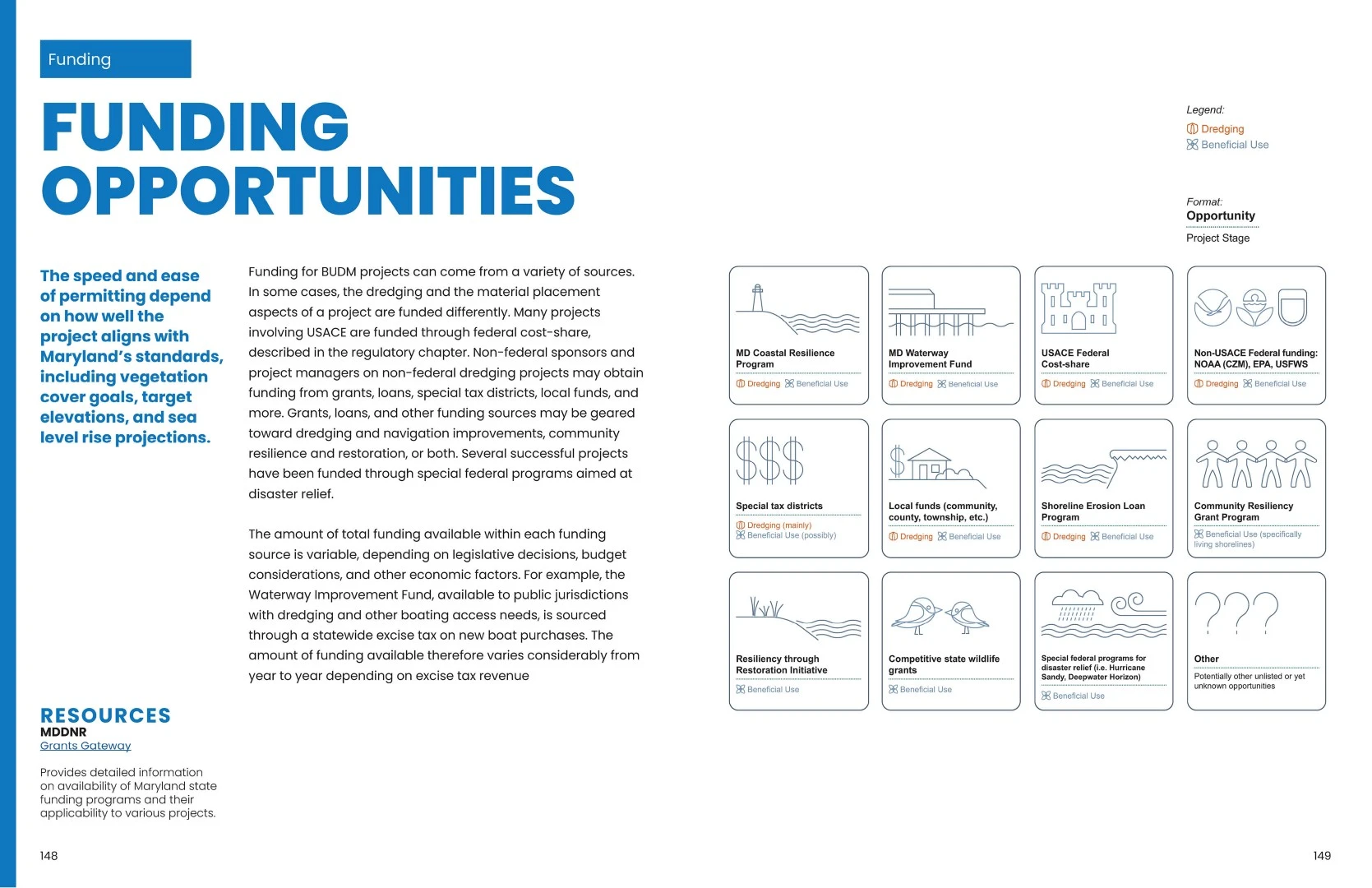
This complex collection of moving parts is synthesized into easy-to-read diagrams, workflows, and comparative visuals that offer a complete roadmap for a beneficial-use project: from site selection, permitting, and potential funding options and partners through construction and post-project monitoring. Designed for planners, restoration staff, and grant writers alike, the guide helps move projects from early concept to implementation.
Distributed as a free PDF through professional networks, agency channels, and The Nature Conservancy’s website, the document has broad reach and is easily accessible. As sea levels rise and extreme storm events become more common, aligning dredging with restoration has never been more urgent for coastal resilience. Communities facing marsh loss need durable, cost-effective tools that align ecological goals with local priorities. The U.S. Army Corps of Engineers aims to beneficially reuse 70% of dredged material by 2030. Sediment Strategies meets this pivotal moment as a playbook that brings practitioners, agencies, and communities together and provides actionable, easy-to-follow steps to initiate a BUDM project.
-
- Isaac Hametz, Project Principal, TNC
- Austin Bamford, Project Manager, TNC
- Theresa Ruswick, Lead Author, Proof Projects
- Brian Davis, Lead Author, Proof Projects
- Walt Dincola, Lead Author, Anchor QEA
- Katie Haviland, Lead Author, Anchor QEA
- Mindy Strevig, Contributing Author, Anchor QEA
- Vanessa Woolley, Contributing Author, Anchor QEA
- Jill Zwierz, Contributing Author, Anchor QEA
- Zheng Fang, Graphic Design, Anchor QEA
- Lucy Salwin, Graphic Designer, Proof Projects
- Ruth Pensberthy, Graphic Designer, Proof Projects
- Ken Mayo, Editor, Anchor QEA
Advertisement
Related Awards
Honor Award, Communications
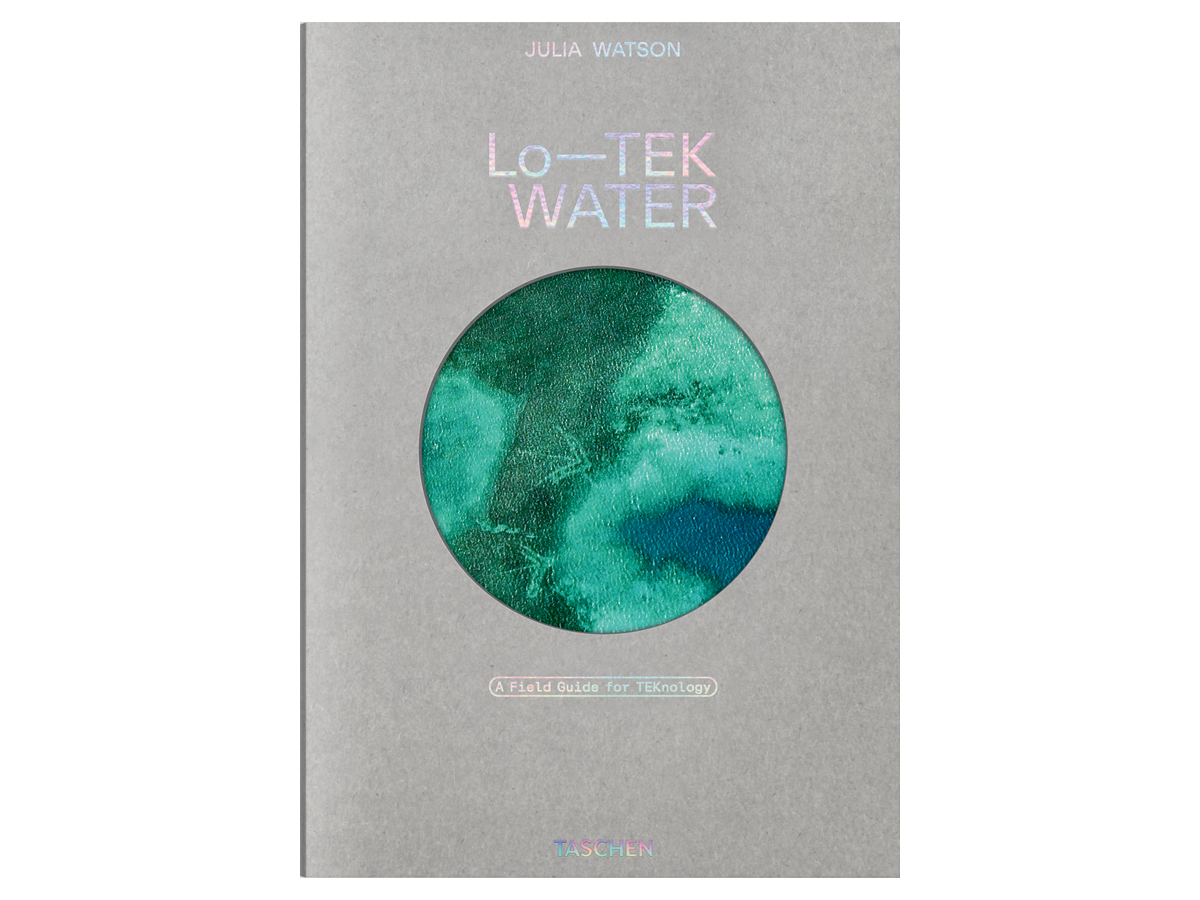
Lo—TEK Water. A Field Guide for TEKnology
Lo—TEK Water is a publication that communicates Indigenous and traditional ecological knowledge as a contemporary framework for addressing global water challenges. Through rigorous research, compelling narrative, and visually driven storytelling, the book translates complex environmental systems into accessible, actionable insights for designers, planners, policymakers, and the public.