
.webp?language=en-US)



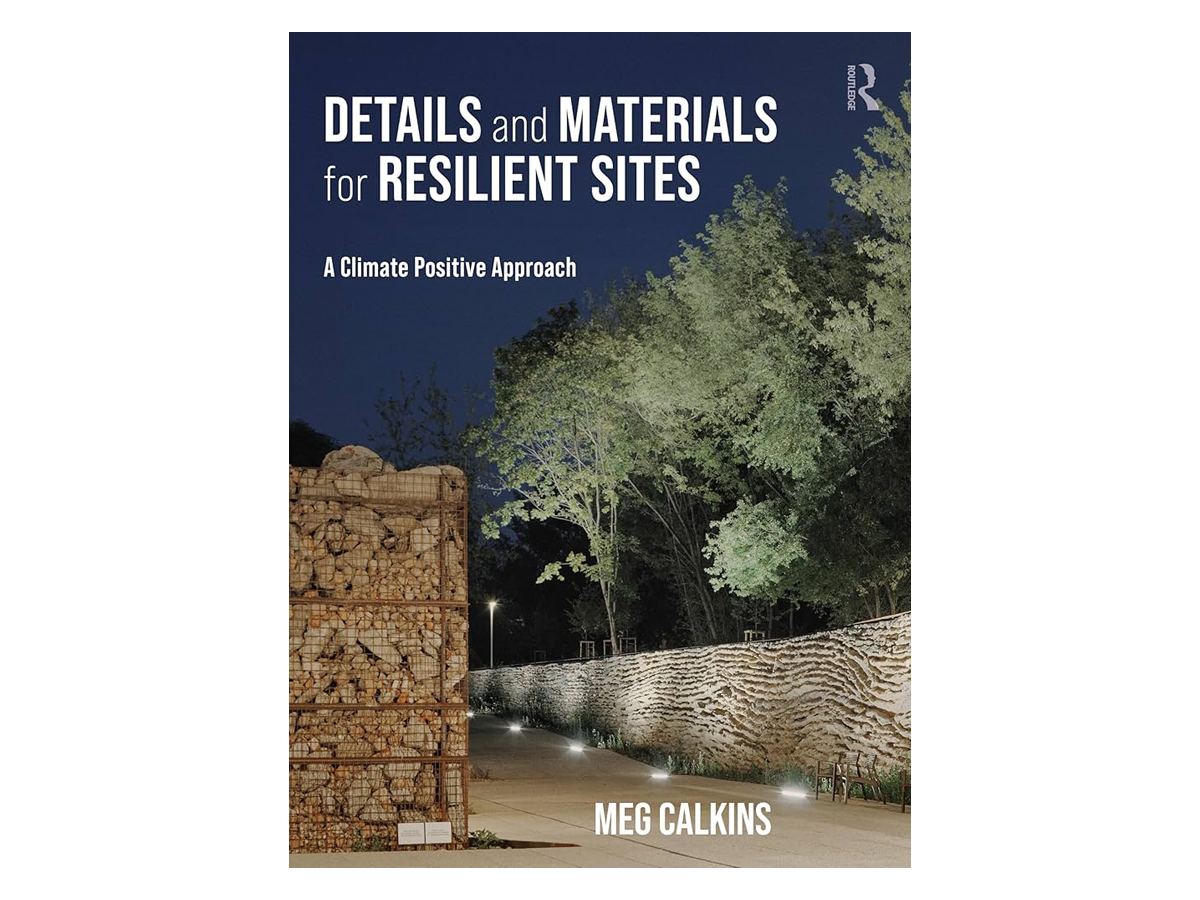
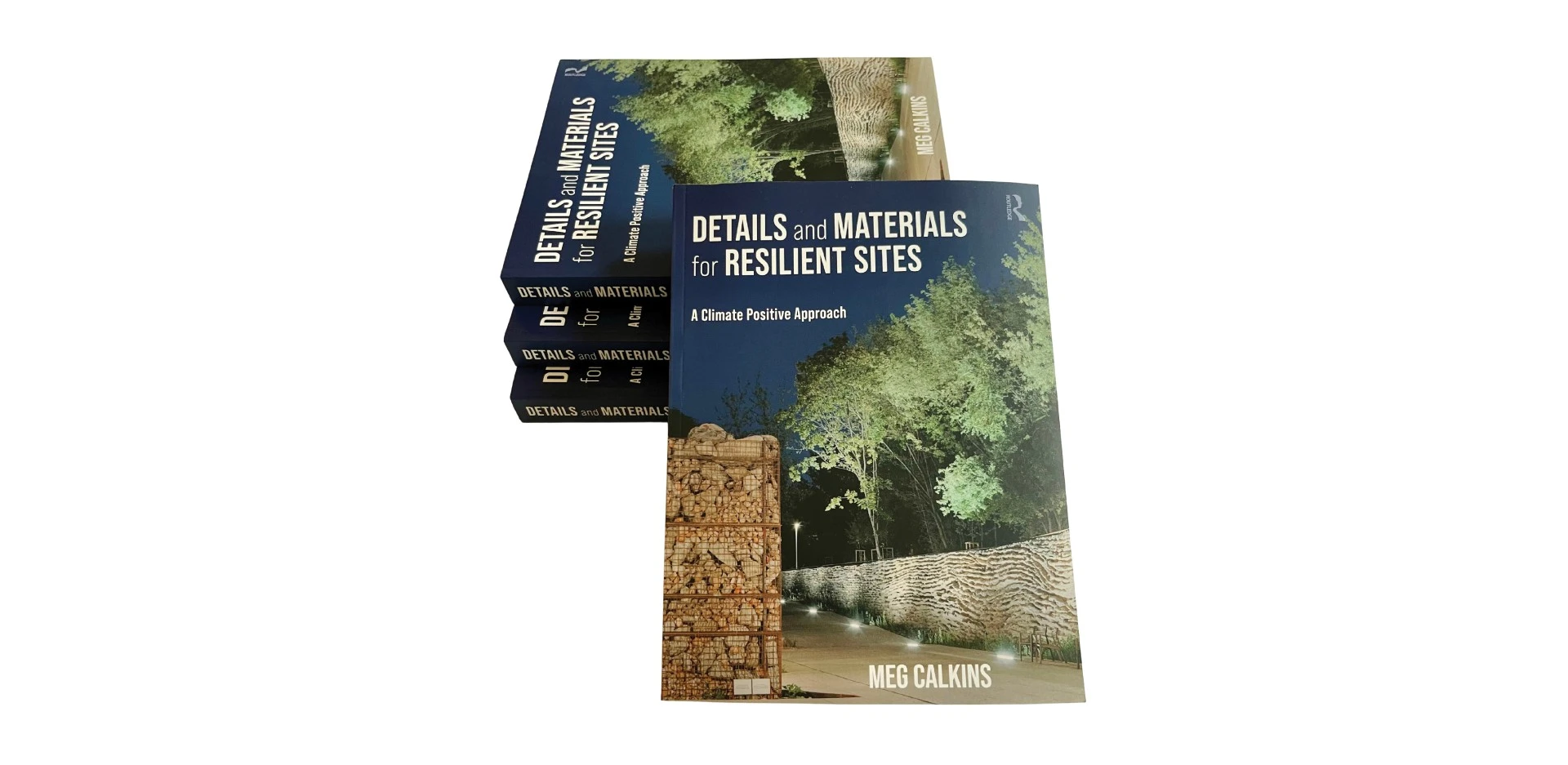
Details and Materials for Resilient Sites: A Climate Positive Approach
-
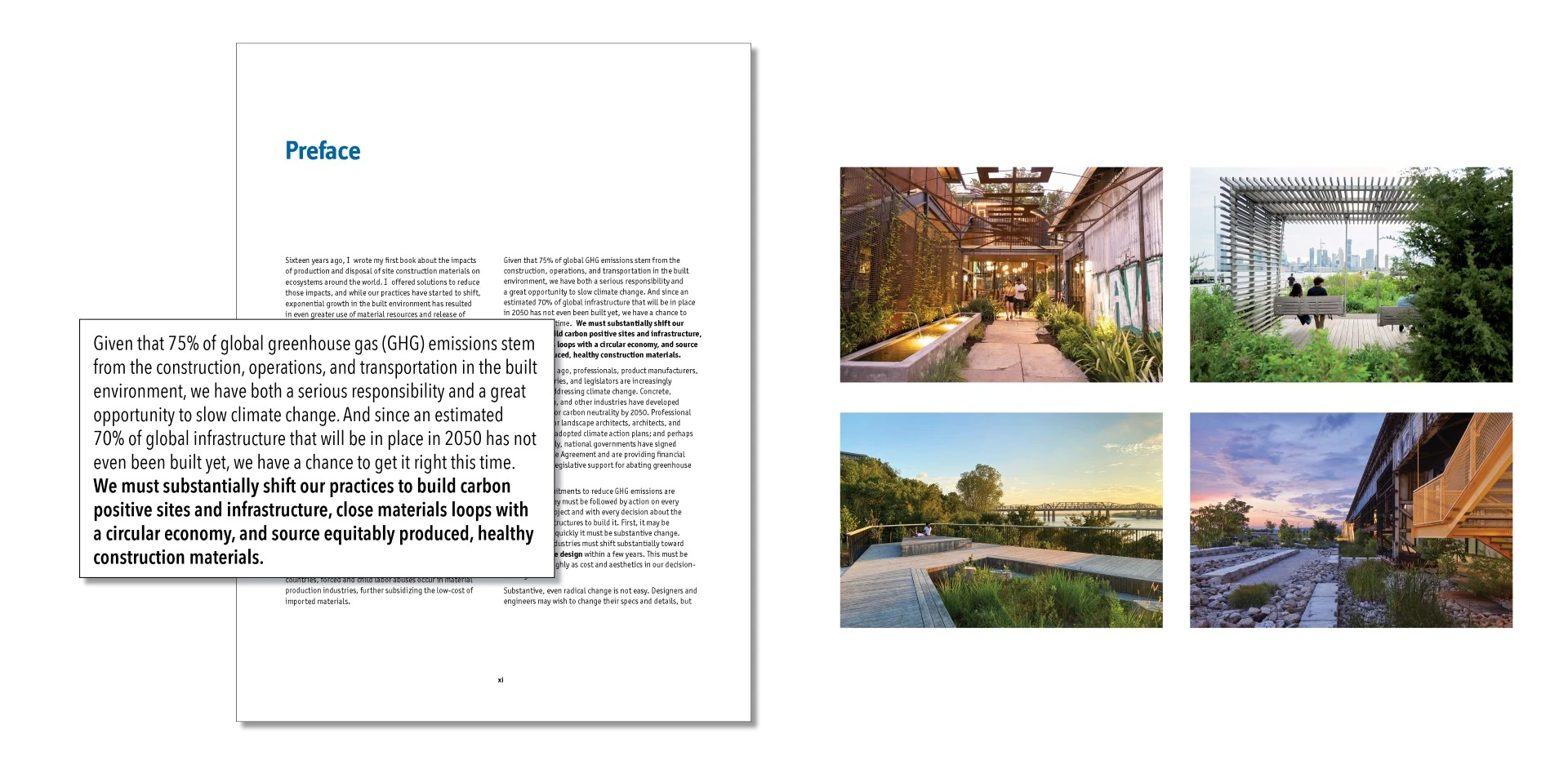
For the last two years, average global temperatures spiked above the 1.5°C threshold set by the Paris Agreement for 2050 - 25 years early. Devastating storms and wildfires are increasing. In response, ASLA adopted an ambitious climate goal for all projects to reduce greenhouse gas emissions by 50% in just four years.
As materials used to build sites comprise most of the embodied carbon over the life of a landscape, site professionals urgently need information to reduce these carbon impacts. Details and Materials for Resilient Sites: A Climate Positive Approach, a gamechanger for our profession, fills a critical gap in the literature by providing leading-edge peer-reviewed information about climate positive site design.
-
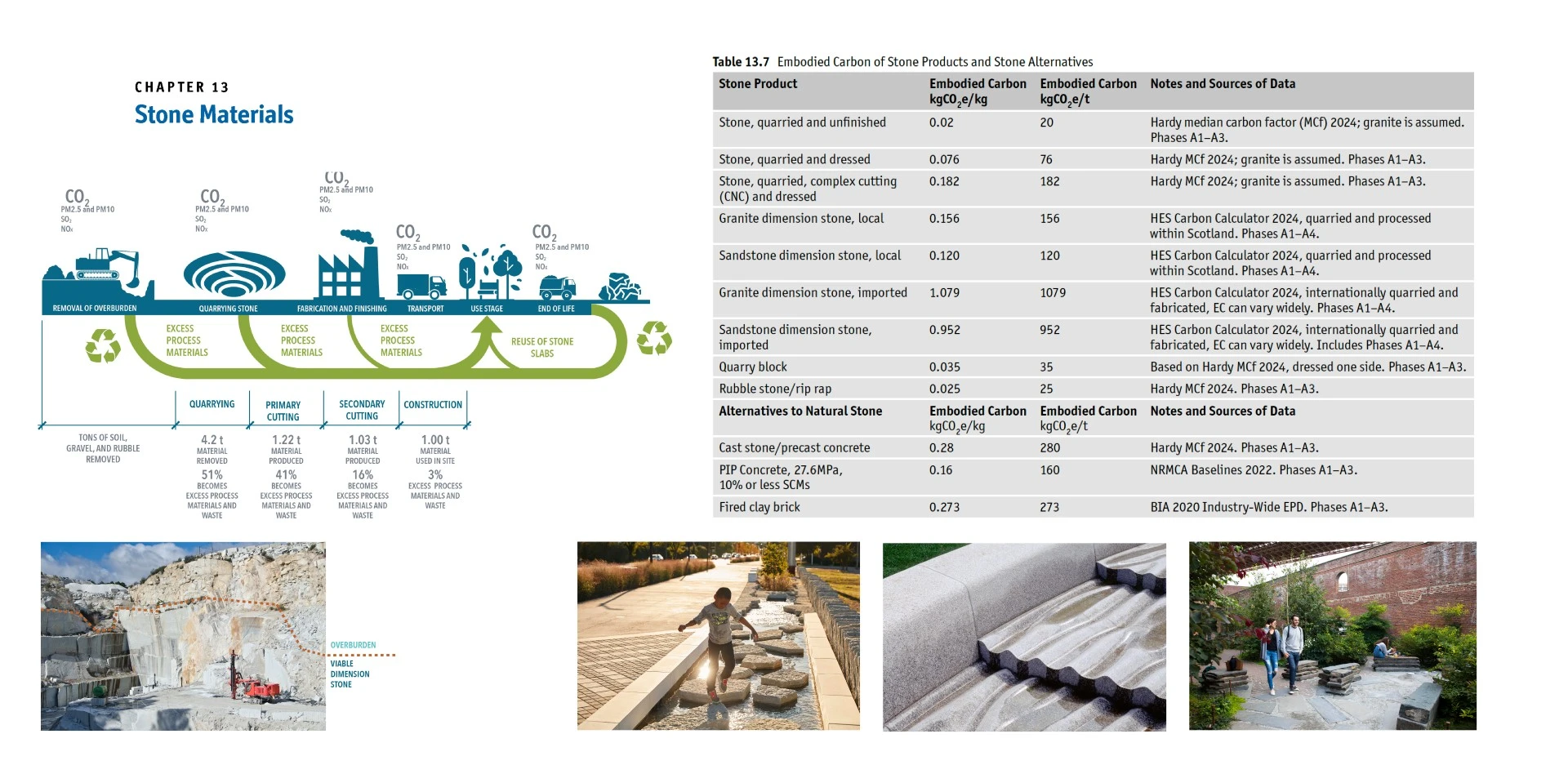
Details and Materials for Resilient Sites: A Climate Positive Approach provides evidence-based strategies, data, and tools for the next practices of climate positive design. A staggering 80-90% of the lifetime carbon footprint of a landscape stems from the materials used to build it. If landscape architects are to meet the ambitious goal of a 50% reduction in project carbon by 2030, they need detailed and accessible information about how to reduce the carbon impacts of construction materials and site assemblies.
This playbook for climate positive design and construction will shift the way we design with and specify materials and structures to substantially reduce the carbon impacts of site construction.
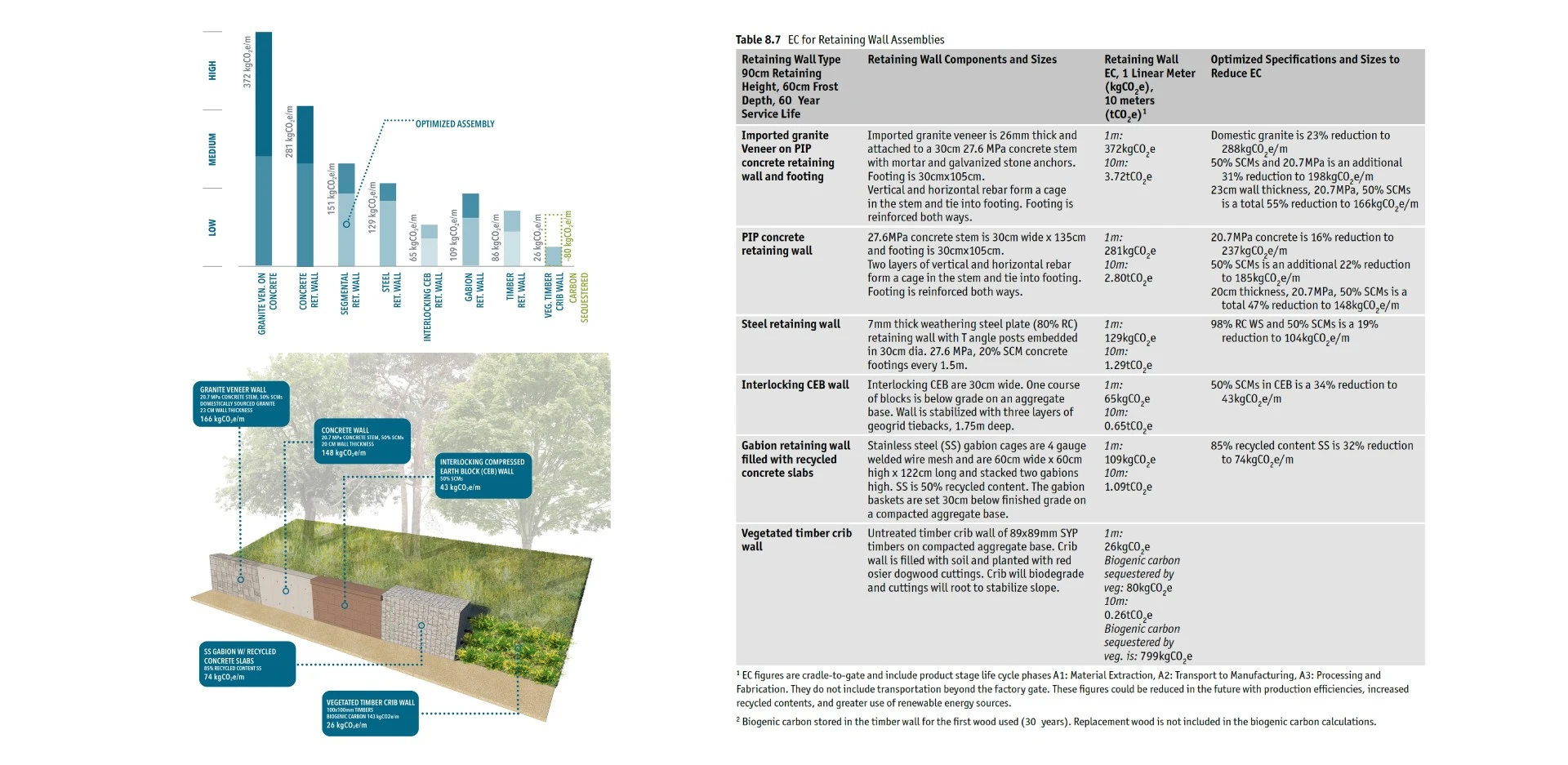
For the first time, materials research culled from hundreds of peer-reviewed research studies is translated into an accessible guide for low-carbon design and detailing. Evidence-based actions are presented along with data, diagrams, and construction details supporting them.
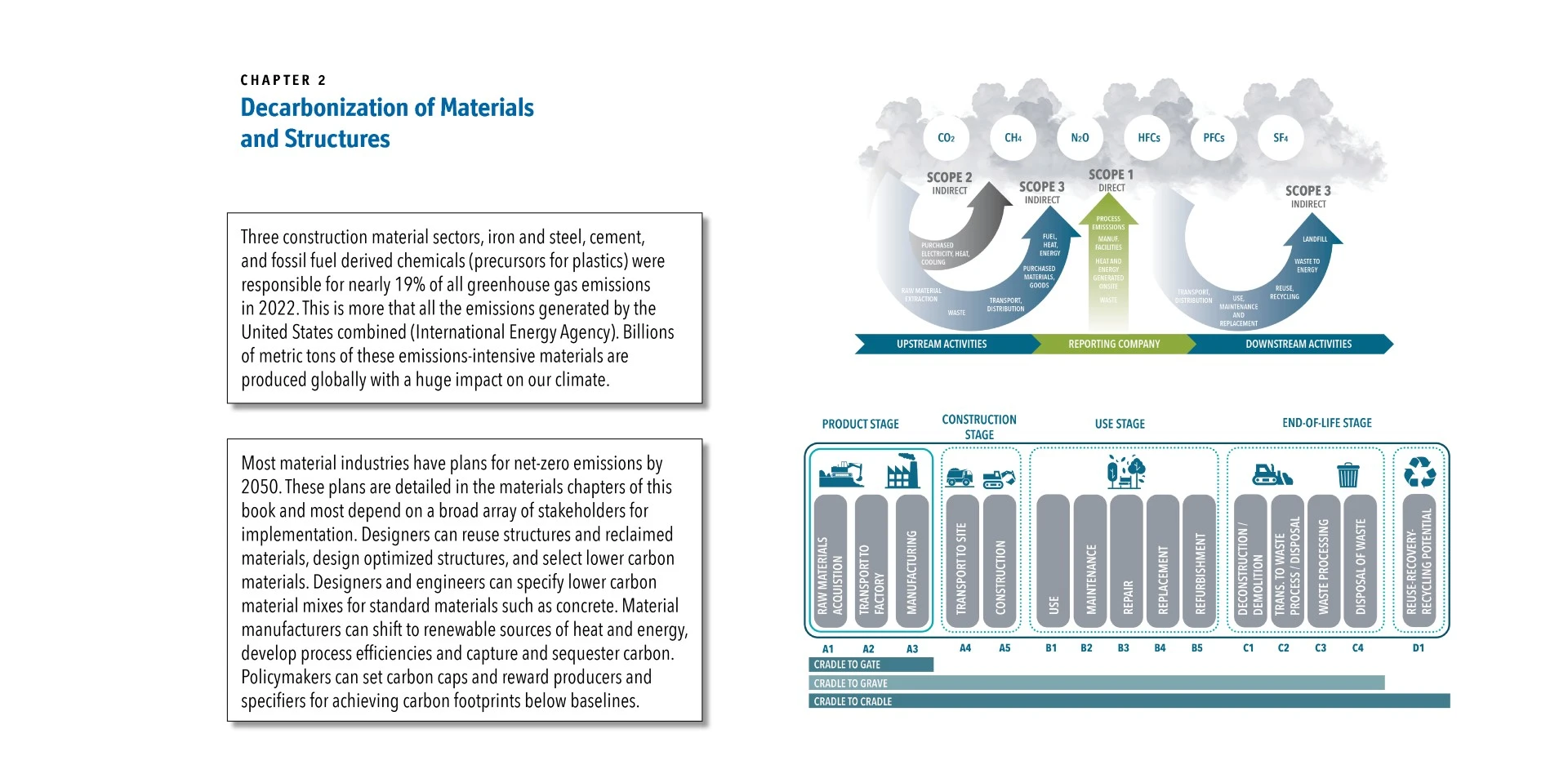
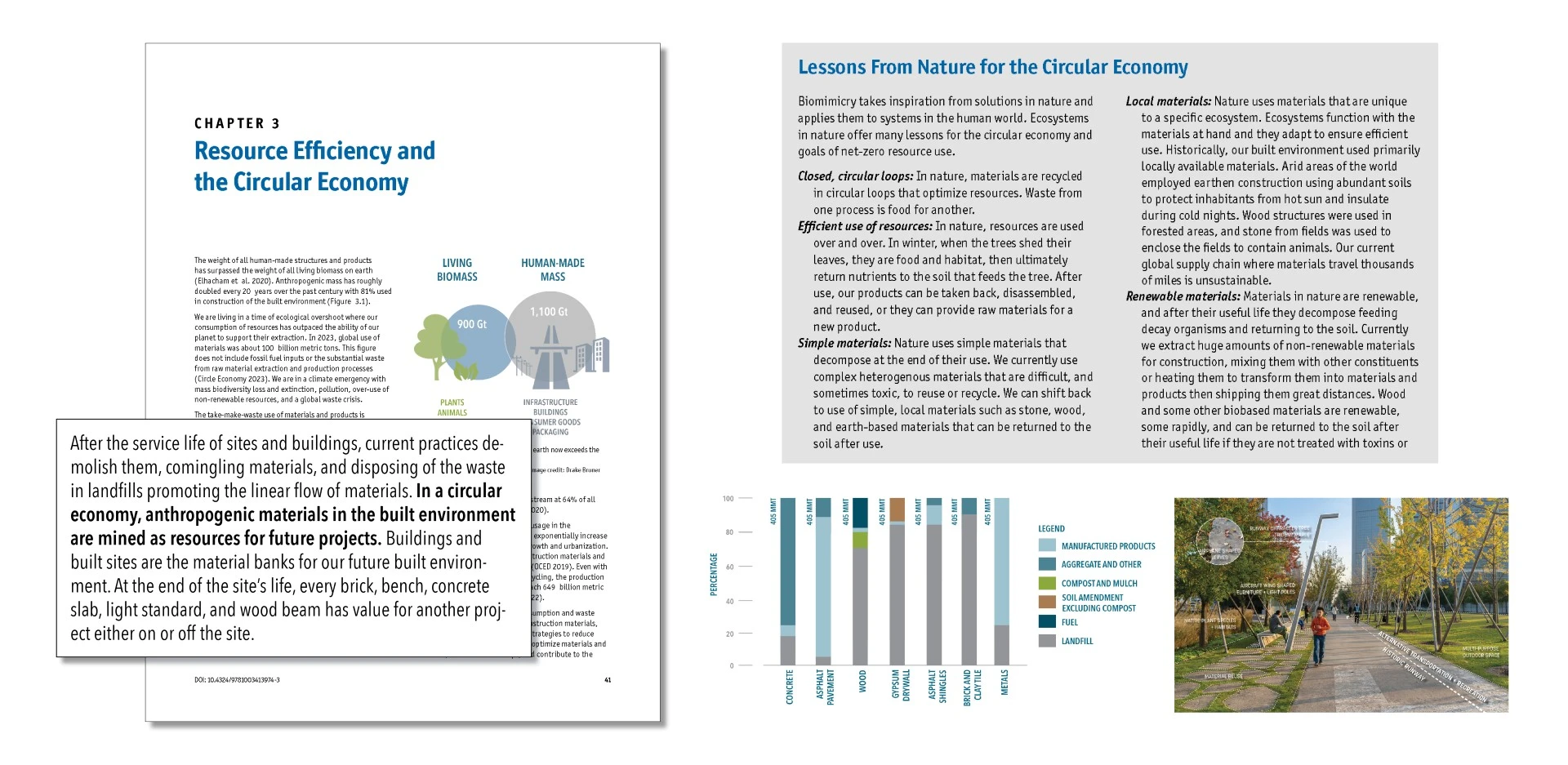
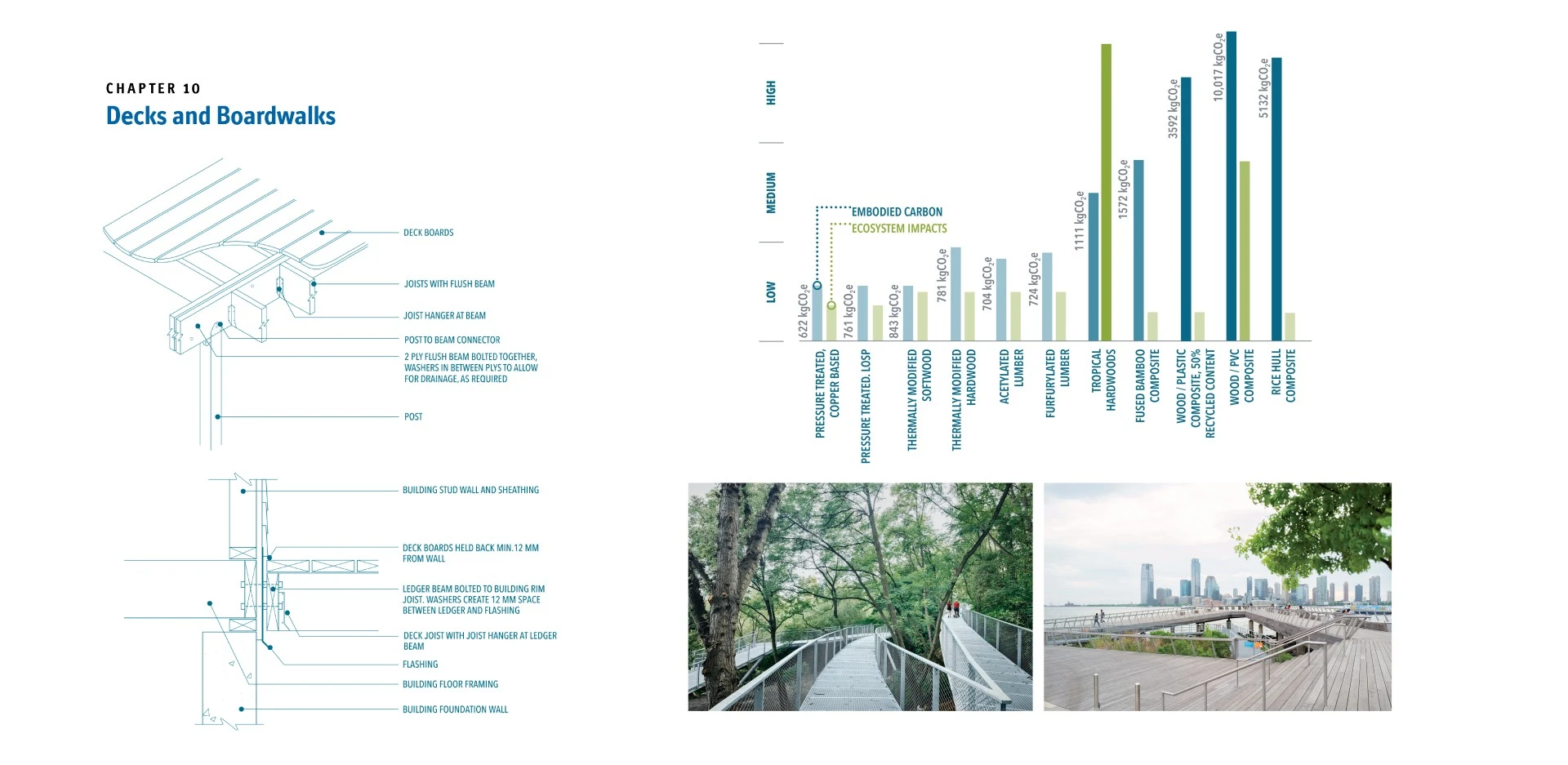
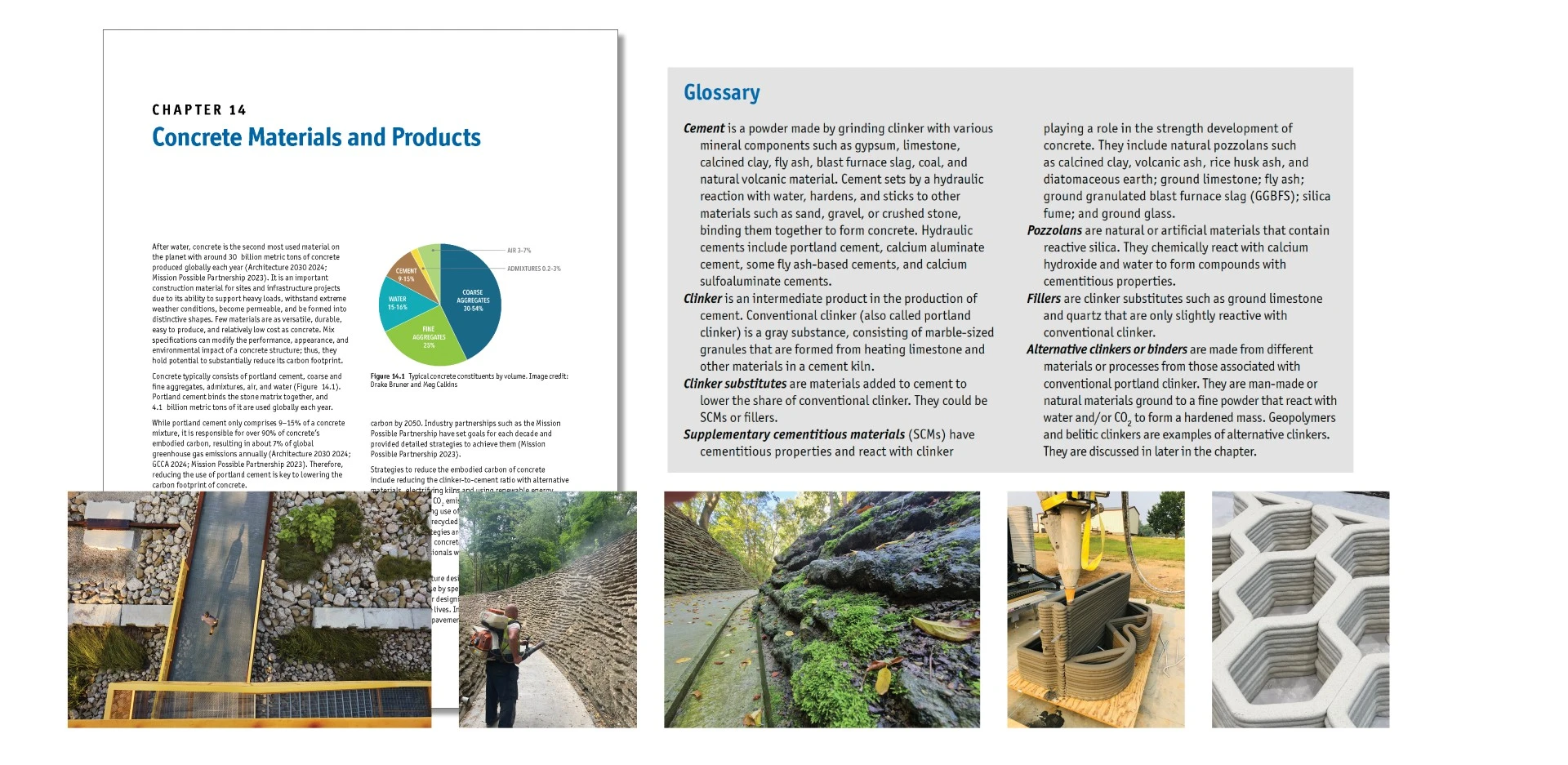
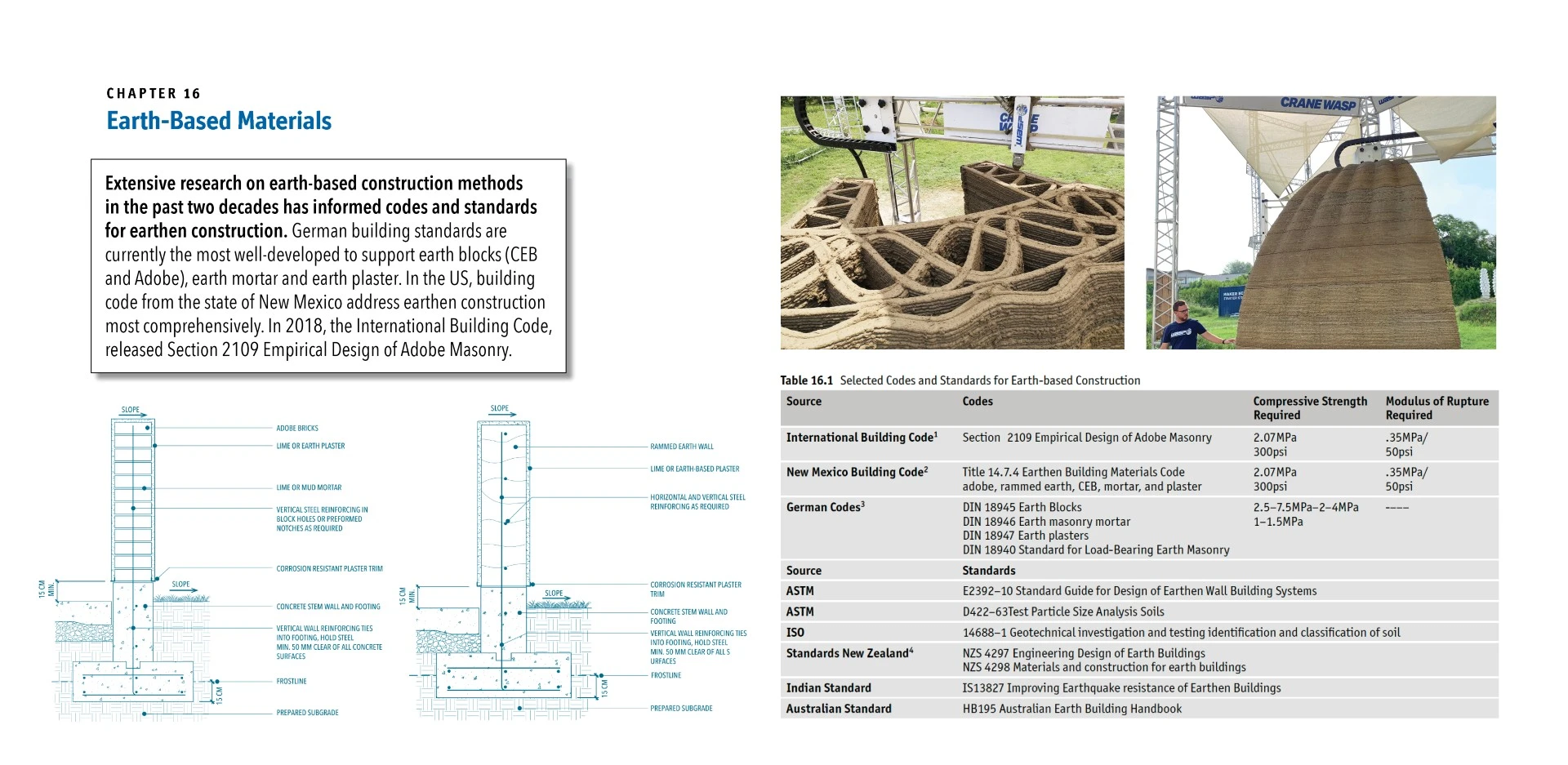
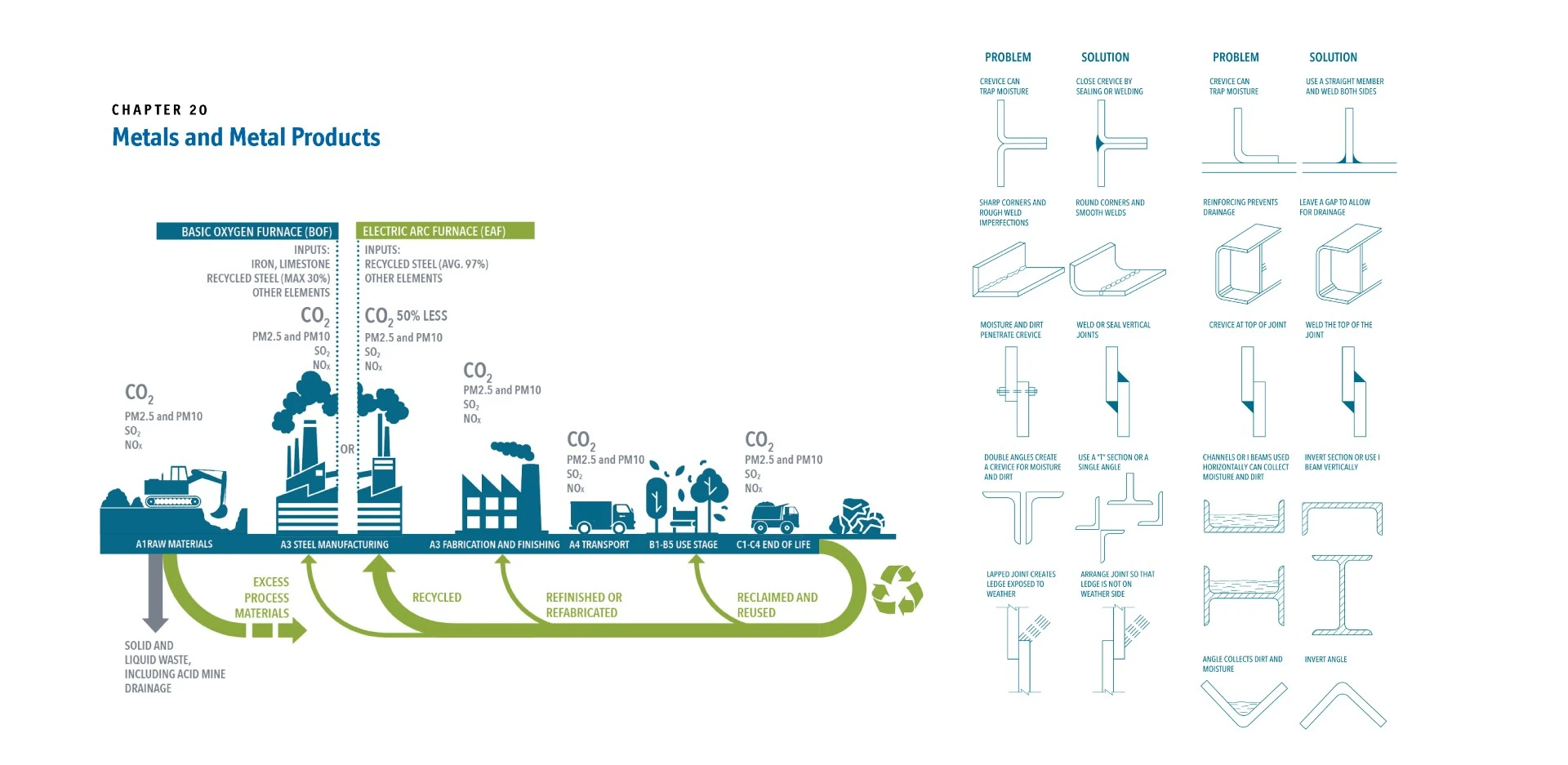
While many books call for use of alternative construction materials to meet low-carbon goals, this book addresses both standard and alternative materials including concrete, stone, brick, asphalt pavement, aggregates, earth-based materials, wood, biobased materials, metals, and plastics. Resource efficiencies, material mixes, and regional sourcing are discussed to substantially reduce the embodied carbon of these materials.
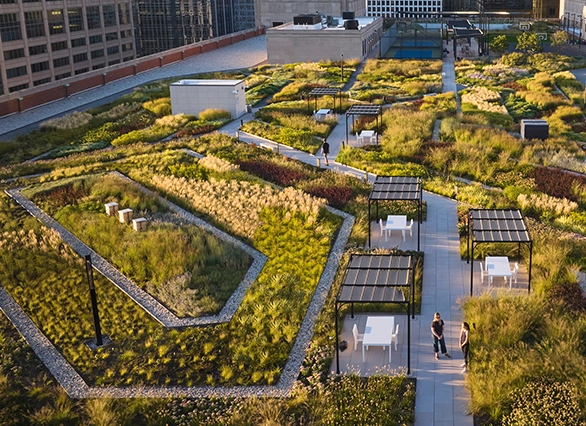
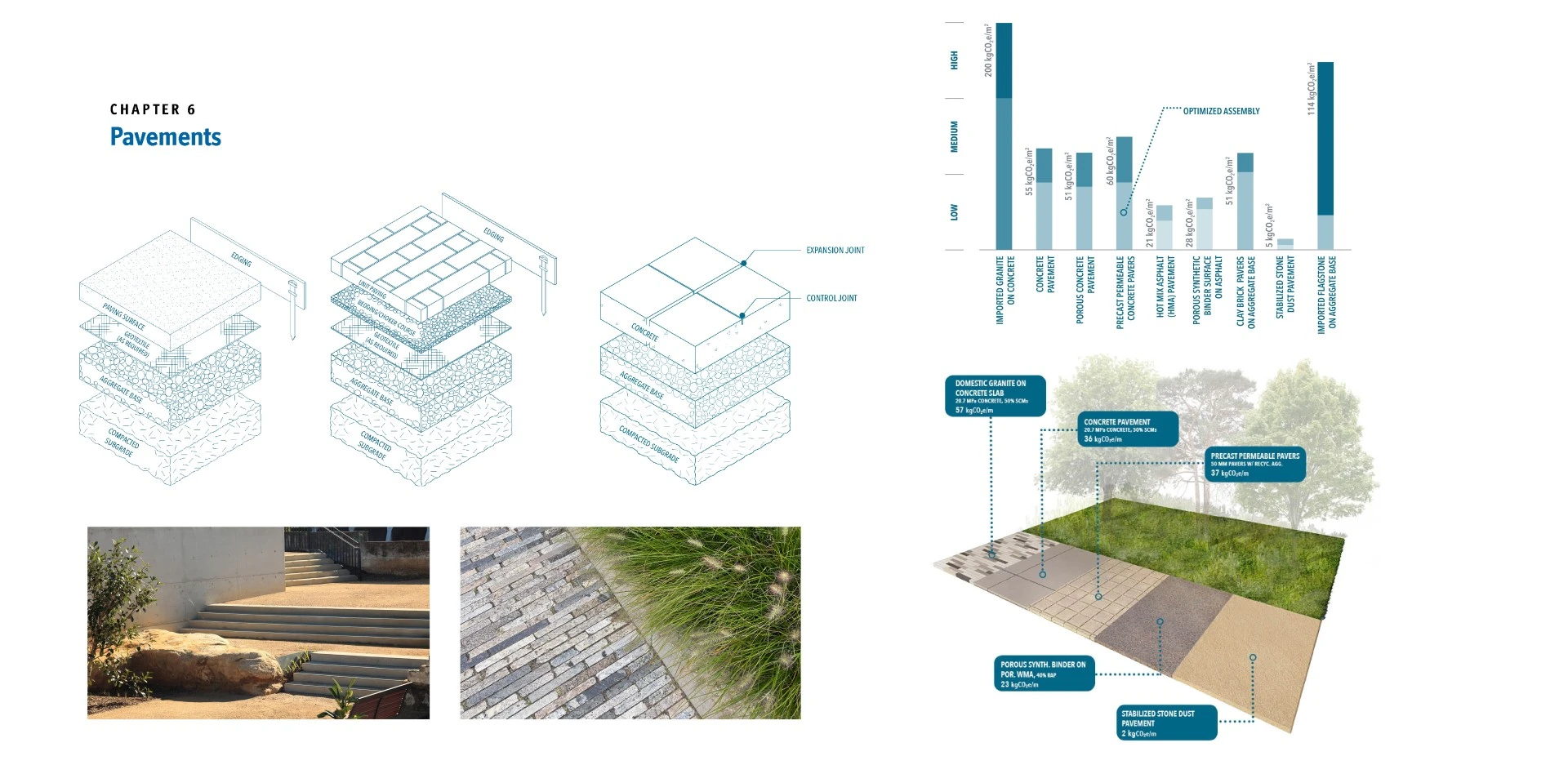
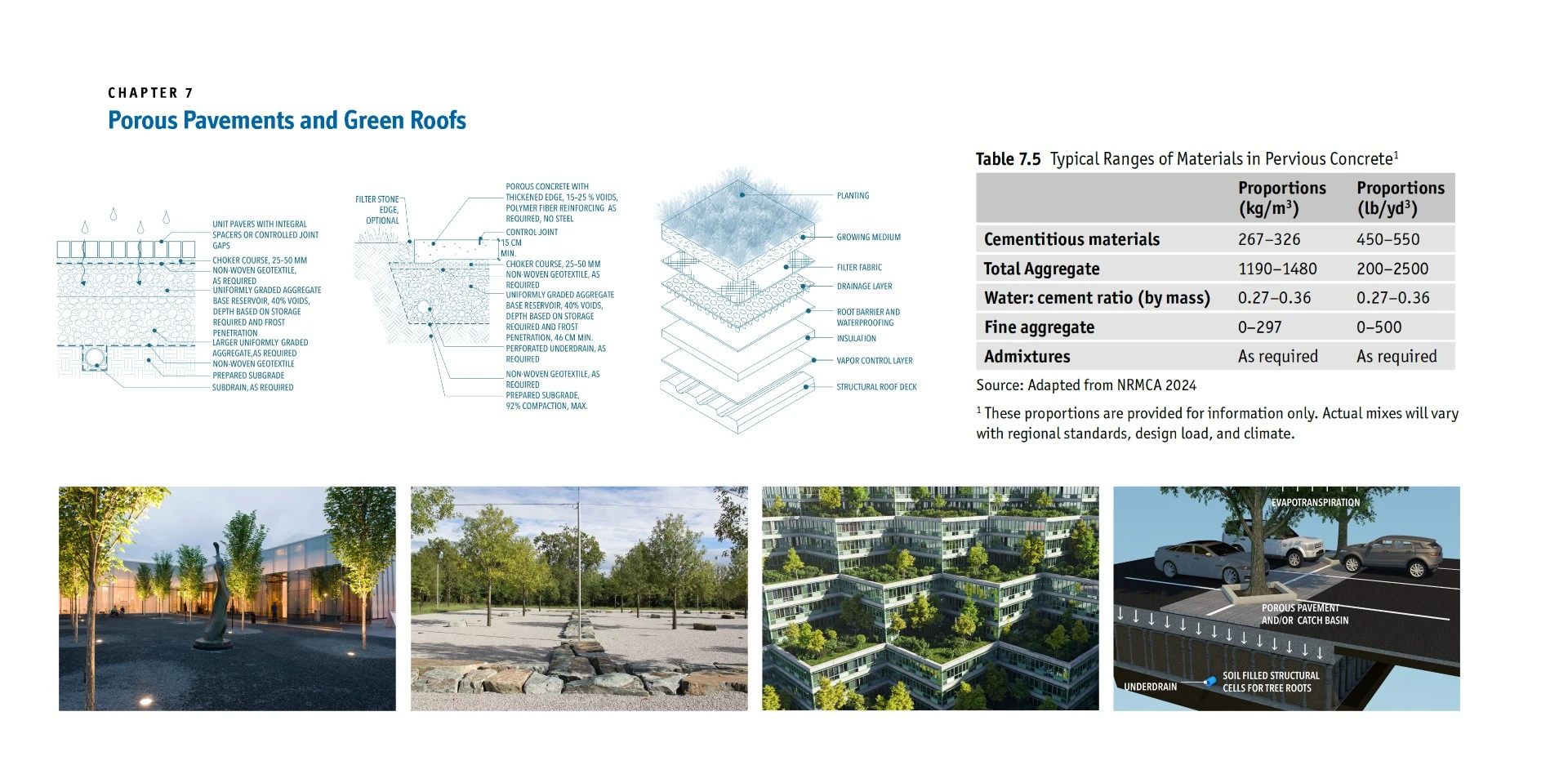
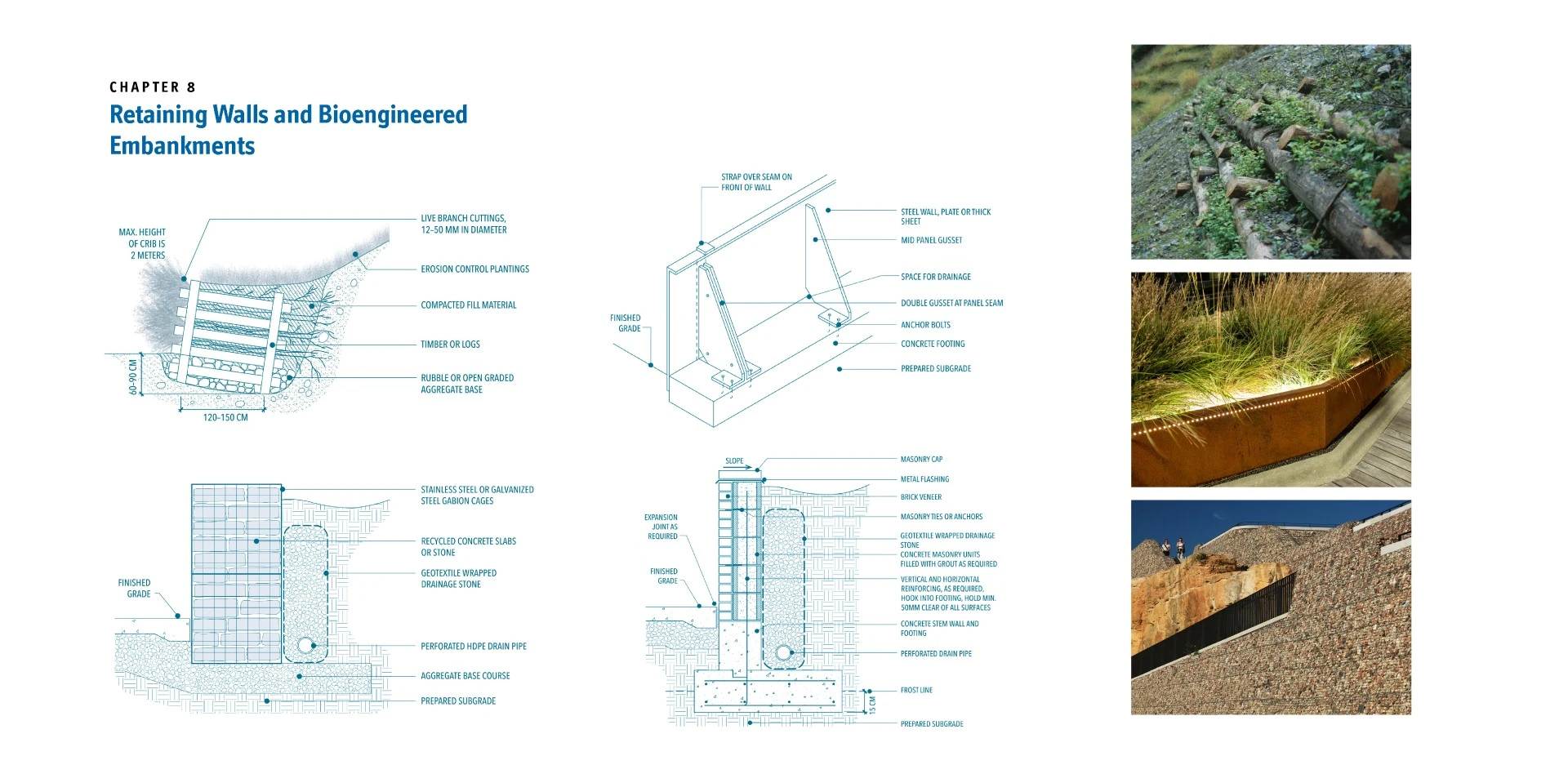
In addition to material considerations, Details and Materials for Resilient Sites provides numerous strategies for designing durable, low-carbon, and resource-efficient site structures including pavements, porous pavements, green roofs, bioengineered embankments, retaining walls, freestanding walls, decks and boardwalks, and rails, fences, and screens. Extensive carbon calculations are given for these site structures in addition to a variety of alternative approaches to reduce their carbon footprint.
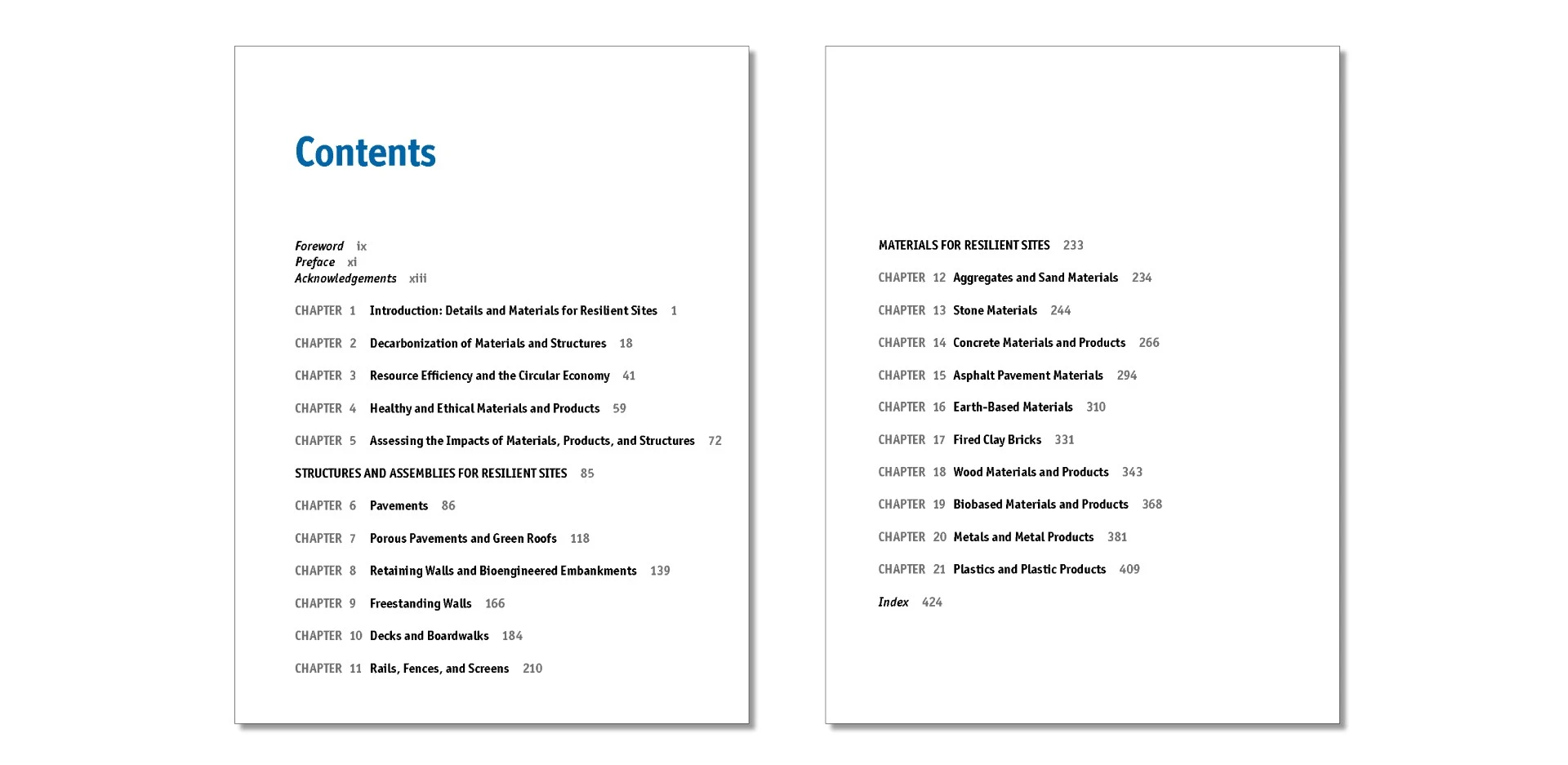
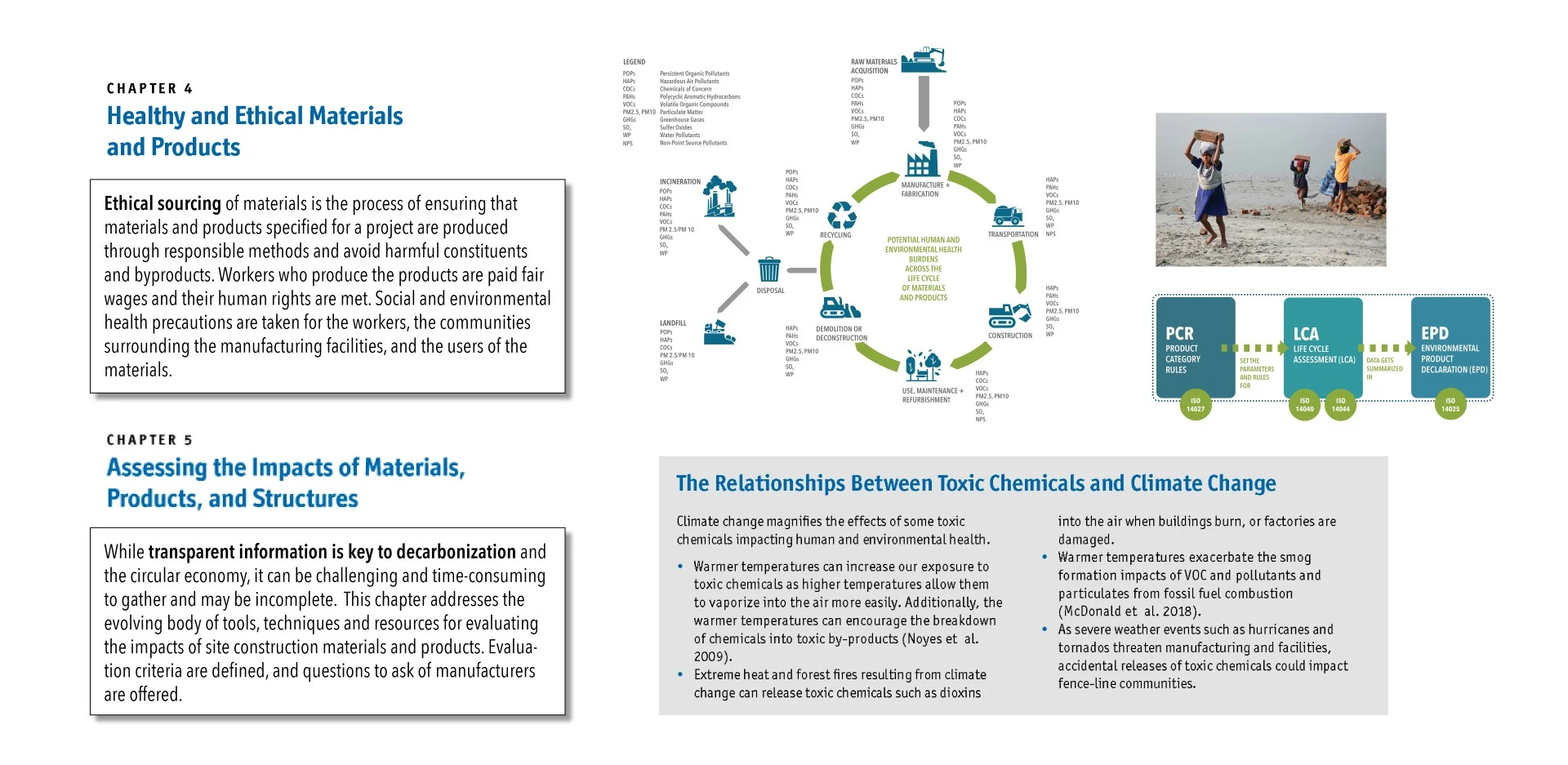
The first five chapters address life cycle assessment methods, information-transparency tools, and benchmarking techniques, along with criteria for healthy and ethical sourcing of materials. The next six chapters focus on structures and assemblies for resilient sites, and the second half of the book offers ten chapters about reducing the embodied carbon, environmental impacts, resource use, and human health impacts of site-construction materials.
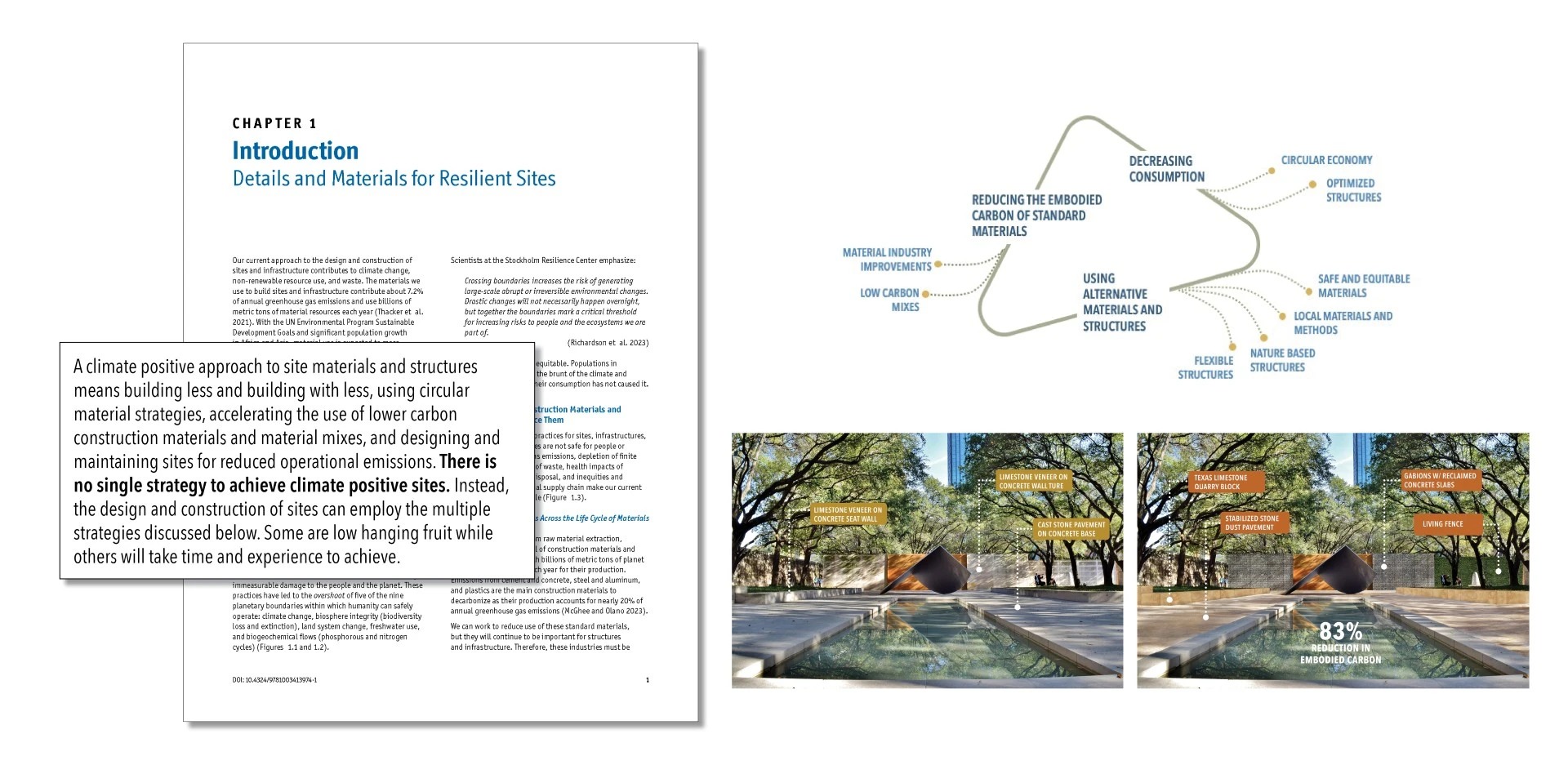
Photos and details from exemplary projects around the world support the book’s central themes of low-carbon standard materials, living structures, circular materials, flexible structures, and ethically sourced local materials. More than sixty construction details illustrate alternative approaches to reduce the carbon footprint of site structures.
Published in July 2025 by Routledge, Details and Materials for Resilient Sites: A Climate Positive Approach is distributed to bookstores in five countries. Landscape architects, civil engineers, and architects have purchased the book, and it was featured in The Architects Newspaper.
-
- Katherine Schell, Selena Hostetler, Routledge, Publisher
- Kathleen Elliott, Research Assistant and Digital Graphics
- Lizandro Marcial-Armas, Digital Graphics
- Drake Bruner, Digital Graphics
- Laura Solano, Lucinda Sanders, Landscape Architecture Foundation, Pamela Conrad, Chris Hardy, Vincent Martinez, Stefan Faber, Stanton Jones, Sarah Gregg, Jennifer Mitchell, Satyam Maharaj, Howard Marks, Richard Willis and Zac Tolbert, Special Thanks
Advertisement
Related Awards
Honor Award, Communications
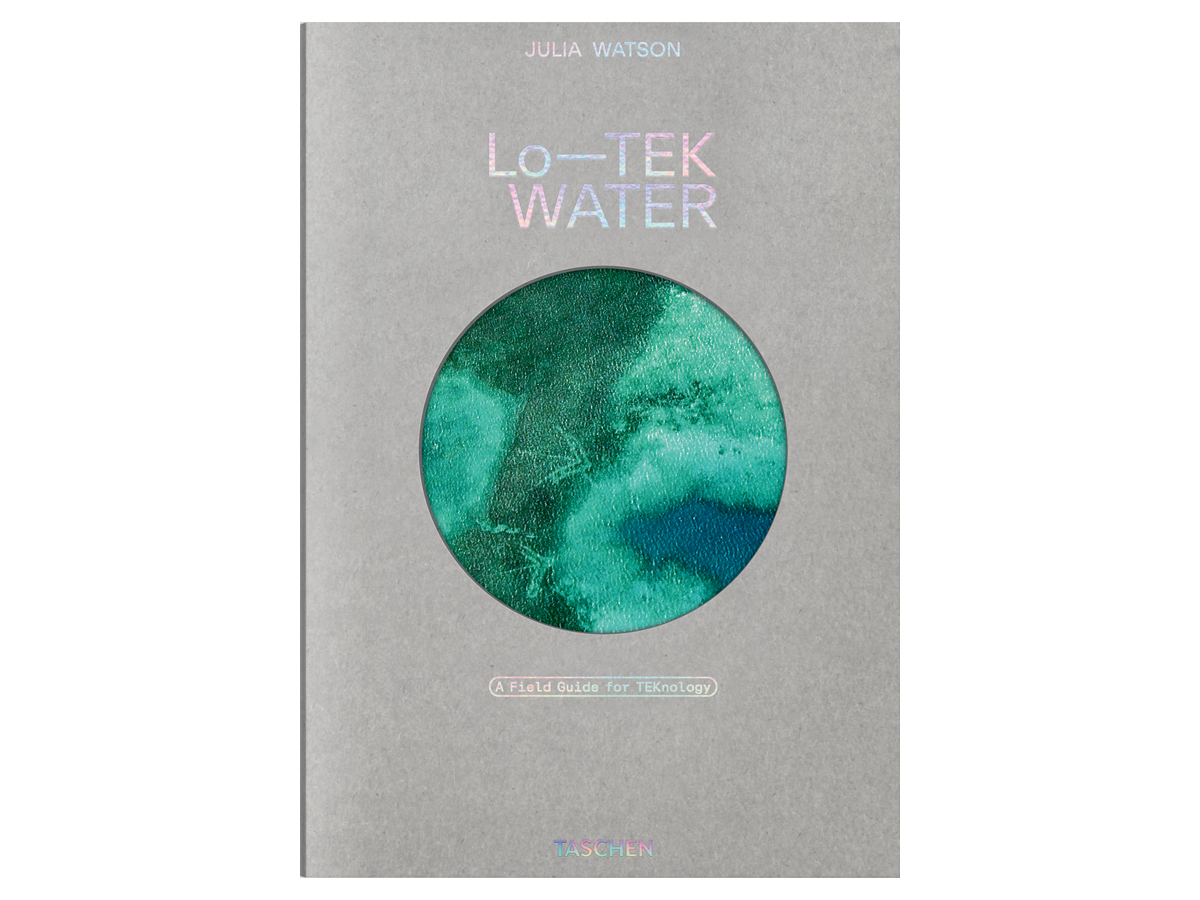
Lo—TEK Water. A Field Guide for TEKnology
Lo—TEK Water is a publication that communicates Indigenous and traditional ecological knowledge as a contemporary framework for addressing global water challenges. Through rigorous research, compelling narrative, and visually driven storytelling, the book translates complex environmental systems into accessible, actionable insights for designers, planners, policymakers, and the public.