

.webp?language=en-US)

.webp?language=en-US)



A Thriving Profession


Every public win landscape architecture earns rests on work most members never have to see. In 2025, ASLA defended licensure in statehouses, protected accredited degree programs under threat, and opened new pathways into the profession for the next generation of practitioners. This is the quiet, essential work that keeps landscape architecture credentialed, credible, and built to last — so the profession can keep expanding with confidence.
Licensure: Actions and Wins
Licensure protects the public and ensures landscape architects have a clear and established path to professional practice. In 2025, ASLA and its chapters defended that foundation wherever it came under pressure and advanced smarter, more consistent pathways into the field.
In Nevada and Florida, advocates helped defeat proposals that would have eliminated or merged landscape architecture boards. Florida policymakers also threatened continuing-education requirements.
In North Carolina, coordinated advocacy stopped a continuing-education rollback.
In Michigan, chapter engagement helped halt a bill that would have deregulated landscape architecture.
Nebraska enacted the Uniform Standard for Landscape Architecture Licensure, advancing a nationally consistent and uniform regulation for the profession.
New Mexico extended its Landscape Architects Act and board, while New York modernized continuing-education requirements for greater professional flexibility.
 Florida
 Michigan
 Nebraska
 Nevada
 New Mexico
 New York
 North Carolina
Licensure doesn't protect itself — members have to show up and defend what the profession stands for.
Bob Doyle Michigan Chapter Advocacy Chair

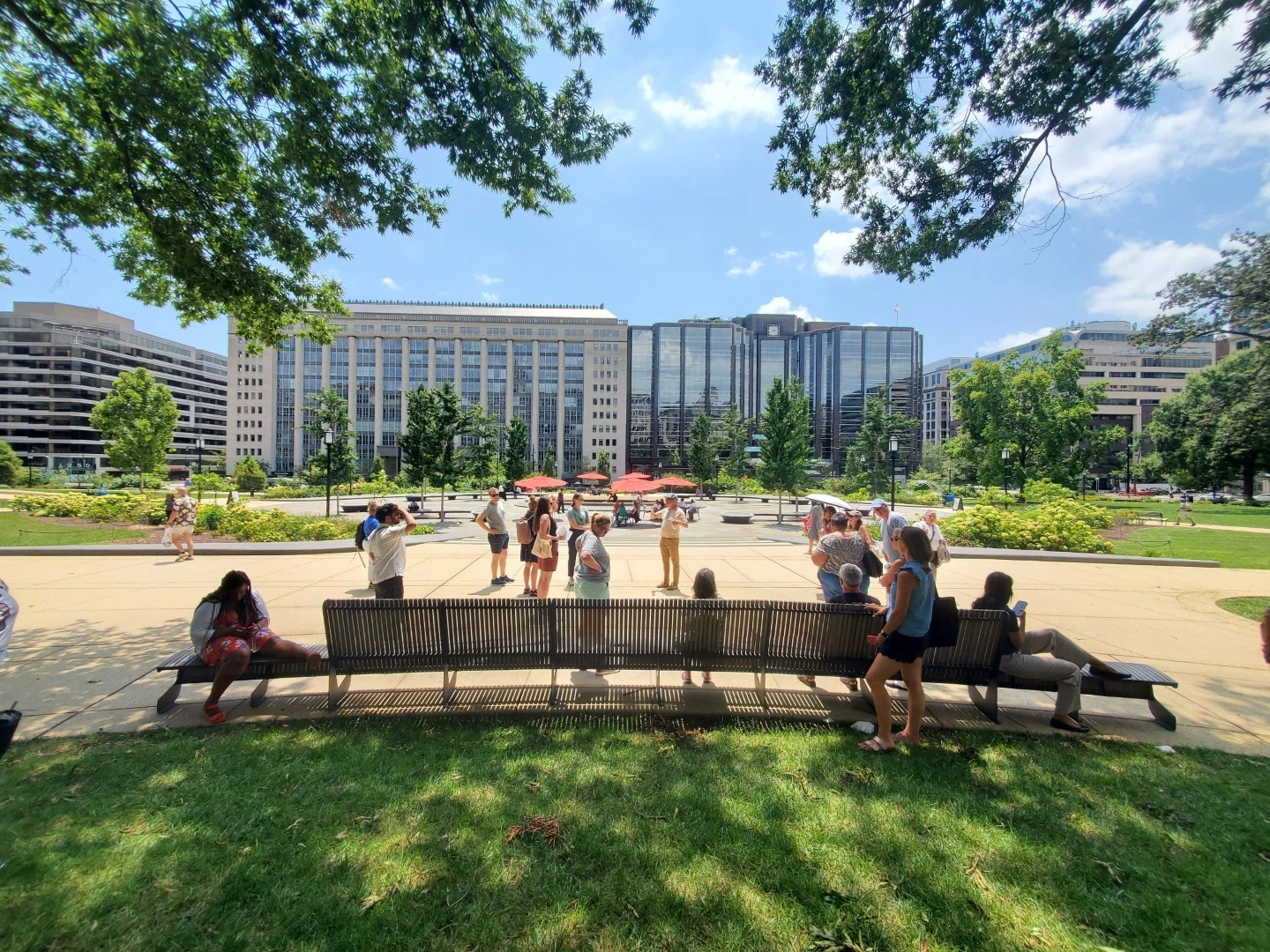
Design Academy for K–12 Educators: Building the Pipeline
ASLA's inaugural Design Academy for K–12 Educators brought 20 teachers to ASLA from 14 states for an immersive four-day workshop at ASLA headquarters on Teaching Environmental Design through Landscape Architecture.
Through field trips to iconic parks, Playgrounds, and green roofs, educators spanning 1st through 12th grade explored how landscape architecture connects to history, science, arts, and humanities.
Together, these educators reach approximately 4,500 students annually — multiplying the program's impact far beyond Washington, D.C. and planting seeds for the profession's next generation.
Schoolyards in Bloom: Pollinating Curiosity
ASLA's Schoolyards in Bloom: Exploring Pollinators Through Landscape Architecture brings the profession directly into K–5 classrooms through an interdisciplinary, hands-on learning poster resource.
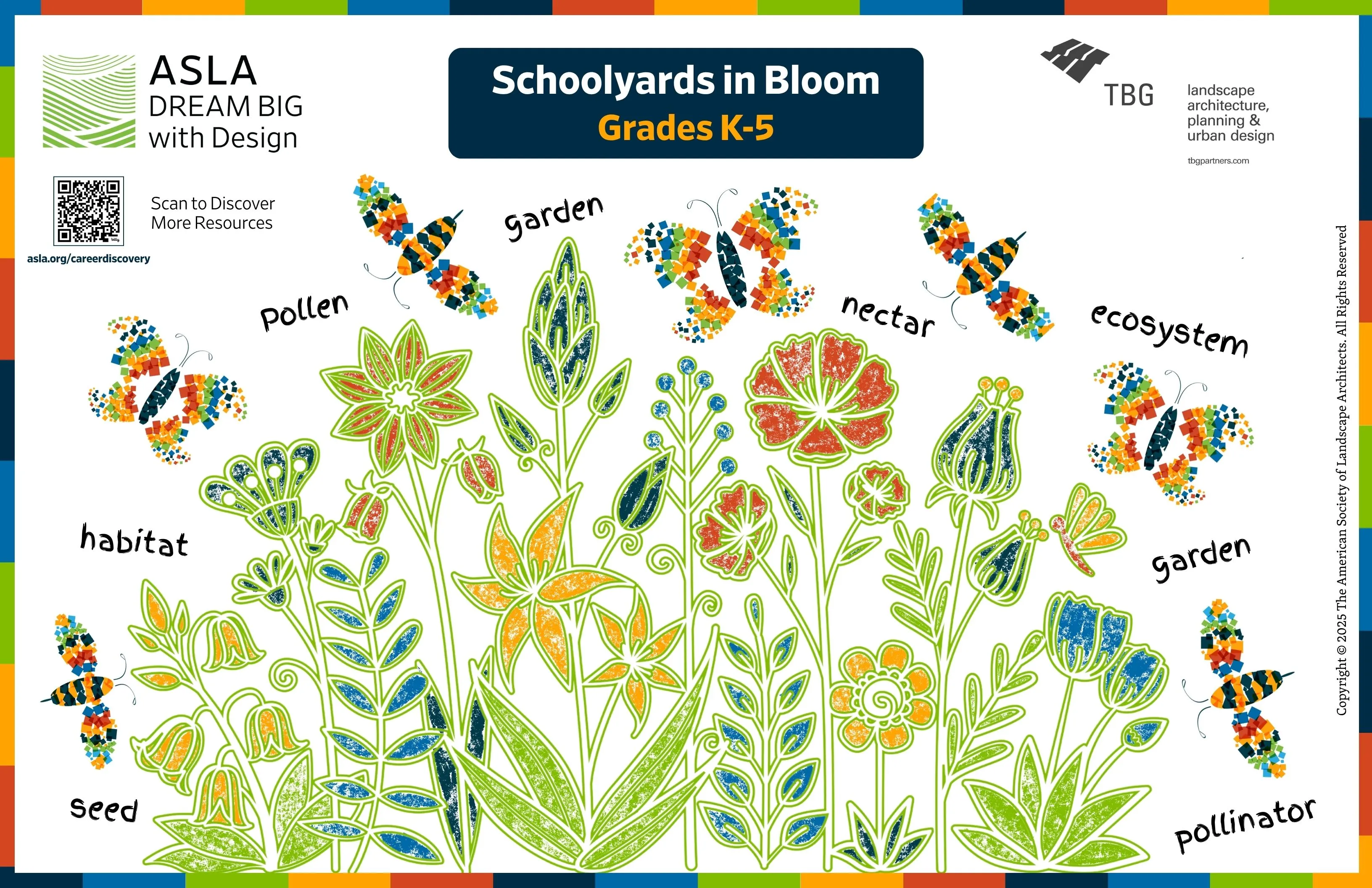
Sponsored by TBG and written by ASLA member Taylor Metz, ASLA, PLA, the resource connects art, science, and design through grade-specific lesson plans aligned with STEM goals and Next Generation Science Standards (NGSS).
From creating pollinator gardens to designing murals, students explore environmental literacy and landscape architecture — many for the first time. Extended activities also reach middle schoolers in grades 6–8.


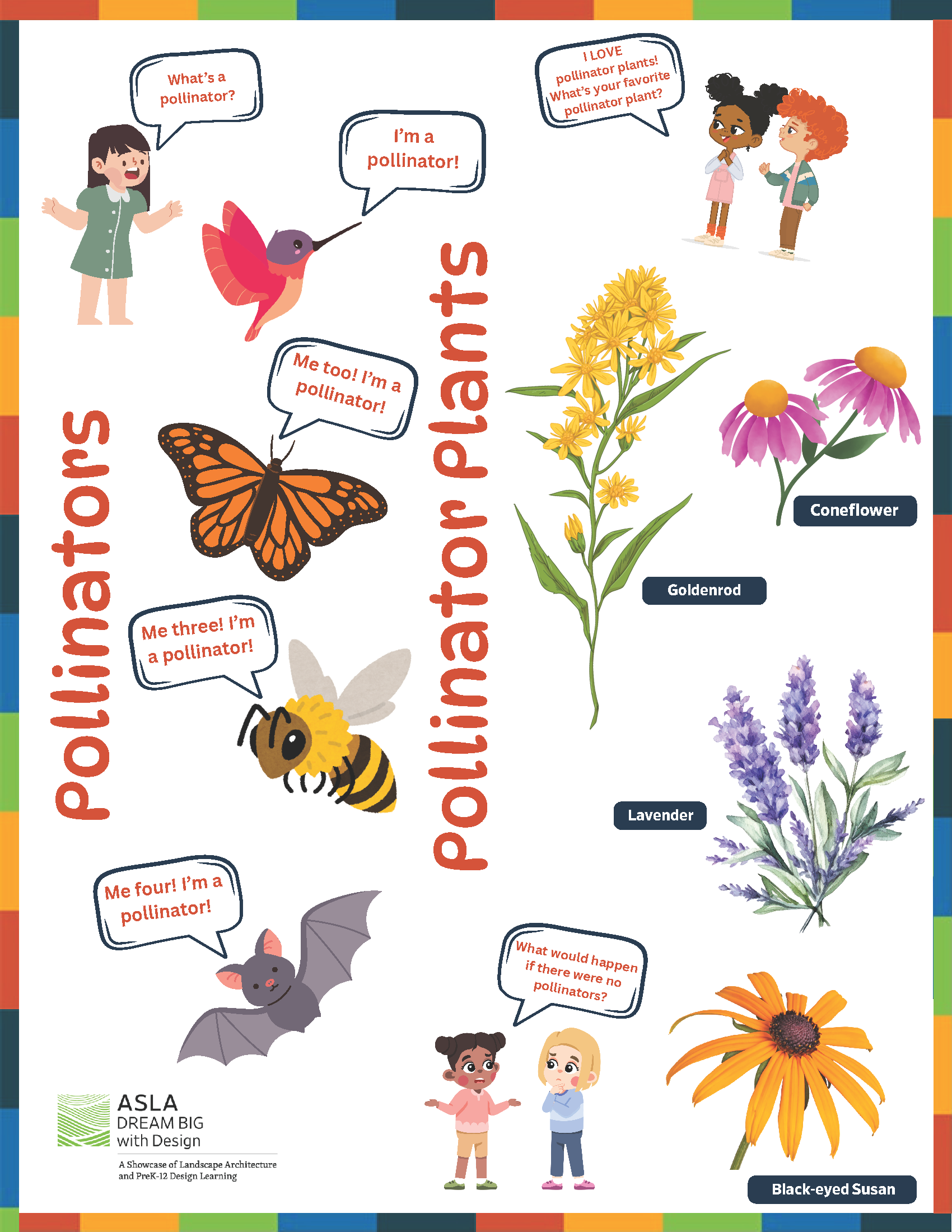

The Fight for Landscape Architecture at UNL:
Preserving Opportunity
When the University of Nebraska–Lincoln announced plans to eliminate its Landscape Architecture program, the only accredited pathway to licensure in the state, ASLA’s Nebraska/Dakotas chapter led the movement to save it. Together with National ASLA, they gathered nearly 2,300 signatures and 230 letters in support of the program from UNL students, alumni, and other members of the community.
In November, the school’s chancellor announced that degrees in Landscape Architecture and Community and Regional Planning would remain available. Thanks to ASLA members, aspiring landscape architects will still have a path to licensure in Nebraska and the opportunity to shape its healthy, sustainable, future.

Thanks to ASLA members, aspiring landscape architects will still have a path to licensure in Nebraska and the opportunity to shape its healthy, sustainable future.


Landscape Architecture Standards: Reinforcing Trust
The Landscape Architectural Accreditation Board (LAAB) has been re-recognized by the Council for Higher Education Accreditation (CHEA) for the maximum term of seven years.
LAAB is the accrediting organization for landscape architecture degree programs. As such, LAAB develops standards to evaluate degree programs objectively and assesses whether a school’s degree program complies with those standards.
CHEA, in turn, affirms that LAAB’s accreditation policies, procedures, and decision-making meet rigorous national expectations for quality assurance, accountability, and continuous improvement.
The full seven-year term is the highest possible external validation of the standards that safeguard landscape architecture degrees.
Through this rigorous accreditation framework, LAAB reinforces students’ confidence in the value of their education and employers’ confidence in graduates’ preparation for professional practice.