
.webp?language=en-US)


Water + Nature: Sustainable Growth Renewing Neighborhoods
Ashlee Grubbs, Student ASLA; William Gunn, Student ASLA
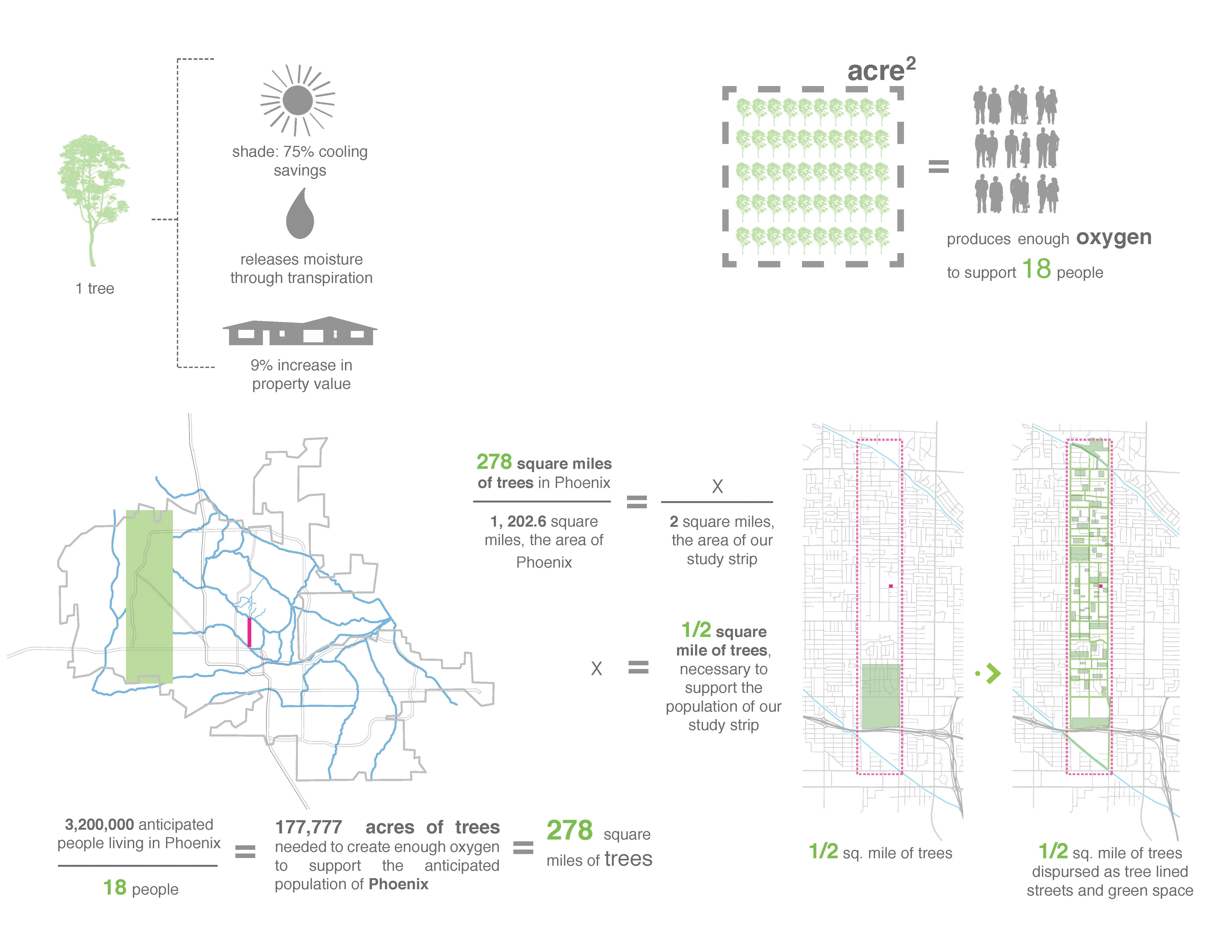
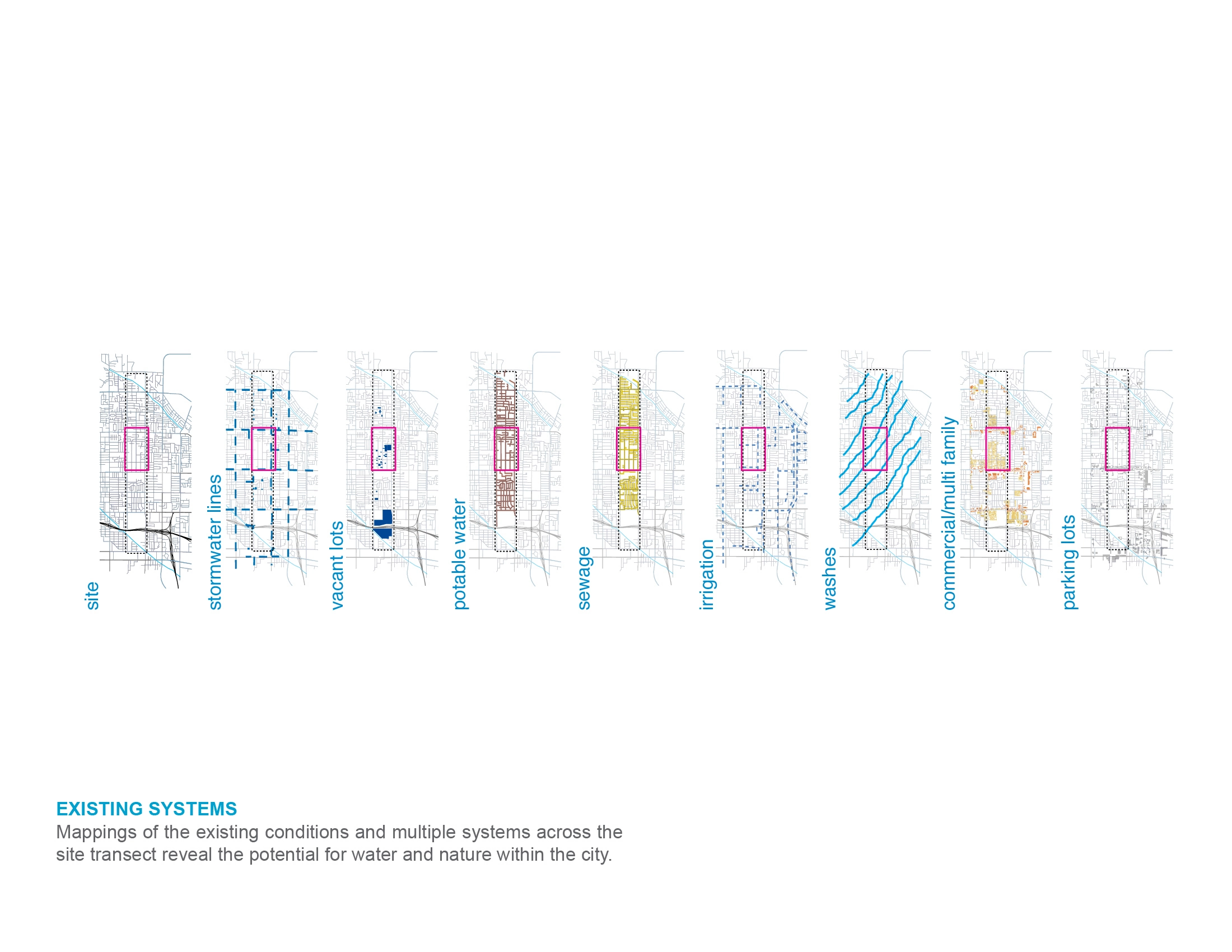
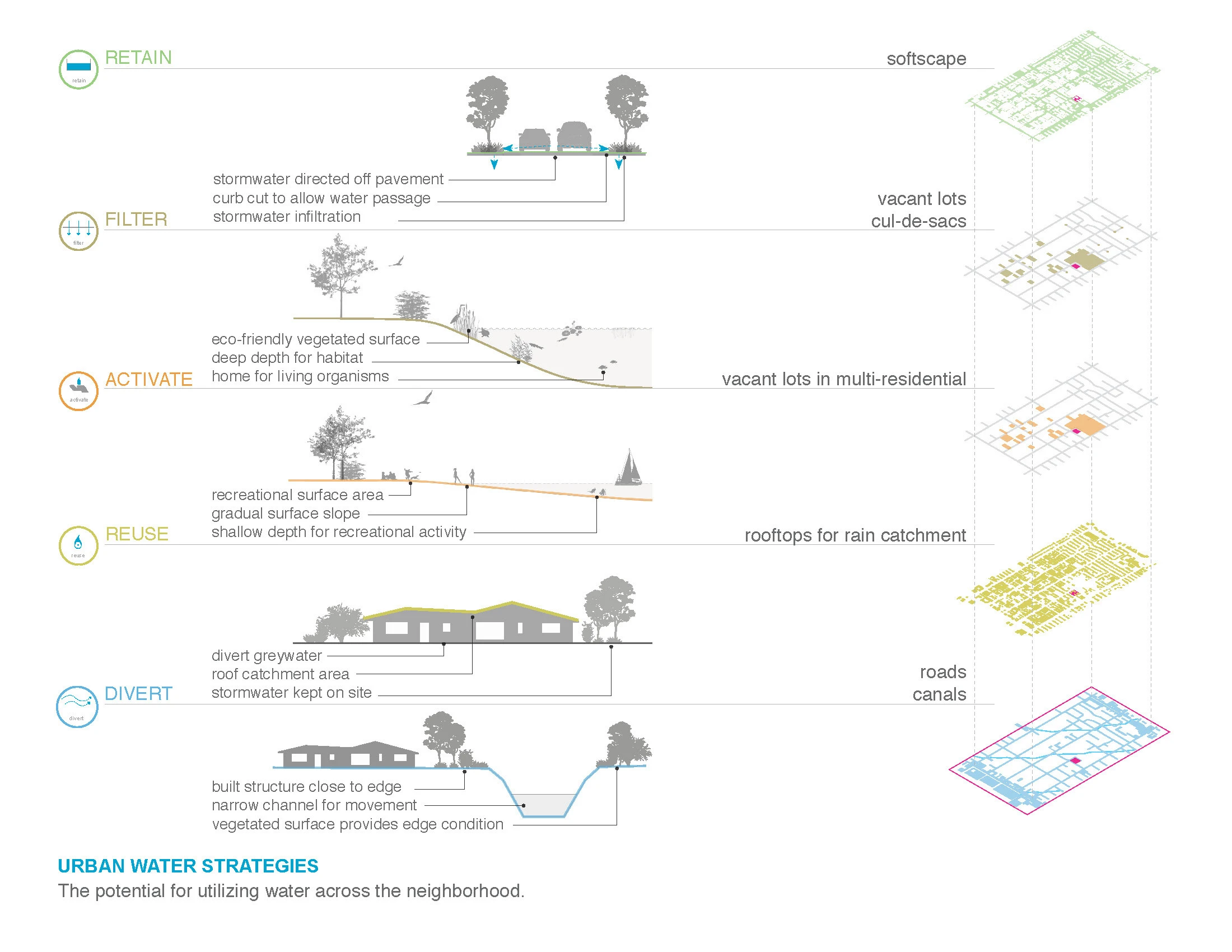
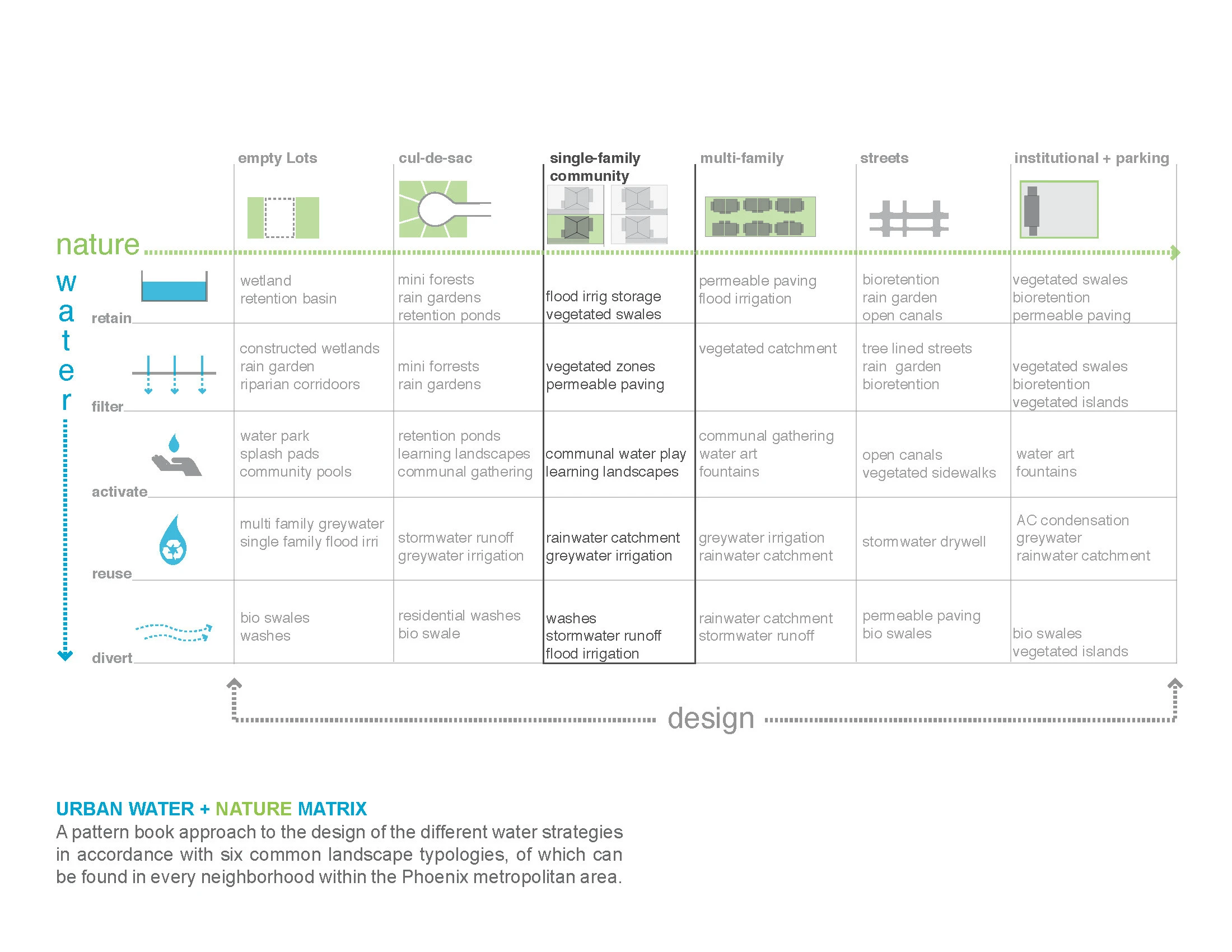
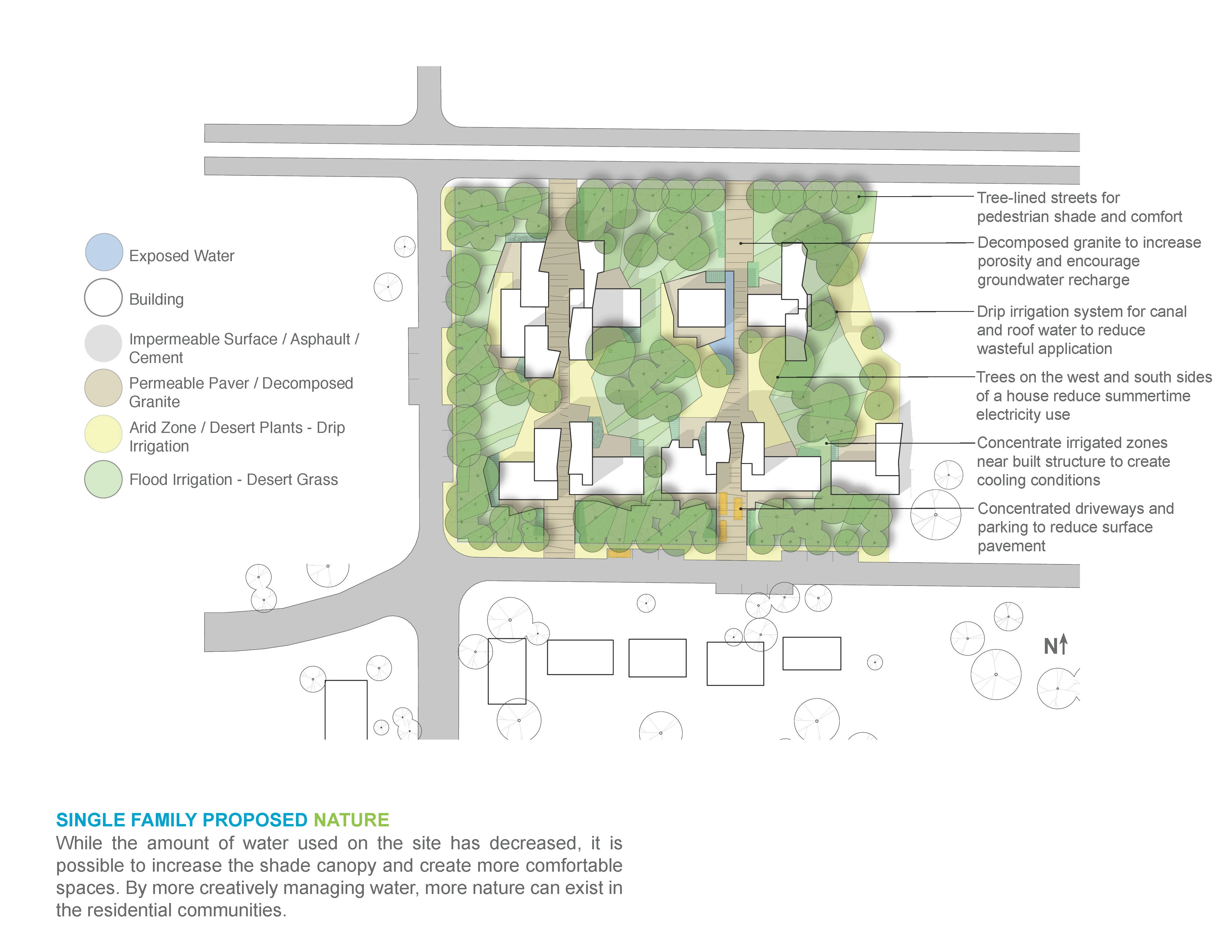
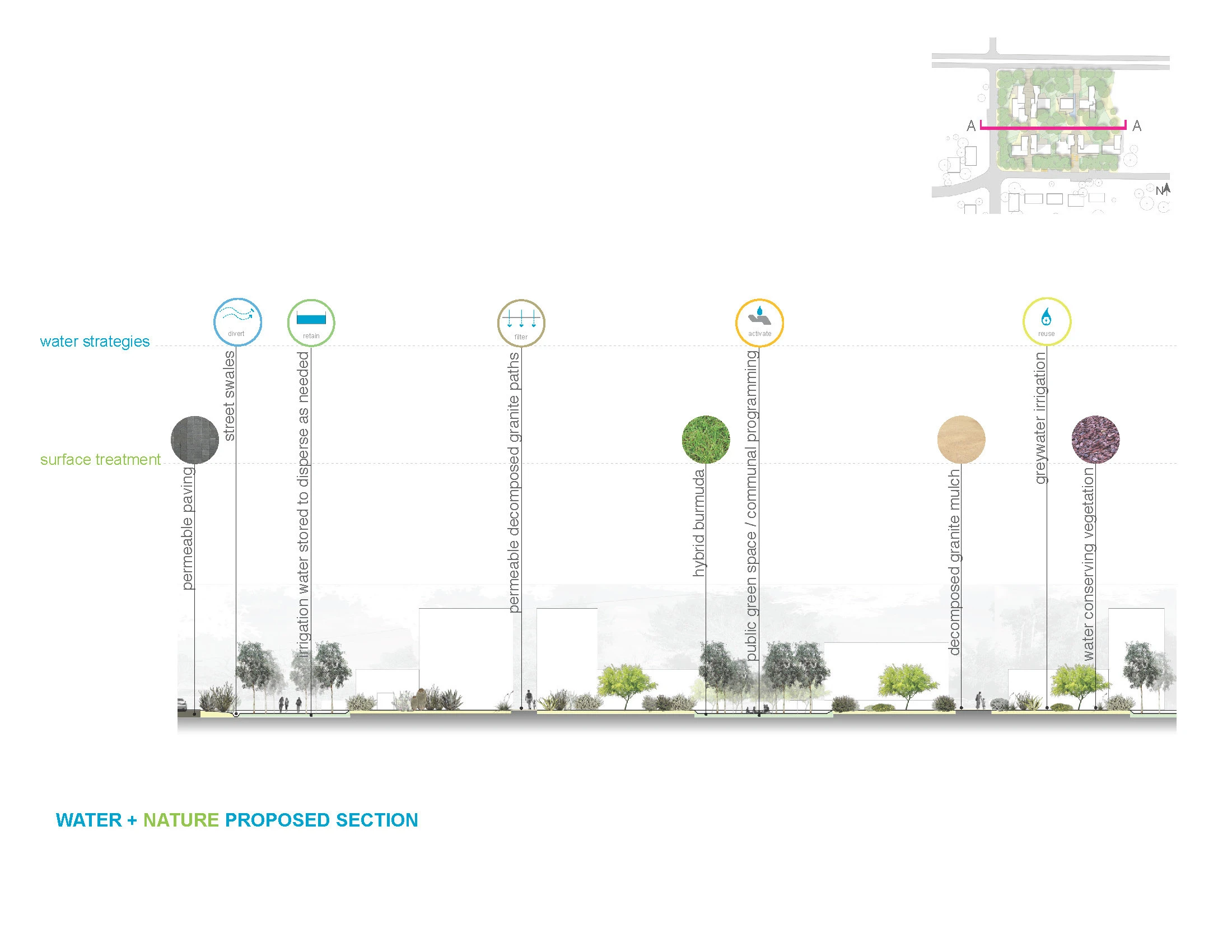
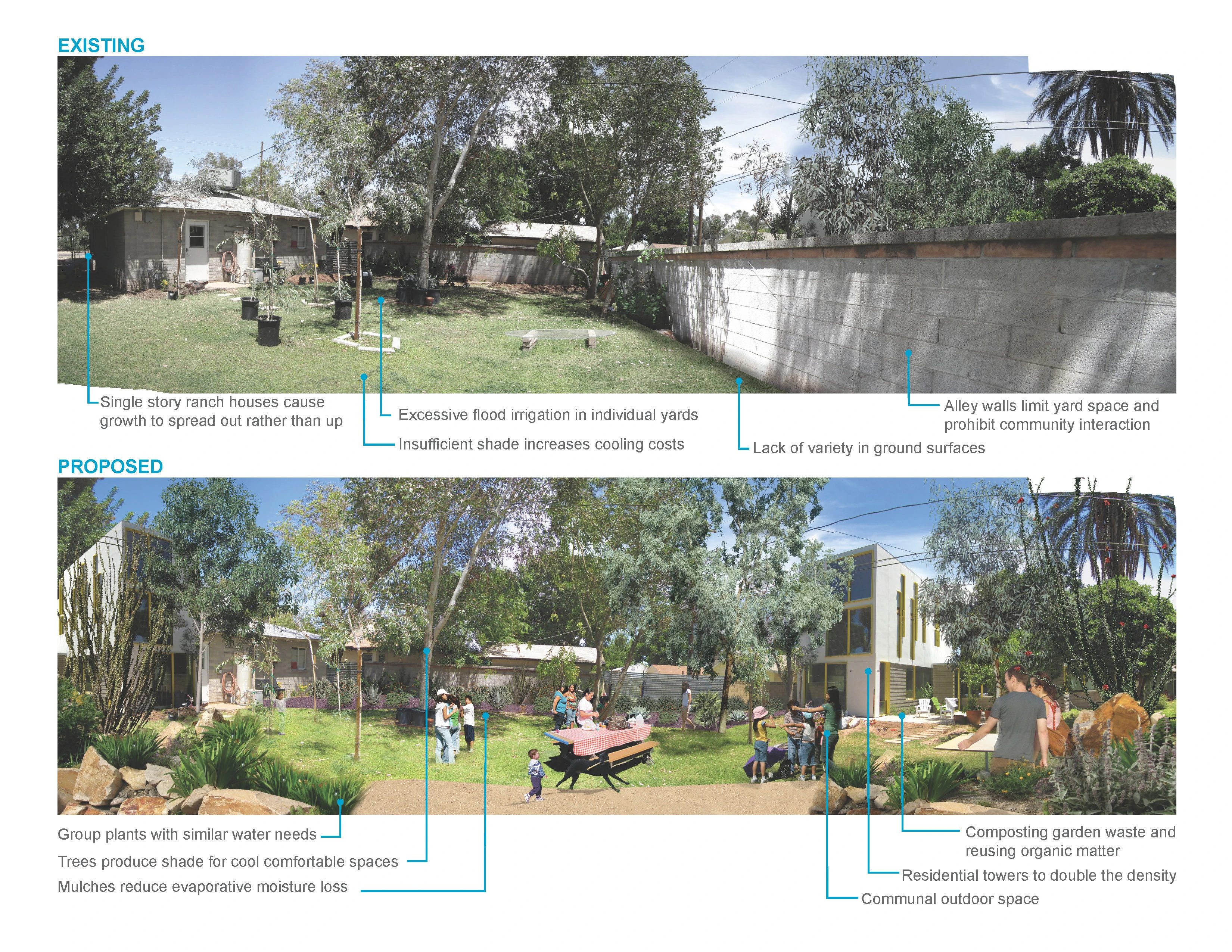
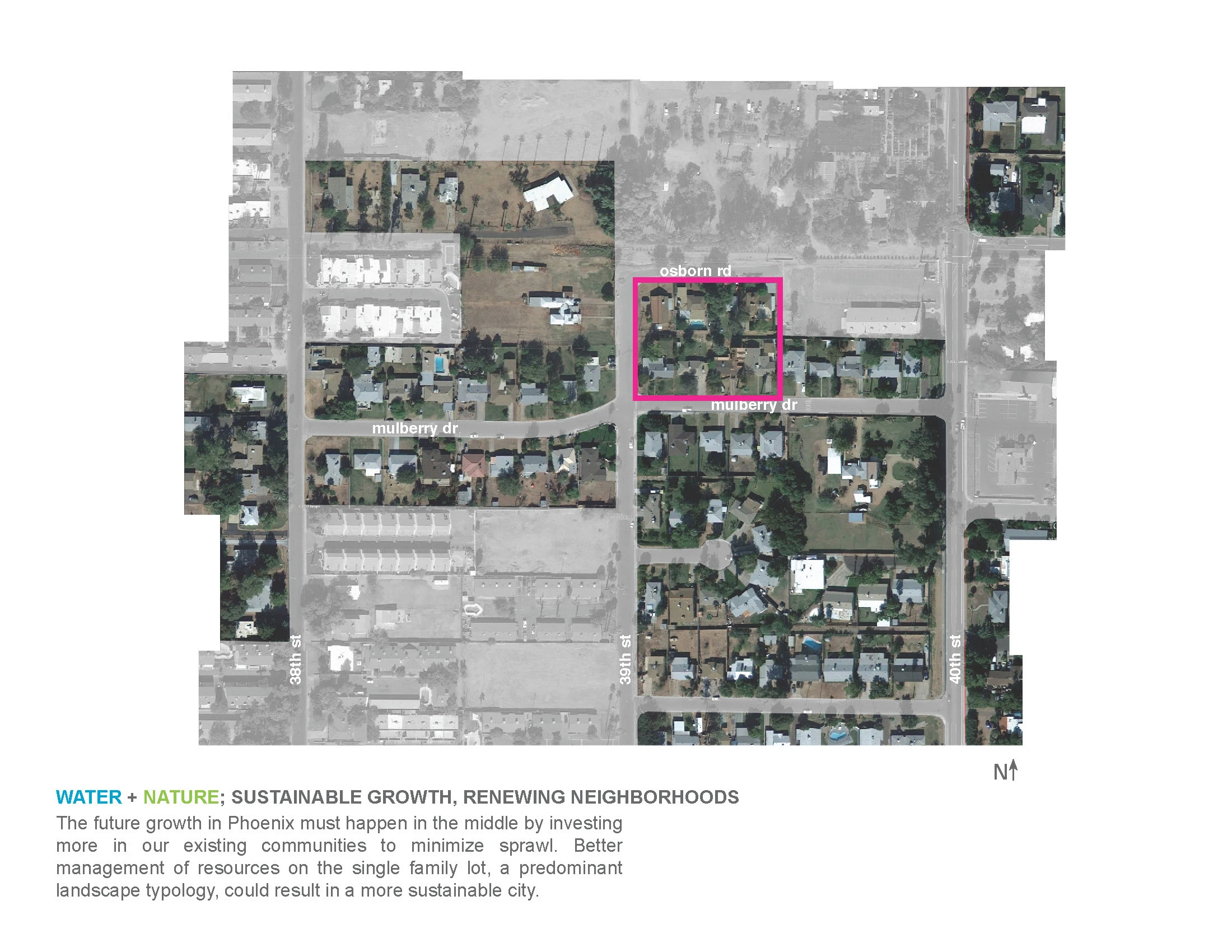
The detailed water analysis is impressive and the plan itself is very crisp. This is exactly what our cities are looking for. The value as a toolkit is very high — it's a great way of approaching things.
Awards Jury
-
Water management and a progressive nature infrastructure system are essential to the making of a sustainable urban environment. With current technologies cities can greatly decrease water use while simultaneously increasing nature in urban environments. Having the effect of creating healthier, cooler and more livable cities.
-
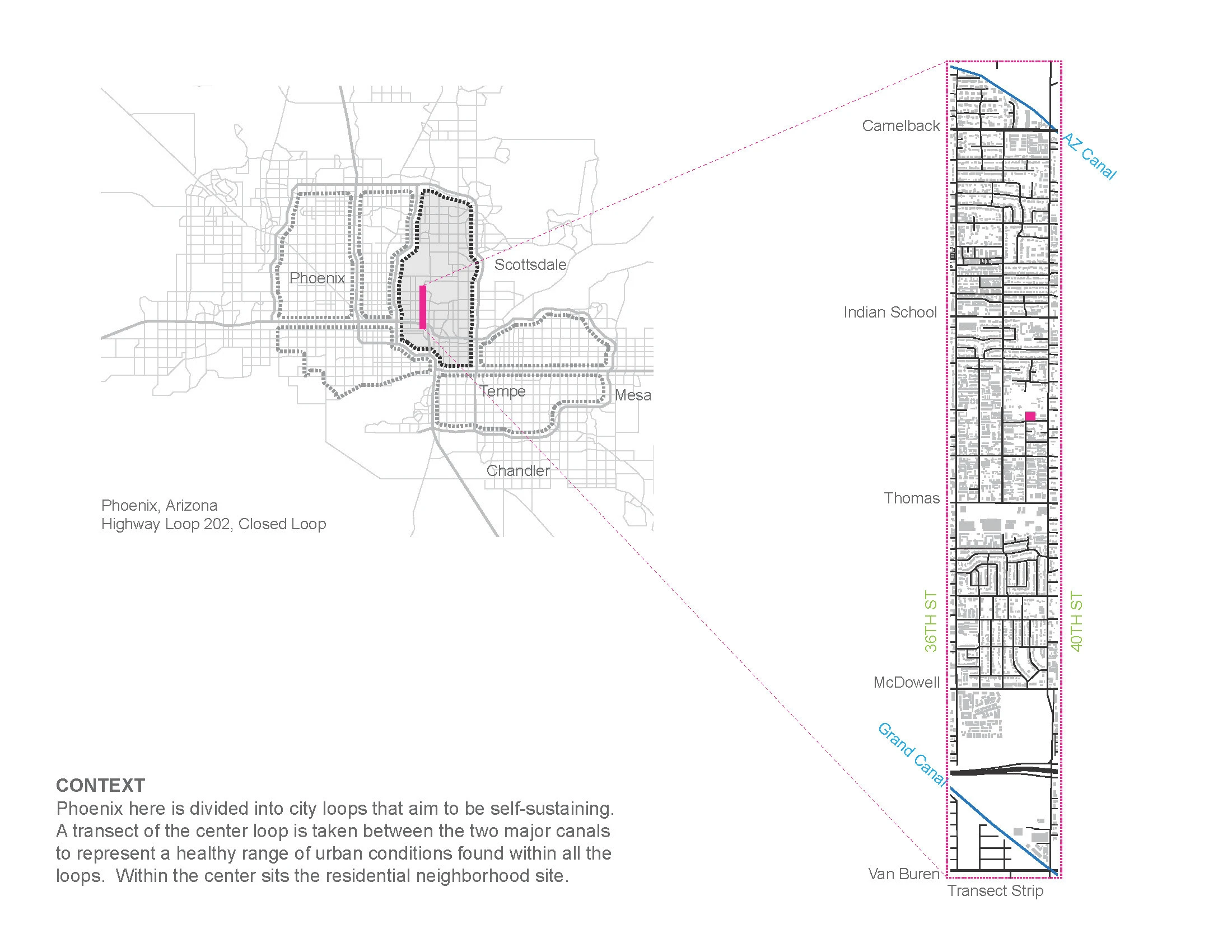
Cities are often ranked by their level of livability and sustainability; two closely related indicators that broadly take into account economic, social, and environmental factors. Consistently Phoenix has scored low under these indicators. In Phoenix, this fact is currently exacerbated by the housing and financial crisis, the rising costs of energy and gas, the continual increase of urban temperatures, the depletion of municipal resources by continuingly extending infrastructure, and the continued loss of neighborhood identity through repetition and dispersal; all of which suggest that the current pattern of growth is not sustainable.
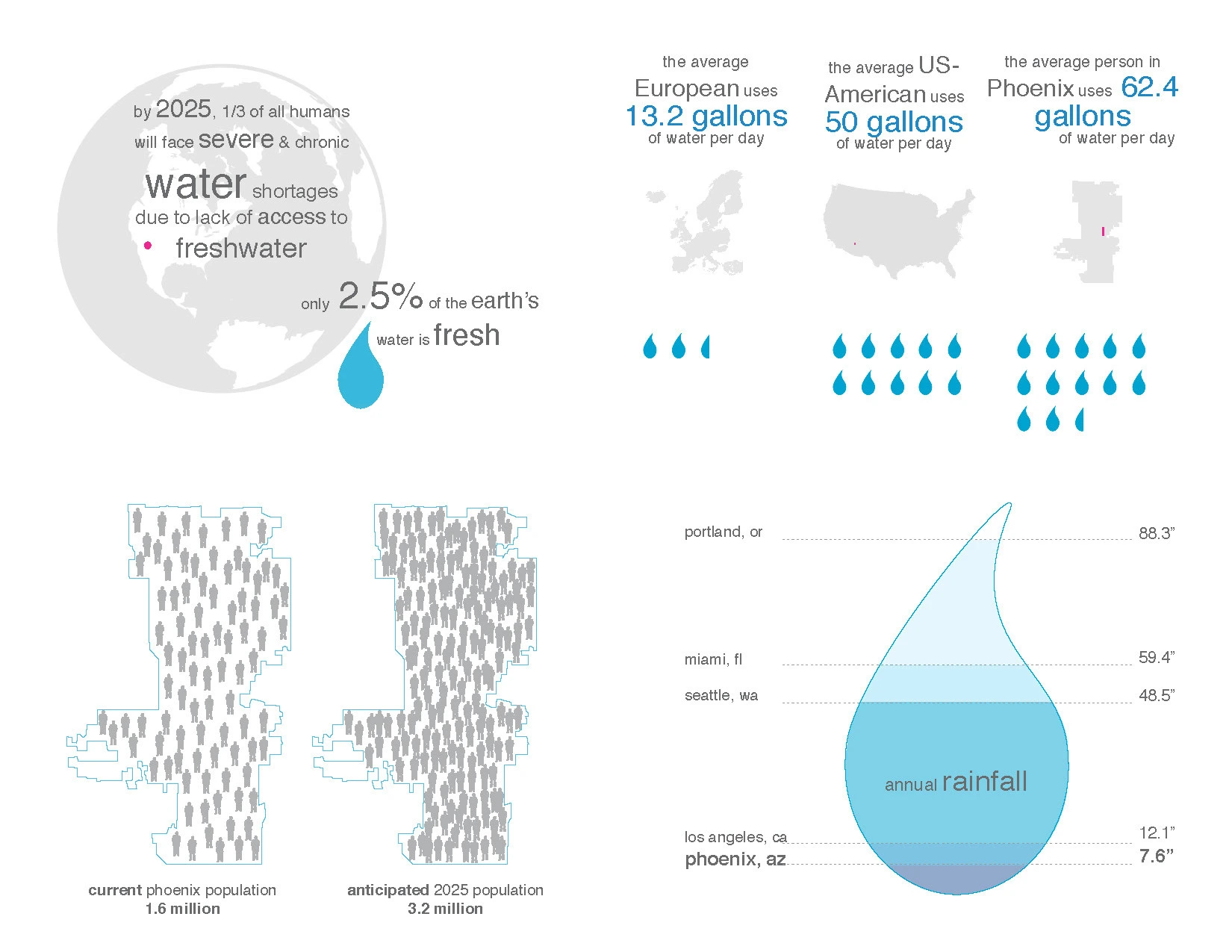
For a desert city like Phoenix, water is an important and rare resource. As the city experiences an increase in population and density, water will become even more valuable. It’s predicted that by 2025, 1/3 of all humans will face severe & chronic water shortages. Climate change will further impact water supplies by increasing pressures on water resources caused by population and economic growth. With 1.6 million residences, Phoenix is the fifth largest city in the United States and is anticipated to double by 2025. However, it only receives 8.3 inches of rain a year, which does not begin to serve its need. Most of the water is transported into the city over hundreds of miles through canals and high energy using pumps. The Central Arizona General Replenishment District projects the district will not be able to meet its replenishment obligation by 2020 and possibly as early as 2015. How do we limit water use to better meet current and anticipated needs? Where will the sources of water come from?
The absence of a nature infrastructure system in Phoenix adds to the water problem by not maintaining permeable surfaces for water to seep through and replenish the aquifers. Additionally, the excessive impermeable surfaces creating an exceedingly hot environment with diminished air quality. A nature infrastructure would have the potential to improve air quality, create shade, decrease surface temperatures, and improve the quality of the cities outdoor spaces. Today people move to the cities edge in part to be closer to nature. By bringing more nature to central Phoenix, residents may opt to further invest in their current neighborhoods for more sustainable communities and comfortable urban spaces.
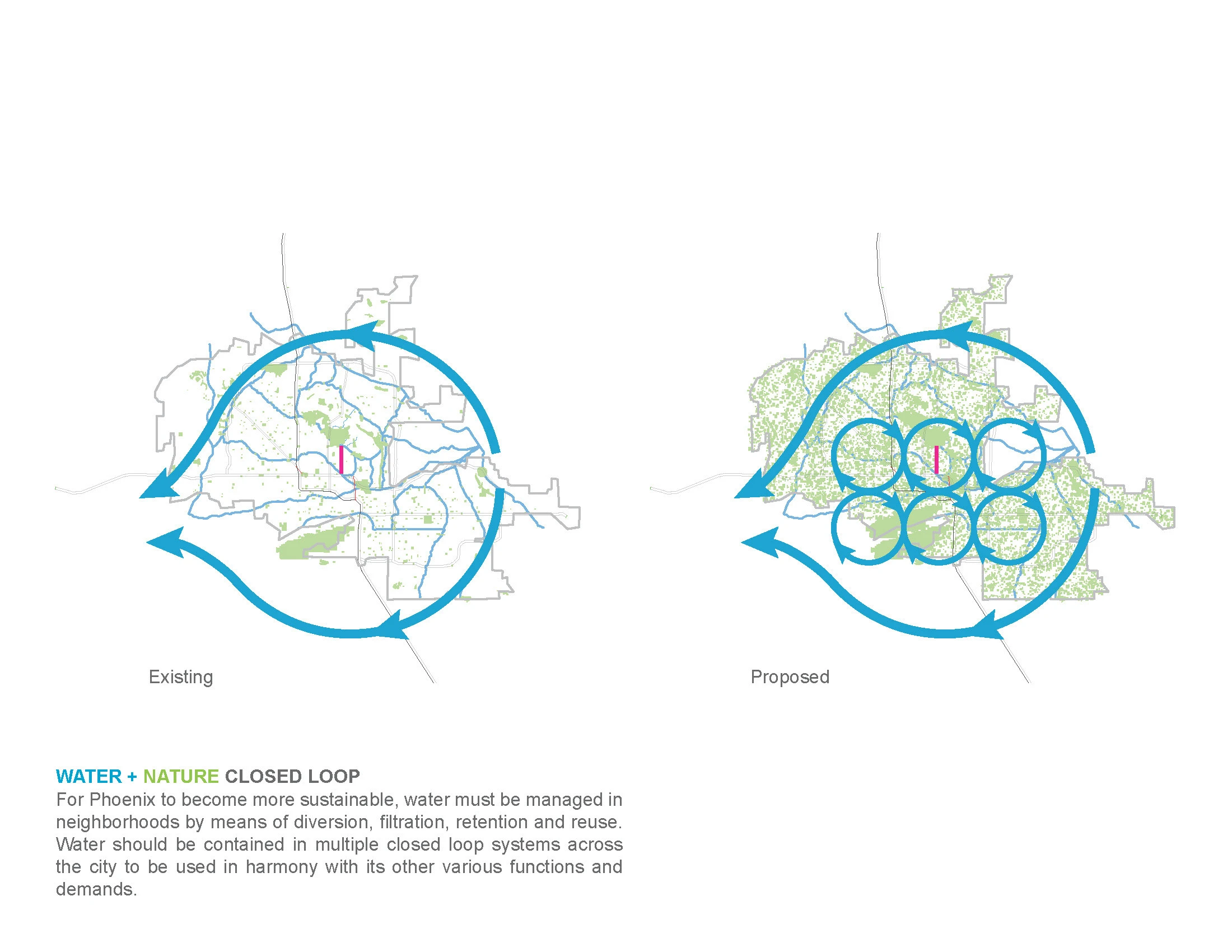
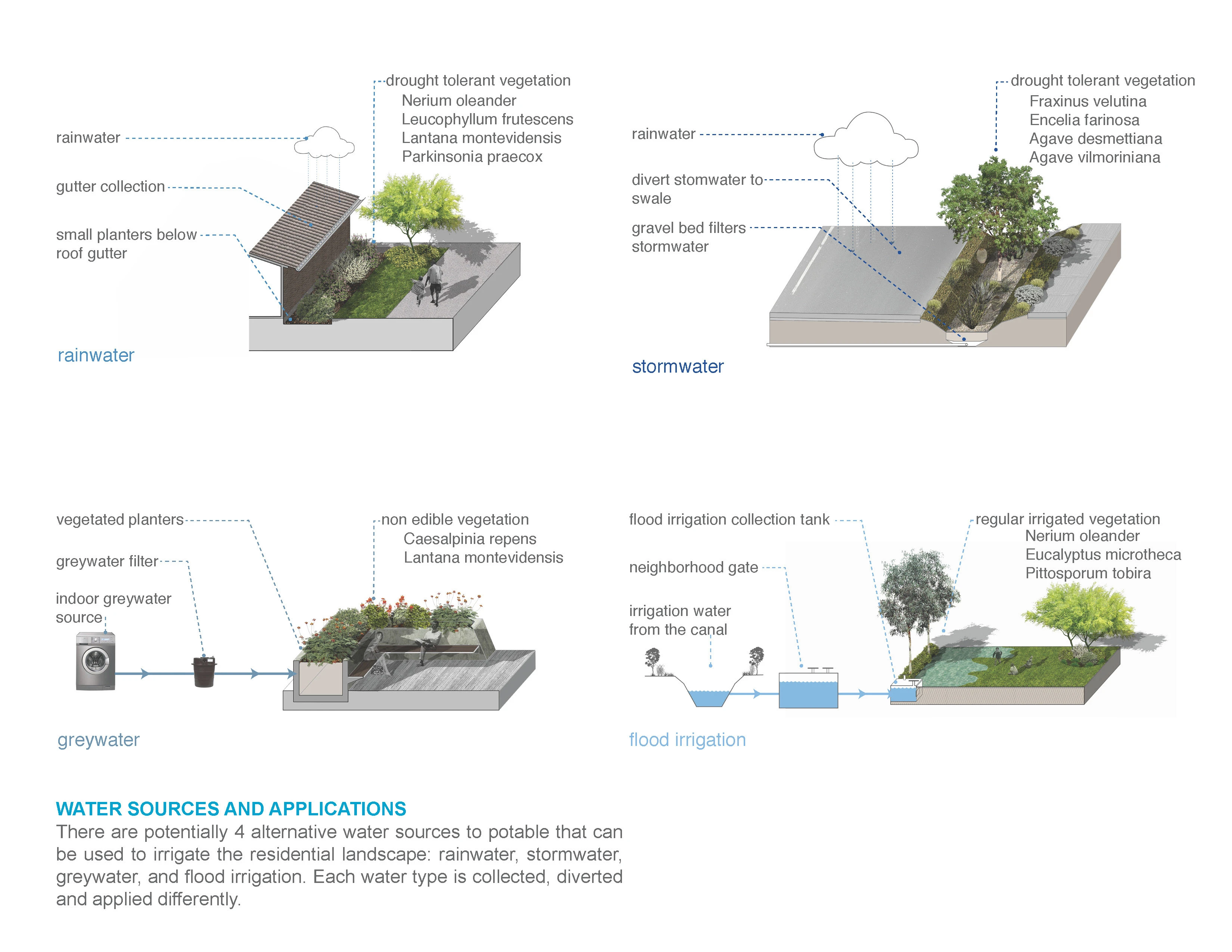
The fact is that there are already alternative sources to potable water that exist within these neighborhoods: rainwater, flood irrigation, greywater, and stormwater. Each of these water types could be reconsidered and better managed across the Phoenix valley to create more comfortable, cooler spaces within residential communities. Water in our study becomes the dominant ordering system for neighborhoods, informing the creation of outdoor environments. In particular, it determines the configuration of regionally appropriate vegetation and the use of permeable pavers. There are four sustainable water management systems that Phoenix can employ (diversion, filtration, retention, and reuse) to make better use of the water types available (rain water, flood irrigation, grey water and black water). By studying both water management systems and water types we are able to make a matrix that describes the potential of paring management systems with water types. Currently only treated water that enters the city through the flood irrigation canal system is managed within the city.
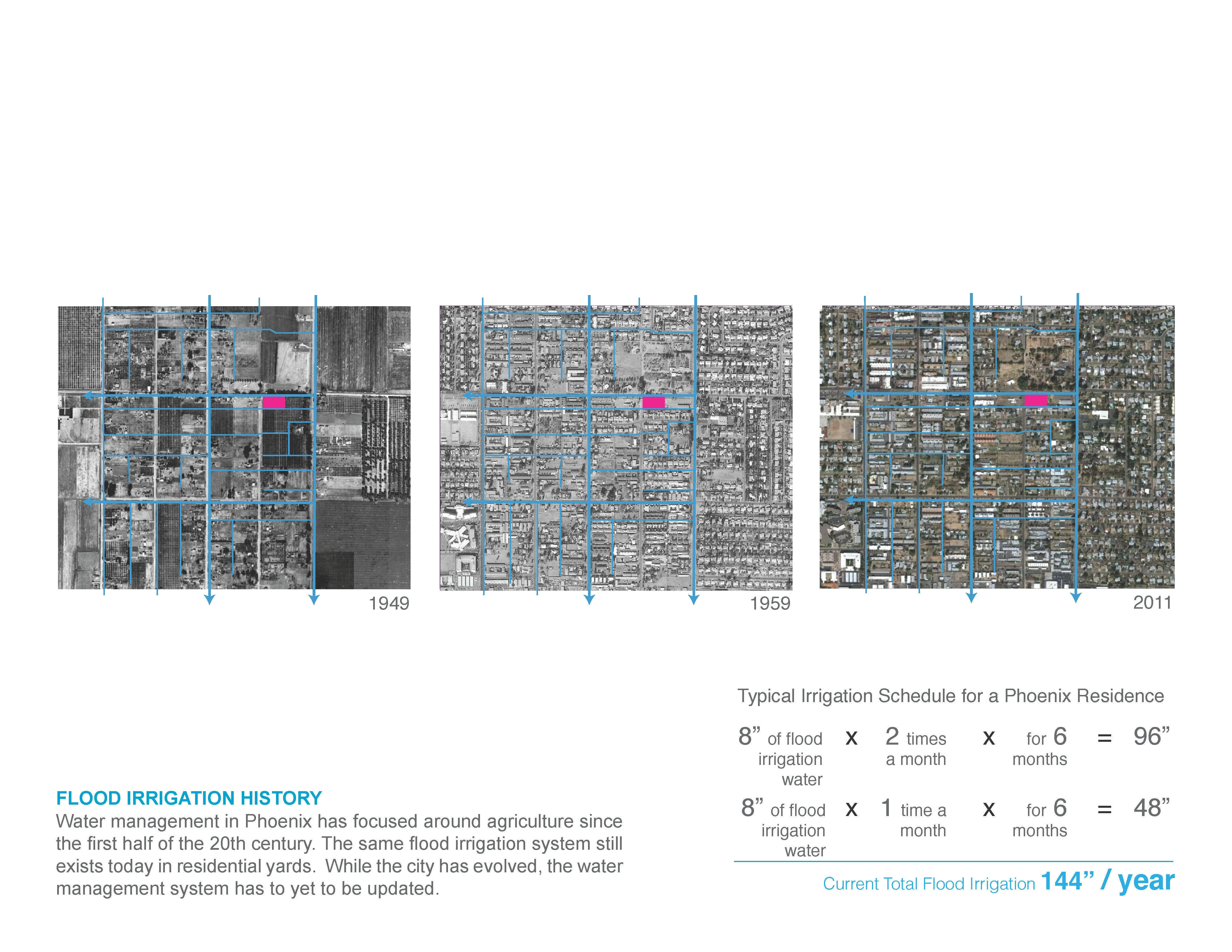
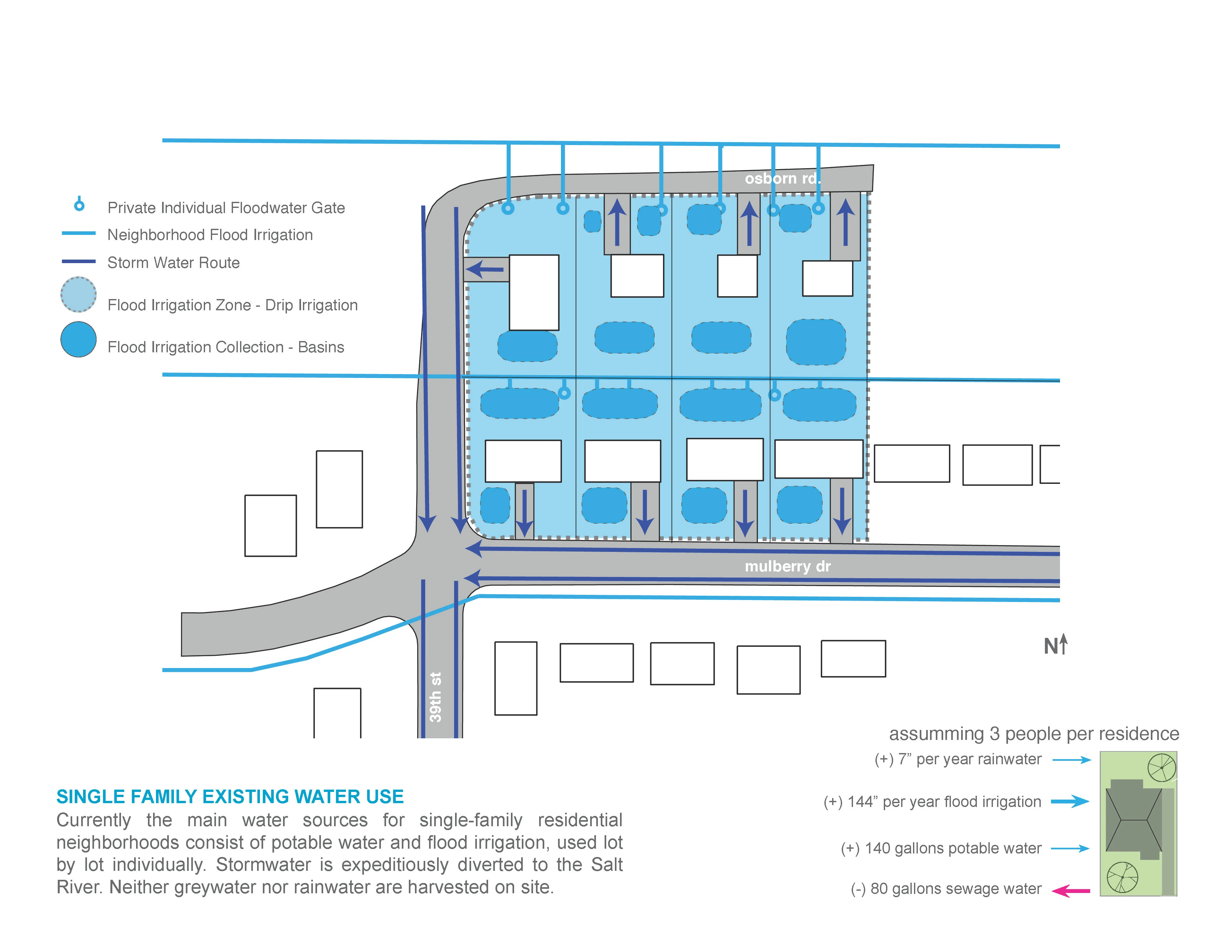
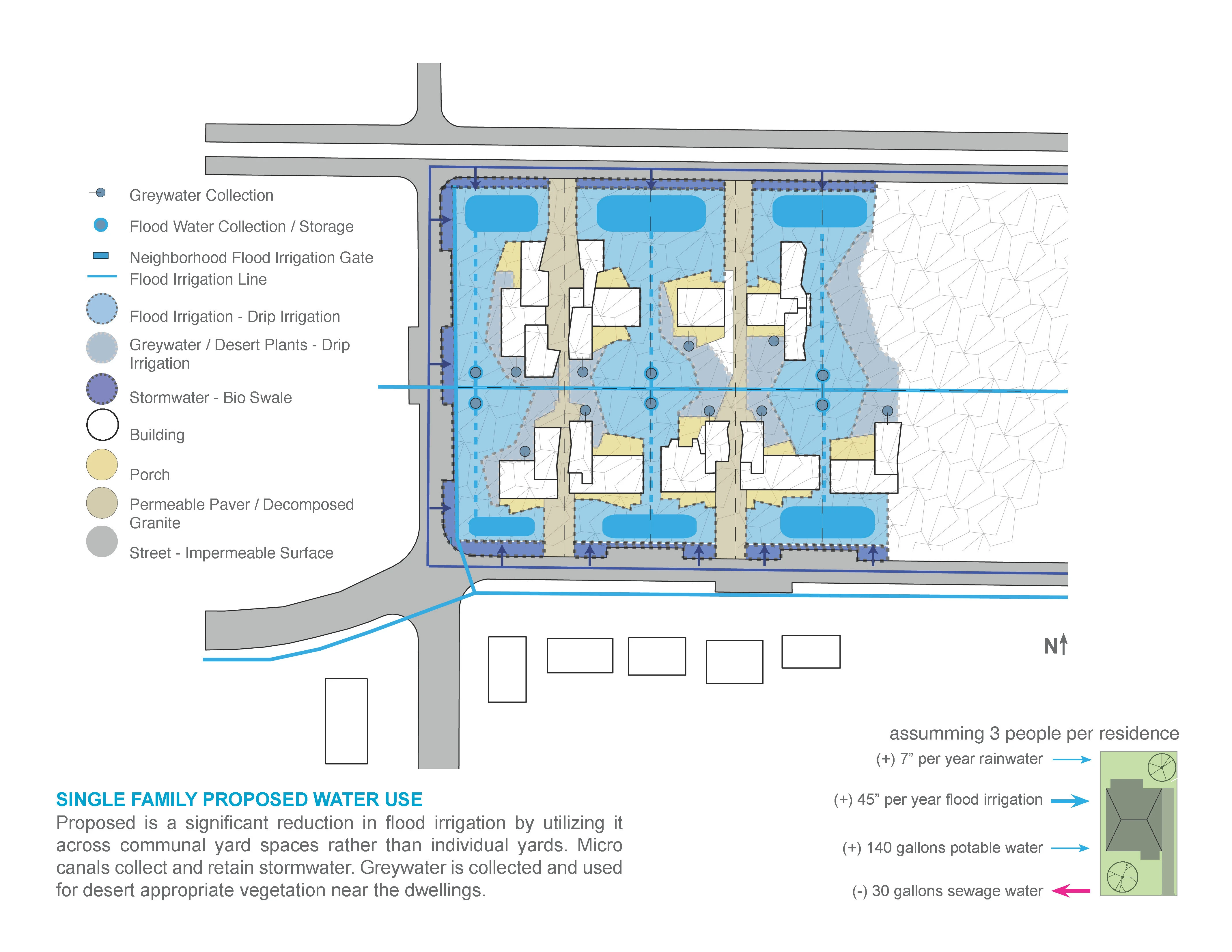
Flood irrigation is a process of moving water hundreds of miles across the state with high-energy using pumps and canals in order to irrigate agriculture and later treat for drinking water. With population growth, agriculture was phased out as suburban residential growth increased and the water rights were transferred from agriculture to municipal. While the Phoenix landscape and its needs have significantly changed in the last decades, the flood irrigation method used for agriculture remains the same. While that system was sufficient for its time, it is now a wasteful means of delivering water to individual residential lots to irrigate yards and to treatment centers for potable water. For example, the typically flood irrigated lawn in Phoenix receives about 144" a year in water. However, the current lawns and vegetated areas that use this flood irrigation really only need 42" / year and by reducing the amount of lawn and using arid tolerant vegetation, this need can also be diminished.
The average household uses 60% of its total water use outdoors and %40 indoors. All of the water indoors is currently treated as black water and discharged into sewage, yet much of that water (25% of the 40% used indoors) can be reused as grey water when properly collected from laundry, dishwater, showers, and faucets. By reusing grey water the average household could drop the use of potable water within a day from 100 gallons a day to only 30.
The miles of concrete in the Phoenix urban environment prohibit stormwater from properly percolating into the soil. Phoenix only receives 7.6" of rainwater per year and only 2 out of every 10 drops reach the soil to recharge the aquifer. Most water on the site hits impermeable pavement before being carried off site to be disposed of in the Salt River. We can potentially do more with less water by reusing it across residential plots before it’s lost to sewage lines and directed to the salt. By reusing our water we are essentially more water that can be used for the encouragement of more nature and cooler outdoor spaces.
Each yard, home, street and parking lot has the potential to do more for the environment and us. Each landscape typology seen across the valley can be rethought to better move and manage water for a more comfortable, dynamic, and sustainable city. The water strategies used in Phoenix neighborhoods should reflect the conditions of the given context. The landscape should be an expression of this condition, while comfortably accommodating a denser city fabric. This becomes an invaluable asset to any Phoenix community by creating more comfortable outdoor spaces, increasing property values, and adding needed character to the homogeny of the current suburban sprawl condition.
-
Advisors
Kim Steele; Joe Ewan, ASLA ; Heather Kinkade, ASLA; Angel TrevinoWater Research: The US Agency for International Development
Larson, E.K. The paradoxical ecology and management of water in the Phoenix, USA Metropolitan area.
Advertisement
Related Awards
Honor Award, Residential Design
Trinity Road
The story of Trinity Road unfolded over the past five years and is fundamentally a story of fire resilience and succession of the surrounding forest. The garden was designed and the project considered completed when two wildfires ravaged the hills immediately surrounding the site. After the fires the landscape design team was brought in to create a new vision for the site that knit together the original planting and a new series of paths and gardens.