
.webp?language=en-US)


Half-Mile, Hand-Built Line: Berkshire Boardwalk
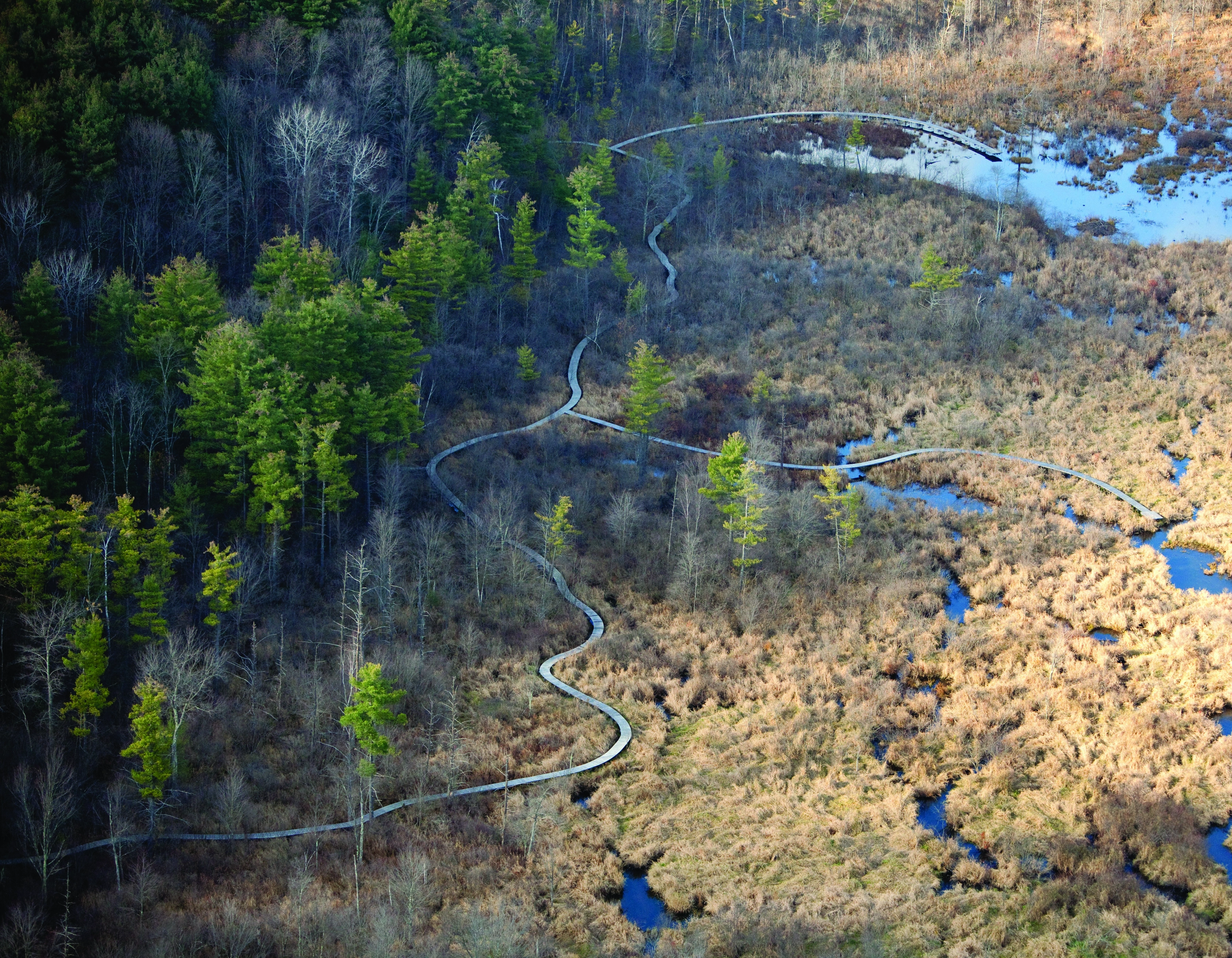
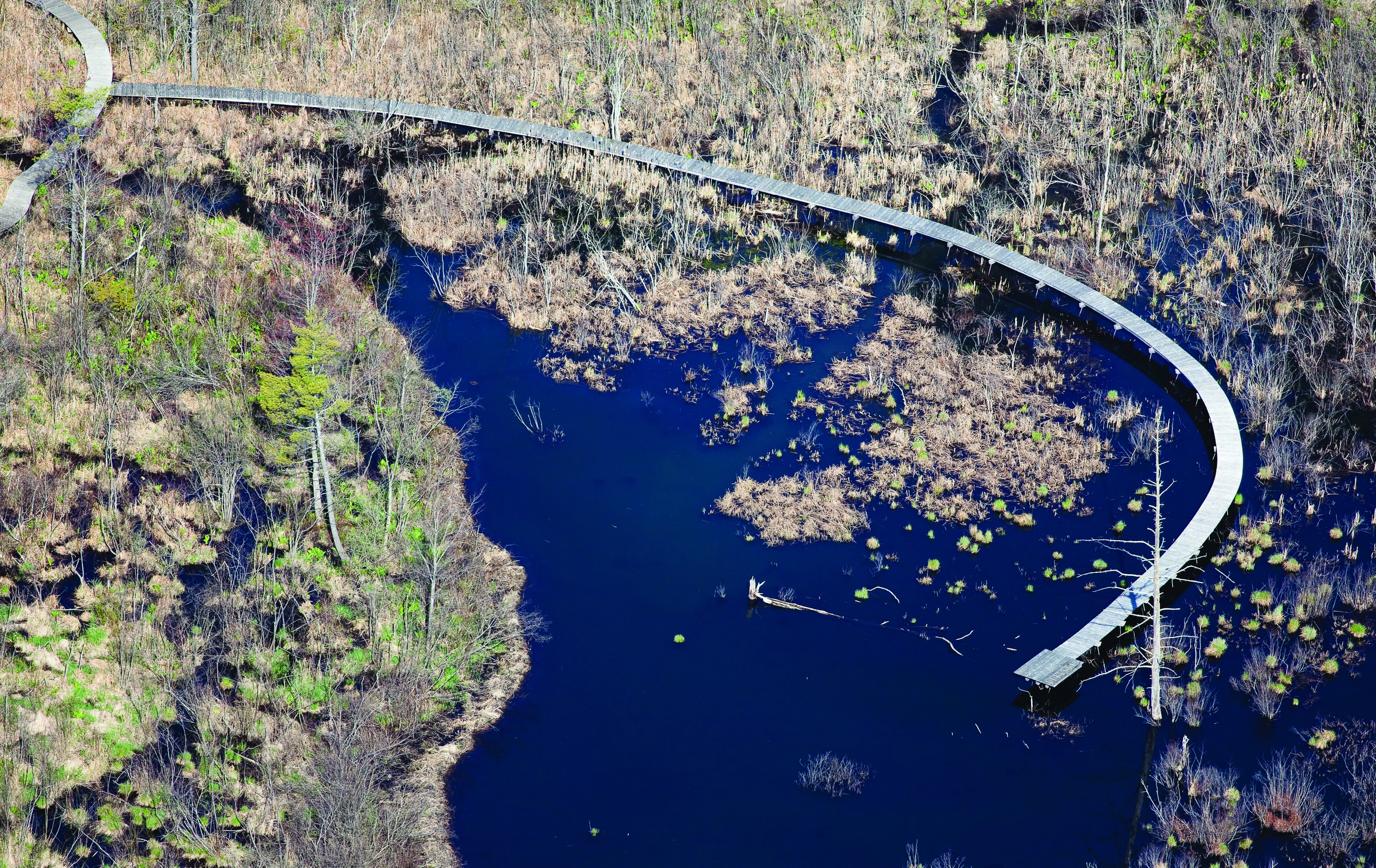
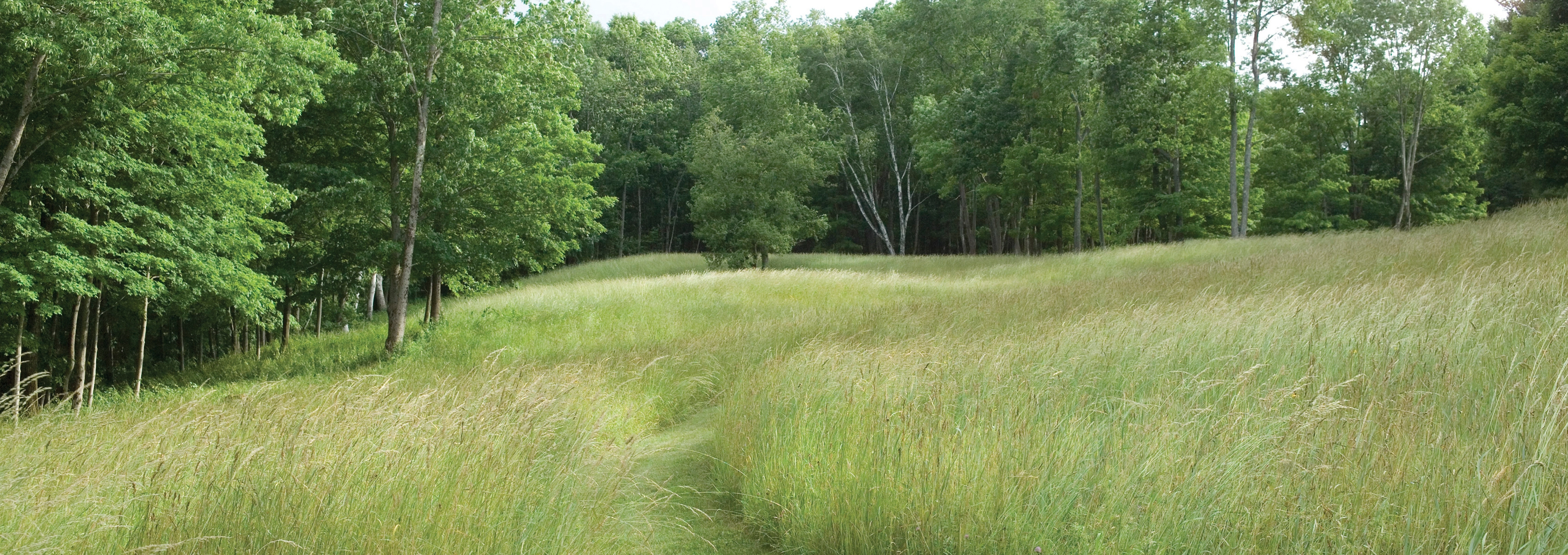
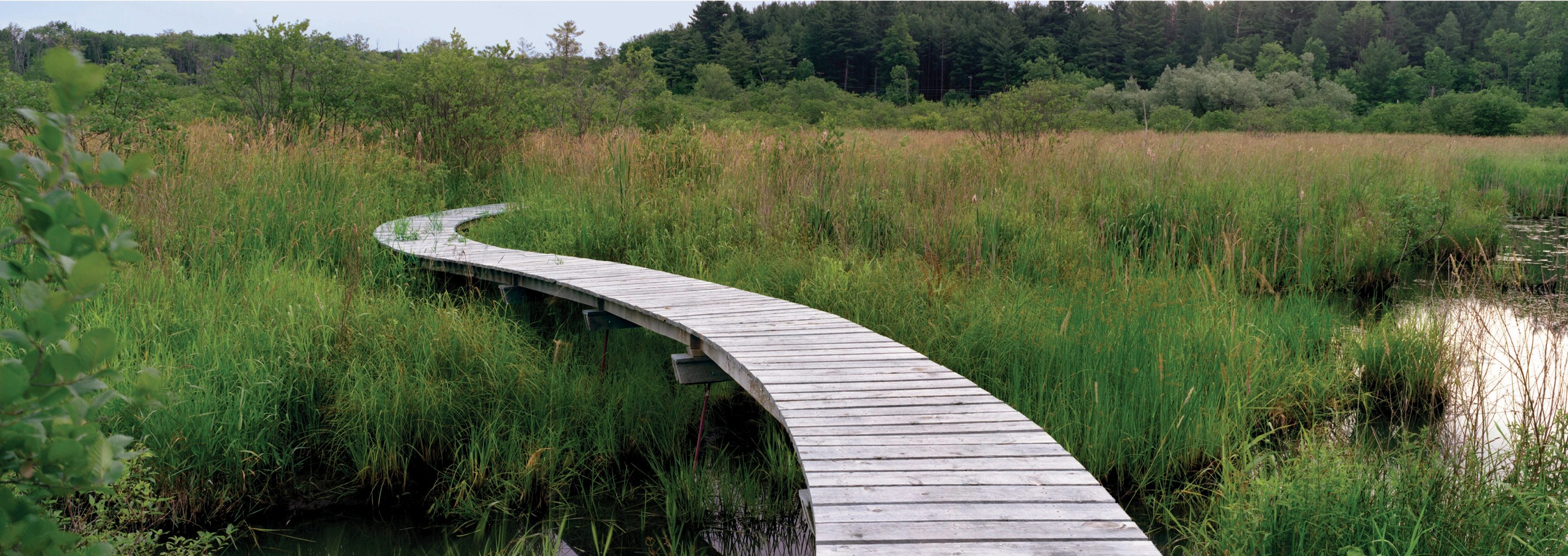
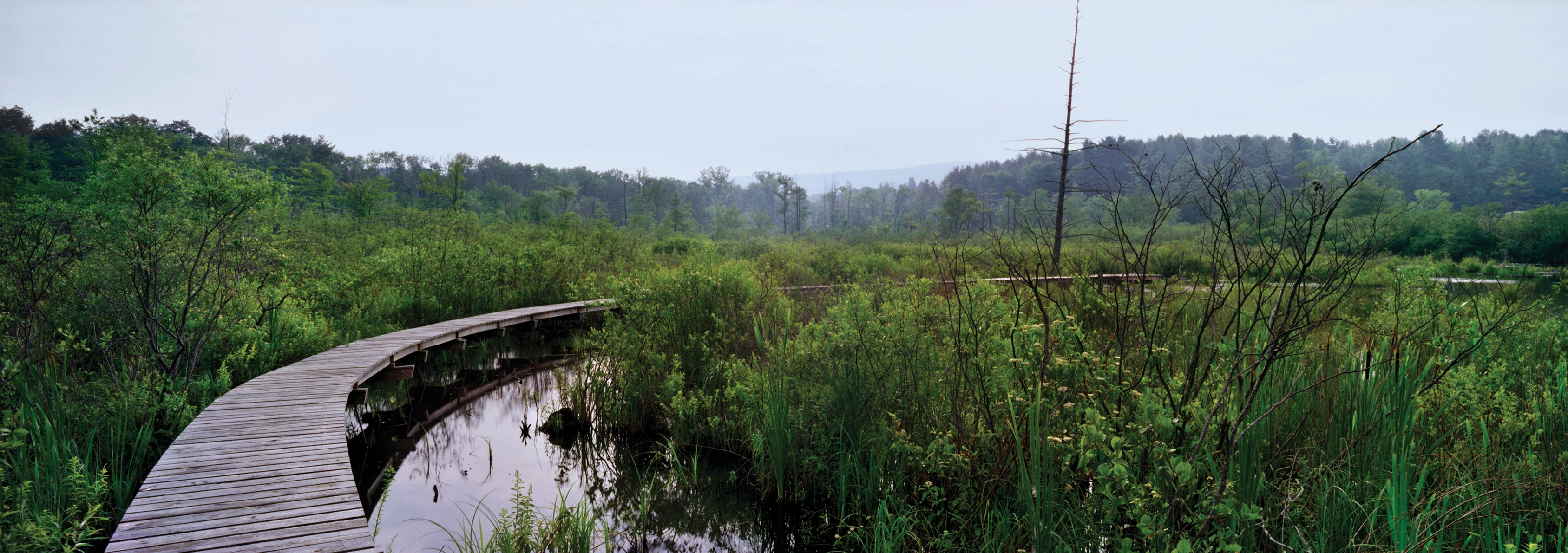
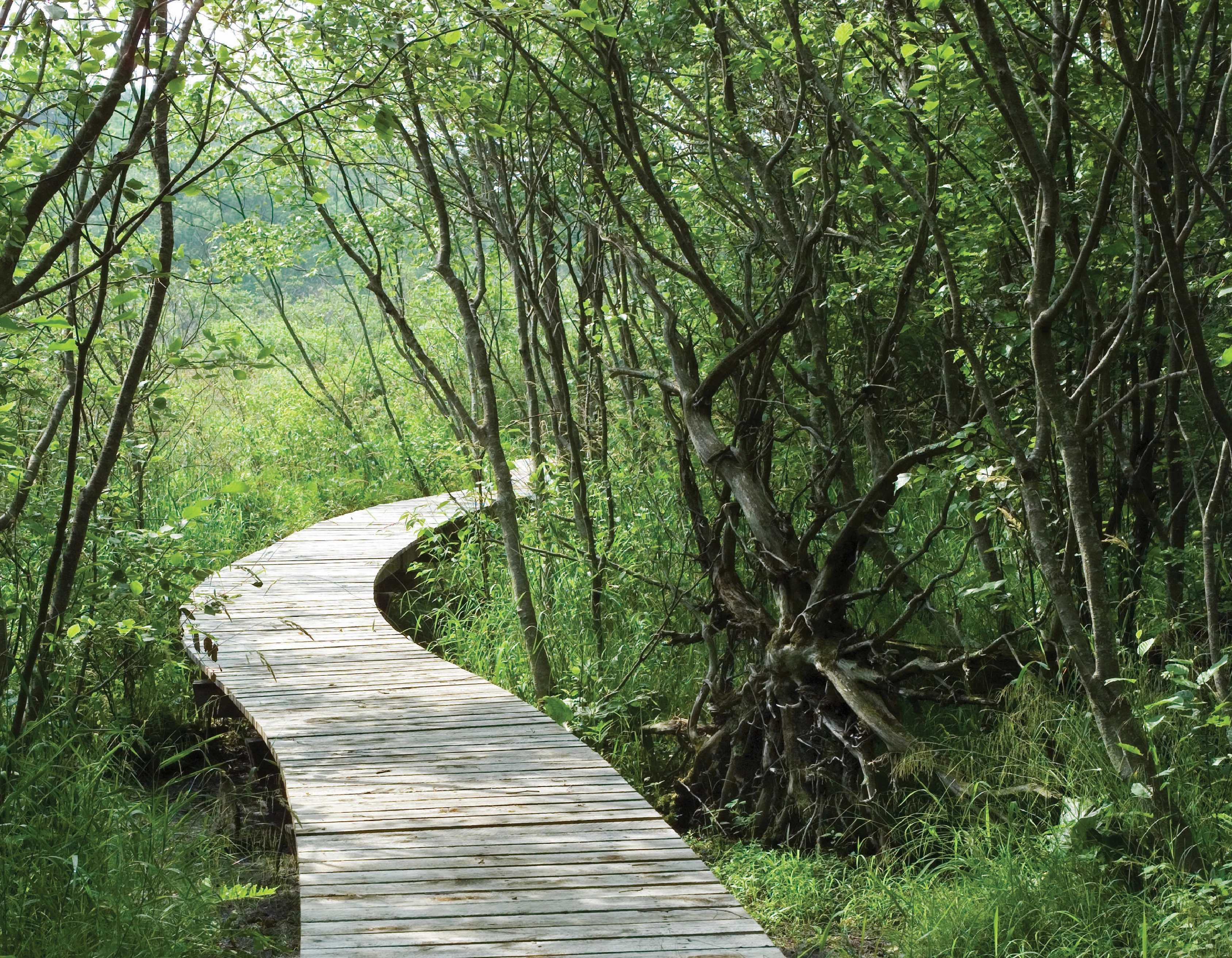
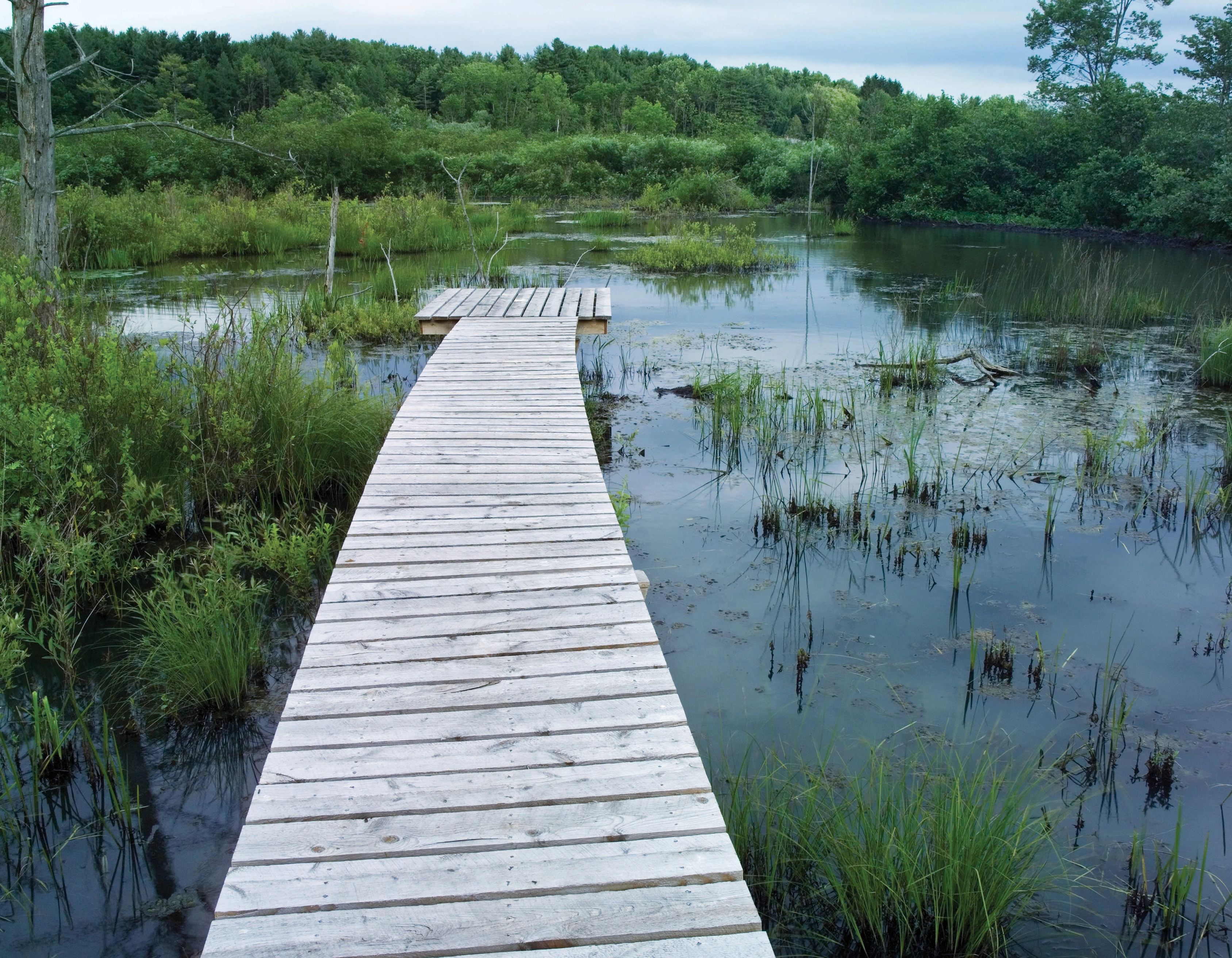
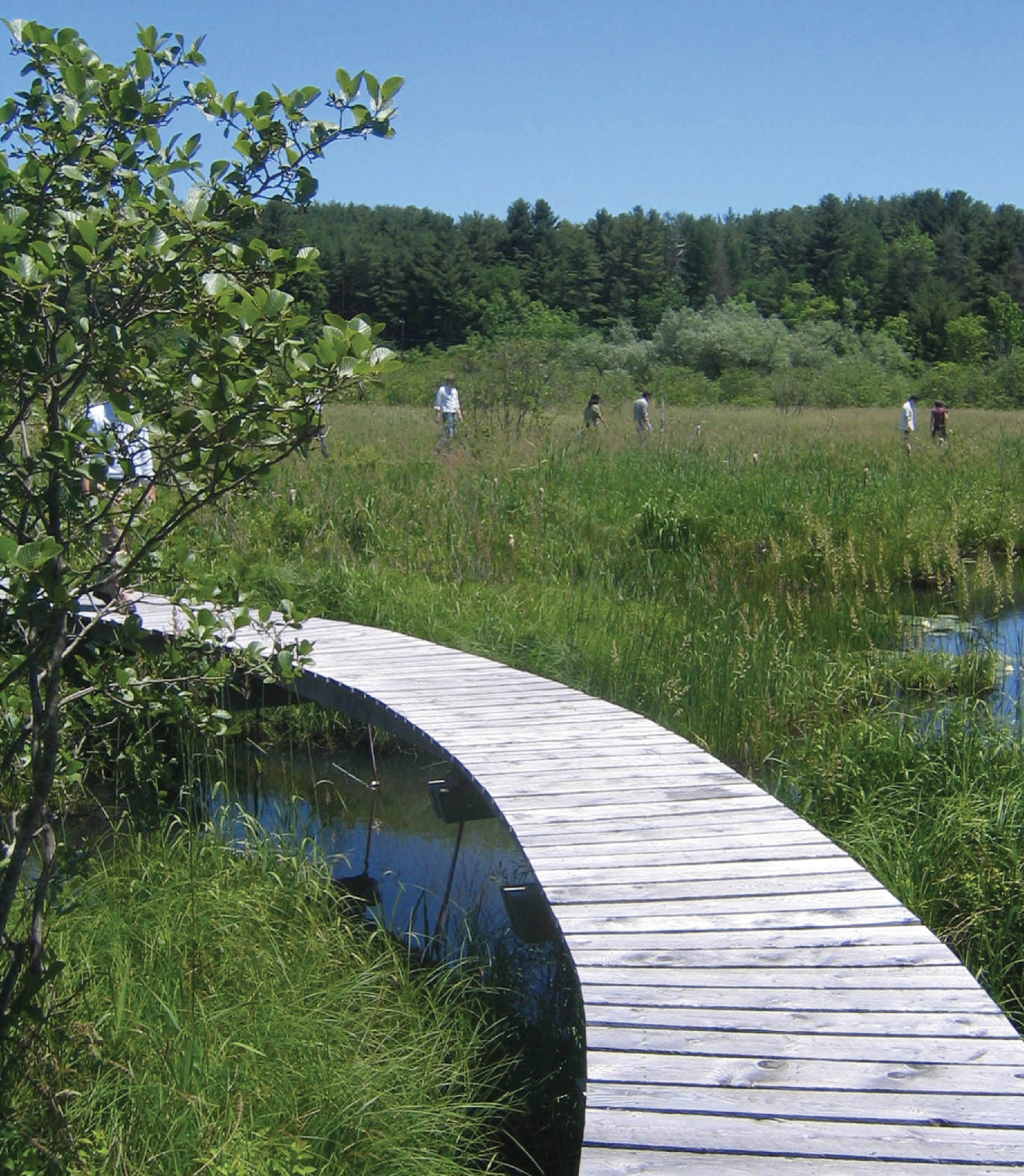
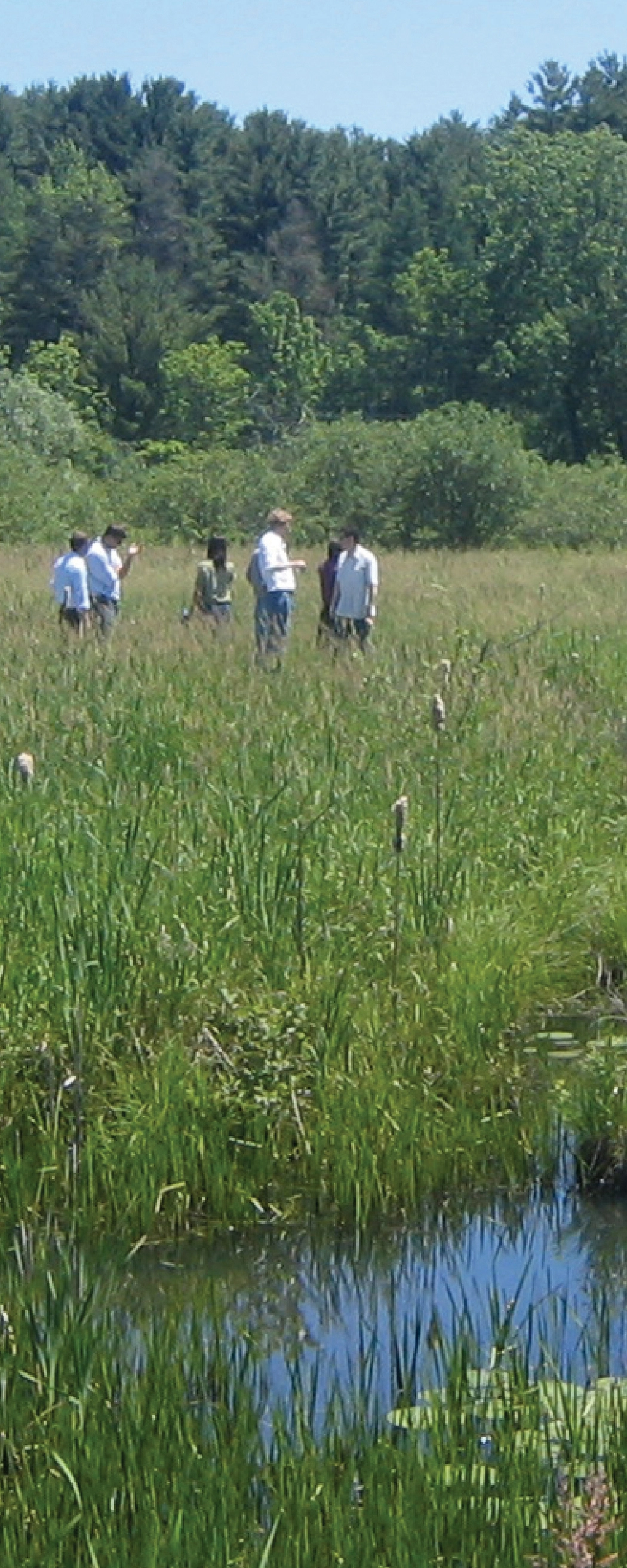
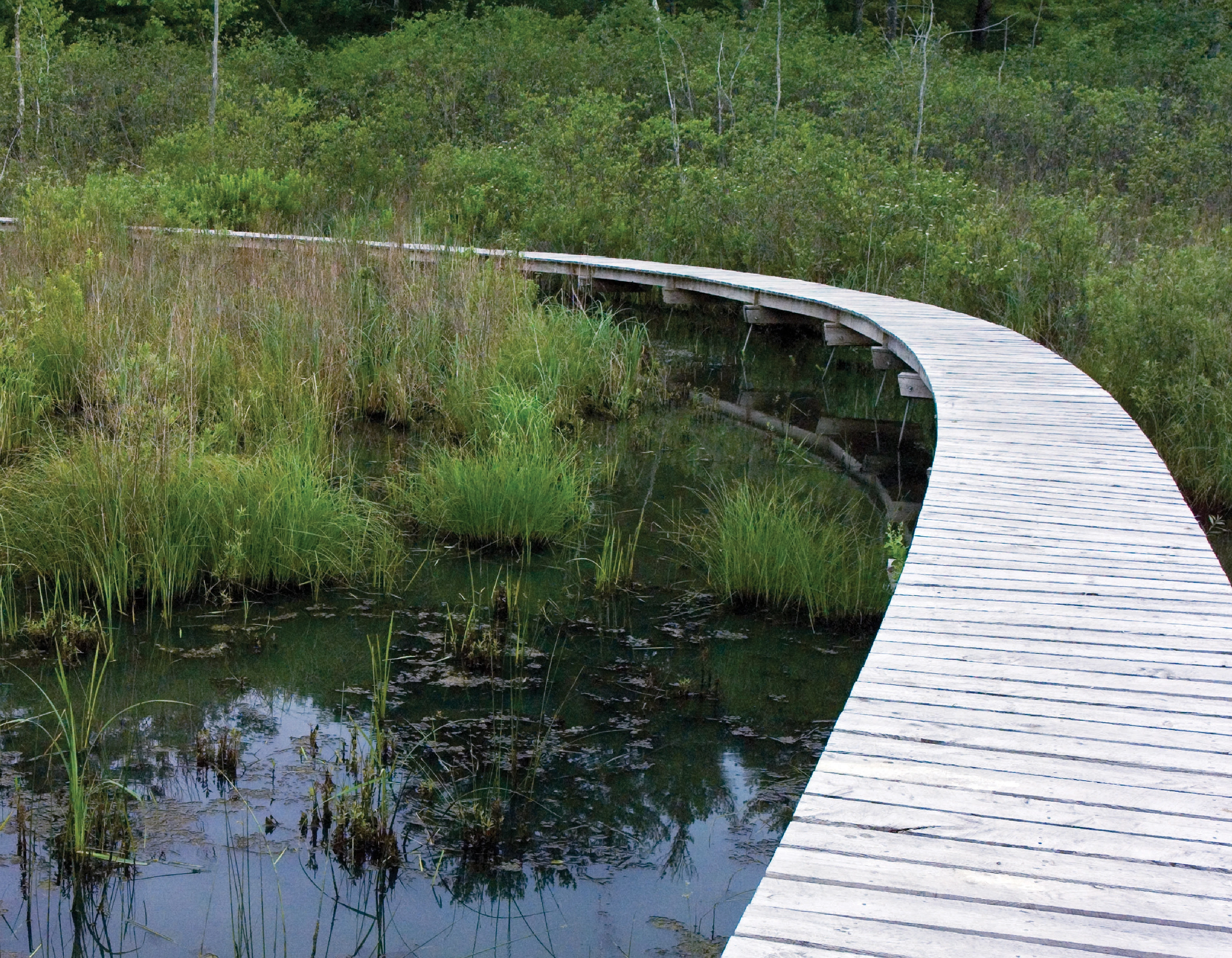
Beautifully composed. This extends the definition of the garden path. It took extensive collaboration to understand the eco-habitat to accomplish this project. The walk is revised to reduce shading above the water level to allow light for the habitat. It’s fabulous that someone wants to go into this area and embrace it. Bravo to the client to invest in something so tied to nature.
Awards Jury
-
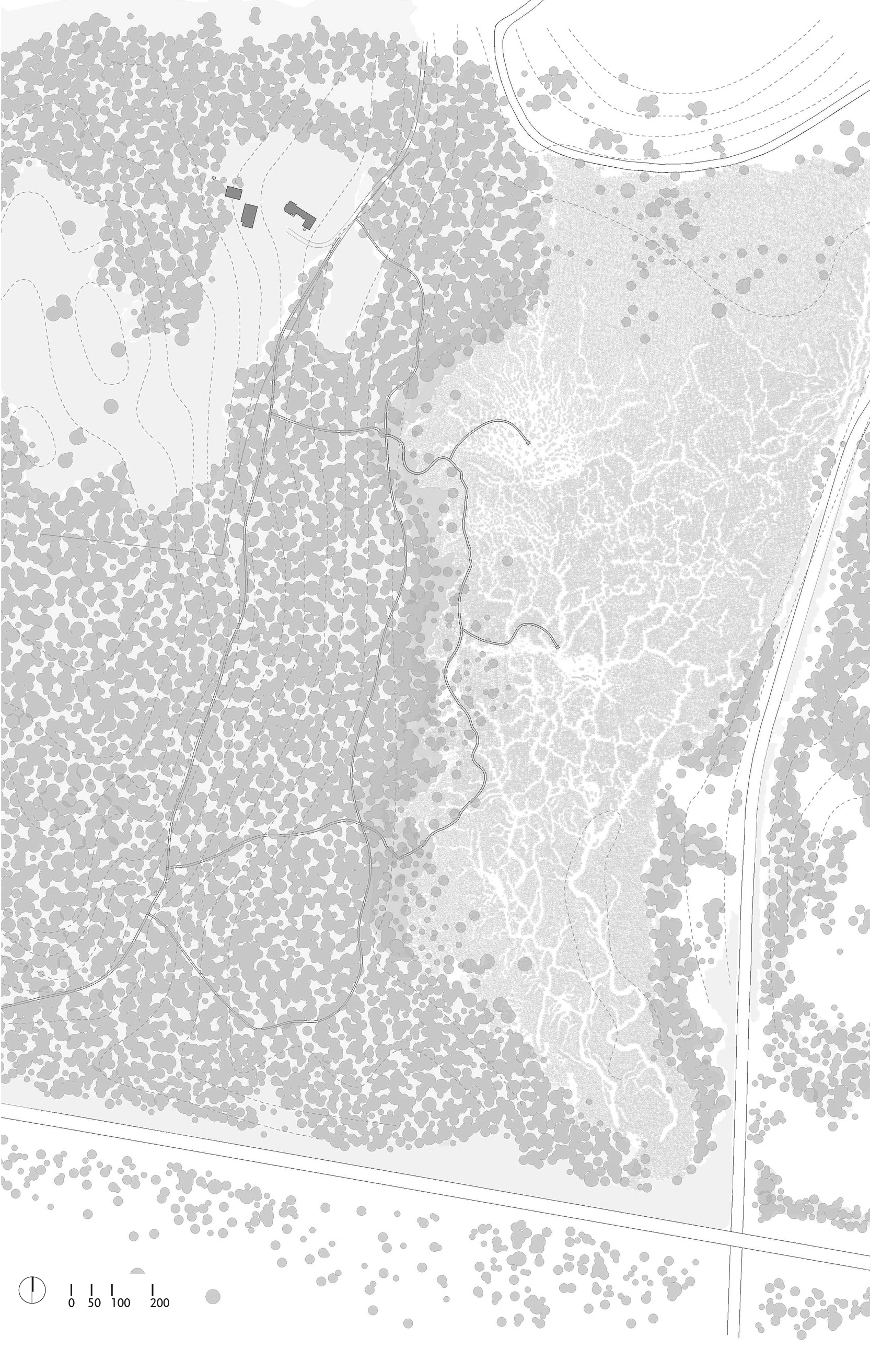
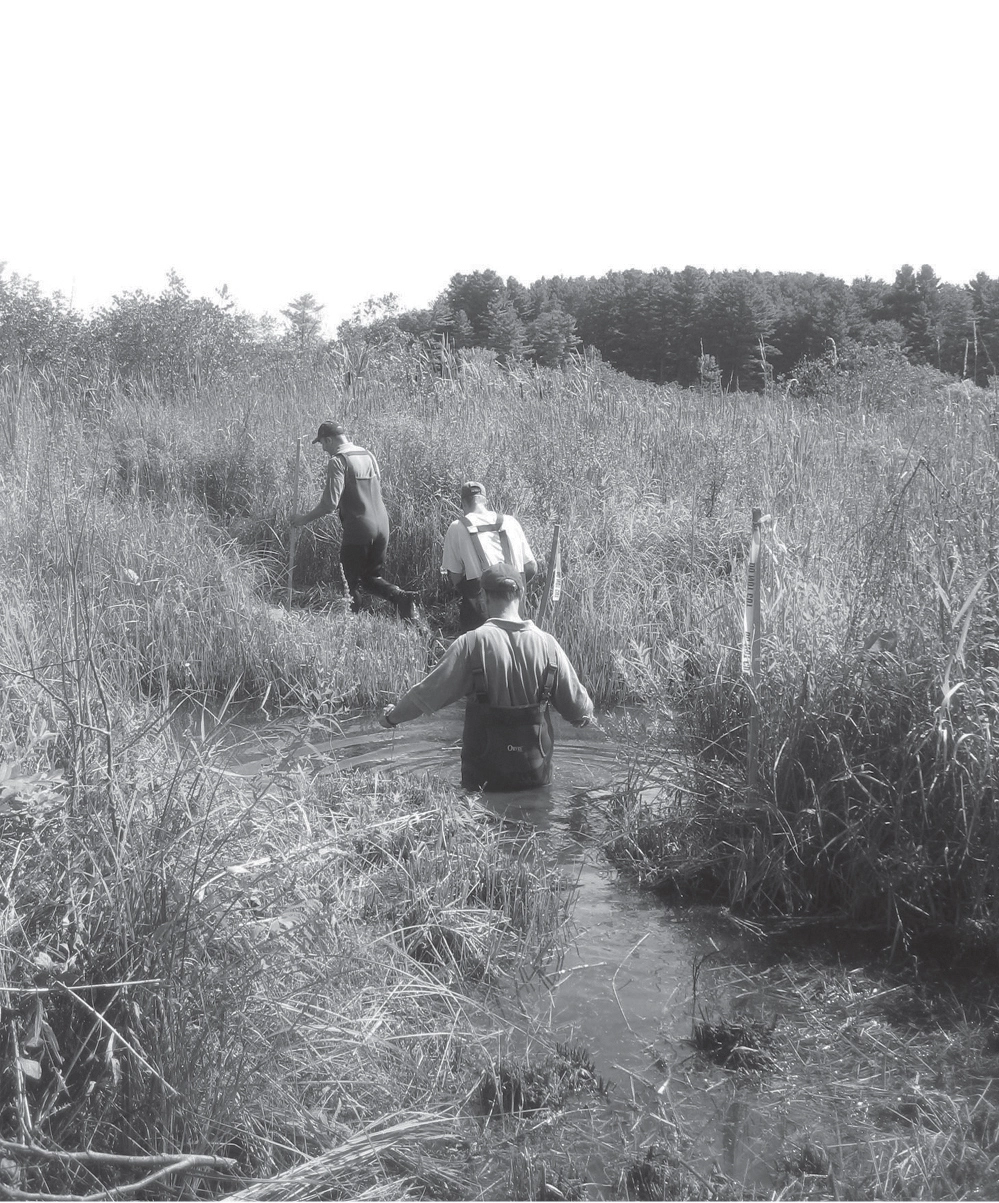
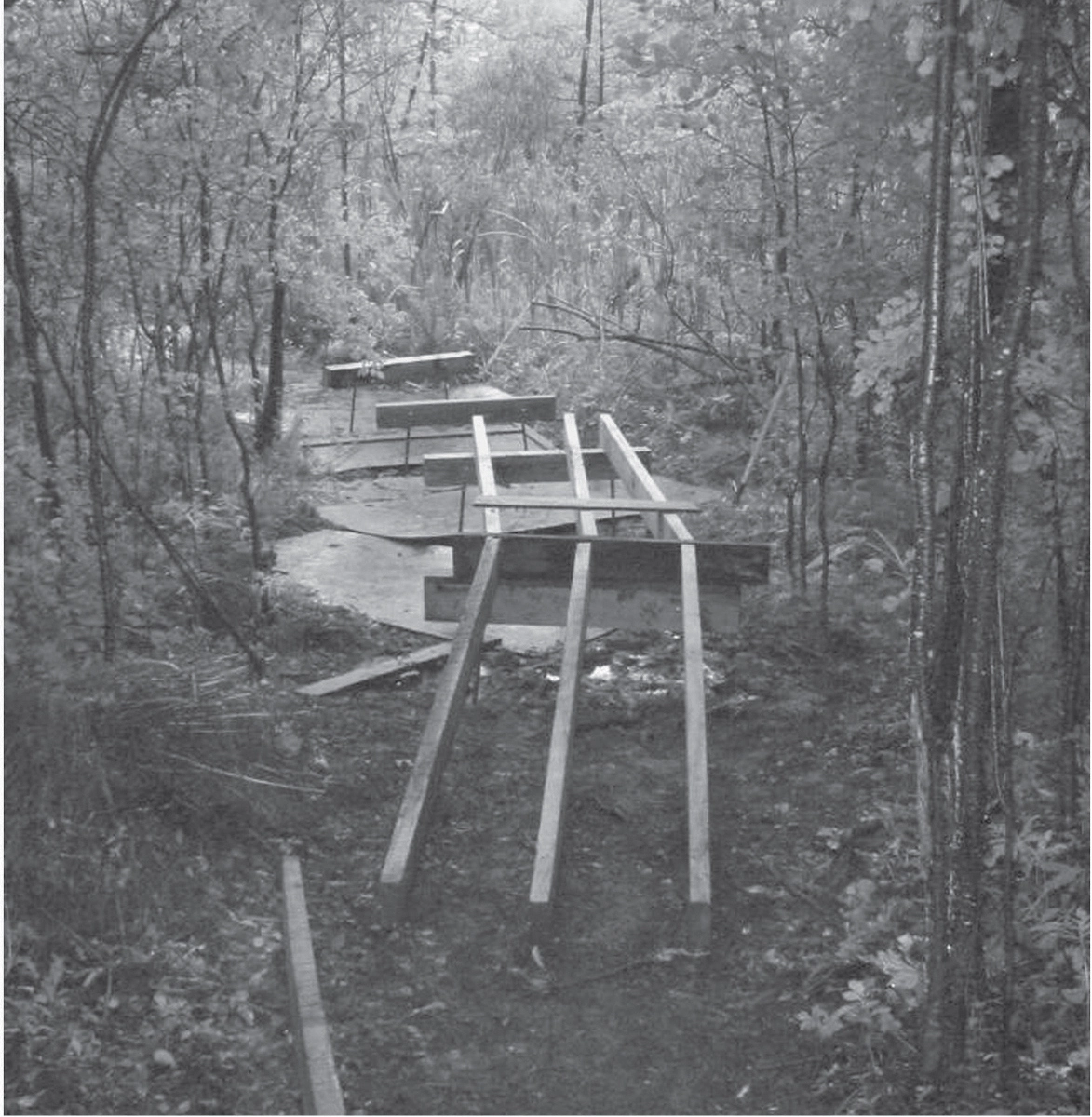
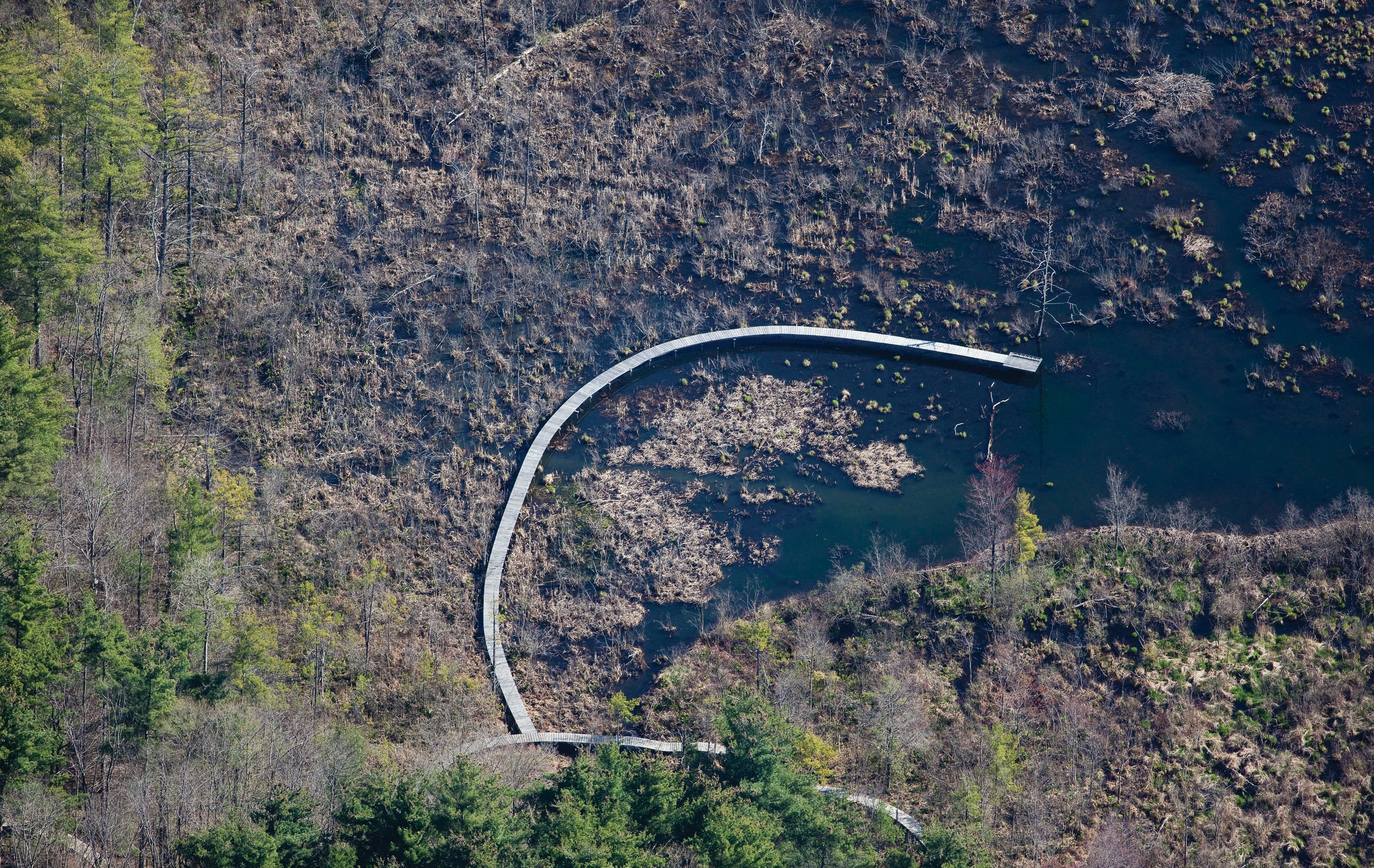
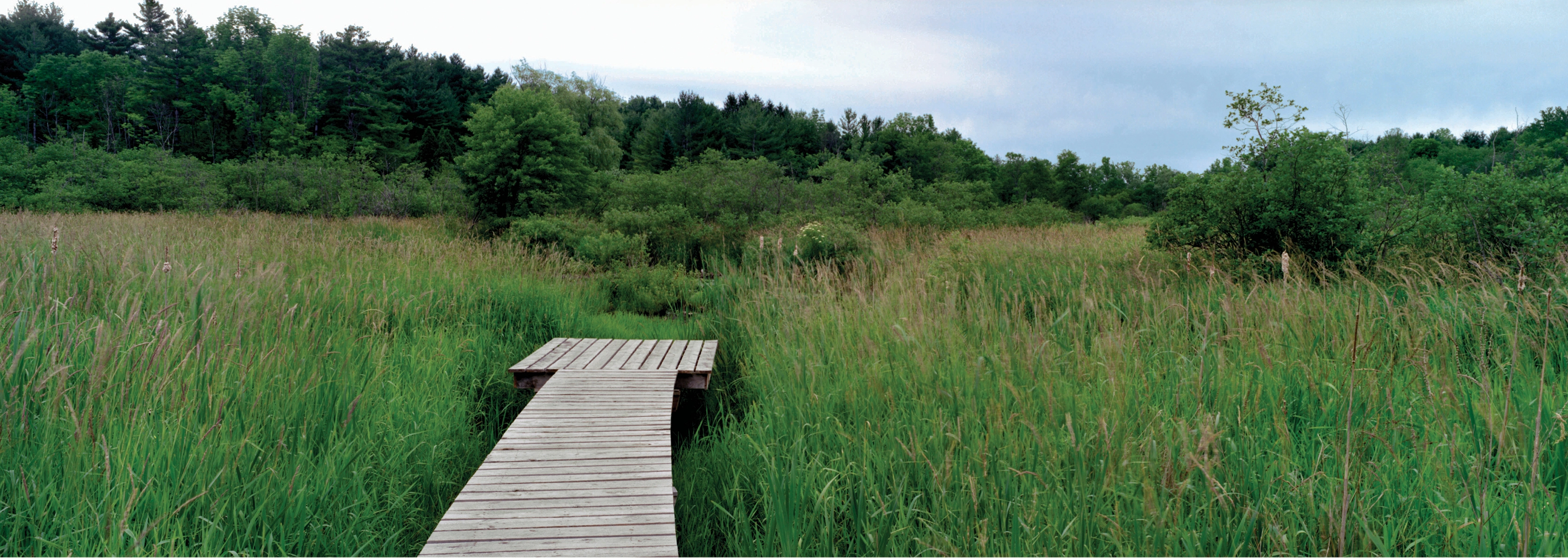
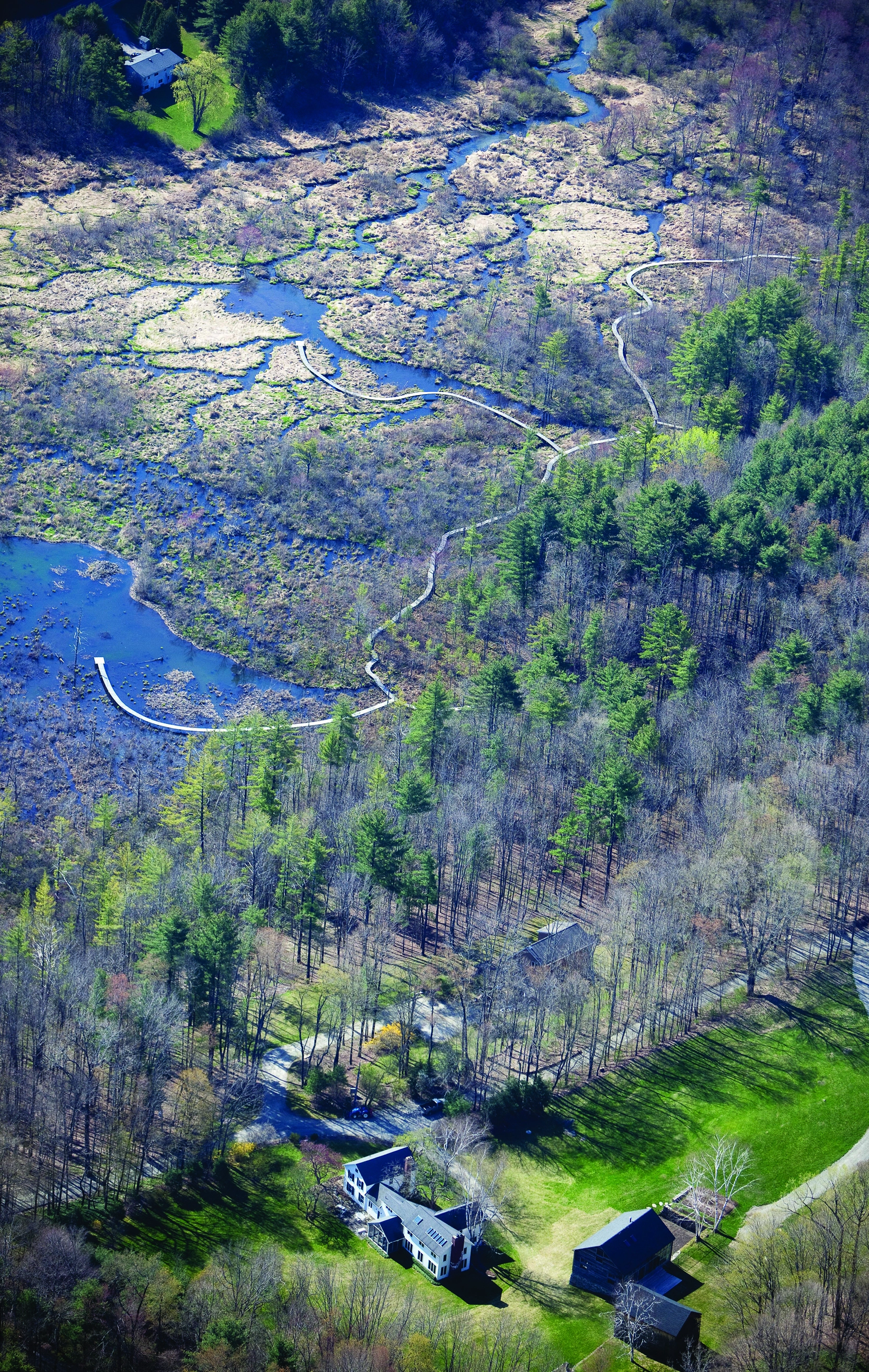
The owners of this new 2,700 foot-long boardwalk describe the work as "a remarkable discovery" of a place that was previously unreachable and unknowable. Threading a narrow path through the edge of a 50-acre wetland adjacent to their home, a team of carpenters assembled the boardwalk completely by hand, in the water, without machines. The result has been deemed a successful habitat enhancement and an exemplary permitting precedent for the town. For the owners it is a lasting and unforgettable experience in all seasons.
-
In the Wetland
The landscape architect was hired to assist the owners in their efforts toward greater stewardship of their property—primarily in the regrowth forest that covers 70% of the land. Though the owners were acutely aware of the larger benefits of land drainage, storage, and habitat associated with the wet potions of their landholding, they could not imagine the experience of being in the middle of the marsh—it was completely inaccessible. As part of ongoing efforts in woodlot management, edge restoration, and meadow extension, the landscape architect proposed to extend a circuit trail along the upland edge and then out over the water. The design team engaged a nine-month long review process with conservation biologists, permit specialists, contractors, the property manager, and conservation commissioners to ensure adequate protection of the resource and mitigation of limited construction disturbance. The case for Conservation Commission approval hinged on careful evaluation of hydrologic and biotic characteristics of the site; the use of low-impact technologies in construction; and specific design characteristics devised to enhance wetland habitat.
Sustainable, Lyrical Beauty
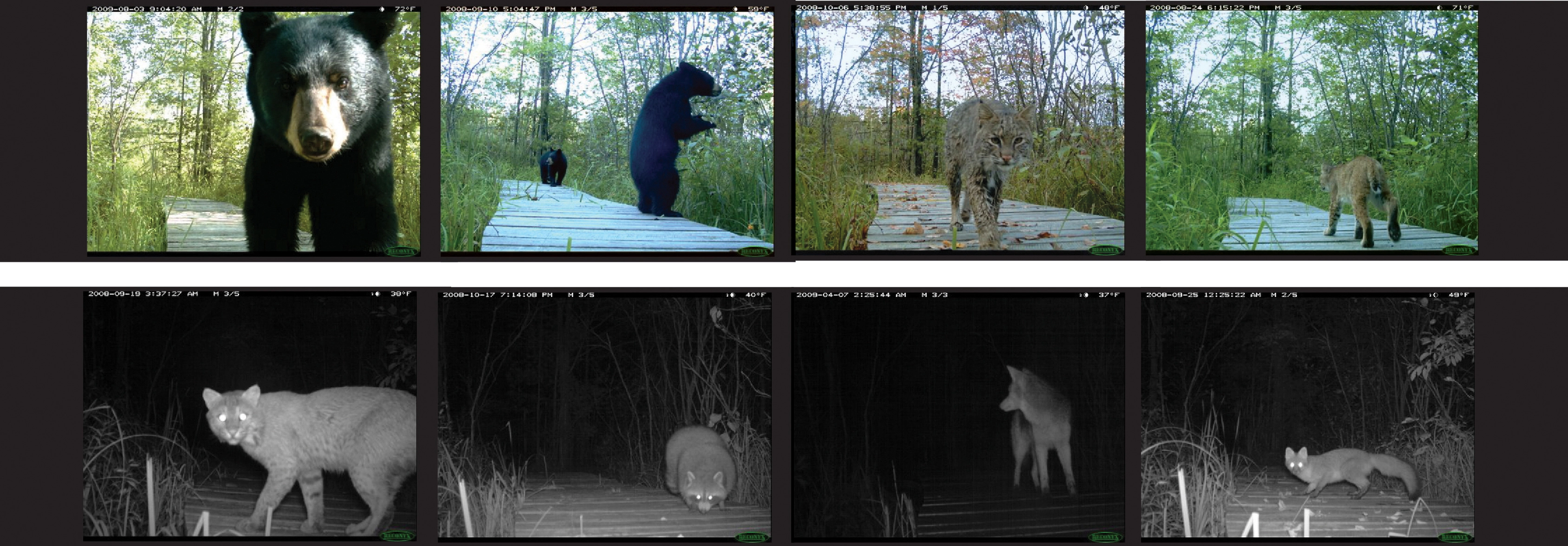
Path alignments were studied in plan from air Images and then thoroughly tuned on site to navigate among trees and snags, woody thickets, beaver impoundments, significant perennial stream courses, and wildlife corridors. The project included removal of invasive species; more than 20% of cover in the immediate project area was selectively removed to favor increases in native species. Conservation commissioners and professional permitting reviewers examined the site during both dry-weather fall conditions and more active spring flows, surveying the entire stakeout in hip waders and formulating the basis for their Order of Conditions on site. Since completion, beneficial plant communities including speckled alder and silky dogwood have responded favorably, improving shade cover and food sources. A corresponding increase in wildlife has been observed.
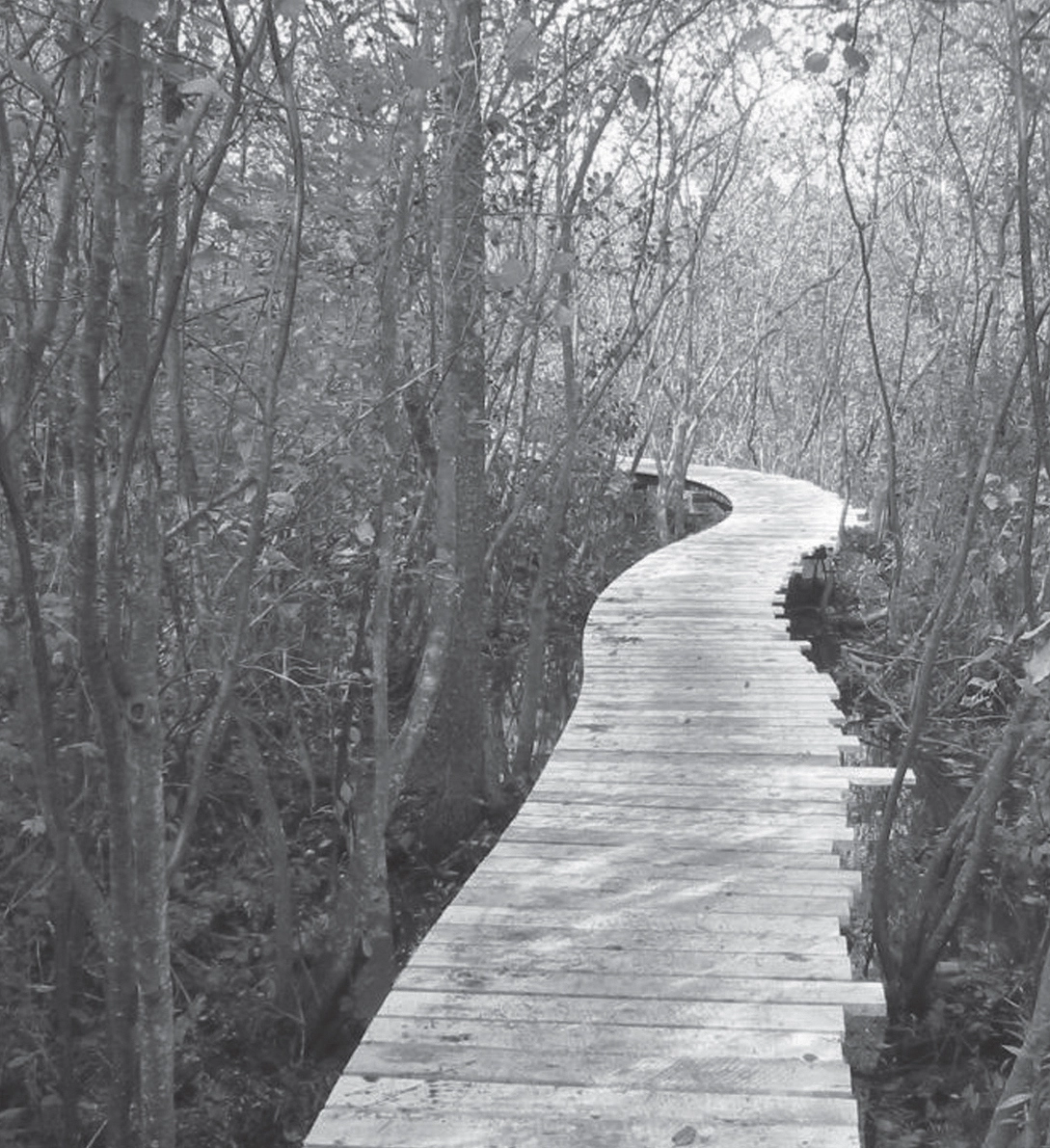
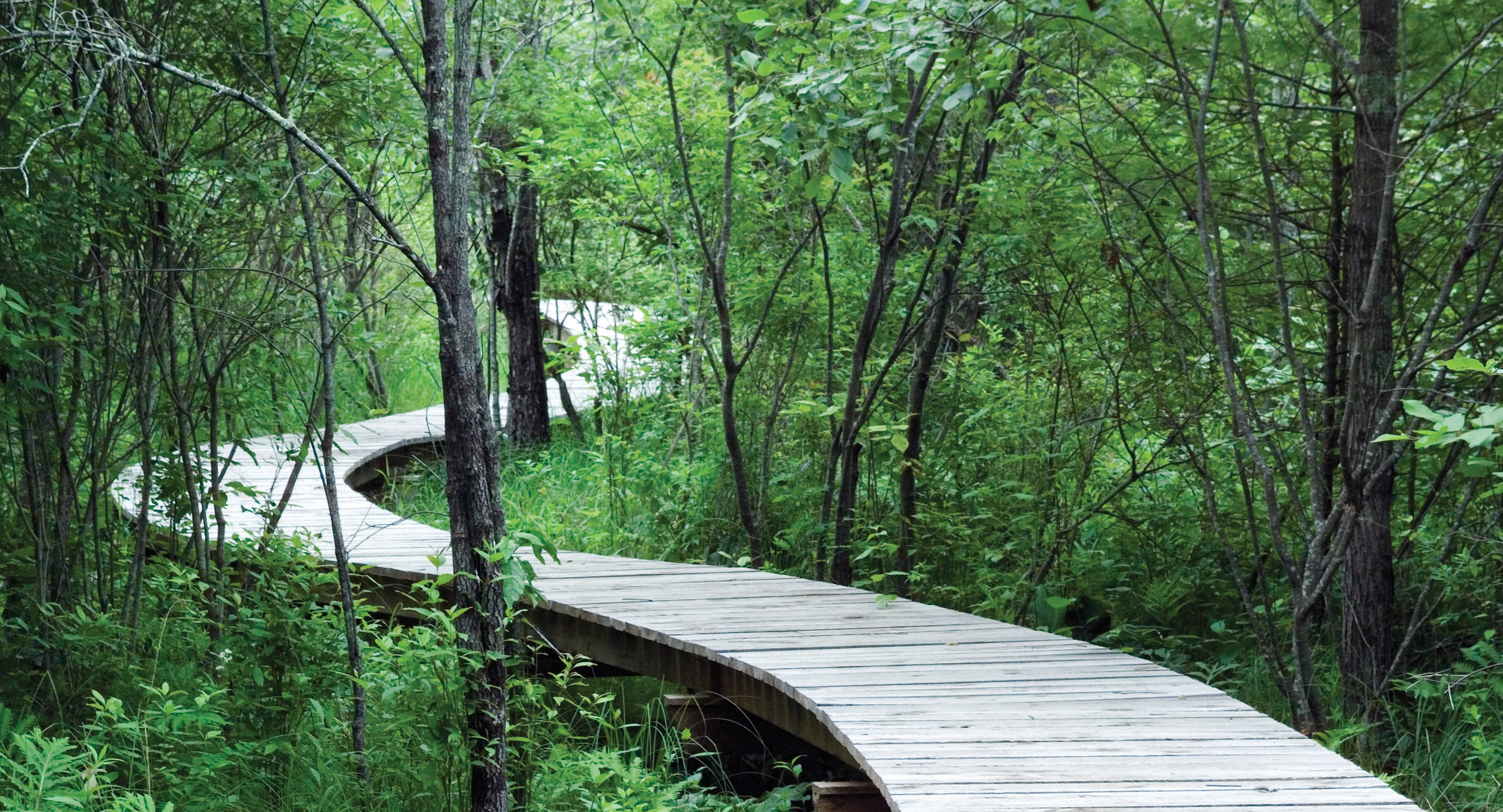
Experience is dynamic and varied. The walk departs from the upland path at three connecting points and becomes a series of contrasts among intimate, closed-in woody thickets, emergent marsh grasslands, and larger areas of open running water. By gaining unencumbered views on two platforms in the open waters, one comprehends the larger geographic context of surrounding forest and the peaks of the Berkshire hills.
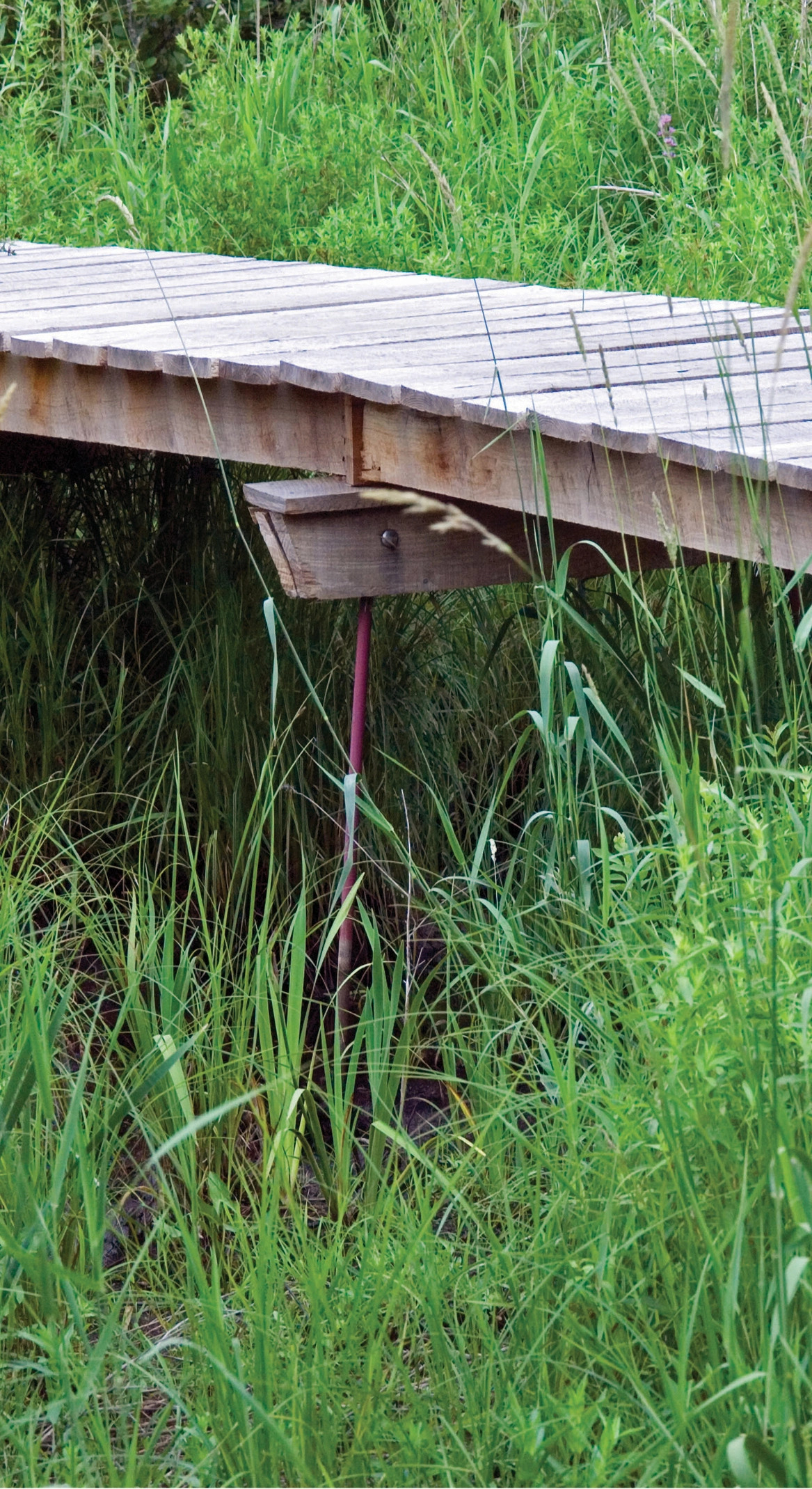
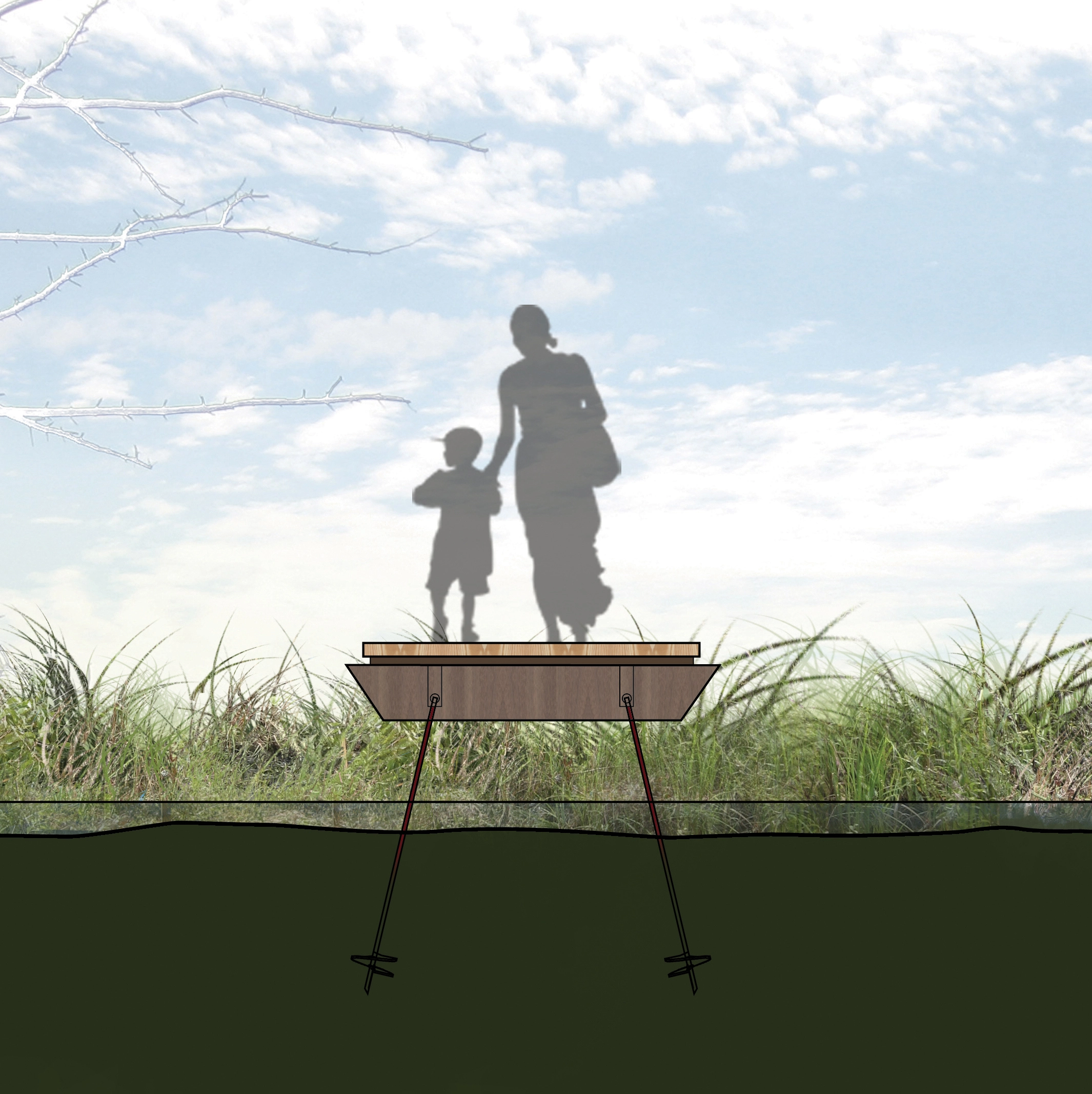
Gentle vertical rises in the walk surface up to 24 inches in height were devised to reduce shading over specific aquatic habitat areas. The builders hauled materials in by hand and on floats. They drove helical support piles into the subsoil with crowbars, containing debris with silt curtains and shovels. The scheme employed locally-milled hemlock planking (5,000 pieces) for the decking surface, chosen for its rustic, raised grain and ease of cutting in the field—there are many hundreds of radial cuts to accommodate the layout as it curves and bends around trees, snags, and thickets. Disturbance was limited to within feet or even inches of the walk. Emergent vegetation quickly recovered during the first season after completion.
Object Lessons
The project outcome demonstrates two notable achievements. First, in view of legislated wetlands protection, it remains an example of a participatory process that resulted in active stewardship of a wetland resource among professionals, conservation officials, owners, and contractors. Second, the project created a structure for nature observation and contemplation that is equally powerful in its intimacy as in its expansiveness and drama.
-
Lead Designer: Reed Hilderbrand
Pricipal in Charge: Gary R. Hilderbrand, FASLA;Project Manager: Gen Valentine, ASLA;
Project Designer: Ryan Wampler, ASLA
Civil, Environmental Engineering: Foresight Land Services
Wildlife Habitat Evaluation: Bayside Environmental Consultants
Structural Engineer: Richmond So Engineers
Contractor: Webster Ingersoll
-
Behlen Manufacturing Co.
Foundations/Anchor Stakes
Advertisement
Related Awards
Honor Award, Residential Design
Trinity Road
The story of Trinity Road unfolded over the past five years and is fundamentally a story of fire resilience and succession of the surrounding forest. The garden was designed and the project considered completed when two wildfires ravaged the hills immediately surrounding the site. After the fires the landscape design team was brought in to create a new vision for the site that knit together the original planting and a new series of paths and gardens.