
.webp?language=en-US)


A Farm at Little Compton
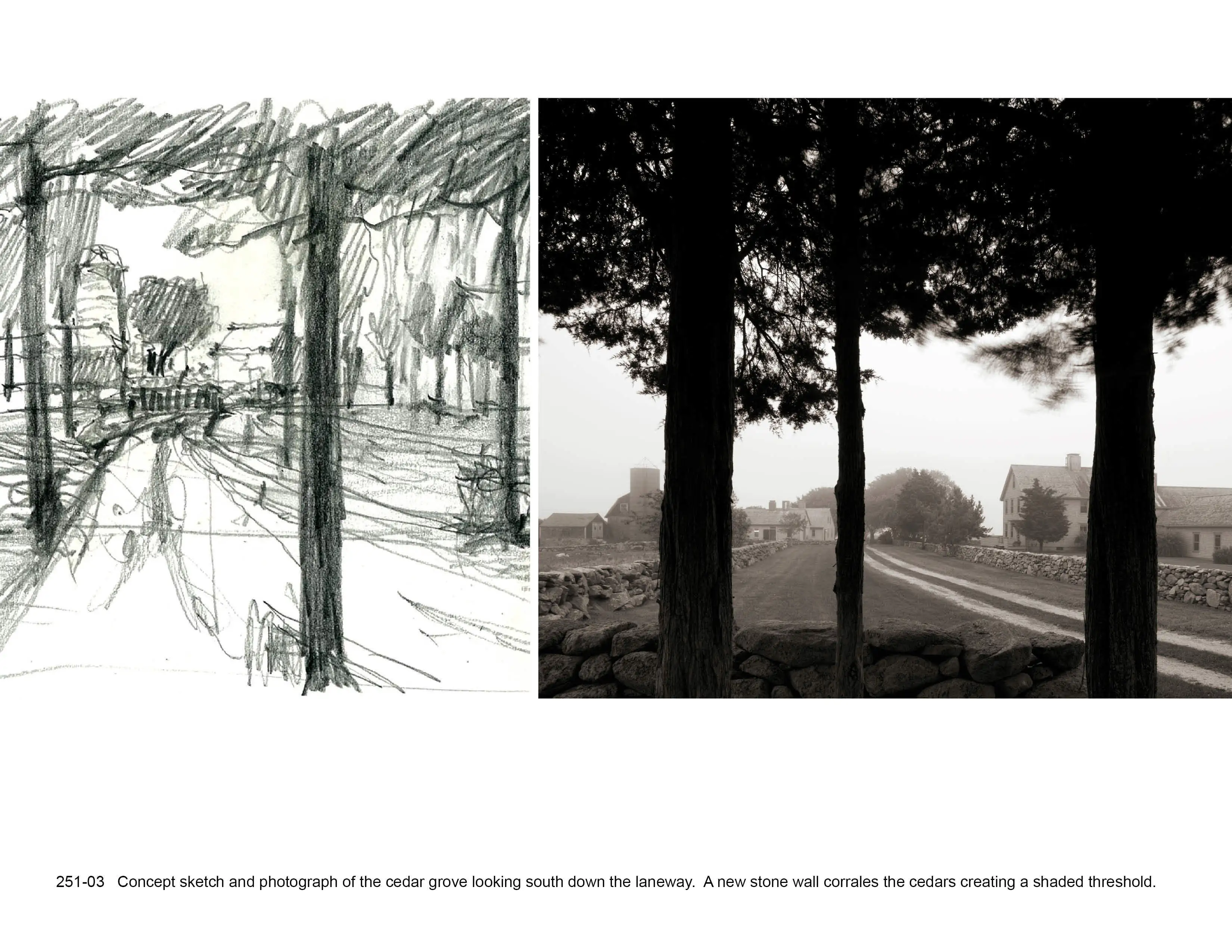
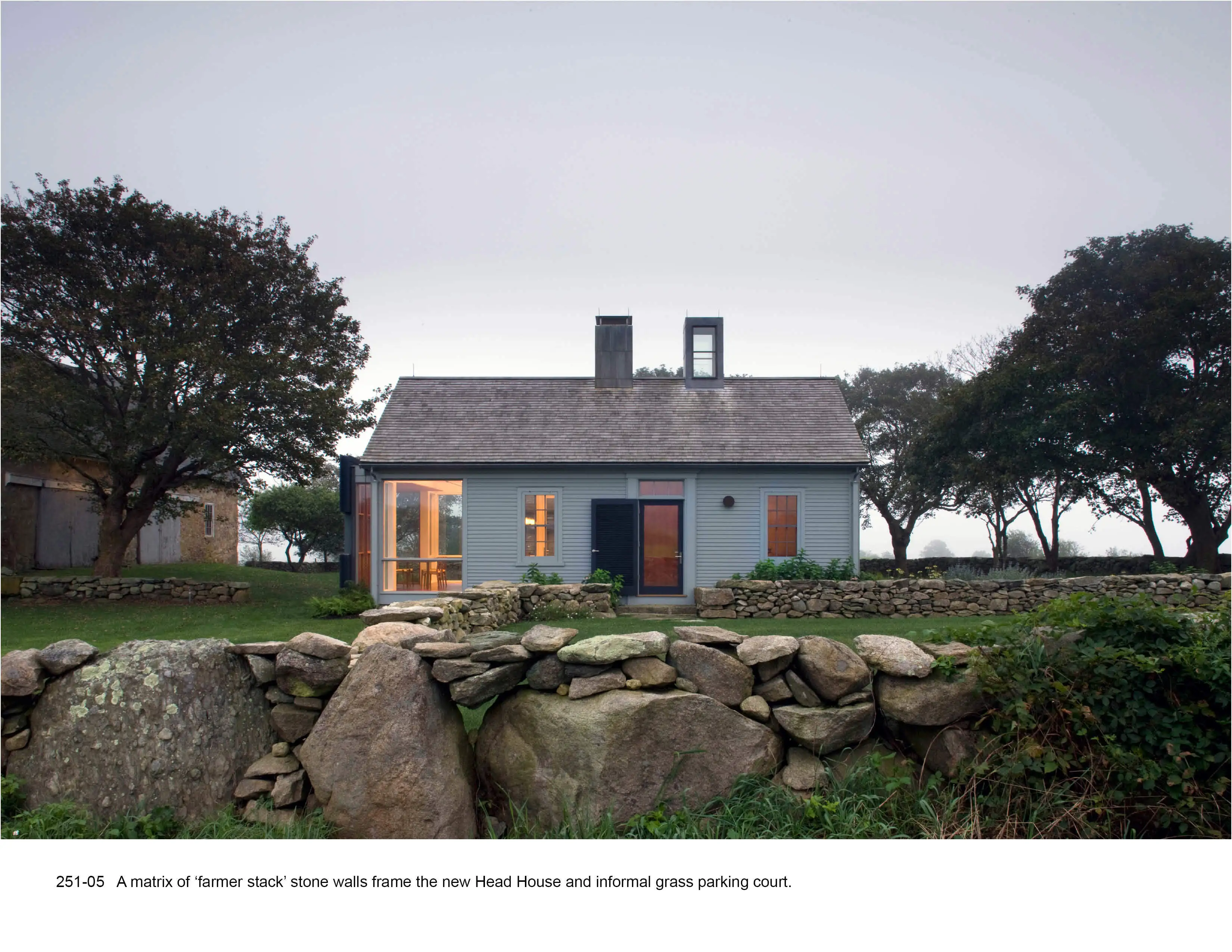
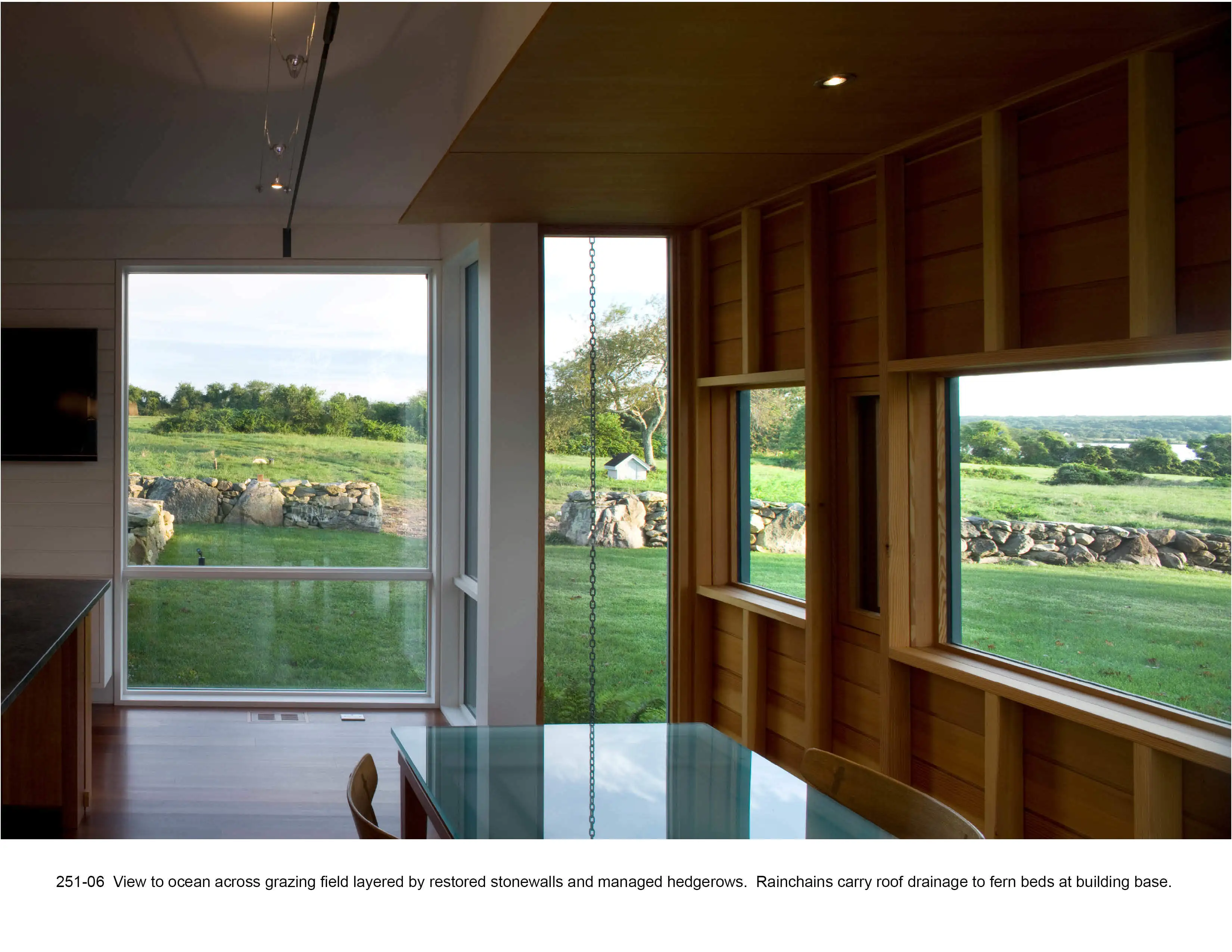
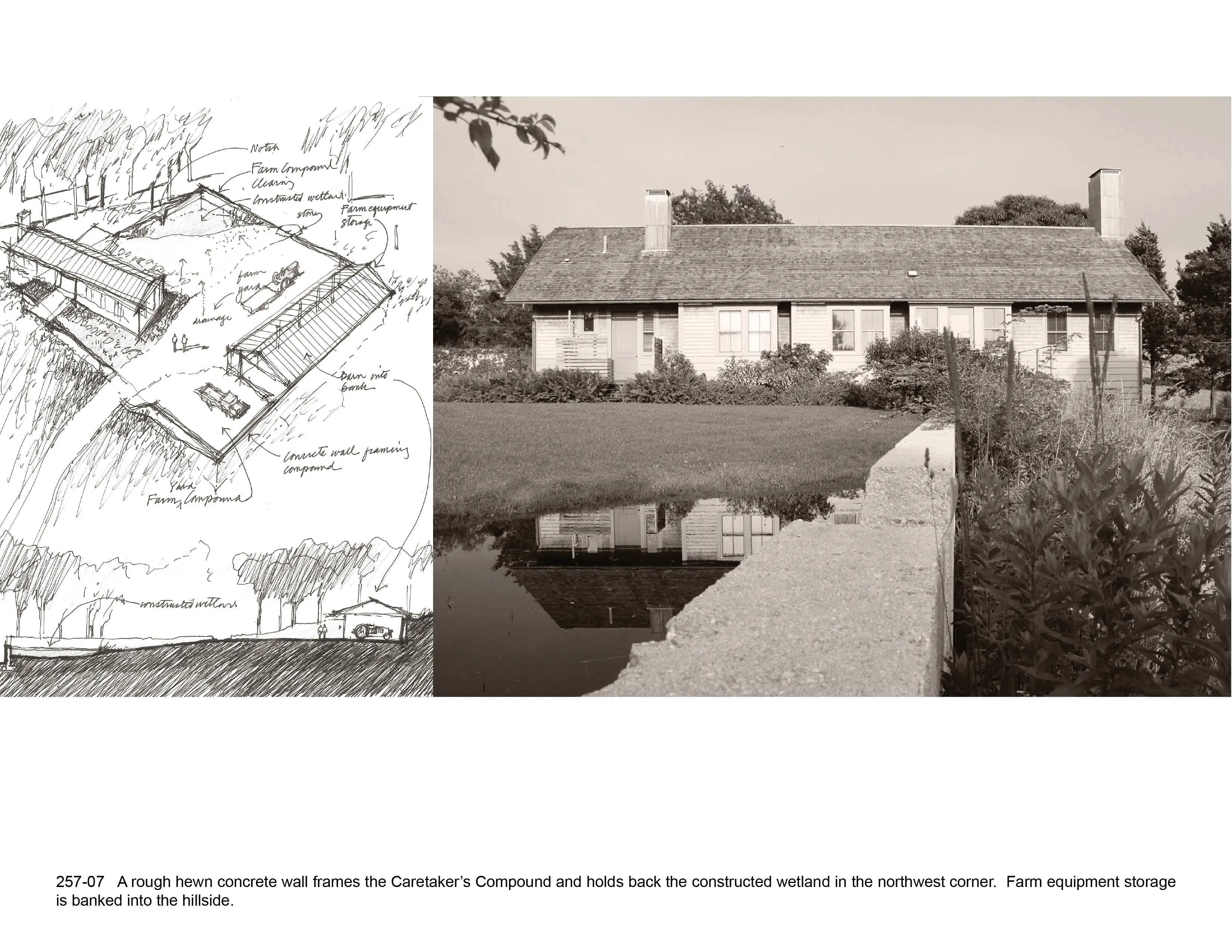
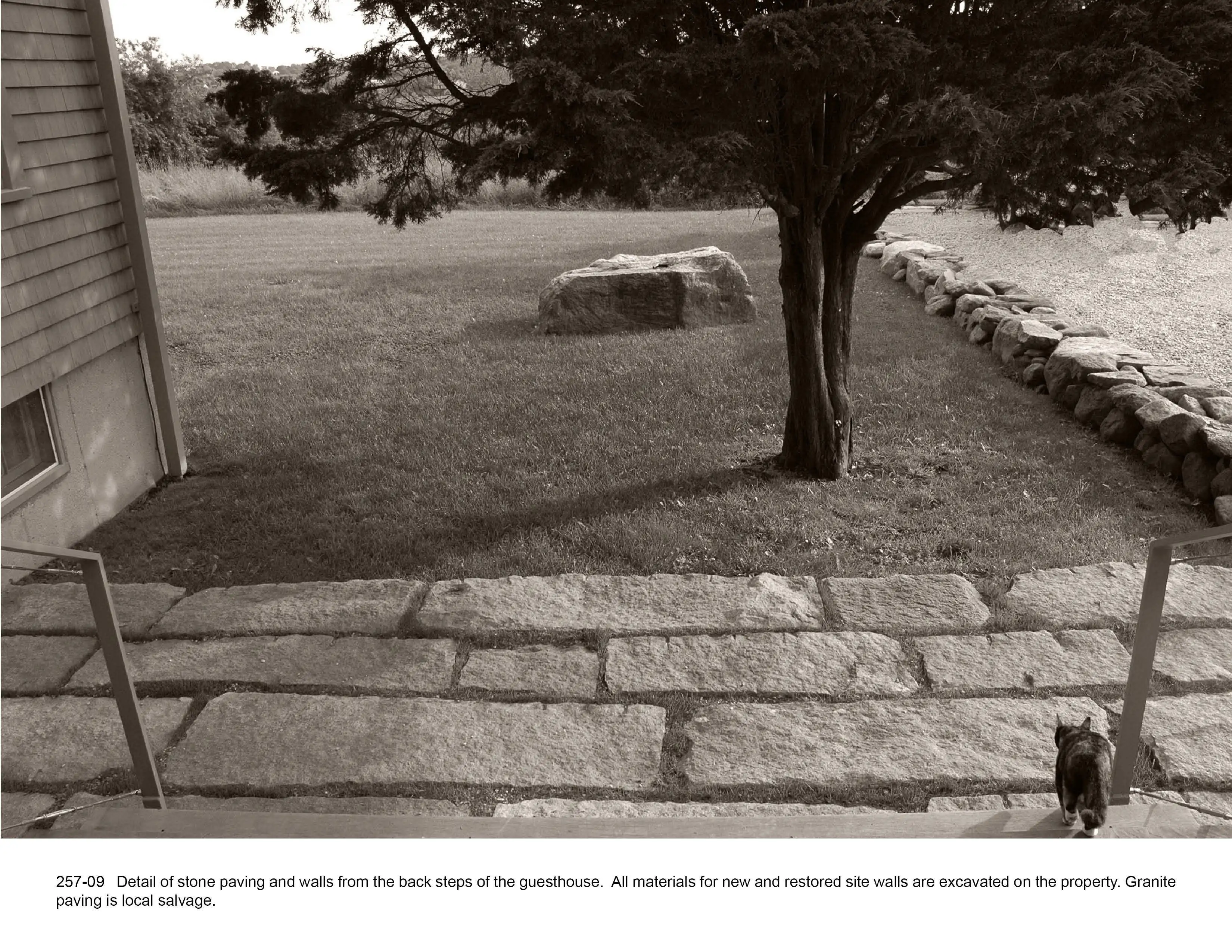
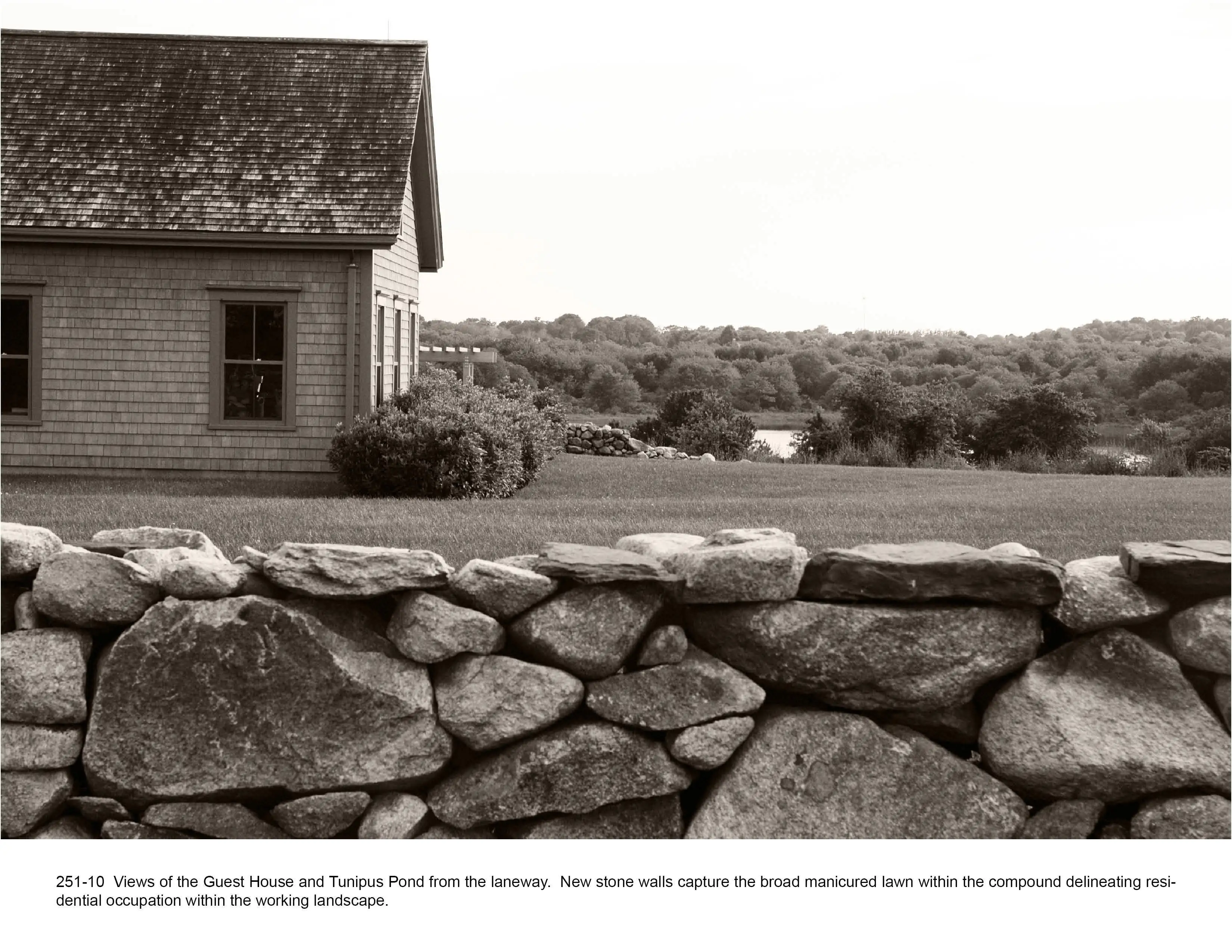
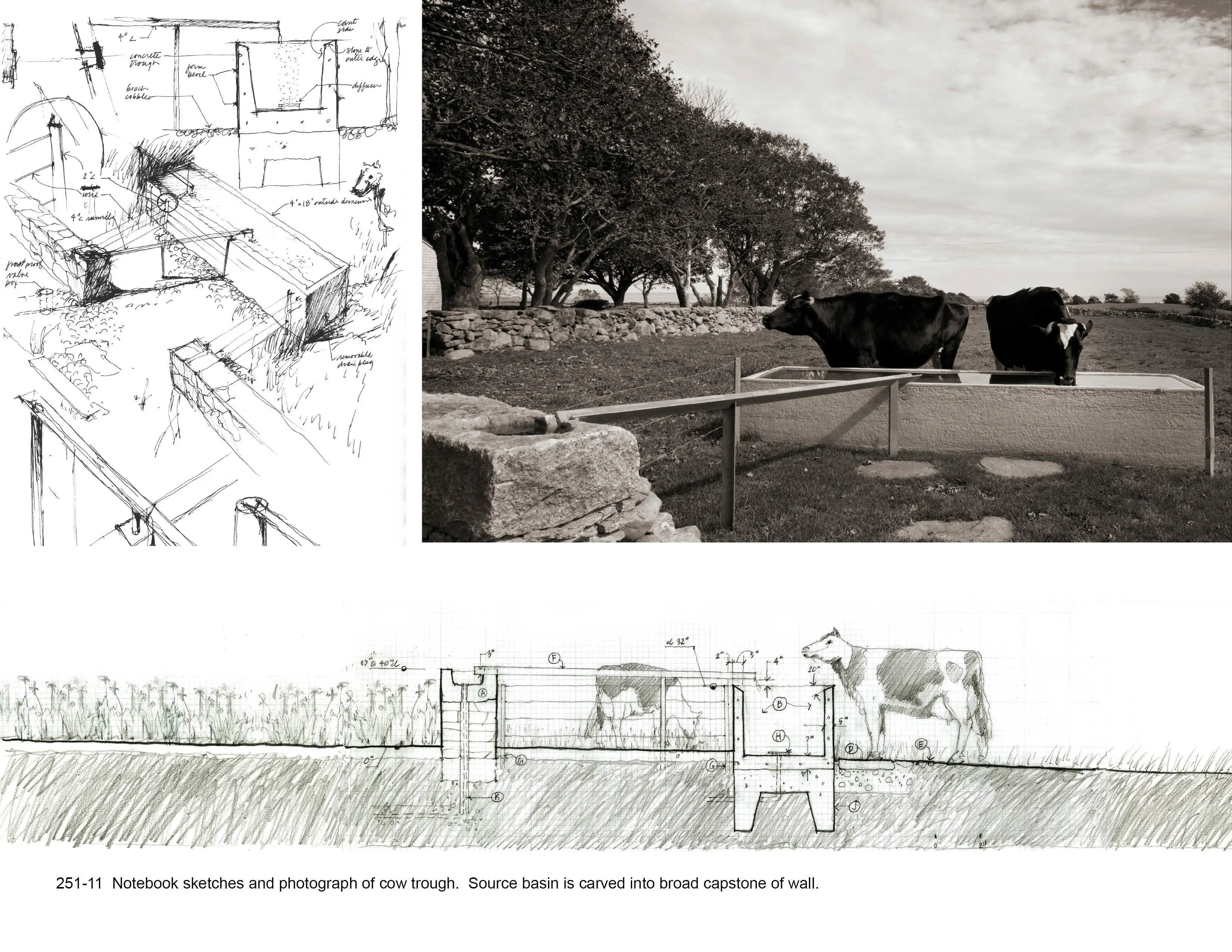
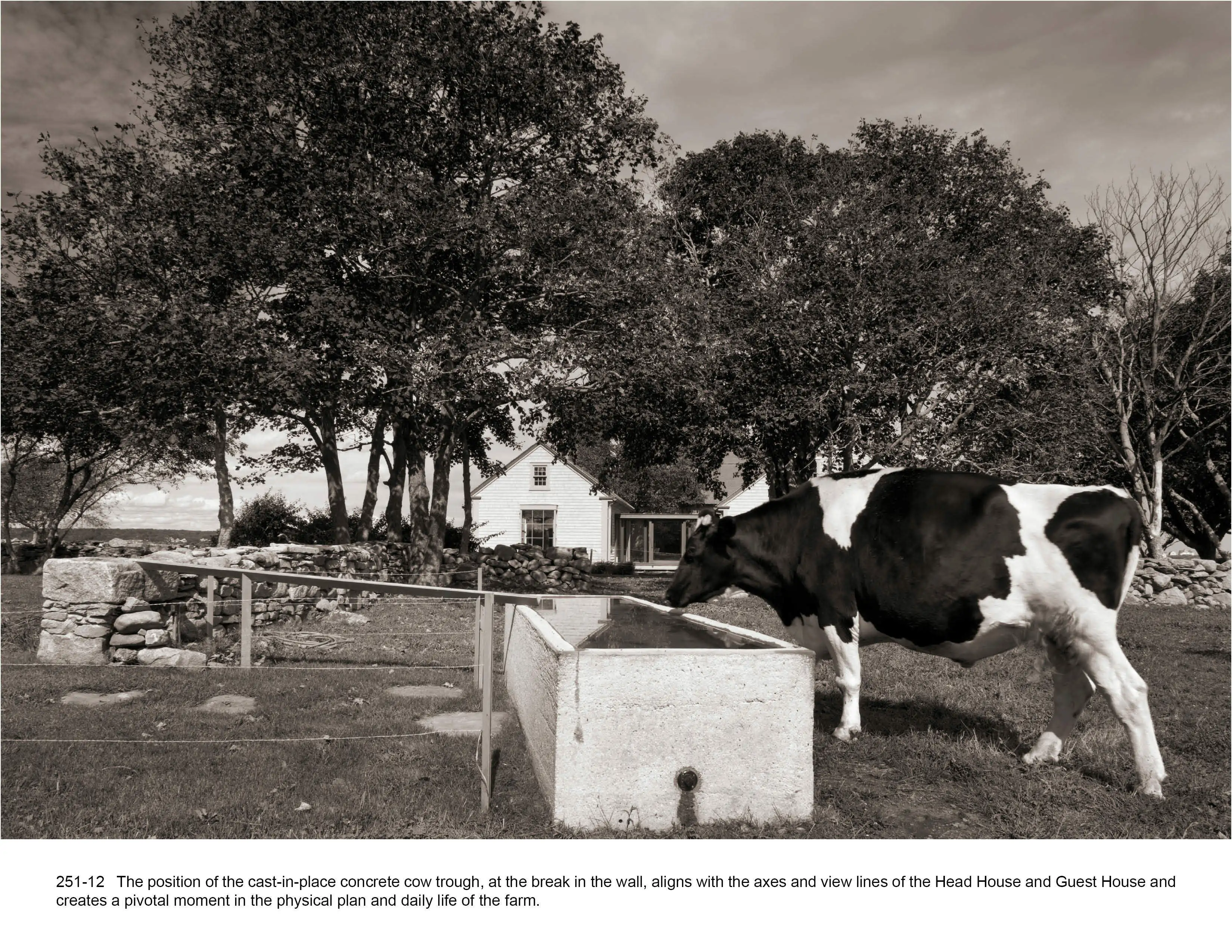
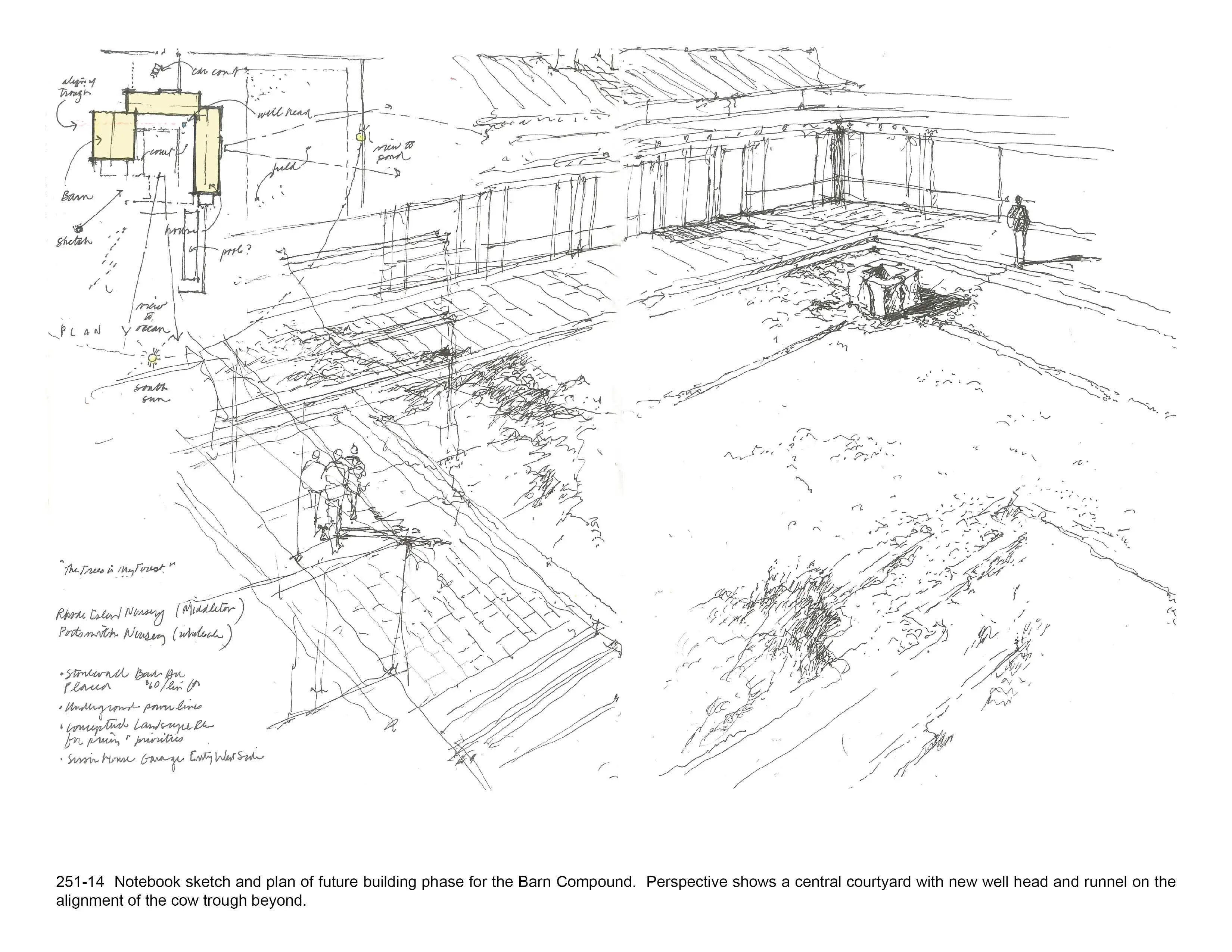
Simple can be so beautiful. It feels both contemporary and permanent. The hand sketches are very charming; they show the thought process and how the landscape architect communicated with the client. All the stone is salvaged from the site and the water is made visible from the house.
Awards Jury
-
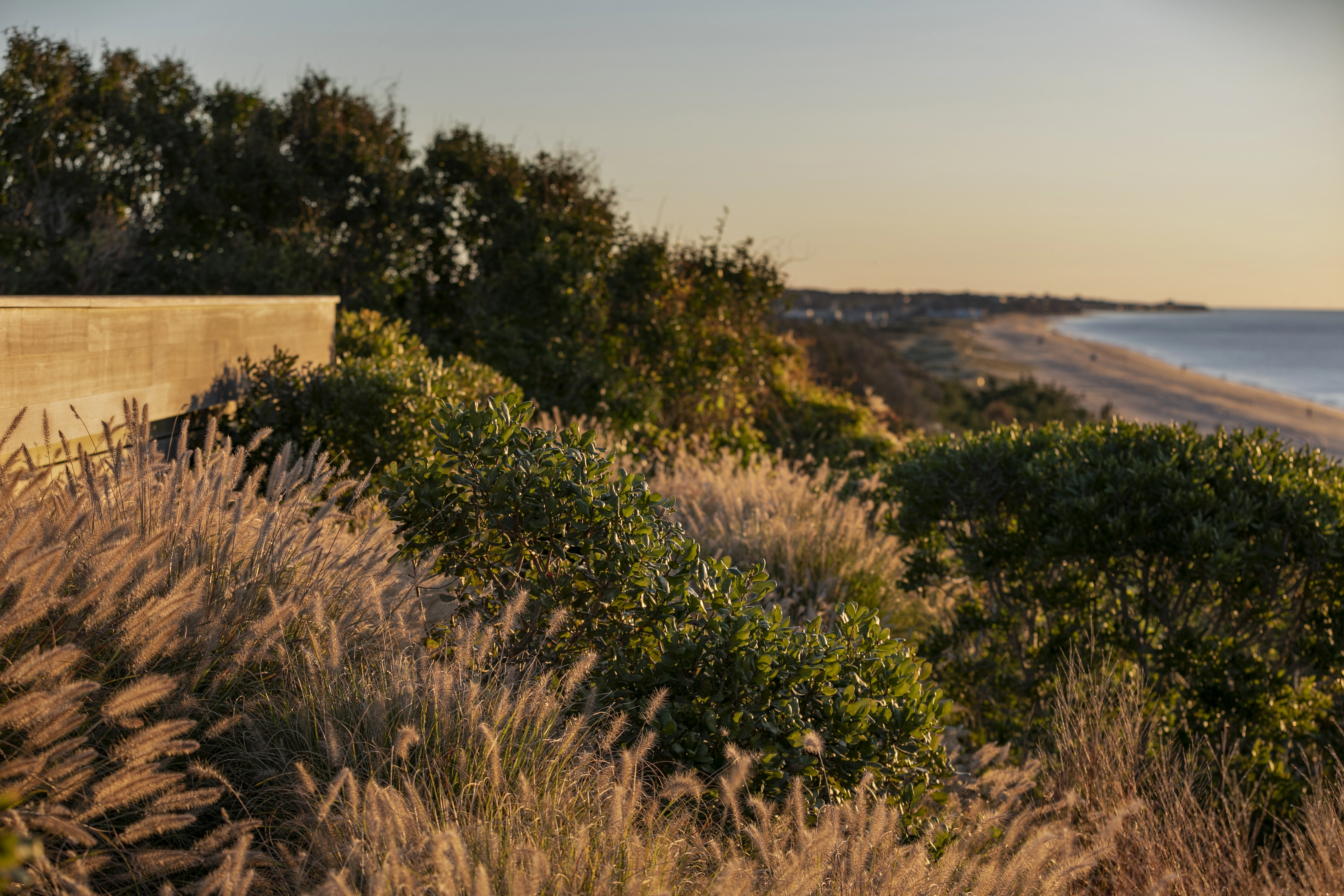
This family farm straddles a ridge-lined peninsula facing the Atlantic Ocean on the southern coast of Rhode Island. Bounded by water and set within the Sakonnet landscape of coastal field, forest, pond and meadow, this property quietly embodies a modest agrarian character while preserving critical habitat for endangered shorebirds, coastal plants and wildlife. The Master Plan uses an existing road and walls as a skeletal structure which organizes the insertion of a series of three building compounds into the matrix of windswept coastal fields. The project artfully integrates a network of restrained architectural and landscape interventions with the existing fabric, creating a lucid landscape structure and illuminating the peninsula's striking beauty.
-
Existing Site
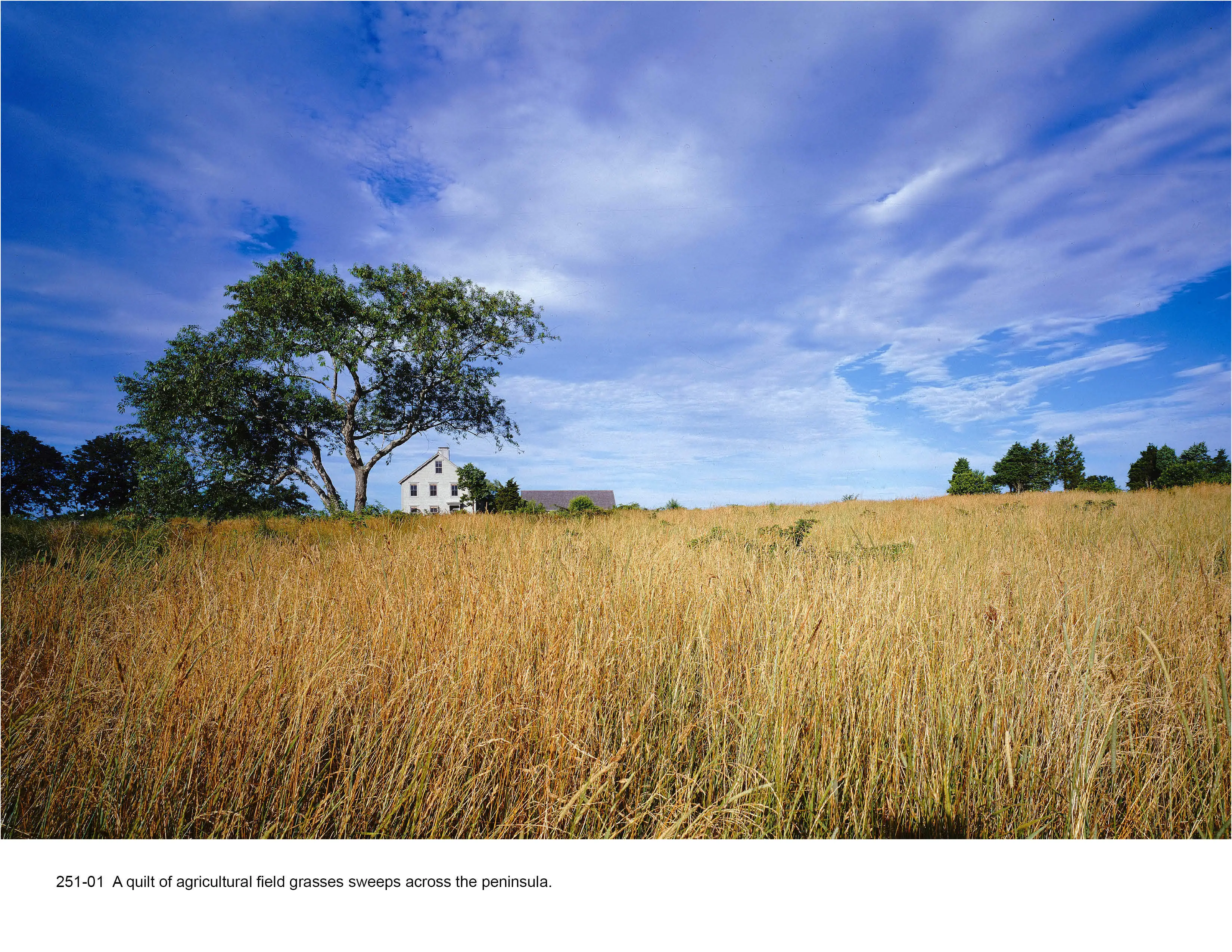
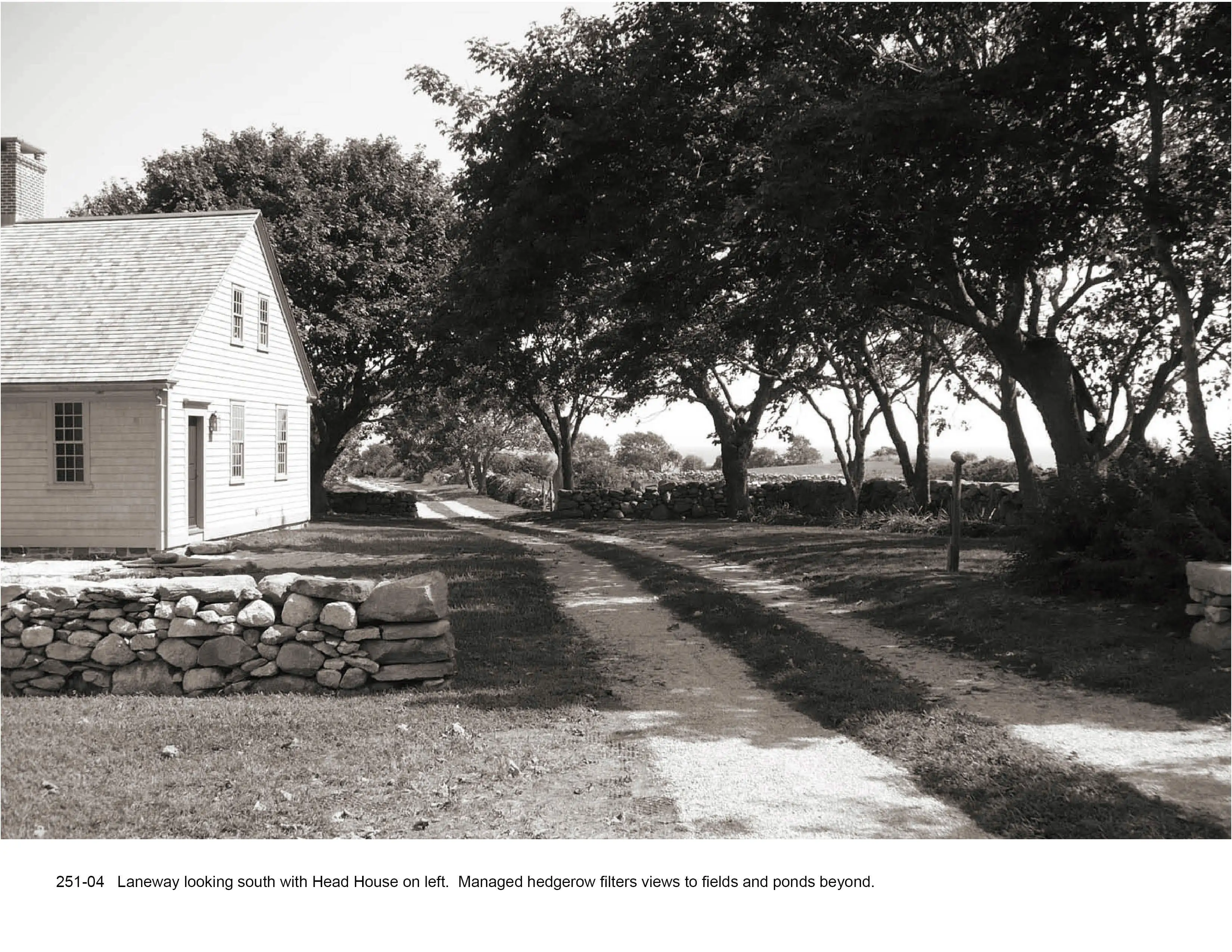
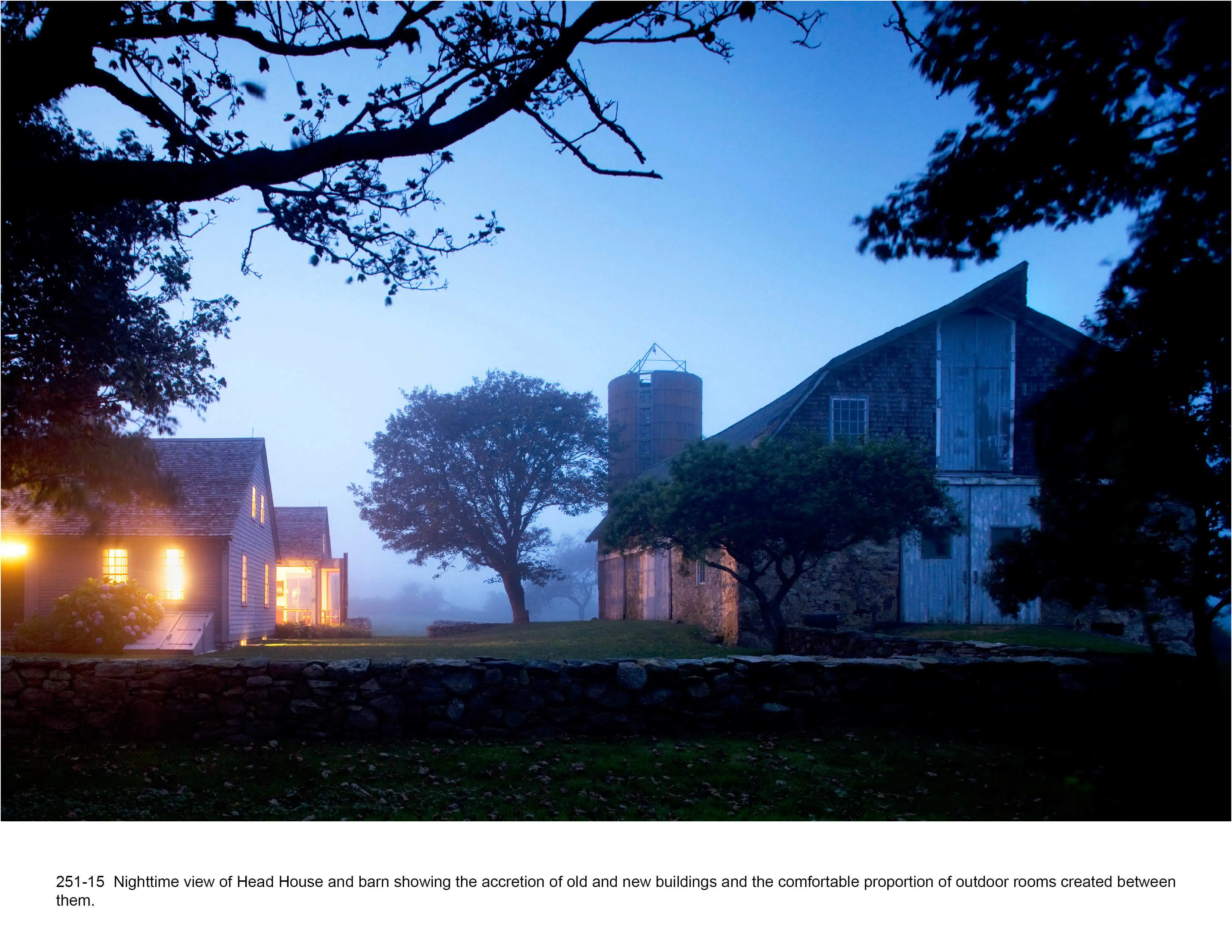
This 70-acre oceanfront farm is surrounded by water on three sides. To the south lies the Atlantic Ocean, buffered by beach, marsh and dune. Brackish Quicksand Pond marks the eastern border, while fresh water Tunipus Pond bounds the farm to the west. Both ponds provide important wildlife habitat, including critical spawning ground for alewives. Marshes and dunes sustain several rare native plant species as well as a breeding ground for shorebirds. The property has been continuously farmed for two centuries. The agrarian character of this coastal farm is captured in gently sloping fields, meadows, and hedgerows, which are metered by the lines of dry-laid stone walls. Eighteenth and nineteenth century agrarian vernacular structures, including a modest cape, stone barn and silo, are clustered near the property's highpoint at 50 feet above sea level. The site's central organizing spine is an old farm 'laneway' running along the ridgeline, bisecting the property.
Site Development
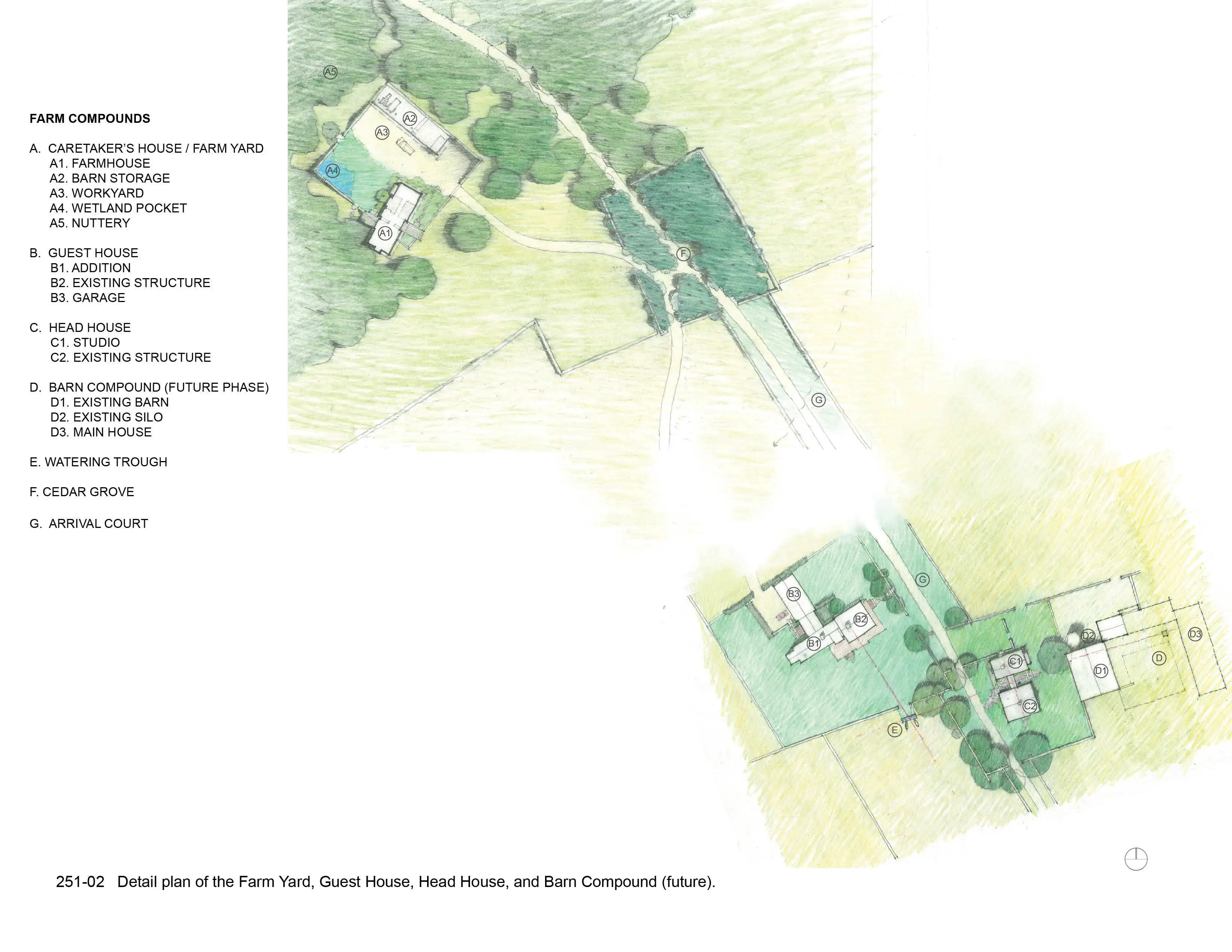
The Client wished to develop the property as a family compound and working farm with understated functional additions that honor the historic patterns and natural beauty of the site. After a careful site investigation, the Landscape Architect developed a Master Plan for the property followed by a series of thoughtful landscape interventions and larger phased building projects. The first phase included the conversion of a nineteenth century cottage into a Guest House, and the new construction of a discretely located Caretaker's Farmyard. Renovation of and additions to the Head House followed. Working so closely with the Architect and Client that distinctions between disciplines were blurred, the Landscape Architect skillfully integrated new built elements with existing site features to amplify the raw character of the landscape and make a vivid, imageable place on this exposed point of land.
Site Organization
The Plan uses the spine of the central 'laneway' and the metering of the existing dry-laid stone walls to frame and organize three primary compounds. Modest new buildings are conceived as understated utilitarian structures. Intimately scaled and geometrically simple, they are organized to support the functions of the farm. These clusters are knit together by a network of gravel paths and a framework of new and existing site walls built of large boulders and smaller beach pebbles excavated on site. On a broader scale, the master plan outlines a comprehensive and sustainable farm management plan. The Plan calls for forest renovation, the implementation of managed agricultural meadows and wildlife hedgerows, cedar grove preservation, and the protection and preservation of nesting habitat for endangered shorebirds.
Site Structures/Walls
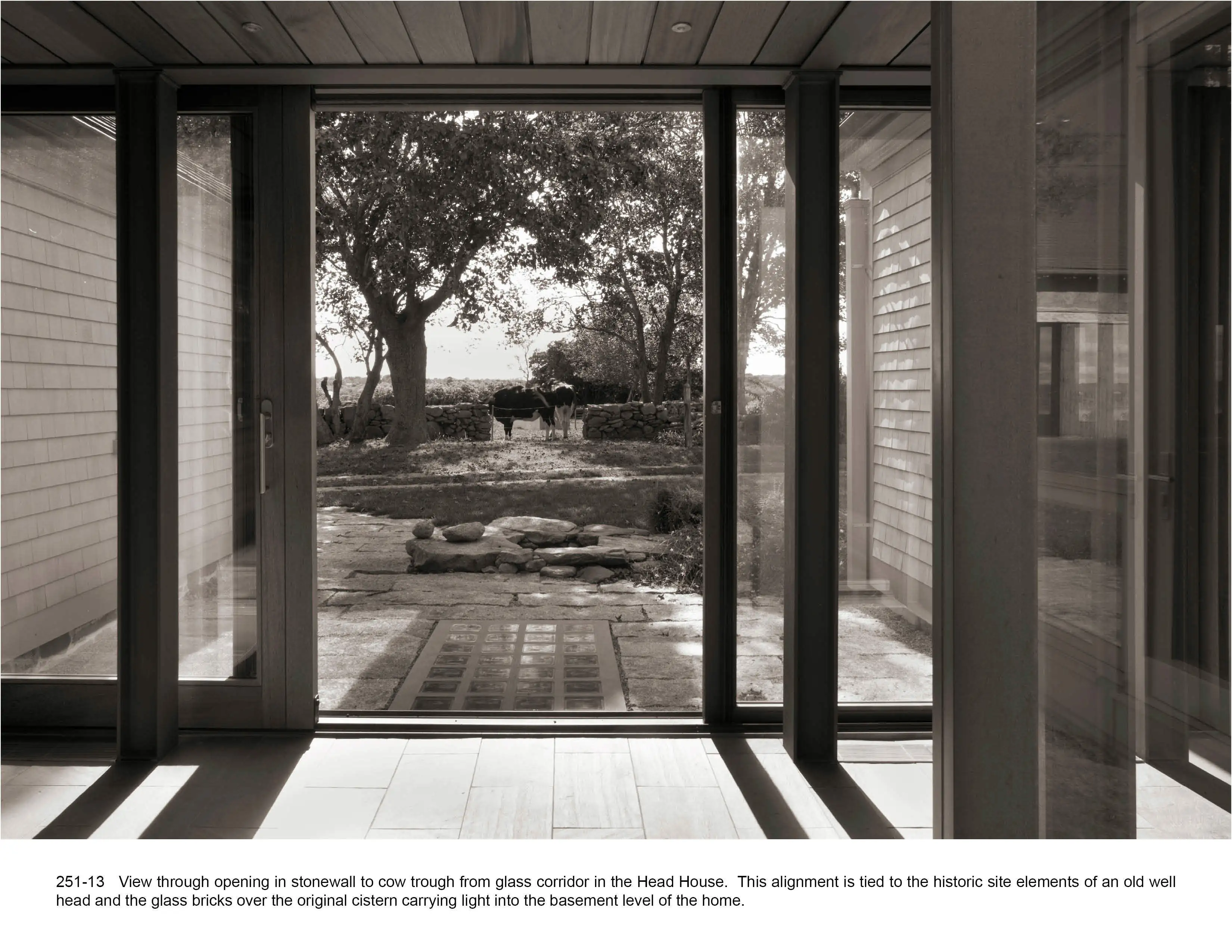
New stone and weathered concrete walls frame the clustered buildings. Several existing walls and structures were preserved with minimal editing where necessary. Stone wall materials are predominately excavated on site and paving is local salvage. Historic layers are revealed as an old stone well and a historic cistern create moments of reflection. A strategically placed watering trough marks the intersection of a north-south/east-west axis and knits together old and new components of the site. Water bubbles from a roughly carved fieldstone source pool, flows along a metal runnel and drops into a carefully proportioned cast-in-place concrete watering trough. The trough functions as both farm utility and fountain, providing nourishment to farm animals and pets. (The Landscape Architect researched the spatial requirements of a Holstein Cow.) Interventions like these elevate the utilitarian to moments of whimsy and simple beauty.
Water
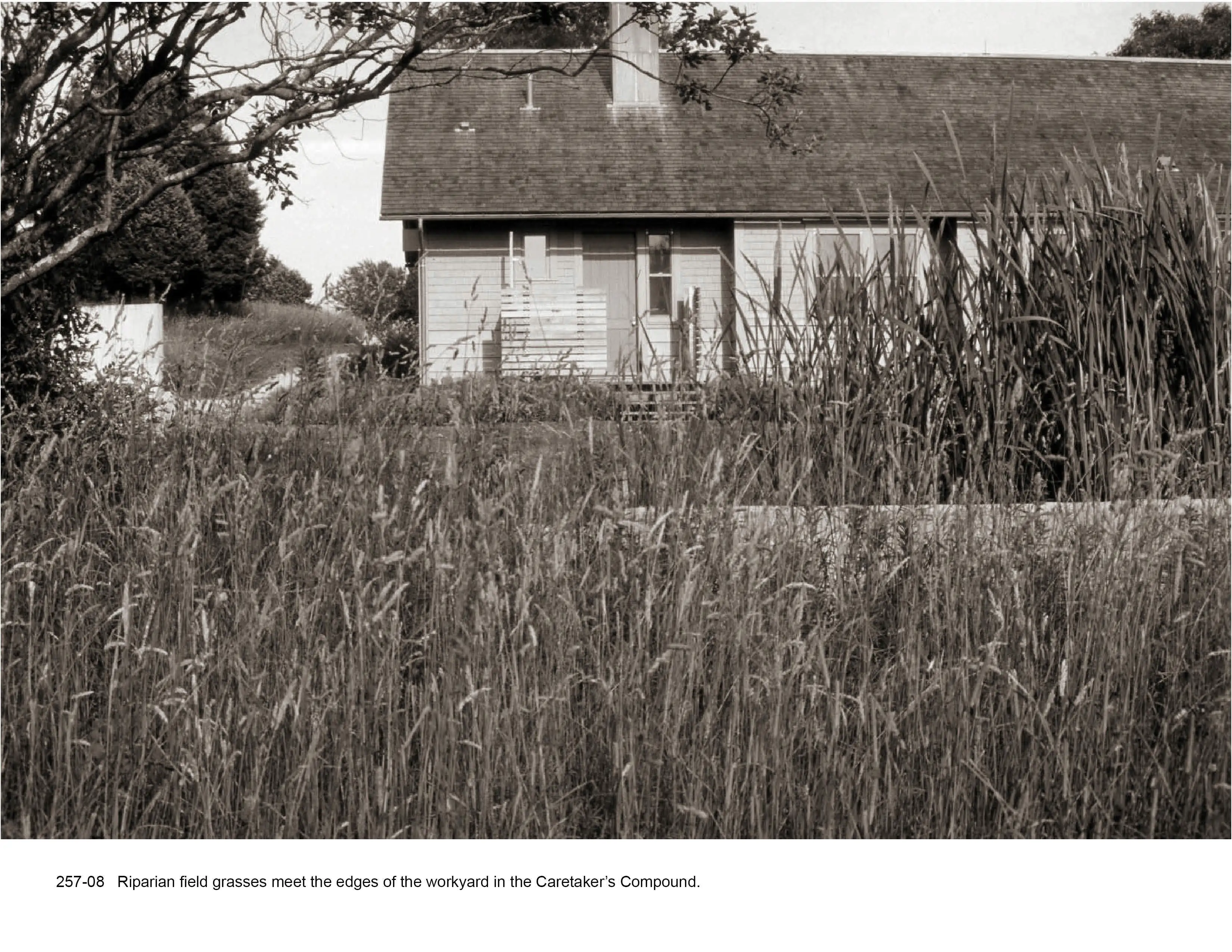
The presence of water and drainage patterns in particular, plays an active role in the landscape.The Landscape Architect employed micro-grading as a strategy to move stormwater to a constructed wetland at the northwest corner of the Farmyard, the caretaker's house and farm equipment yard. Rainwater flows down a grass filter slope, forming a wetland at the corner of the new weathered concrete wall. The water then slowly escapes through a crack in the wall and flows through an adjacent wet meadow before reaching Tunipus Pond. This subtle grading strategy reduces site erosion and improves water flow by reducing runoff velocity, thereby protecting the larger coastal watershed.
Plantings
A predominately native, low-maintenance plant palette builds on the materials of the site with restraint and simplicity. Plant materials were chosen for their seasonal variation as well as for toughness and tolerance of the harsh northeastern coastal climate. Rich beds of deciduous and evergreen ferns, blueberries and cutleaf sumac enclose the Caretaker's Compound. Tough woody plants near the buildings provide shelter from wind and make a transition from dense foliage framing site structures to sparsely planted open fields. Agricultural field grasses frame much of the site, while small areas of lawn within the compounds contrast with the landscape beyond and provide areas for gathering. A significant grove of existing native cedar trees is preserved and highlighted to mark the intersection of the drives to the Guest House and the Head House.
Inside/Outside
The Landscape Architect worked closely with the Architect to tie together the old and new and the inside and outside with site-lines and design interventions. At the Head House, a sixteen foot long glazed passage connects the new building addition to the historic cape and aligns with the watering trough, historic stone well, and cistern. The expanse of glass at the passage provides transparency and contrast while framing views of the landscape - hay fields, dry-laid stone walls, a lichen encrusted silo, stone barn, and the Atlantic Ocean.
Site Details
Throughout the design process, the Landscape Architect collaborated with the Client and Architect to develop details and construction strategies derived from the local craftsmen and agrarian traditions of the area. The result is a project that magnifies the raw simplicity of the site's utilitarian roots, emphasizing its extraordinary siting on three bodies of water. The Landscape Architect's critical role in the Master Plan continues to guide design choices and interventions on the property, enabling the site to evolve in an organic yet fully integrated fashion. Rooted in its place and tied closely to the historic patterns on the land, this project delicately selects elements within a working landscape and shifts them into gestures of celebration.
-
Landscape Architect: Michael Vergason Landscape Architects, Ltd.
Principal in Charge: Michael Vergason, FASLA, FAIA
Project Manager: Lan Hogue, ASLAArchitect: Bohlin Cywinski Jackson
Design Principal: Peter Bohlin, FAIA
Project Manager: Theresa ThomasLandscape Contractor: Daponte Landscape
Michael DaponteGeneral Contractor: Chuck Miller Inc.
Advertisement
Related Awards
Honor Award, Residential Design
Trinity Road
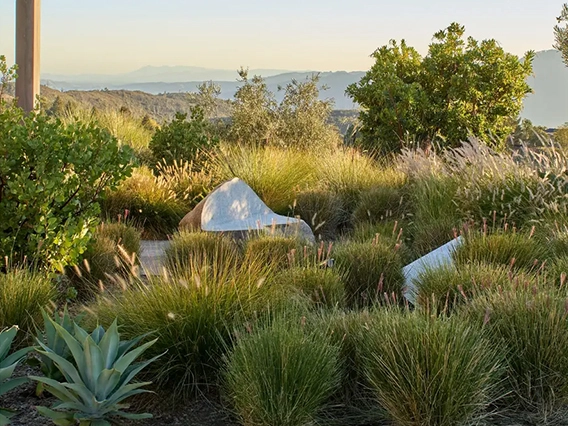
The story of Trinity Road unfolded over the past five years and is fundamentally a story of fire resilience and succession of the surrounding forest. The garden was designed and the project considered completed when two wildfires ravaged the hills immediately surrounding the site. After the fires the landscape design team was brought in to create a new vision for the site that knit together the original planting and a new series of paths and gardens.