
.webp?language=en-US)

Galisteo Modern
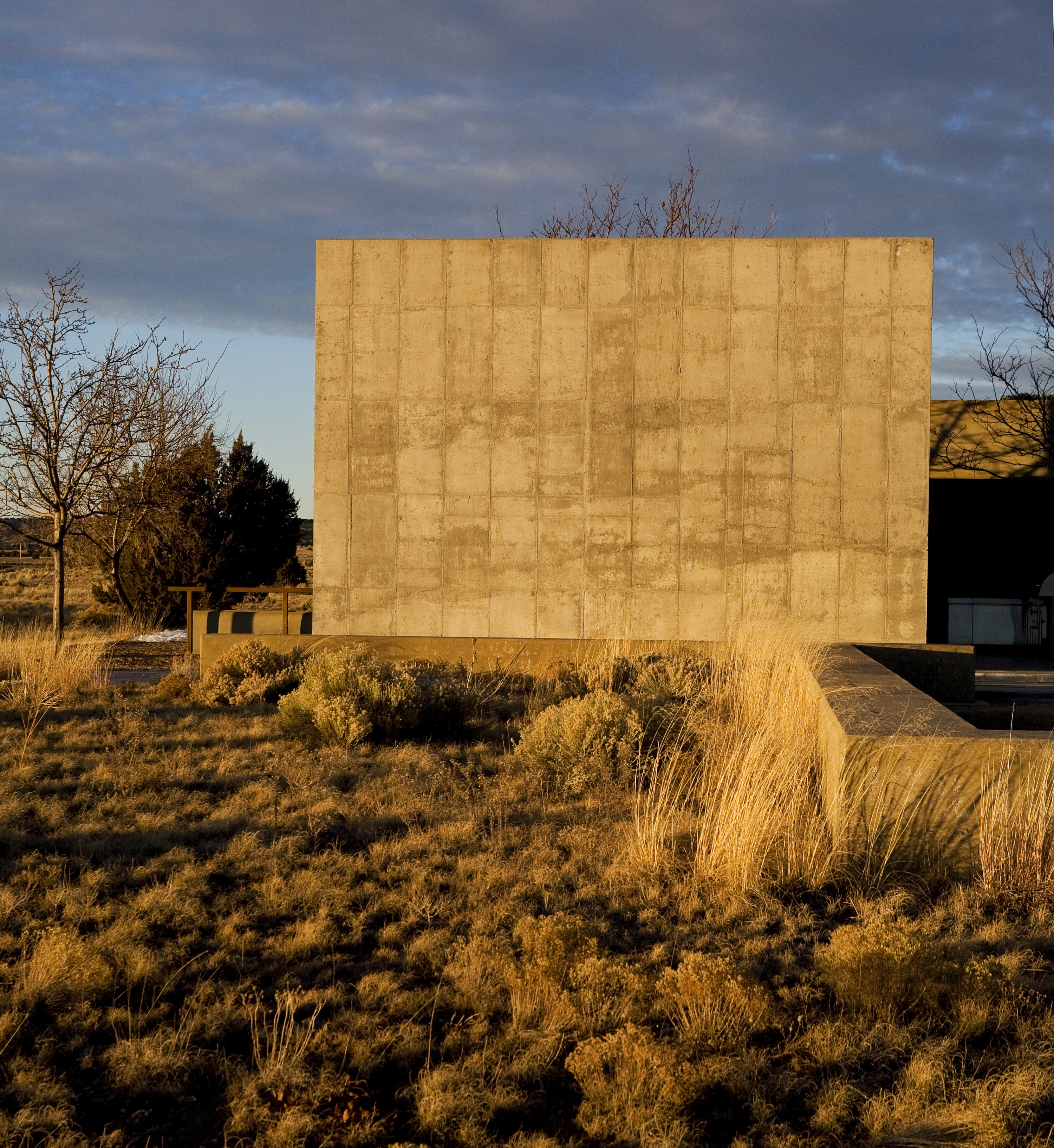
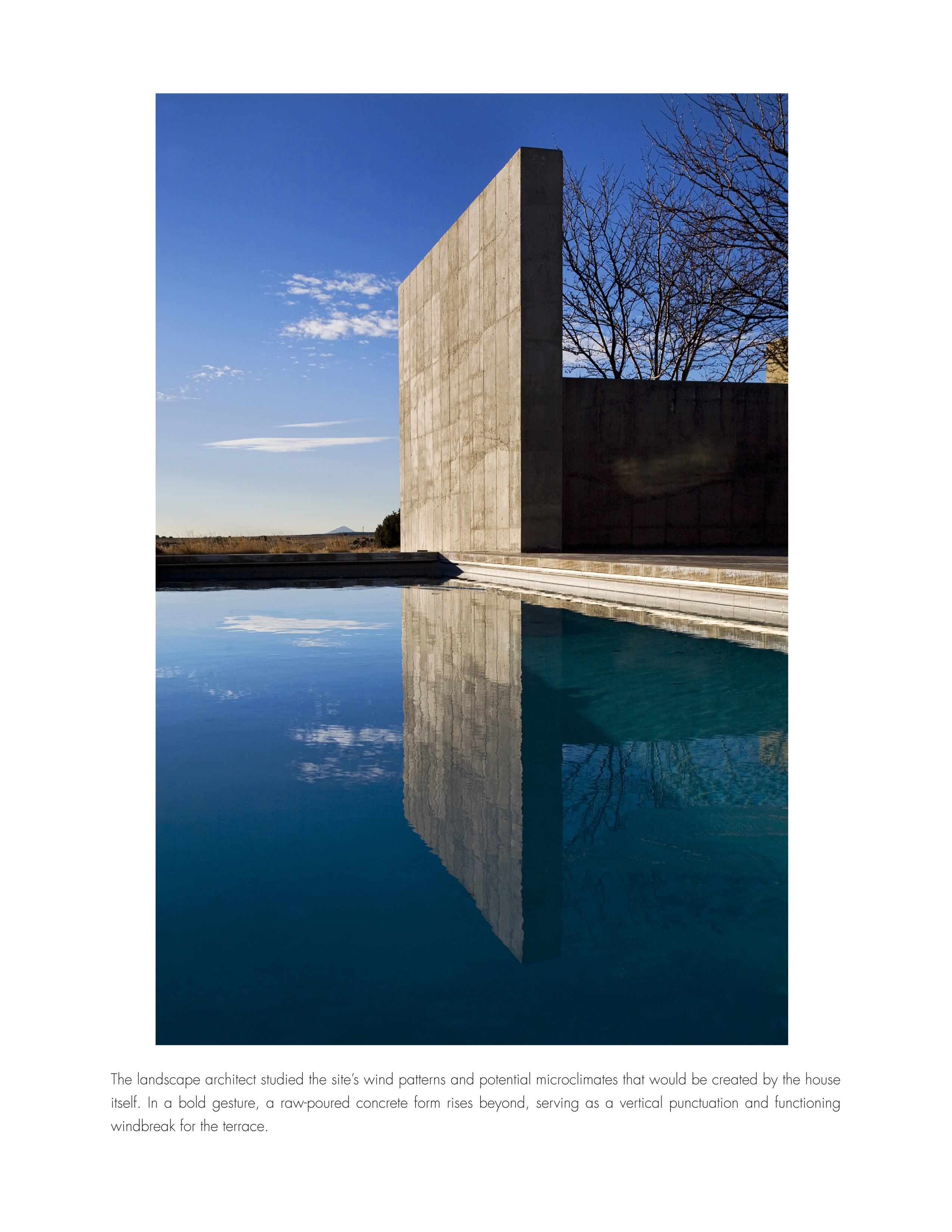
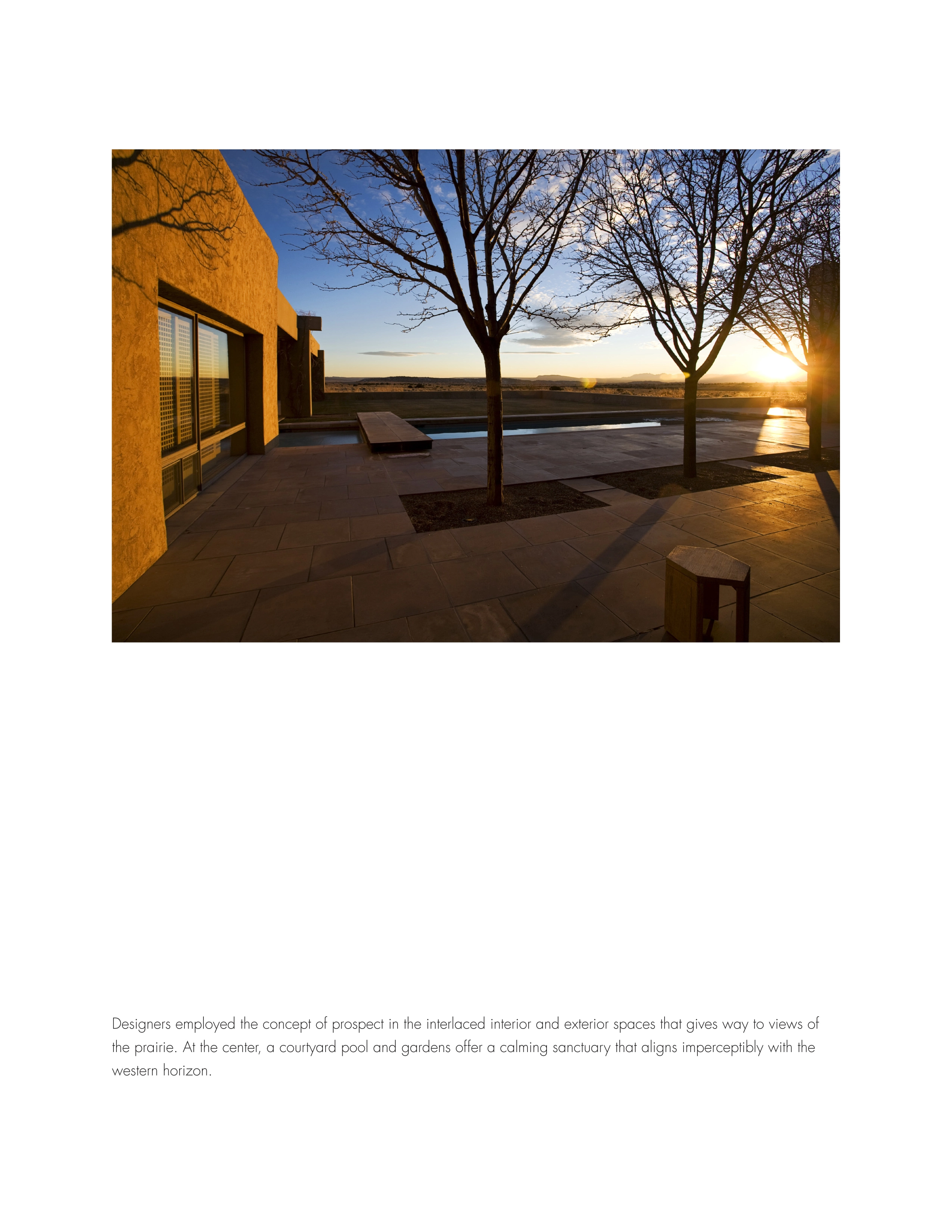
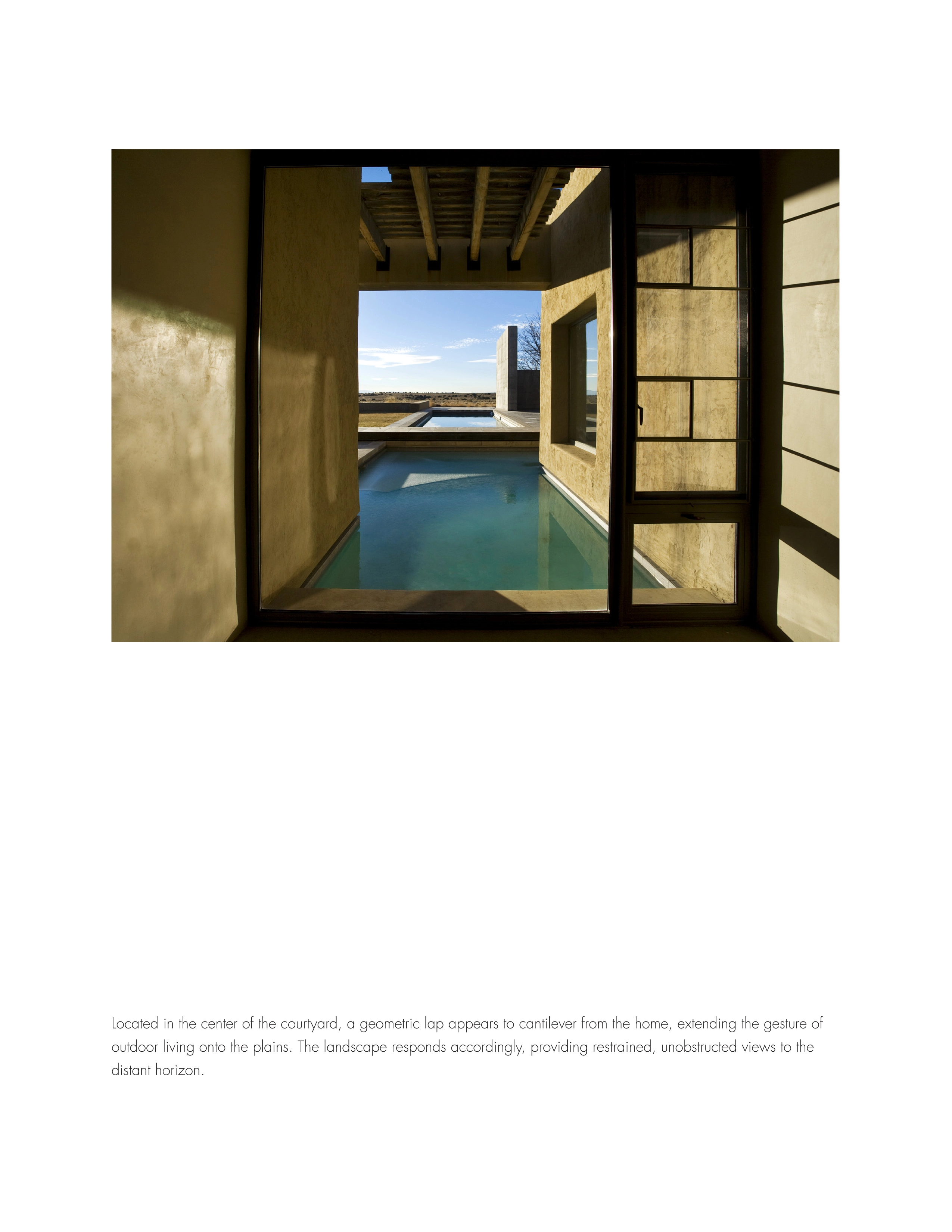
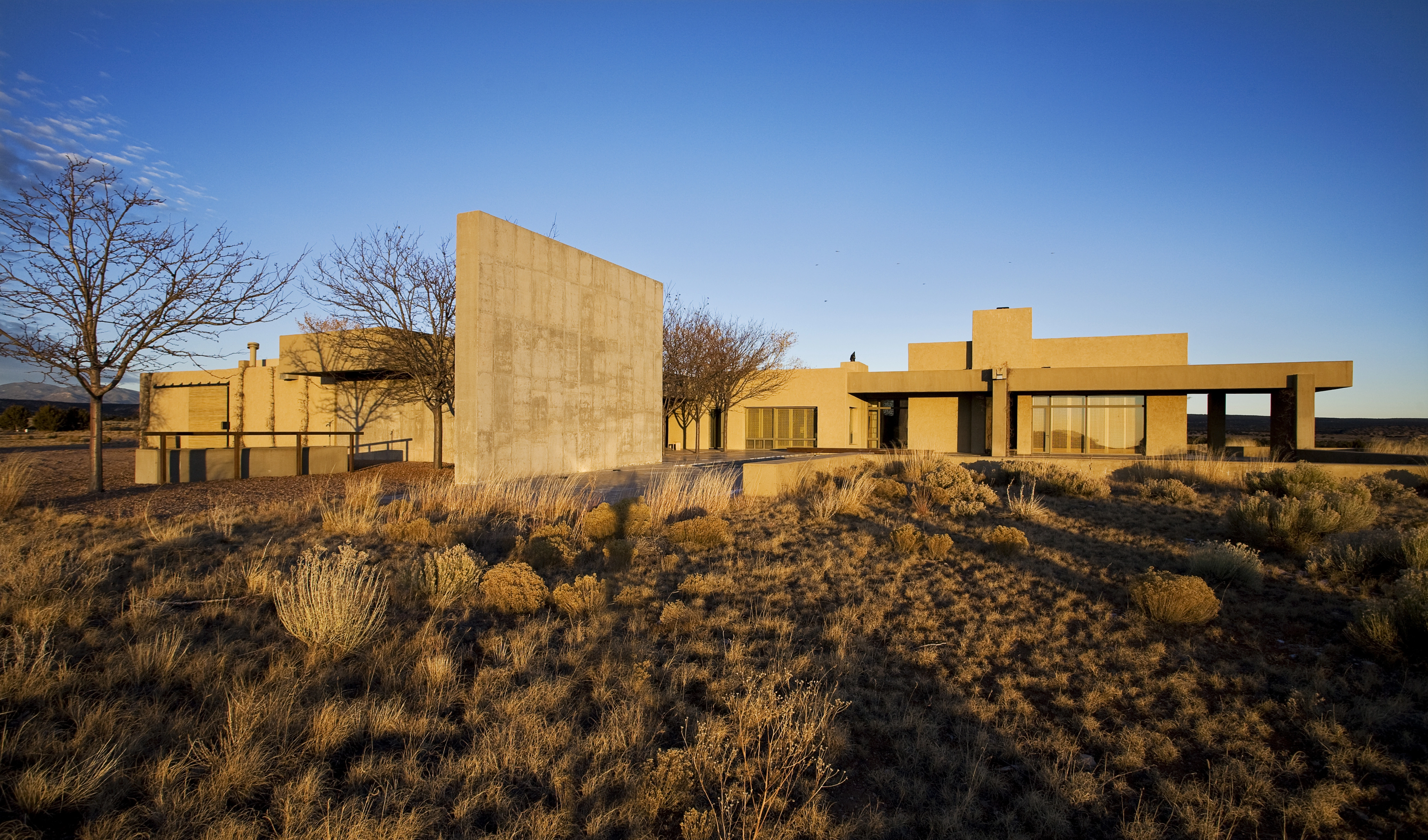
The simplicity is so beautiful. The freestanding concrete wall fits into the landscape, yet provides a rich contrast. It's very difficult to do. The way the pool goes in and out of shade provides such a contrast of options. This is how architecture and landscape can be masterfully integrated.
Awards Jury
-
Driven by modernist design ethos of simplicity, volume and natural materials, the landscape architecture of Galisteo Modern successfully transitions a modern architectural masterpiece into its surrounding context through poetic yet restrained interventions. Because the immediate landscape is so dominant and visually spectacular, the design is both respectful of and scaled appropriately to its environment, protecting the site’s visual quality and environmental significance. Natural processes are encouraged through the reconstruction of the sensitive Galisteo Basin ecosystem.
-
Context and Inspiration
Resting within a 4,000-acre ranch between two New Mexican villages, the boundaries of the residence unite the open space and mountain ranges, creating the illusion of a private sanctuary with infinite grounds. The site bolsters uninterrupted views of the bold and barren Galisteo Basin—a foreground of rolling sage and native grass prairies, with a backdrop of the panoramic Sangre de Cristo and Sandia Mountain Ranges. An area of fragile and ecologically significant land and water resources, the Basin is internationally celebrated for its scenic, cultural and wildlife habitat values.
Interested in protecting and enhancing the natural beauty of the site—open spaces vistas, night skies, wildlife migration—the owners desired to live connected to the larger landscape through a unique retreat for family and friends focused on the color, texture and outdoor living environment. Thus, the home and garden became a representation of the historic and cultural heritage of the Galisteo Basin. The limitless appearing prairie and windy site called for design solutions with references to American Plains architecture. Triple-thick adobe walls, intimately scaled courtyards, clustered living spaces and gathering areas are concepts that, when combined with the modernist aesthetic of the chosen architect, successfully fulfills the owner’s desire for a family compound that serves as both shelter and sanctuary.
Because the landscape is so dominant, spectacular and immediate, the architect established the scale of the interior to match the exterior.The garden therefore becomes an extension of the residence, bridging the contemporary vernacular of the architecture to its rural environment. The site plan and its execution create a place of artistic beauty and elegance, employing seamless connections, preserved vistas and indigenous planting gestures. The collaborative effort between all disciplines successfully achieved the client’s vision of a residential work of art which respects and responds to its surrounding environment.
Preserving the Integrity of the American High Desert
A meandering drive through a sage-filled prairie marks the final approach to the home. Rising from a permeable gravel field, an existing cottonwood grove stands silhouetted against the concrete architectural walls. In the distance, a restored prairie plays host to a herd of "grazing" sculptures, commissioned by the French husband-and-wife artists François-Xavier and Claude Lalanne.
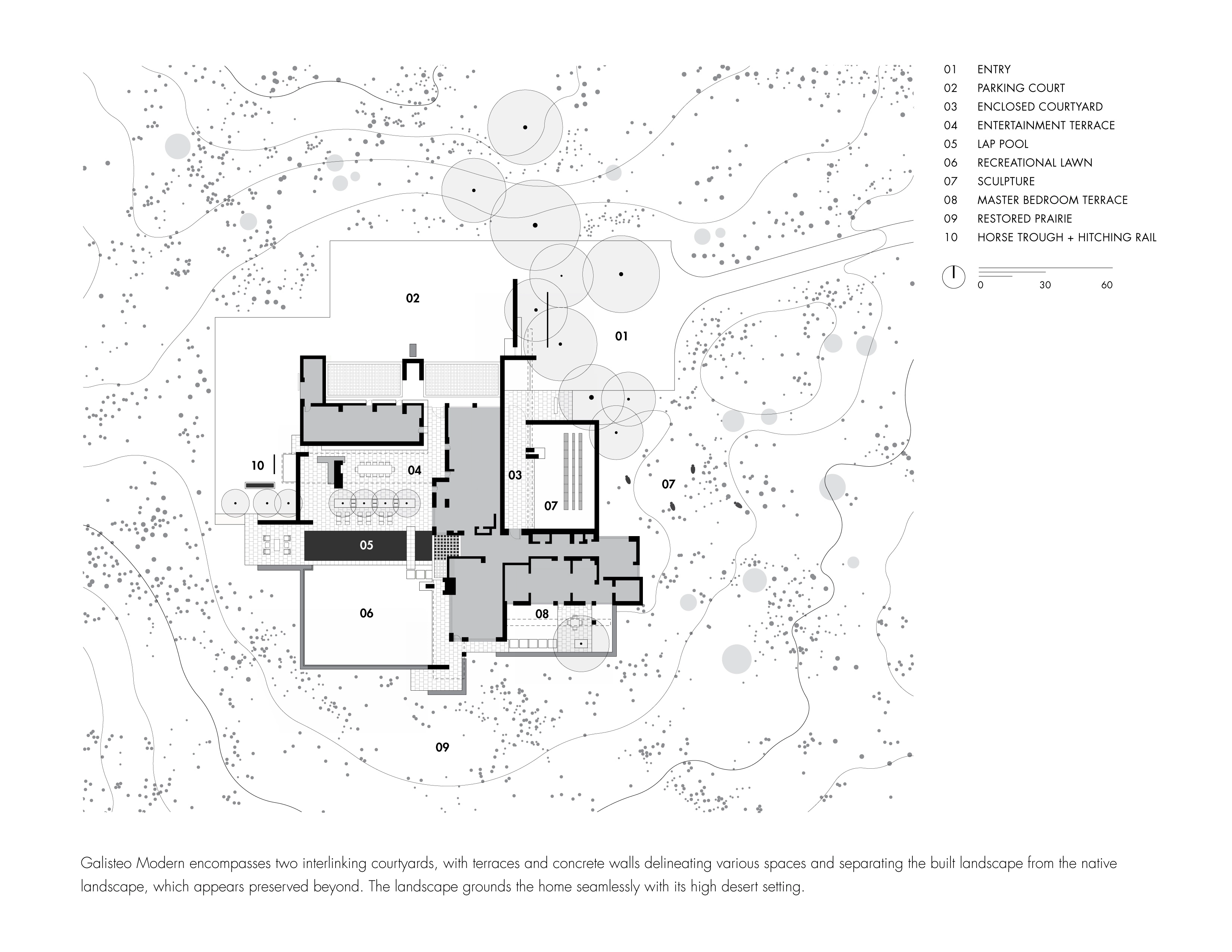
Exploring the concepts of prospect and refuge, two courtyards interlink the residence allowing each interior room to enjoy the visual landscape. Within the entry courtyard, vertical walls offer protection from the natural elements and provide a canvas to display the client’s sculptural collection. The courtyard features a linear, groundplane sculpture commission by American minimalist Carl Andre—constructed of blocks of wood, stone and steel. Wisteria vines soften the concrete trellis, which connects between the autocourt and front door.
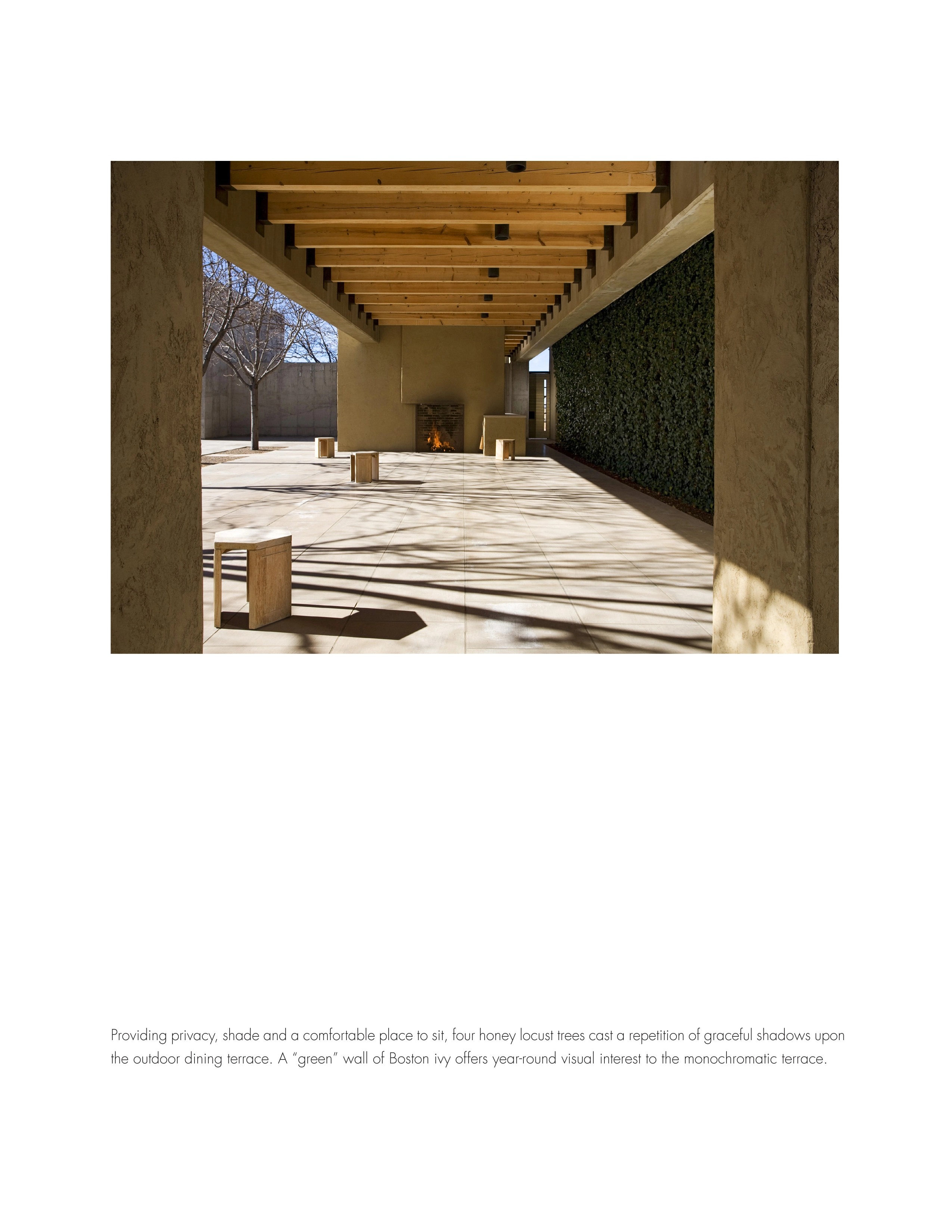
The second garden, in comparison, is an expansive, promontory entertainment space and explores the concept of prospect in the interlaced interior and exterior spaces that gives way to views of the Galisteo Basin. Parallel walls and terraces modify the views and establish use areas and rooms, merging garden and architecture. With high summer temperatures and cloudless skies, a loggia provides shade and protection. A Boston ivy-covered wall serves as a year-round colorful backdrop for the sandstone entertainment terrace. During the summer, four honey locust trees, native specimens to the region, provide shade for outdoor living while arcing shadows create visual drama during the winter months. A climate study was completed to design strategies to shelter outdoor spaces from the wind and capture sunlight. Access to sun and climate led to flexible terraces allowing furniture to be adjusted depending on the time of day.
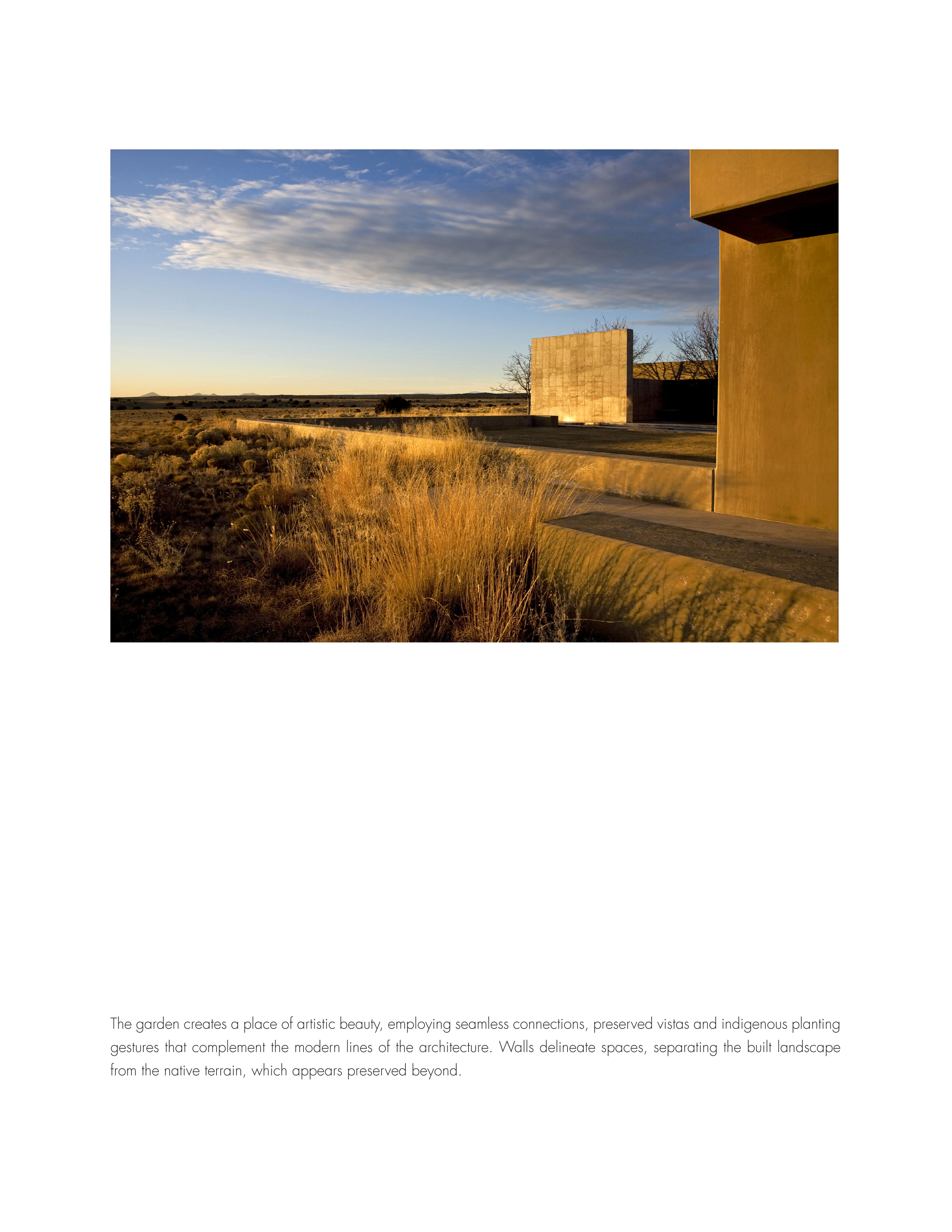
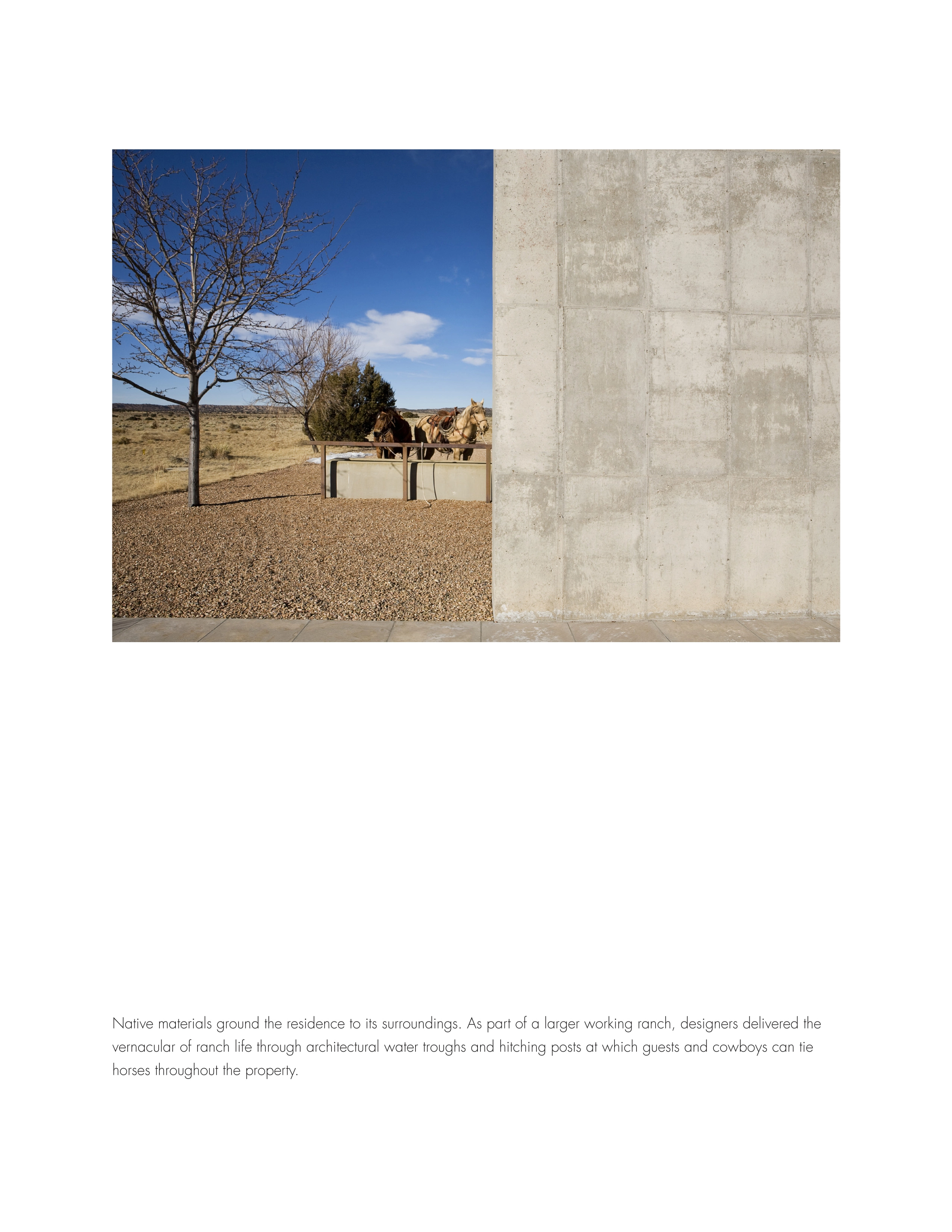
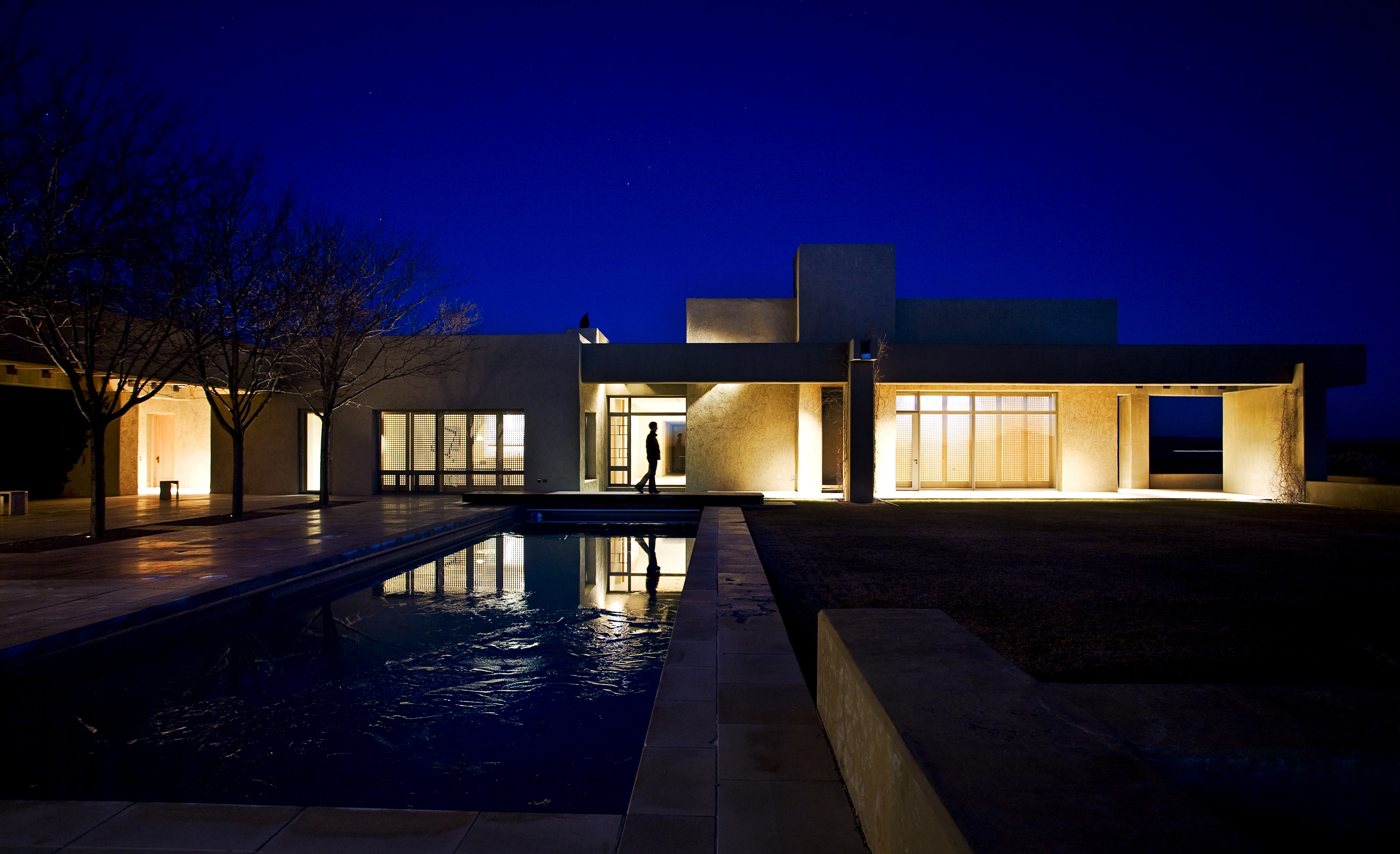
Located in the center of the courtyard, a geometric lap pool appears to cantilever from the home, extending the gesture of the house onto the plains. In a bold gesture, a raw poured concrete form rises up beside the pool, serving as a vertical punctuation to the landscape and a functioning windbreak from northern winds. From the terrace, this pool provides a mirror to the dramatic ever changing sky. A stone plinth crosses the pool, connecting the terrace to a recreational lawn for the family. The space gives way to the surrounding landscape, celebrating the dramatic views at the very edge of the skyline. From the master and guest bedrooms, stone terraces and concrete walls delineate various spaces and separate the built landscape from the native terrain, which appears preserved beyond. Within the autocourt and throughout the larger property, the design team delivered the vernacular of ranch life through functional hitching posts at which guests and cowboys utilize.
Crafting a Regenerative Living Landscape
Natural systems embrace the residence, requiring individuals to often ponder how the home was built without damaging its surrounding, indigenous landscape. However, the built landscape is actually a result of the landscape architect’s reconstruction of damaged areas caused by construction, which extended up to 100 feet from the building. All areas beyond the immediate perimeter of the building were designed to mimic the existing conditions through a mix of native plant materials that would complement the modern lines and subtle tones of the architecture.
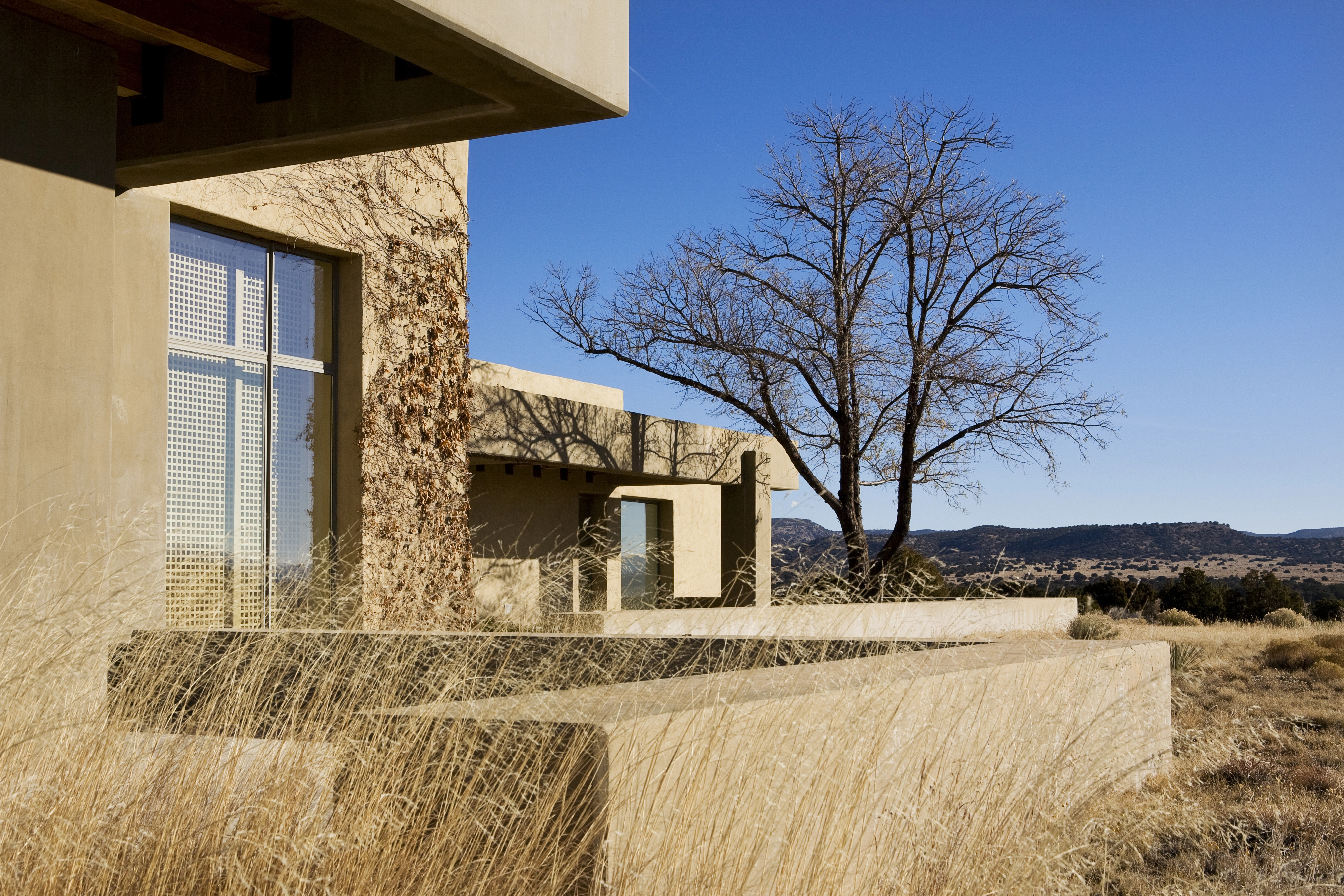
Receiving less than 13 inches of rainfall annually, the site required the landscape architect’s special knowledge of seasonal changes and native plant patterns. Transects provided frequency, spacing and patterns of individual plant species, including sagebrush, four-wing saltbrush, milkweed and snakeweed. The native grasses and sage that carpets the whole basin rolls right up to terraces and walls, and the many windows invite the intoxicating scent in. The reconstruction of the landscape was envisioned to maximize the transparency of the residence and create a landscape which appears endless.
Environmental Sensitivity and Sustainability
The garden reinforces the owner’s commitment to protecting and enhancing the natural beauty of the site. By limiting the disturbance with walls and adapting the home to the prairie site, the residential garden becomes part of the natural setting. Sustainable design elements include:
- Water Efficiency: 68,000 square feet of disturbed landscape was restored to an indigenous mix of native plant species, requiring supplemental irrigation only until establishment. The arrival drive and autocourt is constructed of permeable gravel, allowing water to infiltrate into the ground and reduce erosion potential.
- Site Disturbance: In order to minimize disturbance to the slow-growing landscape typology, designers utilized a previous road alignment for the home’s arrival drive. The site’s only existing trees—a native cottonwood grove—were preserved and integrated into the final design of the auto court. The residence and garden are contained by retaining walls to avoid disturbance on an ecologically fragile site.
- Material Usage: Sandstone and gravel terraces, constructed from nearby New Mexican quarry material, ground the colors of the terraces to the larger landscape. Plants native to the high-desert zone were utilized in the landscape design. Often unavailable from commercial nurseries, some species were specifically grown for this site. The concept of the garden was adapted to the conditions of high altitude with selections of plant materials, soils on the site and revegetation methods to establish native plant communities.
- Night Sky Protection: Exterior lighting was limited to only areas for primary entertainment and safety purposes. Lighting throughout the larger landscape was deemed unnecessary and, thus, eliminated.
- Wildlife Prosperity: The landscape architects reconstruction of the prairie landscape now serves as a refuge for the ranch’s wildlife, including antelope, deer, foxes, coyotes and multiples bird species.
-
Design Workshop
Faith Okuma; Richard Shaw, FASLAArchitect
Suby Bowden & J.D. MorrowInterior Designer
Joe D'Urso Design -
Carl Andre, Artist
Entry Courtyard Sculpture (wood, stone, and steel)Francois-Xavier & Claude Lalanne
Meadow Sculpture (concrete)
Advertisement
Related Awards
Honor Award, Residential Design
Trinity Road
The story of Trinity Road unfolded over the past five years and is fundamentally a story of fire resilience and succession of the surrounding forest. The garden was designed and the project considered completed when two wildfires ravaged the hills immediately surrounding the site. After the fires the landscape design team was brought in to create a new vision for the site that knit together the original planting and a new series of paths and gardens.