
.webp?language=en-US)


Vienna Way Residence
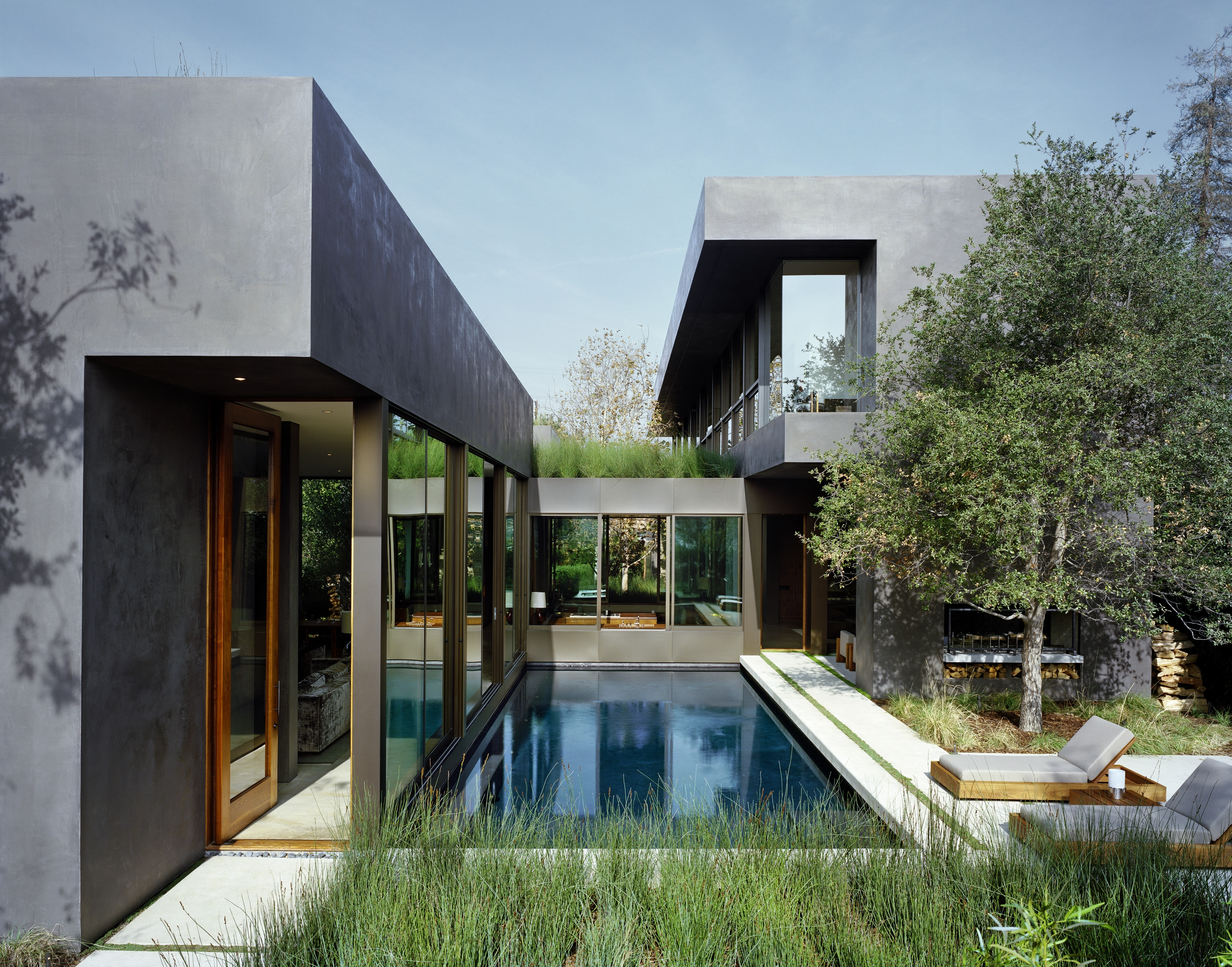
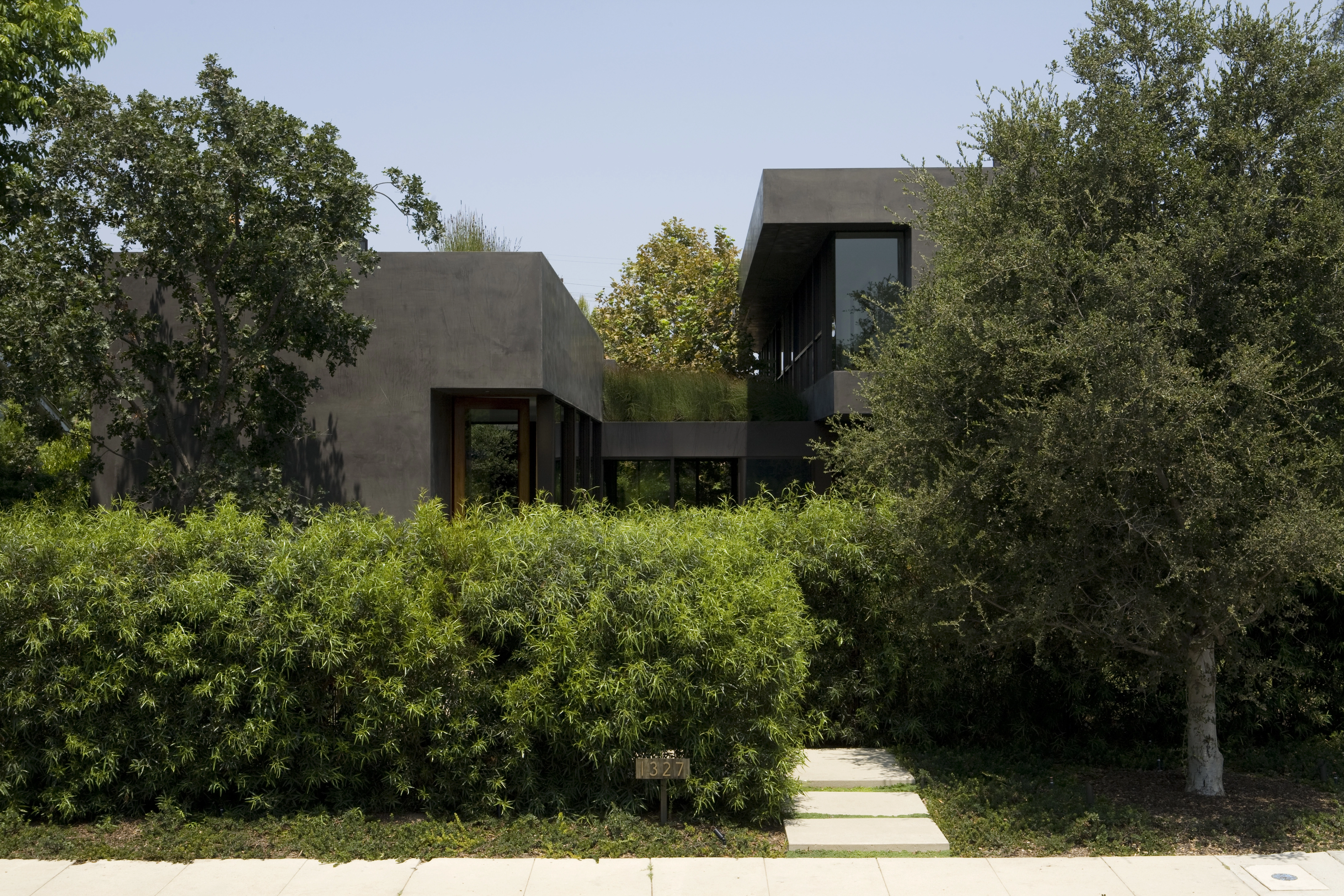
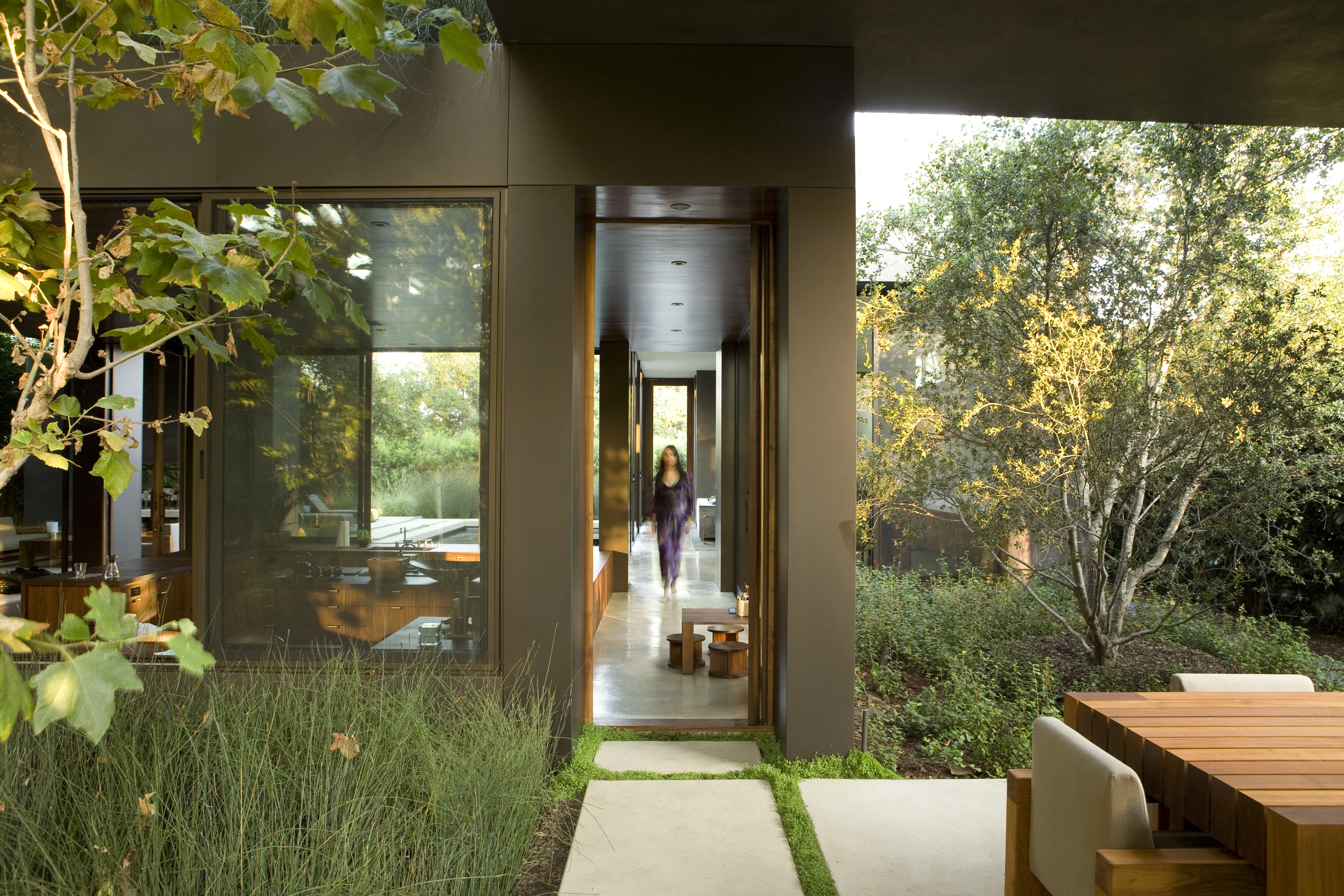
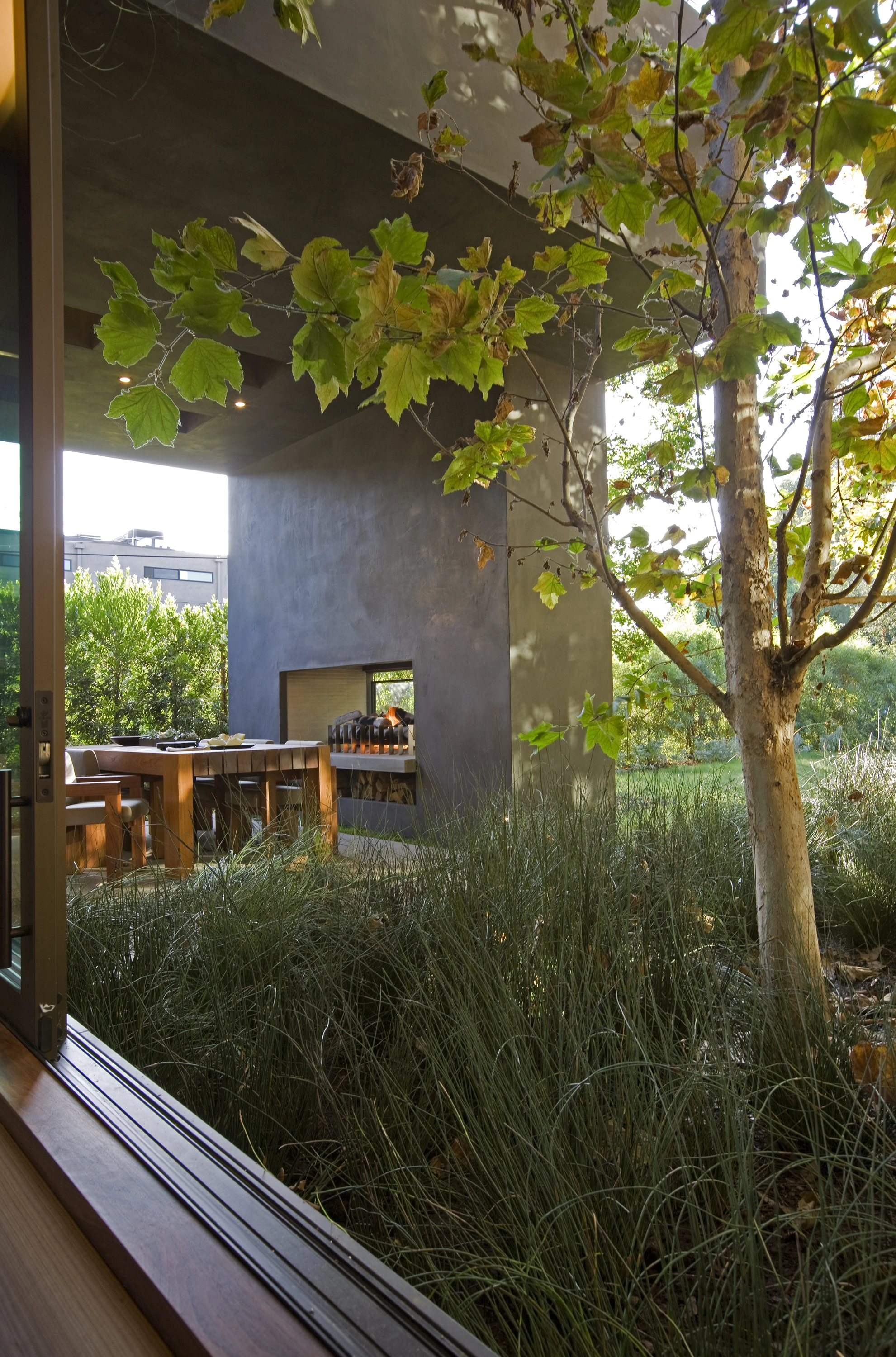
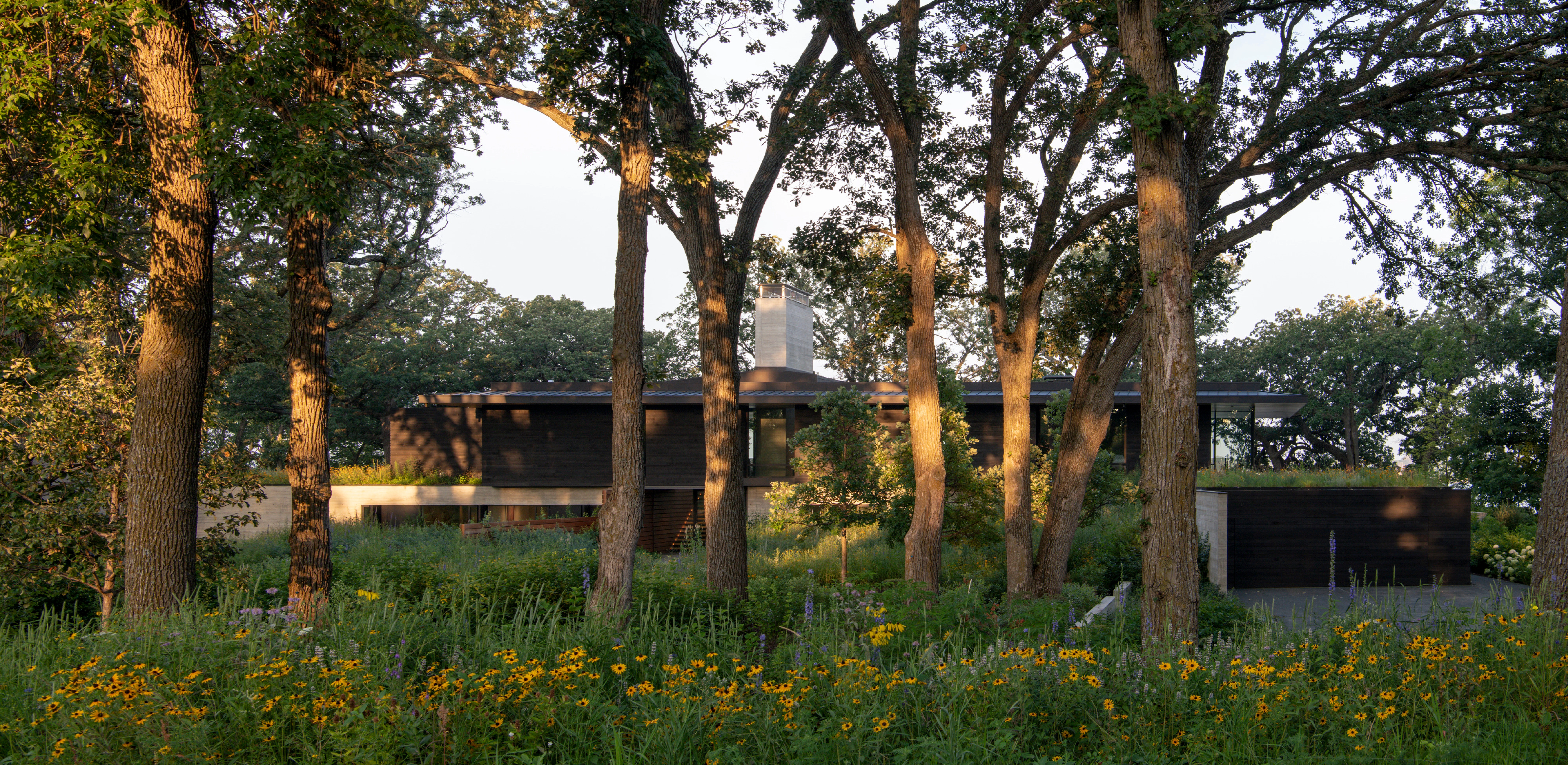
The landscape architect shows such a confident hand in this project. The ideas follow the modular forms of the house. The front elevation is so beautiful with the sumac against the black plaster. It represents very clear thinking about landscape architecture.
Awards Jury
-
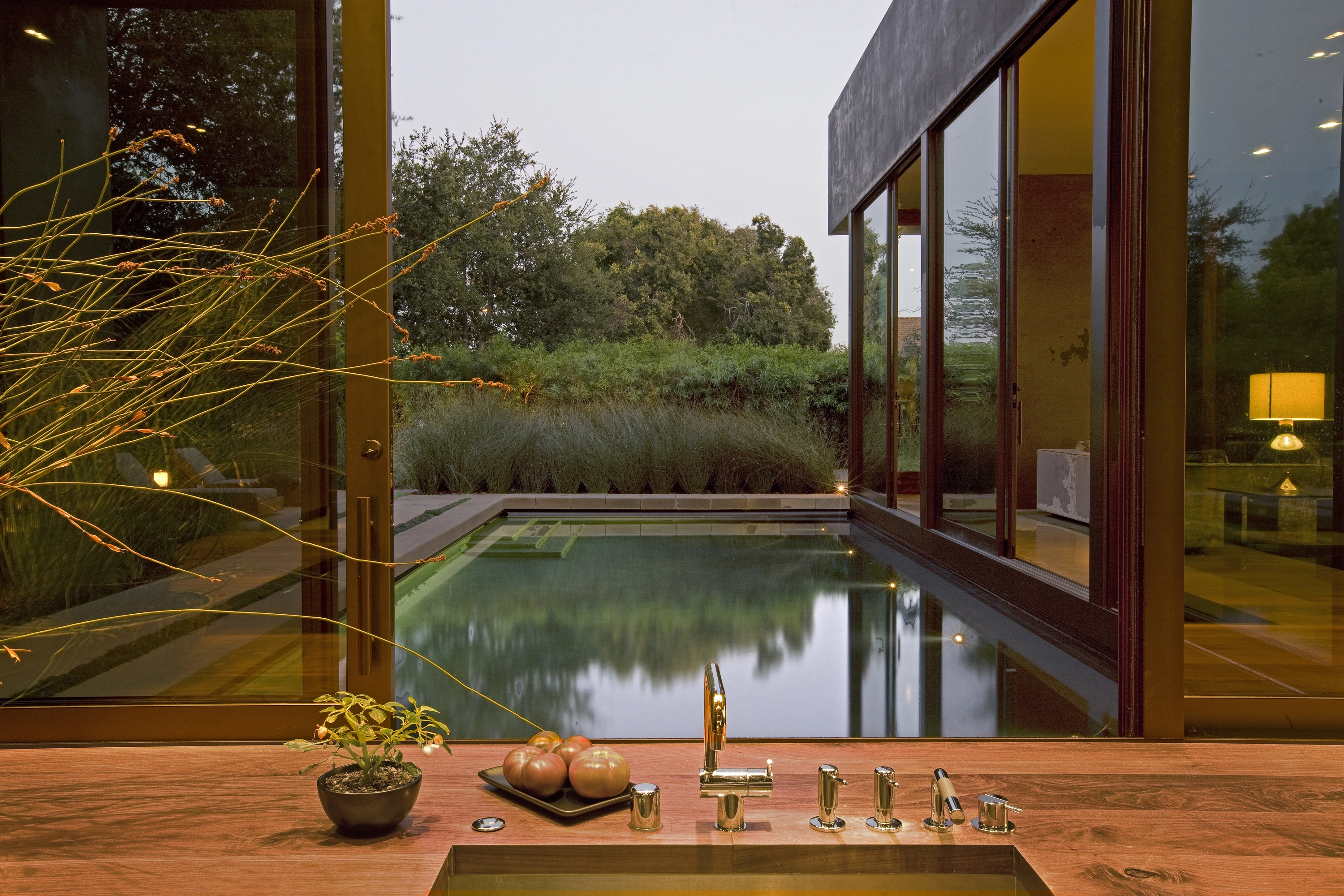
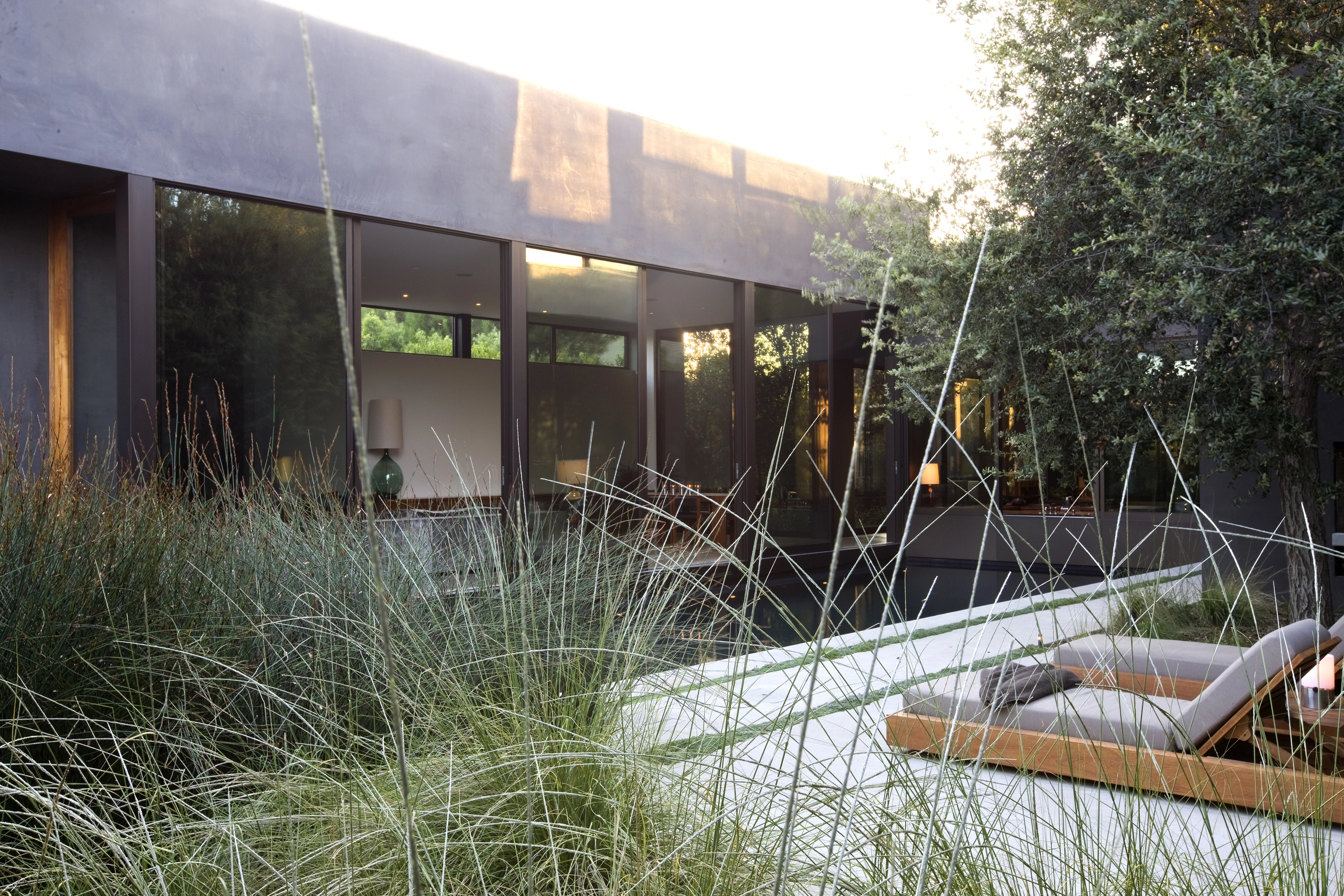
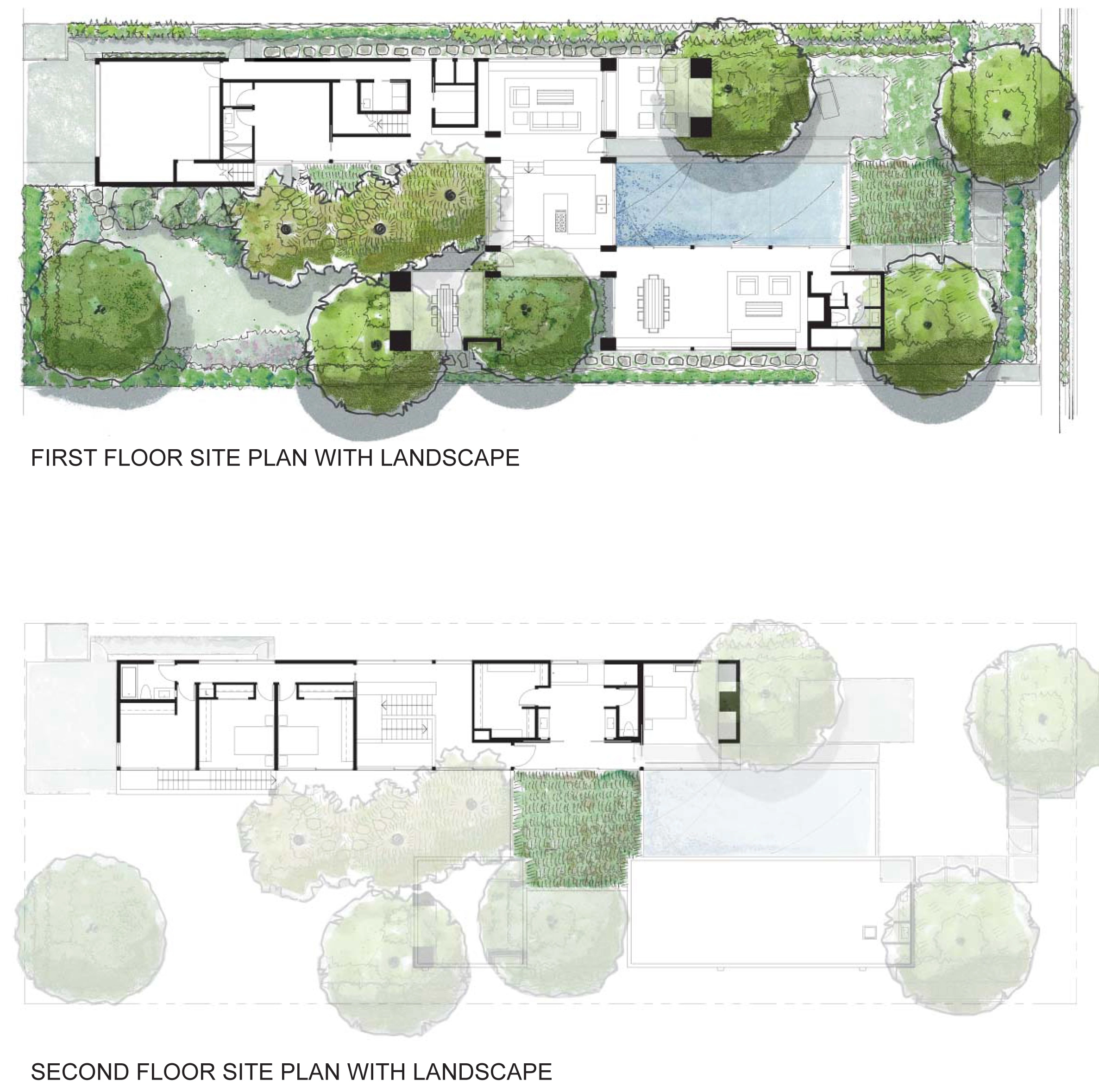
The design of the Vienna Way landscape fully integrates the residence within the surrounding California native landscape. The architecture and landscape were designed to work in unison, creating a seamless transition between the interior and exterior living spaces. The element of water links a �corridor� of exterior spaces�swimming pool, garden roof, riparian planting — and intersects with the interior spaces at the sunken kitchen.
-
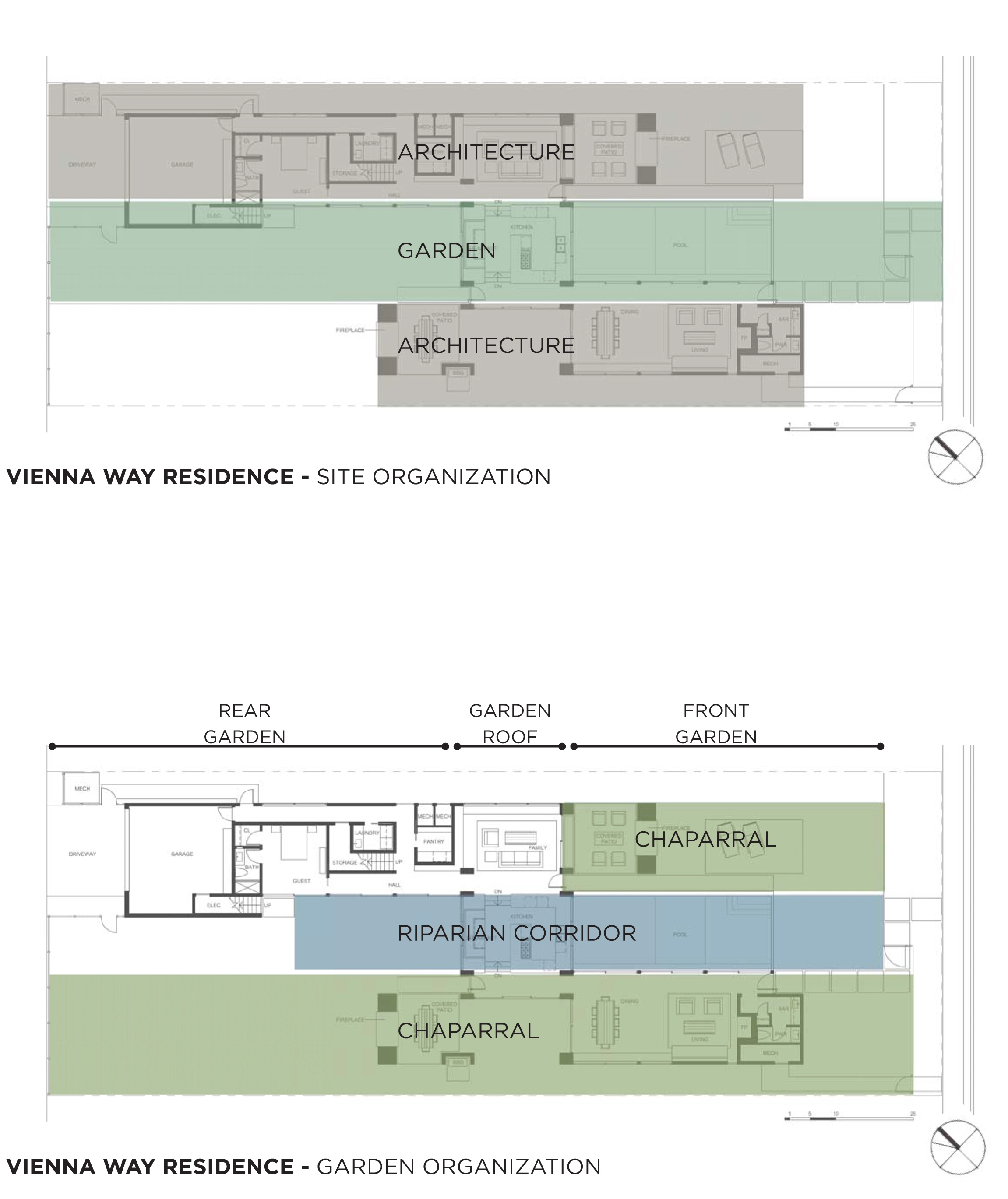
The Vienna Way site is divided into thirds with the architecture massed at the outer edges and the garden spaces in the middle. This spatial organization maximizes the amount of physical and visual open space within a narrow, urban lot.
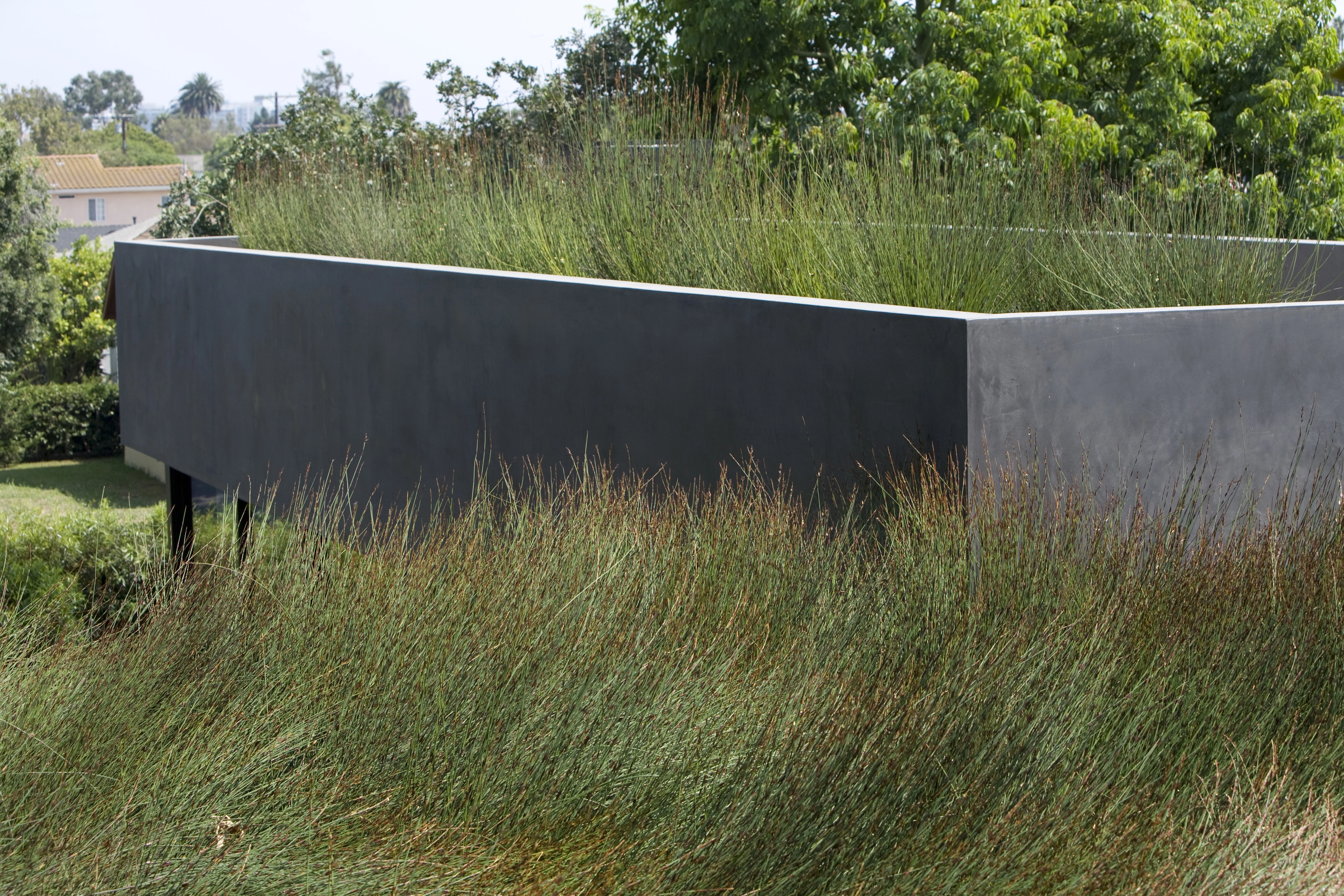
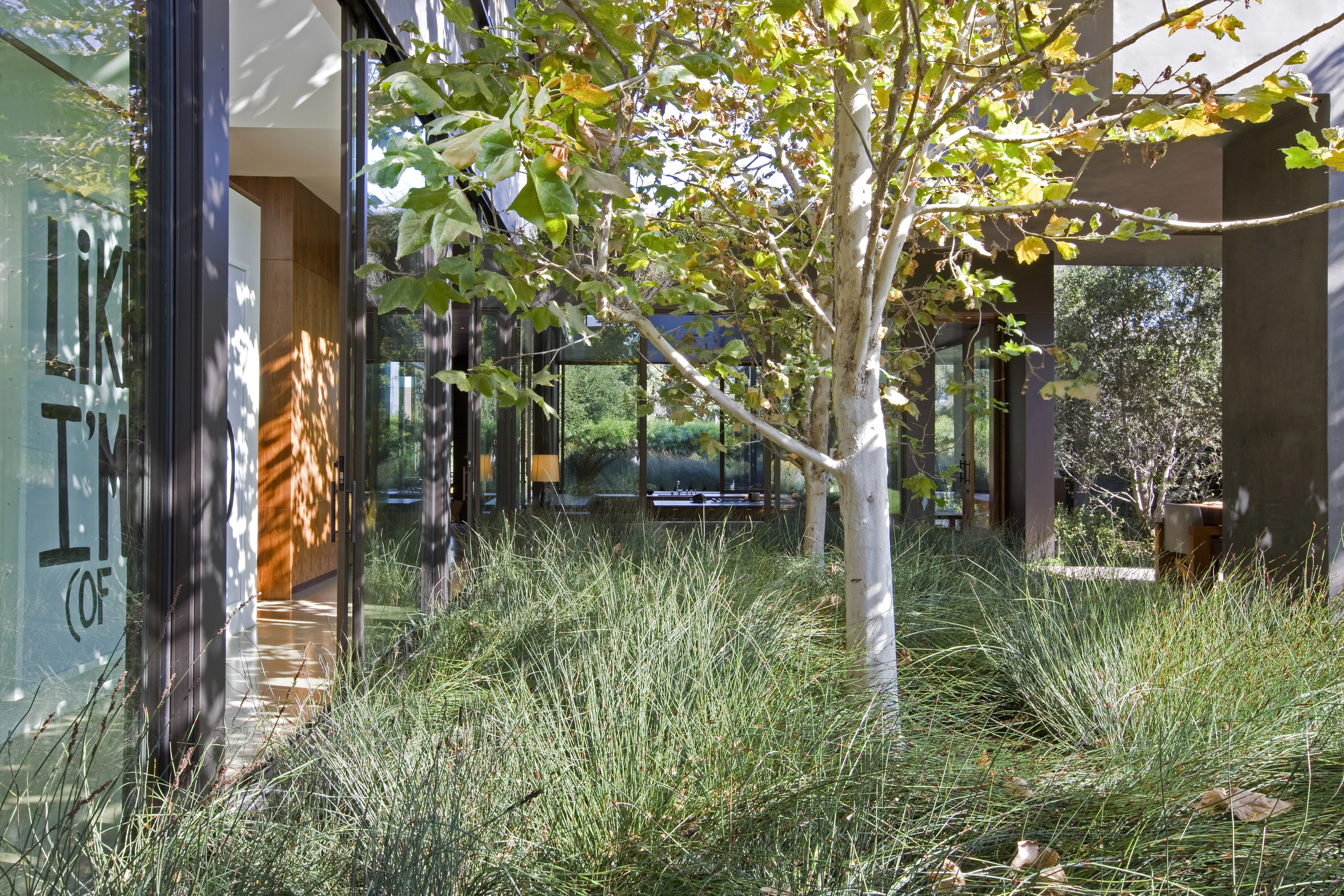
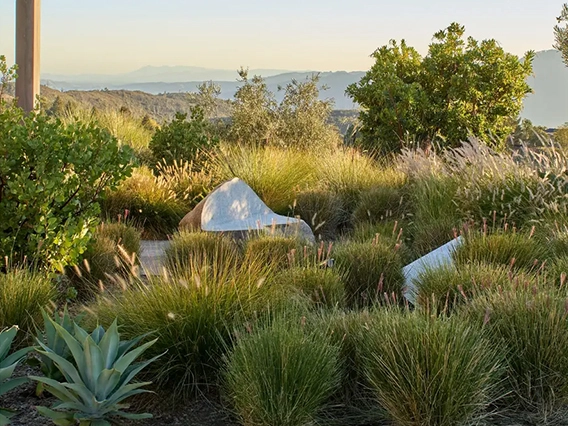
The exterior spaces are divided into thirds as well by the water �corridor� that literally begins with the swimming pool and is implied by the repeated, mass plantings of Chrondopetalum tectorum (Cape Rush) — a plant naturally found at water edges — which align with the pool and kitchen window in the front garden, continue to the garden roof over the sunken kitchen, and culminate at the rear garden with three California Sycamores. Flanking this riparian �corridor� are drought-tolerant plantings reminiscent of a Chaparral landscape including Quercus agrifolia (Coastal Live Oak), Quercus lobata (Valley Oak), native Muhlenbergia rigens (Deer Grass) and Rhus lancea (African Sumac)
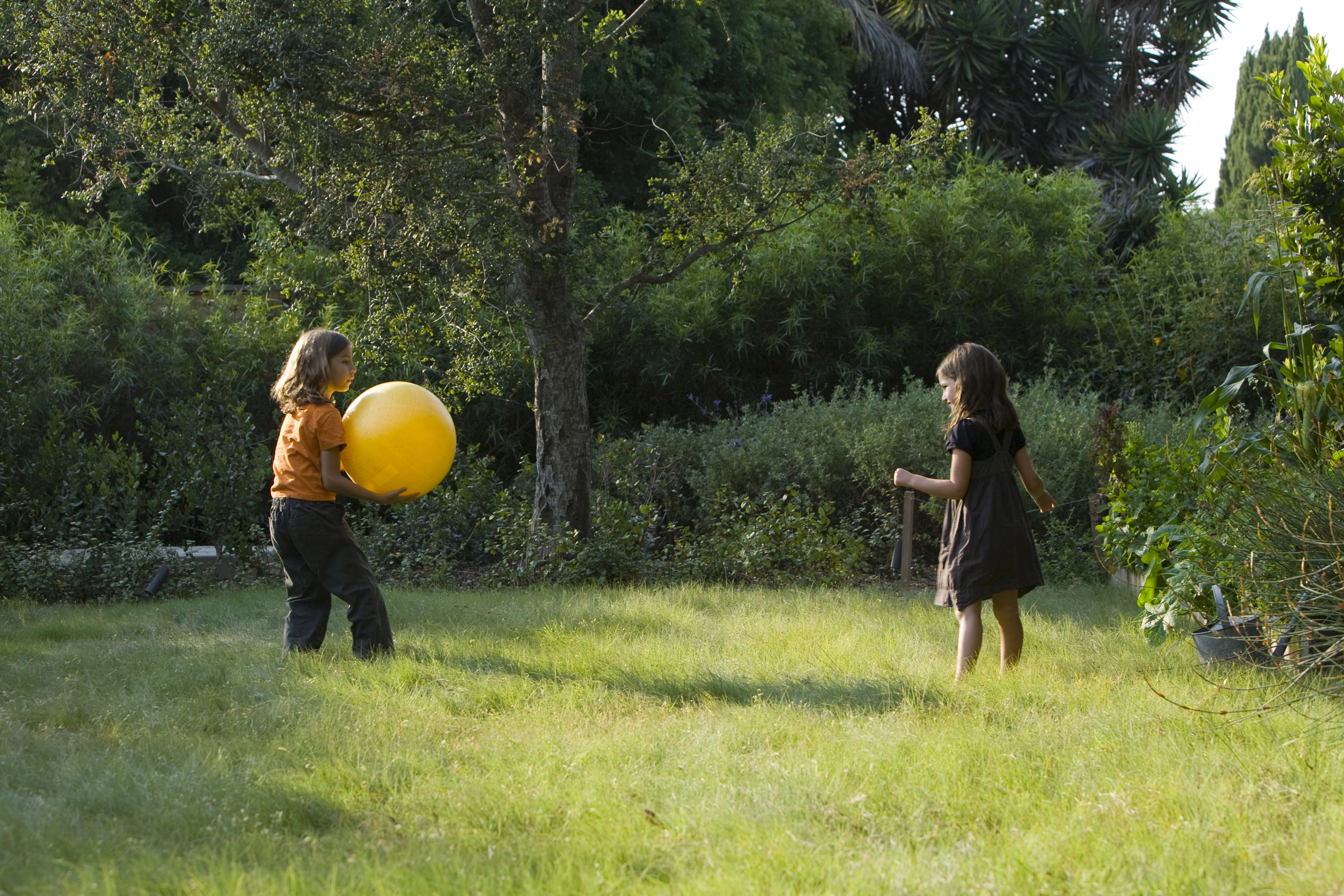
The front garden is designed to be an adult, more mature space with simple, monochromatic, architectural plantings, while the rear garden becomes a place for children�s play. The backyard planting design, which includes a lawn of Buffalo Grass, is more colorful, varied and organically arranged than the front garden. It includes California natives Salvia apiana (White sage), Salvia clevelandii (Cleveland Sage) and Fremontodendron californica (Flannel Bush) as well as a raised vegetable planter.
Due to the large quantity of native California plants and desired size at installation, many were �contract grown� by two local nurseries. All of the trees were field grown and craned into the site. Despite the fact that the organizing element for the garden is water, the plants by and large are drought-tolerant.
-
Lead Designer
Ron Radziner, FAIA, Affiliate ASLALandscape Architect
Meg Rushing Coffee, ASLA -
Specimen Coast Oak Trees
Valley Crest Tree Company
Specimen Valley Oak Trees
Berylwood Tree Farm, Somis, CA
Specimen Sycamore Trees
Baron Brothers Nursery
Native Plants
Contract-grown by El Nativo Growers
Native Plants
Contract-grown by Tree of Life Nursery
Garden Roof Assembly
American Hydrotech, Inc.
Landscape Lighting
B-K Lighting
Irrigation Controller
Superior Controls Co., Inc.
Advertisement
Related Awards
Honor Award, Residential Design
Trinity Road
The story of Trinity Road unfolded over the past five years and is fundamentally a story of fire resilience and succession of the surrounding forest. The garden was designed and the project considered completed when two wildfires ravaged the hills immediately surrounding the site. After the fires the landscape design team was brought in to create a new vision for the site that knit together the original planting and a new series of paths and gardens.