

.webp?language=en-US)

.webp?language=en-US)
Missed the Groundwork Conversations? Catch Up on the Takeaways
Recordings and synopses are available now. The sessions covered emerging professionals, AI, and building lasting careers.

Nearly 1,400 people joined ASLA's three Groundwork conversations this year. Bradley McCauley, FASLA, PLA, hosted the series during his term as ASLA President. At the ASLA 2026 Conference on Landscape Architecture, he used his General Session remarks to ask members to revisit them. "The profession is ready to talk about the hard stuff," he said. "We just needed to create the space."
Kona Gray, FASLA, PLA, started the series during his presidency as natural disasters hit communities across the country. Its format was simple and unusual: no slides, no scripted panels, just honest peer conversation. As president in 2026, McCauley kept that format and turned it toward the "slow burns" inside practice: burnout, AI disruption, firms struggling to keep people, and emerging professionals wondering if they made the right choice.
Starting Strong: Integrating Emerging Landscape Architects into Practice (March 24)
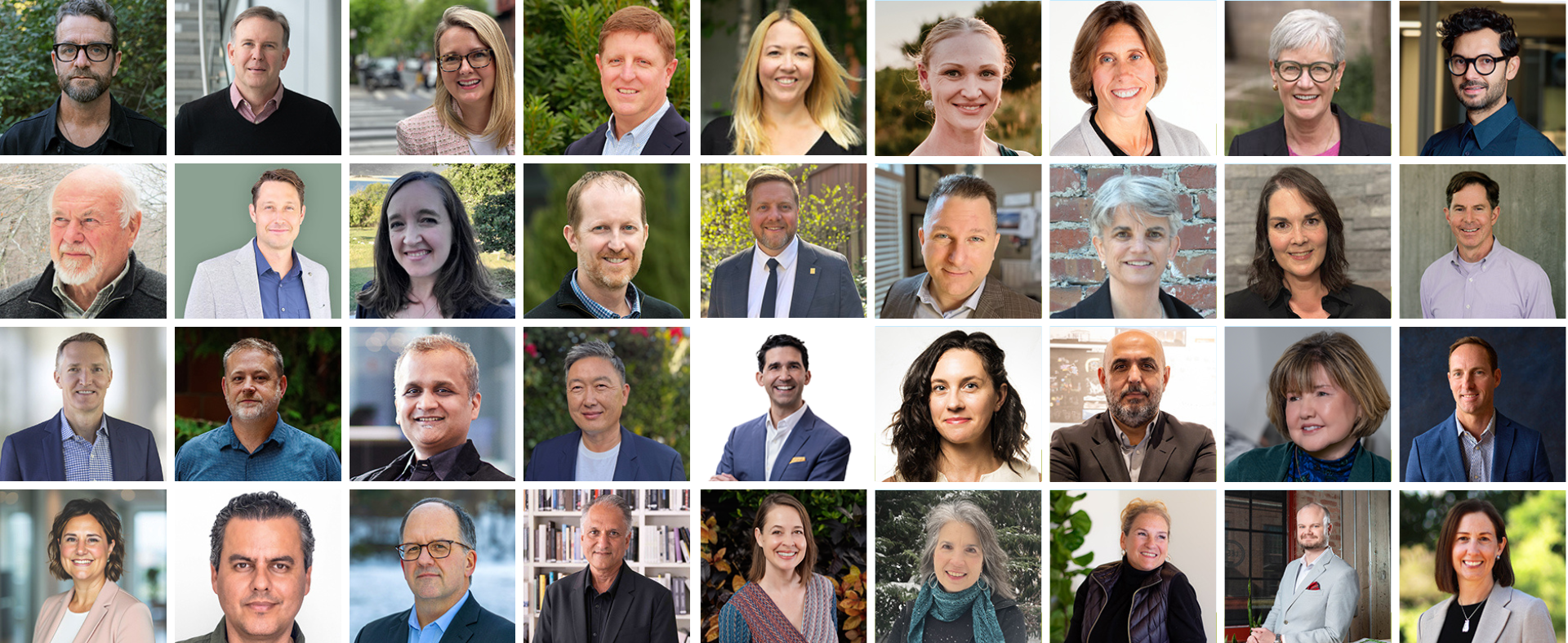
Leaders from Design Workshop, Confluence, Curtis & Rogers Design Studio, Agency Landscape + Planning and Dix.Hite + Partners talked about how firms help new landscape architects succeed. Key points:
- Most firms have fewer than 10 people, so guidance has to work for small offices.
- Mentorship often works best informally, as part of the project work itself.
- The profession's loss of women in their 30s starts with early-career culture.
“Your portfolio gets you in the door. After that, it's whether someone wants to be in the trenches with you.”
— Gina Ford, FASLA, PLA, Agency Landscape + Planning
Artificial Intelligence: Professional Responsibility in an Era of Rapid Change (May 18)
This was the most-attended session in the series by far, with more than 800 registrants. Panelists from Biohabitats, Confluence, TBG Partners, the University of Georgia and Quite Contrary Studios agreed that AI is already part of practice. "It's about how we engage with it," McCauley said, "as professionals responsible for the outcomes of our work." Key points:
- The biggest risk is AI output that only looks finished.
- Landscape architects need to stress what AI can't replace: site knowledge, ecological intelligence and community engagement.
- Landscape architects should be involved in data center projects before sites are chosen, not after.
- Regulation is lagging, and protecting firms' intellectual property is still an open question.
- Educators and practitioners need to work together to prepare the next generation for responsible AI use.
“AI gives you something that feels complete. And then you kind of take it as it's done. That's the most dangerous part.”
— Bill Odle, ASLA, TBG Partners
The Resilient Practice: Designing Careers and Firms That Sustain People (June 23)
This session grew out of a question submitted during the first conversation: "Can we talk about women in the profession after having children?" Panelists from Unknown Studio, Arbolope Studio, HDR and Hoerr Schaudt widened it to cover all of life's predictable transitions, including parenthood, elder care and health. Key points:
- Culture beats policy.
- Reduced hours have to come with reduced scope.
- Losing an experienced employee can cost close to their full annual salary.
“The data tells us we're losing people. We don't have to.”
— Bradley McCauley, FASLA, PLA
Watch and Read
Each session page has the full recording, a synopsis and related resources:
They're useful for firm leaders planning onboarding or flexibility policies, and for anyone at any career stage working through the same questions.