

.webp?language=en-US)

.webp?language=en-US)



We’ve Been Looking at Heat Wrong and It’s Killing Us
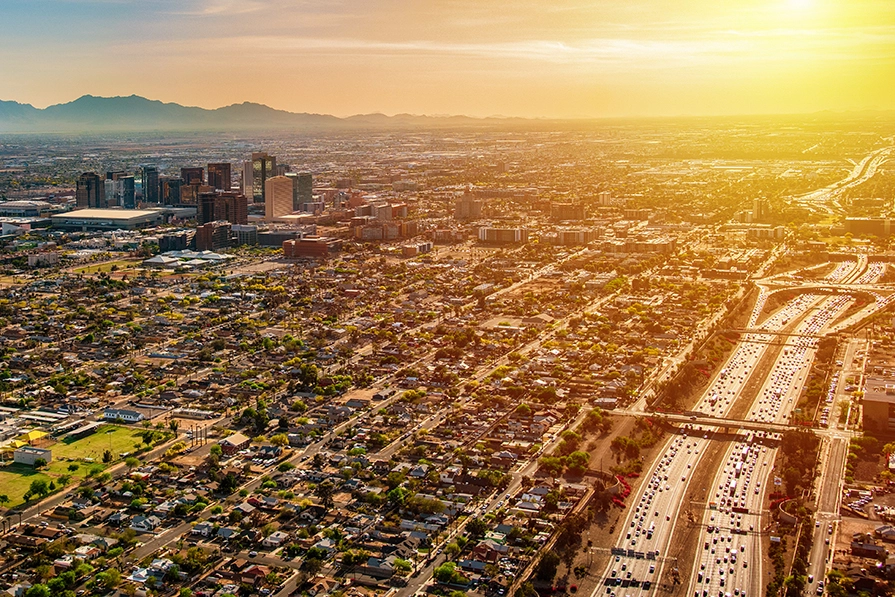
Phoenix, Arizona / istockphoto.com. Art Wager
By Keenan Gibbons
Over the past decade, Phoenix’s population has grown approximately 9 percent. In that same time, the area has seen a 600+ percent increase in heat deaths. Heat deaths are growing about 70 times faster than the population.
This is a systemic shift — where extreme heat and vulnerability make our cities dramatically more lethal per resident, not just more crowded.
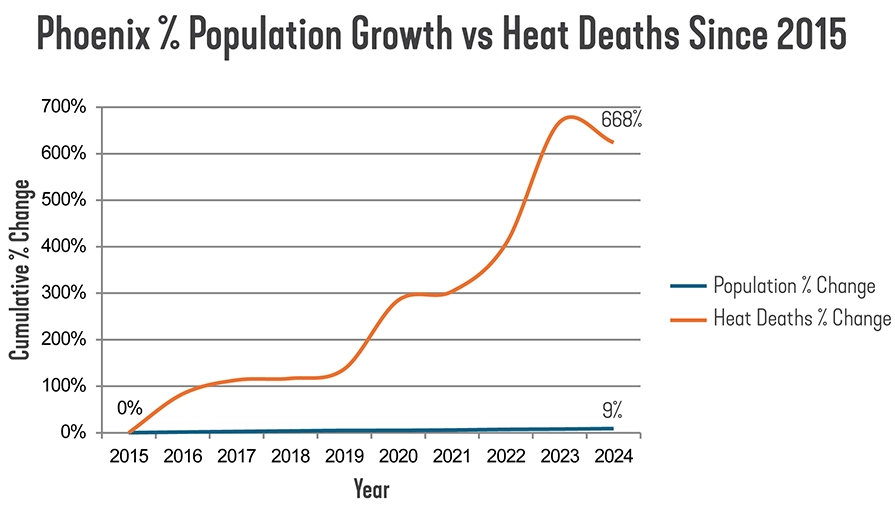
The cumulative percentage population and heat death change over ten years from 2015-2024. / Data from the US Census Bureau and Maricopa County Department of Public Health. Prepared by Keenan Gibbons
The 2003 European heat wave notoriously introduced the concept of the heat island to the public, after it caused more than 30,000 deaths over a two-week period in August. Heat islands are developed areas that feel much hotter than areas immediately adjacent with lighter material color, shade, or natural space.
We have all stepped out onto sweltering hot pavement or had to hop across a parking lot trying not to literally cook our feet on 175°F+ (79°C+) pavement.
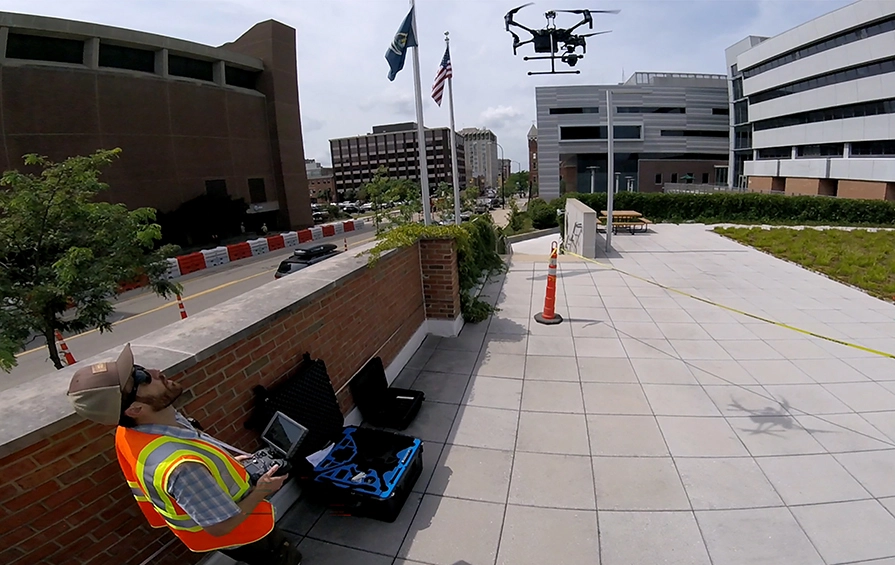
Drone-based heat research of public ROW / Keenan Gibbons, SmithGroup
In my research conducted using drone-based thermal imaging and ground-level sensors, I have found that heat doesn’t distribute evenly across a city. It fluctuates dramatically within the same block — across materials, surfaces, and shade conditions.
The implication is simple, yet profound: We’ve been looking at heat wrong and it’s killing us.
The U.S. has never had a Federally recognized heat disaster. Our domestic disaster system is governed by the Stafford Act and the Federal Emergency Management Agency (FEMA), which has historically not treated extreme heat as a qualifying disaster type.
Why?
FEMA focuses on physical damage. Disaster declarations are strongly tied to visible infrastructure damage (e.g. homes, roads, utilities). While heatwaves strain our energy grid, they primarily cause health impacts instead of structural destruction. Heatwaves are also more gradual and widespread, with heat deaths occurring more indirectly, such as from heart failure and dehydration, making them harder to count and less clearly tied to a single incident like hurricanes, floods, or tornadoes.
Most heat policy and public messaging is built around air temperature — what the thermometer reads at a weather station or airport. But human heat stress is not driven by air temperature alone. It is driven by cumulative exposure:
- Radiant heat from surfaces
- Stored heat released at night
- Humidity
- Wind
- Shade
- And the ability — or inability — to escape heat altogether
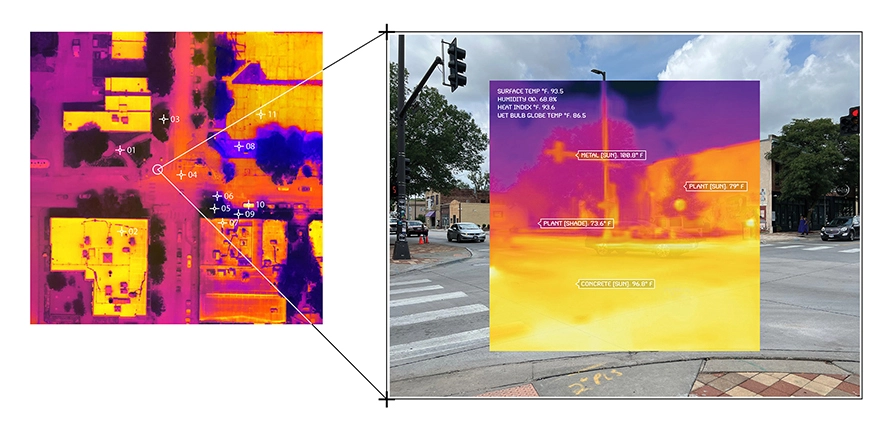
Excerpt from the LAF “Thermal Toolkit: Technologies and Techniques for Visualizing Thermal Disparities” / Keenan Gibbons and Salvador Lindquist.
In cities like Phoenix, the hottest surfaces are not abstract. Asphalt, concrete, rooftops, and unshaded sidewalks routinely reach temperatures far exceeding ambient air readings. A day reported as 90°F (32°C) can include surface temperatures of 180°F+ (82°C+).
Radiant heat increases core temperature even when air temperatures appear survivable, especially for older adults, outdoor workers, people with disabilities, unhoused residents, and people with cardiovascular disease. This helps explain why heat deaths often surge without record-breaking air temperatures. The danger is not only how hot it gets but how long heat persists, how unevenly it is distributed, and whether people can physiologically recover.
This mismatch leads to designs and policies that systematically underestimate harm and mortality. Heat is the deadliest climate hazard in the country, yet it is treated as administratively invisible.
This invisibility cascades into landscape architecture, urban design, and planning. Zoning codes, street standards, and redevelopment projects are rarely evaluated based on heat exposure. Shade, surface materials, nighttime cooling, and access to thermal refuge remain optional rather than essential.
Heat deaths are also systematically undercounted. They are often recorded as cardiac arrest, respiratory failure, or dehydration rather than heat exposure — masking the true scale of harm and reinforcing the perception that heat is a secondary risk rather than a primary cause.
When we define heat as a number on a thermometer rather than a spatial and physiological condition, we design cities that absorb, trap, and amplify danger. When our disaster systems require broken buildings rather than broken bodies, we fail to respond until it is too late. The result is not accidental — it is systemic.
This is the first of a six-part series we will move through together into 2027. As with most things in my life, I go in to find my way back out.
We have started with the problem. Over the course of my fellowship with ASLA, I will move through my latest heat research towards how to create incentives for reducing thermal impacts and increasing nature-based solutions. I will explore current public policy gaps and opportunities and advocate for smarter approaches to extreme heat at the UN Climate Change Conference (COP31) in Antalya, Turkey this November and hopefully on Capitol Hill.
In the meantime, I have been an active member of and contributor to the National Integrated Heat Health Information System (NIHHIS), which can be accessed at heat.gov. I encourage you to do the same to support Federal programs that magnify the rising heat problem.
Keenan Gibbons, ASLA, PLA, LEED GA, is ASLA’s Climate & Biodiversity Action Fellow for 2026-2027. He is principal and director of landscape architecture at SmithGroup and lecturer at the University of Michigan.