





Designing with Intelligence: AI, Nature, and the Responsibilities of Landscape Architects
Part three of a three-part series
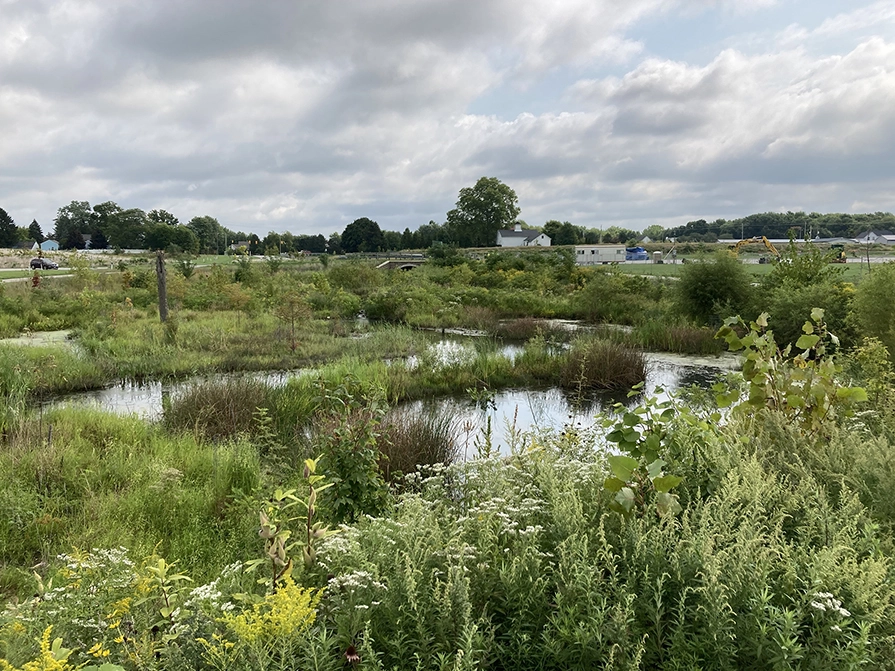 Restoring a stream and floodplain for a new public park in the Chagrin River watershed, Ohio. / Biohabitat
Landscapes acquire meaning through lived experience. A plaza becomes a place through the conversations, celebrations, and chance encounters that unfold over years. A park takes on significance through play, family rituals, and the changing light of the seasons. A river corridor expresses itself through its water flow, the return of migrating fish, and the slow, meticulous work of roots and soil. These experiences, social interactions, cultural legacies, and ecological processes give landscapes their essence, and none of them can be captured and replicated by Artificial intelligence (AI).
AI can describe the components of a landscape, analyze it, and even generate convincing images of it but it cannot experience it. What it knows is limited to what others have recorded. And as we know, that record is far from complete.
AI models learn from what has been written, digitized, and used to train them, and that body of information is uneven at best. Researchers at Harvard University found that large language models respond to psychological measures most like people from Western, Educated, Industrialized, Rich, and Democratic (WEIRD) societies, and less like everyone else.
The bulk of what large language models learn from is web text, and that text is heavily skewed toward English and wealthy, industrialized countries. And while Chinese developers train heavily on Chinese-language data, their models still reflect educated, industrialized and wealthy sources. Language compounds the gap. Stanford researchers estimate that only about 1,000 of the world’s 7,000-plus living languages are well represented in the digital world that AI learns from.
AI is already part of how landscape architects practice. In a 2025 survey of landscape architects conducted by the Canadian Society of Landscape Architects (CSLA), ASLA, and International Federation of Landscape Architects (IFLA), half of respondents reported using AI for background research, and three-quarters said it made their work more efficient. More than 70 percent also voiced concerns about ethics, accuracy, and the erosion of human connection in design.
ASLA’s 2025 public policy on AI is clear that these tools do not replace professional judgment, creativity, or ethics, and that responsibility for every deliverable remains with the licensed landscape architect. The question I struggle with is not whether we use AI. Rather, it’s how we remain accountable for what it produces, and more importantly, what it leaves out.
For landscape architects, AI can have a profound effect on design outcomes. Asked to help interpret a site, AI can summarize land use history, map vegetation, or evaluate access with impressive fluency, but it does so through a predominantly WEIRD lens.
What it cannot convey is how other cultures and peoples understand that same site: the oral histories attached to a mountain, the cultural significance of a gathering place, the seasonal rhythms of a neighborhood, or the stories communities have chosen to keep among themselves. Much of this knowledge lives in storytelling, ceremony, and lived experience, and even if it was available, it may not be ours to collect.
A recent essay in the UN Chronicle argued that inclusive AI must respect communities’ decisions to protect certain knowledge, share it only on their own terms, or keep it out of digital systems entirely. The CARE Principles for Indigenous Data Governance offer landscape architecture practitioners a sound starting point for honoring those boundaries.
The gap widens beyond our own species. The biologist Jakob von Uexküll used the word Umwelt to describe the perceptual world unique to each organism. A bee sees ultraviolet patterns on flowers that are invisible to us, and treehoppers communicate through vibrations in plant stems that we cannot hear without instruments. Bats, moths, salamanders, and soil fungi each inhabit worlds of sensation and response that no AI training dataset fully captures. Bioacoustic monitoring and remote sensing can record fragments of these experiences, and AI can help analyze them. Yet the more-than-human communities affected by our design interventions remain largely absent from the human-generated text on which most AI is trained. When an AI-generated interpretation sounds authoritative, it is easy to forget how much of the world it never encountered – and never will. 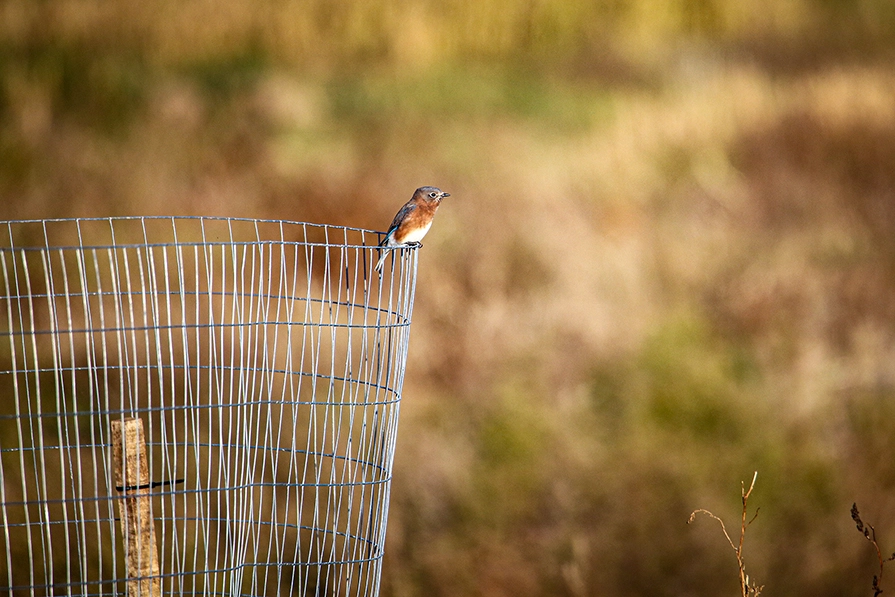
Eastern bluebird (Sialia sialis) perched on a tree protection cage admiring the 57-acre floodplain restoration along the Maumee River, Ohio. / David Ike Photography
Our professional judgment is built by walking sites, observing patterns, listening to communities, and discerning change. Emerging research suggests that leaning on AI can weaken these capacities. In a design ideation experiment, participants supported by an AI image generator became more fixated on an initial example and produced fewer ideas, with less variety and lower originality, than those working without it.
AI also appears to be a poor stand-in for the people we are designing for. In studies involving 3,200 participants across 16 demographic identities, researchers found that large language models asked to speak for a group tended to misportray and flatten its members, and they urged caution wherever AI is meant to replace people whose identities are relevant to the task.
Our relationships with the more-than-human world are also at risk. AI could accelerate what ecologists call an “extinction of experience,” the progressive loss of direct contact with nature, which diminishes not only health and well-being but also people’s positive emotions, attitudes, and behavior toward the environment, creating a cycle of disaffection.
Panelists at ASLA’s Groundwork presidential forum series on AI this past May – me included – named a related hazard in our own profession: AI output that only looks finished.
If we come to know places primarily through datasets, models, and generated imagery, we may begin to privilege what is easily measured, recorded, and visualized (mostly through a WEIRD lens) over what is intangible, relational, and slow to reveal itself. That shift would change how we design and what we consider worthy of attention.
This is where we have found Nature Intelligence (NI) useful. Nature Intelligence recognizes the knowledge embedded in living systems – the interdependent communities of diverse species and people entangled within the ecological processes that sustain them – along with what ecological science, direct observation, Indigenous knowledge, and Ancestral Wisdom reveal about them.
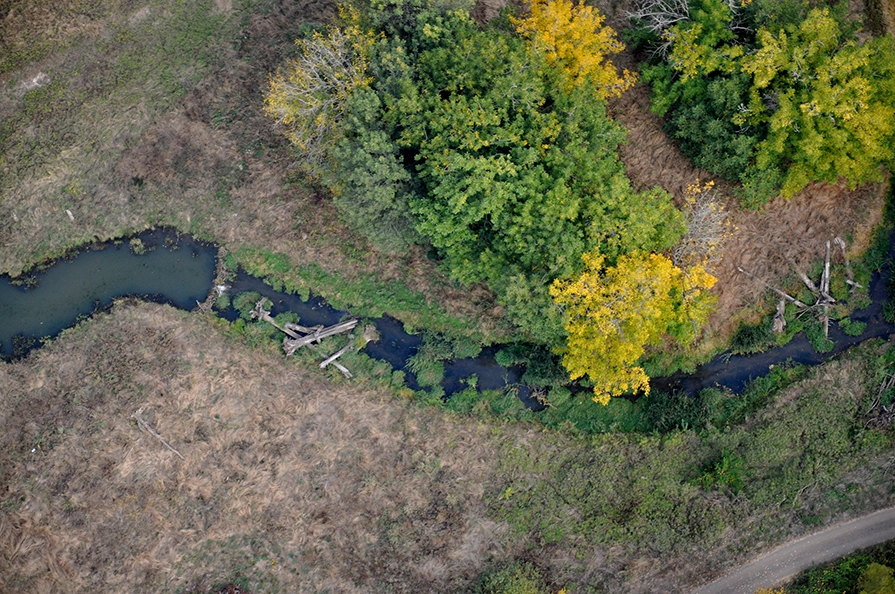
Engineered log jam and beaver dam analog supports salmon habitat along Chicken Creek, Oregon. / Sahnow Air Photos
At Biohabitats, we follow the principle: Nature Intelligence before Artificial Intelligence. In practice, the site walk precedes the model, community conversations precede the generated summary, and field inventories ground the analysis that AI may later help extend.
AI is most useful when it deepens our understanding of a place by processing large data sets, analyzing acoustic recordings, testing hydraulic models, or tracking plant community structure change over time. When we rely on AI alone to guide landscape decisions, we risk reducing a living system to what can be measured, priced, and optimized, overlooking the relationships, reciprocity, and feelings that give a place its spirit.
Accountability also extends to the footprint of the tools themselves. The International Energy Agency projects that global data center electricity use will more than double, from about 415 terawatt-hours in 2024 to roughly 945 terawatt-hours by 2030, driven largely by AI.
But not all AI use carries the same footprint. Researchers at Hugging Face and Carnegie Mellon University found that classifying information uses less energy than generating it, and that the type of task has a greater effect on energy use than the size of the model. Image generation was the most energy-intensive task they measured, and video is higher still: a five-second video clip from a newer AI model requires roughly 700 times more energy than a high-quality image. For landscape architects, these findings suggest four general categories of use:
| Type of AI use | Examples in practice | Approximate energy per 1,000 outputs |
| Classification and detection | Species identification from acoustic or camera-trap data, land cover mapping | 0.002 kWh |
| Text generation | Research synthesis, writing, editing, GIS code | 0.05 kWh |
| Image generation | Concept renderings, visualizations | 2.9 kWh |
| Video generation | Animated walkthroughs, promotional clips | 940 kWh |
The classification, text, and image figures are averages for open models measured by Luccioni et al. The video figure is derived from MIT Technology Review’s estimate of 3.4 million joules per five-second clip. Commercial providers do not publish comparable data, and actual use varies with hardware, output size, and data center location.
The choice of which AI tool to use matters too. The same study found that using a general-purpose generative model for a simple classification consumed about 30 times more energy than using a model built specifically for that task. For example, processing terabytes of acoustic monitoring data with a purpose-built classifier such as Cornell’s BirdNET is far more efficient, per recording, than running the same work through a general chatbot. When a specialized tool exists for the task at hand, it is usually the more energy-efficient choice.
Landscape Architecture 2040: ASLA’s Climate & Biodiversity Action Plan sets a vision: by 2040, all landscape architecture projects will achieve zero greenhouse gas emissions, double carbon sequestration, and protect, conserve, restore, enhance, and manage biodiversity.
AI affects these goals. Its emissions follow its energy use, and the data centers behind it draw on the same land, water, and habitat our projects aim to protect and restore. A Nature First approach asks us to weigh those costs as carefully as we weigh the materials we specify.
For landscape architecture firms, that means, at a minimum, including AI in operational emissions inventories and asking providers to disclose their energy and water sources. For projects, it means measuring AI-intensive work against the climate and biodiversity goals we set for the landscapes themselves. The Nature Intelligence framework offers a simple test: does this use of AI help us understand and support living systems or does it move us further away from our commitment to put nature first?
These six questions can help us translate these ideas into daily practice:
- What cultural, social, aesthetic, and ecological relationships bear on the decision to use AI?
- Whose knowledge is represented in this AI-generated information and whose may be missing?
- What can direct observation, community engagement, and place-based knowledge teach us that AI cannot?
- How is AI shaping our capacity to think, question, and judge, and our accountability for the outcome?
- Could we do the job well through direct observation, professional judgment, or simpler tools, and would using AI add enough value to justify its energy use and associated emissions?
- Do the benefits justify the ecological footprint, and does this use advance the well-being of people and the more-than-human world?
No doubt, AI can make us faster and more capable of processing information. It cannot, by itself, make us wiser. For firms, government agencies, and non-profit organizations, this means investing in field experience, direct observation, critical inquiry, and mentorship alongside technical training. For educators, it means teaching students to read a landscape before they prompt one. 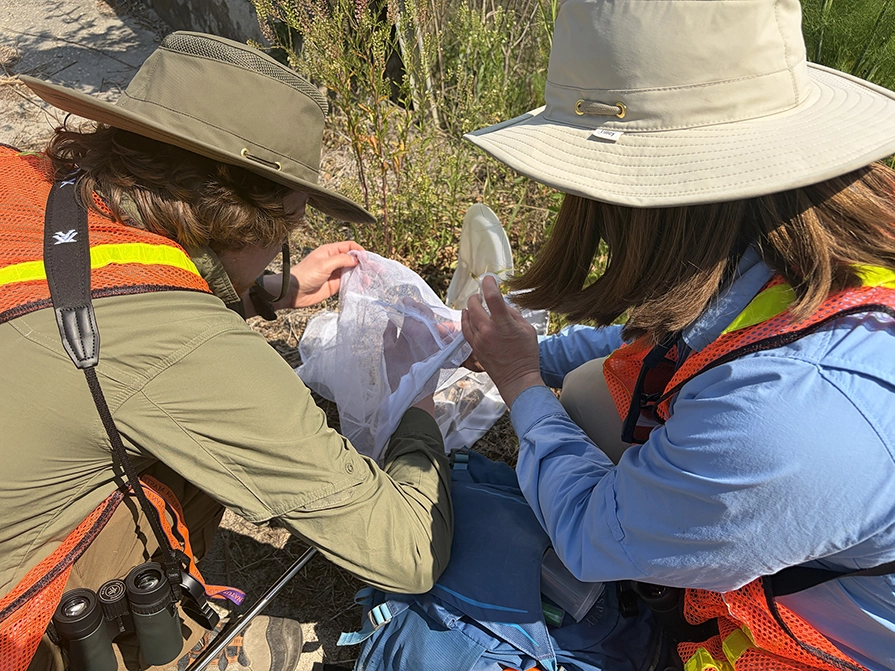 Identifying species at a Biohabitats Blitz to support the Rosemont Marsh Resilience Study, South Carolina. / Biohabitats
Over this series of articles, I’ve moved from asking whether a data center belongs in a particular landscape to asking whether our own practice remains grounded in the landscapes and places we serve. In writing it, I used AI the way I am suggesting others consider it: as an aid to my judgment, not a substitute for it.
The measure of AI’s value to landscape architecture will not be how much faster we work. It will be whether its use deepens our understanding of place, strengthens our relationships with communities, and contributes to the flourishing of life. The intelligence we most need has been evolving in the living world for billions of years. I believe our responsibility is to keep learning from it. 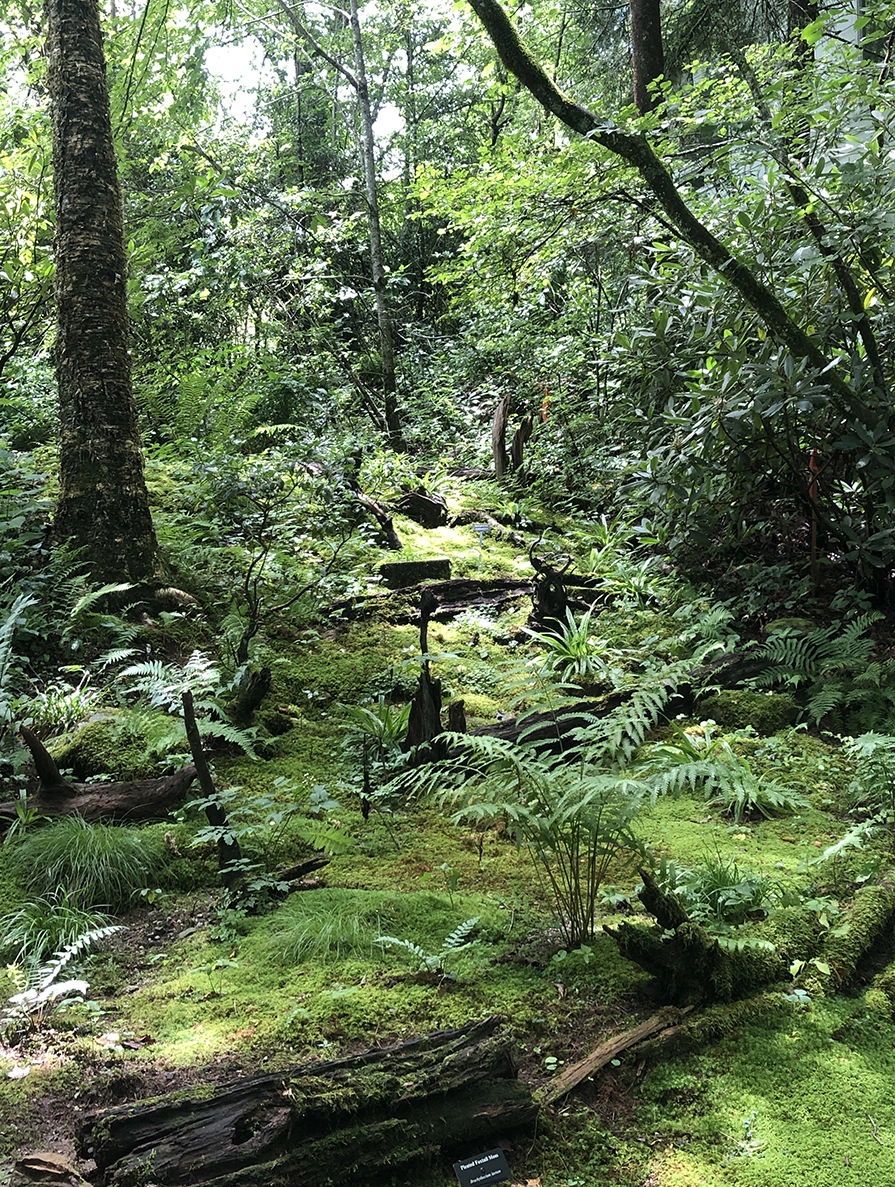 Appalachian forest / Biohabitats
Transparency Statement: This article was conceived, researched, directed, and substantially written by the author. AI was used to assist with organization, editing, and stylistic refinement. Source material was independently reviewed and cited information was verified. Analysis, opinions, and final editorial decisions are solely those of the author.
Energy and Water Impact Statement: Based on published estimates, the AI-assisted development of this article likely consumed on the order of 0.1–1.0 kWh of electricity and approximately 0.2–4 liters of water. These estimates are necessarily approximate because AI providers do not disclose the operational data needed to attribute electricity, water, carbon, and land impacts to individual user sessions.